• Interview
    Accl Portal
    Day: 81
    Week: 19
    Task: interview
    interview no: 3

    About me:
    **Hello everyone!**

    Im **Minsa**, the creator of **Minsa Education Wali**. Welcome to todays interview! In this session, well be talking with a Rehan School AI student about their learning journey, experiences, favorite AI tasks, challenges, and future goals. I hope you enjoy this conversation and find it informative. Lets get started!

    connected with me:
    facebook:
    https://www.facebook.com/share/17tWmoXW5H/
    youtube:
    https://youtube.com/@minsaeducationwalli?si=s1WMLAwj9mHzkMPX
    LinkedIn:
    www.linkedin.com/in/minsa-education-wali-ab754741b

    About guest:
    **Hello everyone!**

    My name is **Shanzzy ChatGPT Wali**, and I am a student of the AI program at **Rehan School**. I am learning different AI skills and working on creative and educational tasks such as Canva posts, story posts, coding, songs, interviews, TEDx reviews, and Sesame activities. I enjoy learning new things, taking on different challenges, and improving my skills through every task.

    Iโ€™m very happy to be here today and excited to share my AI learning journey, experiences, favorite tasks, and future goals with you.

    **Thank you!**
    connected with guest:
    facebook:
    https://www.facebook.com/share/1Kqi6JPMXe/
    youtube:

    LinkedIn:

    #Interview #ShanzzyChatGPTWali #MinsaEducationWali #RehanSchool #AIStudent #AIInterview #ArtificialIntelligence #AIEducation #AILearning #LearningJourney #StudentLife #CanvaPosts #StoryPosts #Coding #TEDxReviews #Sesame #DigitalSkills #CreativeLearning #FutureSkills #Education #Innovation #KeepLearning
    Interview Accl Portal Day: 81 Week: 19 Task: interview interview no: 3 About me: **Hello everyone!** I'm **Minsa**, the creator of **Minsa Education Wali**. Welcome to today's interview! In this session, we'll be talking with a Rehan School AI student about their learning journey, experiences, favorite AI tasks, challenges, and future goals. I hope you enjoy this conversation and find it informative. Let's get started! connected with me: facebook: https://www.facebook.com/share/17tWmoXW5H/ youtube: https://youtube.com/@minsaeducationwalli?si=s1WMLAwj9mHzkMPX LinkedIn: www.linkedin.com/in/minsa-education-wali-ab754741b About guest: **Hello everyone!** My name is **Shanzzy ChatGPT Wali**, and I am a student of the AI program at **Rehan School**. I am learning different AI skills and working on creative and educational tasks such as Canva posts, story posts, coding, songs, interviews, TEDx reviews, and Sesame activities. I enjoy learning new things, taking on different challenges, and improving my skills through every task. Iโ€™m very happy to be here today and excited to share my AI learning journey, experiences, favorite tasks, and future goals with you. **Thank you!** connected with guest: facebook: https://www.facebook.com/share/1Kqi6JPMXe/ youtube: LinkedIn: ๐ŸŽคโœจ #Interview #ShanzzyChatGPTWali #MinsaEducationWali #RehanSchool #AIStudent #AIInterview #ArtificialIntelligence #AIEducation #AILearning #LearningJourney #StudentLife #CanvaPosts #StoryPosts #Coding #TEDxReviews #Sesame #DigitalSkills #CreativeLearning #FutureSkills #Education #Innovation #KeepLearning ๐Ÿš€๐Ÿค–๐Ÿ“š๐Ÿ’ปโœจ
    0 Comments 0 Shares 738 Views 10

  • #rsisb
    Roll no.247
    Call annie.18
    Foundation level

    **“Wood” – The Backbone of Early Civilization | 25-Minute Learning Journey**

    Wood is one of the oldest and most important natural materials used by humanity. Long before modern technology, steel, concrete, and plastic transformed our world, people depended on trees and wood for survival, creativity, shelter, transportation, tools, and everyday life.

    In this fascinating **25-minute exploration**, we travel back through history to discover how wood helped early civilizations grow, adapt, and build their communities. From simple wooden tools and shelters to boats, bridges, furniture, weapons, wheels, and farming equipment, wood played a remarkable role in human development.

    **Why was wood so important?**
    Wood was relatively easy to find, shape, cut, carve, and transport. Early humans learned to use different types of trees for different purposes, turning a natural resource into useful objects that made life easier and helped communities become more organized.

    Wood also provided an important source of fuel. Fire helped people cook food, stay warm, protect themselves, and eventually develop new technologies such as pottery and metalworking. The relationship between humans, trees, fire, and technology became an important part of civilization.

    **Wood and Transportation**
    One of the most exciting developments was the use of wood to create boats and other forms of transportation. Wooden boats allowed people to travel across rivers, lakes, and seas, encouraging exploration, trade, communication, and cultural exchange.

    **Wood and Shelter**
    Wood became an essential building material for homes, villages, storage structures, roofs, doors, and other buildings. As communities developed, woodworking skills became increasingly valuable, allowing people to construct stronger and more useful structures.

    **Wood and Human Creativity**
    Wood was not simply a material for survival—it became a medium for creativity. People carved decorations, created musical instruments, made furniture, constructed tools, and produced objects that reflected their cultures and traditions.

    **Wood and the Growth of Civilization**
    The story of wood is also the story of human innovation. By learning how to select, shape, join, preserve, and use wood, people developed practical skills that contributed to agriculture, construction, transportation, craftsmanship, and trade.

    This 25-minute lesson encourages us to look at an ordinary piece of wood in a completely different way. A wooden table, chair, pencil, door, or boat may seem simple today, but behind these objects lies thousands of years of human knowledge, experimentation, craftsmanship, and discovery.

    **A Lesson for Today**
    Understanding the historical importance of wood also reminds us of our responsibility toward forests and the environment. Trees provide habitats, help support ecosystems, and play an important role in our planet’s natural systems. Learning about wood means learning not only about the past, but also about how we can use natural resources responsibly in the future.

    Join us on this educational journey through history and discover how **wood became one of the foundations of human civilization**. From ancient tools to magnificent wooden structures, from forests to communities, the story of wood reveals how humans transformed the resources around them into the foundations of everyday life.

    **Watch, learn, explore, and discover the incredible story behind one of humanity’s oldest materials!**

    #Wood #HistoryOfWood #EarlyCivilization #HumanHistory #AncientCivilizations #History #Education #Learning #Science #Nature #Trees #Forests #Woodworking #AncientHistory #HumanInnovation #Technology #Archaeology #Culture #Craftsmanship #NaturalResources #EnvironmentalAwareness #LearningJourney #EducationalVideo #HistoryLesson #Civilization #Innovation #Knowledge #ExploreHistory #WoodenTools
    #rsisb Roll no.247 Call annie.18 Foundation level ๐ŸŒณ **“Wood” – The Backbone of Early Civilization | 25-Minute Learning Journey** ๐Ÿชต๐Ÿบ Wood is one of the oldest and most important natural materials used by humanity. Long before modern technology, steel, concrete, and plastic transformed our world, people depended on trees and wood for survival, creativity, shelter, transportation, tools, and everyday life. ๐ŸŒ๐ŸŒณ In this fascinating **25-minute exploration**, we travel back through history to discover how wood helped early civilizations grow, adapt, and build their communities. ๐Ÿ•๏ธ๐Ÿ  From simple wooden tools and shelters to boats, bridges, furniture, weapons, wheels, and farming equipment, wood played a remarkable role in human development. ๐Ÿ›ถ๐Ÿ› ๏ธ ๐ŸŒฒ **Why was wood so important?** Wood was relatively easy to find, shape, cut, carve, and transport. Early humans learned to use different types of trees for different purposes, turning a natural resource into useful objects that made life easier and helped communities become more organized. ๐Ÿ”ฅ Wood also provided an important source of fuel. Fire helped people cook food, stay warm, protect themselves, and eventually develop new technologies such as pottery and metalworking. The relationship between humans, trees, fire, and technology became an important part of civilization. ๐Ÿ”ฅ๐Ÿฒ ๐Ÿ›ถ **Wood and Transportation** One of the most exciting developments was the use of wood to create boats and other forms of transportation. Wooden boats allowed people to travel across rivers, lakes, and seas, encouraging exploration, trade, communication, and cultural exchange. ๐ŸŒŠโ›ต ๐Ÿ  **Wood and Shelter** Wood became an essential building material for homes, villages, storage structures, roofs, doors, and other buildings. As communities developed, woodworking skills became increasingly valuable, allowing people to construct stronger and more useful structures. ๐Ÿก๐Ÿ”จ ๐Ÿ› ๏ธ **Wood and Human Creativity** Wood was not simply a material for survival—it became a medium for creativity. People carved decorations, created musical instruments, made furniture, constructed tools, and produced objects that reflected their cultures and traditions. ๐ŸŽต๐ŸŽจ๐Ÿช‘ ๐ŸŒ **Wood and the Growth of Civilization** The story of wood is also the story of human innovation. By learning how to select, shape, join, preserve, and use wood, people developed practical skills that contributed to agriculture, construction, transportation, craftsmanship, and trade. This 25-minute lesson encourages us to look at an ordinary piece of wood in a completely different way. A wooden table, chair, pencil, door, or boat may seem simple today, but behind these objects lies thousands of years of human knowledge, experimentation, craftsmanship, and discovery. ๐Ÿ”๐Ÿง โœจ ๐ŸŒฑ **A Lesson for Today** Understanding the historical importance of wood also reminds us of our responsibility toward forests and the environment. Trees provide habitats, help support ecosystems, and play an important role in our planet’s natural systems. Learning about wood means learning not only about the past, but also about how we can use natural resources responsibly in the future. ๐ŸŒณ๐ŸŒŽ๐Ÿ’š ๐Ÿ“š Join us on this educational journey through history and discover how **wood became one of the foundations of human civilization**. From ancient tools to magnificent wooden structures, from forests to communities, the story of wood reveals how humans transformed the resources around them into the foundations of everyday life. ๐ŸŒณ๐Ÿชต๐Ÿบโœจ ๐Ÿ’ก **Watch, learn, explore, and discover the incredible story behind one of humanity’s oldest materials!** #Wood #HistoryOfWood #EarlyCivilization #HumanHistory #AncientCivilizations #History #Education #Learning #Science #Nature #Trees #Forests #Woodworking #AncientHistory #HumanInnovation #Technology #Archaeology #Culture #Craftsmanship #NaturalResources #EnvironmentalAwareness #LearningJourney #EducationalVideo #HistoryLesson #Civilization #Innovation #Knowledge #ExploreHistory #WoodenTools ๐ŸŒณ๐Ÿชต๐Ÿ“š๐ŸŒโœจ
    0 Comments 0 Shares 833 Views 7
  • RSIF8
    Roll no:100
    Task no:8
    Task topic:How to Download and Use CallAnnie?
    **How to Download & Use CallAnnie**
    Want your own AI assistant on the go? Here's how to get started with **CallAnnie**:
    Download **CallAnnie** from the App Store or Google Play.
    Open the app and sign up or log in.
    Grant the necessary permissions (microphone & notifications).
    Start chatting with Annie using voice or text.
    Ask questions, practice languages, brainstorm ideas, or get everyday assistance anytime!
    **Pro Tip:** Use voice mode for a more natural, real-time conversation experience!
    #CallAnnie #AIAssistant #ArtificialIntelligence #VoiceAI #TechTips #Productivity #AIApps #SmartTechnology #DigitalLife #Innovation
    RSIF8 Roll no:100 Task no:8 Task topic:How to Download and Use CallAnnie? ๐Ÿ“ฒ๐Ÿค– **How to Download & Use CallAnnie** Want your own AI assistant on the go? ๐ŸŒŸ Here's how to get started with **CallAnnie**: 1๏ธโƒฃ Download **CallAnnie** from the App Store or Google Play. ๐Ÿ“ฅ 2๏ธโƒฃ Open the app and sign up or log in. ๐Ÿ” 3๏ธโƒฃ Grant the necessary permissions (microphone & notifications). ๐ŸŽค 4๏ธโƒฃ Start chatting with Annie using voice or text. ๐Ÿ’ฌ๐ŸŽ™๏ธ 5๏ธโƒฃ Ask questions, practice languages, brainstorm ideas, or get everyday assistance anytime! ๐Ÿš€โœจ ๐Ÿ’ก **Pro Tip:** Use voice mode for a more natural, real-time conversation experience! #CallAnnie #AIAssistant #ArtificialIntelligence #VoiceAI #TechTips #Productivity #AIApps #SmartTechnology #DigitalLife #Innovation ๐Ÿš€
    0 Comments 0 Shares 821 Views
  • Level 01
    Work Book 01
    Day 10
    Task Canva post 31

    Knowledge is the greatest investment you can make. With the right skills and the power of AI, anyone can create opportunities, build a better future, and overcome poverty. Keep learning, keep growing.

    #ChatGPT #AIForGood #RehanAllahwala #DigitalSkills #LearnWithAI #FutureSkills #Education #SkillDevelopment #FinancialFreedom #CareerGrowth #Entrepreneurship #Innovation #TechForGood #SuccessMindset #NeverStopLearning #Opportunities #AIEducation #CanvaDesign #SocialMediaPost #motivationalquotes

    @followers
    Tania Khan Mentorship Wali
    Mohsin Rathore Seo Wala
    Imran Khan Street Wala
    Shazia Javed
    Hafsa Noor
    Rehan School Korangi Campus
    Level 01 Work Book 01 Day 10 Task Canva post 31 Knowledge is the greatest investment you can make. With the right skills and the power of AI, anyone can create opportunities, build a better future, and overcome poverty. Keep learning, keep growing. ๐Ÿš€๐Ÿ’™ #ChatGPT #AIForGood #RehanAllahwala #DigitalSkills #LearnWithAI #FutureSkills #Education #SkillDevelopment #FinancialFreedom #CareerGrowth #Entrepreneurship #Innovation #TechForGood #SuccessMindset #NeverStopLearning #Opportunities #AIEducation #CanvaDesign #SocialMediaPost #motivationalquotes @followers Tania Khan Mentorship Wali Mohsin Rathore Seo Wala Imran Khan Street Wala Shazia Javed Hafsa Noor Rehan School Korangi Campus
    0 Comments 0 Shares 2221 Views
  • Day 90
    Task No:90
    Roll No:42
    RSLC
    Foundation Level, Batch#04

    Trigonometry is the fascinating branch of mathematics that reveals the hidden relationships between angles and sides of triangles. From the earliest civilizations to modern science, humans have relied on angles to measure distances, navigate oceans, and understand the world around them. What may seem like simple lines and triangles actually hold the secrets to solving some of lifes greatest mathematical challenges.

    As mathematicians explored the power of angles, they discovered remarkable patterns through sine, cosine, and tangent. These concepts became essential tools in architecture, astronomy, engineering, and navigation. Whether designing towering skyscrapers, calculating the height of mountains, or guiding satellites through space, trigonometry continues to play a vital role in shaping our modern world.

    Today, trigonometry is far more than a classroom subject?its a universal language of precision and discovery. Every angle tells a story, every triangle hides a solution, and every calculation brings us closer to understanding the beauty of mathematics. By learning trigonometry, we unlock the power to measure, create, and innovate in ways that transform imagination into reality.

    #Trigonometry #Mathematics #Angles #Geometry #Education #STEM #Learning #Science #Engineering #MathLovers #Knowledge #Students #Study #Innovation #ProblemSolving
    Day 90 Task No:90 Roll No:42 RSLC Foundation Level, Batch#04 Trigonometry is the fascinating branch of mathematics that reveals the hidden relationships between angles and sides of triangles. From the earliest civilizations to modern science, humans have relied on angles to measure distances, navigate oceans, and understand the world around them. What may seem like simple lines and triangles actually hold the secrets to solving some of life's greatest mathematical challenges. As mathematicians explored the power of angles, they discovered remarkable patterns through sine, cosine, and tangent. These concepts became essential tools in architecture, astronomy, engineering, and navigation. Whether designing towering skyscrapers, calculating the height of mountains, or guiding satellites through space, trigonometry continues to play a vital role in shaping our modern world. Today, trigonometry is far more than a classroom subject?it's a universal language of precision and discovery. Every angle tells a story, every triangle hides a solution, and every calculation brings us closer to understanding the beauty of mathematics. By learning trigonometry, we unlock the power to measure, create, and innovate in ways that transform imagination into reality. #Trigonometry #Mathematics #Angles #Geometry #Education #STEM #Learning #Science #Engineering #MathLovers #Knowledge #Students #Study #Innovation #ProblemSolving
    0 Comments 0 Shares 1388 Views
  • Day 104
    Task No:104
    Roll No:42
    RSLC
    Foundation Level, Batch#04

    Life on Earth is built upon an extraordinary blueprint known as DNA. Hidden inside every living cell, DNA carries the genetic instructions that determine how organisms grow, develop, and survive. From the smallest bacteria to the largest whales, every living being shares this remarkable biological code. Scientists often describe DNA as the language of life because it stores the information that connects all generations across time.

    The mystery of lifes origins has fascinated humanity for centuries. While researchers continue to explore how the first living cells emerged on the early Earth, DNA remains one of the greatest clues to understanding our beginnings. By studying genes and genetic evolution, scientists can trace the relationships between species and uncover how life has adapted over billions of years. Every discovery in genetics brings us one step closer to answering one of humanitys greatest questions: Where did life come from?

    DNA is more than just a scientific molecule?it is a symbol of connection, diversity, and the incredible complexity of nature. As technology advances, our understanding of genetics opens new possibilities in medicine, agriculture, and environmental conservation. The blueprint of existence reminds us that every living organism is part of a shared story written over billions of years, inspiring us to protect and appreciate the remarkable web of life that surrounds us.

    #DNA #Genetics #OriginOfLife #Science #Biology #MolecularBiology #LifeScience #Genome #Evolution #ScientificDiscovery #STEM #Education #DNAResearch #CellBiology #Nature #Knowledge #Innovation #FutureOfScience #LearnScience #ScienceFacts
    Day 104 Task No:104 Roll No:42 RSLC Foundation Level, Batch#04 Life on Earth is built upon an extraordinary blueprint known as DNA. Hidden inside every living cell, DNA carries the genetic instructions that determine how organisms grow, develop, and survive. From the smallest bacteria to the largest whales, every living being shares this remarkable biological code. Scientists often describe DNA as the language of life because it stores the information that connects all generations across time. The mystery of life's origins has fascinated humanity for centuries. While researchers continue to explore how the first living cells emerged on the early Earth, DNA remains one of the greatest clues to understanding our beginnings. By studying genes and genetic evolution, scientists can trace the relationships between species and uncover how life has adapted over billions of years. Every discovery in genetics brings us one step closer to answering one of humanity's greatest questions: Where did life come from? DNA is more than just a scientific molecule?it is a symbol of connection, diversity, and the incredible complexity of nature. As technology advances, our understanding of genetics opens new possibilities in medicine, agriculture, and environmental conservation. The blueprint of existence reminds us that every living organism is part of a shared story written over billions of years, inspiring us to protect and appreciate the remarkable web of life that surrounds us. #DNA #Genetics #OriginOfLife #Science #Biology #MolecularBiology #LifeScience #Genome #Evolution #ScientificDiscovery #STEM #Education #DNAResearch #CellBiology #Nature #Knowledge #Innovation #FutureOfScience #LearnScience #ScienceFacts
    0 Comments 0 Shares 1420 Views
  • #rsisb
    Roll No.240
    Image With Chatgpt No.6
    Foundation Level

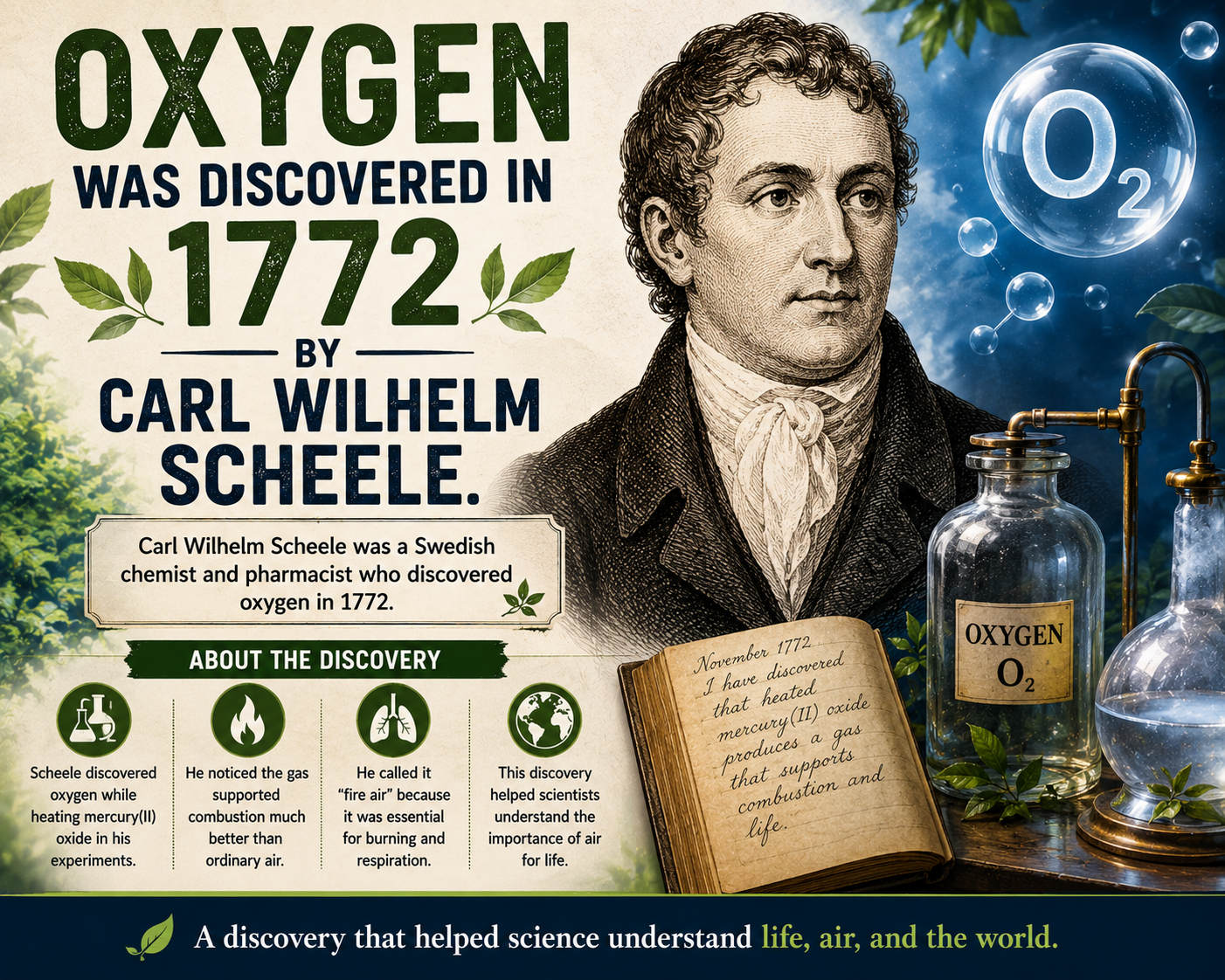
    Oxygen is one of the most important elements for life on Earth, but its discovery was the result of careful experiments, curiosity, and scientific investigation.

    In 1772, Swedish chemist and pharmacist Carl Wilhelm Scheele identified a gas that behaved differently from ordinary air. He found that this gas strongly supported combustion and played an important role in the processes we now understand as respiration and burning.

    Scheele referred to the gas as “fire air” because of its ability to support combustion. His experiments helped reveal that air was not simply one single substance, but a mixture containing different gases.

    The story of oxygen’s discovery is a fascinating example of how science develops through observation and experimentation. Scientists investigate materials, record their observations, test ideas, and gradually build a better understanding of the natural world.

    Although Scheele discovered oxygen independently, the recognition and naming of oxygen as an element also involved other scientists, including Joseph Priestley and Antoine Lavoisier. Their work helped establish oxygen’s role in combustion and contributed to the development of modern chemistry.

    Oxygen is represented by the chemical symbol O and has the atomic number 8. It is essential for aerobic respiration in humans and many other organisms. Without oxygen, most familiar forms of complex life could not survive.

    The discovery of oxygen changed the way scientists understood air, combustion, chemistry, and life. It became an important part of the scientific revolution in chemistry and helped researchers develop a much clearer understanding of chemical reactions.

    This story also reminds us that major scientific discoveries often happen through patience, careful observation, and a willingness to ask questions. Every experiment can reveal something new, and every discovery can open the door to further knowledge.

    From “fire air” to oxygen, the journey of discovery changed chemistry forever.

    Science teaches us that the world around us is full of mysteries waiting to be explored. Whether studying gases, atoms, cells, planets, or living organisms, curiosity is often the first step toward discovery.

    Question. Observe. Experiment. Discover. Learn.

    #Oxygen #DiscoveryOfOxygen #CarlWilhelmScheele #ScienceHistory #HistoryOfScience #Chemistry #ChemicalElements #OxygenDiscovery #1772 #ScientificDiscovery #ScienceEducation #ChemistryFacts #ScienceFacts #LearnScience #ScientificRevolution #Combustion #Air #Respiration #ChemistryHistory #STEM #Education #LearningJourney #ScienceExperiment #ScientificThinking #Research #Discovery #Knowledge #Innovation #Curiosity #ExploreScience #ScienceLovers #EducationalContent #Scientists #ChemicalScience #ModernChemistry #ScienceJourney #HistoryOfChemistry

    Rehan School Islamabad Campus
    Asma Shaheen EducationWali
    Irum Asim
    Saima Happinesswali

    #rsisb Roll No.240 Image With Chatgpt No.6 Foundation Level Oxygen is one of the most important elements for life on Earth, but its discovery was the result of careful experiments, curiosity, and scientific investigation. ๐ŸŒฑ๐Ÿซ๐Ÿ”ฅ In 1772, Swedish chemist and pharmacist Carl Wilhelm Scheele identified a gas that behaved differently from ordinary air. He found that this gas strongly supported combustion and played an important role in the processes we now understand as respiration and burning. ๐Ÿ”ฅ๐Ÿงช Scheele referred to the gas as “fire air” because of its ability to support combustion. His experiments helped reveal that air was not simply one single substance, but a mixture containing different gases. ๐ŸŒฌ๏ธ๐Ÿ”ฌ The story of oxygen’s discovery is a fascinating example of how science develops through observation and experimentation. Scientists investigate materials, record their observations, test ideas, and gradually build a better understanding of the natural world. ๐Ÿ“š๐Ÿ”Ž๐Ÿ’ก Although Scheele discovered oxygen independently, the recognition and naming of oxygen as an element also involved other scientists, including Joseph Priestley and Antoine Lavoisier. Their work helped establish oxygen’s role in combustion and contributed to the development of modern chemistry. โš—๏ธ๐Ÿง ๐ŸŒ Oxygen is represented by the chemical symbol O and has the atomic number 8. It is essential for aerobic respiration in humans and many other organisms. ๐Ÿซ๐ŸŒฟ๐Ÿพ Without oxygen, most familiar forms of complex life could not survive. The discovery of oxygen changed the way scientists understood air, combustion, chemistry, and life. ๐ŸŒŽ๐Ÿ”ฅ๐Ÿ”ฌ It became an important part of the scientific revolution in chemistry and helped researchers develop a much clearer understanding of chemical reactions. This story also reminds us that major scientific discoveries often happen through patience, careful observation, and a willingness to ask questions. ๐Ÿ’ญโžก๏ธ๐Ÿ”ฌโžก๏ธ๐Ÿ’ก Every experiment can reveal something new, and every discovery can open the door to further knowledge. โœจ From “fire air” to oxygen, the journey of discovery changed chemistry forever. โœจ Science teaches us that the world around us is full of mysteries waiting to be explored. ๐ŸŒ๐Ÿ”Ž Whether studying gases, atoms, cells, planets, or living organisms, curiosity is often the first step toward discovery. ๐Ÿš€๐Ÿ“š ๐ŸŒŸ Question. Observe. Experiment. Discover. Learn. ๐ŸŒŸ #Oxygen #DiscoveryOfOxygen #CarlWilhelmScheele #ScienceHistory #HistoryOfScience #Chemistry #ChemicalElements #OxygenDiscovery #1772 #ScientificDiscovery #ScienceEducation #ChemistryFacts #ScienceFacts #LearnScience #ScientificRevolution #Combustion #Air #Respiration #ChemistryHistory #STEM #Education #LearningJourney #ScienceExperiment #ScientificThinking #Research #Discovery #Knowledge #Innovation #Curiosity #ExploreScience #ScienceLovers #EducationalContent #Scientists #ChemicalScience #ModernChemistry #ScienceJourney #HistoryOfChemistry ๐Ÿ”ฌ๐Ÿงช๐ŸŒ๐Ÿ”ฅ๐Ÿซ๐Ÿ“š๐Ÿ’กโœจ๐Ÿš€๐ŸŒฑ Rehan School Islamabad Campus Asma Shaheen EducationWali Irum Asim Saima Happinesswali
    0 Comments 0 Shares 3566 Views
  • #rsisb
    Roll No.240
    Story Post No.24
    Foundation Level

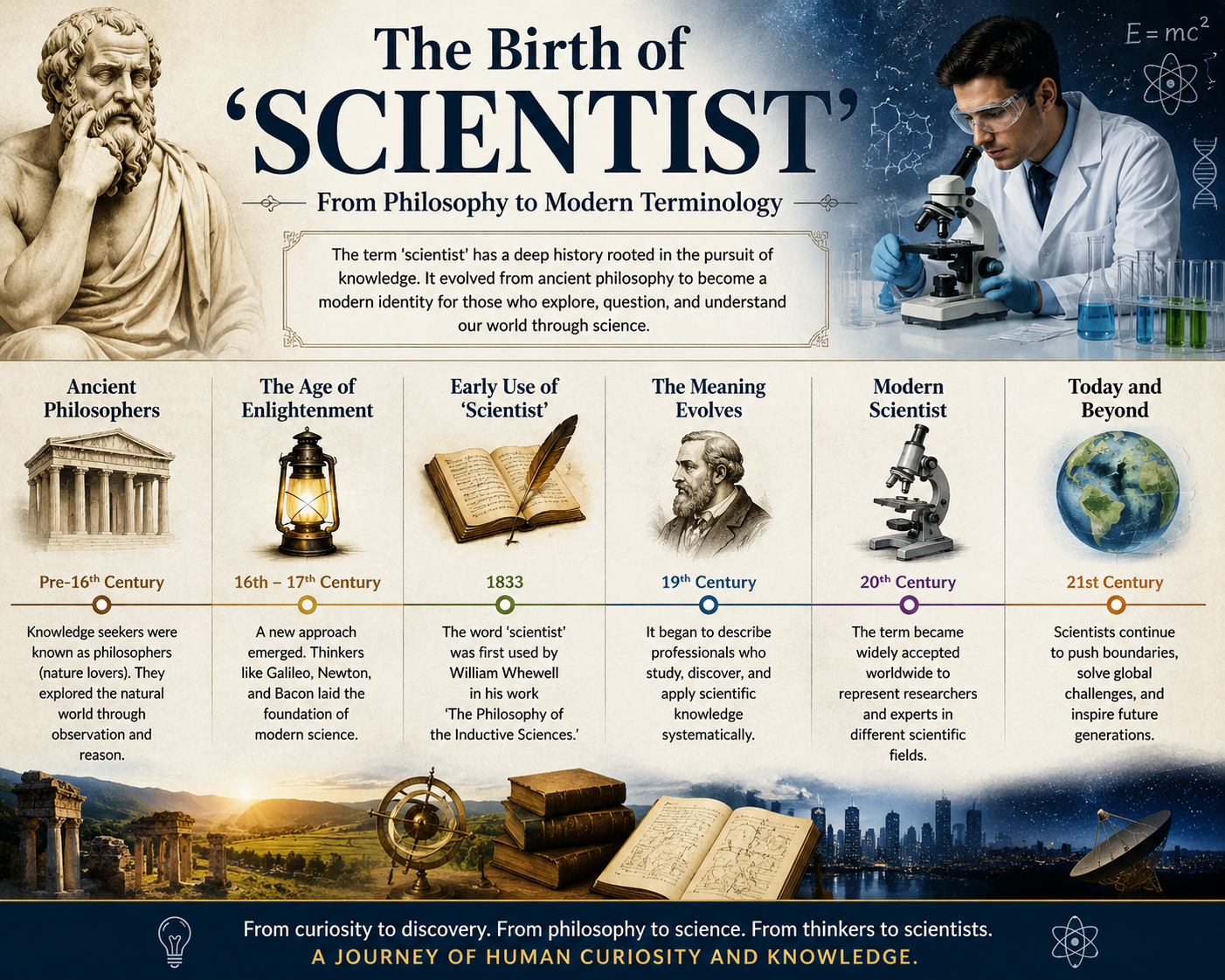
    The word “scientist” may sound like a modern term, but the journey behind it is connected to centuries of human curiosity, philosophy, observation, experimentation, and the search for knowledge.

    Long before the word “scientist” became common, people who studied the natural world were often known as philosophers, scholars, natural philosophers, mathematicians, and thinkers. They asked important questions about nature, the universe, life, matter, motion, and the world around them.

    From the thinkers of the ancient world to the scholars of the Renaissance and the Scientific Revolution, humans continued developing new ways to understand nature. Observation became more important, experiments became more systematic, and evidence gradually became a central part of scientific inquiry.

    During the 18th and 19th centuries, many different branches of knowledge began becoming more specialized. Physics, chemistry, biology, astronomy, geology, and other fields developed their own methods, discoveries, and communities of researchers.

    A major moment in terminology came in the 19th century, when the word “scientist” was introduced as a useful name for people engaged in scientific study. The term is widely associated with William Whewell, who used it in 1833. This helped provide a new, unified word for researchers working across different areas of science.

    The evolution of this word reflects something bigger than language. It represents the changing way humanity organized knowledge and recognized scientific work. The transition from “natural philosopher” to “scientist” shows how science gradually became a distinct and organized field of study.

    Today, scientists work in laboratories, universities, hospitals, observatories, research centers, engineering facilities, and many other places around the world. They investigate everything from tiny cells and molecules to distant galaxies and the origins of the universe.

    Modern science continues to grow through curiosity, evidence, teamwork, technology, and a willingness to ask difficult questions. Every discovery begins with someone wondering, “Why?”, “How?”, or “What if?”

    The story of the word “scientist” reminds us that human knowledge is always evolving. What began with simple curiosity and philosophical questioning gradually developed into the powerful and diverse scientific world we know today.

    From thinkers to researchers. From philosophy to science. From questions to discoveries.

    Science is not only about finding answers—it is also about continuing to ask better questions.

    A journey from curiosity to discovery, and from philosophy to modern science.

    #TheBirthOfScientist #Scientist #HistoryOfScience #ScienceHistory #ScientificRevolution #Philosophy #NaturalPhilosophy #WilliamWhewell #1833 #ModernScience #ScienceEducation #ScientificTerminology #Science #Scientists #Research #Discovery #Curiosity #Knowledge #Learning #Education #STEM #Physics #Chemistry #Biology #Astronomy #Geology #Innovation #Experimentation #ScientificThinking #CriticalThinking #HumanKnowledge #HistoryOfKnowledge #ScienceJourney #FromPhilosophyToScience #ScienceFacts #EducationalContent #LearningJourney #ExploreScience #DiscoverScience

    Rehan School Islamabad Campus
    Asma Shaheen EducationWali
    Irum Asim
    Saima Happinesswali

    #rsisb Roll No.240 Story Post No.24 Foundation Level The word “scientist” may sound like a modern term, but the journey behind it is connected to centuries of human curiosity, philosophy, observation, experimentation, and the search for knowledge. ๐Ÿง ๐Ÿ”Ž Long before the word “scientist” became common, people who studied the natural world were often known as philosophers, scholars, natural philosophers, mathematicians, and thinkers. ๐Ÿ›๏ธ๐Ÿ“œ They asked important questions about nature, the universe, life, matter, motion, and the world around them. From the thinkers of the ancient world to the scholars of the Renaissance and the Scientific Revolution, humans continued developing new ways to understand nature. ๐ŸŒŒ๐ŸŒ๐Ÿ“– Observation became more important, experiments became more systematic, and evidence gradually became a central part of scientific inquiry. ๐Ÿ”ฌ๐Ÿงชโœจ During the 18th and 19th centuries, many different branches of knowledge began becoming more specialized. Physics, chemistry, biology, astronomy, geology, and other fields developed their own methods, discoveries, and communities of researchers. ๐Ÿงฌโš—๏ธ๐ŸŒ  A major moment in terminology came in the 19th century, when the word “scientist” was introduced as a useful name for people engaged in scientific study. The term is widely associated with William Whewell, who used it in 1833. ๐Ÿ“œ๐Ÿ”ฌ This helped provide a new, unified word for researchers working across different areas of science. The evolution of this word reflects something bigger than language. It represents the changing way humanity organized knowledge and recognized scientific work. ๐ŸŒŸ๐Ÿ“š The transition from “natural philosopher” to “scientist” shows how science gradually became a distinct and organized field of study. Today, scientists work in laboratories, universities, hospitals, observatories, research centers, engineering facilities, and many other places around the world. ๐ŸŒ๐Ÿงช๐Ÿ”ญ They investigate everything from tiny cells and molecules to distant galaxies and the origins of the universe. ๐Ÿงฌ๐Ÿฆ ๐ŸŒŒ Modern science continues to grow through curiosity, evidence, teamwork, technology, and a willingness to ask difficult questions. ๐Ÿ’ก๐Ÿค๐Ÿš€ Every discovery begins with someone wondering, “Why?”, “How?”, or “What if?” The story of the word “scientist” reminds us that human knowledge is always evolving. What began with simple curiosity and philosophical questioning gradually developed into the powerful and diverse scientific world we know today. ๐ŸŒฑโžก๏ธ๐Ÿ”ฌโžก๏ธ๐ŸŒ โœจ From thinkers to researchers. From philosophy to science. From questions to discoveries. โœจ Science is not only about finding answers—it is also about continuing to ask better questions. ๐Ÿ”Ž๐Ÿ’ก ๐ŸŒŸ A journey from curiosity to discovery, and from philosophy to modern science. ๐ŸŒŸ #TheBirthOfScientist #Scientist #HistoryOfScience #ScienceHistory #ScientificRevolution #Philosophy #NaturalPhilosophy #WilliamWhewell #1833 #ModernScience #ScienceEducation #ScientificTerminology #Science #Scientists #Research #Discovery #Curiosity #Knowledge #Learning #Education #STEM #Physics #Chemistry #Biology #Astronomy #Geology #Innovation #Experimentation #ScientificThinking #CriticalThinking #HumanKnowledge #HistoryOfKnowledge #ScienceJourney #FromPhilosophyToScience #ScienceFacts #EducationalContent #LearningJourney #ExploreScience #DiscoverScience ๐Ÿ”ฌ๐Ÿ“š๐Ÿง ๐ŸŒโœจ๐Ÿ”ญ๐Ÿงช๐Ÿš€๐Ÿ’ก๐ŸŒŸ Rehan School Islamabad Campus Asma Shaheen EducationWali Irum Asim Saima Happinesswali
    0 Comments 0 Shares 3422 Views
  • Title
    “Law Sirf Courtroom Tak Limited Nahi Hai.”

    Story

    Legal technology ka matlab sirf courtrooms ya lawyers nahi hai.

    Aapki daily life mein bhi legal needs aa sakti hain:

    Agreement sign karna
    Contract samajhna
    Business compliance manage karna
    Case updates track karna
    Legal professional find karna

    Isi liye Rehan Law ka vision hai ke AI aur technology ko use karke legal journey ko simple, organized aur accessible banaya ja sake.

    Ek platform.
    Multiple legal needs.
    One smarter journey.

    REHAN LAW

    AI + LAW = A SMARTER FUTURE

    Coming Soon

    Story Engagement
    Aapko legal technology mein sabse useful feature kya lagta hai?

    AI Legal Assistance
    Smart Documents
    Contract Review
    Lawyer Marketplace
    Case Tracking

    Apna option choose karein!

    Hashtags

    #RehanLaw #LegalTech #LegalAI #AI #SmartLaw #FutureOfLaw #LegalInnovation #LegalTechnology #Pakistan #Startup #Innovation #ComingSoon
    ๐ŸŽฏ Title “Law Sirf Courtroom Tak Limited Nahi Hai.” ๐Ÿ“– Story Legal technology ka matlab sirf courtrooms ya lawyers nahi hai. Aapki daily life mein bhi legal needs aa sakti hain: ๐Ÿ“„ Agreement sign karna ๐Ÿ“‘ Contract samajhna ๐Ÿข Business compliance manage karna โš–๏ธ Case updates track karna ๐Ÿ‘จ‍โš–๏ธ Legal professional find karna Isi liye Rehan Law ka vision hai ke AI aur technology ko use karke legal journey ko simple, organized aur accessible banaya ja sake. ๐Ÿค–โš–๏ธ Ek platform. Multiple legal needs. One smarter journey. REHAN LAW AI + LAW = A SMARTER FUTURE ๐Ÿš€ Coming Soon ๐Ÿ’ฌ Story Engagement Aapko legal technology mein sabse useful feature kya lagta hai? ๐Ÿค– AI Legal Assistance ๐Ÿ“„ Smart Documents ๐Ÿ“‘ Contract Review ๐Ÿ‘จ‍โš–๏ธ Lawyer Marketplace โš–๏ธ Case Tracking ๐Ÿ‘‡ Apna option choose karein! ๐Ÿท๏ธ Hashtags #RehanLaw #LegalTech #LegalAI #AI #SmartLaw #FutureOfLaw #LegalInnovation #LegalTechnology #Pakistan #Startup #Innovation #ComingSoon
    0 Comments 0 Shares 1129 Views
  • Roll No.190
    Call Annie No. 49
    Foundation level

    1. AI in Daily Life

    Idea: Talk about how AI helps us with studying, searching for information, translation, and everyday tasks.
    Emojis:
    Hashtags: #ArtificialIntelligence #AI #Technology #TalkWithAI #Learning

    2. Smartphones in Our Life

    Idea: Discuss how smartphones help us communicate, learn, take photos, use maps, and stay connected.
    Emojis:
    Hashtags: #Smartphone #MobileTechnology #Technology #DigitalLife #Learning

    3. The Power of the Internet

    Idea: Explain how the internet connects people and helps students learn new things from anywhere.
    Emojis:
    Hashtags: #Internet #Technology #Education #DigitalWorld #Learning

    4. Technology and Gaming

    Idea: Talk about how modern technology has changed video games and made them more interactive.
    Emojis:
    Hashtags: #Gaming #Technology #VideoGames #Gamer #DigitalWorld

    5. Staying Safe Online

    Idea: Discuss passwords, privacy, suspicious links, and why we should be careful when using the internet.
    Emojis:
    Hashtags: #OnlineSafety #CyberSafety #InternetSafety #Technology #DigitalSafety

    6. Technology of the Future

    Idea: Imagine what future robots, smart homes, AI, and transportation might look like.
    Emojis:
    Hashtags: #FutureTechnology #Innovation #Robots #AI #Future

    7. Technology in Education

    Idea: Talk about how computers, tablets, online classes, and AI can make learning easier and more interesting.
    Emojis:
    Hashtags: #Education #EdTech #Technology #StudentLife #Learning

    8. Can AI Think Like Humans?

    Idea: Have a simple conversation about what AI can do and how humans are different from AI.
    Emojis:
    Hashtags: #AI #ArtificialIntelligence #HumanVsAI #Technology #Innovation
    Roll No.190 Call Annie No. 49 Foundation level ๐Ÿ’ป 1. AI in Daily Life ๐Ÿค– Idea: Talk about how AI helps us with studying, searching for information, translation, and everyday tasks. Emojis: ๐Ÿค–๐Ÿ’ป๐Ÿ“šโœจ Hashtags: #ArtificialIntelligence #AI #Technology #TalkWithAI #Learning ๐Ÿ“ฑ 2. Smartphones in Our Life Idea: Discuss how smartphones help us communicate, learn, take photos, use maps, and stay connected. Emojis: ๐Ÿ“ฑ๐ŸŒ๐Ÿ“ธ๐Ÿ—บ๏ธ Hashtags: #Smartphone #MobileTechnology #Technology #DigitalLife #Learning ๐ŸŒ 3. The Power of the Internet Idea: Explain how the internet connects people and helps students learn new things from anywhere. Emojis: ๐ŸŒ๐Ÿ’ป๐Ÿ“š๐Ÿ”Ž Hashtags: #Internet #Technology #Education #DigitalWorld #Learning ๐ŸŽฎ 4. Technology and Gaming Idea: Talk about how modern technology has changed video games and made them more interactive. Emojis: ๐ŸŽฎ๐Ÿ•น๏ธ๐Ÿ’ป๐Ÿš€ Hashtags: #Gaming #Technology #VideoGames #Gamer #DigitalWorld ๐Ÿ” 5. Staying Safe Online Idea: Discuss passwords, privacy, suspicious links, and why we should be careful when using the internet. Emojis: ๐Ÿ”๐Ÿ›ก๏ธ๐Ÿ’ป๐ŸŒ Hashtags: #OnlineSafety #CyberSafety #InternetSafety #Technology #DigitalSafety ๐Ÿš€ 6. Technology of the Future Idea: Imagine what future robots, smart homes, AI, and transportation might look like. Emojis: ๐Ÿš€๐Ÿค–๐Ÿ ๐Ÿš—โœจ Hashtags: #FutureTechnology #Innovation #Robots #AI #Future ๐Ÿ“š 7. Technology in Education Idea: Talk about how computers, tablets, online classes, and AI can make learning easier and more interesting. Emojis: ๐Ÿ“š๐Ÿ’ป๐ŸŽ“๐Ÿค– Hashtags: #Education #EdTech #Technology #StudentLife #Learning ๐Ÿง  8. Can AI Think Like Humans? Idea: Have a simple conversation about what AI can do and how humans are different from AI. Emojis: ๐Ÿง ๐Ÿค–๐Ÿ’ก๐Ÿ’ป Hashtags: #AI #ArtificialIntelligence #HumanVsAI #Technology #Innovation
    0 Comments 0 Shares 3062 Views 0
More Results