• **Ethics in Journalism: Why It Matters | Zachariah Hughes **

    In a world where information travels across the globe within seconds, journalism plays a vital role in helping people understand what is happening around them. But have you ever wondered why honesty, accuracy, and responsibility are so important when sharing news? The topic *“Ethics in Journalism: Why It Matters”* highlights the importance of trustworthy reporting and the responsibility journalists have toward society.

    Journalism is not simply about reporting stories or being the first to publish breaking news. It is about discovering the truth, checking facts, presenting information fairly, and helping people make informed decisions. Ethical journalists understand that their words can influence public opinion, affect people's lives, and shape the way communities understand important events.

    **Why do journalistic ethics matter?**

    **Truth and Accuracy:** Journalists should verify information before publishing it and correct mistakes when they occur.

    **Fairness and Balance:** Different perspectives should be represented responsibly, without deliberately misleading audiences.

    **Accountability:** Journalists should take responsibility for their reporting and explain or correct errors when necessary.

    **Respect for Privacy:** People's dignity and personal information should be treated carefully, especially when reporting sensitive stories.

    **Fighting Misinformation:** Responsible journalism helps audiences distinguish verified facts from rumors, misleading headlines, and false information.

    In the age of social media, anyone can share news, photos, and opinions with a global audience. This makes media literacy more important than ever. Before sharing a story, we should check its source, examine the evidence, and avoid spreading information that has not been verified. Every person who shares information has an opportunity to contribute to a more informed digital community.

    **The key message:** Journalism earns public trust through honesty, accuracy, independence, and accountability. Reliable information empowers people, strengthens communities, and supports informed decision-making.

    Let's value truth over rumors, facts over assumptions, and responsible reporting over sensationalism. A better-informed world begins with a commitment to seek the truth and share it responsibly!

    #ZachariahHughes #EthicsInJournalism #Journalism #MediaEthics #TruthMatters #ResponsibleJournalism #MediaLiteracy #FakeNewsAwareness #FactChecking #DigitalMedia #FreedomOfPress #PublicTrust #Misinformation #NewsReporting #CriticalThinking #SocialMediaAwareness #ResponsibleSharing #Communication #Integrity #TruthAndTransparency
    📰🌍 **Ethics in Journalism: Why It Matters | Zachariah Hughes 🎤✨** In a world where information travels across the globe within seconds, journalism plays a vital role in helping people understand what is happening around them. But have you ever wondered why honesty, accuracy, and responsibility are so important when sharing news? 🤔📢 The topic *“Ethics in Journalism: Why It Matters”* highlights the importance of trustworthy reporting and the responsibility journalists have toward society. 💡 Journalism is not simply about reporting stories or being the first to publish breaking news. It is about discovering the truth, checking facts, presenting information fairly, and helping people make informed decisions. Ethical journalists understand that their words can influence public opinion, affect people's lives, and shape the way communities understand important events. 🗞️🤝 ⚖️ **Why do journalistic ethics matter?** ✅ **Truth and Accuracy:** Journalists should verify information before publishing it and correct mistakes when they occur. ✅ **Fairness and Balance:** Different perspectives should be represented responsibly, without deliberately misleading audiences. ✅ **Accountability:** Journalists should take responsibility for their reporting and explain or correct errors when necessary. ✅ **Respect for Privacy:** People's dignity and personal information should be treated carefully, especially when reporting sensitive stories. ✅ **Fighting Misinformation:** Responsible journalism helps audiences distinguish verified facts from rumors, misleading headlines, and false information. 🔍📱 🌐 In the age of social media, anyone can share news, photos, and opinions with a global audience. This makes media literacy more important than ever. Before sharing a story, we should check its source, examine the evidence, and avoid spreading information that has not been verified. Every person who shares information has an opportunity to contribute to a more informed digital community. 💻✨ 🎯 **The key message:** Journalism earns public trust through honesty, accuracy, independence, and accountability. Reliable information empowers people, strengthens communities, and supports informed decision-making. ❤️ Let's value truth over rumors, facts over assumptions, and responsible reporting over sensationalism. A better-informed world begins with a commitment to seek the truth and share it responsibly! 📰🌍💡 #ZachariahHughes #EthicsInJournalism #Journalism #MediaEthics #TruthMatters #ResponsibleJournalism #MediaLiteracy #FakeNewsAwareness #FactChecking #DigitalMedia #FreedomOfPress #PublicTrust #Misinformation #NewsReporting #CriticalThinking #SocialMediaAwareness #ResponsibleSharing #Communication #Integrity #TruthAndTransparency 📰🔍🌍✨
    0 تبصرے 0 شیئرز 1035 ویوز 4
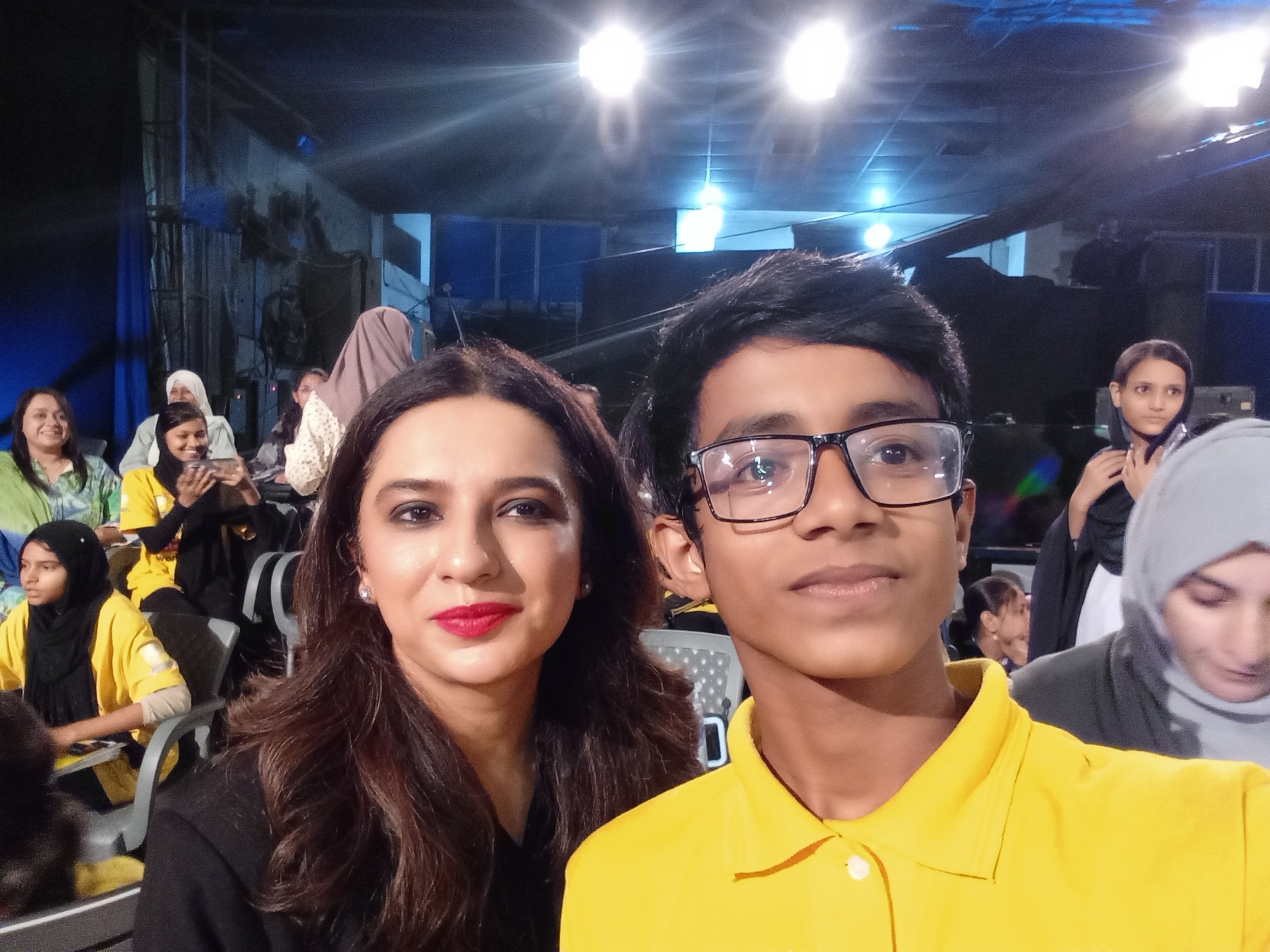
  • A memorable day at ARY News!
    It was an absolute pleasure to visit the ARY News studio and meet the talented Maria Memon. Grateful for the opportunity to be part of such an inspiring environment and witness journalism in action.
    Every new experience is a step toward bigger dreams.
    A memorable day at ARY News! ✨📺 It was an absolute pleasure to visit the ARY News studio and meet the talented Maria Memon. Grateful for the opportunity to be part of such an inspiring environment and witness journalism in action. Every new experience is a step toward bigger dreams. 🌟❤️
    0 تبصرے 0 شیئرز 402 ویوز
  • A memorable day at ARY News!
    It was an absolute pleasure to visit the ARY News studio and meet the talented Maria Memon. Grateful for the opportunity to be part of such an inspiring environment and witness journalism in action.
    Every new experience is a step toward bigger dreams.
    A memorable day at ARY News! ✨📺 It was an absolute pleasure to visit the ARY News studio and meet the talented Maria Memon. Grateful for the opportunity to be part of such an inspiring environment and witness journalism in action. Every new experience is a step toward bigger dreams. 🌟❤️
    0 تبصرے 0 شیئرز 395 ویوز
  • A memorable day at ARY News!

    It was an absolute pleasure to visit the ARY News studio and meet the talented Maria Memon. Grateful for the opportunity to be part of such an inspiring environment and witness journalism in action.

    Every new experience is a step toward bigger dreams.

    #ARYNews #MariaMemon #StudioVisit #MediaJourney #Learning #Inspiration
    Rehan Allahwala
    A memorable day at ARY News! ✨📺 It was an absolute pleasure to visit the ARY News studio and meet the talented Maria Memon. Grateful for the opportunity to be part of such an inspiring environment and witness journalism in action. Every new experience is a step toward bigger dreams. 🌟❤️ #ARYNews #MariaMemon #StudioVisit #MediaJourney #Learning #Inspiration Rehan Allahwala
    0 تبصرے 0 شیئرز 2505 ویوز
  • A memorable day at ARY News!

    It was an absolute pleasure to visit the ARY News studio and meet the talented Maria Memon. Grateful for the opportunity to be part of such an inspiring environment and witness journalism in action.

    Every new experience is a step toward bigger dreams.

    #ARYNews #MariaMemon #StudioVisit #MediaJourney #Learning #Inspiration
    Rehan Allahwala
    A memorable day at ARY News! ✨📺 It was an absolute pleasure to visit the ARY News studio and meet the talented Maria Memon. Grateful for the opportunity to be part of such an inspiring environment and witness journalism in action. Every new experience is a step toward bigger dreams. 🌟❤️ #ARYNews #MariaMemon #StudioVisit #MediaJourney #Learning #Inspiration Rehan Allahwala
    0 تبصرے 0 شیئرز 2469 ویوز
  • I asked Rubaid from India, when I sent you some friends, do add them, His reply was , “But i always judge people by their thoughts, so before adding people , they come to know about my ideology”

    He did not wanted to add people on his Facebook, I later introduced him to some people personally, and he inboxes this to me today,

    Asslamu alay kum Rehan Bhai , I like the way you are connecting people , I did changes in my thinking to accept your way, now i am adding the people to know about them, while before i only add those people who are like me or belong to my interest filed i.e.IT , Science , Journalism , IR , Philanthropy & Poetry . i am thankful to you to give me a chance to connect more people around the world .

    i accepted your way because your vision & mine is same both of use technology for philanthropy , both of us wants to provide free education & peace around the world .

    i hope you will be with in this journey .

    No need to worry, I am a reserved kind of person who dont want to disturb others.

    i like healthy conversation not long chat.

    My best wishes with you in your journey. ~

    Syed Rubaid Ahmad
    I asked Rubaid from India, when I sent you some friends, do add them, His reply was , “But i always judge people by their thoughts, so before adding people , they come to know about my ideology” He did not wanted to add people on his Facebook, I later introduced him to some people personally, and he inboxes this to me today, Asslamu alay kum Rehan Bhai , I like the way you are connecting people , I did changes in my thinking to accept your way, now i am adding the people to know about them, while before i only add those people who are like me or belong to my interest filed i.e.IT , Science , Journalism , IR , Philanthropy & Poetry . i am thankful to you to give me a chance to connect more people around the world . i accepted your way because your vision & mine is same both of use technology for philanthropy , both of us wants to provide free education & peace around the world . i hope you will be with in this journey . No need to worry, I am a reserved kind of person who don't want to disturb others. i like healthy conversation not long chat. My best wishes with you in your journey. ~ Syed Rubaid Ahmad
    0 تبصرے 0 شیئرز 1328 ویوز
  • What is Cyber Journalism - A program by Anis Uddin - Sponsored by Institute Of Peace -

    5 Laptops were given to people who made 800 Mutual Friends by our guests
    What is Cyber Journalism - A program by Anis Uddin - Sponsored by Institute Of Peace - 5 Laptops were given to people who made 800 Mutual Friends by our guests
    0 تبصرے 0 شیئرز 798 ویوز
  • Beautiful Journalism ! If we can start working on solving our problems like this ! Most of them will go away

    Thank you Aymann Ismail
    Beautiful Journalism ! If we can start working on solving our problems like this ! Most of them will go away Thank you Aymann Ismail
    0 تبصرے 0 شیئرز 271 ویوز
  • The Future of English Is Not in Classrooms—It Is in Conversations

    For generations, schools around the world have taught English through textbooks, grammar exercises, vocabulary lists, and examinations. Students spend thousands of hours studying the language, yet many still hesitate when asked to hold a simple conversation with a foreigner.

    The problem is not that they lack intelligence. The problem is that language is not meant to be memorized—it is meant to be used.

    Children learn their first language naturally because they communicate every day. They make mistakes, receive feedback, and gradually become fluent. The same principle applies to English. The fastest way to learn English is not by studying grammar alone, but by building real friendships and having meaningful conversations.

    Today, thanks to the internet, dozens of organizations around the world are proving this idea works.

    One of the pioneers is Soliya, a nonprofit organization that brings together university students and young adults from different countries for live, facilitated online dialogues. Participants discuss identity, culture, religion, politics, media, and global challenges in a respectful environment. The goal is not simply to practice English, but to build understanding, empathy, and critical thinking across cultures.

    Another remarkable initiative is Generation Global, founded to connect teenagers aged 13–17 through moderated video dialogues and online discussions. Students from different countries explore topics such as climate change, education, traditions, technology, and peacebuilding. Thousands of schools participate, showing that young people can become global citizens while improving their communication skills.

    PenPal Schools takes a project-based approach. Instead of simply chatting, classrooms from different countries work together on guided lessons covering science, history, artificial intelligence, entrepreneurship, culture, geography, and current events. Students exchange essays, videos, questions, and ideas while naturally developing their English.

    For more than three decades, iEARN (International Education and Resource Network) has connected millions of students and educators in over one hundred countries. Rather than completing assignments only for their teachers, students collaborate with international partners to solve real-world problems, conduct research, and produce projects that have a positive impact on their communities.

    Global Nomads Group specializes in connecting youth through live video conferences, storytelling, journalism, and collaborative learning experiences. Students discuss difficult global issues, learn to listen respectfully, and gain confidence speaking with people whose backgrounds are very different from their own.

    Level Up Village partners schools around the world through virtual courses in engineering, design thinking, computer science, environmental science, entrepreneurship, and global citizenship. Students learn together while communicating regularly with international teammates.

    The famous student exchange organization AFS has expanded beyond physical travel by creating AFS Virtual Exchange programs. Young people who cannot afford to study abroad can still participate in structured online intercultural learning experiences from their homes.

    Empatico focuses on younger children by connecting elementary classrooms around the world through carefully designed video sessions. Students introduce their cultures, exchange classroom activities, and discover similarities despite living thousands of kilometers apart.

    The Stevens Initiative supports and funds virtual exchange programs connecting young people across borders, particularly between the United States and the Middle East and North Africa. Rather than operating a single platform, it invests in organizations that expand international dialogue through technology.

    Across Europe, eTwinning has become one of the world’s largest teacher collaboration networks. Supported by the European education community, it allows schools to partner internationally, create joint classroom projects, and exchange ideas without requiring students to leave their countries.

    Outside the school system, several platforms focus specifically on language exchange.

    HelloTalk has created one of the world’s largest communities for language learners. Users practice by texting, sending voice messages, making audio calls, and holding video conversations with native speakers. Built-in translation and pronunciation tools help learners communicate with confidence.

    Tandem follows a similar model by matching language learners with native speakers for one-to-one conversations. Many lifelong international friendships begin through these exchanges while participants improve their speaking skills.

    ConversationExchange allows people to find conversation partners through email, text, voice calls, video calls, or even face-to-face meetings when possible. It demonstrates that meaningful language practice can happen anywhere.

    MyLanguageExchange has connected learners from around the world for many years through structured pen-pal relationships and conversation exchanges. Its emphasis is on long-term learning partnerships rather than one-time lessons.

    One of the most inspiring examples is NaTakallam, a social enterprise that employs refugees and displaced people as online language tutors. Students not only learn English or Arabic but also hear personal stories, experience different cultures, and directly support refugee livelihoods.

    Finally, italki has built a global marketplace where learners can hire professional teachers or community tutors from almost every country. Millions of lessons have been delivered through one-on-one video conversations, proving that speaking practice is often more valuable than passive study.

    Although these organizations differ in their methods, they all share the same philosophy:

    Language grows through human connection.

    Some focus on dialogue. Some focus on projects. Some emphasize cultural understanding. Others provide language partners or professional tutors. But every successful program recognizes that communication—not memorization—is the foundation of fluency.

    The benefits extend far beyond learning English.

    Students become more confident public speakers. They learn to collaborate with people from different cultures. They gain empathy by understanding different perspectives. They build international friendships that may later become business partnerships, research collaborations, or startup opportunities. They improve critical thinking, teamwork, digital communication, and leadership.

    In today’s AI-powered world, technical knowledge is becoming easier to acquire through online courses and intelligent assistants. What remains uniquely valuable is the ability to build trust with people from different cultures. Communication is becoming one of the world’s most important skills.

    This creates an extraordinary opportunity for schools.

    Imagine if every student participated in four international conversations every month.

    Imagine if they interviewed entrepreneurs from different countries.

    Imagine if they collaborated on science experiments, startup ideas, environmental projects, robotics competitions, podcasts, and documentaries with students around the world.

    Imagine graduating after speaking with hundreds of people from dozens of countries instead of memorizing thousands of vocabulary words that are quickly forgotten.

    For Rehan School, this vision could become the Rehan Global English Exchange.

    Every student could complete monthly international interviews, cross-cultural video conversations, collaborative AI projects, startup discussions, book clubs, debate sessions, and cultural storytelling. Instead of measuring only examination scores, students would also build an international communication portfolio demonstrating hundreds of real conversations and global collaborations.

    The internet has transformed humanity into one interconnected classroom. The organizations leading this movement have already shown what is possible. The next step is to make these opportunities available to every child, regardless of where they were born.

    The future of English education does not belong to textbooks alone.

    It belongs to conversations.

    Because every conversation builds confidence.

    Every friendship builds trust.

    Every cultural exchange builds peace.

    And every human connection opens a door to opportunities that no classroom alone can provide.

    The Future of English Is Not in Classrooms—It Is in Conversations For generations, schools around the world have taught English through textbooks, grammar exercises, vocabulary lists, and examinations. Students spend thousands of hours studying the language, yet many still hesitate when asked to hold a simple conversation with a foreigner. The problem is not that they lack intelligence. The problem is that language is not meant to be memorized—it is meant to be used. Children learn their first language naturally because they communicate every day. They make mistakes, receive feedback, and gradually become fluent. The same principle applies to English. The fastest way to learn English is not by studying grammar alone, but by building real friendships and having meaningful conversations. Today, thanks to the internet, dozens of organizations around the world are proving this idea works. One of the pioneers is Soliya, a nonprofit organization that brings together university students and young adults from different countries for live, facilitated online dialogues. Participants discuss identity, culture, religion, politics, media, and global challenges in a respectful environment. The goal is not simply to practice English, but to build understanding, empathy, and critical thinking across cultures. Another remarkable initiative is Generation Global, founded to connect teenagers aged 13–17 through moderated video dialogues and online discussions. Students from different countries explore topics such as climate change, education, traditions, technology, and peacebuilding. Thousands of schools participate, showing that young people can become global citizens while improving their communication skills. PenPal Schools takes a project-based approach. Instead of simply chatting, classrooms from different countries work together on guided lessons covering science, history, artificial intelligence, entrepreneurship, culture, geography, and current events. Students exchange essays, videos, questions, and ideas while naturally developing their English. For more than three decades, iEARN (International Education and Resource Network) has connected millions of students and educators in over one hundred countries. Rather than completing assignments only for their teachers, students collaborate with international partners to solve real-world problems, conduct research, and produce projects that have a positive impact on their communities. Global Nomads Group specializes in connecting youth through live video conferences, storytelling, journalism, and collaborative learning experiences. Students discuss difficult global issues, learn to listen respectfully, and gain confidence speaking with people whose backgrounds are very different from their own. Level Up Village partners schools around the world through virtual courses in engineering, design thinking, computer science, environmental science, entrepreneurship, and global citizenship. Students learn together while communicating regularly with international teammates. The famous student exchange organization AFS has expanded beyond physical travel by creating AFS Virtual Exchange programs. Young people who cannot afford to study abroad can still participate in structured online intercultural learning experiences from their homes. Empatico focuses on younger children by connecting elementary classrooms around the world through carefully designed video sessions. Students introduce their cultures, exchange classroom activities, and discover similarities despite living thousands of kilometers apart. The Stevens Initiative supports and funds virtual exchange programs connecting young people across borders, particularly between the United States and the Middle East and North Africa. Rather than operating a single platform, it invests in organizations that expand international dialogue through technology. Across Europe, eTwinning has become one of the world’s largest teacher collaboration networks. Supported by the European education community, it allows schools to partner internationally, create joint classroom projects, and exchange ideas without requiring students to leave their countries. Outside the school system, several platforms focus specifically on language exchange. HelloTalk has created one of the world’s largest communities for language learners. Users practice by texting, sending voice messages, making audio calls, and holding video conversations with native speakers. Built-in translation and pronunciation tools help learners communicate with confidence. Tandem follows a similar model by matching language learners with native speakers for one-to-one conversations. Many lifelong international friendships begin through these exchanges while participants improve their speaking skills. ConversationExchange allows people to find conversation partners through email, text, voice calls, video calls, or even face-to-face meetings when possible. It demonstrates that meaningful language practice can happen anywhere. MyLanguageExchange has connected learners from around the world for many years through structured pen-pal relationships and conversation exchanges. Its emphasis is on long-term learning partnerships rather than one-time lessons. One of the most inspiring examples is NaTakallam, a social enterprise that employs refugees and displaced people as online language tutors. Students not only learn English or Arabic but also hear personal stories, experience different cultures, and directly support refugee livelihoods. Finally, italki has built a global marketplace where learners can hire professional teachers or community tutors from almost every country. Millions of lessons have been delivered through one-on-one video conversations, proving that speaking practice is often more valuable than passive study. Although these organizations differ in their methods, they all share the same philosophy: Language grows through human connection. Some focus on dialogue. Some focus on projects. Some emphasize cultural understanding. Others provide language partners or professional tutors. But every successful program recognizes that communication—not memorization—is the foundation of fluency. The benefits extend far beyond learning English. Students become more confident public speakers. They learn to collaborate with people from different cultures. They gain empathy by understanding different perspectives. They build international friendships that may later become business partnerships, research collaborations, or startup opportunities. They improve critical thinking, teamwork, digital communication, and leadership. In today’s AI-powered world, technical knowledge is becoming easier to acquire through online courses and intelligent assistants. What remains uniquely valuable is the ability to build trust with people from different cultures. Communication is becoming one of the world’s most important skills. This creates an extraordinary opportunity for schools. Imagine if every student participated in four international conversations every month. Imagine if they interviewed entrepreneurs from different countries. Imagine if they collaborated on science experiments, startup ideas, environmental projects, robotics competitions, podcasts, and documentaries with students around the world. Imagine graduating after speaking with hundreds of people from dozens of countries instead of memorizing thousands of vocabulary words that are quickly forgotten. For Rehan School, this vision could become the Rehan Global English Exchange. Every student could complete monthly international interviews, cross-cultural video conversations, collaborative AI projects, startup discussions, book clubs, debate sessions, and cultural storytelling. Instead of measuring only examination scores, students would also build an international communication portfolio demonstrating hundreds of real conversations and global collaborations. The internet has transformed humanity into one interconnected classroom. The organizations leading this movement have already shown what is possible. The next step is to make these opportunities available to every child, regardless of where they were born. The future of English education does not belong to textbooks alone. It belongs to conversations. Because every conversation builds confidence. Every friendship builds trust. Every cultural exchange builds peace. And every human connection opens a door to opportunities that no classroom alone can provide.

    0 تبصرے 0 شیئرز 4634 ویوز
  • Rehan bhai,

    ma acca ka student tha jo k family reasons ki wajah se continue ni kar saka or na he us ma mera koi interest tha, mera interest poltical science ma ha, mane 1 article likha or usay university at buffalo ko send kia apply kartay waqt..unho ne muje offer letter bhej dia....magar mere paas itne finance ni k waha ja saku

    my dream is to work for new york times. can you please guide me on this matter.

    Reply via chatgpt
    Dear [Your Name],

    I understand that you were an ACCA student but had to discontinue your studies due to family reasons and lack of interest in the subject. It is commendable that you have found your true passion in political science and have managed to secure an offer letter from the University at Buffalo by submitting an article. However, I empathize with your financial constraints that prevent you from pursuing this opportunity.

    Given your dream of working for The New York Times, here are a few steps you can follow to work towards achieving your goal:

    Alternative funding sources: Look for scholarships, grants, or financial aid programs offered by the University at Buffalo or external organizations that can help you fund your education. You may also explore part-time work or paid internships during your studies to support yourself financially.
    Pursue education locally: If studying abroad is not feasible due to financial constraints, consider enrolling in a political science program at a reputable university in Pakistan. This will provide you with a strong academic foundation and enable you to develop the necessary skills for your future career.
    Develop your writing and analytical skills: Regardless of where you pursue your education, focus on honing your writing and analytical skills. Practice writing articles, op-eds, and essays on political topics, and get feedback from your peers or professors.
    Build an online portfolio: Create a blog or website to showcase your writing and research on political science. This will help you establish a digital presence and demonstrate your expertise in the field.
    Network with professionals: Connect with journalists, editors, and political analysts through social media platforms like LinkedIn, Twitter, or at local conferences and seminars. Networking can help you gain valuable insights into the industry and might open up potential job opportunities.
    Gain experience: Apply for internships or freelance work with newspapers, magazines, or online publications to gain practical experience in journalism and political analysis. This will strengthen your resume and increase your chances of getting a job at a reputable organization like The New York Times.
    Stay informed: Keep yourself updated on current political events and global affairs. Being well-informed and knowledgeable in your field will help you in your career.
    Pursue further education: Consider pursuing a masters degree or a PhD in political science or a related field, either in Pakistan or abroad, to enhance your qualifications and boost your career prospects.
    By following these steps and staying persistent, you will be well on your way to achieving your dream of working for The New York Times. Remember, success requires patience, dedication, and hard work. I wish you the best of luck in your journey!

    Sincerely,

    [Your Name]
    Rehan bhai, ma acca ka student tha jo k family reasons ki wajah se continue ni kar saka or na he us ma mera koi interest tha, mera interest poltical science ma ha, mane 1 article likha or usay university at buffalo ko send kia apply kartay waqt..unho ne muje offer letter bhej dia....magar mere paas itne finance ni k waha ja saku my dream is to work for new york times. can you please guide me on this matter. Reply via chatgpt Dear [Your Name], I understand that you were an ACCA student but had to discontinue your studies due to family reasons and lack of interest in the subject. It is commendable that you have found your true passion in political science and have managed to secure an offer letter from the University at Buffalo by submitting an article. However, I empathize with your financial constraints that prevent you from pursuing this opportunity. Given your dream of working for The New York Times, here are a few steps you can follow to work towards achieving your goal: Alternative funding sources: Look for scholarships, grants, or financial aid programs offered by the University at Buffalo or external organizations that can help you fund your education. You may also explore part-time work or paid internships during your studies to support yourself financially. Pursue education locally: If studying abroad is not feasible due to financial constraints, consider enrolling in a political science program at a reputable university in Pakistan. This will provide you with a strong academic foundation and enable you to develop the necessary skills for your future career. Develop your writing and analytical skills: Regardless of where you pursue your education, focus on honing your writing and analytical skills. Practice writing articles, op-eds, and essays on political topics, and get feedback from your peers or professors. Build an online portfolio: Create a blog or website to showcase your writing and research on political science. This will help you establish a digital presence and demonstrate your expertise in the field. Network with professionals: Connect with journalists, editors, and political analysts through social media platforms like LinkedIn, Twitter, or at local conferences and seminars. Networking can help you gain valuable insights into the industry and might open up potential job opportunities. Gain experience: Apply for internships or freelance work with newspapers, magazines, or online publications to gain practical experience in journalism and political analysis. This will strengthen your resume and increase your chances of getting a job at a reputable organization like The New York Times. Stay informed: Keep yourself updated on current political events and global affairs. Being well-informed and knowledgeable in your field will help you in your career. Pursue further education: Consider pursuing a master's degree or a PhD in political science or a related field, either in Pakistan or abroad, to enhance your qualifications and boost your career prospects. By following these steps and staying persistent, you will be well on your way to achieving your dream of working for The New York Times. Remember, success requires patience, dedication, and hard work. I wish you the best of luck in your journey! Sincerely, [Your Name]
    0 تبصرے 0 شیئرز 1175 ویوز
More Results