• History of Pakistan’s Development Over 5,000 Years

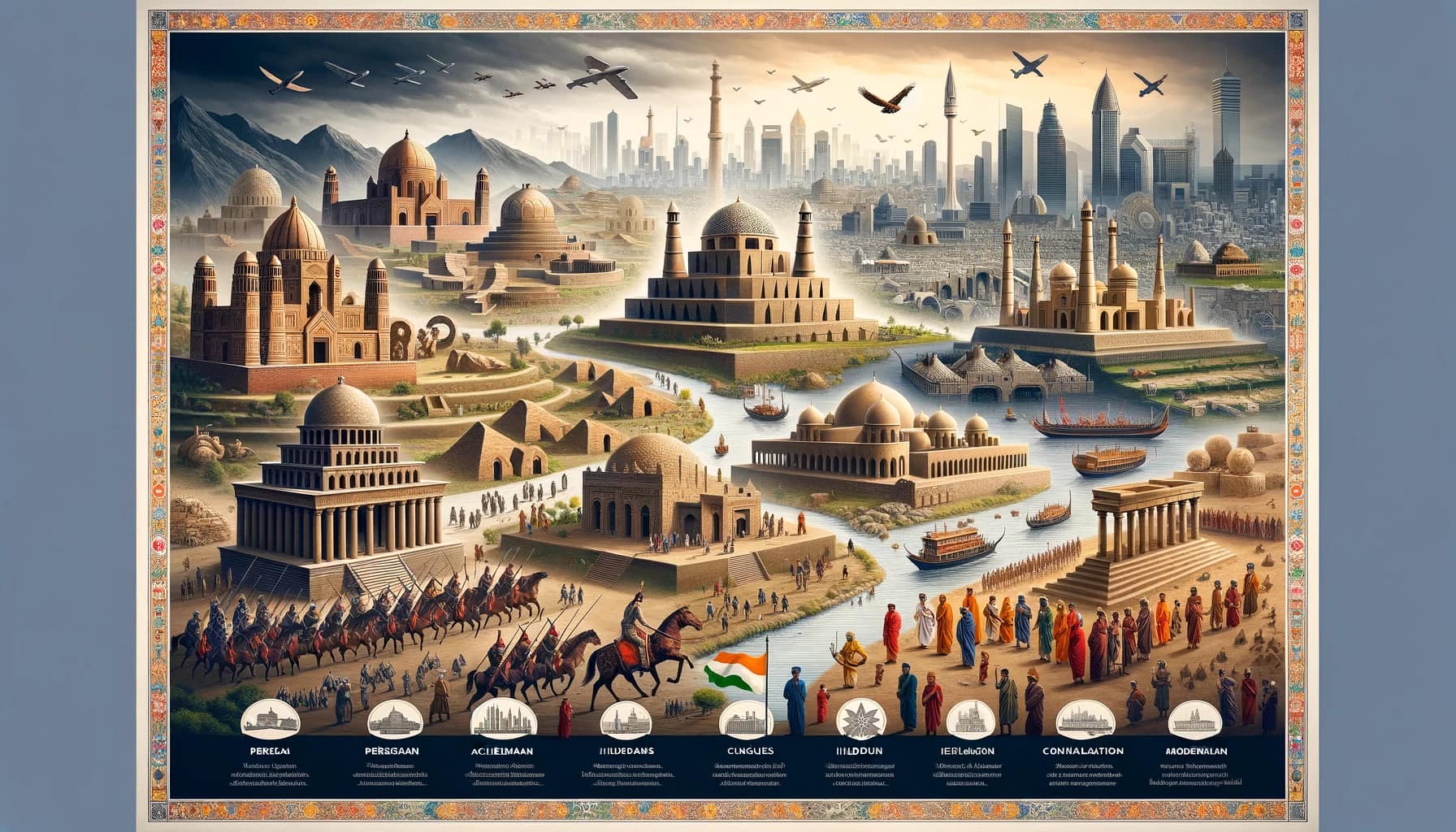
    The land that is now Pakistan has a rich history, serving as the cradle of ancient civilizations, a center of Islamic culture, and a battleground for empires. Modern Pakistan emerged as an independent nation in 1947, but its historical roots stretch back over 5,000 years.

    1. Ancient Civilizations (c. 3000 BCE – 1500 BCE)

    Indus Valley Civilization (c. 3000–1500 BCE)

    • The Indus Valley Civilization, one of the world’s earliest urban societies, thrived in the region now comprising Pakistan.
    • Major cities like Mohenjo-Daro, Harappa, and Mehrgarh (even earlier) showcased advanced urban planning, drainage systems, and trade.
    • The civilization’s economy was based on agriculture, trade (with Mesopotamia), and craftsmanship.
    • Declined around 1500 BCE due to climate change, flooding, or possible Aryan migrations.

    2. Vedic and Early Historical Period (1500 BCE – 500 BCE)

    • After the decline of the Indus Valley Civilization, the Indo-Aryans migrated into the region, introducing the Vedic culture, which became the foundation of Hinduism.
    • The region was part of the early Mahajanapadas, ancient republics or kingdoms.
    • Early Persian influence arrived with the Achaemenid Empire (c. 500 BCE), incorporating the area into their empire.

    3. Classical Period (500 BCE – 711 CE)

    Maurya Empire (322–185 BCE)

    • Under the Mauryan Empire (founded by Chandragupta Maurya), the region became part of a unified Indian subcontinent.
    • Ashoka, the most famous Mauryan ruler, promoted Buddhism and established stupas and inscriptions in areas like Taxila.

    Greco-Bactrian and Kushan Empires (200 BCE – 300 CE)

    • Alexander the Great invaded in 326 BCE, leaving behind Greek cultural influences.
    • The region came under the Greco-Bactrian Kingdom and later the Kushan Empire, which spread Buddhism and facilitated trade on the Silk Road.

    Gupta and Hindu Rule (300–711 CE)

    • Parts of modern Pakistan were influenced by the Gupta Empire, though local dynasties maintained control in areas like Sindh.
    • Hinduism and Buddhism coexisted, with Taxila becoming a major center for education and culture.

    4. Islamic Era (711–1857 CE)

    Arrival of Islam (711 CE)

    • Muhammad bin Qasim conquered Sindh in 711 CE, introducing Islam to the Indian subcontinent.
    • Sindh became a part of the Umayyad Caliphate and later other Islamic empires, with local Muslim rulers integrating Islamic culture into the region.

    Delhi Sultanate (1206–1526)

    • The region was incorporated into the Delhi Sultanate, a major Islamic empire that ruled northern India.
    • Persian culture, language, and Islamic architecture began to flourish.

    Mughal Empire (1526–1857)

    • Under the Mughals, Pakistan became an integral part of their empire.
    • Cities like Lahore became cultural and administrative centers, with stunning architectural achievements like the Badshahi Mosque and the Shalimar Gardens.
    • Mughal influence shaped the region’s art, cuisine, and administration, creating a lasting Islamic identity.

    5. Colonial Period (1857–1947)

    British East India Company and British Raj

    • After the 1857 Rebellion, the British took direct control of India, including what is now Pakistan.
    • The region became vital to British interests due to its strategic location and fertile lands.
    • Infrastructure like railways, canals, and cities such as Karachi were developed, but largely to serve British economic interests.
    • The All-India Muslim League (1906) was formed to protect Muslim interests under British rule.

    Struggle for Independence

    • The idea of a separate Muslim state emerged under Sir Syed Ahmed Khan, who advocated for Muslim education and identity.
    • Under leaders like Muhammad Iqbal and Muhammad Ali Jinnah, the Pakistan Movement gained momentum.
    • The Lahore Resolution (1940) formally called for an independent state for Muslims in the Indian subcontinent.
    • Partition of British India in 1947 led to the creation of Pakistan, a separate homeland for Muslims.

    6. Modern Pakistan (1947–Present)

    Post-Independence Period (1947–1971)

    • 1947 Partition: Pakistan was divided into East Pakistan (now Bangladesh) and West Pakistan (present Pakistan), separated by 1,600 km of Indian territory.
    • Challenges: The country faced massive migration, violence, and the task of nation-building.
    • Constitution of Pakistan: The country adopted its first constitution in 1956, declaring itself an Islamic Republic.

    Military and Political Instability

    • Frequent military coups and political instability marked early decades.
    • The Indo-Pak Wars (1947, 1965, 1971) strained resources and defined relations with India.
    • 1971 Civil War: East Pakistan, with support from India, gained independence as Bangladesh.

    Development and Growth (1972–2000)

    • Economic Growth: Focused on industrialization, agricultural reforms, and trade.
    • Nuclear Program: Pakistan became a nuclear power in 1998 under Prime Minister Nawaz Sharif.
    • Islamic Policies: Under Zia-ul-Haq (1977–1988), Pakistan underwent Islamization, with laws reflecting Sharia principles.

    Post-2000s: Modern Challenges and Achievements

    • War on Terror: Pakistan became a key U.S. ally after 9/11, facing both economic aid and internal challenges due to extremism.
    • Economic Growth: Investments in infrastructure (e.g., CPEC, a China-Pakistan partnership) and industries like textiles and IT.
    • Political Landscape: Transition between military rule and civilian governments, with leaders like Benazir Bhutto, Nawaz Sharif, and Imran Khan shaping policies.

    Key Contributions of Pakistan

    1. Cultural Identity: Fusion of ancient heritage (Indus Valley, Buddhist sites) with Islamic culture, reflected in architecture, art, and festivals.
    2. Education and Science: Pioneered nuclear technology; notable scientists like Abdus Salam, a Nobel laureate.
    3. Geopolitical Importance: Strategic location as a gateway to Central Asia and South Asia.
    4. Economic Aspirations: Focus on trade, infrastructure development, and industrialization.

    Summary Timeline

    1. Ancient Civilizations: Indus Valley (3000 BCE – 1500 BCE).
    2. Islamic Arrival: Muhammad bin Qasim’s conquest (711 CE).
    3. Mughal Golden Age: 16th–17th centuries.
    4. Colonial Rule: British Raj (1857–1947).
    5. Modern Era: Formation of Pakistan (1947) to present.

    Pakistan’s history reflects a dynamic interplay of ancient heritage, Islamic culture, and modern statehood, making it a unique and diverse nation.
    History of Pakistan’s Development Over 5,000 Years The land that is now Pakistan has a rich history, serving as the cradle of ancient civilizations, a center of Islamic culture, and a battleground for empires. Modern Pakistan emerged as an independent nation in 1947, but its historical roots stretch back over 5,000 years. 1. Ancient Civilizations (c. 3000 BCE – 1500 BCE) Indus Valley Civilization (c. 3000–1500 BCE) • The Indus Valley Civilization, one of the world’s earliest urban societies, thrived in the region now comprising Pakistan. • Major cities like Mohenjo-Daro, Harappa, and Mehrgarh (even earlier) showcased advanced urban planning, drainage systems, and trade. • The civilization’s economy was based on agriculture, trade (with Mesopotamia), and craftsmanship. • Declined around 1500 BCE due to climate change, flooding, or possible Aryan migrations. 2. Vedic and Early Historical Period (1500 BCE – 500 BCE) • After the decline of the Indus Valley Civilization, the Indo-Aryans migrated into the region, introducing the Vedic culture, which became the foundation of Hinduism. • The region was part of the early Mahajanapadas, ancient republics or kingdoms. • Early Persian influence arrived with the Achaemenid Empire (c. 500 BCE), incorporating the area into their empire. 3. Classical Period (500 BCE – 711 CE) Maurya Empire (322–185 BCE) • Under the Mauryan Empire (founded by Chandragupta Maurya), the region became part of a unified Indian subcontinent. • Ashoka, the most famous Mauryan ruler, promoted Buddhism and established stupas and inscriptions in areas like Taxila. Greco-Bactrian and Kushan Empires (200 BCE – 300 CE) • Alexander the Great invaded in 326 BCE, leaving behind Greek cultural influences. • The region came under the Greco-Bactrian Kingdom and later the Kushan Empire, which spread Buddhism and facilitated trade on the Silk Road. Gupta and Hindu Rule (300–711 CE) • Parts of modern Pakistan were influenced by the Gupta Empire, though local dynasties maintained control in areas like Sindh. • Hinduism and Buddhism coexisted, with Taxila becoming a major center for education and culture. 4. Islamic Era (711–1857 CE) Arrival of Islam (711 CE) • Muhammad bin Qasim conquered Sindh in 711 CE, introducing Islam to the Indian subcontinent. • Sindh became a part of the Umayyad Caliphate and later other Islamic empires, with local Muslim rulers integrating Islamic culture into the region. Delhi Sultanate (1206–1526) • The region was incorporated into the Delhi Sultanate, a major Islamic empire that ruled northern India. • Persian culture, language, and Islamic architecture began to flourish. Mughal Empire (1526–1857) • Under the Mughals, Pakistan became an integral part of their empire. • Cities like Lahore became cultural and administrative centers, with stunning architectural achievements like the Badshahi Mosque and the Shalimar Gardens. • Mughal influence shaped the region’s art, cuisine, and administration, creating a lasting Islamic identity. 5. Colonial Period (1857–1947) British East India Company and British Raj • After the 1857 Rebellion, the British took direct control of India, including what is now Pakistan. • The region became vital to British interests due to its strategic location and fertile lands. • Infrastructure like railways, canals, and cities such as Karachi were developed, but largely to serve British economic interests. • The All-India Muslim League (1906) was formed to protect Muslim interests under British rule. Struggle for Independence • The idea of a separate Muslim state emerged under Sir Syed Ahmed Khan, who advocated for Muslim education and identity. • Under leaders like Muhammad Iqbal and Muhammad Ali Jinnah, the Pakistan Movement gained momentum. • The Lahore Resolution (1940) formally called for an independent state for Muslims in the Indian subcontinent. • Partition of British India in 1947 led to the creation of Pakistan, a separate homeland for Muslims. 6. Modern Pakistan (1947–Present) Post-Independence Period (1947–1971) • 1947 Partition: Pakistan was divided into East Pakistan (now Bangladesh) and West Pakistan (present Pakistan), separated by 1,600 km of Indian territory. • Challenges: The country faced massive migration, violence, and the task of nation-building. • Constitution of Pakistan: The country adopted its first constitution in 1956, declaring itself an Islamic Republic. Military and Political Instability • Frequent military coups and political instability marked early decades. • The Indo-Pak Wars (1947, 1965, 1971) strained resources and defined relations with India. • 1971 Civil War: East Pakistan, with support from India, gained independence as Bangladesh. Development and Growth (1972–2000) • Economic Growth: Focused on industrialization, agricultural reforms, and trade. • Nuclear Program: Pakistan became a nuclear power in 1998 under Prime Minister Nawaz Sharif. • Islamic Policies: Under Zia-ul-Haq (1977–1988), Pakistan underwent Islamization, with laws reflecting Sharia principles. Post-2000s: Modern Challenges and Achievements • War on Terror: Pakistan became a key U.S. ally after 9/11, facing both economic aid and internal challenges due to extremism. • Economic Growth: Investments in infrastructure (e.g., CPEC, a China-Pakistan partnership) and industries like textiles and IT. • Political Landscape: Transition between military rule and civilian governments, with leaders like Benazir Bhutto, Nawaz Sharif, and Imran Khan shaping policies. Key Contributions of Pakistan 1. Cultural Identity: Fusion of ancient heritage (Indus Valley, Buddhist sites) with Islamic culture, reflected in architecture, art, and festivals. 2. Education and Science: Pioneered nuclear technology; notable scientists like Abdus Salam, a Nobel laureate. 3. Geopolitical Importance: Strategic location as a gateway to Central Asia and South Asia. 4. Economic Aspirations: Focus on trade, infrastructure development, and industrialization. Summary Timeline 1. Ancient Civilizations: Indus Valley (3000 BCE – 1500 BCE). 2. Islamic Arrival: Muhammad bin Qasim’s conquest (711 CE). 3. Mughal Golden Age: 16th–17th centuries. 4. Colonial Rule: British Raj (1857–1947). 5. Modern Era: Formation of Pakistan (1947) to present. Pakistan’s history reflects a dynamic interplay of ancient heritage, Islamic culture, and modern statehood, making it a unique and diverse nation.
    0 Commentaires 0 Parts 592 Vue
  • Story of Pakistan

    Before Names and Nations

    Long before flags or frontiers, there was a river —
    the mighty Indus, flowing like a silver serpent through the cradle of civilization.

    Along its banks, more than 5,000 years ago, people built cities of wonder —
    Harappa, Mohenjo-Daro, Mehrgarh.
    They paved streets, drained water, traded with distant lands.
    They knew peace before they knew war, order before kings, and culture before conquest.
    Theirs was a civilization of balance — between nature and humanity.
    This was the first Pakistan — not in name, but in spirit.


    The Coming of New Peoples

    Time passed. Rivers shifted, empires rose and fell.
    Aryans came from the north; Persians from the west; Greeks under Alexander marched through its valleys.
    Each wave left a trace — in blood, in language, in legend.

    The land of the Indus became a mosaic of races and faiths:
    Buddhism flourished in Taxila, monasteries filled the hills of Swat,
    and travelers from China carried back stories of peace and wisdom.
    It was a land where monks meditated, merchants traded, and thinkers dreamed.

    Then came the Muslims, bringing with them the message of unity, equality, and the oneness of God.
    Arab traders in Sindh sowed the first seeds of Islam,
    and later, the great Sufi saints watered those seeds with love —
    Lal Shahbaz Qalandar in Sehwan, Data Ganj Bakhsh in Lahore,
    Baba Farid in Pakpattan —
    they taught not by sword, but by song and service.
    The land became a tapestry of faith and tolerance, woven by the hands of saints and poets.


    The Age of Empires and Sufis

    When the Delhi Sultanate rose, the Indus Valley joined the heart of the Muslim world.
    Mosques stood beside temples, caravans moved across deserts, and Lahore became a crown jewel of culture.

    Then came the Mughals — emperors of vision and art.
    They built gardens that mirrored paradise, forts that touched the clouds, and cities that still breathe their glory.
    From Akbar’s tolerance to Aurangzeb’s devotion, the spirit of Islam merged with the soul of South Asia —
    creating a civilization of harmony and contradiction, power and poetry.

    Here, Persian met Punjabi, Arabic met Sanskrit,
    and the people of the Indus learned to speak in a language of faith and beauty — Urdu.


    The Age of Colonization

    But no empire lasts forever.
    From across the seas came new conquerors — the British.
    They built railways, schools, and bureaucracy — but also chains.
    They extracted wealth, divided communities, and rewrote destinies.

    Yet even under the colonial shadow, light persisted.
    Reformers, poets, and dreamers emerged —
    Sir Syed Ahmed Khan lit the candle of modern education;
    Allama Iqbal dreamed of revival through faith and selfhood;
    and Muhammad Ali Jinnah, the man of law and resolve, rose to lead a people seeking dignity.

    The idea of Pakistan was born — not merely as a land,
    but as a vision: a home where Muslims could live by their faith,
    free from fear, free from domination,
    free to shape their own destiny.


    The Birth of a Nation

    The struggle was fierce.
    Blood was spilled. Families torn. Trains full of refugees crossed burning borders.
    But amidst the chaos, a new nation took its first breath.

    August 14, 1947.
    Pakistan — the Land of the Pure.
    The crescent rose above the horizon; the star shone with hope.

    Jinnah’s words echoed:
    “Faith, Unity, Discipline.”
    A call to build not only a country, but a civilization reborn —
    where Islam’s spirit of justice, equality, and compassion would guide the future.

    But freedom was only the beginning.
    The nation was poor, divided, and wounded.
    Yet, like the Indus itself, Pakistan kept flowing —
    sometimes calm, sometimes wild, but always alive.


    The Age of Struggle and Strength

    In its youth, Pakistan faced wars, migrations, and political storms.
    It lost a wing — East Pakistan — which became Bangladesh.
    It faced dictatorships and democracies, floods and famines, crises and courage.

    Yet through every trial, it stood again.
    It built dams across deserts, sent scientists into the stars,
    and gave the world heroes — in sports, science, and sacrifice.
    It sheltered refugees, fought terrorism, and still prayed for peace.

    Its poets reminded the nation of its purpose —
    Faiz, Habib Jalib, Parveen Shakir —
    their verses became weapons sharper than swords.

    From the alleys of Karachi to the peaks of Hunza,
    from the deserts of Thar to the shrine of Sehwan,
    Pakistan learned again and again:
    its real strength lies not in power, but in resilience.


    The Age of Reawakening

    Today, Pakistan stands at a new crossroad —
    between the old and the new, the broken and the becoming.

    Its youth are wired to the world, coding dreams into reality.
    Its entrepreneurs, artists, and thinkers are rediscovering the same truth
    that guided its ancestors beside the Indus:
    that faith and knowledge together can build civilizations.

    The call of Iqbal still rings true:
    “Khudi ko kar buland itna…”
    Raise your selfhood so high that destiny itself asks for your permission.

    The spirit of Pakistan lives in the call to prayer echoing from the minarets,
    in the laughter of children under banyan trees,
    in the hands of the farmer planting wheat,
    and in every heart that believes tomorrow can be brighter than today.


    Epilogue — The Land of Spirit

    From the dawn of Harappa to the hum of data centers,
    Pakistan’s story is not a tale of borders — it is a journey of becoming.
    A journey of soul through centuries of change.

    It is the same river, wearing many names, but flowing toward one sea —
    toward unity, toward peace, toward the Divine.

    For nations are born from geography,
    but civilizations are born from vision.
    And Pakistan — like the Indus — was born to flow endlessly,
    carrying in its current the dream of a just, peaceful, and awakened humanity.
    Story of Pakistan 🇵🇰 🌊 Before Names and Nations Long before flags or frontiers, there was a river — the mighty Indus, flowing like a silver serpent through the cradle of civilization. Along its banks, more than 5,000 years ago, people built cities of wonder — Harappa, Mohenjo-Daro, Mehrgarh. They paved streets, drained water, traded with distant lands. They knew peace before they knew war, order before kings, and culture before conquest. Theirs was a civilization of balance — between nature and humanity. This was the first Pakistan — not in name, but in spirit. ⸻ 🔥 The Coming of New Peoples Time passed. Rivers shifted, empires rose and fell. Aryans came from the north; Persians from the west; Greeks under Alexander marched through its valleys. Each wave left a trace — in blood, in language, in legend. The land of the Indus became a mosaic of races and faiths: Buddhism flourished in Taxila, monasteries filled the hills of Swat, and travelers from China carried back stories of peace and wisdom. It was a land where monks meditated, merchants traded, and thinkers dreamed. Then came the Muslims, bringing with them the message of unity, equality, and the oneness of God. Arab traders in Sindh sowed the first seeds of Islam, and later, the great Sufi saints watered those seeds with love — Lal Shahbaz Qalandar in Sehwan, Data Ganj Bakhsh in Lahore, Baba Farid in Pakpattan — they taught not by sword, but by song and service. The land became a tapestry of faith and tolerance, woven by the hands of saints and poets. ⸻ 🕌 The Age of Empires and Sufis When the Delhi Sultanate rose, the Indus Valley joined the heart of the Muslim world. Mosques stood beside temples, caravans moved across deserts, and Lahore became a crown jewel of culture. Then came the Mughals — emperors of vision and art. They built gardens that mirrored paradise, forts that touched the clouds, and cities that still breathe their glory. From Akbar’s tolerance to Aurangzeb’s devotion, the spirit of Islam merged with the soul of South Asia — creating a civilization of harmony and contradiction, power and poetry. Here, Persian met Punjabi, Arabic met Sanskrit, and the people of the Indus learned to speak in a language of faith and beauty — Urdu. ⸻ ⛓️ The Age of Colonization But no empire lasts forever. From across the seas came new conquerors — the British. They built railways, schools, and bureaucracy — but also chains. They extracted wealth, divided communities, and rewrote destinies. Yet even under the colonial shadow, light persisted. Reformers, poets, and dreamers emerged — Sir Syed Ahmed Khan lit the candle of modern education; Allama Iqbal dreamed of revival through faith and selfhood; and Muhammad Ali Jinnah, the man of law and resolve, rose to lead a people seeking dignity. The idea of Pakistan was born — not merely as a land, but as a vision: a home where Muslims could live by their faith, free from fear, free from domination, free to shape their own destiny. ⸻ 🇵🇰 The Birth of a Nation The struggle was fierce. Blood was spilled. Families torn. Trains full of refugees crossed burning borders. But amidst the chaos, a new nation took its first breath. August 14, 1947. Pakistan — the Land of the Pure. The crescent rose above the horizon; the star shone with hope. Jinnah’s words echoed: “Faith, Unity, Discipline.” A call to build not only a country, but a civilization reborn — where Islam’s spirit of justice, equality, and compassion would guide the future. But freedom was only the beginning. The nation was poor, divided, and wounded. Yet, like the Indus itself, Pakistan kept flowing — sometimes calm, sometimes wild, but always alive. ⸻ ⚙️ The Age of Struggle and Strength In its youth, Pakistan faced wars, migrations, and political storms. It lost a wing — East Pakistan — which became Bangladesh. It faced dictatorships and democracies, floods and famines, crises and courage. Yet through every trial, it stood again. It built dams across deserts, sent scientists into the stars, and gave the world heroes — in sports, science, and sacrifice. It sheltered refugees, fought terrorism, and still prayed for peace. Its poets reminded the nation of its purpose — Faiz, Habib Jalib, Parveen Shakir — their verses became weapons sharper than swords. From the alleys of Karachi to the peaks of Hunza, from the deserts of Thar to the shrine of Sehwan, Pakistan learned again and again: its real strength lies not in power, but in resilience. ⸻ 💡 The Age of Reawakening Today, Pakistan stands at a new crossroad — between the old and the new, the broken and the becoming. Its youth are wired to the world, coding dreams into reality. Its entrepreneurs, artists, and thinkers are rediscovering the same truth that guided its ancestors beside the Indus: that faith and knowledge together can build civilizations. The call of Iqbal still rings true: “Khudi ko kar buland itna…” Raise your selfhood so high that destiny itself asks for your permission. The spirit of Pakistan lives in the call to prayer echoing from the minarets, in the laughter of children under banyan trees, in the hands of the farmer planting wheat, and in every heart that believes tomorrow can be brighter than today. ⸻ 🕊️ Epilogue — The Land of Spirit From the dawn of Harappa to the hum of data centers, Pakistan’s story is not a tale of borders — it is a journey of becoming. A journey of soul through centuries of change. It is the same river, wearing many names, but flowing toward one sea — toward unity, toward peace, toward the Divine. For nations are born from geography, but civilizations are born from vision. And Pakistan — like the Indus — was born to flow endlessly, carrying in its current the dream of a just, peaceful, and awakened humanity.
    0 Commentaires 0 Parts 954 Vue
  • Timeline of Every Civilization That Ruled the Land We Call Pakistan

    7000–3300 BCE — Mehrgarh Civilization
    • One of the world’s earliest farming cultures (Balochistan)

    3300–1300 BCE — Indus Valley Civilization
    • Harappa, Mohenjo-Daro, Kot Diji — the world’s earliest urban system

    1300–600 BCE — Early Tribal Kingdoms
    • Post-Indus local cultures

    550–330 BCE — Persian Achaemenid Empire
    • Punjab, Sindh, Balochistan ruled by Darius & Cyrus

    326–323 BCE — Alexander the Great
    • Battles at Jhelum, takes parts of Punjab & Sindh

    322–185 BCE — Mauryan Empire
    • Chandragupta & Ashoka; Taxila flourishes

    180 BCE–10 CE — Indo-Greek Kingdoms
    • Greek rule over Taxila, Swat, Punjab

    10–75 CE — Scythians (Sakas)
    • Sindh & Punjab

    75–100 CE — Parthians
    • Western Pakistan, Taxila stronghold

    100–300 CE — Kushan Empire
    • All Pakistan; Peshawar capital under Kanishka

    320–550 CE — Gupta Influence
    • Marginal rule in lower Punjab/Sindh

    450–600 CE — White Huns
    • KPK & Punjab invasions

    489–632 CE — Rai Dynasty (Sindh)
    • Local Hindu dynasty

    632–712 CE — Brahman Dynasty
    • Raja Dahir’s rule in Sindh

    712–750 CE — Umayyad Caliphate
    • Muhammad bin Qasim; first Islamic government

    750–900 CE — Abbasid Influence
    • Governors in Sindh & Multan

    900–1000 CE — Local Muslim Dynasties
    • Soomro, Habbarids (Sindh)

    977–1186 CE — Ghaznavid Empire
    • Lahore becomes major center under Mahmud

    1186–1206 CE — Ghorid Empire
    • Control of Punjab

    1206–1526 CE — Delhi Sultanate
    • Mamluk → Khilji → Tughlaq → Lodhi rule

    1526–1739 CE — Mughal Empire
    • Entire Pakistan; Lahore royal capital

    1739 — Nader Shah (Persia)
    • Brief invasion

    1747–1823 CE — Durrani (Afghan) Empire
    • KPK & Punjab

    1799–1849 CE — Sikh Empire
    • Ranjit Singh controls Punjab

    1843–1947 CE — British Empire
    • Sindh, Punjab, Balochistan, NWFP

    14 August 1947 — Pakistan
    • Birth of the modern nation-state
    Timeline of Every Civilization That Ruled the Land We Call Pakistan 🇵🇰 7000–3300 BCE — Mehrgarh Civilization • One of the world’s earliest farming cultures (Balochistan) 3300–1300 BCE — Indus Valley Civilization • Harappa, Mohenjo-Daro, Kot Diji — the world’s earliest urban system 1300–600 BCE — Early Tribal Kingdoms • Post-Indus local cultures 550–330 BCE — Persian Achaemenid Empire • Punjab, Sindh, Balochistan ruled by Darius & Cyrus 326–323 BCE — Alexander the Great • Battles at Jhelum, takes parts of Punjab & Sindh 322–185 BCE — Mauryan Empire • Chandragupta & Ashoka; Taxila flourishes 180 BCE–10 CE — Indo-Greek Kingdoms • Greek rule over Taxila, Swat, Punjab 10–75 CE — Scythians (Sakas) • Sindh & Punjab 75–100 CE — Parthians • Western Pakistan, Taxila stronghold 100–300 CE — Kushan Empire • All Pakistan; Peshawar capital under Kanishka 320–550 CE — Gupta Influence • Marginal rule in lower Punjab/Sindh 450–600 CE — White Huns • KPK & Punjab invasions 489–632 CE — Rai Dynasty (Sindh) • Local Hindu dynasty 632–712 CE — Brahman Dynasty • Raja Dahir’s rule in Sindh 712–750 CE — Umayyad Caliphate • Muhammad bin Qasim; first Islamic government 750–900 CE — Abbasid Influence • Governors in Sindh & Multan 900–1000 CE — Local Muslim Dynasties • Soomro, Habbarids (Sindh) 977–1186 CE — Ghaznavid Empire • Lahore becomes major center under Mahmud 1186–1206 CE — Ghorid Empire • Control of Punjab 1206–1526 CE — Delhi Sultanate • Mamluk → Khilji → Tughlaq → Lodhi rule 1526–1739 CE — Mughal Empire • Entire Pakistan; Lahore royal capital 1739 — Nader Shah (Persia) • Brief invasion 1747–1823 CE — Durrani (Afghan) Empire • KPK & Punjab 1799–1849 CE — Sikh Empire • Ranjit Singh controls Punjab 1843–1947 CE — British Empire • Sindh, Punjab, Balochistan, NWFP 14 August 1947 — Pakistan • Birth of the modern nation-state 🇵🇰
    0 Commentaires 0 Parts 583 Vue
  • 7000 years before Christ!

    https://en.wikipedia.org/wiki/Mehrgarh
    7000 years before Christ! https://en.wikipedia.org/wiki/Mehrgarh
    0 Commentaires 0 Parts 226 Vue
  • ### Discovering the Ancient Civilization of Mehrgarh

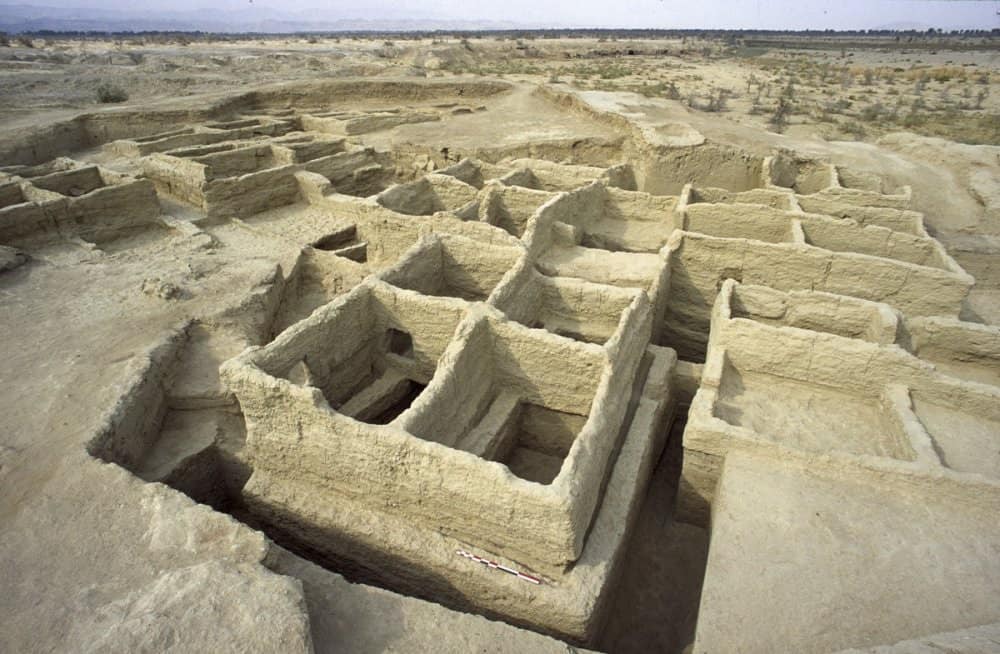
    Nestled in the arid plains of Balochistan, Pakistan, lies the remarkable archaeological site of Mehrgarh, a treasure trove of early human civilization dating back to around 7000 BCE. Often overshadowed by the more famous Indus Valley Civilization, Mehrgarh stands as one of the earliest centers of agriculture and human settlement in South Asia, offering profound insights into our prehistoric past.

    **A Glimpse into the Past**

    Mehrgarh, discovered in 1974 by French archaeologists, is located near the Bolan Pass, a strategic gateway between the ancient cultures of South Asia and Central Asia. This site predates the well-known cities of Harappa and Mohenjo-Daro, making it a crucial link in understanding the evolution of human societies in this region.

    **Life in Mehrgarh**

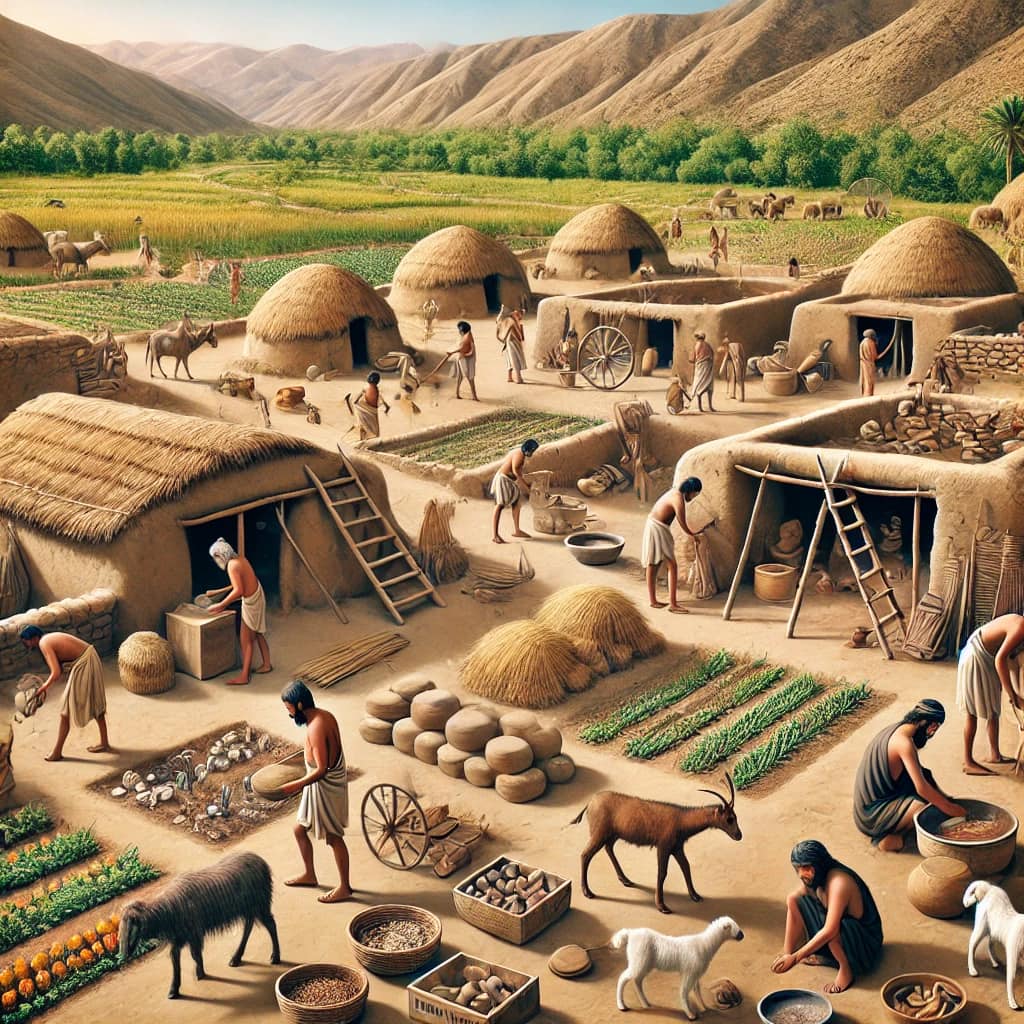
    At its peak, Mehrgarh was a thriving community engaged in a variety of sophisticated activities. The inhabitants of Mehrgarh were among the first in the world to practice settled farming. They cultivated wheat and barley, and their domesticated animals included cattle, sheep, and goats. This transition from a nomadic to a settled lifestyle marked a significant advancement in human history.

    The people of Mehrgarh lived in well-constructed mud-brick houses, which were organized into planned settlements. They built granaries for storing surplus crops, indicating a level of social organization and economic planning. Workshops for tool-making and pottery production were integral parts of the settlement, highlighting the communitys craftsmanship and trade skills.

    **Technological and Cultural Achievements**

    Mehrgarhs residents were pioneers in early technology. They developed sophisticated methods for crafting tools from stone and bone, and their pottery, decorated with intricate patterns, speaks of their artistic capabilities. The discovery of figurines, beads, and ornaments made from materials like seashells, turquoise, and lapis lazuli suggests that the people of Mehrgarh had established trade links with distant regions.

    One of the most remarkable aspects of Mehrgarh is the evidence of early dentistry. Archaeologists have found drilled teeth in human remains, indicating that dental practices were in use over 9,000 years ago—a testament to the advanced knowledge and skills possessed by these ancient people.

    **Mehrgarhs Legacy**

    Mehrgarhs significance extends beyond its own era. It provides crucial evidence of the early stages of agricultural development and the rise of settled communities in South Asia. The site serves as a precursor to the more complex urban centers of the Indus Valley Civilization, showing a clear progression in social and technological advancements.

    Today, Mehrgarh stands as a symbol of human ingenuity and resilience. It reminds us that even in the harshest environments, ancient societies were capable of extraordinary achievements. As we continue to explore and understand Mehrgarh, we gain valuable insights into the roots of our civilization and the shared heritage that connects us all.

    **Join the Journey**

    Lets celebrate the rich history of Mehrgarh and honor the legacy of its people. Share this story to spread awareness about one of the worlds earliest cradles of civilization. #Mehrgarh #AncientHistory #Archaeology #Balochistan #HumanHeritage
    ### Discovering the Ancient Civilization of Mehrgarh Nestled in the arid plains of Balochistan, Pakistan, lies the remarkable archaeological site of Mehrgarh, a treasure trove of early human civilization dating back to around 7000 BCE. Often overshadowed by the more famous Indus Valley Civilization, Mehrgarh stands as one of the earliest centers of agriculture and human settlement in South Asia, offering profound insights into our prehistoric past. **A Glimpse into the Past** Mehrgarh, discovered in 1974 by French archaeologists, is located near the Bolan Pass, a strategic gateway between the ancient cultures of South Asia and Central Asia. This site predates the well-known cities of Harappa and Mohenjo-Daro, making it a crucial link in understanding the evolution of human societies in this region. **Life in Mehrgarh** At its peak, Mehrgarh was a thriving community engaged in a variety of sophisticated activities. The inhabitants of Mehrgarh were among the first in the world to practice settled farming. They cultivated wheat and barley, and their domesticated animals included cattle, sheep, and goats. This transition from a nomadic to a settled lifestyle marked a significant advancement in human history. The people of Mehrgarh lived in well-constructed mud-brick houses, which were organized into planned settlements. They built granaries for storing surplus crops, indicating a level of social organization and economic planning. Workshops for tool-making and pottery production were integral parts of the settlement, highlighting the community's craftsmanship and trade skills. **Technological and Cultural Achievements** Mehrgarh's residents were pioneers in early technology. They developed sophisticated methods for crafting tools from stone and bone, and their pottery, decorated with intricate patterns, speaks of their artistic capabilities. The discovery of figurines, beads, and ornaments made from materials like seashells, turquoise, and lapis lazuli suggests that the people of Mehrgarh had established trade links with distant regions. One of the most remarkable aspects of Mehrgarh is the evidence of early dentistry. Archaeologists have found drilled teeth in human remains, indicating that dental practices were in use over 9,000 years ago—a testament to the advanced knowledge and skills possessed by these ancient people. **Mehrgarh's Legacy** Mehrgarh's significance extends beyond its own era. It provides crucial evidence of the early stages of agricultural development and the rise of settled communities in South Asia. The site serves as a precursor to the more complex urban centers of the Indus Valley Civilization, showing a clear progression in social and technological advancements. Today, Mehrgarh stands as a symbol of human ingenuity and resilience. It reminds us that even in the harshest environments, ancient societies were capable of extraordinary achievements. As we continue to explore and understand Mehrgarh, we gain valuable insights into the roots of our civilization and the shared heritage that connects us all. **Join the Journey** Let's celebrate the rich history of Mehrgarh and honor the legacy of its people. Share this story to spread awareness about one of the world's earliest cradles of civilization. #Mehrgarh #AncientHistory #Archaeology #Balochistan #HumanHeritage
    0 Commentaires 0 Parts 961 Vue
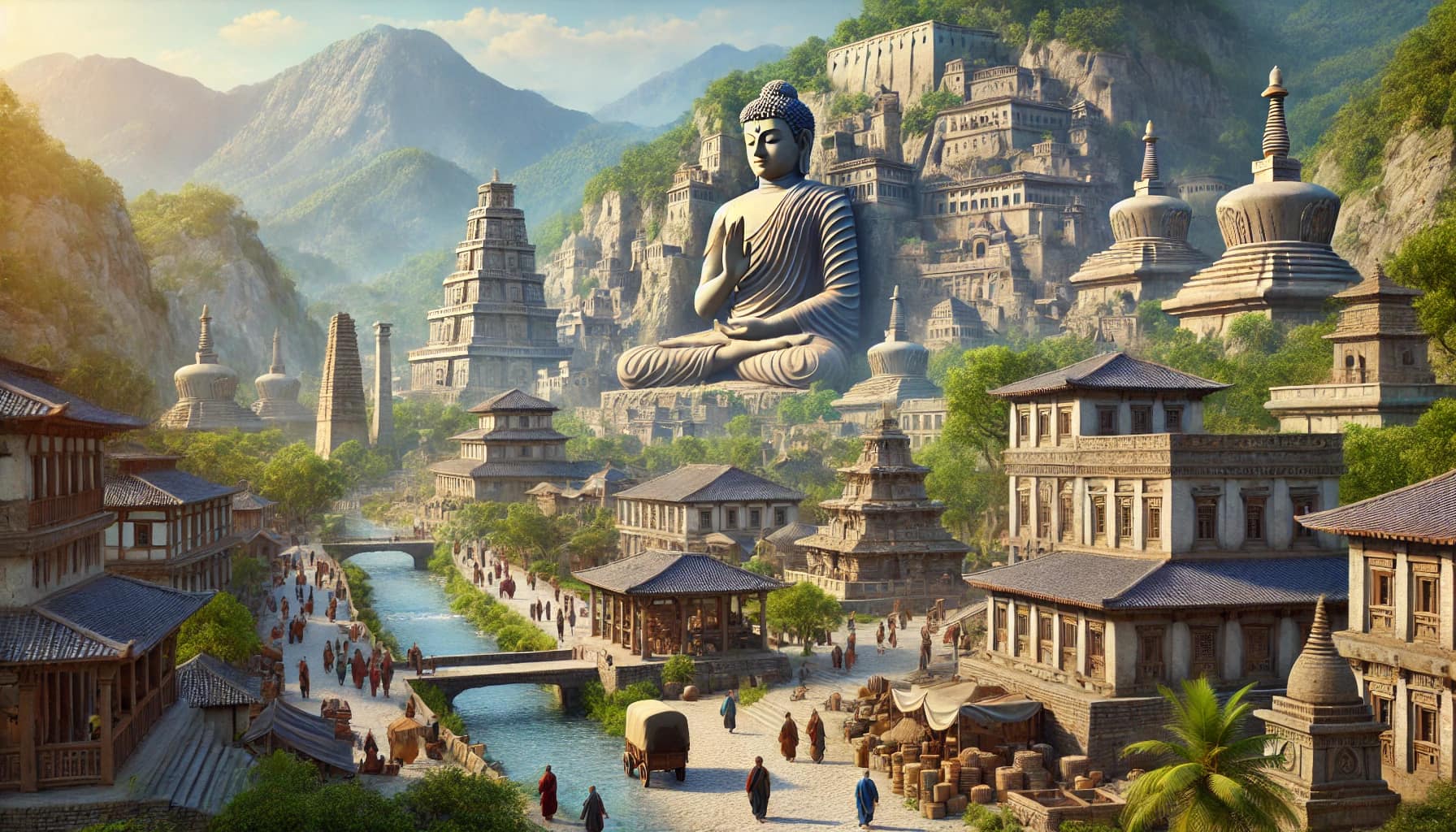
  • The history of Gandhara, an ancient region located in present-day northern Pakistan and parts of eastern Afghanistan, is rich and spans thousands of years. It was a crossroads of civilizations and cultures, playing a pivotal role in the development of art, religion, and trade in South Asia and beyond.

    Geography of Gandhara
    • Gandhara was centered around the valleys of the Peshawar, Swat, and Kabul rivers.
    • Key cities included Taxila, Pushkalavati (modern Charsadda), and later Peshawar.
    • Its location at the crossroads of Central Asia, South Asia, and the Middle East made it a significant hub for trade and cultural exchange.

    Key Historical Periods
    1. Prehistoric Period (3000–1500 BCE):
    • Gandhara was part of the Indus Valley Civilization, evident from archaeological findings.
    • Early settlements in this region were influenced by the Neolithic culture of the nearby Swat Valley and Mehrgarh.
    2. Vedic and Epic Period (1500–600 BCE):
    • Gandhara is mentioned in ancient Indian texts such as the Rigveda and the Mahabharata.
    • The region was home to the Gandhara Kingdom, which played a role in the Vedic and epic narratives. For instance, King Gandhara is mentioned as a prominent figure in the Mahabharata.
    3. Achaemenid Empire (6th–4th Century BCE):
    • Gandhara became a province of the Achaemenid Empire under Darius I (circa 518 BCE).
    • Persian rule brought administrative systems, infrastructure, and Zoroastrian influences to the region.
    • It also connected Gandhara to the wider Persian Empire, making it a conduit for cultural and economic exchanges.
    4. Alexander the Great and Hellenistic Influence (4th Century BCE):
    • Alexander the Great conquered Gandhara in 327 BCE, integrating it into his empire.
    • After his death, the region became part of the Greco-Bactrian Kingdom, which introduced Hellenistic art, architecture, and cultural elements.
    5. Mauryan Empire and the Spread of Buddhism (3rd Century BCE):
    • Under Emperor Ashoka (circa 268–232 BCE), Gandhara became a key center for the spread of Buddhism.
    • Ashoka is credited with building stupas and monasteries in the region, promoting Buddhist philosophy.
    6. Indo-Greek Kingdoms (2nd–1st Century BCE):
    • After the decline of the Mauryan Empire, Gandhara came under the rule of Indo-Greek kings, such as Menander I (Milinda), who converted to Buddhism.
    • This period saw a fusion of Greek and Indian art and culture, known as the Gandhara School of Art.
    7. Kushan Empire (1st–3rd Century CE):
    • Gandhara reached its cultural and artistic zenith under the Kushan Empire, especially during the reign of Kanishka the Great.
    • Kanishka embraced and promoted Buddhism, making Gandhara a global center for Buddhist learning and art.
    • The Gandhara School of Art, characterized by its Greco-Roman and Indian influences, flourished during this time. It produced iconic Buddha statues and narrative reliefs.
    8. Huna Invasions and Decline (5th–6th Century CE):
    • The Hunas (Hephthalites or White Huns) invaded and disrupted the region, leading to a decline in Buddhist institutions.
    • Hinduism regained prominence, and Buddhism began to wane in Gandhara.
    9. Islamic Conquest (7th–8th Century CE):
    • With the advent of Islam, Gandhara’s Buddhist and Hindu cultural heritage declined further.
    • The region became part of the Islamic world, and many of its ancient Buddhist sites fell into disuse or were destroyed.

    Cultural Contributions of Gandhara
    1. Buddhism:
    • Gandhara played a pivotal role in the spread of Buddhism to Central Asia, China, and beyond.
    • The region produced early depictions of the Buddha in human form, inspired by Greek artistic traditions.
    2. Gandhara Art:
    • Known for its unique blend of Greek, Roman, Persian, and Indian influences.
    • Characterized by realistic human figures, intricate drapery, and detailed narrative reliefs depicting the life of the Buddha.
    • Iconic examples include the Buddha statues and the reliefs from Taxila and Swat Valley.
    3. Education and Trade:
    • Taxila, one of the major cities of Gandhara, was a renowned center of learning and attracted students from across the ancient world.
    • The region was a vital link on the Silk Road, facilitating trade and cultural exchange between the East and West.

    Legacy of Gandhara
    • Gandhara’s cultural and artistic achievements have had a lasting impact on South and Central Asia.
    • Archaeological sites such as Taxila, Takht-i-Bahi, and Swat Valley are UNESCO World Heritage Sites and testify to the region’s historical importance.
    • The Gandhara School of Art influenced Buddhist art in China, Korea, and Japan, spreading its legacy far beyond its original borders.

    Gandhara remains a symbol of cultural fusion, representing how diverse civilizations can influence and enrich each other over centuries.
    The history of Gandhara, an ancient region located in present-day northern Pakistan and parts of eastern Afghanistan, is rich and spans thousands of years. It was a crossroads of civilizations and cultures, playing a pivotal role in the development of art, religion, and trade in South Asia and beyond. Geography of Gandhara • Gandhara was centered around the valleys of the Peshawar, Swat, and Kabul rivers. • Key cities included Taxila, Pushkalavati (modern Charsadda), and later Peshawar. • Its location at the crossroads of Central Asia, South Asia, and the Middle East made it a significant hub for trade and cultural exchange. Key Historical Periods 1. Prehistoric Period (3000–1500 BCE): • Gandhara was part of the Indus Valley Civilization, evident from archaeological findings. • Early settlements in this region were influenced by the Neolithic culture of the nearby Swat Valley and Mehrgarh. 2. Vedic and Epic Period (1500–600 BCE): • Gandhara is mentioned in ancient Indian texts such as the Rigveda and the Mahabharata. • The region was home to the Gandhara Kingdom, which played a role in the Vedic and epic narratives. For instance, King Gandhara is mentioned as a prominent figure in the Mahabharata. 3. Achaemenid Empire (6th–4th Century BCE): • Gandhara became a province of the Achaemenid Empire under Darius I (circa 518 BCE). • Persian rule brought administrative systems, infrastructure, and Zoroastrian influences to the region. • It also connected Gandhara to the wider Persian Empire, making it a conduit for cultural and economic exchanges. 4. Alexander the Great and Hellenistic Influence (4th Century BCE): • Alexander the Great conquered Gandhara in 327 BCE, integrating it into his empire. • After his death, the region became part of the Greco-Bactrian Kingdom, which introduced Hellenistic art, architecture, and cultural elements. 5. Mauryan Empire and the Spread of Buddhism (3rd Century BCE): • Under Emperor Ashoka (circa 268–232 BCE), Gandhara became a key center for the spread of Buddhism. • Ashoka is credited with building stupas and monasteries in the region, promoting Buddhist philosophy. 6. Indo-Greek Kingdoms (2nd–1st Century BCE): • After the decline of the Mauryan Empire, Gandhara came under the rule of Indo-Greek kings, such as Menander I (Milinda), who converted to Buddhism. • This period saw a fusion of Greek and Indian art and culture, known as the Gandhara School of Art. 7. Kushan Empire (1st–3rd Century CE): • Gandhara reached its cultural and artistic zenith under the Kushan Empire, especially during the reign of Kanishka the Great. • Kanishka embraced and promoted Buddhism, making Gandhara a global center for Buddhist learning and art. • The Gandhara School of Art, characterized by its Greco-Roman and Indian influences, flourished during this time. It produced iconic Buddha statues and narrative reliefs. 8. Huna Invasions and Decline (5th–6th Century CE): • The Hunas (Hephthalites or White Huns) invaded and disrupted the region, leading to a decline in Buddhist institutions. • Hinduism regained prominence, and Buddhism began to wane in Gandhara. 9. Islamic Conquest (7th–8th Century CE): • With the advent of Islam, Gandhara’s Buddhist and Hindu cultural heritage declined further. • The region became part of the Islamic world, and many of its ancient Buddhist sites fell into disuse or were destroyed. Cultural Contributions of Gandhara 1. Buddhism: • Gandhara played a pivotal role in the spread of Buddhism to Central Asia, China, and beyond. • The region produced early depictions of the Buddha in human form, inspired by Greek artistic traditions. 2. Gandhara Art: • Known for its unique blend of Greek, Roman, Persian, and Indian influences. • Characterized by realistic human figures, intricate drapery, and detailed narrative reliefs depicting the life of the Buddha. • Iconic examples include the Buddha statues and the reliefs from Taxila and Swat Valley. 3. Education and Trade: • Taxila, one of the major cities of Gandhara, was a renowned center of learning and attracted students from across the ancient world. • The region was a vital link on the Silk Road, facilitating trade and cultural exchange between the East and West. Legacy of Gandhara • Gandhara’s cultural and artistic achievements have had a lasting impact on South and Central Asia. • Archaeological sites such as Taxila, Takht-i-Bahi, and Swat Valley are UNESCO World Heritage Sites and testify to the region’s historical importance. • The Gandhara School of Art influenced Buddhist art in China, Korea, and Japan, spreading its legacy far beyond its original borders. Gandhara remains a symbol of cultural fusion, representing how diverse civilizations can influence and enrich each other over centuries.
    0 Commentaires 0 Parts 379 Vue
  • Here is a 5000-year timeline of the land now known as #Sindh, encompassing its history, religions, and ruling powers.

    Timeline of Sindh (5000 BCE – Present)

    Prehistoric Period (5000–2600 BCE)
    • Civilization: Early farming communities, part of the Neolithic period.
    • Religion: Animism and nature worship; early evidence of fertility cults.
    • Key Rulers: Tribal leaders and clan-based societies.
    • Key Events:
    • Early settlements formed along the Indus River.
    • Mehrgarh (in modern-day Balochistan, closely connected to Sindh) was a center of early agricultural development.

    Indus Valley Civilization (2600–1900 BCE)
    • Civilization: Harappa and Mohenjo-Daro, one of the world’s first urban civilizations.
    • Religion: Proto-Hinduism (worship of fertility symbols, sacred animals, and possibly the proto-Shiva figure).
    • Key Rulers: Likely governed by local elites or councils, no evidence of centralized kings.
    • Key Events:
    • Mohenjo-Daro, located in Sindh, became a major city of the Indus Valley Civilization.
    • Advanced drainage systems, trade networks, and urban planning emerged.

    Post-Harappan Period (1900–1500 BCE)
    • Civilization: Decline of the Indus Valley Civilization due to climatic and environmental changes.
    • Religion: Continuation of local fertility cults; early Vedic practices may have begun.
    • Key Rulers: Fragmented tribal groups.
    • Key Events:
    • Urban centers became depopulated.
    • Migration of Indo-Aryan tribes into the region began.

    Vedic Period (1500–600 BCE)
    • Civilization: Integration into the Vedic civilization.
    • Religion: Early Hinduism (Vedic rituals, deities like Agni, Indra).
    • Key Rulers: Aryan tribes, likely governed by rajas (chieftains).
    • Key Events:
    • Sindh was referred to as Sindhu in the Rigveda, representing the Indus River.

    Achaemenid Empire (519–326 BCE)
    • Civilization: Part of the Achaemenid Persian Empire under Darius I.
    • Religion: Zoroastrianism influenced the region, coexisting with local Hindu practices.
    • Key Rulers: Achaemenid satraps (governors).
    • Key Events:
    • Sindh became a province (satrapy) called Hindush under Persian control.
    • Trade with Persia flourished.

    Greek Conquest (326–305 BCE)
    • Civilization: Part of Alexander the Great’s empire.
    • Religion: Greek polytheism influenced elite culture, alongside Hindu and Zoroastrian practices.
    • Key Rulers: Alexander the Great and his successors.
    • Key Events:
    • Alexander’s forces passed through Sindh after the Battle of the Hydaspes (modern Jhelum).
    • Greek administrators ruled the area briefly.

    Mauryan Empire (305–185 BCE)
    • Civilization: Integrated into the Mauryan Empire.
    • Religion: Buddhism (promoted by Ashoka), alongside Hinduism and local beliefs.
    • Key Rulers: Chandragupta Maurya and Ashoka.
    • Key Events:
    • Sindh became a center for Buddhist learning.
    • Buddhist stupas and monasteries were constructed.

    Indo-Greek and Scythian Rule (185 BCE–75 CE)
    • Civilization: Successor states to the Mauryan Empire.
    • Religion: Buddhism, Hinduism, and Greek polytheism.
    • Key Rulers:
    • Indo-Greek kings (e.g., Menander I).
    • Scythians (Sakas) replaced Greeks later.
    • Key Events:
    • Continued fusion of Greek and Indian cultures.

    Kushan Empire (75–375 CE)
    • Civilization: Part of the Kushan Empire.
    • Religion: Buddhism flourished; Hinduism remained significant.
    • Key Rulers: Kanishka the Great.
    • Key Events:
    • Sindh became a vital hub for Buddhist missionary activities.

    Hindu-Buddhist Dynasties (375–711 CE)
    • Civilization: Ruled by local Hindu-Buddhist dynasties (e.g., Rai Dynasty).
    • Religion: Hinduism and Buddhism coexisted.
    • Key Rulers: Rai rulers followed by the Brahman dynasty.
    • Key Events:
    • Flourishing trade and culture under stable local rule.

    Islamic Conquest (711–1258 CE)
    • Civilization: Conquered by Muhammad bin Qasim (Umayyad Caliphate).
    • Religion: Islam introduced; coexisted with Hinduism and Buddhism initially.
    • Key Rulers: Umayyad governors, later independent Muslim rulers.
    • Key Events:
    • Sindh became the first region in South Asia to come under Islamic rule.
    • Conversion to Islam began, especially among the lower castes.

    Delhi Sultanate and Mughal Empire (1258–1707 CE)
    • Civilization: Incorporated into larger Islamic empires.
    • Religion: Dominantly Islam, with significant Hindu minorities.
    • Key Rulers: Sultans of Delhi and later Mughal emperors.
    • Key Events:
    • Sindh became a strategic province in the Mughal Empire.
    • Flourishing Sufi culture and Islamization of rural Sindh.

    Kalhora and Talpur Dynasties (1707–1843 CE)
    • Civilization: Ruled by local Muslim dynasties.
    • Religion: Islam dominated, with Hindu communities.
    • Key Rulers:
    • Kalhora rulers (Shia influence).
    • Talpur rulers (Sunni influence).
    • Key Events:
    • Internal conflicts between local rulers.
    • Decline due to British intervention.

    British Rule (1843–1947 CE)
    • Civilization: Part of British India.
    • Religion: Islam, Hinduism, Sikhism, and others.
    • Key Rulers: British colonial administrators.
    • Key Events:
    • Sindh was annexed by the British in 1843 after the Battle of Miani.
    • Introduction of modern infrastructure and irrigation systems.

    Post-Independence (1947–Present)
    • Civilization: Part of Pakistan.
    • Religion: Dominantly Islam, with small Hindu and Christian minorities.
    • Key Rulers: Pakistani government and local political leaders.
    • Key Events:
    • Sindh became a key province in Pakistan.
    • Karachi emerged as an economic hub.

    This timeline reflects the dynamic history of Sindh as a land influenced by multiple civilizations, religions, and rulers over 5000 years. It showcases its role as a melting pot of cultures and its transformation under diverse political and religious influences.
    Here is a 5000-year timeline of the land now known as #Sindh, encompassing its history, religions, and ruling powers. Timeline of Sindh (5000 BCE – Present) Prehistoric Period (5000–2600 BCE) • Civilization: Early farming communities, part of the Neolithic period. • Religion: Animism and nature worship; early evidence of fertility cults. • Key Rulers: Tribal leaders and clan-based societies. • Key Events: • Early settlements formed along the Indus River. • Mehrgarh (in modern-day Balochistan, closely connected to Sindh) was a center of early agricultural development. Indus Valley Civilization (2600–1900 BCE) • Civilization: Harappa and Mohenjo-Daro, one of the world’s first urban civilizations. • Religion: Proto-Hinduism (worship of fertility symbols, sacred animals, and possibly the proto-Shiva figure). • Key Rulers: Likely governed by local elites or councils, no evidence of centralized kings. • Key Events: • Mohenjo-Daro, located in Sindh, became a major city of the Indus Valley Civilization. • Advanced drainage systems, trade networks, and urban planning emerged. Post-Harappan Period (1900–1500 BCE) • Civilization: Decline of the Indus Valley Civilization due to climatic and environmental changes. • Religion: Continuation of local fertility cults; early Vedic practices may have begun. • Key Rulers: Fragmented tribal groups. • Key Events: • Urban centers became depopulated. • Migration of Indo-Aryan tribes into the region began. Vedic Period (1500–600 BCE) • Civilization: Integration into the Vedic civilization. • Religion: Early Hinduism (Vedic rituals, deities like Agni, Indra). • Key Rulers: Aryan tribes, likely governed by rajas (chieftains). • Key Events: • Sindh was referred to as Sindhu in the Rigveda, representing the Indus River. Achaemenid Empire (519–326 BCE) • Civilization: Part of the Achaemenid Persian Empire under Darius I. • Religion: Zoroastrianism influenced the region, coexisting with local Hindu practices. • Key Rulers: Achaemenid satraps (governors). • Key Events: • Sindh became a province (satrapy) called Hindush under Persian control. • Trade with Persia flourished. Greek Conquest (326–305 BCE) • Civilization: Part of Alexander the Great’s empire. • Religion: Greek polytheism influenced elite culture, alongside Hindu and Zoroastrian practices. • Key Rulers: Alexander the Great and his successors. • Key Events: • Alexander’s forces passed through Sindh after the Battle of the Hydaspes (modern Jhelum). • Greek administrators ruled the area briefly. Mauryan Empire (305–185 BCE) • Civilization: Integrated into the Mauryan Empire. • Religion: Buddhism (promoted by Ashoka), alongside Hinduism and local beliefs. • Key Rulers: Chandragupta Maurya and Ashoka. • Key Events: • Sindh became a center for Buddhist learning. • Buddhist stupas and monasteries were constructed. Indo-Greek and Scythian Rule (185 BCE–75 CE) • Civilization: Successor states to the Mauryan Empire. • Religion: Buddhism, Hinduism, and Greek polytheism. • Key Rulers: • Indo-Greek kings (e.g., Menander I). • Scythians (Sakas) replaced Greeks later. • Key Events: • Continued fusion of Greek and Indian cultures. Kushan Empire (75–375 CE) • Civilization: Part of the Kushan Empire. • Religion: Buddhism flourished; Hinduism remained significant. • Key Rulers: Kanishka the Great. • Key Events: • Sindh became a vital hub for Buddhist missionary activities. Hindu-Buddhist Dynasties (375–711 CE) • Civilization: Ruled by local Hindu-Buddhist dynasties (e.g., Rai Dynasty). • Religion: Hinduism and Buddhism coexisted. • Key Rulers: Rai rulers followed by the Brahman dynasty. • Key Events: • Flourishing trade and culture under stable local rule. Islamic Conquest (711–1258 CE) • Civilization: Conquered by Muhammad bin Qasim (Umayyad Caliphate). • Religion: Islam introduced; coexisted with Hinduism and Buddhism initially. • Key Rulers: Umayyad governors, later independent Muslim rulers. • Key Events: • Sindh became the first region in South Asia to come under Islamic rule. • Conversion to Islam began, especially among the lower castes. Delhi Sultanate and Mughal Empire (1258–1707 CE) • Civilization: Incorporated into larger Islamic empires. • Religion: Dominantly Islam, with significant Hindu minorities. • Key Rulers: Sultans of Delhi and later Mughal emperors. • Key Events: • Sindh became a strategic province in the Mughal Empire. • Flourishing Sufi culture and Islamization of rural Sindh. Kalhora and Talpur Dynasties (1707–1843 CE) • Civilization: Ruled by local Muslim dynasties. • Religion: Islam dominated, with Hindu communities. • Key Rulers: • Kalhora rulers (Shia influence). • Talpur rulers (Sunni influence). • Key Events: • Internal conflicts between local rulers. • Decline due to British intervention. British Rule (1843–1947 CE) • Civilization: Part of British India. • Religion: Islam, Hinduism, Sikhism, and others. • Key Rulers: British colonial administrators. • Key Events: • Sindh was annexed by the British in 1843 after the Battle of Miani. • Introduction of modern infrastructure and irrigation systems. Post-Independence (1947–Present) • Civilization: Part of Pakistan. • Religion: Dominantly Islam, with small Hindu and Christian minorities. • Key Rulers: Pakistani government and local political leaders. • Key Events: • Sindh became a key province in Pakistan. • Karachi emerged as an economic hub. This timeline reflects the dynamic history of Sindh as a land influenced by multiple civilizations, religions, and rulers over 5000 years. It showcases its role as a melting pot of cultures and its transformation under diverse political and religious influences.
    0 Commentaires 0 Parts 302 Vue