• If the universe is a grand library, the periodic table is its alphabet. Every star in the night sky, every breath of air in your lungs, every drop of water in the ocean, and the very cells of your body are written using the exact same 118 letters.

    Long before we understood subatomic particles or quantum mechanics, a Siberian chemist named Dmitri Mendeleev saw a hidden pattern in chaos. In 1869, he arranged the known elements by atomic weight and chemical behavior—leaving deliberate blank spaces for elements that hadn't even been discovered yet.

    Mendeleev wasn't just organizing data; he was predicting the future. When Gallium and Germanium were discovered decades later, their properties matched his vacant slots with astonishing precision.

    Today, the periodic table is more than a chart on a classroom wall. It is:

    A Rosetta Stone: Translating the behavior of matter across chemistry, physics, and biology.

    A Symphony of Symmetry: Where rows (periods) show electron shells and columns (groups) share chemical personalities.

    A Monument to Human Curiosity: Constantly expanding as scientists synthesize superheavy elements in particle accelerators.

    "We are all made of star-stuff, and the periodic table is our family tree."

    Post Details:

    Author: Hassan | climateWala

    Date: November 17, 2026

    Task: Day 62 Completion

    #PeriodicTable #Chemistry #ScienceIsEverything #Mendeleev #STEM #Elements #ClimateWala #Hassan #ScienceCommunication #Day62 #LearningEveryday #TheMoreYouKnow
    If the universe is a grand library, the periodic table is its alphabet. Every star in the night sky, every breath of air in your lungs, every drop of water in the ocean, and the very cells of your body are written using the exact same 118 letters. Long before we understood subatomic particles or quantum mechanics, a Siberian chemist named Dmitri Mendeleev saw a hidden pattern in chaos. In 1869, he arranged the known elements by atomic weight and chemical behavior—leaving deliberate blank spaces for elements that hadn't even been discovered yet. Mendeleev wasn't just organizing data; he was predicting the future. When Gallium and Germanium were discovered decades later, their properties matched his vacant slots with astonishing precision. Today, the periodic table is more than a chart on a classroom wall. It is: A Rosetta Stone: Translating the behavior of matter across chemistry, physics, and biology. A Symphony of Symmetry: Where rows (periods) show electron shells and columns (groups) share chemical personalities. A Monument to Human Curiosity: Constantly expanding as scientists synthesize superheavy elements in particle accelerators. "We are all made of star-stuff, and the periodic table is our family tree." ✍️ Post Details: Author: Hassan | climateWala Date: November 17, 2026 Task: Day 62 Completion #PeriodicTable #Chemistry #ScienceIsEverything #Mendeleev #STEM #Elements #ClimateWala #Hassan #ScienceCommunication #Day62 #LearningEveryday #TheMoreYouKnow 🔬🔭🌍💡
    0 Comentários 0 Compartilhamentos 782 Visualizações
  • Foundation level Task
    Day : 62
    Task : story post
    # ** Periodic Table: The Language of Science**
    *An Interesting Educational Story*
    Once upon a time, in the amazing world of science, there was a magical chart called the **Periodic Table**. It was not an ordinary chart; it was a special language that helped scientists understand the building blocks of everything around us.
    One day, a curious student named Ali asked his science teacher, "What is everything in the world made of?"
    The teacher smiled and replied, "Everything around you, from the air you breathe to the water you drink, is made of tiny building blocks called elements."
    Ali became curious and asked, "How can we understand all these elements?"
    The teacher pointed towards the Periodic Table and said, "This is where the magic begins!"
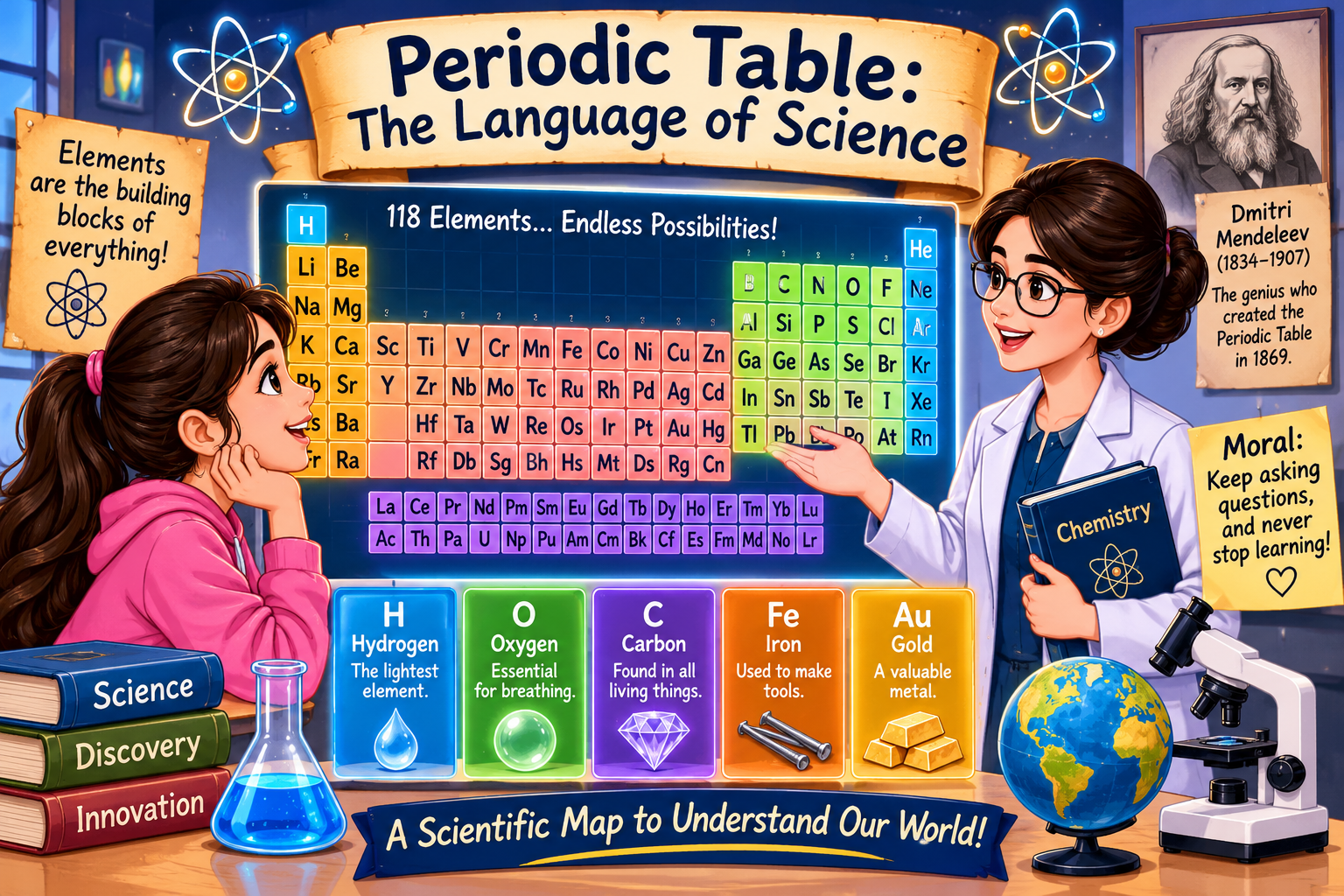
    The Periodic Table contains 118 known elements. Each element has its own name, symbol, and atomic number.
    For example:
    - **H – Hydrogen:** The lightest element.
    - **O – Oxygen:** Essential for breathing.
    - **C – Carbon:** Found in all living things.
    - **Fe – Iron:** Used to make many tools and structures.
    - **Au – Gold:** A valuable metal.
    Ali discovered that the elements were arranged according to their atomic numbers and properties. Elements in the same group often share similar characteristics.
    He also learned about Dmitri Mendeleev, the scientist who developed an early version of the Periodic Table in 1869. He even left spaces for elements that had not yet been discovered!
    Ali was amazed. He realized that the Periodic Table was like a scientific map that helped us understand nature, technology, medicine, and the world around us.
    From that day forward, Ali never saw the Periodic Table as just a collection of symbols. He saw it as the **language of science**, connecting every element to the incredible story of our universe.

    **Moral of the Story:**

    Science is all around us. Every element has a story, and every discovery begins with curiosity. Keep asking questions, keep exploring, and never stop learning!
    **The Periodic Table is not just a chart; it is the language that helps us understand our world!**

    **Periodic Table: The Language of Science**

    The Periodic Table is one of the most important tools in science. It organizes 118 known elements and helps us understand the building blocks of everything around us.
    In this educational story, we explore different elements such as Hydrogen, Oxygen, Carbon, Iron, and Gold. We also discover how Dmitri Mendeleev developed the Periodic Table and changed the world of chemistry.
    **My Learning:** Every element has its own properties and importance. Science helps us understand the world around us!
    Keep exploring, keep asking questions, and never stop learning!
    #PeriodicTable #LanguageOfScience #Chemistry #ScienceLearning #Elements #Education #DmitriMendeleev #KeepLearning #ScienceExploration


    Foundation level Task Day : 62 Task : story post # **🌍 Periodic Table: The Language of Science** *An Interesting Educational Story* Once upon a time, in the amazing world of science, there was a magical chart called the **Periodic Table**. It was not an ordinary chart; it was a special language that helped scientists understand the building blocks of everything around us. One day, a curious student named Ali asked his science teacher, "What is everything in the world made of?" The teacher smiled and replied, "Everything around you, from the air you breathe to the water you drink, is made of tiny building blocks called elements." Ali became curious and asked, "How can we understand all these elements?" The teacher pointed towards the Periodic Table and said, "This is where the magic begins!" The Periodic Table contains 118 known elements. Each element has its own name, symbol, and atomic number. For example: - **H – Hydrogen:** The lightest element. - **O – Oxygen:** Essential for breathing. - **C – Carbon:** Found in all living things. - **Fe – Iron:** Used to make many tools and structures. - **Au – Gold:** A valuable metal. Ali discovered that the elements were arranged according to their atomic numbers and properties. Elements in the same group often share similar characteristics. He also learned about Dmitri Mendeleev, the scientist who developed an early version of the Periodic Table in 1869. He even left spaces for elements that had not yet been discovered! Ali was amazed. He realized that the Periodic Table was like a scientific map that helped us understand nature, technology, medicine, and the world around us. From that day forward, Ali never saw the Periodic Table as just a collection of symbols. He saw it as the **language of science**, connecting every element to the incredible story of our universe. ✨ **Moral of the Story:** Science is all around us. Every element has a story, and every discovery begins with curiosity. Keep asking questions, keep exploring, and never stop learning! **The Periodic Table is not just a chart; it is the language that helps us understand our world!** 🌍🔬 🌍 **Periodic Table: The Language of Science** 🔬🧪 The Periodic Table is one of the most important tools in science. It organizes 118 known elements and helps us understand the building blocks of everything around us. ✨ In this educational story, we explore different elements such as Hydrogen, Oxygen, Carbon, Iron, and Gold. We also discover how Dmitri Mendeleev developed the Periodic Table and changed the world of chemistry. 💡 **My Learning:** Every element has its own properties and importance. Science helps us understand the world around us! 🚀 Keep exploring, keep asking questions, and never stop learning! #PeriodicTable #LanguageOfScience #Chemistry #ScienceLearning #Elements #Education #DmitriMendeleev #KeepLearning #ScienceExploration
    2
    0 Comentários 0 Compartilhamentos 2049 Visualizações
  • Accl Foundation level (Rehan School Urdu Bazar Campus)
    Day :62 Story post no : 9
    Roll no : 17
    Accl task
    > Periodic Table: The Language of Science
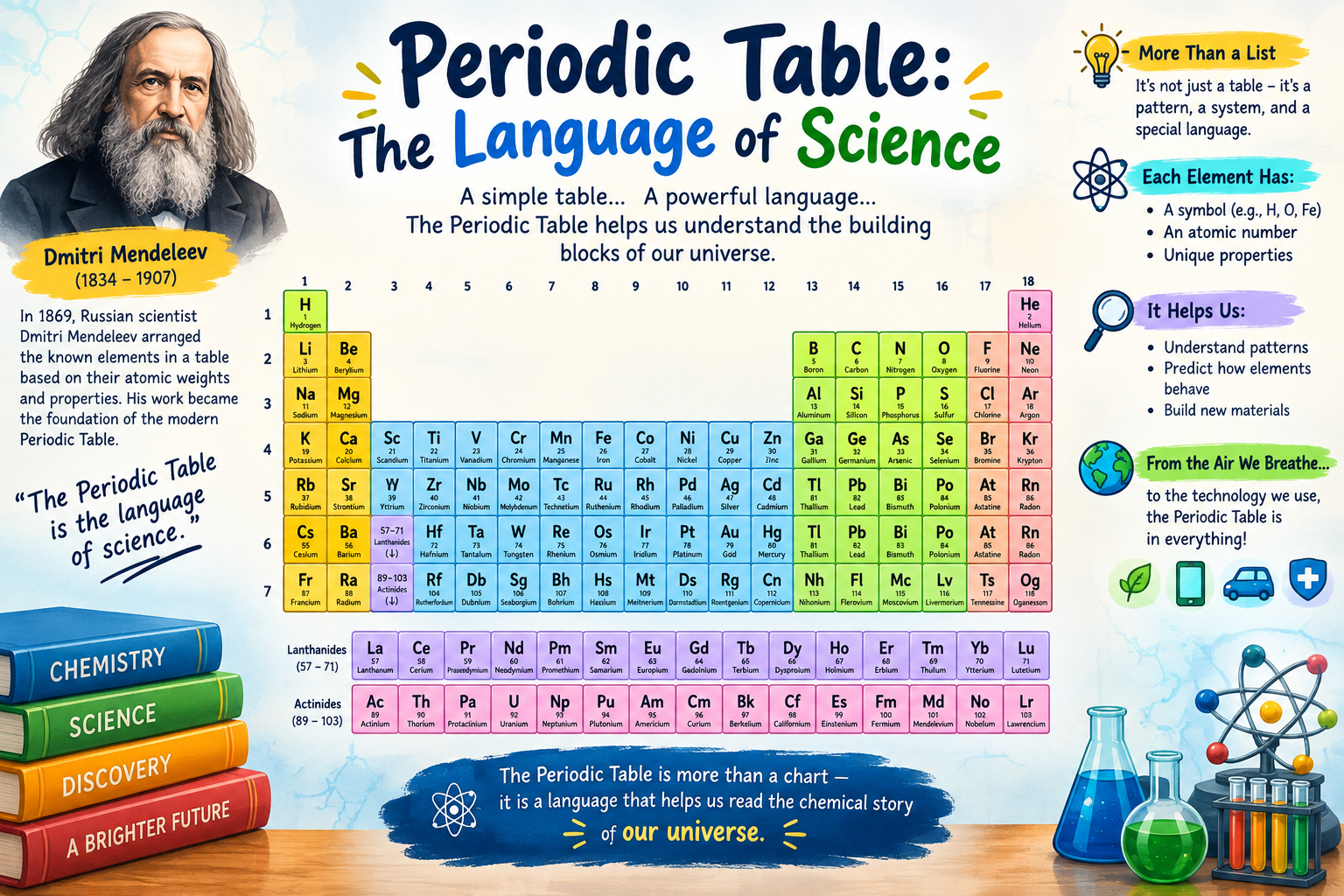
    > The Periodic Table is not just a chart on a wall, it is the alphabet of the universe! Just like we use 26 letters to make millions of words, nature uses 118 elements to make everything around us!
    > From the oxygen you breathe (O) to the gold in a ring (Au), from the iron in your blood (Fe) to the silicon in your phone — everything has a story written in this language!
    > Dmitri Mendeleev didn't just arrange elements, he gave science a dictionary to understand the world. Every box is a discovery, every symbol is a power!
    > Moral: If you learn this language, you can read the secrets of the whole universe!
    > Learn Elements, Understand Life!
    ### 2. Story / Description in Urdu (الف والی اردو):
    > پیریڈک ٹیبل: سائنس کی زبان
    > پیریڈک ٹیبل صرف دیوار پر لگا ایک چارٹ نہیں ہے، یہ کائنات کے حروفِ تہجی ہیں! جس طرح ہم 26 حروف سے لاکھوں الفاظ بناتے ہیں، اسی طرح قدرت 118 عناصر سے اس دنیا کی ہر چیز بناتی ہے!
    > آپ جو آکسیجن سانس لیتے ہیں (O) سے لے کر انگوٹھی میں موجود سونے (Au) تک، آپ کے خون میں موجود آئرن (Fe) سے لے کر آپ کے موبائل میں موجود سلیکون تک — ہر چیز کی کہانی اسی زبان میں لکھی ہوئی ہے!
    > دمتری مینڈلیف نے صرف عناصر کو ترتیب نہیں دیا، بلکہ اس نے سائنس کو دنیا کو سمجھنے کے لیے ایک لغت دی۔ ہر ڈبہ ایک دریافت ہے، ہر علامت ایک طاقت ہے!
    > سبق: اگر آپ یہ زبان سیکھ لیں، تو آپ پوری کائنات کے راز پڑھ سکتے ہیں!
    > عناصر سیکھو، زندگی کو سمجھو! See less
    Accl Foundation level (Rehan School Urdu Bazar Campus) Day :62 Story post no : 9 Roll no : 17 Accl task > 🧪 Periodic Table: The Language of Science 🔬 > The Periodic Table is not just a chart on a wall, it is the alphabet of the universe! 🌌 Just like we use 26 letters to make millions of words, nature uses 118 elements to make everything around us! ✨ > From the oxygen you breathe (O) to the gold in a ring (Au), from the iron in your blood (Fe) to the silicon in your phone — everything has a story written in this language! 💍📱🩸 > Dmitri Mendeleev didn't just arrange elements, he gave science a dictionary to understand the world. Every box is a discovery, every symbol is a power! 💪 > Moral: If you learn this language, you can read the secrets of the whole universe! 🚀 > 🔬 Learn Elements, Understand Life! 🔬 ### 2. Story / Description in Urdu (الف والی اردو): > 🧪 پیریڈک ٹیبل: سائنس کی زبان 🔬 > پیریڈک ٹیبل صرف دیوار پر لگا ایک چارٹ نہیں ہے، یہ کائنات کے حروفِ تہجی ہیں! 🌌 جس طرح ہم 26 حروف سے لاکھوں الفاظ بناتے ہیں، اسی طرح قدرت 118 عناصر سے اس دنیا کی ہر چیز بناتی ہے! ✨ > آپ جو آکسیجن سانس لیتے ہیں (O) سے لے کر انگوٹھی میں موجود سونے (Au) تک، آپ کے خون میں موجود آئرن (Fe) سے لے کر آپ کے موبائل میں موجود سلیکون تک — ہر چیز کی کہانی اسی زبان میں لکھی ہوئی ہے! 💍📱🩸 > دمتری مینڈلیف نے صرف عناصر کو ترتیب نہیں دیا، بلکہ اس نے سائنس کو دنیا کو سمجھنے کے لیے ایک لغت دی۔ ہر ڈبہ ایک دریافت ہے، ہر علامت ایک طاقت ہے! 💪 > سبق: اگر آپ یہ زبان سیکھ لیں، تو آپ پوری کائنات کے راز پڑھ سکتے ہیں! 🚀 > 🔬 عناصر سیکھو، زندگی کو سمجھو! 🔬 See less
    0 Comentários 0 Compartilhamentos 1249 Visualizações
  • **Roll No: 2**
    **Batch: 14**
    **Book: ACCL**
    **Task No: 61**

    # Periodic Table: The Language of Science

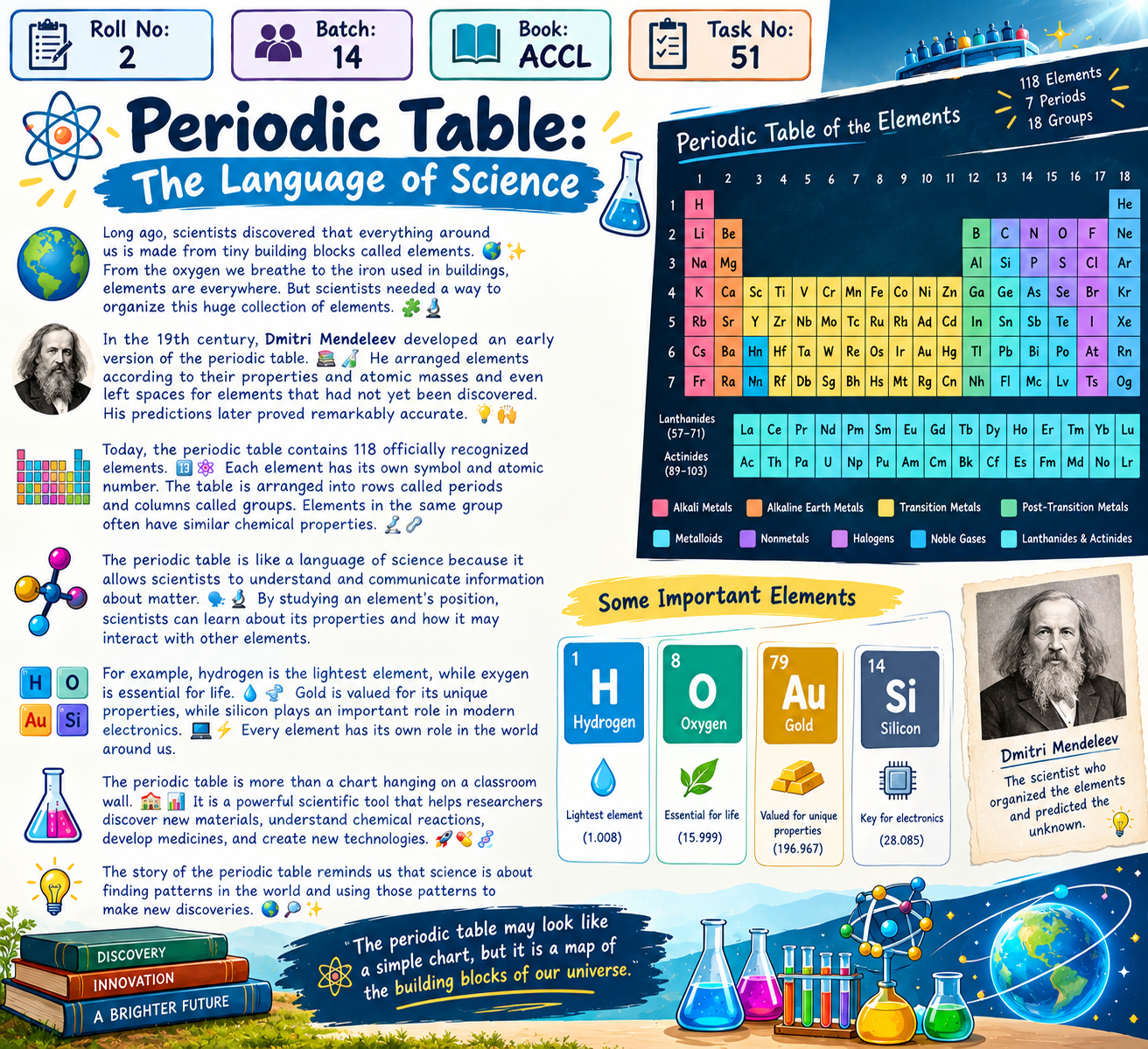
    Long ago, scientists discovered that everything around us is made from tiny building blocks called **elements**. From the oxygen we breathe to the iron used in buildings, elements are everywhere. But scientists needed a way to organize this huge collection of elements.

    In the 19th century, **Dmitri Mendeleev** developed an early version of the periodic table. He arranged elements according to their properties and atomic masses and even left spaces for elements that had not yet been discovered. His predictions later proved remarkably accurate.

    Today, the periodic table contains **118 officially recognized elements**. Each element has its own symbol and atomic number. The table is arranged into rows called **periods** and columns called **groups**. Elements in the same group often have similar chemical properties.

    The periodic table is like a **language of science** because it allows scientists to understand and communicate information about matter. By studying an element's position, scientists can learn about its properties and how it may interact with other elements.

    For example, hydrogen is the lightest element, while oxygen is essential for life. Gold is valued for its unique properties, while silicon plays an important role in modern electronics. Every element has its own role in the world around us.

    The periodic table is more than a chart hanging on a classroom wall. It is a powerful scientific tool that helps researchers discover new materials, understand chemical reactions, develop medicines, and create new technologies.

    The story of the periodic table reminds us that science is about finding patterns in the world and using those patterns to make new discoveries.

    **The periodic table may look like a simple chart, but it is a map of the building blocks of our universe. **
    **Roll No: 2** **Batch: 14** **Book: ACCL** **Task No: 61** # 🧪 Periodic Table: The Language of Science 🌍🔬 Long ago, scientists discovered that everything around us is made from tiny building blocks called **elements**. 🌎✨ From the oxygen we breathe to the iron used in buildings, elements are everywhere. But scientists needed a way to organize this huge collection of elements. 🧩🔬 In the 19th century, **Dmitri Mendeleev** developed an early version of the periodic table. 📚🧪 He arranged elements according to their properties and atomic masses and even left spaces for elements that had not yet been discovered. His predictions later proved remarkably accurate. 💡👏 Today, the periodic table contains **118 officially recognized elements**. 🔢⚛️ Each element has its own symbol and atomic number. The table is arranged into rows called **periods** and columns called **groups**. Elements in the same group often have similar chemical properties. 🧪🔗 The periodic table is like a **language of science** because it allows scientists to understand and communicate information about matter. 🗣️🔬 By studying an element's position, scientists can learn about its properties and how it may interact with other elements. For example, hydrogen is the lightest element, while oxygen is essential for life. 💧🌬️ Gold is valued for its unique properties, while silicon plays an important role in modern electronics. 💻⚡ Every element has its own role in the world around us. The periodic table is more than a chart hanging on a classroom wall. 🏫📊 It is a powerful scientific tool that helps researchers discover new materials, understand chemical reactions, develop medicines, and create new technologies. 🚀💊🧬 The story of the periodic table reminds us that science is about finding patterns in the world and using those patterns to make new discoveries. 🌍🔎✨ **The periodic table may look like a simple chart, but it is a map of the building blocks of our universe. 🧪⚛️🌌**
    0 Comentários 0 Compartilhamentos 1800 Visualizações
  • #rsisb
    Roll no.279
    story post no.9
    Foundation Level

    **Periodic Table: The Language of Science**
    Long ago, scientists discovered many different elements, but there was a problem. They needed a way to organize these elements so they could understand their properties and relationships.
    Then came a brilliant idea! In 1869, Russian scientist **Dmitri Mendeleev** arranged the known elements in a table based mainly on their atomic weights and properties. ‍ His work became the foundation of the modern **Periodic Table**.
    The table was not just a list of elements—it was like a special language. Each element had its own symbol, atomic number, and unique characteristics. For example, **H** represents hydrogen, **O** represents oxygen, and **Fe** represents iron.
    As scientists discovered more elements, the Periodic Table continued to grow. Today, it helps us understand patterns in elements and predict how they may behave in chemical reactions.
    Imagine the Periodic Table as a giant map of the building blocks of our universe. Every box tells a story about an element, and together they help explain everything from the air we breathe to the materials used in technology .
    From the classroom to laboratories around the world, the Periodic Table remains one of chemistry’s most important tools. It reminds us that science is about discovering patterns, asking questions, and understanding the world around us.
    **The Periodic Table is more than a chart—it is a language that helps us read the chemical story of our universe.**
    #PeriodicTable #Chemistry #Science #Elements #DmitriMendeleev #ScienceEducation #ChemistryLearning #STEM #Knowledge #LearningIsFun
    Asma Shaheen EducationWali
    Saima Happinesswali
    Irum Asim
    #rsisb Roll no.279 story post no.9 Foundation Level 🧪 **Periodic Table: The Language of Science** 🌍✨ Long ago, scientists discovered many different elements, but there was a problem. 🤔 They needed a way to organize these elements so they could understand their properties and relationships. Then came a brilliant idea! 💡 In 1869, Russian scientist **Dmitri Mendeleev** arranged the known elements in a table based mainly on their atomic weights and properties. 🧑‍🔬📚 His work became the foundation of the modern **Periodic Table**. The table was not just a list of elements—it was like a special language. 🔤🧪 Each element had its own symbol, atomic number, and unique characteristics. For example, **H** represents hydrogen, **O** represents oxygen, and **Fe** represents iron. ⚛️✨ As scientists discovered more elements, the Periodic Table continued to grow. 🔬🌟 Today, it helps us understand patterns in elements and predict how they may behave in chemical reactions. Imagine the Periodic Table as a giant map of the building blocks of our universe. 🗺️🌌 Every box tells a story about an element, and together they help explain everything from the air we breathe 🌬️ to the materials used in technology 📱💻. From the classroom to laboratories around the world, the Periodic Table remains one of chemistry’s most important tools. 🧪🏆 It reminds us that science is about discovering patterns, asking questions, and understanding the world around us. 🌍🔍✨ **The Periodic Table is more than a chart—it is a language that helps us read the chemical story of our universe.** ⚛️📖🌟 #PeriodicTable #Chemistry #Science #Elements #DmitriMendeleev #ScienceEducation #ChemistryLearning #STEM #Knowledge #LearningIsFun 🧪🔬⚛️🌍📚 Asma Shaheen EducationWali Saima Happinesswali Irum Asim
    0 Comentários 0 Compartilhamentos 2200 Visualizações
  • #rsisb
    RollNo.247
    Foundation Level
    Periodic Table: The Language of Science

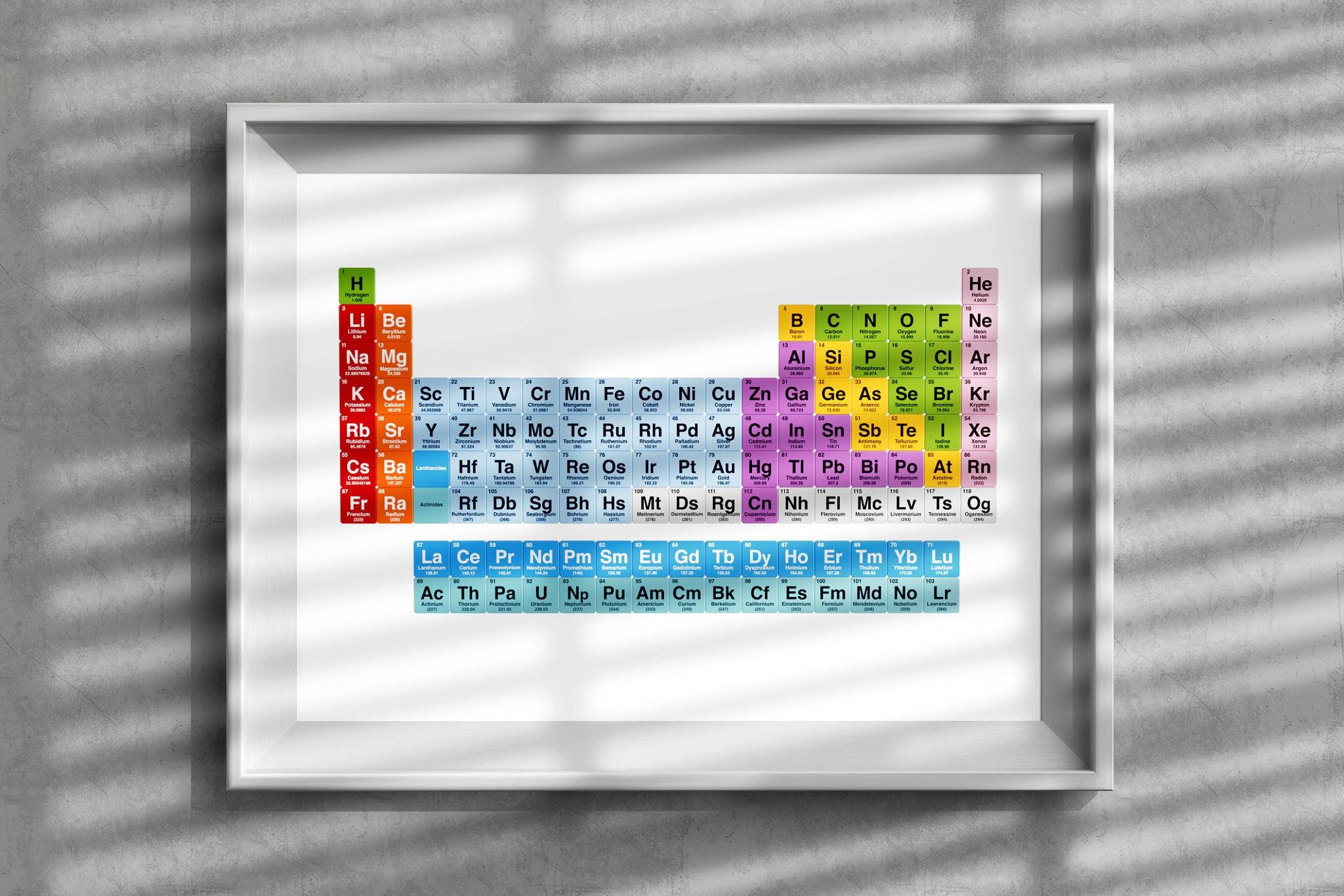
    The Periodic Table is often called the language of science because it organizes all known chemical elements into a clear and meaningful system. Developed from the groundbreaking work of Dmitri Mendeleev, the periodic table helps scientists, students, engineers, and researchers understand the properties and behaviour of every element. From the oxygen we breathe to the gold in jewellery and the silicon inside computers , every element has its own place and purpose.

    Each element is represented by a unique symbol, atomic number, and atomic mass, making it easier to study and compare their characteristics. The rows, called periods, and the columns, called groups, reveal patterns that allow scientists to predict how elements react with one another. This organised structure has become one of the most important tools in chemistry and modern science.

    The periodic table is more than just a chart hanging on a classroom wall—it is a map of the building blocks of the universe. It helps us understand everything from stars and planets to medicines, clean energy, electronics, and everyday materials. Whether creating life-saving drugs , designing stronger buildings , developing renewable energy , or exploring space , the periodic table plays a vital role in scientific discovery.

    Learning the periodic table strengthens critical thinking, improves problem-solving skills, and opens the door to understanding chemistry in a simple and logical way. Every element tells a story about nature, innovation, and the incredible world around us.

    The more we explore the periodic table, the more we appreciate the beauty, order, and endless possibilities of science. Let curiosity guide you, because every great scientific discovery begins with a single question.

    #PeriodicTable #Chemistry #Science #STEM #Education #Learning #ChemicalElements #AtomicStructure #ScienceEducation #ScientificDiscovery #Physics #Biology #Innovation #Research #Knowledge #Students #Teachers #FutureScientists #ScienceFacts #ExploreScience
    #rsisb RollNo.247 Foundation Level 🧪 Periodic Table: The Language of Science 🌍⚛️ The Periodic Table is often called the language of science because it organizes all known chemical elements into a clear and meaningful system. 📚⚛️ Developed from the groundbreaking work of Dmitri Mendeleev, the periodic table helps scientists, students, engineers, and researchers understand the properties and behaviour of every element. From the oxygen we breathe 🌬️ to the gold in jewellery 💍 and the silicon inside computers 💻, every element has its own place and purpose. Each element is represented by a unique symbol, atomic number, and atomic mass, making it easier to study and compare their characteristics. The rows, called periods, and the columns, called groups, reveal patterns that allow scientists to predict how elements react with one another. 🔬✨ This organised structure has become one of the most important tools in chemistry and modern science. The periodic table is more than just a chart hanging on a classroom wall—it is a map of the building blocks of the universe. 🌌 It helps us understand everything from stars and planets to medicines, clean energy, electronics, and everyday materials. Whether creating life-saving drugs 💊, designing stronger buildings 🏗️, developing renewable energy ⚡, or exploring space 🚀, the periodic table plays a vital role in scientific discovery. Learning the periodic table strengthens critical thinking, improves problem-solving skills, and opens the door to understanding chemistry in a simple and logical way. Every element tells a story about nature, innovation, and the incredible world around us. 🌱🔍 The more we explore the periodic table, the more we appreciate the beauty, order, and endless possibilities of science. Let curiosity guide you, because every great scientific discovery begins with a single question. 🌟🧠 #PeriodicTable #Chemistry #Science #STEM #Education #Learning #ChemicalElements #AtomicStructure #ScienceEducation #ScientificDiscovery #Physics #Biology #Innovation #Research #Knowledge #Students #Teachers #FutureScientists #ScienceFacts #ExploreScience
    0 Comentários 0 Compartilhamentos 9449 Visualizações
  • ** ACCl Task 43 – Day 62: Periodic Table – The Language of Science **

    I have successfully completed my forty-third ACCl task titled **“Periodic Table: The Language of Science”** .
    This task helped me understand how **elements form the foundation of chemistry**, showing the organized beauty of science and how everything in the universe is connected through these elements .

    Story Title: Periodic Table – The Language of Science

    Long ago, scientists were puzzled by the mysterious nature of matter. They knew that everything around them — the air they breathed, the water they drank, even their own bodies — was made of tiny building blocks called elements. But how were these elements related? How could they be understood in one single system?

    Then came a brilliant Russian scientist named Dmitri Mendeleev in the 19th century. He believed that the elements were like letters in the great language of science, each with its own unique sound, meaning, and role.

    Mendeleev began to organize these “letters” — hydrogen, oxygen, carbon, iron, and many more — based on their atomic weights and properties. He worked day and night, rearranging cards on his desk until finally, a pattern appeared. It was like solving the greatest puzzle of the universe!

    When he arranged the elements in rows and columns, their properties began to repeat in a beautiful, logical pattern — the Periodic Table was born.

    But what made Mendeleev truly remarkable was his vision. He left empty spaces in his table, predicting elements that hadn’t even been discovered yet! And years later, scientists did find them — just as he had predicted.

    Today, the Periodic Table stands as a universal language of science. From chemistry labs to space research, every scientist uses it to understand how the world works — how substances react, how stars shine, and how life itself exists.

    Every box, every symbol — H, O, C, Au, Fe — tells a story of creation, transformation, and discovery. The Periodic Table is not just a chart; it’s the alphabet of the universe.
    **📘 ACCl Task 43 – Day 62: Periodic Table – The Language of Science 🔬** I have successfully completed my forty-third ACCl task titled **“Periodic Table: The Language of Science”** ⚛️. This task helped me understand how **elements form the foundation of chemistry**, showing the organized beauty of science and how everything in the universe is connected through these elements 🌍✨. Story Title: Periodic Table – The Language of Science Long ago, scientists were puzzled by the mysterious nature of matter. They knew that everything around them — the air they breathed, the water they drank, even their own bodies — was made of tiny building blocks called elements. But how were these elements related? How could they be understood in one single system? Then came a brilliant Russian scientist named Dmitri Mendeleev in the 19th century. He believed that the elements were like letters in the great language of science, each with its own unique sound, meaning, and role. Mendeleev began to organize these “letters” — hydrogen, oxygen, carbon, iron, and many more — based on their atomic weights and properties. He worked day and night, rearranging cards on his desk until finally, a pattern appeared. It was like solving the greatest puzzle of the universe! When he arranged the elements in rows and columns, their properties began to repeat in a beautiful, logical pattern — the Periodic Table was born. But what made Mendeleev truly remarkable was his vision. He left empty spaces in his table, predicting elements that hadn’t even been discovered yet! And years later, scientists did find them — just as he had predicted. Today, the Periodic Table stands as a universal language of science. From chemistry labs to space research, every scientist uses it to understand how the world works — how substances react, how stars shine, and how life itself exists. Every box, every symbol — H, O, C, Au, Fe — tells a story of creation, transformation, and discovery. The Periodic Table is not just a chart; it’s the alphabet of the universe.
    0 Comentários 0 Compartilhamentos 291 Visualizações
  • ACCL Task – Day 62
    Story: "Periodic Table – The Language of Science"

    Once upon a time, scientists from around the world searched for a way to organize the mysteries of matter. They discovered that everything — from stars in the sky to cells in our bodies — is made of elements.

    Dmitri Mendeleev, a brilliant chemist, dreamed of creating a map that could connect all these elements. In 1869, his dream came true — he arranged them by their atomic weights and properties, giving birth to the Periodic Table.

    Today, this table is known as the language of science — a code that helps us understand the building blocks of the universe. Each symbol tells a story, each number reveals a secret, and together they form the foundation of chemistry and life itself.

    "From Hydrogen to Oganesson, every element speaks — and the Periodic Table helps us listen."
    ACCL Task – Day 62 Story: "Periodic Table – The Language of Science" Once upon a time, scientists from around the world searched for a way to organize the mysteries of matter. They discovered that everything — from stars in the sky to cells in our bodies — is made of elements. 🌍✨ Dmitri Mendeleev, a brilliant chemist, dreamed of creating a map that could connect all these elements. In 1869, his dream came true — he arranged them by their atomic weights and properties, giving birth to the Periodic Table. 🧪 Today, this table is known as the language of science — a code that helps us understand the building blocks of the universe. Each symbol tells a story, each number reveals a secret, and together they form the foundation of chemistry and life itself. ⚛️💫 "From Hydrogen to Oganesson, every element speaks — and the Periodic Table helps us listen."
    0 Comentários 0 Compartilhamentos 386 Visualizações