• Foundation level :-
    Day 76
    Roll:-005
    story post

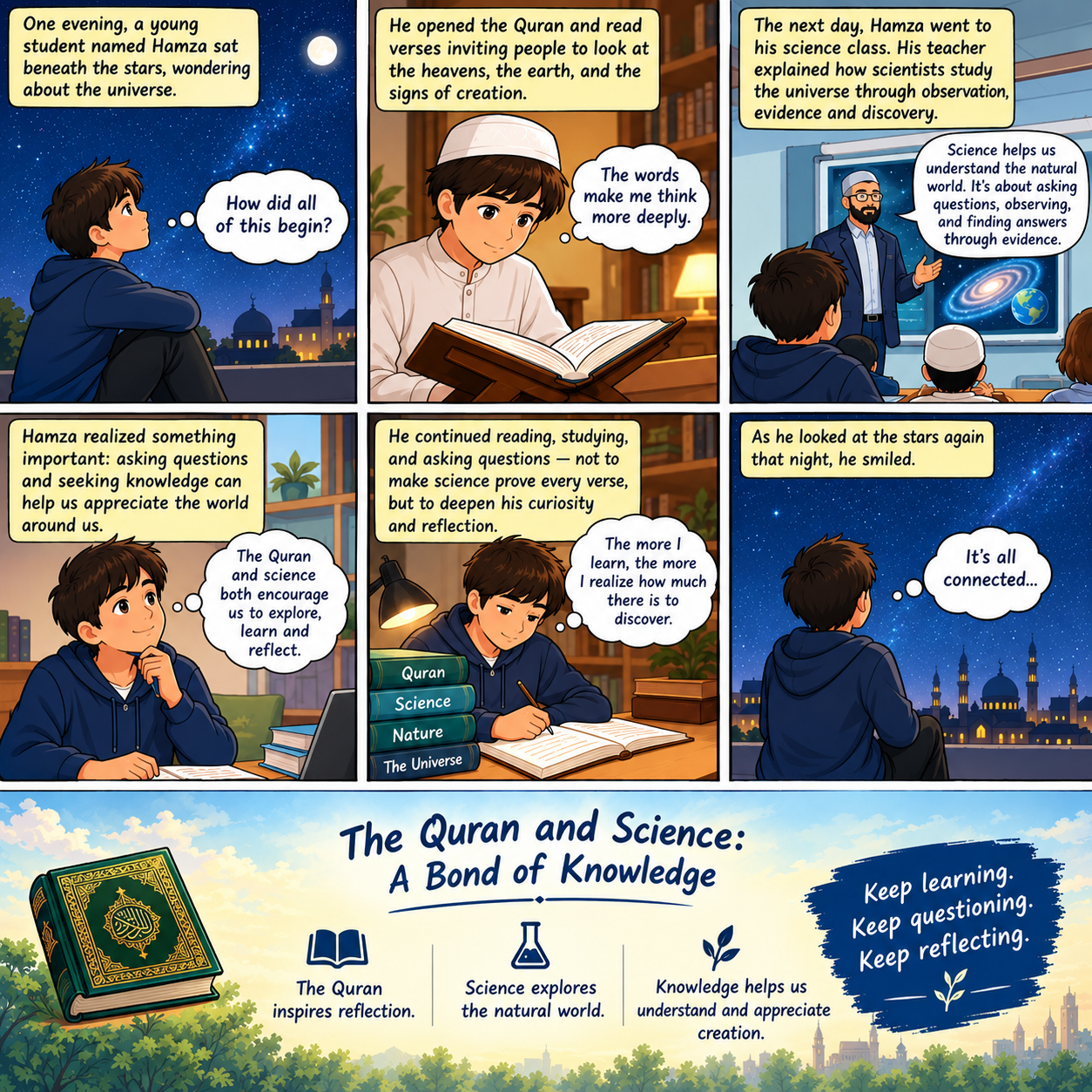
    A colorful, comic-style educational artwork showing a young student named Hamza exploring the connection between the Quran, curiosity, and scientific knowledge.

    The comic is divided into several panels:

    Hamza looks at the night sky and wonders about the universe.
    He reads the Quran and reflects on its message.
    In science class, he learns about observation, evidence, and discovery.
    He studies books about the Quran, science, nature, and the universe.
    In the final scene, Hamza looks at the stars with a sense of wonder and appreciation.

    The bottom section presents a beautiful Quran alongside simple symbols for learning, science, and reflection, with the message:

    “The Quran and Science: A Bond of Knowledge”

    “Keep learning. Keep questioning. Keep reflecting.”
    Foundation level :- Day 76 Roll:-005 story post A colorful, comic-style educational artwork showing a young student named Hamza exploring the connection between the Quran, curiosity, and scientific knowledge. The comic is divided into several panels: 🌌 Hamza looks at the night sky and wonders about the universe. πŸ“– He reads the Quran and reflects on its message. πŸ”¬ In science class, he learns about observation, evidence, and discovery. πŸ“š He studies books about the Quran, science, nature, and the universe. ✨ In the final scene, Hamza looks at the stars with a sense of wonder and appreciation. The bottom section presents a beautiful Quran alongside simple symbols for learning, science, and reflection, with the message: “The Quran and Science: A Bond of Knowledge” “Keep learning. Keep questioning. Keep reflecting.”
    0 Comments 0 Shares 172 Views
  • #rsisb
    Roll no.247
    song .26
    Foundation level

    **Dissecting Frogs: A Gateway to Human Anatomy**

    Studying frog anatomy can provide students with a fascinating introduction to the structure and organization of living organisms. Through careful anatomical study, students can learn how different organs are arranged, how body systems work together, and how scientists use observation to understand life.

    Frogs are commonly studied in biology because their basic body organization shares important similarities with other vertebrates. Exploring their anatomy can help learners recognize major structures such as the heart, lungs, digestive organs, and reproductive organs, while also developing an understanding of how these systems perform different functions.

    **From Frog Anatomy to Human Anatomy**

    Learning about a frog's internal organization can help students build foundational knowledge that makes human anatomy easier to understand. By comparing different vertebrate body plans, learners can discover both similarities and differences in organs, tissues, and body systems. This comparison encourages curiosity and strengthens scientific thinking.

    **Learning Through Observation**

    Anatomical studies teach more than just the names of organs. They encourage students to observe carefully, record information, ask questions, and connect physical structures with biological functions. These skills are valuable in biology, medicine, veterinary science, and many other scientific fields.

    **Science, Respect, and Responsibility**

    Biology education should always be approached with respect for living organisms and with appropriate safety, ethical, and educational guidelines. Modern classrooms may also use models, diagrams, videos, simulations, and digital anatomy tools to provide meaningful learning experiences.

    **Conclusion**

    “Dissecting Frogs: A Gateway to Human Anatomy” represents more than an anatomy lesson—it is an opportunity to explore the fascinating organization of life. By studying structures, comparing body systems, and asking scientific questions, students can develop a deeper appreciation for biology and the remarkable complexity of living organisms.

    #DissectingFrogs #FrogAnatomy #HumanAnatomy #Biology #ScienceEducation #AnatomyStudy #BiologyLearning #ScienceExperiment #LearningThroughScience #VertebrateAnatomy #LifeScience #ScienceStudents #EducationalJourney #ExploreBiology #ScientificThinking #AnatomyAndPhysiology #STEMEducation #ScienceExploration #BiologyProject #LearningIsFun
    #rsisb Roll no.247 song .26 Foundation level πŸΈπŸ”¬ **Dissecting Frogs: A Gateway to Human Anatomy** πŸ§¬πŸ«€ Studying frog anatomy can provide students with a fascinating introduction to the structure and organization of living organisms. Through careful anatomical study, students can learn how different organs are arranged, how body systems work together, and how scientists use observation to understand life. πŸ”πŸ“š 🐸 Frogs are commonly studied in biology because their basic body organization shares important similarities with other vertebrates. Exploring their anatomy can help learners recognize major structures such as the heart, lungs, digestive organs, and reproductive organs, while also developing an understanding of how these systems perform different functions. πŸ«€πŸ« 🧠 **From Frog Anatomy to Human Anatomy** Learning about a frog's internal organization can help students build foundational knowledge that makes human anatomy easier to understand. By comparing different vertebrate body plans, learners can discover both similarities and differences in organs, tissues, and body systems. This comparison encourages curiosity and strengthens scientific thinking. πŸ”¬βœ¨ πŸ“– **Learning Through Observation** Anatomical studies teach more than just the names of organs. They encourage students to observe carefully, record information, ask questions, and connect physical structures with biological functions. These skills are valuable in biology, medicine, veterinary science, and many other scientific fields. πŸ§ͺπŸ‘©‍πŸ”¬πŸ‘¨‍πŸ”¬ 🌱 **Science, Respect, and Responsibility** Biology education should always be approached with respect for living organisms and with appropriate safety, ethical, and educational guidelines. Modern classrooms may also use models, diagrams, videos, simulations, and digital anatomy tools to provide meaningful learning experiences. πŸŒπŸ’š ✨ **Conclusion** “Dissecting Frogs: A Gateway to Human Anatomy” represents more than an anatomy lesson—it is an opportunity to explore the fascinating organization of life. By studying structures, comparing body systems, and asking scientific questions, students can develop a deeper appreciation for biology and the remarkable complexity of living organisms. πŸΈπŸ”¬πŸ§¬πŸŒŸ #DissectingFrogs #FrogAnatomy #HumanAnatomy #Biology #ScienceEducation #AnatomyStudy #BiologyLearning #ScienceExperiment #LearningThroughScience #VertebrateAnatomy #LifeScience #ScienceStudents #EducationalJourney #ExploreBiology #ScientificThinking #AnatomyAndPhysiology #STEMEducation #ScienceExploration #BiologyProject #LearningIsFun πŸΈπŸ”¬πŸ“šπŸ§¬πŸ«€πŸ«βœ¨
    0 Comments 0 Shares 816 Views 6
  • #rsisb
    Roll no.247
    song .25
    Foundation level

    **Learning Through Layers: The Importance of Animal Anatomy Studies**

    Animal anatomy is a fascinating field that helps us understand how living organisms are built, how their body systems work, and how different parts work together to support life. From the smallest bones and muscles to complex organs and body systems, studying anatomy gives us a deeper appreciation of the incredible organization found in living creatures.

    **Learning Through Layers** means exploring the body step by step. By studying structures from the outside to the inside, students can understand how muscles, bones, organs, tissues, and other systems are connected. Each layer reveals something new and helps turn scientific ideas into a clearer picture.

    Animal anatomy studies are also important because they develop observation, critical thinking, and scientific reasoning. Students learn to identify structures, compare different animals, ask questions, and understand how body structures relate to their functions.

    Comparing the anatomy of different animals can also teach us about adaptation and diversity. Animals may have different body shapes and structures because they live in different environments and have different ways of surviving. This makes anatomy an exciting bridge between **biology, evolution, ecology, and the study of life itself.**

    Most importantly, anatomy encourages curiosity. Instead of simply memorizing names, learners can ask: **Why is this structure shaped this way? What does it do? How does it work with other parts of the body?** These questions transform learning into exploration.

    Studying animal anatomy reminds us that every living creature has a remarkable internal design. Through careful observation, scientific study, and responsible learning, we can better understand the diversity and complexity of life around us.

    **Explore. Observe. Question. Discover. Learn through every layer of life!**

    #AnimalAnatomy #AnatomyStudies #Biology #ScienceLearning #LearningThroughLayers #AnimalScience #LifeScience #BiologyStudents #ScienceEducation #EducationalJourney #ExploreScience #ScientificLearning #Curiosity #CriticalThinking #Observation #NatureAndScience #AnimalBiology #STEMEducation #LearningIsFun #DiscoverScience #KnowledgeIsPower #ScienceExploration
    #rsisb Roll no.247 song .25 Foundation level πŸΎπŸ”¬ **Learning Through Layers: The Importance of Animal Anatomy Studies** πŸ§¬πŸ“š Animal anatomy is a fascinating field that helps us understand how living organisms are built, how their body systems work, and how different parts work together to support life. 🌍❀️ From the smallest bones and muscles to complex organs and body systems, studying anatomy gives us a deeper appreciation of the incredible organization found in living creatures. πŸ¦΄πŸ«€πŸ« πŸ” **Learning Through Layers** means exploring the body step by step. By studying structures from the outside to the inside, students can understand how muscles, bones, organs, tissues, and other systems are connected. Each layer reveals something new and helps turn scientific ideas into a clearer picture. 🧠✨ πŸ“– Animal anatomy studies are also important because they develop observation, critical thinking, and scientific reasoning. Students learn to identify structures, compare different animals, ask questions, and understand how body structures relate to their functions. πŸ•πŸˆπŸ¦…πŸΈ 🌱 Comparing the anatomy of different animals can also teach us about adaptation and diversity. Animals may have different body shapes and structures because they live in different environments and have different ways of surviving. This makes anatomy an exciting bridge between **biology, evolution, ecology, and the study of life itself.** πŸŒŽπŸ”¬ πŸ’‘ Most importantly, anatomy encourages curiosity. Instead of simply memorizing names, learners can ask: **Why is this structure shaped this way? What does it do? How does it work with other parts of the body?** These questions transform learning into exploration. πŸš€πŸ“š πŸΎπŸ”¬ Studying animal anatomy reminds us that every living creature has a remarkable internal design. Through careful observation, scientific study, and responsible learning, we can better understand the diversity and complexity of life around us. 🌟🧬 ✨ **Explore. Observe. Question. Discover. Learn through every layer of life!** πŸ“šπŸ”πŸΎ #AnimalAnatomy #AnatomyStudies #Biology #ScienceLearning #LearningThroughLayers #AnimalScience #LifeScience #BiologyStudents #ScienceEducation #EducationalJourney #ExploreScience #ScientificLearning #Curiosity #CriticalThinking #Observation #NatureAndScience #AnimalBiology #STEMEducation #LearningIsFun #DiscoverScience #KnowledgeIsPower #ScienceExploration πŸΎπŸ”¬πŸ§¬πŸ“šπŸŒβœ¨
    0 Comments 0 Shares 373 Views 5
  • #RSTA
    #Task : Story Post
    #Class: Foundation Level
    #Day No: 132
    #Made By Me

    Total Post:18


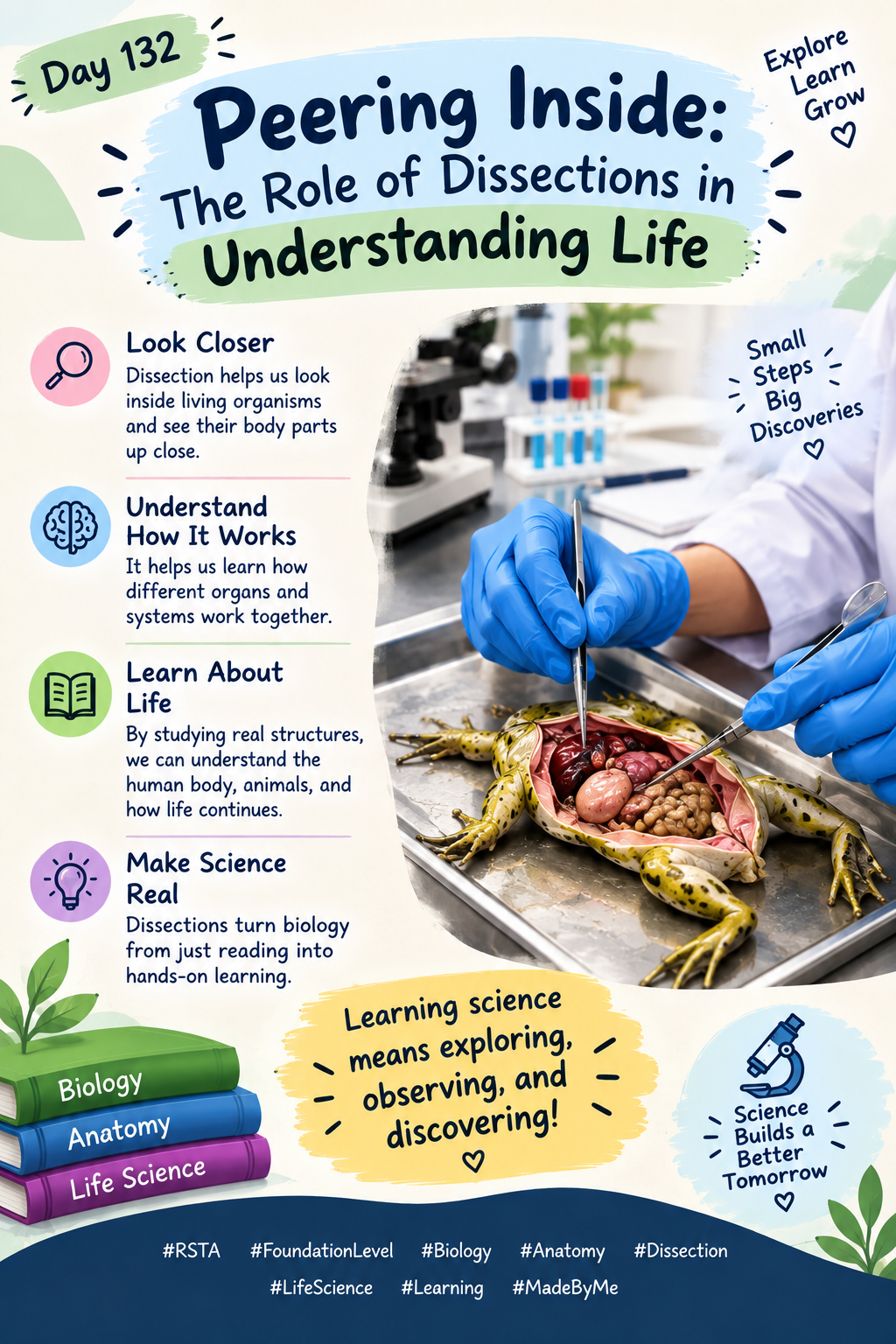
    Today, I explored how dissections help us understand the hidden structures of living organisms. By observing organs and body parts closely, we can learn how different systems work together.

    This activity made biology more interesting and helped me understand life through observation and practical learning.

    **Explore • Observe • Learn • Discover**

    RSTA FoundationLevel Day132 Biology Anatomy Dissection Science LifeScience Learning MadeByMe
    #RSTA #Task : Story Post #Class: Foundation Level #Day No: 132 #Made By Me Total Post:18 Today, I explored how dissections help us understand the hidden structures of living organisms. By observing organs and body parts closely, we can learn how different systems work together. 🧬✨ This activity made biology more interesting and helped me understand life through observation and practical learning. πŸŒ±πŸ“š **Explore • Observe • Learn • Discover** πŸ”πŸ’‘ RSTA FoundationLevel Day132 Biology Anatomy Dissection Science LifeScience Learning MadeByMe
    0 Comments 0 Shares 454 Views
  • RSIF8
    Rol no 68
    Task no 137
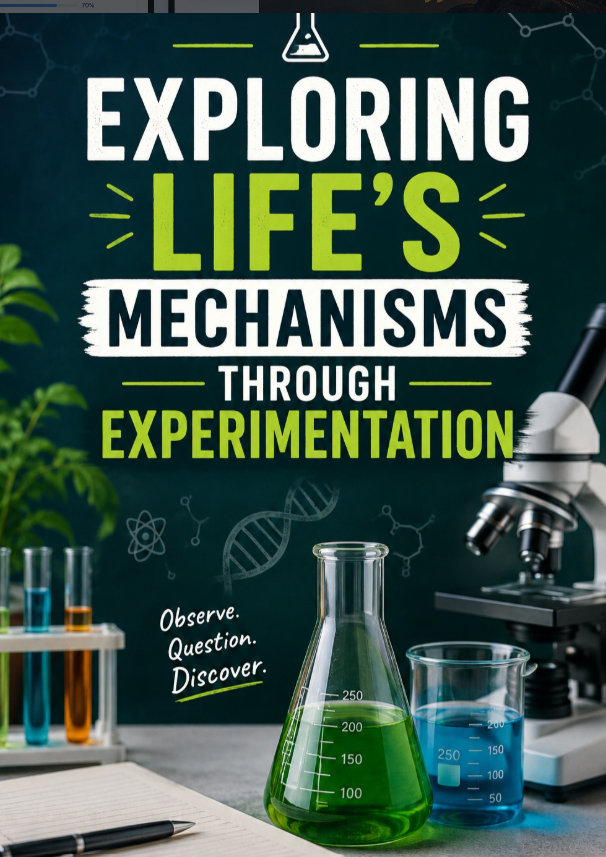
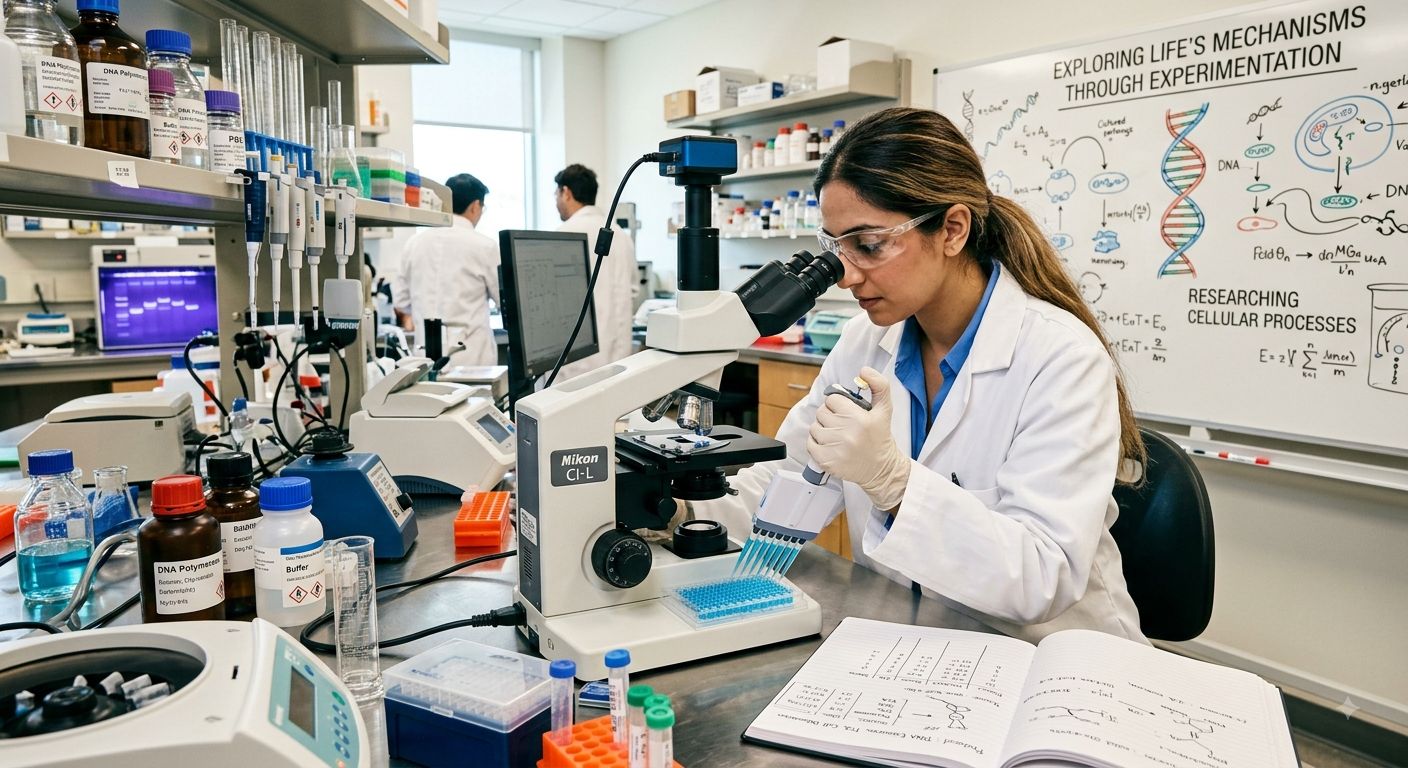
    Task topic; ### Exploring Life's Mechanisms Through Experimentation

    Science helps us understand the amazing mechanisms of life through **observation, experimentation, and discovery**. From studying cells to exploring biological processes, experiments allow us to ask questions, test ideas, and learn how living systems work.

    **Observe. Question. Experiment. Discover.**
    RSIF8 Rol no 68 Task no 137 Task topic; ### πŸ”¬ Exploring Life's Mechanisms Through Experimentation Science helps us understand the amazing mechanisms of life through **observation, experimentation, and discovery**. 🧬πŸ§ͺ From studying cells to exploring biological processes, experiments allow us to ask questions, test ideas, and learn how living systems work. ✨ **Observe. Question. Experiment. Discover.**
    0 Comments 0 Shares 323 Views
  • RSIF8
    Roll no 68
    Task no 130
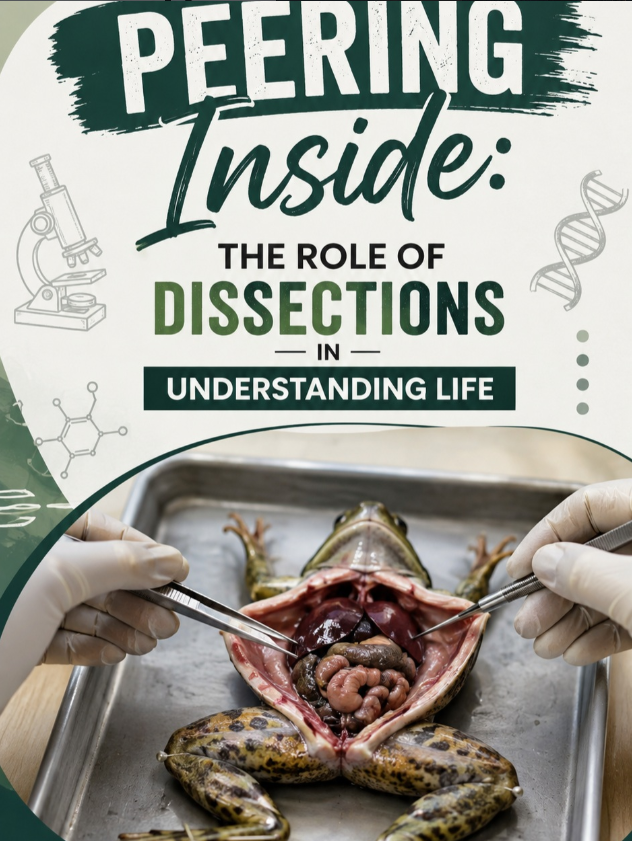
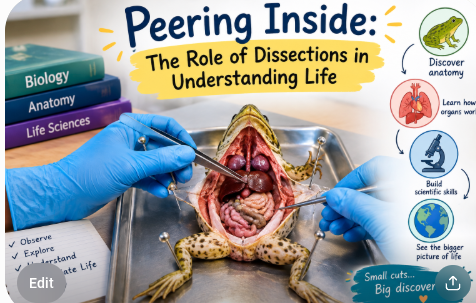
    Task topic;Peering Inside: The Role of Dissections**

    Dissections help students explore the structure of living organisms and understand how different organs and body systems work together. By observing anatomy closely, learners can connect what they study in textbooks with real biological structures. This educational journey encourages curiosity, careful observation, and a deeper understanding of life sciences.
    RSIF8 Roll no 68 Task no 130 Task topic;Peering Inside: The Role of Dissections** πŸ”¬πŸΈ Dissections help students explore the structure of living organisms and understand how different organs and body systems work together. By observing anatomy closely, learners can connect what they study in textbooks with real biological structures. This educational journey encourages curiosity, careful observation, and a deeper understanding of life sciences. πŸ§¬πŸ“š
    0 Comments 0 Shares 347 Views
  • #rsisb
    Roll no.214
    Foundation level
    Story post no.19

    Dissections help us explore the hidden structures of living organisms and understand how different organs work together. Through careful observation, students can learn about anatomy, body systems, and the amazing complexity of life. This topic shows how science helps us discover the secrets of living things and appreciate the beauty of nature.

    #Dissection #Biology #Anatomy #Science #Learning #LifeScience #Education #HumanBody #ExploreScience #UnderstandingLife
    #rsisb Roll no.214 Foundation level Story post no.19 Dissections help us explore the hidden structures of living organisms and understand how different organs work together. πŸΈπŸ«€πŸ« Through careful observation, students can learn about anatomy, body systems, and the amazing complexity of life. πŸŒ±πŸ”¬ This topic shows how science helps us discover the secrets of living things and appreciate the beauty of nature. ✨🧬 #Dissection πŸ”¬ #Biology 🧬 #Anatomy πŸ«€ #Science πŸ”¬ #Learning πŸ“š #LifeScience 🌱 #Education πŸŽ“ #HumanBody 🫁 #ExploreScience πŸ” #UnderstandingLife 🌍
    1
    0 Comments 0 Shares 938 Views
  • Fondation Level Batch No 4
    Roll RSLC #42
    Task No #111
    Day #111

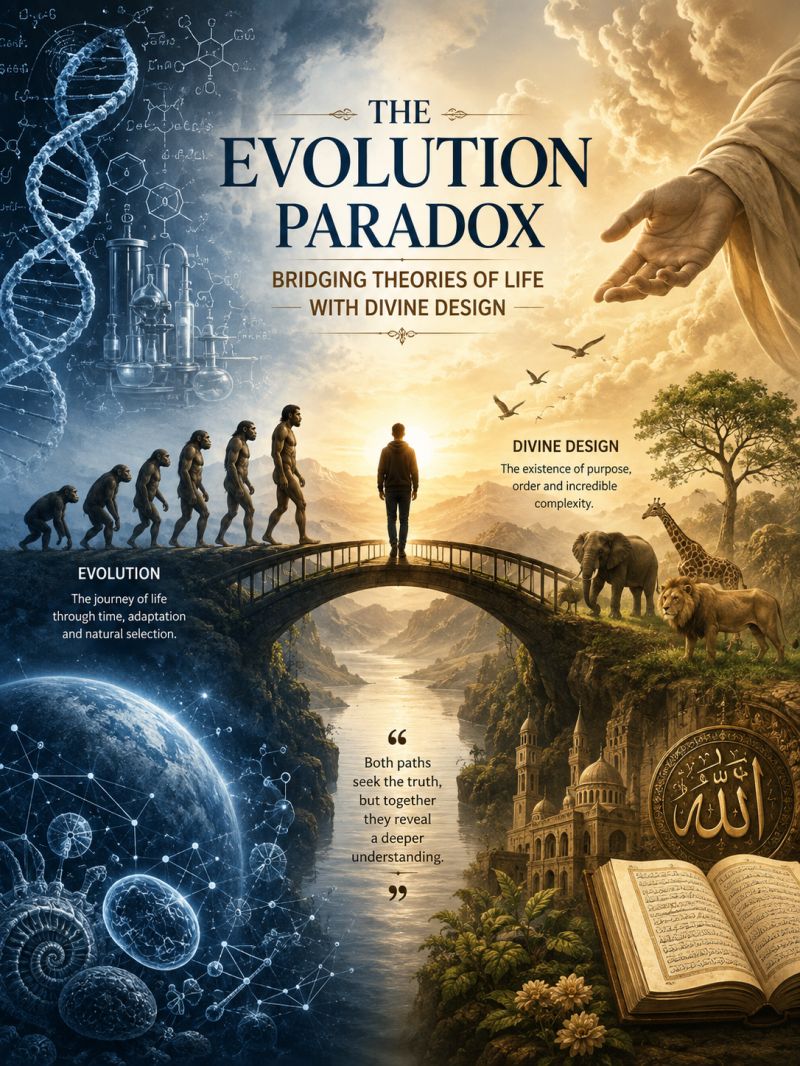
    The Evolution Paradox: A Story with a Moral Lesson

    Once, a curious young student named Ayan often wondered about the origin of life. He spent his evenings reading about evolution, observing nature, and asking questions about how living creatures change over time. The more he learned, the more amazed he became by the complexity and diversity of life.

    One day, Ayan discussed his questions with his teacher. His teacher told him that science helps us explore how life changes through evidence and observation, while faith encourages people to think about the meaning and purpose of creation. Ayan realized that asking questions did not weaken his curiosity; instead, it helped him understand the world with greater humility.

    From that day forward, Ayan stopped thinking that every difficult question needed an immediate answer. He continued studying science while also reflecting on the deeper questions of existence. He learned that knowledge is not only about proving what we already believe, but also about being willing to learn, think, and discover.

    Moral Lesson: True wisdom begins with curiosity and humility. We should seek knowledge, respect evidence, and remain open to deeper questions about life and existence. The more we learn, the more we realize how much there is still to understand.

    #Evolution #DivineDesign #ScienceAndFaith #OriginOfLife #EvolutionTheory #PhilosophyOfLife #ScienceAndSpirituality
    Fondation Level Batch No 4 Roll RSLC #42 Task No #111 Day #111 The Evolution Paradox: A Story with a Moral Lesson Once, a curious young student named Ayan often wondered about the origin of life. He spent his evenings reading about evolution, observing nature, and asking questions about how living creatures change over time. The more he learned, the more amazed he became by the complexity and diversity of life. One day, Ayan discussed his questions with his teacher. His teacher told him that science helps us explore how life changes through evidence and observation, while faith encourages people to think about the meaning and purpose of creation. Ayan realized that asking questions did not weaken his curiosity; instead, it helped him understand the world with greater humility. From that day forward, Ayan stopped thinking that every difficult question needed an immediate answer. He continued studying science while also reflecting on the deeper questions of existence. He learned that knowledge is not only about proving what we already believe, but also about being willing to learn, think, and discover. Moral Lesson: True wisdom begins with curiosity and humility. We should seek knowledge, respect evidence, and remain open to deeper questions about life and existence. The more we learn, the more we realize how much there is still to understand. #Evolution #DivineDesign #ScienceAndFaith #OriginOfLife #EvolutionTheory #PhilosophyOfLife #ScienceAndSpirituality
    0 Comments 0 Shares 2032 Views
  • Fondation Level Batch No 4
    Roll RSLC #42
    Task No #132
    Day #132

    Peering Inside: The Role of Dissections in Understanding Life

    Ali was a curious student who loved learning about biology. One day, his teacher introduced the class to dissection and explained how carefully studying internal structures can help us understand how living organisms function. Ali had always relied on textbook pictures, so he was surprised to see how complex and organized the structures were in reality. As he observed carefully, he began connecting the practical experience with everything he had previously learned in class.

    During the lesson, Ali noticed that every organ had a particular shape and purpose. He realized that the body works like a carefully organized system, where different parts depend on one another. Instead of simply memorizing names, he started asking questions and searching for explanations. His teacher encouraged him to observe patiently and reminded him that good science requires curiosity, responsibility, and respect for life.

    After the lesson, Ali understood that true learning does not always come from reading a book. Sometimes, we learn more deeply when we observe, investigate, and experience things carefully. The dissection lesson had changed the way he looked at biology because he could now understand the connection between theory and real structures. He became more interested in discovering how life works and wanted to continue exploring the mysteries of science.

    As Ali walked home, he thought about what his teacher had said: ?Never stop asking questions.? He realized that the world contains many hidden details, and understanding them requires patience and an open mind. The experience taught him that knowledge grows when curiosity leads us to explore responsibly. From that day forward, Ali promised himself that he would not just memorize information but would always try to understand the reason behind it.

    Moral Lesson: True knowledge comes from curiosity, careful observation, and the courage to look beyond the surface. When we ask questions and explore responsibly, even the smallest discovery can teach us something valuable about life.

    #HumanBody #Dissection #Anatomy #Biology #MedicalScience #ScienceEdu
    Fondation Level Batch No 4 Roll RSLC #42 Task No #132 Day #132 Peering Inside: The Role of Dissections in Understanding Life Ali was a curious student who loved learning about biology. One day, his teacher introduced the class to dissection and explained how carefully studying internal structures can help us understand how living organisms function. Ali had always relied on textbook pictures, so he was surprised to see how complex and organized the structures were in reality. As he observed carefully, he began connecting the practical experience with everything he had previously learned in class. During the lesson, Ali noticed that every organ had a particular shape and purpose. He realized that the body works like a carefully organized system, where different parts depend on one another. Instead of simply memorizing names, he started asking questions and searching for explanations. His teacher encouraged him to observe patiently and reminded him that good science requires curiosity, responsibility, and respect for life. After the lesson, Ali understood that true learning does not always come from reading a book. Sometimes, we learn more deeply when we observe, investigate, and experience things carefully. The dissection lesson had changed the way he looked at biology because he could now understand the connection between theory and real structures. He became more interested in discovering how life works and wanted to continue exploring the mysteries of science. As Ali walked home, he thought about what his teacher had said: ?Never stop asking questions.? He realized that the world contains many hidden details, and understanding them requires patience and an open mind. The experience taught him that knowledge grows when curiosity leads us to explore responsibly. From that day forward, Ali promised himself that he would not just memorize information but would always try to understand the reason behind it. Moral Lesson: True knowledge comes from curiosity, careful observation, and the courage to look beyond the surface. When we ask questions and explore responsibly, even the smallest discovery can teach us something valuable about life. #HumanBody #Dissection #Anatomy #Biology #MedicalScience #ScienceEdu
    0 Comments 0 Shares 1297 Views
  • Fondation Level Batch No 4
    Roll RSLC #42
    Task No #139
    Day #139

    # Exploring Life?s Mechanisms Through Experimentation

    Sara was a curious young student who loved discovering how life worked. One day, while studying in her school laboratory, she looked through a microscope and became fascinated by the tiny cells she saw moving beneath the lens. She wondered how something so small could perform such important tasks and keep living organisms alive. Instead of simply memorizing facts from her textbook, Sara decided to investigate through experiments. She carefully planned her work, recorded her observations, and began searching for answers to the mysteries hidden inside living cells.

    At first, Sara?s experiments did not go as planned. Some results were confusing, while others were completely different from what she expected. She became disappointed and thought about giving up, but her teacher encouraged her to look at every mistake as an opportunity to learn. Sara repeated her experiments, checked her measurements, and carefully studied her observations. Gradually, she discovered that cells respond to changes in their environment and that many different processes work together to keep life functioning. Each experiment, even the unsuccessful ones, taught her something valuable.

    As Sara continued her research, she realized that life is a complex system filled with countless interactions. Cells communicate, produce energy, transport materials, grow, repair damage, and respond to their surroundings. She understood that scientific discovery requires more than intelligence; it requires patience, curiosity, careful observation, and the courage to learn from failure. The more she experimented, the more questions she developed, and each question encouraged her to explore even deeper into the fascinating mechanisms of life.

    When Sara finally completed her project, she presented her findings to her classmates. She explained that her greatest discovery was not a single scientific fact, but the understanding that every experiment has something to teach us. Success can give us answers, while failure can show us a better path toward them. Sara left the laboratory with a new appreciation for science and a stronger belief in herself.

    **Moral: Never be afraid of failure, because every mistake can become a lesson, and every lesson can bring you one step closer to discovery.**

    #LifeScience #ScientificResearch #Experimentation #Biology #ScienceExploration #LifeMechanisms #ScientificDiscovery
    Fondation Level Batch No 4 Roll RSLC #42 Task No #139 Day #139 # Exploring Life?s Mechanisms Through Experimentation Sara was a curious young student who loved discovering how life worked. One day, while studying in her school laboratory, she looked through a microscope and became fascinated by the tiny cells she saw moving beneath the lens. She wondered how something so small could perform such important tasks and keep living organisms alive. Instead of simply memorizing facts from her textbook, Sara decided to investigate through experiments. She carefully planned her work, recorded her observations, and began searching for answers to the mysteries hidden inside living cells. At first, Sara?s experiments did not go as planned. Some results were confusing, while others were completely different from what she expected. She became disappointed and thought about giving up, but her teacher encouraged her to look at every mistake as an opportunity to learn. Sara repeated her experiments, checked her measurements, and carefully studied her observations. Gradually, she discovered that cells respond to changes in their environment and that many different processes work together to keep life functioning. Each experiment, even the unsuccessful ones, taught her something valuable. As Sara continued her research, she realized that life is a complex system filled with countless interactions. Cells communicate, produce energy, transport materials, grow, repair damage, and respond to their surroundings. She understood that scientific discovery requires more than intelligence; it requires patience, curiosity, careful observation, and the courage to learn from failure. The more she experimented, the more questions she developed, and each question encouraged her to explore even deeper into the fascinating mechanisms of life. When Sara finally completed her project, she presented her findings to her classmates. She explained that her greatest discovery was not a single scientific fact, but the understanding that every experiment has something to teach us. Success can give us answers, while failure can show us a better path toward them. Sara left the laboratory with a new appreciation for science and a stronger belief in herself. **Moral: Never be afraid of failure, because every mistake can become a lesson, and every lesson can bring you one step closer to discovery.** #LifeScience #ScientificResearch #Experimentation #Biology #ScienceExploration #LifeMechanisms #ScientificDiscovery
    0 Comments 0 Shares 1561 Views
More Results