• RSIF8
    ROLL NO 77
    MOVIE REVIEW NO 15
    MOVIE TOPIC "Freedom Writers".

    **Freedom Writers – A Story That Inspires Change!**

    *Freedom Writers* is a powerful and inspiring movie about education, courage, equality, and the power of believing in others. ‍

    The story follows Erin Gruwell, a dedicated teacher who inspires her students to overcome racism, violence, and difficult life circumstances through education and writing. By sharing their personal stories, the students learn to understand one another, break stereotypes, and believe in a brighter future.

    **Lesson of the Movie:** Never judge people by their past or background. Everyone has a story worth hearing, and one caring teacher can change many lives!

    Remember, your past does not define your future. Keep learning, keep growing, and never give up on your dreams!

    \#FreedomWriters #MovieReview #EducationalContent #EducationMatters #Inspiration #Motivation #NeverGiveUp #BelieveInYourself #Equality #Kindness #TeachersMatter #LifeLessons #PersonalGrowth #RehanCodingWithAI

    Make the movie summary more specificAdd a stronger audience call to action
    RSIF8 ROLL NO 77 MOVIE REVIEW NO 15 MOVIE TOPIC "Freedom Writers". 🎬✨ **Freedom Writers – A Story That Inspires Change!** 📚❤️ *Freedom Writers* is a powerful and inspiring movie about education, courage, equality, and the power of believing in others. 🌟👩‍🏫 The story follows Erin Gruwell, a dedicated teacher who inspires her students to overcome racism, violence, and difficult life circumstances through education and writing. 📝💪 By sharing their personal stories, the students learn to understand one another, break stereotypes, and believe in a brighter future. 🌈🤝 💡 **Lesson of the Movie:** Never judge people by their past or background. Everyone has a story worth hearing, and one caring teacher can change many lives! ❤️🌍 ✨ Remember, your past does not define your future. Keep learning, keep growing, and never give up on your dreams! 🚀🎯 \#FreedomWriters #MovieReview #EducationalContent #EducationMatters #Inspiration #Motivation #NeverGiveUp #BelieveInYourself #Equality #Kindness #TeachersMatter #LifeLessons #PersonalGrowth #RehanCodingWithAI 🎬📚❤️ Make the movie summary more specificAdd a stronger audience call to action
    0 Comments 0 Shares 2658 Views 24
  • Racism in any form is ugly. However we cannot fight every battle which is repugnant to us. People view things through cultural lenses. Anger only fuels defensiveness and a clinging to ugly value. There is one way to win the greater objective. Which is the way of peace and love at all costs and standing strong in your attitude of equality when fear would tell you to run despite the consequences.

    Crystal Watley Kigoni
    Racism in any form is ugly. However we cannot fight every battle which is repugnant to us. People view things through cultural lenses. Anger only fuels defensiveness and a clinging to ugly value. There is one way to win the greater objective. Which is the way of peace and love at all costs and standing strong in your attitude of equality when fear would tell you to run despite the consequences. Crystal Watley Kigoni
    0 Comments 0 Shares 1605 Views
  • Shared via Daniel Mark

    A friend shared this gem (slightly edited)

    *************************************

    As she exited an election night party heartbroken, she encountered a man with a thick North African accent. He asked how the election returns were looking. She told him she thought we were ruined as a nation for good.

    He said he disagreed. He said that he has been in the US for three years, and recently naturalized. He is from Somalia and is a Muslim. This was his first election and he was very proud to vote for Hillary Clinton.

    The American born woman said she was so ashamed that we were a country that would not only tolerate racism, but lift it up and celebrate it.

    He said he that he actually thought it was good that we are lifting up racism and exposing it. He said, its easier to confront it that way and have conversations about it.

    We can talk to people now and help them change, he said.

    *************************************

    So lets focus on facts and building friendships where prejudice once existed... Lets recognize our fears and judgments and replace them as much as possible with care and respect for human rights

    Humanity will be better because of the effort we exert in this way.
    Shared via Daniel Mark A friend shared this gem (slightly edited) ************************************* As she exited an election night party heartbroken, she encountered a man with a thick North African accent. He asked how the election returns were looking. She told him she thought we were ruined as a nation for good. He said he disagreed. He said that he has been in the US for three years, and recently naturalized. He is from Somalia and is a Muslim. This was his first election and he was very proud to vote for Hillary Clinton. The American born woman said she was so ashamed that we were a country that would not only tolerate racism, but lift it up and celebrate it. He said he that he actually thought it was good that we are lifting up racism and exposing it. He said, it's easier to confront it that way and have conversations about it. We can talk to people now and help them change, he said. ************************************* So let's focus on facts and building friendships where prejudice once existed... Let's recognize our fears and judgments and replace them as much as possible with care and respect for human rights Humanity will be better because of the effort we exert in this way.
    0 Comments 0 Shares 352 Views
  • From Sapiens: A Brief History of Humankind by Yuval Noah Harari

    "Next, British, French and German scholars wedded the linguistic theory about the industrious Aryans to Darwin’s theory of natural selection and posited that the Aryans were not just a linguistic group but a biological entity – a race. And not just any race, but a master race of tall, light-haired, blue-eyed, hard-working, and super-rational humans who emerged from the mists of the north to lay the foundations of culture throughout the world. Regrettably, the Aryans who invaded India and Persia intermarried with the local natives they found in these lands, losing their light complexions and blond hair, and with them their rationality and diligence. The civilizations of India and Persia consequently declined. In Europe, on the other hand, the Aryans preserved their racial purity. This is why Europeans had managed to conquer the world, and why they were to rule it – provided they took precautions not to mix with inferior races.

    Such racist theories, prominent and respectable for many decades, have become anathema among scientists and politicians alike. People continue to conduct a heroic struggle against racism without noticing that the battlefront has shifted, and that the place of racism in imperial ideology has now been replaced by ‘culturism’. There is no such word, but it’s about time we coined it. Among today’s elites, assertions about the contrasting merits of diverse human groups are almost always couched in terms of historical differences between cultures rather than biological differences between races. We no longer say, ‘It’s in their blood.’ We say, ‘It’s in their culture.’ Thus European right-wing parties which oppose Muslim immigration usually take care to avoid racial terminology. Marine le Pen’s speechwriters would have been shown the door on the spot had they suggested that the leader of the Front National go on television to declare that, ‘We don’t want those inferior Semites to dilute our Aryan blood and spoil our Aryan civilization.’ Instead, the French Front National, the Dutch Party for Freedom, the Alliance for the Future of Austria and their like tend to argue that Western culture, as it has evolved in Europe, is characterized by democratic values, tolerance and gender equality, whereas Muslim culture, which evolved in the Middle East, is characterized by hierarchical politics, fanaticism and misogyny. Since the two cultures are so different, and since many Muslim immigrants are unwilling (and perhaps unable) to adopt Western values, they should not be allowed to enter, lest they foment internal conflicts and corrode European democracy and liberalism."
    From Sapiens: A Brief History of Humankind by Yuval Noah Harari "Next, British, French and German scholars wedded the linguistic theory about the industrious Aryans to Darwin’s theory of natural selection and posited that the Aryans were not just a linguistic group but a biological entity – a race. And not just any race, but a master race of tall, light-haired, blue-eyed, hard-working, and super-rational humans who emerged from the mists of the north to lay the foundations of culture throughout the world. Regrettably, the Aryans who invaded India and Persia intermarried with the local natives they found in these lands, losing their light complexions and blond hair, and with them their rationality and diligence. The civilizations of India and Persia consequently declined. In Europe, on the other hand, the Aryans preserved their racial purity. This is why Europeans had managed to conquer the world, and why they were to rule it – provided they took precautions not to mix with inferior races. Such racist theories, prominent and respectable for many decades, have become anathema among scientists and politicians alike. People continue to conduct a heroic struggle against racism without noticing that the battlefront has shifted, and that the place of racism in imperial ideology has now been replaced by ‘culturism’. There is no such word, but it’s about time we coined it. Among today’s elites, assertions about the contrasting merits of diverse human groups are almost always couched in terms of historical differences between cultures rather than biological differences between races. We no longer say, ‘It’s in their blood.’ We say, ‘It’s in their culture.’ Thus European right-wing parties which oppose Muslim immigration usually take care to avoid racial terminology. Marine le Pen’s speechwriters would have been shown the door on the spot had they suggested that the leader of the Front National go on television to declare that, ‘We don’t want those inferior Semites to dilute our Aryan blood and spoil our Aryan civilization.’ Instead, the French Front National, the Dutch Party for Freedom, the Alliance for the Future of Austria and their like tend to argue that Western culture, as it has evolved in Europe, is characterized by democratic values, tolerance and gender equality, whereas Muslim culture, which evolved in the Middle East, is characterized by hierarchical politics, fanaticism and misogyny. Since the two cultures are so different, and since many Muslim immigrants are unwilling (and perhaps unable) to adopt Western values, they should not be allowed to enter, lest they foment internal conflicts and corrode European democracy and liberalism."
    0 Comments 0 Shares 2646 Views
  • The future generations will look at national boundaries like we look at slavery & racism today, and wonder !
    The future generations will look at national boundaries like we look at slavery & racism today, and wonder !
    0 Comments 0 Shares 273 Views
  • Are you up for Racism And nationalism ?
    Are you up for Racism And nationalism ?
    0 Comments 0 Shares 383 Views
  • Extreme Poverty in the United States: Causes, Problems, and Solutions

    Introduction

    The United States is the world’s largest economy with a GDP of over $27 trillion (2024). Yet, poverty remains a major challenge. According to the U.S. Census Bureau, 11.5% of Americans (37.9 million people) live below the federal poverty line. Extreme poverty – living on less than $2.15 per day – is rare, but deep poverty (families living on incomes less than half of the poverty threshold) affects about 18 million people. Poverty in the U.S. is tied to inequality, systemic issues, and lack of access to affordable housing, healthcare, and education.

    ⸻

    Facts About Poverty in the U.S.
    • Poverty Rate: 11.5% (U.S. Census Bureau, 2023).
    • Child Poverty: In 2022, 16% of U.S. children lived in poverty.
    • Homelessness: Over 650,000 people were homeless on a single night in 2023 (HUD).
    • Healthcare: About 27 million Americans lack health insurance.
    • Wealth Gap: The top 10% of households control 70% of the nation’s wealth.
    • Minimum Wage: Federal minimum wage is $7.25/hour, unchanged since 2009, while living wage estimates are often $20+/hour in major cities.

    ⸻

    Problems Causing Extreme Poverty
    1. Income Inequality
    • The U.S. has one of the highest income gaps among developed countries.
    • CEO pay is 300x higher than the average worker’s wage.
    • Wages for low-income workers have stagnated while costs of living rise.
    2. Affordable Housing Crisis
    • Rent and housing prices have skyrocketed.
    • Families spend 30–50% of their income on housing, pushing them into poverty.
    • Homelessness is concentrated in states like California, New York, and Florida.
    3. Healthcare Costs
    • Medical bills are the leading cause of personal bankruptcy.
    • Uninsured and underinsured families fall into cycles of debt.
    4. Education Gaps
    • Poor districts receive less funding, creating cycles of low opportunity.
    • College debt exceeds $1.7 trillion, trapping young Americans financially.
    5. Systemic Racism and Inequality
    • African American and Hispanic households are 2x more likely to be in poverty compared to white households.
    • Native American reservations face extreme poverty rates above 25%.
    6. Weak Social Safety Nets
    • Welfare programs vary by state, leaving millions without consistent support.
    • Cuts in food stamps and unemployment benefits worsen conditions.

    ⸻

    Solutions to Reduce Extreme Poverty
    1. Raise Wages and Strengthen Labor Rights
    • Increase federal minimum wage to a living wage.
    • Support unions to negotiate better pay and benefits.
    • Expand earned income tax credits for low-income families.
    2. Affordable Housing Programs
    • Expand federal housing vouchers.
    • Invest in low-cost housing construction.
    • Increase rent control policies in high-cost cities.
    3. Universal Healthcare and Lower Costs
    • Expand Medicaid in all states.
    • Introduce price caps on prescription drugs.
    • Work toward universal healthcare access (e.g., Medicare-for-All).
    4. Education Reform
    • Increase funding for schools in low-income areas.
    • Reduce or eliminate college tuition debt.
    • Expand vocational and technical training.
    5. Addressing Inequality
    • Implement progressive taxation (higher taxes on billionaires).
    • Invest more in minority communities.
    • Support entrepreneurship and job training in underserved areas.
    6. Strengthen Social Safety Nets
    • Expand child tax credit permanently (lifted millions out of poverty in 2021).
    • Strengthen food assistance and unemployment programs.
    • Provide universal childcare for working families.

    ⸻

    Conclusion

    Extreme poverty in the United States is not caused by lack of wealth but by unequal distribution of wealth, weak safety nets, and systemic barriers. Despite being one of the richest nations, millions live without secure housing, healthcare, or fair wages. The solution lies in raising incomes, ensuring affordable housing and healthcare, reforming education, and strengthening welfare programs. By addressing structural inequalities, the U.S. can reduce poverty and build a more inclusive economy.
    Extreme Poverty in the United States: Causes, Problems, and Solutions Introduction The United States is the world’s largest economy with a GDP of over $27 trillion (2024). Yet, poverty remains a major challenge. According to the U.S. Census Bureau, 11.5% of Americans (37.9 million people) live below the federal poverty line. Extreme poverty – living on less than $2.15 per day – is rare, but deep poverty (families living on incomes less than half of the poverty threshold) affects about 18 million people. Poverty in the U.S. is tied to inequality, systemic issues, and lack of access to affordable housing, healthcare, and education. ⸻ Facts About Poverty in the U.S. • Poverty Rate: 11.5% (U.S. Census Bureau, 2023). • Child Poverty: In 2022, 16% of U.S. children lived in poverty. • Homelessness: Over 650,000 people were homeless on a single night in 2023 (HUD). • Healthcare: About 27 million Americans lack health insurance. • Wealth Gap: The top 10% of households control 70% of the nation’s wealth. • Minimum Wage: Federal minimum wage is $7.25/hour, unchanged since 2009, while living wage estimates are often $20+/hour in major cities. ⸻ Problems Causing Extreme Poverty 1. Income Inequality • The U.S. has one of the highest income gaps among developed countries. • CEO pay is 300x higher than the average worker’s wage. • Wages for low-income workers have stagnated while costs of living rise. 2. Affordable Housing Crisis • Rent and housing prices have skyrocketed. • Families spend 30–50% of their income on housing, pushing them into poverty. • Homelessness is concentrated in states like California, New York, and Florida. 3. Healthcare Costs • Medical bills are the leading cause of personal bankruptcy. • Uninsured and underinsured families fall into cycles of debt. 4. Education Gaps • Poor districts receive less funding, creating cycles of low opportunity. • College debt exceeds $1.7 trillion, trapping young Americans financially. 5. Systemic Racism and Inequality • African American and Hispanic households are 2x more likely to be in poverty compared to white households. • Native American reservations face extreme poverty rates above 25%. 6. Weak Social Safety Nets • Welfare programs vary by state, leaving millions without consistent support. • Cuts in food stamps and unemployment benefits worsen conditions. ⸻ Solutions to Reduce Extreme Poverty 1. Raise Wages and Strengthen Labor Rights • Increase federal minimum wage to a living wage. • Support unions to negotiate better pay and benefits. • Expand earned income tax credits for low-income families. 2. Affordable Housing Programs • Expand federal housing vouchers. • Invest in low-cost housing construction. • Increase rent control policies in high-cost cities. 3. Universal Healthcare and Lower Costs • Expand Medicaid in all states. • Introduce price caps on prescription drugs. • Work toward universal healthcare access (e.g., Medicare-for-All). 4. Education Reform • Increase funding for schools in low-income areas. • Reduce or eliminate college tuition debt. • Expand vocational and technical training. 5. Addressing Inequality • Implement progressive taxation (higher taxes on billionaires). • Invest more in minority communities. • Support entrepreneurship and job training in underserved areas. 6. Strengthen Social Safety Nets • Expand child tax credit permanently (lifted millions out of poverty in 2021). • Strengthen food assistance and unemployment programs. • Provide universal childcare for working families. ⸻ Conclusion Extreme poverty in the United States is not caused by lack of wealth but by unequal distribution of wealth, weak safety nets, and systemic barriers. Despite being one of the richest nations, millions live without secure housing, healthcare, or fair wages. The solution lies in raising incomes, ensuring affordable housing and healthcare, reforming education, and strengthening welfare programs. By addressing structural inequalities, the U.S. can reduce poverty and build a more inclusive economy.
    0 Comments 0 Shares 1355 Views
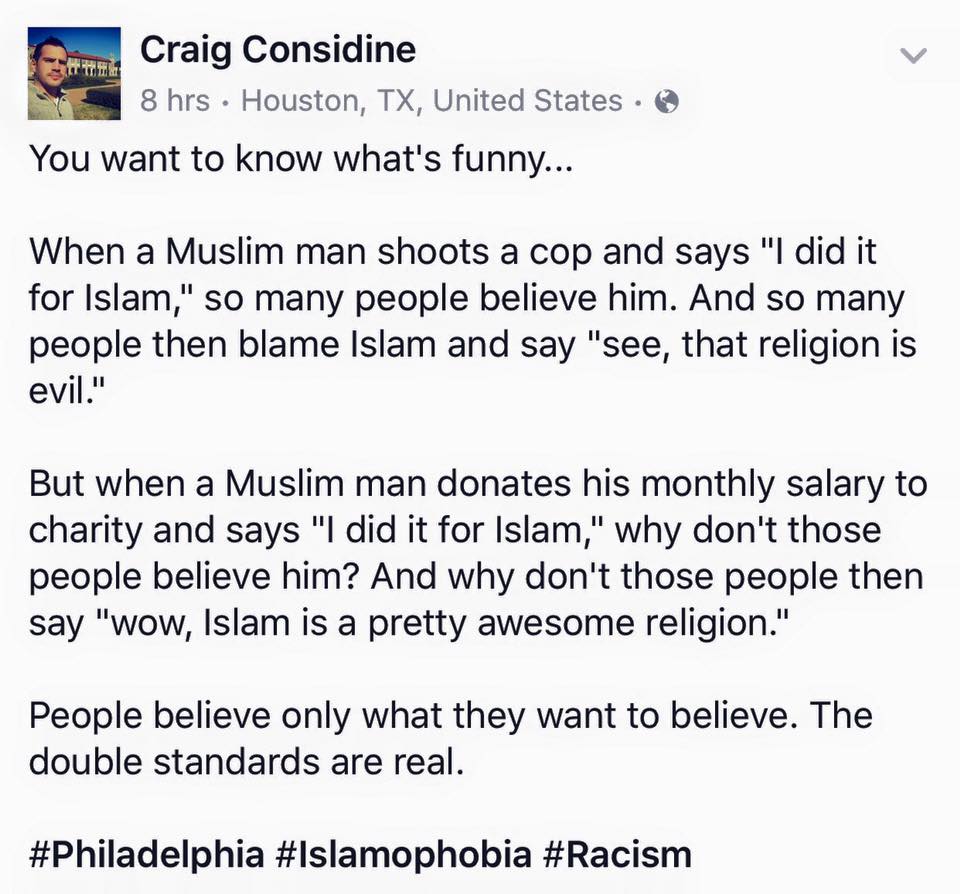
  • You want to know whats funny...

    When a Muslim man shoots a cop and says "I did it for Islam," so many people believe him. And so many people then blame Islam and say "see, that religion is evil."

    But when a Muslim man donates his monthly salary to charity and says "I did it for Islam," why dont those people believe him? And why dont those people then say "wow, Islam is a pretty awesome religion."

    People believe only what they want to believe. The double standards are real.

    #Philadelphia #Islamophobia #Racism
    You want to know what's funny... When a Muslim man shoots a cop and says "I did it for Islam," so many people believe him. And so many people then blame Islam and say "see, that religion is evil." But when a Muslim man donates his monthly salary to charity and says "I did it for Islam," why don't those people believe him? And why don't those people then say "wow, Islam is a pretty awesome religion." People believe only what they want to believe. The double standards are real. #Philadelphia #Islamophobia #Racism
    0 Comments 0 Shares 318 Views
  • Be a human ! - Share this if you are against racism
    Be a human ! - Share this if you are against racism
    0 Comments 0 Shares 137 Views
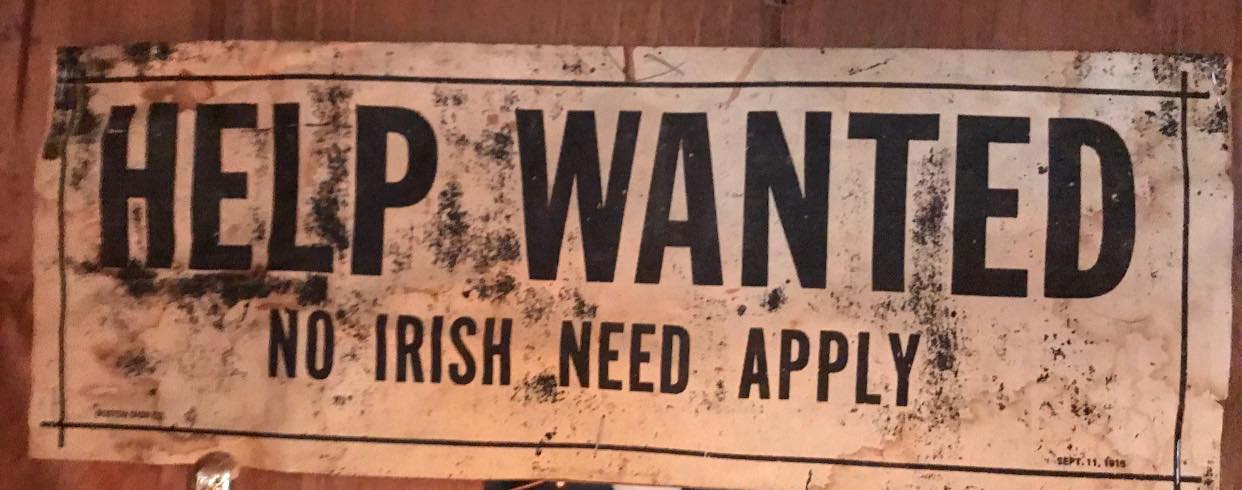
  • Racism does not seem to just end !

    What race would you not want to hire ?
    Racism does not seem to just end ! What race would you not want to hire ?
    0 Comments 0 Shares 138 Views
More Results