• #rsisb
    Roll no. 247
    Earning no. 3
    Foundation level

    **Address Concerns – Listen, Understand, and Find Solutions! **

    Assalam-o-Alaikum Everyone!

    Today, I want to share an important topic: **“Address Concerns”**

    Addressing concerns means listening carefully to people's problems, understanding their feelings, answering their questions, and helping them find the right solutions. Sometimes, people have worries, doubts, or questions about something new. Instead of ignoring their concerns, we should listen with patience, respect, and kindness.

    **Why Is It Important to Address Concerns?**

    **Listen Carefully :** Give people your full attention when they share their thoughts or problems.

    **Show Respect :** Everyone has different opinions, experiences, and feelings. We should respect them.

    **Understand the Problem :** Before giving advice, try to understand what is worrying the other person.

    **Provide Clear Answers :** Answer questions honestly and explain things in simple words.

    **Find Solutions :** Work together to find practical and helpful solutions.

    **Build Trust :** When we listen to others and take their concerns seriously, we build stronger relationships.

    **Addressing Concerns in Everyday Life**

    We can address concerns at home, at school, with friends, and in our communities. For example, if a parent is worried about a child's education, we can listen to their concerns and explain how learning can help their child develop new skills. If a friend has a problem, we can listen patiently and offer support.

    **My Learning and Reflection**

    I believe that every concern deserves attention and understanding. We should not judge people for asking questions or expressing their worries. Instead, we should encourage open communication, share knowledge, and work together to solve problems.

    Remember, **a good listener can make someone feel understood, and a thoughtful answer can help someone feel confident!**

    Let's make the world a better place by listening more, understanding each other, respecting different opinions, and finding positive solutions.

    Thank you for reading! Keep learning, keep listening, and keep growing!

    #rsisb Roll no. 247 Earning no. 3 Foundation level ๐ŸŒŸ๐Ÿ’ฌ **Address Concerns – Listen, Understand, and Find Solutions! ๐Ÿคโœจ** Assalam-o-Alaikum Everyone! ๐Ÿ‘‹๐Ÿ˜Š Today, I want to share an important topic: **“Address Concerns”** ๐ŸŒŸ๐Ÿ’ก Addressing concerns means listening carefully to people's problems, understanding their feelings, answering their questions, and helping them find the right solutions. ๐Ÿคโค๏ธ Sometimes, people have worries, doubts, or questions about something new. Instead of ignoring their concerns, we should listen with patience, respect, and kindness. ๐Ÿ‘‚๐Ÿ’– ๐Ÿ—ฃ๏ธ **Why Is It Important to Address Concerns?** โœ… **Listen Carefully ๐Ÿ‘‚:** Give people your full attention when they share their thoughts or problems. โœ… **Show Respect ๐Ÿค:** Everyone has different opinions, experiences, and feelings. We should respect them. โœ… **Understand the Problem ๐Ÿง :** Before giving advice, try to understand what is worrying the other person. โœ… **Provide Clear Answers ๐Ÿ’ก:** Answer questions honestly and explain things in simple words. โœ… **Find Solutions ๐ŸŒˆ:** Work together to find practical and helpful solutions. โœ… **Build Trust โค๏ธ:** When we listen to others and take their concerns seriously, we build stronger relationships. ๐ŸŒ **Addressing Concerns in Everyday Life** We can address concerns at home, at school, with friends, and in our communities. ๐Ÿก๐Ÿซ For example, if a parent is worried about a child's education, we can listen to their concerns and explain how learning can help their child develop new skills. ๐Ÿ“š๐ŸŽ“ If a friend has a problem, we can listen patiently and offer support. ๐Ÿซ‚๐Ÿ˜Š ๐Ÿ’ญ **My Learning and Reflection** I believe that every concern deserves attention and understanding. We should not judge people for asking questions or expressing their worries. Instead, we should encourage open communication, share knowledge, and work together to solve problems. ๐ŸŒฑโœจ Remember, **a good listener can make someone feel understood, and a thoughtful answer can help someone feel confident!** ๐Ÿ’–๐ŸŒŸ Let's make the world a better place by listening more, understanding each other, respecting different opinions, and finding positive solutions. ๐ŸŒŽ๐Ÿค๐Ÿ’ซ Thank you for reading! โค๏ธ๐Ÿ˜Š Keep learning, keep listening, and keep growing! ๐Ÿš€๐Ÿ“–
    0 Commenti 0 condivisioni 158 Views

  • #rsisb
    Roll no. 247
    Earning no. 3
    Foundation level

    **Address Concerns – Listen, Understand, and Find Solutions! **

    Assalam-o-Alaikum Everyone!

    Today, I want to share an important topic: **“Address Concerns”**

    Addressing concerns means listening carefully to people's problems, understanding their feelings, answering their questions, and helping them find the right solutions. Sometimes, people have worries, doubts, or questions about something new. Instead of ignoring their concerns, we should listen with patience, respect, and kindness.

    **Why Is It Important to Address Concerns?**

    **Listen Carefully :** Give people your full attention when they share their thoughts or problems.

    **Show Respect :** Everyone has different opinions, experiences, and feelings. We should respect them.

    **Understand the Problem :** Before giving advice, try to understand what is worrying the other person.

    **Provide Clear Answers :** Answer questions honestly and explain things in simple words.

    **Find Solutions :** Work together to find practical and helpful solutions.

    **Build Trust :** When we listen to others and take their concerns seriously, we build stronger relationships.

    **Addressing Concerns in Everyday Life**

    We can address concerns at home, at school, with friends, and in our communities. For example, if a parent is worried about a child's education, we can listen to their concerns and explain how learning can help their child develop new skills. If a friend has a problem, we can listen patiently and offer support.

    **My Learning and Reflection**

    I believe that every concern deserves attention and understanding. We should not judge people for asking questions or expressing their worries. Instead, we should encourage open communication, share knowledge, and work together to solve problems.

    Remember, **a good listener can make someone feel understood, and a thoughtful answer can help someone feel confident!**

    Let's make the world a better place by listening more, understanding each other, respecting different opinions, and finding positive solutions.

    Thank you for reading! Keep learning, keep listening, and keep growing!

    #AddressConcerns #CommunicationSkills #ProblemSolving #ActiveListening #Respect #Understanding #CriticalThinking #PersonalGrowth #PositiveThinking #LearningJourney #LifeSkills #Confidence #Teamwork #Education #KnowledgeIsPower #BeKind #KeepLearning #RSISB
    #rsisb Roll no. 247 Earning no. 3 Foundation level ๐ŸŒŸ๐Ÿ’ฌ **Address Concerns – Listen, Understand, and Find Solutions! ๐Ÿคโœจ** Assalam-o-Alaikum Everyone! ๐Ÿ‘‹๐Ÿ˜Š Today, I want to share an important topic: **“Address Concerns”** ๐ŸŒŸ๐Ÿ’ก Addressing concerns means listening carefully to people's problems, understanding their feelings, answering their questions, and helping them find the right solutions. ๐Ÿคโค๏ธ Sometimes, people have worries, doubts, or questions about something new. Instead of ignoring their concerns, we should listen with patience, respect, and kindness. ๐Ÿ‘‚๐Ÿ’– ๐Ÿ—ฃ๏ธ **Why Is It Important to Address Concerns?** โœ… **Listen Carefully ๐Ÿ‘‚:** Give people your full attention when they share their thoughts or problems. โœ… **Show Respect ๐Ÿค:** Everyone has different opinions, experiences, and feelings. We should respect them. โœ… **Understand the Problem ๐Ÿง :** Before giving advice, try to understand what is worrying the other person. โœ… **Provide Clear Answers ๐Ÿ’ก:** Answer questions honestly and explain things in simple words. โœ… **Find Solutions ๐ŸŒˆ:** Work together to find practical and helpful solutions. โœ… **Build Trust โค๏ธ:** When we listen to others and take their concerns seriously, we build stronger relationships. ๐ŸŒ **Addressing Concerns in Everyday Life** We can address concerns at home, at school, with friends, and in our communities. ๐Ÿก๐Ÿซ For example, if a parent is worried about a child's education, we can listen to their concerns and explain how learning can help their child develop new skills. ๐Ÿ“š๐ŸŽ“ If a friend has a problem, we can listen patiently and offer support. ๐Ÿซ‚๐Ÿ˜Š ๐Ÿ’ญ **My Learning and Reflection** I believe that every concern deserves attention and understanding. We should not judge people for asking questions or expressing their worries. Instead, we should encourage open communication, share knowledge, and work together to solve problems. ๐ŸŒฑโœจ Remember, **a good listener can make someone feel understood, and a thoughtful answer can help someone feel confident!** ๐Ÿ’–๐ŸŒŸ Let's make the world a better place by listening more, understanding each other, respecting different opinions, and finding positive solutions. ๐ŸŒŽ๐Ÿค๐Ÿ’ซ Thank you for reading! โค๏ธ๐Ÿ˜Š Keep learning, keep listening, and keep growing! ๐Ÿš€๐Ÿ“– #AddressConcerns #CommunicationSkills #ProblemSolving #ActiveListening #Respect #Understanding #CriticalThinking #PersonalGrowth #PositiveThinking #LearningJourney #LifeSkills #Confidence #Teamwork #Education #KnowledgeIsPower #BeKind #KeepLearning #RSISB ๐ŸŒŸ๐Ÿ“š๐Ÿ’–
    0 Commenti 0 condivisioni 170 Views
  • **Roll No: 2**
    **Batch: 14**
    **Book: ACCL**
    **Task No: 104**

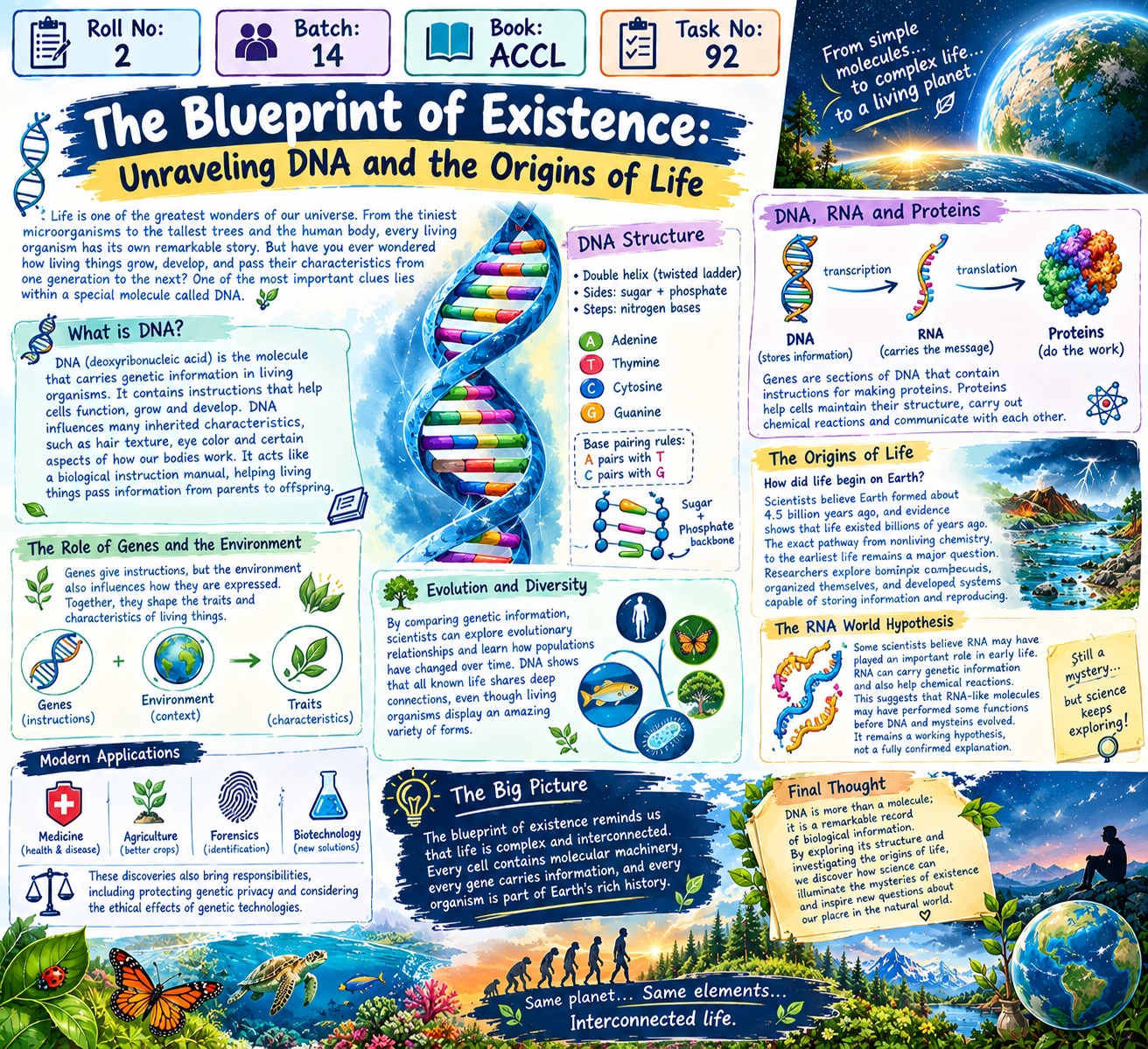
    # The Blueprint of Existence: Unraveling DNA and the Origins of Life

    Life is one of the greatest wonders of our universe. From the tiniest microorganisms to the tallest trees and the human body, every living organism has its own remarkable story. But have you ever wondered how living things grow, develop, and pass their characteristics from one generation to the next? One of the most important clues lies within a special molecule called **DNA**.

    **DNA, or deoxyribonucleic acid, is the molecule that carries genetic information in living organisms.** It contains instructions that help cells function, grow, and develop. DNA influences many inherited characteristics, such as natural hair texture, eye color, and certain aspects of how our bodies work. It acts like a biological instruction manual, helping living things pass information from parents to offspring.

    The structure of DNA is fascinating. It resembles a twisted ladder called a **double helix**. Its sides are made of sugar and phosphate molecules, while its steps contain pairs of chemical bases: adenine, thymine, cytosine, and guanine. These bases follow specific pairing rules: adenine pairs with thymine, while cytosine pairs with guanine. The order of these bases stores genetic information in a form that cells can use.

    DNA works closely with other molecules inside cells. Sections of DNA called **genes** contain instructions for making functional products, often proteins. Proteins perform countless important jobs, including helping cells maintain their structure, carry out chemical reactions, and communicate with one another. This relationship between DNA, RNA, and proteins is a central part of modern biology.

    But how did life begin on Earth? Scientists believe that Earth formed about 4.5 billion years ago, and evidence indicates that life existed billions of years ago. However, the exact pathway through which nonliving chemistry gave rise to the earliest life remains an important scientific question. Researchers investigate how simple molecules might have formed more complex compounds, how these compounds could have organized themselves, and how early systems capable of storing information and reproducing might have developed.

    One area of research explores the possibility that **RNA played an important role in early life**. RNA can carry genetic information, and certain RNA molecules can also help chemical reactions occur. This has led to the RNA-world hypothesis, which suggests that RNA-like molecules may have performed some functions before modern DNA-and-protein systems evolved. It remains an active scientific hypothesis, not a fully confirmed explanation of life's origin.

    The study of DNA also helps scientists understand the diversity of life. By comparing genetic information from different organisms, researchers can investigate evolutionary relationships and learn how populations have changed over generations. DNA evidence supports the scientific understanding that all known life shares deep connections through evolution, even though living organisms display an extraordinary variety of forms.

    Modern DNA research has transformed medicine, agriculture, forensics, and biotechnology. Scientists can study genetic variations, investigate inherited conditions, identify organisms, improve crops, and develop new research methods. These discoveries also bring important responsibilities, including protecting genetic privacy and considering the ethical effects of genetic technologies.

    The blueprint of existence reminds us that life is both complex and interconnected. Every cell contains molecular machinery, every gene carries information, and every organism is part of Earth's rich history. Although many questions about the earliest beginnings of life remain unanswered, careful experiments, observations, and discoveries continue to expand our understanding.

    **DNA is more than a molecule; it is a remarkable record of biological information. By exploring its structure and investigating the origins of life, we discover how science can illuminate the mysteries of existence and inspire new questions about our place in the natural world. **

    \#DNA #OriginsOfLife #Biology #Genetics #Science #Evolution #ACCL #Batch14 #Task92
    **Roll No: 2** **Batch: 14** **Book: ACCL** **Task No: 104** # ๐Ÿงฌ๐ŸŒ The Blueprint of Existence: Unraveling DNA and the Origins of Life ๐Ÿ”ฌโœจ Life is one of the greatest wonders of our universe. From the tiniest microorganisms to the tallest trees and the human body, every living organism has its own remarkable story. ๐ŸŒฑ๐Ÿฆ ๐ŸŒณ But have you ever wondered how living things grow, develop, and pass their characteristics from one generation to the next? One of the most important clues lies within a special molecule called **DNA**. **DNA, or deoxyribonucleic acid, is the molecule that carries genetic information in living organisms.** ๐Ÿงฌ It contains instructions that help cells function, grow, and develop. DNA influences many inherited characteristics, such as natural hair texture, eye color, and certain aspects of how our bodies work. It acts like a biological instruction manual, helping living things pass information from parents to offspring. ๐Ÿ“–๐Ÿ”ฌ The structure of DNA is fascinating. It resembles a twisted ladder called a **double helix**. ๐ŸŒ€ Its sides are made of sugar and phosphate molecules, while its steps contain pairs of chemical bases: adenine, thymine, cytosine, and guanine. These bases follow specific pairing rules: adenine pairs with thymine, while cytosine pairs with guanine. The order of these bases stores genetic information in a form that cells can use. DNA works closely with other molecules inside cells. ๐Ÿงช Sections of DNA called **genes** contain instructions for making functional products, often proteins. Proteins perform countless important jobs, including helping cells maintain their structure, carry out chemical reactions, and communicate with one another. This relationship between DNA, RNA, and proteins is a central part of modern biology. โš™๏ธ๐Ÿงซ But how did life begin on Earth? ๐ŸŒŽ Scientists believe that Earth formed about 4.5 billion years ago, and evidence indicates that life existed billions of years ago. However, the exact pathway through which nonliving chemistry gave rise to the earliest life remains an important scientific question. Researchers investigate how simple molecules might have formed more complex compounds, how these compounds could have organized themselves, and how early systems capable of storing information and reproducing might have developed. ๐Ÿ”ญ๐Ÿงช One area of research explores the possibility that **RNA played an important role in early life**. RNA can carry genetic information, and certain RNA molecules can also help chemical reactions occur. This has led to the RNA-world hypothesis, which suggests that RNA-like molecules may have performed some functions before modern DNA-and-protein systems evolved. It remains an active scientific hypothesis, not a fully confirmed explanation of life's origin. ๐Ÿงฌ๐Ÿ’ก The study of DNA also helps scientists understand the diversity of life. ๐ŸŒฟ๐Ÿฆ๐Ÿฆ‹ By comparing genetic information from different organisms, researchers can investigate evolutionary relationships and learn how populations have changed over generations. DNA evidence supports the scientific understanding that all known life shares deep connections through evolution, even though living organisms display an extraordinary variety of forms. Modern DNA research has transformed medicine, agriculture, forensics, and biotechnology. ๐Ÿฅ๐ŸŒพ Scientists can study genetic variations, investigate inherited conditions, identify organisms, improve crops, and develop new research methods. These discoveries also bring important responsibilities, including protecting genetic privacy and considering the ethical effects of genetic technologies. โš–๏ธ๐Ÿ”ฌ The blueprint of existence reminds us that life is both complex and interconnected. Every cell contains molecular machinery, every gene carries information, and every organism is part of Earth's rich history. Although many questions about the earliest beginnings of life remain unanswered, careful experiments, observations, and discoveries continue to expand our understanding. ๐ŸŒŒ๐Ÿ“š **DNA is more than a molecule; it is a remarkable record of biological information. By exploring its structure and investigating the origins of life, we discover how science can illuminate the mysteries of existence and inspire new questions about our place in the natural world. ๐Ÿงฌ๐ŸŒ๐Ÿ’š** \#DNA #OriginsOfLife #Biology #Genetics #Science #Evolution #ACCL #Batch14 #Task92 ๐Ÿ”ฌ๐Ÿงฌโœจ
    0 Commenti 0 condivisioni 485 Views
  • RSIF8
    ROLL NO 77
    TEDX TALK NO 40
    TEDX TOPIC "The Art of Asking" – Amanda Palmer.

    **The Art of Asking – Amanda Palmer**

    Have you ever needed help but felt afraid to ask? In *The Art of Asking*, Amanda Palmer shares a powerful message about trust, vulnerability, and human connection.

    She teaches us that asking for help is not a sign of weakness; it's an opportunity to build meaningful relationships and allow others to support us. Whether you're a student, a creator, or someone chasing big dreams, remember that you don't have to do everything alone!

    **Key Lesson:** Be brave enough to ask, humble enough to receive, and kind enough to give back.

    Sometimes, one simple question can open the door to amazing opportunities!

    \#TheArtOfAsking #AmandaPalmer #PersonalGrowth #SelfImprovement #HumanConnection #Motivation #LifeLessons #CommunicationSkills #BuildTrust #LearningJourney #EducationalContent #Inspiration

    Add a stronger action promptMake the opening more attention-grabbing
    RSIF8 ROLL NO 77 TEDX TALK NO 40 TEDX TOPIC "The Art of Asking" – Amanda Palmer. ๐ŸŽคโœจ **The Art of Asking – Amanda Palmer** ๐Ÿ’–๐Ÿค Have you ever needed help but felt afraid to ask? ๐Ÿค”๐Ÿ’ญ In *The Art of Asking*, Amanda Palmer shares a powerful message about trust, vulnerability, and human connection. โค๏ธ She teaches us that asking for help is not a sign of weakness; it's an opportunity to build meaningful relationships and allow others to support us. ๐ŸŒฑโœจ Whether you're a student, a creator, or someone chasing big dreams, remember that you don't have to do everything alone! ๐Ÿš€ ๐Ÿ’ก **Key Lesson:** Be brave enough to ask, humble enough to receive, and kind enough to give back. ๐Ÿค๐Ÿ’ซ ๐ŸŒŸ Sometimes, one simple question can open the door to amazing opportunities! \#TheArtOfAsking #AmandaPalmer #PersonalGrowth #SelfImprovement #HumanConnection #Motivation #LifeLessons #CommunicationSkills #BuildTrust #LearningJourney #EducationalContent #Inspiration ๐Ÿ’–๐ŸŽฏ๐Ÿš€ Add a stronger action promptMake the opening more attention-grabbing
    0 Commenti 0 condivisioni 349 Views 16
  • RSi F8
    Story post NO:21
    roll NO:13
    Class: Foundation Level
    Made by Me

    Sound Waves: The Physics of Hearing and Communication

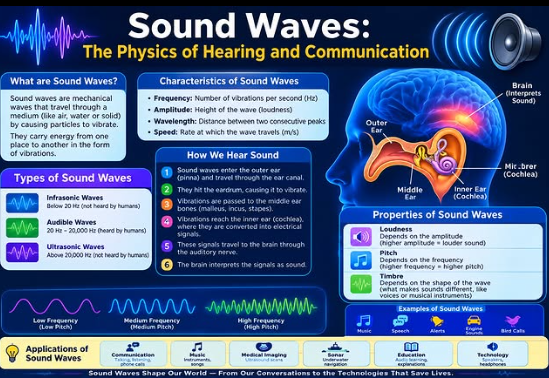
    Sound is one of the most important forms of energy in our everyday lives. From the sound of a human voice to music, birds singing, vehicles moving, and signals used by modern communication systems, sound waves are constantly around us. The topic “Sound Waves: The Physics of Hearing and Communication” explores how sound is produced, how it travels, how our ears detect it, and how humans use it to communicate and understand the world.

    Sound is created when an object vibrates. These vibrations cause particles in a medium such as air, water, or a solid material to move back and forth, producing a wave. Unlike light waves, sound waves need a medium to travel through, which is why sound cannot travel through empty space. The speed and behavior of sound can change depending on the material through which it travels.

    An important part of understanding sound waves is learning about frequency, wavelength, amplitude, and speed. Frequency determines the pitch of a sound, while amplitude is related to how strong or loud the sound appears. Different combinations of these properties allow us to hear a huge variety of sounds. Musical instruments, human voices, and natural sounds all produce unique patterns of vibrations that our ears and brains can recognize.

    Human hearing is an amazing biological process. When sound waves enter the ear, they travel through the ear canal and cause the eardrum to vibrate. These vibrations are transferred through tiny structures in the middle ear and eventually reach the inner ear, where they are converted into electrical signals. The brain then processes these signals and allows us to recognize speech, music, warning sounds, and many other forms of information.

    Sound waves are also essential for communication. Human beings use sound to share ideas, express emotions, ask questions, tell stories, and build relationships. Modern technology has expanded the ways we communicate using sound.
    RSi F8 ๐ŸŽ“โœจ Story post NO:21 roll NO:13 Class: Foundation Level ๐Ÿ“š Made by Me ๐Ÿ’ป๐Ÿš€ ๐ŸŽง Sound Waves: The Physics of Hearing and Communication Sound is one of the most important forms of energy in our everyday lives. From the sound of a human voice to music, birds singing, vehicles moving, and signals used by modern communication systems, sound waves are constantly around us. The topic “Sound Waves: The Physics of Hearing and Communication” explores how sound is produced, how it travels, how our ears detect it, and how humans use it to communicate and understand the world. Sound is created when an object vibrates. These vibrations cause particles in a medium such as air, water, or a solid material to move back and forth, producing a wave. Unlike light waves, sound waves need a medium to travel through, which is why sound cannot travel through empty space. The speed and behavior of sound can change depending on the material through which it travels. An important part of understanding sound waves is learning about frequency, wavelength, amplitude, and speed. Frequency determines the pitch of a sound, while amplitude is related to how strong or loud the sound appears. Different combinations of these properties allow us to hear a huge variety of sounds. Musical instruments, human voices, and natural sounds all produce unique patterns of vibrations that our ears and brains can recognize. Human hearing is an amazing biological process. When sound waves enter the ear, they travel through the ear canal and cause the eardrum to vibrate. These vibrations are transferred through tiny structures in the middle ear and eventually reach the inner ear, where they are converted into electrical signals. The brain then processes these signals and allows us to recognize speech, music, warning sounds, and many other forms of information. Sound waves are also essential for communication. Human beings use sound to share ideas, express emotions, ask questions, tell stories, and build relationships. Modern technology has expanded the ways we communicate using sound.
    0 Commenti 0 condivisioni 205 Views
  • #rsisb
    Roll No.177
    Story post No.66
    Level one

    **Mulla Nasruddin and the Most Honest Man in Town**

    Welcome to a wonderful moral story about Mulla Nasruddin and his search for the most honest man in his town! Mulla Nasruddin was a wise and clever man who wanted to discover who was truly honest. He observed the people around him and learned that honesty is not only about speaking the truth but also about doing the right thing, even when nobody is watching.

    Through this interesting journey, Mulla Nasruddin discovered the importance of truth, trust, kindness, and good character. The story teaches us that an honest person always earns respect and builds strong relationships with others.

    This beautiful story is a great way for children and students to learn important life lessons while enjoying the wisdom and humor of Mulla Nasruddin. Always remember: telling the truth and being honest are signs of a good heart!

    **Moral of the Story:** Honesty is the best policy! Always speak the truth, keep your promises, and treat others fairly.

    Watch, enjoy, and share this wonderful story with your friends and family! ‍‍‍

    #MullaNasruddin
    #HonestyIsTheBestPolicy
    #MoralStory
    #UrduStories
    #Storytelling
    #HonestyMatters
    #LifeLessons
    #GoodCharacter
    #TruthAndHonesty
    #KidsStories
    #EducationalStories
    #IslamicCulture
    #WisdomAndKnowledge
    #LearnEnglish
    #PositiveValues
    #KindnessMatters
    #InspirationalStories
    #RehanSchool
    #rsisb Roll No.177 Story post No.66 Level one ๐Ÿ“–โœจ **Mulla Nasruddin and the Most Honest Man in Town** ๐Ÿค๐ŸŒŸ ๐ŸŒŸ Welcome to a wonderful moral story about Mulla Nasruddin and his search for the most honest man in his town! ๐Ÿ˜๏ธ๐Ÿ˜Š Mulla Nasruddin was a wise and clever man who wanted to discover who was truly honest. ๐Ÿง ๐Ÿ’– He observed the people around him and learned that honesty is not only about speaking the truth but also about doing the right thing, even when nobody is watching. ๐Ÿคฒโœจ ๐Ÿ’ฐ Through this interesting journey, Mulla Nasruddin discovered the importance of truth, trust, kindness, and good character. โค๏ธ๐Ÿค The story teaches us that an honest person always earns respect and builds strong relationships with others. ๐ŸŒˆ๐ŸŒ ๐Ÿ“š This beautiful story is a great way for children and students to learn important life lessons while enjoying the wisdom and humor of Mulla Nasruddin. ๐Ÿ˜„๐ŸŽ“ Always remember: telling the truth and being honest are signs of a good heart! ๐Ÿ’–๐ŸŒŸ โœจ **Moral of the Story:** Honesty is the best policy! ๐Ÿ’ฏ๐Ÿค Always speak the truth, keep your promises, and treat others fairly. ๐ŸŒน๐Ÿค ๐Ÿ“ข Watch, enjoy, and share this wonderful story with your friends and family! ๐Ÿ‘จ‍๐Ÿ‘ฉ‍๐Ÿ‘ง‍๐Ÿ‘ฆ๐Ÿ“–๐Ÿ’ซ #MullaNasruddin ๐Ÿ˜‚ #HonestyIsTheBestPolicy ๐Ÿค #MoralStory ๐Ÿ“š #UrduStories ๐ŸŒ™ #Storytelling ๐ŸŽค #HonestyMatters ๐Ÿ’ฏ #LifeLessons ๐ŸŒŸ #GoodCharacter ๐Ÿ’– #TruthAndHonesty ๐Ÿค #KidsStories ๐Ÿง’ #EducationalStories ๐ŸŽ“ #IslamicCulture ๐Ÿ•Œ #WisdomAndKnowledge ๐Ÿง  #LearnEnglish ๐Ÿ“– #PositiveValues ๐ŸŒˆ #KindnessMatters โค๏ธ #InspirationalStories โœจ #RehanSchool ๐Ÿซ
    0 Commenti 0 condivisioni 1324 Views
  • Episode 298 – Rehan Foundation Interview Series

    In this episode, we are joined by Victoria Burmeister, an author, storyteller, and inspiring woman whose journey reminds us that even our hardest chapters can become the beginning of something extraordinary.

    Victoria’s life has been shaped by a life-changing accident, years of resilience and rebuilding, and experiences that transformed the way she understands life, love, faith, purpose, and personal growth. Through her story, she encourages others to keep moving forward, even when life takes an unexpected turn.

    In this inspiring conversation, we explore:

    • Her journey of resilience and overcoming adversity
    • How to find purpose after life-changing circumstances
    • The role of faith, hope, and perseverance during difficult times
    • Reinventing yourself and finding the courage to start over
    • Love, relationships, and the journey of finding yourself again
    • Building self-worth, confidence, and embracing who you truly are
    • Breaking through limitations and refusing to give up
    • Her journey as an author and storyteller
    • Turning pain and difficult experiences into purpose
    • How our hardest chapters can become powerful stories of transformation
    • Her message for anyone who feels their story is not yet finished

    This episode is filled with honest reflections, powerful life lessons, and inspiring stories about resilience, hope, self-discovery, and the courage to keep going.

    If you are going through a difficult chapter in your life, this conversation is a reminder that **your story isn’t over.**

    Part of the Rehan Foundation Interview Series
    Episode #298
    Foreigner Episode #26
    Rehan Allahwala
    Shahrukh Ali
    ๐ŸŽฌ Episode 298 – Rehan Foundation Interview Series In this episode, we are joined by Victoria Burmeister, an author, storyteller, and inspiring woman whose journey reminds us that even our hardest chapters can become the beginning of something extraordinary. Victoria’s life has been shaped by a life-changing accident, years of resilience and rebuilding, and experiences that transformed the way she understands life, love, faith, purpose, and personal growth. Through her story, she encourages others to keep moving forward, even when life takes an unexpected turn. In this inspiring conversation, we explore: • Her journey of resilience and overcoming adversity • How to find purpose after life-changing circumstances • The role of faith, hope, and perseverance during difficult times • Reinventing yourself and finding the courage to start over • Love, relationships, and the journey of finding yourself again • Building self-worth, confidence, and embracing who you truly are • Breaking through limitations and refusing to give up • Her journey as an author and storyteller • Turning pain and difficult experiences into purpose • How our hardest chapters can become powerful stories of transformation • Her message for anyone who feels their story is not yet finished This episode is filled with honest reflections, powerful life lessons, and inspiring stories about resilience, hope, self-discovery, and the courage to keep going. If you are going through a difficult chapter in your life, this conversation is a reminder that **your story isn’t over.** ๐Ÿ“Œ Part of the Rehan Foundation Interview Series ๐ŸŽฅ Episode #298 ๐ŸŒ Foreigner Episode #26 Rehan Allahwala Shahrukh Ali
    0 Commenti 0 condivisioni 352 Views 0
  • #rsisb
    Roll No 253
    Foundation Level
    Song 12
    **CALCULUS: THE JOURNEY OF NUMBERS AND SACRED SPACES | WHERE MATHEMATICS MEETS INFINITY**
    What if numbers could describe the movement of the stars, the curves of magnificent architecture, and the hidden patterns woven throughout the universe?
    **“Calculus: The Journey of Numbers and Sacred Spaces”** is a cinematic musical exploration of mathematics as a language of change, motion, structure, and beauty. It takes listeners on a journey from the smallest measurable changes to the vast dimensions of space, revealing how calculus helps us understand the world around us.
    Calculus is more than equations written on a page. It is a powerful mathematical tool for understanding how things change, how quantities accumulate, and how complex shapes and movements can be described through precise reasoning.
    **The song explores:**
    **Limits** — approaching a value and understanding what happens as quantities get closer and closer.
    **Derivatives** — discovering rates of change, from the speed of a moving object to the changing growth of a population.
    ∫ **Integrals** — bringing tiny pieces together to calculate areas, volumes, and accumulated quantities.
    **Space and motion** — using mathematical models to understand planetary orbits, trajectories, and the dynamics of the universe.
    **Sacred spaces and architecture** — appreciating geometric patterns, arches, domes, symmetry, and the mathematical ideas that help architects design remarkable structures.
    **Patterns in nature** — exploring curves, spirals, flowing water, and the changing forms of the natural world.
    **Science and engineering** — understanding how calculus supports modern technology, physics, astronomy, and countless practical innovations.
    At the heart of this journey lies a beautiful connection: **mathematics can help us understand both change and structure.**
    A moving star follows a path that can be modeled mathematically. A flowing river changes from moment to moment. A magnificent dome rises through carefully designed curves, while intricate geometric patterns reveal the relationship between symmetry, proportion, and space.
    Through calculus, seemingly complicated movements and shapes can become understandable through the relationships between quantities.
    The title's idea of *sacred spaces* adds another dimension to the journey — inviting us to appreciate the mathematical harmony found in architecture and the sense of wonder that carefully designed spaces can inspire.
    As the music unfolds, numbers become more than symbols. They become pathways through motion, dimensions, patterns, and the mysteries of existence.
    **Derivatives reveal change.**
    ∫ **Integrals reveal accumulation.**
    **Mathematics helps us explore the universe.**
    **Patterns transform space into beauty.**
    **“Calculus: The Journey of Numbers and Sacred Spaces”** celebrates the meeting point of mathematical reasoning, scientific discovery, architectural design, and human imagination.
    It reminds us that behind many of the world's most fascinating movements and structures lies a language of relationships waiting to be explored.
    **Follow the numbers.**
    **Discover the patterns.**
    **Explore the infinite possibilities of mathematics.**
    #Calculus #Mathematics #SacredSpaces #MathAndArchitecture #Derivatives #Integrals #Limits #Geometry #MathematicalPatterns #ScienceAndMath #STEMEducation #Astronomy #ArchitecturalDesign #EducationalMusic #JourneyOfNumbers
    Asma Shaheen EducationWali
    Saima Empowerment Wali
    Mishaal TrainingWali
    #rsisb Roll No 253 Foundation Level Song 12 ๐Ÿ“ **CALCULUS: THE JOURNEY OF NUMBERS AND SACRED SPACES | WHERE MATHEMATICS MEETS INFINITY** ๐ŸŒŒโœจ What if numbers could describe the movement of the stars, the curves of magnificent architecture, and the hidden patterns woven throughout the universe? ๐Ÿ”ข๐ŸŒ  **“Calculus: The Journey of Numbers and Sacred Spaces”** is a cinematic musical exploration of mathematics as a language of change, motion, structure, and beauty. It takes listeners on a journey from the smallest measurable changes to the vast dimensions of space, revealing how calculus helps us understand the world around us. ๐ŸŽต๐Ÿ“ Calculus is more than equations written on a page. It is a powerful mathematical tool for understanding how things change, how quantities accumulate, and how complex shapes and movements can be described through precise reasoning. ๐Ÿง โšก ๐ŸŽฌ **The song explores:** ๐Ÿ”ข **Limits** — approaching a value and understanding what happens as quantities get closer and closer. ๐Ÿ“ˆ **Derivatives** — discovering rates of change, from the speed of a moving object to the changing growth of a population. ∫ **Integrals** — bringing tiny pieces together to calculate areas, volumes, and accumulated quantities. ๐ŸŒŒ **Space and motion** — using mathematical models to understand planetary orbits, trajectories, and the dynamics of the universe. ๐Ÿ•Œ **Sacred spaces and architecture** — appreciating geometric patterns, arches, domes, symmetry, and the mathematical ideas that help architects design remarkable structures. ๐ŸŒฟ **Patterns in nature** — exploring curves, spirals, flowing water, and the changing forms of the natural world. ๐Ÿš€ **Science and engineering** — understanding how calculus supports modern technology, physics, astronomy, and countless practical innovations. At the heart of this journey lies a beautiful connection: **mathematics can help us understand both change and structure.** A moving star follows a path that can be modeled mathematically. A flowing river changes from moment to moment. A magnificent dome rises through carefully designed curves, while intricate geometric patterns reveal the relationship between symmetry, proportion, and space. ๐ŸŒŠ๐Ÿ›๏ธโญ Through calculus, seemingly complicated movements and shapes can become understandable through the relationships between quantities. The title's idea of *sacred spaces* adds another dimension to the journey — inviting us to appreciate the mathematical harmony found in architecture and the sense of wonder that carefully designed spaces can inspire. ๐Ÿ•Œโœจ ๐ŸŽถ As the music unfolds, numbers become more than symbols. They become pathways through motion, dimensions, patterns, and the mysteries of existence. ๐Ÿ“ **Derivatives reveal change.** ∫ **Integrals reveal accumulation.** ๐ŸŒŒ **Mathematics helps us explore the universe.** ๐Ÿ›๏ธ **Patterns transform space into beauty.** **“Calculus: The Journey of Numbers and Sacred Spaces”** celebrates the meeting point of mathematical reasoning, scientific discovery, architectural design, and human imagination. It reminds us that behind many of the world's most fascinating movements and structures lies a language of relationships waiting to be explored. โœจ **Follow the numbers.** ๐Ÿ“ˆ **Discover the patterns.** ๐ŸŒŒ **Explore the infinite possibilities of mathematics.** #Calculus #Mathematics #SacredSpaces #MathAndArchitecture #Derivatives #Integrals #Limits #Geometry #MathematicalPatterns #ScienceAndMath #STEMEducation #Astronomy #ArchitecturalDesign #EducationalMusic #JourneyOfNumbers ๐Ÿ“๐ŸŒŒ๐Ÿ•Œ๐ŸŽตโœจ Asma Shaheen EducationWali Saima Empowerment Wali Mishaal TrainingWali
    0 Commenti 0 condivisioni 2505 Views 6
  • ### Roll No: 2
    ### Batch: 14
    ### Book: ACCL
    ### Task No: 85

    **Calculus: The Journey of Numbers and Sacred Spaces**

    Today’s task explores **“Calculus: The Journey of Numbers and Sacred Spaces,”** an inspiring topic that connects the mathematical world of calculus with the beauty of patterns, shapes, and meaningful spaces. Calculus helps us understand change, motion, growth, and the relationships between quantities through concepts such as derivatives and integrals. When we explore these ideas alongside architecture, geometry, and sacred spaces, we can appreciate how mathematical principles help describe balance, structure, and design. This activity encourages curiosity, logical reasoning, and a deeper appreciation of the connections between mathematics, creativity, architecture, and the world around us.

    #Batch14 #Task85 #ACCL #Calculus #Mathematics #SacredSpaces #Geometry #Numbers #Architecture #Patterns #LogicalThinking #CreativeLearning #Education #StudentActivity
    ### ๐Ÿ‘ค Roll No: 2 ### ๐Ÿ“š Batch: 14 ### ๐Ÿ“– Book: ACCL ### ๐Ÿงฎ Task No: 85 **Calculus: The Journey of Numbers and Sacred Spaces** ๐Ÿ”ขโœจ Today’s task explores **“Calculus: The Journey of Numbers and Sacred Spaces,”** an inspiring topic that connects the mathematical world of calculus with the beauty of patterns, shapes, and meaningful spaces. ๐Ÿ“๐ŸŒ Calculus helps us understand change, motion, growth, and the relationships between quantities through concepts such as derivatives and integrals. ๐Ÿ“ˆ๐Ÿง  When we explore these ideas alongside architecture, geometry, and sacred spaces, we can appreciate how mathematical principles help describe balance, structure, and design. ๐Ÿ•Œ๐Ÿ“ This activity encourages curiosity, logical reasoning, and a deeper appreciation of the connections between mathematics, creativity, architecture, and the world around us. ๐Ÿ“š๐Ÿ’ก #Batch14 #Task85 #ACCL #Calculus #Mathematics #SacredSpaces #Geometry #Numbers #Architecture #Patterns #LogicalThinking #CreativeLearning #Education #StudentActivity
    0 Commenti 0 condivisioni 1567 Views 2
  • Canva post: 104
    Book A : Level 1
    RSISB Rollno 209
    Date 10:09:26


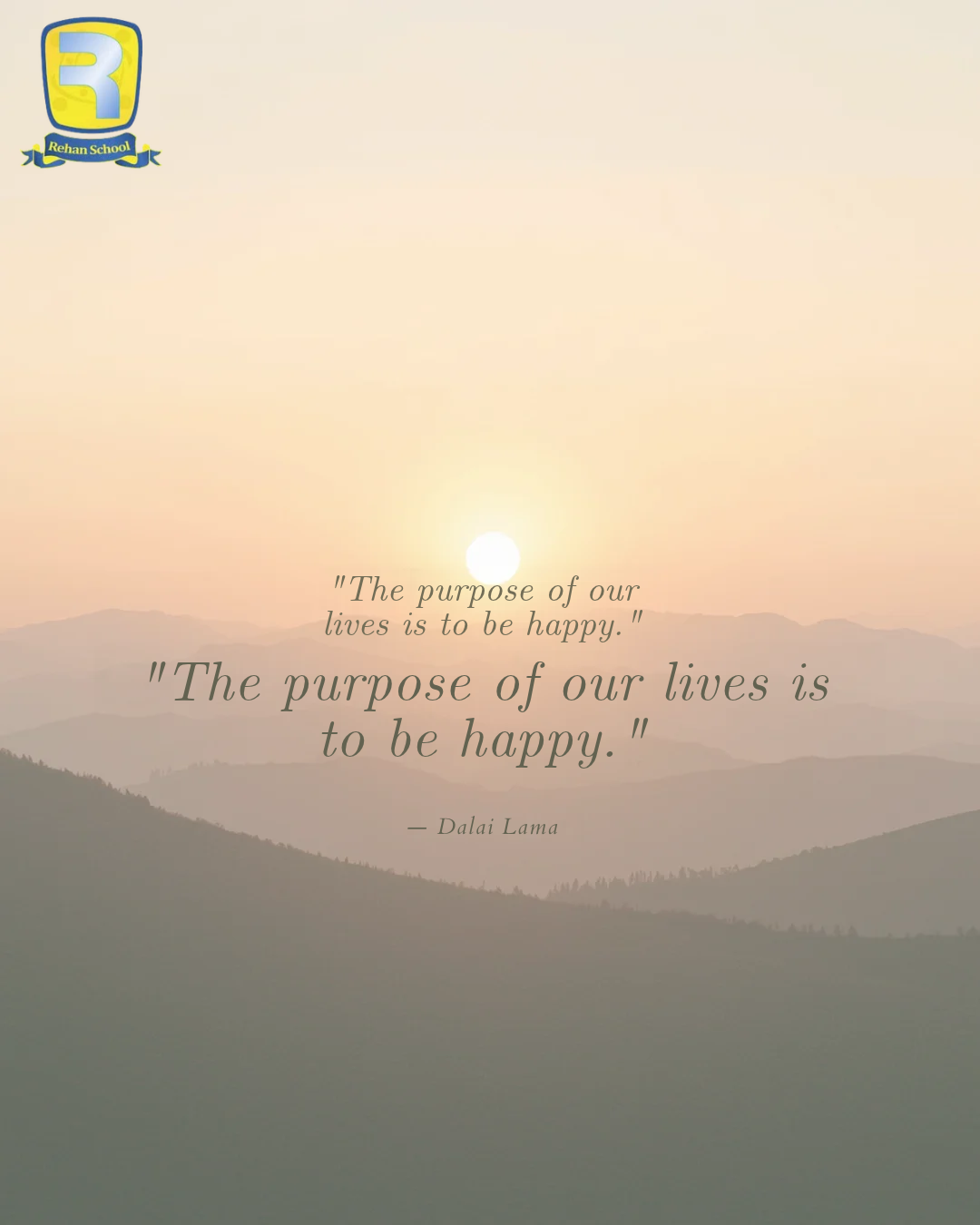
    “The purpose of our lives is to be happy.” — Dalai Lama

    Life is a precious journey, and one of its greatest joys is discovering happiness in the little things. A smile from a loved one, a moment of peace, an act of kindness, or the opportunity to learn something new can bring meaning and joy to our everyday lives.

    True happiness doesn't always come from wealth, success, or material possessions. It often grows from gratitude, love, meaningful relationships, and the way we choose to treat ourselves and others. Instead of waiting for the perfect moment, appreciate the present and create moments that make life beautiful.

    Remember:
    Appreciate the little things in life.
    Share love and kindness with others.
    Practice gratitude every day.
    Focus on what brings peace and meaning to your life.
    Choose joy, even in the simplest moments.

    Life is not just about achieving more; it's also about appreciating more, loving deeply, and finding happiness along the way.

    #DalaiLama #Happiness #InspirationalQuotes #Motivation #ChooseHappiness #PositiveThinking #Gratitude #InnerPeace #LifeLessons #LoveAndKindness #PersonalGrowth #Mindfulness #HappyLife #SpreadLove #DailyMotivation #Inspiration #JoyfulLiving #PositiveMindset #BeHappy #BeautifulLife
    Canva post: 104 Book A : Level 1 RSISB Rollno 209 Date 10:09:26 ๐Ÿ˜Šโค๏ธ “The purpose of our lives is to be happy.” — Dalai Lama ๐ŸŒธโœจ Life is a precious journey, and one of its greatest joys is discovering happiness in the little things. ๐ŸŒˆ๐ŸŒฑ A smile from a loved one, a moment of peace, an act of kindness, or the opportunity to learn something new can bring meaning and joy to our everyday lives. ๐Ÿค—๐Ÿ“š๐Ÿ’– True happiness doesn't always come from wealth, success, or material possessions. ๐Ÿ’Žโœจ It often grows from gratitude, love, meaningful relationships, and the way we choose to treat ourselves and others. โค๏ธ๐ŸŒ Instead of waiting for the perfect moment, appreciate the present and create moments that make life beautiful. ๐ŸŒทโ˜€๏ธ ๐ŸŒŸ Remember: ๐Ÿ˜Š Appreciate the little things in life. โค๏ธ Share love and kindness with others. ๐Ÿ™ Practice gratitude every day. ๐ŸŒฑ Focus on what brings peace and meaning to your life. ๐ŸŒˆ Choose joy, even in the simplest moments. โœจ Life is not just about achieving more; it's also about appreciating more, loving deeply, and finding happiness along the way. ๐Ÿ’–๐ŸŒ #DalaiLama #Happiness #InspirationalQuotes #Motivation #ChooseHappiness #PositiveThinking #Gratitude #InnerPeace #LifeLessons #LoveAndKindness #PersonalGrowth #Mindfulness #HappyLife #SpreadLove #DailyMotivation #Inspiration #JoyfulLiving #PositiveMindset #BeHappy #BeautifulLife
    0 Commenti 0 condivisioni 1621 Views
Pagine in Evidenza