• RSIF8
    Roll no:09
    Chatgpt no:01
    Chatgpt topic: Talk with Annie for 20 minutes on the topic "Hello"- Origins of a Simple Greeting.

    Today I had an amazing 20-minute discussion on the topic “Hello – Origins of a Simple Greeting”

    We explored the fascinating history behind the word hello, how it became popular after the invention of the telephone, and why greetings are so important in communication and daily life

    Special discussion about inventors like Thomas Edison and Alexander Graham Bell who played important roles in communication history

    In this session:
    Meaning of “Hello”
    History of greetings
    Greetings in different cultures
    Importance of polite communication
    Modern greetings in social media and technology
    Fun questions and answers with ChatGPT

    Thank you everyone for watching and supporting!

    #Hello #OriginsOfHello #ChatGPT #EnglishLearning #Communication #LanguageLearning #Greeting #Education #Students #Telephone #History #PublicSpeaking #Conversation #Learning #LiveSession
    RSIF8 Roll no:09 Chatgpt no:01 Chatgpt topic: Talk with Annie for 20 minutes on the topic "Hello"- Origins of a Simple Greeting. Today I had an amazing 20-minute discussion on the topic “Hello – Origins of a Simple Greeting” 🌍📞💬 We explored the fascinating history behind the word hello, how it became popular after the invention of the telephone, and why greetings are so important in communication and daily life 😊📚 Special discussion about inventors like Thomas Edison and Alexander Graham Bell who played important roles in communication history 📞✨ 📌 In this session: 💡 Meaning of “Hello” 📖 History of greetings 🌎 Greetings in different cultures 😊 Importance of polite communication 📱 Modern greetings in social media and technology 🎤 Fun questions and answers with ChatGPT Thank you everyone for watching and supporting! ❤️🌟 #Hello #OriginsOfHello #ChatGPT #EnglishLearning #Communication #LanguageLearning #Greeting #Education #Students #Telephone #History #PublicSpeaking #Conversation #Learning #LiveSession 🎧📚🌍✨
    0 تبصرے 0 شیئرز 135 ویوز 3
  • RSIF8
    Roll no 11
    Chatgpt no 1
    Chatgpt topic hello

    GOING LIVE WITH ANNIE!

    Join me as I talk with Annie for 5 minutes about the amazing story behind a word we say every day — “HELLO!”

    Did you know this simple greeting has a fun history and changed the way people connect? From old telephone calls to modern chats , we’ll explore how one tiny word became a global symbol of kindness and connection

    Come learn, smile, and say HELLO with us!

    Don’t miss it — short, fun, and full of good vibes!
    Let’s spread positivity one greeting at a time

    Talk with Annie for 5 minutes on the topic "Hello" - Origins of a Simple Greeting and go live on our social media. give me description and high-tage emogis

    Here’s a ready-to-post LIVE session description with high-engagement emojis and hashtags

    GOING LIVE WITH ANNIE!

    Join me as I talk with Annie for 5 minutes about the amazing story behind a word we say every day — “HELLO!”

    Did you know this simple greeting has a fun history and changed the way people connect? From old telephone calls to modern chats , we’ll explore how one tiny word became a global symbol of kindness and connection

    Come learn, smile, and say HELLO with us!

    Don’t miss it — short, fun, and full of good vibes!
    Let’s spread positivity one greeting at a time

    Hashtags
    #GoLive #Hello #LiveSession #LearnEnglish #FunLearning #SpeakEnglish #SocialMediaLive #PositiveVibes #CommunicationSkills #EducationMatters #KidsLearning #EnglishPractice #LiveTalk #SpreadKindness
    RSIF8 Roll no 11 Chatgpt no 1 Chatgpt topic hello GOING LIVE WITH ANNIE! 🌍✨ Join me as I talk with Annie for 5 minutes about the amazing story behind a word we say every day — “HELLO!” 👋💬 Did you know this simple greeting has a fun history and changed the way people connect? From old telephone calls 📞 to modern chats 💻, we’ll explore how one tiny word became a global symbol of kindness and connection ❤️ Come learn, smile, and say HELLO with us! 😊 🕔 Don’t miss it — short, fun, and full of good vibes! Let’s spread positivity one greeting at a time 🌈 Talk with Annie for 5 minutes on the topic "Hello" - Origins of a Simple Greeting and go live on our social media. give me description and high-tage emogis Here’s a ready-to-post LIVE session description with high-engagement emojis and hashtags 👇 🎥 GOING LIVE WITH ANNIE! 🌍✨ Join me as I talk with Annie for 5 minutes about the amazing story behind a word we say every day — “HELLO!” 👋💬 Did you know this simple greeting has a fun history and changed the way people connect? From old telephone calls 📞 to modern chats 💻, we’ll explore how one tiny word became a global symbol of kindness and connection ❤️ Come learn, smile, and say HELLO with us! 😊 🕔 Don’t miss it — short, fun, and full of good vibes! Let’s spread positivity one greeting at a time 🌈 🔥 Hashtags #GoLive 🎥 #Hello 👋 #LiveSession 💬 #LearnEnglish 📚 #FunLearning 😄 #SpeakEnglish 🗣️ #SocialMediaLive 🌍 #PositiveVibes ✨ #CommunicationSkills 🤝 #EducationMatters 🎓 #KidsLearning 🧒 #EnglishPractice 💡 #LiveTalk 🎙️ #SpreadKindness ❤️
    0 تبصرے 0 شیئرز 193 ویوز 5
  • RSIF8
    Roll No: 113
    Interview No: 1
    Post Topic: "Hello" - Origins of a Simple Greeting
    "Hello" - Origins of a Simple Greeting
    In this video, I conduct an interesting interview with an AI chatbot about the origins and history of the simple greeting "Hello."
    During the interview, I ask questions about how the word "Hello" originated, how its meaning changed over time, and why it became one of the most commonly used greetings.
    In this interview, we discuss:
    Where the word "Hello" came from
    How people greeted each other before "Hello"
    How "Hello" became popular
    The connection between "Hello" and telephone conversations
    How "Hello" is used in everyday communication
    Different greetings used around the world
    How language changes over time
    Why greetings are important in communication
    This interview helped me improve my communication, questioning, and conversation skills while learning interesting facts about the history of language.
    It also gave me an opportunity to explore how AI can be used for learning, research, communication, and educational discussions.
    Tip: Asking clear and logical questions can help make an interview more informative and interesting.
    Watch the complete interview and learn about the fascinating story behind the simple word "Hello"!
    Learn • Ask • Explore • Communicate • Grow
    #RSIF8 #RollNo113 #InterviewNo1 #Hello #OriginsOfHello #Interview #AIInterview #ArtificialIntelligence #AI #Language #HistoryOfLanguage #Communication #EnglishLanguage #Learning #Education #DigitalSkills #AIForLearning #InterviewSkills #CommunicationSkills #LearningJourney #StudentLife #Technology #LearnAndGrow
    RSIF8 Roll No: 113 Interview No: 1 Post Topic: "Hello" - Origins of a Simple Greeting "Hello" - Origins of a Simple Greeting In this video, I conduct an interesting interview with an AI chatbot about the origins and history of the simple greeting "Hello." 👋🤖 During the interview, I ask questions about how the word "Hello" originated, how its meaning changed over time, and why it became one of the most commonly used greetings. In this interview, we discuss: 🔹 Where the word "Hello" came from 🔹 How people greeted each other before "Hello" 🔹 How "Hello" became popular 🔹 The connection between "Hello" and telephone conversations 🔹 How "Hello" is used in everyday communication 🔹 Different greetings used around the world 🔹 How language changes over time 🔹 Why greetings are important in communication This interview helped me improve my communication, questioning, and conversation skills while learning interesting facts about the history of language. 📚💬 It also gave me an opportunity to explore how AI can be used for learning, research, communication, and educational discussions. 🤖💻 💡 Tip: Asking clear and logical questions can help make an interview more informative and interesting. 🎬 Watch the complete interview and learn about the fascinating story behind the simple word "Hello"! 👇 Learn • Ask • Explore • Communicate • Grow 🚀✨ #RSIF8 #RollNo113 #InterviewNo1 #Hello #OriginsOfHello #Interview #AIInterview #ArtificialIntelligence #AI #Language #HistoryOfLanguage #Communication #EnglishLanguage #Learning #Education #DigitalSkills #AIForLearning #InterviewSkills #CommunicationSkills #LearningJourney #StudentLife #Technology #LearnAndGrow
    0 تبصرے 0 شیئرز 1372 ویوز 12
  • #rsisb
    RollNo.269
    Foundation Level
    Story Post No.21


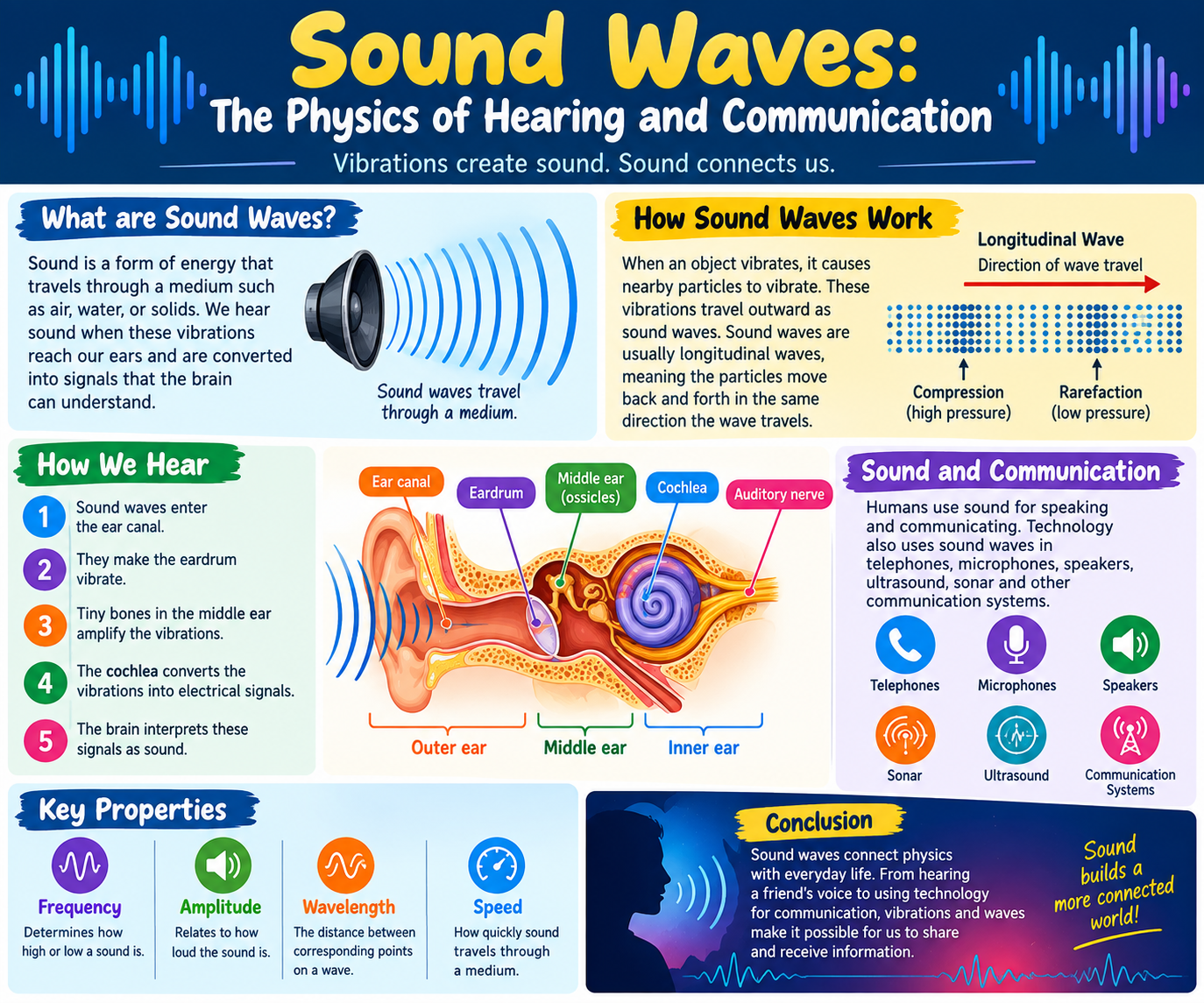
    **Sound Waves: The Physics of Hearing and Communication**

    Sound is an important part of our everyday life. We use sound to communicate, listen to music, learn, and understand the world around us. But have you ever wondered how sound actually travels and how our ears allow us to hear it?

    In this video, we explore the fascinating science behind **sound waves**, how they are produced, how they travel through different materials, and how our ears detect them. We will also learn how vibrations create sound and how these waves carry information from one place to another.

    Sound waves play a major role in **communication**, from simple conversations to telephones, microphones, speakers, and other technologies. Understanding the physics of sound helps us see how science connects with our daily lives.

    This topic shows that something as simple as hearing a voice or listening to a sound is actually the result of fascinating physical processes.

    Join us as we explore the amazing world of sound, waves, hearing, and communication! Keep learning, keep exploring, and stay curious!

    #SoundWaves #Physics #Sound #Hearing #Communication #Science #PhysicsFacts #WavePhysics #ScienceEducation #Learning #Education #ScienceFacts #Technology #Acoustics #Vibrations #Waves #Curiosity #Knowledge #ScientificDiscovery #StudentLife #RehanSchool #ScienceProject #LearnAndGrow #ExploreScience
    #rsisb RollNo.269 Foundation Level Story Post No.21 🔊 **Sound Waves: The Physics of Hearing and Communication** 🎧🌊 Sound is an important part of our everyday life. We use sound to communicate, listen to music, learn, and understand the world around us. But have you ever wondered how sound actually travels and how our ears allow us to hear it? 🤔🔬 In this video, we explore the fascinating science behind **sound waves**, how they are produced, how they travel through different materials, and how our ears detect them. 🧠👂✨ We will also learn how vibrations create sound and how these waves carry information from one place to another. Sound waves play a major role in **communication**, from simple conversations to telephones, microphones, speakers, and other technologies. 📞🎤🔊 Understanding the physics of sound helps us see how science connects with our daily lives. This topic shows that something as simple as hearing a voice or listening to a sound is actually the result of fascinating physical processes. 🌍💡 Join us as we explore the amazing world of sound, waves, hearing, and communication! Keep learning, keep exploring, and stay curious! 🚀📚🔬 #SoundWaves 🔊 #Physics ⚛️ #Sound 🎧 #Hearing 👂 #Communication 📞 #Science 🔬 #PhysicsFacts 💡 #WavePhysics 🌊 #ScienceEducation 📚 #Learning 🎓 #Education 📖 #ScienceFacts 🧠 #Technology 💻 #Acoustics 🎶 #Vibrations 🔊 #Waves 🌊 #Curiosity 🤔 #Knowledge 💡 #ScientificDiscovery 🔍 #StudentLife 🎓 #RehanSchool 🏫 #ScienceProject 🔬 #LearnAndGrow 🌱 #ExploreScience 🌍
    0 تبصرے 0 شیئرز 1289 ویوز
  • #rsisb
    Roll no.239
    Canva Post no.49
    Foundation Level


    Sound is an essential part of our everyday lives. We hear people speaking, music playing, birds singing, and many other sounds around us. But have you ever wondered how sound travels from one place to another? The answer lies in **sound waves**—vibrations that carry energy through a medium such as air, water, or solids.

    Sound is produced when an object **vibrates**. These vibrations cause nearby particles to move back and forth, creating a series of compressions and rarefactions. This movement travels outward as a wave. Unlike light, sound cannot travel through a vacuum because it needs particles to carry the vibrations.

    The characteristics of sound include **frequency, amplitude, wavelength, and speed**. Frequency determines the **pitch** of a sound: higher frequencies produce higher-pitched sounds, while lower frequencies produce deeper sounds. Amplitude is related to the **loudness** of a sound. Larger vibrations generally create louder sounds.

    Our ears are remarkable organs designed to detect these waves. Sound waves enter the ear and cause the **eardrum** to vibrate. These vibrations are transmitted through tiny bones in the middle ear and eventually reach the inner ear, where specialized cells convert them into electrical signals. The brain then interprets these signals as meaningful sounds.

    Sound waves also play a vital role in **human communication**. When we speak, our vocal cords vibrate and produce sound waves. These waves travel through the air to another person's ears, allowing them to hear and understand our words. Modern technology uses the same principles in telephones, microphones, radios, and other communication devices.

    The study of sound helps us understand not only hearing and communication but also music, medicine, engineering, and technology. From the simple vibration of a guitar string to advanced ultrasound technology, sound waves demonstrate the fascinating connection between **physics and everyday life**.

    **Sound is more than something we hear—it is energy in motion, carrying information and connecting us with the world around us.**

    #SoundWaves #Physics #Science #Hearing #Communication #Education #Learning #Waves #Technology
    #rsisb Roll no.239 Canva Post no.49 Foundation Level Sound is an essential part of our everyday lives. We hear people speaking, music playing, birds singing, and many other sounds around us. But have you ever wondered how sound travels from one place to another? The answer lies in **sound waves**—vibrations that carry energy through a medium such as air, water, or solids. Sound is produced when an object **vibrates**. These vibrations cause nearby particles to move back and forth, creating a series of compressions and rarefactions. This movement travels outward as a wave. Unlike light, sound cannot travel through a vacuum because it needs particles to carry the vibrations. The characteristics of sound include **frequency, amplitude, wavelength, and speed**. Frequency determines the **pitch** of a sound: higher frequencies produce higher-pitched sounds, while lower frequencies produce deeper sounds. Amplitude is related to the **loudness** of a sound. Larger vibrations generally create louder sounds. Our ears are remarkable organs designed to detect these waves. Sound waves enter the ear and cause the **eardrum** to vibrate. These vibrations are transmitted through tiny bones in the middle ear and eventually reach the inner ear, where specialized cells convert them into electrical signals. The brain then interprets these signals as meaningful sounds. Sound waves also play a vital role in **human communication**. When we speak, our vocal cords vibrate and produce sound waves. These waves travel through the air to another person's ears, allowing them to hear and understand our words. Modern technology uses the same principles in telephones, microphones, radios, and other communication devices. The study of sound helps us understand not only hearing and communication but also music, medicine, engineering, and technology. From the simple vibration of a guitar string to advanced ultrasound technology, sound waves demonstrate the fascinating connection between **physics and everyday life**. 🌟 **Sound is more than something we hear—it is energy in motion, carrying information and connecting us with the world around us.** #SoundWaves #Physics #Science #Hearing #Communication #Education #Learning #Waves #Technology 🔊🌍🎵
    0 تبصرے 0 شیئرز 3286 ویوز
  • #rsisb
    Roll no.247
    Foundation level

    # Sound Waves: The Physics of Hearing and Communication

    Have you ever wondered how a sound travels from one place to another? How does a musical instrument produce beautiful melodies? How can we hear someone speaking from across a room? The fascinating answer lies in the science of **sound waves!**

    In this exciting exploration of **“Sound Waves: The Physics of Hearing and Communication,”** we dive into the amazing world of sound and discover the physics behind one of the most important ways humans experience and understand the world around them.

    Sound is a form of energy that travels through a medium such as air, water, or solids. When an object vibrates, it causes nearby particles to vibrate, creating a wave that carries energy from one location to another. These vibrations eventually reach our ears, allowing our brains to recognize sounds.

    We’ll explore important concepts such as **frequency, wavelength, amplitude, speed, and pitch**. Understanding these properties helps explain why some sounds are high or low, loud or soft.

    The journey of sound into the human ear is equally fascinating! Sound waves enter the ear and cause tiny structures to vibrate. These vibrations are transformed into electrical signals that travel to the brain, where they are interpreted as meaningful sounds. This incredible process allows us to enjoy music , understand speech , recognize familiar sounds , and communicate with people around us.

    Communication depends heavily on sound. From everyday conversations to public speaking, telephone calls, radio broadcasts, and educational videos, sound allows information to travel between people. Modern technology also uses the principles of sound waves in microphones, speakers, headphones, medical imaging, and many other applications.

    This topic is a wonderful opportunity for students, science lovers, and curious minds to connect **physics with everyday life**. Instead of thinking of sound as something we simply hear, we can understand it as a physical phenomenon involving vibrations, energy, waves, and the remarkable human hearing system.

    **In this learning journey, you can discover:**
    What sound waves are
    How vibrations create sound
    How sound travels through different materials
    The relationship between frequency and pitch
    How amplitude affects loudness
    How the human ear detects sound
    How the brain interprets sound signals
    How sound enables communication
    How microphones and speakers work
    Everyday applications of sound-wave technology

    **Sound is everywhere!** From the gentle sound of rain to birds singing , from the voices of our friends to the music we enjoy , sound surrounds us every day. By understanding its physics, we gain a deeper appreciation for the invisible waves that connect our world.

    So get ready to listen, learn, explore, and discover the fascinating science behind the sounds we hear every day!

    **Learn the science. Understand the waves. Discover the power of sound!**

    #SoundWaves #Physics #Science #PhysicsOfSound #Hearing #Communication #Waves #SoundPhysics #ScienceEducation #PhysicsEducation #LearnScience #STEM #STEMEducation #HumanEar #Frequency #Amplitude #Wavelength #Pitch #Vibrations #ScienceForStudents #EducationalVideo #Learning #ScienceExploration #Technology #Acoustics #SoundAndCommunication #Curiosity #Knowledge #Education #ExploreScience
    #rsisb Roll no.247 Foundation level # 🔊 Sound Waves: The Physics of Hearing and Communication 🎧🌊 Have you ever wondered how a sound travels from one place to another? 🤔🔊 How does a musical instrument produce beautiful melodies? 🎵 How can we hear someone speaking from across a room? 🗣️👂 The fascinating answer lies in the science of **sound waves!** 🌊✨ In this exciting exploration of **“Sound Waves: The Physics of Hearing and Communication,”** we dive into the amazing world of sound and discover the physics behind one of the most important ways humans experience and understand the world around them. 🌍🔬 Sound is a form of energy that travels through a medium such as air, water, or solids. 🌬️💧🪨 When an object vibrates, it causes nearby particles to vibrate, creating a wave that carries energy from one location to another. These vibrations eventually reach our ears, allowing our brains to recognize sounds. 🧠👂💡 We’ll explore important concepts such as **frequency, wavelength, amplitude, speed, and pitch**. 📚📐 Understanding these properties helps explain why some sounds are high or low, loud or soft. 🎶🔉🔊 The journey of sound into the human ear is equally fascinating! 👂✨ Sound waves enter the ear and cause tiny structures to vibrate. These vibrations are transformed into electrical signals that travel to the brain, where they are interpreted as meaningful sounds. 🧠⚡ This incredible process allows us to enjoy music 🎼, understand speech 🗣️, recognize familiar sounds 👋, and communicate with people around us. ❤️🌎 Communication depends heavily on sound. From everyday conversations to public speaking, telephone calls, radio broadcasts, and educational videos, sound allows information to travel between people. 📞📻🎙️ Modern technology also uses the principles of sound waves in microphones, speakers, headphones, medical imaging, and many other applications. 💻🎧🔬 This topic is a wonderful opportunity for students, science lovers, and curious minds to connect **physics with everyday life**. 🌟📖 Instead of thinking of sound as something we simply hear, we can understand it as a physical phenomenon involving vibrations, energy, waves, and the remarkable human hearing system. 🌊⚛️👂 🎯 **In this learning journey, you can discover:** 🔹 What sound waves are 🔹 How vibrations create sound 🔹 How sound travels through different materials 🔹 The relationship between frequency and pitch 🔹 How amplitude affects loudness 🔹 How the human ear detects sound 🔹 How the brain interprets sound signals 🔹 How sound enables communication 🔹 How microphones and speakers work 🔹 Everyday applications of sound-wave technology 🌈 **Sound is everywhere!** From the gentle sound of rain 🌧️ to birds singing 🐦, from the voices of our friends 🗣️ to the music we enjoy 🎵, sound surrounds us every day. By understanding its physics, we gain a deeper appreciation for the invisible waves that connect our world. 🌍🌊✨ So get ready to listen, learn, explore, and discover the fascinating science behind the sounds we hear every day! 🔊🎧🔬📚 💡 **Learn the science. Understand the waves. Discover the power of sound!** 🌊🔊✨ #SoundWaves #Physics #Science #PhysicsOfSound #Hearing #Communication #Waves #SoundPhysics #ScienceEducation #PhysicsEducation #LearnScience #STEM #STEMEducation #HumanEar #Frequency #Amplitude #Wavelength #Pitch #Vibrations #ScienceForStudents #EducationalVideo #Learning #ScienceExploration #Technology #Acoustics #SoundAndCommunication #Curiosity #Knowledge #Education #ExploreScience 🔬📚🌍🎧🔊✨
    0 تبصرے 0 شیئرز 4888 ویوز
  • #RSISB
    roll no:269
    foundation level


    **“Hello” – Origins of a Simple Greeting **

    Have you ever wondered where the word **“Hello”** came from? It’s one of the most common words we use every day, but its history is more interesting than you might think!

    In this video, we explore the **origins and history of “Hello”** and discover how this simple greeting became popular around the world.

    Learn about the connection between “Hello” and the early telephone, how people greeted each other in the past, and how language changes over time.

    **In this video, you’ll discover:**
    The origins of the word “Hello”
    How “Hello” became a common greeting
    The history of greetings
    The connection between “Hello” and the telephone
    Interesting facts about English words
    How language and communication have changed

    If you enjoy **history, English, language, and interesting facts**, this video is a great way to learn something new!

    Like, comment, and subscribe for more educational and interesting videos!

    #Hello #HelloHistory #WordOrigins #EnglishWords #LanguageHistory #LearnEnglish #DidYouKnow #InterestingFacts #History #Communication #Education #Vocabulary #FunFacts #LanguageLearning

    I can also make a **short YouTube description** or a **more professional SEO-friendly version**.
    #RSISB roll no:269 foundation level 👋 **“Hello” – Origins of a Simple Greeting 🌍📚** Have you ever wondered where the word **“Hello”** came from? 🤔 It’s one of the most common words we use every day, but its history is more interesting than you might think! In this video, we explore the **origins and history of “Hello”** and discover how this simple greeting became popular around the world. 🌎🗣️ 📞 Learn about the connection between “Hello” and the early telephone, how people greeted each other in the past, and how language changes over time. 📖✨ 🎯 **In this video, you’ll discover:** 🔹 The origins of the word “Hello” 🔹 How “Hello” became a common greeting 🔹 The history of greetings 🗣️ 🔹 The connection between “Hello” and the telephone 📞 🔹 Interesting facts about English words 💡 🔹 How language and communication have changed 🌍 If you enjoy **history, English, language, and interesting facts**, this video is a great way to learn something new! 🎓✨ 👍 Like, 💬 comment, and 🔔 subscribe for more educational and interesting videos! #Hello 👋 #HelloHistory 📚 #WordOrigins 🔍 #EnglishWords 🗣️ #LanguageHistory 🌍 #LearnEnglish 📖 #DidYouKnow 🤔 #InterestingFacts 💡 #History ⏳ #Communication 📞 #Education 🎓 #Vocabulary ✍️ #FunFacts 😃 #LanguageLearning 🌎 I can also make a **short YouTube description** or a **more professional SEO-friendly version**.
    0 تبصرے 0 شیئرز 2293 ویوز 18
  • #RSISB roll no:269 foundation level https://www.facebook.com/share/v/19MujrUFdx/ 👋 **Hello – Origins of a Simple Greeting** 🌍 Did you know the word **"Hello"** has a fascinating history? 🤔 📜 The word evolved from older expressions like **"hallo," "hollo,"** and **"hullo,"** which people used to get someone's attention or express surprise. ☎️ In the late 1800s, **Thomas Edison** recommended using **"Hello!"** to answer the telephone because it was clear and easy to hear. Although **Alexander Graham Bell** preferred **"Ahoy!"**, "Hello" quickly became the standard greeting around the world. 💬 Today, **"Hello"** is one of the most common words in the English language. Whether you're meeting someone in person, answering a phone call, or sending a message, a simple "Hello" is a friendly way to start a conversation. 😊✨ 🌟 One small word can create a big connection! #Hello #Greeting #EnglishLanguage #WordHistory #Communication #LearnEnglish #DidYouKnow #LanguageFacts #History #Vocabulary #Education #Knowledge #EnglishLearning #FunFacts #DailyLearning #HelloWorld 🌍👋
    0 تبصرے 0 شیئرز 2810 ویوز
  • #rsisb
    RollNo.247
    call Aine No.1
    Foundation Level
    #️⃣ **"Hello" – Origins of a Simple Greeting**
    Have you ever wondered where the simple word **"Hello"** came from? A word we use every day to start conversations, greet friends, and connect with people around the world has a fascinating history.
    The word **"Hello"** became popular as a friendly greeting in the 19th century. Before that, people used words like **"hail," "hallo," and "hullo"** to get someone’s attention or express surprise. Over time, "Hello" evolved into a polite and welcoming way to begin a conversation.
    With the invention of the telephone, "Hello" became even more famous. Alexander Graham Bell’s invention changed how people communicated, and the word "Hello" became a common way to answer a phone call. Today, it is one of the most recognized greetings in the world.
    A simple "Hello" can create a connection between people, show kindness, and open the door to new conversations. Whether we say it in English, Urdu, or any other language, greetings remind us that communication brings people closer together.
    Learning the story behind everyday words helps us understand language, culture, and human history. The next time you say "Hello," remember that this small word carries a big story of connection and friendship.
    #️⃣ **Hashtags:**
    #Hello #OriginsOfHello #HistoryOfWords #LanguageLearning #EnglishLearning #Communication #Greeting #WordHistory #LearnSomethingNew #AIlearning #Education #KnowledgeIsPower #HistoryAndCulture #SimpleWordsBigMeaning #ConnectWithPeople #RehanSchoolIslamabad #RSIB
    Saima happiness wali
    Asma Shaheen Education Wali
    #rsisb RollNo.247 call Aine No.1 Foundation Level #️⃣ **"Hello" – Origins of a Simple Greeting** 👋🌍 Have you ever wondered where the simple word **"Hello"** came from? 🤔✨ A word we use every day to start conversations, greet friends, and connect with people around the world has a fascinating history. 🌎💬 The word **"Hello"** became popular as a friendly greeting in the 19th century. Before that, people used words like **"hail," "hallo," and "hullo"** to get someone’s attention or express surprise. Over time, "Hello" evolved into a polite and welcoming way to begin a conversation. 📜🕰️ With the invention of the telephone, "Hello" became even more famous. ☎️ Alexander Graham Bell’s invention changed how people communicated, and the word "Hello" became a common way to answer a phone call. Today, it is one of the most recognized greetings in the world. 🌐😊 A simple "Hello" can create a connection between people, show kindness, and open the door to new conversations. 🤝❤️ Whether we say it in English, Urdu, or any other language, greetings remind us that communication brings people closer together. 🌟 Learning the story behind everyday words helps us understand language, culture, and human history. 📚✨ The next time you say "Hello," remember that this small word carries a big story of connection and friendship. 👋🌍 #️⃣ **Hashtags:** #Hello #OriginsOfHello #HistoryOfWords #LanguageLearning #EnglishLearning #Communication #Greeting #WordHistory #LearnSomethingNew #AIlearning #Education #KnowledgeIsPower #HistoryAndCulture #SimpleWordsBigMeaning #ConnectWithPeople #RehanSchoolIslamabad #RSIB Saima happiness wali Asma Shaheen Education Wali
    0 تبصرے 0 شیئرز 4822 ویوز
  • #rsisb
    RollNo.247
    Foundation Level

    "Hello" – Origins of a Simple Greeting

    Hello is one of the most common and powerful words in the world. Although it is short and simple, it carries the power to connect people, begin conversations, and create friendships. Every day, millions of people use "Hello" to greet family members, friends, classmates, teachers, neighbours, and even strangers.

    The word "Hello" became popular in the late 1800s, especially after the invention of the telephone. When people started making phone calls, inventor Thomas Edison recommended using "Hello" to answer the phone because it was clear and easy to hear. Since then, "Hello" has become the universal greeting used across many countries and cultures.

    Saying "Hello" is more than just speaking a word—it is a sign of kindness, respect, and friendliness. A warm greeting can brighten someone's day, make them feel welcome, and create a positive first impression. Whether you are meeting someone for the first time or greeting a close friend, a simple "Hello" opens the door to meaningful communication.

    Different languages have their own greetings, but they all share the same purpose: bringing people together. Whether you say Hello, Hi, Assalamu Alaikum, Bonjour, Hola, Namaste, or Konnichiwa, every greeting spreads warmth and respect.

    In schools, workplaces, and communities, greeting others politely helps build confidence, improves relationships, and creates a welcoming environment. Teaching children to greet others with respect is an important life skill that encourages good manners and strong social connections.

    Never underestimate the power of a simple greeting. One heartfelt "Hello" can start a conversation, create a friendship, inspire confidence, and even change someone's day for the better. Keep smiling, keep greeting, and keep spreading kindness wherever you go!

    #Hello #Greeting #OriginsOfHello #Kindness #Communication #Friendship #Respect #PositiveVibes #GoodManners #Learning #English #Education #Language #Conversation #Smile #BeKind #Inspiration #DailyMotivation #SpreadKindness #RehanSchool
    #rsisb RollNo.247 Foundation Level 👋 "Hello" – Origins of a Simple Greeting 🌍 Hello is one of the most common and powerful words in the world. Although it is short and simple, it carries the power to connect people, begin conversations, and create friendships. Every day, millions of people use "Hello" to greet family members, friends, classmates, teachers, neighbours, and even strangers. 📜 The word "Hello" became popular in the late 1800s, especially after the invention of the telephone. When people started making phone calls, inventor Thomas Edison recommended using "Hello" to answer the phone because it was clear and easy to hear. Since then, "Hello" has become the universal greeting used across many countries and cultures. 🤝 Saying "Hello" is more than just speaking a word—it is a sign of kindness, respect, and friendliness. A warm greeting can brighten someone's day, make them feel welcome, and create a positive first impression. Whether you are meeting someone for the first time or greeting a close friend, a simple "Hello" opens the door to meaningful communication. 🌟 Different languages have their own greetings, but they all share the same purpose: bringing people together. Whether you say Hello, Hi, Assalamu Alaikum, Bonjour, Hola, Namaste, or Konnichiwa, every greeting spreads warmth and respect. 💡 In schools, workplaces, and communities, greeting others politely helps build confidence, improves relationships, and creates a welcoming environment. Teaching children to greet others with respect is an important life skill that encourages good manners and strong social connections. ✨ Never underestimate the power of a simple greeting. One heartfelt "Hello" can start a conversation, create a friendship, inspire confidence, and even change someone's day for the better. Keep smiling, keep greeting, and keep spreading kindness wherever you go! 🌈💖 #Hello #Greeting #OriginsOfHello #Kindness #Communication #Friendship #Respect #PositiveVibes #GoodManners #Learning #English #Education #Language #Conversation #Smile #BeKind #Inspiration #DailyMotivation #SpreadKindness #RehanSchool
    1
    0 تبصرے 0 شیئرز 7697 ویوز 11
More Results