• rehan school urdu bazar
    roll no11
    foundation level**پیراگراف 1: مزے دار بحث**
    ایک دھوپ بھرے دن ملا نصرالدین بازار گئے اور ایک خوبصورت قالین خرید لیا۔ جب وہ واپس جانے لگے تو دکاندار اچانک چلایا، ’’ملا صاحب! آپ نے اس قالین کی بہت کم قیمت دی ہے، یہ تو اس سے کہیں زیادہ قیمتی ہے!‘‘ ملا نے حیرت سے پوچھا، ’’اچھا! تو پھر آپ نے مجھے اتنی کم قیمت میں کیوں بیچا؟‘‘ دکاندار کے پاس کوئی جواب نہیں تھا!
    **پیراگراف 2: ملا کی چالاکی**
    ملا مسکرائے اور بولے، ’’اچھا میرے دوست! اگر یہ قالین اتنا قیمتی ہے تو میں اسے آپ کو واپس کر دیتا ہوں۔‘‘ یہ سن کر دکاندار بہت خوش ہوا۔ اس نے سوچا کہ ملا اپنی غلطی مان رہے ہیں۔ وہ فوراً بولا، ’’بہت خوب! میرا قالین واپس کر دو!‘‘ ملا نے کہا، ’’ضرور! لیکن پہلے آپ میرے پیسے واپس کریں، کیونکہ آپ خود کہہ رہے ہیں کہ قالین بہت قیمتی ہے!‘‘
    **پیراگراف 3: دکاندار حیران رہ گیا**
    دکاندار کی مسکراہٹ فوراً غائب ہو گئی۔ وہ سمجھ رہا تھا کہ اسے بغیر کسی مشکل کے اپنا قالین واپس مل جائے گا، لیکن ملا کی چالاک باتوں نے اسے اپنی ہی بحث میں پھنسا دیا! بازار میں موجود لوگ ہنسنے لگے۔ ایک آدمی بولا، ’’واہ ملا صاحب! آپ نے تو پھر کمال کر دیا!‘‘ دکاندار اپنا سر کھجانے لگا اور اسے سمجھ آ گیا کہ ملا سے بحث کرنا اتنا آسان نہیں!
    **پیراگراف 4: مزے دار اختتام**
    ملا نے اپنا قالین اٹھایا، سب کو الوداع کہا اور مسکراتے ہوئے وہاں سے چل پڑے۔ انہوں نے ہنستے ہوئے لوگوں سے کہا، ’’دوستو! بحث کرنے سے پہلے اچھی طرح سوچ لیا کرو، کیونکہ کبھی کبھی انسان اپنی ہی باتوں میں پھنس جاتا ہے!‘‘ سب لوگ ہنسنے اور تالیاں بجانے لگے۔ اس دن کے بعد دکاندار نے فضول بحث کرنے سے پہلے دو بار سوچنا سیکھ لیا۔ اور ملا؟ وہ خوشی خوشی گھر چلے گئے اور اگلے چالاک منصوبے کے بارے میں سوچنے لگے!**Paragraph 1: The Funny Argument**
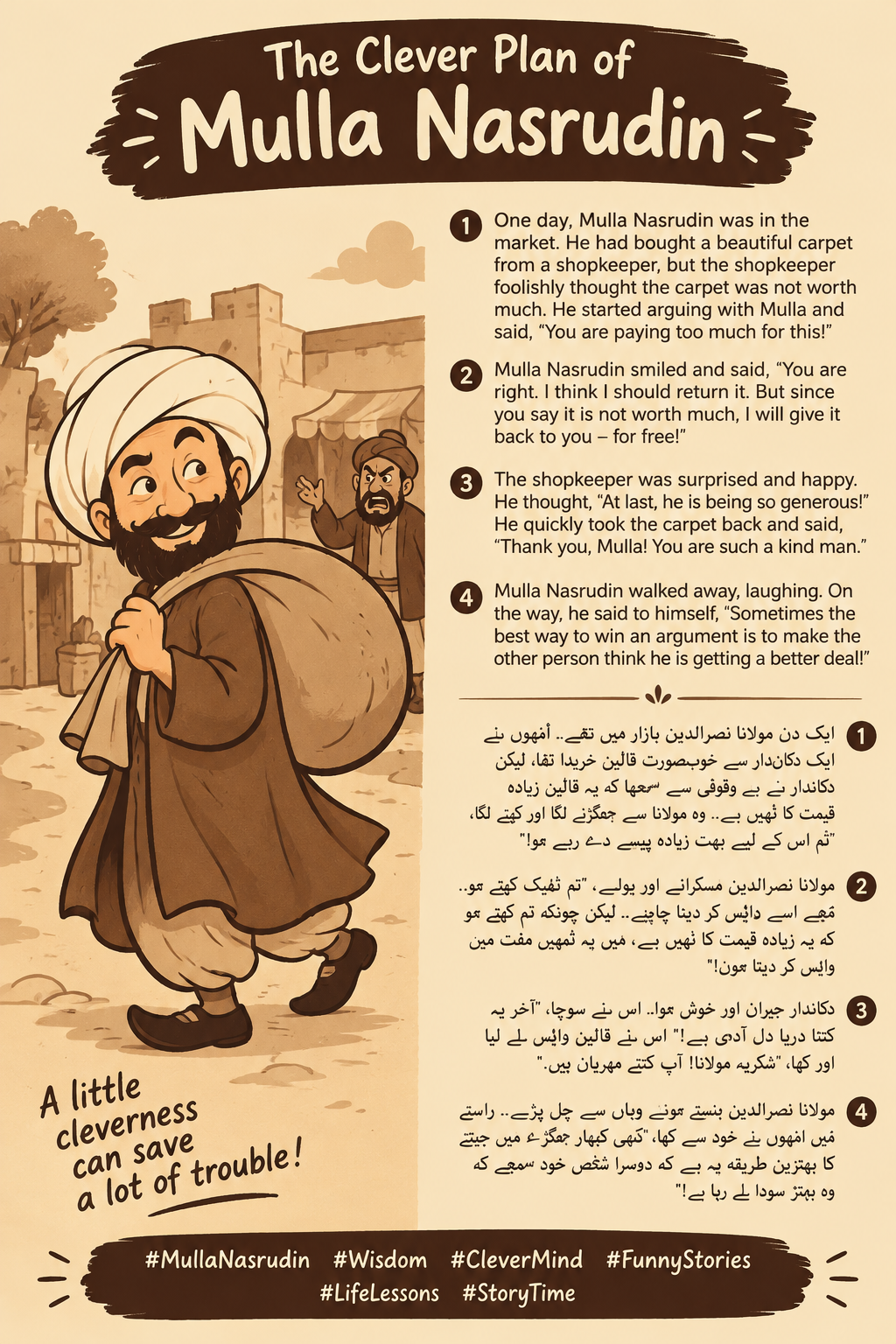
    One sunny morning, Mulla Nasrudin went to the market and bought a beautiful carpet. As he was leaving, the shopkeeper suddenly shouted, “Mulla, you paid far too little! This carpet is worth much more!” Mulla looked at him in surprise and said, “Really? Then why did you sell it to me for that price?” The shopkeeper had no answer!
    **Paragraph 2: Mulla’s Clever Idea**
    Mulla smiled and said, “All right, my friend! If the carpet is so valuable, I will return it to you.” The shopkeeper immediately became happy. He thought Mulla was finally admitting his mistake. “Excellent!” he said. “Give me back my carpet!” Mulla nodded and replied, “Of course! But remember, you said it was worth much more, so now you must give me back my money first!”
    **Paragraph 3: The Shopkeeper’s Surprise**
    The shopkeeper’s smile suddenly disappeared. He had expected to get his carpet back without any trouble, but Mulla’s clever words had trapped him in his own argument! The people in the market began laughing. One man shouted, “Mulla has won again!” The shopkeeper scratched his head and realized that arguing with Mulla was not as easy as he had imagined.
    **Paragraph 4: The Happy Ending**
    Mulla picked up his carpet, waved goodbye, and walked away with a big smile. “Dear friends,” he said to the laughing crowd, “think carefully before you argue, because sometimes your own words can defeat you!” Everyone laughed and applauded his cleverness. From that day on, the shopkeeper learned to think twice before making foolish arguments. And Mulla? He went home happily, already thinking of his next clever plan! See less
    rehan school urdu bazar roll no11 foundation level**پیراگراف 1: مزے دار بحث** ایک دھوپ بھرے دن ملا نصرالدین بازار گئے اور ایک خوبصورت قالین خرید لیا۔ جب وہ واپس جانے لگے تو دکاندار اچانک چلایا، ’’ملا صاحب! آپ نے اس قالین کی بہت کم قیمت دی ہے، یہ تو اس سے کہیں زیادہ قیمتی ہے!‘‘ ملا نے حیرت سے پوچھا، ’’اچھا! تو پھر آپ نے مجھے اتنی کم قیمت میں کیوں بیچا؟‘‘ دکاندار کے پاس کوئی جواب نہیں تھا! **پیراگراف 2: ملا کی چالاکی** ملا مسکرائے اور بولے، ’’اچھا میرے دوست! اگر یہ قالین اتنا قیمتی ہے تو میں اسے آپ کو واپس کر دیتا ہوں۔‘‘ یہ سن کر دکاندار بہت خوش ہوا۔ اس نے سوچا کہ ملا اپنی غلطی مان رہے ہیں۔ وہ فوراً بولا، ’’بہت خوب! میرا قالین واپس کر دو!‘‘ ملا نے کہا، ’’ضرور! لیکن پہلے آپ میرے پیسے واپس کریں، کیونکہ آپ خود کہہ رہے ہیں کہ قالین بہت قیمتی ہے!‘‘ **پیراگراف 3: دکاندار حیران رہ گیا** دکاندار کی مسکراہٹ فوراً غائب ہو گئی۔ وہ سمجھ رہا تھا کہ اسے بغیر کسی مشکل کے اپنا قالین واپس مل جائے گا، لیکن ملا کی چالاک باتوں نے اسے اپنی ہی بحث میں پھنسا دیا! بازار میں موجود لوگ ہنسنے لگے۔ ایک آدمی بولا، ’’واہ ملا صاحب! آپ نے تو پھر کمال کر دیا!‘‘ دکاندار اپنا سر کھجانے لگا اور اسے سمجھ آ گیا کہ ملا سے بحث کرنا اتنا آسان نہیں! **پیراگراف 4: مزے دار اختتام** ملا نے اپنا قالین اٹھایا، سب کو الوداع کہا اور مسکراتے ہوئے وہاں سے چل پڑے۔ انہوں نے ہنستے ہوئے لوگوں سے کہا، ’’دوستو! بحث کرنے سے پہلے اچھی طرح سوچ لیا کرو، کیونکہ کبھی کبھی انسان اپنی ہی باتوں میں پھنس جاتا ہے!‘‘ سب لوگ ہنسنے اور تالیاں بجانے لگے۔ اس دن کے بعد دکاندار نے فضول بحث کرنے سے پہلے دو بار سوچنا سیکھ لیا۔ اور ملا؟ وہ خوشی خوشی گھر چلے گئے اور اگلے چالاک منصوبے کے بارے میں سوچنے لگے!**Paragraph 1: The Funny Argument** One sunny morning, Mulla Nasrudin went to the market and bought a beautiful carpet. As he was leaving, the shopkeeper suddenly shouted, “Mulla, you paid far too little! This carpet is worth much more!” Mulla looked at him in surprise and said, “Really? Then why did you sell it to me for that price?” The shopkeeper had no answer! **Paragraph 2: Mulla’s Clever Idea** Mulla smiled and said, “All right, my friend! If the carpet is so valuable, I will return it to you.” The shopkeeper immediately became happy. He thought Mulla was finally admitting his mistake. “Excellent!” he said. “Give me back my carpet!” Mulla nodded and replied, “Of course! But remember, you said it was worth much more, so now you must give me back my money first!” **Paragraph 3: The Shopkeeper’s Surprise** The shopkeeper’s smile suddenly disappeared. He had expected to get his carpet back without any trouble, but Mulla’s clever words had trapped him in his own argument! The people in the market began laughing. One man shouted, “Mulla has won again!” The shopkeeper scratched his head and realized that arguing with Mulla was not as easy as he had imagined. **Paragraph 4: The Happy Ending** Mulla picked up his carpet, waved goodbye, and walked away with a big smile. “Dear friends,” he said to the laughing crowd, “think carefully before you argue, because sometimes your own words can defeat you!” Everyone laughed and applauded his cleverness. From that day on, the shopkeeper learned to think twice before making foolish arguments. And Mulla? He went home happily, already thinking of his next clever plan! See less
    0 التعليقات 0 المشاركات 785 مشاهدة
  • Rsif8
    Post No 2
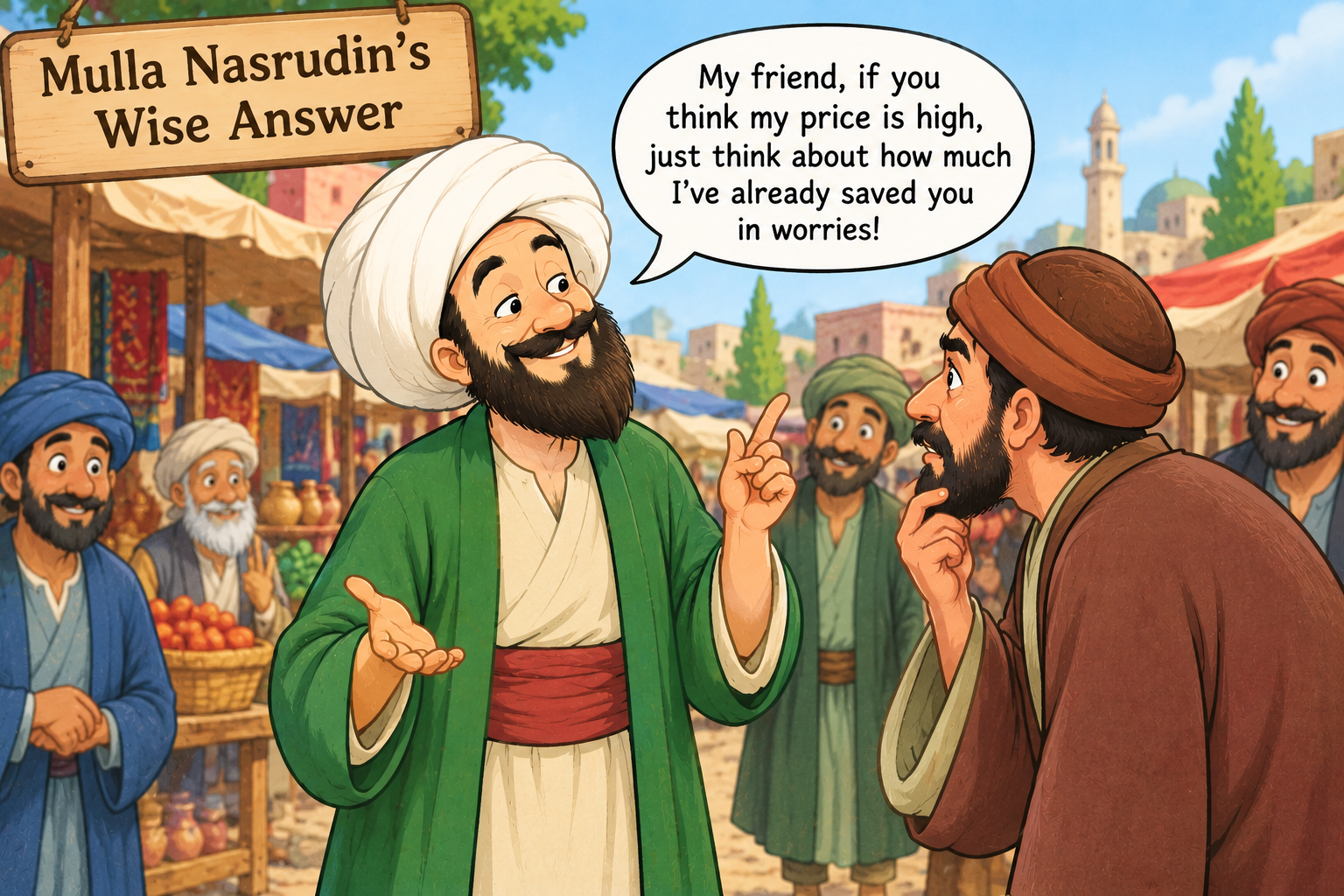
    # Mulla Nasrudin’s Wise Answer

    **Description**

    *Mulla Nasrudin’s Wise Answer* is an interesting and entertaining story about a wise, clever, and humorous man named Mulla Nasrudin. He is famous for his intelligence, quick thinking, and unusual way of answering questions. His stories are popular because they make people laugh while teaching important lessons about life, wisdom, and human behavior.

    In this story, Mulla Nasrudin is in a busy village marketplace where people gather to buy and sell different things. The market is full of colorful shops, traditional goods, and people talking to one another. During his visit, Mulla Nasrudin meets a man who begins a conversation with him. The man asks questions and expresses his opinions, expecting a simple answer from Mulla Nasrudin. However, Mulla Nasrudin responds in a clever and unexpected way that surprises the man and makes the conversation interesting.

    Instead of becoming confused or angry, Mulla Nasrudin uses his intelligence and sense of humor to handle the situation. He thinks carefully and gives an answer that shows his ability to understand the situation from a different perspective. His response demonstrates that a person does not always need to argue to prove a point. Sometimes, a thoughtful and humorous answer can communicate a message more effectively than a long discussion.

    The story highlights the importance of wisdom and quick thinking in everyday life. People often face difficult questions, disagreements, and unexpected situations. In such moments, it is important to remain calm, think carefully, and choose our words wisely. Mulla Nasrudin teaches us that reacting with anger does not always solve a problem. A positive attitude, patience, and a little humor can help us deal with challenging situations.

    Another important lesson from the story is that intelligence is not only about education or book knowledge. True wisdom also means understanding people, recognizing different points of view, and making sensible decisions. Mulla Nasrudin uses his practical understanding of life to respond in a way that makes others think. His clever personality reminds us that we can learn something valuable from ordinary conversations and daily experiences.

    Furthermore, the story encourages students to develop their communication skills and creative thinking. It shows that listening carefully and thinking before speaking can help us express our ideas clearly. We should respect others, avoid unnecessary arguments, and try to solve disagreements peacefully. Humor can also make conversations friendlier and help people understand one another.

    Overall, *Mulla Nasrudin’s Wise Answer* is an enjoyable and meaningful story that combines humor with valuable life lessons. It encourages readers to use common sense, remain patient, think creatively, and respond wisely to different situations. The story is suitable for students and readers of all ages because it entertains them while helping them understand the importance of wisdom and good communication.

    **Moral of the Story:** Think before you speak, stay calm in difficult situations, and use wisdom, patience, and humor to solve problems.
    Rsif8 Post No 2 # Mulla Nasrudin’s Wise Answer **Description** *Mulla Nasrudin’s Wise Answer* is an interesting and entertaining story about a wise, clever, and humorous man named Mulla Nasrudin. He is famous for his intelligence, quick thinking, and unusual way of answering questions. His stories are popular because they make people laugh while teaching important lessons about life, wisdom, and human behavior. In this story, Mulla Nasrudin is in a busy village marketplace where people gather to buy and sell different things. The market is full of colorful shops, traditional goods, and people talking to one another. During his visit, Mulla Nasrudin meets a man who begins a conversation with him. The man asks questions and expresses his opinions, expecting a simple answer from Mulla Nasrudin. However, Mulla Nasrudin responds in a clever and unexpected way that surprises the man and makes the conversation interesting. Instead of becoming confused or angry, Mulla Nasrudin uses his intelligence and sense of humor to handle the situation. He thinks carefully and gives an answer that shows his ability to understand the situation from a different perspective. His response demonstrates that a person does not always need to argue to prove a point. Sometimes, a thoughtful and humorous answer can communicate a message more effectively than a long discussion. The story highlights the importance of wisdom and quick thinking in everyday life. People often face difficult questions, disagreements, and unexpected situations. In such moments, it is important to remain calm, think carefully, and choose our words wisely. Mulla Nasrudin teaches us that reacting with anger does not always solve a problem. A positive attitude, patience, and a little humor can help us deal with challenging situations. Another important lesson from the story is that intelligence is not only about education or book knowledge. True wisdom also means understanding people, recognizing different points of view, and making sensible decisions. Mulla Nasrudin uses his practical understanding of life to respond in a way that makes others think. His clever personality reminds us that we can learn something valuable from ordinary conversations and daily experiences. Furthermore, the story encourages students to develop their communication skills and creative thinking. It shows that listening carefully and thinking before speaking can help us express our ideas clearly. We should respect others, avoid unnecessary arguments, and try to solve disagreements peacefully. Humor can also make conversations friendlier and help people understand one another. Overall, *Mulla Nasrudin’s Wise Answer* is an enjoyable and meaningful story that combines humor with valuable life lessons. It encourages readers to use common sense, remain patient, think creatively, and respond wisely to different situations. The story is suitable for students and readers of all ages because it entertains them while helping them understand the importance of wisdom and good communication. **Moral of the Story:** Think before you speak, stay calm in difficult situations, and use wisdom, patience, and humor to solve problems.
    0 التعليقات 0 المشاركات 1043 مشاهدة
  • #rsisb
    roll no.247
    canva post 50
    Foundation level

    **“Hustle until your haters ask if you’re hiring.” — Anonymous**

    Success doesn’t happen overnight. It is built through patience, consistency, hard work, courage, and the willingness to keep moving forward even when nobody is watching.

    This powerful quote is a reminder to focus on **your own journey instead of other people’s opinions**. There will always be people who doubt you, underestimate you, or question your dreams. Instead of wasting your energy trying to prove them wrong, put that energy into becoming better every single day.

    Keep learning.
    Keep improving.
    Keep working toward your goals.
    Keep believing in yourself.
    And most importantly, **never let negativity decide your future.**

    Your results can become the answer to every doubt. You don’t need to argue with people who don’t believe in you. Let your dedication, progress, and achievements speak for themselves.

    Remember, the goal isn’t to impress your haters—it’s to build a life that makes **you proud**. Stay focused, stay humble, and keep taking small steps toward your dreams.

    **Work quietly. Dream boldly. Stay consistent. Let your success tell the story.**

    #Hustle #Motivation #Success #SuccessMindset #HardWork #KeepGoing #NeverGiveUp #DreamBig #StayFocused #BelieveInYourself #MotivationalQuotes #Inspiration #PositiveMindset #GoalSetting #Discipline #Consistency #GrowthMindset #Entrepreneurship #SuccessQuotes #DailyMotivation #WorkHard #DreamChaser #SelfImprovement #Mindset #AchieveYourGoals
    #rsisb roll no.247 canva post 50 Foundation level 🔥 **“Hustle until your haters ask if you’re hiring.” — Anonymous** 💯🚀 Success doesn’t happen overnight. It is built through patience, consistency, hard work, courage, and the willingness to keep moving forward even when nobody is watching. 🌟💪 This powerful quote is a reminder to focus on **your own journey instead of other people’s opinions**. There will always be people who doubt you, underestimate you, or question your dreams. Instead of wasting your energy trying to prove them wrong, put that energy into becoming better every single day. 🔥📈 Keep learning. 📚 Keep improving. 🧠 Keep working toward your goals. 🎯 Keep believing in yourself. ❤️ And most importantly, **never let negativity decide your future.** 🚀 Your results can become the answer to every doubt. You don’t need to argue with people who don’t believe in you. Let your dedication, progress, and achievements speak for themselves. 🏆✨ Remember, the goal isn’t to impress your haters—it’s to build a life that makes **you proud**. Stay focused, stay humble, and keep taking small steps toward your dreams. 🌱💫 💡 **Work quietly. Dream boldly. Stay consistent. Let your success tell the story.** 💯🔥 #Hustle #Motivation #Success #SuccessMindset #HardWork #KeepGoing #NeverGiveUp #DreamBig #StayFocused #BelieveInYourself #MotivationalQuotes #Inspiration #PositiveMindset #GoalSetting #Discipline #Consistency #GrowthMindset #Entrepreneurship #SuccessQuotes #DailyMotivation #WorkHard #DreamChaser #SelfImprovement #Mindset #AchieveYourGoals 🚀🔥💪🏆✨
    0 التعليقات 0 المشاركات 4223 مشاهدة
  • #rsisb
    RollNo.247
    Foundation Level

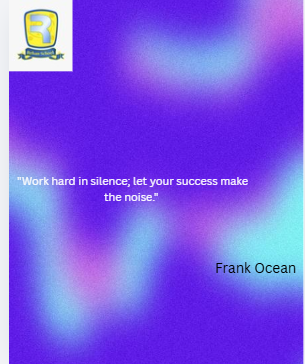
    "Work hard in silence; let your success make the noise." — Frank Ocean

    Success doesn't need constant announcements or endless validation. The strongest victories are built behind the scenes—through discipline, consistency, and dedication when no one is watching. Every early morning, every late night, every challenge you overcome, and every sacrifice you make is shaping the future you dream of.

    Instead of seeking attention for your efforts, focus on becoming better every single day. Let your actions speak louder than your words. True champions don't waste time proving themselves—they spend their time improving themselves.

    There will always be people who doubt your abilities or underestimate your potential. Don't argue with them. Don't try to convince them. Keep learning, keep growing, and keep working. One day, your achievements will tell your story better than any explanation ever could.

    Remember, greatness is built through patience and persistence. Every small step forward matters. Stay committed to your goals, trust the process, and never give up because success belongs to those who keep moving forward even when nobody is applauding.

    Your future is created by what you do today—not by what you promise to do tomorrow. So stay humble, stay focused, and let your success become the loudest proof of your hard work.

    #WorkHard #Success #Motivation #Inspiration #Discipline #Consistency #GrowthMindset #NeverGiveUp #DreamBig #Focus #SuccessMindset #SelfImprovement #HardWorkPaysOff #KeepGrinding #PositiveThinking #PersonalGrowth #AchieveYourGoals #Hustle #Determination #BelieveInYoursel
    #rsisb RollNo.247 Foundation Level 💪 "Work hard in silence; let your success make the noise." — Frank Ocean 🌟 Success doesn't need constant announcements or endless validation. The strongest victories are built behind the scenes—through discipline, consistency, and dedication when no one is watching. Every early morning, every late night, every challenge you overcome, and every sacrifice you make is shaping the future you dream of. Instead of seeking attention for your efforts, focus on becoming better every single day. Let your actions speak louder than your words. True champions don't waste time proving themselves—they spend their time improving themselves. 📈 There will always be people who doubt your abilities or underestimate your potential. Don't argue with them. Don't try to convince them. Keep learning, keep growing, and keep working. One day, your achievements will tell your story better than any explanation ever could. 🚀 Remember, greatness is built through patience and persistence. Every small step forward matters. Stay committed to your goals, trust the process, and never give up because success belongs to those who keep moving forward even when nobody is applauding. 🌱✨ Your future is created by what you do today—not by what you promise to do tomorrow. So stay humble, stay focused, and let your success become the loudest proof of your hard work. 🔥🏆 #WorkHard #Success #Motivation #Inspiration #Discipline #Consistency #GrowthMindset #NeverGiveUp #DreamBig #Focus #SuccessMindset #SelfImprovement #HardWorkPaysOff #KeepGrinding #PositiveThinking #PersonalGrowth #AchieveYourGoals #Hustle #Determination #BelieveInYoursel
    0 التعليقات 0 المشاركات 6959 مشاهدة
  • Is this you? :-)

    COMMENTARY by Thomas L. Friedman: I think I’ll plan to go from Kiev to Hanoi more often. It’s only when you go to two seemingly disconnected places that you see the big trends, and one of the big ones I’ve noticed is the emergence of “The Square People.” In 2004, the Harvard political scientist Samuel Huntington wrote about an emerging global “superclass” of “Davos Men” — alluding to attendees of the Davos World Economic Forum — a transnational, cosmopolitan elite drawn from high-tech, finance, multinationals, academics and NGOs. The Davos Men had “little need for national loyalty” and more in common with each other than their fellow citizens, Huntington argued. They also had the skills to disproportionately benefit from the new globalization of markets and information technologies.
    Is this you? :-) COMMENTARY by Thomas L. Friedman: I think I’ll plan to go from Kiev to Hanoi more often. It’s only when you go to two seemingly disconnected places that you see the big trends, and one of the big ones I’ve noticed is the emergence of “The Square People.” In 2004, the Harvard political scientist Samuel Huntington wrote about an emerging global “superclass” of “Davos Men” — alluding to attendees of the Davos World Economic Forum — a transnational, cosmopolitan elite drawn from high-tech, finance, multinationals, academics and NGOs. The Davos Men had “little need for national loyalty” and more in common with each other than their fellow citizens, Huntington argued. They also had the skills to disproportionately benefit from the new globalization of markets and information technologies.
    0 التعليقات 0 المشاركات 4910 مشاهدة
  • Jawahar Patani writes

    I think we all should understand that religion is just a set of laws put in place to keep the human under control . Religion is also the beginning of standardisation . Humans also need to have fear of the unknown and therefore it is best to have a point that can be named anything and given the name creator. In the same manner or principle the governments work . Just that this time round we can see, touch, feel , oppose and change .. This is the set of laws that is called a constitution . Now banning is not something new . We had people with different views who were banished from kingdoms and villages and families as well. This is basically to keep control over the different views of people that are above all and these values are the cultural values... now if we all understand that by blasphemy is only there as long as we see and hear it . Otherwise we live on the same planet if we abuse the god of another we are still not struck by fire and brimstone .. We have many gods yet the earth is not destroyed while the same creators ( I say creators because every religion have their own name) make sure the system works without a flaw. So lets not argue . Look for a way that you can bypass the block ... Make it viral and watch you tube from a different host who just borrows the content and let the government continue with that block.
    Jawahar Patani writes I think we all should understand that religion is just a set of laws put in place to keep the human under control . Religion is also the beginning of standardisation . Humans also need to have fear of the unknown and therefore it is best to have a point that can be named anything and given the name creator. In the same manner or principle the government's work . Just that this time round we can see, touch, feel , oppose and change .. This is the set of laws that is called a constitution . Now banning is not something new . We had people with different views who were banished from kingdoms and villages and families as well. This is basically to keep control over the different views of people that are above all and these values are the cultural values... now if we all understand that by blasphemy is only there as long as we see and hear it . Otherwise we live on the same planet if we abuse the god of another we are still not struck by fire and brimstone .. We have many gods yet the earth is not destroyed while the same creators ( I say creators because every religion have their own name) make sure the system works without a flaw. So let's not argue . Look for a way that you can bypass the block ... Make it viral and watch you tube from a different host who just borrows the content and let the government continue with that block.
    0 التعليقات 0 المشاركات 1482 مشاهدة
  • A draft of something I am working on

    Using Social Media for defusing a problem:

    What is a problem ? What is Hate ?

    Hate come’s from disliking something for over a period of time, as the idea of dis likeness deposit’s in people’s minds, slowly and gradually it becomes and converts into hate.

    People who hate something, block their own mind towards listening anything on that subject, and not just that subject most of the times we will see that the same people also are blocked on many other subjects or dislike them also.

    I found people who are afraid of one thing, they are also afraid of other similar things.

    For example i found people who are afraid of Muslims, Jews, media, govt, they were all mostly the same people who found problems of some kind in all these things, not just one, and it all comes from Fear.

    How to cure it ?

    Just like a puss in a pimple, which needs to come out, similarly if we can channelize this hate to come out some way where the person can feel that HE SHOWED IT to the other party, hate also defuses it self,

    I found that when i let people talk bad or take out what they hate in some form on my Facebook wall, they argue and they argue, and if they do not block each other, i have found that they become tolerant of that person eventually, as they see that that person is not that bad as they thought they were, and eventually they become accepting of that person or ideology

    I have been creating war’s on my Facebook wall, i would write something on my wall as a question, and people of both sides would jump in and start talking and usually 2 or 4 or 6 people start talking and taking sides and they keep on presenting their point of views, and eventually they end up becoming Facebook friends, which changes everything in my opinion, as now their tank of hate is all of a sudden empty, and they are cured and they will no longer fight,

    I have even found that these same people become more close to each other eventually and become very very accepting of other people.

    Suggest a friend button:
    I use the Suggest a friend button, to send people of different school of thoughts to each other, and that means, that if they add each other, slowly they see the story which was being told by the other side to their friends, and now they are seeing what the ENEMY was saying about them, and slowly and the ENEMY is seeing what they are saying, thus both side’s become cautious of how to phrase words as all of a sudden, there are no secrets, and both parties actually UNDERSTAND each other.

    I do this by making list’s of different people of different subjects in my facebook, and then after labelling one person of a particular school of thought, i would open their profile and send the other school of thought person to them.

    I also write question on my wall, which would be of an extreme where people would probably talk about,or it would create friction among them, Or provoke them to come on my wall and talk about this i.e., Who do you think does the Land of Israel belong to now ? Jews or Muslims Or Christians or …. ?

    When this happens, people scream, yell, bring their side of the proof’s and as i said eventually become more tolerant and accepting of the other party.

    I would say that above is probably the reason, I have been spending so much time on Facebook,
    A draft of something I am working on Using Social Media for defusing a problem: What is a problem ? What is Hate ? Hate come’s from disliking something for over a period of time, as the idea of dis likeness deposit’s in people’s minds, slowly and gradually it becomes and converts into hate. People who hate something, block their own mind towards listening anything on that subject, and not just that subject most of the times we will see that the same people also are blocked on many other subjects or dislike them also. I found people who are afraid of one thing, they are also afraid of other similar things. For example i found people who are afraid of Muslims, Jews, media, govt, they were all mostly the same people who found problems of some kind in all these things, not just one, and it all comes from Fear. How to cure it ? Just like a puss in a pimple, which needs to come out, similarly if we can channelize this hate to come out some way where the person can feel that HE SHOWED IT to the other party, hate also defuses it self, I found that when i let people talk bad or take out what they hate in some form on my Facebook wall, they argue and they argue, and if they do not block each other, i have found that they become tolerant of that person eventually, as they see that that person is not that bad as they thought they were, and eventually they become accepting of that person or ideology I have been creating war’s on my Facebook wall, i would write something on my wall as a question, and people of both sides would jump in and start talking and usually 2 or 4 or 6 people start talking and taking sides and they keep on presenting their point of views, and eventually they end up becoming Facebook friends, which changes everything in my opinion, as now their tank of hate is all of a sudden empty, and they are cured and they will no longer fight, I have even found that these same people become more close to each other eventually and become very very accepting of other people. Suggest a friend button: I use the Suggest a friend button, to send people of different school of thoughts to each other, and that means, that if they add each other, slowly they see the story which was being told by the other side to their friends, and now they are seeing what the ENEMY was saying about them, and slowly and the ENEMY is seeing what they are saying, thus both side’s become cautious of how to phrase words as all of a sudden, there are no secrets, and both parties actually UNDERSTAND each other. I do this by making list’s of different people of different subjects in my facebook, and then after labelling one person of a particular school of thought, i would open their profile and send the other school of thought person to them. I also write question on my wall, which would be of an extreme where people would probably talk about,or it would create friction among them, Or provoke them to come on my wall and talk about this i.e., Who do you think does the Land of Israel belong to now ? Jews or Muslims Or Christians or …. ? When this happens, people scream, yell, bring their side of the proof’s and as i said eventually become more tolerant and accepting of the other party. I would say that above is probably the reason, I have been spending so much time on Facebook,
    0 التعليقات 0 المشاركات 399 مشاهدة
  • Please feel FREE to argue with any of the post that I make ON MY WALL, so that people including me, can learn your point of view and can correct themselves.

    You are welcome to use any kind of language you seem fit to do that on my wall.
    Please feel FREE to argue with any of the post that I make ON MY WALL, so that people including me, can learn your point of view and can correct themselves. You are welcome to use any kind of language you seem fit to do that on my wall.
    0 التعليقات 0 المشاركات 249 مشاهدة
  • From Sapiens: A Brief History of Humankind by Yuval Noah Harari

    "Next, British, French and German scholars wedded the linguistic theory about the industrious Aryans to Darwin’s theory of natural selection and posited that the Aryans were not just a linguistic group but a biological entity – a race. And not just any race, but a master race of tall, light-haired, blue-eyed, hard-working, and super-rational humans who emerged from the mists of the north to lay the foundations of culture throughout the world. Regrettably, the Aryans who invaded India and Persia intermarried with the local natives they found in these lands, losing their light complexions and blond hair, and with them their rationality and diligence. The civilizations of India and Persia consequently declined. In Europe, on the other hand, the Aryans preserved their racial purity. This is why Europeans had managed to conquer the world, and why they were to rule it – provided they took precautions not to mix with inferior races.

    Such racist theories, prominent and respectable for many decades, have become anathema among scientists and politicians alike. People continue to conduct a heroic struggle against racism without noticing that the battlefront has shifted, and that the place of racism in imperial ideology has now been replaced by ‘culturism’. There is no such word, but it’s about time we coined it. Among today’s elites, assertions about the contrasting merits of diverse human groups are almost always couched in terms of historical differences between cultures rather than biological differences between races. We no longer say, ‘It’s in their blood.’ We say, ‘It’s in their culture.’ Thus European right-wing parties which oppose Muslim immigration usually take care to avoid racial terminology. Marine le Pen’s speechwriters would have been shown the door on the spot had they suggested that the leader of the Front National go on television to declare that, ‘We don’t want those inferior Semites to dilute our Aryan blood and spoil our Aryan civilization.’ Instead, the French Front National, the Dutch Party for Freedom, the Alliance for the Future of Austria and their like tend to argue that Western culture, as it has evolved in Europe, is characterized by democratic values, tolerance and gender equality, whereas Muslim culture, which evolved in the Middle East, is characterized by hierarchical politics, fanaticism and misogyny. Since the two cultures are so different, and since many Muslim immigrants are unwilling (and perhaps unable) to adopt Western values, they should not be allowed to enter, lest they foment internal conflicts and corrode European democracy and liberalism."
    From Sapiens: A Brief History of Humankind by Yuval Noah Harari "Next, British, French and German scholars wedded the linguistic theory about the industrious Aryans to Darwin’s theory of natural selection and posited that the Aryans were not just a linguistic group but a biological entity – a race. And not just any race, but a master race of tall, light-haired, blue-eyed, hard-working, and super-rational humans who emerged from the mists of the north to lay the foundations of culture throughout the world. Regrettably, the Aryans who invaded India and Persia intermarried with the local natives they found in these lands, losing their light complexions and blond hair, and with them their rationality and diligence. The civilizations of India and Persia consequently declined. In Europe, on the other hand, the Aryans preserved their racial purity. This is why Europeans had managed to conquer the world, and why they were to rule it – provided they took precautions not to mix with inferior races. Such racist theories, prominent and respectable for many decades, have become anathema among scientists and politicians alike. People continue to conduct a heroic struggle against racism without noticing that the battlefront has shifted, and that the place of racism in imperial ideology has now been replaced by ‘culturism’. There is no such word, but it’s about time we coined it. Among today’s elites, assertions about the contrasting merits of diverse human groups are almost always couched in terms of historical differences between cultures rather than biological differences between races. We no longer say, ‘It’s in their blood.’ We say, ‘It’s in their culture.’ Thus European right-wing parties which oppose Muslim immigration usually take care to avoid racial terminology. Marine le Pen’s speechwriters would have been shown the door on the spot had they suggested that the leader of the Front National go on television to declare that, ‘We don’t want those inferior Semites to dilute our Aryan blood and spoil our Aryan civilization.’ Instead, the French Front National, the Dutch Party for Freedom, the Alliance for the Future of Austria and their like tend to argue that Western culture, as it has evolved in Europe, is characterized by democratic values, tolerance and gender equality, whereas Muslim culture, which evolved in the Middle East, is characterized by hierarchical politics, fanaticism and misogyny. Since the two cultures are so different, and since many Muslim immigrants are unwilling (and perhaps unable) to adopt Western values, they should not be allowed to enter, lest they foment internal conflicts and corrode European democracy and liberalism."
    0 التعليقات 0 المشاركات 2445 مشاهدة
  • Socrates, 399 BC

    On a day in 399 BC the philosopher Socrates stood before a jury of 500 of his fellow Athenians accused of "refusing to recognize the gods recognized by the state" and of "corrupting the youth." If found guilty; his penalty could be death. The trial took place in the heart of the city, the jurors seated on wooden benches surrounded by a crowd of spectators. Socrates accusers (three Athenian citizens) were allotted three hours to present their case, after which, the philosopher would have three hours to defend himself.

    Socrates
    Socrates was 70 years old and familiar to most Athenians. His anti-democratic views had turned many in the city against him. Two of his students, Alcibiades and Critias, had twice briefly overthrown the democratic government of the city, instituting a reign of terror in which thousands of citizens were deprived of their property and either banished from the city or executed.

    After hearing the arguments of both Socrates and his accusers, the jury was asked to vote on his guilt. Under Athenian law the jurors did not deliberate the point. Instead, each juror registered his judgment by placing a small disk into an urn marked either "guilty" or "not guilty." Socrates was found guilty by a vote of 280 to 220.

    The jurors were next asked to determine Socrates penalty. His accusers argued for the death penalty. Socrates was given the opportunity to suggest his own punishment and could probably have avoided death by recommending exile. Instead, the philosopher initially offered the sarcastic recommendation that he be rewarded for his actions. When pressed for a realistic punishment, he proposed that he be fined a modest sum of money. Faced with the two choices, the jury selected death for Socrates.

    The philosopher was taken to the near-by jail where his sentence would be carried out. Athenian law prescribed death by drinking a cup of poison hemlock. Socrates would be his own executioner.

    "What must I do?"

    Plato was Socrates most famous student. Although he was not present at his mentors death, he did know those who were there. Plato describes the scene through the narrative voice of the fictional character Phaedo.

    "When Crito heard, he signaled to the slave who was standing by. The boy went out, and returned after a few moments with the man who was to administer the poison which he brought ready mixed in a cup. When Socrates saw him, he said, Now, good sir, you understand these things. What must I do?

    Just drink it and walk around until your legs begin to feel heavy, then lie down. It will soon act. With that he offered Socrates the cup.

    The latter took it quite cheerfully without a tremor, with no change of color or expression. He just gave the man his stolid look, and asked, How say you, is it permissible to pledge this drink to anyone? May I?

    The answer came, We allow reasonable time in which to drink it.

    I understand, he said, we can and must pray to the gods that our sojourn on earth will continue happy beyond the grave. This is my prayer, and may it come to pass. With these words, he stoically drank the potion, quite readily and cheerfully. Up till this moment most of us were able with some decency to hold back our tears, but when we saw him drinking the poison to the last drop, we could restrain ourselves no longer. In spite of myself, the tears came in floods, so that I covered my face and wept - not for him, but at my own misfortune at losing such a man as my friend. Crito, even before me, rose and went out when he could check his tears no longer.

    Apollodorus was already steadily weeping, and by drying his eyes, crying again and sobbing, he affected everyone present except for Socrates himself.

    He said, You are strange fellows; what is wrong with you? I sent the women away for this very purpose, to stop their creating such a scene. I have heard that one should die in silence. So please be quiet and keep control of yourselves. These words made us ashamed, and we stopped crying.

    Jacques-Louis David, 1787
    The Death of Socrates

    Socrates walked around until he said that his legs were becoming heavy, when he lay on his back, as the attendant instructed. This fellow felt him, and then a moment later examined his feet and legs again. Squeezing a foot hard, he asked him if he felt anything. Socrates said that he did not. He did the same to his calves and, going higher, showed us that he was becoming cold and stiff. Then he felt him a last time and said that when the poison reached the heart he would be gone.

    As the chill sensation got to his waist, Socrates uncovered his head (he had put something over it) and said his last words: Crito, we owe a cock to Asclepius. Do pay it. Dont forget.

    Of course, said Crito. Do you want to say anything else?

    There was no reply to this question, but after a while he gave a slight stir, and the attendant uncovered him and examined his eyes. Then Crito saw that he was dead, he closed his mouth and eyelids.

    This was the end of our friend, the best, wisest and most upright man of any that I have ever known"

    References:
    Platos description appears in: Tredennick, Hugh (translator)The last days of Socrates : Euthyphro, The apology, Crito, Phaedo / Plato (1959); Freeman, Charles, The Greek Achievement (1999); Stone, I.F., The Trial of Socrates (1988).
    Socrates, 399 BC On a day in 399 BC the philosopher Socrates stood before a jury of 500 of his fellow Athenians accused of "refusing to recognize the gods recognized by the state" and of "corrupting the youth." If found guilty; his penalty could be death. The trial took place in the heart of the city, the jurors seated on wooden benches surrounded by a crowd of spectators. Socrates' accusers (three Athenian citizens) were allotted three hours to present their case, after which, the philosopher would have three hours to defend himself. Socrates Socrates was 70 years old and familiar to most Athenians. His anti-democratic views had turned many in the city against him. Two of his students, Alcibiades and Critias, had twice briefly overthrown the democratic government of the city, instituting a reign of terror in which thousands of citizens were deprived of their property and either banished from the city or executed. After hearing the arguments of both Socrates and his accusers, the jury was asked to vote on his guilt. Under Athenian law the jurors did not deliberate the point. Instead, each juror registered his judgment by placing a small disk into an urn marked either "guilty" or "not guilty." Socrates was found guilty by a vote of 280 to 220. The jurors were next asked to determine Socrates' penalty. His accusers argued for the death penalty. Socrates was given the opportunity to suggest his own punishment and could probably have avoided death by recommending exile. Instead, the philosopher initially offered the sarcastic recommendation that he be rewarded for his actions. When pressed for a realistic punishment, he proposed that he be fined a modest sum of money. Faced with the two choices, the jury selected death for Socrates. The philosopher was taken to the near-by jail where his sentence would be carried out. Athenian law prescribed death by drinking a cup of poison hemlock. Socrates would be his own executioner. "What must I do?" Plato was Socrates' most famous student. Although he was not present at his mentor's death, he did know those who were there. Plato describes the scene through the narrative voice of the fictional character Phaedo. "When Crito heard, he signaled to the slave who was standing by. The boy went out, and returned after a few moments with the man who was to administer the poison which he brought ready mixed in a cup. When Socrates saw him, he said, 'Now, good sir, you understand these things. What must I do?' 'Just drink it and walk around until your legs begin to feel heavy, then lie down. It will soon act.' With that he offered Socrates the cup. The latter took it quite cheerfully without a tremor, with no change of color or expression. He just gave the man his stolid look, and asked, 'How say you, is it permissible to pledge this drink to anyone? May I?' The answer came, 'We allow reasonable time in which to drink it.' 'I understand', he said, 'we can and must pray to the gods that our sojourn on earth will continue happy beyond the grave. This is my prayer, and may it come to pass.' With these words, he stoically drank the potion, quite readily and cheerfully. Up till this moment most of us were able with some decency to hold back our tears, but when we saw him drinking the poison to the last drop, we could restrain ourselves no longer. In spite of myself, the tears came in floods, so that I covered my face and wept - not for him, but at my own misfortune at losing such a man as my friend. Crito, even before me, rose and went out when he could check his tears no longer. Apollodorus was already steadily weeping, and by drying his eyes, crying again and sobbing, he affected everyone present except for Socrates himself. He said, 'You are strange fellows; what is wrong with you? I sent the women away for this very purpose, to stop their creating such a scene. I have heard that one should die in silence. So please be quiet and keep control of yourselves.' These words made us ashamed, and we stopped crying. Jacques-Louis David, 1787 The Death of Socrates Socrates walked around until he said that his legs were becoming heavy, when he lay on his back, as the attendant instructed. This fellow felt him, and then a moment later examined his feet and legs again. Squeezing a foot hard, he asked him if he felt anything. Socrates said that he did not. He did the same to his calves and, going higher, showed us that he was becoming cold and stiff. Then he felt him a last time and said that when the poison reached the heart he would be gone. As the chill sensation got to his waist, Socrates uncovered his head (he had put something over it) and said his last words: 'Crito, we owe a cock to Asclepius. Do pay it. Don't forget.' 'Of course', said Crito. 'Do you want to say anything else?' 'There was no reply to this question, but after a while he gave a slight stir, and the attendant uncovered him and examined his eyes. Then Crito saw that he was dead, he closed his mouth and eyelids. This was the end of our friend, the best, wisest and most upright man of any that I have ever known" References: Plato's description appears in: Tredennick, Hugh (translator)The last days of Socrates : Euthyphro, The apology, Crito, Phaedo / Plato (1959); Freeman, Charles, The Greek Achievement (1999); Stone, I.F., The Trial of Socrates (1988).
    0 التعليقات 0 المشاركات 4320 مشاهدة
الصفحات المعززة