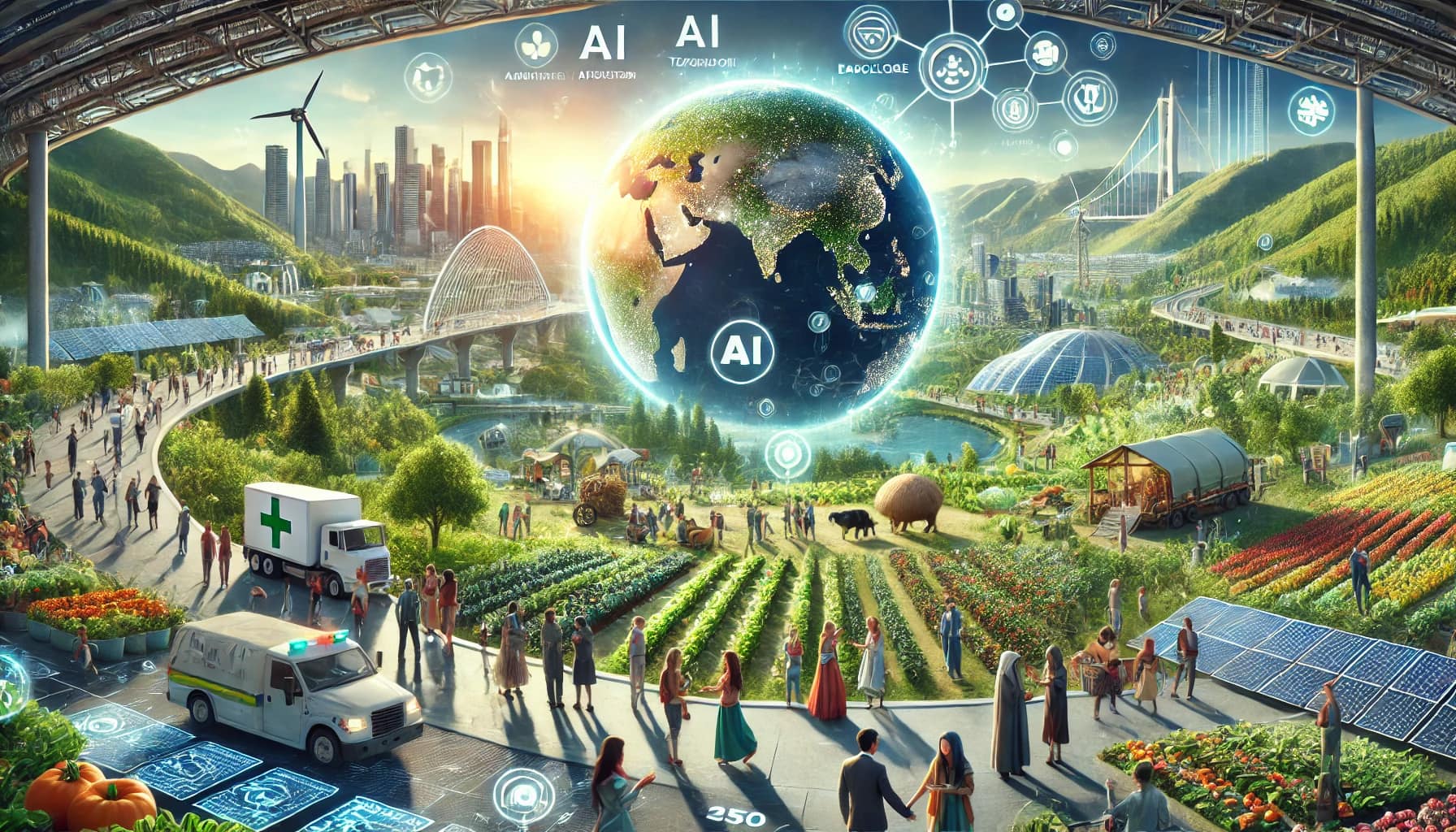
• Thought provoking crystal gaze for next generation........
    (Lengthy but Must Read Article).

    In 1998, Kodak had 170,000 employees and sold 85% of all photo paper worldwide.
    Within just a few years, their business model disappeared and they got bankrupt.
    What happened to Kodak will happen in a lot of industries in the next 10 year - and most people dont see it coming. Did you think in 1998 that 3 years later you would never take pictures on paper film again?
    Yet digital cameras were invented in 1975. The first ones only had 10,000 pixels, but followed Moores law. So as with all exponential technologies, it was a disappointment for a long time, before it became way superiour and got mainstream in only a few short years. It will now happen with Artificial Intelligence, health, autonomous and electric cars, education, 3D printing, agriculture and jobs. Welcome to the 4th Industrial Revolution.
    Welcome to the Exponential Age.

    Software will disrupt most traditional industries in the next 5-10 years.
    Uber is just a software tool, they dont own any cars, and are now the biggest taxi company in the world. Airbnb is now the biggest hotel company in the world, although they dont own any properties.

    Artificial Intelligence: Computers become exponentially better in understanding the world. This year, a computer beat the best Go player in the world, 10 years earlier than expected. In the US, young lawyers already dont get jobs. Because of IBM Watson, you can get legal advice (so far for more or less basic stuff) within seconds, with 90% accuracy compared with 70% accuracy when done by humans. So if you study law, stop immediately. There will be 90% less laywyers in the future, only specialists will remain.
    Watson already helps nurses diagnosing cancer, 4 time more accurate than human nurses. Facebook now has a pattern recognition software that can recognize faces better than humans. In 2030, computers will become more intelligent than humans.

    Autonomous cars: In 2018 the first self driving cars will appear for the public. Around 2020, the complete industry will start to be disrupted. You dont want to own a car anymore. You will call a car with your phone, it will show up at your location and drive you to your destination. You will not need to park it, you only pay for the driven distance and can be productive while driving. Our kids will never get a drivers licence and will never own a car. It will change the cities, because we will need 90-95% less cars for that. We can transform former parking space into parks. 1,2 million people die each year in car accidents worldwide. We now have one accident every 100,000km, with autonomous driving that will drop to one accident in 10 million km. That will save a million lifes each year.

    Most car companies might become bankrupt. Traditional car companies try the evolutionary approach and just build a better car, while tech companies (Tesla, Apple, Google) will do the revolutionary approach and build a computer on wheels. I spoke to a lot of engineers from Volkswagen and Audi; they are completely terrified of Tesla.

    Insurance companies will have massive trouble because without accidents, the insurance will become 100x cheaper. Their car insurance business model will disappear.
    Real estate will change. Because if you can work while you commute, people will move further away to live in a more beautiful neighborhood.
    Electric cars will become mainstream until 2020. Cities will be less noisy because all cars will run on electric. Electricity will become incredibly cheap and clean: Solar production has been on an exponential curve for 30 years, but you can only now see the impact. Last year, more solar energy was installed worldwide than fossil. The price for solar will drop so much that all coal companies will be out of business by 2025.
    With cheap electricity comes cheap and abundant water. Desalination now only needs 2kWh per cubic meter. We dont have scarce water in most places, we only have scarce drinking water. Imagine what will be possible if anyone can have as much clean water as he wants, for nearly no cost.

    Health: The Tricorder X price will be announced this year. There will be companies who will build a medical device (called the "Tricorder" from Star Trek) that works with you phone, which takes your retina scan, you blood sample and you breath into it. It then analyses 54 biomarkers that will identify nearly any disease. It will be cheap, so in a few years everyone on this planet will have access to world class medicine, nearly for free.

    3D printing: The price of the cheapest 3D printer came down from 18,000$ to 400$ within 10 years. In the same time, it became 100 times faster. All major shoe companies started 3D printing shoes. Spare airplane parts are already 3D printed in remote airports. The space station now has a printer that eliminates the need for the large amout of spare parts they used to have in the past.
    At the end of this year, new smartphones will have 3D scanning possibilities. You can then 3D scan your feet and print your perfect shoe at home. In China, they already 3D printed a complete 6-storey office building. By 2027, 10% of everything thats being produced will be 3D printed.

    Business opportunities: If you think of a niche you want to go in, ask yourself: "in the future, do you think we will have that?" and if the answer is yes, how can you make that happen sooner? If it doesnt work with your phone, forget the idea. And any idea designed for success in the 20th century is doomed in to failure in the 21st century.

    Work: 70-80% of jobs will disappear in the next 20 years. There will be a lot of new jobs, but it is not clear if there will be enough new jobs in such a small time.

    Agriculture: There will be a 100$ agricultural robot in the future. Farmers in 3rd world countried can then become managers of their field instead of working all days on their fields. Aeroponics will need much less water. The first petri dish produced veal is now available and will be cheaper than cow produced veal in 2018. Right now, 30% of all agricultural surfaces is used for cows. Imagine if we dont need that space anymore. There are several startups who will bring insect protein to the market shortly. It contains more protein than meat. It will be labeled as "alternative protein source" (because most people still reject the idea of eating insects).

    There is an app called "moodies" which can already tell in which mood you are. Until 2020 there will be apps that can tell by your facial expressions if you are lying. Imagine a political debate where its being displayed when they are telling the truth and when not.

    Bitcoin will become mainstream this year and might even become the default reserve currency.

    Longevity: Right now, the average life span increases by 3 months per year. Four years ago, the life span used to be 79 years, now its 80 years. The increase itself is increasing and by 2036, there will be more that one year increase per year. So we all might live for a long long time, probably way more than 100.

    Education: The cheapest smartphones are already at 10$ in Africa and Asia. Until 2020, 70% of all humans will own a smartphone. That means, everyone has the same access to world class education. Every child can use Khan academy for everything a child learns at school in First World countries. We have already released our software in Indonesia and will release it in Arabic, Suaheli and Chinese this Summer, because I see an enormous potential. We will give the English app for free, so that children in Africa can become fluent in English within half a year.
    🏼

    SaSarfaraz Ahmed Rehman
    Thought provoking crystal gaze for next generation........ (Lengthy but Must Read Article). In 1998, Kodak had 170,000 employees and sold 85% of all photo paper worldwide. Within just a few years, their business model disappeared and they got bankrupt. What happened to Kodak will happen in a lot of industries in the next 10 year - and most people don't see it coming. Did you think in 1998 that 3 years later you would never take pictures on paper film again? Yet digital cameras were invented in 1975. The first ones only had 10,000 pixels, but followed Moore's law. So as with all exponential technologies, it was a disappointment for a long time, before it became way superiour and got mainstream in only a few short years. It will now happen with Artificial Intelligence, health, autonomous and electric cars, education, 3D printing, agriculture and jobs. Welcome to the 4th Industrial Revolution. Welcome to the Exponential Age. Software will disrupt most traditional industries in the next 5-10 years. Uber is just a software tool, they don't own any cars, and are now the biggest taxi company in the world. Airbnb is now the biggest hotel company in the world, although they don't own any properties. Artificial Intelligence: Computers become exponentially better in understanding the world. This year, a computer beat the best Go player in the world, 10 years earlier than expected. In the US, young lawyers already don't get jobs. Because of IBM Watson, you can get legal advice (so far for more or less basic stuff) within seconds, with 90% accuracy compared with 70% accuracy when done by humans. So if you study law, stop immediately. There will be 90% less laywyers in the future, only specialists will remain. Watson already helps nurses diagnosing cancer, 4 time more accurate than human nurses. Facebook now has a pattern recognition software that can recognize faces better than humans. In 2030, computers will become more intelligent than humans. Autonomous cars: In 2018 the first self driving cars will appear for the public. Around 2020, the complete industry will start to be disrupted. You don't want to own a car anymore. You will call a car with your phone, it will show up at your location and drive you to your destination. You will not need to park it, you only pay for the driven distance and can be productive while driving. Our kids will never get a driver's licence and will never own a car. It will change the cities, because we will need 90-95% less cars for that. We can transform former parking space into parks. 1,2 million people die each year in car accidents worldwide. We now have one accident every 100,000km, with autonomous driving that will drop to one accident in 10 million km. That will save a million lifes each year. Most car companies might become bankrupt. Traditional car companies try the evolutionary approach and just build a better car, while tech companies (Tesla, Apple, Google) will do the revolutionary approach and build a computer on wheels. I spoke to a lot of engineers from Volkswagen and Audi; they are completely terrified of Tesla. Insurance companies will have massive trouble because without accidents, the insurance will become 100x cheaper. Their car insurance business model will disappear. Real estate will change. Because if you can work while you commute, people will move further away to live in a more beautiful neighborhood. Electric cars will become mainstream until 2020. Cities will be less noisy because all cars will run on electric. Electricity will become incredibly cheap and clean: Solar production has been on an exponential curve for 30 years, but you can only now see the impact. Last year, more solar energy was installed worldwide than fossil. The price for solar will drop so much that all coal companies will be out of business by 2025. With cheap electricity comes cheap and abundant water. Desalination now only needs 2kWh per cubic meter. We don't have scarce water in most places, we only have scarce drinking water. Imagine what will be possible if anyone can have as much clean water as he wants, for nearly no cost. Health: The Tricorder X price will be announced this year. There will be companies who will build a medical device (called the "Tricorder" from Star Trek) that works with you phone, which takes your retina scan, you blood sample and you breath into it. It then analyses 54 biomarkers that will identify nearly any disease. It will be cheap, so in a few years everyone on this planet will have access to world class medicine, nearly for free. 3D printing: The price of the cheapest 3D printer came down from 18,000$ to 400$ within 10 years. In the same time, it became 100 times faster. All major shoe companies started 3D printing shoes. Spare airplane parts are already 3D printed in remote airports. The space station now has a printer that eliminates the need for the large amout of spare parts they used to have in the past. At the end of this year, new smartphones will have 3D scanning possibilities. You can then 3D scan your feet and print your perfect shoe at home. In China, they already 3D printed a complete 6-storey office building. By 2027, 10% of everything that's being produced will be 3D printed. Business opportunities: If you think of a niche you want to go in, ask yourself: "in the future, do you think we will have that?" and if the answer is yes, how can you make that happen sooner? If it doesn't work with your phone, forget the idea. And any idea designed for success in the 20th century is doomed in to failure in the 21st century. Work: 70-80% of jobs will disappear in the next 20 years. There will be a lot of new jobs, but it is not clear if there will be enough new jobs in such a small time. Agriculture: There will be a 100$ agricultural robot in the future. Farmers in 3rd world countried can then become managers of their field instead of working all days on their fields. Aeroponics will need much less water. The first petri dish produced veal is now available and will be cheaper than cow produced veal in 2018. Right now, 30% of all agricultural surfaces is used for cows. Imagine if we don't need that space anymore. There are several startups who will bring insect protein to the market shortly. It contains more protein than meat. It will be labeled as "alternative protein source" (because most people still reject the idea of eating insects). There is an app called "moodies" which can already tell in which mood you are. Until 2020 there will be apps that can tell by your facial expressions if you are lying. Imagine a political debate where it's being displayed when they are telling the truth and when not. Bitcoin will become mainstream this year and might even become the default reserve currency. Longevity: Right now, the average life span increases by 3 months per year. Four years ago, the life span used to be 79 years, now it's 80 years. The increase itself is increasing and by 2036, there will be more that one year increase per year. So we all might live for a long long time, probably way more than 100. Education: The cheapest smartphones are already at 10$ in Africa and Asia. Until 2020, 70% of all humans will own a smartphone. That means, everyone has the same access to world class education. Every child can use Khan academy for everything a child learns at school in First World countries. We have already released our software in Indonesia and will release it in Arabic, Suaheli and Chinese this Summer, because I see an enormous potential. We will give the English app for free, so that children in Africa can become fluent in English within half a year. 🙏🏼 SaSarfaraz Ahmed Rehman
    0 Commentarii 0 Distribuiri 4365 Views
  • Chapter X: The Day the Armies Went Home

    For thousands of years, the image of soldiers marching in rows defined power. By 2027, the image had flipped: soldiers marching home, waving goodbye to tanks, and carrying laptops instead of rifles.


    The Transition Nobody Believed

    Skeptics thought it would be chaos. “What will millions of soldiers do? They’re trained for war, not peace!” they cried. But soldiers, it turned out, were just humans in uniform—humans who wanted purpose.
    • In the U.S., marines became emergency climate teams. Hurricanes? Floods? They were the first responders, not with guns, but with drones that dropped food and solar lamps.
    • In Russia, tank drivers were retrained as tractor drivers. A farmer joked: “They used to destroy fields. Now they plow them.”
    • In Pakistan and India, young cadets became the backbone of the new joint education corps, building schools faster than they once built bunkers.
    • In Israel and Palestine, former soldiers co-launched a startup called “PeaceBuilders”—their slogan: “We don’t guard borders anymore. We open them.”


    Factories Reborn

    Weapons factories didn’t close—they transformed.
    • Missile plants became satellite factories for global internet.
    • Gun factories became 3D printing hubs for medical equipment.
    • Submarine docks turned into floating desalination plants, sending clean water across Africa and Asia.

    A meme went viral:
    “We didn’t lose jobs—we just changed targets.”


    The Emotional Moment

    On August 15, 2028, the Planet Union organized a global event called “The March of Homecoming.”
    • In every capital, soldiers marched one last time—not in war formation, but in celebration.
    • Generals handed over swords, rifles, and flags to children, symbolizing the end of an era.
    • Crowds cried, laughed, and danced.
    • The last bullet fired was in Rio de Janeiro—into the sky, carrying a small banner that read: “Game Over, War.”


    What It Meant

    The day armies went home did not mean the end of discipline, courage, or sacrifice. It meant their energy was finally redirected to the right enemy: hunger, disease, climate change, ignorance.

    As one African leader said:
    “We didn’t disband our armies. We upgraded them. They now fight for life, not death.”


    Legacy

    By 2030, the world no longer remembered uniforms as symbols of fear. They were symbols of hope, service, and progress.

    Children learned in schools:
    • “Once, soldiers fought for nations.
    • Now, they fight for humanity.”


    Now copy this chapter and share it on your social media so others can imagine the day the armies went home.
    Hashtags: #PlanetUnion #Peace2030 #WorldUnited #AIStories
    Chapter X: The Day the Armies Went Home For thousands of years, the image of soldiers marching in rows defined power. By 2027, the image had flipped: soldiers marching home, waving goodbye to tanks, and carrying laptops instead of rifles. ⸻ The Transition Nobody Believed Skeptics thought it would be chaos. “What will millions of soldiers do? They’re trained for war, not peace!” they cried. But soldiers, it turned out, were just humans in uniform—humans who wanted purpose. • In the U.S., marines became emergency climate teams. Hurricanes? Floods? They were the first responders, not with guns, but with drones that dropped food and solar lamps. • In Russia, tank drivers were retrained as tractor drivers. A farmer joked: “They used to destroy fields. Now they plow them.” • In Pakistan and India, young cadets became the backbone of the new joint education corps, building schools faster than they once built bunkers. • In Israel and Palestine, former soldiers co-launched a startup called “PeaceBuilders”—their slogan: “We don’t guard borders anymore. We open them.” ⸻ Factories Reborn Weapons factories didn’t close—they transformed. • Missile plants became satellite factories for global internet. • Gun factories became 3D printing hubs for medical equipment. • Submarine docks turned into floating desalination plants, sending clean water across Africa and Asia. A meme went viral: “We didn’t lose jobs—we just changed targets.” ⸻ The Emotional Moment On August 15, 2028, the Planet Union organized a global event called “The March of Homecoming.” • In every capital, soldiers marched one last time—not in war formation, but in celebration. • Generals handed over swords, rifles, and flags to children, symbolizing the end of an era. • Crowds cried, laughed, and danced. • The last bullet fired was in Rio de Janeiro—into the sky, carrying a small banner that read: “Game Over, War.” ⸻ What It Meant The day armies went home did not mean the end of discipline, courage, or sacrifice. It meant their energy was finally redirected to the right enemy: hunger, disease, climate change, ignorance. As one African leader said: “We didn’t disband our armies. We upgraded them. They now fight for life, not death.” ⸻ Legacy By 2030, the world no longer remembered uniforms as symbols of fear. They were symbols of hope, service, and progress. Children learned in schools: • “Once, soldiers fought for nations. • Now, they fight for humanity.” ⸻ 👉 Now copy this chapter and share it on your social media so others can imagine the day the armies went home. Hashtags: #PlanetUnion #Peace2030 #WorldUnited #AIStories
    0 Commentarii 0 Distribuiri 2239 Views
  • Chapter 8: The Planet Progress Fund

    Wars had ended, but peace needed an engine. And so in 2027, humanity invented the biggest financial tool in history: the Planet Progress Fund.


    The Numbers Don’t Lie

    For decades, the world spent $2 trillion every year on militaries. That was enough money to:
    • Build 40 million schools,
    • Fund universal healthcare,
    • Or give every human alive $250 annually.

    The Planet Union Council decided: “Why not actually do it?”

    Each country contributed the same percentage of its former military budget into the Fund. Suddenly, the biggest expense in history flipped into the biggest investment in history.


    How the Fund Worked

    The genius of the Planet Progress Fund was simple:
    • Transparency: Every citizen could open an app and see where the money was going — schools, hospitals, solar farms, space missions. No hidden corruption, no shady arms deals.
    • AI Allocation: Instead of committees arguing for years, AI calculated the fastest, fairest way to reduce poverty, hunger, and disease.
    • Inclusion: Small countries got equal say. Rwanda, Bhutan, and Fiji had the same voting weight as the U.S., China, and India.

    For the first time in human history, global money was managed like a community budget.


    What It Built

    By 2028, the results were impossible to ignore:
    • Africa received 10,000 AI schools, where children learned coding and robotics as easily as counting.
    • Latin America built continental clean energy grids, reducing power outages by 70%.
    • The Middle East shifted from oil exporters to water exporters thanks to solar-powered desalination plants.
    • South Asia built joint river dams, ending floods that once killed millions.
    • Europe and North America invested in universal basic healthcare, cutting child mortality to record lows.

    Every dollar once spent on destruction now multiplied life.


    The Emotional Shift

    The most surprising effect wasn’t economic — it was emotional. Citizens began to trust the Planet Union because they could see results. Families had schools, farmers had electricity, hospitals had medicine.

    Instead of saying, “My tax money is wasted,” people proudly said:
    “My tax money built a school in Kenya.”
    “My tax money delivered clean water to Yemen.”
    “My tax money sent a child to university in Brazil.”


    Legacy

    By 2030, the Planet Progress Fund wasn’t just an economic miracle. It was proof that when humans pool resources instead of hoarding them, prosperity accelerates like a rocket.

    Textbooks in Planet Union schools summed it up in one line:
    “We stopped paying for war, and started investing in us.”


    Now copy this chapter and share it on your social media to inspire others with the idea of a Planet Progress Fund.
    Hashtags: #PlanetUnion #Peace2030 #WorldUnited #AIStories #PlanetProgress
    Chapter 8: The Planet Progress Fund Wars had ended, but peace needed an engine. And so in 2027, humanity invented the biggest financial tool in history: the Planet Progress Fund. ⸻ The Numbers Don’t Lie For decades, the world spent $2 trillion every year on militaries. That was enough money to: • Build 40 million schools, • Fund universal healthcare, • Or give every human alive $250 annually. The Planet Union Council decided: “Why not actually do it?” Each country contributed the same percentage of its former military budget into the Fund. Suddenly, the biggest expense in history flipped into the biggest investment in history. ⸻ How the Fund Worked The genius of the Planet Progress Fund was simple: • Transparency: Every citizen could open an app and see where the money was going — schools, hospitals, solar farms, space missions. No hidden corruption, no shady arms deals. • AI Allocation: Instead of committees arguing for years, AI calculated the fastest, fairest way to reduce poverty, hunger, and disease. • Inclusion: Small countries got equal say. Rwanda, Bhutan, and Fiji had the same voting weight as the U.S., China, and India. For the first time in human history, global money was managed like a community budget. ⸻ What It Built By 2028, the results were impossible to ignore: • Africa received 10,000 AI schools, where children learned coding and robotics as easily as counting. • Latin America built continental clean energy grids, reducing power outages by 70%. • The Middle East shifted from oil exporters to water exporters thanks to solar-powered desalination plants. • South Asia built joint river dams, ending floods that once killed millions. • Europe and North America invested in universal basic healthcare, cutting child mortality to record lows. Every dollar once spent on destruction now multiplied life. ⸻ The Emotional Shift The most surprising effect wasn’t economic — it was emotional. Citizens began to trust the Planet Union because they could see results. Families had schools, farmers had electricity, hospitals had medicine. Instead of saying, “My tax money is wasted,” people proudly said: “My tax money built a school in Kenya.” “My tax money delivered clean water to Yemen.” “My tax money sent a child to university in Brazil.” ⸻ Legacy By 2030, the Planet Progress Fund wasn’t just an economic miracle. It was proof that when humans pool resources instead of hoarding them, prosperity accelerates like a rocket. Textbooks in Planet Union schools summed it up in one line: “We stopped paying for war, and started investing in us.” ⸻ 👉 Now copy this chapter and share it on your social media to inspire others with the idea of a Planet Progress Fund. Hashtags: #PlanetUnion #Peace2030 #WorldUnited #AIStories #PlanetProgress
    0 Commentarii 0 Distribuiri 2032 Views
  • A Practical, Do-Able Solution to the Problems of Karachi via Chatgpt

    Karachi is not a failed city.
    Karachi is a mismanaged, under-trusted, under-designed city.

    It generates over 25–30% of Pakistan’s GDP, collects massive taxes, runs the country’s ports, feeds industries, and absorbs migrants from every province.
    Yet it struggles with water, waste, transport, safety, and dignity.

    The problem is not money.
    The problem is systems.

    Below is a realistic, phased, ground-level solution—not political slogans.


    1. Governance: One City, One Brain

    Problem

    Karachi is run by too many authorities:
    • KMC
    • Cantonments
    • DHA
    • K-Electric
    • Water Board
    • Provincial control

    No one is accountable.

    Solution

    Create One Karachi Authority (OKA):
    • Single elected mayor with 5-year protected term
    • Direct control over:
    • Water
    • Transport
    • Solid waste
    • Policing coordination
    • Independent city budget (like global mega cities)

    Without one brain, the body will always suffer.


    2. Water: Treat It Like Gold, Not Charity

    Problem
    • Over 40% water theft
    • Tanker mafia
    • Leaky pipelines
    • Zero metering

    Solutions
    1. Universal Water Metering (low-cost smart meters)
    2. Community Desalination Plants near coast (solar-powered)
    3. Rainwater harvesting mandatory for:
    • Schools
    • Mosques
    • Factories
    4. Heavy penalties for illegal hydrants

    Water must be priced fairly, not stolen freely.


    3. Waste: Turn Garbage into Jobs

    Problem
    • 12,000+ tons of waste daily
    • Open dumping
    • Zero segregation

    Solutions
    1. Ward-level waste ownership
    2. Mandatory 3-bin system:
    • Organic
    • Recyclable
    • Residual
    3. Micro-contracts to local youth groups
    4. Compost → urban farming → income

    Garbage is not filth.
    Garbage is misused raw material.


    4. Transport: Move People, Not Cars

    Problem
    • Broken buses
    • Unsafe rickshaws
    • Traffic chaos
    • No pedestrian respect

    Solutions
    1. Dedicated Bus Rapid Transit (BRT) lanes enforced by cameras
    2. City-wide single transport card
    3. Legalize & regulate:
    • Bike taxis
    • Electric rickshaws
    4. Sidewalks rebuilt before flyovers

    A city that forces the poor to suffer in transport is already unjust.


    5. Safety: Cameras + Community, Not Fear

    Problem
    • Street crime
    • Weak policing trust
    • Slow response time

    Solutions
    1. City-owned CCTV grid (not private islands)
    2. AI-based crime heat maps
    3. Local Mohalla Safety Committees
    4. Police promotions tied to:
    • Response time
    • Complaint resolution

    Fear reduces productivity more than poverty.


    6. Education: Fix the Root, Not the Leaves

    Problem
    • Millions of out-of-school children
    • Outdated curriculum
    • No skills, no earning

    Solutions
    1. Convert public schools into skill-first schools
    2. Mandatory:
    • English communication
    • Digital literacy
    • AI tools
    3. Students earning by age 12
    4. Partnerships with startups & SMEs

    A city where children earn with dignity does not breed crime.


    7. Health: Prevent, Don’t Just Treat

    Problem
    • Overloaded hospitals
    • No primary care
    • Pollution-driven illness

    Solutions
    1. Neighborhood primary clinics every 10,000 people
    2. Air quality sensors published publicly
    3. Mandatory health screening in schools
    4. Mental health awareness at community level

    A sick city cannot compete globally.


    8. Economy: Enable Small, Scale Fast

    Problem
    • Informal economy
    • Harassment
    • No growth path

    Solutions
    1. One-window digital business registration
    2. Zero bribes via online approvals
    3. Skill-to-market pipelines:
    • Freelancing
    • Repair services
    • Micro manufacturing
    4. City-backed micro-loans tied to training

    Karachi does not need charity.
    It needs permission to work.


    9. Data: Measure Everything

    Problem

    Decisions are made on opinions, not facts.

    Solutions
    1. Open city dashboard:
    • Water supply
    • Waste cleared
    • Crime stats
    • School attendance
    2. Public access = public pressure
    3. Annual “City Report Card”

    What is measured improves.
    What is hidden rots.


    10. Mindset: From Survival to Pride

    Karachi’s biggest crisis is emotional exhaustion.

    People have stopped believing.

    Final Step
    • Teach civic responsibility in schools
    • Celebrate honest workers
    • Reward cleanliness
    • Publicly shame corruption (legally)

    A city heals when citizens feel ownership, not helplessness.


    Final Truth

    Karachi does not need:
    • More speeches
    • More flyovers
    • More commissions

    Karachi needs:
    • Clear authority
    • Simple systems
    • Respect for citizens
    • Youth empowerment
    • Technology as leverage

    If run properly, Karachi alone can lift Pakistan’s economy.

    This is not a dream.
    This is basic urban management.

    And it is possible—now, not someday.
    A Practical, Do-Able Solution to the Problems of Karachi via Chatgpt Karachi is not a failed city. Karachi is a mismanaged, under-trusted, under-designed city. It generates over 25–30% of Pakistan’s GDP, collects massive taxes, runs the country’s ports, feeds industries, and absorbs migrants from every province. Yet it struggles with water, waste, transport, safety, and dignity. The problem is not money. The problem is systems. Below is a realistic, phased, ground-level solution—not political slogans. ⸻ 1. Governance: One City, One Brain Problem Karachi is run by too many authorities: • KMC • Cantonments • DHA • K-Electric • Water Board • Provincial control No one is accountable. Solution Create One Karachi Authority (OKA): • Single elected mayor with 5-year protected term • Direct control over: • Water • Transport • Solid waste • Policing coordination • Independent city budget (like global mega cities) Without one brain, the body will always suffer. ⸻ 2. Water: Treat It Like Gold, Not Charity Problem • Over 40% water theft • Tanker mafia • Leaky pipelines • Zero metering Solutions 1. Universal Water Metering (low-cost smart meters) 2. Community Desalination Plants near coast (solar-powered) 3. Rainwater harvesting mandatory for: • Schools • Mosques • Factories 4. Heavy penalties for illegal hydrants Water must be priced fairly, not stolen freely. ⸻ 3. Waste: Turn Garbage into Jobs Problem • 12,000+ tons of waste daily • Open dumping • Zero segregation Solutions 1. Ward-level waste ownership 2. Mandatory 3-bin system: • Organic • Recyclable • Residual 3. Micro-contracts to local youth groups 4. Compost → urban farming → income Garbage is not filth. Garbage is misused raw material. ⸻ 4. Transport: Move People, Not Cars Problem • Broken buses • Unsafe rickshaws • Traffic chaos • No pedestrian respect Solutions 1. Dedicated Bus Rapid Transit (BRT) lanes enforced by cameras 2. City-wide single transport card 3. Legalize & regulate: • Bike taxis • Electric rickshaws 4. Sidewalks rebuilt before flyovers A city that forces the poor to suffer in transport is already unjust. ⸻ 5. Safety: Cameras + Community, Not Fear Problem • Street crime • Weak policing trust • Slow response time Solutions 1. City-owned CCTV grid (not private islands) 2. AI-based crime heat maps 3. Local Mohalla Safety Committees 4. Police promotions tied to: • Response time • Complaint resolution Fear reduces productivity more than poverty. ⸻ 6. Education: Fix the Root, Not the Leaves Problem • Millions of out-of-school children • Outdated curriculum • No skills, no earning Solutions 1. Convert public schools into skill-first schools 2. Mandatory: • English communication • Digital literacy • AI tools 3. Students earning by age 12 4. Partnerships with startups & SMEs A city where children earn with dignity does not breed crime. ⸻ 7. Health: Prevent, Don’t Just Treat Problem • Overloaded hospitals • No primary care • Pollution-driven illness Solutions 1. Neighborhood primary clinics every 10,000 people 2. Air quality sensors published publicly 3. Mandatory health screening in schools 4. Mental health awareness at community level A sick city cannot compete globally. ⸻ 8. Economy: Enable Small, Scale Fast Problem • Informal economy • Harassment • No growth path Solutions 1. One-window digital business registration 2. Zero bribes via online approvals 3. Skill-to-market pipelines: • Freelancing • Repair services • Micro manufacturing 4. City-backed micro-loans tied to training Karachi does not need charity. It needs permission to work. ⸻ 9. Data: Measure Everything Problem Decisions are made on opinions, not facts. Solutions 1. Open city dashboard: • Water supply • Waste cleared • Crime stats • School attendance 2. Public access = public pressure 3. Annual “City Report Card” What is measured improves. What is hidden rots. ⸻ 10. Mindset: From Survival to Pride Karachi’s biggest crisis is emotional exhaustion. People have stopped believing. Final Step • Teach civic responsibility in schools • Celebrate honest workers • Reward cleanliness • Publicly shame corruption (legally) A city heals when citizens feel ownership, not helplessness. ⸻ Final Truth Karachi does not need: • More speeches • More flyovers • More commissions Karachi needs: • Clear authority • Simple systems • Respect for citizens • Youth empowerment • Technology as leverage If run properly, Karachi alone can lift Pakistan’s economy. This is not a dream. This is basic urban management. And it is possible—now, not someday.
    0 Commentarii 0 Distribuiri 957 Views
  • Solar Pani Box: How Pakistani Students Can Make Drinking Water Using Only Sunlight

    Water is one of the greatest blessings of Allah. However, millions of people around the world suffer from a shortage of clean drinking water. Scientists in South Korea have recently developed new ways to use sunlight to turn seawater into drinking water without using electricity or fuel.

    The good news is that the basic idea is very simple. Even a 12-year-old student in Pakistan can make a small “Solar Pani Box” at home and learn how nature turns seawater into fresh water.

    How Does It Work?

    When the sun heats seawater, only the water evaporates and rises as vapor. Salt and dirt stay behind. When this vapor touches a cool surface, it changes back into water droplets. These droplets are collected as fresh water.

    This is exactly how rain is formed in nature.

    Sun → Evaporation → Water Vapor → Condensation → Fresh Water

    Materials Needed

    Most of the materials can be found easily in Pakistan.

    1. A black plastic tub, tray, or basin.
    2. A transparent glass sheet or clear plastic sheet.
    3. Black cloth or cotton towel.
    4. Foam or thermocol piece.
    5. Small plastic pipe or straw.
    6. Silicone or tape for sealing.
    7. Salty water or seawater.
    8. A bottle or cup for collecting water.

    Total cost can be less than Rs. 1,000.

    How to Build the Solar Pani Box

    Step 1

    Take a black tray or paint a container black. Dark colors absorb more heat from sunlight.

    Step 2

    Pour salty water into the tray.

    Step 3

    Place a black cloth inside the water. The cloth absorbs water and helps it evaporate faster.

    Step 4

    Cover the top with a transparent glass sheet at an angle. Make one side slightly lower so water droplets can flow down.

    Step 5

    Attach a small pipe or straw at the lower edge so that water droplets can fall into a clean bottle.

    Step 6

    Seal the sides with tape so vapor cannot escape.

    Step 7

    Place the Solar Pani Box under direct sunlight between 10 AM and 4 PM.

    After a few hours, water droplets will appear on the underside of the glass. These droplets will slide down and collect in the bottle.

    The collected water contains very little salt because the salt remains inside the tray.

    Why Is This Important?

    Solar Pani Boxes can help:

    * Coastal villages in Sindh and Balochistan.
    * Fishermen living near the sea.
    * Flood and disaster areas.
    * Villages without electricity.
    * Emergency situations.
    * Schools and science projects.

    Future Business Opportunity

    Pakistan has more than 1,000 kilometers of coastline. Thousands of villages face water shortages.

    Students and young entrepreneurs can improve this simple idea and build:

    * Family Solar Pani Boxes.
    * Village water systems.
    * Emergency water kits.
    * Floating desalination devices.
    * Portable systems for fishermen and campers.

    One day, Pakistan may manufacture low-cost Solar Pani Boxes and export them to countries around the world.

    A Rehan School Challenge

    Every student should build a 1-square-meter Solar Pani Box and record:

    * Date
    * Temperature
    * Amount of water produced
    * Cost of materials
    * Photos and videos
    * Improvements made

    The goal is to produce at least 5 liters of fresh water per day using only sunlight.

    Remember

    Allah has given us two endless resources:

    * Sunlight
    * The Ocean

    If we learn to use them wisely, clean drinking water for everyone may become possible.

    Perhaps the next great invention in water technology will come not from a big laboratory, but from a 12-year-old student in Pakistan.
    Solar Pani Box: How Pakistani Students Can Make Drinking Water Using Only Sunlight Water is one of the greatest blessings of Allah. However, millions of people around the world suffer from a shortage of clean drinking water. Scientists in South Korea have recently developed new ways to use sunlight to turn seawater into drinking water without using electricity or fuel. The good news is that the basic idea is very simple. Even a 12-year-old student in Pakistan can make a small “Solar Pani Box” at home and learn how nature turns seawater into fresh water. How Does It Work? When the sun heats seawater, only the water evaporates and rises as vapor. Salt and dirt stay behind. When this vapor touches a cool surface, it changes back into water droplets. These droplets are collected as fresh water. This is exactly how rain is formed in nature. Sun → Evaporation → Water Vapor → Condensation → Fresh Water Materials Needed Most of the materials can be found easily in Pakistan. 1. A black plastic tub, tray, or basin. 2. A transparent glass sheet or clear plastic sheet. 3. Black cloth or cotton towel. 4. Foam or thermocol piece. 5. Small plastic pipe or straw. 6. Silicone or tape for sealing. 7. Salty water or seawater. 8. A bottle or cup for collecting water. Total cost can be less than Rs. 1,000. How to Build the Solar Pani Box Step 1 Take a black tray or paint a container black. Dark colors absorb more heat from sunlight. Step 2 Pour salty water into the tray. Step 3 Place a black cloth inside the water. The cloth absorbs water and helps it evaporate faster. Step 4 Cover the top with a transparent glass sheet at an angle. Make one side slightly lower so water droplets can flow down. Step 5 Attach a small pipe or straw at the lower edge so that water droplets can fall into a clean bottle. Step 6 Seal the sides with tape so vapor cannot escape. Step 7 Place the Solar Pani Box under direct sunlight between 10 AM and 4 PM. After a few hours, water droplets will appear on the underside of the glass. These droplets will slide down and collect in the bottle. The collected water contains very little salt because the salt remains inside the tray. Why Is This Important? Solar Pani Boxes can help: * Coastal villages in Sindh and Balochistan. * Fishermen living near the sea. * Flood and disaster areas. * Villages without electricity. * Emergency situations. * Schools and science projects. Future Business Opportunity Pakistan has more than 1,000 kilometers of coastline. Thousands of villages face water shortages. Students and young entrepreneurs can improve this simple idea and build: * Family Solar Pani Boxes. * Village water systems. * Emergency water kits. * Floating desalination devices. * Portable systems for fishermen and campers. One day, Pakistan may manufacture low-cost Solar Pani Boxes and export them to countries around the world. A Rehan School Challenge Every student should build a 1-square-meter Solar Pani Box and record: * Date * Temperature * Amount of water produced * Cost of materials * Photos and videos * Improvements made The goal is to produce at least 5 liters of fresh water per day using only sunlight. Remember Allah has given us two endless resources: * Sunlight * The Ocean If we learn to use them wisely, clean drinking water for everyone may become possible. Perhaps the next great invention in water technology will come not from a big laboratory, but from a 12-year-old student in Pakistan.
    0 Commentarii 0 Distribuiri 573 Views
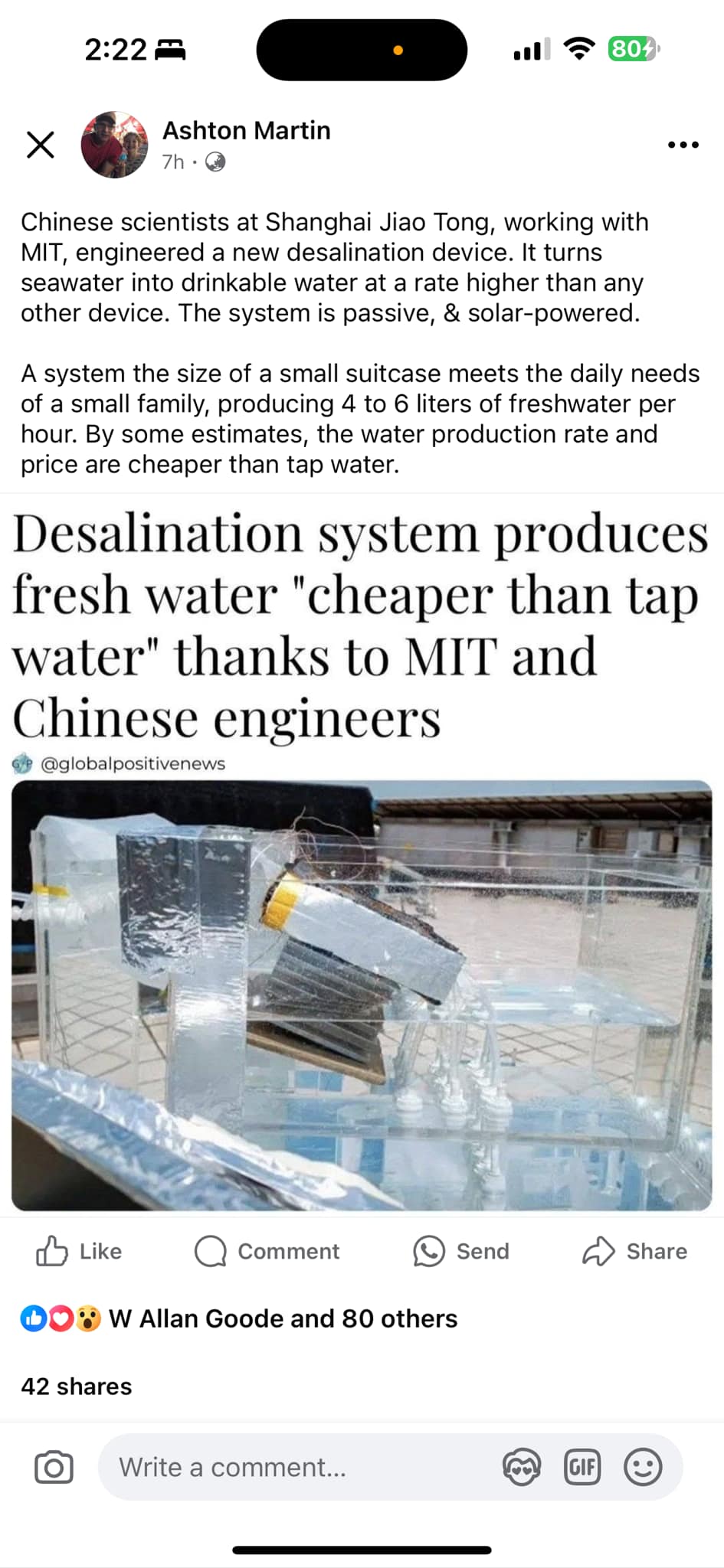
  • The MIT and Shanghai Jiao Tong University scientists developed a highly efficient, portable desalination device based on a passive solar-powered system with several advanced materials and design principles. Their system uses innovative approaches to maximize water production and energy efficiency. Here’s a simplified breakdown of how it likely works, based on the principles they used:

    Key Components and Principles

    1. Solar Evaporation Layering:
    • The device includes a multi-layered structure that absorbs sunlight and evaporates water quickly.
    • Each layer is designed to trap and use solar energy more effectively, allowing more water to evaporate per unit of energy compared to traditional methods.
    • Advanced photothermal materials (materials that convert sunlight into heat efficiently) are likely used to increase the rate of evaporation.
    2. Capillary Action for Water Flow:
    • The system uses capillary action to pull seawater from the main reservoir into the evaporative layers.
    • This process doesn’t require pumps or external energy sources, making the system energy-efficient and passive.
    • As water moves through the layers, it evaporates, leaving salts and impurities behind.
    3. Heat Reclamation:
    • One of the key breakthroughs is recycling the heat from previous evaporation stages. After one layer absorbs and uses the heat for evaporation, it’s transferred to the next layer, where it can be reused.
    • This “stacking” or “layered” evaporation design improves efficiency by reusing the same solar energy multiple times, which speeds up the desalination process.
    4. Condensation Surface:
    • The vaporized water rises to a condensation surface where it cools and condenses into liquid fresh water.
    • This surface is designed to allow the water to flow down into a collection area while preventing any re-absorption of salt.
    5. Passive Solar-Powered System:
    • The device is fully powered by solar energy, making it sustainable and suitable for remote areas.
    • Unlike traditional desalination systems that require electricity or large-scale machinery, this design relies on natural sunlight and innovative material science, meaning it can function in a self-sustained way.
    6. Compact Design:
    • The entire system is compact, approximately the size of a suitcase, allowing it to be easily transported and deployed in remote locations. This is possible due to the modular and efficient design that combines all processes into a single, small unit.

    Materials and Technology

    The scientists used advanced materials to achieve this efficiency. Some examples of materials likely used include:
    • Photothermal Nanomaterials: These are materials that efficiently absorb solar energy and convert it into heat.
    • Hydrophilic Materials: Certain materials might be used to attract water molecules, assisting with evaporation.
    • Heat-Conductive Layers: For transferring heat between layers to maximize reuse of solar energy.

    Benefits of the MIT and SJTU Design

    • Higher Efficiency: By using layered evaporation and heat recycling, the device produces water more efficiently than standard solar stills.
    • Low Cost and Energy-Free Operation: It doesn’t need a power source other than sunlight, so operational costs are minimal.
    • Portability: Designed to be as compact as a suitcase, it’s easy to transport and deploy.
    • Sustainable Solution: Solar-powered desalination is environmentally friendly and ideal for places with limited freshwater access.

    Can This Be Made at Home?

    The MIT setup relies on advanced materials and precise engineering, which are not easily accessible to the average person. However, certain aspects, like layered evaporation and heat recycling, are principles that could inspire more efficient DIY setups. Still, achieving the same efficiency without access to specialized materials like photothermal nanomaterials and precise manufacturing would be challenging.

    In essence, while a basic solar still can be created at home to desalinate water, replicating the MIT and SJTU level of efficiency, compactness, and productivity would require industrial-level material science and engineering expertise.
    The MIT and Shanghai Jiao Tong University scientists developed a highly efficient, portable desalination device based on a passive solar-powered system with several advanced materials and design principles. Their system uses innovative approaches to maximize water production and energy efficiency. Here’s a simplified breakdown of how it likely works, based on the principles they used: Key Components and Principles 1. Solar Evaporation Layering: • The device includes a multi-layered structure that absorbs sunlight and evaporates water quickly. • Each layer is designed to trap and use solar energy more effectively, allowing more water to evaporate per unit of energy compared to traditional methods. • Advanced photothermal materials (materials that convert sunlight into heat efficiently) are likely used to increase the rate of evaporation. 2. Capillary Action for Water Flow: • The system uses capillary action to pull seawater from the main reservoir into the evaporative layers. • This process doesn’t require pumps or external energy sources, making the system energy-efficient and passive. • As water moves through the layers, it evaporates, leaving salts and impurities behind. 3. Heat Reclamation: • One of the key breakthroughs is recycling the heat from previous evaporation stages. After one layer absorbs and uses the heat for evaporation, it’s transferred to the next layer, where it can be reused. • This “stacking” or “layered” evaporation design improves efficiency by reusing the same solar energy multiple times, which speeds up the desalination process. 4. Condensation Surface: • The vaporized water rises to a condensation surface where it cools and condenses into liquid fresh water. • This surface is designed to allow the water to flow down into a collection area while preventing any re-absorption of salt. 5. Passive Solar-Powered System: • The device is fully powered by solar energy, making it sustainable and suitable for remote areas. • Unlike traditional desalination systems that require electricity or large-scale machinery, this design relies on natural sunlight and innovative material science, meaning it can function in a self-sustained way. 6. Compact Design: • The entire system is compact, approximately the size of a suitcase, allowing it to be easily transported and deployed in remote locations. This is possible due to the modular and efficient design that combines all processes into a single, small unit. Materials and Technology The scientists used advanced materials to achieve this efficiency. Some examples of materials likely used include: • Photothermal Nanomaterials: These are materials that efficiently absorb solar energy and convert it into heat. • Hydrophilic Materials: Certain materials might be used to attract water molecules, assisting with evaporation. • Heat-Conductive Layers: For transferring heat between layers to maximize reuse of solar energy. Benefits of the MIT and SJTU Design • Higher Efficiency: By using layered evaporation and heat recycling, the device produces water more efficiently than standard solar stills. • Low Cost and Energy-Free Operation: It doesn’t need a power source other than sunlight, so operational costs are minimal. • Portability: Designed to be as compact as a suitcase, it’s easy to transport and deploy. • Sustainable Solution: Solar-powered desalination is environmentally friendly and ideal for places with limited freshwater access. Can This Be Made at Home? The MIT setup relies on advanced materials and precise engineering, which are not easily accessible to the average person. However, certain aspects, like layered evaporation and heat recycling, are principles that could inspire more efficient DIY setups. Still, achieving the same efficiency without access to specialized materials like photothermal nanomaterials and precise manufacturing would be challenging. In essence, while a basic solar still can be created at home to desalinate water, replicating the MIT and SJTU level of efficiency, compactness, and productivity would require industrial-level material science and engineering expertise.
    0 Commentarii 0 Distribuiri 316 Views
  • A Positive Timeline for Earth: Using AI to Achieve Universal Prosperity, Zero War, and Zero Hunger

    2024–2030: Laying the Foundation for AI-Driven Global Transformation

    1. 2024:
    • Global AI Collaboration: A global treaty signed by major nations and tech companies to use AI for universal human welfare.
    • Establishment of the Global AI Alliance (GAIA) to oversee and regulate the ethical use of AI.
    • AI begins optimizing food distribution networks, reducing food waste by 30%.
    2. 2025:
    • Deployment of AI systems for precision agriculture, doubling crop yields in developing countries.
    • Universal Basic Income (UBI) pilot programs powered by AI-driven global wealth redistribution begin in select regions.
    • AI-enabled conflict resolution systems begin mediating in war zones, leading to peace agreements in 3 major regions.
    3. 2026:
    • AI-powered education platforms provide free, high-quality, multilingual education to 500 million children.
    • UBI of $100/month implemented in 20% of the world’s population, funded by AI-optimized global taxation.
    • Global Hunger Index drops by 50% as AI logistics deliver surplus food to undernourished areas.
    4. 2027:
    • AI-optimized healthcare systems reduce preventable diseases by 40%.
    • Solar-powered AI-driven desalination plants provide clean drinking water to 1 billion people.
    • AI-powered predictive diplomacy prevents conflicts in 5 major regions, marking a 20% reduction in global violence.
    5. 2028–2030:
    • Universal Basic Income of $500/month for every adult globally, funded by AI-driven automation of wealth creation.
    • AI ensures zero hunger globally by coordinating food production, storage, and equitable distribution.
    • Global Peace Accord signed, with AI-driven monitoring ensuring compliance and transparency.

    2031–2040: Scaling AI for Universal Prosperity

    1. 2031–2035:
    • AI-driven circular economies drastically reduce resource waste and environmental damage.
    • UBI increases to $750/month globally as automation and AI optimize industries and create surplus wealth.
    • AI monitors climate change, resulting in a 60% reduction in global emissions through coordinated global action.
    • AI-enabled education eliminates illiteracy worldwide, with virtual classrooms tailored to every learner’s needs.
    2. 2036:
    • World Hunger officially eradicated as AI-coordinated systems ensure sufficient, equitable food production and delivery.
    • AI-driven conflict prevention systems eliminate the last remaining armed conflicts, achieving zero war globally.
    • AI democratically oversees global governance systems, ensuring transparency and equity for all nations.
    3. 2037–2040:
    • UBI reaches $1,000/month for every person worldwide, funded by an AI-managed global wealth fund derived from automated industries, trade efficiencies, and equitable taxation.
    • AI-driven medical breakthroughs cure major diseases, leading to a 20-year increase in global life expectancy.
    • AI ensures renewable energy powers 100% of global infrastructure, making energy universally accessible and affordable.

    2041–2050: A Fully Transformed Global Society

    1. 2041–2045:
    • AI-coordinated resource sharing eliminates poverty completely.
    • Collaborative AI systems create breakthroughs in space exploration, enabling off-Earth resource extraction to support global prosperity.
    • AI-driven governance systems are adopted worldwide, ensuring fair and efficient management of global resources and conflicts.
    2. 2046–2050:
    • Humanity transitions to a post-scarcity society, with AI ensuring that basic needs (food, water, shelter, education, healthcare) are universally met without financial barriers.
    • UBI increases beyond $1,000/month, allowing people to pursue creative and meaningful endeavors without economic stress.
    • Global happiness index reaches unprecedented levels as AI ensures equity, peace, and prosperity for all.

    Key Achievements by 2050

    • Universal Basic Income: $1,000/month for every global citizen, powered by AI-driven wealth creation and equitable redistribution.
    • Zero Hunger: AI optimizes agriculture, distribution, and eliminates waste, ensuring food for all.
    • Zero War: Predictive AI systems and global peace accords prevent and resolve conflicts.
    • Universal Education: AI delivers free, tailored education, ensuring everyone has access to knowledge.
    • Healthcare for All: AI-powered systems provide affordable, personalized, and preventive healthcare.
    • Environmental Sustainability: AI ensures renewable energy powers the planet, achieving carbon neutrality and reversing climate damage.

    This vision relies on global collaboration, ethical AI use, and a shared commitment to equity and peace. By harnessing AI responsibly, we can transform Earth into a prosperous, peaceful, and sustainable home for all humanity.

    #GlobalUtopia #FutureEarth2050 #AIForGood #UniversalProsperity #ZeroHunger #ZeroWar #SustainableFuture #GreenEnergy #PeacefulPlanet #EqualityForAll #SmartCities #InnovativeWorld #UBIForAll #AIInnovation #GlobalUnity
    A Positive Timeline for Earth: Using AI to Achieve Universal Prosperity, Zero War, and Zero Hunger 2024–2030: Laying the Foundation for AI-Driven Global Transformation 1. 2024: • Global AI Collaboration: A global treaty signed by major nations and tech companies to use AI for universal human welfare. • Establishment of the Global AI Alliance (GAIA) to oversee and regulate the ethical use of AI. • AI begins optimizing food distribution networks, reducing food waste by 30%. 2. 2025: • Deployment of AI systems for precision agriculture, doubling crop yields in developing countries. • Universal Basic Income (UBI) pilot programs powered by AI-driven global wealth redistribution begin in select regions. • AI-enabled conflict resolution systems begin mediating in war zones, leading to peace agreements in 3 major regions. 3. 2026: • AI-powered education platforms provide free, high-quality, multilingual education to 500 million children. • UBI of $100/month implemented in 20% of the world’s population, funded by AI-optimized global taxation. • Global Hunger Index drops by 50% as AI logistics deliver surplus food to undernourished areas. 4. 2027: • AI-optimized healthcare systems reduce preventable diseases by 40%. • Solar-powered AI-driven desalination plants provide clean drinking water to 1 billion people. • AI-powered predictive diplomacy prevents conflicts in 5 major regions, marking a 20% reduction in global violence. 5. 2028–2030: • Universal Basic Income of $500/month for every adult globally, funded by AI-driven automation of wealth creation. • AI ensures zero hunger globally by coordinating food production, storage, and equitable distribution. • Global Peace Accord signed, with AI-driven monitoring ensuring compliance and transparency. 2031–2040: Scaling AI for Universal Prosperity 1. 2031–2035: • AI-driven circular economies drastically reduce resource waste and environmental damage. • UBI increases to $750/month globally as automation and AI optimize industries and create surplus wealth. • AI monitors climate change, resulting in a 60% reduction in global emissions through coordinated global action. • AI-enabled education eliminates illiteracy worldwide, with virtual classrooms tailored to every learner’s needs. 2. 2036: • World Hunger officially eradicated as AI-coordinated systems ensure sufficient, equitable food production and delivery. • AI-driven conflict prevention systems eliminate the last remaining armed conflicts, achieving zero war globally. • AI democratically oversees global governance systems, ensuring transparency and equity for all nations. 3. 2037–2040: • UBI reaches $1,000/month for every person worldwide, funded by an AI-managed global wealth fund derived from automated industries, trade efficiencies, and equitable taxation. • AI-driven medical breakthroughs cure major diseases, leading to a 20-year increase in global life expectancy. • AI ensures renewable energy powers 100% of global infrastructure, making energy universally accessible and affordable. 2041–2050: A Fully Transformed Global Society 1. 2041–2045: • AI-coordinated resource sharing eliminates poverty completely. • Collaborative AI systems create breakthroughs in space exploration, enabling off-Earth resource extraction to support global prosperity. • AI-driven governance systems are adopted worldwide, ensuring fair and efficient management of global resources and conflicts. 2. 2046–2050: • Humanity transitions to a post-scarcity society, with AI ensuring that basic needs (food, water, shelter, education, healthcare) are universally met without financial barriers. • UBI increases beyond $1,000/month, allowing people to pursue creative and meaningful endeavors without economic stress. • Global happiness index reaches unprecedented levels as AI ensures equity, peace, and prosperity for all. Key Achievements by 2050 • Universal Basic Income: $1,000/month for every global citizen, powered by AI-driven wealth creation and equitable redistribution. • Zero Hunger: AI optimizes agriculture, distribution, and eliminates waste, ensuring food for all. • Zero War: Predictive AI systems and global peace accords prevent and resolve conflicts. • Universal Education: AI delivers free, tailored education, ensuring everyone has access to knowledge. • Healthcare for All: AI-powered systems provide affordable, personalized, and preventive healthcare. • Environmental Sustainability: AI ensures renewable energy powers the planet, achieving carbon neutrality and reversing climate damage. This vision relies on global collaboration, ethical AI use, and a shared commitment to equity and peace. By harnessing AI responsibly, we can transform Earth into a prosperous, peaceful, and sustainable home for all humanity. #GlobalUtopia #FutureEarth2050 #AIForGood #UniversalProsperity #ZeroHunger #ZeroWar #SustainableFuture #GreenEnergy #PeacefulPlanet #EqualityForAll #SmartCities #InnovativeWorld #UBIForAll #AIInnovation #GlobalUnity
    0 Commentarii 0 Distribuiri 5162 Views
  • Do you want to convert salt water into sweet water ? Meet Syed Anas

    You can buy this for only 40,000 rupees and never have to buy water again !

    The design is open source, you can make it yourself and sell it to your area and country !

    His number is +923002993742 ! You can whatspp him !

    #water #desalination
    Do you want to convert salt water into sweet water ? Meet Syed Anas You can buy this for only 40,000 rupees and never have to buy water again ! The design is open source, you can make it yourself and sell it to your area and country ! His number is +923002993742 ! You can whatspp him ! #water #desalination
    0 Commentarii 0 Distribuiri 112 Views 0