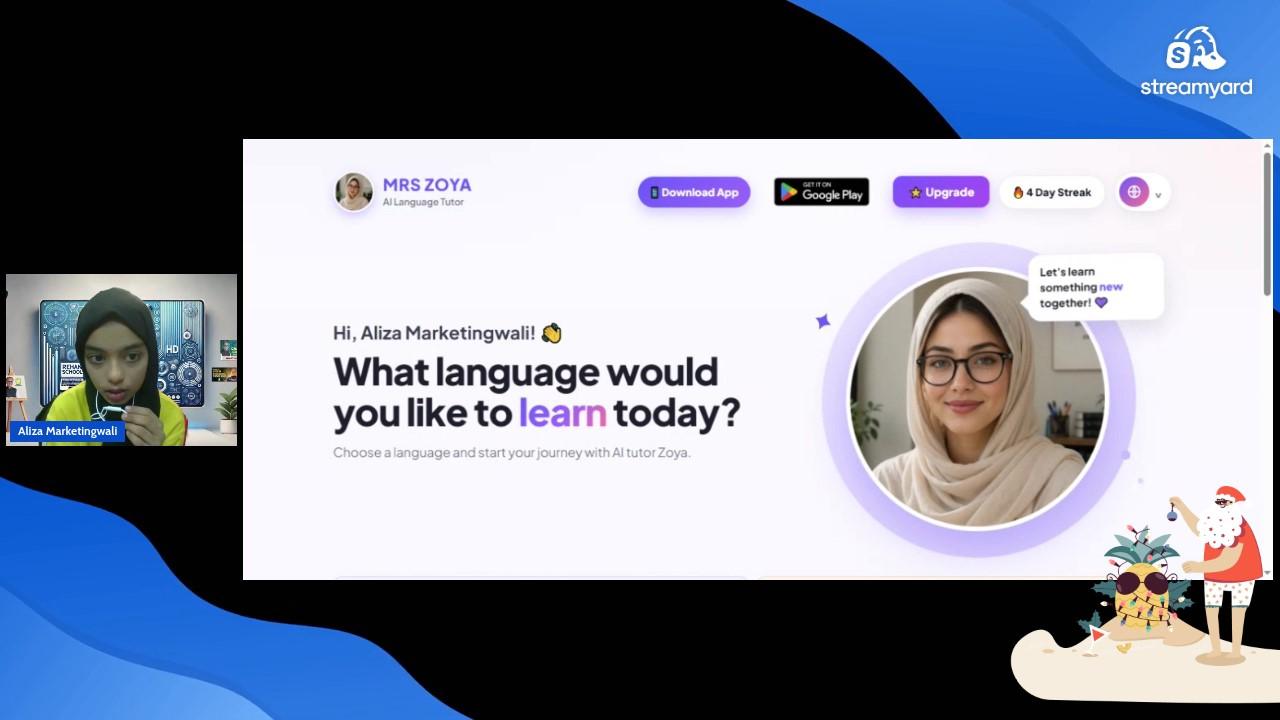
• Day 17 of Learning Chinese
    Today, I learned how to introduce myself, different colors, and some useful sentences in Chinese. It was a really good and enjoyable experience! I learned new words and phrases, and I’m excited to continue my Chinese learning journey.
    See you on Day 18!
    Day 17 of Learning Chinese 🇨🇳✨ Today, I learned how to introduce myself, different colors, and some useful sentences in Chinese. It was a really good and enjoyable experience! I learned new words and phrases, and I’m excited to continue my Chinese learning journey. ❤️📚 See you on Day 18! 🌸🇨🇳
    0 Σχόλια 0 Μοιράστηκε 7 Views
  • Mohsin #RSF8
    Call Annine NO:7
    Class: foundation level
    rool no:13
    Made by Me

    “Please” – The Evolution of Politeness (5 Min)

    The word “please” may be small, but it has a very important place in communication. We use it when making requests, asking for help, or speaking respectfully with other people. This simple word can make our conversations sound kinder, more respectful, and more thoughtful.

    From childhood, many of us are taught to use polite words such as “please,” “thank you,” “sorry,” and “excuse me.” These words help us communicate our feelings and requests in a positive way. Saying “please” shows that we understand that other people have their own choices, time, and responsibilities.

    The idea of politeness has changed throughout history. Different societies and cultures have developed their own ways of showing respect. The words people use, the way they make requests, and the customs they follow can be different from one place to another. However, the basic idea of treating others with consideration remains important.

    “Please” is especially useful when we want something from another person. Compare “Give me your book” with “Please give me your book.” The second sentence sounds more respectful because it turns a direct command into a polite request. Although the word itself is simple, it can influence the tone of an entire conversation.

    Politeness is also important in schools, workplaces, families, and online communication. When students speak politely with teachers and classmates, it can create a more positive learning environment. Similarly, using respectful language in messages, emails, and social media conversations can help prevent misunderstandings.

    Another interesting part of politeness is that it is not only about words. Tone of voice, facial expressions, listening, patience, and respect also influence how our communication is received. Someone can say “please” but still sound disrespectful if their overall behavior is unkind. True politeness comes from both our words and our attitude.
    Mohsin #RSF8🎓✨ Call Annine NO:7 Class: foundation level 📚 rool no:13 Made by Me 💻🚀 🌟 “Please” – The Evolution of Politeness (5 Min) The word “please” may be small, but it has a very important place in communication. We use it when making requests, asking for help, or speaking respectfully with other people. This simple word can make our conversations sound kinder, more respectful, and more thoughtful. From childhood, many of us are taught to use polite words such as “please,” “thank you,” “sorry,” and “excuse me.” These words help us communicate our feelings and requests in a positive way. Saying “please” shows that we understand that other people have their own choices, time, and responsibilities. The idea of politeness has changed throughout history. Different societies and cultures have developed their own ways of showing respect. The words people use, the way they make requests, and the customs they follow can be different from one place to another. However, the basic idea of treating others with consideration remains important. “Please” is especially useful when we want something from another person. Compare “Give me your book” with “Please give me your book.” The second sentence sounds more respectful because it turns a direct command into a polite request. Although the word itself is simple, it can influence the tone of an entire conversation. Politeness is also important in schools, workplaces, families, and online communication. When students speak politely with teachers and classmates, it can create a more positive learning environment. Similarly, using respectful language in messages, emails, and social media conversations can help prevent misunderstandings. Another interesting part of politeness is that it is not only about words. Tone of voice, facial expressions, listening, patience, and respect also influence how our communication is received. Someone can say “please” but still sound disrespectful if their overall behavior is unkind. True politeness comes from both our words and our attitude.
    0 Σχόλια 0 Μοιράστηκε 23 Views 12
  • Level 01 Task Interview 01 🎤 My Online Interview with Abdul Rahmaan | Learning Through Conversation 🌟 I had the opportunity to conduct an online interview with Abdul Rahmaan, where I asked him several general questions and had a meaningful conversation with him. 💻🎥 The purpose of this interview was to learn new things, improve my communication skills, build confidence, and gain valuable knowledge through conversation. Asking questions is one of the best ways to learn, explore different ideas, and understand other people's thoughts and experiences. During this interview, I got the chance to practice asking questions, listening carefully to the answers, and communicating in a better way. This experience also helped me understand the importance of curiosity, confidence, and continuous learning. As a student and aspiring entrepreneur, I believe that every conversation gives us an opportunity to learn something valuable. Interviews are not just about asking questions; they are also about listening, understanding, sharing knowledge, and discovering new perspectives. This is another step in my learning journey, and I look forward to conducting more interviews, meeting new people, and learning from their experiences. 🚀 My goal is to keep improving myself, develop my skills, and inspire others to learn something new every day. Keep Asking. Keep Learning. Keep Growing! 💯✨ Thank you, Abdul Rahmaan, for being part of this online interview! #OnlineInterview #AbdulRahmaan #HassanEntrepreneurship #GeneralQuestions #LearningJourney #KnowledgeSharing #CommunicationSkills #InterviewExperience #StudentLife #PersonalDevelopment #ConfidenceBuilding #ContinuousLearning #Entrepreneurship #DigitalLearning #neverstoplearning @followers Tania Khan Mentorship Wali Mohsin Rathore Seo Wala Imran Khan Street Wala @highlight Shazia Javed Educationwali Hafsa Noor
    WWW.FACEBOOK.COM
    Facebook
    Level 01 Task Interview 01 🎤 My Online Interview with Abdul Rahmaan | Learning Through Conversation 🌟 I had the opportunity to conduct an online interview with Abdul Rahmaan, where I asked him...
    0 Σχόλια 0 Μοιράστηκε 187 Views
  • **30 Days Language Challenge — Day 7: Turkish **

    Day 7 of my 30 Days Language Challenge is here!

    Today, I started learning **Turkish** and practiced some basic everyday phrases.

    From simple greetings to introducing myself, every day I’m trying to learn something new in a different language.

    One day, one language, one step closer!

    #30DaysLanguageChallenge #Day7 #Turkish #LearnTurkish #LanguageLearning #30Days30Languages #TurkishLanguage #LanguageChallenge
    🇹🇷 **30 Days Language Challenge — Day 7: Turkish 🇹🇷** Day 7 of my 30 Days Language Challenge is here! 🎯 Today, I started learning **Turkish** and practiced some basic everyday phrases. 🗣️ From simple greetings to introducing myself, every day I’m trying to learn something new in a different language. 🌍 One day, one language, one step closer! 💪 #30DaysLanguageChallenge #Day7 #Turkish #LearnTurkish #LanguageLearning #30Days30Languages #TurkishLanguage #LanguageChallenge
    0 Σχόλια 0 Μοιράστηκε 48 Views 0
  • Episode #300 – Rehan Foundation Interview Series

    In this episode, we are joined by Kimberly Wiefling, an inspiring leadership facilitator, author, entrepreneur, physicist, coach, and innovation expert whose work focuses on helping people and organizations turn “impossible” into INEVITABLE.

    Kimberly Wiefling’s superpower is facilitating breakthroughs — helping managers become leaders, groups become true teams, and organizations achieve things they once believed were impossible.

    She is the author of the globally popular book “Scrappy Project Management,” founder of Wiefling Consulting, and cofounder of Silicon Valley Alliances. For more than 20 years, she has worked with global Japanese companies and organizations across Asia, Australia, Europe, and North America, facilitating cross-cultural workshops and learning experiences designed to improve leadership, teamwork, innovation, and organizational performance.

    Her journey combines science, engineering, business, leadership, and entrepreneurship. A physicist by education, Kimberly spent 10 years at HP in seven different engineering and project management roles, including leading an R&D team developing a new mass spectrometer. She later spent three years in Silicon Valley startups, leading product development teams working across hardware, software, and complex systems.

    Over the years, Kimberly has also helped start, run, and grow multiple small businesses, including a company that reached millions of dollars in revenue with only seed funding from its founders.

    Today, Kimberly focuses on creating powerful learning environments where leaders and teams can discover what is truly possible when they work together effectively. She is also increasingly focused on using her experience, leadership skills, and the rapidly developing power of AI to create positive change and contribute toward a more sustainable future for our planet.

    In this inspiring conversation, we explore:

    • What makes a great leader truly effective

    • The difference between managing people and leading people

    • How to build highly effective teams

    • Creating a strong and healthy organizational culture

    • How leaders can use AI as a “coach in your pocket”

    • Using AI to become a more effective leader and manager

    • The role of innovation in modern organizations

    • Why predictable causes of failure continue to affect organizations

    • How to identify and prevent failure before it happens

    • Turning “IMPOSSIBLE” into “INEVITABLE”

    • How organizations can achieve extraordinary results together

    • Lessons from working with global Japanese companies

    • Cross-cultural leadership and collaboration

    • What entrepreneurship can teach us about leadership and innovation

    • How to create teams capable of achieving the seemingly impossible

    • The importance of experimentation, learning, and adaptability

    • Using AI responsibly to create meaningful positive impact

    • Leadership lessons from Silicon Valley, engineering, and entrepreneurship

    • How leaders can create a more sustainable future

    This episode is a powerful conversation about leadership, teamwork, innovation, organizational culture, AI, entrepreneurship, resilience, and the mindset required to turn ambitious ideas into reality.

    Kimberly reminds us that the biggest breakthroughs often begin when someone is willing to challenge the assumption that something is impossible.

    Because with the right leadership, the right team, the right mindset, and the right tools — IMPOSSIBLE can become INEVITABLE.

    Part of the Rehan Foundation Interview Series

    Episode #300

    Foreigner Episode #28

    Rehan Allahwala
    Shahrukh Ali
    🎬 Episode #300 – Rehan Foundation Interview Series In this episode, we are joined by Kimberly Wiefling, an inspiring leadership facilitator, author, entrepreneur, physicist, coach, and innovation expert whose work focuses on helping people and organizations turn “impossible” into INEVITABLE. Kimberly Wiefling’s superpower is facilitating breakthroughs — helping managers become leaders, groups become true teams, and organizations achieve things they once believed were impossible. She is the author of the globally popular book “Scrappy Project Management,” founder of Wiefling Consulting, and cofounder of Silicon Valley Alliances. For more than 20 years, she has worked with global Japanese companies and organizations across Asia, Australia, Europe, and North America, facilitating cross-cultural workshops and learning experiences designed to improve leadership, teamwork, innovation, and organizational performance. Her journey combines science, engineering, business, leadership, and entrepreneurship. A physicist by education, Kimberly spent 10 years at HP in seven different engineering and project management roles, including leading an R&D team developing a new mass spectrometer. She later spent three years in Silicon Valley startups, leading product development teams working across hardware, software, and complex systems. Over the years, Kimberly has also helped start, run, and grow multiple small businesses, including a company that reached millions of dollars in revenue with only seed funding from its founders. Today, Kimberly focuses on creating powerful learning environments where leaders and teams can discover what is truly possible when they work together effectively. She is also increasingly focused on using her experience, leadership skills, and the rapidly developing power of AI to create positive change and contribute toward a more sustainable future for our planet. In this inspiring conversation, we explore: • What makes a great leader truly effective • The difference between managing people and leading people • How to build highly effective teams • Creating a strong and healthy organizational culture • How leaders can use AI as a “coach in your pocket” • Using AI to become a more effective leader and manager • The role of innovation in modern organizations • Why predictable causes of failure continue to affect organizations • How to identify and prevent failure before it happens • Turning “IMPOSSIBLE” into “INEVITABLE” • How organizations can achieve extraordinary results together • Lessons from working with global Japanese companies • Cross-cultural leadership and collaboration • What entrepreneurship can teach us about leadership and innovation • How to create teams capable of achieving the seemingly impossible • The importance of experimentation, learning, and adaptability • Using AI responsibly to create meaningful positive impact • Leadership lessons from Silicon Valley, engineering, and entrepreneurship • How leaders can create a more sustainable future This episode is a powerful conversation about leadership, teamwork, innovation, organizational culture, AI, entrepreneurship, resilience, and the mindset required to turn ambitious ideas into reality. Kimberly reminds us that the biggest breakthroughs often begin when someone is willing to challenge the assumption that something is impossible. Because with the right leadership, the right team, the right mindset, and the right tools — IMPOSSIBLE can become INEVITABLE. 📌 Part of the Rehan Foundation Interview Series 🎥 Episode #300 🌍 Foreigner Episode #28 Rehan Allahwala Shahrukh Ali

    0 Σχόλια 0 Μοιράστηκε 160 Views 0
  • E-Orbital Radio is officially live — a breakthrough in global radio exploration!

    Now you can listen to live radio signals from around the world on an interactive 3D orbital globe.
    Spin the earth, explore different regions, and tune into real-time radio waves captured from multiple global points — all in a futuristic, immersive experience.

    The system is in its early stage, so only a few signals are live right now — but the journey has begun, and it’s evolving fast.

    Start exploring E-Orbital Radio here:
    https://ai.studio/apps/drive/1SENvfcd2RSYnPqz7h-9005GrnQdebHu-

    Rehan Allahwala
    Imran Khan Street Wala
    Mohsin Rathore Seo Wala
    🚀 E-Orbital Radio is officially live — a breakthrough in global radio exploration! 🌍📡✨ Now you can listen to live radio signals from around the world on an interactive 3D orbital globe. Spin the earth, explore different regions, and tune into real-time radio waves captured from multiple global points — all in a futuristic, immersive experience. 🌐🎧🪐 The system is in its early stage, so only a few signals are live right now — but the journey has begun, and it’s evolving fast. 🌎💫 Start exploring E-Orbital Radio here: 👉 https://ai.studio/apps/drive/1SENvfcd2RSYnPqz7h-9005GrnQdebHu- 🌟 Rehan Allahwala 🌟 Imran Khan Street Wala 🌟 Mohsin Rathore Seo Wala
    0 Σχόλια 0 Μοιράστηκε 91 Views 0
  • ACCL Day 139

    Story: Exploring Life’s Mechanisms Through Experimentation
    (Narrator POV)

    On this particular morning, the laboratory felt different. There was a quiet spark in the air—an energy that only true curiosity can create. The students gathered around the experiment table, unaware that today would become one of their most meaningful learning experiences.

    I watched Aaliya arrange the materials with steady hands and a focused mind. The others stood around her, sharing the same anticipation. They weren’t just preparing for an experiment—they were preparing to understand life itself.

    As the mixture reacted, colors shifted inside the glass, swirling like a small universe forming in real time. The students leaned forward, mesmerized. Every change—every bubble, spark, and movement—held a message waiting to be understood.

    Their mentor, Sir Imran, stepped forward and spoke gently,
    “Real learning begins when you see how life responds.”

    And he was right.
    I watched them adjust temperatures, test new ideas, observe results, and question everything. With every trial, successful or not, they explored the intricate mechanisms that make life function.

    They weren’t just studying science—
    they were uncovering the logic of nature itself.

    By the end of the day, their notebooks were full, but more importantly, their minds were open. They left the lab with a deeper understanding that experiments aren’t about answers…
    they’re about discovering how life works.
    ACCL Day 139 🌟 Story: Exploring Life’s Mechanisms Through Experimentation (Narrator POV) On this particular morning, the laboratory felt different. There was a quiet spark in the air—an energy that only true curiosity can create. The students gathered around the experiment table, unaware that today would become one of their most meaningful learning experiences. I watched Aaliya arrange the materials with steady hands and a focused mind. The others stood around her, sharing the same anticipation. They weren’t just preparing for an experiment—they were preparing to understand life itself. As the mixture reacted, colors shifted inside the glass, swirling like a small universe forming in real time. The students leaned forward, mesmerized. Every change—every bubble, spark, and movement—held a message waiting to be understood. Their mentor, Sir Imran, stepped forward and spoke gently, “Real learning begins when you see how life responds.” And he was right. I watched them adjust temperatures, test new ideas, observe results, and question everything. With every trial, successful or not, they explored the intricate mechanisms that make life function. They weren’t just studying science— they were uncovering the logic of nature itself. By the end of the day, their notebooks were full, but more importantly, their minds were open. They left the lab with a deeper understanding that experiments aren’t about answers… they’re about discovering how life works.
    0 Σχόλια 0 Μοιράστηκε 111 Views
  • ACCL Day 153 — Story: The Force Behind Motion: Understanding Newton’s Laws

    The sun was barely up when the science lab doors slid open, and young Ayan stepped inside. Today wasn’t just any day — it was the day he finally understood why things move the way they do.

    As he placed a small toy car on the table, Sir Imran walked in with his usual smile.
    “Ready to learn how the universe pushes you around?” he joked.

    Ayan nodded.

    “Good,” Sir Imran said. “Let’s talk Newton.”

    First Law — The Law of Inertia

    Ayan flicked the toy car lightly. It moved… then stopped.
    “Why did it stop?” Sir Imran asked.
    “Because I stopped pushing it,” Ayan replied.
    “No,” Sir Imran grinned. “It stopped because friction pushed back. Without any forces, things keep going forever.”

    Ayan imagined a car flying endlessly through space — no brakes, no slowing down.
    So that’s inertia, he thought.
    Objects don’t stop unless something forces them to.

    Second Law — F = ma

    Sir Imran handed him two identical cars: one empty, one full of metal weights.
    “Push them both,” he ordered.

    Ayan pushed.
    The light car zoomed. The heavy one crawled.

    “The heavier something is, the more force you need,” Sir Imran explained. “Force equals mass times acceleration. Simple math — powerful truth.”

    Ayan felt like he had just unlocked a secret code of the universe.

    Third Law — Action & Reaction

    Finally, Sir Imran placed a balloon car on the table.
    “Let go.”

    WOOSH! The balloon shot air backwards — the car zoomed forward.

    “For every action,” Sir Imran said, “there’s an equal and opposite reaction. The universe always responds.”

    Ayan watched the car bounce off the wall and laughed.
    It wasn’t just science… it felt like magic.

    The Lesson of the Day

    As Ayan packed up, he whispered to himself:
    “Everything moves for a reason. Forces shape every step we take.”

    Walking out of the lab, he felt the world differently — every motion, every push, every reaction suddenly made sense.

    Newton wasn’t just writing laws.
    He was explaining the story written into every moment of our lives.
    ACCL Day 153 — Story: The Force Behind Motion: Understanding Newton’s Laws The sun was barely up when the science lab doors slid open, and young Ayan stepped inside. Today wasn’t just any day — it was the day he finally understood why things move the way they do. As he placed a small toy car on the table, Sir Imran walked in with his usual smile. “Ready to learn how the universe pushes you around?” he joked. Ayan nodded. “Good,” Sir Imran said. “Let’s talk Newton.” First Law — The Law of Inertia Ayan flicked the toy car lightly. It moved… then stopped. “Why did it stop?” Sir Imran asked. “Because I stopped pushing it,” Ayan replied. “No,” Sir Imran grinned. “It stopped because friction pushed back. Without any forces, things keep going forever.” Ayan imagined a car flying endlessly through space — no brakes, no slowing down. So that’s inertia, he thought. Objects don’t stop unless something forces them to. Second Law — F = ma Sir Imran handed him two identical cars: one empty, one full of metal weights. “Push them both,” he ordered. Ayan pushed. The light car zoomed. The heavy one crawled. “The heavier something is, the more force you need,” Sir Imran explained. “Force equals mass times acceleration. Simple math — powerful truth.” Ayan felt like he had just unlocked a secret code of the universe. Third Law — Action & Reaction Finally, Sir Imran placed a balloon car on the table. “Let go.” WOOSH! The balloon shot air backwards — the car zoomed forward. “For every action,” Sir Imran said, “there’s an equal and opposite reaction. The universe always responds.” Ayan watched the car bounce off the wall and laughed. It wasn’t just science… it felt like magic. The Lesson of the Day As Ayan packed up, he whispered to himself: “Everything moves for a reason. Forces shape every step we take.” Walking out of the lab, he felt the world differently — every motion, every push, every reaction suddenly made sense. Newton wasn’t just writing laws. He was explaining the story written into every moment of our lives.
    0 Σχόλια 0 Μοιράστηκε 118 Views
  • ACCL Day 167
    Climate and Culture: How Geography Shapes Our Way of Life

    In a small village nestled between snowy mountains and a crystal-blue river lived three friends: Ayan, Zara, and Mikael. Even though they were from the same land, their lifestyles were completely different—because of where they lived.

    Ayan lived high in the mountains, where the winters were long and harsh. Snow covered the roofs, and the winds howled like wolves. People there wore thick woolen clothes, built strong wooden houses, and ate warm soups and dried meats to survive the cold. Life was tough, so the community became very close-knit. Everyone helped each other gather wood, store food, and fix homes before the heavy snowfall.

    Zara lived in the sunny plains below. Her village had wide fields, golden crops, and warm breezes. People wore light, colorful clothes and celebrated many outdoor festivals. Their food was fresh—vegetables, fruits, and grains—because the fertile land made farming easy. The climate allowed them to grow and trade crops, making their culture rich in traditions and celebrations.

    Mikael lived near the coast, where salty waves crashed against the shore. His life revolved around the sea. The people there built boats, learned to fish, and became excellent sailors. Their houses were designed to withstand storms, and their cuisine was full of seafood. They developed music and dances inspired by the rhythm of the waves.

    One day, the three friends met at a cultural festival. They shared their foods, clothes, music, and stories. As they talked, they realized something beautiful:

    The mountains taught strength and unity.
    The plains encouraged celebration and abundance.
    The sea inspired adventure and creativity.

    Different climates had shaped different cultures, traditions, and ways of life—but together, they created a richer, more colorful world.

    The friends understood that geography doesn’t just shape the land—it shapes the people, their habits, their beliefs, and even their happiness.

    And from that day on, they promised to learn from each other's cultures and respect every lifestyle shaped by nature.

    Our environment shapes us—but together, we shape the world.
    ACCL Day 167 🌍 Climate and Culture: How Geography Shapes Our Way of Life 🌦️ In a small village nestled between snowy mountains and a crystal-blue river lived three friends: Ayan, Zara, and Mikael. Even though they were from the same land, their lifestyles were completely different—because of where they lived. Ayan lived high in the mountains, where the winters were long and harsh. Snow covered the roofs, and the winds howled like wolves. People there wore thick woolen clothes, built strong wooden houses, and ate warm soups and dried meats to survive the cold. Life was tough, so the community became very close-knit. Everyone helped each other gather wood, store food, and fix homes before the heavy snowfall. Zara lived in the sunny plains below. Her village had wide fields, golden crops, and warm breezes. People wore light, colorful clothes and celebrated many outdoor festivals. Their food was fresh—vegetables, fruits, and grains—because the fertile land made farming easy. The climate allowed them to grow and trade crops, making their culture rich in traditions and celebrations. Mikael lived near the coast, where salty waves crashed against the shore. His life revolved around the sea. The people there built boats, learned to fish, and became excellent sailors. Their houses were designed to withstand storms, and their cuisine was full of seafood. They developed music and dances inspired by the rhythm of the waves. One day, the three friends met at a cultural festival. They shared their foods, clothes, music, and stories. As they talked, they realized something beautiful: The mountains taught strength and unity. The plains encouraged celebration and abundance. The sea inspired adventure and creativity. Different climates had shaped different cultures, traditions, and ways of life—but together, they created a richer, more colorful world. The friends understood that geography doesn’t just shape the land—it shapes the people, their habits, their beliefs, and even their happiness. And from that day on, they promised to learn from each other's cultures and respect every lifestyle shaped by nature. 🌍✨ Our environment shapes us—but together, we shape the world.
    0 Σχόλια 0 Μοιράστηκε 113 Views
  • A Note to My Future Self — From a Young System Builder

    I’m writing this for myself.

    Not for likes.
    Not for shares.
    Not to impress anyone.

    I’m writing this because I know one thing about being human:
    we forget.

    And I don’t want to forget this version of me.

    The version that is still learning.
    Still confused sometimes.
    Still experimenting.
    Still dreaming bigger than his current reality.

    What Quantum Thinking Quietly Taught Me

    For a long time, I thought life worked like this:

    Some people get lucky

    Some people don’t

    Things just “happen”

    But the more I learned — about systems, about people, about quantum ideas — the more something clicked.

    Life isn’t random.
    It just looks random when you don’t see the pattern yet.

    Effort leaves traces.
    Consistency leaves signals.
    Environment shapes behavior.
    And attention changes outcomes.

    The moment you observe carefully,
    things start behaving differently.

    That’s not just physics.
    That’s real life.

    What I’ve Started to Notice

    People don’t fail suddenly.
    They drift there — slowly.

    People don’t grow overnight.
    They stack tiny wins.

    Skills don’t magically appear.
    They respond to systems.

    Confidence isn’t born.
    It’s built through repetition.

    There is always a pattern —
    even inside chaos.

    And if I can learn to notice patterns early,
    I don’t have to wait for damage to happen.

    I can adjust early.
    Fix early.
    Grow early.

    That’s power.

    Me, Right Now (In Many States at Once)

    Right now, I’m doing many things at the same time:

    Learning skills

    Improving my English

    Building freelancing paths

    Exploring AI & tools

    Helping people when I can

    Making mistakes

    Fixing my own mess

    Rethinking my direction

    Connecting ideas that don’t seem connected yet

    Some people call this confusion.

    I call it superposition.

    Multiple possible futures exist right now —
    and my daily systems will decide which one becomes real.

    Why I Care About Patterns More Than Motivation

    Motivation comes and goes.
    Patterns stay.

    Patterns show me:

    What I actually do (not what I say)

    Where I lose discipline

    Where I improve naturally

    What gives results

    What wastes time

    When I see patterns clearly,
    I stop making emotional decisions.

    I start making better ones.

    This is how small people build big things.

    Why I’m Saving This Here

    I’m saving this because one day:

    Facebook will remind me

    LinkedIn will remind me

    Time will remind me

    And when I read this again — years later —
    I want to remember:

    How honestly I was thinking

    How early the journey was

    How serious I was about building something real

    How much I cared about systems, not shortcuts

    This post is a mirror —
    for my future self.

    One Last Reminder to Myself

    Life isn’t luck.
    It’s feedback.

    Results aren’t magic.
    They’re patterns.

    And the future isn’t found.
    It’s built.

    As long as I keep:

    learning

    observing

    building systems

    improving myself

    upgrading how I think

    I’ll keep moving forward.

    Quietly.
    Slowly.
    But surely.

    — Aniyal
    Learning • Building • Becoming
    A Note to My Future Self — From a Young System Builder I’m writing this for myself. Not for likes. Not for shares. Not to impress anyone. I’m writing this because I know one thing about being human: we forget. And I don’t want to forget this version of me. The version that is still learning. Still confused sometimes. Still experimenting. Still dreaming bigger than his current reality. 🌌 What Quantum Thinking Quietly Taught Me For a long time, I thought life worked like this: Some people get lucky Some people don’t Things just “happen” But the more I learned — about systems, about people, about quantum ideas — the more something clicked. Life isn’t random. It just looks random when you don’t see the pattern yet. Effort leaves traces. Consistency leaves signals. Environment shapes behavior. And attention changes outcomes. The moment you observe carefully, things start behaving differently. That’s not just physics. That’s real life. 🧠 What I’ve Started to Notice People don’t fail suddenly. They drift there — slowly. People don’t grow overnight. They stack tiny wins. Skills don’t magically appear. They respond to systems. Confidence isn’t born. It’s built through repetition. There is always a pattern — even inside chaos. And if I can learn to notice patterns early, I don’t have to wait for damage to happen. I can adjust early. Fix early. Grow early. That’s power. 🚀 Me, Right Now (In Many States at Once) Right now, I’m doing many things at the same time: Learning skills Improving my English Building freelancing paths Exploring AI & tools Helping people when I can Making mistakes Fixing my own mess Rethinking my direction Connecting ideas that don’t seem connected yet Some people call this confusion. I call it superposition. Multiple possible futures exist right now — and my daily systems will decide which one becomes real. 📊 Why I Care About Patterns More Than Motivation Motivation comes and goes. Patterns stay. Patterns show me: What I actually do (not what I say) Where I lose discipline Where I improve naturally What gives results What wastes time When I see patterns clearly, I stop making emotional decisions. I start making better ones. This is how small people build big things. 🌱 Why I’m Saving This Here I’m saving this because one day: Facebook will remind me LinkedIn will remind me Time will remind me And when I read this again — years later — I want to remember: How honestly I was thinking How early the journey was How serious I was about building something real How much I cared about systems, not shortcuts This post is a mirror — for my future self. 💡 One Last Reminder to Myself Life isn’t luck. It’s feedback. Results aren’t magic. They’re patterns. And the future isn’t found. It’s built. As long as I keep: learning observing building systems improving myself upgrading how I think I’ll keep moving forward. Quietly. Slowly. But surely. — Aniyal Learning • Building • Becoming
    0 Σχόλια 0 Μοιράστηκε 143 Views
Αναζήτηση αποτελεσμάτων