• #rsisb
    Roll no 279
    song no 18
    foundation level
    # ** From Specimens to Knowledge: The Purpose of Science Experiments **

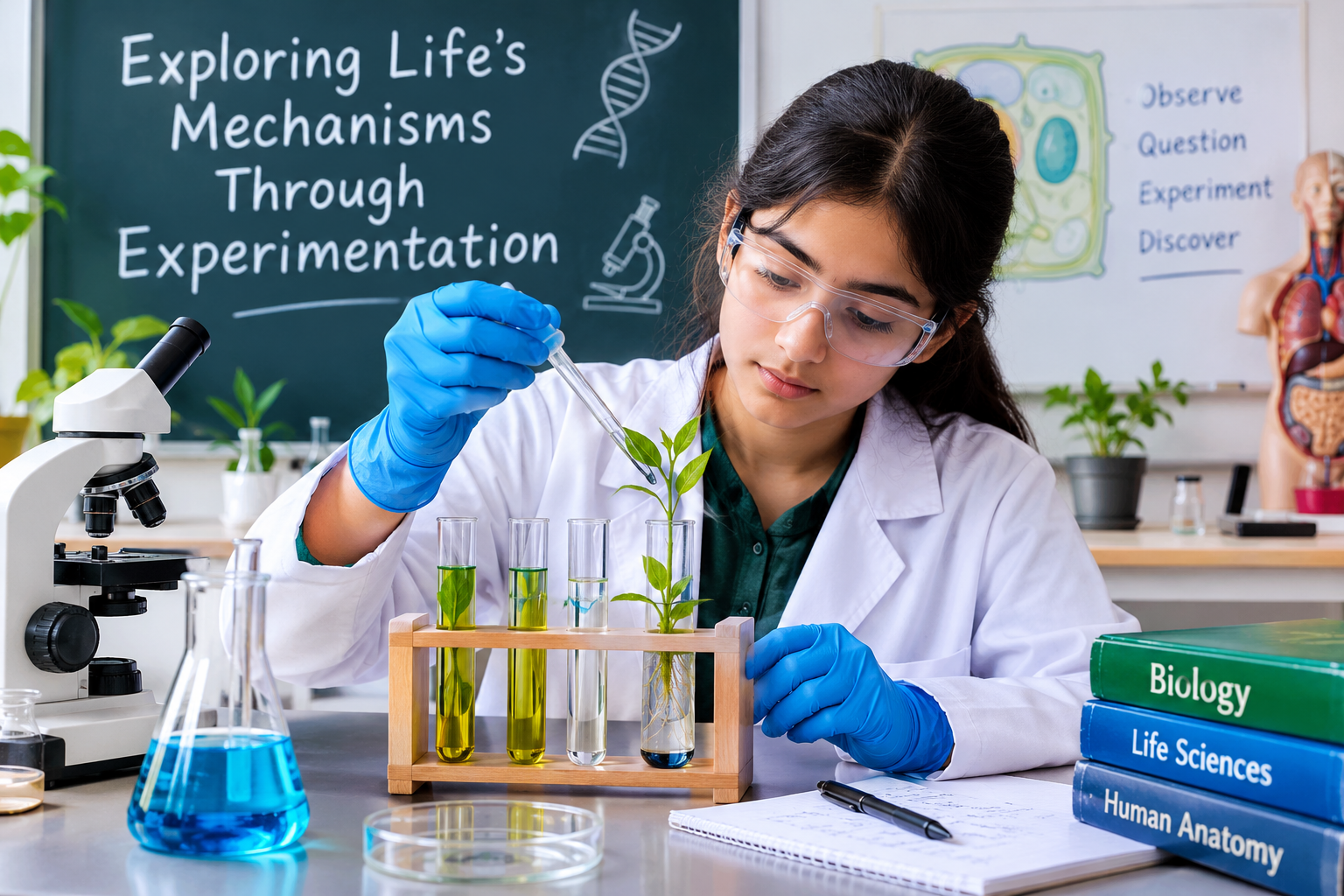
    **Discover the fascinating world of scientific experiments!** Science experiments are an important way to explore the mysteries of nature, understand how things work, and turn curiosity into knowledge. From observing tiny specimens under a microscope to studying plants, chemicals, and natural phenomena, every experiment helps us learn something new.

    Explore how scientists collect specimens, make observations, ask questions, test ideas, and analyze results. Learn how laboratory equipment, microscopes, and scientific methods help researchers discover important facts about the world around us.

    Understand why experiments are essential in biology, chemistry, physics, and other scientific fields. Every experiment provides an opportunity to develop critical thinking, improve problem-solving skills, and discover new possibilities.

    Science is not just about reading books; it is about asking questions, exploring ideas, and finding answers through observation and investigation.

    **Remember:** Every great discovery begins with a simple question and a curious mind!

    \#ScienceExperiments #ScientificDiscovery #LearningThroughExperiments #Specimens #ScienceEducation #Biology #Chemistry #Physics #Curiosity #Knowledge #Innovation #ExploreScience
    #rsisb Roll no 279 song no 18 foundation level # **๐Ÿ”ฌ From Specimens to Knowledge: The Purpose of Science Experiments ๐Ÿงช๐ŸŒ** ๐ŸŒŸ **Discover the fascinating world of scientific experiments!** Science experiments are an important way to explore the mysteries of nature, understand how things work, and turn curiosity into knowledge. From observing tiny specimens under a microscope to studying plants, chemicals, and natural phenomena, every experiment helps us learn something new. ๐Ÿ” Explore how scientists collect specimens, make observations, ask questions, test ideas, and analyze results. Learn how laboratory equipment, microscopes, and scientific methods help researchers discover important facts about the world around us. ๐Ÿงฌ Understand why experiments are essential in biology, chemistry, physics, and other scientific fields. Every experiment provides an opportunity to develop critical thinking, improve problem-solving skills, and discover new possibilities. ๐Ÿ’ก Science is not just about reading books; it is about asking questions, exploring ideas, and finding answers through observation and investigation. ๐Ÿš€ **Remember:** Every great discovery begins with a simple question and a curious mind! \#ScienceExperiments #ScientificDiscovery #LearningThroughExperiments #Specimens #ScienceEducation #Biology #Chemistry #Physics #Curiosity #Knowledge #Innovation #ExploreScience ๐Ÿ”ฌ๐Ÿงช๐ŸŒฑ๐Ÿ“šโœจ
    0 Comments 0 Shares 1182 Views 5
  • #rsisb Roll No:232 foundation level student. Documentary:17 ๐Ÿค– **Documentary – The History and Future of Artificial Intelligence** ๐Ÿš€๐ŸŒ Today, I explored an interesting and educational documentary titled **"The History and Future of Artificial Intelligence."** This documentary explores the journey of Artificial Intelligence (AI), from its early beginnings to the advanced technologies that are shaping our modern world. It explains how AI has developed over the years and how it is transforming the way people learn, work, communicate, and solve problems. Throughout this documentary, I learned about the early ideas behind artificial intelligence, the scientists and researchers who helped develop it, and the important milestones that made modern AI possible. I also discovered how technologies such as machine learning, deep learning, robotics, natural language processing, and generative AI have changed the world of technology. ๐Ÿ’ป๐Ÿง  One of the most fascinating things I learned is that AI can perform many tasks that traditionally required human intelligence. For example, AI can understand language, recognize images, analyze information, answer questions, assist with research, and generate creative content. The documentary also explores the future of artificial intelligence and its potential impact on education, healthcare, transportation, business, communication, and many other fields. AI could help people solve complex problems, improve productivity, discover new opportunities, and make everyday tasks easier. However, I also learned that AI comes with important challenges, including privacy, data security, misinformation, fairness, and responsible use. This means that humans must develop and use artificial intelligence carefully, ethically, and responsibly. ### What I Learned: 1. Artificial Intelligence has developed through decades of research and innovation. 2. Machine learning helps computers learn patterns from data. 3. AI is transforming education, healthcare, business, and communication. 4. Robotics and automation are changing industries. 5. Generative AI can create text, images, audio, and other content. 6. Responsible AI development is important for society. 7. Human creativity, critical thinking, and decision-making remain valuable. 8. The future of AI will bring new opportunities and challenges. ### My Personal Experience: I really enjoyed watching this documentary because I am interested in artificial intelligence and modern technology. It helped me understand how AI started, how it developed, and what possibilities it may bring in the future. I realized that AI is not just a technology of today; it is an important part of the future. As a student and technology enthusiast, I want to continue learning about AI, explore new tools, improve my digital skills, and understand how I can use technology to create something useful for society. ### Conclusion: The main message of this documentary is that artificial intelligence is changing the world, and understanding it is becoming increasingly important. We should learn about AI, develop our skills, use it responsibly, and prepare ourselves for future technological developments. **"The future belongs to those who learn, innovate, and use technology to make a positive difference in the world!"** ๐ŸŒ๐Ÿค–โœจ #ArtificialIntelligence #HistoryOfAI #FutureOfAI #AI #MachineLearning #DeepLearning #GenerativeAI #Robotics #Technology #Innovation #DigitalTransformation #FutureTechnology #AIRevolution #ComputerScience #TechEducation #ResponsibleAI #DigitalSkills #CreativeThinking #LearningWithAI #TechnologyEnthusiast #PersonalGrowth #KeepLearning #FutureReady ๐Ÿค–๐Ÿ’ป๐Ÿš€๐ŸŒ๐Ÿง โœจ Irum Asim Leadershipwali Asma Shaheen EducationWali Rehan School Islamabad Campus https://www.facebook.com/share/v/1CJxofddfy/
    WWW.FACEBOOK.COM
    Facebook
    #rsisb Roll No:232 foundation level student. Documentary:17 ๐Ÿค– **Documentary – The History and Future of Artificial Intelligence** ๐Ÿš€๐ŸŒ Today, I explored an interesting and educational documentary...
    0 Comments 0 Shares 5208 Views
  • My Tedx review in English on: When AI Knows Everything, What Should Humans Learn by Kristina Kallas

    Video: When AI Knows Everything, What Should Humans Learn?
    Speaker: Kristina Kallas

    In this inspiring talk, Kristina Kallas explores how artificial intelligence is transforming education and why the future depends on developing uniquely human skills. She explains why schools must move beyond memorization and focus on critical thinking, creativity, analysis, and problem-solving. She also shares how Estonia became the first country to introduce a Socratic AI learning assistant in schools, helping students use AI as a tool for deeper learning instead of replacing human thinking.

    Key Points:
    AI should strengthen human thinking, not replace it.
    Education must move beyond memorization toward critical and creative thinking.
    Estonia introduced a Socratic AI tutor to improve learning in schools.
    The future belongs to people who can analyze, evaluate, and create in an AI-powered world.

    Speaker Biography:
    is an Estonian politician and the Minister of Education and Research of Estonia. She is known for her work in education reform, language policy, digital transformation, and promoting innovative learning approaches that prepare students for the future.

    Speaker Profiles:
    Facebook: https://www.facebook.com/kallas.kristina/
    Instagram: https://www.instagram.com/kristina_kallas/
    LinkedIn: https://ee.linkedin.com/in/kristina-kallas-1022364

    Video Link:
    https://www.youtube.com/watch?v=44St9MoJU0E
    My Tedx review in English on: When AI Knows Everything, What Should Humans Learn by Kristina Kallas ๐ŸŽค Video: When AI Knows Everything, What Should Humans Learn? Speaker: Kristina Kallas In this inspiring talk, Kristina Kallas explores how artificial intelligence is transforming education and why the future depends on developing uniquely human skills. She explains why schools must move beyond memorization and focus on critical thinking, creativity, analysis, and problem-solving. She also shares how Estonia became the first country to introduce a Socratic AI learning assistant in schools, helping students use AI as a tool for deeper learning instead of replacing human thinking. โญ Key Points: ๐Ÿง  AI should strengthen human thinking, not replace it. ๐Ÿ“š Education must move beyond memorization toward critical and creative thinking. ๐Ÿค– Estonia introduced a Socratic AI tutor to improve learning in schools. ๐ŸŒ The future belongs to people who can analyze, evaluate, and create in an AI-powered world. ๐Ÿ‘ค Speaker Biography: is an Estonian politician and the Minister of Education and Research of Estonia. She is known for her work in education reform, language policy, digital transformation, and promoting innovative learning approaches that prepare students for the future. ๐Ÿ”— Speaker Profiles: ๐Ÿ“˜ Facebook: https://www.facebook.com/kallas.kristina/ ๐Ÿ“ธ Instagram: https://www.instagram.com/kristina_kallas/ ๐Ÿ’ผ LinkedIn: https://ee.linkedin.com/in/kristina-kallas-1022364 ๐Ÿ“น Video Link: https://www.youtube.com/watch?v=44St9MoJU0E
    0 Comments 0 Shares 1083 Views 3
  • My Tedx review in Urdu on: When AI Knows Everything, What Should Humans Learn by Kristina Kallas

    Video: When AI Knows Everything, What Should Humans Learn?
    Speaker: Kristina Kallas

    In this inspiring talk, Kristina Kallas explores how artificial intelligence is transforming education and why the future depends on developing uniquely human skills. She explains why schools must move beyond memorization and focus on critical thinking, creativity, analysis, and problem-solving. She also shares how Estonia became the first country to introduce a Socratic AI learning assistant in schools, helping students use AI as a tool for deeper learning instead of replacing human thinking.

    Key Points:
    AI should strengthen human thinking, not replace it.
    Education must move beyond memorization toward critical and creative thinking.
    Estonia introduced a Socratic AI tutor to improve learning in schools.
    The future belongs to people who can analyze, evaluate, and create in an AI-powered world.

    Speaker Biography:
    is an Estonian politician and the Minister of Education and Research of Estonia. She is known for her work in education reform, language policy, digital transformation, and promoting innovative learning approaches that prepare students for the future.

    Speaker Profiles:
    Facebook: https://www.facebook.com/kallas.kristina/
    Instagram: https://www.instagram.com/kristina_kallas/
    LinkedIn: https://ee.linkedin.com/in/kristina-kallas-1022364

    Video Link:
    https://www.youtube.com/watch?v=44St9MoJU0E
    My Tedx review in Urdu on: When AI Knows Everything, What Should Humans Learn by Kristina Kallas ๐ŸŽค Video: When AI Knows Everything, What Should Humans Learn? Speaker: Kristina Kallas In this inspiring talk, Kristina Kallas explores how artificial intelligence is transforming education and why the future depends on developing uniquely human skills. She explains why schools must move beyond memorization and focus on critical thinking, creativity, analysis, and problem-solving. She also shares how Estonia became the first country to introduce a Socratic AI learning assistant in schools, helping students use AI as a tool for deeper learning instead of replacing human thinking. โญ Key Points: ๐Ÿง  AI should strengthen human thinking, not replace it. ๐Ÿ“š Education must move beyond memorization toward critical and creative thinking. ๐Ÿค– Estonia introduced a Socratic AI tutor to improve learning in schools. ๐ŸŒ The future belongs to people who can analyze, evaluate, and create in an AI-powered world. ๐Ÿ‘ค Speaker Biography: is an Estonian politician and the Minister of Education and Research of Estonia. She is known for her work in education reform, language policy, digital transformation, and promoting innovative learning approaches that prepare students for the future. ๐Ÿ”— Speaker Profiles: ๐Ÿ“˜ Facebook: https://www.facebook.com/kallas.kristina/ ๐Ÿ“ธ Instagram: https://www.instagram.com/kristina_kallas/ ๐Ÿ’ผ LinkedIn: https://ee.linkedin.com/in/kristina-kallas-1022364 ๐Ÿ“น Video Link: https://www.youtube.com/watch?v=44St9MoJU0E
    0 Comments 0 Shares 1057 Views 11
  • RSIF8
    Roll no:14
    story no:22
    story post topic:Exploring Life’s Mechanisms Through Experimentation
    # Exploring Life’s Mechanisms Through Experimentation

    Welcome to the fascinating world of scientific discovery, where curiosity meets experimentation and every observation brings us closer to understanding the mysteries of life! **“Exploring Life’s Mechanisms Through Experimentation”** highlights the importance of practical experiments in understanding how living organisms function, grow, and interact with their environments.

    Through hands-on activities, laboratory experiments, microscopes, and scientific observations, students can explore the amazing processes that take place inside living things. From examining plant growth and studying cells to understanding biological systems, experimentation helps transform scientific theories into meaningful discoveries.

    **Key Topics Covered:**
    - Understanding the structure and functions of living organisms
    - Exploring cells, DNA, and biological processes
    - Investigating plant growth and environmental factors
    - Learning through experiments and scientific observations
    - Developing critical thinking and problem-solving skills
    - Discovering how living organisms interact with their surroundings

    **Why Is Experimentation Important?**

    Scientific experimentation allows learners to ask questions, test ideas, analyze results, and develop evidence-based conclusions. It encourages creativity, patience, and curiosity while helping students understand the principles of biology and life sciences.

    Whether you are a student, science enthusiast, or aspiring researcher, exploring life's mechanisms through experimentation opens the door to new knowledge and exciting discoveries. Every experiment is an opportunity to learn something new about the incredible world around us!

    **Observe, experiment, discover, and explore the science of life—because every great discovery begins with a question!**

    #Biology #ScienceExperiments #LifeSciences #ScientificDiscovery #BiologyLab #LearningThroughExperimentation #STEMEducation #ScienceLearning #CellBiology #NatureAndScience #EducationalContent #ExploreScience
    RSIF8 Roll no:14 story no:22 story post topic:Exploring Life’s Mechanisms Through Experimentation # ๐Ÿ”ฌ Exploring Life’s Mechanisms Through Experimentation ๐Ÿงฌ Welcome to the fascinating world of scientific discovery, where curiosity meets experimentation and every observation brings us closer to understanding the mysteries of life! ๐ŸŒฑ๐Ÿ” **“Exploring Life’s Mechanisms Through Experimentation”** highlights the importance of practical experiments in understanding how living organisms function, grow, and interact with their environments. Through hands-on activities, laboratory experiments, microscopes, and scientific observations, students can explore the amazing processes that take place inside living things. From examining plant growth and studying cells to understanding biological systems, experimentation helps transform scientific theories into meaningful discoveries. ๐Ÿงช๐ŸŒฟ ๐Ÿ’ก **Key Topics Covered:** - ๐Ÿ”ฌ Understanding the structure and functions of living organisms - ๐Ÿงฌ Exploring cells, DNA, and biological processes - ๐ŸŒฑ Investigating plant growth and environmental factors - ๐Ÿงช Learning through experiments and scientific observations - ๐Ÿ“š Developing critical thinking and problem-solving skills - ๐ŸŒ Discovering how living organisms interact with their surroundings ๐ŸŽฏ **Why Is Experimentation Important?** Scientific experimentation allows learners to ask questions, test ideas, analyze results, and develop evidence-based conclusions. It encourages creativity, patience, and curiosity while helping students understand the principles of biology and life sciences. ๐ŸŒŸ Whether you are a student, science enthusiast, or aspiring researcher, exploring life's mechanisms through experimentation opens the door to new knowledge and exciting discoveries. Every experiment is an opportunity to learn something new about the incredible world around us! โœจ **Observe, experiment, discover, and explore the science of life—because every great discovery begins with a question!** #Biology #ScienceExperiments #LifeSciences #ScientificDiscovery #BiologyLab #LearningThroughExperimentation #STEMEducation #ScienceLearning #CellBiology #NatureAndScience #EducationalContent #ExploreScience
    0 Comments 0 Shares 5410 Views
  • **Roll No: 2**
    **Batch: 14**
    **Book: ACCL**
    **Task No: 138**

    # Exploring Life’s Mechanisms Through Experimentation

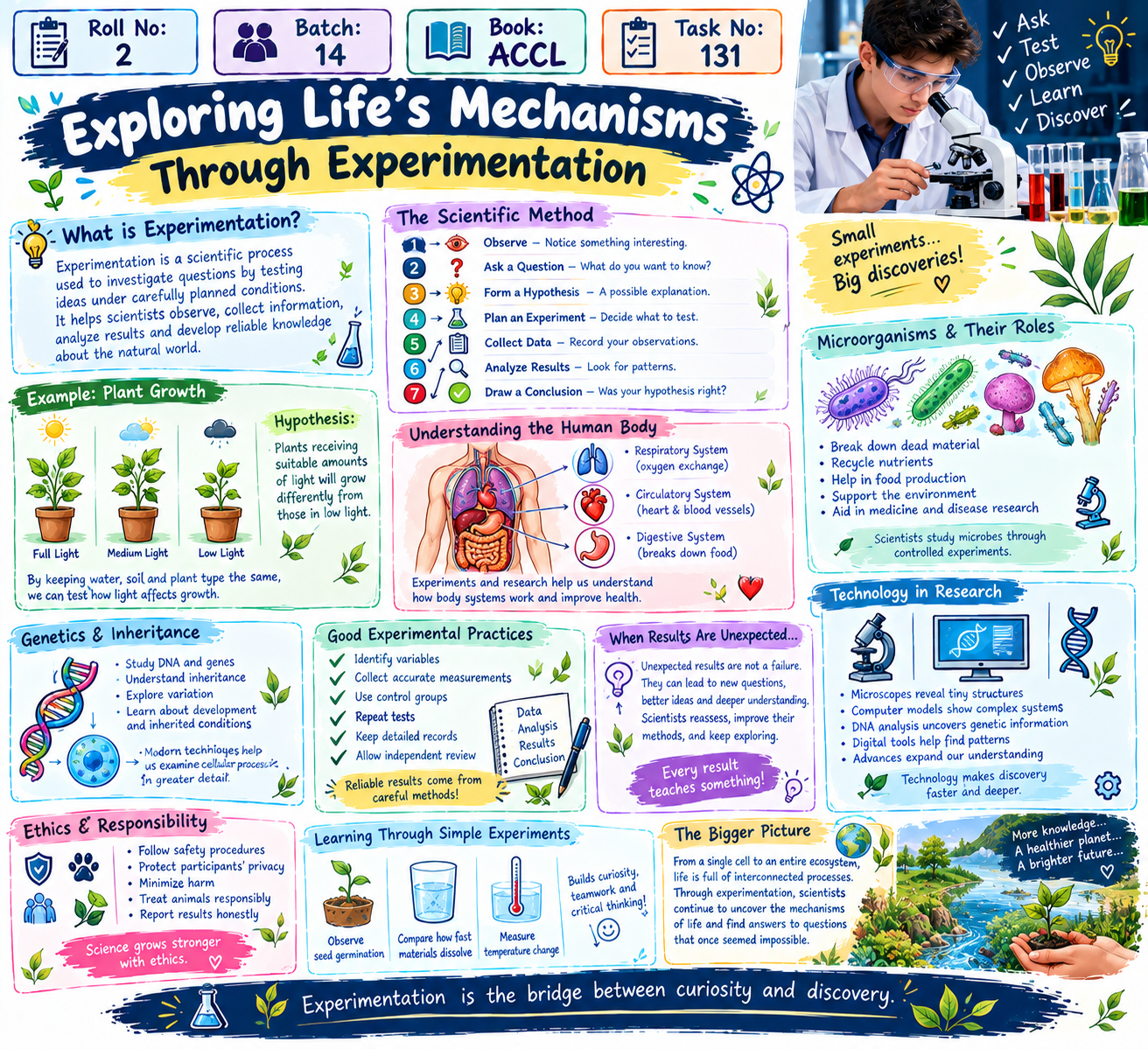
    Have you ever wondered how scientists discover the secrets of life? From understanding how plants grow to investigating how the human heart works, science helps us explore the processes that make living organisms function. Behind many important discoveries lies a powerful method called **experimentation**, which allows scientists to test ideas, observe results, and develop a deeper understanding of the natural world.

    **Experimentation is a scientific process used to investigate questions by testing ideas under carefully planned conditions.** Scientists begin by observing something interesting, asking a question, and developing a hypothesis—a possible explanation that can be tested. They then design an experiment, collect information, and analyze the results to determine whether the evidence supports their original idea. This process helps turn curiosity into reliable scientific knowledge.

    One fascinating example is the study of plant growth. Imagine a student who wants to discover whether the amount of light affects how quickly a plant grows. The student forms a hypothesis that plants receiving suitable amounts of light will grow differently from plants kept in low-light conditions. By keeping factors such as water, soil, and plant type consistent, the student can compare the results and investigate the role of light in plant development.

    Experimentation is also essential for understanding the human body. Scientists investigate how the heart circulates blood, how the lungs exchange gases, and how the digestive system processes food. Through carefully designed studies, medical imaging, laboratory tests, and other research methods, scientists learn how body systems work together to maintain health. Their findings can contribute to improved medical treatments and a better understanding of human biology.

    Another important field is microbiology, the study of microscopic organisms. Many bacteria and fungi play beneficial roles in nature, including breaking down dead material and recycling nutrients. Scientists use controlled experiments to investigate how these organisms respond to different environmental conditions. Such research can help improve food production, develop medicines, understand infectious diseases, and protect ecosystems.

    Experiments also help researchers understand genetics and the mechanisms of inheritance. By studying DNA, genes, and the characteristics of organisms across generations, scientists investigate how biological information is passed on and how variations arise. Modern techniques allow researchers to explore cellular processes in greater detail, helping them understand development, inherited conditions, and the relationships among different forms of life.

    A successful experiment requires more than simply observing what happens. Scientists must identify the variables they are studying, collect accurate measurements, and repeat tests when appropriate. They often use control groups for comparison and record their observations carefully. Repeating experiments helps determine whether a result is consistent, while independent review allows other researchers to examine the methods and evaluate the conclusions. These practices make scientific findings more trustworthy.

    Sometimes experiments produce unexpected results. Instead of treating an unexpected outcome as a failure, scientists use it as an opportunity to ask new questions. They may reconsider their hypothesis, improve their experimental design, or investigate another possible explanation. Scientific progress often happens through this cycle of questioning, testing, learning, and refining ideas. Every result can contribute something valuable when it is interpreted carefully.

    Technology has made biological experimentation more advanced than ever before. Microscopes reveal structures too small to see with the naked eye, computer models help researchers understand complicated systems, and DNA analysis allows scientists to investigate genetic information. Digital tools can also help organize large amounts of data and identify patterns that might otherwise be difficult to notice. These innovations continue to expand our understanding of living organisms.

    However, scientific experimentation must always be guided by responsibility and ethics. Researchers should follow safety procedures, protect participants' privacy, minimize harm, and treat animals responsibly. Experiments involving people or animals require appropriate ethical review and safeguards. Scientists must also report results honestly, even when the findings do not match their expectations. Reliable science depends on both accurate evidence and responsible behavior.

    Experimentation connects classroom learning with real-world discoveries. Students can explore scientific ideas through safe activities, such as observing seed germination, comparing how quickly different materials dissolve in water, or measuring changes in temperature. These activities encourage curiosity, careful observation, teamwork, and critical thinking. They also show that science is not just a collection of facts to memorize; it is an ongoing process of discovery.

    As we explore life's mechanisms, we begin to understand how countless processes work together to support living organisms. From the activity inside a single cell to the interactions among species in an ecosystem, each discovery reveals another part of nature's complexity. Through experimentation, scientists continue to investigate these connections and search for answers to questions that once seemed impossible to solve.

    **Experimentation is the bridge between curiosity and discovery. By asking thoughtful questions, testing ideas fairly, and learning from evidence, we can uncover the mechanisms of life and use scientific knowledge to improve human health, protect the environment, and build a brighter future. **

    \#Experimentation #Biology #ScientificMethod #LifeSciences #ScientificDiscovery #Research #ACCL #Batch14 #Task131
    **Roll No: 2** **Batch: 14** **Book: ACCL** **Task No: 138** # ๐Ÿ”ฌ๐Ÿงช Exploring Life’s Mechanisms Through Experimentation ๐ŸŒฑ๐Ÿงฌ Have you ever wondered how scientists discover the secrets of life? ๐ŸŒ From understanding how plants grow to investigating how the human heart works, science helps us explore the processes that make living organisms function. Behind many important discoveries lies a powerful method called **experimentation**, which allows scientists to test ideas, observe results, and develop a deeper understanding of the natural world. ๐Ÿ”โœจ **Experimentation is a scientific process used to investigate questions by testing ideas under carefully planned conditions.** ๐Ÿงช Scientists begin by observing something interesting, asking a question, and developing a hypothesis—a possible explanation that can be tested. They then design an experiment, collect information, and analyze the results to determine whether the evidence supports their original idea. This process helps turn curiosity into reliable scientific knowledge. ๐Ÿ“š๐Ÿ’ก One fascinating example is the study of plant growth. ๐ŸŒฑ Imagine a student who wants to discover whether the amount of light affects how quickly a plant grows. The student forms a hypothesis that plants receiving suitable amounts of light will grow differently from plants kept in low-light conditions. By keeping factors such as water, soil, and plant type consistent, the student can compare the results and investigate the role of light in plant development. โ˜€๏ธ๐ŸŒฟ Experimentation is also essential for understanding the human body. โค๏ธ Scientists investigate how the heart circulates blood, how the lungs exchange gases, and how the digestive system processes food. Through carefully designed studies, medical imaging, laboratory tests, and other research methods, scientists learn how body systems work together to maintain health. Their findings can contribute to improved medical treatments and a better understanding of human biology. ๐Ÿซ๐Ÿง  Another important field is microbiology, the study of microscopic organisms. ๐Ÿฆ  Many bacteria and fungi play beneficial roles in nature, including breaking down dead material and recycling nutrients. Scientists use controlled experiments to investigate how these organisms respond to different environmental conditions. Such research can help improve food production, develop medicines, understand infectious diseases, and protect ecosystems. ๐Ÿ”ฌ๐ŸŒ Experiments also help researchers understand genetics and the mechanisms of inheritance. ๐Ÿงฌ By studying DNA, genes, and the characteristics of organisms across generations, scientists investigate how biological information is passed on and how variations arise. Modern techniques allow researchers to explore cellular processes in greater detail, helping them understand development, inherited conditions, and the relationships among different forms of life. ๐ŸŒฑ๐Ÿ” A successful experiment requires more than simply observing what happens. Scientists must identify the variables they are studying, collect accurate measurements, and repeat tests when appropriate. ๐Ÿ“ They often use control groups for comparison and record their observations carefully. Repeating experiments helps determine whether a result is consistent, while independent review allows other researchers to examine the methods and evaluate the conclusions. These practices make scientific findings more trustworthy. ๐Ÿ“Š๐Ÿ“ Sometimes experiments produce unexpected results. ๐Ÿค” Instead of treating an unexpected outcome as a failure, scientists use it as an opportunity to ask new questions. They may reconsider their hypothesis, improve their experimental design, or investigate another possible explanation. Scientific progress often happens through this cycle of questioning, testing, learning, and refining ideas. Every result can contribute something valuable when it is interpreted carefully. ๐Ÿ’ก๐Ÿ”„ Technology has made biological experimentation more advanced than ever before. ๐Ÿค–๐Ÿ”ฌ Microscopes reveal structures too small to see with the naked eye, computer models help researchers understand complicated systems, and DNA analysis allows scientists to investigate genetic information. Digital tools can also help organize large amounts of data and identify patterns that might otherwise be difficult to notice. These innovations continue to expand our understanding of living organisms. ๐Ÿ’ป๐Ÿงฌ However, scientific experimentation must always be guided by responsibility and ethics. ๐Ÿ’š Researchers should follow safety procedures, protect participants' privacy, minimize harm, and treat animals responsibly. Experiments involving people or animals require appropriate ethical review and safeguards. Scientists must also report results honestly, even when the findings do not match their expectations. Reliable science depends on both accurate evidence and responsible behavior. โš–๏ธ๐ŸŒฟ Experimentation connects classroom learning with real-world discoveries. ๐Ÿซ Students can explore scientific ideas through safe activities, such as observing seed germination, comparing how quickly different materials dissolve in water, or measuring changes in temperature. These activities encourage curiosity, careful observation, teamwork, and critical thinking. They also show that science is not just a collection of facts to memorize; it is an ongoing process of discovery. ๐ŸŒˆ๐Ÿงช As we explore life's mechanisms, we begin to understand how countless processes work together to support living organisms. From the activity inside a single cell to the interactions among species in an ecosystem, each discovery reveals another part of nature's complexity. Through experimentation, scientists continue to investigate these connections and search for answers to questions that once seemed impossible to solve. ๐ŸŒŽ๐Ÿฆ‹๐Ÿ”ฌ **Experimentation is the bridge between curiosity and discovery. By asking thoughtful questions, testing ideas fairly, and learning from evidence, we can uncover the mechanisms of life and use scientific knowledge to improve human health, protect the environment, and build a brighter future. ๐Ÿ”ฌ๐Ÿงฌ๐ŸŒ๐Ÿ’š** \#Experimentation #Biology #ScientificMethod #LifeSciences #ScientificDiscovery #Research #ACCL #Batch14 #Task131 ๐Ÿงช๐Ÿ”ฌ๐ŸŒฑ
    0 Comments 0 Shares 7811 Views
  • RSi F8
    Roll NO:13
    Task NO:180
    Class: Foundation Level
    Made by Me

    Prime Number Checker — Description

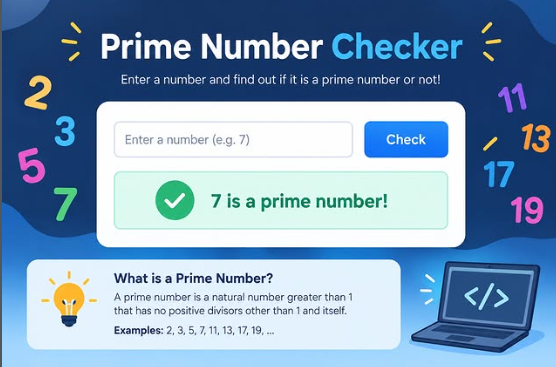
    Prime Number Checker is a simple and useful programming project designed to help users quickly determine whether a given number is a prime number or not. Prime numbers are natural numbers greater than 1 that have exactly two positive factors: 1 and the number itself. Some common examples of prime numbers are 2, 3, 5, 7, 11, 13, 17, 19, and 23.

    This project provides an easy-to-use interface where the user can enter any number into an input field and click the “Check” button. The program then analyzes the entered number and displays a clear result, telling the user whether the number is prime or not. This makes the project useful for students who are learning about mathematics, logical thinking, algorithms, and programming fundamentals.

    Behind the simple interface, the program uses a logical process to check whether the number can be divided evenly by any number other than 1 and itself. If no such divisor exists, the number is identified as a prime number. If the number has another divisor, it is considered a composite number. The project can also handle special cases such as numbers less than or equal to 1, which are not considered prime numbers.

    The Prime Number Checker is a great beginner-friendly project because it combines HTML, CSS, and JavaScript to create an interactive web application. HTML can be used to structure the page, CSS can make the interface attractive and responsive, and JavaScript can perform the actual prime-number calculation.

    Creating this project also helps learners understand important programming concepts such as variables, functions, conditional statements, loops, user input, mathematical operations, and displaying dynamic results. It demonstrates how a mathematical idea can be converted into a working computer program.

    Overall, the Prime Number Checker is a small but meaningful coding project that makes learning programming more interesting and practical. It shows how simple algorithms can solve everyday computational problems while giving beginners valuable hands-on experience in building interactive application
    RSi F8 ๐ŸŽ“โœจ Roll NO:13 Task NO:180 Class: Foundation Level ๐Ÿ“š Made by Me ๐Ÿ’ป๐Ÿš€ Prime Number Checker — Description Prime Number Checker is a simple and useful programming project designed to help users quickly determine whether a given number is a prime number or not. Prime numbers are natural numbers greater than 1 that have exactly two positive factors: 1 and the number itself. Some common examples of prime numbers are 2, 3, 5, 7, 11, 13, 17, 19, and 23. This project provides an easy-to-use interface where the user can enter any number into an input field and click the “Check” button. The program then analyzes the entered number and displays a clear result, telling the user whether the number is prime or not. This makes the project useful for students who are learning about mathematics, logical thinking, algorithms, and programming fundamentals. Behind the simple interface, the program uses a logical process to check whether the number can be divided evenly by any number other than 1 and itself. If no such divisor exists, the number is identified as a prime number. If the number has another divisor, it is considered a composite number. The project can also handle special cases such as numbers less than or equal to 1, which are not considered prime numbers. The Prime Number Checker is a great beginner-friendly project because it combines HTML, CSS, and JavaScript to create an interactive web application. HTML can be used to structure the page, CSS can make the interface attractive and responsive, and JavaScript can perform the actual prime-number calculation. Creating this project also helps learners understand important programming concepts such as variables, functions, conditional statements, loops, user input, mathematical operations, and displaying dynamic results. It demonstrates how a mathematical idea can be converted into a working computer program. Overall, the Prime Number Checker is a small but meaningful coding project that makes learning programming more interesting and practical. It shows how simple algorithms can solve everyday computational problems while giving beginners valuable hands-on experience in building interactive application
    0 Comments 0 Shares 1775 Views
  • A Note to Myself — What I Learned Today About Reverse Engineering
    Today, I didn’t just learn a new term.
    I learned a way of thinking
    Today, I fully understood what reverse engineering really is,
    how it works,
    and what the complete process looks like.

    What Reverse Engineering Actually Means
    Today, I learned that reverse engineering is not copying
    It is the ability to look at a finished result
    and understand how it was built

    It means studying outcomes to uncover:
    • structure
    • logic
    • flow
    • decisions behind them
    Nothing impressive is mysterious.
    It only feels that way until you break it down.

    How Reverse Engineering Is Done
    I learned that reverse engineering follows a clear process:
    First, you observe without judging
    You carefully notice inputs, outputs, and behavior.
    Then, you break the system into parts
    • Interface
    • Logic
    • Data
    • Flow
    After that, you stop asking what it does
    and start asking how it works
    You look for patterns
    what repeats,
    what stays consistent,
    and what triggers results.

    Finally, you rebuild it in your own way
    simpler, cleaner, and ethical.

    That is the complete cycle
    What Changed in My Thinking
    I realized that confusion comes from trying to understand everything at once
    Clarity comes from breaking things down
    When I understand the process:
    • fear reduces
    • learning speeds up
    • confidence grows
    Complex systems start feeling learnable.

    Why This Matters to Me
    Because this skill applies everywhere:
    • tools
    • businesses
    • platforms
    • skills
    • even habits
    Instead of guessing
    I can analyze
    Instead of waiting for luck
    I can build
    A Reminder to My Future Self
    If you ever feel stuck again, remember:
    Nothing powerful is out of reach
    It is just unexplored
    Observe carefully
    Break it down
    Understand the pattern
    Rebuild it better

    That’s what I learned today

    — Aniyal
    Learning • Analyzing • Building

    @highlight
    Rehan Allahwala
    ๐Ÿง  A Note to Myself — What I Learned Today About Reverse Engineering Today, I didn’t just learn a new term. I learned a way of thinking ๐Ÿ’ก Today, I fully understood what reverse engineering really is, how it works, and what the complete process looks like. ๐Ÿ” What Reverse Engineering Actually Means Today, I learned that reverse engineering is not copying โŒ It is the ability to look at a finished result and understand how it was built ๐Ÿ—๏ธ It means studying outcomes to uncover: • structure ๐Ÿงฑ • logic ๐Ÿง  • flow ๐Ÿ”„ • decisions behind them ๐ŸŽฏ Nothing impressive is mysterious. It only feels that way until you break it down. ๐Ÿ› ๏ธ How Reverse Engineering Is Done I learned that reverse engineering follows a clear process: First, you observe without judging ๐Ÿ‘€ You carefully notice inputs, outputs, and behavior. Then, you break the system into parts ๐Ÿงฉ • Interface ๐Ÿ–ฅ๏ธ • Logic โš™๏ธ • Data ๐Ÿ“Š • Flow ๐Ÿ” After that, you stop asking what it does and start asking how it works โ“ You look for patterns ๐Ÿ” what repeats, what stays consistent, and what triggers results. Finally, you rebuild it in your own way ๐Ÿ”จ simpler, cleaner, and ethical. That is the complete cycle ๐Ÿ” ๐Ÿง  What Changed in My Thinking I realized that confusion comes from trying to understand everything at once ๐Ÿ˜ต Clarity comes from breaking things down โœจ When I understand the process: • fear reduces ๐Ÿ˜Œ • learning speeds up ๐Ÿš€ • confidence grows ๐Ÿ’ช Complex systems start feeling learnable. ๐Ÿš€ Why This Matters to Me Because this skill applies everywhere: • tools ๐Ÿ› ๏ธ • businesses ๐Ÿข • platforms ๐ŸŒ • skills ๐ŸŽ“ • even habits ๐Ÿ” Instead of guessing ๐Ÿคท I can analyze ๐Ÿ“Š Instead of waiting for luck ๐Ÿ€ I can build ๐Ÿงฑ ๐ŸŒฑ A Reminder to My Future Self If you ever feel stuck again, remember: Nothing powerful is out of reach ๐Ÿ’ญ It is just unexplored ๐ŸŒ Observe carefully ๐Ÿ‘€ Break it down ๐Ÿงฉ Understand the pattern ๐Ÿ” Rebuild it better ๐Ÿ”จ That’s what I learned today โœ๏ธ — Aniyal Learning ๐Ÿ“˜ • Analyzing ๐Ÿง  • Building ๐Ÿ—๏ธ @highlight Rehan Allahwala
    0 Comments 0 Shares 1029 Views
  • Today I Learned a Real Lesson About Building LLM Systems
    Today, I attempted something challenging: building an LLM-based system from scratch.

    I set everything up on GitHub Codespaces, connected the API, and integrated the model into a chatbot interface. On the surface, the system looked complete. The code was written, the files were organized, and the logic made sense.
    Yet, it didn’t work.

    No response.
    No answer from the LLM.
    Just silence.

    At first, I assumed the obvious — maybe this was simply too advanced. Maybe building something like this wasn’t possible for me yet. That doubt hit hard, because everything seemed correct.
    Instead of quitting, I decided to slow down and truly analyze what was happening.
    That’s when I discovered the real problem.
    The issue wasn’t the LLM.
    It wasn’t the API.
    It wasn’t even the chatbot logic.
    The actual failure was at the system level.

    The communication tunnel between the user, the server, and the LLM was never properly established. The request was not reaching the LLM in the first place. And if a question never reaches the model, an answer can never come back.

    This moment completely changed how I think about AI development.

    I realized that:
    AI systems are not just about writing code
    APIs don’t magically work unless the infrastructure allows them to
    Most real-world failures happen in networking, permissions, environment setup, and data flow
    Debugging is not a weakness — it’s a sign that you’re building something real
    What looked like an “impossible task” was actually a broken bridge in the system architecture.

    Today taught me that building LLM-powered applications is less about intelligence and more about clarity:
    Knowing where a request starts
    Understanding where it should go
    And making sure the path between them actually exists
    I didn’t fail today.

    I reached the stage where systems stop working unless you truly understand how they are connected.
    And that’s the stage where real builders are made.

    Rehan Allahwala
    @highlight
    Today I Learned a Real Lesson About Building LLM Systems Today, I attempted something challenging: building an LLM-based system from scratch. I set everything up on GitHub Codespaces, connected the API, and integrated the model into a chatbot interface. On the surface, the system looked complete. The code was written, the files were organized, and the logic made sense. Yet, it didn’t work. No response. No answer from the LLM. Just silence. At first, I assumed the obvious — maybe this was simply too advanced. Maybe building something like this wasn’t possible for me yet. That doubt hit hard, because everything seemed correct. Instead of quitting, I decided to slow down and truly analyze what was happening. That’s when I discovered the real problem. The issue wasn’t the LLM. It wasn’t the API. It wasn’t even the chatbot logic. The actual failure was at the system level. The communication tunnel between the user, the server, and the LLM was never properly established. The request was not reaching the LLM in the first place. And if a question never reaches the model, an answer can never come back. This moment completely changed how I think about AI development. I realized that: AI systems are not just about writing code APIs don’t magically work unless the infrastructure allows them to Most real-world failures happen in networking, permissions, environment setup, and data flow Debugging is not a weakness — it’s a sign that you’re building something real What looked like an “impossible task” was actually a broken bridge in the system architecture. Today taught me that building LLM-powered applications is less about intelligence and more about clarity: Knowing where a request starts Understanding where it should go And making sure the path between them actually exists I didn’t fail today. I reached the stage where systems stop working unless you truly understand how they are connected. And that’s the stage where real builders are made. ๐Ÿ’ก๐Ÿš€ Rehan Allahwala @highlight
    0 Comments 0 Shares 2489 Views
  • Mohsin RS F8
    Story post NO:16
    roll NO:13
    Class: Foundation Level
    Made by Me

    Exploring Life’s Mechanisms Through Experimentation

    Life is a remarkable system filled with countless processes that work together every moment. From the activity of tiny cells to the growth of plants and the functioning of complex organisms, nature is constantly performing fascinating biological processes. But how can we understand these hidden mechanisms? The answer lies in scientific investigation and experimentation.

    Experimentation gives us a way to explore the living world through observation, questions, testing, and evidence. Instead of simply believing an explanation, scientists investigate it carefully. They ask questions such as: How do plants grow? How do cells obtain energy? How do organisms respond to their environment? What factors affect biological processes? These questions can lead to experiments that help us discover how life works.

    A scientific experiment usually begins with curiosity. A researcher observes something interesting and develops a question about it. The researcher may then create a hypothesis, which is a possible explanation that can be tested. After designing an appropriate investigation, observations and measurements are collected. The results are then analyzed to determine whether they support the original idea.

    For example, scientists can investigate how different environmental conditions affect plant growth. By carefully controlling relevant factors and observing changes over time, researchers can learn more about the relationship between living organisms and their surroundings. Experiments like these help turn simple observations into scientific knowledge.

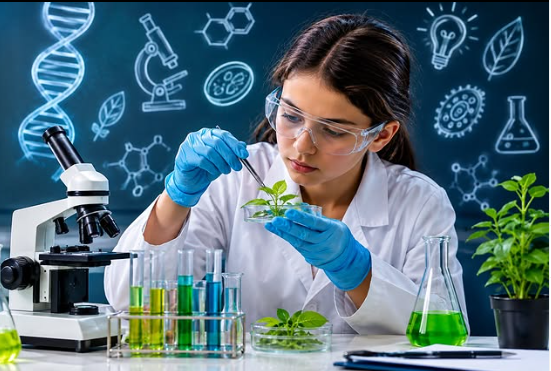
    Laboratory tools also play an important role in exploring life's mechanisms. Microscopes allow researchers to observe structures that are too small to see with the naked eye. Test tubes, petri dishes, measuring equipment, and other laboratory tools allow scientists to conduct controlled investigations. Modern technologies have expanded these possibilities even further, allowing researchers to study DNA, proteins, cells, and many other biological systems.
    Mohsin RS F8 ๐ŸŽ“โœจ Story post NO:16 roll NO:13 Class: Foundation Level ๐Ÿ“š Made by Me ๐Ÿ’ป๐Ÿš€ ๐Ÿ”ฌ Exploring Life’s Mechanisms Through Experimentation Life is a remarkable system filled with countless processes that work together every moment. From the activity of tiny cells to the growth of plants and the functioning of complex organisms, nature is constantly performing fascinating biological processes. But how can we understand these hidden mechanisms? The answer lies in scientific investigation and experimentation. Experimentation gives us a way to explore the living world through observation, questions, testing, and evidence. Instead of simply believing an explanation, scientists investigate it carefully. They ask questions such as: How do plants grow? How do cells obtain energy? How do organisms respond to their environment? What factors affect biological processes? These questions can lead to experiments that help us discover how life works. A scientific experiment usually begins with curiosity. A researcher observes something interesting and develops a question about it. The researcher may then create a hypothesis, which is a possible explanation that can be tested. After designing an appropriate investigation, observations and measurements are collected. The results are then analyzed to determine whether they support the original idea. For example, scientists can investigate how different environmental conditions affect plant growth. By carefully controlling relevant factors and observing changes over time, researchers can learn more about the relationship between living organisms and their surroundings. Experiments like these help turn simple observations into scientific knowledge. Laboratory tools also play an important role in exploring life's mechanisms. Microscopes allow researchers to observe structures that are too small to see with the naked eye. Test tubes, petri dishes, measuring equipment, and other laboratory tools allow scientists to conduct controlled investigations. Modern technologies have expanded these possibilities even further, allowing researchers to study DNA, proteins, cells, and many other biological systems.
    0 Comments 0 Shares 2321 Views
More Results