• What do you know about the civilizations of Ebla, Akkadians, Sumerians, Babylonians, Hittites, Hurri-Mitannis, Assyrians, Medes, Persians, Ancient Macedonians (under Alexander the Great), Seleucids, Armenians, Arameans, the Neo-Assyrian Osrhoenes, Romans, Sassanids, Byzantines, and Arabs.
    What do you know about the civilizations of Ebla, Akkadians, Sumerians, Babylonians, Hittites, Hurri-Mitannis, Assyrians, Medes, Persians, Ancient Macedonians (under Alexander the Great), Seleucids, Armenians, Arameans, the Neo-Assyrian Osrhoenes, Romans, Sassanids, Byzantines, and Arabs.
    0 تبصرے 0 شیئرز 182 ویوز
  • Listing translations for "Allah" (or God) in 100 languages is quite a task, and note that the concept of God and the specifics of language nuances can make a direct translation challenging. However, Ill provide translations for the word "God" or its closest equivalent in various languages. Remember, in many languages, the name "Allah" is also used directly, especially in languages influenced by Islam. Heres an attempt:

    1. English: God
    2. Arabic: الله (Allah)
    3. French: Dieu
    4. Spanish: Dios
    5. Portuguese: Deus
    6. German: Gott
    7. Russian: Бог (Bog)
    8. Chinese (Mandarin): 上帝 (Shàngdì)
    9. Japanese: 神 (Kami)
    10. Korean: 하느님 (Haneunim)
    11. Hindi: भगवान (Bhagwan) or ईश्वर (Ishwar)
    12. Bengali: ঈশ্বর (Ishor)
    13. Punjabi: ਰੱਬ (Rabb)
    14. Urdu: خدا (Khuda)
    15. Persian (Farsi): خدا (Khuda)
    16. Turkish: Tanrı
    17. Malay/Indonesian: Tuhan
    18. Filipino: Diyos
    19. Vietnamese: Chúa
    20. Thai: พระเจ้า (Phra Chao)
    21. Kannada: ದೇವರು (Devaru)
    22. Tamil: கடவுள் (Kadavul)
    23. Telugu: దేవుడు (Devudu)
    24. Malayalam: ദൈവം (Daivam)
    25. Gujarati: ભગવાન (Bhagwan)
    26. Marathi: दैवत (Daivat)
    27. Nepali: परमेश्वर (Parameshwar)
    28. Sinhalese: දෙවියා (Deviya)
    29. Burmese: ဘုရား (Bhura)
    30. Lao: ພຣະເຈົ້າ (Phra Chao)
    31. Khmer: ព្រះ (Preah)
    32. Pashto: خداي (Khday)
    33. Sindhi: الله (Allah) or خُدَ
    34. Uzbek: Alloh or Xudo
    35. Kurdish: Xwedê
    36. Swahili: Mungu
    37. Hausa: Allah
    38. Yoruba: Olorun
    39. Igbo: Chukwu
    40. Zulu: uNkulunkulu
    41. Somali: Ilaah
    42. Amharic: እግዚአብሔር (Egziabher)
    43. Afrikaans: God
    44. Dutch: God
    45. Italian: Dio
    46. Romanian: Dumnezeu
    47. Polish: Bóg
    48. Ukrainian: Бог (Boh)
    49. Greek: Θεός (Theós)
    50. Czech: Bůh
    51. Slovak: Boh
    52. Hungarian: Isten
    53. Swedish: Gud
    54. Norwegian: Gud
    55. Danish: Gud
    56. Finnish: Jumala
    57. Lithuanian: Dievas
    58. Latvian: Dievs
    59. Estonian: Jumal
    60. Croatian: Bog
    61. Bosnian: Bog
    62. Serbian: Бог (Bog)
    63. Macedonian: Бог (Bog)
    64. Albanian: Zoti
    65. Bulgarian: Бог (Bog)
    66. Georgian: ღმერთი (Ghmerti)
    67. Kazakh: Құдай (Quday)
    68. Tajik: Худо (Khudo)
    69. Kyrgyz: Алла (Alla)
    70. Turkmen: Alla
    71. Azeri: Tanrı
    72. Armenian: Աստված (Astvats)
    73. Hebrew: אלוהים (Elohim)
    74. Maltese: Alla
    75. Dhivehi: الله (Allah)
    76. Sinhala: දෙවියා (Deviya)
    77. Basque: Jainko
    78. Icelandic: Guð
    79. Irish: Dia
    80. Scottish Gaelic: Dia
    81. Welsh: Duw
    82. Breton: Doue
    83. Corsican: Diu
    84. Belarusian: Бог (Boh)
    85. Mongolian: Бурхан (Burkhan)
    86. Bahasa Bugis: Dewata
    87. Javanese: Gusti
    88. Maori: Atua
    89. Samoan: Atua
    90. Tongan: Otua
    91. Fijian: Kalou
    92. Malagasy: Andriamanitra
    93. Tswana: Modimo
    94. Shona: Mwari
    95. Maltese: Alla
    96. Quechua: Dios
    97. Guarani: Ñandejara
    98. Aymara: Tata Inti
    99. Mapudungun: Ñuke Mapu
    100. Kiswahili: Mungu

    Note that some nuances can be lost in translation, and not all these translations might be an exact fit for the concept of "Allah" or "God" as understood in Islam or Christianity. Always consult with native speakers or linguists for deeper understanding.
    Listing translations for "Allah" (or God) in 100 languages is quite a task, and note that the concept of God and the specifics of language nuances can make a direct translation challenging. However, I'll provide translations for the word "God" or its closest equivalent in various languages. Remember, in many languages, the name "Allah" is also used directly, especially in languages influenced by Islam. Here's an attempt: 1. English: God 2. Arabic: الله (Allah) 3. French: Dieu 4. Spanish: Dios 5. Portuguese: Deus 6. German: Gott 7. Russian: Бог (Bog) 8. Chinese (Mandarin): 上帝 (Shàngdì) 9. Japanese: 神 (Kami) 10. Korean: 하느님 (Haneunim) 11. Hindi: भगवान (Bhagwan) or ईश्वर (Ishwar) 12. Bengali: ঈশ্বর (Ishor) 13. Punjabi: ਰੱਬ (Rabb) 14. Urdu: خدا (Khuda) 15. Persian (Farsi): خدا (Khuda) 16. Turkish: Tanrı 17. Malay/Indonesian: Tuhan 18. Filipino: Diyos 19. Vietnamese: Chúa 20. Thai: พระเจ้า (Phra Chao) 21. Kannada: ದೇವರು (Devaru) 22. Tamil: கடவுள் (Kadavul) 23. Telugu: దేవుడు (Devudu) 24. Malayalam: ദൈവം (Daivam) 25. Gujarati: ભગવાન (Bhagwan) 26. Marathi: दैवत (Daivat) 27. Nepali: परमेश्वर (Parameshwar) 28. Sinhalese: දෙවියා (Deviya) 29. Burmese: ဘုရား (Bhura) 30. Lao: ພຣະເຈົ້າ (Phra Chao) 31. Khmer: ព្រះ (Preah) 32. Pashto: خداي (Khday) 33. Sindhi: الله (Allah) or خُدَ 34. Uzbek: Alloh or Xudo 35. Kurdish: Xwedê 36. Swahili: Mungu 37. Hausa: Allah 38. Yoruba: Olorun 39. Igbo: Chukwu 40. Zulu: uNkulunkulu 41. Somali: Ilaah 42. Amharic: እግዚአብሔር (Egziabher) 43. Afrikaans: God 44. Dutch: God 45. Italian: Dio 46. Romanian: Dumnezeu 47. Polish: Bóg 48. Ukrainian: Бог (Boh) 49. Greek: Θεός (Theós) 50. Czech: Bůh 51. Slovak: Boh 52. Hungarian: Isten 53. Swedish: Gud 54. Norwegian: Gud 55. Danish: Gud 56. Finnish: Jumala 57. Lithuanian: Dievas 58. Latvian: Dievs 59. Estonian: Jumal 60. Croatian: Bog 61. Bosnian: Bog 62. Serbian: Бог (Bog) 63. Macedonian: Бог (Bog) 64. Albanian: Zoti 65. Bulgarian: Бог (Bog) 66. Georgian: ღმერთი (Ghmerti) 67. Kazakh: Құдай (Quday) 68. Tajik: Худо (Khudo) 69. Kyrgyz: Алла (Alla) 70. Turkmen: Alla 71. Azeri: Tanrı 72. Armenian: Աստված (Astvats) 73. Hebrew: אלוהים (Elohim) 74. Maltese: Alla 75. Dhivehi: الله (Allah) 76. Sinhala: දෙවියා (Deviya) 77. Basque: Jainko 78. Icelandic: Guð 79. Irish: Dia 80. Scottish Gaelic: Dia 81. Welsh: Duw 82. Breton: Doue 83. Corsican: Diu 84. Belarusian: Бог (Boh) 85. Mongolian: Бурхан (Burkhan) 86. Bahasa Bugis: Dewata 87. Javanese: Gusti 88. Maori: Atua 89. Samoan: Atua 90. Tongan: 'Otua 91. Fijian: Kalou 92. Malagasy: Andriamanitra 93. Tswana: Modimo 94. Shona: Mwari 95. Maltese: Alla 96. Quechua: Dios 97. Guarani: Ñandejara 98. Aymara: Tata Inti 99. Mapudungun: Ñuke Mapu 100. Kiswahili: Mungu Note that some nuances can be lost in translation, and not all these translations might be an exact fit for the concept of "Allah" or "God" as understood in Islam or Christianity. Always consult with native speakers or linguists for deeper understanding.
    0 تبصرے 0 شیئرز 2123 ویوز
  • “The Mass Killings in the Last 100 Years by Humans: A Century of Violence and Silence”

    By Rehan Allahwala


    Introduction

    The last 100 years have been the bloodiest in human history — not because of nature, but because of humans themselves. From organized genocides to brutal wars, from state-sponsored massacres to ideologically fueled exterminations, humanity has repeatedly shown its capacity for cruelty, indifference, and calculated violence.

    We like to think of ourselves as evolved beings with smartphones, satellites, and AI — but if you zoom out, we’ve spent the last century perfecting the art of killing each other, often in the name of race, religion, power, or profit.


    Genocides: Killing with Intention

    Genocide is not a spontaneous act of war. It’s a cold, organized plan to erase people — by identity, language, culture, or simply their existence.

    The Worst of the Century:
    • The Holocaust (1941–1945): 6 million Jews murdered by Nazi Germany, plus millions of Roma, disabled, and others.
    • Rwandan Genocide (1994): Nearly 1 million Tutsis and moderate Hutus killed in just 100 days.
    • Armenian Genocide (1915): 1.5 million Armenians wiped out under the Ottoman Empire.
    • Bangladesh Genocide (1971): 300,000 to 3 million civilians killed.
    • Cambodian Killing Fields (1975–1979): 2 million dead under the Khmer Rouge.

    These are not just numbers. These were teachers, mothers, farmers, shopkeepers, and children — killed because they were born “wrong.”


    Wars: When Governments Kill En Masse

    Wars are declared by the powerful, but it’s the powerless who pay in blood.

    20th–21st Century Wars of Catastrophic Human Loss:
    • World War I & II: Over 100 million dead globally.
    • Vietnam War: 3 million+ deaths.
    • Afghanistan (Soviet, Taliban, US wars): Over 2 million killed since the 1980s.
    • Iraq War: Up to 1 million dead from invasions, sanctions, and civil war.
    • Syria (2011–present): Over 500,000 dead and millions displaced.
    • Yemen War: Mass starvation, disease, and tens of thousands dead.


    Palestine: A Modern-Day Open-Air Prison

    Since the creation of Israel in 1948, Palestinians have endured displacement, occupation, apartheid, and periodic mass killings.
    In Gaza alone, thousands have been killed in recent wars, including entire families erased in a single airstrike. Children grow up without ever knowing peace — or sometimes, clean water.

    Is it war? Is it genocide? The debate continues. But the dead don’t care about definitions.


    Ukraine: A Reminder That War Never Left Europe

    In 2022, Russia invaded Ukraine. The world watched — some shocked, some yawning.
    Cities were turned into cemeteries. Mass graves. Bombed hospitals. Civilians used as shields. Millions became refugees in the middle of a supposedly “civilized” Europe.

    Again, the question isn’t who fired first — the question is: Why do we still accept war as an option?


    Why Do We Let It Happen?

    Because:
    • The killers wear uniforms.
    • The victims are “others.”
    • The media chooses silence.
    • We forget quickly.

    And maybe, most painfully: because we’re too busy or too scared to care.


    What Now? A Choice.

    We live in a world with artificial intelligence, global internet, and massive wealth. We could solve hunger, poverty, and disease — but we still fund bullets more than books.

    If we want the next 100 years to be different, we need to teach every child:
    • That all lives are equal.
    • That no flag, race, or religion justifies murder.
    • That speaking up early saves lives later.


    Final Words:

    History isn’t just what happened — it’s what we allowed. The blood of millions cries out not just because of their killers, but because of our silence.

    The mass killings of the last century aren’t a relic of the past. They are a mirror of who we’ve been — and a warning of who we might become.

    Never again must not be a slogan.
    It must be a daily act.

    🩸 “The Mass Killings in the Last 100 Years by Humans: A Century of Violence and Silence” By Rehan Allahwala ⸻ 💥 Introduction The last 100 years have been the bloodiest in human history — not because of nature, but because of humans themselves. From organized genocides to brutal wars, from state-sponsored massacres to ideologically fueled exterminations, humanity has repeatedly shown its capacity for cruelty, indifference, and calculated violence. We like to think of ourselves as evolved beings with smartphones, satellites, and AI — but if you zoom out, we’ve spent the last century perfecting the art of killing each other, often in the name of race, religion, power, or profit. ⸻ 🔪 Genocides: Killing with Intention Genocide is not a spontaneous act of war. It’s a cold, organized plan to erase people — by identity, language, culture, or simply their existence. The Worst of the Century: • The Holocaust (1941–1945): 6 million Jews murdered by Nazi Germany, plus millions of Roma, disabled, and others. • Rwandan Genocide (1994): Nearly 1 million Tutsis and moderate Hutus killed in just 100 days. • Armenian Genocide (1915): 1.5 million Armenians wiped out under the Ottoman Empire. • Bangladesh Genocide (1971): 300,000 to 3 million civilians killed. • Cambodian Killing Fields (1975–1979): 2 million dead under the Khmer Rouge. These are not just numbers. These were teachers, mothers, farmers, shopkeepers, and children — killed because they were born “wrong.” ⸻ 🪖 Wars: When Governments Kill En Masse Wars are declared by the powerful, but it’s the powerless who pay in blood. 20th–21st Century Wars of Catastrophic Human Loss: • World War I & II: Over 100 million dead globally. • Vietnam War: 3 million+ deaths. • Afghanistan (Soviet, Taliban, US wars): Over 2 million killed since the 1980s. • Iraq War: Up to 1 million dead from invasions, sanctions, and civil war. • Syria (2011–present): Over 500,000 dead and millions displaced. • Yemen War: Mass starvation, disease, and tens of thousands dead. ⸻ 🇵🇸 Palestine: A Modern-Day Open-Air Prison Since the creation of Israel in 1948, Palestinians have endured displacement, occupation, apartheid, and periodic mass killings. In Gaza alone, thousands have been killed in recent wars, including entire families erased in a single airstrike. Children grow up without ever knowing peace — or sometimes, clean water. Is it war? Is it genocide? The debate continues. But the dead don’t care about definitions. ⸻ 🇺🇦 Ukraine: A Reminder That War Never Left Europe In 2022, Russia invaded Ukraine. The world watched — some shocked, some yawning. Cities were turned into cemeteries. Mass graves. Bombed hospitals. Civilians used as shields. Millions became refugees in the middle of a supposedly “civilized” Europe. Again, the question isn’t who fired first — the question is: Why do we still accept war as an option? ⸻ 🤐 Why Do We Let It Happen? Because: • The killers wear uniforms. • The victims are “others.” • The media chooses silence. • We forget quickly. And maybe, most painfully: because we’re too busy or too scared to care. ⸻ 🕊️ What Now? A Choice. We live in a world with artificial intelligence, global internet, and massive wealth. We could solve hunger, poverty, and disease — but we still fund bullets more than books. If we want the next 100 years to be different, we need to teach every child: • That all lives are equal. • That no flag, race, or religion justifies murder. • That speaking up early saves lives later. ⸻ 📣 Final Words: History isn’t just what happened — it’s what we allowed. The blood of millions cries out not just because of their killers, but because of our silence. The mass killings of the last century aren’t a relic of the past. They are a mirror of who we’ve been — and a warning of who we might become. Never again must not be a slogan. It must be a daily act.

    0 تبصرے 0 شیئرز 620 ویوز
  • A Century of Genocide: Humanity’s Darkest Moments


    Introduction

    In the past 120 years, despite progress in science and technology, humanity has repeatedly fallen into cycles of mass violence and extermination. Genocide — the intentional destruction of a people — has occurred not in some distant past, but in our own modern era.

    This essay is a reflection on the major genocides of the last century, told not to assign blame, but to honor the victims, learn the lessons, and never forget the cost of hatred.


    1. The Forgotten Desert Genocide (1904–1908)

    In southern Africa, tens of thousands of people from local tribes were driven into the desert, deprived of food and water, and killed. This marked one of the first genocides of the 20th century — a brutal act of colonial cruelty.


    2. The Armenian Tragedy (1915–1923)

    Over a million people were killed or forced to march to their deaths during a time of global war and empire collapse. It was one of the earliest large-scale exterminations based on identity, now widely recognized as genocide.


    3. The Holocaust (1941–1945)

    Millions of people — including six million Jews — were systematically exterminated across Europe during World War II. Others targeted included the Roma community, people with disabilities, and many who were simply different or unwanted by the regime in power. This remains one of the darkest chapters in human history.


    4. Maya Community Massacres (1960s–1996)

    During internal conflict, entire indigenous communities were targeted and destroyed over decades. Hundreds of villages were lost, and hundreds of thousands of civilians killed — often unarmed and defenseless.


    5. Mass Atrocities in South Asia (1971)

    A political crisis and civil conflict led to widespread violence against civilians, students, intellectuals, and entire communities. Up to three million people were killed, and millions more displaced in a brutal and brief conflict.


    6. The Cambodian Killing Fields (1975–1979)

    In an attempt to create a radical new society, nearly two million people perished. Victims included scholars, teachers, doctors, and ordinary citizens. Mass graves, known as the “killing fields,” are silent witnesses to the horror.


    7. Campaign Against an Ethnic Group (1986–1989)

    A planned military operation targeted a specific ethnic group, leading to tens of thousands of deaths. Entire villages were destroyed. It is remembered for its use of brutal tactics and mass disappearances.


    8. Bosnian Massacres (1992–1995)

    During a complex conflict, thousands of men and boys from a single community were executed. Many others were displaced, women abused, and towns erased. The events are widely acknowledged as genocide.


    9. Rwandan Genocide (1994)

    In just 100 days, nearly one million people were killed in one of the fastest genocides in modern history. The violence unfolded while the world watched and failed to intervene.


    10. Darfur Crisis (2003–Present)

    Armed groups and militias were used to target specific communities. Villages were burned, food supplies cut, and people displaced. Hundreds of thousands have died in a conflict that still simmers today.


    11. The Tragedy of the Yazidi People (2014–2017)

    A peaceful religious minority was attacked with extreme violence. Thousands were killed, many women and girls enslaved, and children taken. The goal was to eliminate a unique culture and faith.


    12. Persecution of the Rohingya (2016–Present)

    An entire population was pushed out of their homeland. Homes were burned, families separated, and thousands killed. Over 700,000 people fled to other countries to survive.


    13. Tigray Conflict (2020–2022)

    Civilians in a regional conflict zone faced extreme hardship, including starvation, sexual violence, and mass killings. The war’s true toll remains unknown, but humanitarian agencies estimate hundreds of thousands may have died.


    Conclusion: Remembering the Victims, Changing the Future

    These tragedies are not just stories from history — they are warnings. Genocide begins not with violence, but with hate speech, dehumanization, and silence.

    To stop it, we must:
    • Educate our children about the past.
    • Speak up when any group is targeted or blamed.
    • Build societies that protect the weak, not punish them.

    Let us not only say “Never Again” — let us live it.
    🩸 A Century of Genocide: Humanity’s Darkest Moments ⸻ 🌍 Introduction In the past 120 years, despite progress in science and technology, humanity has repeatedly fallen into cycles of mass violence and extermination. Genocide — the intentional destruction of a people — has occurred not in some distant past, but in our own modern era. This essay is a reflection on the major genocides of the last century, told not to assign blame, but to honor the victims, learn the lessons, and never forget the cost of hatred. ⸻ 🧨 1. The Forgotten Desert Genocide (1904–1908) In southern Africa, tens of thousands of people from local tribes were driven into the desert, deprived of food and water, and killed. This marked one of the first genocides of the 20th century — a brutal act of colonial cruelty. ⸻ 🔥 2. The Armenian Tragedy (1915–1923) Over a million people were killed or forced to march to their deaths during a time of global war and empire collapse. It was one of the earliest large-scale exterminations based on identity, now widely recognized as genocide. ⸻ 🕍 3. The Holocaust (1941–1945) Millions of people — including six million Jews — were systematically exterminated across Europe during World War II. Others targeted included the Roma community, people with disabilities, and many who were simply different or unwanted by the regime in power. This remains one of the darkest chapters in human history. ⸻ 🪖 4. Maya Community Massacres (1960s–1996) During internal conflict, entire indigenous communities were targeted and destroyed over decades. Hundreds of villages were lost, and hundreds of thousands of civilians killed — often unarmed and defenseless. ⸻ 🇧🇩 5. Mass Atrocities in South Asia (1971) A political crisis and civil conflict led to widespread violence against civilians, students, intellectuals, and entire communities. Up to three million people were killed, and millions more displaced in a brutal and brief conflict. ⸻ ⚰️ 6. The Cambodian Killing Fields (1975–1979) In an attempt to create a radical new society, nearly two million people perished. Victims included scholars, teachers, doctors, and ordinary citizens. Mass graves, known as the “killing fields,” are silent witnesses to the horror. ⸻ 🌑 7. Campaign Against an Ethnic Group (1986–1989) A planned military operation targeted a specific ethnic group, leading to tens of thousands of deaths. Entire villages were destroyed. It is remembered for its use of brutal tactics and mass disappearances. ⸻ 💔 8. Bosnian Massacres (1992–1995) During a complex conflict, thousands of men and boys from a single community were executed. Many others were displaced, women abused, and towns erased. The events are widely acknowledged as genocide. ⸻ 🩸 9. Rwandan Genocide (1994) In just 100 days, nearly one million people were killed in one of the fastest genocides in modern history. The violence unfolded while the world watched and failed to intervene. ⸻ 🏜️ 10. Darfur Crisis (2003–Present) Armed groups and militias were used to target specific communities. Villages were burned, food supplies cut, and people displaced. Hundreds of thousands have died in a conflict that still simmers today. ⸻ 🕯️ 11. The Tragedy of the Yazidi People (2014–2017) A peaceful religious minority was attacked with extreme violence. Thousands were killed, many women and girls enslaved, and children taken. The goal was to eliminate a unique culture and faith. ⸻ 🛶 12. Persecution of the Rohingya (2016–Present) An entire population was pushed out of their homeland. Homes were burned, families separated, and thousands killed. Over 700,000 people fled to other countries to survive. ⸻ ⸻ 🔥 13. Tigray Conflict (2020–2022) Civilians in a regional conflict zone faced extreme hardship, including starvation, sexual violence, and mass killings. The war’s true toll remains unknown, but humanitarian agencies estimate hundreds of thousands may have died. ⸻ 🧠 Conclusion: Remembering the Victims, Changing the Future These tragedies are not just stories from history — they are warnings. Genocide begins not with violence, but with hate speech, dehumanization, and silence. To stop it, we must: • Educate our children about the past. • Speak up when any group is targeted or blamed. • Build societies that protect the weak, not punish them. Let us not only say “Never Again” — let us live it.
    0 تبصرے 0 شیئرز 419 ویوز
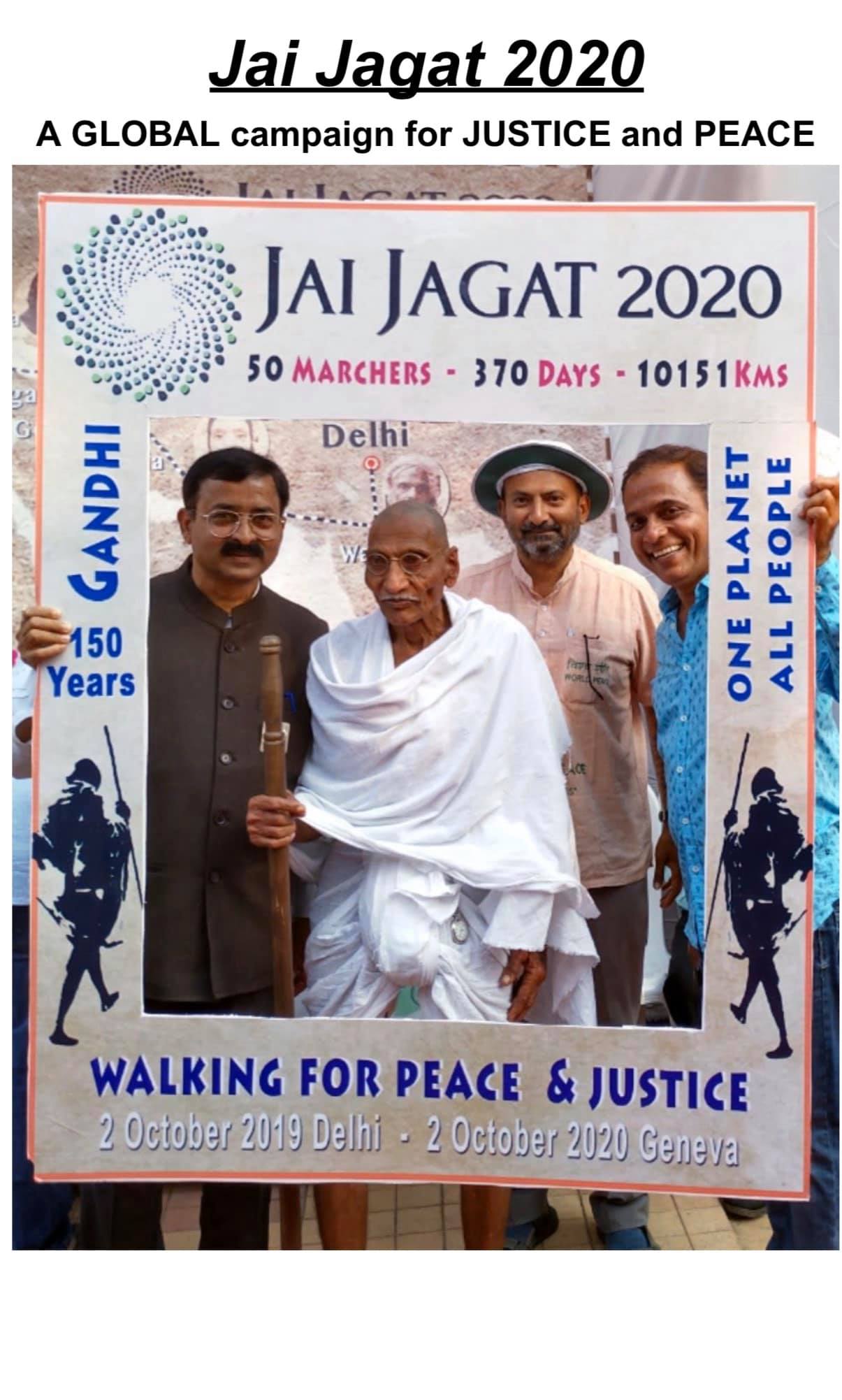
  • Jai Jagat 2020
    A GLOBAL campaign for JUSTICE and PEACE
    On the eve of Kasturba and Mahatma Gandhis (Ba & Bapu) 150th birth anniversary, to spread the message of Gandhian thoughts Globally a Peace Pilgrimage is being organised from 2nd October 2019 - Rajghat, New Delhi to 2nd October 2020 - Geneva, Switzerland.
    A unique and historical Global Peace Pilgrimage of about 11,000 km, over 11 countries, in 370 days by 50 Satyagrahis is happening 1st time in human History. ​As of date we have already completed 2,140 km walk in 6 Indian states over 120 days and now we are getting ready for international walks 1st phase till Geneva, Switzerland ending on 2nd October 2020.
    Jai Jagat 2020 - Global Peace Pilgrimage is the most unique because of the 50 Satyagrahis, almost one third i.e. 15 Satyagrahis are from 6 global countries, 15 adivasi activists & farmers are from remote villages all over India and 15 youth from 11 different Indian states right from Manipur to Kerala to Rajasthan. 30 adivasi activists and farmers are from underprivileged section of Indian society. Also overall 15 women Satyagrahis represents todays changing

    world. Our Satyagrahis also represents key 6 global religions namely Hindu, Muslim, Christian, Sikh, Buddhist and Jain, live demonstrating perfect religious Harmony among the Satyagrahis.
    Our team of Satyagrahis are from age groups of 21 to 76, a young girl post graduate student of 21 years from France and senior most Satyagrahi a Indian citizen of 76 years are our key asset. Our Jai Jagat 2020 - Global Peace Pilgrimage will go through 6 Indian states for 4 months (Rajghat, New Delhi to Sevagram, Wardha in Maharashtra) and in the international phase through 8 months & 10 countries namely Dubai, Iran, Armenia, Georgia, Bulgaria, Serbia, Bosnia, Croatia, Italy, Switzerland.
    FOUR key pillars of Jai Jagat 2020 - Global Peace Pilgrimage are :
    ● Eradication of poverty
    ● Eradication of social disparities
    ● Promotion of Peace & Harmony in human society
    ● Promotion of awareness & concerns on environment protection May PEACE prevail on Mother Earth..... Jai Jagat.
    Our walk is fully based on public financial support, please write to me for any more information and for financial support to Jai Jagat 2020 - Global Peace Pilgrimage to yogeshmathuria59@gmail.com
    Or call on +91 9821133587 / +91 93596 79195
    **********
    Yogesh R Mathuria
    Jai Jagat 2020 A GLOBAL campaign for JUSTICE and PEACE On the eve of Kasturba and Mahatma Gandhi's (Ba & Bapu) 150th birth anniversary, to spread the message of Gandhian thoughts Globally a Peace Pilgrimage is being organised from 2nd October 2019 - Rajghat, New Delhi to 2nd October 2020 - Geneva, Switzerland. A unique and historical Global Peace Pilgrimage of about 11,000 km, over 11 countries, in 370 days by 50 Satyagrahis is happening 1st time in human History. ​As of date we have already completed 2,140 km walk in 6 Indian states over 120 days and now we are getting ready for international walk's 1st phase till Geneva, Switzerland ending on 2nd October 2020. Jai Jagat 2020 - Global Peace Pilgrimage is the most unique because of the 50 Satyagrahis, almost one third i.e. 15 Satyagrahis are from 6 global countries, 15 adivasi activists & farmers are from remote villages all over India and 15 youth from 11 different Indian states right from Manipur to Kerala to Rajasthan. 30 adivasi activists and farmers are from underprivileged section of Indian society. Also overall 15 women Satyagrahis represents today's changing world. Our Satyagrahis also represents key 6 global religions namely Hindu, Muslim, Christian, Sikh, Buddhist and Jain, live demonstrating perfect religious Harmony among the Satyagrahis. Our team of Satyagrahis are from age groups of 21 to 76, a young girl post graduate student of 21 years from France and senior most Satyagrahi a Indian citizen of 76 years are our key asset. Our Jai Jagat 2020 - Global Peace Pilgrimage will go through 6 Indian states for 4 months (Rajghat, New Delhi to Sevagram, Wardha in Maharashtra) and in the international phase through 8 months & 10 countries namely Dubai, Iran, Armenia, Georgia, Bulgaria, Serbia, Bosnia, Croatia, Italy, Switzerland. FOUR key pillars of Jai Jagat 2020 - Global Peace Pilgrimage are : ● Eradication of poverty ● Eradication of social disparities ● Promotion of Peace & Harmony in human society ● Promotion of awareness & concerns on environment protection May PEACE prevail on Mother Earth..... Jai Jagat. Our walk is fully based on public financial support, please write to me for any more information and for financial support to Jai Jagat 2020 - Global Peace Pilgrimage to yogeshmathuria59@gmail.com Or call on +91 9821133587 / +91 93596 79195 ********** Yogesh R Mathuria
    0 تبصرے 0 شیئرز 47 ویوز
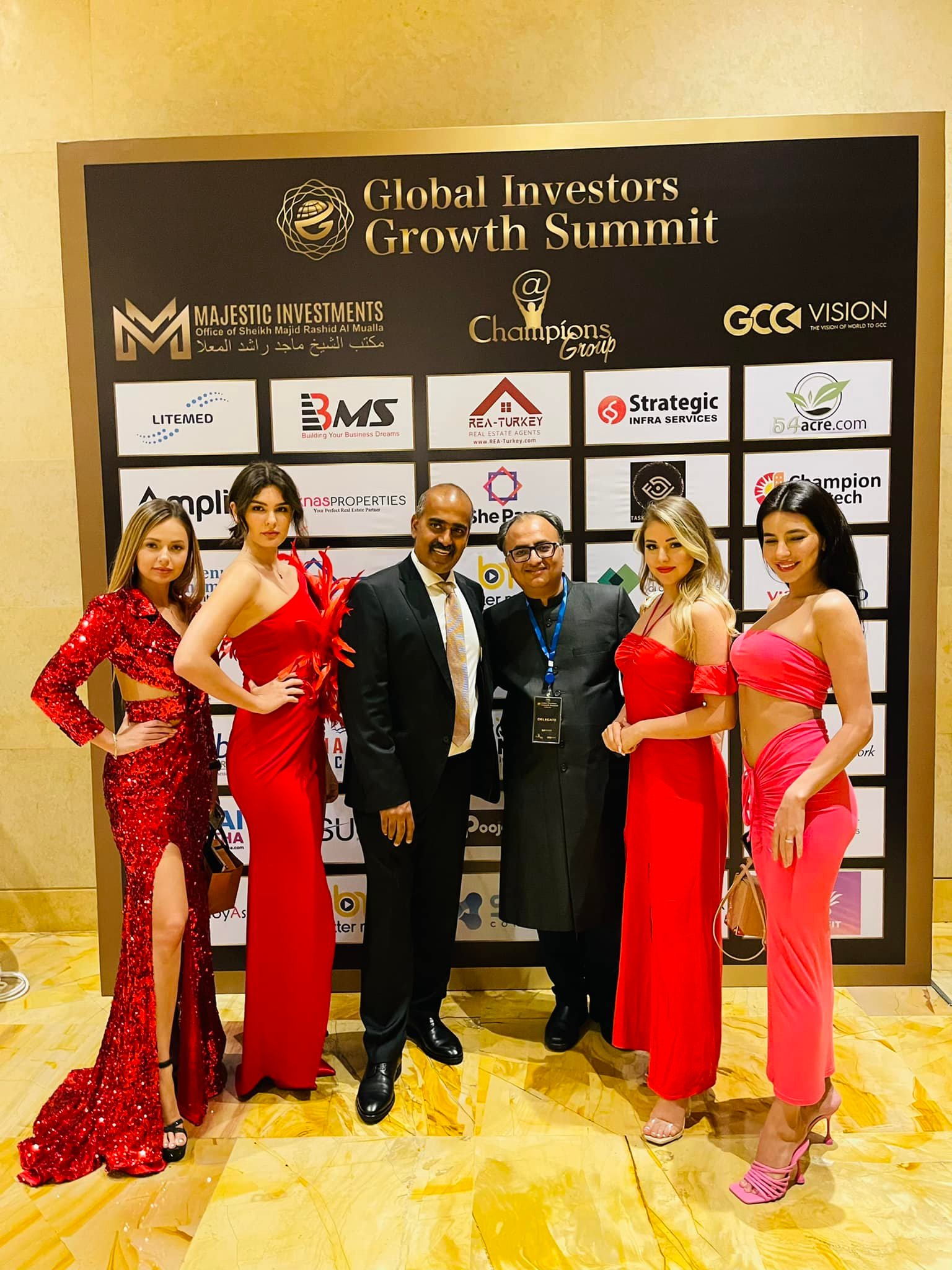
  • It’s the first time I worked up the courage in my life to talk to models !

    I was always taught to stay away from them, don’t know who taught it but I was and still am intimated by beautiful females, I want to see them as equal human beings , nothing more, nothing less !

    When we find someone intimidating it usually means that we have fear of them at some level in the limbic / reptilian brain, and that fear makes our mind num with a hormone called catecholamines !

    It can happen when you meet anyone who you are intimated by, could be a man, woman, powerful person or beautiful person.

    I don’t have this fear anymore when it comes to talking to powerful humans, as I have met too many and managed to talk to them, be it queen of Qatar or President Musharraf, I take them as fellow human beings and children of Adam.

    Today I worked up the courage and met 12 Miss World winners from their country !

    Here are 4 most beautiful ladies of their country !

    I was amazed how nice they were, Mis Romania is becoming a heart surgeon for children, Miss ukraine is a lawyer and doing a Phd , miss poland is a Graphics Specialist and agreed to consider mentoring students at Pakistan Media City - Karachi

    I am very glad and proud of myself to work up the courage to say Hello !

    I am sharing this so you can also look into yourself and see, what are you fearful of ? Work up the courage and try to conquer yourself !

    Miss Ukraine https://instagram.com/violetta_torianyk

    Miss Romania https://instagram.com/alexandrastroe

    Miss Armenia https://instagram.com/vika_baloyan

    and miss Poland https://instagram.com/karolinaskowerska
    It’s the first time I worked up the courage in my life to talk to models ! I was always taught to stay away from them, don’t know who taught it but I was and still am intimated by beautiful females, I want to see them as equal human beings , nothing more, nothing less ! When we find someone intimidating it usually means that we have fear of them at some level in the limbic / reptilian brain, and that fear makes our mind num with a hormone called catecholamines ! It can happen when you meet anyone who you are intimated by, could be a man, woman, powerful person or beautiful person. I don’t have this fear anymore when it comes to talking to powerful humans, as I have met too many and managed to talk to them, be it queen of Qatar or President Musharraf, I take them as fellow human beings and children of Adam. Today I worked up the courage and met 12 Miss World winners from their country ! Here are 4 most beautiful ladies of their country ! I was amazed how nice they were, Mis Romania is becoming a heart surgeon for children, Miss ukraine is a lawyer and doing a Phd , miss poland 🇵🇱is a Graphics Specialist and agreed to consider mentoring students at Pakistan Media City - Karachi I am very glad and proud of myself to work up the courage to say Hello ! I am sharing this so you can also look into yourself and see, what are you fearful of ? Work up the courage and try to conquer yourself ! Miss Ukraine 🇺🇦 https://instagram.com/violetta_torianyk Miss Romania 🇷🇴 https://instagram.com/alexandrastroe Miss Armenia 🇦🇲 https://instagram.com/vika_baloyan and miss Poland 🇵🇱 https://instagram.com/karolinaskowerska
    0 تبصرے 0 شیئرز 81 ویوز
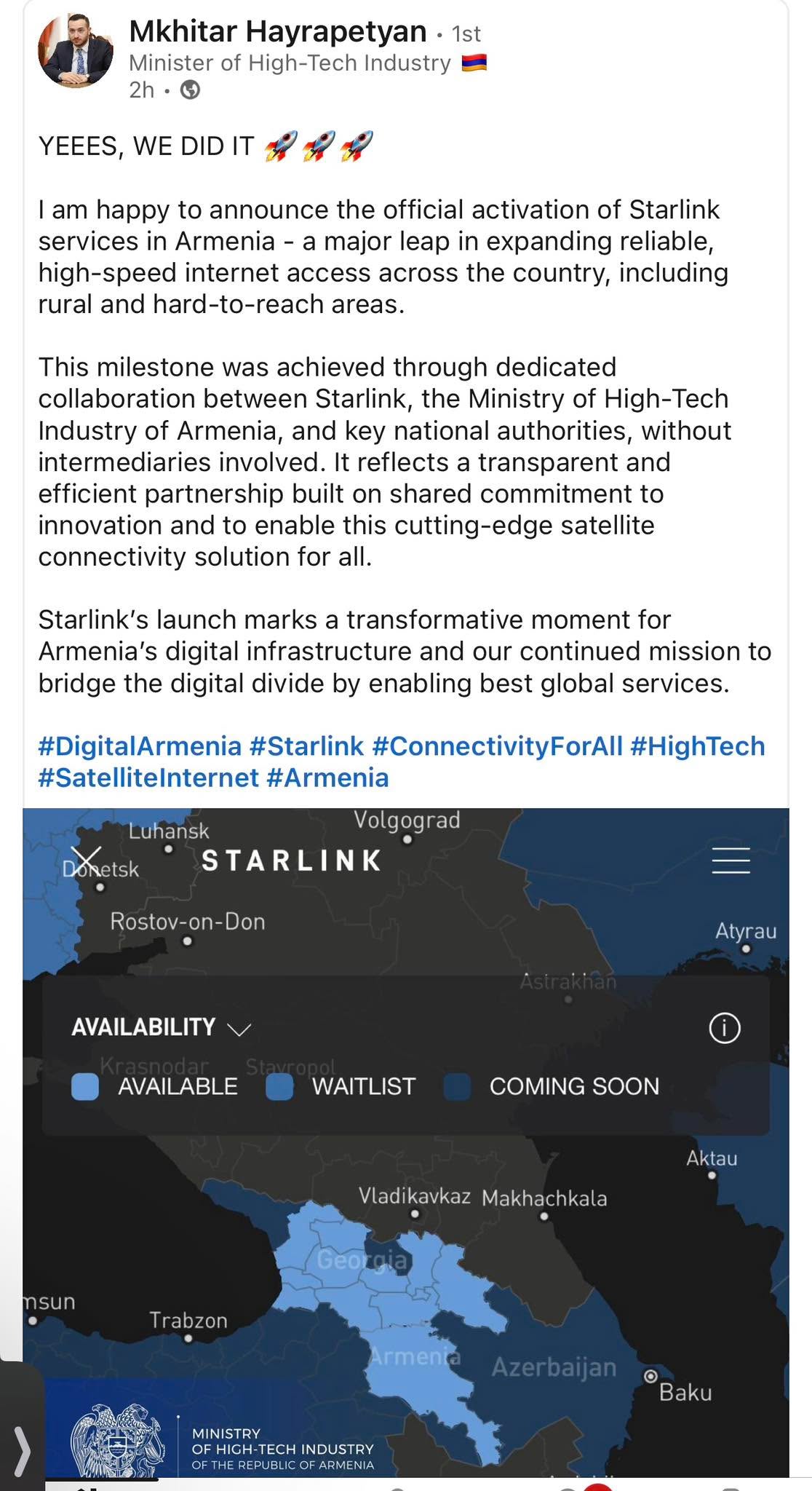
  • Congratulations to #Armenia on getting access to #starlink
    Congratulations to #Armenia on getting access to #starlink
    0 تبصرے 0 شیئرز 45 ویوز
  • “ Two key STARLINK applications have been officially approved by Armenia:

    License to operate a public electronic communication network;
    License to use radio frequency bands on a secondary basis for global satellite communication systems.

    With the necessary licenses and permissions in place, we are now moving into the testing phase, which I believe will be successfully completed in the coming months. This marks a significant step toward enhancing satellite connectivity and unlocking edge solutions for Armenia.” Mkhitar Hayrapetyan
    “ Two key STARLINK applications have been officially approved by 🇦🇲 Armenia: 1️⃣ License to operate a public electronic communication network; 2️⃣ License to use radio frequency bands on a secondary basis for global satellite communication systems. With the necessary licenses and permissions in place, we are now moving into the testing phase, which I believe will be successfully completed in the coming months. This marks a significant step toward enhancing satellite connectivity and unlocking edge solutions for Armenia.” Mkhitar Hayrapetyan
    0 تبصرے 0 شیئرز 89 ویوز
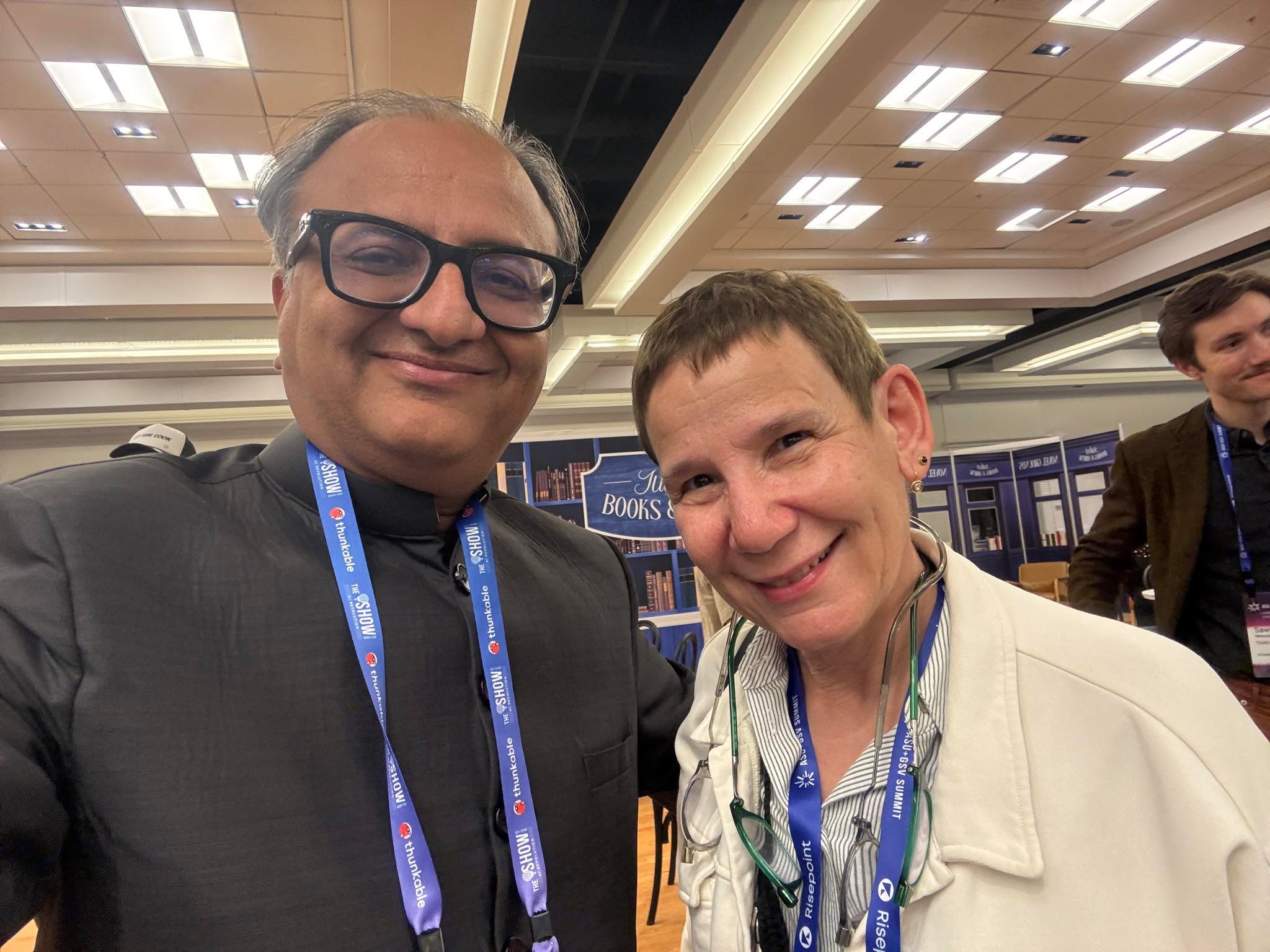
  • Met with Marie Lou Papazian the Chief Executive Officer of the TUMO Center for Creative Technologies in Armenia. As the founding CEO, she developed TUMO’s educational program and led the design and construction of its flagship facility in Yerevan.  

    Before her tenure at TUMO, Papazian led the Education for Development Foundation, which connected Armenian students with their global peers through online educational activities. She also has experience as a construction manager on prominent high-rise buildings in New York City. 

    Papazian holds a Master’s Degree in Computing in Education from Teachers College at Columbia University and is a graduate of Harvard Business School’s General Management Program. In 2019, she was awarded the Ordre des Palmes académiques, a national honor bestowed by the French Republic on distinguished figures in culture and education. 

    Under her leadership, TUMO has expanded both within Armenia and internationally, offering free education to thousands of teenagers in technology and design.
    Met with Marie Lou Papazian the Chief Executive Officer of the TUMO Center for Creative Technologies in Armenia. As the founding CEO, she developed TUMO’s educational program and led the design and construction of its flagship facility in Yerevan.   Before her tenure at TUMO, Papazian led the Education for Development Foundation, which connected Armenian students with their global peers through online educational activities. She also has experience as a construction manager on prominent high-rise buildings in New York City.  Papazian holds a Master’s Degree in Computing in Education from Teachers College at Columbia University and is a graduate of Harvard Business School’s General Management Program. In 2019, she was awarded the Ordre des Palmes académiques, a national honor bestowed by the French Republic on distinguished figures in culture and education.  Under her leadership, TUMO has expanded both within Armenia and internationally, offering free education to thousands of teenagers in technology and design.
    0 تبصرے 0 شیئرز 45 ویوز
  • Congratulations Armenia and minister Մխիթար Հայրապետյան / Mkhitar Hayrapetyan

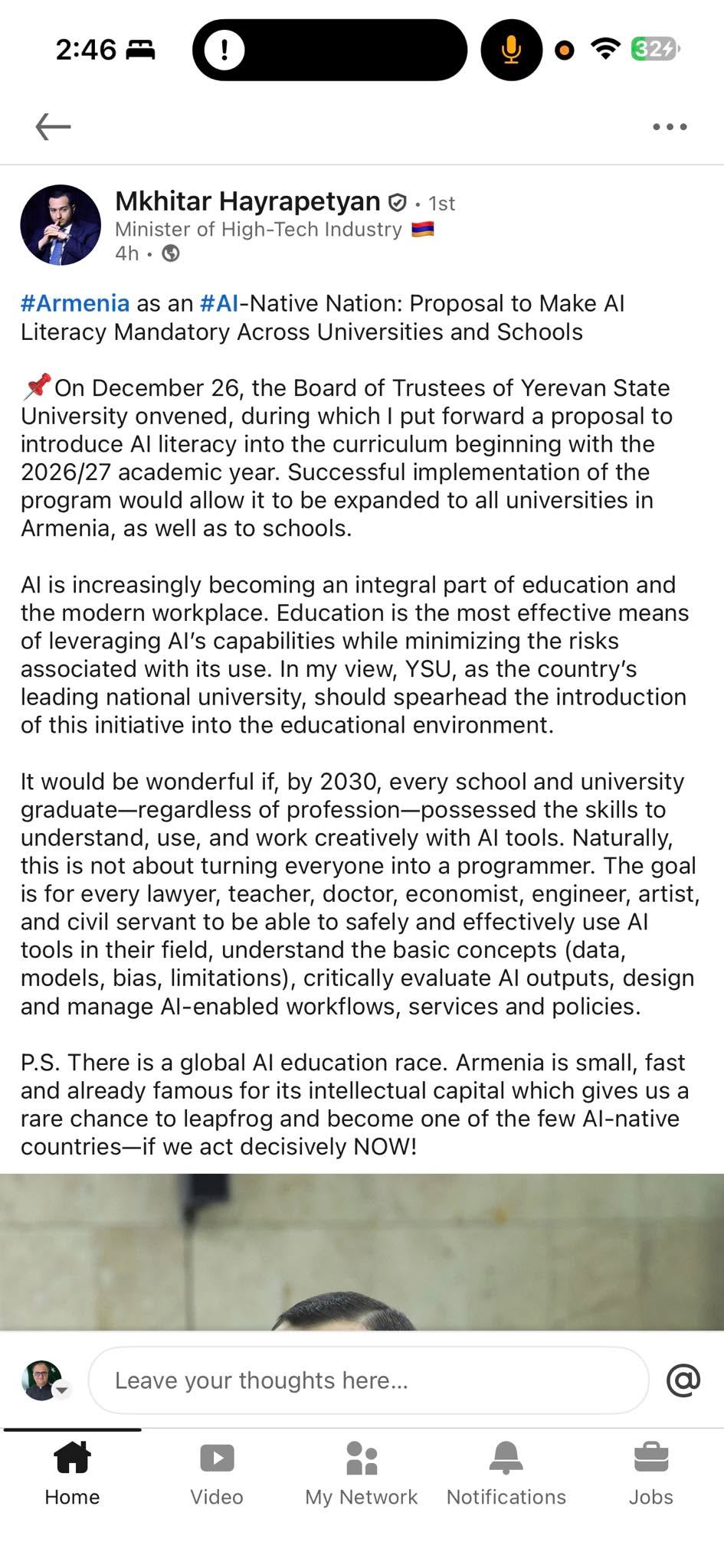
    #Armenia as an #AI-Native Nation: Proposal to Make AI Literacy Mandatory Across Universities and Schools

    On December 26, the Board of Trustees of Yerevan State University onvened, during which I put forward a proposal to introduce AI literacy into the curriculum beginning with the 2026/27 academic year. Successful implementation of the program would allow it to be expanded to all universities in Armenia, as well as to schools.

    AI is increasingly becoming an integral part of education and the modern workplace. Education is the most effective means of leveraging AI’s capabilities while minimizing the risks associated with its use. In my view, YSU, as the country’s leading national university, should spearhead the introduction of this initiative into the educational environment.

    It would be wonderful if, by 2030, every school and university graduate—regardless of profession—possessed the skills to understand, use, and work creatively with AI tools. Naturally, this is not about turning everyone into a programmer. The goal is for every lawyer, teacher, doctor, economist, engineer, artist, and civil servant to be able to safely and effectively use AI tools in their field, understand the basic concepts (data, models, bias, limitations), critically evaluate AI outputs, design and manage AI-enabled workflows, services and policies.

    P.S. There is a global AI education race. Armenia is small, fast and already famous for its intellectual capital which gives us a rare chance to leapfrog and become one of the few AI-native countries—if we act decisively NOW!
    Congratulations Armenia 🇦🇲 and minister Մխիթար Հայրապետյան / Mkhitar Hayrapetyan #Armenia as an #AI-Native Nation: Proposal to Make AI Literacy Mandatory Across Universities and Schools 📌On December 26, the Board of Trustees of Yerevan State University onvened, during which I put forward a proposal to introduce AI literacy into the curriculum beginning with the 2026/27 academic year. Successful implementation of the program would allow it to be expanded to all universities in Armenia, as well as to schools. AI is increasingly becoming an integral part of education and the modern workplace. Education is the most effective means of leveraging AI’s capabilities while minimizing the risks associated with its use. In my view, YSU, as the country’s leading national university, should spearhead the introduction of this initiative into the educational environment. It would be wonderful if, by 2030, every school and university graduate—regardless of profession—possessed the skills to understand, use, and work creatively with AI tools. Naturally, this is not about turning everyone into a programmer. The goal is for every lawyer, teacher, doctor, economist, engineer, artist, and civil servant to be able to safely and effectively use AI tools in their field, understand the basic concepts (data, models, bias, limitations), critically evaluate AI outputs, design and manage AI-enabled workflows, services and policies. P.S. There is a global AI education race. Armenia is small, fast and already famous for its intellectual capital which gives us a rare chance to leapfrog and become one of the few AI-native countries—if we act decisively NOW!
    0 تبصرے 0 شیئرز 61 ویوز
More Results