• #rsisb
    Roll no.247
    Foundation level

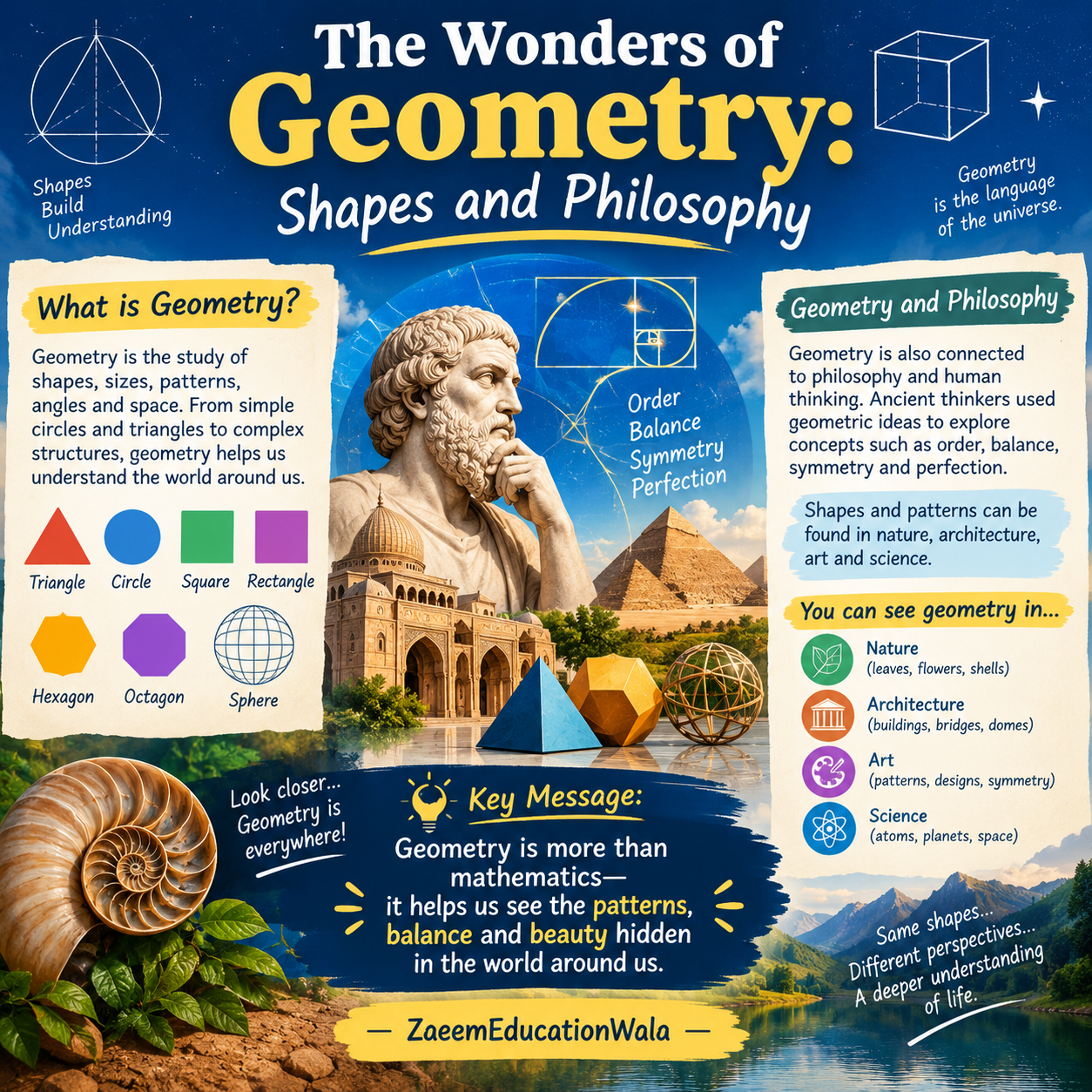
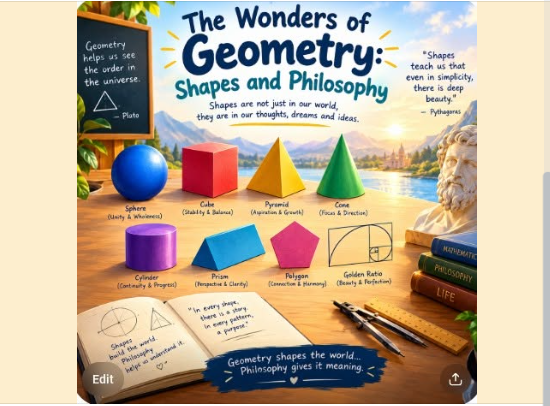
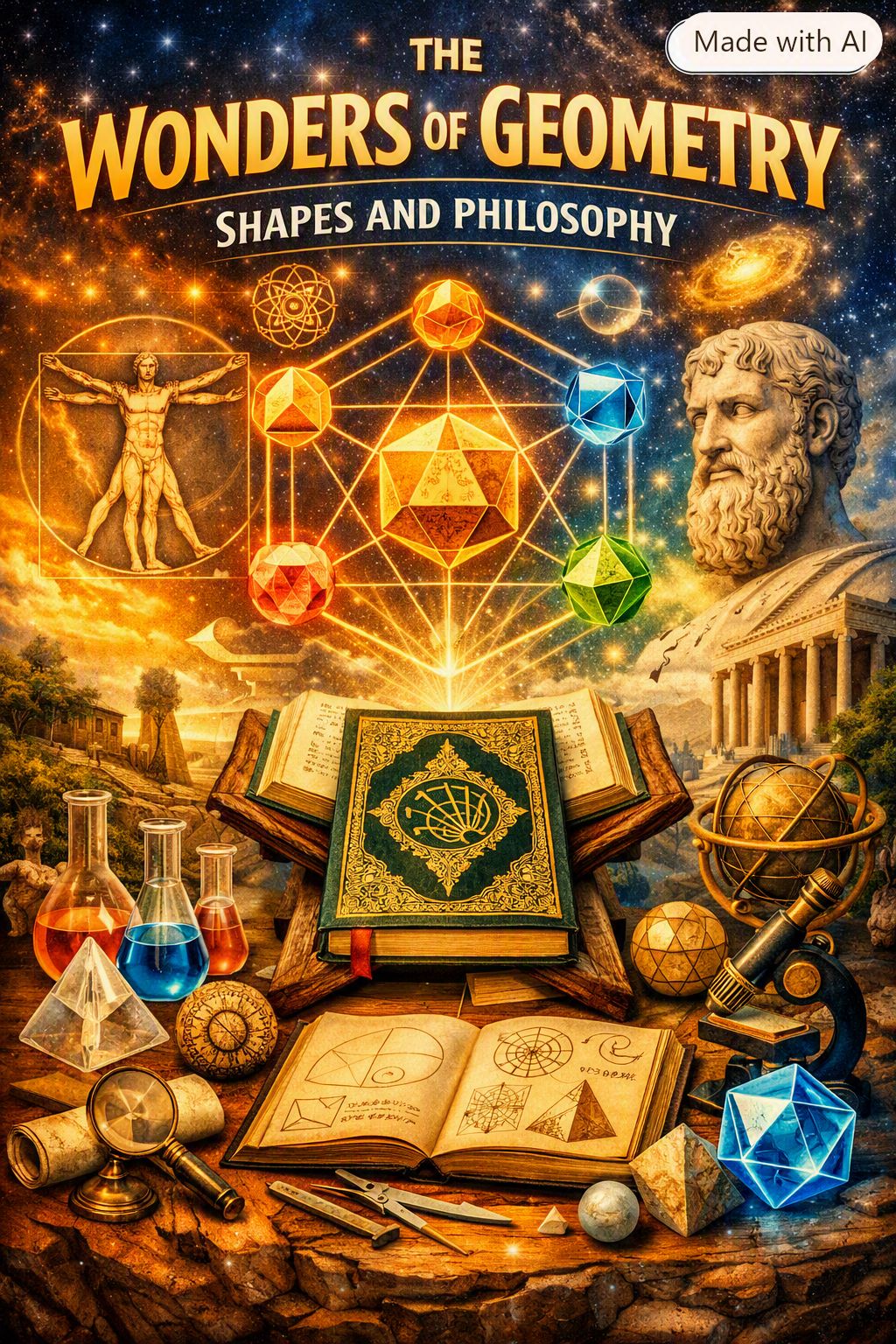
    **The Wonders of Geometry: Shapes and Philosophy**

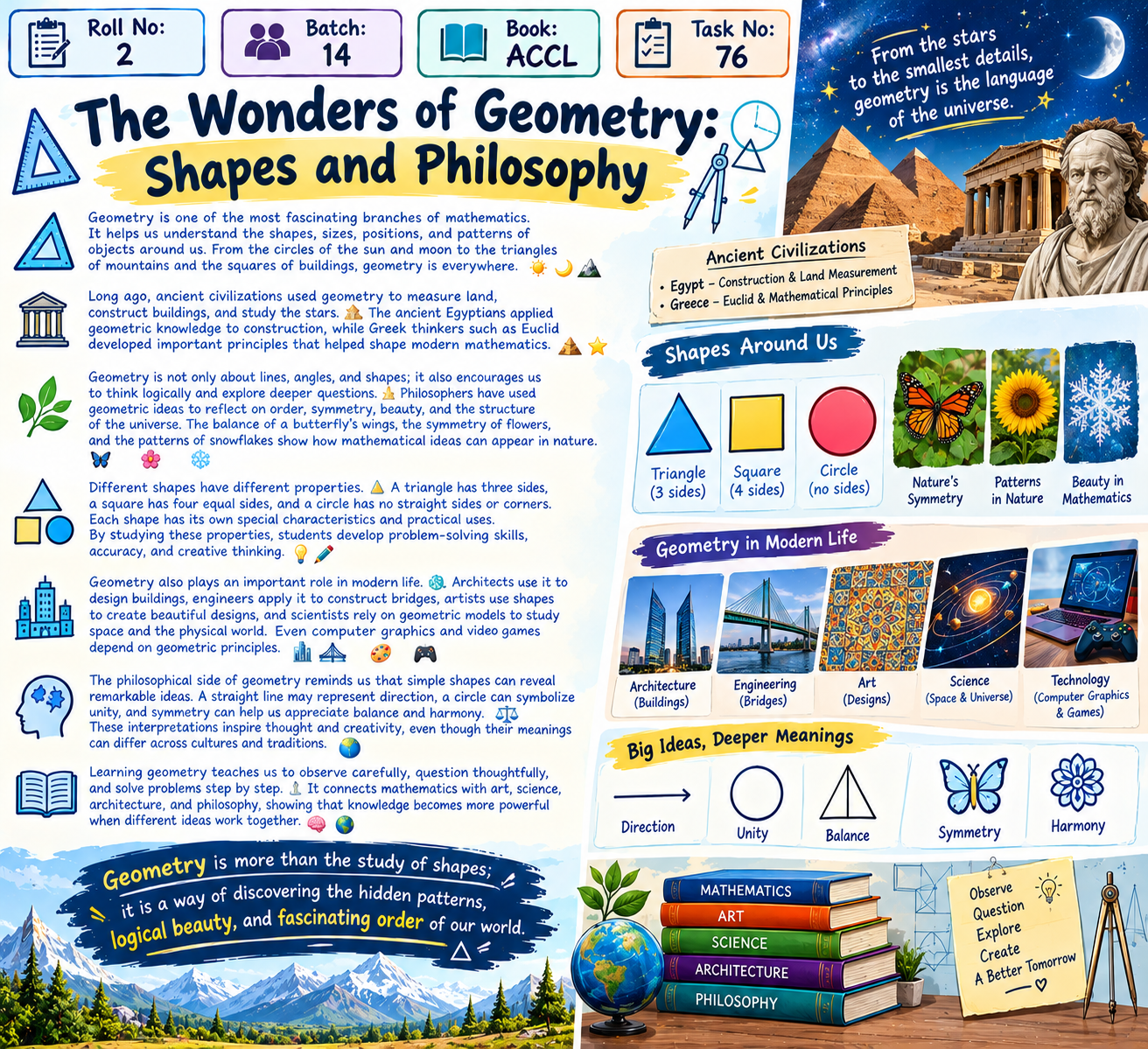
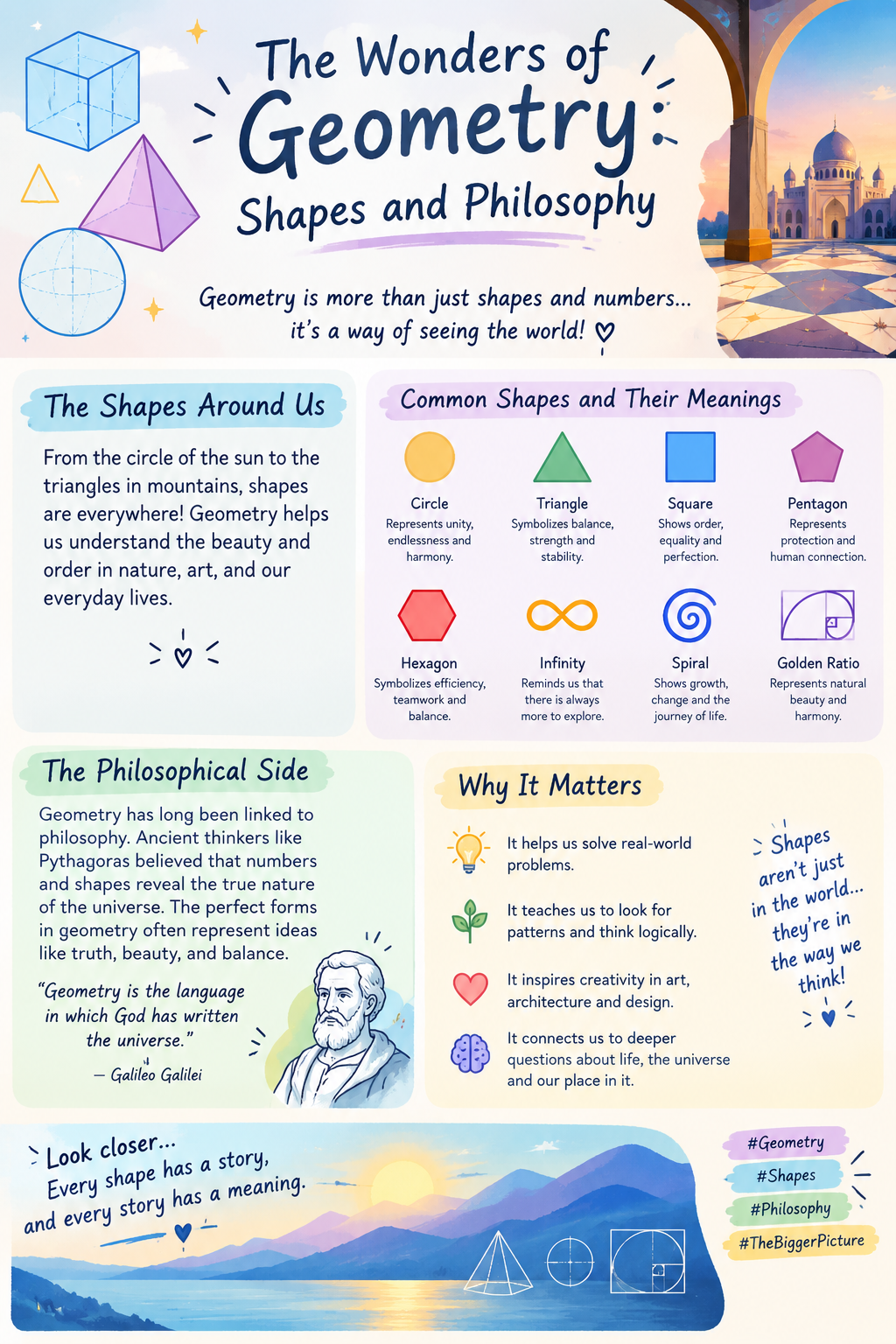
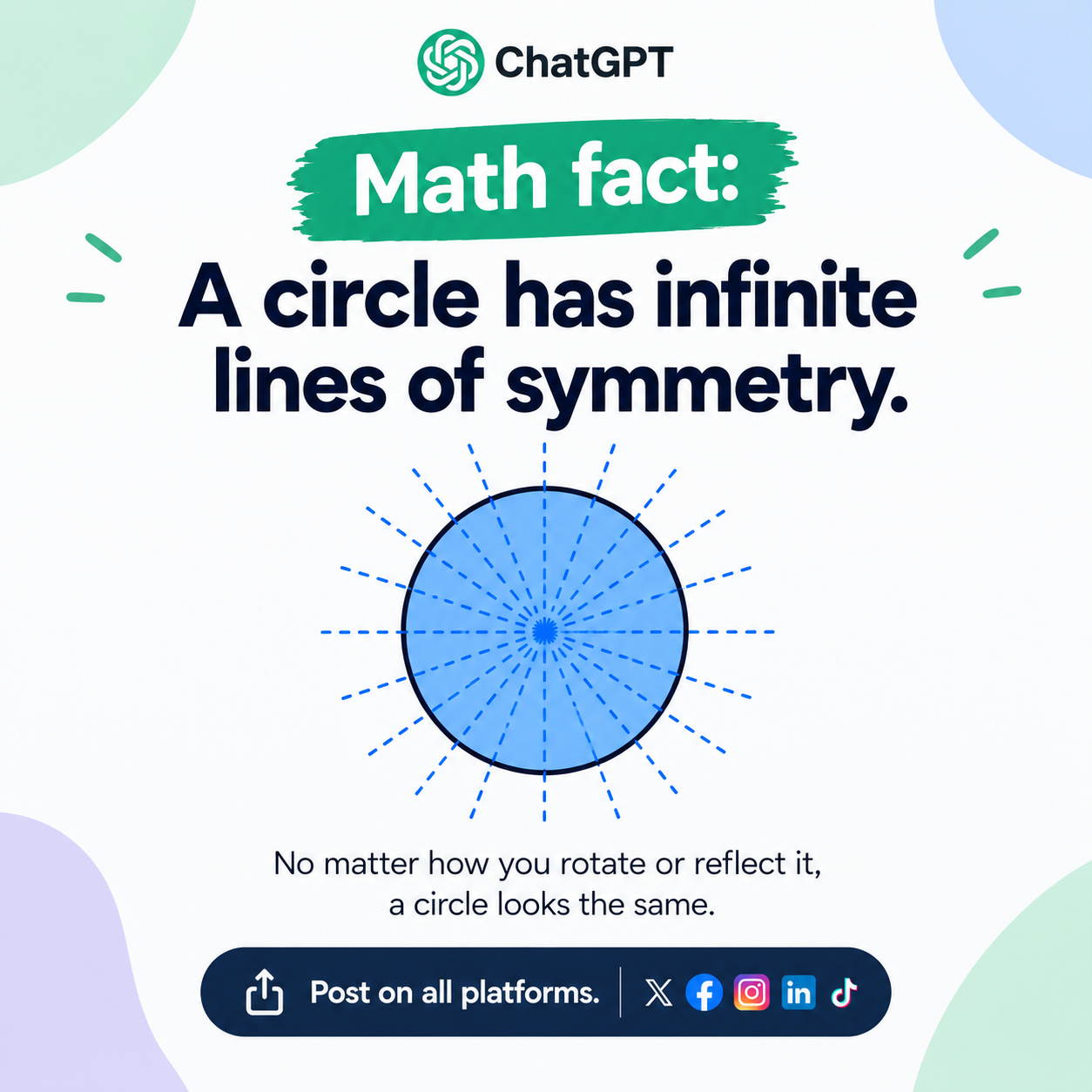
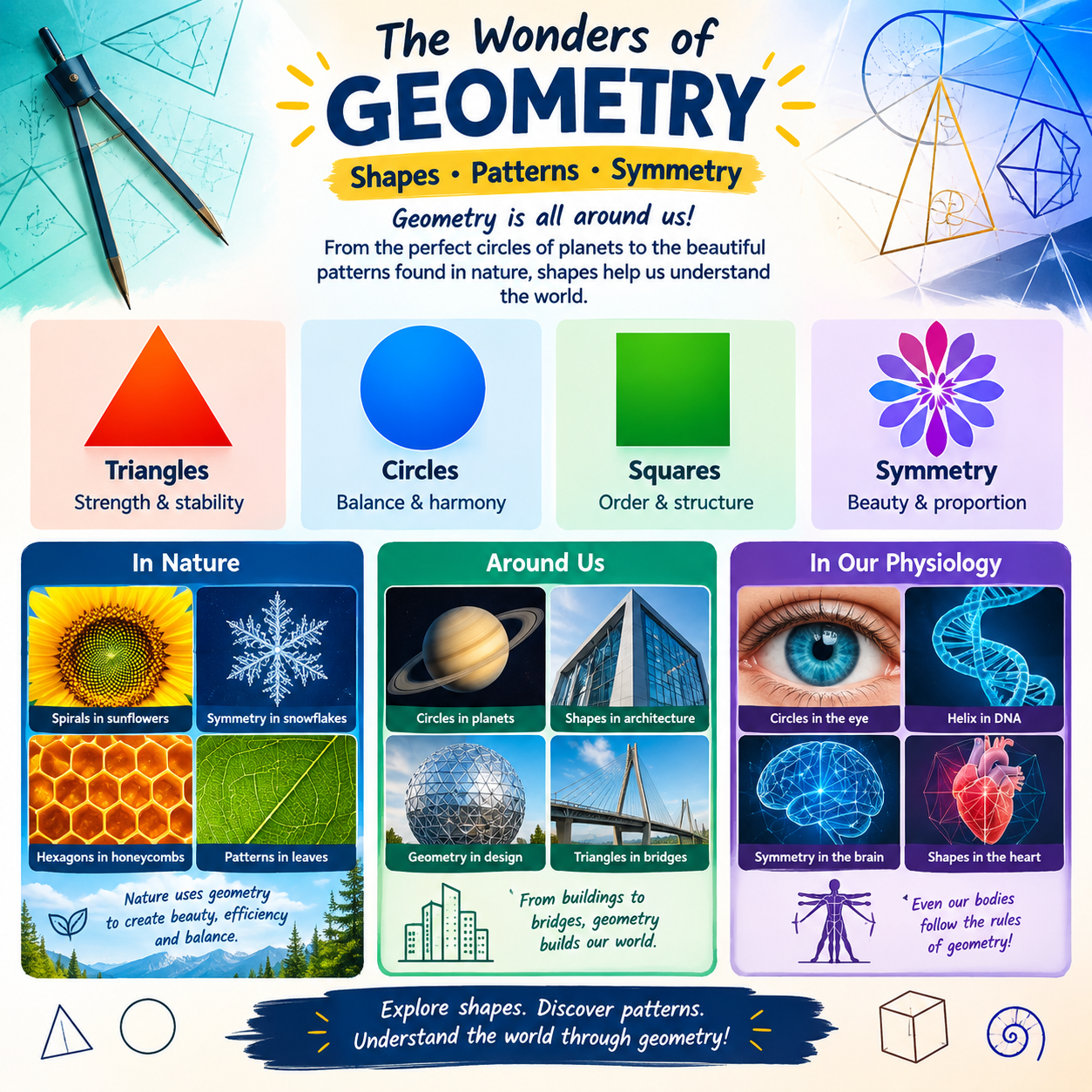
    Geometry is much more than lines, angles, circles, and formulas—it is a fascinating way of understanding the patterns, structures, and beauty that surround us every day. From the perfect symmetry of a flower to the curves of a planet , from the architecture of magnificent buildings to the shapes found in art and nature , geometry helps us see the world from a completely new perspective.

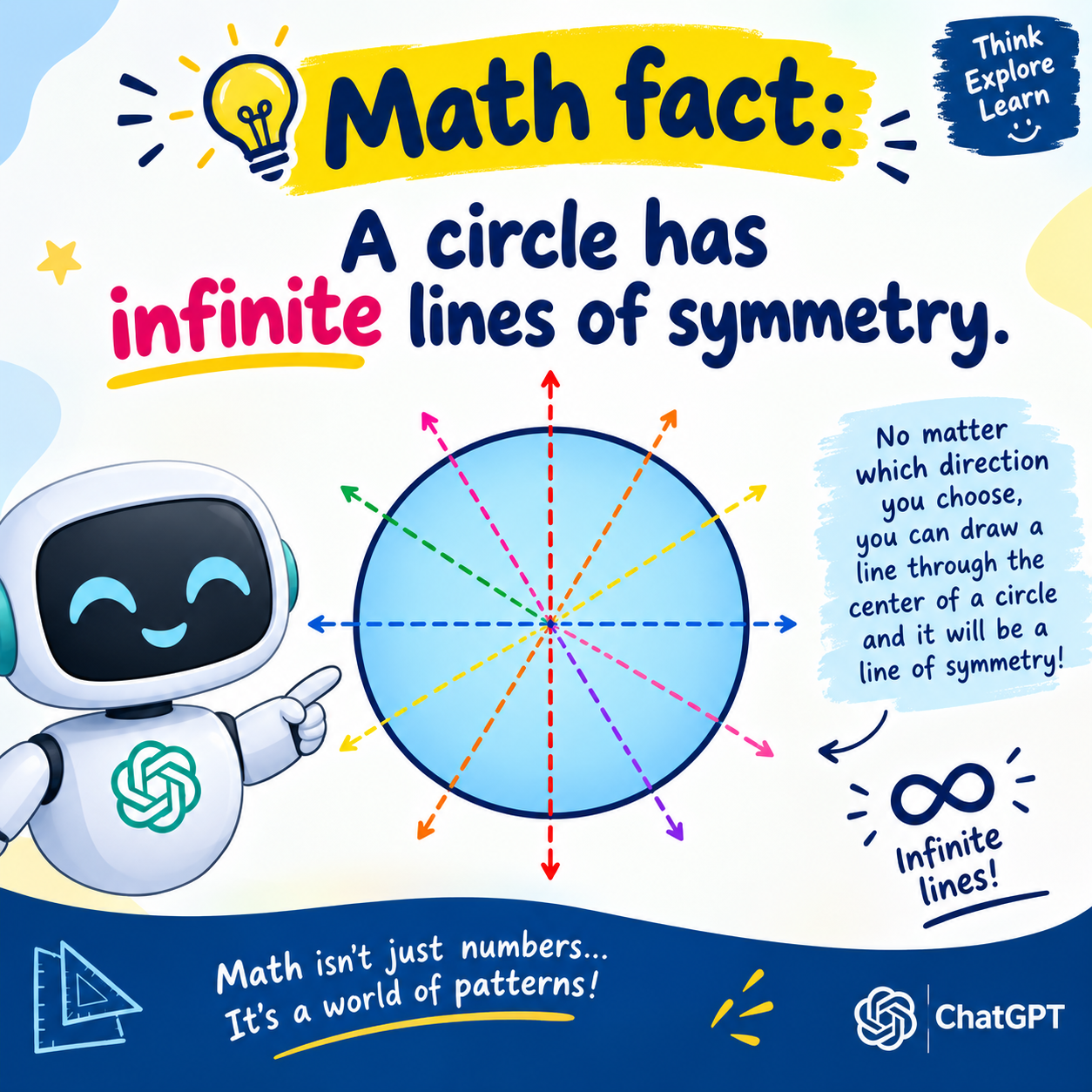
    **Shapes tell stories.** Triangles can represent strength and stability, circles can symbolize unity and infinity, while squares and rectangles appear in countless structures around us. Every shape has its own properties, relationships, and mathematical beauty.

    **But geometry also connects with philosophy.** Throughout history, thinkers have wondered why mathematical patterns appear so naturally in the universe. Why do certain shapes create balance? Why does symmetry feel beautiful? How can simple mathematical ideas describe complex structures in nature? These questions show that geometry is not only about calculating measurements—it can also inspire curiosity, imagination, and deeper thinking.

    In this fascinating journey, we explore how geometry connects **mathematics, science, art, architecture, nature, and philosophy**. We discover how ancient civilizations used geometric ideas, how mathematicians studied shapes and space, and how geometric patterns continue to influence modern technology and design.

    Geometry encourages us to look beyond what is immediately visible. A simple line can become an angle, angles can form shapes, shapes can create patterns, and patterns can reveal remarkable relationships. The more we explore, the more we realize that mathematics can be both logical and beautiful.

    **The Wonders of Geometry** is an invitation to ask questions, observe carefully, think creatively, and appreciate the hidden mathematical order of our world. Whether you are a student, teacher, science enthusiast, artist, or simply someone curious about the universe, geometry offers endless discoveries.

    **Explore the shapes. Discover the patterns. Question the ideas. And experience the philosophy hidden within geometry!**

    #TheWondersOfGeometry #Geometry #Shapes #Mathematics #Philosophy #MathIsBeautiful #GeometryLovers #MathematicsEducation #Learning #ScienceAndMath #CreativeLearning #GeometricShapes #Symmetry #Patterns #Angles #Circles #Triangles #Architecture #NatureAndGeometry #MathInNature #ArtAndGeometry #STEM #Education #Knowledge #Curiosity #ExploreAndLearn #MathematicalBeauty #AmazingMath #LearningIsFun #Science #Inspiration
    #rsisb Roll no.247 Foundation level 🌟📐 **The Wonders of Geometry: Shapes and Philosophy** 📐🌟 Geometry is much more than lines, angles, circles, and formulas—it is a fascinating way of understanding the patterns, structures, and beauty that surround us every day. 🌍✨ From the perfect symmetry of a flower 🌸 to the curves of a planet 🌎, from the architecture of magnificent buildings 🏛️ to the shapes found in art and nature 🎨, geometry helps us see the world from a completely new perspective. 🔺 **Shapes tell stories.** Triangles can represent strength and stability, circles can symbolize unity and infinity, while squares and rectangles appear in countless structures around us. Every shape has its own properties, relationships, and mathematical beauty. 📏🔵🟦 🤔 **But geometry also connects with philosophy.** Throughout history, thinkers have wondered why mathematical patterns appear so naturally in the universe. Why do certain shapes create balance? Why does symmetry feel beautiful? How can simple mathematical ideas describe complex structures in nature? These questions show that geometry is not only about calculating measurements—it can also inspire curiosity, imagination, and deeper thinking. 🧠✨ 📚 In this fascinating journey, we explore how geometry connects **mathematics, science, art, architecture, nature, and philosophy**. We discover how ancient civilizations used geometric ideas, how mathematicians studied shapes and space, and how geometric patterns continue to influence modern technology and design. 🚀📐 🌌 Geometry encourages us to look beyond what is immediately visible. A simple line can become an angle, angles can form shapes, shapes can create patterns, and patterns can reveal remarkable relationships. The more we explore, the more we realize that mathematics can be both logical and beautiful. 💫 🎯 **The Wonders of Geometry** is an invitation to ask questions, observe carefully, think creatively, and appreciate the hidden mathematical order of our world. Whether you are a student, teacher, science enthusiast, artist, or simply someone curious about the universe, geometry offers endless discoveries. 🔍📖🌟 ✨ **Explore the shapes. Discover the patterns. Question the ideas. And experience the philosophy hidden within geometry!** 📐🧠🌍 #TheWondersOfGeometry #Geometry #Shapes #Mathematics #Philosophy #MathIsBeautiful #GeometryLovers #MathematicsEducation #Learning #ScienceAndMath #CreativeLearning #GeometricShapes #Symmetry #Patterns #Angles #Circles #Triangles #Architecture #NatureAndGeometry #MathInNature #ArtAndGeometry #STEM #Education #Knowledge #Curiosity #ExploreAndLearn #MathematicalBeauty #AmazingMath #LearningIsFun #Science #Inspiration 📐🔺🔵✨🌍🧠📚🎨🚀
    0 Σχόλια 0 Μοιράστηκε 409 Views
  • #rsisb
    Roll no 248
    Foundation level
    story post no 12
    **The Wonders of Geometry: Shapes and Philosophy**

    Geometry is more than just lines, angles, and shapes—it is a fascinating way to understand the world around us. From the perfect symmetry of circles and triangles to the amazing patterns found in nature, geometry connects mathematics with art, science, architecture, and even philosophy.

    In this video, we explore the beauty of geometric shapes and discover how they can inspire us to think differently about balance, order, space, and life. Every shape tells a story, and every pattern reveals a hidden idea.

    Let’s explore the wonderful world of geometry, expand our curiosity, and see mathematics from a whole new perspective!

    **What is your favorite geometric shape?** Tell us in the comments!

    #Geometry #Mathematics #Shapes #Philosophy #MathLovers #GeometryLovers #Learning #Education #Science #ArtAndMath #Symmetry #Patterns #CreativeThinking #Knowledge #Curiosity #MathIsFun #AmazingMath #ExploreAndLearn
    #rsisb Roll no 248 Foundation level story post no 12 ✨📐 **The Wonders of Geometry: Shapes and Philosophy** 🔺🌀 Geometry is more than just lines, angles, and shapes—it is a fascinating way to understand the world around us. 🌍📏 From the perfect symmetry of circles and triangles to the amazing patterns found in nature, geometry connects mathematics with art, science, architecture, and even philosophy. 🧠🎨🏛️ In this video, we explore the beauty of geometric shapes and discover how they can inspire us to think differently about balance, order, space, and life. 🔷✨ Every shape tells a story, and every pattern reveals a hidden idea. 💫 Let’s explore the wonderful world of geometry, expand our curiosity, and see mathematics from a whole new perspective! 🚀📚❤️ 💬 **What is your favorite geometric shape?** Tell us in the comments! 👇😊 #Geometry #Mathematics #Shapes #Philosophy #MathLovers #GeometryLovers #Learning #Education #Science #ArtAndMath #Symmetry #Patterns #CreativeThinking #Knowledge #Curiosity #MathIsFun #AmazingMath #ExploreAndLearn 📐🔺🌀✨🧠🌟
    0 Σχόλια 0 Μοιράστηκε 2969 Views
  • #rsisb
    Roll No.240
    Story No.11
    Foundation Level

    # The Wonders of Geometry: Shapes and Philosophy

    Geometry is far more than a branch of mathematics—it is a language that describes the beauty, balance, and structure of the world around us. From the symmetry of a butterfly's wings to the towering pyramids of Egypt, geometric shapes are found everywhere in nature, architecture, art, and technology. Circles represent unity and infinity, triangles symbolize strength and stability, while squares and rectangles reflect order, balance, and reliability. These timeless shapes help us understand space, design, and the hidden patterns that shape our universe.

    Beyond calculations and formulas, geometry also carries a deep philosophical meaning. Ancient philosophers believed that geometric forms reflected the harmony and perfection of creation. Studying shapes encourages logical thinking, creativity, and problem-solving while inspiring us to see the connections between mathematics, nature, and human life. Whether you're exploring basic polygons or the mysteries of symmetry, geometry reminds us that beauty and knowledge often share the same foundation. Discover the fascinating world of shapes and uncover the philosophy that has inspired scientists, artists, architects, and thinkers for centuries.

    Rehan School Islamabad Campus
    Asma Shaheen EducationWali
    Irum Asim
    Saima Happinesswali
    #rsisb Roll No.240 Story No.11 Foundation Level # The Wonders of Geometry: Shapes and Philosophy Geometry is far more than a branch of mathematics—it is a language that describes the beauty, balance, and structure of the world around us. From the symmetry of a butterfly's wings to the towering pyramids of Egypt, geometric shapes are found everywhere in nature, architecture, art, and technology. Circles represent unity and infinity, triangles symbolize strength and stability, while squares and rectangles reflect order, balance, and reliability. These timeless shapes help us understand space, design, and the hidden patterns that shape our universe. Beyond calculations and formulas, geometry also carries a deep philosophical meaning. Ancient philosophers believed that geometric forms reflected the harmony and perfection of creation. Studying shapes encourages logical thinking, creativity, and problem-solving while inspiring us to see the connections between mathematics, nature, and human life. Whether you're exploring basic polygons or the mysteries of symmetry, geometry reminds us that beauty and knowledge often share the same foundation. Discover the fascinating world of shapes and uncover the philosophy that has inspired scientists, artists, architects, and thinkers for centuries. Rehan School Islamabad Campus Asma Shaheen EducationWali Irum Asim Saima Happinesswali
    0 Σχόλια 0 Μοιράστηκε 3459 Views
  • #rsisb
    Roll no.239
    Foundation Level


    Geometry is more than the study of shapes, lines, angles, and spaces—it is a way of understanding **order, patterns, balance, and relationships** in the world around us.

    From the symmetry of flowers and snowflakes to the design of buildings, bridges, art, and technology, geometric ideas appear everywhere. Triangles, circles, squares, and polygons help us describe and construct the physical world with precision.

    Geometry also has a fascinating connection with **philosophy**. Ancient thinkers such as Plato viewed mathematical forms as symbols of order and deeper reality. The study of geometry encourages us to ask questions about perfection, proportion, space, and the nature of the world.

    **Geometry shows us that mathematics is not only about numbers—it is also about beauty, structure, imagination, and the way we understand reality.**

    #rsisb Roll no.239 Foundation Level Geometry is more than the study of shapes, lines, angles, and spaces—it is a way of understanding **order, patterns, balance, and relationships** in the world around us. From the symmetry of flowers and snowflakes to the design of buildings, bridges, art, and technology, geometric ideas appear everywhere. Triangles, circles, squares, and polygons help us describe and construct the physical world with precision. Geometry also has a fascinating connection with **philosophy**. Ancient thinkers such as Plato viewed mathematical forms as symbols of order and deeper reality. The study of geometry encourages us to ask questions about perfection, proportion, space, and the nature of the world. **Geometry shows us that mathematics is not only about numbers—it is also about beauty, structure, imagination, and the way we understand reality.**
    0 Σχόλια 0 Μοιράστηκε 2360 Views
  • Rhythms of the Soil: Traditional Music & Dance of Pakistan

    Title: Rhythms of the Soil: Traditional Music & Dance of Pakistan
    Genre: Folk Fusion / Cultural World Music
    Language: English (universal with South Asian cultural themes)
    Part of Series: Color of Pakistan

    About the Song:
    This original track captures the energy, depth, and beauty of Pakistan’s traditional music and dance forms. With instruments like the dhol, tabla, rubab, and flute — and movements that span the villages of Punjab, Sindh, Balochistan, and KPK — this is a tribute to art passed down by heartbeat and harvest.

    Each verse is a step into celebration. Each beat is an echo of ancestry.

    Featured Visual Inspirations:

    Bhangra dancers in mustard fields

    Whirling Sufi dervishes at night

    Rubab players in Khyber mountains

    Sindhi women clapping in circles

    Drummers in Baloch tribal garb

    Subscribe for more cultural storytelling through music.

    #PakistanHeritage #TraditionalDance #RhythmsOfTheSoil #folkmusicpakistan

    Song no 19
    Roll no 51

    Follow Us:
    Instagram: [ / muhammadmujeebasif ]
    LinkedIn: [ / muhammad-mujeeb-asif-a9b3b6363 ]
    Facebook: [ / mujeeb.asif.822421 ]
    YouTube: [ / @mujeeb3810 ]

    FOR any type of song,youtube thumnail,editing,and canva post needed then contect me on whatapps number : 03001040381

    Don’t forget to LIKE, SHARE, and SUBSCRIBE for more inspiring content!
    🪘 Rhythms of the Soil: Traditional Music & Dance of Pakistan 🎶 Title: Rhythms of the Soil: Traditional Music & Dance of Pakistan 🎤 Genre: Folk Fusion / Cultural World Music 🎼 Language: English (universal with South Asian cultural themes) 🎬 Part of Series: Color of Pakistan 🎵 About the Song: This original track captures the energy, depth, and beauty of Pakistan’s traditional music and dance forms. With instruments like the dhol, tabla, rubab, and flute — and movements that span the villages of Punjab, Sindh, Balochistan, and KPK — this is a tribute to art passed down by heartbeat and harvest. Each verse is a step into celebration. Each beat is an echo of ancestry. 💫 🎥 Featured Visual Inspirations: Bhangra dancers in mustard fields Whirling Sufi dervishes at night Rubab players in Khyber mountains Sindhi women clapping in circles Drummers in Baloch tribal garb 🔔 Subscribe for more cultural storytelling through music. #PakistanHeritage #TraditionalDance #RhythmsOfTheSoil #folkmusicpakistan Song no 19 Roll no 51 👉 Follow Us: 📸 Instagram: [ / muhammadmujeebasif ] 💼 LinkedIn: [ / muhammad-mujeeb-asif-a9b3b6363 ] 📘 Facebook: [ / mujeeb.asif.822421 ] 🎥 YouTube: [ / @mujeeb3810 ] FOR any type of song,youtube thumnail,editing,and canva post needed then contect me on whatapps number : 03001040381 Don’t forget to LIKE, SHARE, and SUBSCRIBE for more inspiring content!
    0 Σχόλια 0 Μοιράστηκε 3507 Views 0
  • Last week, a Redditor named easyjet decided to (very belatedly) join the global party that is Facebook. He signed up with an email address he never, ever used. He lied about all of his personal information.

    So he was rightly freaked out when Facebook still managed to predict and "recommend" a huge number of his real-life acquaintances - down to people whose names he barely knew and a woman he dated 19 years ago.

    How does Facebook know who your friends are? Its a mystery that has nagged users since at least 2011, when the Irish Data Protection Commissioner conducted a full-scale investigation into the issue. But four years later, theres still a lot of confusion and misinformation about what Facebooks doing when it "finds" your friends.

    Did it scrape your phone for names and numbers? Run a reverse-image search of your picture? Compile a "shadow" or "ghost" profile on you over a period of years, just waiting for you to log on and "confirm" its guesses?

    Alas, Facebooks actual process isnt actually that sneaky or malicious. In fact, it involves this pretty complex academic field called ... network science.

    In a nutshell, whenever you sign up for a Facebook account, Facebook asks permission to look at your email contacts if youre on a computer, or your phone contacts if youre on a smartphone. When you grant the site permission, it searches your contacts for users already on the network, and it searches other users uploaded contacts for you. That gives it a very primitive outline of your social circles: who you know, but not how you know them or how well.

    To refine that map, Facebook asks you more questions about yourself: where you went to school, when you were born, what city you live in. Each field in your Facebook profile and each interaction you make through that profile actually double as a source of data for Facebooks mapping algorithms. What theyre trying to do is determine the structure of the network: where the cliques are, which people bridge them, who knows who.

    Once Facebook knows the structure of your social network, it can analyse it to predict (with startling accuracy!) not only the people youre most likely to know now, but the people youre most likely to know in the future.

    This isnt magic: Its actually closer to statistics. In the network, there are a set number of "nodes," i.e., people, and a set number of "edges," i.e., friendships. Given that, each nonexistent connection between two nodes is a statistical possibility. But not all nodes are created equal, so not all connections are equally likely. (I dont anticipate befriending many 40-year-old guys in Siberia, say.)

    To estimate which connections are most likely, Facebook can run analyses against the structure of the network, using a long and entirely above-our-pay-grade list of coefficients and indices. Those coefficients account for a huge number of things: How many unusual commonalities do two people share, for instance? How many friends do they have in common? Which people in the network serve as rallying points, the people who know everyone? How many "degrees of separation" exist between them, how many friends of friends?

    In the end, Facebooks friend-recommendation system isnt magic or malice - just really good math. And guessing your future friends isnt telling the future; its modelling the evolution of Facebooks social graph.

    As you and I know, of course, this doesnt always work. Facebook, not infrequently, suggests you "may know" somebody that you dont. Or it suggests people you do know but dont want to see in your News Feed. Thats not Facebooks fault, says David Liben-Nowell, a computer scientist at Carleton College who studies the evolution of social networks.

    There are some forces outside the network that Facebook could never account for, he says: like what if I randomly sat next to a middle-aged Siberian man on a plane? And on top of that, Facebooks dealing with a vast and complex network.

    Liben-Nowell poses the example of your college roommates exes, some of whom you may want to Facebook-friend.

    "But which ones? And why?" He asks. "Their network positions relative to you are all pretty much the same, but you (only) know the one who you happened to sit beside at a wedding before your roommate dumped them. But Facebook doesnt know which college roommate was at Table 7 with you, so its prediction algorithms can only do so much."

    That said, both Facebook and mathematics at large have enormous interest in improving models of social-network change and "link prediction"; after all, the way people connect has implications way outside social networking, in fields as diverse as epidemiology, communications and counterterrorism.

    "We continuously update the People You May Know algorithm to make it better and more relevant for people," a Facebook spokesperson, Ana Brekalo, said.

    So in the future, Facebook may know even more about your friends.

    By @Caitlin Dewey
    Last week, a Redditor named easyjet decided to (very belatedly) join the global party that is Facebook. He signed up with an email address he never, ever used. He lied about all of his personal information. So he was rightly freaked out when Facebook still managed to predict and "recommend" a huge number of his real-life acquaintances - down to people whose names he barely knew and a woman he dated 19 years ago. How does Facebook know who your friends are? It's a mystery that has nagged users since at least 2011, when the Irish Data Protection Commissioner conducted a full-scale investigation into the issue. But four years later, there's still a lot of confusion and misinformation about what Facebook's doing when it "finds" your friends. Did it scrape your phone for names and numbers? Run a reverse-image search of your picture? Compile a "shadow" or "ghost" profile on you over a period of years, just waiting for you to log on and "confirm" its guesses? Alas, Facebook's actual process isn't actually that sneaky or malicious. In fact, it involves this pretty complex academic field called ... network science. In a nutshell, whenever you sign up for a Facebook account, Facebook asks permission to look at your email contacts if you're on a computer, or your phone contacts if you're on a smartphone. When you grant the site permission, it searches your contacts for users already on the network, and it searches other users' uploaded contacts for you. That gives it a very primitive outline of your social circles: who you know, but not how you know them or how well. To refine that map, Facebook asks you more questions about yourself: where you went to school, when you were born, what city you live in. Each field in your Facebook profile and each interaction you make through that profile actually double as a source of data for Facebook's mapping algorithms. What they're trying to do is determine the structure of the network: where the cliques are, which people bridge them, who knows who. Once Facebook knows the structure of your social network, it can analyse it to predict (with startling accuracy!) not only the people you're most likely to know now, but the people you're most likely to know in the future. This isn't magic: It's actually closer to statistics. In the network, there are a set number of "nodes," i.e., people, and a set number of "edges," i.e., friendships. Given that, each nonexistent connection between two nodes is a statistical possibility. But not all nodes are created equal, so not all connections are equally likely. (I don't anticipate befriending many 40-year-old guys in Siberia, say.) To estimate which connections are most likely, Facebook can run analyses against the structure of the network, using a long and entirely above-our-pay-grade list of coefficients and indices. Those coefficients account for a huge number of things: How many unusual commonalities do two people share, for instance? How many friends do they have in common? Which people in the network serve as rallying points, the people who know everyone? How many "degrees of separation" exist between them, how many friends of friends? In the end, Facebook's friend-recommendation system isn't magic or malice - just really good math. And guessing your future friends isn't telling the future; it's modelling the evolution of Facebook's social graph. As you and I know, of course, this doesn't always work. Facebook, not infrequently, suggests you "may know" somebody that you don't. Or it suggests people you do know but don't want to see in your News Feed. That's not Facebook's fault, says David Liben-Nowell, a computer scientist at Carleton College who studies the evolution of social networks. There are some forces outside the network that Facebook could never account for, he says: like what if I randomly sat next to a middle-aged Siberian man on a plane? And on top of that, Facebook's dealing with a vast and complex network. Liben-Nowell poses the example of your college roommate's exes, some of whom you may want to Facebook-friend. "But which ones? And why?" He asks. "Their network positions relative to you are all pretty much the same, but you (only) know the one who you happened to sit beside at a wedding before your roommate dumped them. But Facebook doesn't know which college roommate was at Table 7 with you, so its prediction algorithms can only do so much." That said, both Facebook and mathematics at large have enormous interest in improving models of social-network change and "link prediction"; after all, the way people connect has implications way outside social networking, in fields as diverse as epidemiology, communications and counterterrorism. "We continuously update the People You May Know algorithm to make it better and more relevant for people," a Facebook spokesperson, Ana Brekalo, said. So in the future, Facebook may know even more about your friends. By @Caitlin Dewey
    0 Σχόλια 0 Μοιράστηκε 2223 Views
  • Dear friends. A few Citizens of Pakistan have, started an initiative to end the VIP culture. We shall start distributing bumper stickers from tomorrow. We will gather at Seaview in McDonald car park at 4pm to start our efforts.

    We are also getting printed small placards which we will keep in our cars and also give to whosoever desires. We intend to raise these placards whenever our cars are stopped for a VIP movement.

    You all are requested to join our efforts. You can donate funds to print some more of the above,or print them yourself and take the message forward within your circles of students, activists, teachers, in your own area of residence and work or traffic intersections close to you.

    You can also join our campaign with physical presence during sticker distribution, become an active member by joining the core group or as a least, "like" our FB page at www.Facebook.com/NO2VVIP

    Lubna Panjwani
    Dear friends. A few Citizens of Pakistan have, started an initiative to end the VIP culture. We shall start distributing bumper stickers from tomorrow. We will gather at Seaview in McDonald car park at 4pm to start our efforts. We are also getting printed small placards which we will keep in our cars and also give to whosoever desires. We intend to raise these placards whenever our cars are stopped for a VIP movement. You all are requested to join our efforts. You can donate funds to print some more of the above,or print them yourself and take the message forward within your circles of students, activists, teachers, in your own area of residence and work or traffic intersections close to you. You can also join our campaign with physical presence during sticker distribution, become an active member by joining the core group or as a least, "like" our FB page at www.Facebook.com/NO2VVIP Lubna Panjwani
    0 Σχόλια 0 Μοιράστηκε 444 Views
  • This movie has scared the hell out of me and made me cry all night long !

    I hope that soon on this earth there can be justice ! There is so so much unjustis that I cant hold my self together !

    Why do some live in a small room while I can live in a huge house, why some have to live for 15000 a month and I spend more than that on a room in a night ! Why is there so much inequality ? Why do we have to see suffering in this world where there is sooo much available to us :(

    I will try my best to get rid of this poverty in this world, it my promise to myself, but I fear ! I fear that pain like this gets too painful in many of us and make us do things that causes more circles of pain.

    #mysteryoflife #god #injustice
    This movie has scared the hell out of me and made me cry all night long ! I hope that soon on this earth there can be justice ! There is so so much unjustis that I can't hold my self together ! Why do some live in a small room while I can live in a huge house, why some have to live for 15000 a month and I spend more than that on a room in a night ! Why is there so much inequality ? Why do we have to see suffering in this world where there is sooo much available to us :( I will try my best to get rid of this poverty in this world, it my promise to myself, but I fear ! I fear that pain like this gets too painful in many of us and make us do things that causes more circles of pain. #mysteryoflife #god #injustice
    0 Σχόλια 0 Μοιράστηκε 1284 Views
  • Timeline of Key Events in the History of #Education during the Islamic Era:

    622 CE: Prophet Muhammad establishes the first Islamic state in Medina, emphasizing the importance of seeking knowledge in Islam.
    7th century CE: Education in mosques and informal learning circles (halaqas) becomes common, teaching the Quran, Islamic jurisprudence, and Arabic language.
    8th century CE: The Abbasid Caliphate is established, marking the beginning of the Islamic Golden Age and a focus on expanding education.
    750 CE: The House of Wisdom is founded in Baghdad by Caliph Harun al-Rashid, later becoming a renowned center for knowledge and learning.
    9th century CE: The first madrasas, or Islamic religious schools, are established, offering structured education and a curriculum.
    859 CE: Fatima al-Fihri establishes Al-Qarawiyyin University in Fes, Morocco, making it one of the oldest continuously operating educational institutions in the world.
    10th-11th centuries CE: Al-Azhar University is founded in Cairo, Egypt, becoming one of the oldest and most prestigious Islamic learning centers.
    11th-12th centuries CE: The Nizamiyya Madrasas are founded by Nizam al-Mulk, spreading across the Muslim world and producing prominent scholars like Al-Ghazali.
    12th-13th centuries CE: The works of Greek philosophers are translated into Arabic, inspiring Muslim scholars to develop their own philosophical, scientific, and mathematical theories.
    13th century CE: Ibn Khaldun writes his influential work, "Al-Muqaddimah," providing a comprehensive analysis of history, society, and education in the Islamic world.
    15th-16th centuries CE: The Ottoman Empire establishes a state-run education system, the Sahn-ı Seman, which includes a network of madrasas and schools.
    19th-20th centuries CE: Western-style modern education is introduced in many Islamic countries, leading to the establishment of secular schools and universities.
    1875 CE: Sir Syed Ahmad Khan founds the Muhammadan Anglo-Oriental College in Aligarh, India, which later becomes Aligarh Muslim University in 1920, promoting modern education for Muslims.
    20th century CE: Islamic educational institutions continue to evolve, incorporating contemporary subjects and adopting new teaching methods alongside traditional religious studies.
    Timeline of Key Events in the History of #Education during the Islamic Era: 622 CE: Prophet Muhammad establishes the first Islamic state in Medina, emphasizing the importance of seeking knowledge in Islam. 7th century CE: Education in mosques and informal learning circles (halaqas) becomes common, teaching the Quran, Islamic jurisprudence, and Arabic language. 8th century CE: The Abbasid Caliphate is established, marking the beginning of the Islamic Golden Age and a focus on expanding education. 750 CE: The House of Wisdom is founded in Baghdad by Caliph Harun al-Rashid, later becoming a renowned center for knowledge and learning. 9th century CE: The first madrasas, or Islamic religious schools, are established, offering structured education and a curriculum. 859 CE: Fatima al-Fihri establishes Al-Qarawiyyin University in Fes, Morocco, making it one of the oldest continuously operating educational institutions in the world. 10th-11th centuries CE: Al-Azhar University is founded in Cairo, Egypt, becoming one of the oldest and most prestigious Islamic learning centers. 11th-12th centuries CE: The Nizamiyya Madrasas are founded by Nizam al-Mulk, spreading across the Muslim world and producing prominent scholars like Al-Ghazali. 12th-13th centuries CE: The works of Greek philosophers are translated into Arabic, inspiring Muslim scholars to develop their own philosophical, scientific, and mathematical theories. 13th century CE: Ibn Khaldun writes his influential work, "Al-Muqaddimah," providing a comprehensive analysis of history, society, and education in the Islamic world. 15th-16th centuries CE: The Ottoman Empire establishes a state-run education system, the Sahn-ı Seman, which includes a network of madrasas and schools. 19th-20th centuries CE: Western-style modern education is introduced in many Islamic countries, leading to the establishment of secular schools and universities. 1875 CE: Sir Syed Ahmad Khan founds the Muhammadan Anglo-Oriental College in Aligarh, India, which later becomes Aligarh Muslim University in 1920, promoting modern education for Muslims. 20th century CE: Islamic educational institutions continue to evolve, incorporating contemporary subjects and adopting new teaching methods alongside traditional religious studies.
    0 Σχόλια 0 Μοιράστηκε 543 Views
  • **The Power of Association: How Your Circle Influences Your Wealth**

    Have you ever heard the saying, "If your five friends are millionaires, youll likely be the sixth"? This idea, while not rooted in a specific study, is backed by some compelling insights into the world of wealth creation and personal development.

    Thomas Corley, author of "Rich Habits: The Daily Success Habits of Wealthy Individuals," spent five years researching the behaviors of self-made millionaires. His findings reveal a fascinating pattern: these successful individuals were very intentional about the company they kept. Before they amassed their fortunes, these millionaires consciously sought friendships with people they admired or aspired to be like - often, other wealthy and successful individuals. This strategy wasnt just about networking; it was about surrounding themselves with role models and sources of inspiration.

    Warren Buffett, one of the most successful investors of our time, shares a similar view. He believes that “you will move in the direction of the people that you associate with.” Therefore, it’s essential to be around people who are better than yourself, or at least who embody the traits and successes you desire.

    This insight offers a powerful lesson about the subtle yet significant impact our social circles have on our personal growth and success. The people we choose to spend time with can influence our thinking, our decision-making, and even our aspirations. They can either propel us forward or hold us back.

    So, next time youre evaluating your goals and how to achieve them, take a moment to consider your circle of friends and acquaintances. Are they reflecting the future youre striving for? Remember, its not just about wealth in monetary terms; its about wealth in knowledge, experience, and wisdom. Choose your company wisely, for they are a mirror of your future.

    #WealthBuilding #SuccessMindset #RichHabits
    **The Power of Association: How Your Circle Influences Your Wealth** Have you ever heard the saying, "If your five friends are millionaires, you'll likely be the sixth"? This idea, while not rooted in a specific study, is backed by some compelling insights into the world of wealth creation and personal development. Thomas Corley, author of "Rich Habits: The Daily Success Habits of Wealthy Individuals," spent five years researching the behaviors of self-made millionaires. His findings reveal a fascinating pattern: these successful individuals were very intentional about the company they kept. Before they amassed their fortunes, these millionaires consciously sought friendships with people they admired or aspired to be like - often, other wealthy and successful individuals. This strategy wasn't just about networking; it was about surrounding themselves with role models and sources of inspiration. Warren Buffett, one of the most successful investors of our time, shares a similar view. He believes that “you will move in the direction of the people that you associate with.” Therefore, it’s essential to be around people who are better than yourself, or at least who embody the traits and successes you desire. This insight offers a powerful lesson about the subtle yet significant impact our social circles have on our personal growth and success. The people we choose to spend time with can influence our thinking, our decision-making, and even our aspirations. They can either propel us forward or hold us back. So, next time you're evaluating your goals and how to achieve them, take a moment to consider your circle of friends and acquaintances. Are they reflecting the future you're striving for? Remember, it's not just about wealth in monetary terms; it's about wealth in knowledge, experience, and wisdom. Choose your company wisely, for they are a mirror of your future. #WealthBuilding #SuccessMindset #RichHabits
    0 Σχόλια 0 Μοιράστηκε 1011 Views
Αναζήτηση αποτελεσμάτων