• Rsif8
    Roll No 30
    Post Topic No 198
    **The Journey of the Water Cycle** is a fun 1-minute educational song that explains how water moves around our planet.
    From **evaporation** to **condensation** and **precipitation**, the song makes the water cycle easy and enjoyable to learn.
    Sing along, learn the science, and discover how water travels from Earth to the sky and back again!
    #WaterCycle #TheJourneyOfTheWaterCycle #ScienceSong #EducationalSong #KidsLearning #Evaporation #Condensation #Precipitation #EarthScience #LearningIsFun
    Rsif8 Roll No 30 Post Topic No 198 🌍 **The Journey of the Water Cycle** is a fun 1-minute educational song that explains how water moves around our planet. From **evaporation** to **condensation** and **precipitation**, the song makes the water cycle easy and enjoyable to learn. ☀️☁️🌧️💧 🎵 Sing along, learn the science, and discover how water travels from Earth to the sky and back again! #WaterCycle #TheJourneyOfTheWaterCycle #ScienceSong #EducationalSong #KidsLearning #Evaporation #Condensation #Precipitation #EarthScience #LearningIsFun 🌎💧🎵
    0 Yorumlar 0 hisse senetleri 85 Views 5
  • RSIF8
    roll no 72
    task no 1
    song no 1
    song topic : The Journey of the Water Cycle
    The Journey of the Water Cycle is a reflective bedroom pop track that explores the perpetual transformation of a single droplet of water. Set to a steady, lo-fi 90 BPM beat, the song uses rich imagery to trace the natural cycle across four distinct phases:

    Evaporation & Condensation: The story opens on the ground as the water warms, rises into the atmosphere, and cools into floating clouds.

    Precipitation: As the atmosphere grows heavy, the water falls back to Earth as rain, striking mountains and countryside.

    Collection & Runoff: The narrative follows the water rushing through creeks, seeping deep underground, and finding its way back toward the sea.

    The Eternal Return: The track closes on a philosophical note, highlighting how water is never truly lost—only changing form to sustain life in a continuous loop.
    RSIF8 roll no 72 task no 1 song no 1 song topic : The Journey of the Water Cycle The Journey of the Water Cycle is a reflective bedroom pop track that explores the perpetual transformation of a single droplet of water. Set to a steady, lo-fi 90 BPM beat, the song uses rich imagery to trace the natural cycle across four distinct phases: Evaporation & Condensation: The story opens on the ground as the water warms, rises into the atmosphere, and cools into floating clouds. Precipitation: As the atmosphere grows heavy, the water falls back to Earth as rain, striking mountains and countryside. Collection & Runoff: The narrative follows the water rushing through creeks, seeping deep underground, and finding its way back toward the sea. The Eternal Return: The track closes on a philosophical note, highlighting how water is never truly lost—only changing form to sustain life in a continuous loop.
    0 Yorumlar 0 hisse senetleri 601 Views 10
  • RSISB
    Roll No: 209
    Song No.26

    Task topic: "The Journey of the Water Cycle" *The Journey of the Water Cycle*


    Water is one of the most important parts of life, and the *Water Cycle* shows us how water continuously travels through nature. From evaporation caused by the Sun’s heat, to cloud formation, rainfall, and the return of water to rivers, lakes, and oceans, this amazing journey never stops.


    This educational song, *“The Journey of the Water Cycle,”* explains the water cycle in a fun, simple, and creative way. It is especially helpful for children and students to understand important stages such as **Evaporation, Condensation, and Precipitation**.


    *Save Water, Save Life!*

    Let’s protect our water, care for our environment, and build a cleaner and healthier future together.


    #WaterCycle #JourneyOfTheWaterCycle #SaveWater #ScienceForKids #Education #Learning #Environment #Nature #EducationalSong #SunoAI #Canva #WaterCycleSong #Science
    RSISB Roll No: 209 Song No.26 Task topic: "The Journey of the Water Cycle" 💧 *The Journey of the Water Cycle* 🌧️☀️🌈 Water is one of the most important parts of life, and the *Water Cycle* shows us how water continuously travels through nature. From evaporation caused by the Sun’s heat, to cloud formation, rainfall, and the return of water to rivers, lakes, and oceans, this amazing journey never stops. 🌍💦 This educational song, *“The Journey of the Water Cycle,”* explains the water cycle in a fun, simple, and creative way. 🎶✨ It is especially helpful for children and students to understand important stages such as **Evaporation, Condensation, and Precipitation**. 💧 *Save Water, Save Life!* 🌱 Let’s protect our water, care for our environment, and build a cleaner and healthier future together. #WaterCycle #JourneyOfTheWaterCycle #SaveWater #ScienceForKids #Education #Learning #Environment #Nature #EducationalSong #SunoAI #Canva #WaterCycleSong #Science 🌧️💧🌍
    0 Yorumlar 0 hisse senetleri 3556 Views 17
  • RSISB
    Roll No: 209
    Song No.26

    The Journey of the Water Cycle

    From the warm oceans to the high skies, and back to the Earth again, the water cycle is a beautiful journey that never ends.
    Through evaporation, water rises into the air, forms clouds by condensation, falls back as precipitation, and collects in rivers, lakes, and oceans to begin the journey once more.

    This natural cycle supports life on Earth, nourishes plants , fills our rivers, and reminds us how perfectly nature works in harmony.
    Understanding the water cycle helps us appreciate the value of every single drop of water.
    RSISB Roll No: 209 Song No.26 🌍💧 The Journey of the Water Cycle 💧🌍 From the warm oceans to the high skies, and back to the Earth again, the water cycle is a beautiful journey that never ends. ☀️☁️🌧️ Through evaporation, water rises into the air, forms clouds by condensation, falls back as precipitation, and collects in rivers, lakes, and oceans to begin the journey once more. 🌊 This natural cycle supports life on Earth, nourishes plants 🌱, fills our rivers, and reminds us how perfectly nature works in harmony. 💙🌎 Understanding the water cycle helps us appreciate the value of every single drop of water. 💦✨
    0 Yorumlar 0 hisse senetleri 1160 Views 11
  • Solar Pani Box: How Pakistani Students Can Make Drinking Water Using Only Sunlight

    Water is one of the greatest blessings of Allah. However, millions of people around the world suffer from a shortage of clean drinking water. Scientists in South Korea have recently developed new ways to use sunlight to turn seawater into drinking water without using electricity or fuel.

    The good news is that the basic idea is very simple. Even a 12-year-old student in Pakistan can make a small “Solar Pani Box” at home and learn how nature turns seawater into fresh water.

    How Does It Work?

    When the sun heats seawater, only the water evaporates and rises as vapor. Salt and dirt stay behind. When this vapor touches a cool surface, it changes back into water droplets. These droplets are collected as fresh water.

    This is exactly how rain is formed in nature.

    Sun → Evaporation → Water Vapor → Condensation → Fresh Water

    Materials Needed

    Most of the materials can be found easily in Pakistan.

    1. A black plastic tub, tray, or basin.
    2. A transparent glass sheet or clear plastic sheet.
    3. Black cloth or cotton towel.
    4. Foam or thermocol piece.
    5. Small plastic pipe or straw.
    6. Silicone or tape for sealing.
    7. Salty water or seawater.
    8. A bottle or cup for collecting water.

    Total cost can be less than Rs. 1,000.

    How to Build the Solar Pani Box

    Step 1

    Take a black tray or paint a container black. Dark colors absorb more heat from sunlight.

    Step 2

    Pour salty water into the tray.

    Step 3

    Place a black cloth inside the water. The cloth absorbs water and helps it evaporate faster.

    Step 4

    Cover the top with a transparent glass sheet at an angle. Make one side slightly lower so water droplets can flow down.

    Step 5

    Attach a small pipe or straw at the lower edge so that water droplets can fall into a clean bottle.

    Step 6

    Seal the sides with tape so vapor cannot escape.

    Step 7

    Place the Solar Pani Box under direct sunlight between 10 AM and 4 PM.

    After a few hours, water droplets will appear on the underside of the glass. These droplets will slide down and collect in the bottle.

    The collected water contains very little salt because the salt remains inside the tray.

    Why Is This Important?

    Solar Pani Boxes can help:

    * Coastal villages in Sindh and Balochistan.
    * Fishermen living near the sea.
    * Flood and disaster areas.
    * Villages without electricity.
    * Emergency situations.
    * Schools and science projects.

    Future Business Opportunity

    Pakistan has more than 1,000 kilometers of coastline. Thousands of villages face water shortages.

    Students and young entrepreneurs can improve this simple idea and build:

    * Family Solar Pani Boxes.
    * Village water systems.
    * Emergency water kits.
    * Floating desalination devices.
    * Portable systems for fishermen and campers.

    One day, Pakistan may manufacture low-cost Solar Pani Boxes and export them to countries around the world.

    A Rehan School Challenge

    Every student should build a 1-square-meter Solar Pani Box and record:

    * Date
    * Temperature
    * Amount of water produced
    * Cost of materials
    * Photos and videos
    * Improvements made

    The goal is to produce at least 5 liters of fresh water per day using only sunlight.

    Remember

    Allah has given us two endless resources:

    * Sunlight
    * The Ocean

    If we learn to use them wisely, clean drinking water for everyone may become possible.

    Perhaps the next great invention in water technology will come not from a big laboratory, but from a 12-year-old student in Pakistan.
    Solar Pani Box: How Pakistani Students Can Make Drinking Water Using Only Sunlight Water is one of the greatest blessings of Allah. However, millions of people around the world suffer from a shortage of clean drinking water. Scientists in South Korea have recently developed new ways to use sunlight to turn seawater into drinking water without using electricity or fuel. The good news is that the basic idea is very simple. Even a 12-year-old student in Pakistan can make a small “Solar Pani Box” at home and learn how nature turns seawater into fresh water. How Does It Work? When the sun heats seawater, only the water evaporates and rises as vapor. Salt and dirt stay behind. When this vapor touches a cool surface, it changes back into water droplets. These droplets are collected as fresh water. This is exactly how rain is formed in nature. Sun → Evaporation → Water Vapor → Condensation → Fresh Water Materials Needed Most of the materials can be found easily in Pakistan. 1. A black plastic tub, tray, or basin. 2. A transparent glass sheet or clear plastic sheet. 3. Black cloth or cotton towel. 4. Foam or thermocol piece. 5. Small plastic pipe or straw. 6. Silicone or tape for sealing. 7. Salty water or seawater. 8. A bottle or cup for collecting water. Total cost can be less than Rs. 1,000. How to Build the Solar Pani Box Step 1 Take a black tray or paint a container black. Dark colors absorb more heat from sunlight. Step 2 Pour salty water into the tray. Step 3 Place a black cloth inside the water. The cloth absorbs water and helps it evaporate faster. Step 4 Cover the top with a transparent glass sheet at an angle. Make one side slightly lower so water droplets can flow down. Step 5 Attach a small pipe or straw at the lower edge so that water droplets can fall into a clean bottle. Step 6 Seal the sides with tape so vapor cannot escape. Step 7 Place the Solar Pani Box under direct sunlight between 10 AM and 4 PM. After a few hours, water droplets will appear on the underside of the glass. These droplets will slide down and collect in the bottle. The collected water contains very little salt because the salt remains inside the tray. Why Is This Important? Solar Pani Boxes can help: * Coastal villages in Sindh and Balochistan. * Fishermen living near the sea. * Flood and disaster areas. * Villages without electricity. * Emergency situations. * Schools and science projects. Future Business Opportunity Pakistan has more than 1,000 kilometers of coastline. Thousands of villages face water shortages. Students and young entrepreneurs can improve this simple idea and build: * Family Solar Pani Boxes. * Village water systems. * Emergency water kits. * Floating desalination devices. * Portable systems for fishermen and campers. One day, Pakistan may manufacture low-cost Solar Pani Boxes and export them to countries around the world. A Rehan School Challenge Every student should build a 1-square-meter Solar Pani Box and record: * Date * Temperature * Amount of water produced * Cost of materials * Photos and videos * Improvements made The goal is to produce at least 5 liters of fresh water per day using only sunlight. Remember Allah has given us two endless resources: * Sunlight * The Ocean If we learn to use them wisely, clean drinking water for everyone may become possible. Perhaps the next great invention in water technology will come not from a big laboratory, but from a 12-year-old student in Pakistan.
    0 Yorumlar 0 hisse senetleri 599 Views
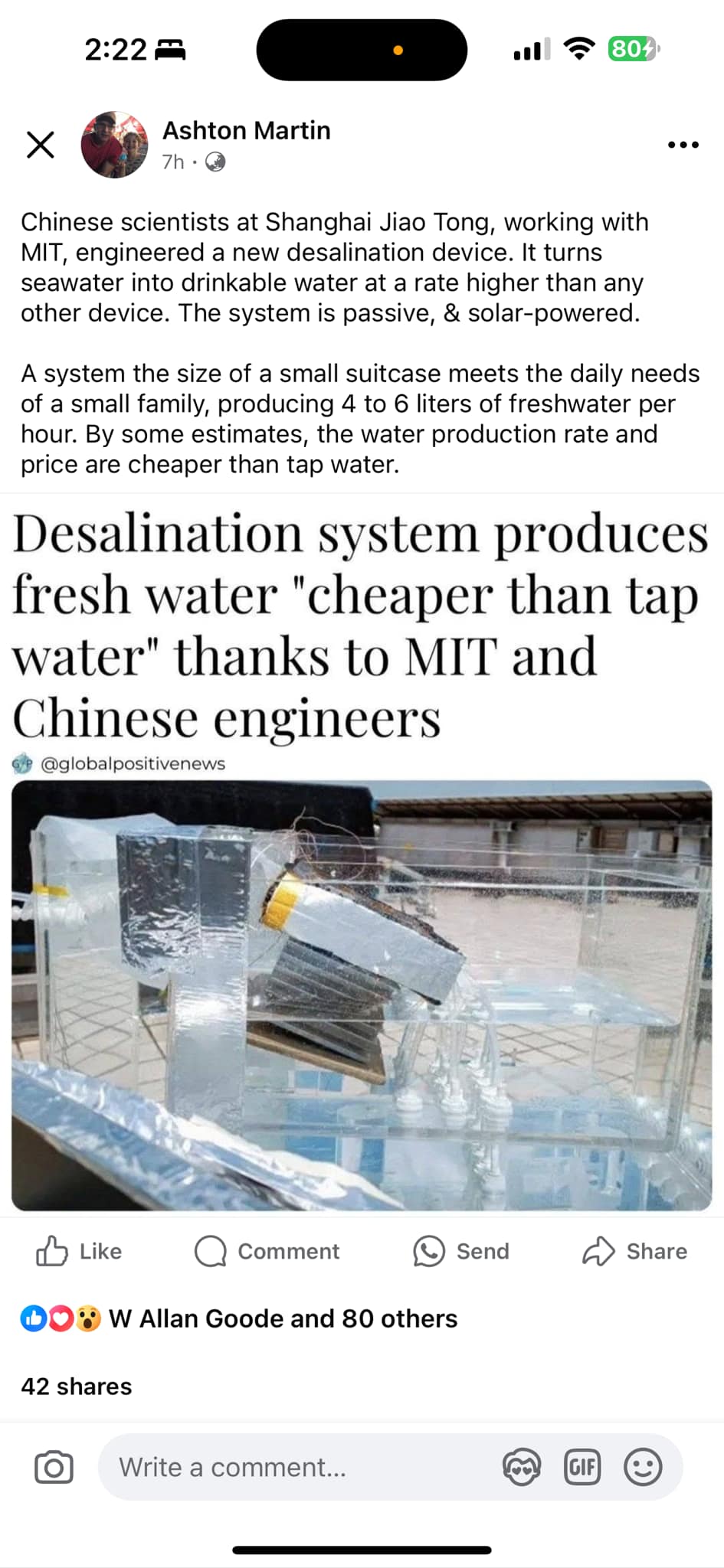
  • The MIT and Shanghai Jiao Tong University scientists developed a highly efficient, portable desalination device based on a passive solar-powered system with several advanced materials and design principles. Their system uses innovative approaches to maximize water production and energy efficiency. Here’s a simplified breakdown of how it likely works, based on the principles they used:

    Key Components and Principles

    1. Solar Evaporation Layering:
    • The device includes a multi-layered structure that absorbs sunlight and evaporates water quickly.
    • Each layer is designed to trap and use solar energy more effectively, allowing more water to evaporate per unit of energy compared to traditional methods.
    • Advanced photothermal materials (materials that convert sunlight into heat efficiently) are likely used to increase the rate of evaporation.
    2. Capillary Action for Water Flow:
    • The system uses capillary action to pull seawater from the main reservoir into the evaporative layers.
    • This process doesn’t require pumps or external energy sources, making the system energy-efficient and passive.
    • As water moves through the layers, it evaporates, leaving salts and impurities behind.
    3. Heat Reclamation:
    • One of the key breakthroughs is recycling the heat from previous evaporation stages. After one layer absorbs and uses the heat for evaporation, it’s transferred to the next layer, where it can be reused.
    • This “stacking” or “layered” evaporation design improves efficiency by reusing the same solar energy multiple times, which speeds up the desalination process.
    4. Condensation Surface:
    • The vaporized water rises to a condensation surface where it cools and condenses into liquid fresh water.
    • This surface is designed to allow the water to flow down into a collection area while preventing any re-absorption of salt.
    5. Passive Solar-Powered System:
    • The device is fully powered by solar energy, making it sustainable and suitable for remote areas.
    • Unlike traditional desalination systems that require electricity or large-scale machinery, this design relies on natural sunlight and innovative material science, meaning it can function in a self-sustained way.
    6. Compact Design:
    • The entire system is compact, approximately the size of a suitcase, allowing it to be easily transported and deployed in remote locations. This is possible due to the modular and efficient design that combines all processes into a single, small unit.

    Materials and Technology

    The scientists used advanced materials to achieve this efficiency. Some examples of materials likely used include:
    • Photothermal Nanomaterials: These are materials that efficiently absorb solar energy and convert it into heat.
    • Hydrophilic Materials: Certain materials might be used to attract water molecules, assisting with evaporation.
    • Heat-Conductive Layers: For transferring heat between layers to maximize reuse of solar energy.

    Benefits of the MIT and SJTU Design

    • Higher Efficiency: By using layered evaporation and heat recycling, the device produces water more efficiently than standard solar stills.
    • Low Cost and Energy-Free Operation: It doesn’t need a power source other than sunlight, so operational costs are minimal.
    • Portability: Designed to be as compact as a suitcase, it’s easy to transport and deploy.
    • Sustainable Solution: Solar-powered desalination is environmentally friendly and ideal for places with limited freshwater access.

    Can This Be Made at Home?

    The MIT setup relies on advanced materials and precise engineering, which are not easily accessible to the average person. However, certain aspects, like layered evaporation and heat recycling, are principles that could inspire more efficient DIY setups. Still, achieving the same efficiency without access to specialized materials like photothermal nanomaterials and precise manufacturing would be challenging.

    In essence, while a basic solar still can be created at home to desalinate water, replicating the MIT and SJTU level of efficiency, compactness, and productivity would require industrial-level material science and engineering expertise.
    The MIT and Shanghai Jiao Tong University scientists developed a highly efficient, portable desalination device based on a passive solar-powered system with several advanced materials and design principles. Their system uses innovative approaches to maximize water production and energy efficiency. Here’s a simplified breakdown of how it likely works, based on the principles they used: Key Components and Principles 1. Solar Evaporation Layering: • The device includes a multi-layered structure that absorbs sunlight and evaporates water quickly. • Each layer is designed to trap and use solar energy more effectively, allowing more water to evaporate per unit of energy compared to traditional methods. • Advanced photothermal materials (materials that convert sunlight into heat efficiently) are likely used to increase the rate of evaporation. 2. Capillary Action for Water Flow: • The system uses capillary action to pull seawater from the main reservoir into the evaporative layers. • This process doesn’t require pumps or external energy sources, making the system energy-efficient and passive. • As water moves through the layers, it evaporates, leaving salts and impurities behind. 3. Heat Reclamation: • One of the key breakthroughs is recycling the heat from previous evaporation stages. After one layer absorbs and uses the heat for evaporation, it’s transferred to the next layer, where it can be reused. • This “stacking” or “layered” evaporation design improves efficiency by reusing the same solar energy multiple times, which speeds up the desalination process. 4. Condensation Surface: • The vaporized water rises to a condensation surface where it cools and condenses into liquid fresh water. • This surface is designed to allow the water to flow down into a collection area while preventing any re-absorption of salt. 5. Passive Solar-Powered System: • The device is fully powered by solar energy, making it sustainable and suitable for remote areas. • Unlike traditional desalination systems that require electricity or large-scale machinery, this design relies on natural sunlight and innovative material science, meaning it can function in a self-sustained way. 6. Compact Design: • The entire system is compact, approximately the size of a suitcase, allowing it to be easily transported and deployed in remote locations. This is possible due to the modular and efficient design that combines all processes into a single, small unit. Materials and Technology The scientists used advanced materials to achieve this efficiency. Some examples of materials likely used include: • Photothermal Nanomaterials: These are materials that efficiently absorb solar energy and convert it into heat. • Hydrophilic Materials: Certain materials might be used to attract water molecules, assisting with evaporation. • Heat-Conductive Layers: For transferring heat between layers to maximize reuse of solar energy. Benefits of the MIT and SJTU Design • Higher Efficiency: By using layered evaporation and heat recycling, the device produces water more efficiently than standard solar stills. • Low Cost and Energy-Free Operation: It doesn’t need a power source other than sunlight, so operational costs are minimal. • Portability: Designed to be as compact as a suitcase, it’s easy to transport and deploy. • Sustainable Solution: Solar-powered desalination is environmentally friendly and ideal for places with limited freshwater access. Can This Be Made at Home? The MIT setup relies on advanced materials and precise engineering, which are not easily accessible to the average person. However, certain aspects, like layered evaporation and heat recycling, are principles that could inspire more efficient DIY setups. Still, achieving the same efficiency without access to specialized materials like photothermal nanomaterials and precise manufacturing would be challenging. In essence, while a basic solar still can be created at home to desalinate water, replicating the MIT and SJTU level of efficiency, compactness, and productivity would require industrial-level material science and engineering expertise.
    0 Yorumlar 0 hisse senetleri 608 Views
  • How Anyone Can Build a Water-From-Air Device in Pakistan by chatgpt
    A Pathway to Solving Water Scarcity Through Local Innovation


    The Problem We Face

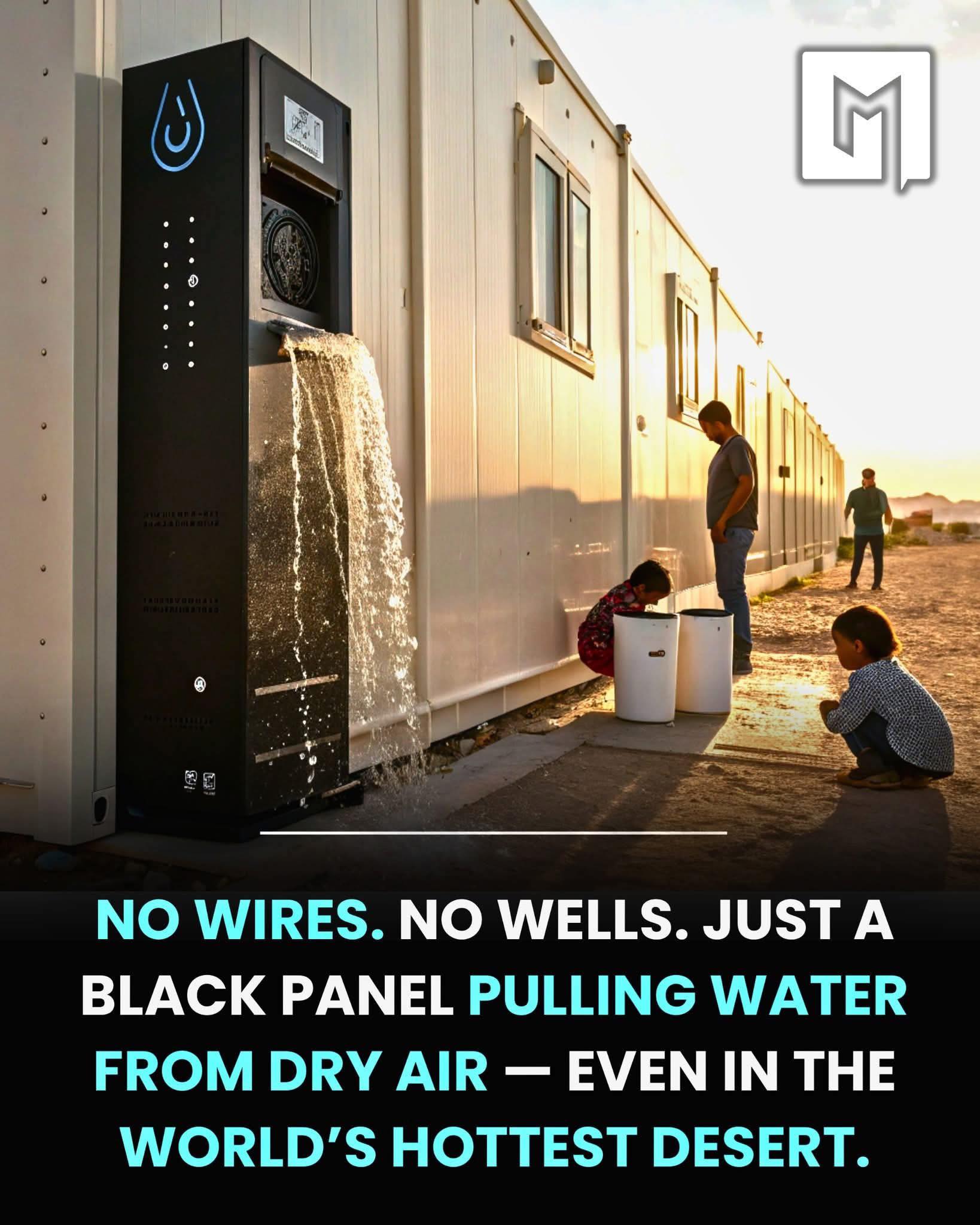
    Pakistan faces acute water scarcity. According to international reports, the country could face severe shortages by 2030. Many rural and desert regions — especially Tharparkar, Balochistan, and Cholistan — have no access to clean groundwater. The idea of extracting water directly from air, once a dream, is now scientifically possible thanks to breakthroughs like MIT’s hydrogel-based atmospheric water harvester.

    This technology doesn’t need electricity, wells, or pipelines. It can be built locally with basic chemistry knowledge, sunlight, and simple materials.


    Understanding How It Works

    The device uses three natural processes that already happen in our environment:
    1. Absorption: Certain salts and gels absorb humidity from the air at night.
    2. Evaporation: When the sun heats them during the day, the absorbed water turns to vapour.
    3. Condensation: The vapour touches a cooler surface (like glass or metal) and becomes liquid water.

    MIT’s invention uses a hydrogel matrix — a sponge-like material mixed with:
    • Hygroscopic salts (like calcium chloride or lithium chloride) that attract water from air.
    • Glycerol (used in soaps and creams) to prevent salt crystallisation and leakage.
    • A transparent cover that lets sunlight in and helps condense the vapour.

    You can replicate this using locally available materials and tools.


    Materials Needed (All Available in Pakistan)

    Component Purpose Local Source
    Calcium chloride (CaCl₂) Absorbs humidity Hardware stores (used in dehumidifiers, cement dryers)
    Glycerol Prevents salt leakage and keeps gel soft Pharmacy or chemical store
    Gelatin or Polyacrylamide To create hydrogel (the sponge matrix) Available in school lab supply stores
    Black aluminum sheet or solar absorber Heats up during day Local metal workshop
    Glass or acrylic sheet Transparent top layer for condensation Any glass shop
    Silicone sealant or rubber gasket To seal edges Hardware store
    Plastic or metal tray For collecting condensed water Household item

    All materials can be sourced for under PKR 5,000–7,000 for a small prototype.


    Step-By-Step Construction

    Create the Hydrogel
    • Mix gelatin powder or polyacrylamide crystals with warm water to form a jelly-like gel.
    • Dissolve calcium chloride in water (ratio: 1 part salt : 3 parts water).
    • Add a few drops of glycerol to the salt solution.
    • Blend the salt solution with the hydrogel mixture and spread it on a flat tray.
    • Let it set and dry — you’ll now have a water-absorbing gel sheet.

    Design the Panel
    • Take a black metal or plastic backing (acts as heat absorber).
    • Place the hydrogel sheet on it.
    • Cover it with a transparent glass sheet, leaving small vents at top/bottom for air flow.
    • Seal edges with silicone.

    Collect the Condensed Water
    • Mount the panel vertically or at a 45° angle facing the sun.
    • As the sun heats it, water will evaporate from the gel and condense on the glass.
    • Let the condensed droplets run down into a collection tray or pipe.
    • Filter (optional) through activated charcoal or sand for taste and safety.


    Operating Principle
    • At night: the hydrogel absorbs moisture from air.
    • At day: the sun heats the black backing, vapour rises, and condenses on the glass.
    • Each cycle (24 hours) can yield 100–200 ml of water per panel, depending on humidity.

    If ten panels are combined (costing about PKR 50,000 total), they can generate 1.5–2 litres of drinking water per day — enough for a small family in desert areas.


    Scaling Up in Pakistan

    Here’s how it can grow beyond a science project:

    1. School or University Labs
    Encourage students in NED, NUST, Mehran, and Sindh University to replicate this as a STEM project.
    They can locally test different materials — e.g. cheaper salts like magnesium chloride, or natural gels from aloe vera or starch.

    2. Startup Model
    • Start a small business making “Air Water Panels.”
    • Sell them for PKR 15,000–20,000 each to NGOs, camping companies, or off-grid villages.
    • Partner with Saylani Welfare, Edhi, or Rehan Foundation for rural pilot installations.

    3. Rural Deployment
    Combine panels with:
    • Solar lights
    • Rainwater storage tanks
    • Small bio-sand filters

    Create self-sufficient water kiosks for desert schools and communities.


    Environmental & Social Benefits
    • Zero carbon emissions: no electricity, no pumps.
    • Portable: can be moved like a solar panel.
    • Scalable: from one house to an entire village.
    • Empowering youth: teaches science, sustainability, and entrepreneurship.

    If 10,000 young Pakistanis build just 10 panels each, that’s 100,000 families with new access to clean drinking water.


    Challenges to Solve
    1. Efficiency: Increase yield in dry air by experimenting with different salts.
    2. Durability: Ensure the gel lasts 6–12 months under sunlight.
    3. Safety: Test for contamination (with university support).
    4. Cost Reduction: Mass-produce the panels using moulds or recycled plastic.

    These are all within reach for Pakistani students and makers.


    Vision: Made in Pakistan for the World

    By 2030, Pakistan can lead the world in low-cost atmospheric water technology — not by importing, but by inventing locally.
    A network of Rehan School AI students, young makers, and solar entrepreneurs could design, build, and sell “Water-From-Air” devices across South Asia, Africa, and the Middle East — transforming deserts into thriving communities.


    Conclusion

    Water scarcity is not destiny. It’s a solvable engineering problem.
    MIT showed the science — Pakistan can show the scalability.
    From Karachi to Thar, Gwadar to Gilgit, every rooftop or school window could soon be a mini water factory powered by the sun.

    💧 How Anyone Can Build a Water-From-Air Device in Pakistan by chatgpt A Pathway to Solving Water Scarcity Through Local Innovation ⸻ 🌍 The Problem We Face Pakistan faces acute water scarcity. According to international reports, the country could face severe shortages by 2030. Many rural and desert regions — especially Tharparkar, Balochistan, and Cholistan — have no access to clean groundwater. The idea of extracting water directly from air, once a dream, is now scientifically possible thanks to breakthroughs like MIT’s hydrogel-based atmospheric water harvester. This technology doesn’t need electricity, wells, or pipelines. It can be built locally with basic chemistry knowledge, sunlight, and simple materials. ⸻ 🔬 Understanding How It Works The device uses three natural processes that already happen in our environment: 1. Absorption: Certain salts and gels absorb humidity from the air at night. 2. Evaporation: When the sun heats them during the day, the absorbed water turns to vapour. 3. Condensation: The vapour touches a cooler surface (like glass or metal) and becomes liquid water. MIT’s invention uses a hydrogel matrix — a sponge-like material mixed with: • Hygroscopic salts (like calcium chloride or lithium chloride) that attract water from air. • Glycerol (used in soaps and creams) to prevent salt crystallisation and leakage. • A transparent cover that lets sunlight in and helps condense the vapour. You can replicate this using locally available materials and tools. ⸻ 🧪 Materials Needed (All Available in Pakistan) Component Purpose Local Source Calcium chloride (CaCl₂) Absorbs humidity Hardware stores (used in dehumidifiers, cement dryers) Glycerol Prevents salt leakage and keeps gel soft Pharmacy or chemical store Gelatin or Polyacrylamide To create hydrogel (the sponge matrix) Available in school lab supply stores Black aluminum sheet or solar absorber Heats up during day Local metal workshop Glass or acrylic sheet Transparent top layer for condensation Any glass shop Silicone sealant or rubber gasket To seal edges Hardware store Plastic or metal tray For collecting condensed water Household item All materials can be sourced for under PKR 5,000–7,000 for a small prototype. ⸻ 🧰 Step-By-Step Construction 1️⃣ Create the Hydrogel • Mix gelatin powder or polyacrylamide crystals with warm water to form a jelly-like gel. • Dissolve calcium chloride in water (ratio: 1 part salt : 3 parts water). • Add a few drops of glycerol to the salt solution. • Blend the salt solution with the hydrogel mixture and spread it on a flat tray. • Let it set and dry — you’ll now have a water-absorbing gel sheet. 2️⃣ Design the Panel • Take a black metal or plastic backing (acts as heat absorber). • Place the hydrogel sheet on it. • Cover it with a transparent glass sheet, leaving small vents at top/bottom for air flow. • Seal edges with silicone. 3️⃣ Collect the Condensed Water • Mount the panel vertically or at a 45° angle facing the sun. • As the sun heats it, water will evaporate from the gel and condense on the glass. • Let the condensed droplets run down into a collection tray or pipe. • Filter (optional) through activated charcoal or sand for taste and safety. ⸻ ☀️ Operating Principle • At night: the hydrogel absorbs moisture from air. • At day: the sun heats the black backing, vapour rises, and condenses on the glass. • Each cycle (24 hours) can yield 100–200 ml of water per panel, depending on humidity. If ten panels are combined (costing about PKR 50,000 total), they can generate 1.5–2 litres of drinking water per day — enough for a small family in desert areas. ⸻ 🏭 Scaling Up in Pakistan Here’s how it can grow beyond a science project: 🧑‍🔬 1. School or University Labs Encourage students in NED, NUST, Mehran, and Sindh University to replicate this as a STEM project. They can locally test different materials — e.g. cheaper salts like magnesium chloride, or natural gels from aloe vera or starch. 🧑‍💼 2. Startup Model • Start a small business making “Air Water Panels.” • Sell them for PKR 15,000–20,000 each to NGOs, camping companies, or off-grid villages. • Partner with Saylani Welfare, Edhi, or Rehan Foundation for rural pilot installations. 🧑‍🌾 3. Rural Deployment Combine panels with: • Solar lights • Rainwater storage tanks • Small bio-sand filters Create self-sufficient water kiosks for desert schools and communities. ⸻ 🌱 Environmental & Social Benefits • Zero carbon emissions: no electricity, no pumps. • Portable: can be moved like a solar panel. • Scalable: from one house to an entire village. • Empowering youth: teaches science, sustainability, and entrepreneurship. If 10,000 young Pakistanis build just 10 panels each, that’s 100,000 families with new access to clean drinking water. ⸻ 🔧 Challenges to Solve 1. Efficiency: Increase yield in dry air by experimenting with different salts. 2. Durability: Ensure the gel lasts 6–12 months under sunlight. 3. Safety: Test for contamination (with university support). 4. Cost Reduction: Mass-produce the panels using moulds or recycled plastic. These are all within reach for Pakistani students and makers. ⸻ 🕊️ Vision: Made in Pakistan for the World By 2030, Pakistan can lead the world in low-cost atmospheric water technology — not by importing, but by inventing locally. A network of Rehan School AI students, young makers, and solar entrepreneurs could design, build, and sell “Water-From-Air” devices across South Asia, Africa, and the Middle East — transforming deserts into thriving communities. ⸻ 💡 Conclusion Water scarcity is not destiny. It’s a solvable engineering problem. MIT showed the science — Pakistan can show the scalability. From Karachi to Thar, Gwadar to Gilgit, every rooftop or school window could soon be a mini water factory powered by the sun.

    0 Yorumlar 0 hisse senetleri 565 Views