• #rsisb
    Roll no 248
    Foundation level
    stort post no 20
    **The Evolution Paradox: Bridging Theories of Life with Divine Design**

    Explore the fascinating connection between **evolution, the origins of life, science, and divine design**. This thought-provoking topic invites us to ask deep questions about how life developed, what science can explain, and how people understand purpose and creation through faith.

    A journey where **science meets philosophy, curiosity meets belief, and questions lead to deeper understanding.**

    #Evolution #DivineDesign #ScienceAndFaith #OriginsOfLife #Biology #Philosophy #Science #Faith #Creation #Life #Curiosity #Knowledge #DeepThinking #Learning #Education #ExploringLife
    #rsisb Roll no 248 Foundation level stort post no 20 🌍✨ **The Evolution Paradox: Bridging Theories of Life with Divine Design** πŸ§¬πŸ”¬ Explore the fascinating connection between **evolution, the origins of life, science, and divine design**. 🌱🧠 This thought-provoking topic invites us to ask deep questions about how life developed, what science can explain, and how people understand purpose and creation through faith. πŸ™βœ¨ A journey where **science meets philosophy, curiosity meets belief, and questions lead to deeper understanding.** πŸŒŒπŸ“š #Evolution #DivineDesign #ScienceAndFaith #OriginsOfLife #Biology #Philosophy #Science #Faith #Creation #Life #Curiosity #Knowledge #DeepThinking #Learning #Education #ExploringLife πŸ§¬πŸŒπŸ”¬πŸ™βœ¨
    0 Commenti 0 condivisioni 60 Views
  • #rsisb
    Roll no.239
    Account Creation no.8
    Foundation Level


    **Restream** is a useful online platform for hosting and broadcasting interviews, live conversations, webinars, and other types of video content. It can help you connect with a guest remotely and, depending on your setup and account features, broadcast your interview to multiple platforms at the same time.

    In this topic, **“How to Use Restream for Interviews?”**, we explore the basic process of preparing, hosting, and managing an online interview through Restream.

    The first step is to **create or sign in to your Restream account** and prepare your live-streaming setup. Before starting the interview, you should make sure that your **camera, microphone, internet connection, and computer** are working properly. Good audio is especially important because viewers can tolerate average video quality more easily than unclear or interrupted sound.

    Next, you can prepare your interview space and invite your guest. Depending on the Restream features available to you, your guest may be able to join remotely without needing a complicated setup. Before going live, it is a good idea to send your guest the necessary joining information and explain how the interview will work.

    You should also decide **where you want to broadcast your interview**. Restream can be used to manage streaming destinations, allowing creators to reach audiences across supported social platforms. Connecting your preferred channels ahead of time can make the live-streaming process smoother.

    Preparation is one of the most important parts of a successful interview. Create a list of **questions, discussion topics, introductions, and closing remarks** before going live. You can begin by welcoming viewers, introducing yourself and your guest, and briefly explaining the topic of the interview.

    During the interview, communicate clearly with your guest and give them enough time to answer. Avoid interrupting unnecessarily, listen carefully, and use follow-up questions when an interesting point comes up.

    Restream can also make online interviews more engaging by supporting features such as **on-screen elements, chat interaction, branding, and other streaming tools**, depending on the current plan and features available. These tools can help make your broadcast look more organized and professional.

    Before going live, always perform a **test run**. Check the microphone volume, camera framing, lighting, internet connection, guest audio, and stream destinations. A short test can prevent many technical problems during the actual interview.

    After the interview begins, keep an eye on the stream and watch for technical issues. If your guest's audio becomes unclear or the connection drops, calmly troubleshoot the problem rather than rushing through the conversation.

    A successful Restream interview is not only about technology—it is also about **good communication, preparation, confidence, and audience engagement**. With practice, you can create interviews that are informative, interesting, and enjoyable for your viewers.

    Whether you are interviewing a **student, teacher, professional, entrepreneur, creator, or community member**, learning how to use Restream can help you conduct online interviews and share meaningful conversations with a wider audience.

    **Prepare well, test your equipment, ask thoughtful questions, communicate clearly, and focus on your guest and audience.** With the right preparation, your Restream interview can become a professional and engaging live experience.

    ### Hashtags

    #Restream #RestreamInterview #OnlineInterview #LiveInterview #LiveStreaming #InterviewTips #StreamingTips #VideoInterview #OnlineStreaming #DigitalSkills #ContentCreation #LiveBroadcast #YouTubeLive #SocialMedia #StreamingSetup #InterviewSkills #CommunicationSkills #Technology #DigitalEducation #OnlineLearning #CreatorTips #LiveContent #ProfessionalInterview #StreamOnline #VirtualInterview #InterviewPreparation #TechSkills #LearnRestream #DigitalContent #LiveEvent
    #rsisb Roll no.239 Account Creation no.8 Foundation Level **Restream** is a useful online platform for hosting and broadcasting interviews, live conversations, webinars, and other types of video content. It can help you connect with a guest remotely and, depending on your setup and account features, broadcast your interview to multiple platforms at the same time. In this topic, **“How to Use Restream for Interviews?”**, we explore the basic process of preparing, hosting, and managing an online interview through Restream. πŸŽ™οΈβœ¨ The first step is to **create or sign in to your Restream account** and prepare your live-streaming setup. Before starting the interview, you should make sure that your **camera, microphone, internet connection, and computer** are working properly. Good audio is especially important because viewers can tolerate average video quality more easily than unclear or interrupted sound. Next, you can prepare your interview space and invite your guest. Depending on the Restream features available to you, your guest may be able to join remotely without needing a complicated setup. Before going live, it is a good idea to send your guest the necessary joining information and explain how the interview will work. πŸ‘₯πŸŽ₯ You should also decide **where you want to broadcast your interview**. Restream can be used to manage streaming destinations, allowing creators to reach audiences across supported social platforms. Connecting your preferred channels ahead of time can make the live-streaming process smoother. Preparation is one of the most important parts of a successful interview. Create a list of **questions, discussion topics, introductions, and closing remarks** before going live. You can begin by welcoming viewers, introducing yourself and your guest, and briefly explaining the topic of the interview. During the interview, communicate clearly with your guest and give them enough time to answer. Avoid interrupting unnecessarily, listen carefully, and use follow-up questions when an interesting point comes up. πŸŽ€πŸ—£οΈ Restream can also make online interviews more engaging by supporting features such as **on-screen elements, chat interaction, branding, and other streaming tools**, depending on the current plan and features available. These tools can help make your broadcast look more organized and professional. Before going live, always perform a **test run**. Check the microphone volume, camera framing, lighting, internet connection, guest audio, and stream destinations. A short test can prevent many technical problems during the actual interview. πŸ”ŠπŸ’‘ After the interview begins, keep an eye on the stream and watch for technical issues. If your guest's audio becomes unclear or the connection drops, calmly troubleshoot the problem rather than rushing through the conversation. A successful Restream interview is not only about technology—it is also about **good communication, preparation, confidence, and audience engagement**. With practice, you can create interviews that are informative, interesting, and enjoyable for your viewers. Whether you are interviewing a **student, teacher, professional, entrepreneur, creator, or community member**, learning how to use Restream can help you conduct online interviews and share meaningful conversations with a wider audience. πŸŒπŸŽ™οΈ **Prepare well, test your equipment, ask thoughtful questions, communicate clearly, and focus on your guest and audience.** With the right preparation, your Restream interview can become a professional and engaging live experience. πŸš€πŸŽ₯ ### πŸ”– Hashtags #Restream #RestreamInterview #OnlineInterview #LiveInterview #LiveStreaming #InterviewTips #StreamingTips #VideoInterview #OnlineStreaming #DigitalSkills #ContentCreation #LiveBroadcast #YouTubeLive #SocialMedia #StreamingSetup #InterviewSkills #CommunicationSkills #Technology #DigitalEducation #OnlineLearning #CreatorTips #LiveContent #ProfessionalInterview #StreamOnline #VirtualInterview #InterviewPreparation #TechSkills #LearnRestream #DigitalContent #LiveEvent πŸŽ€πŸ’»πŸŒβœ¨
    0 Commenti 0 condivisioni 902 Views
  • #rsisb
    Roll no.239
    Account Creation no.7
    Foundation Level


    LinkedIn is a professional networking platform that helps people **build professional connections, showcase their skills, discover career opportunities, follow companies, learn about different industries, and share professional content**. Creating a LinkedIn account is an important first step for students, job seekers, professionals, entrepreneurs, freelancers, and anyone interested in developing a professional online presence.

    In this topic, **“How to Create a LinkedIn Account?”**, we explore the basic process of creating and setting up a LinkedIn profile from the beginning. The process generally starts by visiting LinkedIn through its website or mobile application and selecting the option to create a new account. You will typically need to provide basic information such as your **name, email address, and password** and follow the instructions provided during registration.

    After creating your account, one of the most important steps is completing your **professional profile**. Your profile can include information about your education, work experience, skills, achievements, interests, certifications, and other relevant professional details. A clear profile helps other users understand your background and what you are interested in professionally.

    Your **profile photo** is another important part of your LinkedIn presence. A clear and professional-looking photograph can make your profile more recognizable and welcoming. You can also create a strong **headline** that briefly explains who you are, what you do, or what type of professional opportunities you are interested in.

    The **About section** provides an opportunity to introduce yourself in more detail. You can use it to describe your goals, experience, skills, interests, and professional journey. For students, this section can highlight areas of study, projects, abilities, and career interests. For professionals, it can summarize experience and areas of expertise.

    LinkedIn also allows you to add **education and work experience** to your profile. Providing accurate information can help create a clearer picture of your professional background. You can also highlight important skills and certifications that demonstrate your knowledge and abilities.

    One of LinkedIn's most important features is **professional networking**. You can connect with classmates, teachers, colleagues, employers, professionals, entrepreneurs, and people working in industries that interest you. Building a meaningful network can help you learn from others, discover opportunities, and stay informed about developments in your field.

    LinkedIn can also be useful for **job searching and career development**. Users can explore job listings, learn about companies, follow organizations, and discover professional opportunities. A complete and accurate profile can make it easier for potential employers or professional contacts to understand your background.

    Another useful feature is the ability to **share professional content**. Users can publish posts, share useful information, discuss ideas, celebrate achievements, and participate in professional conversations. Posting thoughtfully and respectfully can help you develop a positive professional reputation online.

    Privacy and security should also be considered when creating a LinkedIn account. Avoid sharing unnecessary sensitive information, use a **strong and unique password**, and review your account's privacy and communication settings. Be cautious when receiving unexpected messages, connection requests, or links from unfamiliar people.

    For students and beginners, LinkedIn can be more than just a place to search for jobs. It can become a **digital professional portfolio** where you present your learning, projects, skills, achievements, and career goals. Starting early can help you learn how professional networking works and gradually build meaningful connections.

    This topic provides beginners with a clear introduction to **creating, completing, and using a LinkedIn account responsibly**. Whether your goal is to find a job, showcase your skills, connect with professionals, promote your work, or explore future career opportunities, a well-prepared LinkedIn profile can be a valuable part of your professional journey.

    **Create your profile, showcase your skills, build meaningful connections, and take the next step toward your professional future.**

    ### Hashtags

    #LinkedIn #LinkedInAccount #CreateLinkedInAccount #HowToLinkedIn #LinkedInForBeginners #LinkedInProfile #ProfessionalNetworking #CareerDevelopment #CareerGrowth #JobSearch #ProfessionalProfile #DigitalSkills #DigitalLiteracy #Technology #TechSkills #Networking #ProfessionalDevelopment #Students #CareerOpportunities #JobSeekers #Freelancers #Entrepreneurs #Skills #Education #Learning #OnlineNetworking #PersonalBranding #ProfessionalLife #CareerTips #FutureCareer
    #rsisb Roll no.239 Account Creation no.7 Foundation Level LinkedIn is a professional networking platform that helps people **build professional connections, showcase their skills, discover career opportunities, follow companies, learn about different industries, and share professional content**. Creating a LinkedIn account is an important first step for students, job seekers, professionals, entrepreneurs, freelancers, and anyone interested in developing a professional online presence. In this topic, **“How to Create a LinkedIn Account?”**, we explore the basic process of creating and setting up a LinkedIn profile from the beginning. The process generally starts by visiting LinkedIn through its website or mobile application and selecting the option to create a new account. You will typically need to provide basic information such as your **name, email address, and password** and follow the instructions provided during registration. πŸ‘€πŸ’» After creating your account, one of the most important steps is completing your **professional profile**. Your profile can include information about your education, work experience, skills, achievements, interests, certifications, and other relevant professional details. A clear profile helps other users understand your background and what you are interested in professionally. Your **profile photo** is another important part of your LinkedIn presence. A clear and professional-looking photograph can make your profile more recognizable and welcoming. You can also create a strong **headline** that briefly explains who you are, what you do, or what type of professional opportunities you are interested in. πŸ“Έβœ¨ The **About section** provides an opportunity to introduce yourself in more detail. You can use it to describe your goals, experience, skills, interests, and professional journey. For students, this section can highlight areas of study, projects, abilities, and career interests. For professionals, it can summarize experience and areas of expertise. LinkedIn also allows you to add **education and work experience** to your profile. Providing accurate information can help create a clearer picture of your professional background. You can also highlight important skills and certifications that demonstrate your knowledge and abilities. πŸŽ“πŸ† One of LinkedIn's most important features is **professional networking**. You can connect with classmates, teachers, colleagues, employers, professionals, entrepreneurs, and people working in industries that interest you. Building a meaningful network can help you learn from others, discover opportunities, and stay informed about developments in your field. 🀝 LinkedIn can also be useful for **job searching and career development**. Users can explore job listings, learn about companies, follow organizations, and discover professional opportunities. A complete and accurate profile can make it easier for potential employers or professional contacts to understand your background. Another useful feature is the ability to **share professional content**. Users can publish posts, share useful information, discuss ideas, celebrate achievements, and participate in professional conversations. Posting thoughtfully and respectfully can help you develop a positive professional reputation online. πŸ“πŸŒ Privacy and security should also be considered when creating a LinkedIn account. Avoid sharing unnecessary sensitive information, use a **strong and unique password**, and review your account's privacy and communication settings. Be cautious when receiving unexpected messages, connection requests, or links from unfamiliar people. For students and beginners, LinkedIn can be more than just a place to search for jobs. It can become a **digital professional portfolio** where you present your learning, projects, skills, achievements, and career goals. Starting early can help you learn how professional networking works and gradually build meaningful connections. This topic provides beginners with a clear introduction to **creating, completing, and using a LinkedIn account responsibly**. Whether your goal is to find a job, showcase your skills, connect with professionals, promote your work, or explore future career opportunities, a well-prepared LinkedIn profile can be a valuable part of your professional journey. πŸ’ΌπŸš€ **Create your profile, showcase your skills, build meaningful connections, and take the next step toward your professional future.** πŸŒŸπŸ’» ### πŸ”– Hashtags #LinkedIn #LinkedInAccount #CreateLinkedInAccount #HowToLinkedIn #LinkedInForBeginners #LinkedInProfile #ProfessionalNetworking #CareerDevelopment #CareerGrowth #JobSearch #ProfessionalProfile #DigitalSkills #DigitalLiteracy #Technology #TechSkills #Networking #ProfessionalDevelopment #Students #CareerOpportunities #JobSeekers #Freelancers #Entrepreneurs #Skills #Education #Learning #OnlineNetworking #PersonalBranding #ProfessionalLife #CareerTips #FutureCareer πŸ’ΌπŸŒπŸš€βœ¨
    0 Commenti 0 condivisioni 847 Views
  • #rsisb
    Roll no.239
    Account Creation no.6


    Instagram is one of the world’s most popular social media platforms, allowing people to **share photos and videos, create Stories and Reels, follow friends and creators, discover new content, and communicate with others**. Creating an Instagram account is a simple process, but understanding the setup and privacy options can help beginners use the platform more confidently and safely.

    In this topic, **“How to Create an Instagram Account?”**, we explore the basic steps involved in joining Instagram and setting up a new profile. The process generally begins by installing the Instagram app or visiting Instagram through a web browser. New users can sign up using an **email address or phone number**, and they may also be offered other sign-up options depending on their device and location.

    After creating an account, the next step is choosing a **username**. Your username is an important part of your Instagram identity because people can use it to find your profile. A good username should be easy to remember, simple to type, and appropriate for the type of content you plan to share.

    You can then personalize your profile by adding a **profile picture, name, biography, and other optional information**. Your bio gives visitors a quick idea about who you are, what you do, or what kind of content they can expect from your account. If you are creating an account for a project, business, educational purpose, or creative work, your profile can be designed to clearly communicate that purpose.

    Instagram also provides different ways to **connect with people and discover content**. You can search for friends, creators, organizations, and topics that interest you. Following relevant accounts can help personalize the content that appears in your feed and recommendations. You can also interact with content through likes, comments, shares, and messages.

    Another important part of creating an Instagram account is **privacy and security**. Before sharing personal information, it is useful to review your account's privacy settings. Depending on your needs, you may choose whether your account is public or private and manage who can interact with you or see your content.

    Security is equally important. Use a **strong and unique password**, protect your email address or phone number, and enable available security features such as **two-factor authentication**. Be careful with suspicious messages, unfamiliar links, fake accounts, and requests for personal information. Remember that protecting your account is just as important as creating it.

    Once your account is ready, you can begin exploring Instagram's features, including **Posts, Stories, Reels, direct messages, and other creative tools**. However, responsible social media use means thinking carefully before posting and remembering that anything shared online can potentially reach a wider audience.

    This topic is especially useful for beginners who want to understand **how to create an Instagram account, personalize a profile, connect with others, manage privacy, and stay secure online**. With the right settings and responsible habits, Instagram can be a useful platform for communication, creativity, learning, and sharing ideas.

    ### Hashtags

    #Instagram #InstagramAccount #CreateInstagramAccount #InstagramTutorial #HowToInstagram #InstagramForBeginners #SocialMedia #SocialMediaTips #InstagramTips #DigitalSkills #DigitalLiteracy #Technology #TechTips #OnlineSafety #InternetSafety #Privacy #AccountSecurity #TwoFactorAuthentication #SocialMediaLearning #LearnInstagram #DigitalEducation #OnlineCommunication #ContentCreation #InstagramReels #InstagramStories #SocialNetworking #ComputerSkills #Education #Learning #TechEducation
    #rsisb Roll no.239 Account Creation no.6 Instagram is one of the world’s most popular social media platforms, allowing people to **share photos and videos, create Stories and Reels, follow friends and creators, discover new content, and communicate with others**. Creating an Instagram account is a simple process, but understanding the setup and privacy options can help beginners use the platform more confidently and safely. In this topic, **“How to Create an Instagram Account?”**, we explore the basic steps involved in joining Instagram and setting up a new profile. The process generally begins by installing the Instagram app or visiting Instagram through a web browser. New users can sign up using an **email address or phone number**, and they may also be offered other sign-up options depending on their device and location. After creating an account, the next step is choosing a **username**. Your username is an important part of your Instagram identity because people can use it to find your profile. A good username should be easy to remember, simple to type, and appropriate for the type of content you plan to share. πŸ‘€βœ¨ You can then personalize your profile by adding a **profile picture, name, biography, and other optional information**. Your bio gives visitors a quick idea about who you are, what you do, or what kind of content they can expect from your account. If you are creating an account for a project, business, educational purpose, or creative work, your profile can be designed to clearly communicate that purpose. Instagram also provides different ways to **connect with people and discover content**. You can search for friends, creators, organizations, and topics that interest you. Following relevant accounts can help personalize the content that appears in your feed and recommendations. You can also interact with content through likes, comments, shares, and messages. β€οΈπŸ’¬ Another important part of creating an Instagram account is **privacy and security**. Before sharing personal information, it is useful to review your account's privacy settings. Depending on your needs, you may choose whether your account is public or private and manage who can interact with you or see your content. πŸ”πŸ›‘οΈ Security is equally important. Use a **strong and unique password**, protect your email address or phone number, and enable available security features such as **two-factor authentication**. Be careful with suspicious messages, unfamiliar links, fake accounts, and requests for personal information. Remember that protecting your account is just as important as creating it. Once your account is ready, you can begin exploring Instagram's features, including **Posts, Stories, Reels, direct messages, and other creative tools**. However, responsible social media use means thinking carefully before posting and remembering that anything shared online can potentially reach a wider audience. This topic is especially useful for beginners who want to understand **how to create an Instagram account, personalize a profile, connect with others, manage privacy, and stay secure online**. With the right settings and responsible habits, Instagram can be a useful platform for communication, creativity, learning, and sharing ideas. πŸŒπŸ“š ### πŸ”– Hashtags #Instagram #InstagramAccount #CreateInstagramAccount #InstagramTutorial #HowToInstagram #InstagramForBeginners #SocialMedia #SocialMediaTips #InstagramTips #DigitalSkills #DigitalLiteracy #Technology #TechTips #OnlineSafety #InternetSafety #Privacy #AccountSecurity #TwoFactorAuthentication #SocialMediaLearning #LearnInstagram #DigitalEducation #OnlineCommunication #ContentCreation #InstagramReels #InstagramStories #SocialNetworking #ComputerSkills #Education #Learning #TechEducation πŸ“±πŸ“Έβœ¨
    0 Commenti 0 condivisioni 1055 Views
  • #rsisb
    Roll no.239
    Account Creation no.5
    Foundation Level


    Creating a Facebook account is a simple way to connect with friends, family, communities, and people who share your interests. In this topic, **“How to Make a Facebook Account and Set It Up,”** we explore the complete process of creating a new account and preparing it for everyday use.

    The process begins with providing basic information such as your **name, date of birth, and contact details**, followed by choosing a strong password. After creating the account, you can verify your information and start setting up your profile.

    A well-organized Facebook profile can include a **profile picture, cover photo, short bio, education or work information, and other details** you want to share. You can also find friends, follow pages, join groups, and explore content based on your interests.

    An important part of setting up a Facebook account is **privacy and security**. You should review who can see your posts, who can contact you, and what personal information is visible on your profile. Using a strong, unique password and enabling available security features can also help protect your account.

    This topic provides beginners with a clear understanding of how to **create, personalize, secure, and manage a Facebook account responsibly**. Whether you want to stay connected with friends, follow useful pages, participate in communities, or share your own content, learning the basics can help you use Facebook with greater confidence.

    **Create smart. Connect responsibly. Stay safe online.**

    ### Hashtags

    #Facebook #FacebookAccount #HowToFacebook #CreateFacebookAccount #FacebookTutorial #SocialMedia #SocialMediaTips #FacebookTips #DigitalSkills #ComputerSkills #InternetSafety #OnlineSafety #Privacy #AccountSecurity #DigitalLiteracy #LearnFacebook #Technology #TechTips #SocialMediaLearning #OnlineCommunication #FacebookForBeginners #LearnTechnology #DigitalEducation #StaySafeOnline #SocialNetworking #FacebookGuide #Education #Learning #TechEducation #InternetSkills
    #rsisb Roll no.239 Account Creation no.5 Foundation Level Creating a Facebook account is a simple way to connect with friends, family, communities, and people who share your interests. In this topic, **“How to Make a Facebook Account and Set It Up,”** we explore the complete process of creating a new account and preparing it for everyday use. The process begins with providing basic information such as your **name, date of birth, and contact details**, followed by choosing a strong password. After creating the account, you can verify your information and start setting up your profile. πŸ‘€βœ¨ A well-organized Facebook profile can include a **profile picture, cover photo, short bio, education or work information, and other details** you want to share. You can also find friends, follow pages, join groups, and explore content based on your interests. πŸ‘πŸ“Έ An important part of setting up a Facebook account is **privacy and security**. You should review who can see your posts, who can contact you, and what personal information is visible on your profile. Using a strong, unique password and enabling available security features can also help protect your account. πŸ”πŸ›‘οΈ This topic provides beginners with a clear understanding of how to **create, personalize, secure, and manage a Facebook account responsibly**. Whether you want to stay connected with friends, follow useful pages, participate in communities, or share your own content, learning the basics can help you use Facebook with greater confidence. πŸ“± **Create smart. Connect responsibly. Stay safe online.** 🌐✨ ### πŸ”– Hashtags #Facebook #FacebookAccount #HowToFacebook #CreateFacebookAccount #FacebookTutorial #SocialMedia #SocialMediaTips #FacebookTips #DigitalSkills #ComputerSkills #InternetSafety #OnlineSafety #Privacy #AccountSecurity #DigitalLiteracy #LearnFacebook #Technology #TechTips #SocialMediaLearning #OnlineCommunication #FacebookForBeginners #LearnTechnology #DigitalEducation #StaySafeOnline #SocialNetworking #FacebookGuide #Education #Learning #TechEducation #InternetSkills πŸ“±πŸ”βœ¨πŸ˜
    0 Commenti 0 condivisioni 666 Views
  • #rsisb
    Roll No.240
    Story No.22
    Foundation Level

    ### **Atoms and Eternity: How Chemistry Shapes the Cosmos – Description**

    **Atoms and Eternity: How Chemistry Shapes the Cosmos** takes us on an incredible journey through the hidden world of atoms and molecules that make up everything around us. From the smallest particles inside atoms to the formation of stars, planets, and life itself, chemistry is the powerful force that connects the universe.

    Every element in the cosmos has a story — created inside ancient stars, spread across galaxies, and combined through chemical reactions to build the world we know today. The same atoms that formed distant planets also exist within our bodies, showing the deep connection between humanity and the universe.

    This exploration reveals how chemistry acts as the language of creation, explaining the birth of matter, the evolution of life, and the endless possibilities of the cosmos.

    Join this fascinating journey to discover how tiny atoms create the vast universe and how chemistry shapes the eternity of existence.

    #AtomsAndEternity #ChemistryOfCosmos #ScienceJourney #UniverseExploration #Atoms #Molecules #CosmicChemistry #ScienceEducation #MysteriesOfTheUniverse

    Rehan School Islamabad Campus
    Asma Shaheen EducationWali
    Irum Asim
    Saima Happinesswali
    #rsisb Roll No.240 Story No.22 Foundation Level ### 🌌 **Atoms and Eternity: How Chemistry Shapes the Cosmos – Description** ✨ πŸ”¬ **Atoms and Eternity: How Chemistry Shapes the Cosmos** takes us on an incredible journey through the hidden world of atoms and molecules that make up everything around us. From the smallest particles inside atoms to the formation of stars, planets, and life itself, chemistry is the powerful force that connects the universe. 🌠 Every element in the cosmos has a story — created inside ancient stars, spread across galaxies, and combined through chemical reactions to build the world we know today. The same atoms that formed distant planets also exist within our bodies, showing the deep connection between humanity and the universe. πŸ§ͺ This exploration reveals how chemistry acts as the language of creation, explaining the birth of matter, the evolution of life, and the endless possibilities of the cosmos. 🌍 Join this fascinating journey to discover how tiny atoms create the vast universe and how chemistry shapes the eternity of existence. #AtomsAndEternity #ChemistryOfCosmos #ScienceJourney #UniverseExploration #Atoms #Molecules #CosmicChemistry #ScienceEducation #MysteriesOfTheUniverse πŸŒŒπŸ”¬βœ¨ Rehan School Islamabad Campus Asma Shaheen EducationWali Irum Asim Saima Happinesswali
    0 Commenti 0 condivisioni 2575 Views
  • #rsisb
    Roll no.239
    Foundation Level

    **“The Evolution Paradox: Bridging Theories of Life with Divine Design”** explores one of the most fascinating questions about life: how can scientific explanations of evolution be understood alongside beliefs about divine creation?

    Evolution explains the diversity of life through processes such as **genetic variation, natural selection, mutation, and adaptation** over long periods of time. It provides a scientific framework for understanding how populations change and how different species have developed throughout Earth's history.

    Divine design, on the other hand, is a theological and philosophical idea that life and the universe have purpose or ultimately originate from a divine source. Different religious traditions interpret creation and humanity's place in the universe in different ways.

    The apparent “paradox” arises when people view scientific explanations and religious beliefs as necessarily competing explanations. However, some people see them as addressing different kinds of questions. Science primarily investigates **how natural processes occur**, while theology and philosophy may explore questions about **meaning, purpose, and ultimate origins**.

    The relationship between evolution and divine belief remains a subject of thoughtful discussion among scientists, philosophers, and religious thinkers. Some religious traditions accept evolutionary science, while others interpret creation in different ways.

    Ultimately, the topic encourages us to think deeply about **science, faith, human origins, and our understanding of life**. It shows that asking questions and examining different perspectives can help us develop a richer understanding of the world around us.
    #rsisb Roll no.239 Foundation Level **“The Evolution Paradox: Bridging Theories of Life with Divine Design”** explores one of the most fascinating questions about life: how can scientific explanations of evolution be understood alongside beliefs about divine creation? Evolution explains the diversity of life through processes such as **genetic variation, natural selection, mutation, and adaptation** over long periods of time. It provides a scientific framework for understanding how populations change and how different species have developed throughout Earth's history. Divine design, on the other hand, is a theological and philosophical idea that life and the universe have purpose or ultimately originate from a divine source. Different religious traditions interpret creation and humanity's place in the universe in different ways. The apparent “paradox” arises when people view scientific explanations and religious beliefs as necessarily competing explanations. However, some people see them as addressing different kinds of questions. Science primarily investigates **how natural processes occur**, while theology and philosophy may explore questions about **meaning, purpose, and ultimate origins**. The relationship between evolution and divine belief remains a subject of thoughtful discussion among scientists, philosophers, and religious thinkers. Some religious traditions accept evolutionary science, while others interpret creation in different ways. Ultimately, the topic encourages us to think deeply about **science, faith, human origins, and our understanding of life**. It shows that asking questions and examining different perspectives can help us develop a richer understanding of the world around us.
    0 Commenti 0 condivisioni 1435 Views
  • #rsisb
    Roll No.240
    Story No.11
    Foundation Level

    # The Wonders of Geometry: Shapes and Philosophy

    Geometry is far more than a branch of mathematics—it is a language that describes the beauty, balance, and structure of the world around us. From the symmetry of a butterfly's wings to the towering pyramids of Egypt, geometric shapes are found everywhere in nature, architecture, art, and technology. Circles represent unity and infinity, triangles symbolize strength and stability, while squares and rectangles reflect order, balance, and reliability. These timeless shapes help us understand space, design, and the hidden patterns that shape our universe.

    Beyond calculations and formulas, geometry also carries a deep philosophical meaning. Ancient philosophers believed that geometric forms reflected the harmony and perfection of creation. Studying shapes encourages logical thinking, creativity, and problem-solving while inspiring us to see the connections between mathematics, nature, and human life. Whether you're exploring basic polygons or the mysteries of symmetry, geometry reminds us that beauty and knowledge often share the same foundation. Discover the fascinating world of shapes and uncover the philosophy that has inspired scientists, artists, architects, and thinkers for centuries.

    Rehan School Islamabad Campus
    Asma Shaheen EducationWali
    Irum Asim
    Saima Happinesswali
    #rsisb Roll No.240 Story No.11 Foundation Level # The Wonders of Geometry: Shapes and Philosophy Geometry is far more than a branch of mathematics—it is a language that describes the beauty, balance, and structure of the world around us. From the symmetry of a butterfly's wings to the towering pyramids of Egypt, geometric shapes are found everywhere in nature, architecture, art, and technology. Circles represent unity and infinity, triangles symbolize strength and stability, while squares and rectangles reflect order, balance, and reliability. These timeless shapes help us understand space, design, and the hidden patterns that shape our universe. Beyond calculations and formulas, geometry also carries a deep philosophical meaning. Ancient philosophers believed that geometric forms reflected the harmony and perfection of creation. Studying shapes encourages logical thinking, creativity, and problem-solving while inspiring us to see the connections between mathematics, nature, and human life. Whether you're exploring basic polygons or the mysteries of symmetry, geometry reminds us that beauty and knowledge often share the same foundation. Discover the fascinating world of shapes and uncover the philosophy that has inspired scientists, artists, architects, and thinkers for centuries. Rehan School Islamabad Campus Asma Shaheen EducationWali Irum Asim Saima Happinesswali
    0 Commenti 0 condivisioni 2124 Views
  • #rsisb
    Roll No.240
    Story No.10
    Foundation Level

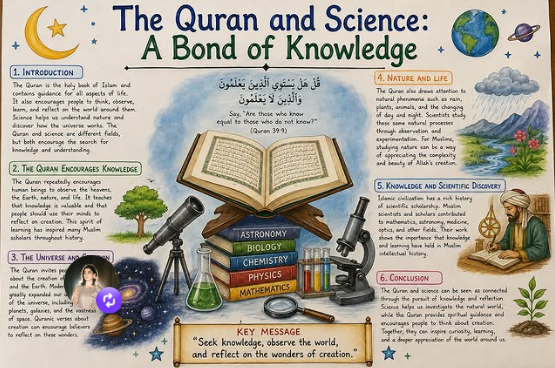
    **The Quran and Science: A Bond of Knowledge – Description**

    *The Quran and Science: A Bond of Knowledge* explores the beautiful connection between faith, curiosity, and the discovery of the universe. This topic highlights how the Quran encourages humans to seek knowledge, observe nature, and reflect on the signs of creation. From the wonders of the skies and the earth to the mysteries of life, science helps us understand the amazing world around us.

    This journey shows the importance of learning, research, and the pursuit of wisdom while appreciating the beauty and complexity of creation. It inspires students and thinkers to explore knowledge with an open mind and a spirit of discovery.

    #QuranAndScience #KnowledgeIsPower #ScienceAndFaith #LearningJourney #DiscoverTheUniverse #Education #Wisdom #ScienceExploration

    Rehan School Islamabad Campus
    Asma Shaheen EducationWali
    Irum Asim
    Saima Happinesswali

    #rsisb Roll No.240 Story No.10 Foundation Level **The Quran and Science: A Bond of Knowledge – Description** πŸ“–βœ¨ *The Quran and Science: A Bond of Knowledge* explores the beautiful connection between faith, curiosity, and the discovery of the universe. This topic highlights how the Quran encourages humans to seek knowledge, observe nature, and reflect on the signs of creation. From the wonders of the skies and the earth to the mysteries of life, science helps us understand the amazing world around us. πŸŒŒπŸ”¬ This journey shows the importance of learning, research, and the pursuit of wisdom while appreciating the beauty and complexity of creation. It inspires students and thinkers to explore knowledge with an open mind and a spirit of discovery. πŸŒπŸ’‘ #QuranAndScience #KnowledgeIsPower #ScienceAndFaith #LearningJourney #DiscoverTheUniverse #Education #Wisdom #ScienceExploration Rehan School Islamabad Campus Asma Shaheen EducationWali Irum Asim Saima Happinesswali
    0 Commenti 0 condivisioni 1767 Views
  • #rsisb
    Roll no.239
    Foundation Level

    The relationship between the **Quran and science** is a subject that encourages reflection on knowledge, nature, and the universe. The Quran repeatedly invites people to observe the world around them, think deeply, and seek understanding.

    Science explores the natural world through **observation, experimentation, and evidence**, while the Quran provides spiritual guidance and encourages reflection on creation. Some Quranic verses mention natural phenomena such as the heavens, the Earth, human development, and the water cycle. These passages have inspired many readers to think about the relationship between faith and scientific inquiry.

    It is important, however, to understand that the Quran is primarily a **book of guidance**, not a scientific textbook. Scientific theories and discoveries can change as new evidence emerges, so interpretations connecting specific verses with modern science should be approached thoughtfully.

    Ultimately, both the pursuit of knowledge and reflection on creation can encourage **curiosity, learning, humility, and a deeper appreciation of the world around us**.
    #rsisb Roll no.239 Foundation Level The relationship between the **Quran and science** is a subject that encourages reflection on knowledge, nature, and the universe. The Quran repeatedly invites people to observe the world around them, think deeply, and seek understanding. Science explores the natural world through **observation, experimentation, and evidence**, while the Quran provides spiritual guidance and encourages reflection on creation. Some Quranic verses mention natural phenomena such as the heavens, the Earth, human development, and the water cycle. These passages have inspired many readers to think about the relationship between faith and scientific inquiry. It is important, however, to understand that the Quran is primarily a **book of guidance**, not a scientific textbook. Scientific theories and discoveries can change as new evidence emerges, so interpretations connecting specific verses with modern science should be approached thoughtfully. Ultimately, both the pursuit of knowledge and reflection on creation can encourage **curiosity, learning, humility, and a deeper appreciation of the world around us**.
    0 Commenti 0 condivisioni 994 Views
Pagine in Evidenza