• Day 126: Dissecting Frogs: A Gateway to Human Anatomy
    Day 126: Dissecting Frogs: A Gateway to Human Anatomy
    0 Commenti 0 condivisioni 34 Views 0
  • Learning Through Layers: The Importance of Animal Anatomy Studies
    Learning Through Layers: The Importance of Animal Anatomy Studies
    0 Commenti 0 condivisioni 33 Views 0
  • Day 126: Dissecting Frogs – A Gateway to Human Anatomy

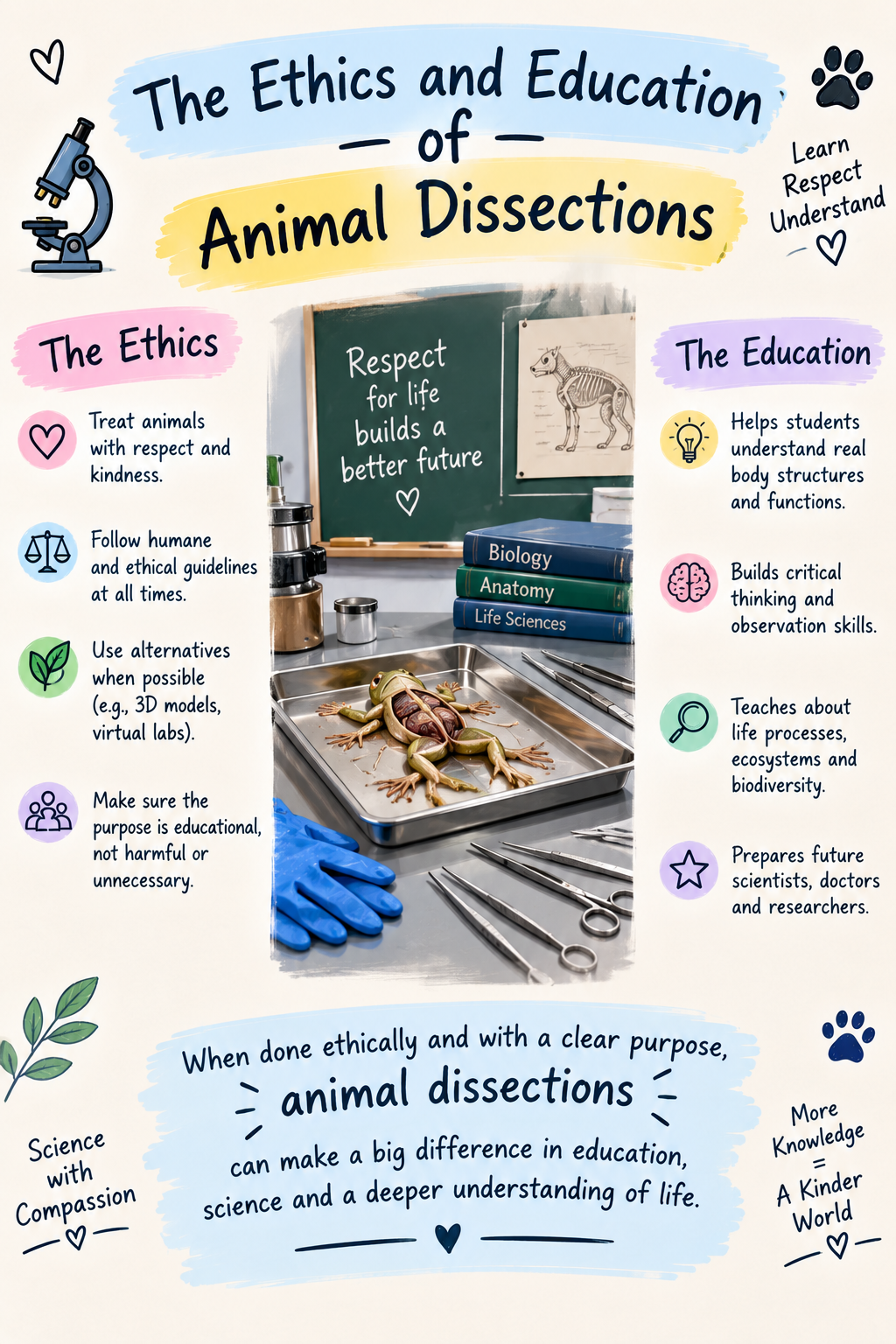
    Today, we explored the fascinating world of biology through frog dissection — an essential step toward understanding human anatomy. By studying the internal structure of a frog, we learned how similar many of its organs are to ours, such as the heart, lungs, liver, and stomach.

    This hands-on activity helped us understand how different systems — digestive, respiratory, and circulatory — work together to sustain life. It was an exciting yet educational experience that connected theory with real-life biology.

    Dissecting a frog not only deepened our scientific knowledge but also sparked curiosity about the complex design of living organisms. Truly, it was a day of learning, observation, and appreciation for the wonders of life!
    Day 126: Dissecting Frogs – A Gateway to Human Anatomy 🐸🔬 Today, we explored the fascinating world of biology through frog dissection — an essential step toward understanding human anatomy. By studying the internal structure of a frog, we learned how similar many of its organs are to ours, such as the heart, lungs, liver, and stomach. This hands-on activity helped us understand how different systems — digestive, respiratory, and circulatory — work together to sustain life. It was an exciting yet educational experience that connected theory with real-life biology. Dissecting a frog not only deepened our scientific knowledge but also sparked curiosity about the complex design of living organisms. Truly, it was a day of learning, observation, and appreciation for the wonders of life! 🌿✨
    0 Commenti 0 condivisioni 214 Views 0
  • #rsisb
    Roll No.186
    Story post 17
    July 20 2026
    Foundation Level

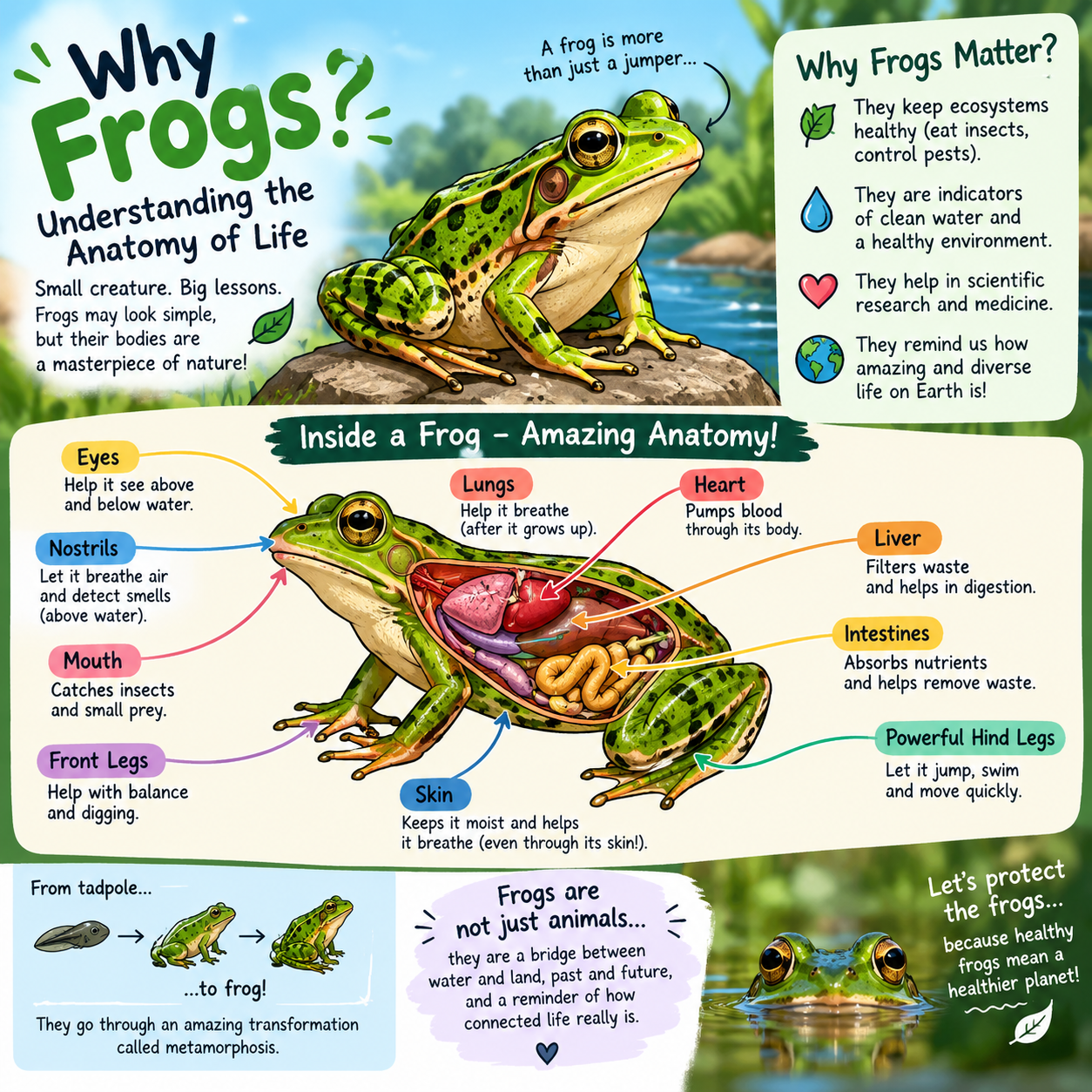
    ## Why Frogs? Understanding the Anatomy of Life

    Frogs are fascinating creatures that help us understand how living organisms are built and function. Their anatomy reveals the incredible design of organs, muscles, bones, and body systems that work together to support life. From their powerful legs for jumping to their unique respiratory and circulatory systems, frogs provide valuable insights into biology, evolution, and human anatomy. Exploring frog anatomy helps students and science enthusiasts appreciate the complexity and beauty of life while deepening their understanding of the natural world.

    #FrogAnatomy #Biology #LifeScience #ScienceEducation #STEM #Nature #Learning #Anatomy #Wildlife #BiologyFacts #ScienceLovers #Education #ExploreScience #Knowledge #Curiosity

    Asma Shaheen EducationWali
    Saima Happinesswali
    Irum Asim
    #rsisb Roll No.186 Story post 17 July 20 2026 Foundation Level ## 🐸 Why Frogs? Understanding the Anatomy of Life 🔬 🐸 Frogs are fascinating creatures that help us understand how living organisms are built and function. Their anatomy reveals the incredible design of organs, muscles, bones, and body systems that work together to support life. 🌿 From their powerful legs for jumping to their unique respiratory and circulatory systems, frogs provide valuable insights into biology, evolution, and human anatomy. 📚 Exploring frog anatomy helps students and science enthusiasts appreciate the complexity and beauty of life while deepening their understanding of the natural world. 🌍✨ #FrogAnatomy #Biology #LifeScience #ScienceEducation #STEM #Nature #Learning #Anatomy #Wildlife #BiologyFacts #ScienceLovers #Education #ExploreScience #Knowledge #Curiosity 🐸🔬🌿 Asma Shaheen EducationWali Saima Happinesswali Irum Asim
    0 Commenti 0 condivisioni 3262 Views
  • #rsisb
    Roll No 242
    Story Post 16
    Foundation level
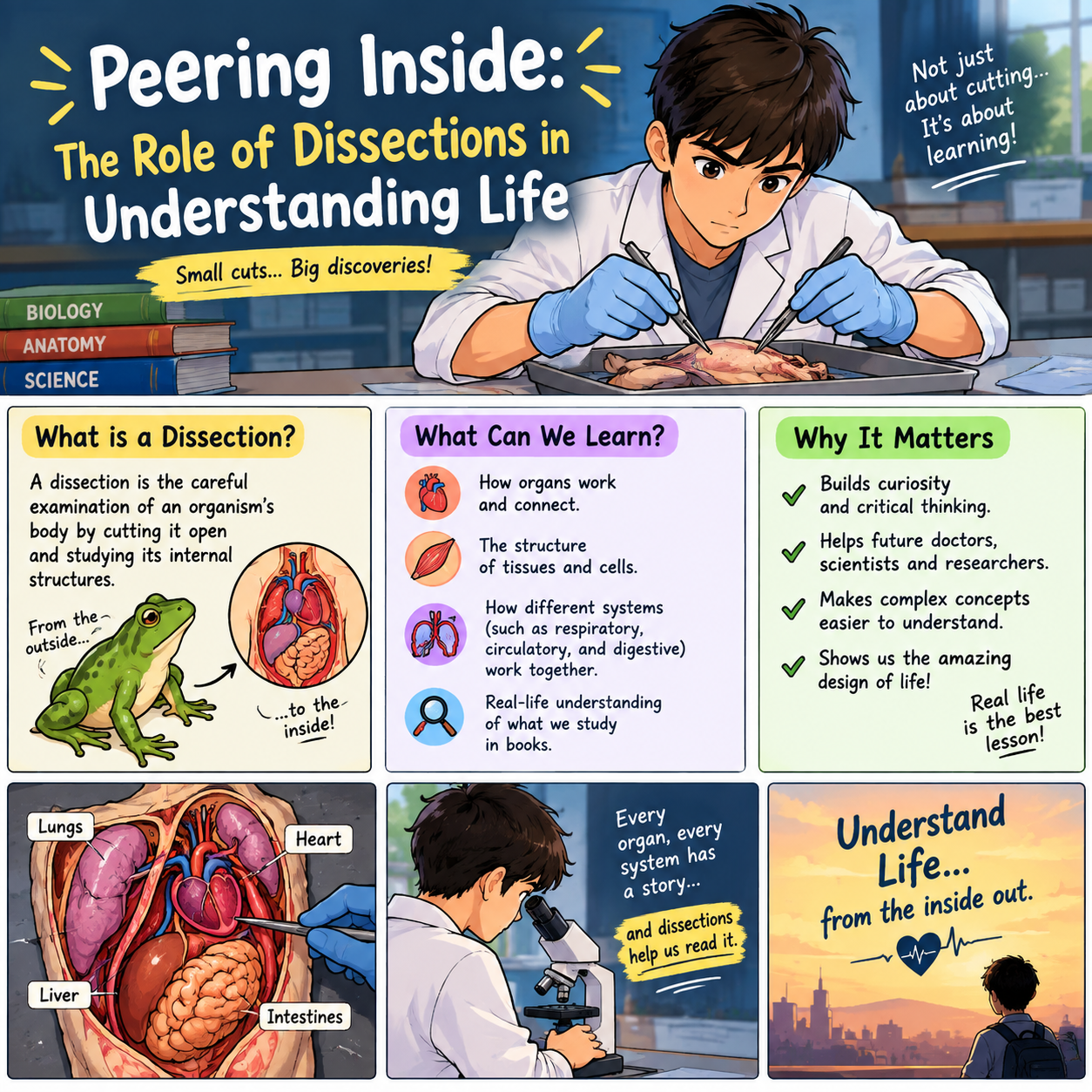
    **Peering Inside: The Role of Dissections in Understanding Life**
    Every living organism has an incredible story hidden beneath the surface. Through dissections, students and researchers gain a deeper understanding of anatomy, organ systems, and the amazing complexity of life. By carefully observing real biological structures, we develop scientific thinking, critical observation skills, and a greater appreciation for how living beings function.
    Dissections are not just about exploring anatomy—they inspire curiosity, encourage hands-on learning, and help connect classroom knowledge with the real world. Every discovery brings us one step closer to understanding the wonders of life and the science that shapes our world.
    **#Hashtags**
    #Biology #Science #Dissection #Anatomy #LifeSciences #STEM #MedicalEducation #Learning #Education #ScientificDiscovery #FutureScientists #HandsOnLearning #Curiosity #Knowledge #RehanSchool #ExploreScience
    @Asma Shaheen EducationWali
    @Saima Happinesswali
    @Irum Asim
    #rsisb Roll No 242 Story Post 16 Foundation level 🧬🔬 **Peering Inside: The Role of Dissections in Understanding Life** 🔬🧬 Every living organism has an incredible story hidden beneath the surface. 🌱🫀 Through dissections, students and researchers gain a deeper understanding of anatomy, organ systems, and the amazing complexity of life. By carefully observing real biological structures, we develop scientific thinking, critical observation skills, and a greater appreciation for how living beings function. 🧠✨ Dissections are not just about exploring anatomy—they inspire curiosity, encourage hands-on learning, and help connect classroom knowledge with the real world. Every discovery brings us one step closer to understanding the wonders of life and the science that shapes our world. 🌍📚🔍 **#Hashtags** #Biology 🧬 #Science 🔬 #Dissection 🫀 #Anatomy 🦴 #LifeSciences 🌿 #STEM 🚀 #MedicalEducation 🩺 #Learning 📖 #Education 🎓 #ScientificDiscovery 🔍 #FutureScientists 🌟 #HandsOnLearning ✋ #Curiosity 💡 #Knowledge 📚 #RehanSchool ❤️ #ExploreScience 🌍 @Asma Shaheen EducationWali @Saima Happinesswali @Irum Asim
    0 Commenti 0 condivisioni 5080 Views
  • #rsisb
    Roll No 242
    story post 16
    foundation level

    **Why Frogs? Understanding the Anatomy of Life**
    Frogs may seem like ordinary creatures, but they have played an extraordinary role in helping scientists understand how living bodies work. Their organs and body systems share many similarities with those of humans, making them valuable for learning about anatomy, biology, and life sciences.
    In this fascinating journey, discover how the frog's heart , lungs , muscles , digestive system , and nervous system work together to support life. Understanding frog anatomy not only deepens our appreciation for nature but also helps us better understand our own bodies and the amazing complexity of life.
    Learn. Explore. Discover the science behind life—one frog at a time!
    #FrogAnatomy #Biology #LifeScience #ScienceEducation #STEM #Anatomy #Nature #Learning #Education #ScienceFacts #Curiosity #Students #Knowledge #RehanSchool

    @Asma Shaheen EducationWali
    @Saima Happinesswali
    @Irum Asim
    #rsisb Roll No 242 story post 16 foundation level 🐸🔬 **Why Frogs? Understanding the Anatomy of Life** Frogs may seem like ordinary creatures, but they have played an extraordinary role in helping scientists understand how living bodies work. 🌍💚 Their organs and body systems share many similarities with those of humans, making them valuable for learning about anatomy, biology, and life sciences. In this fascinating journey, discover how the frog's heart ❤️, lungs 🫁, muscles 💪, digestive system 🍃, and nervous system 🧠 work together to support life. Understanding frog anatomy not only deepens our appreciation for nature but also helps us better understand our own bodies and the amazing complexity of life. 📚 Learn. 🔍 Explore. 🌱 Discover the science behind life—one frog at a time! #FrogAnatomy 🐸 #Biology 🔬 #LifeScience 🌍 #ScienceEducation 📖 #STEM 🚀 #Anatomy 🫀 #Nature 🌿 #Learning 🎓 #Education 💡 #ScienceFacts 🧪 #Curiosity 🌟 #Students 👨‍🎓👩‍🎓 #Knowledge 📚 #RehanSchool 💙 @Asma Shaheen EducationWali @Saima Happinesswali @Irum Asim
    0 Commenti 0 condivisioni 2994 Views
  • The word "vocabulary" refers to the set of words known and used by a person in a particular language. It can also refer to the collection of words and their meanings in a specific context or subject.

    Here are five different sentences using the word "vocabulary":

    1. **Personal Vocabulary:** "Her extensive vocabulary allows her to express her thoughts clearly and eloquently."
    2. **Learning:** "Building a strong vocabulary is essential for language learners to communicate effectively."
    3. **Subject-specific:** "In medical school, students must learn the specialized vocabulary related to human anatomy and diseases."
    4. **Assessment:** "The teacher tested the students vocabulary to gauge their understanding of the reading material."
    5. **Daily Use:** "Reading regularly can significantly expand your vocabulary and improve your writing skills."
    The word "vocabulary" refers to the set of words known and used by a person in a particular language. It can also refer to the collection of words and their meanings in a specific context or subject. Here are five different sentences using the word "vocabulary": 1. **Personal Vocabulary:** "Her extensive vocabulary allows her to express her thoughts clearly and eloquently." 2. **Learning:** "Building a strong vocabulary is essential for language learners to communicate effectively." 3. **Subject-specific:** "In medical school, students must learn the specialized vocabulary related to human anatomy and diseases." 4. **Assessment:** "The teacher tested the students' vocabulary to gauge their understanding of the reading material." 5. **Daily Use:** "Reading regularly can significantly expand your vocabulary and improve your writing skills."
    0 Commenti 0 condivisioni 395 Views
  • Just read this !

    Anatomy of a perfect social media post that drives 1.8 million views and dozens of warm leads...

    1) Immediacy to draw attention-- this "just happened".

    2) A few quick specific details to establish this is a real story.

    3) The "challenge" or problem to be solved.

    4) The solution from this service provider.

    5) The gentle call to action that is not a direct sales message.

    Notice that unlike an "ad", this guy tells a personal story from his personal brand (not company page).

    The key to a "story" is something that happened to one particular person-- not his 20 years of experience providing financial advice to people of all types.

    He has only 2,000 followers, but the initial engagement of way over 10% was a signal to the algorithm to show the post to more and more people.

    He writes in "broetry", which is super short paragraphs of one sentence or even one word.

    This creates a "landing zone" for mobile scrolling.

    Notice no images, no fancy copywriting, no "hero story", no cute puppies.

    Now can you start telling specific stories like this from your day to day experience?

    Via Dennis Yu
    Just read this ! Anatomy of a perfect social media post that drives 1.8 million views and dozens of warm leads... 1) Immediacy to draw attention-- this "just happened". 2) A few quick specific details to establish this is a real story. 3) The "challenge" or problem to be solved. 4) The solution from this service provider. 5) The gentle call to action that is not a direct sales message. Notice that unlike an "ad", this guy tells a personal story from his personal brand (not company page). The key to a "story" is something that happened to one particular person-- not his 20 years of experience providing financial advice to people of all types. He has only 2,000 followers, but the initial engagement of way over 10% was a signal to the algorithm to show the post to more and more people. He writes in "broetry", which is super short paragraphs of one sentence or even one word. This creates a "landing zone" for mobile scrolling. Notice no images, no fancy copywriting, no "hero story", no cute puppies. Now can you start telling specific stories like this from your day to day experience? Via Dennis Yu
    0 Commenti 0 condivisioni 484 Views
  • Prompt :
    Based on my uploaded photo generate an image with Top-down food parody photo. A large white round dinner plate sits on a rustic wooden table. In the center, a “human burrito” wrapped in a bright turmeric yellow towel. [A middle-aged East Asian man’s] head gently peeks out from the wrap, neutral friendly expression. Red chili sauce drizzled in neat zigzags across the towel. Fresh cilantro leaves and a few red chili flakes on top. Around the wrap, arrange neat piles of garnishes: cucumber rounds, thin carrot sticks, blanched green beans, bean sprouts, and two small nests of white rice vermicelli. One soft-boiled egg cut in halves on the rim. Top left of the plate, a glass of iced tea with lemon slice and mint. Small highlight sparkle near the top right. Clean plate edges, appetizing colors, no mess.

    Lighting and camera
    Soft studio key from upper left with gentle shadows. Overhead 90-degree camera. High detail, crisp textures for towel, skin, noodles, and wood grain. Photorealistic, natural color grading.

    Style notes

    Playful culinary satire. Centered composition. Generous negative space on the plate. No text in scene. No logos.

    Negative prompt

    gore, blood, violent imagery, messy splatters, distorted anatomy, extra limbs, duplicate heads, deformed face, watermark, text overlay, low resolution, heavy motion blur, chromatic aberration

    Output specs
    Resolution 1024x768 or 1536x1024. Aspect ratio 4:3 or 3:2. High quality, sharp focus.
    Prompt : Based on my uploaded photo generate an image with Top-down food parody photo. A large white round dinner plate sits on a rustic wooden table. In the center, a “human burrito” wrapped in a bright turmeric yellow towel. [A middle-aged East Asian man’s] head gently peeks out from the wrap, neutral friendly expression. Red chili sauce drizzled in neat zigzags across the towel. Fresh cilantro leaves and a few red chili flakes on top. Around the wrap, arrange neat piles of garnishes: cucumber rounds, thin carrot sticks, blanched green beans, bean sprouts, and two small nests of white rice vermicelli. One soft-boiled egg cut in halves on the rim. Top left of the plate, a glass of iced tea with lemon slice and mint. Small highlight sparkle near the top right. Clean plate edges, appetizing colors, no mess. Lighting and camera Soft studio key from upper left with gentle shadows. Overhead 90-degree camera. High detail, crisp textures for towel, skin, noodles, and wood grain. Photorealistic, natural color grading. Style notes Playful culinary satire. Centered composition. Generous negative space on the plate. No text in scene. No logos. Negative prompt gore, blood, violent imagery, messy splatters, distorted anatomy, extra limbs, duplicate heads, deformed face, watermark, text overlay, low resolution, heavy motion blur, chromatic aberration Output specs Resolution 1024x768 or 1536x1024. Aspect ratio 4:3 or 3:2. High quality, sharp focus.
    0 Commenti 0 condivisioni 623 Views
  • Taxila (Takshashila): The University That Lived Before the Word “University”

    Long before the modern world learned to spell the word university, before degrees, campuses, and rankings existed, there was a place where knowledge lived freely, fearlessly, and fully.

    That place was Taxila—also known as Takshashila.

    It stood on the land that is today Pakistan.

    And that fact alone should change how we see ourselves.


    A City Built Around Knowledge

    Taxila was not founded as a building.
    It was not inaugurated with a ribbon-cutting ceremony.
    It did not have a single gate or a single classroom.

    Taxila was a city of learning.

    Around 600 BCE—more than 2,600 years ago—students began arriving there from all directions:
    from India, Central Asia, China, Persia, and even the Greek world.

    They did not come for certificates.
    They came for wisdom.

    In Taxila, learning did not happen inside four walls.
    It happened in homes of teachers, under trees, in discussion circles, in debates, in practice.

    Knowledge was not stored in buildings.
    It was alive in people.


    Older Than Most of the World’s Universities

    When people talk about ancient universities, they often name:
    • Oxford
    • Bologna
    • Paris

    But these institutions were founded 1,500 years after Taxila.

    When Taxila was already flourishing:
    • Europe was still in the early stages of organized education
    • Formal universities did not yet exist in the West

    Taxila was not just old.
    It was ahead of its time.


    What Made Taxila Different

    Taxila did not divide knowledge into artificial boxes.

    There was no idea that:
    • Science is separate from philosophy
    • Medicine is separate from ethics
    • Governance is separate from morality

    In Taxila, everything was connected.

    A student of medicine learned:
    • Anatomy
    • Surgery
    • Herbal science
    • Ethics
    • Responsibility toward society

    A student of politics learned:
    • Law
    • Philosophy
    • Human behavior
    • Economics
    • Moral leadership

    A student of language studied:
    • Grammar
    • Logic
    • Debate
    • Culture
    • Meaning

    This was not specialization without understanding.
    This was depth with wholeness.


    Teachers Who Shaped Civilizations

    Taxila produced and hosted some of the greatest minds of the ancient world.

    It trained:
    • Statesmen
    • Physicians
    • Philosophers
    • Military strategists
    • Linguists
    • Thinkers

    Legends like Chanakya (Kautilya)—author of the Arthashastra, one of the earliest books on economics and governance—were connected to Taxila.

    Doctors trained here performed advanced surgeries at a time when much of the world believed illness was caused by spirits.

    This was evidence-based thinking—thousands of years ago.


    No Exams, No Degrees—Only Mastery

    There were no standardized exams in Taxila.
    No grades.
    No diplomas.

    Instead:
    • A student stayed with a teacher until mastery was achieved
    • Learning ended when the teacher believed the student was ready to serve society
    • Education was judged by capability, not certificates

    The goal was not employment.
    The goal was competence, wisdom, and contribution.


    A Truly International University

    Taxila was global before globalization.

    Students came speaking different languages, carrying different beliefs, asking different questions.

    And yet, they learned together.

    Taxila did not impose one ideology.
    It welcomed dialogue.

    This made it one of the first truly international universities on Earth—not by passport, but by mindset.


    The Tragedy of Forgetting

    Over centuries, invasions, destruction, and colonial narratives buried this history.

    A dangerous idea slowly took root:

    “Knowledge never existed here.”

    This is one of the greatest lies ever told to this region.

    Knowledge did exist here.
    Innovation was born here.
    Universities thrived here.

    But when a civilization forgets its intellectual past, it begins to doubt its future.


    Why Pakistanis Must Be Proud

    Taxila is not just an archaeological site.
    It is proof.

    Proof that:
    • This land has produced thinkers, not just survivors
    • This region was once a cradle of global knowledge
    • Pakistanis are heirs to an intellectual legacy, not an empty one

    We are not starting from zero.
    We are remembering.


    Taking It Back

    To honor Taxila is not to build statues.
    It is to revive the spirit.

    That spirit says:
    • Ask questions
    • Connect knowledge
    • Think independently
    • Learn for mastery, not marks
    • Use knowledge to serve humanity

    We must stop believing that wisdom only comes from outside.
    We must stop importing confidence.

    This land once educated the world.

    It can do so again.


    The Real Lesson of Taxila

    Taxila teaches us one powerful truth:

    A university is not a building.
    It is a culture of thinking.

    And that culture once lived here.

    It can live here again—
    if we choose knowledge over fear,
    curiosity over imitation,
    and confidence over forgetting.

    Taxila is not just history.
    It is a calling.
    Taxila (Takshashila): The University That Lived Before the Word “University” Long before the modern world learned to spell the word university, before degrees, campuses, and rankings existed, there was a place where knowledge lived freely, fearlessly, and fully. That place was Taxila—also known as Takshashila. It stood on the land that is today Pakistan. And that fact alone should change how we see ourselves. ⸻ A City Built Around Knowledge Taxila was not founded as a building. It was not inaugurated with a ribbon-cutting ceremony. It did not have a single gate or a single classroom. Taxila was a city of learning. Around 600 BCE—more than 2,600 years ago—students began arriving there from all directions: from India, Central Asia, China, Persia, and even the Greek world. They did not come for certificates. They came for wisdom. In Taxila, learning did not happen inside four walls. It happened in homes of teachers, under trees, in discussion circles, in debates, in practice. Knowledge was not stored in buildings. It was alive in people. ⸻ Older Than Most of the World’s Universities When people talk about ancient universities, they often name: • Oxford • Bologna • Paris But these institutions were founded 1,500 years after Taxila. When Taxila was already flourishing: • Europe was still in the early stages of organized education • Formal universities did not yet exist in the West Taxila was not just old. It was ahead of its time. ⸻ What Made Taxila Different Taxila did not divide knowledge into artificial boxes. There was no idea that: • Science is separate from philosophy • Medicine is separate from ethics • Governance is separate from morality In Taxila, everything was connected. A student of medicine learned: • Anatomy • Surgery • Herbal science • Ethics • Responsibility toward society A student of politics learned: • Law • Philosophy • Human behavior • Economics • Moral leadership A student of language studied: • Grammar • Logic • Debate • Culture • Meaning This was not specialization without understanding. This was depth with wholeness. ⸻ Teachers Who Shaped Civilizations Taxila produced and hosted some of the greatest minds of the ancient world. It trained: • Statesmen • Physicians • Philosophers • Military strategists • Linguists • Thinkers Legends like Chanakya (Kautilya)—author of the Arthashastra, one of the earliest books on economics and governance—were connected to Taxila. Doctors trained here performed advanced surgeries at a time when much of the world believed illness was caused by spirits. This was evidence-based thinking—thousands of years ago. ⸻ No Exams, No Degrees—Only Mastery There were no standardized exams in Taxila. No grades. No diplomas. Instead: • A student stayed with a teacher until mastery was achieved • Learning ended when the teacher believed the student was ready to serve society • Education was judged by capability, not certificates The goal was not employment. The goal was competence, wisdom, and contribution. ⸻ A Truly International University Taxila was global before globalization. Students came speaking different languages, carrying different beliefs, asking different questions. And yet, they learned together. Taxila did not impose one ideology. It welcomed dialogue. This made it one of the first truly international universities on Earth—not by passport, but by mindset. ⸻ The Tragedy of Forgetting Over centuries, invasions, destruction, and colonial narratives buried this history. A dangerous idea slowly took root: “Knowledge never existed here.” This is one of the greatest lies ever told to this region. Knowledge did exist here. Innovation was born here. Universities thrived here. But when a civilization forgets its intellectual past, it begins to doubt its future. ⸻ Why Pakistanis Must Be Proud Taxila is not just an archaeological site. It is proof. Proof that: • This land has produced thinkers, not just survivors • This region was once a cradle of global knowledge • Pakistanis are heirs to an intellectual legacy, not an empty one We are not starting from zero. We are remembering. ⸻ Taking It Back To honor Taxila is not to build statues. It is to revive the spirit. That spirit says: • Ask questions • Connect knowledge • Think independently • Learn for mastery, not marks • Use knowledge to serve humanity We must stop believing that wisdom only comes from outside. We must stop importing confidence. This land once educated the world. It can do so again. ⸻ The Real Lesson of Taxila Taxila teaches us one powerful truth: A university is not a building. It is a culture of thinking. And that culture once lived here. It can live here again— if we choose knowledge over fear, curiosity over imitation, and confidence over forgetting. Taxila is not just history. It is a calling.
    0 Commenti 0 condivisioni 227 Views
Pagine in Evidenza