• #RSISB
    Roll No : 55
    Level 2
    Work Book A
    Talk With Ai On Software : 02
    Talk With AI: 50 Questions About Software Development, Coding, Artificial Intelligence, and the Future of Technology!
    Hello everyone! Welcome to my new educational AI Talk Session!
    My name is Faizan Ali SoftwareWala, and in this session, I am exploring the amazing world of software with Artificial Intelligence (AI).
    Software is one of the most important parts of our modern world. We use software every day on our computers, mobile phones, websites, educational platforms, businesses, and many other digital systems. From simple mobile applications to advanced AI assistants, software is helping people solve problems, save time, improve productivity, and connect with the world.
    In this special session, I asked AI 50 interesting and educational questions about software to expand my knowledge, discover new ideas, and understand how technology works.
    Throughout this conversation, I explored several important topics, including:
    1. Introduction to Software: What software is, why it is important, the different types of software, and how software has changed our daily lives.
    2. Software Development and Coding: How software is created, which programming languages beginners can learn, the importance of HTML, CSS, JavaScript, and PHP, and how developers find and fix errors in their projects.
    3. Artificial Intelligence and Modern Technology: How AI is changing software development, how AI chatbots work, how APIs connect different applications, and how developers can use AI tools to build smarter digital solutions.
    4. Software Business and Online Earning: How beginners can earn money through software development, how freelancing works, how to find clients, how software companies generate income, and how a simple software idea can become a successful business.
    5. The Future of Software Development: Whether AI will replace software developers, which skills will be valuable in the future, how young students can learn coding for free, and how technology can solve real-world problems.
    6. Software Development in Pakistan: How software can improve education, support businesses, create earning opportunities, and help young Pakistanis develop innovative solutions for local and international challenges.
    7. Advice for Young Software Developers: I also explored how a young student can improve coding skills, build a professional portfolio, develop creative thinking, start working on real projects, and move toward becoming a successful software developer.
    My Mission and Vision
    My goal is not just to learn coding or create websites. My bigger mission is to become a skilled software developer, an innovative problem solver, and a future leader who uses technology to make a positive difference in people's lives.
    I believe that age should never stop anyone from learning new skills, exploring technology, building projects, or working toward their dreams. Every expert starts as a beginner, and every successful project begins with an idea.
    As a student, I want to continue learning about software development, artificial intelligence, web development, and digital innovation. I want to build useful projects, experiment with new technologies, improve my English communication skills, and learn how to turn ideas into practical solutions.
    I also believe that AI is a powerful learning partner. When we ask meaningful questions, explore different perspectives, and practice consistently, we can improve our understanding and discover new opportunities. AI can help us learn faster, but our own creativity, critical thinking, dedication, and hard work are equally important.
    Why Is This Session Important?
    This session is designed for students, beginners, aspiring software developers, technology enthusiasts, and anyone who wants to understand the world of software.
    If you are interested in coding, websites, applications, AI tools, freelancing, startups, or the future of technology, I hope this conversation inspires you to start learning and creating something useful.
    Remember, you do not need to know everything before you begin. Start with the basics, practice every day, build small projects, learn from your mistakes, and gradually improve your skills. The most important thing is to take action and remain consistent.
    Watch the Session and Join the Journey!
    Watch my AI Talk Session, explore the 50 questions, learn something new, and share your thoughts in the comments.
    Which area of software development interests you the most: web development, app development, artificial intelligence, cybersecurity, or software business?
    Write your answer in the comments!
    Like this session if you found it educational.
    Share it with students and friends who want to learn about software.
    Follow my journey for more AI talks, educational sessions, coding projects, and technology-related content.
    My Message to Every Young Learner:
    “Don't just use technology. Learn how it works, build something meaningful with it, and use your skills to solve real problems.”
    Keep Learning
    Keep Coding
    Keep Building
    Keep Innovating
    Keep Improving
    And Never Give Up!
    Thank you for being part of my learning journey. See you in the next educational session!
    Created by: Faizan Ali SoftwareWala
    #TalkWithAI #SoftwareDevelopment #SoftwareEngineering #SoftwareDeveloper #ArtificialIntelligence #AI #Coding #Programming #WebDevelopment #LearnToCode #Technology #TechEducation #Freelancing #SoftwareBusiness #FutureOfTechnology #ProblemSolving #DigitalSkills
    @followers
    Asma Shaheen EducationWali
    #RSISB Roll No : 55 Level 2 Work Book A Talk With Ai On Software : 02 🎙️💻🤖 Talk With AI: 50 Questions About Software Development, Coding, Artificial Intelligence, and the Future of Technology! 🚀🌍 Hello everyone! 👋 Welcome to my new educational AI Talk Session! My name is Faizan Ali SoftwareWala, and in this session, I am exploring the amazing world of software with Artificial Intelligence (AI). 💻✨ Software is one of the most important parts of our modern world. We use software every day on our computers, mobile phones, websites, educational platforms, businesses, and many other digital systems. From simple mobile applications to advanced AI assistants, software is helping people solve problems, save time, improve productivity, and connect with the world. 🌐📱 In this special session, I asked AI 50 interesting and educational questions about software to expand my knowledge, discover new ideas, and understand how technology works. 🤖🧠 Throughout this conversation, I explored several important topics, including: 💻 1. Introduction to Software: What software is, why it is important, the different types of software, and how software has changed our daily lives. ⌨️ 2. Software Development and Coding: How software is created, which programming languages beginners can learn, the importance of HTML, CSS, JavaScript, and PHP, and how developers find and fix errors in their projects. 🤖 3. Artificial Intelligence and Modern Technology: How AI is changing software development, how AI chatbots work, how APIs connect different applications, and how developers can use AI tools to build smarter digital solutions. 💰 4. Software Business and Online Earning: How beginners can earn money through software development, how freelancing works, how to find clients, how software companies generate income, and how a simple software idea can become a successful business. 🚀 5. The Future of Software Development: Whether AI will replace software developers, which skills will be valuable in the future, how young students can learn coding for free, and how technology can solve real-world problems. 🇵🇰 6. Software Development in Pakistan: How software can improve education, support businesses, create earning opportunities, and help young Pakistanis develop innovative solutions for local and international challenges. 🌟 7. Advice for Young Software Developers: I also explored how a young student can improve coding skills, build a professional portfolio, develop creative thinking, start working on real projects, and move toward becoming a successful software developer. 🎯 My Mission and Vision My goal is not just to learn coding or create websites. My bigger mission is to become a skilled software developer, an innovative problem solver, and a future leader who uses technology to make a positive difference in people's lives. I believe that age should never stop anyone from learning new skills, exploring technology, building projects, or working toward their dreams. Every expert starts as a beginner, and every successful project begins with an idea. 💡 As a student, I want to continue learning about software development, artificial intelligence, web development, and digital innovation. I want to build useful projects, experiment with new technologies, improve my English communication skills, and learn how to turn ideas into practical solutions. I also believe that AI is a powerful learning partner. When we ask meaningful questions, explore different perspectives, and practice consistently, we can improve our understanding and discover new opportunities. AI can help us learn faster, but our own creativity, critical thinking, dedication, and hard work are equally important. 🧠🔥 🌍 Why Is This Session Important? This session is designed for students, beginners, aspiring software developers, technology enthusiasts, and anyone who wants to understand the world of software. If you are interested in coding, websites, applications, AI tools, freelancing, startups, or the future of technology, I hope this conversation inspires you to start learning and creating something useful. Remember, you do not need to know everything before you begin. Start with the basics, practice every day, build small projects, learn from your mistakes, and gradually improve your skills. The most important thing is to take action and remain consistent. 💪 🎬 Watch the Session and Join the Journey! Watch my AI Talk Session, explore the 50 questions, learn something new, and share your thoughts in the comments. 💬 Which area of software development interests you the most: web development, app development, artificial intelligence, cybersecurity, or software business? 👇 Write your answer in the comments! 👍 Like this session if you found it educational. 📲 Share it with students and friends who want to learn about software. 🔔 Follow my journey for more AI talks, educational sessions, coding projects, and technology-related content. ✨ My Message to Every Young Learner: “Don't just use technology. Learn how it works, build something meaningful with it, and use your skills to solve real problems.” Keep Learning 📚 Keep Coding 💻 Keep Building 🛠️ Keep Innovating 💡 Keep Improving 🌱 And Never Give Up! 🔥🚀 Thank you for being part of my learning journey. See you in the next educational session! 👋🎙️ Created by: Faizan Ali SoftwareWala 💻 #TalkWithAI #SoftwareDevelopment #SoftwareEngineering #SoftwareDeveloper #ArtificialIntelligence #AI #Coding #Programming #WebDevelopment #LearnToCode #Technology #TechEducation #Freelancing #SoftwareBusiness #FutureOfTechnology #ProblemSolving #DigitalSkills @followers Asma Shaheen EducationWali
    0 Yorumlar 0 hisse senetleri 721 Views 13
  • RSIF8
    Roll no:17
    Short Dochmentry no:04
    Topic:Documentary — "Decoding 'Cyber': Origins in Norbert Wiener's Cybernetics".

    **Documentary: Decoding “Cyber” — Origins in Norbert Wiener’s Cybernetics**

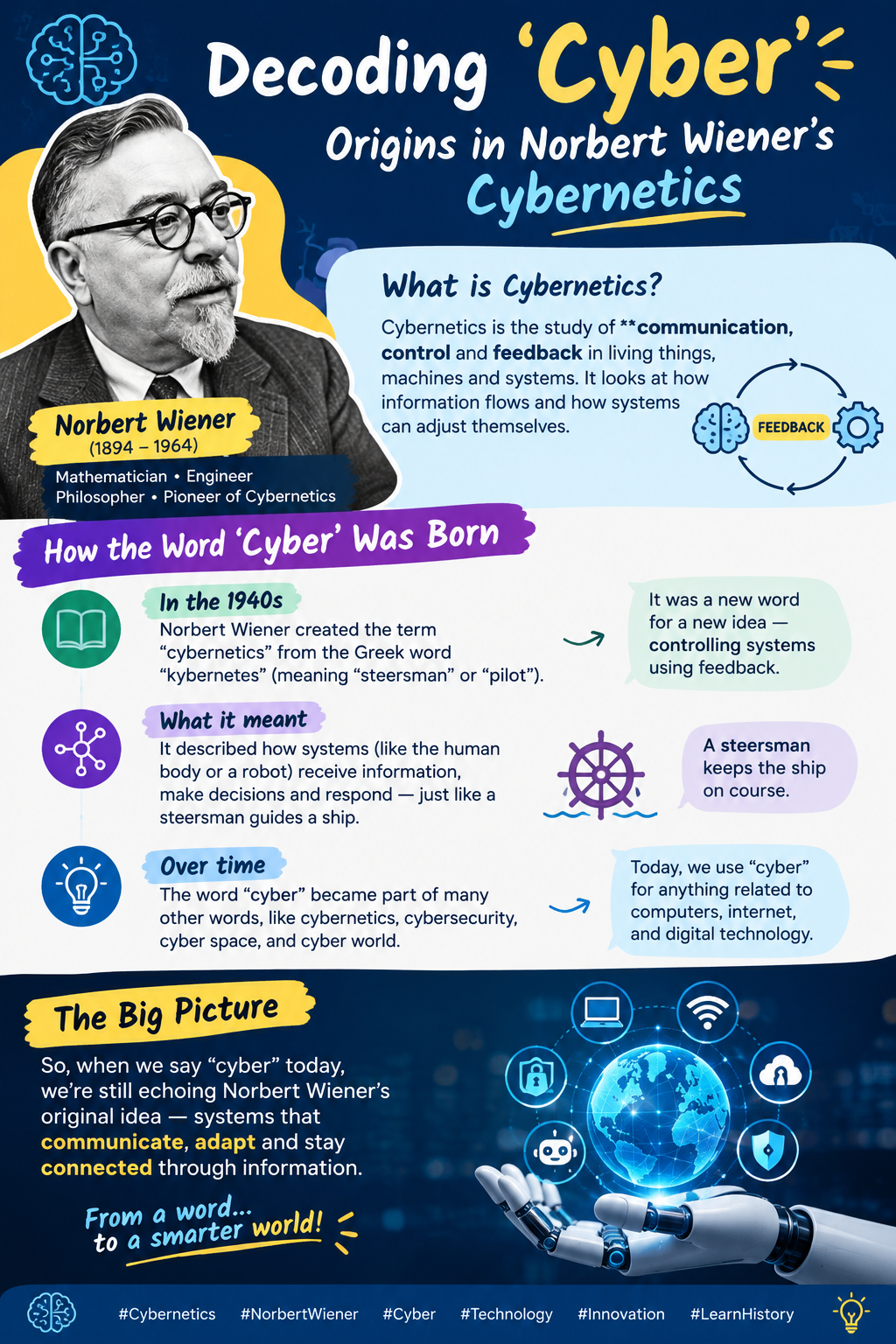
    Join me on an exciting learning journey to discover the origins of the word “Cyber” and the important work of Norbert Wiener. This documentary explores cybernetics and how communication, control, and feedback connect humans, animals, and machines.

    **What I Learned:**
    The origin and meaning of cybernetics.
    How feedback helps systems work effectively.
    The connection between cybernetics and modern technology.
    The meanings of cybersecurity, cyberspace, and cybercrime.
    The importance of using technology safely and responsibly.

    **My Key Message:**
    RSIF8 Roll no:17 Short Dochmentry no:04 Topic:Documentary — "Decoding 'Cyber': Origins in Norbert Wiener's Cybernetics". 🌐💻 **Documentary: Decoding “Cyber” — Origins in Norbert Wiener’s Cybernetics** 🧠🔍 ✨ Join me on an exciting learning journey to discover the origins of the word “Cyber” and the important work of Norbert Wiener. This documentary explores cybernetics and how communication, control, and feedback connect humans, animals, and machines. 🤖📡 📚 **What I Learned:** ✅ The origin and meaning of cybernetics. ✅ How feedback helps systems work effectively. ✅ The connection between cybernetics and modern technology. ✅ The meanings of cybersecurity, cyberspace, and cybercrime. ✅ The importance of using technology safely and responsibly. 🔐🌍 🎯 **My Key Message:**
    0 Yorumlar 0 hisse senetleri 252 Views 9
  • RSIF8
    Roll no:14
    coding task no:21
    codind task topic:Password Generator
    # Password Generator – Create Strong and Secure Passwords
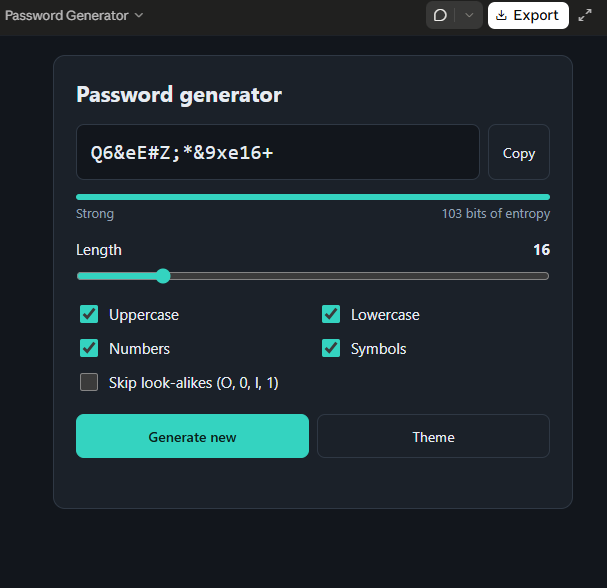
    The **Password Generator** is a simple, useful, and user-friendly application designed to generate strong and random passwords to help users protect their online accounts and personal information. In today's digital world, security is extremely important, and using weak or easily guessed passwords can put sensitive information at risk. This project provides a convenient way to create passwords that are more difficult to guess.
    The main purpose of this project is to develop an application that allows users to generate customized passwords according to their preferences. Users can select their desired password length and choose whether to include uppercase letters, lowercase letters, numbers, and special characters. With these options, the application can create different combinations suitable for various account security needs.
    ## Key Features
    - **Random Password Generation:** Generate random passwords quickly and conveniently.
    - **Custom Password Length:** Choose the number of characters in your password.
    - **Numbers and Symbols:** Include numbers and special characters for greater variety.
    - **Uppercase and Lowercase Letters:** Customize passwords using different letter types.
    - **Copy to Clipboard:** Copy the generated password easily.
    - **Simple User Interface:** Enjoy a clean and easy-to-use design.
    - **Fast Performance:** Generate passwords within seconds.
    ## Project Objectives
    The objective of this project is to develop a practical password-generation tool while learning essential programming concepts such as randomization, string manipulation, conditional statements, user input, and graphical user interface (GUI) development. It is an excellent beginner-friendly project for students who want to improve their coding skills and understand the basics of digital security.
    ## Importance of Password Security
    Strong, unique passwords help protect online accounts against unauthorized access. This application encourages users to avoid predictable passwords and create different passwords for different accounts. For better security, users should store their passwords safely and consider using a trusted password manager.
    ## Conclusion
    The **Password Generator** combines simplicity, customization, and security awareness in one useful application. It demonstrates how programming can solve everyday problems while helping users develop better digital safety habits.
    **Create stronger passwords, protect your digital world, and explore the power of programming!**
    #PasswordGenerator #CodingProject #CyberSecurity #PasswordSecurity #Programming #SoftwareDevelopment #BeginnerProject #GUIApplication #LearnToCode #DigitalSafety #ComputerScience See less
    RSIF8 Roll no:14 coding task no:21 codind task topic:Password Generator # 🔐 Password Generator – Create Strong and Secure Passwords 💻✨ The **Password Generator** is a simple, useful, and user-friendly application designed to generate strong and random passwords to help users protect their online accounts and personal information. In today's digital world, security is extremely important, and using weak or easily guessed passwords can put sensitive information at risk. This project provides a convenient way to create passwords that are more difficult to guess. The main purpose of this project is to develop an application that allows users to generate customized passwords according to their preferences. Users can select their desired password length and choose whether to include uppercase letters, lowercase letters, numbers, and special characters. With these options, the application can create different combinations suitable for various account security needs. ## 🚀 Key Features - 🔑 **Random Password Generation:** Generate random passwords quickly and conveniently. - 🔠 **Custom Password Length:** Choose the number of characters in your password. - 🔢 **Numbers and Symbols:** Include numbers and special characters for greater variety. - 🔡 **Uppercase and Lowercase Letters:** Customize passwords using different letter types. - 📋 **Copy to Clipboard:** Copy the generated password easily. - 🖥️ **Simple User Interface:** Enjoy a clean and easy-to-use design. - ⚡ **Fast Performance:** Generate passwords within seconds. ## 🎯 Project Objectives The objective of this project is to develop a practical password-generation tool while learning essential programming concepts such as randomization, string manipulation, conditional statements, user input, and graphical user interface (GUI) development. It is an excellent beginner-friendly project for students who want to improve their coding skills and understand the basics of digital security. ## 🔒 Importance of Password Security Strong, unique passwords help protect online accounts against unauthorized access. This application encourages users to avoid predictable passwords and create different passwords for different accounts. For better security, users should store their passwords safely and consider using a trusted password manager. ## 🌟 Conclusion The **Password Generator** combines simplicity, customization, and security awareness in one useful application. It demonstrates how programming can solve everyday problems while helping users develop better digital safety habits. **Create stronger passwords, protect your digital world, and explore the power of programming!** 🔐🚀 #PasswordGenerator #CodingProject #CyberSecurity #PasswordSecurity #Programming #SoftwareDevelopment #BeginnerProject #GUIApplication #LearnToCode #DigitalSafety #ComputerScience See less
    0 Yorumlar 0 hisse senetleri 1170 Views
  • Rsif8
    Roll No 30
    Post No 231
    **Decoding “Cyber”: Origins in Norbert Wiener’s Cybernetics**

    Have you ever wondered where the word **“Cyber”** comes from? In this video, we explore the story behind this interesting word and learn about Norbert Wiener, the scientist who helped develop the field of cybernetics.

    We discover how cybernetics connects people, machines, information, and control, and how its ideas relate to today's digital world.

    **In this video, you will learn:**
    - Who was Norbert Wiener?
    - What does cybernetics mean?
    - Where does the word “Cyber” come from?
    - What are cybersecurity, cybercrime, and cyberspace?
    - How did early ideas about cybernetics help shape our understanding of technology?

    Join me on this learning journey as we explore the history of a word that is now part of our everyday digital life!

    Like, Comment, Share, and Subscribe for more interesting educational videos.

    #Cyber #NorbertWiener #Cybernetics #Technology #ComputerScience #DigitalWorld #EducationalVideo #LearnWithMe
    Rsif8 Roll No 30 Post No 231 💻 **Decoding “Cyber”: Origins in Norbert Wiener’s Cybernetics** Have you ever wondered where the word **“Cyber”** comes from? 🤔 In this video, we explore the story behind this interesting word and learn about Norbert Wiener, the scientist who helped develop the field of cybernetics. We discover how cybernetics connects people, machines, information, and control, and how its ideas relate to today's digital world. 🔍 **In this video, you will learn:** - Who was Norbert Wiener? - What does cybernetics mean? - Where does the word “Cyber” come from? - What are cybersecurity, cybercrime, and cyberspace? - How did early ideas about cybernetics help shape our understanding of technology? Join me on this learning journey as we explore the history of a word that is now part of our everyday digital life! 👍 Like, 💬 Comment, 🔄 Share, and 🔔 Subscribe for more interesting educational videos. #Cyber #NorbertWiener #Cybernetics #Technology #ComputerScience #DigitalWorld #EducationalVideo #LearnWithMe
    0 Yorumlar 0 hisse senetleri 403 Views 3
  • RSIF8
    ROLL NO:92
    STORY POST NO:37
    TOPIC:**Digital Detectives: The World Inside Computers **

    Step into the fascinating world of computers! Discover how computers work, explore the secrets of digital technology, and learn how the internet connects people around the world. From coding and software to data and cybersecurity, every digital discovery opens the door to new possibilities.

    Let's become digital detectives and explore the amazing technology that shapes our modern world!

    #DigitalDetectives #WorldOfComputers #DigitalTechnology #ComputerScience #Coding #CyberSecurity #LearnAndExplore #TechEducation #DigitalWorld #AI
    RSIF8 ROLL NO:92 STORY POST NO:37 TOPIC:**Digital Detectives: The World Inside Computers 💻🔍** Step into the fascinating world of computers! 🌐✨ Discover how computers work, explore the secrets of digital technology, and learn how the internet connects people around the world. From coding and software to data and cybersecurity, every digital discovery opens the door to new possibilities. 🚀 Let's become digital detectives and explore the amazing technology that shapes our modern world! #DigitalDetectives #WorldOfComputers #DigitalTechnology #ComputerScience #Coding #CyberSecurity #LearnAndExplore #TechEducation #DigitalWorld #AI
    0 Yorumlar 0 hisse senetleri 585 Views
  • I am Ammar Naeem Technology Wala

    🪪 Roll Number: 79
    I am a Level 2 Student.
    Book Number: 1
    Canva Post Number: 03

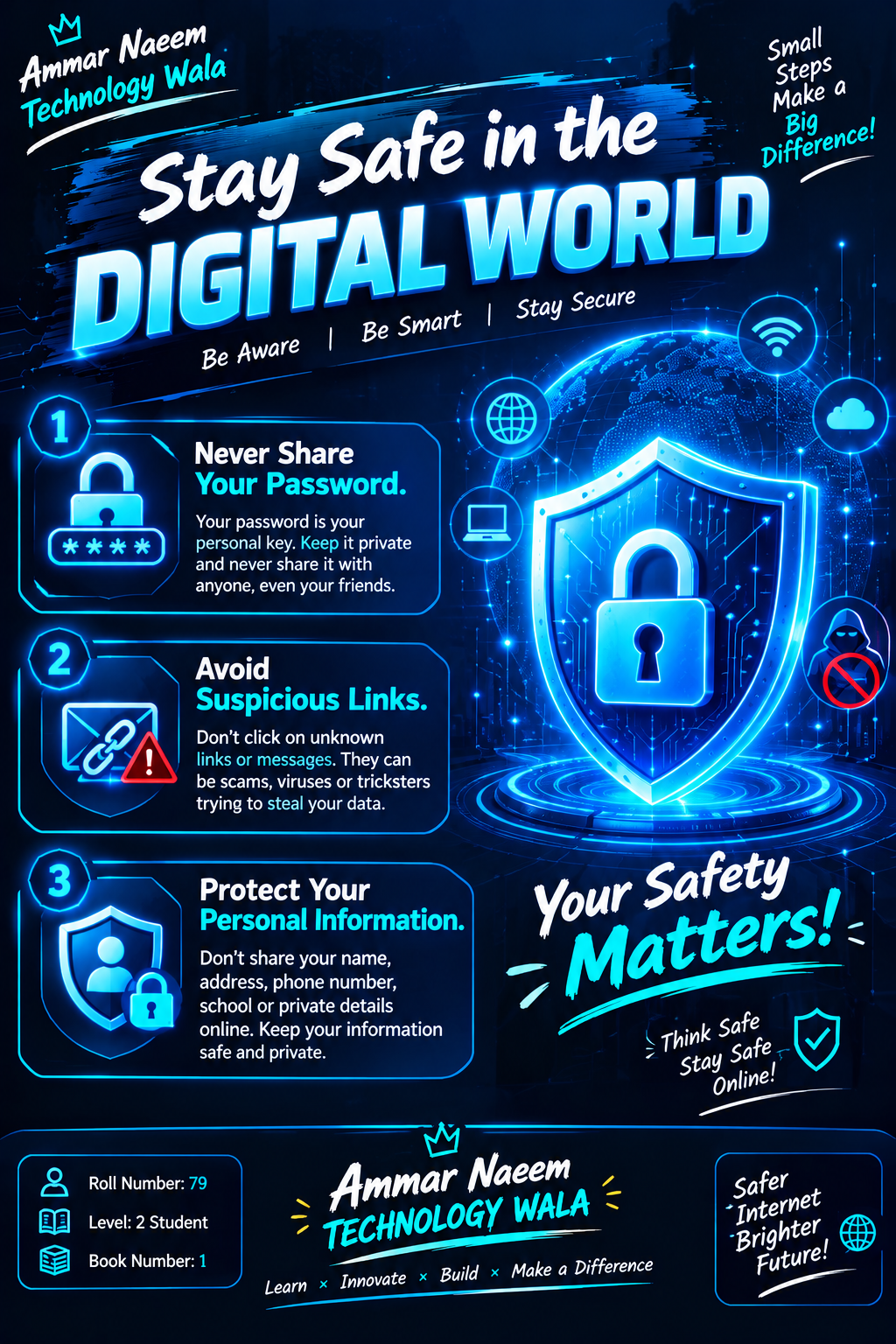
    3 Important Cyber Safety Tips:

    Never Share Your Password
    Keep your passwords private and secure.

    Avoid Suspicious Links
    Never click on unknown or suspicious links.

    Protect Your Personal Information
    Keep your address, phone number, and private details safe online.

    My Message:
    Let's use technology wisely, stay alert, and protect ourselves in the digital world!

    Think Smart. Stay Safe. Protect Your Digital World!

    Ammar Naeem Technology Wala

    #AmmarNaeemTechnologyWala #RollNumber79 #Level2Student #BookNumber1 #CanvaPost03 #CyberSafety #OnlineSafety #CyberSecurity #Technology #DigitalWorld


    Make the cyber tips shorterImprove the post’s visual structure
    I am Ammar Naeem Technology Wala 🚀🤖 🪪 Roll Number: 79 📚 I am a Level 2 Student. 📖 Book Number: 1 🎨 Canva Post Number: 03 🔒 3 Important Cyber Safety Tips: 1️⃣ Never Share Your Password 🔑 Keep your passwords private and secure. 2️⃣ Avoid Suspicious Links ⚠️ Never click on unknown or suspicious links. 3️⃣ Protect Your Personal Information 🛡️ Keep your address, phone number, and private details safe online. 🌟 My Message: Let's use technology wisely, stay alert, and protect ourselves in the digital world! 🌍💙 ✨ Think Smart. Stay Safe. Protect Your Digital World! 🚀 💻 Ammar Naeem Technology Wala #AmmarNaeemTechnologyWala #RollNumber79 #Level2Student #BookNumber1 #CanvaPost03 #CyberSafety #OnlineSafety #CyberSecurity #Technology #DigitalWorld 🔐🤖🚀 Make the cyber tips shorterImprove the post’s visual structure
    1
    0 Yorumlar 0 hisse senetleri 1510 Views
  • RSIF8
    Roll no 94
    Coding task no 17
    Coding task topic
    Password Generator Project
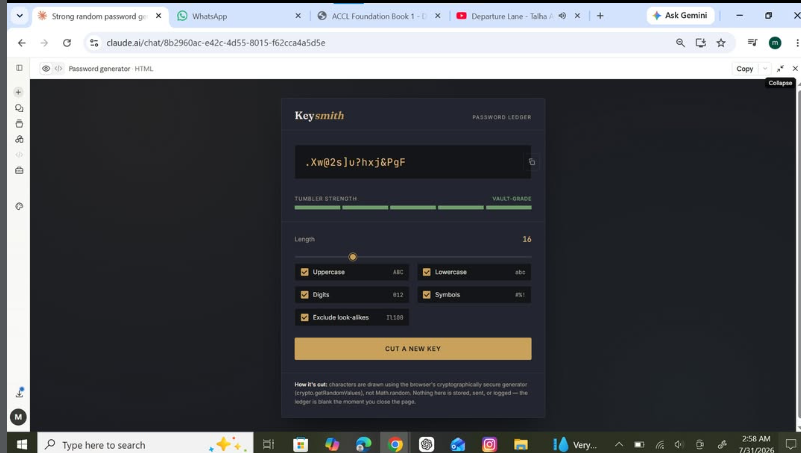
    I created a Password Generator that generates strong and random passwords to help keep online accounts safe and secure. The program creates unique passwords using a mix of uppercase letters, lowercase letters, numbers, and special characters. This project helped me learn about randomness, cybersecurity, and secure password practices.
    Check out the screenshot of my Password Generator in action!
    Strong passwords are the first step toward protecting your digital life. Always use unique passwords and keep them safe!
    #PasswordGenerator #CyberSecurity #Programming #CodingProject #Python #TechSkills #LearnCoding #DigitalSecurity #StudentProject #Innovation #Technology #ComputerScience #FutureReady
    RSIF8 Roll no 94 Coding task no 17 Coding task topic ✨🔐 Password Generator Project 🔐✨ I created a Password Generator that generates strong and random passwords to help keep online accounts safe and secure. 💻🛡️ The program creates unique passwords using a mix of uppercase letters, lowercase letters, numbers, and special characters. This project helped me learn about randomness, cybersecurity, and secure password practices. 🚀📚 📸 Check out the screenshot of my Password Generator in action! 💡 Strong passwords are the first step toward protecting your digital life. Always use unique passwords and keep them safe! 🔒✨ #PasswordGenerator #CyberSecurity #Programming #CodingProject #Python #TechSkills #LearnCoding #DigitalSecurity #StudentProject #Innovation #Technology #ComputerScience #FutureReady 🚀💻🔐
    0 Yorumlar 0 hisse senetleri 1236 Views
  • Story Post

    # Cybersecurity Chronicles: Protecting Information in the Digital Age

    The air in the control room was thick with tension, punctuated only by the hum of cooling fans and the quiet, rhythmic clacking of mechanical keyboards. For Maya, a senior cybersecurity analyst at Apex Sentinel, late-night shifts were usually spent monitoring routine network pings and automated firewall logs.

    Tonight was different.

    At 2:17 AM, a single red alert flashed across her secondary monitor: **`UNAUTHORIZED ACCESS ATTEMPT – SECTOR 4 DATABASE`**.

    ---

    ## Chapter 1: The Invisible Intruder

    Sector 4 housed the core sensitive data for millions of users—encrypted identifiers, access keys, and proprietary algorithms. Maya leaned in, her eyes scanning the incoming data packets. This was no low-level script kiddie trying a basic brute-force attack. The intruder was moving with surgical precision, exploiting an unpatched zero-day vulnerability in a legacy microservice.

    > *"They're not just trying to break in,"* Maya whispered to her teammate, Leo, sitting at the adjacent console. *"They already have internal credentials. It’s a spear-phishing compromise."*

    The threat actor—known in threat intelligence circles as **ShadowByte**—had spent weeks laying the groundwork. A spoofed executive email, a single clicked link on a rogue landing page, and a compromised credential was all it took to bypass traditional perimeter defenses.

    ---

    ## Chapter 2: The Digital Countermeasure

    Every second mattered. A full breach could result in millions of compromised records, massive regulatory fines, and shattered public trust.

    Maya executed Apex Sentinel’s incident response protocol:

    1. **Isolation:** She immediately severed Sector 4's outward-facing network connections, routing traffic into a isolated honeypot to monitor the attacker's movements.
    2. **Credential Revocation:** Leo forced a company-wide token refresh, revoking all active sessions associated with the compromised user account.
    3. **Patch Deployment:** Working rapidly, the engineering team deployed an emergency hotfix to patch the exploited vulnerability across all microservices.

    ```text
    [SYSTEM ACTION] Isolating Sector 4... SUCCESS
    [SYSTEM ACTION] Revoking Active Tokens... SUCCESS
    [SYSTEM ACTION] Hotfix v4.12.9 Deployed. Threat Contained.

    ```

    By 3:45 AM, the malicious traffic ceased. The breach was neutralized before a single byte of customer data left the server.

    ---

    ## Chapter 3: Lessons from the Frontlines

    The attack was a stark reminder that in the digital age, **security is not a static destination—it is a continuous practice.**

    Technology alone is never enough; humans remain both the most vulnerable link and the strongest line of defense in cybersecurity.

    | Threat Vectors | Modern Safeguards |
    | --- | --- |
    | **Spear-Phishing & Social Engineering** | Security awareness training & Phishing simulations |
    | **Stolen Credentials** | Multi-Factor Authentication (MFA) & Zero Trust Access |
    | **Zero-Day Vulnerabilities** | Automated patch management & Intrusion Detection Systems (IDS) |
    | **Data Exfiltration** | End-to-end encryption & Data Loss Prevention (DLP) tools |

    ---

    ## The Takeaway: Building a Culture of Security

    As the sun began to rise over the city, Maya stepped out of the building into the cool morning air. The digital battleground is silent, invisible to the millions of people going about their day, trusting that their information is safe.

    Protecting data in the modern world requires vigilance at every level:

    * **For Individuals:** Use strong, unique passwords combined with dynamic MFA, and remain skeptical of unexpected emails or requests for information.
    * **For Organizations:** Adopt a **Zero Trust architecture** ("Never trust, always verify"), keep infrastructure patched, and empower employees with security education.

    In the digital age, our information is our currency. Safeguarding it isn't just the job of analysts like Maya—it’s a collective responsibility we all share.

    ---

    *How does your team or organization stay ahead of evolving cyber threats? What security practices do you rely on daily?*
    Story Post # Cybersecurity Chronicles: Protecting Information in the Digital Age The air in the control room was thick with tension, punctuated only by the hum of cooling fans and the quiet, rhythmic clacking of mechanical keyboards. For Maya, a senior cybersecurity analyst at Apex Sentinel, late-night shifts were usually spent monitoring routine network pings and automated firewall logs. Tonight was different. At 2:17 AM, a single red alert flashed across her secondary monitor: **`UNAUTHORIZED ACCESS ATTEMPT – SECTOR 4 DATABASE`**. --- ## Chapter 1: The Invisible Intruder Sector 4 housed the core sensitive data for millions of users—encrypted identifiers, access keys, and proprietary algorithms. Maya leaned in, her eyes scanning the incoming data packets. This was no low-level script kiddie trying a basic brute-force attack. The intruder was moving with surgical precision, exploiting an unpatched zero-day vulnerability in a legacy microservice. > *"They're not just trying to break in,"* Maya whispered to her teammate, Leo, sitting at the adjacent console. *"They already have internal credentials. It’s a spear-phishing compromise."* The threat actor—known in threat intelligence circles as **ShadowByte**—had spent weeks laying the groundwork. A spoofed executive email, a single clicked link on a rogue landing page, and a compromised credential was all it took to bypass traditional perimeter defenses. --- ## Chapter 2: The Digital Countermeasure Every second mattered. A full breach could result in millions of compromised records, massive regulatory fines, and shattered public trust. Maya executed Apex Sentinel’s incident response protocol: 1. **Isolation:** She immediately severed Sector 4's outward-facing network connections, routing traffic into a isolated honeypot to monitor the attacker's movements. 2. **Credential Revocation:** Leo forced a company-wide token refresh, revoking all active sessions associated with the compromised user account. 3. **Patch Deployment:** Working rapidly, the engineering team deployed an emergency hotfix to patch the exploited vulnerability across all microservices. ```text [SYSTEM ACTION] Isolating Sector 4... SUCCESS [SYSTEM ACTION] Revoking Active Tokens... SUCCESS [SYSTEM ACTION] Hotfix v4.12.9 Deployed. Threat Contained. ``` By 3:45 AM, the malicious traffic ceased. The breach was neutralized before a single byte of customer data left the server. --- ## Chapter 3: Lessons from the Frontlines The attack was a stark reminder that in the digital age, **security is not a static destination—it is a continuous practice.** Technology alone is never enough; humans remain both the most vulnerable link and the strongest line of defense in cybersecurity. | Threat Vectors | Modern Safeguards | | --- | --- | | **Spear-Phishing & Social Engineering** | Security awareness training & Phishing simulations | | **Stolen Credentials** | Multi-Factor Authentication (MFA) & Zero Trust Access | | **Zero-Day Vulnerabilities** | Automated patch management & Intrusion Detection Systems (IDS) | | **Data Exfiltration** | End-to-end encryption & Data Loss Prevention (DLP) tools | --- ## The Takeaway: Building a Culture of Security As the sun began to rise over the city, Maya stepped out of the building into the cool morning air. The digital battleground is silent, invisible to the millions of people going about their day, trusting that their information is safe. Protecting data in the modern world requires vigilance at every level: * **For Individuals:** Use strong, unique passwords combined with dynamic MFA, and remain skeptical of unexpected emails or requests for information. * **For Organizations:** Adopt a **Zero Trust architecture** ("Never trust, always verify"), keep infrastructure patched, and empower employees with security education. In the digital age, our information is our currency. Safeguarding it isn't just the job of analysts like Maya—it’s a collective responsibility we all share. --- *How does your team or organization stay ahead of evolving cyber threats? What security practices do you rely on daily?*
    0 Yorumlar 0 hisse senetleri 1899 Views
  • #rsisb
    Roll no. 247
    Story post . 18
    Foundation level

    **Story Post — Decoding “Cyber”: Origins in Norbert Wiener’s Cybernetics**

    **Have you ever wondered where the word “Cyber” comes from?**

    The word *Cyber* is connected to the fascinating world of **cybernetics**, a field that explores communication, control, and feedback in both living organisms and machines. It helps us understand how humans, computers, and other systems receive information, respond to changes, and make adjustments.

    **The Story Behind Cybernetics**

    The story takes us back to **Norbert Wiener (1894–1964)**, an American mathematician who helped establish the field of cybernetics. In 1948, he published his influential book *Cybernetics: Or Control and Communication in the Animal and the Machine*.

    Wiener explored how communication and control work in animals and machines. One important concept was **feedback**—when a system uses information about its results to adjust what it does next.

    For example, a thermostat checks the temperature of a room and adjusts the heating to maintain the desired temperature. Similarly, modern robots use sensors to understand their surroundings and adjust their movements. These ideas help us understand many technologies we use today!

    **How Did “Cyber” Become So Popular?**

    Over time, the word *cyber* became associated with computers, digital communication, and the internet. Today, we hear it in words such as:

    **Cybersecurity** — protecting computers, networks, and information from digital threats.

    **Cyberspace** — the digital environment where people communicate and interact online.

    **Cybercrime** — illegal activities involving computers or digital networks.

    **Cybernetics** — the study of control, communication, and feedback in systems.

    From the early ideas of cybernetics to today's connected digital world, this little word has become part of our everyday vocabulary!

    **Why Is This Story Important?**

    Understanding the history of the word *cyber* helps us appreciate how scientific ideas influence language and technology. It also reminds us that many modern inventions are built on ideas developed decades ago. Every time we use the internet, learn about artificial intelligence, or explore robotics, we encounter concepts connected to communication, information, and control.

    **Today's Learning Message:**
    Every word has a story, and every story can teach us something new! Keep asking questions, exploring history, and discovering how science shapes our world.

    **Question for You:**
    Which cyber-related topic interests you the most: cybersecurity, artificial intelligence, robotics, or the history of the internet? Share your answer in the comments!

    Like, share, and comment to help others discover the amazing story behind the word *Cyber*!

    #rsisb Roll no. 247 Story post . 18 Foundation level 🌐🤖 **Story Post — Decoding “Cyber”: Origins in Norbert Wiener’s Cybernetics** 💻📚 ✨ **Have you ever wondered where the word “Cyber” comes from?** 🚀 The word *Cyber* is connected to the fascinating world of **cybernetics**, a field that explores communication, control, and feedback in both living organisms and machines. 🧠⚙️ It helps us understand how humans, computers, and other systems receive information, respond to changes, and make adjustments. 📖 **The Story Behind Cybernetics** The story takes us back to **Norbert Wiener (1894–1964)**, an American mathematician who helped establish the field of cybernetics. In 1948, he published his influential book *Cybernetics: Or Control and Communication in the Animal and the Machine*. 📘🔬 Wiener explored how communication and control work in animals and machines. One important concept was **feedback**—when a system uses information about its results to adjust what it does next. 🔄🤖 For example, a thermostat checks the temperature of a room and adjusts the heating to maintain the desired temperature. 🌡️🏠 Similarly, modern robots use sensors to understand their surroundings and adjust their movements. These ideas help us understand many technologies we use today! 🌍 **How Did “Cyber” Become So Popular?** Over time, the word *cyber* became associated with computers, digital communication, and the internet. Today, we hear it in words such as: 💻 **Cybersecurity** — protecting computers, networks, and information from digital threats. 🌐 **Cyberspace** — the digital environment where people communicate and interact online. 🕵️ **Cybercrime** — illegal activities involving computers or digital networks. 🤖 **Cybernetics** — the study of control, communication, and feedback in systems. From the early ideas of cybernetics to today's connected digital world, this little word has become part of our everyday vocabulary! 🌟 🎯 **Why Is This Story Important?** Understanding the history of the word *cyber* helps us appreciate how scientific ideas influence language and technology. It also reminds us that many modern inventions are built on ideas developed decades ago. Every time we use the internet, learn about artificial intelligence, or explore robotics, we encounter concepts connected to communication, information, and control. 🚀🧠 💡 **Today's Learning Message:** Every word has a story, and every story can teach us something new! Keep asking questions, exploring history, and discovering how science shapes our world. 📚✨ 💬 **Question for You:** Which cyber-related topic interests you the most: cybersecurity, artificial intelligence, robotics, or the history of the internet? Share your answer in the comments! 👇🌐 ❤️ Like, share, and comment to help others discover the amazing story behind the word *Cyber*!
    0 Yorumlar 0 hisse senetleri 1478 Views
  • #rsisb
    Roll no. 247
    Story post . 18
    Foundation level

    **Story Post — Decoding “Cyber”: Origins in Norbert Wiener’s Cybernetics**

    **Have you ever wondered where the word “Cyber” comes from?**

    The word *Cyber* is connected to the fascinating world of **cybernetics**, a field that explores communication, control, and feedback in both living organisms and machines. It helps us understand how humans, computers, and other systems receive information, respond to changes, and make adjustments.

    **The Story Behind Cybernetics**

    The story takes us back to **Norbert Wiener (1894–1964)**, an American mathematician who helped establish the field of cybernetics. In 1948, he published his influential book *Cybernetics: Or Control and Communication in the Animal and the Machine*.

    Wiener explored how communication and control work in animals and machines. One important concept was **feedback**—when a system uses information about its results to adjust what it does next.

    For example, a thermostat checks the temperature of a room and adjusts the heating to maintain the desired temperature. Similarly, modern robots use sensors to understand their surroundings and adjust their movements. These ideas help us understand many technologies we use today!

    **How Did “Cyber” Become So Popular?**

    Over time, the word *cyber* became associated with computers, digital communication, and the internet. Today, we hear it in words such as:

    **Cybersecurity** — protecting computers, networks, and information from digital threats.

    **Cyberspace** — the digital environment where people communicate and interact online.

    **Cybercrime** — illegal activities involving computers or digital networks.

    **Cybernetics** — the study of control, communication, and feedback in systems.

    From the early ideas of cybernetics to today's connected digital world, this little word has become part of our everyday vocabulary!

    **Why Is This Story Important?**

    Understanding the history of the word *cyber* helps us appreciate how scientific ideas influence language and technology. It also reminds us that many modern inventions are built on ideas developed decades ago. Every time we use the internet, learn about artificial intelligence, or explore robotics, we encounter concepts connected to communication, information, and control.

    **Today's Learning Message:**
    Every word has a story, and every story can teach us something new! Keep asking questions, exploring history, and discovering how science shapes our world.

    **Question for You:**
    Which cyber-related topic interests you the most: cybersecurity, artificial intelligence, robotics, or the history of the internet? Share your answer in the comments!

    Like, share, and comment to help others discover the amazing story behind the word *Cyber*!

    #Cyber #Cybernetics #NorbertWiener #WordOrigins #HistoryOfTechnology #Technology #Science #ComputerScience #ArtificialIntelligence #AI #Cybersecurity #DigitalWorld #Internet #Robotics #Innovation #LearningEveryDay #EducationalContent #DidYouKnow #KnowledgeIsPower #TechHistory #DigitalLiteracy #StoryPost #RehanSchool #RSISB #RehanCodingWithAI
    #rsisb Roll no. 247 Story post . 18 Foundation level 🌐🤖 **Story Post — Decoding “Cyber”: Origins in Norbert Wiener’s Cybernetics** 💻📚 ✨ **Have you ever wondered where the word “Cyber” comes from?** 🚀 The word *Cyber* is connected to the fascinating world of **cybernetics**, a field that explores communication, control, and feedback in both living organisms and machines. 🧠⚙️ It helps us understand how humans, computers, and other systems receive information, respond to changes, and make adjustments. 📖 **The Story Behind Cybernetics** The story takes us back to **Norbert Wiener (1894–1964)**, an American mathematician who helped establish the field of cybernetics. In 1948, he published his influential book *Cybernetics: Or Control and Communication in the Animal and the Machine*. 📘🔬 Wiener explored how communication and control work in animals and machines. One important concept was **feedback**—when a system uses information about its results to adjust what it does next. 🔄🤖 For example, a thermostat checks the temperature of a room and adjusts the heating to maintain the desired temperature. 🌡️🏠 Similarly, modern robots use sensors to understand their surroundings and adjust their movements. These ideas help us understand many technologies we use today! 🌍 **How Did “Cyber” Become So Popular?** Over time, the word *cyber* became associated with computers, digital communication, and the internet. Today, we hear it in words such as: 💻 **Cybersecurity** — protecting computers, networks, and information from digital threats. 🌐 **Cyberspace** — the digital environment where people communicate and interact online. 🕵️ **Cybercrime** — illegal activities involving computers or digital networks. 🤖 **Cybernetics** — the study of control, communication, and feedback in systems. From the early ideas of cybernetics to today's connected digital world, this little word has become part of our everyday vocabulary! 🌟 🎯 **Why Is This Story Important?** Understanding the history of the word *cyber* helps us appreciate how scientific ideas influence language and technology. It also reminds us that many modern inventions are built on ideas developed decades ago. Every time we use the internet, learn about artificial intelligence, or explore robotics, we encounter concepts connected to communication, information, and control. 🚀🧠 💡 **Today's Learning Message:** Every word has a story, and every story can teach us something new! Keep asking questions, exploring history, and discovering how science shapes our world. 📚✨ 💬 **Question for You:** Which cyber-related topic interests you the most: cybersecurity, artificial intelligence, robotics, or the history of the internet? Share your answer in the comments! 👇🌐 ❤️ Like, share, and comment to help others discover the amazing story behind the word *Cyber*! #Cyber #Cybernetics #NorbertWiener #WordOrigins #HistoryOfTechnology #Technology #Science #ComputerScience #ArtificialIntelligence #AI #Cybersecurity #DigitalWorld #Internet #Robotics #Innovation #LearningEveryDay #EducationalContent #DidYouKnow #KnowledgeIsPower #TechHistory #DigitalLiteracy #StoryPost #RehanSchool #RSISB #RehanCodingWithAI 🚀💻📚
    0 Yorumlar 0 hisse senetleri 2377 Views
Arama Sonuçları