RSIF8
Roll No: 112
Story Post No: 6
Story Post Topic: The Journey of Dinosaurs: A Scientific Perspective
**The Journey of Dinosaurs: A Scientific Perspective**
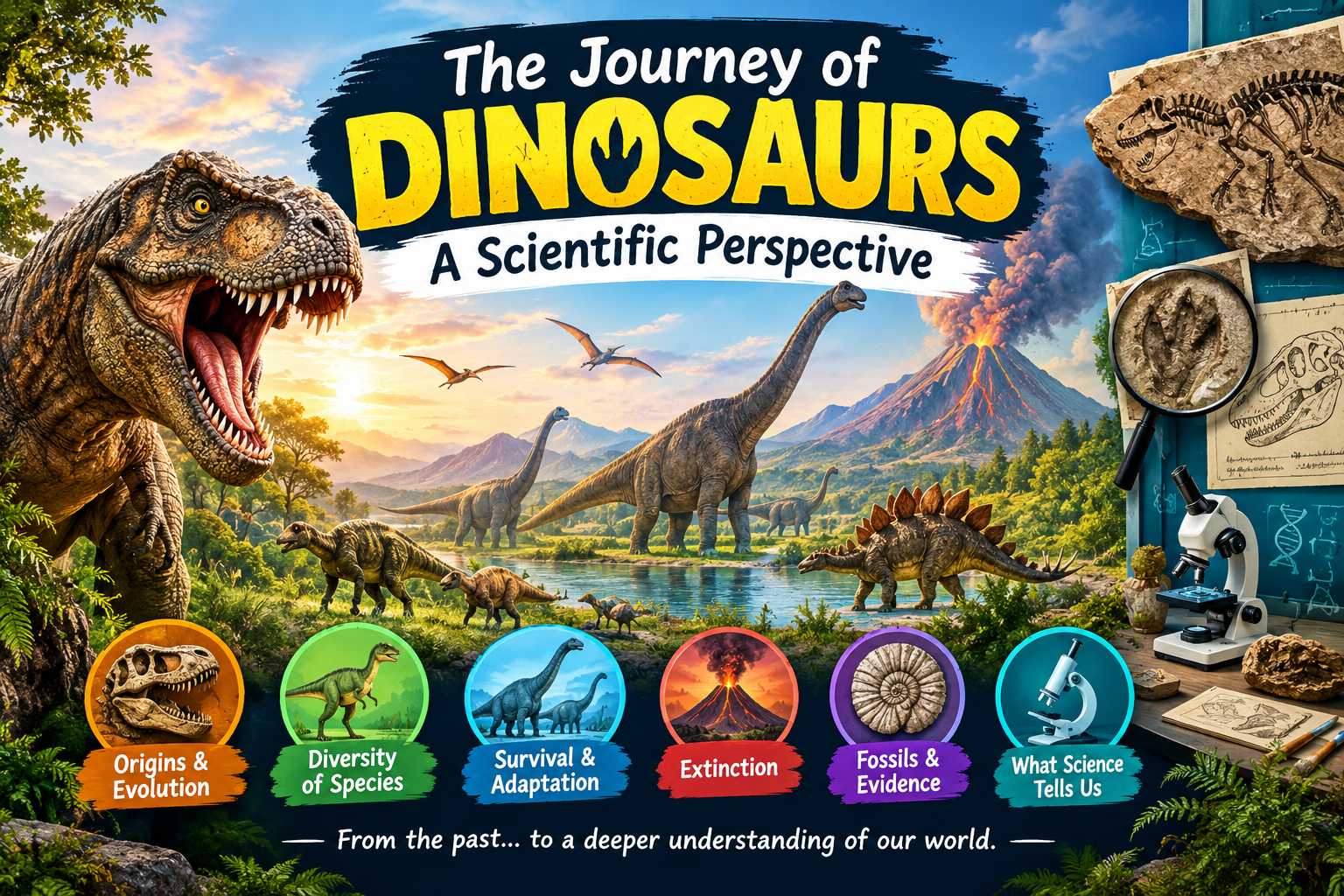
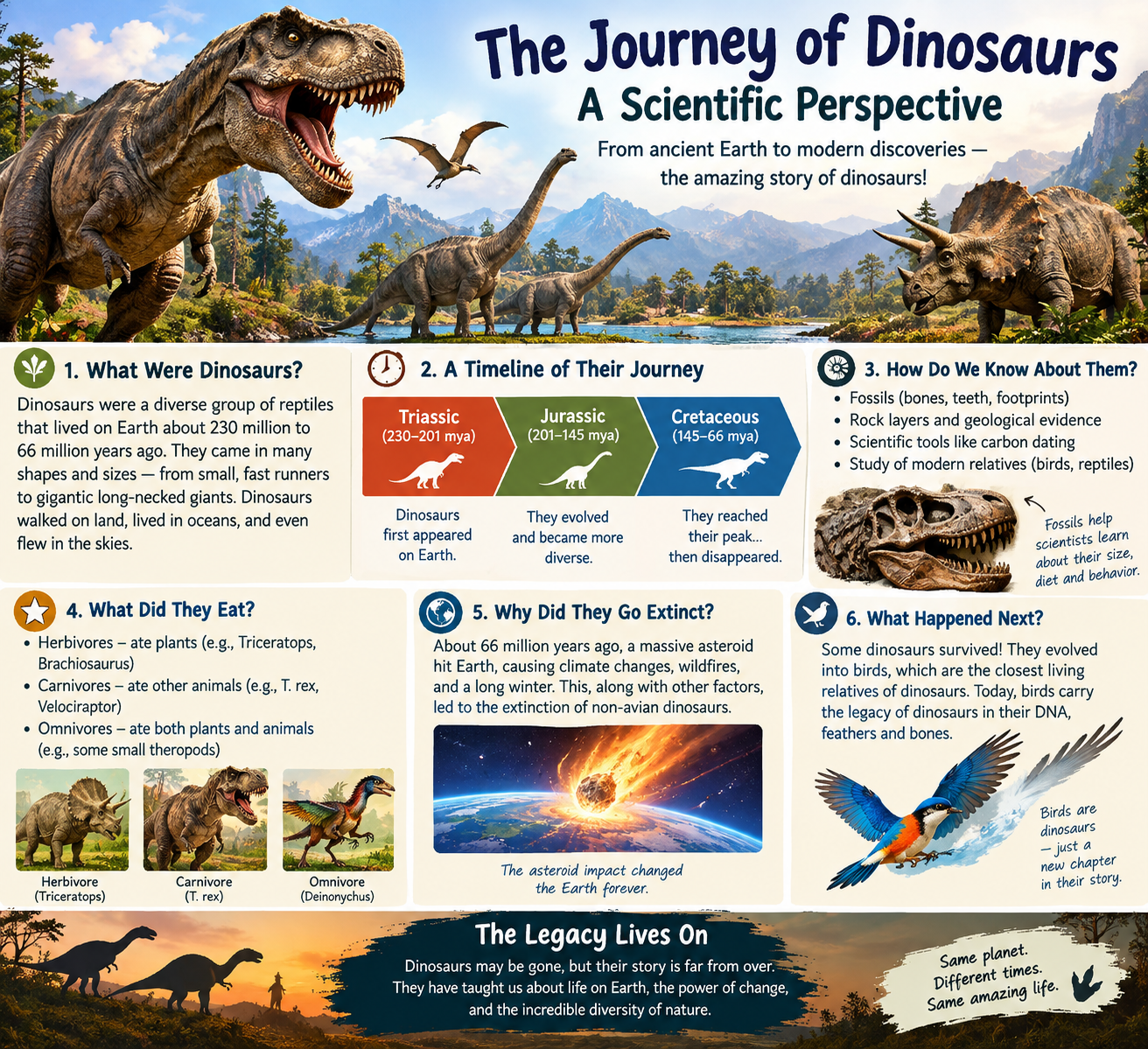
Today, I completed an interesting and educational task about **The Journey of Dinosaurs: A Scientific Perspective**. This activity gave me the opportunity to explore the fascinating history of dinosaurs and understand how scientists learn about these incredible creatures that lived millions of years ago.
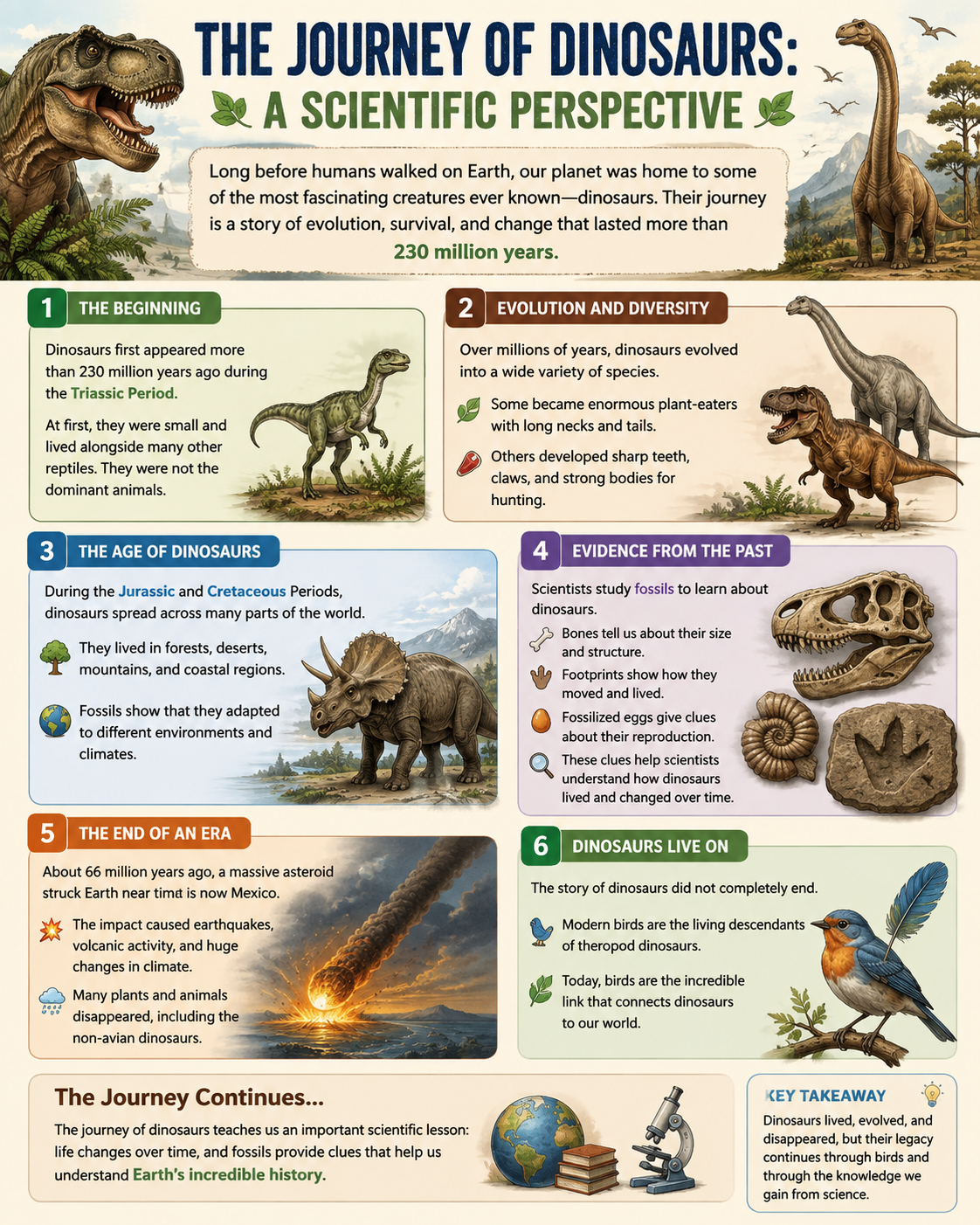
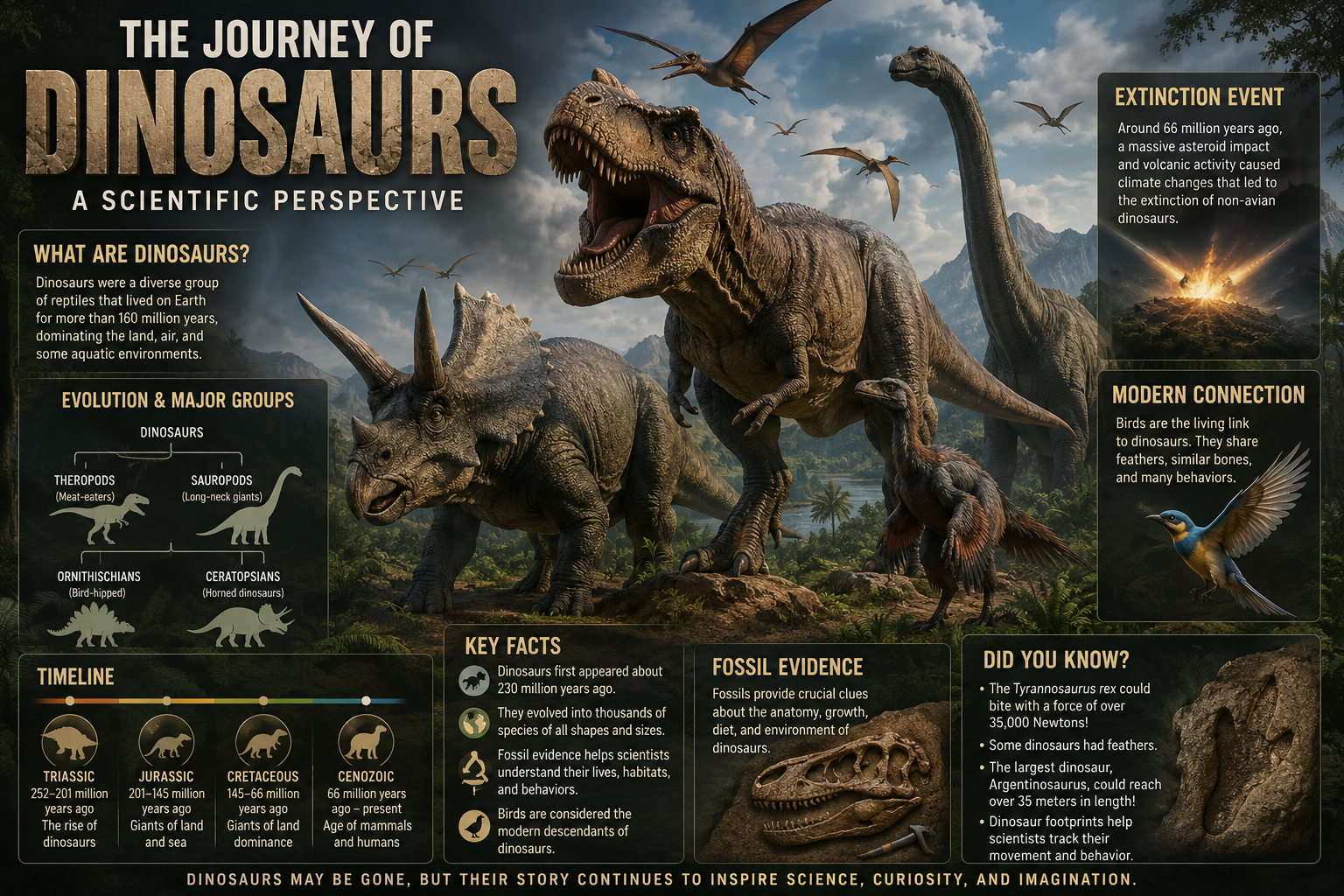
Dinosaurs first appeared on Earth more than **230 million years ago** during the Triassic Period. Over millions of years, they evolved into many different species with different sizes, shapes, diets, and ways of living. Some dinosaurs were small and fast, while others were enormous plant-eaters.
During the **Jurassic Period**, dinosaurs became even more diverse and widespread. They lived in many different environments and developed different adaptations that helped them survive. The **Cretaceous Period** was another important stage in their history, when many well-known dinosaur species lived.
One of the most important things I learned is how scientists discover information about dinosaurs. Scientists study fossils such as bones, teeth, footprints, and eggs. They also examine rock layers and use different scientific methods to understand when dinosaurs lived and how they behaved.
Dinosaurs had different diets. Some were **herbivores** that ate plants, while others were **carnivores** that ate other animals. There were also dinosaurs with more varied diets. Studying their teeth, bones, and fossil evidence helps scientists understand what they may have eaten.
One of the most important events in dinosaur history happened about **66 million years ago**. A large asteroid struck Earth, causing major environmental and climate changes. This event contributed to the extinction of the non-avian dinosaurs.
However, the dinosaur story did not completely end. Scientists have found strong evidence that **modern birds are living descendants of theropod dinosaurs**. This means that dinosaurs still have a living connection to the world today!
This task helped me understand that fossils are like pieces of a giant scientific puzzle. Each fossil can provide clues about ancient life, and scientists carefully study these clues to build a better understanding of Earth's history.
I also learned that science is constantly developing. New fossil discoveries, improved technology, and new research can help scientists learn more about dinosaurs and correct or improve our understanding of the past.
**My key learning from this task:**
Dinosaurs lived millions of years ago.
Their history covered a huge period of Earth's history.
Fossils provide important evidence about ancient life.
Scientists use evidence and research to study dinosaurs.
Dinosaurs had different diets and lifestyles.
A major asteroid impact occurred around 66 million years ago.
Birds are living descendants of theropod dinosaurs.
Studying dinosaurs helps us understand Earth's changing environment.
Overall, this task was a fascinating journey into the ancient world. It helped me appreciate the importance of science, fossils, research, and evidence in understanding our planet's past.
The story of dinosaurs reminds us that Earth has changed dramatically over time and that life continues to evolve and adapt. Their fossils allow us to look into the distant past and discover how incredible the history of life on our planet really is.
**Learning about the past helps us understand the present and inspires us to explore the future!**
#RSIF8 #RollNo112 #Dinosaurs #DinosaurJourney #ScientificPerspective #DinosaurScience #Paleontology #Fossils #DinosaurFossils #AncientEarth #EarthHistory #ScienceLearning #ScientificDiscovery #Jurassic #Triassic #Cretaceous #Evolution #NaturalHistory #AncientLife #LearningJourney #StudentLearning #ScienceProject #Research #Curiosity #KeepLearning #LearnAndGrow #ScienceIsAmazing #HistoryOfLife #ExploreScience #Education
Roll No: 112
Story Post No: 6
Story Post Topic: The Journey of Dinosaurs: A Scientific Perspective
**The Journey of Dinosaurs: A Scientific Perspective**
Today, I completed an interesting and educational task about **The Journey of Dinosaurs: A Scientific Perspective**. This activity gave me the opportunity to explore the fascinating history of dinosaurs and understand how scientists learn about these incredible creatures that lived millions of years ago.
Dinosaurs first appeared on Earth more than **230 million years ago** during the Triassic Period. Over millions of years, they evolved into many different species with different sizes, shapes, diets, and ways of living. Some dinosaurs were small and fast, while others were enormous plant-eaters.
During the **Jurassic Period**, dinosaurs became even more diverse and widespread. They lived in many different environments and developed different adaptations that helped them survive. The **Cretaceous Period** was another important stage in their history, when many well-known dinosaur species lived.
One of the most important things I learned is how scientists discover information about dinosaurs. Scientists study fossils such as bones, teeth, footprints, and eggs. They also examine rock layers and use different scientific methods to understand when dinosaurs lived and how they behaved.
Dinosaurs had different diets. Some were **herbivores** that ate plants, while others were **carnivores** that ate other animals. There were also dinosaurs with more varied diets. Studying their teeth, bones, and fossil evidence helps scientists understand what they may have eaten.
One of the most important events in dinosaur history happened about **66 million years ago**. A large asteroid struck Earth, causing major environmental and climate changes. This event contributed to the extinction of the non-avian dinosaurs.
However, the dinosaur story did not completely end. Scientists have found strong evidence that **modern birds are living descendants of theropod dinosaurs**. This means that dinosaurs still have a living connection to the world today!
This task helped me understand that fossils are like pieces of a giant scientific puzzle. Each fossil can provide clues about ancient life, and scientists carefully study these clues to build a better understanding of Earth's history.
I also learned that science is constantly developing. New fossil discoveries, improved technology, and new research can help scientists learn more about dinosaurs and correct or improve our understanding of the past.
**My key learning from this task:**
Dinosaurs lived millions of years ago.
Their history covered a huge period of Earth's history.
Fossils provide important evidence about ancient life.
Scientists use evidence and research to study dinosaurs.
Dinosaurs had different diets and lifestyles.
A major asteroid impact occurred around 66 million years ago.
Birds are living descendants of theropod dinosaurs.
Studying dinosaurs helps us understand Earth's changing environment.
Overall, this task was a fascinating journey into the ancient world. It helped me appreciate the importance of science, fossils, research, and evidence in understanding our planet's past.
The story of dinosaurs reminds us that Earth has changed dramatically over time and that life continues to evolve and adapt. Their fossils allow us to look into the distant past and discover how incredible the history of life on our planet really is.
**Learning about the past helps us understand the present and inspires us to explore the future!**
#RSIF8 #RollNo112 #Dinosaurs #DinosaurJourney #ScientificPerspective #DinosaurScience #Paleontology #Fossils #DinosaurFossils #AncientEarth #EarthHistory #ScienceLearning #ScientificDiscovery #Jurassic #Triassic #Cretaceous #Evolution #NaturalHistory #AncientLife #LearningJourney #StudentLearning #ScienceProject #Research #Curiosity #KeepLearning #LearnAndGrow #ScienceIsAmazing #HistoryOfLife #ExploreScience #Education
RSIF8
Roll No: 112
Story Post No: 6
Story Post Topic: The Journey of Dinosaurs: A Scientific Perspective
🦕🌟 **The Journey of Dinosaurs: A Scientific Perspective** 🌟🦖
Today, I completed an interesting and educational task about **The Journey of Dinosaurs: A Scientific Perspective**. 🦖🔬📚 This activity gave me the opportunity to explore the fascinating history of dinosaurs and understand how scientists learn about these incredible creatures that lived millions of years ago. 🌍⏳
Dinosaurs first appeared on Earth more than **230 million years ago** during the Triassic Period. 🦕🌿 Over millions of years, they evolved into many different species with different sizes, shapes, diets, and ways of living. Some dinosaurs were small and fast, while others were enormous plant-eaters. 🦖🌱
During the **Jurassic Period**, dinosaurs became even more diverse and widespread. 🌎🦕 They lived in many different environments and developed different adaptations that helped them survive. The **Cretaceous Period** was another important stage in their history, when many well-known dinosaur species lived. 🦖🌿✨
One of the most important things I learned is how scientists discover information about dinosaurs. 🔬🦴 Scientists study fossils such as bones, teeth, footprints, and eggs. They also examine rock layers and use different scientific methods to understand when dinosaurs lived and how they behaved. 🧪🪨📖
Dinosaurs had different diets. 🌱🍖 Some were **herbivores** that ate plants, while others were **carnivores** that ate other animals. There were also dinosaurs with more varied diets. Studying their teeth, bones, and fossil evidence helps scientists understand what they may have eaten. 🦷🔬
One of the most important events in dinosaur history happened about **66 million years ago**. ☄️🌍 A large asteroid struck Earth, causing major environmental and climate changes. This event contributed to the extinction of the non-avian dinosaurs. 🌎⏳
However, the dinosaur story did not completely end. 🐦✨ Scientists have found strong evidence that **modern birds are living descendants of theropod dinosaurs**. This means that dinosaurs still have a living connection to the world today! 🦖➡️🐦🌍
This task helped me understand that fossils are like pieces of a giant scientific puzzle. 🧩🦴 Each fossil can provide clues about ancient life, and scientists carefully study these clues to build a better understanding of Earth's history. 🔬📚
I also learned that science is constantly developing. New fossil discoveries, improved technology, and new research can help scientists learn more about dinosaurs and correct or improve our understanding of the past. 🧠🔍🚀
✨ **My key learning from this task:**
🦖 Dinosaurs lived millions of years ago.
⏳ Their history covered a huge period of Earth's history.
🦴 Fossils provide important evidence about ancient life.
🔬 Scientists use evidence and research to study dinosaurs.
🌱 Dinosaurs had different diets and lifestyles.
☄️ A major asteroid impact occurred around 66 million years ago.
🐦 Birds are living descendants of theropod dinosaurs.
🌍 Studying dinosaurs helps us understand Earth's changing environment.
Overall, this task was a fascinating journey into the ancient world. 🦕🌍 It helped me appreciate the importance of science, fossils, research, and evidence in understanding our planet's past. 🔬📚✨
The story of dinosaurs reminds us that Earth has changed dramatically over time and that life continues to evolve and adapt. 🌱🌎🦖 Their fossils allow us to look into the distant past and discover how incredible the history of life on our planet really is. 🌟🔬
📚 **Learning about the past helps us understand the present and inspires us to explore the future!** 🚀🌍✨
#RSIF8 #RollNo112 #Dinosaurs #DinosaurJourney #ScientificPerspective #DinosaurScience #Paleontology #Fossils #DinosaurFossils #AncientEarth #EarthHistory #ScienceLearning #ScientificDiscovery #Jurassic #Triassic #Cretaceous #Evolution #NaturalHistory #AncientLife #LearningJourney #StudentLearning #ScienceProject #Research #Curiosity #KeepLearning #LearnAndGrow #ScienceIsAmazing #HistoryOfLife #ExploreScience #Education
🦖🦕🔬🦴🌍⏳☄️🐦🌱📚🧪🪨🧩💡✨🌟🚀🌿🌎❤️👏🎓
0 Yorumlar
0 hisse senetleri
3006 Views