• RSIF8
    Roll no:100
    Task no:9
    Task topic:How to use StreamYard for interviews?
    How to Use StreamYard for Interviews
    Want to host professional online interviews with ease? Here's how:
    Create your broadcast in StreamYard
    Invite your guest with a simple link—no software download needed!
    Customize your layout, add your logo, and display names.
    Highlight audience comments live during the interview.
    Stream directly to YouTube, Facebook, LinkedIn, or other platforms.
    Record your interview for future editing and sharing.
    Whether you're hosting podcasts, business discussions, educational sessions, or live Q&As, StreamYard makes interviewing simple and professional.
    #StreamYard #OnlineInterview #LiveStreaming #Podcast #ContentCreator #YouTubeLive #FacebookLive #LinkedInLive #VirtualInterview #LiveShow #StreamingTips #VideoMarketing #DigitalCreator #InterviewTips #ContentMarketing
    RSIF8 Roll no:100 Task no:9 Task topic:How to use StreamYard for interviews? 🎙️ How to Use StreamYard for Interviews 🎥 Want to host professional online interviews with ease? 🚀 Here's how: ✅ Create your broadcast in StreamYard 🎤 Invite your guest with a simple link—no software download needed! 🎥 Customize your layout, add your logo, and display names. 💬 Highlight audience comments live during the interview. 📡 Stream directly to YouTube, Facebook, LinkedIn, or other platforms. 🎬 Record your interview for future editing and sharing. Whether you're hosting podcasts, business discussions, educational sessions, or live Q&As, StreamYard makes interviewing simple and professional. 🌟 #StreamYard #OnlineInterview #LiveStreaming #Podcast #ContentCreator #YouTubeLive #FacebookLive #LinkedInLive #VirtualInterview #LiveShow #StreamingTips #VideoMarketing #DigitalCreator #InterviewTips #ContentMarketing
    0 Comments 0 Shares 681 Views
  • RSIF8
    Roll no:100
    Task no:7
    Task topic: How to Download and Use Canva?
    How to Download and Use Canva – Beginner's Guide!
    Want to create stunning designs for social media, presentations, posters, logos, and more? Canva makes it easy for everyone!
    How to Download Canva:
    Visit the Canva website or download the app from your device's app store.
    Install the app and sign up for a free account.
    Log in and start designing instantly!
    How to Use Canva:
    Choose a ready-made template or create a design from scratch.
    Add photos, videos, icons, and text.
    Customize colors, fonts, and layouts to match your style.
    Save your project and download it in PNG, JPG, PDF, or MP4 format.
    Share your designs directly to social media or with your team.
    Whether you're a student, business owner, content creator, or designer, Canva helps bring your ideas to life—no design experience needed!
    #Canva #GraphicDesign #DesignTips #ContentCreator #SocialMediaDesign #DigitalMarketing #CreativeTools #DesignTutorial #CanvaTips #Branding #PresentationDesign #LogoDesign #Marketing #SmallBusiness #LearnCanva
    RSIF8 Roll no:100 Task no:7 Task topic: How to Download and Use Canva? 🎨✨ How to Download and Use Canva – Beginner's Guide! 🚀 Want to create stunning designs for social media, presentations, posters, logos, and more? 🌟 Canva makes it easy for everyone! 📥 How to Download Canva: ✅ Visit the Canva website or download the app from your device's app store. ✅ Install the app and sign up for a free account. ✅ Log in and start designing instantly! 🖌️ How to Use Canva: 🎨 Choose a ready-made template or create a design from scratch. 🖼️ Add photos, videos, icons, and text. ✨ Customize colors, fonts, and layouts to match your style. 💾 Save your project and download it in PNG, JPG, PDF, or MP4 format. 📲 Share your designs directly to social media or with your team. 💡 Whether you're a student, business owner, content creator, or designer, Canva helps bring your ideas to life—no design experience needed! 💙 #Canva #GraphicDesign #DesignTips #ContentCreator #SocialMediaDesign #DigitalMarketing #CreativeTools #DesignTutorial #CanvaTips #Branding #PresentationDesign #LogoDesign #Marketing #SmallBusiness #LearnCanva
    0 Comments 0 Shares 395 Views
  • “Legal problem ka pehla step kya hona chahiye?”

    Imagine کریں آپ کے سامنے اچانک ایک legal issue آ جائے۔

    Document سمجھ نہیں آ رہا
    Contract confusing ہے
    Case کی direction clear نہیں
    Lawyer کی ضرورت ہے

    اور ذہن میں صرف ایک سوال:

    “اب کیا کروں؟”

    Rehan Law کا vision ہے کہ AI + Legal Technology کے ذریعے legal journey کو زیادہ simple, organized اور accessible بنایا جائے۔

    UNDERSTAND → ORGANIZE → TAKE THE NEXT STEP

    REHAN LAW — COMING SOON

    Smart Law. Better Future.

    Story Poll

    آپ کے خیال میں legal problem میں سب سے پہلے کیا ہونا چاہیے؟

    Clear Information
    Right Direction
    “Legal problem ka pehla step kya hona chahiye?” Imagine کریں آپ کے سامنے اچانک ایک legal issue آ جائے۔ 📄 Document سمجھ نہیں آ رہا 📑 Contract confusing ہے ⚖️ Case کی direction clear نہیں 👨‍⚖️ Lawyer کی ضرورت ہے اور ذہن میں صرف ایک سوال: “اب کیا کروں؟” Rehan Law کا vision ہے کہ AI + Legal Technology کے ذریعے legal journey کو زیادہ simple, organized اور accessible بنایا جائے۔ 🤖⚖️ UNDERSTAND → ORGANIZE → TAKE THE NEXT STEP 🚀 REHAN LAW — COMING SOON Smart Law. Better Future. 💬 Story Poll آپ کے خیال میں legal problem میں سب سے پہلے کیا ہونا چاہیے؟ 🔘 Clear Information 🔘 Right Direction
    0 Comments 0 Shares 277 Views
  • #rsisb
    Roll no.247
    Canva post .36
    Foundation level

    **“Dream it. Believe it. Build it.” — Unknown**

    Every great achievement begins with a dream. A dream gives us a vision of what could be, while belief gives us the courage to take the first step. But dreams become reality only when we are willing to **build them through action, patience, learning, and determination.**

    **Dream it** — Allow yourself to imagine something bigger and better. Your dreams can inspire you to discover your goals and give direction to your journey.

    **Believe it** — Trust yourself and your ability to grow. There may be challenges, mistakes, and moments when progress feels slow, but believing in your potential can help you keep moving forward.

    **Build it** — Turn your ideas into action. Take small steps every day, learn from your experiences, stay consistent, and keep improving. Success is rarely created overnight; it is built one step at a time.

    Remember, you don't have to have everything figured out today. Start with what you have, learn along the way, and continue working toward your goal. Every small effort can become part of something meaningful.

    **Dream boldly. Believe deeply. Work consistently. Build patiently.**

    Your future is shaped by the choices and actions you take today. Keep learning, keep growing, and never be afraid to begin.

    #DreamIt #BelieveIt #BuildIt #DreamBig #BelieveInYourself #Motivation #Inspiration #SuccessMindset #PositiveThinking #NeverGiveUp #KeepGoing #StayFocused #SelfBelief #GoalSetting #HardWork #Consistency #Determination #PersonalGrowth #GrowthMindset #Success #DreamBigWorkHard #MotivationalQuotes #DailyMotivation #InspirationDaily
    #rsisb Roll no.247 Canva post .36 Foundation level ✨ **“Dream it. Believe it. Build it.” — Unknown** ✨ Every great achievement begins with a dream. 🌟 A dream gives us a vision of what could be, while belief gives us the courage to take the first step. But dreams become reality only when we are willing to **build them through action, patience, learning, and determination.** 💪🚀 💭 **Dream it** — Allow yourself to imagine something bigger and better. Your dreams can inspire you to discover your goals and give direction to your journey. 🌈 ❤️ **Believe it** — Trust yourself and your ability to grow. There may be challenges, mistakes, and moments when progress feels slow, but believing in your potential can help you keep moving forward. 🌱✨ 🔨 **Build it** — Turn your ideas into action. Take small steps every day, learn from your experiences, stay consistent, and keep improving. Success is rarely created overnight; it is built one step at a time. 🧱🏆 Remember, you don't have to have everything figured out today. Start with what you have, learn along the way, and continue working toward your goal. Every small effort can become part of something meaningful. 🌟📚 🔥 **Dream boldly. Believe deeply. Work consistently. Build patiently.** 🔥 Your future is shaped by the choices and actions you take today. Keep learning, keep growing, and never be afraid to begin. 🚀🌍 #DreamIt #BelieveIt #BuildIt #DreamBig #BelieveInYourself #Motivation #Inspiration #SuccessMindset #PositiveThinking #NeverGiveUp #KeepGoing #StayFocused #SelfBelief #GoalSetting #HardWork #Consistency #Determination #PersonalGrowth #GrowthMindset #Success #DreamBigWorkHard #MotivationalQuotes #DailyMotivation #InspirationDaily 🌟💪🚀✨
    0 Comments 0 Shares 742 Views
  • Fondation Level Batch No 4
    Roll RSLC #42
    Task No #160
    Day #160

    One evening, Ayan sat by his window watching the golden sunlight fill his room.
    He wondered how light traveled from the Sun across the vastness of space.
    The next day, he asked his science teacher about the true nature of light.
    His teacher explained that light is much more mysterious than it appears.
    Scientists discovered that light can behave both like waves and tiny particles.
    This fascinating property is called the wave-particle duality of light.
    Ayan became curious and wanted to discover how this was possible.
    He began an exciting journey into the hidden world of light.
    His teacher explained that light can behave like waves moving through space.
    Light shows reflection, refraction, diffraction, and interference in different situations.
    Reflection allows light to bounce from surfaces such as mirrors and shiny objects.
    Refraction causes light to change direction when it passes through different materials.
    Interference happens when light waves meet and interact with one another.
    These properties help explain rainbows, colors, reflections, and many other phenomena.
    Ayan realized that everyday sights could reveal important scientific secrets.
    He became even more fascinated by the mysterious behavior of light.
    Then Ayan learned that light can also behave like tiny particles called photons.
    Each photon carries energy and can interact with matter in different ways.
    This particle-like behavior helps scientists understand the photoelectric effect.
    Ayan found it amazing that light could appear as both a wave and a particle.
    His teacher explained that this strange behavior is a key idea in quantum physics.
    The quantum world does not always follow the rules we experience every day.
    Light became a perfect example of nature?s surprising complexity.
    Ayan realized that science often reveals things we cannot understand at first.
    That evening, Ayan looked at the sunlight outside with completely new eyes.
    He imagined photons traveling through space and waves carrying energy across the universe.
    He understood that something as ordinary as sunlight could hold incredible mysteries.
    The experience taught him that science is not only about learning known facts.
    It is also about asking questions and searching for answers beyond what we can see.
    Ayan felt inspired to explore more mysteries hidden throughout the universe.
    From that day forward, every beam of light reminded him of his discovery.
    He learned that even the simplest things can contain the greatest scientific wonders.


    #NatureOfLight #LightWaves #LightParticles #Photon #QuantumPhysics #ScienceExploration #PhysicsFacts
    Fondation Level Batch No 4 Roll RSLC #42 Task No #160 Day #160 One evening, Ayan sat by his window watching the golden sunlight fill his room. He wondered how light traveled from the Sun across the vastness of space. The next day, he asked his science teacher about the true nature of light. His teacher explained that light is much more mysterious than it appears. Scientists discovered that light can behave both like waves and tiny particles. This fascinating property is called the wave-particle duality of light. Ayan became curious and wanted to discover how this was possible. He began an exciting journey into the hidden world of light. His teacher explained that light can behave like waves moving through space. Light shows reflection, refraction, diffraction, and interference in different situations. Reflection allows light to bounce from surfaces such as mirrors and shiny objects. Refraction causes light to change direction when it passes through different materials. Interference happens when light waves meet and interact with one another. These properties help explain rainbows, colors, reflections, and many other phenomena. Ayan realized that everyday sights could reveal important scientific secrets. He became even more fascinated by the mysterious behavior of light. Then Ayan learned that light can also behave like tiny particles called photons. Each photon carries energy and can interact with matter in different ways. This particle-like behavior helps scientists understand the photoelectric effect. Ayan found it amazing that light could appear as both a wave and a particle. His teacher explained that this strange behavior is a key idea in quantum physics. The quantum world does not always follow the rules we experience every day. Light became a perfect example of nature?s surprising complexity. Ayan realized that science often reveals things we cannot understand at first. That evening, Ayan looked at the sunlight outside with completely new eyes. He imagined photons traveling through space and waves carrying energy across the universe. He understood that something as ordinary as sunlight could hold incredible mysteries. The experience taught him that science is not only about learning known facts. It is also about asking questions and searching for answers beyond what we can see. Ayan felt inspired to explore more mysteries hidden throughout the universe. From that day forward, every beam of light reminded him of his discovery. He learned that even the simplest things can contain the greatest scientific wonders. #NatureOfLight #LightWaves #LightParticles #Photon #QuantumPhysics #ScienceExploration #PhysicsFacts
    0 Comments 0 Shares 1045 Views
  • Fondation Level Batch No 4
    Roll RSLC #42
    Task No #85
    Day #85

    Life is not simply about discovering who you are, but about shaping the person you want to become. Every choice, experience, and challenge gives you an opportunity to grow, learn, and build a better version of yourself. Do not be afraid to change, explore new paths, and create your own direction in life.

    #CreateYourself #LifeJourney #Motivation #SelfGrowth #Success #PositiveMindset #Inspiration #PersonalGrowth
    Fondation Level Batch No 4 Roll RSLC #42 Task No #85 Day #85 Life is not simply about discovering who you are, but about shaping the person you want to become. Every choice, experience, and challenge gives you an opportunity to grow, learn, and build a better version of yourself. Do not be afraid to change, explore new paths, and create your own direction in life. #CreateYourself #LifeJourney #Motivation #SelfGrowth #Success #PositiveMindset #Inspiration #PersonalGrowth
    0 Comments 0 Shares 177 Views
  • #rsisb
    Roll No.240
    Image With Chatgpt No.4
    Foundation Level

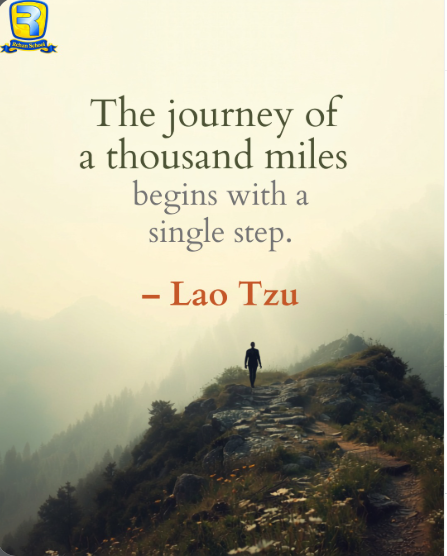
    Every great journey begins with one small decision—the decision to start. Whether your goal is related to education, career, personal growth, creativity, or your future, you do not need to achieve everything in one day. You simply need to take the first step.

    Sometimes our dreams seem so big that we do not know where to begin. We may feel that success is far away or that the journey will be too difficult. But every big achievement is built from small actions, repeated consistently over time.

    One step can lead to another. One lesson can lead to new knowledge. One practice session can build confidence. One small effort today can create a better opportunity tomorrow.

    Do not wait until everything is perfect before you begin. Start with what you have, learn along the way, improve your skills, and keep moving forward.

    There may be obstacles on your path. There may be moments when progress feels slow. There may even be times when you make mistakes or need to start again. That is part of every meaningful journey.

    What matters is that you continue taking steps toward your goal. Every step does not have to be huge. Even a small step in the right direction is progress.

    Remember that mountains are climbed one step at a time, books are completed one page at a time, skills are developed one practice session at a time, and dreams are achieved one action at a time.

    Believe in your journey. Believe in your ability to learn. Believe that your efforts today can shape your tomorrow.

    Dream it. Plan it. Start it. Keep going. Achieve it.

    Your destination may be far away, but you do not need to see the entire road. You only need the courage to take the next step.

    Start where you are. Take one step today. Keep moving forward, and let every step bring you closer to your dreams.

    #JourneyOfAThousandMiles #SingleStep #TakeTheFirstStep #Motivation #Inspiration #Success #SuccessJourney #LifeJourney #DreamBig #TakeAction #KeepGoing #NeverGiveUp #GoalSetting #FutureGoals #PersonalGrowth #SelfImprovement #GrowthMindset #HardWork #Consistency #Determination #BelieveInYourself #PositiveMindset #Progress #Achievement #LearningJourney #Education #StudentMotivation #DreamsToReality #StayFocused #KeepLearning ##MotivationalQuotes #LifeLessons #StartToday #OneStepAtATime #MakeItHappen #SuccessMindset #Believe #KeepGrowing


    Rehan School Islamabad Campus
    Asma Shaheen EducationWali
    Irum Asim
    Saima Happinesswali

    #rsisb Roll No.240 Image With Chatgpt No.4 Foundation Level Every great journey begins with one small decision—the decision to start. 🌱💫 Whether your goal is related to education, career, personal growth, creativity, or your future, you do not need to achieve everything in one day. You simply need to take the first step. 👣🎯 Sometimes our dreams seem so big that we do not know where to begin. We may feel that success is far away or that the journey will be too difficult. But every big achievement is built from small actions, repeated consistently over time. 💪📚✨ One step can lead to another. One lesson can lead to new knowledge. One practice session can build confidence. One small effort today can create a better opportunity tomorrow. 🌱➡️🌳🚀 Do not wait until everything is perfect before you begin. Start with what you have, learn along the way, improve your skills, and keep moving forward. 🌟📖🔥 There may be obstacles on your path. There may be moments when progress feels slow. There may even be times when you make mistakes or need to start again. That is part of every meaningful journey. 💭💪 What matters is that you continue taking steps toward your goal. 🎯 Every step does not have to be huge. Even a small step in the right direction is progress. 🌱➡️🏆 Remember that mountains are climbed one step at a time, books are completed one page at a time, skills are developed one practice session at a time, and dreams are achieved one action at a time. 🏔️📚🎓✨ Believe in your journey. Believe in your ability to learn. Believe that your efforts today can shape your tomorrow. 🌍❤️ ✨ Dream it. Plan it. Start it. Keep going. Achieve it. ✨ Your destination may be far away, but you do not need to see the entire road. You only need the courage to take the next step. 👣🌅 🚀 Start where you are. Take one step today. Keep moving forward, and let every step bring you closer to your dreams. 🌟 #JourneyOfAThousandMiles #SingleStep #TakeTheFirstStep #Motivation #Inspiration #Success #SuccessJourney #LifeJourney #DreamBig #TakeAction #KeepGoing #NeverGiveUp #GoalSetting #FutureGoals #PersonalGrowth #SelfImprovement #GrowthMindset #HardWork #Consistency #Determination #BelieveInYourself #PositiveMindset #Progress #Achievement #LearningJourney #Education #StudentMotivation #DreamsToReality #StayFocused #KeepLearning ##MotivationalQuotes #LifeLessons #StartToday #OneStepAtATime #MakeItHappen #SuccessMindset #Believe #KeepGrowing 🌄👣🚀🎯🌱📚💪✨🏆❤️ Rehan School Islamabad Campus Asma Shaheen EducationWali Irum Asim Saima Happinesswali
    0 Comments 0 Shares 1708 Views

  • #rsisb
    Roll no.239
    Maya no.19
    Foundation Level

    **“Conscious – Tracing the Evolution of Awareness”** explores one of the greatest mysteries of science and philosophy: **how awareness and conscious experience developed in living beings**. Consciousness allows us to experience the world, think, remember, feel emotions, make decisions, and recognize ourselves.

    The topic takes us back to the earliest forms of life and asks how simple organisms developed increasingly complex ways of sensing and responding to their surroundings. As nervous systems and brains became more sophisticated, organisms gained greater abilities to process information, learn from experiences, remember events, and respond flexibly to their environments.

    One of the most fascinating questions is whether consciousness appeared suddenly or **evolved gradually over millions of years**. Scientists study the brains and behaviors of humans and other animals to understand possible forms of awareness. However, consciousness remains difficult to explain because subjective experiences—such as seeing colors, feeling pain, or experiencing emotions—are personal and cannot be directly observed by others.

    The discussion also introduces **self-awareness**, which is the ability to recognize oneself and reflect on one's own thoughts and experiences. Human consciousness is closely connected with language, memory, attention, imagination, creativity, and decision-making.

    Another important part of the topic is the relationship between **conscious and unconscious processes**. Many things our brains do happen automatically, without our full awareness. This shows that the human mind is far more complex than conscious thought alone.

    Overall, this 25-minute exploration encourages us to think deeply about **who we are, how awareness developed, and what it means to be conscious**. It connects biology, neuroscience, psychology, evolution, and philosophy while reminding us that many questions about consciousness are still unanswered.

    **Key Message:** Understanding consciousness may help us better understand not only the human brain, but also the evolution of life, intelligence, identity, and our place in the universe.
    ### **Hashtags**

    #Consciousness #Awareness #Evolution #HumanMind #BrainScience #Neuroscience #SelfAwareness #Psychology #Science #Philosophy #HumanEvolution #Learning #Curiosity #Knowledge #MindAndBrain
    #rsisb Roll no.239 Maya no.19 Foundation Level **“Conscious – Tracing the Evolution of Awareness”** explores one of the greatest mysteries of science and philosophy: **how awareness and conscious experience developed in living beings**. Consciousness allows us to experience the world, think, remember, feel emotions, make decisions, and recognize ourselves. The topic takes us back to the earliest forms of life and asks how simple organisms developed increasingly complex ways of sensing and responding to their surroundings. As nervous systems and brains became more sophisticated, organisms gained greater abilities to process information, learn from experiences, remember events, and respond flexibly to their environments. One of the most fascinating questions is whether consciousness appeared suddenly or **evolved gradually over millions of years**. Scientists study the brains and behaviors of humans and other animals to understand possible forms of awareness. However, consciousness remains difficult to explain because subjective experiences—such as seeing colors, feeling pain, or experiencing emotions—are personal and cannot be directly observed by others. The discussion also introduces **self-awareness**, which is the ability to recognize oneself and reflect on one's own thoughts and experiences. Human consciousness is closely connected with language, memory, attention, imagination, creativity, and decision-making. Another important part of the topic is the relationship between **conscious and unconscious processes**. Many things our brains do happen automatically, without our full awareness. This shows that the human mind is far more complex than conscious thought alone. Overall, this 25-minute exploration encourages us to think deeply about **who we are, how awareness developed, and what it means to be conscious**. It connects biology, neuroscience, psychology, evolution, and philosophy while reminding us that many questions about consciousness are still unanswered. 🌟 **Key Message:** Understanding consciousness may help us better understand not only the human brain, but also the evolution of life, intelligence, identity, and our place in the universe. ### **Hashtags** #Consciousness #Awareness #Evolution #HumanMind #BrainScience #Neuroscience #SelfAwareness #Psychology #Science #Philosophy #HumanEvolution #Learning #Curiosity #Knowledge #MindAndBrain 🧠🔬✨
    0 Comments 0 Shares 2153 Views 3

  • #rsisb
    Roll no.239
    Maya no.19
    Foundation Level

    **“Conscious – Tracing the Evolution of Awareness”** explores one of the greatest mysteries of science and philosophy: **how awareness and conscious experience developed in living beings**. Consciousness allows us to experience the world, think, remember, feel emotions, make decisions, and recognize ourselves.

    The topic takes us back to the earliest forms of life and asks how simple organisms developed increasingly complex ways of sensing and responding to their surroundings. As nervous systems and brains became more sophisticated, organisms gained greater abilities to process information, learn from experiences, remember events, and respond flexibly to their environments.

    One of the most fascinating questions is whether consciousness appeared suddenly or **evolved gradually over millions of years**. Scientists study the brains and behaviors of humans and other animals to understand possible forms of awareness. However, consciousness remains difficult to explain because subjective experiences—such as seeing colors, feeling pain, or experiencing emotions—are personal and cannot be directly observed by others.

    The discussion also introduces **self-awareness**, which is the ability to recognize oneself and reflect on one's own thoughts and experiences. Human consciousness is closely connected with language, memory, attention, imagination, creativity, and decision-making.

    Another important part of the topic is the relationship between **conscious and unconscious processes**. Many things our brains do happen automatically, without our full awareness. This shows that the human mind is far more complex than conscious thought alone.

    Overall, this 25-minute exploration encourages us to think deeply about **who we are, how awareness developed, and what it means to be conscious**. It connects biology, neuroscience, psychology, evolution, and philosophy while reminding us that many questions about consciousness are still unanswered.

    **Key Message:** Understanding consciousness may help us better understand not only the human brain, but also the evolution of life, intelligence, identity, and our place in the universe.

    ### **Hashtags**

    #Consciousness #Awareness #Evolution #HumanMind #BrainScience #Neuroscience #SelfAwareness #Psychology #Science #Philosophy #HumanEvolution #Learning #Curiosity #Knowledge #MindAndBrain


    **“Conscious – Tracing the Evolution of Awareness”** explores one of the greatest mysteries of science and philosophy: **how awareness and conscious experience developed in living beings**. Consciousness allows us to experience the world, think, remember, feel emotions, make decisions, and recognize ourselves.

    The topic takes us back to the earliest forms of life and asks how simple organisms developed increasingly complex ways of sensing and responding to their surroundings. As nervous systems and brains became more sophisticated, organisms gained greater abilities to process information, learn from experiences, remember events, and respond flexibly to their environments.

    One of the most fascinating questions is whether consciousness appeared suddenly or **evolved gradually over millions of years**. Scientists study the brains and behaviors of humans and other animals to understand possible forms of awareness. However, consciousness remains difficult to explain because subjective experiences—such as seeing colors, feeling pain, or experiencing emotions—are personal and cannot be directly observed by others.

    The discussion also introduces **self-awareness**, which is the ability to recognize oneself and reflect on one's own thoughts and experiences. Human consciousness is closely connected with language, memory, attention, imagination, creativity, and decision-making.

    Another important part of the topic is the relationship between **conscious and unconscious processes**. Many things our brains do happen automatically, without our full awareness. This shows that the human mind is far more complex than conscious thought alone.

    Overall, this 25-minute exploration encourages us to think deeply about **who we are, how awareness developed, and what it means to be conscious**. It connects biology, neuroscience, psychology, evolution, and philosophy while reminding us that many questions about consciousness are still unanswered.

    **Key Message:** Understanding consciousness may help us better understand not only the human brain, but also the evolution of life, intelligence, identity, and our place in the universe.

    ### **Hashtags**

    #Consciousness #Awareness #Evolution #HumanMind #BrainScience #Neuroscience #SelfAwareness #Psychology #Science #Philosophy #HumanEvolution #Learning #Curiosity #Knowledge #MindAndBrain
    #rsisb Roll no.239 Maya no.19 Foundation Level **“Conscious – Tracing the Evolution of Awareness”** explores one of the greatest mysteries of science and philosophy: **how awareness and conscious experience developed in living beings**. Consciousness allows us to experience the world, think, remember, feel emotions, make decisions, and recognize ourselves. The topic takes us back to the earliest forms of life and asks how simple organisms developed increasingly complex ways of sensing and responding to their surroundings. As nervous systems and brains became more sophisticated, organisms gained greater abilities to process information, learn from experiences, remember events, and respond flexibly to their environments. One of the most fascinating questions is whether consciousness appeared suddenly or **evolved gradually over millions of years**. Scientists study the brains and behaviors of humans and other animals to understand possible forms of awareness. However, consciousness remains difficult to explain because subjective experiences—such as seeing colors, feeling pain, or experiencing emotions—are personal and cannot be directly observed by others. The discussion also introduces **self-awareness**, which is the ability to recognize oneself and reflect on one's own thoughts and experiences. Human consciousness is closely connected with language, memory, attention, imagination, creativity, and decision-making. Another important part of the topic is the relationship between **conscious and unconscious processes**. Many things our brains do happen automatically, without our full awareness. This shows that the human mind is far more complex than conscious thought alone. Overall, this 25-minute exploration encourages us to think deeply about **who we are, how awareness developed, and what it means to be conscious**. It connects biology, neuroscience, psychology, evolution, and philosophy while reminding us that many questions about consciousness are still unanswered. 🌟 **Key Message:** Understanding consciousness may help us better understand not only the human brain, but also the evolution of life, intelligence, identity, and our place in the universe. ### **Hashtags** #Consciousness #Awareness #Evolution #HumanMind #BrainScience #Neuroscience #SelfAwareness #Psychology #Science #Philosophy #HumanEvolution #Learning #Curiosity #Knowledge #MindAndBrain 🧠🔬✨ **“Conscious – Tracing the Evolution of Awareness”** explores one of the greatest mysteries of science and philosophy: **how awareness and conscious experience developed in living beings**. Consciousness allows us to experience the world, think, remember, feel emotions, make decisions, and recognize ourselves. The topic takes us back to the earliest forms of life and asks how simple organisms developed increasingly complex ways of sensing and responding to their surroundings. As nervous systems and brains became more sophisticated, organisms gained greater abilities to process information, learn from experiences, remember events, and respond flexibly to their environments. One of the most fascinating questions is whether consciousness appeared suddenly or **evolved gradually over millions of years**. Scientists study the brains and behaviors of humans and other animals to understand possible forms of awareness. However, consciousness remains difficult to explain because subjective experiences—such as seeing colors, feeling pain, or experiencing emotions—are personal and cannot be directly observed by others. The discussion also introduces **self-awareness**, which is the ability to recognize oneself and reflect on one's own thoughts and experiences. Human consciousness is closely connected with language, memory, attention, imagination, creativity, and decision-making. Another important part of the topic is the relationship between **conscious and unconscious processes**. Many things our brains do happen automatically, without our full awareness. This shows that the human mind is far more complex than conscious thought alone. Overall, this 25-minute exploration encourages us to think deeply about **who we are, how awareness developed, and what it means to be conscious**. It connects biology, neuroscience, psychology, evolution, and philosophy while reminding us that many questions about consciousness are still unanswered. 🌟 **Key Message:** Understanding consciousness may help us better understand not only the human brain, but also the evolution of life, intelligence, identity, and our place in the universe. ### **Hashtags** #Consciousness #Awareness #Evolution #HumanMind #BrainScience #Neuroscience #SelfAwareness #Psychology #Science #Philosophy #HumanEvolution #Learning #Curiosity #Knowledge #MindAndBrain 🧠🔬✨
    0 Comments 0 Shares 2071 Views 2

  • #rsisb
    Roll no.239
    Maya no.19
    Foundation Level

    **“Conscious – Tracing the Evolution of Awareness”** explores one of the greatest mysteries of science and philosophy: **how awareness and conscious experience developed in living beings**. Consciousness allows us to experience the world, think, remember, feel emotions, make decisions, and recognize ourselves.

    The topic takes us back to the earliest forms of life and asks how simple organisms developed increasingly complex ways of sensing and responding to their surroundings. As nervous systems and brains became more sophisticated, organisms gained greater abilities to process information, learn from experiences, remember events, and respond flexibly to their environments.

    One of the most fascinating questions is whether consciousness appeared suddenly or **evolved gradually over millions of years**. Scientists study the brains and behaviors of humans and other animals to understand possible forms of awareness. However, consciousness remains difficult to explain because subjective experiences—such as seeing colors, feeling pain, or experiencing emotions—are personal and cannot be directly observed by others.

    The discussion also introduces **self-awareness**, which is the ability to recognize oneself and reflect on one's own thoughts and experiences. Human consciousness is closely connected with language, memory, attention, imagination, creativity, and decision-making.

    Another important part of the topic is the relationship between **conscious and unconscious processes**. Many things our brains do happen automatically, without our full awareness. This shows that the human mind is far more complex than conscious thought alone.

    Overall, this 25-minute exploration encourages us to think deeply about **who we are, how awareness developed, and what it means to be conscious**. It connects biology, neuroscience, psychology, evolution, and philosophy while reminding us that many questions about consciousness are still unanswered.

    **Key Message:** Understanding consciousness may help us better understand not only the human brain, but also the evolution of life, intelligence, identity, and our place in the universe.


    #Consciousness #Awareness #Evolution #HumanMind #BrainScience #Neuroscience #SelfAwareness #Psychology #Science #Philosophy #HumanEvolution #Learning #Curiosity #Knowledge #MindAndBrain


    **“Conscious – Tracing the Evolution of Awareness”** explores one of the greatest mysteries of science and philosophy: **how awareness and conscious experience developed in living beings**. Consciousness allows us to experience the world, think, remember, feel emotions, make decisions, and recognize ourselves.

    The topic takes us back to the earliest forms of life and asks how simple organisms developed increasingly complex ways of sensing and responding to their surroundings. As nervous systems and brains became more sophisticated, organisms gained greater abilities to process information, learn from experiences, remember events, and respond flexibly to their environments.
    One of the most fascinating questions is whether consciousness appeared suddenly or **evolved gradually over millions of years**. Scientists study the brains and behaviors of humans and other animals to understand possible forms of awareness. However, consciousness remains difficult to explain because subjective experiences—such as seeing colors, feeling pain, or experiencing emotions—are personal and cannot be directly observed by others.


    #Consciousness #Awareness #Evolution #HumanMind #BrainScience #Neuroscience #SelfAwareness #Psychology #Science #Philosophy #HumanEvolution #Learning #Curiosity #Knowledge #MindAndBrain
    #rsisb Roll no.239 Maya no.19 Foundation Level **“Conscious – Tracing the Evolution of Awareness”** explores one of the greatest mysteries of science and philosophy: **how awareness and conscious experience developed in living beings**. Consciousness allows us to experience the world, think, remember, feel emotions, make decisions, and recognize ourselves. The topic takes us back to the earliest forms of life and asks how simple organisms developed increasingly complex ways of sensing and responding to their surroundings. As nervous systems and brains became more sophisticated, organisms gained greater abilities to process information, learn from experiences, remember events, and respond flexibly to their environments. One of the most fascinating questions is whether consciousness appeared suddenly or **evolved gradually over millions of years**. Scientists study the brains and behaviors of humans and other animals to understand possible forms of awareness. However, consciousness remains difficult to explain because subjective experiences—such as seeing colors, feeling pain, or experiencing emotions—are personal and cannot be directly observed by others. The discussion also introduces **self-awareness**, which is the ability to recognize oneself and reflect on one's own thoughts and experiences. Human consciousness is closely connected with language, memory, attention, imagination, creativity, and decision-making. Another important part of the topic is the relationship between **conscious and unconscious processes**. Many things our brains do happen automatically, without our full awareness. This shows that the human mind is far more complex than conscious thought alone. Overall, this 25-minute exploration encourages us to think deeply about **who we are, how awareness developed, and what it means to be conscious**. It connects biology, neuroscience, psychology, evolution, and philosophy while reminding us that many questions about consciousness are still unanswered. 🌟 **Key Message:** Understanding consciousness may help us better understand not only the human brain, but also the evolution of life, intelligence, identity, and our place in the universe. #Consciousness #Awareness #Evolution #HumanMind #BrainScience #Neuroscience #SelfAwareness #Psychology #Science #Philosophy #HumanEvolution #Learning #Curiosity #Knowledge #MindAndBrain 🧠🔬✨ **“Conscious – Tracing the Evolution of Awareness”** explores one of the greatest mysteries of science and philosophy: **how awareness and conscious experience developed in living beings**. Consciousness allows us to experience the world, think, remember, feel emotions, make decisions, and recognize ourselves. The topic takes us back to the earliest forms of life and asks how simple organisms developed increasingly complex ways of sensing and responding to their surroundings. As nervous systems and brains became more sophisticated, organisms gained greater abilities to process information, learn from experiences, remember events, and respond flexibly to their environments. One of the most fascinating questions is whether consciousness appeared suddenly or **evolved gradually over millions of years**. Scientists study the brains and behaviors of humans and other animals to understand possible forms of awareness. However, consciousness remains difficult to explain because subjective experiences—such as seeing colors, feeling pain, or experiencing emotions—are personal and cannot be directly observed by others. #Consciousness #Awareness #Evolution #HumanMind #BrainScience #Neuroscience #SelfAwareness #Psychology #Science #Philosophy #HumanEvolution #Learning #Curiosity #Knowledge #MindAndBrain 🧠🔬✨
    0 Comments 0 Shares 2037 Views 1
More Results