• RSIF8
    Roll no:14
    story no:24
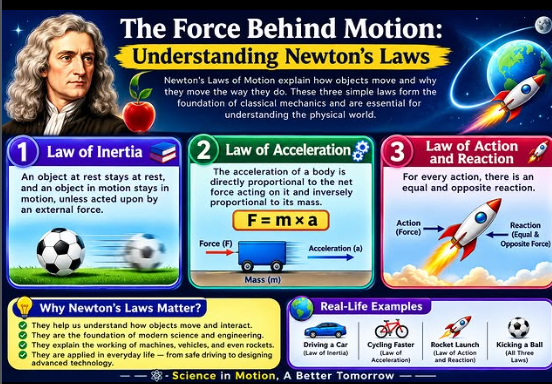
    story topic:The Force Behind Motion: Understanding Newton’s Laws

    **The Force Behind Motion: Understanding Newton’s Laws**

    Welcome to the fascinating world of physics, where forces, motion, and energy work together to explain how our universe operates! In this educational journey, we explore **Newton’s Three Laws of Motion**, some of the most important principles in science that help us understand why objects move, how they change speed, and how forces affect everything around us. From a simple falling apple to a speeding car and a powerful rocket launching into space, Newton’s laws are everywhere in our daily lives!

    **1. Newton’s First Law — The Law of Inertia**

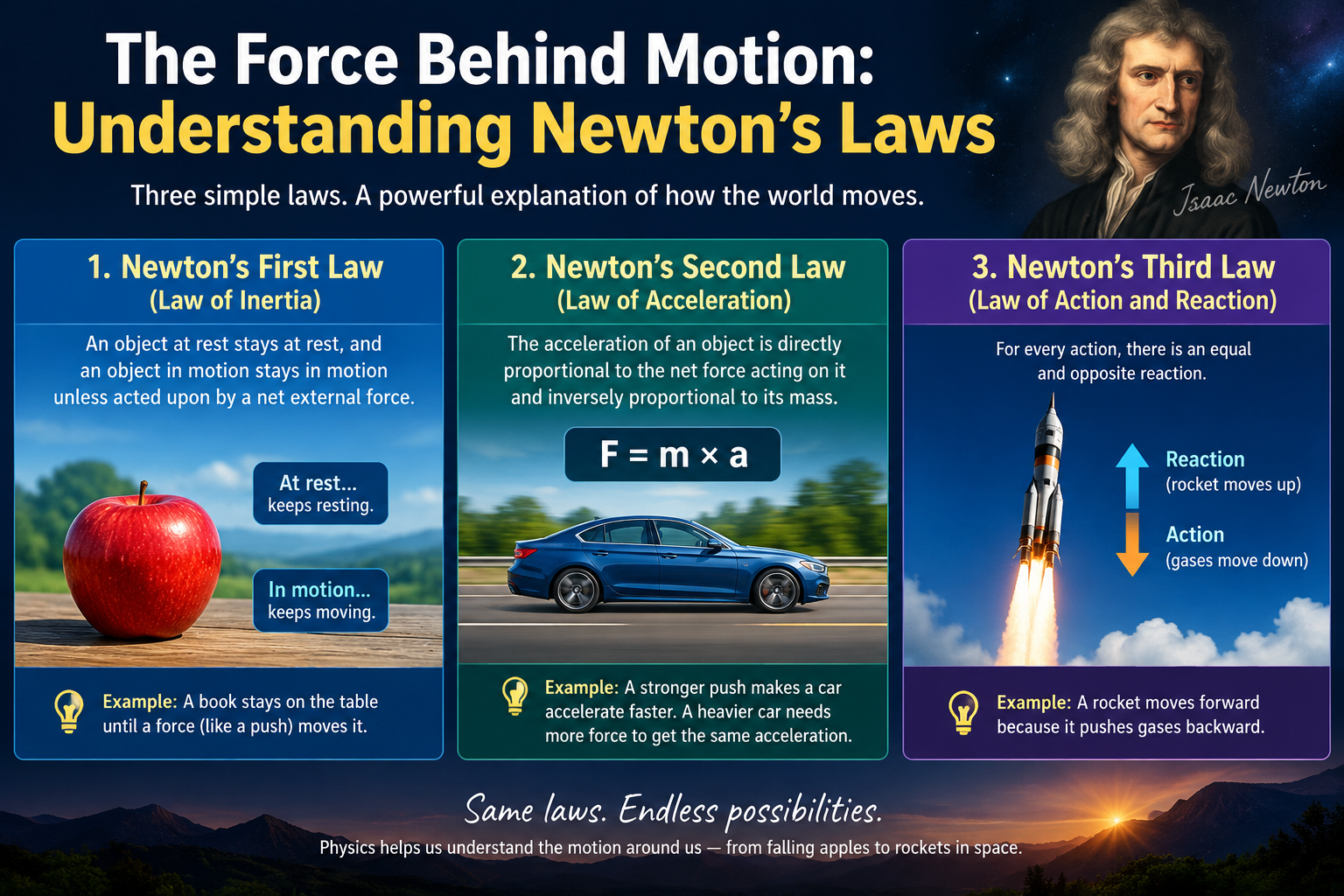
    Newton’s First Law states that an object at rest remains at rest, and an object in motion continues moving at a constant speed in a straight line unless acted upon by an unbalanced external force. This principle explains why a book stays on a table until someone moves it and why passengers tend to move forward when a moving car suddenly stops. Inertia is the natural tendency of objects to resist changes in their state of motion.

    **2. Newton’s Second Law — The Law of Acceleration**

    Newton’s Second Law explains how force, mass, and acceleration are connected. The greater the net force applied to an object, the greater its acceleration. However, a heavier object requires more force than a lighter object to achieve the same acceleration. This relationship is expressed through the famous formula **F = m × a**, where F represents force, m represents mass, and a represents acceleration. This law helps engineers design vehicles, machines, and countless other technologies.

    **3. Newton’s Third Law — The Law of Action and Reaction**

    Newton’s Third Law states that for every action, there is an equal and opposite reaction. Whenever one object exerts a force on another, the second object exerts an equal force in the opposite direction. This principle explains how rockets move forward by pushing exhaust gases backward, how swimmers move through water, and how we walk by pushing against the ground. It reveals the incredible relationship between forces acting on interacting objects.

    **Why Are Newton’s Laws Important?**

    Newton’s laws are essential for understanding the physical world. They help scientists explain motion, engineers develop safer vehicles, athletes improve their performance, and space agencies calculate the movements of spacecraft. These principles are used in transportation, construction, robotics, aviation, sports science, and space exploration. By understanding these laws, students can develop stronger scientific thinking and see how classroom physics connects to real-life experiences.

    **Explore the Science Behind Everyday Motion!**

    Physics is more than formulas and equations; it is a way to understand the world around us. Every moving bicycle, bouncing ball, accelerating car, and launching rocket demonstrates the fascinating principles of force and motion. Learning Newton’s laws opens the door to deeper discoveries in science, technology, engineering, and mathematics.

    Join us on this exciting journey to discover how simple scientific principles explain some of the most extraordinary movements in our universe. Keep asking questions, stay curious, and never stop exploring the wonders of science!

    **Learn the Laws. Understand the Forces. Discover the Science of Motion!**

    Like, share, and follow for more educational content, fascinating science topics, and easy-to-understand explanations that make learning enjoyable!

    #NewtonsLaws #ForceAndMotion #Physics #ScienceEducation #IsaacNewton #LawOfInertia #Acceleration #ActionAndReaction #PhysicsExplained #ScienceFacts #STEMEducation #EducationalVideos #LearnScience #ScientificDiscoveries #SpaceExploration #KnowledgeIsPower
    RSIF8 Roll no:14 story no:24 story topic:The Force Behind Motion: Understanding Newton’s Laws 🚀 **The Force Behind Motion: Understanding Newton’s Laws** 🌍🔬 Welcome to the fascinating world of physics, where forces, motion, and energy work together to explain how our universe operates! 🌌 In this educational journey, we explore **Newton’s Three Laws of Motion**, some of the most important principles in science that help us understand why objects move, how they change speed, and how forces affect everything around us. From a simple falling apple to a speeding car and a powerful rocket launching into space, Newton’s laws are everywhere in our daily lives! 🍎🚗🚀 📘 **1. Newton’s First Law — The Law of Inertia** Newton’s First Law states that an object at rest remains at rest, and an object in motion continues moving at a constant speed in a straight line unless acted upon by an unbalanced external force. This principle explains why a book stays on a table until someone moves it and why passengers tend to move forward when a moving car suddenly stops. Inertia is the natural tendency of objects to resist changes in their state of motion. ⚡ **2. Newton’s Second Law — The Law of Acceleration** Newton’s Second Law explains how force, mass, and acceleration are connected. The greater the net force applied to an object, the greater its acceleration. However, a heavier object requires more force than a lighter object to achieve the same acceleration. This relationship is expressed through the famous formula **F = m × a**, where F represents force, m represents mass, and a represents acceleration. This law helps engineers design vehicles, machines, and countless other technologies. 🌟 **3. Newton’s Third Law — The Law of Action and Reaction** Newton’s Third Law states that for every action, there is an equal and opposite reaction. Whenever one object exerts a force on another, the second object exerts an equal force in the opposite direction. This principle explains how rockets move forward by pushing exhaust gases backward, how swimmers move through water, and how we walk by pushing against the ground. It reveals the incredible relationship between forces acting on interacting objects. 🔍 **Why Are Newton’s Laws Important?** Newton’s laws are essential for understanding the physical world. They help scientists explain motion, engineers develop safer vehicles, athletes improve their performance, and space agencies calculate the movements of spacecraft. These principles are used in transportation, construction, robotics, aviation, sports science, and space exploration. By understanding these laws, students can develop stronger scientific thinking and see how classroom physics connects to real-life experiences. 💡 **Explore the Science Behind Everyday Motion!** Physics is more than formulas and equations; it is a way to understand the world around us. Every moving bicycle, bouncing ball, accelerating car, and launching rocket demonstrates the fascinating principles of force and motion. Learning Newton’s laws opens the door to deeper discoveries in science, technology, engineering, and mathematics. Join us on this exciting journey to discover how simple scientific principles explain some of the most extraordinary movements in our universe. Keep asking questions, stay curious, and never stop exploring the wonders of science! 🌍✨ 🎯 **Learn the Laws. Understand the Forces. Discover the Science of Motion!** 👍 Like, share, and follow for more educational content, fascinating science topics, and easy-to-understand explanations that make learning enjoyable! #NewtonsLaws #ForceAndMotion #Physics #ScienceEducation #IsaacNewton #LawOfInertia #Acceleration #ActionAndReaction #PhysicsExplained #ScienceFacts #STEMEducation #EducationalVideos #LearnScience #ScientificDiscoveries #SpaceExploration #KnowledgeIsPower 🚀📚
    0 Commentarios 0 Acciones 93 Views
  • RSISB
    Roll No:56
    Level 2
    Work Book A
    Tedx Talk In English No : 02
    TEDx Talk: System Software vs Application Software

    Technology is transforming our world every single day, but have you ever wondered what actually makes our computers, smartphones, and digital devices work?

    In my TEDx Talk, "System Software vs Application Software," I explore the fascinating world of software and explain how these two essential categories work together to power our digital lives.

    System Software is the invisible hero behind every computer. It manages hardware, controls essential operations, and provides the foundation for other programs to function. Operating systems such as Windows, Linux, macOS, and Android are important examples.

    Application Software, on the other hand, brings technology closer to our everyday needs. From Microsoft Word and Google Chrome to WhatsApp, Photoshop, and educational applications, these programs help us communicate, learn, create, and accomplish countless tasks.

    Throughout my talk, I discuss their differences, functions, importance, and real-life applications. I also highlight how software supports education , healthcare , business , communication , creativity , and artificial intelligence .

    One of the most important lessons from this topic is that system software and application software are not competitors; they are partners. One provides the foundation, while the other creates meaningful experiences for users.

    My message to everyone is simple:

    Don't just use technology—understand it. Don't just admire the applications you see on your screen; become curious about the invisible systems working behind them.

    Every great innovation begins with curiosity, knowledge, and the courage to explore something new.

    System Software is the foundation.
    Application Software is the experience.
    Human creativity is the power that connects them!

    Let's continue learning, exploring, and building a smarter digital future together!

    #TEDxTalk #SystemSoftware #ApplicationSoftware #Technology #ComputerScience #DigitalWorld #Innovation #ArtificialIntelligence #SoftwareEngineering #LearningJourney #FutureOfTechnology #TechEducation

    Rehan Allahwala
    Rehan Allahwala
    Asma Shaheen EducationWali

    RSISB Roll No:56 Level 2 Work Book A Tedx Talk In English No : 02 🎤 TEDx Talk: System Software vs Application Software 💻🌍✨ Technology is transforming our world every single day, but have you ever wondered what actually makes our computers, smartphones, and digital devices work? 🤔💡 In my TEDx Talk, "System Software vs Application Software," I explore the fascinating world of software and explain how these two essential categories work together to power our digital lives. 🚀 ⚙️ System Software is the invisible hero behind every computer. It manages hardware, controls essential operations, and provides the foundation for other programs to function. Operating systems such as Windows, Linux, macOS, and Android are important examples. 📱 Application Software, on the other hand, brings technology closer to our everyday needs. From Microsoft Word and Google Chrome to WhatsApp, Photoshop, and educational applications, these programs help us communicate, learn, create, and accomplish countless tasks. Throughout my talk, I discuss their differences, functions, importance, and real-life applications. I also highlight how software supports education 📚, healthcare 🏥, business 💼, communication 🌐, creativity 🎨, and artificial intelligence 🤖. One of the most important lessons from this topic is that system software and application software are not competitors; they are partners. One provides the foundation, while the other creates meaningful experiences for users. 🌟 My message to everyone is simple: Don't just use technology—understand it. Don't just admire the applications you see on your screen; become curious about the invisible systems working behind them. Every great innovation begins with curiosity, knowledge, and the courage to explore something new. 💡 System Software is the foundation. ⚙️ Application Software is the experience. 📱 Human creativity is the power that connects them! ❤️ Let's continue learning, exploring, and building a smarter digital future together! 🌍🚀 #TEDxTalk #SystemSoftware #ApplicationSoftware #Technology #ComputerScience #DigitalWorld #Innovation #ArtificialIntelligence #SoftwareEngineering #LearningJourney #FutureOfTechnology #TechEducation 💻✨ Rehan Allahwala Rehan Allahwala Asma Shaheen EducationWali
    0 Commentarios 0 Acciones 369 Views 3
  • #RSISB
    Roll No : 55
    Level 2
    Work Book A
    Talk With Ai On Software : 02
    Talk With AI: 50 Questions About Software Development, Coding, Artificial Intelligence, and the Future of Technology!
    Hello everyone! Welcome to my new educational AI Talk Session!
    My name is Faizan Ali SoftwareWala, and in this session, I am exploring the amazing world of software with Artificial Intelligence (AI).
    Software is one of the most important parts of our modern world. We use software every day on our computers, mobile phones, websites, educational platforms, businesses, and many other digital systems. From simple mobile applications to advanced AI assistants, software is helping people solve problems, save time, improve productivity, and connect with the world.
    In this special session, I asked AI 50 interesting and educational questions about software to expand my knowledge, discover new ideas, and understand how technology works.
    Throughout this conversation, I explored several important topics, including:
    1. Introduction to Software: What software is, why it is important, the different types of software, and how software has changed our daily lives.
    2. Software Development and Coding: How software is created, which programming languages beginners can learn, the importance of HTML, CSS, JavaScript, and PHP, and how developers find and fix errors in their projects.
    3. Artificial Intelligence and Modern Technology: How AI is changing software development, how AI chatbots work, how APIs connect different applications, and how developers can use AI tools to build smarter digital solutions.
    4. Software Business and Online Earning: How beginners can earn money through software development, how freelancing works, how to find clients, how software companies generate income, and how a simple software idea can become a successful business.
    5. The Future of Software Development: Whether AI will replace software developers, which skills will be valuable in the future, how young students can learn coding for free, and how technology can solve real-world problems.
    6. Software Development in Pakistan: How software can improve education, support businesses, create earning opportunities, and help young Pakistanis develop innovative solutions for local and international challenges.
    7. Advice for Young Software Developers: I also explored how a young student can improve coding skills, build a professional portfolio, develop creative thinking, start working on real projects, and move toward becoming a successful software developer.
    My Mission and Vision
    My goal is not just to learn coding or create websites. My bigger mission is to become a skilled software developer, an innovative problem solver, and a future leader who uses technology to make a positive difference in people's lives.
    I believe that age should never stop anyone from learning new skills, exploring technology, building projects, or working toward their dreams. Every expert starts as a beginner, and every successful project begins with an idea.
    As a student, I want to continue learning about software development, artificial intelligence, web development, and digital innovation. I want to build useful projects, experiment with new technologies, improve my English communication skills, and learn how to turn ideas into practical solutions.
    I also believe that AI is a powerful learning partner. When we ask meaningful questions, explore different perspectives, and practice consistently, we can improve our understanding and discover new opportunities. AI can help us learn faster, but our own creativity, critical thinking, dedication, and hard work are equally important.
    Why Is This Session Important?
    This session is designed for students, beginners, aspiring software developers, technology enthusiasts, and anyone who wants to understand the world of software.
    If you are interested in coding, websites, applications, AI tools, freelancing, startups, or the future of technology, I hope this conversation inspires you to start learning and creating something useful.
    Remember, you do not need to know everything before you begin. Start with the basics, practice every day, build small projects, learn from your mistakes, and gradually improve your skills. The most important thing is to take action and remain consistent.
    Watch the Session and Join the Journey!
    Watch my AI Talk Session, explore the 50 questions, learn something new, and share your thoughts in the comments.
    Which area of software development interests you the most: web development, app development, artificial intelligence, cybersecurity, or software business?
    Write your answer in the comments!
    Like this session if you found it educational.
    Share it with students and friends who want to learn about software.
    Follow my journey for more AI talks, educational sessions, coding projects, and technology-related content.
    My Message to Every Young Learner:
    “Don't just use technology. Learn how it works, build something meaningful with it, and use your skills to solve real problems.”
    Keep Learning
    Keep Coding
    Keep Building
    Keep Innovating
    Keep Improving
    And Never Give Up!
    Thank you for being part of my learning journey. See you in the next educational session!
    Created by: Faizan Ali SoftwareWala
    #TalkWithAI #SoftwareDevelopment #SoftwareEngineering #SoftwareDeveloper #ArtificialIntelligence #AI #Coding #Programming #WebDevelopment #LearnToCode #Technology #TechEducation #Freelancing #SoftwareBusiness #FutureOfTechnology #ProblemSolving #DigitalSkills
    @followers
    Asma Shaheen EducationWali
    #RSISB Roll No : 55 Level 2 Work Book A Talk With Ai On Software : 02 🎙️💻🤖 Talk With AI: 50 Questions About Software Development, Coding, Artificial Intelligence, and the Future of Technology! 🚀🌍 Hello everyone! 👋 Welcome to my new educational AI Talk Session! My name is Faizan Ali SoftwareWala, and in this session, I am exploring the amazing world of software with Artificial Intelligence (AI). 💻✨ Software is one of the most important parts of our modern world. We use software every day on our computers, mobile phones, websites, educational platforms, businesses, and many other digital systems. From simple mobile applications to advanced AI assistants, software is helping people solve problems, save time, improve productivity, and connect with the world. 🌐📱 In this special session, I asked AI 50 interesting and educational questions about software to expand my knowledge, discover new ideas, and understand how technology works. 🤖🧠 Throughout this conversation, I explored several important topics, including: 💻 1. Introduction to Software: What software is, why it is important, the different types of software, and how software has changed our daily lives. ⌨️ 2. Software Development and Coding: How software is created, which programming languages beginners can learn, the importance of HTML, CSS, JavaScript, and PHP, and how developers find and fix errors in their projects. 🤖 3. Artificial Intelligence and Modern Technology: How AI is changing software development, how AI chatbots work, how APIs connect different applications, and how developers can use AI tools to build smarter digital solutions. 💰 4. Software Business and Online Earning: How beginners can earn money through software development, how freelancing works, how to find clients, how software companies generate income, and how a simple software idea can become a successful business. 🚀 5. The Future of Software Development: Whether AI will replace software developers, which skills will be valuable in the future, how young students can learn coding for free, and how technology can solve real-world problems. 🇵🇰 6. Software Development in Pakistan: How software can improve education, support businesses, create earning opportunities, and help young Pakistanis develop innovative solutions for local and international challenges. 🌟 7. Advice for Young Software Developers: I also explored how a young student can improve coding skills, build a professional portfolio, develop creative thinking, start working on real projects, and move toward becoming a successful software developer. 🎯 My Mission and Vision My goal is not just to learn coding or create websites. My bigger mission is to become a skilled software developer, an innovative problem solver, and a future leader who uses technology to make a positive difference in people's lives. I believe that age should never stop anyone from learning new skills, exploring technology, building projects, or working toward their dreams. Every expert starts as a beginner, and every successful project begins with an idea. 💡 As a student, I want to continue learning about software development, artificial intelligence, web development, and digital innovation. I want to build useful projects, experiment with new technologies, improve my English communication skills, and learn how to turn ideas into practical solutions. I also believe that AI is a powerful learning partner. When we ask meaningful questions, explore different perspectives, and practice consistently, we can improve our understanding and discover new opportunities. AI can help us learn faster, but our own creativity, critical thinking, dedication, and hard work are equally important. 🧠🔥 🌍 Why Is This Session Important? This session is designed for students, beginners, aspiring software developers, technology enthusiasts, and anyone who wants to understand the world of software. If you are interested in coding, websites, applications, AI tools, freelancing, startups, or the future of technology, I hope this conversation inspires you to start learning and creating something useful. Remember, you do not need to know everything before you begin. Start with the basics, practice every day, build small projects, learn from your mistakes, and gradually improve your skills. The most important thing is to take action and remain consistent. 💪 🎬 Watch the Session and Join the Journey! Watch my AI Talk Session, explore the 50 questions, learn something new, and share your thoughts in the comments. 💬 Which area of software development interests you the most: web development, app development, artificial intelligence, cybersecurity, or software business? 👇 Write your answer in the comments! 👍 Like this session if you found it educational. 📲 Share it with students and friends who want to learn about software. 🔔 Follow my journey for more AI talks, educational sessions, coding projects, and technology-related content. ✨ My Message to Every Young Learner: “Don't just use technology. Learn how it works, build something meaningful with it, and use your skills to solve real problems.” Keep Learning 📚 Keep Coding 💻 Keep Building 🛠️ Keep Innovating 💡 Keep Improving 🌱 And Never Give Up! 🔥🚀 Thank you for being part of my learning journey. See you in the next educational session! 👋🎙️ Created by: Faizan Ali SoftwareWala 💻 #TalkWithAI #SoftwareDevelopment #SoftwareEngineering #SoftwareDeveloper #ArtificialIntelligence #AI #Coding #Programming #WebDevelopment #LearnToCode #Technology #TechEducation #Freelancing #SoftwareBusiness #FutureOfTechnology #ProblemSolving #DigitalSkills @followers Asma Shaheen EducationWali
    0 Commentarios 0 Acciones 465 Views 13
  • RSIF8
    Roll no.49
    Documentary no.02
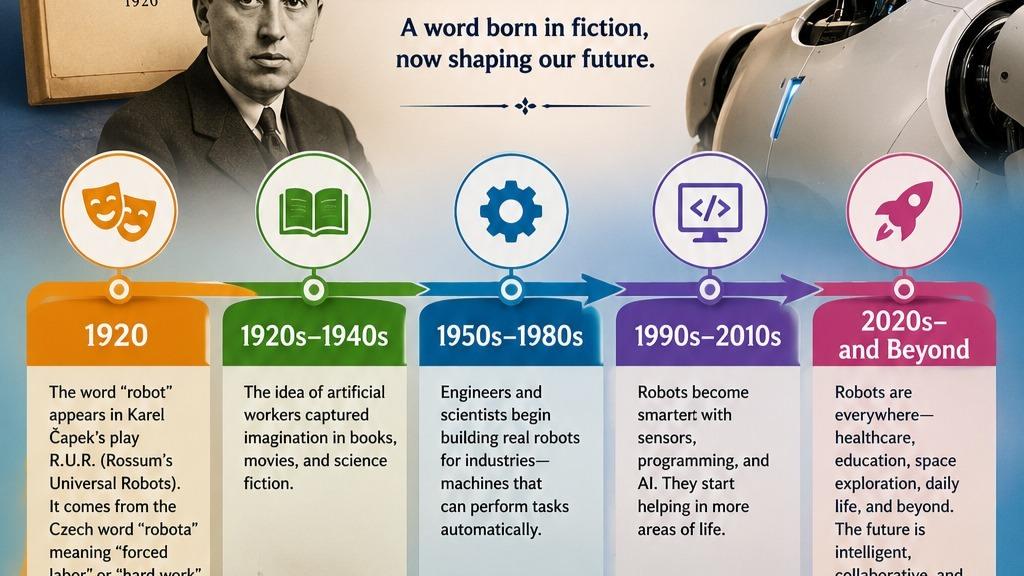
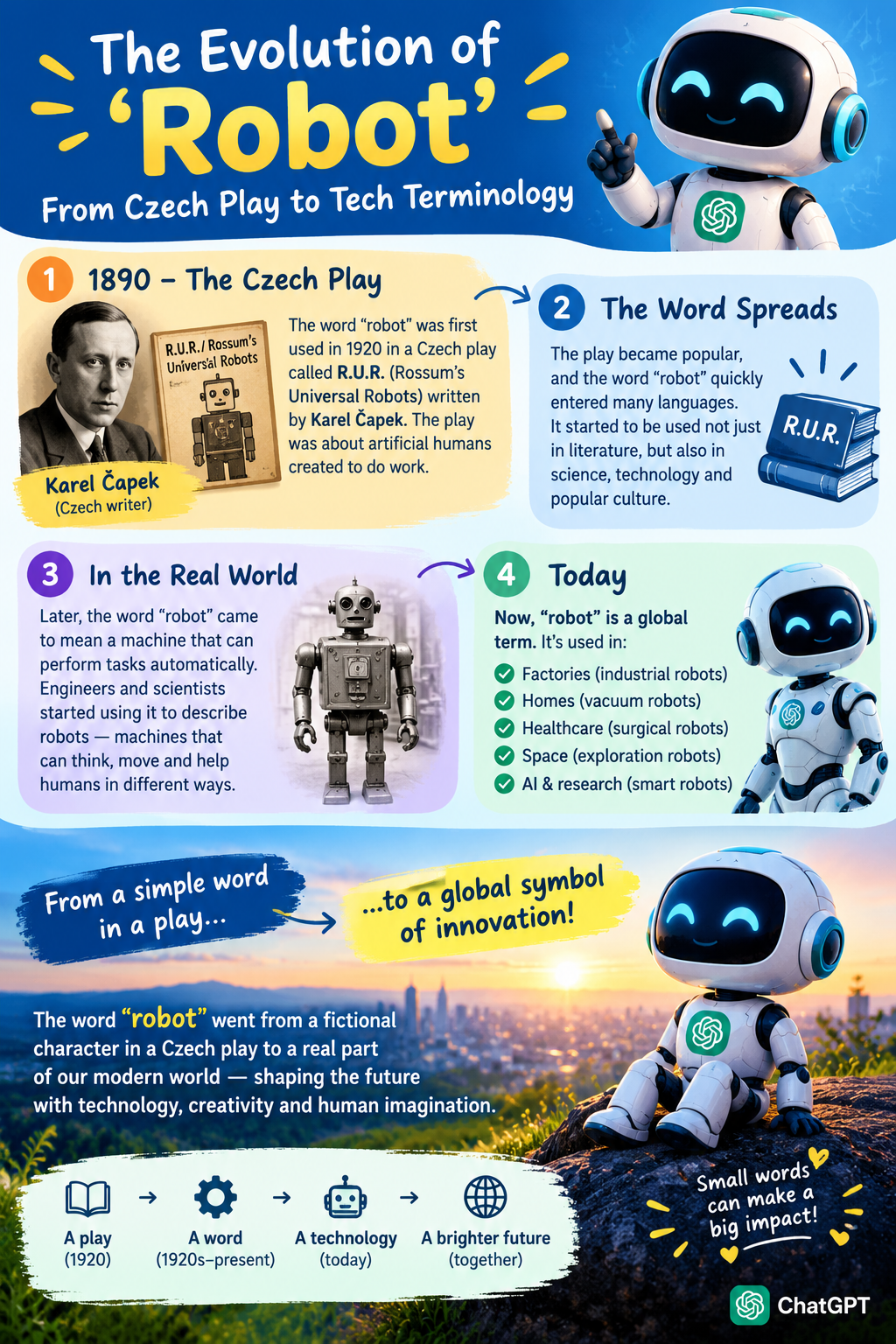
    Documentary Topic:Documentary: The Evolution of “Robot” — From Czech Play to Tech Terminology

    Have you ever wondered where the word “robot” came from and how it became an important part of modern technology? This documentary explores the fascinating journey of the word “robot,” from its origins in Czech literature to its widespread use in science, engineering, and artificial intelligence.

    The word became popular through the 1920 play R.U.R. (Rossum’s Universal Robots) by Czech writer Karel Čapek. It was inspired by the Czech word robota, meaning forced labor or hard work. Over time, the term evolved from a fictional concept into a symbol of technological innovation.

    Through this documentary, I explore how robots have transformed industries, supported healthcare, assisted humans in everyday life, and opened new possibilities for the future. It also highlights the importance of using technology responsibly and understanding its impact on society.

    Join me on this exciting journey through history, language, and technology as we discover how one word helped shape our understanding of the robotic world!

    #EvolutionOfRobots #RobotHistory #Documentary #Technology #ArtificialIntelligence #Robotics #CzechLiterature #Innovation #ScienceAndTechnology #CreativeLearning #ClassFoundation #RSf8
    RSIF8 Roll no.49 Documentary no.02 Documentary Topic:Documentary: The Evolution of “Robot” — From Czech Play to Tech Terminology ⚙️✨ Have you ever wondered where the word “robot” came from and how it became an important part of modern technology? 🌍💡 This documentary explores the fascinating journey of the word “robot,” from its origins in Czech literature to its widespread use in science, engineering, and artificial intelligence. The word became popular through the 1920 play R.U.R. (Rossum’s Universal Robots) by Czech writer Karel Čapek. It was inspired by the Czech word robota, meaning forced labor or hard work. Over time, the term evolved from a fictional concept into a symbol of technological innovation. 📚🔬 Through this documentary, I explore how robots have transformed industries, supported healthcare, assisted humans in everyday life, and opened new possibilities for the future. 🚀🦾 It also highlights the importance of using technology responsibly and understanding its impact on society. Join me on this exciting journey through history, language, and technology as we discover how one word helped shape our understanding of the robotic world! 🌐🤖 #EvolutionOfRobots #RobotHistory #Documentary #Technology #ArtificialIntelligence #Robotics #CzechLiterature #Innovation #ScienceAndTechnology #CreativeLearning #ClassFoundation #RSf8
    0 Commentarios 0 Acciones 545 Views 10
  • Mohsin RS F8
    Story post NO:18
    roll NO:13
    Class: Foundation Level
    Made by Me

    The Force Behind Motion: Understanding Newton’s Laws

    Motion is one of the most important ideas in physics. Everything around us is constantly affected by forces, whether we notice them or not. A ball rolling across the ground, a car accelerating on a road, a bicycle slowing down, a person jumping, and a rocket launching into space are all examples of motion caused or changed by forces. To understand these everyday movements, scientists use fundamental principles known as Newton’s Laws of Motion.

    Sir Isaac Newton developed his three laws of motion in the 17th century, and they became a foundation of classical physics. These laws help explain the relationship between force, mass, and motion. They allow us to understand not only simple movements around us but also complicated systems involving machines, vehicles, sports, engineering, and space exploration.

    The First Law of Motion, often called the Law of Inertia, explains that an object at rest tends to remain at rest, while an object in motion tends to continue moving in the same direction and at the same speed unless an external force acts upon it. In everyday life, we can see this when a football remains still until someone kicks it. Similarly, when a moving car suddenly stops, passengers tend to move forward because their bodies were already in motion. This law teaches us that objects do not naturally change their motion without a force acting on them.

    The Second Law of Motion explains how force affects the acceleration of an object. It is commonly represented by the equation F = m × a, meaning that force is equal to mass multiplied by acceleration. This law shows that applying a greater force can produce greater acceleration, while an object with greater mass requires more force to achieve the same acceleration. For example, pushing an empty shopping cart is usually easier than pushing a heavily loaded one. This principle is extremely important in the design of vehicles, machines, sports equipment, and many engineering systems.

    The Third Law of Motion states that for every action, there is an equal and opposite
    Mohsin RS F8 🎓✨ Story post NO:18 roll NO:13 Class: Foundation Level 📚 Made by Me 💻🚀 The Force Behind Motion: Understanding Newton’s Laws ⚡🔬🚀 Motion is one of the most important ideas in physics. Everything around us is constantly affected by forces, whether we notice them or not. A ball rolling across the ground, a car accelerating on a road, a bicycle slowing down, a person jumping, and a rocket launching into space are all examples of motion caused or changed by forces. To understand these everyday movements, scientists use fundamental principles known as Newton’s Laws of Motion. Sir Isaac Newton developed his three laws of motion in the 17th century, and they became a foundation of classical physics. These laws help explain the relationship between force, mass, and motion. They allow us to understand not only simple movements around us but also complicated systems involving machines, vehicles, sports, engineering, and space exploration. The First Law of Motion, often called the Law of Inertia, explains that an object at rest tends to remain at rest, while an object in motion tends to continue moving in the same direction and at the same speed unless an external force acts upon it. In everyday life, we can see this when a football remains still until someone kicks it. Similarly, when a moving car suddenly stops, passengers tend to move forward because their bodies were already in motion. This law teaches us that objects do not naturally change their motion without a force acting on them. The Second Law of Motion explains how force affects the acceleration of an object. It is commonly represented by the equation F = m × a, meaning that force is equal to mass multiplied by acceleration. This law shows that applying a greater force can produce greater acceleration, while an object with greater mass requires more force to achieve the same acceleration. For example, pushing an empty shopping cart is usually easier than pushing a heavily loaded one. This principle is extremely important in the design of vehicles, machines, sports equipment, and many engineering systems. The Third Law of Motion states that for every action, there is an equal and opposite
    0 Commentarios 0 Acciones 827 Views
  • Story Post

    # Cybersecurity Chronicles: Protecting Information in the Digital Age

    The air in the control room was thick with tension, punctuated only by the hum of cooling fans and the quiet, rhythmic clacking of mechanical keyboards. For Maya, a senior cybersecurity analyst at Apex Sentinel, late-night shifts were usually spent monitoring routine network pings and automated firewall logs.

    Tonight was different.

    At 2:17 AM, a single red alert flashed across her secondary monitor: **`UNAUTHORIZED ACCESS ATTEMPT – SECTOR 4 DATABASE`**.

    ---

    ## Chapter 1: The Invisible Intruder

    Sector 4 housed the core sensitive data for millions of users—encrypted identifiers, access keys, and proprietary algorithms. Maya leaned in, her eyes scanning the incoming data packets. This was no low-level script kiddie trying a basic brute-force attack. The intruder was moving with surgical precision, exploiting an unpatched zero-day vulnerability in a legacy microservice.

    > *"They're not just trying to break in,"* Maya whispered to her teammate, Leo, sitting at the adjacent console. *"They already have internal credentials. It’s a spear-phishing compromise."*

    The threat actor—known in threat intelligence circles as **ShadowByte**—had spent weeks laying the groundwork. A spoofed executive email, a single clicked link on a rogue landing page, and a compromised credential was all it took to bypass traditional perimeter defenses.

    ---

    ## Chapter 2: The Digital Countermeasure

    Every second mattered. A full breach could result in millions of compromised records, massive regulatory fines, and shattered public trust.

    Maya executed Apex Sentinel’s incident response protocol:

    1. **Isolation:** She immediately severed Sector 4's outward-facing network connections, routing traffic into a isolated honeypot to monitor the attacker's movements.
    2. **Credential Revocation:** Leo forced a company-wide token refresh, revoking all active sessions associated with the compromised user account.
    3. **Patch Deployment:** Working rapidly, the engineering team deployed an emergency hotfix to patch the exploited vulnerability across all microservices.

    ```text
    [SYSTEM ACTION] Isolating Sector 4... SUCCESS
    [SYSTEM ACTION] Revoking Active Tokens... SUCCESS
    [SYSTEM ACTION] Hotfix v4.12.9 Deployed. Threat Contained.

    ```

    By 3:45 AM, the malicious traffic ceased. The breach was neutralized before a single byte of customer data left the server.

    ---

    ## Chapter 3: Lessons from the Frontlines

    The attack was a stark reminder that in the digital age, **security is not a static destination—it is a continuous practice.**

    Technology alone is never enough; humans remain both the most vulnerable link and the strongest line of defense in cybersecurity.

    | Threat Vectors | Modern Safeguards |
    | --- | --- |
    | **Spear-Phishing & Social Engineering** | Security awareness training & Phishing simulations |
    | **Stolen Credentials** | Multi-Factor Authentication (MFA) & Zero Trust Access |
    | **Zero-Day Vulnerabilities** | Automated patch management & Intrusion Detection Systems (IDS) |
    | **Data Exfiltration** | End-to-end encryption & Data Loss Prevention (DLP) tools |

    ---

    ## The Takeaway: Building a Culture of Security

    As the sun began to rise over the city, Maya stepped out of the building into the cool morning air. The digital battleground is silent, invisible to the millions of people going about their day, trusting that their information is safe.

    Protecting data in the modern world requires vigilance at every level:

    * **For Individuals:** Use strong, unique passwords combined with dynamic MFA, and remain skeptical of unexpected emails or requests for information.
    * **For Organizations:** Adopt a **Zero Trust architecture** ("Never trust, always verify"), keep infrastructure patched, and empower employees with security education.

    In the digital age, our information is our currency. Safeguarding it isn't just the job of analysts like Maya—it’s a collective responsibility we all share.

    ---

    *How does your team or organization stay ahead of evolving cyber threats? What security practices do you rely on daily?*
    Story Post # Cybersecurity Chronicles: Protecting Information in the Digital Age The air in the control room was thick with tension, punctuated only by the hum of cooling fans and the quiet, rhythmic clacking of mechanical keyboards. For Maya, a senior cybersecurity analyst at Apex Sentinel, late-night shifts were usually spent monitoring routine network pings and automated firewall logs. Tonight was different. At 2:17 AM, a single red alert flashed across her secondary monitor: **`UNAUTHORIZED ACCESS ATTEMPT – SECTOR 4 DATABASE`**. --- ## Chapter 1: The Invisible Intruder Sector 4 housed the core sensitive data for millions of users—encrypted identifiers, access keys, and proprietary algorithms. Maya leaned in, her eyes scanning the incoming data packets. This was no low-level script kiddie trying a basic brute-force attack. The intruder was moving with surgical precision, exploiting an unpatched zero-day vulnerability in a legacy microservice. > *"They're not just trying to break in,"* Maya whispered to her teammate, Leo, sitting at the adjacent console. *"They already have internal credentials. It’s a spear-phishing compromise."* The threat actor—known in threat intelligence circles as **ShadowByte**—had spent weeks laying the groundwork. A spoofed executive email, a single clicked link on a rogue landing page, and a compromised credential was all it took to bypass traditional perimeter defenses. --- ## Chapter 2: The Digital Countermeasure Every second mattered. A full breach could result in millions of compromised records, massive regulatory fines, and shattered public trust. Maya executed Apex Sentinel’s incident response protocol: 1. **Isolation:** She immediately severed Sector 4's outward-facing network connections, routing traffic into a isolated honeypot to monitor the attacker's movements. 2. **Credential Revocation:** Leo forced a company-wide token refresh, revoking all active sessions associated with the compromised user account. 3. **Patch Deployment:** Working rapidly, the engineering team deployed an emergency hotfix to patch the exploited vulnerability across all microservices. ```text [SYSTEM ACTION] Isolating Sector 4... SUCCESS [SYSTEM ACTION] Revoking Active Tokens... SUCCESS [SYSTEM ACTION] Hotfix v4.12.9 Deployed. Threat Contained. ``` By 3:45 AM, the malicious traffic ceased. The breach was neutralized before a single byte of customer data left the server. --- ## Chapter 3: Lessons from the Frontlines The attack was a stark reminder that in the digital age, **security is not a static destination—it is a continuous practice.** Technology alone is never enough; humans remain both the most vulnerable link and the strongest line of defense in cybersecurity. | Threat Vectors | Modern Safeguards | | --- | --- | | **Spear-Phishing & Social Engineering** | Security awareness training & Phishing simulations | | **Stolen Credentials** | Multi-Factor Authentication (MFA) & Zero Trust Access | | **Zero-Day Vulnerabilities** | Automated patch management & Intrusion Detection Systems (IDS) | | **Data Exfiltration** | End-to-end encryption & Data Loss Prevention (DLP) tools | --- ## The Takeaway: Building a Culture of Security As the sun began to rise over the city, Maya stepped out of the building into the cool morning air. The digital battleground is silent, invisible to the millions of people going about their day, trusting that their information is safe. Protecting data in the modern world requires vigilance at every level: * **For Individuals:** Use strong, unique passwords combined with dynamic MFA, and remain skeptical of unexpected emails or requests for information. * **For Organizations:** Adopt a **Zero Trust architecture** ("Never trust, always verify"), keep infrastructure patched, and empower employees with security education. In the digital age, our information is our currency. Safeguarding it isn't just the job of analysts like Maya—it’s a collective responsibility we all share. --- *How does your team or organization stay ahead of evolving cyber threats? What security practices do you rely on daily?*
    0 Commentarios 0 Acciones 1780 Views
  • RSIF8
    Roll no 77
    Story post 42
    Story topic : The Evolution of 'Robot': From Czech Play to Tech Terminology.

    Did you know the word "Robot" wasn't born in a laboratory? It actually began on a theater stage!

    In 1920, Czech writer Karel Čapek introduced the word "robot" in his famous play R.U.R. (Rossum's Universal Robots). The term comes from the Czech word "robota," meaning forced labor or hard work.

    In the play, robots were artificial workers created to serve humans. Over time, this fascinating idea inspired scientists, engineers, and inventors around the world.

    Today, robots are transforming our lives. They help build cars , perform delicate surgeries , explore distant planets , clean our homes , and even assist in classrooms . What started as a fictional concept has become one of the most important technologies of the modern era.

    The journey of the word "robot" reminds us that imagination can shape the future. Yesterday's fiction has become today's innovation—and tomorrow's possibilities are endless!

    #Robot #Technology #Innovation #ArtificialIntelligence #AI #HistoryOfWords #Science #TechFacts #FutureTech #Engineering #STEM #Education #Learning #DidYouKnow #Robotics #InnovationJourney #WordOrigins #TechHistory #Knowledge #Future
    RSIF8 Roll no 77 Story post 42 Story topic : The Evolution of 'Robot': From Czech Play to Tech Terminology. 🤔 Did you know the word "Robot" wasn't born in a laboratory? It actually began on a theater stage! 🎭 In 1920, Czech writer Karel Čapek introduced the word "robot" in his famous play R.U.R. (Rossum's Universal Robots). The term comes from the Czech word "robota," meaning forced labor or hard work. 💡 In the play, robots were artificial workers created to serve humans. Over time, this fascinating idea inspired scientists, engineers, and inventors around the world. 🌍⚙️ Today, robots are transforming our lives. 🤖 They help build cars 🚗, perform delicate surgeries 🏥, explore distant planets 🚀, clean our homes 🏠, and even assist in classrooms 📚. What started as a fictional concept has become one of the most important technologies of the modern era. The journey of the word "robot" reminds us that imagination can shape the future. ✨ Yesterday's fiction has become today's innovation—and tomorrow's possibilities are endless! 🌟 #Robot #Technology #Innovation #ArtificialIntelligence #AI #HistoryOfWords #Science #TechFacts #FutureTech #Engineering #STEM #Education #Learning #DidYouKnow #Robotics #InnovationJourney #WordOrigins #TechHistory #Knowledge #Future
    0 Commentarios 0 Acciones 2038 Views
  • #rsisb
    Roll no. 247
    Story post 14
    Foundation level

    **The Evolution of “Robot”: From Czech Play to Tech Terminology **

    Have you ever wondered where the word **“robot”** came from? Today, we use this word when talking about smart machines, artificial intelligence, factories, space exploration, and modern technology. But did you know that the word “robot” became popular through a Czech play written more than a century ago? Let's explore the fascinating journey of this little word that became a big part of our technological world!

    **1. The Beginning: A Czech Play **

    The story of the word “robot” begins with Czech writer and playwright **Karel Čapek** and his science-fiction play *R.U.R. (Rossum’s Universal Robots)*, first performed in 1921 and published in 1920. The play imagined artificial workers created to perform tasks for humans. It introduced audiences to ideas about artificial beings, technology, work, and the relationship between humans and machines.

    The word “robot” comes from the Czech word *robota*, associated with forced labor or compulsory work. Interestingly, Karel Čapek credited his brother, **Josef Čapek**, with suggesting the word for the play.

    **2. How the Word Spread Around the World **

    As the play gained attention, the word “robot” spread beyond literature and entered everyday language. People began using it to discuss machines that could perform tasks automatically. Over time, robots became a popular subject in science-fiction stories, films, books, and discussions about the future.

    Writers and scientists explored exciting questions: Could machines help humans? Could robots perform difficult tasks? How might technology change our lives? These questions helped inspire generations of inventors and researchers.

    **3. From Fiction to Real Machines **

    Robots eventually became an important part of real-world engineering and science. Modern robots can perform repetitive tasks, assist with manufacturing, explore places that are difficult for humans to reach, and help researchers carry out complex work.

    Today, we can find robots in many areas:

    **Factories:** Industrial robots help assemble products and perform precise tasks.

    **Homes:** Robotic vacuum cleaners help people with household cleaning.

    **Healthcare:** Specialised robotic systems assist medical professionals with certain procedures.

    **Space Exploration:** Robotic rovers and spacecraft help scientists explore distant worlds.

    **Agriculture:** Some robots help monitor crops and perform farming tasks.

    **Research:** Scientists use robots to test ideas, collect information, and explore new possibilities.

    **4. Robots and Artificial Intelligence **

    Modern technology has introduced new possibilities through artificial intelligence (AI). Some robots use AI to interpret information from sensors, recognise objects, plan actions, or respond to changing conditions. However, not every robot uses AI, and not every AI system is a robot.

    This difference is important! A robot is generally a physical machine that can carry out tasks, while AI refers to computer systems designed to perform tasks that may require abilities such as recognising patterns or understanding language. Together, robotics and AI are helping researchers develop new tools and technologies.

    **5. What Can We Learn from the Evolution of “Robot”?**

    The journey of the word “robot” teaches us that ideas can travel from books and plays into real life. A word introduced through a fictional story became an important term in science, engineering, and technology.

    It also reminds us that technology is created by people using imagination, creativity, teamwork, and scientific knowledge. As we learn more about robots, we should think about how to use technology responsibly and how it can benefit people and communities.

    **Conclusion: From a Czech Play to a Technological Future**

    The evolution of “robot” is a remarkable example of how language, literature, and science connect. What began as a word associated with artificial workers in a Czech play is now used around the world to describe machines that help us in factories, homes, hospitals, laboratories, and space exploration.

    The future of robotics will continue to bring new discoveries, challenges, and opportunities. By learning about the past, understanding the present, and thinking creatively about the future, we can become more informed and responsible users of technology.

    **Let's keep learning, exploring, and innovating!** Every great invention begins with an idea, and every curious mind has the potential to discover something new.

    **Question for everyone:** If you could invent a helpful robot, what would you want it to do? Share your ideas in the comments!

    Like, share, and spread the excitement of science and technology!

    ━━━━━━━━━━━━━━━━━━

    **HASHTAGS**

    #EvolutionOfRobots #RobotHistory #TheWordRobot #KarelCapek #JosefCapek #RUR #CzechLiterature #HistoryOfTechnology #Robotics #ArtificialIntelligence #AI #ScienceAndTechnology #EducationalPost #StoryPost #TechnologyEducation #FutureTechnology #Innovation #Engineering #STEMEducation #ScienceForEveryone #LearningIsFun #DigitalLearning #TechHistory #SmartMachines #SpaceExploration #IndustrialRobots #CreativeThinking #KnowledgeIsPower #ChatGPT #PostOnAllPlatforms
    #rsisb Roll no. 247 Story post 14 Foundation level 🤖🌍 **The Evolution of “Robot”: From Czech Play to Tech Terminology 📚✨** 🚀🤖 Have you ever wondered where the word **“robot”** came from? Today, we use this word when talking about smart machines, artificial intelligence, factories, space exploration, and modern technology. But did you know that the word “robot” became popular through a Czech play written more than a century ago? 📖🌟 Let's explore the fascinating journey of this little word that became a big part of our technological world! 💡🌐 📚 **1. The Beginning: A Czech Play 🇨🇿** The story of the word “robot” begins with Czech writer and playwright **Karel Čapek** and his science-fiction play *R.U.R. (Rossum’s Universal Robots)*, first performed in 1921 and published in 1920. 🎭🤖 The play imagined artificial workers created to perform tasks for humans. It introduced audiences to ideas about artificial beings, technology, work, and the relationship between humans and machines. The word “robot” comes from the Czech word *robota*, associated with forced labor or compulsory work. Interestingly, Karel Čapek credited his brother, **Josef Čapek**, with suggesting the word for the play. ✍️💭 🌎 **2. How the Word Spread Around the World 🌐** As the play gained attention, the word “robot” spread beyond literature and entered everyday language. People began using it to discuss machines that could perform tasks automatically. 📖⚙️ Over time, robots became a popular subject in science-fiction stories, films, books, and discussions about the future. Writers and scientists explored exciting questions: Could machines help humans? Could robots perform difficult tasks? How might technology change our lives? These questions helped inspire generations of inventors and researchers. 🚀🧠 ⚙️ **3. From Fiction to Real Machines 🏭** Robots eventually became an important part of real-world engineering and science. Modern robots can perform repetitive tasks, assist with manufacturing, explore places that are difficult for humans to reach, and help researchers carry out complex work. 🔧🤖 Today, we can find robots in many areas: 🏭 **Factories:** Industrial robots help assemble products and perform precise tasks. 🏠 **Homes:** Robotic vacuum cleaners help people with household cleaning. 🏥 **Healthcare:** Specialised robotic systems assist medical professionals with certain procedures. 🚀 **Space Exploration:** Robotic rovers and spacecraft help scientists explore distant worlds. 🌾 **Agriculture:** Some robots help monitor crops and perform farming tasks. 🧪 **Research:** Scientists use robots to test ideas, collect information, and explore new possibilities. 💻 **4. Robots and Artificial Intelligence 🧠** Modern technology has introduced new possibilities through artificial intelligence (AI). Some robots use AI to interpret information from sensors, recognise objects, plan actions, or respond to changing conditions. 🤖💡 However, not every robot uses AI, and not every AI system is a robot. This difference is important! A robot is generally a physical machine that can carry out tasks, while AI refers to computer systems designed to perform tasks that may require abilities such as recognising patterns or understanding language. Together, robotics and AI are helping researchers develop new tools and technologies. 🌐✨ 🌟 **5. What Can We Learn from the Evolution of “Robot”?** The journey of the word “robot” teaches us that ideas can travel from books and plays into real life. A word introduced through a fictional story became an important term in science, engineering, and technology. 📚➡️⚙️ It also reminds us that technology is created by people using imagination, creativity, teamwork, and scientific knowledge. As we learn more about robots, we should think about how to use technology responsibly and how it can benefit people and communities. ❤️🌍 🎯 **Conclusion: From a Czech Play to a Technological Future** The evolution of “robot” is a remarkable example of how language, literature, and science connect. What began as a word associated with artificial workers in a Czech play is now used around the world to describe machines that help us in factories, homes, hospitals, laboratories, and space exploration. 🤖🚀 The future of robotics will continue to bring new discoveries, challenges, and opportunities. By learning about the past, understanding the present, and thinking creatively about the future, we can become more informed and responsible users of technology. 🌟💚 📢 **Let's keep learning, exploring, and innovating!** Every great invention begins with an idea, and every curious mind has the potential to discover something new. 💡📚 💬 **Question for everyone:** If you could invent a helpful robot, what would you want it to do? Share your ideas in the comments! 👇🤖 ❤️ Like, share, and spread the excitement of science and technology! ━━━━━━━━━━━━━━━━━━ 🏷️ **HASHTAGS** #EvolutionOfRobots #RobotHistory #TheWordRobot #KarelCapek #JosefCapek #RUR #CzechLiterature #HistoryOfTechnology #Robotics #ArtificialIntelligence #AI #ScienceAndTechnology #EducationalPost #StoryPost #TechnologyEducation #FutureTechnology #Innovation #Engineering #STEMEducation #ScienceForEveryone #LearningIsFun #DigitalLearning #TechHistory #SmartMachines #SpaceExploration #IndustrialRobots #CreativeThinking #KnowledgeIsPower #ChatGPT #PostOnAllPlatforms 🤖🌍📚🚀✨
    0 Commentarios 0 Acciones 4905 Views
  • Day:90
    Accl Task:90
    Rehan school
    Munawwar campus
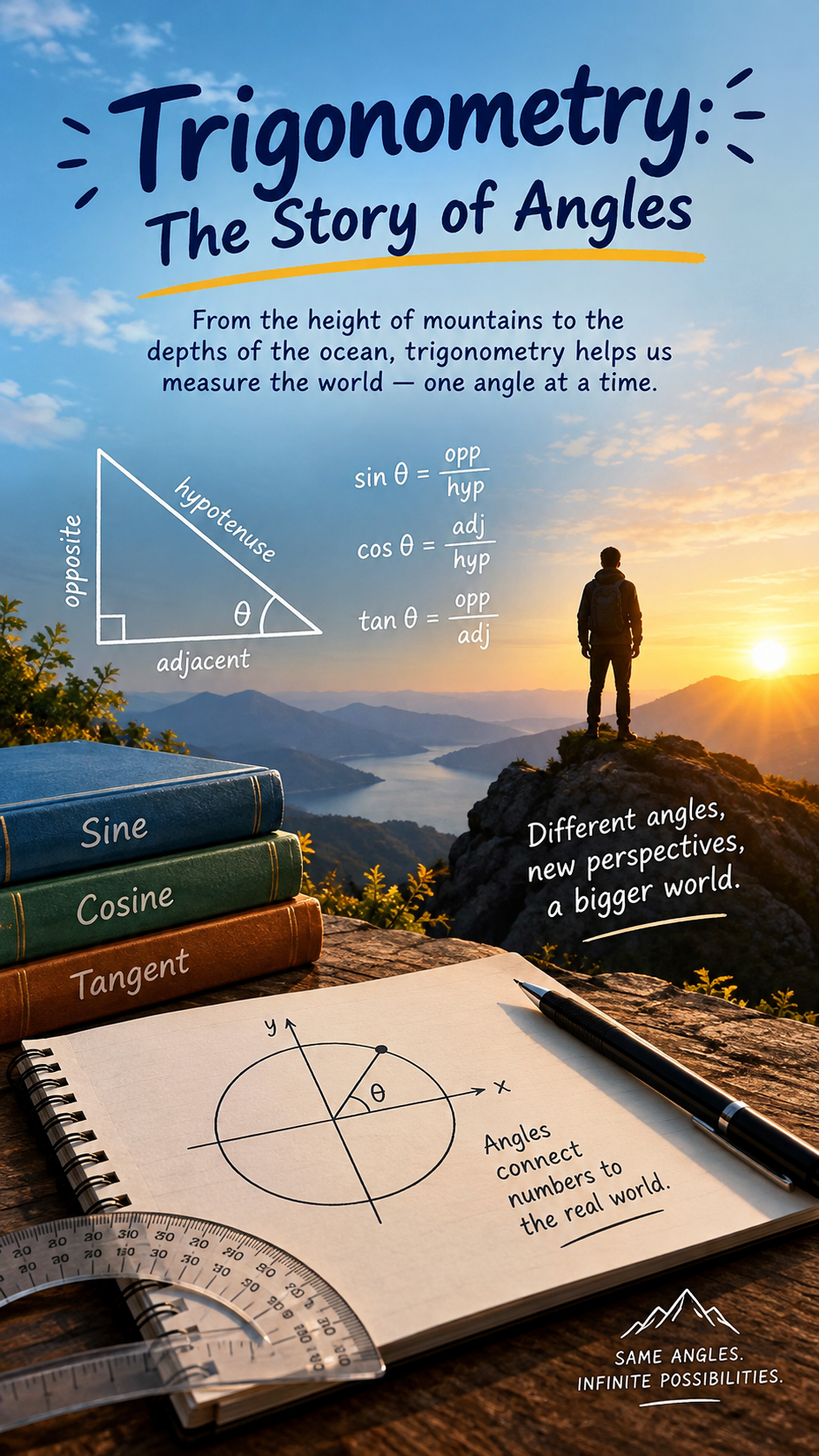
    Trigonometry: The Story of Angles Discover the fascinating world of trigonometry, where angles, triangles, and mathematical formulas help us understand the world around us. From measuring heights and distances to exploring science, engineering, and architecture, trigonometry plays an important role in our daily lives. Join us on this learning journey and explore how the story of angles makes mathematics interesting and meaningful!

    #Trigonometry #TheStoryOfAngles #Mathematics #MathLearning #Angles #Geometry #Education #LearnMath #MathIsFun #ScienceAndMath #KnowledgeIsPower #StudyMotivation
    Day:90 Accl Task:90 Rehan school Munawwar campus 📐 Trigonometry: The Story of Angles 📐Discover the fascinating world of trigonometry, where angles, triangles, and mathematical formulas help us understand the world around us. From measuring heights and distances to exploring science, engineering, and architecture, trigonometry plays an important role in our daily lives. Join us on this learning journey and explore how the story of angles makes mathematics interesting and meaningful! 📏✨ #Trigonometry #TheStoryOfAngles #Mathematics #MathLearning #Angles #Geometry #Education #LearnMath #MathIsFun #ScienceAndMath #KnowledgeIsPower #StudyMotivation
    1
    0 Commentarios 0 Acciones 1023 Views
  • Episode #300 – Rehan Foundation Interview Series

    In this episode, we are joined by Kimberly Wiefling, an inspiring leadership facilitator, author, entrepreneur, physicist, coach, and innovation expert whose work focuses on helping people and organizations turn “impossible” into INEVITABLE.

    Kimberly Wiefling’s superpower is facilitating breakthroughs — helping managers become leaders, groups become true teams, and organizations achieve things they once believed were impossible.

    She is the author of the globally popular book “Scrappy Project Management,” founder of Wiefling Consulting, and cofounder of Silicon Valley Alliances. For more than 20 years, she has worked with global Japanese companies and organizations across Asia, Australia, Europe, and North America, facilitating cross-cultural workshops and learning experiences designed to improve leadership, teamwork, innovation, and organizational performance.

    Her journey combines science, engineering, business, leadership, and entrepreneurship. A physicist by education, Kimberly spent 10 years at HP in seven different engineering and project management roles, including leading an R&D team developing a new mass spectrometer. She later spent three years in Silicon Valley startups, leading product development teams working across hardware, software, and complex systems.

    Over the years, Kimberly has also helped start, run, and grow multiple small businesses, including a company that reached millions of dollars in revenue with only seed funding from its founders.

    Today, Kimberly focuses on creating powerful learning environments where leaders and teams can discover what is truly possible when they work together effectively. She is also increasingly focused on using her experience, leadership skills, and the rapidly developing power of AI to create positive change and contribute toward a more sustainable future for our planet.

    In this inspiring conversation, we explore:

    • What makes a great leader truly effective

    • The difference between managing people and leading people

    • How to build highly effective teams

    • Creating a strong and healthy organizational culture

    • How leaders can use AI as a “coach in your pocket”

    • Using AI to become a more effective leader and manager

    • The role of innovation in modern organizations

    • Why predictable causes of failure continue to affect organizations

    • How to identify and prevent failure before it happens

    • Turning “IMPOSSIBLE” into “INEVITABLE”

    • How organizations can achieve extraordinary results together

    • Lessons from working with global Japanese companies

    • Cross-cultural leadership and collaboration

    • What entrepreneurship can teach us about leadership and innovation

    • How to create teams capable of achieving the seemingly impossible

    • The importance of experimentation, learning, and adaptability

    • Using AI responsibly to create meaningful positive impact

    • Leadership lessons from Silicon Valley, engineering, and entrepreneurship

    • How leaders can create a more sustainable future

    This episode is a powerful conversation about leadership, teamwork, innovation, organizational culture, AI, entrepreneurship, resilience, and the mindset required to turn ambitious ideas into reality.

    Kimberly reminds us that the biggest breakthroughs often begin when someone is willing to challenge the assumption that something is impossible.

    Because with the right leadership, the right team, the right mindset, and the right tools — IMPOSSIBLE can become INEVITABLE.

    Part of the Rehan Foundation Interview Series

    Episode #300

    Foreigner Episode #28

    Rehan Allahwala
    Shahrukh Ali
    🎬 Episode #300 – Rehan Foundation Interview Series In this episode, we are joined by Kimberly Wiefling, an inspiring leadership facilitator, author, entrepreneur, physicist, coach, and innovation expert whose work focuses on helping people and organizations turn “impossible” into INEVITABLE. Kimberly Wiefling’s superpower is facilitating breakthroughs — helping managers become leaders, groups become true teams, and organizations achieve things they once believed were impossible. She is the author of the globally popular book “Scrappy Project Management,” founder of Wiefling Consulting, and cofounder of Silicon Valley Alliances. For more than 20 years, she has worked with global Japanese companies and organizations across Asia, Australia, Europe, and North America, facilitating cross-cultural workshops and learning experiences designed to improve leadership, teamwork, innovation, and organizational performance. Her journey combines science, engineering, business, leadership, and entrepreneurship. A physicist by education, Kimberly spent 10 years at HP in seven different engineering and project management roles, including leading an R&D team developing a new mass spectrometer. She later spent three years in Silicon Valley startups, leading product development teams working across hardware, software, and complex systems. Over the years, Kimberly has also helped start, run, and grow multiple small businesses, including a company that reached millions of dollars in revenue with only seed funding from its founders. Today, Kimberly focuses on creating powerful learning environments where leaders and teams can discover what is truly possible when they work together effectively. She is also increasingly focused on using her experience, leadership skills, and the rapidly developing power of AI to create positive change and contribute toward a more sustainable future for our planet. In this inspiring conversation, we explore: • What makes a great leader truly effective • The difference between managing people and leading people • How to build highly effective teams • Creating a strong and healthy organizational culture • How leaders can use AI as a “coach in your pocket” • Using AI to become a more effective leader and manager • The role of innovation in modern organizations • Why predictable causes of failure continue to affect organizations • How to identify and prevent failure before it happens • Turning “IMPOSSIBLE” into “INEVITABLE” • How organizations can achieve extraordinary results together • Lessons from working with global Japanese companies • Cross-cultural leadership and collaboration • What entrepreneurship can teach us about leadership and innovation • How to create teams capable of achieving the seemingly impossible • The importance of experimentation, learning, and adaptability • Using AI responsibly to create meaningful positive impact • Leadership lessons from Silicon Valley, engineering, and entrepreneurship • How leaders can create a more sustainable future This episode is a powerful conversation about leadership, teamwork, innovation, organizational culture, AI, entrepreneurship, resilience, and the mindset required to turn ambitious ideas into reality. Kimberly reminds us that the biggest breakthroughs often begin when someone is willing to challenge the assumption that something is impossible. Because with the right leadership, the right team, the right mindset, and the right tools — IMPOSSIBLE can become INEVITABLE. 📌 Part of the Rehan Foundation Interview Series 🎥 Episode #300 🌍 Foreigner Episode #28 Rehan Allahwala Shahrukh Ali
    0 Commentarios 0 Acciones 2720 Views 0
Resultados de la búsqueda