• #rsisb
    Roll No.221
    Story Post No.29
    Foundation Level


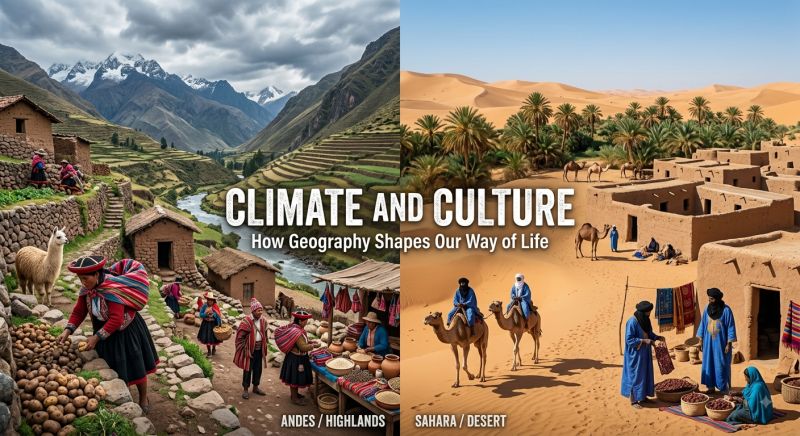
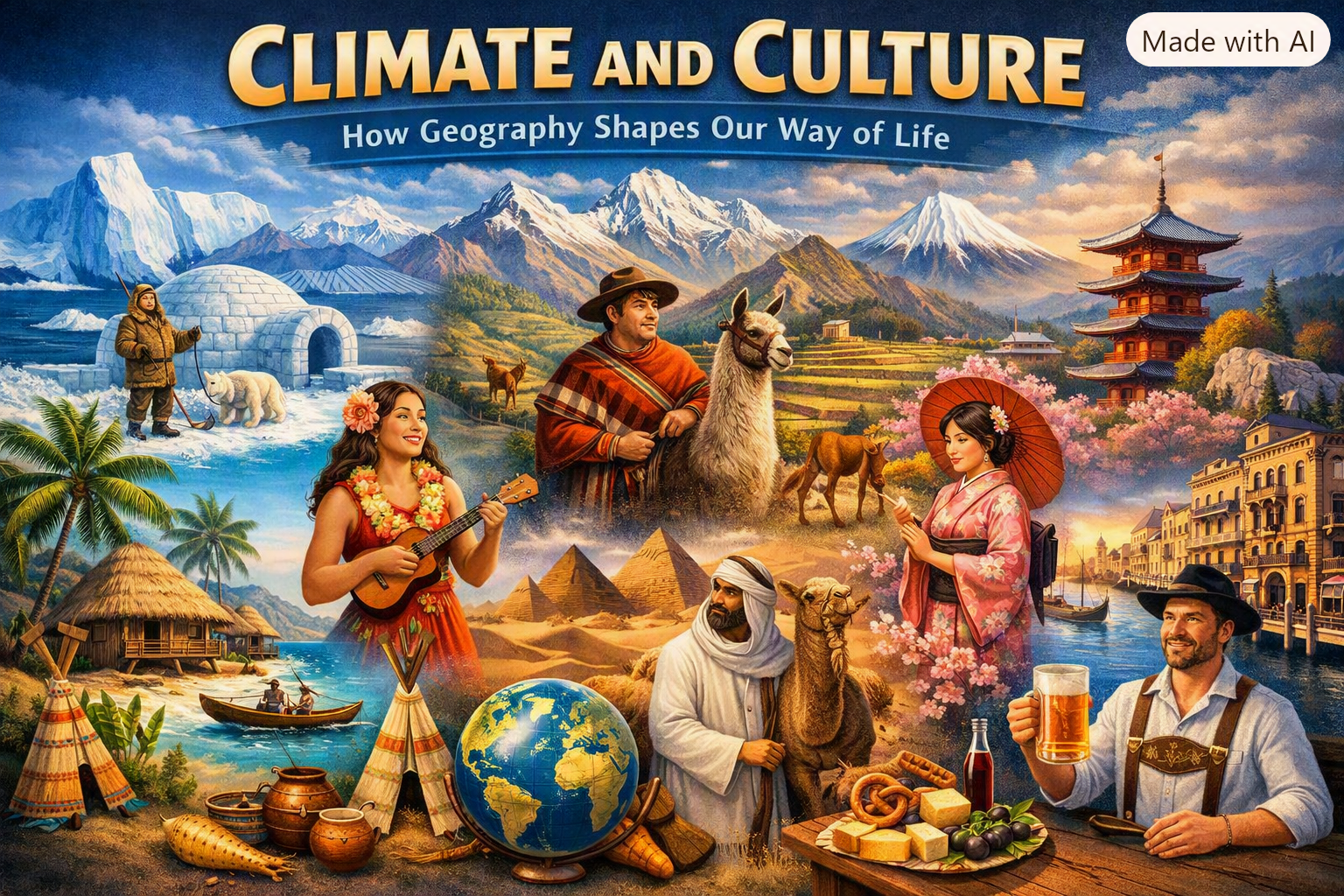
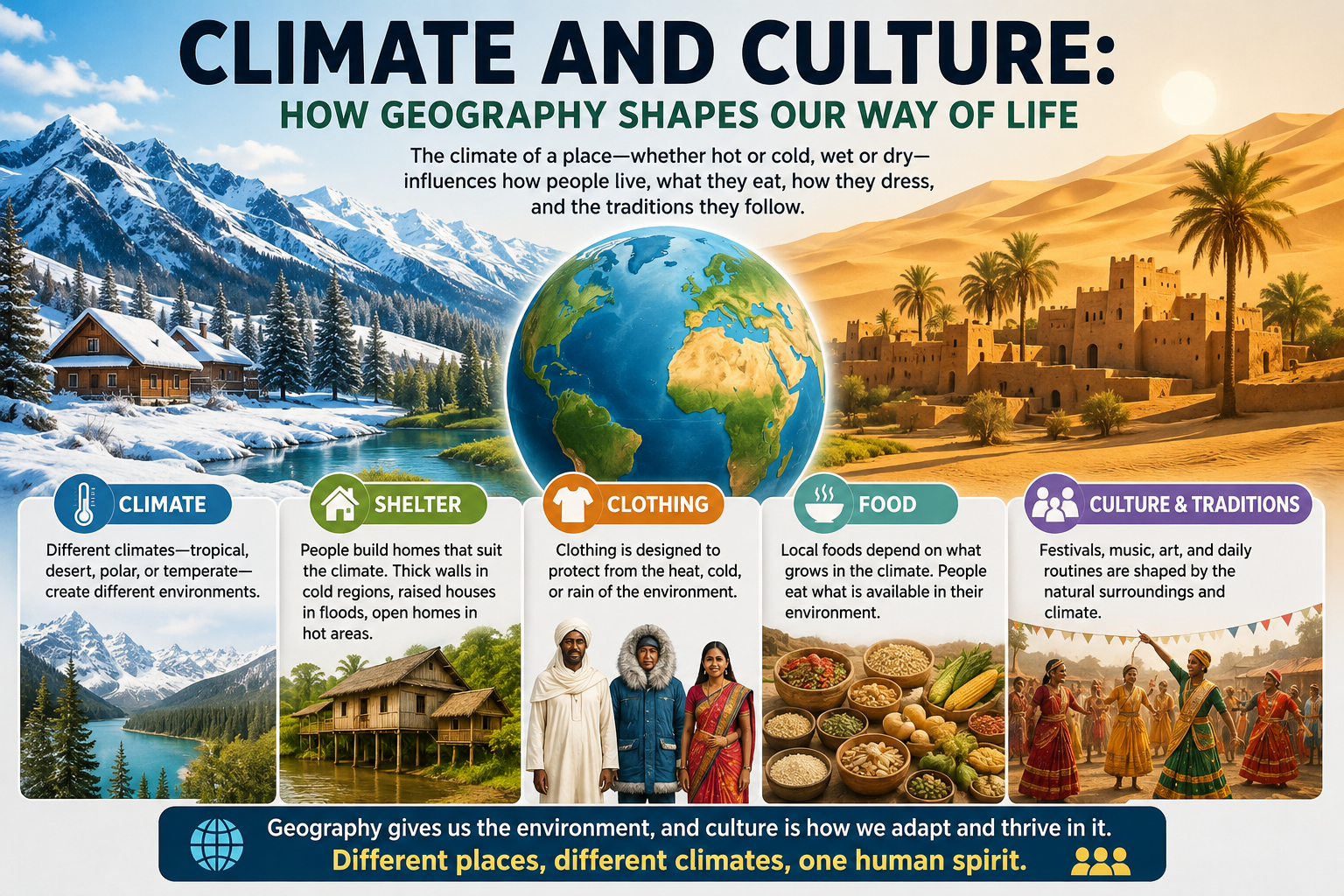
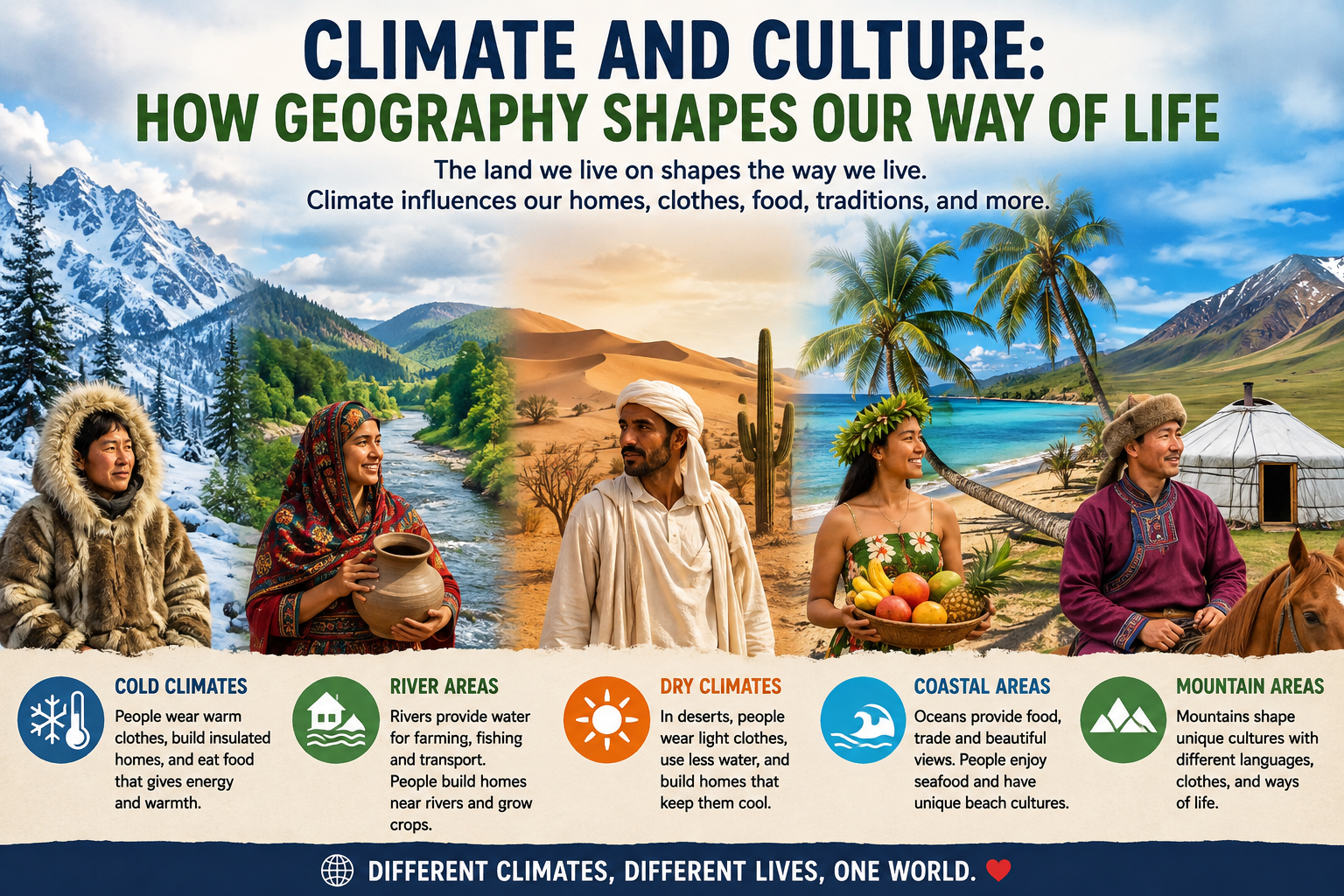
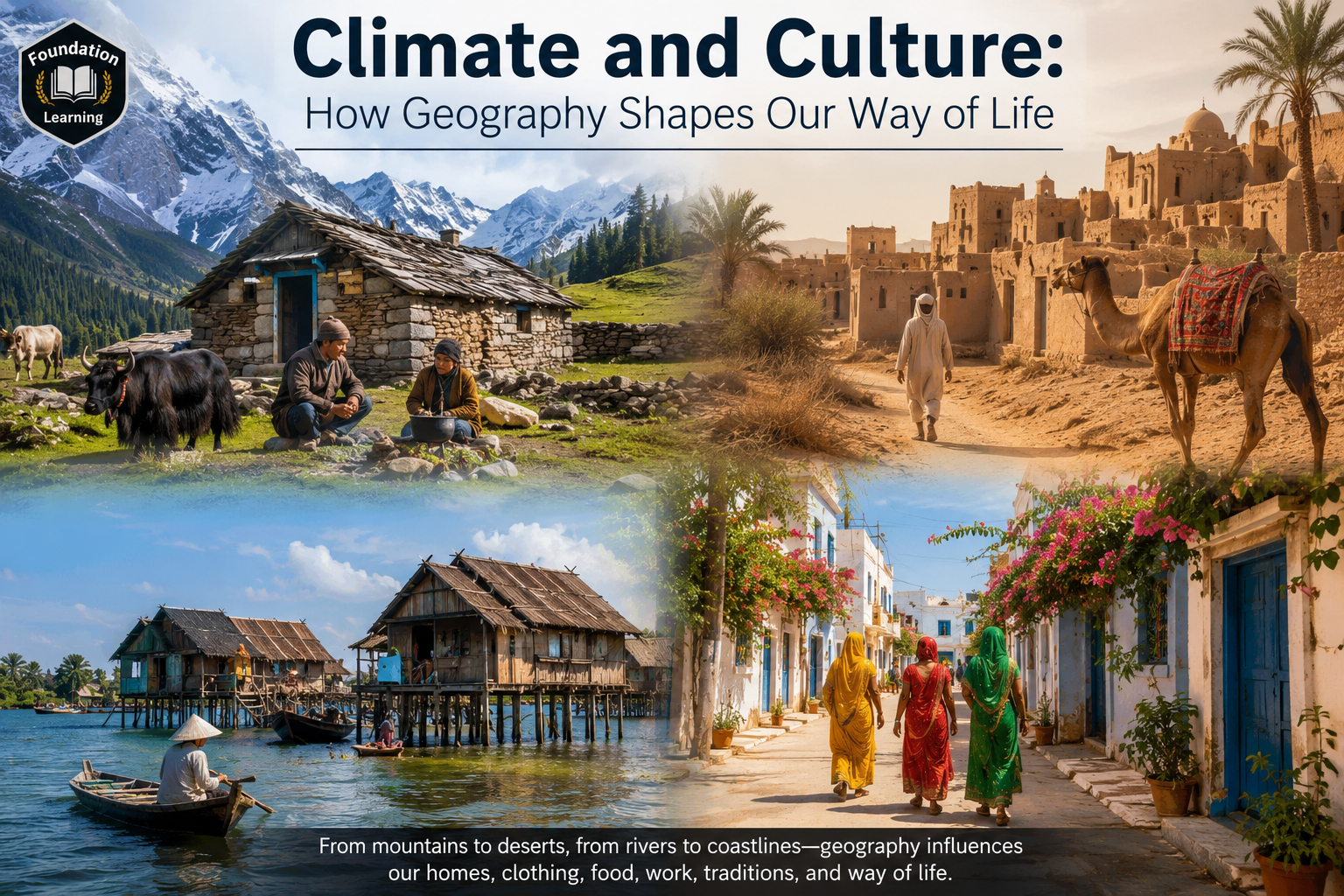
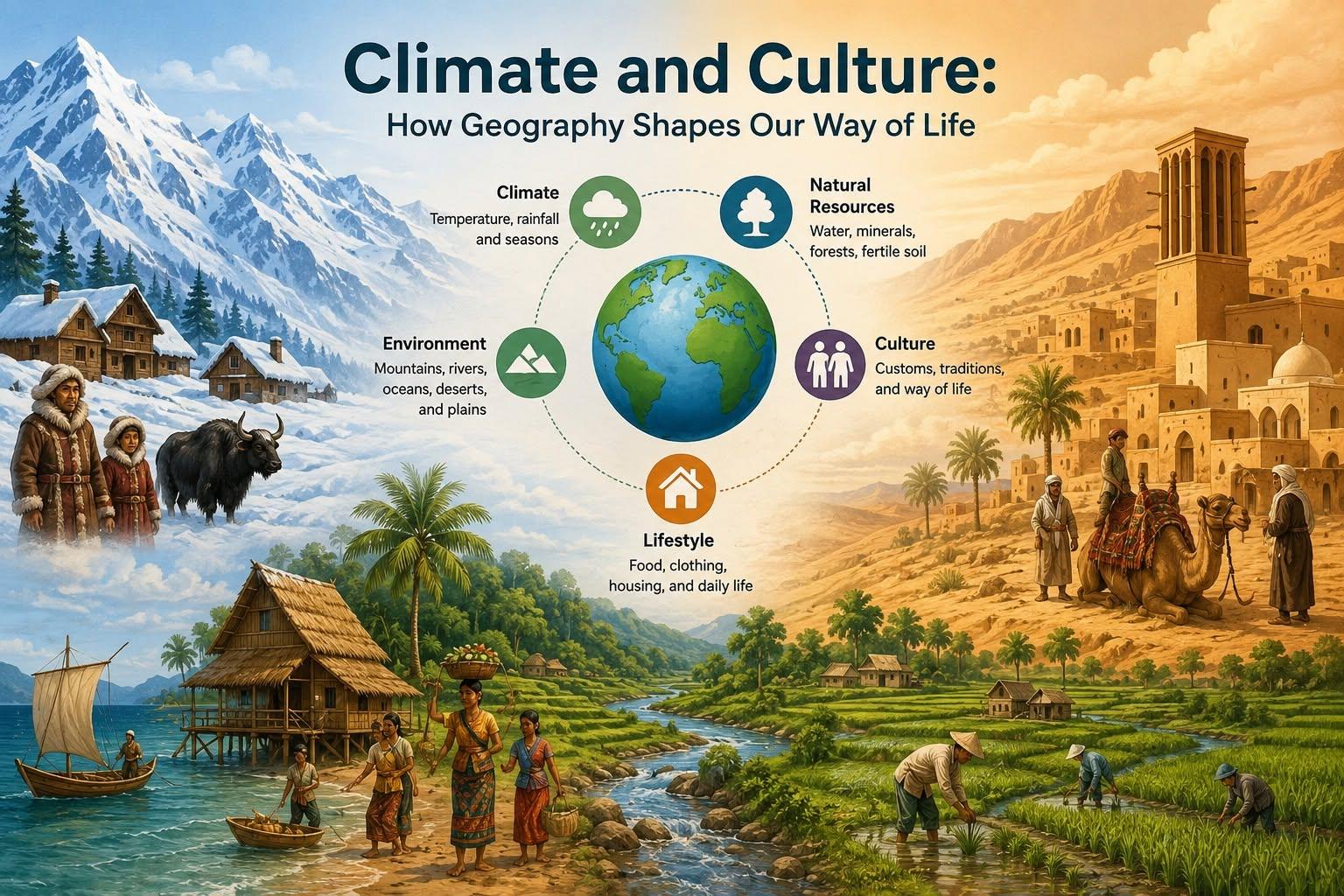
    **Climate and Culture: How Geography Shapes Our Way of Life**

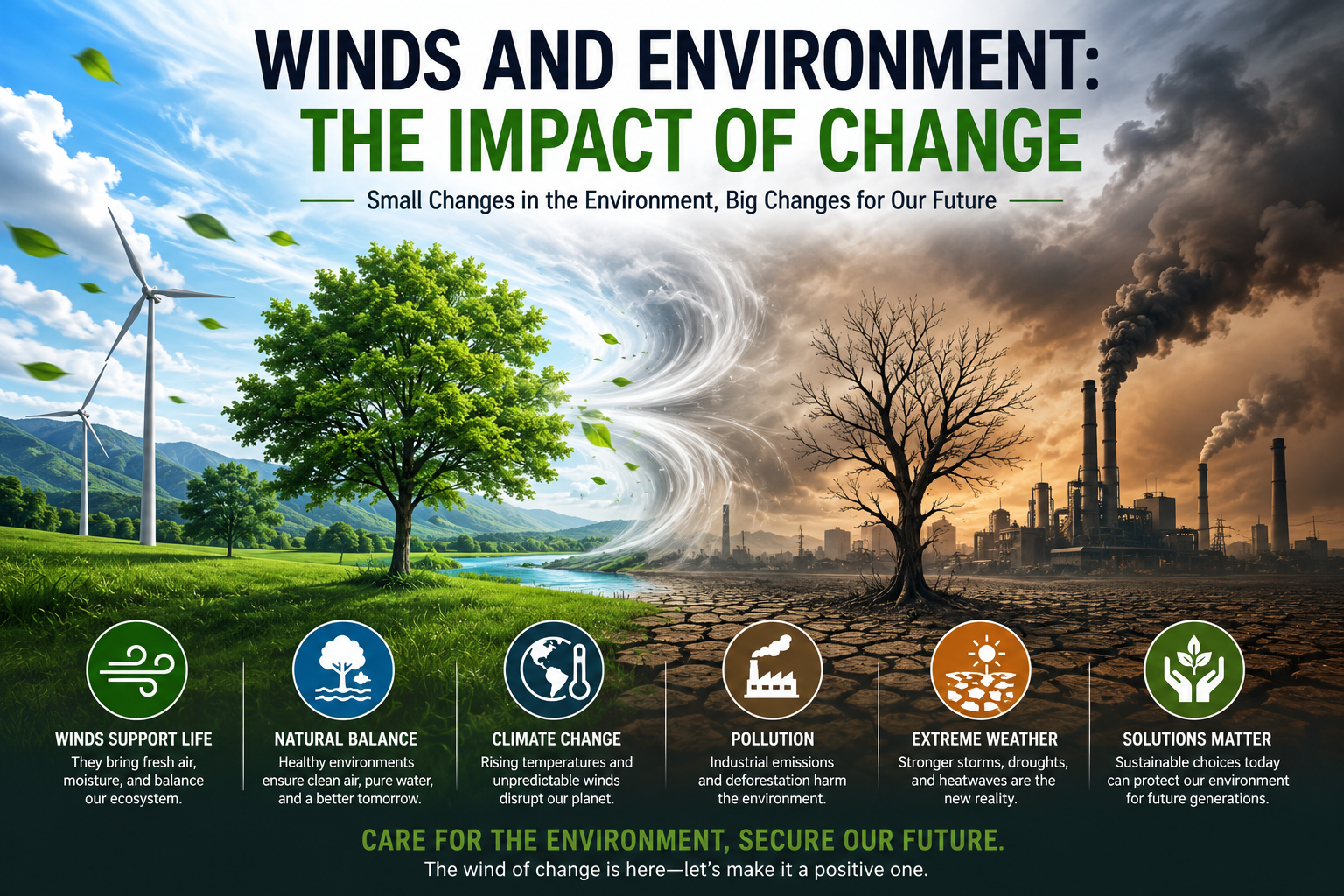
    Discover how **climate and geography** influence the way people live, work, dress, eat, and celebrate around the world! From snowy mountains to hot deserts , lush forests to coastal regions , every environment shapes unique traditions, lifestyles, and cultures. Learn how weather, natural resources, and landscapes have influenced human civilizations throughout history and continue to shape our daily lives today.

    Perfect for students, educators, and anyone curious about the fascinating connection between **nature and human culture**. This educational content makes geography engaging, easy to understand, and fun to explore!

    **Explore the world, understand cultures, and discover how geography connects us all!**

    #Geography #Climate #Culture #HumanGeography #Education #Learning #GeographyFacts #ClimateChange #WorldCultures #SocialStudies #Nature #Environment #StudentLearning #EducationalContent #GeographyEducation #Knowledge #ExploreTheWorld #ScienceEducation #LearningJourney #studymotivation
    Asma Shaheen EducationWali
    Saima Happinesswali
    Irum Asim
    #rsisb Roll No.221 Story Post No.29 Foundation Level 🌍🌦️ **Climate and Culture: How Geography Shapes Our Way of Life** 🏔️🏝️ Discover how **climate and geography** influence the way people live, work, dress, eat, and celebrate around the world! 🌎✨ From snowy mountains ❄️ to hot deserts 🏜️, lush forests 🌳 to coastal regions 🌊, every environment shapes unique traditions, lifestyles, and cultures. Learn how weather, natural resources, and landscapes have influenced human civilizations throughout history and continue to shape our daily lives today. 📚🌱 Perfect for students, educators, and anyone curious about the fascinating connection between **nature and human culture**. This educational content makes geography engaging, easy to understand, and fun to explore! 🎓💡 🌟 **Explore the world, understand cultures, and discover how geography connects us all!** 🌍❤️ #Geography #Climate #Culture #HumanGeography #Education #Learning #GeographyFacts #ClimateChange #WorldCultures #SocialStudies #Nature #Environment #StudentLearning #EducationalContent #GeographyEducation #Knowledge #ExploreTheWorld #ScienceEducation #LearningJourney #studymotivation Asma Shaheen EducationWali Saima Happinesswali Irum Asim
    0 Σχόλια 0 Μοιράστηκε 4019 Views
  • #rsisb
    Roll no 242
    story post 16
    Foundation Level

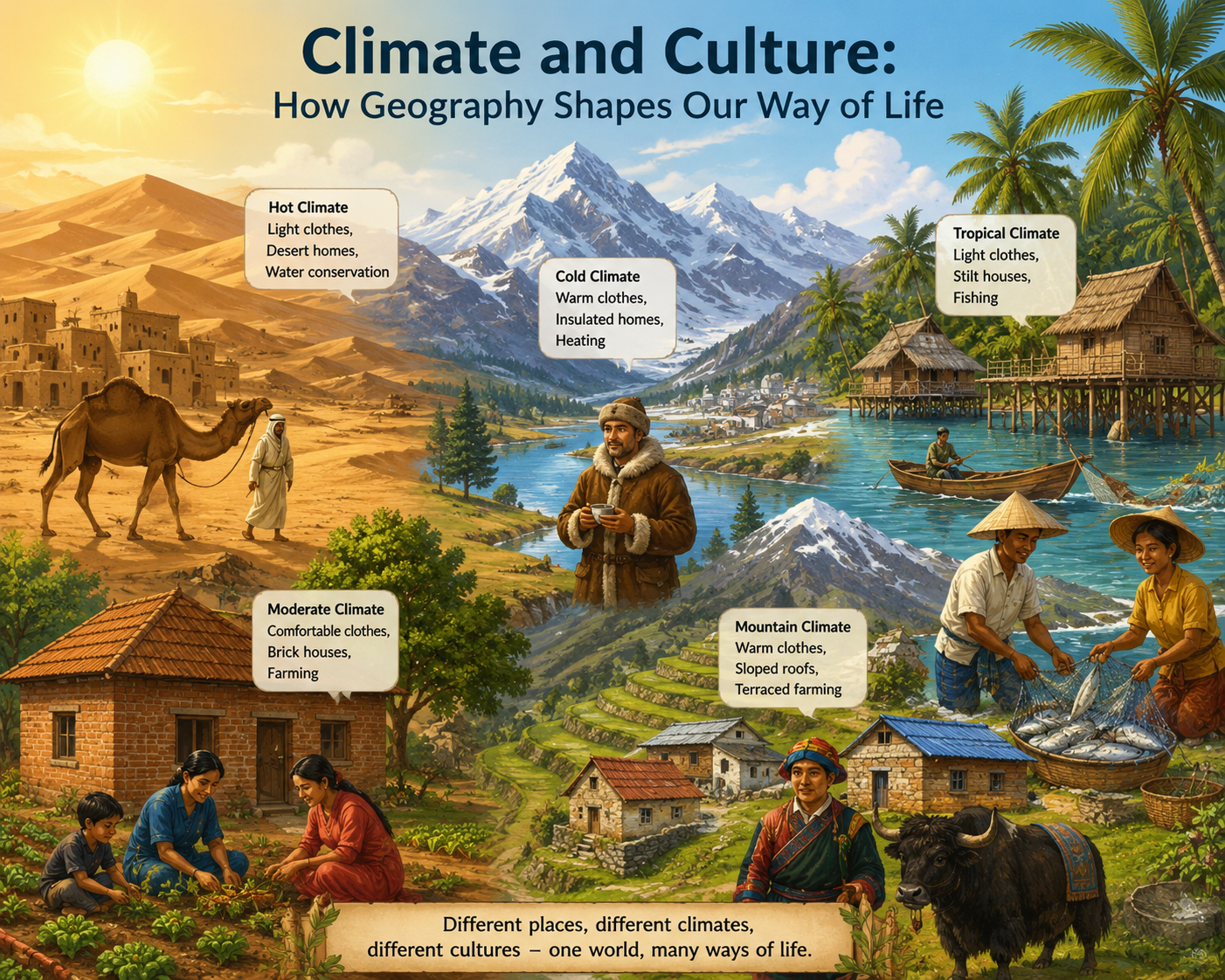
    **Climate and Culture: How Geography Shapes Our Way of Life**
    Did you know that the place where people live influences their traditions, food, clothing, homes, and even the languages they speak? From icy mountains to sunny deserts and lush forests , geography and climate play a vital role in shaping cultures around the world. Understanding this connection helps us appreciate the incredible diversity of humanity and the unique ways people adapt to their environments.
    Let's explore how nature inspires culture and discover the fascinating relationship between the Earth and the people who call it home!
    #ClimateAndCulture #Geography #WorldCulture #HumanGeography #Climate #Education #Learning #GeographyFacts #CultureMatters #ExploreTheWorld #Knowledge #Nature #Students #ScienceEducation #GlobalLearning #Curiosity

    @Asma Shaheen EducationWali
    @Saima Happinesswali
    @Irum Asim
    #rsisb Roll no 242 story post 16 Foundation Level 🌍🏔️ **Climate and Culture: How Geography Shapes Our Way of Life** 🌦️🌴 Did you know that the place where people live influences their traditions, food, clothing, homes, and even the languages they speak? 🌎 From icy mountains ❄️ to sunny deserts 🏜️ and lush forests 🌳, geography and climate play a vital role in shaping cultures around the world. Understanding this connection helps us appreciate the incredible diversity of humanity and the unique ways people adapt to their environments. 🌍✨ Let's explore how nature inspires culture and discover the fascinating relationship between the Earth and the people who call it home! 🌱📚 #ClimateAndCulture 🌍 #Geography 🗺️ #WorldCulture 🌎 #HumanGeography 🏞️ #Climate 🌦️ #Education 📖 #Learning 🎓 #GeographyFacts 🌍 #CultureMatters 🤝 #ExploreTheWorld ✈️ #Knowledge 💡 #Nature 🌿 #Students 👨‍🎓👩‍🎓 #ScienceEducation 🔬 #GlobalLearning 🌏 #Curiosity 🚀 @Asma Shaheen EducationWali @Saima Happinesswali @Irum Asim
    0 Σχόλια 0 Μοιράστηκε 3788 Views
  • A tale of Two Seas

    Sitting in the geography class in school, I remember how fascinated I was when we were being taught all about the Dead Sea.
    If you recall, the Dead Sea is really a lake, not a sea. It’s so high in salt content that the human body can float easily. One can almost lie down and read a book!
    The salt in the Dead Sea is as high as 35% – almost 10 times the normal ocean water. And all that saltiness has meant that there is no life at all in the Dead Sea. No fish. No vegetation. No sea animals. Nothing lives in the Dead sea.

    Hence the name: Dead Sea.
    While the Dead Sea has remained etched in my memory, I don’t seem to recall learning about the Sea of Galilee in my school geography lesson. So, when I heard about the Sea of Galilee & the Dead Sea and, the tale of the two seas – I was intrigued.
    Turns out that the Sea of Galilee is just north of the Dead Sea. Both, the Sea of Galilee and the Dead Sea, receive their water from river Jordan. Yet, they are very, very different.

    Unlike the Dead Sea, the Sea of Galilee is pretty, resplendent with rich, colorful marine life. There are lots of plants and lot of fish, too. In fact, the sea of Galilee is home to over twenty different types of fishes.

    Same region, same source of water, and yet, one sea is full of life, the other is dead. How come?

    Here is why.
    The River Jordan flows into the Sea of Galilee and then flows out. The water simply passes through the Sea of Galilee in and out – and that keeps the Sea healthy and vibrant, teeming with marine life.

    But, the Dead Sea is so far below the sea level, that it has no outlet. The water flows in from the river Jordan, but does not flow out. There are no outlet streams at all. It is estimated that over a million tons of water evaporates from the Dead Sea every day, leaving it salty. Too full of minerals and unfit for any marine life.

    The Dead Sea takes water from the River Jordan, and holds it. It does not give/flow out. Result? No life at all.
    Think about it.

    Life is not just about getting. It’s about giving, sharing. We all need to be a bit like the Sea of Galilee.

    We are fortunate to get wealth, knowledge, love and respect. But, if we don’t learn to give, we could all end up like the Dead Sea. The love, the respect, the wealth and the knowledge; could all evaporate. Like the water in the Dead Sea.

    If we get the Dead Sea mentality of merely taking in more water, more money, more of everything, the results can be disastrous.
    A good idea to make sure that in the sea of your own life, you must have outlets. Many outlets for love, wealth and everything else that you get in your life.
    Make sure you don’t just get, you give out, too. Open the taps. And you’ll be opening the floodgates to happiness.

    Make that a habit. To share, To give.

    Experience life. Experience the magic of giving..!

    Shared via Swami Bhaskarananda
    A tale of Two Seas Sitting in the geography class in school, I remember how fascinated I was when we were being taught all about the Dead Sea. If you recall, the Dead Sea is really a lake, not a sea. It’s so high in salt content that the human body can float easily. One can almost lie down and read a book! The salt in the Dead Sea is as high as 35% – almost 10 times the normal ocean water. And all that saltiness has meant that there is no life at all in the Dead Sea. No fish. No vegetation. No sea animals. Nothing lives in the Dead sea. Hence the name: Dead Sea. While the Dead Sea has remained etched in my memory, I don’t seem to recall learning about the Sea of Galilee in my school geography lesson. So, when I heard about the Sea of Galilee & the Dead Sea and, the tale of the two seas – I was intrigued. Turns out that the Sea of Galilee is just north of the Dead Sea. Both, the Sea of Galilee and the Dead Sea, receive their water from river Jordan. Yet, they are very, very different. Unlike the Dead Sea, the Sea of Galilee is pretty, resplendent with rich, colorful marine life. There are lots of plants and lot of fish, too. In fact, the sea of Galilee is home to over twenty different types of fishes. Same region, same source of water, and yet, one sea is full of life, the other is dead. How come? Here is why. The River Jordan flows into the Sea of Galilee and then flows out. The water simply passes through the Sea of Galilee in and out – and that keeps the Sea healthy and vibrant, teeming with marine life. But, the Dead Sea is so far below the sea level, that it has no outlet. The water flows in from the river Jordan, but does not flow out. There are no outlet streams at all. It is estimated that over a million tons of water evaporates from the Dead Sea every day, leaving it salty. Too full of minerals and unfit for any marine life. The Dead Sea takes water from the River Jordan, and holds it. It does not give/flow out. Result? No life at all. Think about it. Life is not just about getting. It’s about giving, sharing. We all need to be a bit like the Sea of Galilee. We are fortunate to get wealth, knowledge, love and respect. But, if we don’t learn to give, we could all end up like the Dead Sea. The love, the respect, the wealth and the knowledge; could all evaporate. Like the water in the Dead Sea. If we get the Dead Sea mentality of merely taking in more water, more money, more of everything, the results can be disastrous. A good idea to make sure that in the sea of your own life, you must have outlets. Many outlets for love, wealth and everything else that you get in your life. Make sure you don’t just get, you give out, too. Open the taps. And you’ll be opening the floodgates to happiness. Make that a habit. To share, To give. Experience life. Experience the magic of giving..! Shared via Swami Bhaskarananda
    0 Σχόλια 0 Μοιράστηκε 277 Views
  • Geography Quiz: What are the Neighboring countries of Serbia ?
    Geography Quiz: What are the Neighboring countries of Serbia ?
    0 Σχόλια 0 Μοιράστηκε 240 Views
  • The Future of English Is Not in Classrooms—It Is in Conversations

    For generations, schools around the world have taught English through textbooks, grammar exercises, vocabulary lists, and examinations. Students spend thousands of hours studying the language, yet many still hesitate when asked to hold a simple conversation with a foreigner.

    The problem is not that they lack intelligence. The problem is that language is not meant to be memorized—it is meant to be used.

    Children learn their first language naturally because they communicate every day. They make mistakes, receive feedback, and gradually become fluent. The same principle applies to English. The fastest way to learn English is not by studying grammar alone, but by building real friendships and having meaningful conversations.

    Today, thanks to the internet, dozens of organizations around the world are proving this idea works.

    One of the pioneers is Soliya, a nonprofit organization that brings together university students and young adults from different countries for live, facilitated online dialogues. Participants discuss identity, culture, religion, politics, media, and global challenges in a respectful environment. The goal is not simply to practice English, but to build understanding, empathy, and critical thinking across cultures.

    Another remarkable initiative is Generation Global, founded to connect teenagers aged 13–17 through moderated video dialogues and online discussions. Students from different countries explore topics such as climate change, education, traditions, technology, and peacebuilding. Thousands of schools participate, showing that young people can become global citizens while improving their communication skills.

    PenPal Schools takes a project-based approach. Instead of simply chatting, classrooms from different countries work together on guided lessons covering science, history, artificial intelligence, entrepreneurship, culture, geography, and current events. Students exchange essays, videos, questions, and ideas while naturally developing their English.

    For more than three decades, iEARN (International Education and Resource Network) has connected millions of students and educators in over one hundred countries. Rather than completing assignments only for their teachers, students collaborate with international partners to solve real-world problems, conduct research, and produce projects that have a positive impact on their communities.

    Global Nomads Group specializes in connecting youth through live video conferences, storytelling, journalism, and collaborative learning experiences. Students discuss difficult global issues, learn to listen respectfully, and gain confidence speaking with people whose backgrounds are very different from their own.

    Level Up Village partners schools around the world through virtual courses in engineering, design thinking, computer science, environmental science, entrepreneurship, and global citizenship. Students learn together while communicating regularly with international teammates.

    The famous student exchange organization AFS has expanded beyond physical travel by creating AFS Virtual Exchange programs. Young people who cannot afford to study abroad can still participate in structured online intercultural learning experiences from their homes.

    Empatico focuses on younger children by connecting elementary classrooms around the world through carefully designed video sessions. Students introduce their cultures, exchange classroom activities, and discover similarities despite living thousands of kilometers apart.

    The Stevens Initiative supports and funds virtual exchange programs connecting young people across borders, particularly between the United States and the Middle East and North Africa. Rather than operating a single platform, it invests in organizations that expand international dialogue through technology.

    Across Europe, eTwinning has become one of the world’s largest teacher collaboration networks. Supported by the European education community, it allows schools to partner internationally, create joint classroom projects, and exchange ideas without requiring students to leave their countries.

    Outside the school system, several platforms focus specifically on language exchange.

    HelloTalk has created one of the world’s largest communities for language learners. Users practice by texting, sending voice messages, making audio calls, and holding video conversations with native speakers. Built-in translation and pronunciation tools help learners communicate with confidence.

    Tandem follows a similar model by matching language learners with native speakers for one-to-one conversations. Many lifelong international friendships begin through these exchanges while participants improve their speaking skills.

    ConversationExchange allows people to find conversation partners through email, text, voice calls, video calls, or even face-to-face meetings when possible. It demonstrates that meaningful language practice can happen anywhere.

    MyLanguageExchange has connected learners from around the world for many years through structured pen-pal relationships and conversation exchanges. Its emphasis is on long-term learning partnerships rather than one-time lessons.

    One of the most inspiring examples is NaTakallam, a social enterprise that employs refugees and displaced people as online language tutors. Students not only learn English or Arabic but also hear personal stories, experience different cultures, and directly support refugee livelihoods.

    Finally, italki has built a global marketplace where learners can hire professional teachers or community tutors from almost every country. Millions of lessons have been delivered through one-on-one video conversations, proving that speaking practice is often more valuable than passive study.

    Although these organizations differ in their methods, they all share the same philosophy:

    Language grows through human connection.

    Some focus on dialogue. Some focus on projects. Some emphasize cultural understanding. Others provide language partners or professional tutors. But every successful program recognizes that communication—not memorization—is the foundation of fluency.

    The benefits extend far beyond learning English.

    Students become more confident public speakers. They learn to collaborate with people from different cultures. They gain empathy by understanding different perspectives. They build international friendships that may later become business partnerships, research collaborations, or startup opportunities. They improve critical thinking, teamwork, digital communication, and leadership.

    In today’s AI-powered world, technical knowledge is becoming easier to acquire through online courses and intelligent assistants. What remains uniquely valuable is the ability to build trust with people from different cultures. Communication is becoming one of the world’s most important skills.

    This creates an extraordinary opportunity for schools.

    Imagine if every student participated in four international conversations every month.

    Imagine if they interviewed entrepreneurs from different countries.

    Imagine if they collaborated on science experiments, startup ideas, environmental projects, robotics competitions, podcasts, and documentaries with students around the world.

    Imagine graduating after speaking with hundreds of people from dozens of countries instead of memorizing thousands of vocabulary words that are quickly forgotten.

    For Rehan School, this vision could become the Rehan Global English Exchange.

    Every student could complete monthly international interviews, cross-cultural video conversations, collaborative AI projects, startup discussions, book clubs, debate sessions, and cultural storytelling. Instead of measuring only examination scores, students would also build an international communication portfolio demonstrating hundreds of real conversations and global collaborations.

    The internet has transformed humanity into one interconnected classroom. The organizations leading this movement have already shown what is possible. The next step is to make these opportunities available to every child, regardless of where they were born.

    The future of English education does not belong to textbooks alone.

    It belongs to conversations.

    Because every conversation builds confidence.

    Every friendship builds trust.

    Every cultural exchange builds peace.

    And every human connection opens a door to opportunities that no classroom alone can provide.
    The Future of English Is Not in Classrooms—It Is in Conversations For generations, schools around the world have taught English through textbooks, grammar exercises, vocabulary lists, and examinations. Students spend thousands of hours studying the language, yet many still hesitate when asked to hold a simple conversation with a foreigner. The problem is not that they lack intelligence. The problem is that language is not meant to be memorized—it is meant to be used. Children learn their first language naturally because they communicate every day. They make mistakes, receive feedback, and gradually become fluent. The same principle applies to English. The fastest way to learn English is not by studying grammar alone, but by building real friendships and having meaningful conversations. Today, thanks to the internet, dozens of organizations around the world are proving this idea works. One of the pioneers is Soliya, a nonprofit organization that brings together university students and young adults from different countries for live, facilitated online dialogues. Participants discuss identity, culture, religion, politics, media, and global challenges in a respectful environment. The goal is not simply to practice English, but to build understanding, empathy, and critical thinking across cultures. Another remarkable initiative is Generation Global, founded to connect teenagers aged 13–17 through moderated video dialogues and online discussions. Students from different countries explore topics such as climate change, education, traditions, technology, and peacebuilding. Thousands of schools participate, showing that young people can become global citizens while improving their communication skills. PenPal Schools takes a project-based approach. Instead of simply chatting, classrooms from different countries work together on guided lessons covering science, history, artificial intelligence, entrepreneurship, culture, geography, and current events. Students exchange essays, videos, questions, and ideas while naturally developing their English. For more than three decades, iEARN (International Education and Resource Network) has connected millions of students and educators in over one hundred countries. Rather than completing assignments only for their teachers, students collaborate with international partners to solve real-world problems, conduct research, and produce projects that have a positive impact on their communities. Global Nomads Group specializes in connecting youth through live video conferences, storytelling, journalism, and collaborative learning experiences. Students discuss difficult global issues, learn to listen respectfully, and gain confidence speaking with people whose backgrounds are very different from their own. Level Up Village partners schools around the world through virtual courses in engineering, design thinking, computer science, environmental science, entrepreneurship, and global citizenship. Students learn together while communicating regularly with international teammates. The famous student exchange organization AFS has expanded beyond physical travel by creating AFS Virtual Exchange programs. Young people who cannot afford to study abroad can still participate in structured online intercultural learning experiences from their homes. Empatico focuses on younger children by connecting elementary classrooms around the world through carefully designed video sessions. Students introduce their cultures, exchange classroom activities, and discover similarities despite living thousands of kilometers apart. The Stevens Initiative supports and funds virtual exchange programs connecting young people across borders, particularly between the United States and the Middle East and North Africa. Rather than operating a single platform, it invests in organizations that expand international dialogue through technology. Across Europe, eTwinning has become one of the world’s largest teacher collaboration networks. Supported by the European education community, it allows schools to partner internationally, create joint classroom projects, and exchange ideas without requiring students to leave their countries. Outside the school system, several platforms focus specifically on language exchange. HelloTalk has created one of the world’s largest communities for language learners. Users practice by texting, sending voice messages, making audio calls, and holding video conversations with native speakers. Built-in translation and pronunciation tools help learners communicate with confidence. Tandem follows a similar model by matching language learners with native speakers for one-to-one conversations. Many lifelong international friendships begin through these exchanges while participants improve their speaking skills. ConversationExchange allows people to find conversation partners through email, text, voice calls, video calls, or even face-to-face meetings when possible. It demonstrates that meaningful language practice can happen anywhere. MyLanguageExchange has connected learners from around the world for many years through structured pen-pal relationships and conversation exchanges. Its emphasis is on long-term learning partnerships rather than one-time lessons. One of the most inspiring examples is NaTakallam, a social enterprise that employs refugees and displaced people as online language tutors. Students not only learn English or Arabic but also hear personal stories, experience different cultures, and directly support refugee livelihoods. Finally, italki has built a global marketplace where learners can hire professional teachers or community tutors from almost every country. Millions of lessons have been delivered through one-on-one video conversations, proving that speaking practice is often more valuable than passive study. Although these organizations differ in their methods, they all share the same philosophy: Language grows through human connection. Some focus on dialogue. Some focus on projects. Some emphasize cultural understanding. Others provide language partners or professional tutors. But every successful program recognizes that communication—not memorization—is the foundation of fluency. The benefits extend far beyond learning English. Students become more confident public speakers. They learn to collaborate with people from different cultures. They gain empathy by understanding different perspectives. They build international friendships that may later become business partnerships, research collaborations, or startup opportunities. They improve critical thinking, teamwork, digital communication, and leadership. In today’s AI-powered world, technical knowledge is becoming easier to acquire through online courses and intelligent assistants. What remains uniquely valuable is the ability to build trust with people from different cultures. Communication is becoming one of the world’s most important skills. This creates an extraordinary opportunity for schools. Imagine if every student participated in four international conversations every month. Imagine if they interviewed entrepreneurs from different countries. Imagine if they collaborated on science experiments, startup ideas, environmental projects, robotics competitions, podcasts, and documentaries with students around the world. Imagine graduating after speaking with hundreds of people from dozens of countries instead of memorizing thousands of vocabulary words that are quickly forgotten. For Rehan School, this vision could become the Rehan Global English Exchange. Every student could complete monthly international interviews, cross-cultural video conversations, collaborative AI projects, startup discussions, book clubs, debate sessions, and cultural storytelling. Instead of measuring only examination scores, students would also build an international communication portfolio demonstrating hundreds of real conversations and global collaborations. The internet has transformed humanity into one interconnected classroom. The organizations leading this movement have already shown what is possible. The next step is to make these opportunities available to every child, regardless of where they were born. The future of English education does not belong to textbooks alone. It belongs to conversations. Because every conversation builds confidence. Every friendship builds trust. Every cultural exchange builds peace. And every human connection opens a door to opportunities that no classroom alone can provide.
    0 Σχόλια 0 Μοιράστηκε 2759 Views
  • Salam, how are you !

    I was wondering !

    Would you be interested in using a platform that connects school principals, teachers and students to other principals , teachers and students to learn english , geography, culture from each other ?

    What would be per month fee for this you would be comfortable paying for this ?
    Salam, how are you ! I was wondering ! Would you be interested in using a platform that connects school principals, teachers and students to other principals , teachers and students to learn english , geography, culture from each other ? What would be per month fee for this you would be comfortable paying for this ?
    0 Σχόλια 0 Μοιράστηκε 461 Views
  • ### **Did You Know? Hindu Simply Means People Living on the Other Side of the River Indus!**

    The term "Hindu" has a fascinating origin rooted in geography rather than religion. It comes from the Sanskrit word *"Sindhu,"* which was used to describe the Indus River. Ancient Persians, who couldnt pronounce the S sound, referred to the river as *"Hindu,"* and the land beyond it as *"Hindustan,"* meaning the land of the Hindus.

    Originally, "Hindu" simply referred to the people living on the other side of the Indus River, without any religious connotations. Over time, as different cultures and civilizations interacted, the term evolved to describe the cultural and religious practices of the people in that region.

    So, next time you hear the word "Hindu," remember its roots in the rich history and geography of the Indian subcontinent!
    ### **Did You Know? 'Hindu' Simply Means People Living on the Other Side of the River Indus!** 🌊🇮🇳 The term "Hindu" has a fascinating origin rooted in geography rather than religion. It comes from the Sanskrit word *"Sindhu,"* which was used to describe the Indus River. Ancient Persians, who couldn't pronounce the 'S' sound, referred to the river as *"Hindu,"* and the land beyond it as *"Hindustan,"* meaning the land of the Hindus. Originally, "Hindu" simply referred to the people living on the other side of the Indus River, without any religious connotations. Over time, as different cultures and civilizations interacted, the term evolved to describe the cultural and religious practices of the people in that region. So, next time you hear the word "Hindu," remember its roots in the rich history and geography of the Indian subcontinent! 🗺️✨
    0 Σχόλια 0 Μοιράστηκε 303 Views
  • Poetry holds a significant place in cultures worldwide, transcending time, geography, and language. Here’s a summary of its global significance:

    1. Expression of Human Emotions:

    • Poetry captures the full spectrum of human emotions, from love, joy, and hope to sorrow, grief, and longing. It enables people to articulate feelings that might be difficult to express in everyday language.

    2. Cultural Preservation:

    • Poetry plays a crucial role in preserving cultural identity, traditions, and values. It often carries the wisdom, folklore, and collective experiences of a society. Epic poems, like the “Iliad” in Greece or “Mahabharata” in India, are cornerstones of cultural heritage.

    3. Social and Political Commentary:

    • Throughout history, poets have used poetry to critique society, challenge authority, and inspire change. It has been a tool for political expression, activism, and movements, influencing revolutions and social change, like the works of Pablo Neruda or Langston Hughes.

    4. Literary and Artistic Value:

    • Poetry is an art form that focuses on language, rhythm, and aesthetics. It allows for creativity, metaphor, and linguistic play, creating a space for deep reflection and interpretation. The works of poets like William Shakespeare, Rumi, and Emily Dickinson have had a profound impact on literature.

    5. Healing and Therapy:

    • Poetry can serve as a therapeutic tool, providing solace and healing for individuals dealing with trauma, grief, or difficult times. It is often used in therapies to help people process emotions and find comfort.

    6. Global Influence and Connectivity:

    • Poetry connects people across cultures and languages. Translations of poets like Rumi, Rabindranath Tagore, and Hafez have reached global audiences, showing how poetry can transcend borders and bring diverse cultures closer.

    7. Celebration of Language:

    • Poetry is a celebration of language’s beauty, intricacies, and power. It often pushes the boundaries of language, exploring new expressions, forms, and styles, from traditional sonnets to modern free verse.

    In summary, poetry holds a mirror to society, acts as a vessel for cultural memory, and provides a platform for individual and collective voices. Its influence spans centuries, shaping human thought, art, and society, and continues to be a powerful medium in the modern world.
    Poetry holds a significant place in cultures worldwide, transcending time, geography, and language. Here’s a summary of its global significance: 1. Expression of Human Emotions: • Poetry captures the full spectrum of human emotions, from love, joy, and hope to sorrow, grief, and longing. It enables people to articulate feelings that might be difficult to express in everyday language. 2. Cultural Preservation: • Poetry plays a crucial role in preserving cultural identity, traditions, and values. It often carries the wisdom, folklore, and collective experiences of a society. Epic poems, like the “Iliad” in Greece or “Mahabharata” in India, are cornerstones of cultural heritage. 3. Social and Political Commentary: • Throughout history, poets have used poetry to critique society, challenge authority, and inspire change. It has been a tool for political expression, activism, and movements, influencing revolutions and social change, like the works of Pablo Neruda or Langston Hughes. 4. Literary and Artistic Value: • Poetry is an art form that focuses on language, rhythm, and aesthetics. It allows for creativity, metaphor, and linguistic play, creating a space for deep reflection and interpretation. The works of poets like William Shakespeare, Rumi, and Emily Dickinson have had a profound impact on literature. 5. Healing and Therapy: • Poetry can serve as a therapeutic tool, providing solace and healing for individuals dealing with trauma, grief, or difficult times. It is often used in therapies to help people process emotions and find comfort. 6. Global Influence and Connectivity: • Poetry connects people across cultures and languages. Translations of poets like Rumi, Rabindranath Tagore, and Hafez have reached global audiences, showing how poetry can transcend borders and bring diverse cultures closer. 7. Celebration of Language: • Poetry is a celebration of language’s beauty, intricacies, and power. It often pushes the boundaries of language, exploring new expressions, forms, and styles, from traditional sonnets to modern free verse. In summary, poetry holds a mirror to society, acts as a vessel for cultural memory, and provides a platform for individual and collective voices. Its influence spans centuries, shaping human thought, art, and society, and continues to be a powerful medium in the modern world.
    0 Σχόλια 0 Μοιράστηκε 581 Views
  • The coldest city in the world !

    Yakutia, also known as the Sakha Republic, is a vast and sparsely populated region in northeastern Siberia, Russia. It is the largest subnational governing body in the world, covering an area of approximately 3.1 million square kilometers (1.2 million square miles), which is roughly the size of India. Here are some key points about Yakutia:

    1. Geography

    • Yakutia is located in northeastern Russia and is part of the Siberian Federal District.
    • It is characterized by extreme climatic conditions, including one of the coldest inhabited places on Earth, Oymyakon, where temperatures can drop below -60°C (-76°F).
    • The region is dominated by taiga (boreal forests), tundra, and permafrost, with large rivers like the Lena, Yana, and Indigirka running through it.

    2. Population

    • Despite its large size, Yakutia has a population of just over 950,000 people, making it one of the least densely populated areas in the world.
    • The majority of the population resides in the capital city, Yakutsk, which is the coldest city in the world.

    3. Ethnic Composition

    • The region is home to the Yakuts (Sakha people), a Turkic ethnic group, along with Russians, Ukrainians, and other indigenous peoples such as the Evenks and Evens.
    • The Sakha language, alongside Russian, is an official language of the republic.

    4. Economy

    • Yakutia is rich in natural resources, including diamonds, gold, coal, and natural gas. It is one of the world’s largest diamond producers.
    • The challenging climate and remote location make resource extraction difficult and expensive.
    • Traditional livelihoods, such as reindeer herding, fishing, and hunting, are still practiced by indigenous communities.

    5. Culture

    • Yakutia has a rich cultural heritage, with traditional music, throat singing, and crafts playing significant roles in its identity.
    • Festivals like Ysyakh, a Yakutian New Year celebration held during the summer solstice, highlight the region’s customs and traditions.
    • The Sakha people have a strong connection to nature and spirituality, often reflected in their art and literature.

    6. Tourism

    • Yakutia is a destination for adventure tourism, attracting visitors interested in its breathtaking landscapes, such as the Lena Pillars (a UNESCO World Heritage Site), and its unique climate.
    • Winter tourism offers experiences like ice fishing, dog sledding, and exploring permafrost caves.

    7. Challenges

    • The extreme climate and remote location pose significant challenges to infrastructure, transportation, and daily life.
    • Melting permafrost due to climate change is affecting buildings, roads, and ecosystems in the region.
    The coldest city in the world ! Yakutia, also known as the Sakha Republic, is a vast and sparsely populated region in northeastern Siberia, Russia. It is the largest subnational governing body in the world, covering an area of approximately 3.1 million square kilometers (1.2 million square miles), which is roughly the size of India. Here are some key points about Yakutia: 1. Geography • Yakutia is located in northeastern Russia and is part of the Siberian Federal District. • It is characterized by extreme climatic conditions, including one of the coldest inhabited places on Earth, Oymyakon, where temperatures can drop below -60°C (-76°F). • The region is dominated by taiga (boreal forests), tundra, and permafrost, with large rivers like the Lena, Yana, and Indigirka running through it. 2. Population • Despite its large size, Yakutia has a population of just over 950,000 people, making it one of the least densely populated areas in the world. • The majority of the population resides in the capital city, Yakutsk, which is the coldest city in the world. 3. Ethnic Composition • The region is home to the Yakuts (Sakha people), a Turkic ethnic group, along with Russians, Ukrainians, and other indigenous peoples such as the Evenks and Evens. • The Sakha language, alongside Russian, is an official language of the republic. 4. Economy • Yakutia is rich in natural resources, including diamonds, gold, coal, and natural gas. It is one of the world’s largest diamond producers. • The challenging climate and remote location make resource extraction difficult and expensive. • Traditional livelihoods, such as reindeer herding, fishing, and hunting, are still practiced by indigenous communities. 5. Culture • Yakutia has a rich cultural heritage, with traditional music, throat singing, and crafts playing significant roles in its identity. • Festivals like Ysyakh, a Yakutian New Year celebration held during the summer solstice, highlight the region’s customs and traditions. • The Sakha people have a strong connection to nature and spirituality, often reflected in their art and literature. 6. Tourism • Yakutia is a destination for adventure tourism, attracting visitors interested in its breathtaking landscapes, such as the Lena Pillars (a UNESCO World Heritage Site), and its unique climate. • Winter tourism offers experiences like ice fishing, dog sledding, and exploring permafrost caves. 7. Challenges • The extreme climate and remote location pose significant challenges to infrastructure, transportation, and daily life. • Melting permafrost due to climate change is affecting buildings, roads, and ecosystems in the region.
    0 Σχόλια 0 Μοιράστηκε 518 Views
  • Easiest country in the world to migrate to ! Paraguay

    Paraguay, a landlocked country in South America, is often overlooked but offers many benefits to migrants, especially those seeking permanent residency with a straightforward process. Here’s a detailed overview of Paraguay:

    Geography and Climate

    • Location: Paraguay is bordered by Argentina, Brazil, and Bolivia. Its central location makes it a key part of South America.
    • Capital: Asunción.
    • Climate: Subtropical to tropical climate with warm, humid summers and mild winters. The country experiences significant rainfall, especially in the eastern regions.

    Key Benefits of Moving to Paraguay

    1. Ease of Residency:
    • Paraguay offers one of the simplest pathways to permanent residency in the world.
    • You can apply for permanent residency with minimal requirements, such as proof of income or a $5,000 deposit in a Paraguayan bank.
    2. Cost of Living:
    • Paraguay is one of the most affordable countries in South America.
    • Housing, food, transportation, and utilities are very inexpensive compared to Western countries.
    3. Peaceful Lifestyle:
    • Paraguay is known for its relaxed and slow-paced lifestyle, ideal for retirees or those seeking a peaceful environment.
    4. Tax Benefits:
    • Paraguay has a territorial tax system, meaning you’re only taxed on income earned within the country. Foreign income is tax-free.
    • The corporate tax rate is also low, making it attractive to entrepreneurs.
    5. Natural Beauty:
    • Paraguay has diverse landscapes, from the lush rainforests of the east to the arid Chaco region in the west.
    • The Paraguay River divides the country and offers opportunities for boating and fishing.
    6. Residency as a Path to Citizenship:
    • After three years of residency, you can apply for Paraguayan citizenship, which grants you visa-free travel to over 140 countries.

    Residency in Paraguay

    a. Permanent Residency Requirements:

    • A valid passport.
    • A clean criminal record.
    • Proof of economic solvency (such as a $5,000 deposit in a Paraguayan bank).
    • A medical certificate.
    • Apostilled documents, including birth certificate and marriage certificate (if applicable).

    b. Process:

    1. Enter Paraguay on a tourist visa (if required for your nationality).
    2. Open a bank account in Paraguay and deposit $5,000.
    3. Submit all required documents to the immigration office in Asunción.
    4. Wait for approval, which usually takes 2-3 months.
    5. Once approved, you’ll receive your permanent residency card.

    Living in Paraguay

    1. Cost of Living:

    • Rent for a one-bedroom apartment in the city center: $200–$400.
    • Monthly groceries: $150–$200.
    • Transportation (buses and taxis): Extremely affordable, with bus fares around $0.40.

    2. Language:

    • The official languages are Spanish and Guaraní. Learning basic Spanish is essential for integration, as English is not widely spoken.

    3. Healthcare:

    • Public healthcare is free but can be basic. Many expats prefer private healthcare, which is affordable and of good quality.

    4. Safety:

    • Paraguay is generally safe, but petty theft can occur in urban areas. Rural regions are peaceful and welcoming.

    Economy and Opportunities

    • Paraguay has a growing economy, with agriculture being the dominant sector (soybeans, beef, and corn).
    • There are opportunities for entrepreneurs in agriculture, renewable energy, and trade.
    • The government offers incentives for foreign investors, particularly in the Free Trade Zone.

    Culture and Society

    • Paraguay has a rich cultural heritage blending indigenous Guaraní and Spanish influences.
    • Music, especially harp and guitar-based folk music, is a vital part of Paraguayan culture.
    • Popular dishes include sopa paraguaya (a type of cornbread) and asado (barbecue).

    Challenges

    1. Bureaucracy:
    • Paperwork and processes can sometimes be slow and require patience.
    2. Language Barrier:
    • Non-Spanish speakers may find it challenging to communicate and integrate initially.
    3. Limited Public Infrastructure:
    • While the cost of living is low, public services such as roads and utilities may not meet Western standards.

    Who Should Consider Paraguay?

    • Retirees: Those seeking a peaceful and affordable lifestyle.
    • Digital Nomads: Paraguay’s territorial tax system is a major draw for those earning income abroad.
    • Entrepreneurs: The low cost of doing business and growing economy offer many opportunities.
    • Investors: Real estate and agriculture provide lucrative options.
    Easiest country in the world to migrate to ! Paraguay 🇵🇾 Paraguay, a landlocked country in South America, is often overlooked but offers many benefits to migrants, especially those seeking permanent residency with a straightforward process. Here’s a detailed overview of Paraguay: Geography and Climate • Location: Paraguay is bordered by Argentina, Brazil, and Bolivia. Its central location makes it a key part of South America. • Capital: Asunción. • Climate: Subtropical to tropical climate with warm, humid summers and mild winters. The country experiences significant rainfall, especially in the eastern regions. Key Benefits of Moving to Paraguay 1. Ease of Residency: • Paraguay offers one of the simplest pathways to permanent residency in the world. • You can apply for permanent residency with minimal requirements, such as proof of income or a $5,000 deposit in a Paraguayan bank. 2. Cost of Living: • Paraguay is one of the most affordable countries in South America. • Housing, food, transportation, and utilities are very inexpensive compared to Western countries. 3. Peaceful Lifestyle: • Paraguay is known for its relaxed and slow-paced lifestyle, ideal for retirees or those seeking a peaceful environment. 4. Tax Benefits: • Paraguay has a territorial tax system, meaning you’re only taxed on income earned within the country. Foreign income is tax-free. • The corporate tax rate is also low, making it attractive to entrepreneurs. 5. Natural Beauty: • Paraguay has diverse landscapes, from the lush rainforests of the east to the arid Chaco region in the west. • The Paraguay River divides the country and offers opportunities for boating and fishing. 6. Residency as a Path to Citizenship: • After three years of residency, you can apply for Paraguayan citizenship, which grants you visa-free travel to over 140 countries. Residency in Paraguay a. Permanent Residency Requirements: • A valid passport. • A clean criminal record. • Proof of economic solvency (such as a $5,000 deposit in a Paraguayan bank). • A medical certificate. • Apostilled documents, including birth certificate and marriage certificate (if applicable). b. Process: 1. Enter Paraguay on a tourist visa (if required for your nationality). 2. Open a bank account in Paraguay and deposit $5,000. 3. Submit all required documents to the immigration office in Asunción. 4. Wait for approval, which usually takes 2-3 months. 5. Once approved, you’ll receive your permanent residency card. Living in Paraguay 1. Cost of Living: • Rent for a one-bedroom apartment in the city center: $200–$400. • Monthly groceries: $150–$200. • Transportation (buses and taxis): Extremely affordable, with bus fares around $0.40. 2. Language: • The official languages are Spanish and Guaraní. Learning basic Spanish is essential for integration, as English is not widely spoken. 3. Healthcare: • Public healthcare is free but can be basic. Many expats prefer private healthcare, which is affordable and of good quality. 4. Safety: • Paraguay is generally safe, but petty theft can occur in urban areas. Rural regions are peaceful and welcoming. Economy and Opportunities • Paraguay has a growing economy, with agriculture being the dominant sector (soybeans, beef, and corn). • There are opportunities for entrepreneurs in agriculture, renewable energy, and trade. • The government offers incentives for foreign investors, particularly in the Free Trade Zone. Culture and Society • Paraguay has a rich cultural heritage blending indigenous Guaraní and Spanish influences. • Music, especially harp and guitar-based folk music, is a vital part of Paraguayan culture. • Popular dishes include sopa paraguaya (a type of cornbread) and asado (barbecue). Challenges 1. Bureaucracy: • Paperwork and processes can sometimes be slow and require patience. 2. Language Barrier: • Non-Spanish speakers may find it challenging to communicate and integrate initially. 3. Limited Public Infrastructure: • While the cost of living is low, public services such as roads and utilities may not meet Western standards. Who Should Consider Paraguay? • Retirees: Those seeking a peaceful and affordable lifestyle. • Digital Nomads: Paraguay’s territorial tax system is a major draw for those earning income abroad. • Entrepreneurs: The low cost of doing business and growing economy offer many opportunities. • Investors: Real estate and agriculture provide lucrative options.
    0 Σχόλια 0 Μοιράστηκε 650 Views
Αναζήτηση αποτελεσμάτων