• Level 01
    Work Book 01
    Day 10
    Task Canva post 31

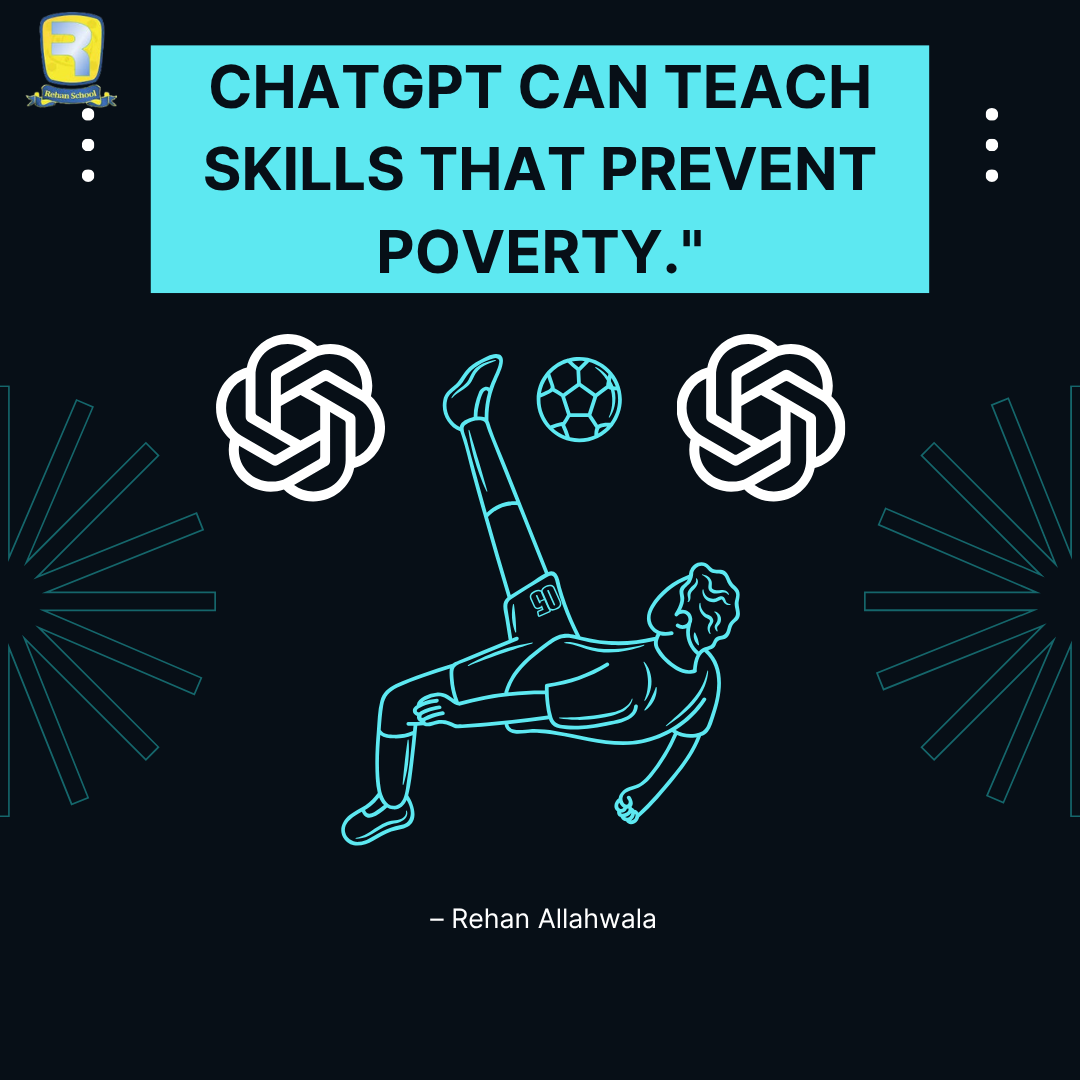
    Knowledge is the greatest investment you can make. With the right skills and the power of AI, anyone can create opportunities, build a better future, and overcome poverty. Keep learning, keep growing.

    #ChatGPT #AIForGood #RehanAllahwala #DigitalSkills #LearnWithAI #FutureSkills #Education #SkillDevelopment #FinancialFreedom #CareerGrowth #Entrepreneurship #Innovation #TechForGood #SuccessMindset #NeverStopLearning #Opportunities #AIEducation #CanvaDesign #SocialMediaPost #motivationalquotes

    @followers
    Tania Khan Mentorship Wali
    Mohsin Rathore Seo Wala
    Imran Khan Street Wala
    Shazia Javed
    Hafsa Noor
    Rehan School Korangi Campus
    Level 01 Work Book 01 Day 10 Task Canva post 31 Knowledge is the greatest investment you can make. With the right skills and the power of AI, anyone can create opportunities, build a better future, and overcome poverty. Keep learning, keep growing. 🚀💙 #ChatGPT #AIForGood #RehanAllahwala #DigitalSkills #LearnWithAI #FutureSkills #Education #SkillDevelopment #FinancialFreedom #CareerGrowth #Entrepreneurship #Innovation #TechForGood #SuccessMindset #NeverStopLearning #Opportunities #AIEducation #CanvaDesign #SocialMediaPost #motivationalquotes @followers Tania Khan Mentorship Wali Mohsin Rathore Seo Wala Imran Khan Street Wala Shazia Javed Hafsa Noor Rehan School Korangi Campus
    0 Comments 0 Shares 233 Views
  • Day 90
    Task No:90
    Roll No:42
    RSLC
    Foundation Level, Batch#04

    Trigonometry is the fascinating branch of mathematics that reveals the hidden relationships between angles and sides of triangles. From the earliest civilizations to modern science, humans have relied on angles to measure distances, navigate oceans, and understand the world around them. What may seem like simple lines and triangles actually hold the secrets to solving some of lifes greatest mathematical challenges.

    As mathematicians explored the power of angles, they discovered remarkable patterns through sine, cosine, and tangent. These concepts became essential tools in architecture, astronomy, engineering, and navigation. Whether designing towering skyscrapers, calculating the height of mountains, or guiding satellites through space, trigonometry continues to play a vital role in shaping our modern world.

    Today, trigonometry is far more than a classroom subject?its a universal language of precision and discovery. Every angle tells a story, every triangle hides a solution, and every calculation brings us closer to understanding the beauty of mathematics. By learning trigonometry, we unlock the power to measure, create, and innovate in ways that transform imagination into reality.

    #Trigonometry #Mathematics #Angles #Geometry #Education #STEM #Learning #Science #Engineering #MathLovers #Knowledge #Students #Study #Innovation #ProblemSolving
    Day 90 Task No:90 Roll No:42 RSLC Foundation Level, Batch#04 Trigonometry is the fascinating branch of mathematics that reveals the hidden relationships between angles and sides of triangles. From the earliest civilizations to modern science, humans have relied on angles to measure distances, navigate oceans, and understand the world around them. What may seem like simple lines and triangles actually hold the secrets to solving some of life's greatest mathematical challenges. As mathematicians explored the power of angles, they discovered remarkable patterns through sine, cosine, and tangent. These concepts became essential tools in architecture, astronomy, engineering, and navigation. Whether designing towering skyscrapers, calculating the height of mountains, or guiding satellites through space, trigonometry continues to play a vital role in shaping our modern world. Today, trigonometry is far more than a classroom subject?it's a universal language of precision and discovery. Every angle tells a story, every triangle hides a solution, and every calculation brings us closer to understanding the beauty of mathematics. By learning trigonometry, we unlock the power to measure, create, and innovate in ways that transform imagination into reality. #Trigonometry #Mathematics #Angles #Geometry #Education #STEM #Learning #Science #Engineering #MathLovers #Knowledge #Students #Study #Innovation #ProblemSolving
    0 Comments 0 Shares 682 Views
  • Day 104
    Task No:104
    Roll No:42
    RSLC
    Foundation Level, Batch#04

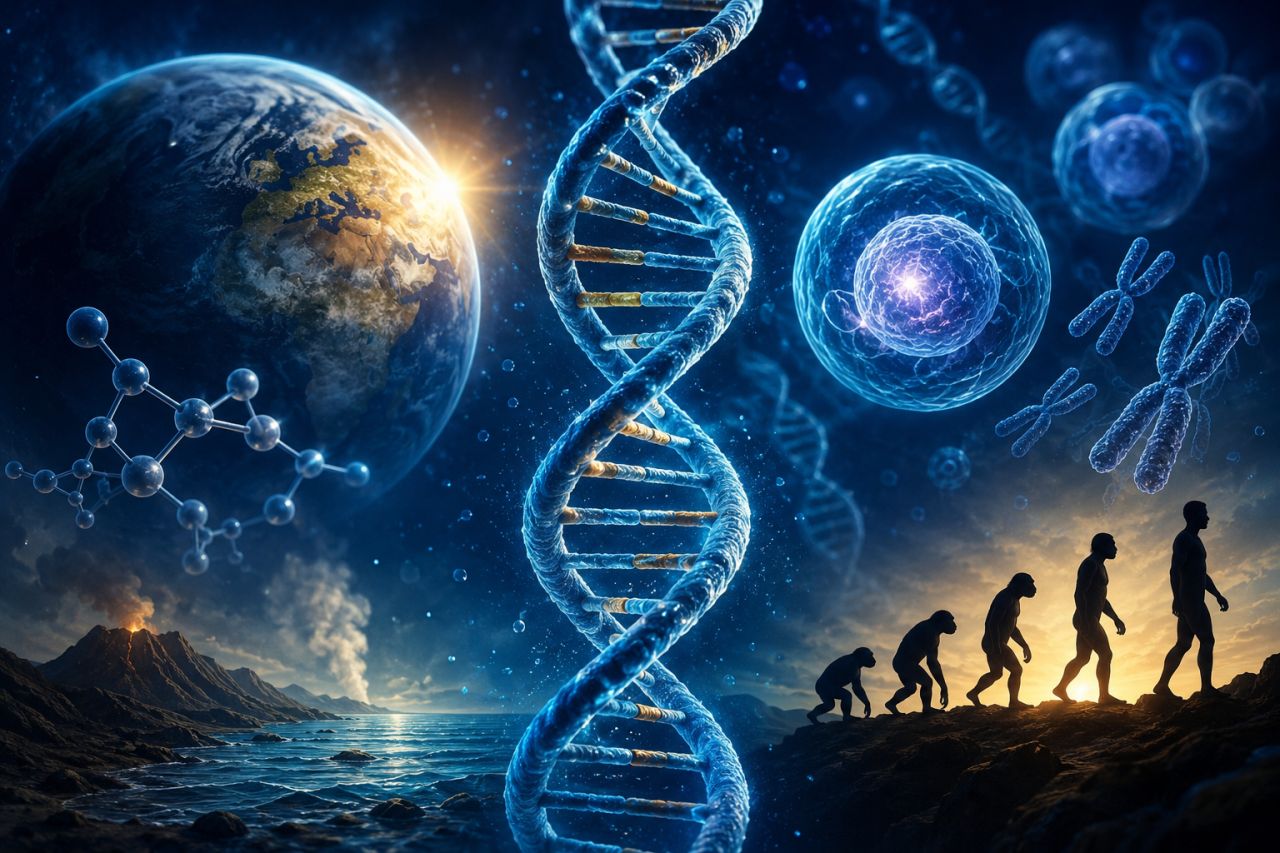
    Life on Earth is built upon an extraordinary blueprint known as DNA. Hidden inside every living cell, DNA carries the genetic instructions that determine how organisms grow, develop, and survive. From the smallest bacteria to the largest whales, every living being shares this remarkable biological code. Scientists often describe DNA as the language of life because it stores the information that connects all generations across time.

    The mystery of lifes origins has fascinated humanity for centuries. While researchers continue to explore how the first living cells emerged on the early Earth, DNA remains one of the greatest clues to understanding our beginnings. By studying genes and genetic evolution, scientists can trace the relationships between species and uncover how life has adapted over billions of years. Every discovery in genetics brings us one step closer to answering one of humanitys greatest questions: Where did life come from?

    DNA is more than just a scientific molecule?it is a symbol of connection, diversity, and the incredible complexity of nature. As technology advances, our understanding of genetics opens new possibilities in medicine, agriculture, and environmental conservation. The blueprint of existence reminds us that every living organism is part of a shared story written over billions of years, inspiring us to protect and appreciate the remarkable web of life that surrounds us.

    #DNA #Genetics #OriginOfLife #Science #Biology #MolecularBiology #LifeScience #Genome #Evolution #ScientificDiscovery #STEM #Education #DNAResearch #CellBiology #Nature #Knowledge #Innovation #FutureOfScience #LearnScience #ScienceFacts
    Day 104 Task No:104 Roll No:42 RSLC Foundation Level, Batch#04 Life on Earth is built upon an extraordinary blueprint known as DNA. Hidden inside every living cell, DNA carries the genetic instructions that determine how organisms grow, develop, and survive. From the smallest bacteria to the largest whales, every living being shares this remarkable biological code. Scientists often describe DNA as the language of life because it stores the information that connects all generations across time. The mystery of life's origins has fascinated humanity for centuries. While researchers continue to explore how the first living cells emerged on the early Earth, DNA remains one of the greatest clues to understanding our beginnings. By studying genes and genetic evolution, scientists can trace the relationships between species and uncover how life has adapted over billions of years. Every discovery in genetics brings us one step closer to answering one of humanity's greatest questions: Where did life come from? DNA is more than just a scientific molecule?it is a symbol of connection, diversity, and the incredible complexity of nature. As technology advances, our understanding of genetics opens new possibilities in medicine, agriculture, and environmental conservation. The blueprint of existence reminds us that every living organism is part of a shared story written over billions of years, inspiring us to protect and appreciate the remarkable web of life that surrounds us. #DNA #Genetics #OriginOfLife #Science #Biology #MolecularBiology #LifeScience #Genome #Evolution #ScientificDiscovery #STEM #Education #DNAResearch #CellBiology #Nature #Knowledge #Innovation #FutureOfScience #LearnScience #ScienceFacts
    0 Comments 0 Shares 654 Views
  • #rsisb
    Roll No.240
    Image With Chatgpt No.6
    Foundation Level

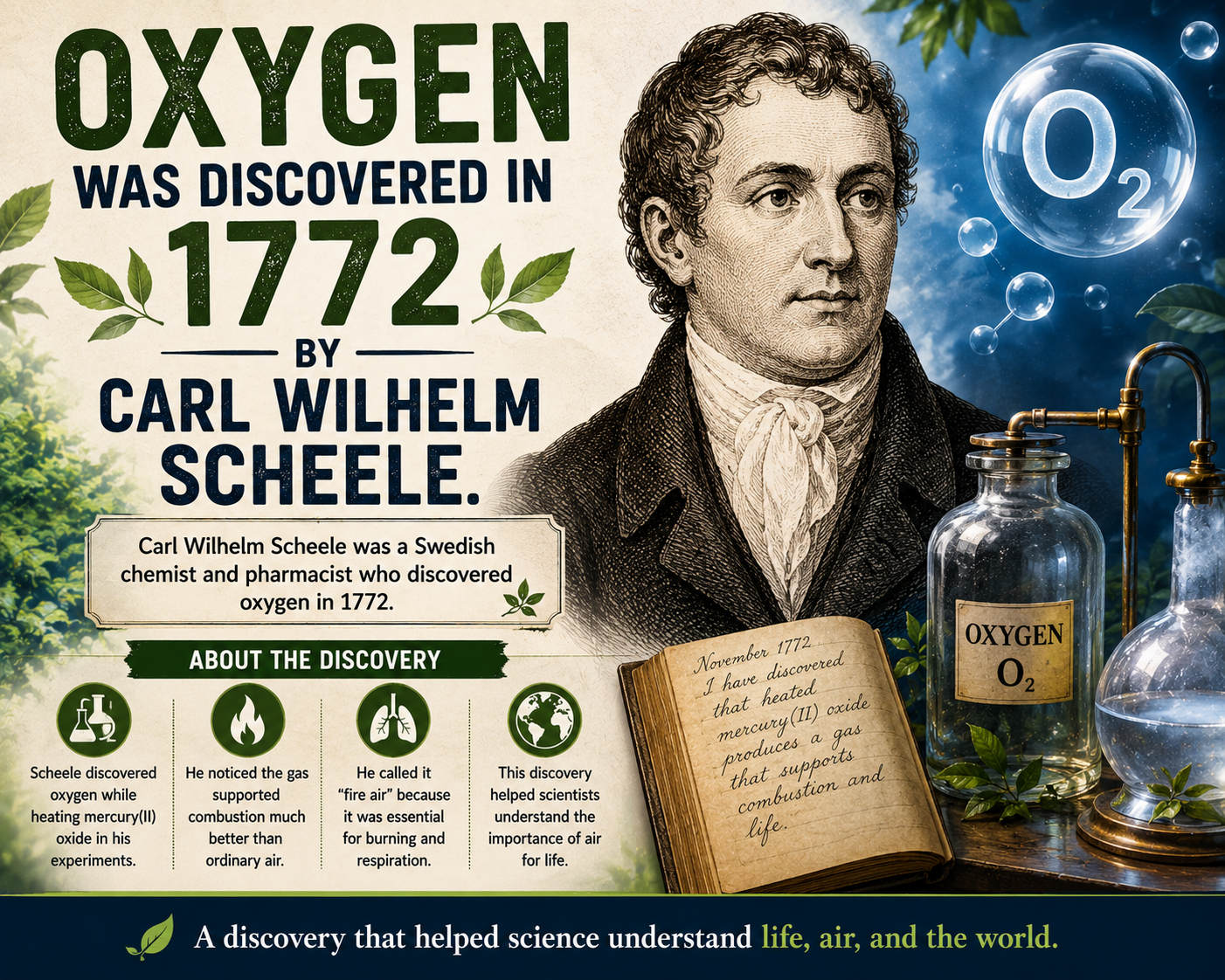
    Oxygen is one of the most important elements for life on Earth, but its discovery was the result of careful experiments, curiosity, and scientific investigation.

    In 1772, Swedish chemist and pharmacist Carl Wilhelm Scheele identified a gas that behaved differently from ordinary air. He found that this gas strongly supported combustion and played an important role in the processes we now understand as respiration and burning.

    Scheele referred to the gas as “fire air” because of its ability to support combustion. His experiments helped reveal that air was not simply one single substance, but a mixture containing different gases.

    The story of oxygen’s discovery is a fascinating example of how science develops through observation and experimentation. Scientists investigate materials, record their observations, test ideas, and gradually build a better understanding of the natural world.

    Although Scheele discovered oxygen independently, the recognition and naming of oxygen as an element also involved other scientists, including Joseph Priestley and Antoine Lavoisier. Their work helped establish oxygen’s role in combustion and contributed to the development of modern chemistry.

    Oxygen is represented by the chemical symbol O and has the atomic number 8. It is essential for aerobic respiration in humans and many other organisms. Without oxygen, most familiar forms of complex life could not survive.

    The discovery of oxygen changed the way scientists understood air, combustion, chemistry, and life. It became an important part of the scientific revolution in chemistry and helped researchers develop a much clearer understanding of chemical reactions.

    This story also reminds us that major scientific discoveries often happen through patience, careful observation, and a willingness to ask questions. Every experiment can reveal something new, and every discovery can open the door to further knowledge.

    From “fire air” to oxygen, the journey of discovery changed chemistry forever.

    Science teaches us that the world around us is full of mysteries waiting to be explored. Whether studying gases, atoms, cells, planets, or living organisms, curiosity is often the first step toward discovery.

    Question. Observe. Experiment. Discover. Learn.

    #Oxygen #DiscoveryOfOxygen #CarlWilhelmScheele #ScienceHistory #HistoryOfScience #Chemistry #ChemicalElements #OxygenDiscovery #1772 #ScientificDiscovery #ScienceEducation #ChemistryFacts #ScienceFacts #LearnScience #ScientificRevolution #Combustion #Air #Respiration #ChemistryHistory #STEM #Education #LearningJourney #ScienceExperiment #ScientificThinking #Research #Discovery #Knowledge #Innovation #Curiosity #ExploreScience #ScienceLovers #EducationalContent #Scientists #ChemicalScience #ModernChemistry #ScienceJourney #HistoryOfChemistry

    Rehan School Islamabad Campus
    Asma Shaheen EducationWali
    Irum Asim
    Saima Happinesswali

    #rsisb Roll No.240 Image With Chatgpt No.6 Foundation Level Oxygen is one of the most important elements for life on Earth, but its discovery was the result of careful experiments, curiosity, and scientific investigation. 🌱đŸĢđŸ”Ĩ In 1772, Swedish chemist and pharmacist Carl Wilhelm Scheele identified a gas that behaved differently from ordinary air. He found that this gas strongly supported combustion and played an important role in the processes we now understand as respiration and burning. đŸ”ĨđŸ§Ē Scheele referred to the gas as “fire air” because of its ability to support combustion. His experiments helped reveal that air was not simply one single substance, but a mixture containing different gases. đŸŒŦī¸đŸ”Ŧ The story of oxygen’s discovery is a fascinating example of how science develops through observation and experimentation. Scientists investigate materials, record their observations, test ideas, and gradually build a better understanding of the natural world. 📚🔎💡 Although Scheele discovered oxygen independently, the recognition and naming of oxygen as an element also involved other scientists, including Joseph Priestley and Antoine Lavoisier. Their work helped establish oxygen’s role in combustion and contributed to the development of modern chemistry. âš—ī¸đŸ§ đŸŒ Oxygen is represented by the chemical symbol O and has the atomic number 8. It is essential for aerobic respiration in humans and many other organisms. đŸĢđŸŒŋ🐾 Without oxygen, most familiar forms of complex life could not survive. The discovery of oxygen changed the way scientists understood air, combustion, chemistry, and life. 🌎đŸ”ĨđŸ”Ŧ It became an important part of the scientific revolution in chemistry and helped researchers develop a much clearer understanding of chemical reactions. This story also reminds us that major scientific discoveries often happen through patience, careful observation, and a willingness to ask questions. đŸ’­âžĄī¸đŸ”ŦâžĄī¸đŸ’Ą Every experiment can reveal something new, and every discovery can open the door to further knowledge. ✨ From “fire air” to oxygen, the journey of discovery changed chemistry forever. ✨ Science teaches us that the world around us is full of mysteries waiting to be explored. 🌍🔎 Whether studying gases, atoms, cells, planets, or living organisms, curiosity is often the first step toward discovery. 🚀📚 🌟 Question. Observe. Experiment. Discover. Learn. 🌟 #Oxygen #DiscoveryOfOxygen #CarlWilhelmScheele #ScienceHistory #HistoryOfScience #Chemistry #ChemicalElements #OxygenDiscovery #1772 #ScientificDiscovery #ScienceEducation #ChemistryFacts #ScienceFacts #LearnScience #ScientificRevolution #Combustion #Air #Respiration #ChemistryHistory #STEM #Education #LearningJourney #ScienceExperiment #ScientificThinking #Research #Discovery #Knowledge #Innovation #Curiosity #ExploreScience #ScienceLovers #EducationalContent #Scientists #ChemicalScience #ModernChemistry #ScienceJourney #HistoryOfChemistry đŸ”ŦđŸ§Ē🌍đŸ”ĨđŸĢđŸ“šđŸ’Ąâœ¨đŸš€đŸŒą Rehan School Islamabad Campus Asma Shaheen EducationWali Irum Asim Saima Happinesswali
    0 Comments 0 Shares 2490 Views
  • #rsisb
    Roll No.240
    Story Post No.24
    Foundation Level

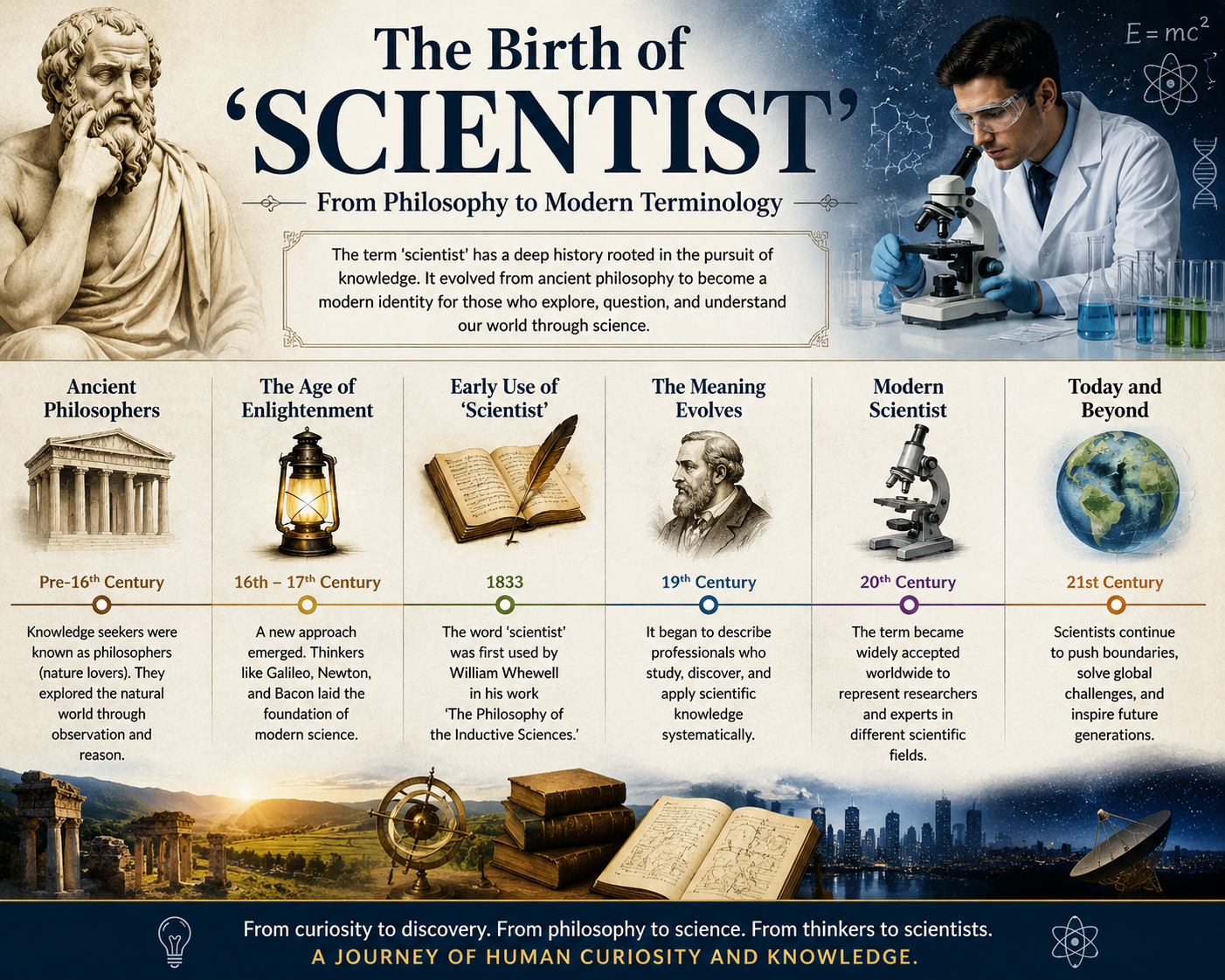
    The word “scientist” may sound like a modern term, but the journey behind it is connected to centuries of human curiosity, philosophy, observation, experimentation, and the search for knowledge.

    Long before the word “scientist” became common, people who studied the natural world were often known as philosophers, scholars, natural philosophers, mathematicians, and thinkers. They asked important questions about nature, the universe, life, matter, motion, and the world around them.

    From the thinkers of the ancient world to the scholars of the Renaissance and the Scientific Revolution, humans continued developing new ways to understand nature. Observation became more important, experiments became more systematic, and evidence gradually became a central part of scientific inquiry.

    During the 18th and 19th centuries, many different branches of knowledge began becoming more specialized. Physics, chemistry, biology, astronomy, geology, and other fields developed their own methods, discoveries, and communities of researchers.

    A major moment in terminology came in the 19th century, when the word “scientist” was introduced as a useful name for people engaged in scientific study. The term is widely associated with William Whewell, who used it in 1833. This helped provide a new, unified word for researchers working across different areas of science.

    The evolution of this word reflects something bigger than language. It represents the changing way humanity organized knowledge and recognized scientific work. The transition from “natural philosopher” to “scientist” shows how science gradually became a distinct and organized field of study.

    Today, scientists work in laboratories, universities, hospitals, observatories, research centers, engineering facilities, and many other places around the world. They investigate everything from tiny cells and molecules to distant galaxies and the origins of the universe.

    Modern science continues to grow through curiosity, evidence, teamwork, technology, and a willingness to ask difficult questions. Every discovery begins with someone wondering, “Why?”, “How?”, or “What if?”

    The story of the word “scientist” reminds us that human knowledge is always evolving. What began with simple curiosity and philosophical questioning gradually developed into the powerful and diverse scientific world we know today.

    From thinkers to researchers. From philosophy to science. From questions to discoveries.

    Science is not only about finding answers—it is also about continuing to ask better questions.

    A journey from curiosity to discovery, and from philosophy to modern science.

    #TheBirthOfScientist #Scientist #HistoryOfScience #ScienceHistory #ScientificRevolution #Philosophy #NaturalPhilosophy #WilliamWhewell #1833 #ModernScience #ScienceEducation #ScientificTerminology #Science #Scientists #Research #Discovery #Curiosity #Knowledge #Learning #Education #STEM #Physics #Chemistry #Biology #Astronomy #Geology #Innovation #Experimentation #ScientificThinking #CriticalThinking #HumanKnowledge #HistoryOfKnowledge #ScienceJourney #FromPhilosophyToScience #ScienceFacts #EducationalContent #LearningJourney #ExploreScience #DiscoverScience

    Rehan School Islamabad Campus
    Asma Shaheen EducationWali
    Irum Asim
    Saima Happinesswali

    #rsisb Roll No.240 Story Post No.24 Foundation Level The word “scientist” may sound like a modern term, but the journey behind it is connected to centuries of human curiosity, philosophy, observation, experimentation, and the search for knowledge. 🧠🔎 Long before the word “scientist” became common, people who studied the natural world were often known as philosophers, scholars, natural philosophers, mathematicians, and thinkers. đŸ›ī¸đŸ“œ They asked important questions about nature, the universe, life, matter, motion, and the world around them. From the thinkers of the ancient world to the scholars of the Renaissance and the Scientific Revolution, humans continued developing new ways to understand nature. 🌌🌍📖 Observation became more important, experiments became more systematic, and evidence gradually became a central part of scientific inquiry. đŸ”ŦđŸ§Ē✨ During the 18th and 19th centuries, many different branches of knowledge began becoming more specialized. Physics, chemistry, biology, astronomy, geology, and other fields developed their own methods, discoveries, and communities of researchers. đŸ§Ŧâš—ī¸đŸŒ  A major moment in terminology came in the 19th century, when the word “scientist” was introduced as a useful name for people engaged in scientific study. The term is widely associated with William Whewell, who used it in 1833. 📜đŸ”Ŧ This helped provide a new, unified word for researchers working across different areas of science. The evolution of this word reflects something bigger than language. It represents the changing way humanity organized knowledge and recognized scientific work. 🌟📚 The transition from “natural philosopher” to “scientist” shows how science gradually became a distinct and organized field of study. Today, scientists work in laboratories, universities, hospitals, observatories, research centers, engineering facilities, and many other places around the world. 🌍đŸ§Ē🔭 They investigate everything from tiny cells and molecules to distant galaxies and the origins of the universe. đŸ§ŦđŸĻ đŸŒŒ Modern science continues to grow through curiosity, evidence, teamwork, technology, and a willingness to ask difficult questions. 💡🤝🚀 Every discovery begins with someone wondering, “Why?”, “How?”, or “What if?” The story of the word “scientist” reminds us that human knowledge is always evolving. What began with simple curiosity and philosophical questioning gradually developed into the powerful and diverse scientific world we know today. đŸŒąâžĄī¸đŸ”ŦâžĄī¸đŸŒ ✨ From thinkers to researchers. From philosophy to science. From questions to discoveries. ✨ Science is not only about finding answers—it is also about continuing to ask better questions. 🔎💡 🌟 A journey from curiosity to discovery, and from philosophy to modern science. 🌟 #TheBirthOfScientist #Scientist #HistoryOfScience #ScienceHistory #ScientificRevolution #Philosophy #NaturalPhilosophy #WilliamWhewell #1833 #ModernScience #ScienceEducation #ScientificTerminology #Science #Scientists #Research #Discovery #Curiosity #Knowledge #Learning #Education #STEM #Physics #Chemistry #Biology #Astronomy #Geology #Innovation #Experimentation #ScientificThinking #CriticalThinking #HumanKnowledge #HistoryOfKnowledge #ScienceJourney #FromPhilosophyToScience #ScienceFacts #EducationalContent #LearningJourney #ExploreScience #DiscoverScience đŸ”Ŧ📚🧠🌍✨🔭đŸ§Ē🚀💡🌟 Rehan School Islamabad Campus Asma Shaheen EducationWali Irum Asim Saima Happinesswali
    0 Comments 0 Shares 2290 Views
  • Title
    “Law Sirf Courtroom Tak Limited Nahi Hai.”

    Story

    Legal technology ka matlab sirf courtrooms ya lawyers nahi hai.

    Aapki daily life mein bhi legal needs aa sakti hain:

    Agreement sign karna
    Contract samajhna
    Business compliance manage karna
    Case updates track karna
    Legal professional find karna

    Isi liye Rehan Law ka vision hai ke AI aur technology ko use karke legal journey ko simple, organized aur accessible banaya ja sake.

    Ek platform.
    Multiple legal needs.
    One smarter journey.

    REHAN LAW

    AI + LAW = A SMARTER FUTURE

    Coming Soon

    Story Engagement
    Aapko legal technology mein sabse useful feature kya lagta hai?

    AI Legal Assistance
    Smart Documents
    Contract Review
    Lawyer Marketplace
    Case Tracking

    Apna option choose karein!

    Hashtags

    #RehanLaw #LegalTech #LegalAI #AI #SmartLaw #FutureOfLaw #LegalInnovation #LegalTechnology #Pakistan #Startup #Innovation #ComingSoon
    đŸŽ¯ Title “Law Sirf Courtroom Tak Limited Nahi Hai.” 📖 Story Legal technology ka matlab sirf courtrooms ya lawyers nahi hai. Aapki daily life mein bhi legal needs aa sakti hain: 📄 Agreement sign karna 📑 Contract samajhna đŸĸ Business compliance manage karna âš–ī¸ Case updates track karna 👨‍âš–ī¸ Legal professional find karna Isi liye Rehan Law ka vision hai ke AI aur technology ko use karke legal journey ko simple, organized aur accessible banaya ja sake. đŸ¤–âš–ī¸ Ek platform. Multiple legal needs. One smarter journey. REHAN LAW AI + LAW = A SMARTER FUTURE 🚀 Coming Soon đŸ’Ŧ Story Engagement Aapko legal technology mein sabse useful feature kya lagta hai? 🤖 AI Legal Assistance 📄 Smart Documents 📑 Contract Review 👨‍âš–ī¸ Lawyer Marketplace âš–ī¸ Case Tracking 👇 Apna option choose karein! đŸˇī¸ Hashtags #RehanLaw #LegalTech #LegalAI #AI #SmartLaw #FutureOfLaw #LegalInnovation #LegalTechnology #Pakistan #Startup #Innovation #ComingSoon
    0 Comments 0 Shares 855 Views
  • Roll No.190
    Call Annie No. 49
    Foundation level

    1. AI in Daily Life

    Idea: Talk about how AI helps us with studying, searching for information, translation, and everyday tasks.
    Emojis:
    Hashtags: #ArtificialIntelligence #AI #Technology #TalkWithAI #Learning

    2. Smartphones in Our Life

    Idea: Discuss how smartphones help us communicate, learn, take photos, use maps, and stay connected.
    Emojis:
    Hashtags: #Smartphone #MobileTechnology #Technology #DigitalLife #Learning

    3. The Power of the Internet

    Idea: Explain how the internet connects people and helps students learn new things from anywhere.
    Emojis:
    Hashtags: #Internet #Technology #Education #DigitalWorld #Learning

    4. Technology and Gaming

    Idea: Talk about how modern technology has changed video games and made them more interactive.
    Emojis:
    Hashtags: #Gaming #Technology #VideoGames #Gamer #DigitalWorld

    5. Staying Safe Online

    Idea: Discuss passwords, privacy, suspicious links, and why we should be careful when using the internet.
    Emojis:
    Hashtags: #OnlineSafety #CyberSafety #InternetSafety #Technology #DigitalSafety

    6. Technology of the Future

    Idea: Imagine what future robots, smart homes, AI, and transportation might look like.
    Emojis:
    Hashtags: #FutureTechnology #Innovation #Robots #AI #Future

    7. Technology in Education

    Idea: Talk about how computers, tablets, online classes, and AI can make learning easier and more interesting.
    Emojis:
    Hashtags: #Education #EdTech #Technology #StudentLife #Learning

    8. Can AI Think Like Humans?

    Idea: Have a simple conversation about what AI can do and how humans are different from AI.
    Emojis:
    Hashtags: #AI #ArtificialIntelligence #HumanVsAI #Technology #Innovation
    Roll No.190 Call Annie No. 49 Foundation level đŸ’ģ 1. AI in Daily Life 🤖 Idea: Talk about how AI helps us with studying, searching for information, translation, and everyday tasks. Emojis: 🤖đŸ’ģ📚✨ Hashtags: #ArtificialIntelligence #AI #Technology #TalkWithAI #Learning 📱 2. Smartphones in Our Life Idea: Discuss how smartphones help us communicate, learn, take photos, use maps, and stay connected. Emojis: 📱🌐📸đŸ—ēī¸ Hashtags: #Smartphone #MobileTechnology #Technology #DigitalLife #Learning 🌐 3. The Power of the Internet Idea: Explain how the internet connects people and helps students learn new things from anywhere. Emojis: 🌐đŸ’ģ📚🔎 Hashtags: #Internet #Technology #Education #DigitalWorld #Learning 🎮 4. Technology and Gaming Idea: Talk about how modern technology has changed video games and made them more interactive. Emojis: đŸŽŽđŸ•šī¸đŸ’ģ🚀 Hashtags: #Gaming #Technology #VideoGames #Gamer #DigitalWorld 🔐 5. Staying Safe Online Idea: Discuss passwords, privacy, suspicious links, and why we should be careful when using the internet. Emojis: đŸ”đŸ›Ąī¸đŸ’ģ🌐 Hashtags: #OnlineSafety #CyberSafety #InternetSafety #Technology #DigitalSafety 🚀 6. Technology of the Future Idea: Imagine what future robots, smart homes, AI, and transportation might look like. Emojis: 🚀🤖🏠🚗✨ Hashtags: #FutureTechnology #Innovation #Robots #AI #Future 📚 7. Technology in Education Idea: Talk about how computers, tablets, online classes, and AI can make learning easier and more interesting. Emojis: 📚đŸ’ģ🎓🤖 Hashtags: #Education #EdTech #Technology #StudentLife #Learning 🧠 8. Can AI Think Like Humans? Idea: Have a simple conversation about what AI can do and how humans are different from AI. Emojis: 🧠🤖💡đŸ’ģ Hashtags: #AI #ArtificialIntelligence #HumanVsAI #Technology #Innovation
    0 Comments 0 Shares 2534 Views 0
  • Level 01 Book 01
    Day 09
    Task canva post

    Knowledge is the first step toward financial freedom.
    ChatGPT sirf answers nahi deta, balki aisi skills bhi sikha sakta hai jo income opportunities create karne mein madad karti hain.

    #ChatGPT #AI #ArtificialIntelligence #Skills #DigitalSkills #LearnToEarn #FinancialFreedom #PovertyPrevention #OnlineLearning #FutureSkills #SuccessMindset #SelfGrowth #RehanAllahwala #Pakistan #Education #innovations

    Tania Khan Mentorship Wali
    Mohsin Rathore Seo Wala
    Imran Khan Street Wala
    Shazia Javed
    Rehan School Korangi Campus
    Level 01 Book 01 Day 09 Task canva post 💡 Knowledge is the first step toward financial freedom. ChatGPT sirf answers nahi deta, balki aisi skills bhi sikha sakta hai jo income opportunities create karne mein madad karti hain. 📚🚀 #ChatGPT #AI #ArtificialIntelligence #Skills #DigitalSkills #LearnToEarn #FinancialFreedom #PovertyPrevention #OnlineLearning #FutureSkills #SuccessMindset #SelfGrowth #RehanAllahwala #Pakistan #Education #innovations Tania Khan Mentorship Wali Mohsin Rathore Seo Wala Imran Khan Street Wala Shazia Javed Rehan School Korangi Campus
    0 Comments 0 Shares 1001 Views
  • #rsisb
    Roll no.247
    canva post .31
    Foundation leve

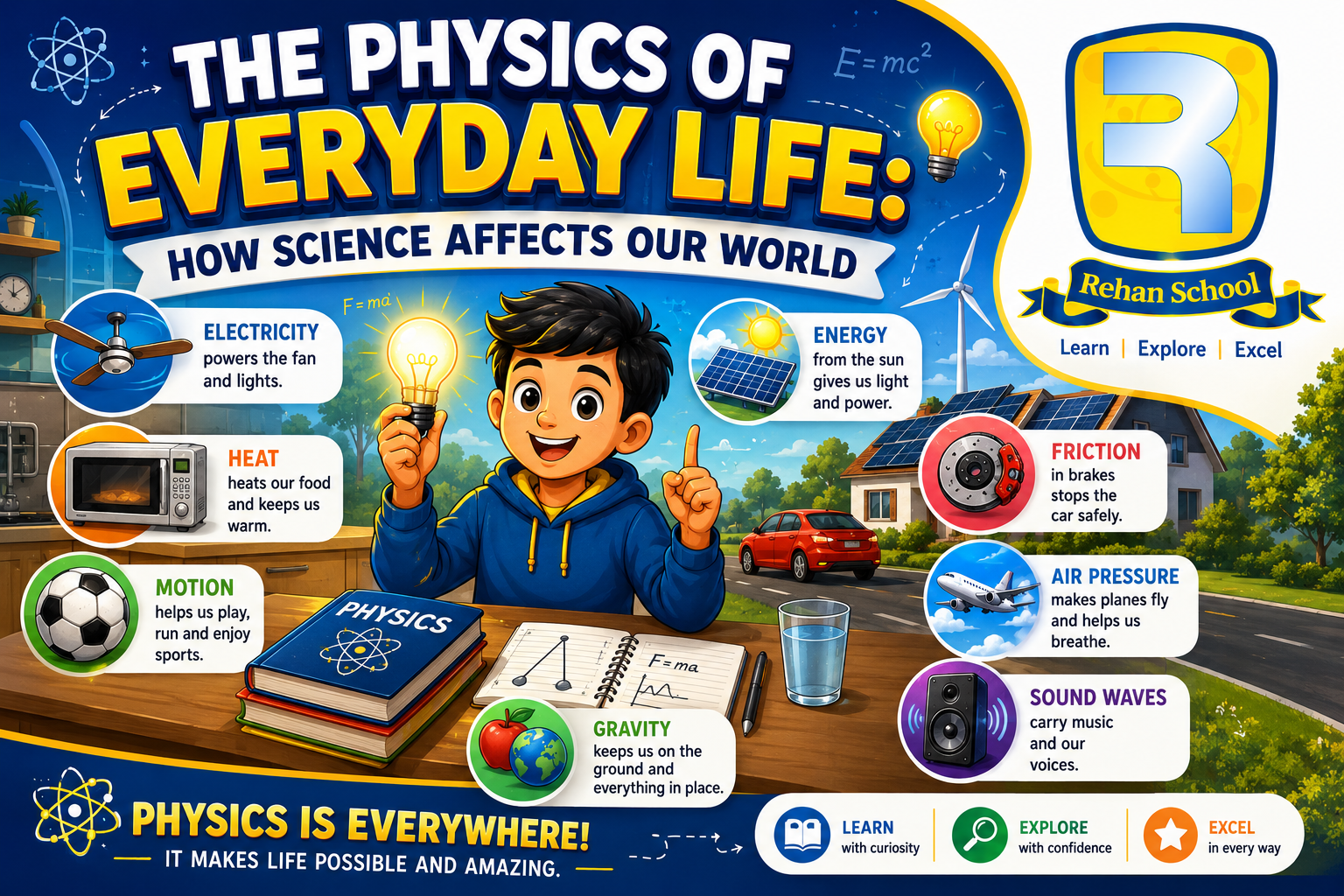
    **The Physics of Everyday Life: How Science Affects Our World**

    Have you ever wondered why a ball falls when you drop it, how a bicycle stays balanced, why a car moves forward, how a fan produces airflow, or how your smartphone communicates with the world around you? All of these everyday experiences are connected to **physics**—the science that helps us understand how the universe works.

    **“The Physics of Everyday Life: How Science Affects Our World”** is an exciting journey into the science behind the ordinary things we see and use every day. From the moment we wake up and switch on a light to the time we travel, study, play, cook, communicate, and relax, physics is constantly working around us.

    **Energy and Electricity:**
    Electricity powers our homes, schools, computers, appliances, and countless modern technologies. Understanding energy helps us see how electrical power is generated, transferred, and transformed into useful forms.

    **Motion and Forces:**
    Whenever something moves, forces are involved. Walking, running, cycling, driving, throwing a ball, or opening a door can all be explained through concepts such as force, motion, friction, and acceleration.

    **Heat and Temperature:**
    From boiling water to cooling food in a refrigerator , heat transfer plays an important role in our daily lives. Physics explains why different materials heat up and cool down at different rates.

    **Light and Sound:**
    The colors we see, the sounds we hear, the mirrors we use, and the cameras in our phones are all connected to fascinating physical principles.

    **Gravity and the Natural World:**
    Gravity keeps us on Earth and influences everything from falling objects to the movement of planets and satellites.

    **Technology and Modern Life:**
    Physics is also behind many technologies we depend on, including smartphones, computers, medical equipment, transportation systems, satellites, and communication devices.

    The most amazing lesson is that **physics is not only something we study in textbooks—it is happening all around us.** When we understand the science behind everyday events, ordinary experiences become opportunities for discovery.

    This topic encourages curiosity, observation, critical thinking, experimentation, and a deeper appreciation for the world around us. It reminds us that asking **“Why?”** can be the beginning of an exciting scientific journey.

    Whether you are a student, teacher, science enthusiast, or simply someone curious about how things work, exploring everyday physics can help you look at the world from a completely new perspective.

    **Observe. Question. Experiment. Discover. Learn.**
    Because science is not far away—it is part of **every moment of our everyday lives!**

    #Physics #EverydayPhysics #Science #PhysicsInEverydayLife #ScienceEducation #STEM #STEMEducation #LearnScience #ScienceEverywhere #PhysicsExplained #ScienceAndTechnology #EverydayScience #LearningIsFun #Curiosity #Discovery #Education #Students #Teachers #ScientificThinking #Experiments #Energy #Motion #Gravity #Electricity #Light #Sound #Technology #Innovation #ExploreScience #KnowledgeIsPower
    #rsisb Roll no.247 canva post .31 Foundation leve đŸŒâš›ī¸ **The Physics of Everyday Life: How Science Affects Our World** đŸ”Ŧ✨ Have you ever wondered why a ball falls when you drop it, how a bicycle stays balanced, why a car moves forward, how a fan produces airflow, or how your smartphone communicates with the world around you? 🤔📱🚗 All of these everyday experiences are connected to **physics**—the science that helps us understand how the universe works. 🌌🔭 **“The Physics of Everyday Life: How Science Affects Our World”** is an exciting journey into the science behind the ordinary things we see and use every day. From the moment we wake up and switch on a light 💡 to the time we travel, study, play, cook, communicate, and relax, physics is constantly working around us. ⚡ **Energy and Electricity:** Electricity powers our homes, schools, computers, appliances, and countless modern technologies. Understanding energy helps us see how electrical power is generated, transferred, and transformed into useful forms. 🚗 **Motion and Forces:** Whenever something moves, forces are involved. Walking, running, cycling, driving, throwing a ball, or opening a door can all be explained through concepts such as force, motion, friction, and acceleration. 🏃‍â™‚ī¸âšŊ🚲 đŸŒĄī¸ **Heat and Temperature:** From boiling water ☕ to cooling food in a refrigerator â„ī¸, heat transfer plays an important role in our daily lives. Physics explains why different materials heat up and cool down at different rates. 💡 **Light and Sound:** The colors we see, the sounds we hear, the mirrors we use, and the cameras in our phones are all connected to fascinating physical principles. 🌈👂📷 🌍 **Gravity and the Natural World:** Gravity keeps us on Earth and influences everything from falling objects to the movement of planets and satellites. đŸĒđŸŒŽ 📱 **Technology and Modern Life:** Physics is also behind many technologies we depend on, including smartphones, computers, medical equipment, transportation systems, satellites, and communication devices. 🚀đŸ’ģ📡 The most amazing lesson is that **physics is not only something we study in textbooks—it is happening all around us.** 📚✨ When we understand the science behind everyday events, ordinary experiences become opportunities for discovery. This topic encourages curiosity, observation, critical thinking, experimentation, and a deeper appreciation for the world around us. đŸ”Ŧ🧠🌟 It reminds us that asking **“Why?”** can be the beginning of an exciting scientific journey. Whether you are a student, teacher, science enthusiast, or simply someone curious about how things work, exploring everyday physics can help you look at the world from a completely new perspective. 🌎đŸ’Ģ 🔭 **Observe. Question. Experiment. Discover. Learn.** Because science is not far away—it is part of **every moment of our everyday lives!** âš›ī¸â¤ī¸ #Physics #EverydayPhysics #Science #PhysicsInEverydayLife #ScienceEducation #STEM #STEMEducation #LearnScience #ScienceEverywhere #PhysicsExplained #ScienceAndTechnology #EverydayScience #LearningIsFun #Curiosity #Discovery #Education #Students #Teachers #ScientificThinking #Experiments #Energy #Motion #Gravity #Electricity #Light #Sound #Technology #Innovation #ExploreScience #KnowledgeIsPower 🌍đŸ”Ŧ⚡🚀📚✨
    0 Comments 0 Shares 2445 Views
  • RSIF8
    Roll No: 113
    Post No: 8
    Post Topic: How to Download and Use CallAnnie?

    How to Download and Use CallAnnie?

    In this video, I explain the simple steps to download, set up, and use CallAnnie, an AI-powered virtual assistant that can help with conversations, learning, and everyday tasks.

    CallAnnie is an interesting AI tool that allows users to interact with an AI assistant through voice conversations and explore different ways of using artificial intelligence.

    In this tutorial, you will learn how to:

    Download and install CallAnnie
    Create or set up your account
    Open and explore the application
    Start a conversation with the AI
    Use voice interaction
    Explore different features and options
    Make the most of the AI assistant

    This activity helped me learn more about Artificial Intelligence and modern digital tools and how AI can be used for communication, learning, and everyday activities.

    Tip: Explore the features responsibly and avoid sharing sensitive personal information with AI applications.

    Watch the video and follow the steps!

    Learn • Explore • Communicate • Grow

    #RSIF8 #RollNo113 #PostNo8 #CallAnnie #AI #ArtificialIntelligence #AITools #AITechnology #DigitalSkills #DigitalLiteracy #Technology #AICompanion #VoiceAI #OnlineLearning #ComputerSkills #LearningJourney #StudentLife #TechSkills #DigitalWorld #FutureTechnology #Innovation #KeepLearning #LearnAndGrow #StepByStep
    RSIF8 Roll No: 113 Post No: 8 Post Topic: How to Download and Use CallAnnie? How to Download and Use CallAnnie? In this video, I explain the simple steps to download, set up, and use CallAnnie, an AI-powered virtual assistant that can help with conversations, learning, and everyday tasks. CallAnnie is an interesting AI tool that allows users to interact with an AI assistant through voice conversations and explore different ways of using artificial intelligence. In this tutorial, you will learn how to: 🔹 Download and install CallAnnie 🔹 Create or set up your account 🔹 Open and explore the application 🔹 Start a conversation with the AI 🔹 Use voice interaction 🔹 Explore different features and options 🔹 Make the most of the AI assistant This activity helped me learn more about Artificial Intelligence and modern digital tools and how AI can be used for communication, learning, and everyday activities. 💡 Tip: Explore the features responsibly and avoid sharing sensitive personal information with AI applications. đŸŽŦ Watch the video and follow the steps! Learn • Explore • Communicate • Grow 🚀✨ #RSIF8 #RollNo113 #PostNo8 #CallAnnie #AI #ArtificialIntelligence #AITools #AITechnology #DigitalSkills #DigitalLiteracy #Technology #AICompanion #VoiceAI #OnlineLearning #ComputerSkills #LearningJourney #StudentLife #TechSkills #DigitalWorld #FutureTechnology #Innovation #KeepLearning #LearnAndGrow #StepByStep
    0 Comments 0 Shares 1538 Views
More Results