
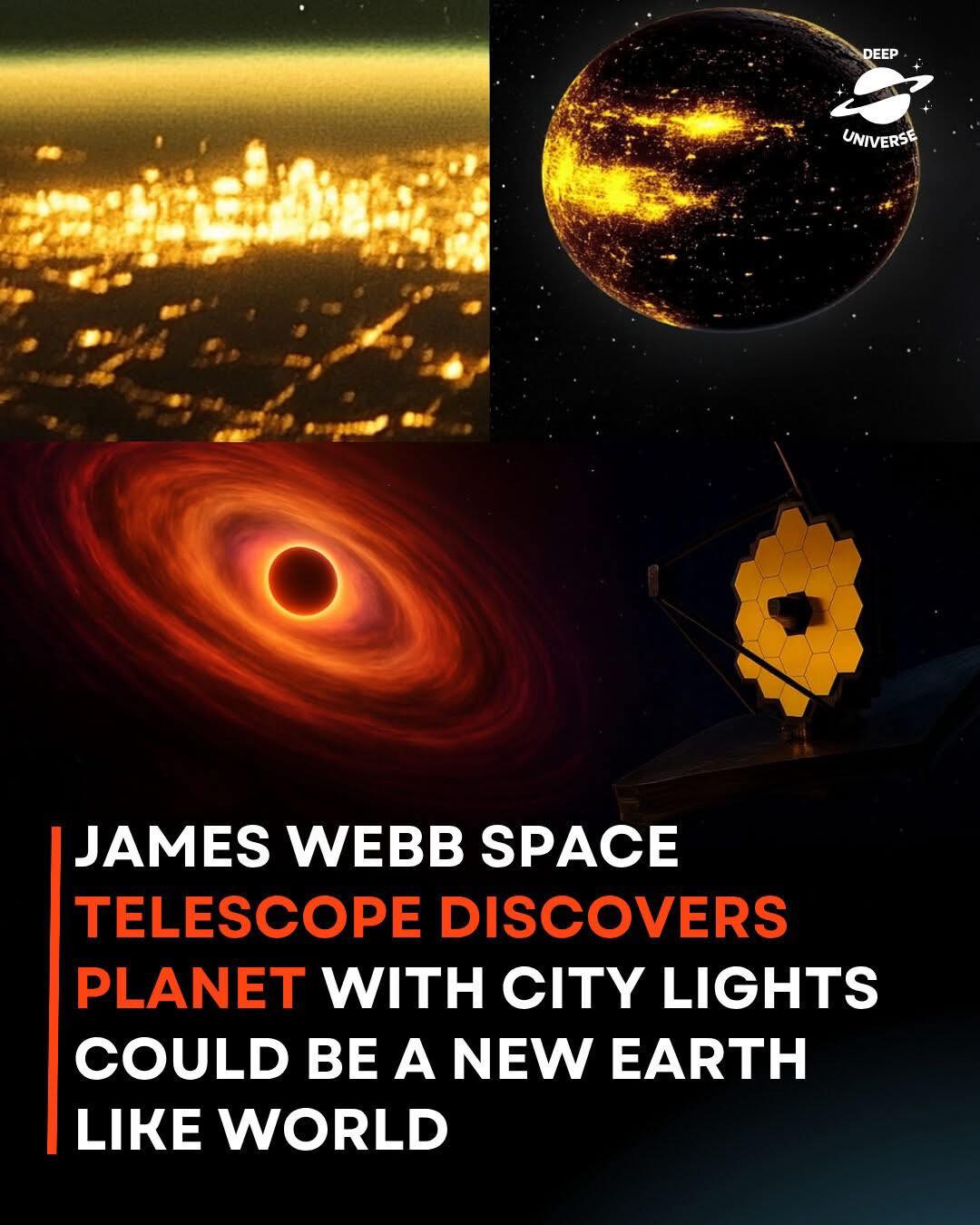
In a discovery that feels straight out of science fiction the James Webb Space Telescope has detected a planet with visible city lights, hinting at the possibility of an advanced civilization. This extraordinary finding has astronomers and space enthusiasts around the world buzzing with excitement and speculation about a potential new Earth.
The planet, located many light-years away, appears to have illuminated areas similar to city lights on Earth, suggesting the presence of artificial structures. Scientists are analysing the data to determine whether these lights could indeed be signs of intelligent life or if there might be a natural explanation. The images captured by the James Webb telescope are some of the clearest ever taken of a distant exoplanet, offering an unprecedented glimpse into another world.
Experts are calling this discovery “historic” and “mind-blowing” as it may provide the first concrete evidence of life beyond our solar system. Space enthusiasts are sharing the news widely across social media, sparking discussions about extraterrestrial life, colonization, and the future of interstellar exploration.
The potential new Earth could offer clues about planetary formation, habitability, and the possibility of advanced civilizations elsewhere in the universe. The discovery also raises fascinating questions about how life might develop under different conditions and whether humans could one day visit or communicate with these distant worlds.
While more research is needed to confirm the origins of the city-like lights, the James Webb Space Telescope’s findings have already captured global attention. Millions are eagerly following updates, hoping for more evidence of extraterrestrial life or advanced civilizations.
This breakthrough reminds us that the universe is vast and full of mysteries waiting to be uncovered. The detection of city lights on a distant planet could mark a turning point in humanity’s understanding of life beyond Earth and inspire generations of scientists and explorers to come.
#JamesWebbTelescope #NewEarth #ExoplanetDiscovery #AlienLife #CityLightsInSpace #SpaceMystery
The planet, located many light-years away, appears to have illuminated areas similar to city lights on Earth, suggesting the presence of artificial structures. Scientists are analysing the data to determine whether these lights could indeed be signs of intelligent life or if there might be a natural explanation. The images captured by the James Webb telescope are some of the clearest ever taken of a distant exoplanet, offering an unprecedented glimpse into another world.
Experts are calling this discovery “historic” and “mind-blowing” as it may provide the first concrete evidence of life beyond our solar system. Space enthusiasts are sharing the news widely across social media, sparking discussions about extraterrestrial life, colonization, and the future of interstellar exploration.
The potential new Earth could offer clues about planetary formation, habitability, and the possibility of advanced civilizations elsewhere in the universe. The discovery also raises fascinating questions about how life might develop under different conditions and whether humans could one day visit or communicate with these distant worlds.
While more research is needed to confirm the origins of the city-like lights, the James Webb Space Telescope’s findings have already captured global attention. Millions are eagerly following updates, hoping for more evidence of extraterrestrial life or advanced civilizations.
This breakthrough reminds us that the universe is vast and full of mysteries waiting to be uncovered. The detection of city lights on a distant planet could mark a turning point in humanity’s understanding of life beyond Earth and inspire generations of scientists and explorers to come.
#JamesWebbTelescope #NewEarth #ExoplanetDiscovery #AlienLife #CityLightsInSpace #SpaceMystery
In a discovery that feels straight out of science fiction the James Webb Space Telescope has detected a planet with visible city lights, hinting at the possibility of an advanced civilization. This extraordinary finding has astronomers and space enthusiasts around the world buzzing with excitement and speculation about a potential new Earth.
The planet, located many light-years away, appears to have illuminated areas similar to city lights on Earth, suggesting the presence of artificial structures. Scientists are analysing the data to determine whether these lights could indeed be signs of intelligent life or if there might be a natural explanation. The images captured by the James Webb telescope are some of the clearest ever taken of a distant exoplanet, offering an unprecedented glimpse into another world.
Experts are calling this discovery “historic” and “mind-blowing” as it may provide the first concrete evidence of life beyond our solar system. Space enthusiasts are sharing the news widely across social media, sparking discussions about extraterrestrial life, colonization, and the future of interstellar exploration.
The potential new Earth could offer clues about planetary formation, habitability, and the possibility of advanced civilizations elsewhere in the universe. The discovery also raises fascinating questions about how life might develop under different conditions and whether humans could one day visit or communicate with these distant worlds.
While more research is needed to confirm the origins of the city-like lights, the James Webb Space Telescope’s findings have already captured global attention. Millions are eagerly following updates, hoping for more evidence of extraterrestrial life or advanced civilizations.
This breakthrough reminds us that the universe is vast and full of mysteries waiting to be uncovered. The detection of city lights on a distant planet could mark a turning point in humanity’s understanding of life beyond Earth and inspire generations of scientists and explorers to come.
#JamesWebbTelescope #NewEarth #ExoplanetDiscovery #AlienLife #CityLightsInSpace #SpaceMystery
0 Reacties
0 aandelen
3645 Views