• #RSTA
    #Task : Story Post
    #Class: Foundation Level
    #Day No: 174
    #Made By Me

    Total Post:24


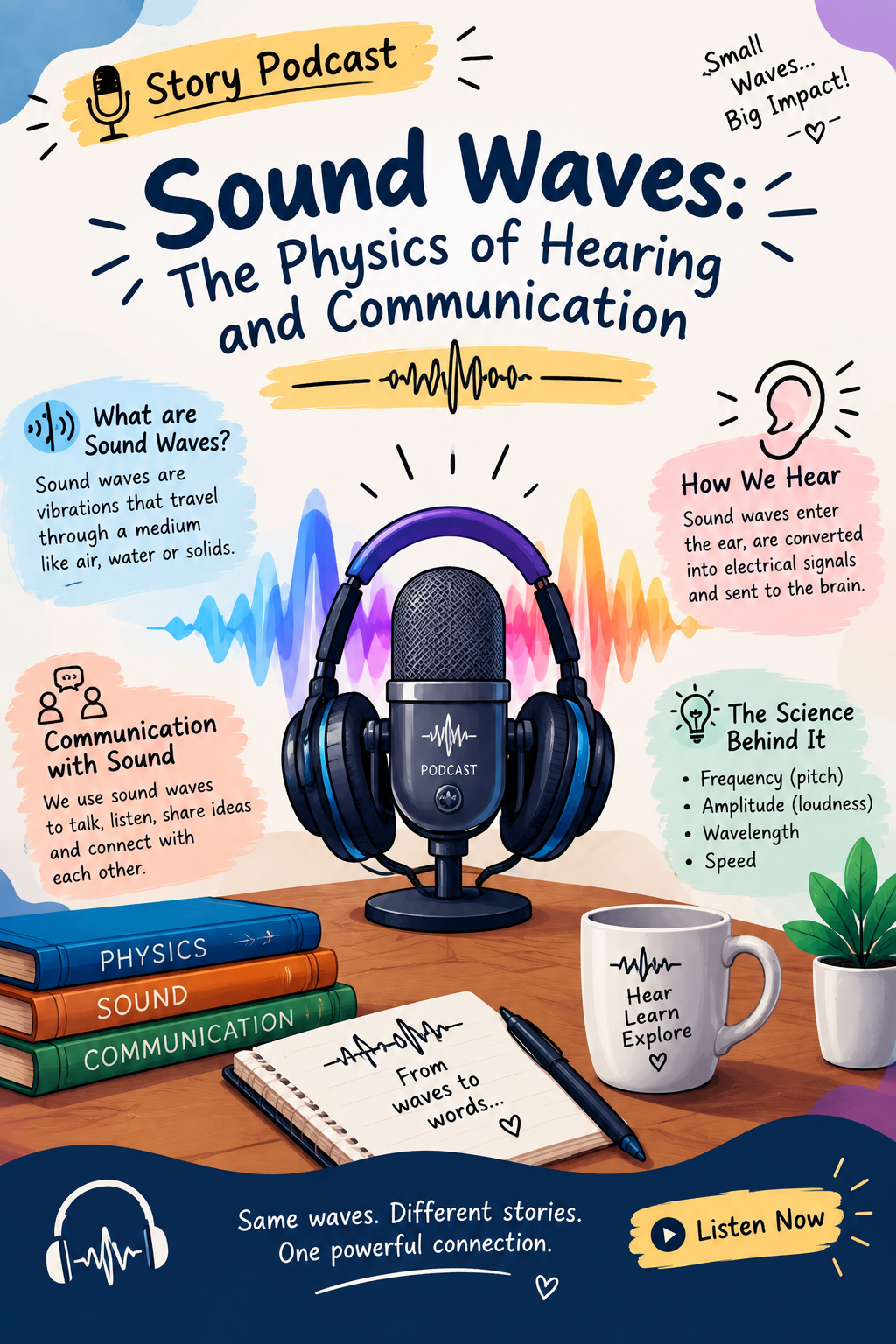
    Sound waves are vibrations that travel through a medium such as air, water, or solids. They allow us to hear sounds, communicate with others, enjoy music, and understand the world around us.

    In this topic, we explore how sound is produced and how it travels to our ears. Important properties such as **frequency, amplitude, wavelength, and speed** help explain pitch, loudness, and the way sound behaves. When sound waves enter the ear, they are transformed into signals that the brain can understand.

    This topic shows how the simple movement of sound waves connects **physics, hearing, and human communication**.
    #RSTA #Task : Story Post #Class: Foundation Level #Day No: 174 #Made By Me Total Post:24 Sound waves are vibrations that travel through a medium such as air, water, or solids. They allow us to hear sounds, communicate with others, enjoy music, and understand the world around us. In this topic, we explore how sound is produced and how it travels to our ears. Important properties such as **frequency, amplitude, wavelength, and speed** help explain pitch, loudness, and the way sound behaves. When sound waves enter the ear, they are transformed into signals that the brain can understand. This topic shows how the simple movement of sound waves connects **physics, hearing, and human communication**.
    0 Commentarios 0 Acciones 1433 Views
  • RSIF8
    Roll no 68
    Task no 172
    Task topic; Sound Waves: The Physics of Hearing
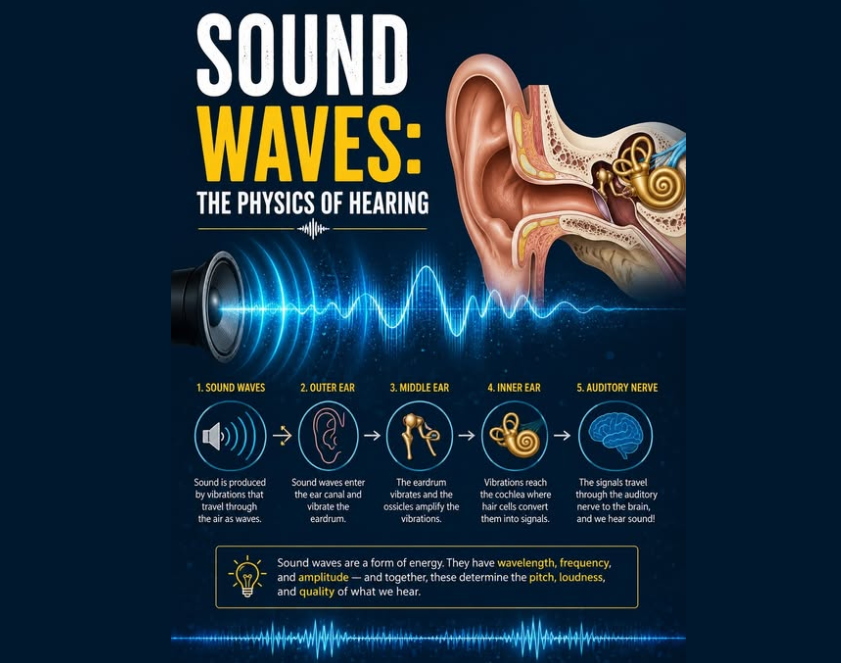
    Sound is all around us, but how do we actually hear it? In this topic, we explore how sound waves travel through the air and how our ears convert vibrations into signals that the brain understands as sound.
    Learn about frequency, wavelength, amplitude, pitch, and loudness, and discover the fascinating physics behind hearing!
    RSIF8 Roll no 68 Task no 172 Task topic; 🔊 Sound Waves: The Physics of Hearing Sound is all around us, but how do we actually hear it? In this topic, we explore how sound waves travel through the air and how our ears convert vibrations into signals that the brain understands as sound. 🎧 Learn about frequency, wavelength, amplitude, pitch, and loudness, and discover the fascinating physics behind hearing! 🧠🌊
    0 Commentarios 0 Acciones 1159 Views
  • #rsisb
    Roll no.239
    Canva Post no.49
    Foundation Level


    Sound is an essential part of our everyday lives. We hear people speaking, music playing, birds singing, and many other sounds around us. But have you ever wondered how sound travels from one place to another? The answer lies in **sound waves**—vibrations that carry energy through a medium such as air, water, or solids.

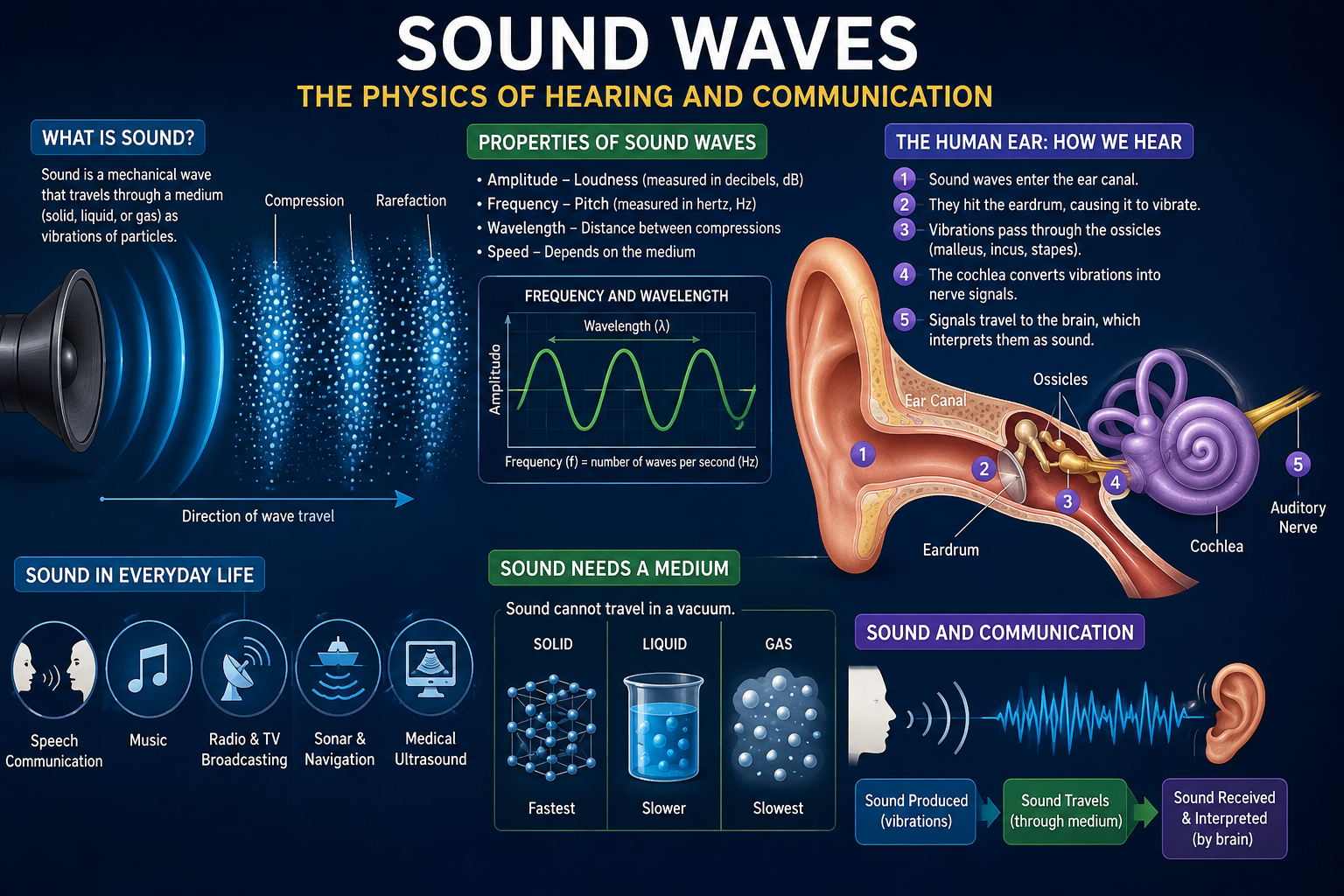
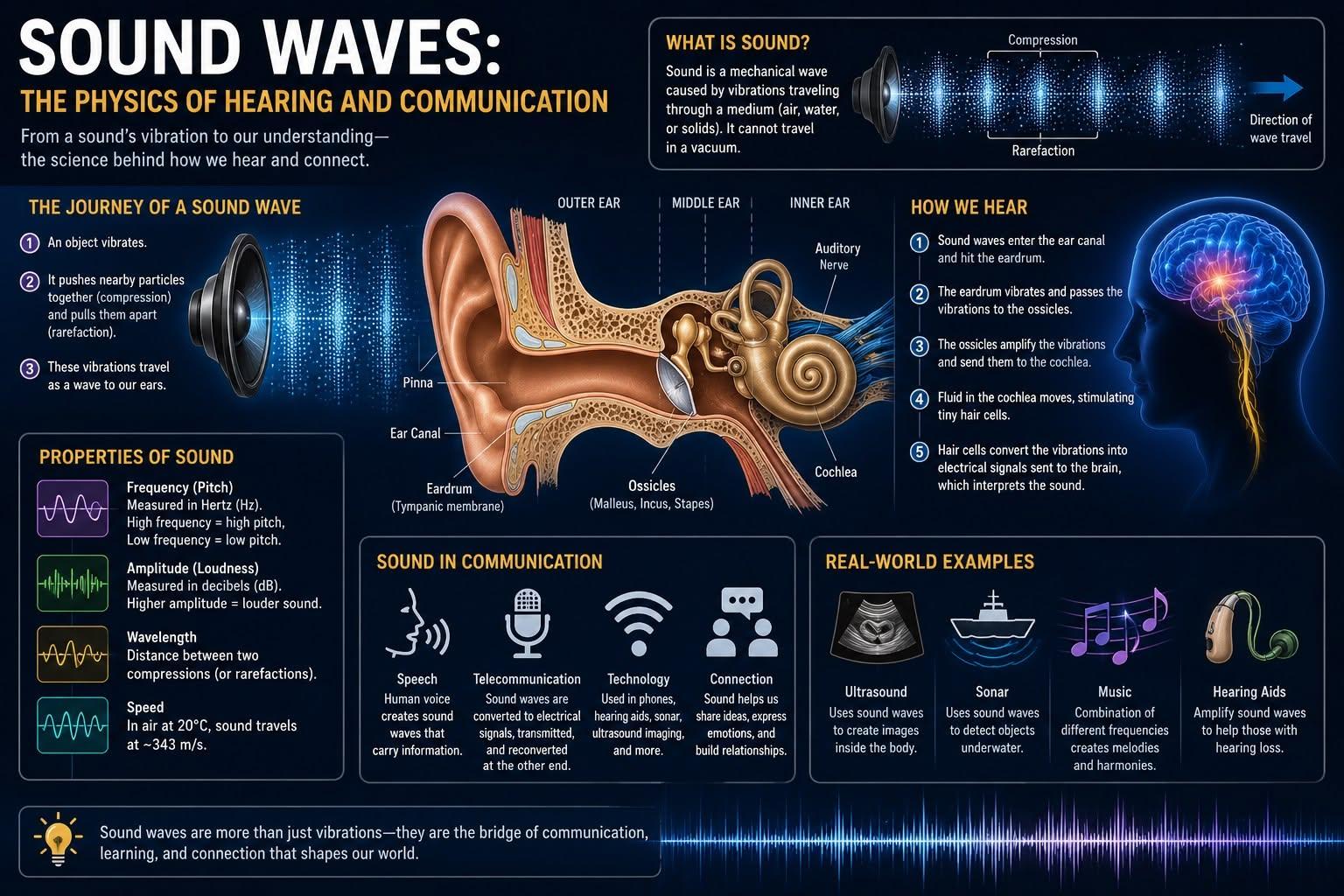
    Sound is produced when an object **vibrates**. These vibrations cause nearby particles to move back and forth, creating a series of compressions and rarefactions. This movement travels outward as a wave. Unlike light, sound cannot travel through a vacuum because it needs particles to carry the vibrations.

    The characteristics of sound include **frequency, amplitude, wavelength, and speed**. Frequency determines the **pitch** of a sound: higher frequencies produce higher-pitched sounds, while lower frequencies produce deeper sounds. Amplitude is related to the **loudness** of a sound. Larger vibrations generally create louder sounds.

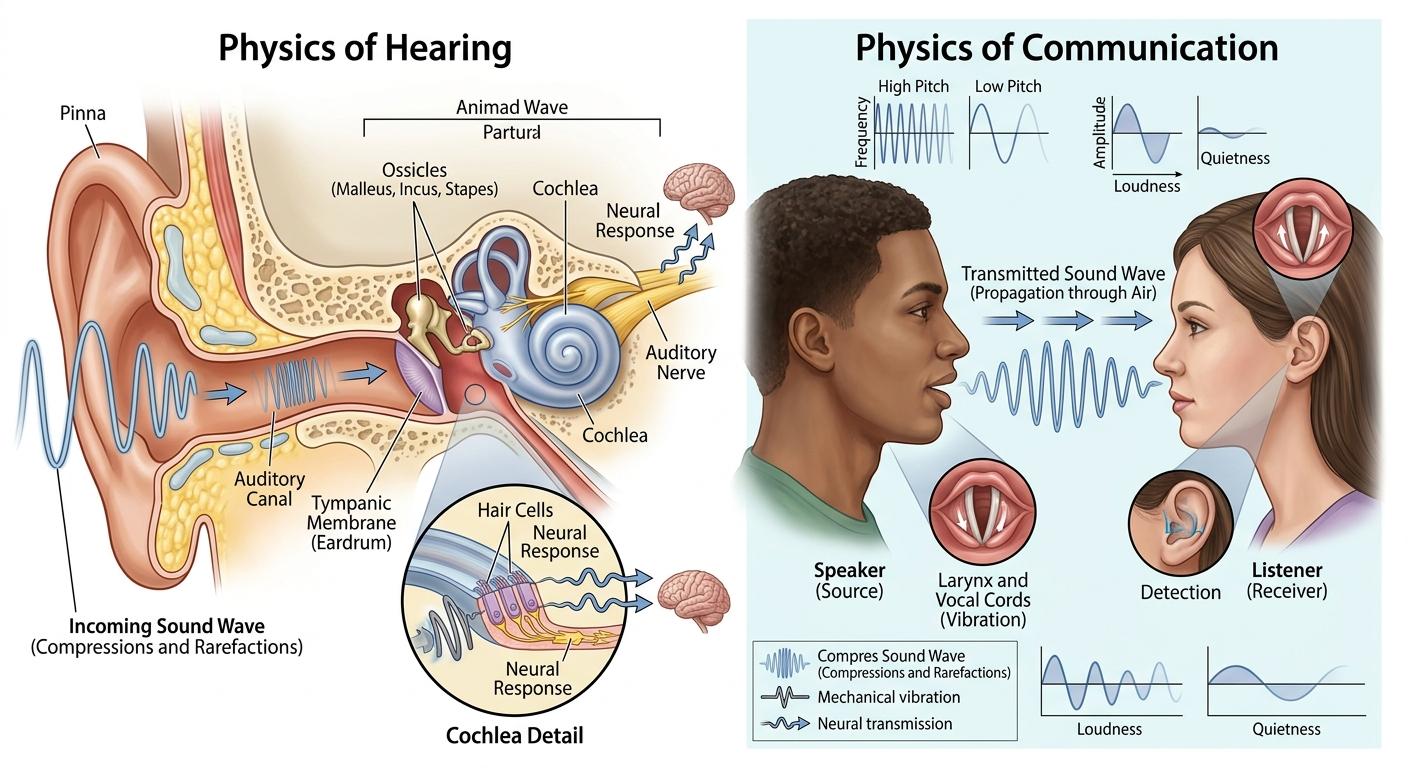
    Our ears are remarkable organs designed to detect these waves. Sound waves enter the ear and cause the **eardrum** to vibrate. These vibrations are transmitted through tiny bones in the middle ear and eventually reach the inner ear, where specialized cells convert them into electrical signals. The brain then interprets these signals as meaningful sounds.

    Sound waves also play a vital role in **human communication**. When we speak, our vocal cords vibrate and produce sound waves. These waves travel through the air to another person's ears, allowing them to hear and understand our words. Modern technology uses the same principles in telephones, microphones, radios, and other communication devices.

    The study of sound helps us understand not only hearing and communication but also music, medicine, engineering, and technology. From the simple vibration of a guitar string to advanced ultrasound technology, sound waves demonstrate the fascinating connection between **physics and everyday life**.

    **Sound is more than something we hear—it is energy in motion, carrying information and connecting us with the world around us.**

    #SoundWaves #Physics #Science #Hearing #Communication #Education #Learning #Waves #Technology
    #rsisb Roll no.239 Canva Post no.49 Foundation Level Sound is an essential part of our everyday lives. We hear people speaking, music playing, birds singing, and many other sounds around us. But have you ever wondered how sound travels from one place to another? The answer lies in **sound waves**—vibrations that carry energy through a medium such as air, water, or solids. Sound is produced when an object **vibrates**. These vibrations cause nearby particles to move back and forth, creating a series of compressions and rarefactions. This movement travels outward as a wave. Unlike light, sound cannot travel through a vacuum because it needs particles to carry the vibrations. The characteristics of sound include **frequency, amplitude, wavelength, and speed**. Frequency determines the **pitch** of a sound: higher frequencies produce higher-pitched sounds, while lower frequencies produce deeper sounds. Amplitude is related to the **loudness** of a sound. Larger vibrations generally create louder sounds. Our ears are remarkable organs designed to detect these waves. Sound waves enter the ear and cause the **eardrum** to vibrate. These vibrations are transmitted through tiny bones in the middle ear and eventually reach the inner ear, where specialized cells convert them into electrical signals. The brain then interprets these signals as meaningful sounds. Sound waves also play a vital role in **human communication**. When we speak, our vocal cords vibrate and produce sound waves. These waves travel through the air to another person's ears, allowing them to hear and understand our words. Modern technology uses the same principles in telephones, microphones, radios, and other communication devices. The study of sound helps us understand not only hearing and communication but also music, medicine, engineering, and technology. From the simple vibration of a guitar string to advanced ultrasound technology, sound waves demonstrate the fascinating connection between **physics and everyday life**. 🌟 **Sound is more than something we hear—it is energy in motion, carrying information and connecting us with the world around us.** #SoundWaves #Physics #Science #Hearing #Communication #Education #Learning #Waves #Technology 🔊🌍🎵
    0 Commentarios 0 Acciones 4783 Views
  • #rsisb
    Roll no.247
    Foundation level

    # Sound Waves: The Physics of Hearing and Communication

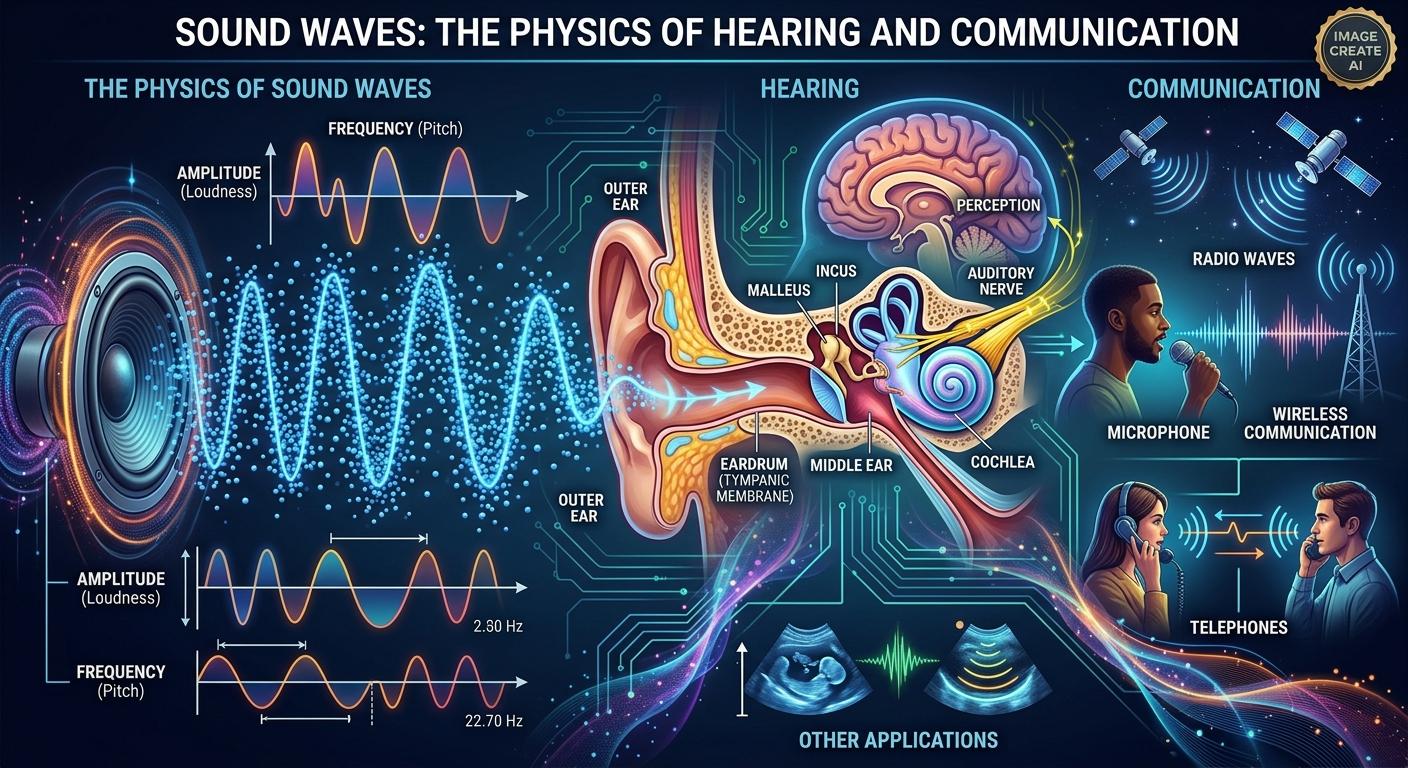
    Have you ever wondered how a sound travels from one place to another? How does a musical instrument produce beautiful melodies? How can we hear someone speaking from across a room? The fascinating answer lies in the science of **sound waves!**

    In this exciting exploration of **“Sound Waves: The Physics of Hearing and Communication,”** we dive into the amazing world of sound and discover the physics behind one of the most important ways humans experience and understand the world around them.

    Sound is a form of energy that travels through a medium such as air, water, or solids. When an object vibrates, it causes nearby particles to vibrate, creating a wave that carries energy from one location to another. These vibrations eventually reach our ears, allowing our brains to recognize sounds.

    We’ll explore important concepts such as **frequency, wavelength, amplitude, speed, and pitch**. Understanding these properties helps explain why some sounds are high or low, loud or soft.

    The journey of sound into the human ear is equally fascinating! Sound waves enter the ear and cause tiny structures to vibrate. These vibrations are transformed into electrical signals that travel to the brain, where they are interpreted as meaningful sounds. This incredible process allows us to enjoy music , understand speech , recognize familiar sounds , and communicate with people around us.

    Communication depends heavily on sound. From everyday conversations to public speaking, telephone calls, radio broadcasts, and educational videos, sound allows information to travel between people. Modern technology also uses the principles of sound waves in microphones, speakers, headphones, medical imaging, and many other applications.

    This topic is a wonderful opportunity for students, science lovers, and curious minds to connect **physics with everyday life**. Instead of thinking of sound as something we simply hear, we can understand it as a physical phenomenon involving vibrations, energy, waves, and the remarkable human hearing system.

    **In this learning journey, you can discover:**
    What sound waves are
    How vibrations create sound
    How sound travels through different materials
    The relationship between frequency and pitch
    How amplitude affects loudness
    How the human ear detects sound
    How the brain interprets sound signals
    How sound enables communication
    How microphones and speakers work
    Everyday applications of sound-wave technology

    **Sound is everywhere!** From the gentle sound of rain to birds singing , from the voices of our friends to the music we enjoy , sound surrounds us every day. By understanding its physics, we gain a deeper appreciation for the invisible waves that connect our world.

    So get ready to listen, learn, explore, and discover the fascinating science behind the sounds we hear every day!

    **Learn the science. Understand the waves. Discover the power of sound!**

    #SoundWaves #Physics #Science #PhysicsOfSound #Hearing #Communication #Waves #SoundPhysics #ScienceEducation #PhysicsEducation #LearnScience #STEM #STEMEducation #HumanEar #Frequency #Amplitude #Wavelength #Pitch #Vibrations #ScienceForStudents #EducationalVideo #Learning #ScienceExploration #Technology #Acoustics #SoundAndCommunication #Curiosity #Knowledge #Education #ExploreScience
    #rsisb Roll no.247 Foundation level # 🔊 Sound Waves: The Physics of Hearing and Communication 🎧🌊 Have you ever wondered how a sound travels from one place to another? 🤔🔊 How does a musical instrument produce beautiful melodies? 🎵 How can we hear someone speaking from across a room? 🗣️👂 The fascinating answer lies in the science of **sound waves!** 🌊✨ In this exciting exploration of **“Sound Waves: The Physics of Hearing and Communication,”** we dive into the amazing world of sound and discover the physics behind one of the most important ways humans experience and understand the world around them. 🌍🔬 Sound is a form of energy that travels through a medium such as air, water, or solids. 🌬️💧🪨 When an object vibrates, it causes nearby particles to vibrate, creating a wave that carries energy from one location to another. These vibrations eventually reach our ears, allowing our brains to recognize sounds. 🧠👂💡 We’ll explore important concepts such as **frequency, wavelength, amplitude, speed, and pitch**. 📚📐 Understanding these properties helps explain why some sounds are high or low, loud or soft. 🎶🔉🔊 The journey of sound into the human ear is equally fascinating! 👂✨ Sound waves enter the ear and cause tiny structures to vibrate. These vibrations are transformed into electrical signals that travel to the brain, where they are interpreted as meaningful sounds. 🧠⚡ This incredible process allows us to enjoy music 🎼, understand speech 🗣️, recognize familiar sounds 👋, and communicate with people around us. ❤️🌎 Communication depends heavily on sound. From everyday conversations to public speaking, telephone calls, radio broadcasts, and educational videos, sound allows information to travel between people. 📞📻🎙️ Modern technology also uses the principles of sound waves in microphones, speakers, headphones, medical imaging, and many other applications. 💻🎧🔬 This topic is a wonderful opportunity for students, science lovers, and curious minds to connect **physics with everyday life**. 🌟📖 Instead of thinking of sound as something we simply hear, we can understand it as a physical phenomenon involving vibrations, energy, waves, and the remarkable human hearing system. 🌊⚛️👂 🎯 **In this learning journey, you can discover:** 🔹 What sound waves are 🔹 How vibrations create sound 🔹 How sound travels through different materials 🔹 The relationship between frequency and pitch 🔹 How amplitude affects loudness 🔹 How the human ear detects sound 🔹 How the brain interprets sound signals 🔹 How sound enables communication 🔹 How microphones and speakers work 🔹 Everyday applications of sound-wave technology 🌈 **Sound is everywhere!** From the gentle sound of rain 🌧️ to birds singing 🐦, from the voices of our friends 🗣️ to the music we enjoy 🎵, sound surrounds us every day. By understanding its physics, we gain a deeper appreciation for the invisible waves that connect our world. 🌍🌊✨ So get ready to listen, learn, explore, and discover the fascinating science behind the sounds we hear every day! 🔊🎧🔬📚 💡 **Learn the science. Understand the waves. Discover the power of sound!** 🌊🔊✨ #SoundWaves #Physics #Science #PhysicsOfSound #Hearing #Communication #Waves #SoundPhysics #ScienceEducation #PhysicsEducation #LearnScience #STEM #STEMEducation #HumanEar #Frequency #Amplitude #Wavelength #Pitch #Vibrations #ScienceForStudents #EducationalVideo #Learning #ScienceExploration #Technology #Acoustics #SoundAndCommunication #Curiosity #Knowledge #Education #ExploreScience 🔬📚🌍🎧🔊✨

    0 Commentarios 0 Acciones 7407 Views
  • #rsisb
    Roll no.239
    Story Post no.21
    Foundation Level

    Sound is all around us! From the voices we hear to the music we enjoy , sound waves play an important role in our daily lives. But have you ever wondered how sound travels and how our ears help us hear?

    Sound is produced when an object vibrates. These vibrations travel through a medium such as air, water, or solids in the form of **sound waves** . Our ears receive these waves and send signals to the brain, allowing us to recognize voices, music, and many other sounds.

    The physics of sound helps us understand important concepts such as **frequency, amplitude, wavelength, pitch, and loudness** . Sound is not only a fascinating scientific phenomenon—it is also essential for **hearing, communication, technology, music, and human connection**

    Let's explore the amazing world of sound and discover how invisible waves help us communicate with the world around us!

    #SoundWaves #Physics #PhysicsOfSound #Science #Hearing #Communication #Acoustics #SoundScience #Frequency #Amplitude #Wavelength #Vibrations #Pitch #Loudness #HumanEar #HowWeHear #ScienceEducation #LearnScience #LearnPhysics #EducationalContent #ScienceFacts #Knowledge #Technology #Audio #Music #WavePhysics #ExploreScience #StudentLife ‍ #EducationMatters #DiscoverMore
    #rsisb Roll no.239 Story Post no.21 Foundation Level Sound is all around us! From the voices we hear 🗣️ to the music we enjoy 🎶, sound waves play an important role in our daily lives. But have you ever wondered how sound travels and how our ears help us hear? 🤔🔬 Sound is produced when an object vibrates. These vibrations travel through a medium such as air, water, or solids in the form of **sound waves** 🌊. Our ears receive these waves and send signals to the brain, allowing us to recognize voices, music, and many other sounds. 👂🧠✨ The physics of sound helps us understand important concepts such as **frequency, amplitude, wavelength, pitch, and loudness** 📊🔊. Sound is not only a fascinating scientific phenomenon—it is also essential for **hearing, communication, technology, music, and human connection** 🌍❤️🎵 Let's explore the amazing world of sound and discover how invisible waves help us communicate with the world around us! 🚀🔬🌊 #SoundWaves 🔊 #Physics 🌊 #PhysicsOfSound 🎓 #Science 🔬 #Hearing 👂 #Communication 🗣️ #Acoustics 🎧 #SoundScience 📚 #Frequency 📈 #Amplitude 📊 #Wavelength 🌐 #Vibrations ⚡ #Pitch 🎵 #Loudness 🔊 #HumanEar 👂 #HowWeHear 🧠 #ScienceEducation 🎓 #LearnScience 📖 #LearnPhysics 💡 #EducationalContent 📚 #ScienceFacts 🔍 #Knowledge ✨ #Technology 💻 #Audio 🎶 #Music 🎵 #WavePhysics 🌊 #ExploreScience 🚀 #StudentLife 🧑‍🎓 #EducationMatters 🌟 #DiscoverMore 🔭
    0 Commentarios 0 Acciones 6742 Views
  • #rsisb
    Roll No.240
    Story No.14
    Foundation Level

    **Sound Waves: The Physics of Hearing and Communication**

    Sound waves are invisible vibrations that travel through air, water, and solids, allowing us to hear and communicate with the world around us. Every sound begins when an object vibrates, creating waves that move through a medium until they reach our ears. These waves carry energy, not matter, and their frequency determines the pitch while their amplitude controls the loudness of the sound.

    Inside the human ear, sound waves follow an incredible journey. They enter through the outer ear, vibrate the eardrum, and pass through three tiny bones called the ossicles. These vibrations then reach the cochlea, where thousands of tiny hair cells convert them into electrical signals. The auditory nerve carries these signals to the brain, which interprets them as speech, music, or other familiar sounds.

    Sound plays a vital role in communication, education, entertainment, medicine, and technology. From conversations and musical performances to ultrasound imaging, sonar systems, and hearing aids, the science of sound has transformed countless aspects of modern life. Understanding how sound waves travel and interact with different materials helps scientists and engineers develop better communication systems and innovative technologies.

    The study of sound waves demonstrates the fascinating connection between physics and everyday life. By exploring concepts such as vibration, frequency, wavelength, amplitude, and wave speed, we gain a deeper appreciation of how hearing works and how sound enables people to connect, learn, and share ideas across the world.

    Rehan School Islamabad Campus
    Asma Shaheen EducationWali
    Irum Asim
    Saima Happinesswali
    #rsisb Roll No.240 Story No.14 Foundation Level **Sound Waves: The Physics of Hearing and Communication** Sound waves are invisible vibrations that travel through air, water, and solids, allowing us to hear and communicate with the world around us. Every sound begins when an object vibrates, creating waves that move through a medium until they reach our ears. These waves carry energy, not matter, and their frequency determines the pitch while their amplitude controls the loudness of the sound. Inside the human ear, sound waves follow an incredible journey. They enter through the outer ear, vibrate the eardrum, and pass through three tiny bones called the ossicles. These vibrations then reach the cochlea, where thousands of tiny hair cells convert them into electrical signals. The auditory nerve carries these signals to the brain, which interprets them as speech, music, or other familiar sounds. Sound plays a vital role in communication, education, entertainment, medicine, and technology. From conversations and musical performances to ultrasound imaging, sonar systems, and hearing aids, the science of sound has transformed countless aspects of modern life. Understanding how sound waves travel and interact with different materials helps scientists and engineers develop better communication systems and innovative technologies. The study of sound waves demonstrates the fascinating connection between physics and everyday life. By exploring concepts such as vibration, frequency, wavelength, amplitude, and wave speed, we gain a deeper appreciation of how hearing works and how sound enables people to connect, learn, and share ideas across the world. Rehan School Islamabad Campus Asma Shaheen EducationWali Irum Asim Saima Happinesswali
    0 Commentarios 0 Acciones 6029 Views