History of Pakistan’s Development Over 5,000 Years
The land that is now Pakistan has a rich history, serving as the cradle of ancient civilizations, a center of Islamic culture, and a battleground for empires. Modern Pakistan emerged as an independent nation in 1947, but its historical roots stretch back over 5,000 years.
1. Ancient Civilizations (c. 3000 BCE – 1500 BCE)
Indus Valley Civilization (c. 3000–1500 BCE)
• The Indus Valley Civilization, one of the world’s earliest urban societies, thrived in the region now comprising Pakistan.
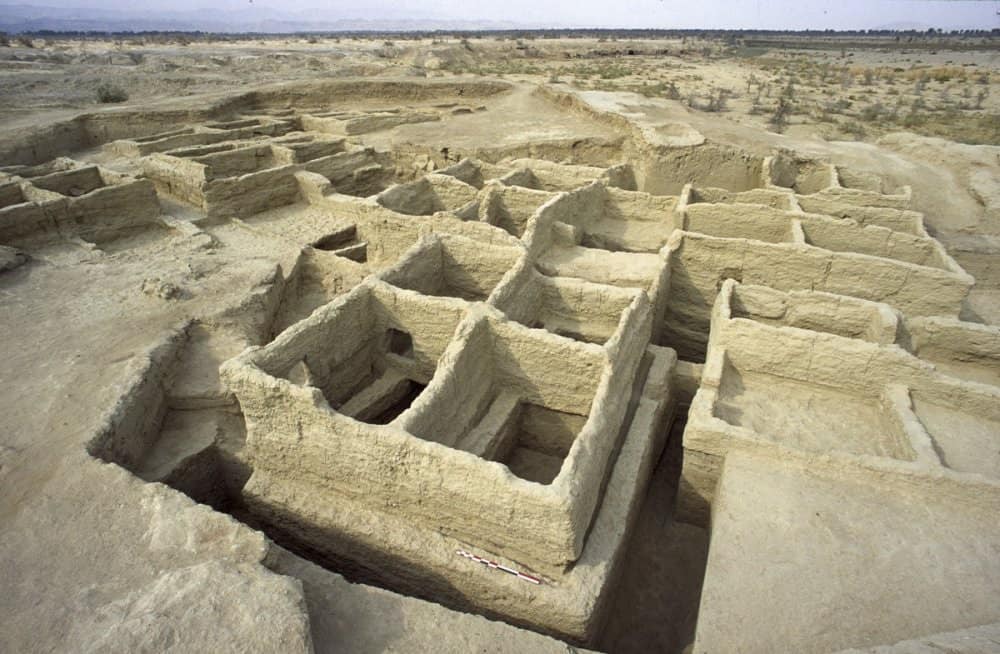
• Major cities like Mohenjo-Daro, Harappa, and Mehrgarh (even earlier) showcased advanced urban planning, drainage systems, and trade.
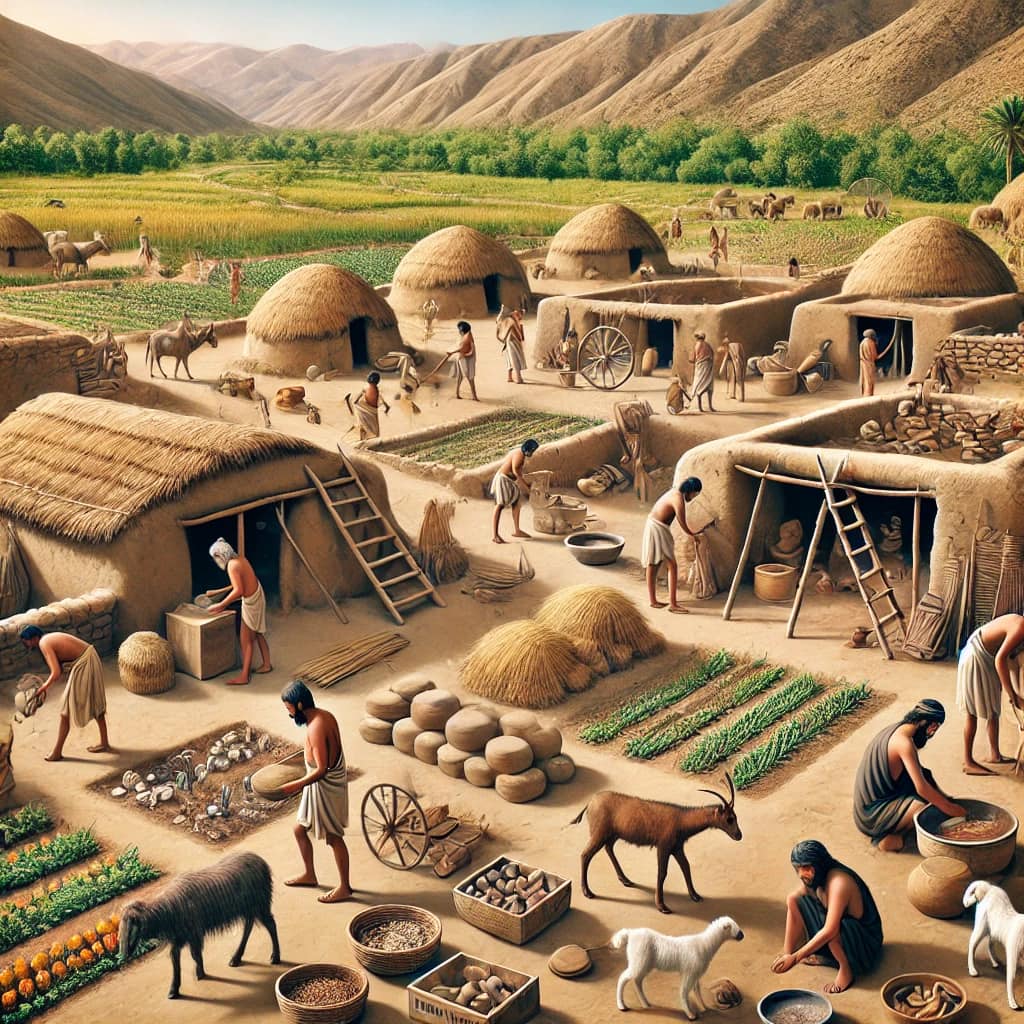
• The civilization’s economy was based on agriculture, trade (with Mesopotamia), and craftsmanship.
• Declined around 1500 BCE due to climate change, flooding, or possible Aryan migrations.
2. Vedic and Early Historical Period (1500 BCE – 500 BCE)
• After the decline of the Indus Valley Civilization, the Indo-Aryans migrated into the region, introducing the Vedic culture, which became the foundation of Hinduism.
• The region was part of the early Mahajanapadas, ancient republics or kingdoms.
• Early Persian influence arrived with the Achaemenid Empire (c. 500 BCE), incorporating the area into their empire.
3. Classical Period (500 BCE – 711 CE)
Maurya Empire (322–185 BCE)
• Under the Mauryan Empire (founded by Chandragupta Maurya), the region became part of a unified Indian subcontinent.
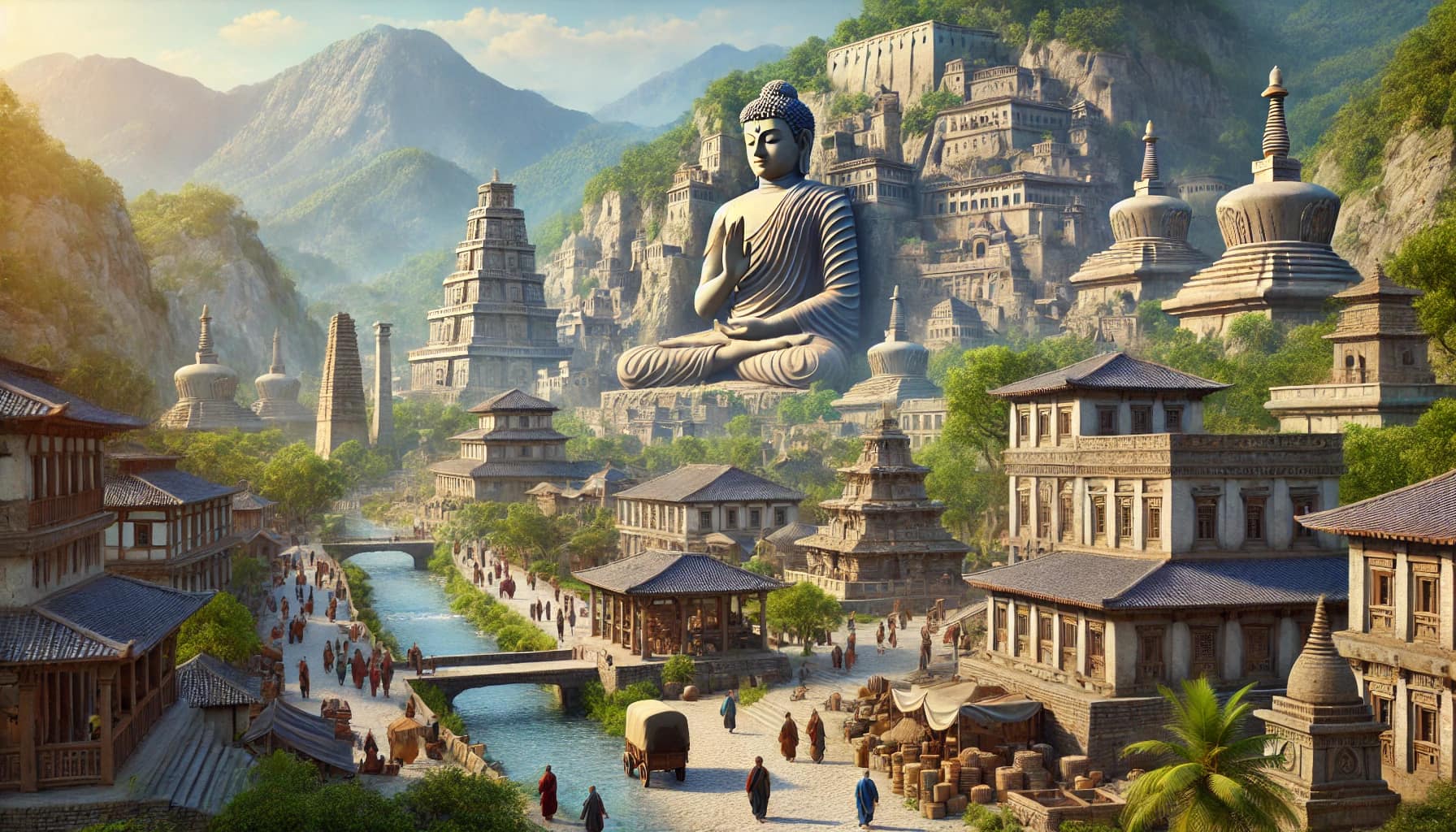
• Ashoka, the most famous Mauryan ruler, promoted Buddhism and established stupas and inscriptions in areas like Taxila.
Greco-Bactrian and Kushan Empires (200 BCE – 300 CE)
• Alexander the Great invaded in 326 BCE, leaving behind Greek cultural influences.
• The region came under the Greco-Bactrian Kingdom and later the Kushan Empire, which spread Buddhism and facilitated trade on the Silk Road.
Gupta and Hindu Rule (300–711 CE)
• Parts of modern Pakistan were influenced by the Gupta Empire, though local dynasties maintained control in areas like Sindh.
• Hinduism and Buddhism coexisted, with Taxila becoming a major center for education and culture.
4. Islamic Era (711–1857 CE)
Arrival of Islam (711 CE)
• Muhammad bin Qasim conquered Sindh in 711 CE, introducing Islam to the Indian subcontinent.
• Sindh became a part of the Umayyad Caliphate and later other Islamic empires, with local Muslim rulers integrating Islamic culture into the region.
Delhi Sultanate (1206–1526)
• The region was incorporated into the Delhi Sultanate, a major Islamic empire that ruled northern India.
• Persian culture, language, and Islamic architecture began to flourish.
Mughal Empire (1526–1857)
• Under the Mughals, Pakistan became an integral part of their empire.
• Cities like Lahore became cultural and administrative centers, with stunning architectural achievements like the Badshahi Mosque and the Shalimar Gardens.
• Mughal influence shaped the region’s art, cuisine, and administration, creating a lasting Islamic identity.
5. Colonial Period (1857–1947)
British East India Company and British Raj
• After the 1857 Rebellion, the British took direct control of India, including what is now Pakistan.
• The region became vital to British interests due to its strategic location and fertile lands.
• Infrastructure like railways, canals, and cities such as Karachi were developed, but largely to serve British economic interests.
• The All-India Muslim League (1906) was formed to protect Muslim interests under British rule.
Struggle for Independence
• The idea of a separate Muslim state emerged under Sir Syed Ahmed Khan, who advocated for Muslim education and identity.
• Under leaders like Muhammad Iqbal and Muhammad Ali Jinnah, the Pakistan Movement gained momentum.
• The Lahore Resolution (1940) formally called for an independent state for Muslims in the Indian subcontinent.
• Partition of British India in 1947 led to the creation of Pakistan, a separate homeland for Muslims.
6. Modern Pakistan (1947–Present)
Post-Independence Period (1947–1971)
• 1947 Partition: Pakistan was divided into East Pakistan (now Bangladesh) and West Pakistan (present Pakistan), separated by 1,600 km of Indian territory.
• Challenges: The country faced massive migration, violence, and the task of nation-building.
• Constitution of Pakistan: The country adopted its first constitution in 1956, declaring itself an Islamic Republic.
Military and Political Instability
• Frequent military coups and political instability marked early decades.
• The Indo-Pak Wars (1947, 1965, 1971) strained resources and defined relations with India.
• 1971 Civil War: East Pakistan, with support from India, gained independence as Bangladesh.
Development and Growth (1972–2000)
• Economic Growth: Focused on industrialization, agricultural reforms, and trade.
• Nuclear Program: Pakistan became a nuclear power in 1998 under Prime Minister Nawaz Sharif.
• Islamic Policies: Under Zia-ul-Haq (1977–1988), Pakistan underwent Islamization, with laws reflecting Sharia principles.
Post-2000s: Modern Challenges and Achievements
• War on Terror: Pakistan became a key U.S. ally after 9/11, facing both economic aid and internal challenges due to extremism.
• Economic Growth: Investments in infrastructure (e.g., CPEC, a China-Pakistan partnership) and industries like textiles and IT.
• Political Landscape: Transition between military rule and civilian governments, with leaders like Benazir Bhutto, Nawaz Sharif, and Imran Khan shaping policies.
Key Contributions of Pakistan
1. Cultural Identity: Fusion of ancient heritage (Indus Valley, Buddhist sites) with Islamic culture, reflected in architecture, art, and festivals.
2. Education and Science: Pioneered nuclear technology; notable scientists like Abdus Salam, a Nobel laureate.
3. Geopolitical Importance: Strategic location as a gateway to Central Asia and South Asia.
4. Economic Aspirations: Focus on trade, infrastructure development, and industrialization.
Summary Timeline
1. Ancient Civilizations: Indus Valley (3000 BCE – 1500 BCE).
2. Islamic Arrival: Muhammad bin Qasim’s conquest (711 CE).
3. Mughal Golden Age: 16th–17th centuries.
4. Colonial Rule: British Raj (1857–1947).
5. Modern Era: Formation of Pakistan (1947) to present.
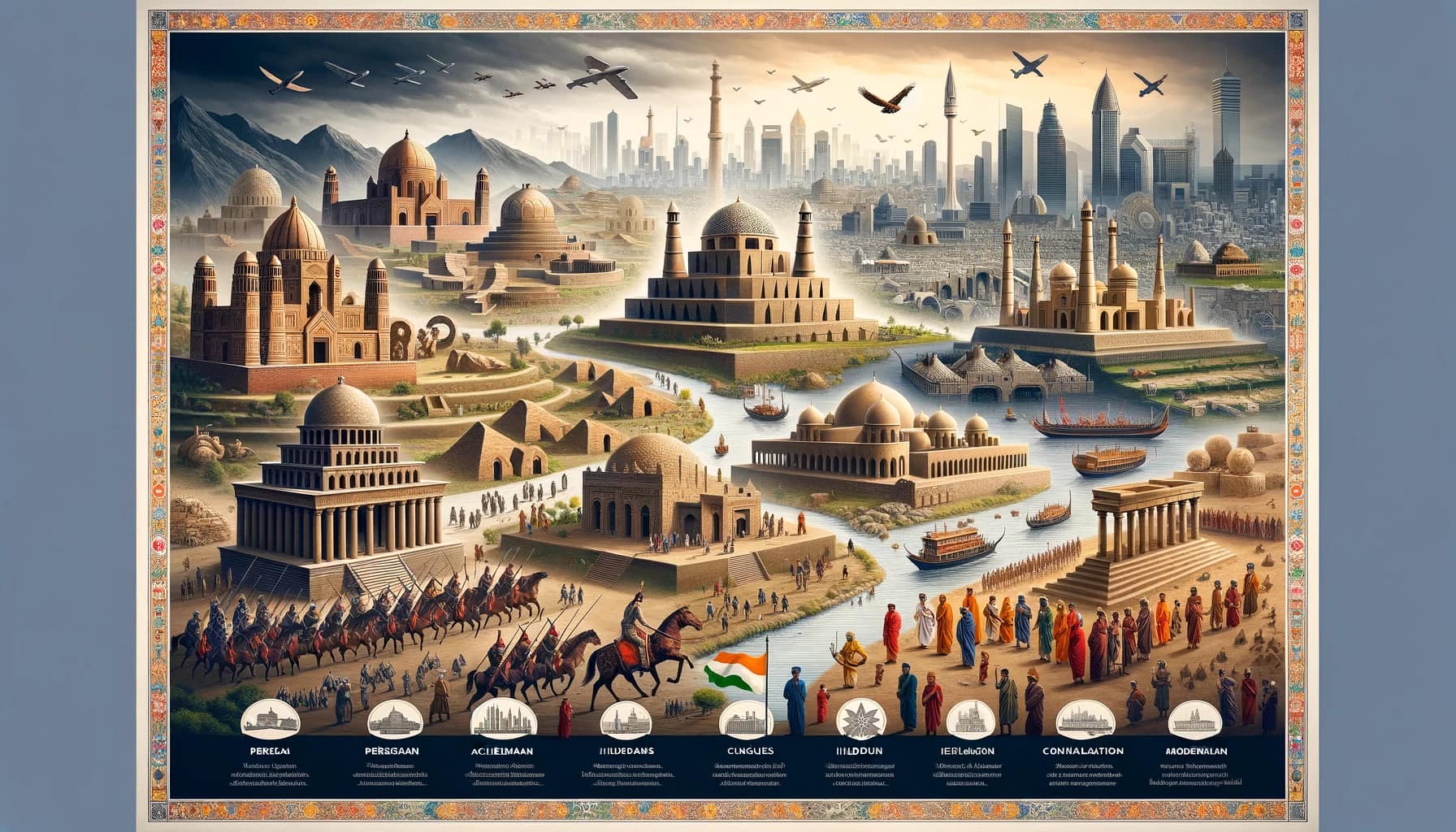
Pakistan’s history reflects a dynamic interplay of ancient heritage, Islamic culture, and modern statehood, making it a unique and diverse nation.
The land that is now Pakistan has a rich history, serving as the cradle of ancient civilizations, a center of Islamic culture, and a battleground for empires. Modern Pakistan emerged as an independent nation in 1947, but its historical roots stretch back over 5,000 years.
1. Ancient Civilizations (c. 3000 BCE – 1500 BCE)
Indus Valley Civilization (c. 3000–1500 BCE)
• The Indus Valley Civilization, one of the world’s earliest urban societies, thrived in the region now comprising Pakistan.
• Major cities like Mohenjo-Daro, Harappa, and Mehrgarh (even earlier) showcased advanced urban planning, drainage systems, and trade.
• The civilization’s economy was based on agriculture, trade (with Mesopotamia), and craftsmanship.
• Declined around 1500 BCE due to climate change, flooding, or possible Aryan migrations.
2. Vedic and Early Historical Period (1500 BCE – 500 BCE)
• After the decline of the Indus Valley Civilization, the Indo-Aryans migrated into the region, introducing the Vedic culture, which became the foundation of Hinduism.
• The region was part of the early Mahajanapadas, ancient republics or kingdoms.
• Early Persian influence arrived with the Achaemenid Empire (c. 500 BCE), incorporating the area into their empire.
3. Classical Period (500 BCE – 711 CE)
Maurya Empire (322–185 BCE)
• Under the Mauryan Empire (founded by Chandragupta Maurya), the region became part of a unified Indian subcontinent.
• Ashoka, the most famous Mauryan ruler, promoted Buddhism and established stupas and inscriptions in areas like Taxila.
Greco-Bactrian and Kushan Empires (200 BCE – 300 CE)
• Alexander the Great invaded in 326 BCE, leaving behind Greek cultural influences.
• The region came under the Greco-Bactrian Kingdom and later the Kushan Empire, which spread Buddhism and facilitated trade on the Silk Road.
Gupta and Hindu Rule (300–711 CE)
• Parts of modern Pakistan were influenced by the Gupta Empire, though local dynasties maintained control in areas like Sindh.
• Hinduism and Buddhism coexisted, with Taxila becoming a major center for education and culture.
4. Islamic Era (711–1857 CE)
Arrival of Islam (711 CE)
• Muhammad bin Qasim conquered Sindh in 711 CE, introducing Islam to the Indian subcontinent.
• Sindh became a part of the Umayyad Caliphate and later other Islamic empires, with local Muslim rulers integrating Islamic culture into the region.
Delhi Sultanate (1206–1526)
• The region was incorporated into the Delhi Sultanate, a major Islamic empire that ruled northern India.
• Persian culture, language, and Islamic architecture began to flourish.
Mughal Empire (1526–1857)
• Under the Mughals, Pakistan became an integral part of their empire.
• Cities like Lahore became cultural and administrative centers, with stunning architectural achievements like the Badshahi Mosque and the Shalimar Gardens.
• Mughal influence shaped the region’s art, cuisine, and administration, creating a lasting Islamic identity.
5. Colonial Period (1857–1947)
British East India Company and British Raj
• After the 1857 Rebellion, the British took direct control of India, including what is now Pakistan.
• The region became vital to British interests due to its strategic location and fertile lands.
• Infrastructure like railways, canals, and cities such as Karachi were developed, but largely to serve British economic interests.
• The All-India Muslim League (1906) was formed to protect Muslim interests under British rule.
Struggle for Independence
• The idea of a separate Muslim state emerged under Sir Syed Ahmed Khan, who advocated for Muslim education and identity.
• Under leaders like Muhammad Iqbal and Muhammad Ali Jinnah, the Pakistan Movement gained momentum.
• The Lahore Resolution (1940) formally called for an independent state for Muslims in the Indian subcontinent.
• Partition of British India in 1947 led to the creation of Pakistan, a separate homeland for Muslims.
6. Modern Pakistan (1947–Present)
Post-Independence Period (1947–1971)
• 1947 Partition: Pakistan was divided into East Pakistan (now Bangladesh) and West Pakistan (present Pakistan), separated by 1,600 km of Indian territory.
• Challenges: The country faced massive migration, violence, and the task of nation-building.
• Constitution of Pakistan: The country adopted its first constitution in 1956, declaring itself an Islamic Republic.
Military and Political Instability
• Frequent military coups and political instability marked early decades.
• The Indo-Pak Wars (1947, 1965, 1971) strained resources and defined relations with India.
• 1971 Civil War: East Pakistan, with support from India, gained independence as Bangladesh.
Development and Growth (1972–2000)
• Economic Growth: Focused on industrialization, agricultural reforms, and trade.
• Nuclear Program: Pakistan became a nuclear power in 1998 under Prime Minister Nawaz Sharif.
• Islamic Policies: Under Zia-ul-Haq (1977–1988), Pakistan underwent Islamization, with laws reflecting Sharia principles.
Post-2000s: Modern Challenges and Achievements
• War on Terror: Pakistan became a key U.S. ally after 9/11, facing both economic aid and internal challenges due to extremism.
• Economic Growth: Investments in infrastructure (e.g., CPEC, a China-Pakistan partnership) and industries like textiles and IT.
• Political Landscape: Transition between military rule and civilian governments, with leaders like Benazir Bhutto, Nawaz Sharif, and Imran Khan shaping policies.
Key Contributions of Pakistan
1. Cultural Identity: Fusion of ancient heritage (Indus Valley, Buddhist sites) with Islamic culture, reflected in architecture, art, and festivals.
2. Education and Science: Pioneered nuclear technology; notable scientists like Abdus Salam, a Nobel laureate.
3. Geopolitical Importance: Strategic location as a gateway to Central Asia and South Asia.
4. Economic Aspirations: Focus on trade, infrastructure development, and industrialization.
Summary Timeline
1. Ancient Civilizations: Indus Valley (3000 BCE – 1500 BCE).
2. Islamic Arrival: Muhammad bin Qasim’s conquest (711 CE).
3. Mughal Golden Age: 16th–17th centuries.
4. Colonial Rule: British Raj (1857–1947).
5. Modern Era: Formation of Pakistan (1947) to present.
Pakistan’s history reflects a dynamic interplay of ancient heritage, Islamic culture, and modern statehood, making it a unique and diverse nation.
History of Pakistan’s Development Over 5,000 Years
The land that is now Pakistan has a rich history, serving as the cradle of ancient civilizations, a center of Islamic culture, and a battleground for empires. Modern Pakistan emerged as an independent nation in 1947, but its historical roots stretch back over 5,000 years.
1. Ancient Civilizations (c. 3000 BCE – 1500 BCE)
Indus Valley Civilization (c. 3000–1500 BCE)
• The Indus Valley Civilization, one of the world’s earliest urban societies, thrived in the region now comprising Pakistan.
• Major cities like Mohenjo-Daro, Harappa, and Mehrgarh (even earlier) showcased advanced urban planning, drainage systems, and trade.
• The civilization’s economy was based on agriculture, trade (with Mesopotamia), and craftsmanship.
• Declined around 1500 BCE due to climate change, flooding, or possible Aryan migrations.
2. Vedic and Early Historical Period (1500 BCE – 500 BCE)
• After the decline of the Indus Valley Civilization, the Indo-Aryans migrated into the region, introducing the Vedic culture, which became the foundation of Hinduism.
• The region was part of the early Mahajanapadas, ancient republics or kingdoms.
• Early Persian influence arrived with the Achaemenid Empire (c. 500 BCE), incorporating the area into their empire.
3. Classical Period (500 BCE – 711 CE)
Maurya Empire (322–185 BCE)
• Under the Mauryan Empire (founded by Chandragupta Maurya), the region became part of a unified Indian subcontinent.
• Ashoka, the most famous Mauryan ruler, promoted Buddhism and established stupas and inscriptions in areas like Taxila.
Greco-Bactrian and Kushan Empires (200 BCE – 300 CE)
• Alexander the Great invaded in 326 BCE, leaving behind Greek cultural influences.
• The region came under the Greco-Bactrian Kingdom and later the Kushan Empire, which spread Buddhism and facilitated trade on the Silk Road.
Gupta and Hindu Rule (300–711 CE)
• Parts of modern Pakistan were influenced by the Gupta Empire, though local dynasties maintained control in areas like Sindh.
• Hinduism and Buddhism coexisted, with Taxila becoming a major center for education and culture.
4. Islamic Era (711–1857 CE)
Arrival of Islam (711 CE)
• Muhammad bin Qasim conquered Sindh in 711 CE, introducing Islam to the Indian subcontinent.
• Sindh became a part of the Umayyad Caliphate and later other Islamic empires, with local Muslim rulers integrating Islamic culture into the region.
Delhi Sultanate (1206–1526)
• The region was incorporated into the Delhi Sultanate, a major Islamic empire that ruled northern India.
• Persian culture, language, and Islamic architecture began to flourish.
Mughal Empire (1526–1857)
• Under the Mughals, Pakistan became an integral part of their empire.
• Cities like Lahore became cultural and administrative centers, with stunning architectural achievements like the Badshahi Mosque and the Shalimar Gardens.
• Mughal influence shaped the region’s art, cuisine, and administration, creating a lasting Islamic identity.
5. Colonial Period (1857–1947)
British East India Company and British Raj
• After the 1857 Rebellion, the British took direct control of India, including what is now Pakistan.
• The region became vital to British interests due to its strategic location and fertile lands.
• Infrastructure like railways, canals, and cities such as Karachi were developed, but largely to serve British economic interests.
• The All-India Muslim League (1906) was formed to protect Muslim interests under British rule.
Struggle for Independence
• The idea of a separate Muslim state emerged under Sir Syed Ahmed Khan, who advocated for Muslim education and identity.
• Under leaders like Muhammad Iqbal and Muhammad Ali Jinnah, the Pakistan Movement gained momentum.
• The Lahore Resolution (1940) formally called for an independent state for Muslims in the Indian subcontinent.
• Partition of British India in 1947 led to the creation of Pakistan, a separate homeland for Muslims.
6. Modern Pakistan (1947–Present)
Post-Independence Period (1947–1971)
• 1947 Partition: Pakistan was divided into East Pakistan (now Bangladesh) and West Pakistan (present Pakistan), separated by 1,600 km of Indian territory.
• Challenges: The country faced massive migration, violence, and the task of nation-building.
• Constitution of Pakistan: The country adopted its first constitution in 1956, declaring itself an Islamic Republic.
Military and Political Instability
• Frequent military coups and political instability marked early decades.
• The Indo-Pak Wars (1947, 1965, 1971) strained resources and defined relations with India.
• 1971 Civil War: East Pakistan, with support from India, gained independence as Bangladesh.
Development and Growth (1972–2000)
• Economic Growth: Focused on industrialization, agricultural reforms, and trade.
• Nuclear Program: Pakistan became a nuclear power in 1998 under Prime Minister Nawaz Sharif.
• Islamic Policies: Under Zia-ul-Haq (1977–1988), Pakistan underwent Islamization, with laws reflecting Sharia principles.
Post-2000s: Modern Challenges and Achievements
• War on Terror: Pakistan became a key U.S. ally after 9/11, facing both economic aid and internal challenges due to extremism.
• Economic Growth: Investments in infrastructure (e.g., CPEC, a China-Pakistan partnership) and industries like textiles and IT.
• Political Landscape: Transition between military rule and civilian governments, with leaders like Benazir Bhutto, Nawaz Sharif, and Imran Khan shaping policies.
Key Contributions of Pakistan
1. Cultural Identity: Fusion of ancient heritage (Indus Valley, Buddhist sites) with Islamic culture, reflected in architecture, art, and festivals.
2. Education and Science: Pioneered nuclear technology; notable scientists like Abdus Salam, a Nobel laureate.
3. Geopolitical Importance: Strategic location as a gateway to Central Asia and South Asia.
4. Economic Aspirations: Focus on trade, infrastructure development, and industrialization.
Summary Timeline
1. Ancient Civilizations: Indus Valley (3000 BCE – 1500 BCE).
2. Islamic Arrival: Muhammad bin Qasim’s conquest (711 CE).
3. Mughal Golden Age: 16th–17th centuries.
4. Colonial Rule: British Raj (1857–1947).
5. Modern Era: Formation of Pakistan (1947) to present.
Pakistan’s history reflects a dynamic interplay of ancient heritage, Islamic culture, and modern statehood, making it a unique and diverse nation.
0 Comments
0 Shares
2509 Views