• #rsisb
    Roll no.239
    Miss zoya no. 17
    Foundation Level
    # Hazrat Jibraeel (A.S.) — The Angel of Revelation
    Hazrat Jibraeel (A.S.) is one of the most honoured angels in Islam. He is known as the angel who conveyed Allah’s revelations to His prophets by Allah’s command. He played a very important role in delivering Allah’s message to Prophet Muhammad (S.A.W.).
    The Holy Quran was revealed to Prophet Muhammad (S.A.W.) through Hazrat Jibraeel (A.S.). He is also known as **Ruh al-Ameen**, meaning the Trustworthy Spirit. His role teaches Muslims about faith, obedience, honesty, and the importance of following Allah’s guidance.
    One well-known event is the Hadith of Jibraeel, in which he came to Prophet Muhammad (S.A.W.) in the form of a man and asked questions about Islam, Iman (faith), and Ihsan (excellence in worship). These questions helped the companions understand important teachings of Islam.
    Muslims believe in Hazrat Jibraeel (A.S.) as one of Allah’s angels. His role reminds us of the importance of the Holy Quran, learning about Islam, and living according to Allah’s guidance.
    **Conclusion:** Hazrat Jibraeel (A.S.) holds a special place in Islam because he conveyed Allah’s revelation to His prophets. His story helps us understand the importance of faith, truth, and obedience to Allah.
    \#HazratJibraeel #Islam #HolyQuran #IslamicKnowledge #AngelsInIslam
    #rsisb Roll no.239 Miss zoya no. 17 Foundation Level # Hazrat Jibraeel (A.S.) — The Angel of Revelation Hazrat Jibraeel (A.S.) is one of the most honoured angels in Islam. He is known as the angel who conveyed Allah’s revelations to His prophets by Allah’s command. He played a very important role in delivering Allah’s message to Prophet Muhammad (S.A.W.). The Holy Quran was revealed to Prophet Muhammad (S.A.W.) through Hazrat Jibraeel (A.S.). He is also known as **Ruh al-Ameen**, meaning the Trustworthy Spirit. His role teaches Muslims about faith, obedience, honesty, and the importance of following Allah’s guidance. One well-known event is the Hadith of Jibraeel, in which he came to Prophet Muhammad (S.A.W.) in the form of a man and asked questions about Islam, Iman (faith), and Ihsan (excellence in worship). These questions helped the companions understand important teachings of Islam. Muslims believe in Hazrat Jibraeel (A.S.) as one of Allah’s angels. His role reminds us of the importance of the Holy Quran, learning about Islam, and living according to Allah’s guidance. **Conclusion:** Hazrat Jibraeel (A.S.) holds a special place in Islam because he conveyed Allah’s revelation to His prophets. His story helps us understand the importance of faith, truth, and obedience to Allah. \#HazratJibraeel #Islam #HolyQuran #IslamicKnowledge #AngelsInIslam 🤲📖
    0 Comments 0 Shares 771 Views 1
  • #rsisb
    Roll no.239
    Miss zoya no. 15
    Foundation Level

    Prophet Musa (peace be upon him) is one of the greatest prophets of Allah. His remarkable story teaches us powerful lessons about faith, courage, patience, justice, and trust in Allah. His life is described in several chapters of the Holy Quran, and his story continues to inspire Muslims around the world.
    Prophet Musa (AS) was sent by Allah to guide Pharaoh and the Children of Israel. Pharaoh was a cruel and arrogant ruler who oppressed the Children of Israel and refused to believe in Allah. Allah chose Musa (AS) to deliver His message and lead his people away from oppression.
    When Musa (AS) was a baby, his mother placed him in a basket in the river to protect him from Pharaoh's persecution. By Allah's plan, he was found by Pharaoh's household and grew up in the palace. Allah later reunited him with his mother, showing that His wisdom and protection are greater than any human plan.
    As Musa (AS) grew older, Allah chose him as a prophet and gave him important miracles. One of the most remarkable miracles was when his staff turned into a serpent by Allah's permission. Allah also gave him other signs to show Pharaoh the truth. However, Pharaoh remained proud and refused to accept Allah's message.
    Allah commanded Musa (AS) to lead the Children of Israel out of Egypt. When Pharaoh and his army pursued them, the people faced what seemed to be an impossible situation at the sea. Musa (AS) trusted Allah, and Allah commanded him to strike the sea with his staff. The sea parted by Allah's permission, allowing Musa (AS) and his people to cross safely. Pharaoh and his army were overwhelmed by the sea.
    Prophet Musa (AS) also received the Torah from Allah. His story reminds us that Allah guides His messengers and supports those who remain faithful to Him. Musa (AS) worked alongside his brother Harun (AS), teaching us the importance of family support, cooperation, and helping one another in the service of good.
    There are many valuable lessons in the life of Prophet Musa (AS). We learn to remain patient during difficult times, stand up against injustice, speak the truth with courage, and never lose hope in Allah's mercy. His story teaches us that even when a situation appears impossible, Allah can open a way forward.
    As Muslims, we should learn about the prophets, understand the lessons in their stories, and apply those lessons in our daily lives. We should be truthful, kind, brave, patient, and grateful to Allah for His blessings.
    **Conclusion:** The story of Prophet Musa (AS) is a timeless reminder that truth is greater than falsehood, faith is stronger than fear, and Allah's help can come when we least expect it. May Allah guide us to follow the teachings of His prophets, strengthen our faith, and help us live with patience, courage, and kindness. Ameen.
    \#ProphetMusa #MusaAS #IslamicStories #HolyQuran #Faith #Patience #TrustInAllah #IslamicEducation #Courage #LessonsFromTheQuran

    #rsisb Roll no.239 Miss zoya no. 15 Foundation Level Prophet Musa (peace be upon him) is one of the greatest prophets of Allah. His remarkable story teaches us powerful lessons about faith, courage, patience, justice, and trust in Allah. His life is described in several chapters of the Holy Quran, and his story continues to inspire Muslims around the world. Prophet Musa (AS) was sent by Allah to guide Pharaoh and the Children of Israel. Pharaoh was a cruel and arrogant ruler who oppressed the Children of Israel and refused to believe in Allah. Allah chose Musa (AS) to deliver His message and lead his people away from oppression. When Musa (AS) was a baby, his mother placed him in a basket in the river to protect him from Pharaoh's persecution. By Allah's plan, he was found by Pharaoh's household and grew up in the palace. Allah later reunited him with his mother, showing that His wisdom and protection are greater than any human plan. As Musa (AS) grew older, Allah chose him as a prophet and gave him important miracles. One of the most remarkable miracles was when his staff turned into a serpent by Allah's permission. Allah also gave him other signs to show Pharaoh the truth. However, Pharaoh remained proud and refused to accept Allah's message. Allah commanded Musa (AS) to lead the Children of Israel out of Egypt. When Pharaoh and his army pursued them, the people faced what seemed to be an impossible situation at the sea. Musa (AS) trusted Allah, and Allah commanded him to strike the sea with his staff. The sea parted by Allah's permission, allowing Musa (AS) and his people to cross safely. Pharaoh and his army were overwhelmed by the sea. Prophet Musa (AS) also received the Torah from Allah. His story reminds us that Allah guides His messengers and supports those who remain faithful to Him. Musa (AS) worked alongside his brother Harun (AS), teaching us the importance of family support, cooperation, and helping one another in the service of good. There are many valuable lessons in the life of Prophet Musa (AS). We learn to remain patient during difficult times, stand up against injustice, speak the truth with courage, and never lose hope in Allah's mercy. His story teaches us that even when a situation appears impossible, Allah can open a way forward. As Muslims, we should learn about the prophets, understand the lessons in their stories, and apply those lessons in our daily lives. We should be truthful, kind, brave, patient, and grateful to Allah for His blessings. **Conclusion:** The story of Prophet Musa (AS) is a timeless reminder that truth is greater than falsehood, faith is stronger than fear, and Allah's help can come when we least expect it. May Allah guide us to follow the teachings of His prophets, strengthen our faith, and help us live with patience, courage, and kindness. Ameen. 🤲 \#ProphetMusa #MusaAS #IslamicStories #HolyQuran #Faith #Patience #TrustInAllah #IslamicEducation #Courage #LessonsFromTheQuran

    0 Comments 0 Shares 1826 Views 4
  • Mohsin #RSF8
    #Storypost9
    Class: Foundation level
    Made by Me
    rool no:13

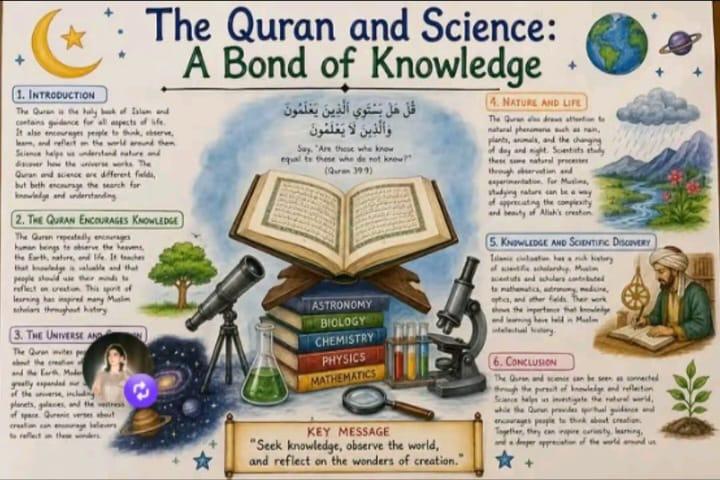
    The Quran and Science: A Bond of Knowledge

    Introduction

    The Quran is the holy book of Islam and contains guidance for all aspects of life. It also encourages people to think, observe, learn, and reflect on the world around them. Science helps us understand nature and discover how the universe works. The Quran and science are different fields, but both encourage the search for knowledge and understanding.

    The Quran Encourages Knowledge

    The Quran repeatedly encourages human beings to observe the heavens, the Earth, nature, and life. It teaches that knowledge is valuable and that people should use their minds to reflect on creation. This spirit of learning has inspired many Muslim scholars throughout history.

    The Universe and Creation

    The Quran invites people to think about the creation of the heavens and the Earth. Modern science has greatly expanded our understanding of the universe, including stars, planets, galaxies, and the vastness of space. Quranic verses about creation can encourage believers to reflect on these wonders.

    Nature and Life

    The Quran also draws attention to natural phenomena such as rain, plants, animals, and the changing of day and night. Scientists study these same natural processes through observation and experimentation. For Muslims, studying nature can be a way of appreciating the complexity and beauty of Allah’s creation.

    Knowledge and Scientific Discovery

    Islamic civilization has a rich history of scientific scholarship. Muslim scientists and scholars contributed to mathematics, astronomy, medicine, optics, and other fields. Their work shows the importance that knowledge and learning have held in Muslim intellectual history.

    Conclusion

    The Quran and science can be seen as connected through the pursuit of knowledge and reflection. Science helps us investigate the natural world, while the Quran provides spiritual guidance and encourages people to think about creation. Together, they can inspire curiosity, learning, and a deeper appreciation of the world around us.
    Mohsin #RSF8🎓✨ #Storypost9 Class: Foundation level 📚 Made by Me 💻🚀 rool no:13 The Quran and Science: A Bond of Knowledge Introduction The Quran is the holy book of Islam and contains guidance for all aspects of life. It also encourages people to think, observe, learn, and reflect on the world around them. Science helps us understand nature and discover how the universe works. The Quran and science are different fields, but both encourage the search for knowledge and understanding. The Quran Encourages Knowledge The Quran repeatedly encourages human beings to observe the heavens, the Earth, nature, and life. It teaches that knowledge is valuable and that people should use their minds to reflect on creation. This spirit of learning has inspired many Muslim scholars throughout history. The Universe and Creation The Quran invites people to think about the creation of the heavens and the Earth. Modern science has greatly expanded our understanding of the universe, including stars, planets, galaxies, and the vastness of space. Quranic verses about creation can encourage believers to reflect on these wonders. Nature and Life The Quran also draws attention to natural phenomena such as rain, plants, animals, and the changing of day and night. Scientists study these same natural processes through observation and experimentation. For Muslims, studying nature can be a way of appreciating the complexity and beauty of Allah’s creation. Knowledge and Scientific Discovery Islamic civilization has a rich history of scientific scholarship. Muslim scientists and scholars contributed to mathematics, astronomy, medicine, optics, and other fields. Their work shows the importance that knowledge and learning have held in Muslim intellectual history. Conclusion The Quran and science can be seen as connected through the pursuit of knowledge and reflection. Science helps us investigate the natural world, while the Quran provides spiritual guidance and encourages people to think about creation. Together, they can inspire curiosity, learning, and a deeper appreciation of the world around us.
    0 Comments 0 Shares 2337 Views
  • #rsisb
    Roll no.239
    Miss Zoya no.4
    Foundation Level

    The **Kaaba** is the most sacred place in Islam and is located in the center of **Masjid al-Haram in Makkah, Saudi Arabia**. Muslims around the world face the Kaaba during their daily prayers, making it the **Qiblah** of Islam. The Kaaba is also the central focus of **Hajj and Umrah**, where Muslims perform Tawaf by walking around it seven times.

    According to Islamic tradition, **Prophet Ibrahim (Abraham) and his son Prophet Ismail (Ishmael)** rebuilt the Kaaba as a house dedicated to the worship of Allah. The Kaaba is covered with a special black cloth called the **Kiswah** and contains the **Black Stone (Hajar al-Aswad)** in one of its corners.

    For Muslims, the Kaaba represents **unity, faith, worship, and devotion to Allah**. Every year, millions of Muslims from different countries and cultures come to Makkah to perform Hajj and Umrah and visit this sacred house.
    #rsisb Roll no.239 Miss Zoya no.4 Foundation Level The **Kaaba** is the most sacred place in Islam and is located in the center of **Masjid al-Haram in Makkah, Saudi Arabia**. Muslims around the world face the Kaaba during their daily prayers, making it the **Qiblah** of Islam. The Kaaba is also the central focus of **Hajj and Umrah**, where Muslims perform Tawaf by walking around it seven times. According to Islamic tradition, **Prophet Ibrahim (Abraham) and his son Prophet Ismail (Ishmael)** rebuilt the Kaaba as a house dedicated to the worship of Allah. The Kaaba is covered with a special black cloth called the **Kiswah** and contains the **Black Stone (Hajar al-Aswad)** in one of its corners. For Muslims, the Kaaba represents **unity, faith, worship, and devotion to Allah**. Every year, millions of Muslims from different countries and cultures come to Makkah to perform Hajj and Umrah and visit this sacred house.
    0 Comments 0 Shares 578 Views 2
  • Mohsin #RSF8
    Call Annine NO:4
    Class: foundation level
    Made by Me
    rool no:13
    Micro Habits: Small Actions That Create a Better Life

    In a world where people often focus on achieving big goals, it is easy to overlook the power of small daily actions. However, many successful people understand that lasting change does not happen overnight. It begins with simple habits that are practiced consistently. These small actions, often called micro habits, may seem insignificant at first, but when repeated every day, they can have a remarkable impact on our character, relationships, and overall well-being.

    One meaningful micro habit is hugging your mom or dad every day. Parents dedicate their lives to caring for their children, often making countless sacrifices that go unnoticed. A simple hug is a powerful way to express love, gratitude, and appreciation. It takes only a few seconds, yet it can strengthen family bonds and create moments of happiness. In today's busy lives, many people become occupied with school, work, and technology, forgetting to show affection to those who matter most. A daily hug reminds us to cherish our parents and acknowledge their importance in our lives.

    Another valuable micro habit is performing Nafl prayers. While the obligatory prayers are the foundation of a Muslim's worship, Nafl prayers provide an opportunity to grow closer to Allah. Even praying just two extra rak'ahs can bring peace to the heart, increase spiritual awareness, and strengthen one's faith. These voluntary acts of worship demonstrate sincerity and dedication. They help us develop discipline, patience, and gratitude while reminding us that every moment spent in worship has value. By making Nafl prayers a regular part of our routine, we create a stronger connection with our Creator and bring more blessings into our lives.

    A third powerful micro habit is saying Salam to a new person. The greeting "Assalamu Alaikum" carries a beautiful message of peace and goodwill. It is one of the simplest ways to spread kindness and positivity. Greeting someone you do not know can break barriers, create friendships, and make others feel welcomed and respected. In many situation
    Mohsin #RSF8🎓✨ Call Annine NO:4 Class: foundation level 📚 Made by Me 💻🚀 rool no:13 Micro Habits: Small Actions That Create a Better Life In a world where people often focus on achieving big goals, it is easy to overlook the power of small daily actions. However, many successful people understand that lasting change does not happen overnight. It begins with simple habits that are practiced consistently. These small actions, often called micro habits, may seem insignificant at first, but when repeated every day, they can have a remarkable impact on our character, relationships, and overall well-being. One meaningful micro habit is hugging your mom or dad every day. Parents dedicate their lives to caring for their children, often making countless sacrifices that go unnoticed. A simple hug is a powerful way to express love, gratitude, and appreciation. It takes only a few seconds, yet it can strengthen family bonds and create moments of happiness. In today's busy lives, many people become occupied with school, work, and technology, forgetting to show affection to those who matter most. A daily hug reminds us to cherish our parents and acknowledge their importance in our lives. Another valuable micro habit is performing Nafl prayers. While the obligatory prayers are the foundation of a Muslim's worship, Nafl prayers provide an opportunity to grow closer to Allah. Even praying just two extra rak'ahs can bring peace to the heart, increase spiritual awareness, and strengthen one's faith. These voluntary acts of worship demonstrate sincerity and dedication. They help us develop discipline, patience, and gratitude while reminding us that every moment spent in worship has value. By making Nafl prayers a regular part of our routine, we create a stronger connection with our Creator and bring more blessings into our lives. A third powerful micro habit is saying Salam to a new person. The greeting "Assalamu Alaikum" carries a beautiful message of peace and goodwill. It is one of the simplest ways to spread kindness and positivity. Greeting someone you do not know can break barriers, create friendships, and make others feel welcomed and respected. In many situation
    0 Comments 0 Shares 1107 Views 116
  • Level 01 Work Book 01
    Day 17
    Task Canva Post 60
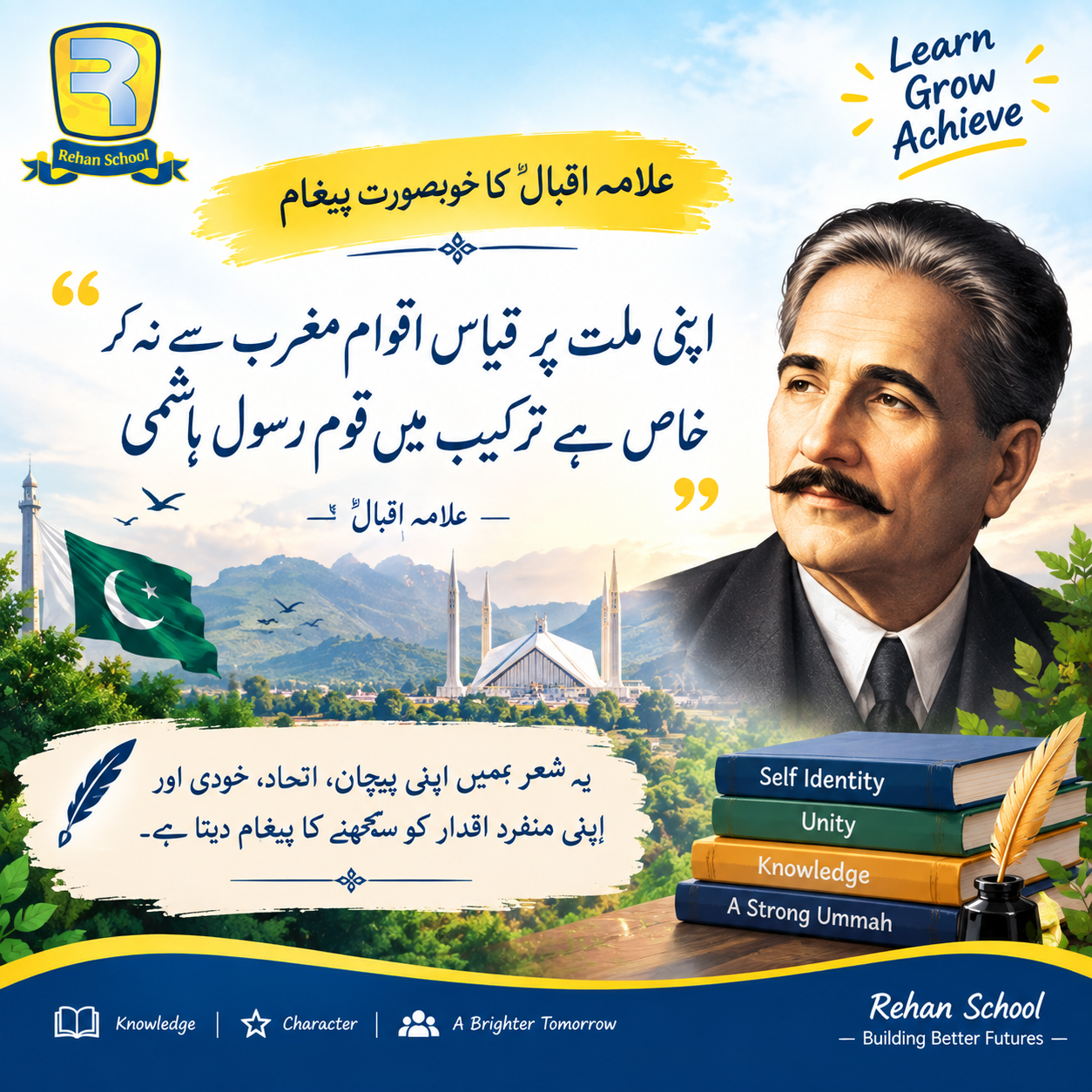
    Topic علامہ اقبالؒ کا خوبصورت پیغام

    اپنی ملت پر قیاس اقوامِ مغرب سے نہ کر،
    خاص ہے ترکیب میں قومِ رسولِ ہاشمی۔

    یہ شعر ہمیں اپنی پہچان، اتحاد، خودی اور اپنی منفرد اقدار کو سمجھنے کا پیغام دیتا ہے۔

    #AllamaIqbal #Iqbal #IqbalPoetry #UrduPoetry #Khudi #Unity #MuslimUmmah #IqbalQuotes #UrduQuotes #Poetry #Education #RehanSchool #Learning #inspiration

    @followers
    @highlight
    Tania Khan Mentorship Wali
    Mohsin Rathore Seo Wala
    Imran Khan Street Wala
    Shazia Javed Educationwali
    Hafsa Noor
    Level 01 Work Book 01 Day 17 Task Canva Post 60 Topic 🌟 علامہ اقبالؒ کا خوبصورت پیغام 🌟 اپنی ملت پر قیاس اقوامِ مغرب سے نہ کر، خاص ہے ترکیب میں قومِ رسولِ ہاشمی۔ ✨ یہ شعر ہمیں اپنی پہچان، اتحاد، خودی اور اپنی منفرد اقدار کو سمجھنے کا پیغام دیتا ہے۔ 📚💫 #AllamaIqbal #Iqbal #IqbalPoetry #UrduPoetry #Khudi #Unity #MuslimUmmah #IqbalQuotes #UrduQuotes #Poetry #Education #RehanSchool #Learning #inspiration @followers @highlight Tania Khan Mentorship Wali Mohsin Rathore Seo Wala Imran Khan Street Wala Shazia Javed Educationwali Hafsa Noor
    0 Comments 0 Shares 2931 Views
  • RSIF8
    Roll no 77
    movie review no 1
    movie review topic jinnah

    **Quaid-e-Azam Muhammad Ali Jinnah** was the great founder of Pakistan.
    He was a visionary leader with strong determination.
    🫡 He worked tirelessly for the rights of Muslims of the subcontinent.
    His leadership gave hope and unity to millions of people.
    Jinnah believed in unity, faith, and discipline.
    He was a brilliant lawyer and statesman.
    His courage and honesty made him a respected leader.
    He united people for the dream of a separate homeland.
    On 14 August 1947, Pakistan became an independent country.
    Jinnah became the first Governor-General of Pakistan.
    His services and sacrifices can never be forgotten.
    His vision continues to inspire the people of Pakistan.
    🫡 We proudly remember him as Quaid-e-Azam.
    **May Pakistan always follow his principles!**

    #QuaidEAzam #MuhammadAliJinnah #Jinnah #Pakistan #PakistanZindabad #FounderOfPakistan #UnityFaithDiscipline #PakistaniPride #GreatLeader #14August
    RSIF8 Roll no 77 movie review no 1 movie review topic jinnah 🇵🇰 **Quaid-e-Azam Muhammad Ali Jinnah** was the great founder of Pakistan. 🌟 He was a visionary leader with strong determination. 🫡 He worked tirelessly for the rights of Muslims of the subcontinent. 🇵🇰 His leadership gave hope and unity to millions of people. 💚 Jinnah believed in unity, faith, and discipline. 📚 He was a brilliant lawyer and statesman. ✨ His courage and honesty made him a respected leader. 🤝 He united people for the dream of a separate homeland. 🏆 On 14 August 1947, Pakistan became an independent country. 🇵🇰 Jinnah became the first Governor-General of Pakistan. ❤️ His services and sacrifices can never be forgotten. 🌙 His vision continues to inspire the people of Pakistan. 🫡 We proudly remember him as Quaid-e-Azam. 🇵🇰 **May Pakistan always follow his principles!** 💚✨ #QuaidEAzam #MuhammadAliJinnah #Jinnah #Pakistan #PakistanZindabad #FounderOfPakistan #UnityFaithDiscipline #PakistaniPride #GreatLeader #14August 🇵🇰💚✨
    0 Comments 0 Shares 3169 Views 33
  • #rsisb
    Roll No.240
    Canva No.87
    Level One

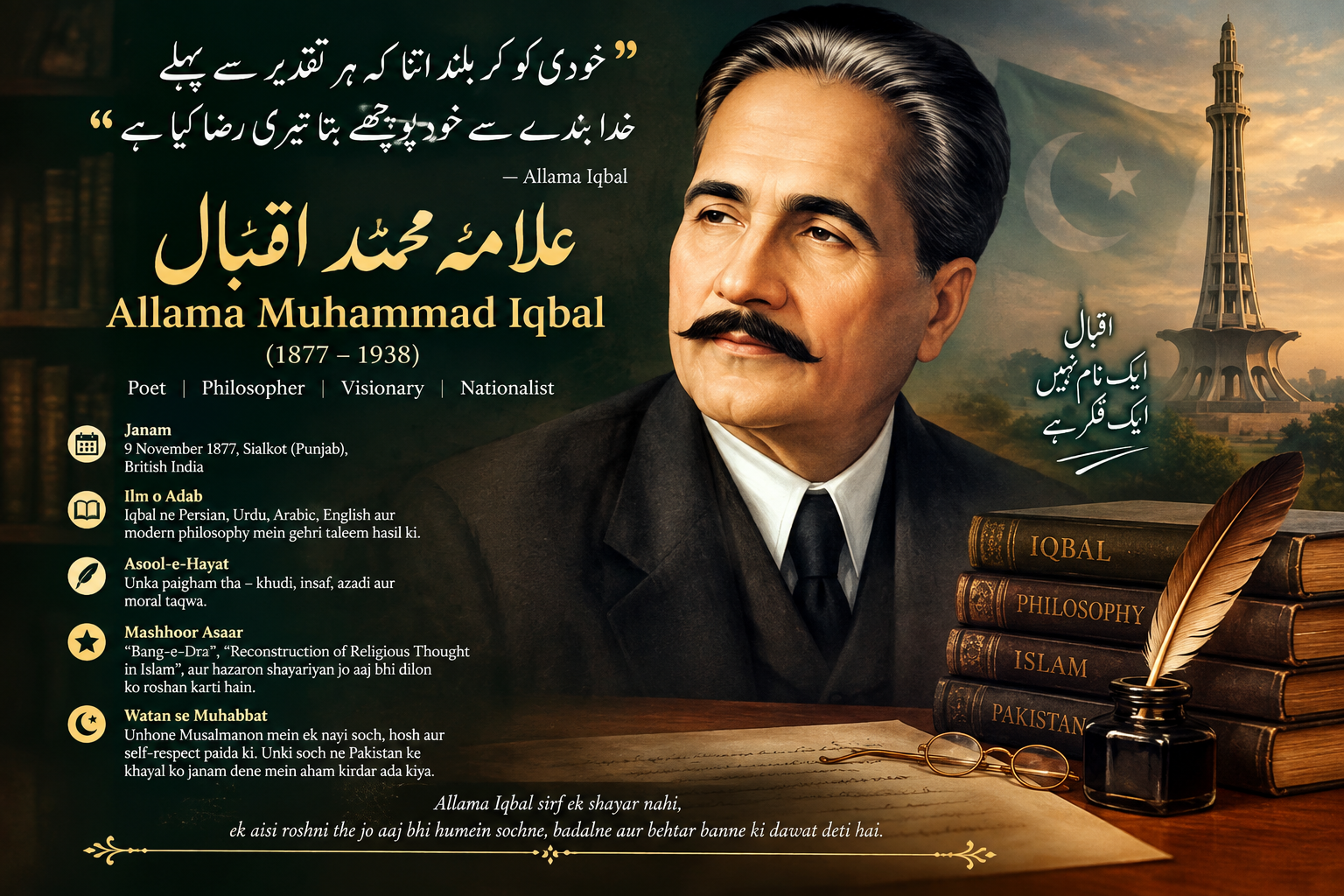
    Allama Muhammad Iqbal (1877–1938) was a great poet, philosopher, and visionary whose powerful ideas inspired Muslims to believe in self-respect, knowledge, courage, and self-discovery.

    His poetry continues to inspire millions of people around the world. His famous works include Bang-e-Dra, Bal-e-Jibril, and The Reconstruction of Religious Thought in Islam.

    Iqbal’s message reminds us to dream big, strengthen our character, seek knowledge, and work toward a better future.

    “Raise yourself to such heights that even destiny asks you what you desire.”

    A timeless thinker. A legendary poet. An eternal inspiration.

    #AllamaIqbal #MuhammadIqbal #Iqbal #PoetOfTheEast #IqbalQuotes #Pakistan #UrduPoetry #IslamicHistory #History #Philosophy #Inspiration #Motivation #PoetryLovers #PakistaniHistory #GreatPoet

    Rehan School Islamabad Campus
    Asma Shaheen EducationWali
    Irum Asim Leadershipwali
    Saima Empowerment Wali

    #rsisb Roll No.240 Canva No.87 Level One Allama Muhammad Iqbal (1877–1938) was a great poet, philosopher, and visionary whose powerful ideas inspired Muslims to believe in self-respect, knowledge, courage, and self-discovery. 📚✨ His poetry continues to inspire millions of people around the world. His famous works include Bang-e-Dra, Bal-e-Jibril, and The Reconstruction of Religious Thought in Islam. 🖋️📖 Iqbal’s message reminds us to dream big, strengthen our character, seek knowledge, and work toward a better future. 🌙⭐ 🦅 “Raise yourself to such heights that even destiny asks you what you desire.” 🇵🇰 A timeless thinker. A legendary poet. An eternal inspiration. ❤️ #AllamaIqbal #MuhammadIqbal #Iqbal #PoetOfTheEast #IqbalQuotes #Pakistan #UrduPoetry #IslamicHistory #History #Philosophy #Inspiration #Motivation #PoetryLovers #PakistaniHistory #GreatPoet 📚🖋️🇵🇰✨🦅 Rehan School Islamabad Campus Asma Shaheen EducationWali Irum Asim Leadershipwali Saima Empowerment Wali
    0 Comments 0 Shares 3631 Views
  • #rsisb
    Roll No.240
    Book A: Level One
    Canva No.84
    Date: 9:19:26

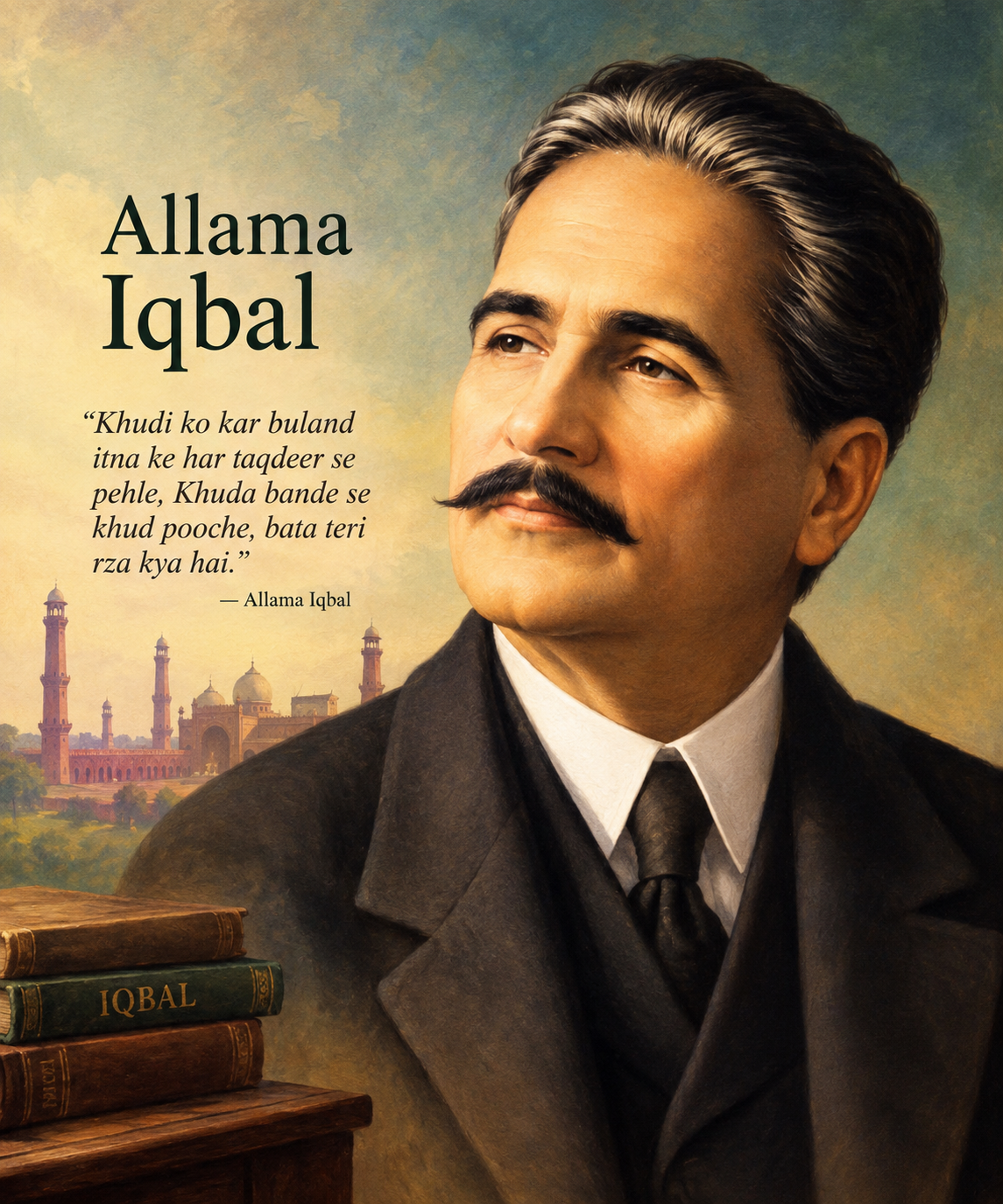
    Allama Muhammad Iqbal was one of the most influential poets, philosophers, and thinkers of the Indian subcontinent. He was born on 9 November 1877 in Sialkot and became famous for his powerful poetry in Urdu and Persian. His poetry focused on self-belief, knowledge, courage, spirituality, hard work, and the importance of developing a strong and confident personality. His famous concept of “Khudi” (selfhood) encouraged people to recognize their inner potential, strengthen their character, and take responsibility for their own lives.

    Iqbal believed that education and knowledge were essential for the progress of individuals and societies. Through his poetry and philosophical writings, he encouraged young people to dream big, face difficulties with courage, and continue working toward their goals. His verses often used images from nature, history, and Islamic tradition to communicate ideas about hope, determination, freedom, and personal growth.

    Allama Iqbal also played an important intellectual role in the political thought of Muslims of British India. His Allahabad Address of 1930 is widely discussed in connection with the development of ideas that later influenced the Pakistan Movement. His intellectual legacy remains an important part of the cultural and literary history of Pakistan and South Asia.

    Some of his best-known works include Bang-e-Dra, Bal-e-Jibril, Zarb-e-Kalim, Asrar-e-Khudi, and Rumuz-e-Bekhudi. His poetry continues to be read in schools, universities, literary gatherings, and homes around the world. His message of self-respect, determination, learning, and personal development continues to inspire readers of different generations.

    Allama Iqbal is remembered in Pakistan as “Shair-e-Mashriq” (Poet of the East). His birthday, 9 November, is observed in Pakistan as Iqbal Day, commemorating his contribution to literature, philosophy, and intellectual thought.

    #AllamaIqbal #Iqbal #IqbalDay #PoetOfTheEast #ShairEMashriq #IqbalPoetry #UrduPoetry #PersianPoetry #Khudi #Pakistan #PakistanHistory #Philosophy #Education #Knowledge #SelfBelief #Inspiration #Motivation #GreatThinkers #Literature #History

    Rehan School Islamabad Campus
    Asma Shaheen EducationWali
    Irum Asim Leadershipwali
    Saima Happinesswali

    #rsisb Roll No.240 Book A: Level One Canva No.84 Date: 9:19:26 Allama Muhammad Iqbal was one of the most influential poets, philosophers, and thinkers of the Indian subcontinent. He was born on 9 November 1877 in Sialkot and became famous for his powerful poetry in Urdu and Persian. His poetry focused on self-belief, knowledge, courage, spirituality, hard work, and the importance of developing a strong and confident personality. His famous concept of “Khudi” (selfhood) encouraged people to recognize their inner potential, strengthen their character, and take responsibility for their own lives. Iqbal believed that education and knowledge were essential for the progress of individuals and societies. Through his poetry and philosophical writings, he encouraged young people to dream big, face difficulties with courage, and continue working toward their goals. His verses often used images from nature, history, and Islamic tradition to communicate ideas about hope, determination, freedom, and personal growth. Allama Iqbal also played an important intellectual role in the political thought of Muslims of British India. His Allahabad Address of 1930 is widely discussed in connection with the development of ideas that later influenced the Pakistan Movement. His intellectual legacy remains an important part of the cultural and literary history of Pakistan and South Asia. Some of his best-known works include Bang-e-Dra, Bal-e-Jibril, Zarb-e-Kalim, Asrar-e-Khudi, and Rumuz-e-Bekhudi. His poetry continues to be read in schools, universities, literary gatherings, and homes around the world. His message of self-respect, determination, learning, and personal development continues to inspire readers of different generations. Allama Iqbal is remembered in Pakistan as “Shair-e-Mashriq” (Poet of the East). His birthday, 9 November, is observed in Pakistan as Iqbal Day, commemorating his contribution to literature, philosophy, and intellectual thought. #AllamaIqbal #Iqbal #IqbalDay #PoetOfTheEast #ShairEMashriq #IqbalPoetry #UrduPoetry #PersianPoetry #Khudi #Pakistan #PakistanHistory #Philosophy #Education #Knowledge #SelfBelief #Inspiration #Motivation #GreatThinkers #Literature #History 🇵🇰📚✨ Rehan School Islamabad Campus Asma Shaheen EducationWali Irum Asim Leadershipwali Saima Happinesswali
    0 Comments 0 Shares 5483 Views
  • #rsisb Roll No.240 Interview No.16 Foundation Level **Assalamu Alaikum everyone!** My name is **Ahmad**, and welcome to another interesting interview session. In this episode, I had the opportunity to interview **Okasha Muslims** who shared his thoughts and experiences on the topic **"Good Morning – The Tradition Behind the Greeting."** During our discussion, we explored the importance of greeting others with a simple "Good Morning," its history, cultural significance, and how it helps create a positive and respectful environment. Okasha Muslims explained how this everyday greeting strengthens relationships, improves communication, and spreads kindness in our homes, schools, and workplaces. This interview highlights the value of good manners, respect, and positive communication. It reminds us that even a few kind words at the beginning of the day can make a meaningful difference in someone's life. We hope you enjoy this conversation and learn something valuable from it. If you found this interview helpful, please **Like 👍, Share 📤, Comment 💬, and Subscribe 🔔** for more educational interviews and inspiring discussions. **🎤 Host:** Ahmad Ali **🎙️ Interviewee:** Okasha Muslims (Classmate/Facilitator/Family Member) **Thank you for watching, and have a wonderful day!** 🌞 **📌 Hashtags:** #Interview #Classmate #Facilitator #FamilyMember #Ahmad #Hashir #GoodMorning #Communication #GoodManners #Education #Learning #PositiveVibes #Respect #Podcast #StreamYard #sesamestreet Rehan School Islamabad Campus Asma Shaheen EducationWali Irum Asim Saima Happinesswali https://www.facebook.com/share/v/192nGuLHWG/
    WWW.FACEBOOK.COM
    Facebook
    #rsisb Roll No.240 Interview No.16 Foundation Level **Assalamu Alaikum everyone!** My name is **Ahmad**, and welcome to another interesting interview session. In this episode, I had the...
    0 Comments 0 Shares 6021 Views
More Results