• **Ethics in Education | Michelle Craske **

    Education is not only about gaining knowledge, passing examinations, or achieving academic success. It is also about learning honesty, fairness, respect, responsibility, and compassion. The topic *“Ethics in Education”* invites us to think about the values that make learning meaningful and help create a positive educational environment for students, teachers, and the entire school community.

    Ethical education means treating every student fairly, respecting different perspectives, encouraging honesty, and creating equal opportunities for learning. Teachers have an important responsibility to guide students with fairness and integrity, while students should demonstrate respect, complete their work honestly, and take responsibility for their actions.

    In today's world, where technology and artificial intelligence are becoming important parts of education, ethical behavior is more important than ever. Students should use digital tools responsibly, protect other people's privacy, respect intellectual property, and understand the difference between using technology to learn and presenting someone else's work as their own.

    An ethical learning environment also encourages students to ask questions, express their opinions respectfully, learn from mistakes, and support one another. When honesty and mutual respect become part of everyday school life, students develop not only academic skills but also the character needed to become responsible members of society.

    **The key message:** True education develops both the mind and the character. Knowledge helps us understand the world, while ethics helps us decide how to use that knowledge responsibly.

    Let's build a future where education is guided by integrity, equal opportunity, kindness, and respect. By practicing ethical values every day, we can make our schools better places to learn and our communities better places to live!

    #EthicsInEducation #MichelleCraske #Education #AcademicIntegrity #Honesty #Respect #Fairness #ResponsibleLearning #StudentSuccess #TeachersMatter #CharacterBuilding #DigitalEthics #ResponsibleAI #CriticalThinking #EqualOpportunities #LifelongLearning #PositiveEducation #EthicalLeadership #FutureOfEducation #LearningWithPurpose
    📚🌟 **Ethics in Education | Michelle Craske 🎓✨** Education is not only about gaining knowledge, passing examinations, or achieving academic success. It is also about learning honesty, fairness, respect, responsibility, and compassion. 💖🌍 The topic *“Ethics in Education”* invites us to think about the values that make learning meaningful and help create a positive educational environment for students, teachers, and the entire school community. 🏫 Ethical education means treating every student fairly, respecting different perspectives, encouraging honesty, and creating equal opportunities for learning. Teachers have an important responsibility to guide students with fairness and integrity, while students should demonstrate respect, complete their work honestly, and take responsibility for their actions. 🤝📖 💡 In today's world, where technology and artificial intelligence are becoming important parts of education, ethical behavior is more important than ever. Students should use digital tools responsibly, protect other people's privacy, respect intellectual property, and understand the difference between using technology to learn and presenting someone else's work as their own. 🤖💻 🌱 An ethical learning environment also encourages students to ask questions, express their opinions respectfully, learn from mistakes, and support one another. When honesty and mutual respect become part of everyday school life, students develop not only academic skills but also the character needed to become responsible members of society. 🎯 **The key message:** True education develops both the mind and the character. Knowledge helps us understand the world, while ethics helps us decide how to use that knowledge responsibly. 🌈✨ Let's build a future where education is guided by integrity, equal opportunity, kindness, and respect. By practicing ethical values every day, we can make our schools better places to learn and our communities better places to live! ❤️📚 #EthicsInEducation #MichelleCraske #Education #AcademicIntegrity #Honesty #Respect #Fairness #ResponsibleLearning #StudentSuccess #TeachersMatter #CharacterBuilding #DigitalEthics #ResponsibleAI #CriticalThinking #EqualOpportunities #LifelongLearning #PositiveEducation #EthicalLeadership #FutureOfEducation #LearningWithPurpose 🎓📚💡🌍💚
    0 Commentarios 0 Acciones 2697 Views 6
  • **How Students Can Create Ethical Communities | Daniel Lee **

    What makes a community strong, respectful, and successful? It is not only about the people who live or study together, but also about the values they share, the choices they make, and the way they treat one another. The idea of *“How Students Can Create Ethical Communities”* encourages students to understand the importance of honesty, responsibility, fairness, kindness, and respect in their everyday lives.

    Students have the power to make a positive difference in their schools, classrooms, and communities. By treating everyone equally, respecting different opinions, helping classmates, and standing up for what is right, they can create an environment where people feel safe, valued, and included. Even small actions, such as sharing knowledge, keeping promises, and admitting mistakes, can help build trust among people.

    Creating an ethical community also means understanding that our actions affect others. Students should learn to take responsibility for their decisions, communicate honestly, avoid spreading rumors, respect others' privacy, and resolve disagreements peacefully. When students work together with integrity and compassion, they become positive role models for their friends and the people around them. 🫶

    Ethical communities are not created by one person alone. They grow when students, teachers, parents, and community members work together toward common goals. Through teamwork, volunteer activities, responsible leadership, and thoughtful conversations, young people can help create a culture where fairness and kindness become everyday habits.

    **The key message:** You don't have to wait until you become an adult to make a difference. Every student can contribute to a better community by choosing honesty over dishonesty, respect over judgment, and cooperation over conflict.

    Let's inspire the next generation to become responsible citizens, compassionate leaders, and positive changemakers. Remember, a better community begins with the choices we make today!

    #DanielLee #EthicalCommunities #StudentLeadership #Ethics #Education #Honesty #Respect #KindnessMatters #ResponsibleCitizenship #CommunityBuilding #PositiveChange #Teamwork #Empathy #Integrity #SchoolCommunity #YouthEmpowerment #LeadershipSkills #SocialResponsibility #CharacterBuilding #MakeADifference
    🌍🤝 **How Students Can Create Ethical Communities | Daniel Lee 🎓✨** What makes a community strong, respectful, and successful? ❤️ It is not only about the people who live or study together, but also about the values they share, the choices they make, and the way they treat one another. The idea of *“How Students Can Create Ethical Communities”* encourages students to understand the importance of honesty, responsibility, fairness, kindness, and respect in their everyday lives. 🌱💡 🏫 Students have the power to make a positive difference in their schools, classrooms, and communities. By treating everyone equally, respecting different opinions, helping classmates, and standing up for what is right, they can create an environment where people feel safe, valued, and included. Even small actions, such as sharing knowledge, keeping promises, and admitting mistakes, can help build trust among people. 💖🤝 🌟 Creating an ethical community also means understanding that our actions affect others. Students should learn to take responsibility for their decisions, communicate honestly, avoid spreading rumors, respect others' privacy, and resolve disagreements peacefully. When students work together with integrity and compassion, they become positive role models for their friends and the people around them. 🫶📚 🚀 Ethical communities are not created by one person alone. They grow when students, teachers, parents, and community members work together toward common goals. Through teamwork, volunteer activities, responsible leadership, and thoughtful conversations, young people can help create a culture where fairness and kindness become everyday habits. 🎯 **The key message:** You don't have to wait until you become an adult to make a difference. Every student can contribute to a better community by choosing honesty over dishonesty, respect over judgment, and cooperation over conflict. 🌈✨ Let's inspire the next generation to become responsible citizens, compassionate leaders, and positive changemakers. Remember, a better community begins with the choices we make today! ❤️🌍 #DanielLee #EthicalCommunities #StudentLeadership #Ethics #Education #Honesty #Respect #KindnessMatters #ResponsibleCitizenship #CommunityBuilding #PositiveChange #Teamwork #Empathy #Integrity #SchoolCommunity #YouthEmpowerment #LeadershipSkills #SocialResponsibility #CharacterBuilding #MakeADifference 🎓🌍🤝💚✨
    0 Commentarios 0 Acciones 2949 Views 4
  • #rsisb
    Earning Task no # 3
    Roll no # 273
    Level # 1
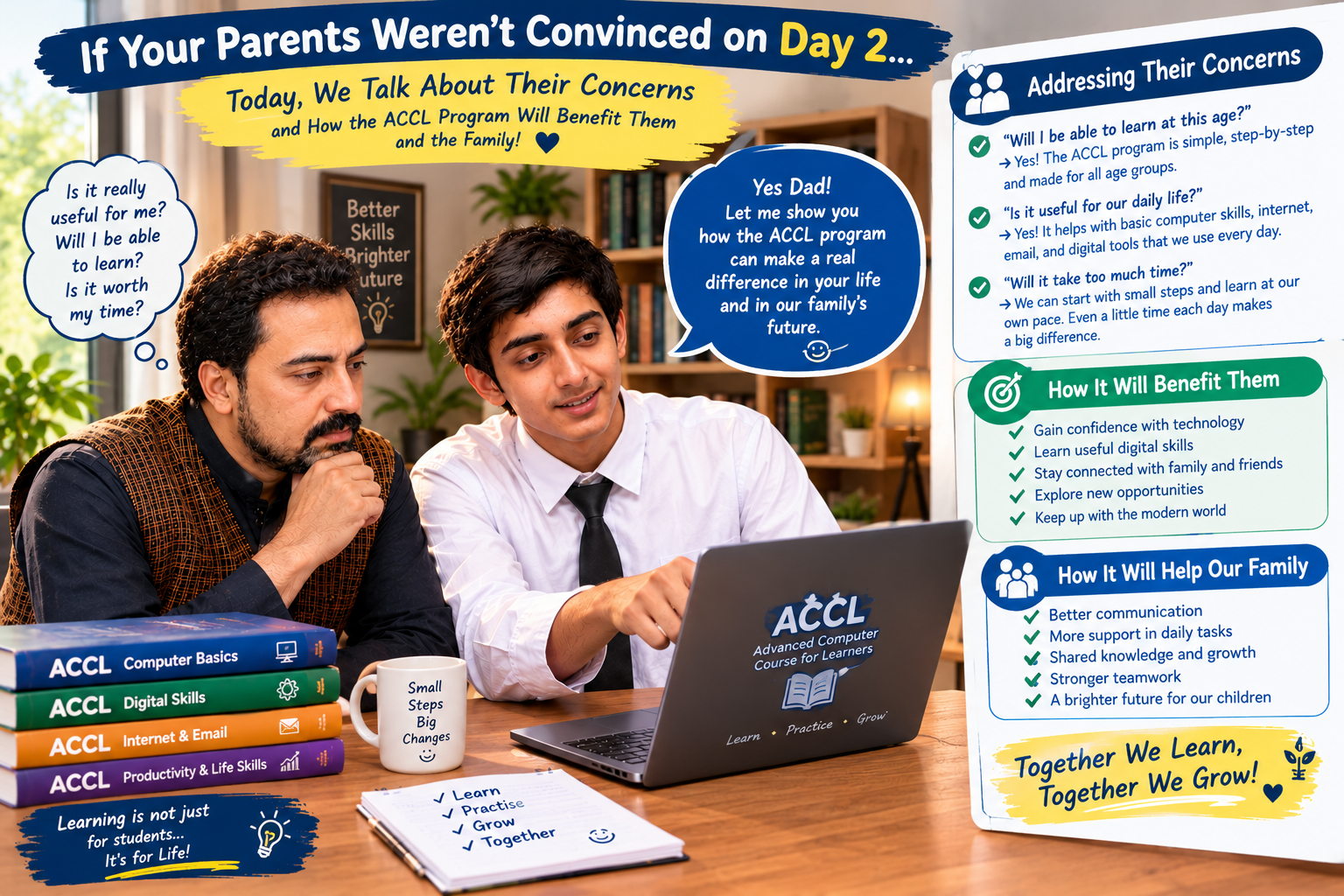
    **Addressing My Parents’ Concerns About the ACCL Program – Day 3** ‍‍
    Today, my focus is on understanding my parents’ concerns and helping them see the value of the ACCL program. Sometimes, parents may have questions or doubts about a new learning program, and it is important to listen to them patiently, respect their opinions, and explain the benefits clearly.
    I will talk to my parents with respect and explain how the ACCL program can help our family grow together. Through this program, I can share the knowledge and skills I learn, help my parents understand new ideas, and encourage everyone in my family to keep learning.
    The ACCL program can help us improve our communication, develop problem-solving skills, build confidence, and understand the importance of teamwork. It can also encourage us to use technology and AI tools responsibly, learn new things, and support one another in our daily lives.
    I will address my parents’ concerns by answering their questions honestly, explaining the practical benefits, and showing them how we can learn together step by step. Instead of forcing them to agree, I will give them time to understand the program and make their own decision. Their trust, comfort, and support are very important to me.
    My goal is to show my parents that learning is not only for students; it is a lifelong journey for everyone. When a family learns together, it can become more confident, connected, and prepared for the future.
    **My Day 3 Mission:** Listen to my parents, understand their concerns, explain the benefits of ACCL, and inspire my family to explore new learning opportunities together.
    *“A family that learns together, grows together!”*
    #ACCLProgram #Day3Challenge #FamilyLearning #ParentalSupport #LearnTogether #LifelongLearning #AIForEveryone #DigitalSkills #CommunicationSkills #ProblemSolving #FamilyGrowth #RespectAndUnderstanding #LearningJourney #PersonalDevelopment #FutureReady Saima Empowerment Wali
    Asma Shaheen EducationWali
    #rsisb Earning Task no # 3 Roll no # 273 Level # 1 🌟 **Addressing My Parents’ Concerns About the ACCL Program – Day 3** 👨‍👩‍👦📚 Today, my focus is on understanding my parents’ concerns and helping them see the value of the ACCL program. Sometimes, parents may have questions or doubts about a new learning program, and it is important to listen to them patiently, respect their opinions, and explain the benefits clearly. ❤️🤝 I will talk to my parents with respect and explain how the ACCL program can help our family grow together. Through this program, I can share the knowledge and skills I learn, help my parents understand new ideas, and encourage everyone in my family to keep learning. 🧠💡 The ACCL program can help us improve our communication, develop problem-solving skills, build confidence, and understand the importance of teamwork. It can also encourage us to use technology and AI tools responsibly, learn new things, and support one another in our daily lives. 💻🚀 I will address my parents’ concerns by answering their questions honestly, explaining the practical benefits, and showing them how we can learn together step by step. Instead of forcing them to agree, I will give them time to understand the program and make their own decision. Their trust, comfort, and support are very important to me. 🙏💖 My goal is to show my parents that learning is not only for students; it is a lifelong journey for everyone. When a family learns together, it can become more confident, connected, and prepared for the future. 🌱🏡 ✨ **My Day 3 Mission:** Listen to my parents, understand their concerns, explain the benefits of ACCL, and inspire my family to explore new learning opportunities together. 💬 *“A family that learns together, grows together!”* 🌟 #ACCLProgram #Day3Challenge #FamilyLearning #ParentalSupport #LearnTogether #LifelongLearning #AIForEveryone #DigitalSkills #CommunicationSkills #ProblemSolving #FamilyGrowth #RespectAndUnderstanding #LearningJourney #PersonalDevelopment #FutureReady 🚀📚❤️Saima Empowerment Wali Asma Shaheen EducationWali
    0 Commentarios 0 Acciones 1745 Views
  • **Roll No: 2**
    **Batch: 14**
    **Book: ACCL**
    **Task No: 138**

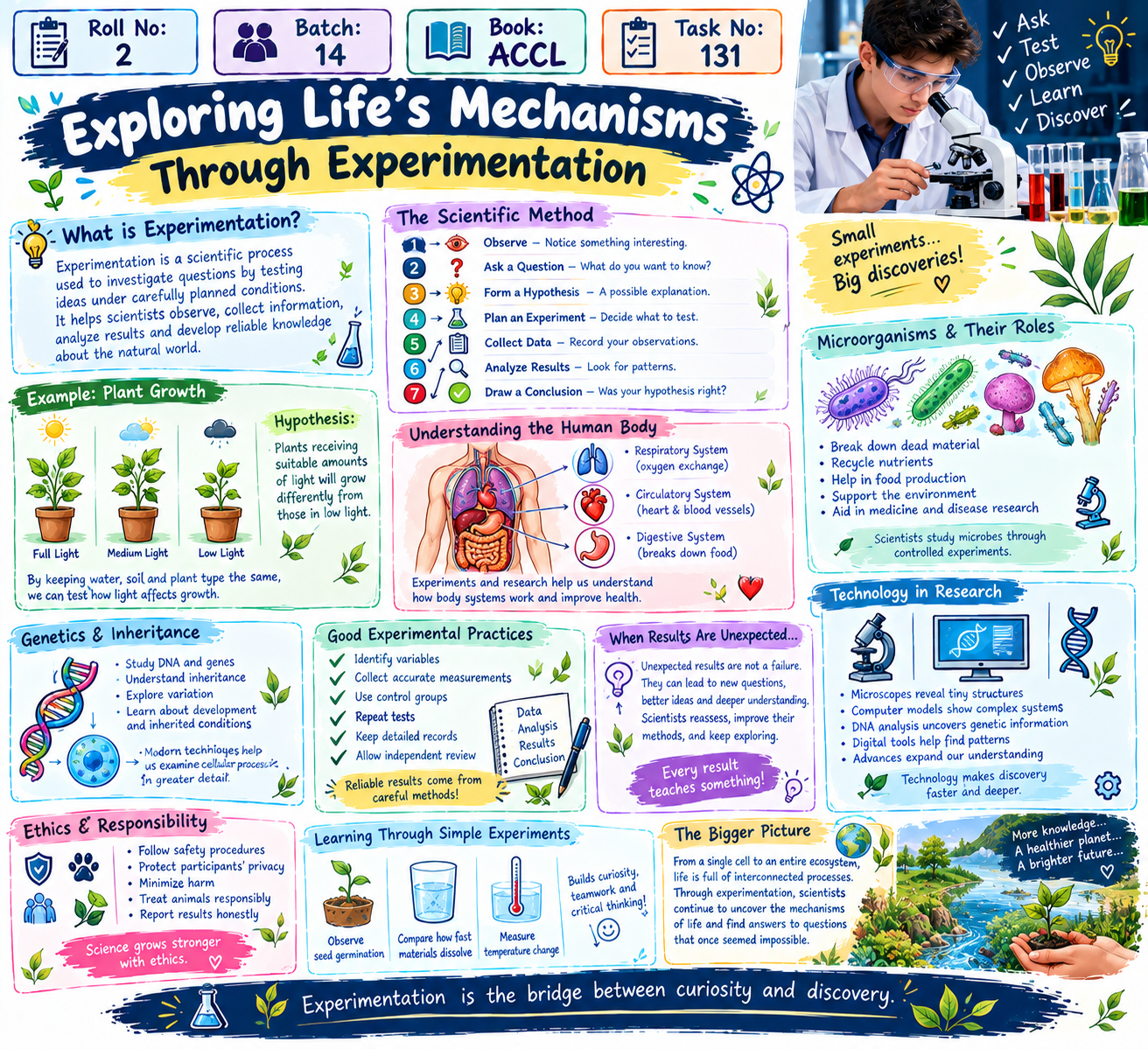
    # Exploring Life’s Mechanisms Through Experimentation

    Have you ever wondered how scientists discover the secrets of life? From understanding how plants grow to investigating how the human heart works, science helps us explore the processes that make living organisms function. Behind many important discoveries lies a powerful method called **experimentation**, which allows scientists to test ideas, observe results, and develop a deeper understanding of the natural world.

    **Experimentation is a scientific process used to investigate questions by testing ideas under carefully planned conditions.** Scientists begin by observing something interesting, asking a question, and developing a hypothesis—a possible explanation that can be tested. They then design an experiment, collect information, and analyze the results to determine whether the evidence supports their original idea. This process helps turn curiosity into reliable scientific knowledge.

    One fascinating example is the study of plant growth. Imagine a student who wants to discover whether the amount of light affects how quickly a plant grows. The student forms a hypothesis that plants receiving suitable amounts of light will grow differently from plants kept in low-light conditions. By keeping factors such as water, soil, and plant type consistent, the student can compare the results and investigate the role of light in plant development.

    Experimentation is also essential for understanding the human body. Scientists investigate how the heart circulates blood, how the lungs exchange gases, and how the digestive system processes food. Through carefully designed studies, medical imaging, laboratory tests, and other research methods, scientists learn how body systems work together to maintain health. Their findings can contribute to improved medical treatments and a better understanding of human biology.

    Another important field is microbiology, the study of microscopic organisms. Many bacteria and fungi play beneficial roles in nature, including breaking down dead material and recycling nutrients. Scientists use controlled experiments to investigate how these organisms respond to different environmental conditions. Such research can help improve food production, develop medicines, understand infectious diseases, and protect ecosystems.

    Experiments also help researchers understand genetics and the mechanisms of inheritance. By studying DNA, genes, and the characteristics of organisms across generations, scientists investigate how biological information is passed on and how variations arise. Modern techniques allow researchers to explore cellular processes in greater detail, helping them understand development, inherited conditions, and the relationships among different forms of life.

    A successful experiment requires more than simply observing what happens. Scientists must identify the variables they are studying, collect accurate measurements, and repeat tests when appropriate. They often use control groups for comparison and record their observations carefully. Repeating experiments helps determine whether a result is consistent, while independent review allows other researchers to examine the methods and evaluate the conclusions. These practices make scientific findings more trustworthy.

    Sometimes experiments produce unexpected results. Instead of treating an unexpected outcome as a failure, scientists use it as an opportunity to ask new questions. They may reconsider their hypothesis, improve their experimental design, or investigate another possible explanation. Scientific progress often happens through this cycle of questioning, testing, learning, and refining ideas. Every result can contribute something valuable when it is interpreted carefully.

    Technology has made biological experimentation more advanced than ever before. Microscopes reveal structures too small to see with the naked eye, computer models help researchers understand complicated systems, and DNA analysis allows scientists to investigate genetic information. Digital tools can also help organize large amounts of data and identify patterns that might otherwise be difficult to notice. These innovations continue to expand our understanding of living organisms.

    However, scientific experimentation must always be guided by responsibility and ethics. Researchers should follow safety procedures, protect participants' privacy, minimize harm, and treat animals responsibly. Experiments involving people or animals require appropriate ethical review and safeguards. Scientists must also report results honestly, even when the findings do not match their expectations. Reliable science depends on both accurate evidence and responsible behavior.

    Experimentation connects classroom learning with real-world discoveries. Students can explore scientific ideas through safe activities, such as observing seed germination, comparing how quickly different materials dissolve in water, or measuring changes in temperature. These activities encourage curiosity, careful observation, teamwork, and critical thinking. They also show that science is not just a collection of facts to memorize; it is an ongoing process of discovery.

    As we explore life's mechanisms, we begin to understand how countless processes work together to support living organisms. From the activity inside a single cell to the interactions among species in an ecosystem, each discovery reveals another part of nature's complexity. Through experimentation, scientists continue to investigate these connections and search for answers to questions that once seemed impossible to solve.

    **Experimentation is the bridge between curiosity and discovery. By asking thoughtful questions, testing ideas fairly, and learning from evidence, we can uncover the mechanisms of life and use scientific knowledge to improve human health, protect the environment, and build a brighter future. **

    \#Experimentation #Biology #ScientificMethod #LifeSciences #ScientificDiscovery #Research #ACCL #Batch14 #Task131
    **Roll No: 2** **Batch: 14** **Book: ACCL** **Task No: 138** # 🔬🧪 Exploring Life’s Mechanisms Through Experimentation 🌱🧬 Have you ever wondered how scientists discover the secrets of life? 🌍 From understanding how plants grow to investigating how the human heart works, science helps us explore the processes that make living organisms function. Behind many important discoveries lies a powerful method called **experimentation**, which allows scientists to test ideas, observe results, and develop a deeper understanding of the natural world. 🔍✨ **Experimentation is a scientific process used to investigate questions by testing ideas under carefully planned conditions.** 🧪 Scientists begin by observing something interesting, asking a question, and developing a hypothesis—a possible explanation that can be tested. They then design an experiment, collect information, and analyze the results to determine whether the evidence supports their original idea. This process helps turn curiosity into reliable scientific knowledge. 📚💡 One fascinating example is the study of plant growth. 🌱 Imagine a student who wants to discover whether the amount of light affects how quickly a plant grows. The student forms a hypothesis that plants receiving suitable amounts of light will grow differently from plants kept in low-light conditions. By keeping factors such as water, soil, and plant type consistent, the student can compare the results and investigate the role of light in plant development. ☀️🌿 Experimentation is also essential for understanding the human body. ❤️ Scientists investigate how the heart circulates blood, how the lungs exchange gases, and how the digestive system processes food. Through carefully designed studies, medical imaging, laboratory tests, and other research methods, scientists learn how body systems work together to maintain health. Their findings can contribute to improved medical treatments and a better understanding of human biology. 🫁🧠 Another important field is microbiology, the study of microscopic organisms. 🦠 Many bacteria and fungi play beneficial roles in nature, including breaking down dead material and recycling nutrients. Scientists use controlled experiments to investigate how these organisms respond to different environmental conditions. Such research can help improve food production, develop medicines, understand infectious diseases, and protect ecosystems. 🔬🌍 Experiments also help researchers understand genetics and the mechanisms of inheritance. 🧬 By studying DNA, genes, and the characteristics of organisms across generations, scientists investigate how biological information is passed on and how variations arise. Modern techniques allow researchers to explore cellular processes in greater detail, helping them understand development, inherited conditions, and the relationships among different forms of life. 🌱🔍 A successful experiment requires more than simply observing what happens. Scientists must identify the variables they are studying, collect accurate measurements, and repeat tests when appropriate. 📏 They often use control groups for comparison and record their observations carefully. Repeating experiments helps determine whether a result is consistent, while independent review allows other researchers to examine the methods and evaluate the conclusions. These practices make scientific findings more trustworthy. 📊📝 Sometimes experiments produce unexpected results. 🤔 Instead of treating an unexpected outcome as a failure, scientists use it as an opportunity to ask new questions. They may reconsider their hypothesis, improve their experimental design, or investigate another possible explanation. Scientific progress often happens through this cycle of questioning, testing, learning, and refining ideas. Every result can contribute something valuable when it is interpreted carefully. 💡🔄 Technology has made biological experimentation more advanced than ever before. 🤖🔬 Microscopes reveal structures too small to see with the naked eye, computer models help researchers understand complicated systems, and DNA analysis allows scientists to investigate genetic information. Digital tools can also help organize large amounts of data and identify patterns that might otherwise be difficult to notice. These innovations continue to expand our understanding of living organisms. 💻🧬 However, scientific experimentation must always be guided by responsibility and ethics. 💚 Researchers should follow safety procedures, protect participants' privacy, minimize harm, and treat animals responsibly. Experiments involving people or animals require appropriate ethical review and safeguards. Scientists must also report results honestly, even when the findings do not match their expectations. Reliable science depends on both accurate evidence and responsible behavior. ⚖️🌿 Experimentation connects classroom learning with real-world discoveries. 🏫 Students can explore scientific ideas through safe activities, such as observing seed germination, comparing how quickly different materials dissolve in water, or measuring changes in temperature. These activities encourage curiosity, careful observation, teamwork, and critical thinking. They also show that science is not just a collection of facts to memorize; it is an ongoing process of discovery. 🌈🧪 As we explore life's mechanisms, we begin to understand how countless processes work together to support living organisms. From the activity inside a single cell to the interactions among species in an ecosystem, each discovery reveals another part of nature's complexity. Through experimentation, scientists continue to investigate these connections and search for answers to questions that once seemed impossible to solve. 🌎🦋🔬 **Experimentation is the bridge between curiosity and discovery. By asking thoughtful questions, testing ideas fairly, and learning from evidence, we can uncover the mechanisms of life and use scientific knowledge to improve human health, protect the environment, and build a brighter future. 🔬🧬🌍💚** \#Experimentation #Biology #ScientificMethod #LifeSciences #ScientificDiscovery #Research #ACCL #Batch14 #Task131 🧪🔬🌱
    0 Commentarios 0 Acciones 4081 Views
  • #rsisb
    Roll no. 247
    Earning no. 3
    Foundation level

    **Address Concerns – Listen, Understand, and Find Solutions! **

    Assalam-o-Alaikum Everyone!

    Today, I want to share an important topic: **“Address Concerns”**

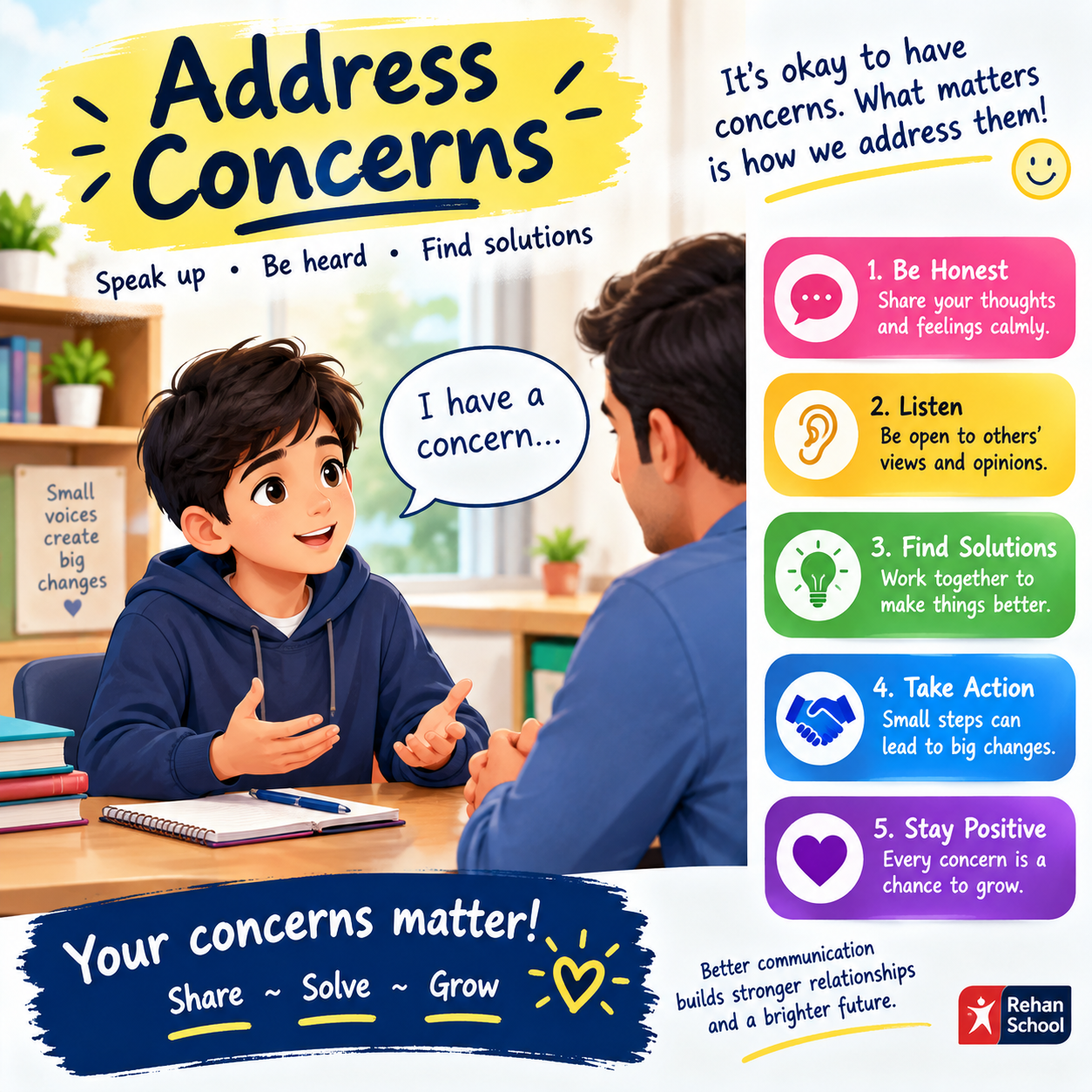
    Addressing concerns means listening carefully to people's problems, understanding their feelings, answering their questions, and helping them find the right solutions. Sometimes, people have worries, doubts, or questions about something new. Instead of ignoring their concerns, we should listen with patience, respect, and kindness.

    **Why Is It Important to Address Concerns?**

    **Listen Carefully :** Give people your full attention when they share their thoughts or problems.

    **Show Respect :** Everyone has different opinions, experiences, and feelings. We should respect them.

    **Understand the Problem :** Before giving advice, try to understand what is worrying the other person.

    **Provide Clear Answers :** Answer questions honestly and explain things in simple words.

    **Find Solutions :** Work together to find practical and helpful solutions.

    **Build Trust :** When we listen to others and take their concerns seriously, we build stronger relationships.

    **Addressing Concerns in Everyday Life**

    We can address concerns at home, at school, with friends, and in our communities. For example, if a parent is worried about a child's education, we can listen to their concerns and explain how learning can help their child develop new skills. If a friend has a problem, we can listen patiently and offer support.

    **My Learning and Reflection**

    I believe that every concern deserves attention and understanding. We should not judge people for asking questions or expressing their worries. Instead, we should encourage open communication, share knowledge, and work together to solve problems.

    Remember, **a good listener can make someone feel understood, and a thoughtful answer can help someone feel confident!**

    Let's make the world a better place by listening more, understanding each other, respecting different opinions, and finding positive solutions.

    Thank you for reading! Keep learning, keep listening, and keep growing!

    #rsisb Roll no. 247 Earning no. 3 Foundation level 🌟💬 **Address Concerns – Listen, Understand, and Find Solutions! 🤝✨** Assalam-o-Alaikum Everyone! 👋😊 Today, I want to share an important topic: **“Address Concerns”** 🌟💡 Addressing concerns means listening carefully to people's problems, understanding their feelings, answering their questions, and helping them find the right solutions. 🤝❤️ Sometimes, people have worries, doubts, or questions about something new. Instead of ignoring their concerns, we should listen with patience, respect, and kindness. 👂💖 🗣️ **Why Is It Important to Address Concerns?** ✅ **Listen Carefully 👂:** Give people your full attention when they share their thoughts or problems. ✅ **Show Respect 🤝:** Everyone has different opinions, experiences, and feelings. We should respect them. ✅ **Understand the Problem 🧠:** Before giving advice, try to understand what is worrying the other person. ✅ **Provide Clear Answers 💡:** Answer questions honestly and explain things in simple words. ✅ **Find Solutions 🌈:** Work together to find practical and helpful solutions. ✅ **Build Trust ❤️:** When we listen to others and take their concerns seriously, we build stronger relationships. 🌍 **Addressing Concerns in Everyday Life** We can address concerns at home, at school, with friends, and in our communities. 🏡🏫 For example, if a parent is worried about a child's education, we can listen to their concerns and explain how learning can help their child develop new skills. 📚🎓 If a friend has a problem, we can listen patiently and offer support. 🫂😊 💭 **My Learning and Reflection** I believe that every concern deserves attention and understanding. We should not judge people for asking questions or expressing their worries. Instead, we should encourage open communication, share knowledge, and work together to solve problems. 🌱✨ Remember, **a good listener can make someone feel understood, and a thoughtful answer can help someone feel confident!** 💖🌟 Let's make the world a better place by listening more, understanding each other, respecting different opinions, and finding positive solutions. 🌎🤝💫 Thank you for reading! ❤️😊 Keep learning, keep listening, and keep growing! 🚀📖
    0 Commentarios 0 Acciones 744 Views
  • #rsisb
    Roll no. 247
    Earning no. 3
    Foundation level

    **Address Concerns – Listen, Understand, and Find Solutions! **

    Assalam-o-Alaikum Everyone!

    Today, I want to share an important topic: **“Address Concerns”**

    Addressing concerns means listening carefully to people's problems, understanding their feelings, answering their questions, and helping them find the right solutions. Sometimes, people have worries, doubts, or questions about something new. Instead of ignoring their concerns, we should listen with patience, respect, and kindness.

    **Why Is It Important to Address Concerns?**

    **Listen Carefully :** Give people your full attention when they share their thoughts or problems.

    **Show Respect :** Everyone has different opinions, experiences, and feelings. We should respect them.

    **Understand the Problem :** Before giving advice, try to understand what is worrying the other person.

    **Provide Clear Answers :** Answer questions honestly and explain things in simple words.

    **Find Solutions :** Work together to find practical and helpful solutions.

    **Build Trust :** When we listen to others and take their concerns seriously, we build stronger relationships.

    **Addressing Concerns in Everyday Life**

    We can address concerns at home, at school, with friends, and in our communities. For example, if a parent is worried about a child's education, we can listen to their concerns and explain how learning can help their child develop new skills. If a friend has a problem, we can listen patiently and offer support.

    **My Learning and Reflection**

    I believe that every concern deserves attention and understanding. We should not judge people for asking questions or expressing their worries. Instead, we should encourage open communication, share knowledge, and work together to solve problems.

    Remember, **a good listener can make someone feel understood, and a thoughtful answer can help someone feel confident!**

    Let's make the world a better place by listening more, understanding each other, respecting different opinions, and finding positive solutions.

    Thank you for reading! Keep learning, keep listening, and keep growing!

    #AddressConcerns #CommunicationSkills #ProblemSolving #ActiveListening #Respect #Understanding #CriticalThinking #PersonalGrowth #PositiveThinking #LearningJourney #LifeSkills #Confidence #Teamwork #Education #KnowledgeIsPower #BeKind #KeepLearning #RSISB
    #rsisb Roll no. 247 Earning no. 3 Foundation level 🌟💬 **Address Concerns – Listen, Understand, and Find Solutions! 🤝✨** Assalam-o-Alaikum Everyone! 👋😊 Today, I want to share an important topic: **“Address Concerns”** 🌟💡 Addressing concerns means listening carefully to people's problems, understanding their feelings, answering their questions, and helping them find the right solutions. 🤝❤️ Sometimes, people have worries, doubts, or questions about something new. Instead of ignoring their concerns, we should listen with patience, respect, and kindness. 👂💖 🗣️ **Why Is It Important to Address Concerns?** ✅ **Listen Carefully 👂:** Give people your full attention when they share their thoughts or problems. ✅ **Show Respect 🤝:** Everyone has different opinions, experiences, and feelings. We should respect them. ✅ **Understand the Problem 🧠:** Before giving advice, try to understand what is worrying the other person. ✅ **Provide Clear Answers 💡:** Answer questions honestly and explain things in simple words. ✅ **Find Solutions 🌈:** Work together to find practical and helpful solutions. ✅ **Build Trust ❤️:** When we listen to others and take their concerns seriously, we build stronger relationships. 🌍 **Addressing Concerns in Everyday Life** We can address concerns at home, at school, with friends, and in our communities. 🏡🏫 For example, if a parent is worried about a child's education, we can listen to their concerns and explain how learning can help their child develop new skills. 📚🎓 If a friend has a problem, we can listen patiently and offer support. 🫂😊 💭 **My Learning and Reflection** I believe that every concern deserves attention and understanding. We should not judge people for asking questions or expressing their worries. Instead, we should encourage open communication, share knowledge, and work together to solve problems. 🌱✨ Remember, **a good listener can make someone feel understood, and a thoughtful answer can help someone feel confident!** 💖🌟 Let's make the world a better place by listening more, understanding each other, respecting different opinions, and finding positive solutions. 🌎🤝💫 Thank you for reading! ❤️😊 Keep learning, keep listening, and keep growing! 🚀📖 #AddressConcerns #CommunicationSkills #ProblemSolving #ActiveListening #Respect #Understanding #CriticalThinking #PersonalGrowth #PositiveThinking #LearningJourney #LifeSkills #Confidence #Teamwork #Education #KnowledgeIsPower #BeKind #KeepLearning #RSISB 🌟📚💖
    0 Commentarios 0 Acciones 1142 Views
  • #rsisb
    Roll No.269
    Foundation Level
    Canva Post No.11

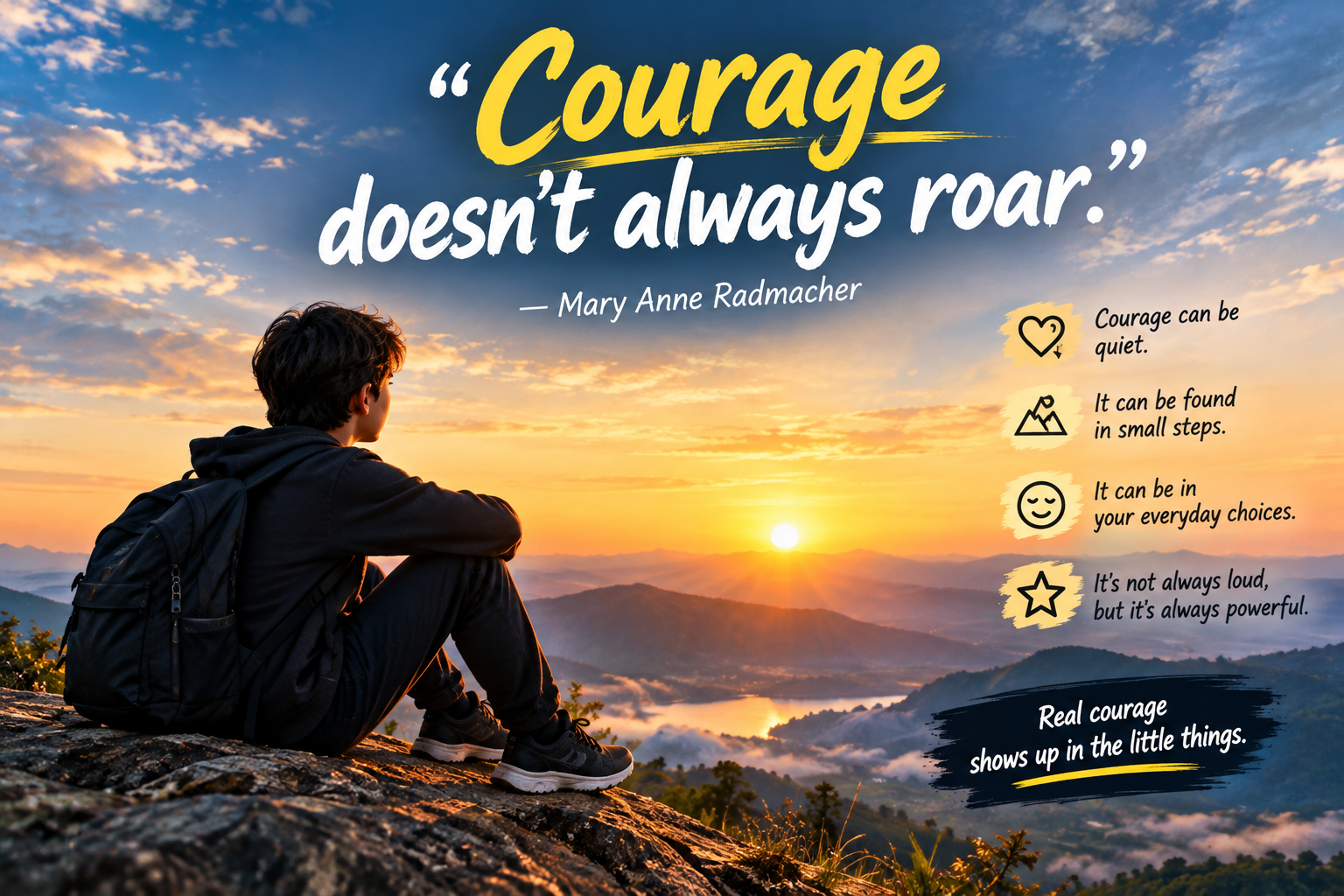
    **“Courage doesn’t always roar.” — Mary Anne Radmacher**

    Courage is not always loud, dramatic, or fearless. Sometimes, courage is simply finding the strength to take one more step when you are unsure of what lies ahead. It can be quietly saying “I can do this,” trying again after failure, standing up for what is right, or continuing forward even when things feel difficult.

    This powerful quote reminds us that **being courageous does not mean having no fear**. True courage means facing challenges despite fear and choosing not to give up. Sometimes the bravest moments in life are the quiet ones that nobody else notices.

    Everyday life gives us many opportunities to show courage. Starting something new, accepting a mistake, speaking honestly, believing in yourself, helping someone, or chasing a dream can all require courage. You don’t always need to make a big statement—sometimes simply taking the next step is enough.

    **Remember, courage can be quiet. It can be found in small decisions, small steps, and everyday moments. What matters is having the strength to keep moving forward.**

    **Be brave. Trust yourself. Face your challenges. Take that next step. Your quiet courage can create a powerful change in your life.**

    #Courage #Motivation #MaryAnneRadmacher #BeBrave #NeverGiveUp #BelieveInYourself #KeepGoing #Inspiration #PositiveMindset #LifeMotivation #SelfConfidence #Strength #DreamBig #StayStrong #MotivationalVideo #SuccessMindset #PersonalGrowth #KeepMovingForward
    #rsisb Roll No.269 Foundation Level Canva Post No.11 🌟 **“Courage doesn’t always roar.” — Mary Anne Radmacher** 💪✨ Courage is not always loud, dramatic, or fearless. Sometimes, courage is simply finding the strength to take one more step when you are unsure of what lies ahead. It can be quietly saying “I can do this,” trying again after failure, standing up for what is right, or continuing forward even when things feel difficult. 🌱 This powerful quote reminds us that **being courageous does not mean having no fear**. True courage means facing challenges despite fear and choosing not to give up. Sometimes the bravest moments in life are the quiet ones that nobody else notices. 💯 Everyday life gives us many opportunities to show courage. Starting something new, accepting a mistake, speaking honestly, believing in yourself, helping someone, or chasing a dream can all require courage. You don’t always need to make a big statement—sometimes simply taking the next step is enough. 🚀 ✨ **Remember, courage can be quiet. It can be found in small decisions, small steps, and everyday moments. What matters is having the strength to keep moving forward.** 🔥 **Be brave. Trust yourself. Face your challenges. Take that next step. Your quiet courage can create a powerful change in your life.** #Courage #Motivation #MaryAnneRadmacher #BeBrave #NeverGiveUp #BelieveInYourself #KeepGoing #Inspiration #PositiveMindset #LifeMotivation #SelfConfidence #Strength #DreamBig #StayStrong #MotivationalVideo #SuccessMindset #PersonalGrowth #KeepMovingForward 🌟💪🔥
    0 Commentarios 0 Acciones 1324 Views
  • ACCL Day 167
    Climate and Culture: How Geography Shapes Our Way of Life

    In a small village nestled between snowy mountains and a crystal-blue river lived three friends: Ayan, Zara, and Mikael. Even though they were from the same land, their lifestyles were completely different—because of where they lived.

    Ayan lived high in the mountains, where the winters were long and harsh. Snow covered the roofs, and the winds howled like wolves. People there wore thick woolen clothes, built strong wooden houses, and ate warm soups and dried meats to survive the cold. Life was tough, so the community became very close-knit. Everyone helped each other gather wood, store food, and fix homes before the heavy snowfall.

    Zara lived in the sunny plains below. Her village had wide fields, golden crops, and warm breezes. People wore light, colorful clothes and celebrated many outdoor festivals. Their food was fresh—vegetables, fruits, and grains—because the fertile land made farming easy. The climate allowed them to grow and trade crops, making their culture rich in traditions and celebrations.

    Mikael lived near the coast, where salty waves crashed against the shore. His life revolved around the sea. The people there built boats, learned to fish, and became excellent sailors. Their houses were designed to withstand storms, and their cuisine was full of seafood. They developed music and dances inspired by the rhythm of the waves.

    One day, the three friends met at a cultural festival. They shared their foods, clothes, music, and stories. As they talked, they realized something beautiful:

    The mountains taught strength and unity.
    The plains encouraged celebration and abundance.
    The sea inspired adventure and creativity.

    Different climates had shaped different cultures, traditions, and ways of life—but together, they created a richer, more colorful world.

    The friends understood that geography doesn’t just shape the land—it shapes the people, their habits, their beliefs, and even their happiness.

    And from that day on, they promised to learn from each other's cultures and respect every lifestyle shaped by nature.

    Our environment shapes us—but together, we shape the world.
    ACCL Day 167 🌍 Climate and Culture: How Geography Shapes Our Way of Life 🌦️ In a small village nestled between snowy mountains and a crystal-blue river lived three friends: Ayan, Zara, and Mikael. Even though they were from the same land, their lifestyles were completely different—because of where they lived. Ayan lived high in the mountains, where the winters were long and harsh. Snow covered the roofs, and the winds howled like wolves. People there wore thick woolen clothes, built strong wooden houses, and ate warm soups and dried meats to survive the cold. Life was tough, so the community became very close-knit. Everyone helped each other gather wood, store food, and fix homes before the heavy snowfall. Zara lived in the sunny plains below. Her village had wide fields, golden crops, and warm breezes. People wore light, colorful clothes and celebrated many outdoor festivals. Their food was fresh—vegetables, fruits, and grains—because the fertile land made farming easy. The climate allowed them to grow and trade crops, making their culture rich in traditions and celebrations. Mikael lived near the coast, where salty waves crashed against the shore. His life revolved around the sea. The people there built boats, learned to fish, and became excellent sailors. Their houses were designed to withstand storms, and their cuisine was full of seafood. They developed music and dances inspired by the rhythm of the waves. One day, the three friends met at a cultural festival. They shared their foods, clothes, music, and stories. As they talked, they realized something beautiful: The mountains taught strength and unity. The plains encouraged celebration and abundance. The sea inspired adventure and creativity. Different climates had shaped different cultures, traditions, and ways of life—but together, they created a richer, more colorful world. The friends understood that geography doesn’t just shape the land—it shapes the people, their habits, their beliefs, and even their happiness. And from that day on, they promised to learn from each other's cultures and respect every lifestyle shaped by nature. 🌍✨ Our environment shapes us—but together, we shape the world.
    0 Commentarios 0 Acciones 1629 Views
  • A Note to My Future Self — From a Young System Builder

    I’m writing this for myself.

    Not for likes.
    Not for shares.
    Not to impress anyone.

    I’m writing this because I know one thing about being human:
    we forget.

    And I don’t want to forget this version of me.

    The version that is still learning.
    Still confused sometimes.
    Still experimenting.
    Still dreaming bigger than his current reality.

    What Quantum Thinking Quietly Taught Me

    For a long time, I thought life worked like this:

    Some people get lucky

    Some people don’t

    Things just “happen”

    But the more I learned — about systems, about people, about quantum ideas — the more something clicked.

    Life isn’t random.
    It just looks random when you don’t see the pattern yet.

    Effort leaves traces.
    Consistency leaves signals.
    Environment shapes behavior.
    And attention changes outcomes.

    The moment you observe carefully,
    things start behaving differently.

    That’s not just physics.
    That’s real life.

    What I’ve Started to Notice

    People don’t fail suddenly.
    They drift there — slowly.

    People don’t grow overnight.
    They stack tiny wins.

    Skills don’t magically appear.
    They respond to systems.

    Confidence isn’t born.
    It’s built through repetition.

    There is always a pattern —
    even inside chaos.

    And if I can learn to notice patterns early,
    I don’t have to wait for damage to happen.

    I can adjust early.
    Fix early.
    Grow early.

    That’s power.

    Me, Right Now (In Many States at Once)

    Right now, I’m doing many things at the same time:

    Learning skills

    Improving my English

    Building freelancing paths

    Exploring AI & tools

    Helping people when I can

    Making mistakes

    Fixing my own mess

    Rethinking my direction

    Connecting ideas that don’t seem connected yet

    Some people call this confusion.

    I call it superposition.

    Multiple possible futures exist right now —
    and my daily systems will decide which one becomes real.

    Why I Care About Patterns More Than Motivation

    Motivation comes and goes.
    Patterns stay.

    Patterns show me:

    What I actually do (not what I say)

    Where I lose discipline

    Where I improve naturally

    What gives results

    What wastes time

    When I see patterns clearly,
    I stop making emotional decisions.

    I start making better ones.

    This is how small people build big things.

    Why I’m Saving This Here

    I’m saving this because one day:

    Facebook will remind me

    LinkedIn will remind me

    Time will remind me

    And when I read this again — years later —
    I want to remember:

    How honestly I was thinking

    How early the journey was

    How serious I was about building something real

    How much I cared about systems, not shortcuts

    This post is a mirror —
    for my future self.

    One Last Reminder to Myself

    Life isn’t luck.
    It’s feedback.

    Results aren’t magic.
    They’re patterns.

    And the future isn’t found.
    It’s built.

    As long as I keep:

    learning

    observing

    building systems

    improving myself

    upgrading how I think

    I’ll keep moving forward.

    Quietly.
    Slowly.
    But surely.

    — Aniyal
    Learning • Building • Becoming
    A Note to My Future Self — From a Young System Builder I’m writing this for myself. Not for likes. Not for shares. Not to impress anyone. I’m writing this because I know one thing about being human: we forget. And I don’t want to forget this version of me. The version that is still learning. Still confused sometimes. Still experimenting. Still dreaming bigger than his current reality. 🌌 What Quantum Thinking Quietly Taught Me For a long time, I thought life worked like this: Some people get lucky Some people don’t Things just “happen” But the more I learned — about systems, about people, about quantum ideas — the more something clicked. Life isn’t random. It just looks random when you don’t see the pattern yet. Effort leaves traces. Consistency leaves signals. Environment shapes behavior. And attention changes outcomes. The moment you observe carefully, things start behaving differently. That’s not just physics. That’s real life. 🧠 What I’ve Started to Notice People don’t fail suddenly. They drift there — slowly. People don’t grow overnight. They stack tiny wins. Skills don’t magically appear. They respond to systems. Confidence isn’t born. It’s built through repetition. There is always a pattern — even inside chaos. And if I can learn to notice patterns early, I don’t have to wait for damage to happen. I can adjust early. Fix early. Grow early. That’s power. 🚀 Me, Right Now (In Many States at Once) Right now, I’m doing many things at the same time: Learning skills Improving my English Building freelancing paths Exploring AI & tools Helping people when I can Making mistakes Fixing my own mess Rethinking my direction Connecting ideas that don’t seem connected yet Some people call this confusion. I call it superposition. Multiple possible futures exist right now — and my daily systems will decide which one becomes real. 📊 Why I Care About Patterns More Than Motivation Motivation comes and goes. Patterns stay. Patterns show me: What I actually do (not what I say) Where I lose discipline Where I improve naturally What gives results What wastes time When I see patterns clearly, I stop making emotional decisions. I start making better ones. This is how small people build big things. 🌱 Why I’m Saving This Here I’m saving this because one day: Facebook will remind me LinkedIn will remind me Time will remind me And when I read this again — years later — I want to remember: How honestly I was thinking How early the journey was How serious I was about building something real How much I cared about systems, not shortcuts This post is a mirror — for my future self. 💡 One Last Reminder to Myself Life isn’t luck. It’s feedback. Results aren’t magic. They’re patterns. And the future isn’t found. It’s built. As long as I keep: learning observing building systems improving myself upgrading how I think I’ll keep moving forward. Quietly. Slowly. But surely. — Aniyal Learning • Building • Becoming
    0 Commentarios 0 Acciones 1280 Views
  • #rsisb Roll no.231story post no.114Foundation Level### “The Courage to Speak Up” Speaking up takes courage. Sometimes we may have an important idea, a question, a concern, or something we believe is right, but fear can make us stay silent. Having the courage to speak up means finding the confidence to express ourselves respectfully and honestly. Speaking up does not mean being loud or arguing with others. It means **using our voice in a thoughtful and respectful way**. Whether we are asking a question in class, sharing an idea, standing up for someone, or telling the truth, our words can make a difference. Everyone deserves to be heard and respected. When we speak with kindness and confidence, we can inspire others to shaAsma Shaheen EducationWaliSaima Empowerment WaliIrum Asim Leadershipwali
    #rsisb Roll no.231story post no.114Foundation Level### 🗣️🌟 “The Courage to Speak Up” 🌟🗣️Speaking up takes courage. Sometimes we may have an important idea, a question, a concern, or something we believe is right, but fear can make us stay silent. Having the courage to speak up means finding the confidence to express ourselves respectfully and honestly. 💪✨Speaking up does not mean being loud or arguing with others. It means **using our voice in a thoughtful and respectful way**. Whether we are asking a question in class, sharing an idea, standing up for someone, or telling the truth, our words can make a difference. 📚❤️Everyone deserves to be heard and respected. When we speak with kindness and confidence, we can inspire others to shaAsma Shaheen EducationWaliSaima Empowerment WaliIrum Asim Leadershipwali
    0 Commentarios 0 Acciones 640 Views
Resultados de la búsqueda