• Your next big step starts here.

    Your next big step starts here.

    saif

    #business #growth #innovation #quality #trending
    Your next big step starts here. Your next big step starts here. saif #business #growth #innovation #quality #trending
    0 Comentários 0 Compartilhamentos 228 Visualizações
  • RSIF8
    ROLL NO:92
    CHAT GPT TASK NO:26
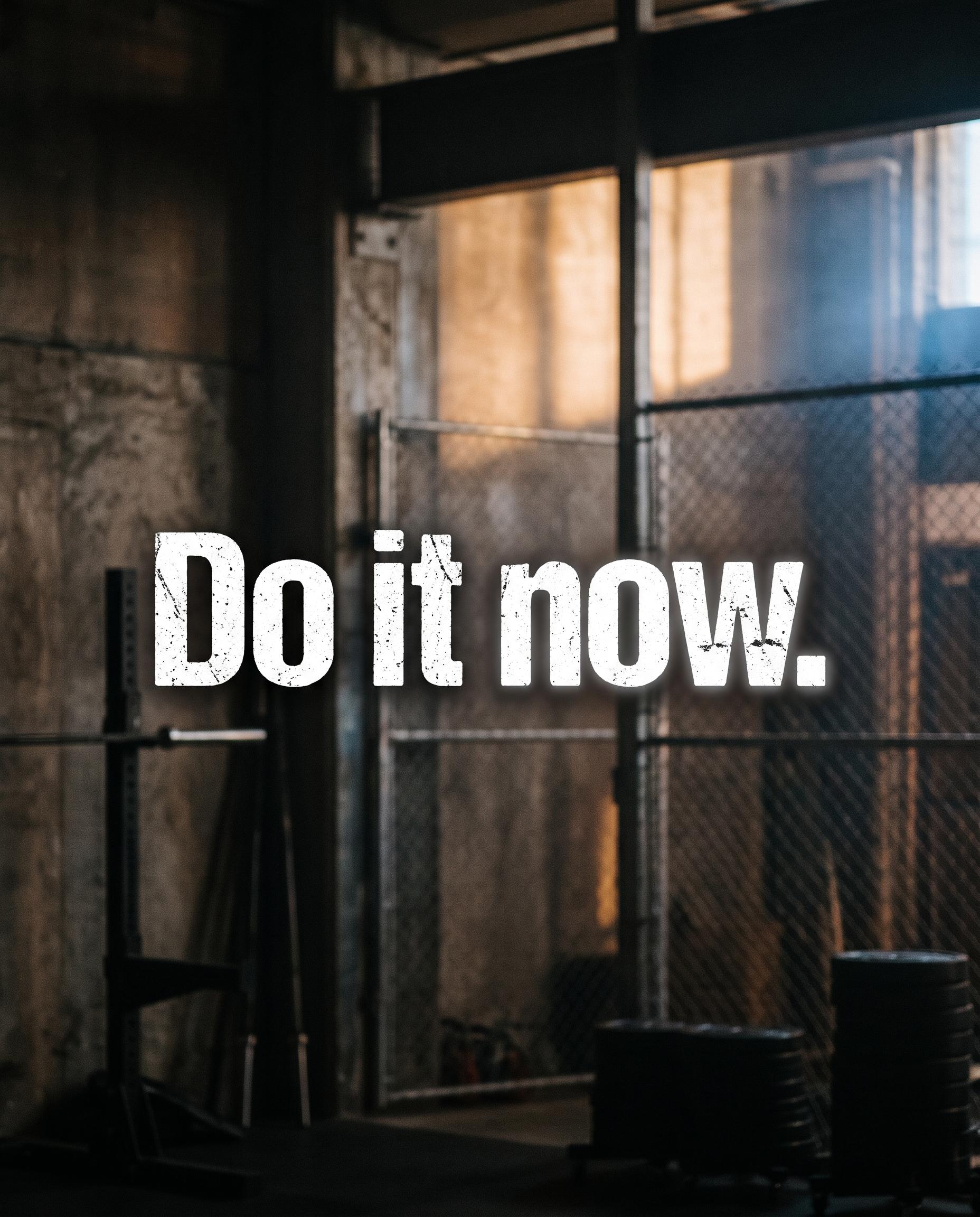
    TOPIC:### **DO IT NOW.**

    One day or day one? You decide. The best time to start was yesterday, the next best time is **right now**. No more excuses, no more delaying. Take the first step today and make it happen!

    Let’s get to work.

    ---

    • **Hit Follow** for your daily dose of drive: @[YourUsername]

    • **Save this** to stay reminded when procrastination hits.

    • **Tag a friend** who needs to see this today!

    #DoItNow #MindsetMatters #NoExcuses #GrindMode #Discipline #TakeAction #MotivationalQuotes #DailyInspiration #GoalGetter #StartToday #SuccessMindset #InstaMotivation
    RSIF8 ROLL NO:92 CHAT GPT TASK NO:26 TOPIC:### **DO IT NOW.** One day or day one? You decide. The best time to start was yesterday, the next best time is **right now**. No more excuses, no more delaying. Take the first step today and make it happen! Let’s get to work. 💯💪 --- • **Hit Follow** for your daily dose of drive: @[YourUsername] • **Save this** to stay reminded when procrastination hits. • **Tag a friend** who needs to see this today! #DoItNow #MindsetMatters #NoExcuses #GrindMode #Discipline #TakeAction #MotivationalQuotes #DailyInspiration #GoalGetter #StartToday #SuccessMindset #InstaMotivation
    0 Comentários 0 Compartilhamentos 783 Visualizações
  • Waves of Karachi – کراچی کی لہریں

    Name: Ahid Soccer Wala
    Date: 5 November 2026
    Day: Thursday
    Task #: 30 (assuming this is your next task)

    My task is to create an original Urdu song about the beautiful city of Karachi, its amazing beaches, ocean waves, and wonderful atmosphere!

    Let's celebrate the beauty, culture, and spirit of Karachi through music!

    کراچی زندہ باد!

    #WavesOfKarachi #AhidSoccerWala #UrduSong #Karachi #CreativeTask
    🎵 Waves of Karachi – کراچی کی لہریں 🇵🇰 👤 Name: Ahid Soccer Wala 📅 Date: 5 November 2026 📆 Day: Thursday 🔢 Task #: 30 (assuming this is your next task) 🎤 My task is to create an original Urdu song about the beautiful city of Karachi, its amazing beaches, ocean waves, and wonderful atmosphere! 🌊✨ Let's celebrate the beauty, culture, and spirit of Karachi through music! 💙 کراچی زندہ باد! 🇵🇰❤️ #WavesOfKarachi #AhidSoccerWala #UrduSong #Karachi #CreativeTask
    0 Comentários 0 Compartilhamentos 379 Visualizações 13
  • Foundation leave
    day 111
    task create a story post
    topic The Evolution Paradox: Bridging Theories of Life with Divine Design
    # The Evolution Paradox: Bridging Theories of Life with Divine Design

    An Educational Story About Evolution, Science, Faith, and the Mystery of Life

    Once upon a time, there was a curious young student named Adam who loved learning about science, nature, and the universe. One day, while reading a science book, he discovered the theory of evolution. He learned that living things change over many generations and that all life on Earth shares connections through ancient ancestors. This discovery made him wonder: "How did life begin, and why is our world so beautifully designed?"

    The next day, Adam discussed his questions with his science teacher. The teacher explained that evolution is a scientific theory that describes how living organisms change over generations through processes such as natural selection and genetic variation. Scientists study fossils, DNA, and living organisms to understand the history of life. Adam was amazed to learn how much information DNA contains and how it helps scientists understand relationships between different species.

    However, Adam also had questions about divine design. He asked, "Can science and belief in a Creator exist together?" His teacher explained that science investigates how the natural world works, while religious and philosophical beliefs explore deeper questions about purpose, meaning, and creation. People have different opinions about how evolution and divine design relate to each other. Some see them as conflicting explanations, while others believe that scientific processes can be part of a divine plan.

    Adam realized that asking questions was important. He understood that studying evolution did not mean ignoring faith, and discussing divine design did not mean ignoring scientific evidence. Both subjects encouraged him to think deeply about the mysteries of existence. He began reading more, listening to different viewpoints, and respecting people who had different beliefs.

    Finally, Adam shared his thoughts with his classmates. He said, "Life is full of mysteries, and learning helps us understand more about our world. Science teaches us to investigate, while philosophy and faith encourage us to explore questions of purpose and meaning. We should never stop asking questions or searching for knowledge."

    Moral of the Story: Knowledge grows when we remain curious, respect different perspectives, and explore life's mysteries with an open mind.

    Key Lessons:

    - Evolution explains how life changes over generations.
    - DNA provides important evidence about the history of life.
    - Science investigates the natural world through evidence.
    - Faith and philosophy explore questions of purpose and meaning.
    - Curiosity, respect, and critical thinking help us learn.

    The End.
    Foundation leave day 111 task create a story post topic The Evolution Paradox: Bridging Theories of Life with Divine Design # The Evolution Paradox: Bridging Theories of Life with Divine Design An Educational Story About Evolution, Science, Faith, and the Mystery of Life Once upon a time, there was a curious young student named Adam who loved learning about science, nature, and the universe. One day, while reading a science book, he discovered the theory of evolution. He learned that living things change over many generations and that all life on Earth shares connections through ancient ancestors. This discovery made him wonder: "How did life begin, and why is our world so beautifully designed?" The next day, Adam discussed his questions with his science teacher. The teacher explained that evolution is a scientific theory that describes how living organisms change over generations through processes such as natural selection and genetic variation. Scientists study fossils, DNA, and living organisms to understand the history of life. Adam was amazed to learn how much information DNA contains and how it helps scientists understand relationships between different species. However, Adam also had questions about divine design. He asked, "Can science and belief in a Creator exist together?" His teacher explained that science investigates how the natural world works, while religious and philosophical beliefs explore deeper questions about purpose, meaning, and creation. People have different opinions about how evolution and divine design relate to each other. Some see them as conflicting explanations, while others believe that scientific processes can be part of a divine plan. Adam realized that asking questions was important. He understood that studying evolution did not mean ignoring faith, and discussing divine design did not mean ignoring scientific evidence. Both subjects encouraged him to think deeply about the mysteries of existence. He began reading more, listening to different viewpoints, and respecting people who had different beliefs. Finally, Adam shared his thoughts with his classmates. He said, "Life is full of mysteries, and learning helps us understand more about our world. Science teaches us to investigate, while philosophy and faith encourage us to explore questions of purpose and meaning. We should never stop asking questions or searching for knowledge." Moral of the Story: Knowledge grows when we remain curious, respect different perspectives, and explore life's mysteries with an open mind. Key Lessons: - Evolution explains how life changes over generations. - DNA provides important evidence about the history of life. - Science investigates the natural world through evidence. - Faith and philosophy explore questions of purpose and meaning. - Curiosity, respect, and critical thinking help us learn. The End.
    0 Comentários 0 Compartilhamentos 732 Visualizações
  • Accl Foundation Level (Rehan School Urdu Bazar Campus)
    Day : 83 Story post no : 11
    Roll no : 17
    Accl task
    Here is a beautiful story on The Wonders of Geometry Shapes and Philosophy
    ---
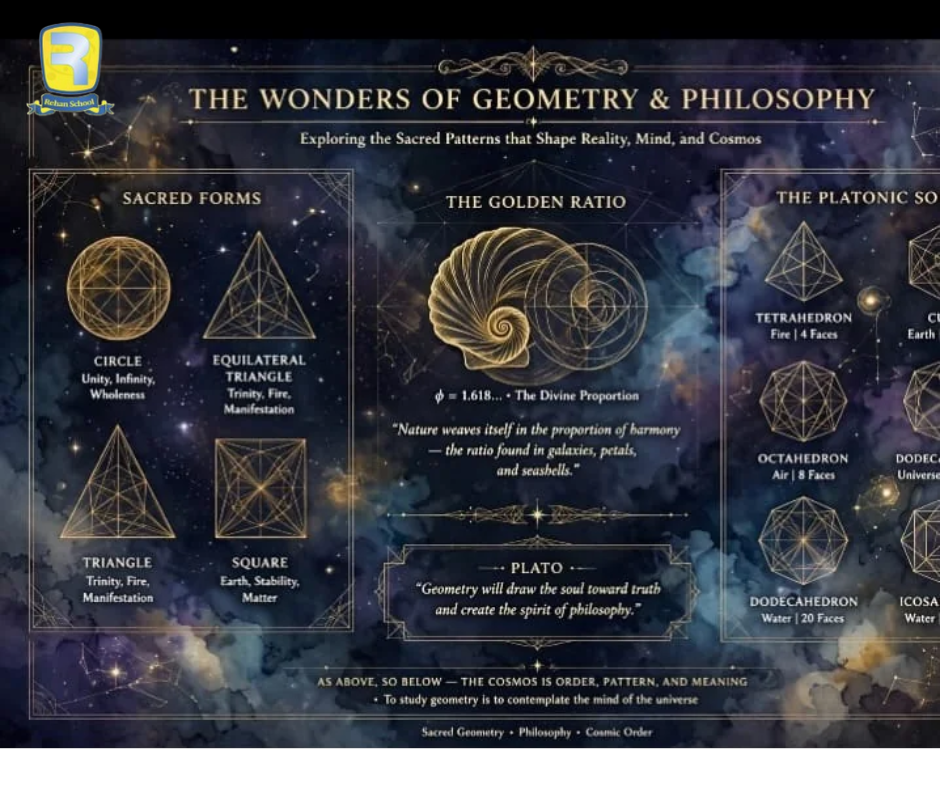
    ### The Language of the Universe
    A long time ago, a young student asked the great philosopher Plato,
    "Master, why do we study shapes? Are they not just lines and circles?"
    Plato smiled and drew a Circle in the sand.
    "This Circle," he said, "has no beginning and no end. It teaches us about Unity, Infinity, and Wholeness. Just like life and the soul, it is eternal."
    Then he drew an Equilateral Triangle.
    "This triangle has three equal sides. It represents Trinity, Fire, and Manifestation. It teaches us balance. The mind, the body, and the spirit — all three must be in balance to create something new."
    Next, he drew a Square.
    "This Square stands for Earth, Stability, and Matter. It has four strong corners. It teaches us that to build a strong life, you need a strong foundation."
    The student was amazed. Then Plato showed him the most magical thing — The Golden Ratio, φ = 1.618...
    He showed him a seashell, a flower, and the stars in the sky.
    "Look closely," Plato said. "Nature weaves itself in the proportion of harmony — the same ratio found in galaxies, petals, and seashells. This is the Divine Proportion. It proves that the universe is not random, it is art."
    Finally, he showed him the Platonic Solids — the five sacred shapes that build the entire universe: Tetrahedron (Fire ), Cube (Earth ), Octahedron (Air ), Icosahedron (Water ), and Dodecahedron (Universe ).
    Plato whispered his most famous quote:
    > “Geometry will draw the soul toward truth and create the spirit of philosophy.”
    The student understood. Geometry is not just math. It is the secret language that God used to write the universe.
    And so, the saying goes:
    "As Above, So Below — The Cosmos is Order, Pattern, and Meaning. To study geometry is to contemplate the mind of the universe."

    ### کائنات کی زبان
    بہت پرانے زمانے کی بات ہے، ایک چھوٹے سے شاگرد نے اپنے استاد افلاطون سے پوچھا،
    "استاد، ہم شکلیں کیوں پڑھتے ہیں؟ کیا یہ صرف لکیریں اور گول دائرے نہیں ہیں؟"
    افلاطون مسکرائے اور ریت پر ایک دائرہ بنایا۔
    "بولو، اس دائرے کا کوئی شروع یا ختم ہے؟"
    "نہیں استاد،" شاگرد نے جواب دیا۔
    "بالکل، یہ اکتا، بے انتہا اور مکمل ہونے کا سبق دیتا ہے۔ جیسے ہماری روح، اس کا نہ کوئی آغاز ہے نہ اختتام۔"
    پھر انہوں نے ایک مثلث بنایا۔
    "یہ تین برابر سائیڈ والا ہے۔ یہ دماغ، جسم اور روح کا توازن سکھاتا ہے۔ جب تک تینوں میں توازن نہ ہو، کچھ نیا نہیں بنتا۔"
    اس کے بعد انہوں نے ایک مربع بنایا۔
    "یہ زمین، استحکام اور مضبوطی کی علامت ہے۔ اس کے چار کونے ہیں۔ یہ سکھاتا ہے کہ مضبوط زندگی کے لیے مضبوط بنیاد ضروری ہے۔"
    پھر افلاطون نے اسے سب سے جادوئی چیز دکھائی — گولڈن ریشو، 1.618
    انہوں نے ایک سیپ، ایک پھول اور آسمان کے ستارے دکھائے۔
    "دیکھو، قدرت اسی تناسب سے بنتی ہے۔ یہی تناسب کہکشاؤں میں، پھولوں کی پنکھڑیوں میں اور سیپ میں ہے۔ اس کا مطلب ہے کہ کائنات اتفاق نہیں، بلکہ ایک بہترین فن پارہ ہے۔"
    آخر میں انہوں نے پانچ مقدس شکلیں دکھائیں جو پوری کائنات کو بناتی ہیں: آگ، مٹی، ہوا، پانی اور کائنات۔
    اور افلاطون نے اپنا مشہور قول کہا:
    > "جیومیٹری روح کو سچائی کی طرف کھینچتی ہے اور فلسفے کی روح پیدا کرتی ہے۔"
    تب شاگرد کو سمجھ آیا۔ جیومیٹری صرف ریاضی نہیں، بلکہ وہ زبان ہے جس سے خدا نے اس پوری کائنات کو لکھا ہے۔
    "جیسا اوپر، ویسا نیچے — کائنات نظم، پیٹرن اور معنی کا نام ہے۔ جیومیٹری پڑھنا دراصل کائنات بنانے والے کے ذہن کو سمجھنا ہے۔

    Accl Foundation Level (Rehan School Urdu Bazar Campus) Day : 83 Story post no : 11 Roll no : 17 Accl task Here is a beautiful story on The Wonders of Geometry Shapes and Philosophy ✨📐 --- ### The Language of the Universe A long time ago, a young student asked the great philosopher Plato, "Master, why do we study shapes? Are they not just lines and circles?" Plato smiled and drew a Circle in the sand. ⭕ "This Circle," he said, "has no beginning and no end. It teaches us about Unity, Infinity, and Wholeness. Just like life and the soul, it is eternal." Then he drew an Equilateral Triangle. 🔺 "This triangle has three equal sides. It represents Trinity, Fire, and Manifestation. It teaches us balance. The mind, the body, and the spirit — all three must be in balance to create something new." Next, he drew a Square. ◼️ "This Square stands for Earth, Stability, and Matter. It has four strong corners. It teaches us that to build a strong life, you need a strong foundation." The student was amazed. Then Plato showed him the most magical thing — The Golden Ratio, φ = 1.618... 🐚✨ He showed him a seashell, a flower, and the stars in the sky. "Look closely," Plato said. "Nature weaves itself in the proportion of harmony — the same ratio found in galaxies, petals, and seashells. This is the Divine Proportion. It proves that the universe is not random, it is art." Finally, he showed him the Platonic Solids — the five sacred shapes that build the entire universe: Tetrahedron (Fire 🔥), Cube (Earth 🌍), Octahedron (Air 🌬️), Icosahedron (Water 💧), and Dodecahedron (Universe 🌌). Plato whispered his most famous quote: > “Geometry will draw the soul toward truth and create the spirit of philosophy.” The student understood. Geometry is not just math. It is the secret language that God used to write the universe. And so, the saying goes: "As Above, So Below — The Cosmos is Order, Pattern, and Meaning. To study geometry is to contemplate the mind of the universe." 🌟 ### کائنات کی زبان بہت پرانے زمانے کی بات ہے، ایک چھوٹے سے شاگرد نے اپنے استاد افلاطون سے پوچھا، "استاد، ہم شکلیں کیوں پڑھتے ہیں؟ کیا یہ صرف لکیریں اور گول دائرے نہیں ہیں؟" افلاطون مسکرائے اور ریت پر ایک دائرہ بنایا۔ ⭕ "بولو، اس دائرے کا کوئی شروع یا ختم ہے؟" "نہیں استاد،" شاگرد نے جواب دیا۔ "بالکل، یہ اکتا، بے انتہا اور مکمل ہونے کا سبق دیتا ہے۔ جیسے ہماری روح، اس کا نہ کوئی آغاز ہے نہ اختتام۔" پھر انہوں نے ایک مثلث بنایا۔ 🔺 "یہ تین برابر سائیڈ والا ہے۔ یہ دماغ، جسم اور روح کا توازن سکھاتا ہے۔ جب تک تینوں میں توازن نہ ہو، کچھ نیا نہیں بنتا۔" اس کے بعد انہوں نے ایک مربع بنایا۔ ◼️ "یہ زمین، استحکام اور مضبوطی کی علامت ہے۔ اس کے چار کونے ہیں۔ یہ سکھاتا ہے کہ مضبوط زندگی کے لیے مضبوط بنیاد ضروری ہے۔" پھر افلاطون نے اسے سب سے جادوئی چیز دکھائی — گولڈن ریشو، 1.618 🐚 انہوں نے ایک سیپ، ایک پھول اور آسمان کے ستارے دکھائے۔ "دیکھو، قدرت اسی تناسب سے بنتی ہے۔ یہی تناسب کہکشاؤں میں، پھولوں کی پنکھڑیوں میں اور سیپ میں ہے۔ اس کا مطلب ہے کہ کائنات اتفاق نہیں، بلکہ ایک بہترین فن پارہ ہے۔" آخر میں انہوں نے پانچ مقدس شکلیں دکھائیں جو پوری کائنات کو بناتی ہیں: آگ، مٹی، ہوا، پانی اور کائنات۔ اور افلاطون نے اپنا مشہور قول کہا: > "جیومیٹری روح کو سچائی کی طرف کھینچتی ہے اور فلسفے کی روح پیدا کرتی ہے۔" تب شاگرد کو سمجھ آیا۔ جیومیٹری صرف ریاضی نہیں، بلکہ وہ زبان ہے جس سے خدا نے اس پوری کائنات کو لکھا ہے۔ "جیسا اوپر، ویسا نیچے — کائنات نظم، پیٹرن اور معنی کا نام ہے۔ جیومیٹری پڑھنا دراصل کائنات بنانے والے کے ذہن کو سمجھنا ہے۔

    0 Comentários 0 Compartilhamentos 1071 Visualizações
  • My review in Urdu How to Communicate When Something Goes Wrong (Part 1)

    TEDx Video Description — Part 2
    Video: How to Communicate When Something Goes Wrong
    Speaker: Ann Latham
    Part: 2

    In the final part of her talk, Ann Latham explains how the Disconnect Principle can help prevent future problems and improve different types of relationships. She encourages people to ask what they can do differently next time to avoid repeating the same mistakes.

    She also explains how employees, parents, and individuals can use this approach in everyday situations. Sometimes, people have fundamental differences that cannot easily be resolved, and moving in separate directions respectfully may be the best option. Ann ends her talk with an audience activity to reinforce her main message: "I think we have a disconnect."
    She introduces the phrase "I think we have a disconnect" as a better way to begin difficult conversations. She also explains how asking questions about the current situation and next steps can turn disagreements into teamwork.

    Key Points
    Learn from problems to prevent them from happening again.
    Use the Disconnect Principle in different relationships.
    Recognise fundamental differences without blaming others.
    Turn difficult conversations into respectful problem-solving.

    Speaker Biography:
    Ann Latham is a management consultant, author, and founder of Uncommon Clarity. She helps organisations improve communication, clarity, and problem-solving.

    Speaker Profiles:
    Facebook: https://www.facebook.com/uncommon.clarity
    Instagram: https://www.instagram.com/uncommonclarityinc
    LinkedIn: https://www.linkedin.com/in/annlathamuncommonclarity
    X (Twitter): https://x.com/AnnLatham

    Video Link:
    https://www.youtube.com/watch?v=h40dfxFotA4
    My review in Urdu How to Communicate When Something Goes Wrong (Part 1) 📝 TEDx Video Description — Part 2 🎤 Video: How to Communicate When Something Goes Wrong Speaker: Ann Latham Part: 2 In the final part of her talk, Ann Latham explains how the Disconnect Principle can help prevent future problems and improve different types of relationships. She encourages people to ask what they can do differently next time to avoid repeating the same mistakes. She also explains how employees, parents, and individuals can use this approach in everyday situations. Sometimes, people have fundamental differences that cannot easily be resolved, and moving in separate directions respectfully may be the best option. Ann ends her talk with an audience activity to reinforce her main message: "I think we have a disconnect." She introduces the phrase "I think we have a disconnect" as a better way to begin difficult conversations. She also explains how asking questions about the current situation and next steps can turn disagreements into teamwork. ⭐ Key Points Learn from problems to prevent them from happening again. Use the Disconnect Principle in different relationships. Recognise fundamental differences without blaming others. Turn difficult conversations into respectful problem-solving. 👤 Speaker Biography: Ann Latham is a management consultant, author, and founder of Uncommon Clarity. She helps organisations improve communication, clarity, and problem-solving. 🔗 Speaker Profiles: 📘 Facebook: https://www.facebook.com/uncommon.clarity 📸 Instagram: https://www.instagram.com/uncommonclarityinc 💼 LinkedIn: https://www.linkedin.com/in/annlathamuncommonclarity 🐦 X (Twitter): https://x.com/AnnLatham 📹 Video Link: https://www.youtube.com/watch?v=h40dfxFotA4
    0 Comentários 0 Compartilhamentos 1073 Visualizações 8
  • My review in How to Communicate When Something Goes Wrong (Part 2)

    TEDx Video Description — Part 2
    Video: How to Communicate When Something Goes Wrong
    Speaker: Ann Latham
    Part: 2

    In the final part of her talk, Ann Latham explains how the Disconnect Principle can help prevent future problems and improve different types of relationships. She encourages people to ask what they can do differently next time to avoid repeating the same mistakes.

    She also explains how employees, parents, and individuals can use this approach in everyday situations. Sometimes, people have fundamental differences that cannot easily be resolved, and moving in separate directions respectfully may be the best option. Ann ends her talk with an audience activity to reinforce her main message: "I think we have a disconnect."

    Key Points
    1. Learn from problems to prevent them from happening again.
    2. Use the Disconnect Principle in different relationships.
    3. Recognise fundamental differences without blaming others.
    4. Turn difficult conversations into respectful problem-solving.

    Speaker Biography:
    Ann Latham is a management consultant, author, and founder of Uncommon Clarity. She helps organisations improve communication, clarity, and problem-solving.

    Speaker Profiles:
    Facebook: https://www.facebook.com/uncommon.clarity
    Instagram: https://www.instagram.com/uncommonclarityinc
    LinkedIn: https://www.linkedin.com/in/annlathamuncommonclarity
    X (Twitter): https://x.com/AnnLatham

    Video Link:
    https://www.youtube.com/watch?v=h40dfxFotA4
    My review in How to Communicate When Something Goes Wrong (Part 2) 📝 TEDx Video Description — Part 2 🎤 Video: How to Communicate When Something Goes Wrong Speaker: Ann Latham Part: 2 In the final part of her talk, Ann Latham explains how the Disconnect Principle can help prevent future problems and improve different types of relationships. She encourages people to ask what they can do differently next time to avoid repeating the same mistakes. She also explains how employees, parents, and individuals can use this approach in everyday situations. Sometimes, people have fundamental differences that cannot easily be resolved, and moving in separate directions respectfully may be the best option. Ann ends her talk with an audience activity to reinforce her main message: "I think we have a disconnect." ⭐ Key Points 1. Learn from problems to prevent them from happening again. 2. Use the Disconnect Principle in different relationships. 3. Recognise fundamental differences without blaming others. 4. Turn difficult conversations into respectful problem-solving. 👤 Speaker Biography: Ann Latham is a management consultant, author, and founder of Uncommon Clarity. She helps organisations improve communication, clarity, and problem-solving. 🔗 Speaker Profiles: 📘 Facebook: https://www.facebook.com/uncommon.clarity 📸 Instagram: https://www.instagram.com/uncommonclarityinc 💼 LinkedIn: https://www.linkedin.com/in/annlathamuncommonclarity 🐦 X (Twitter): https://x.com/AnnLatham 📹 Video Link: https://www.youtube.com/watch?v=h40dfxFotA4
    0 Comentários 0 Compartilhamentos 914 Visualizações 6
  • My review in Urdu How to Communicate When Something Goes Wrong (Part 1)

    TEDx Video Description — Part 1
    Video: How to Communicate When Something Goes Wrong
    Speaker: Ann Latham
    Part: 2

    In the first part of her talk, Ann Latham introduces the Disconnect Principle, explaining why traditional feedback methods often fail. She shares the story of a manager named Max whose negative thoughts affected a difficult conversation with his employee. Ann explains that instead of blaming people, we should focus on understanding what went wrong.

    She introduces the phrase "I think we have a disconnect" as a better way to begin difficult conversations. She also explains how asking questions about the current situation and next steps can turn disagreements into teamwork.

    Key Points
    1. Focus on solving problems instead of fixing people.
    2. Avoid negative assumptions and quick judgments.
    3. Use "I think we have a disconnect" to start conversations.
    4. Ask what happened and what needs to happen next.
    Speaker Biography:

    Ann Latham is a management consultant, author, and founder of Uncommon Clarity. She helps organisations improve communication, clarity, and problem-solving.

    Speaker Profiles:
    Facebook: https://www.facebook.com/uncommon.clarity
    Instagram: https://www.instagram.com/uncommonclarityinc
    LinkedIn: https://www.linkedin.com/in/annlathamuncommonclarity
    X (Twitter): https://x.com/AnnLatham

    Video Link:
    https://www.youtube.com/watch?v=h40dfxFotA4
    My review in Urdu How to Communicate When Something Goes Wrong (Part 1) 📝 TEDx Video Description — Part 1 🎤 Video: How to Communicate When Something Goes Wrong Speaker: Ann Latham Part: 2 In the first part of her talk, Ann Latham introduces the Disconnect Principle, explaining why traditional feedback methods often fail. She shares the story of a manager named Max whose negative thoughts affected a difficult conversation with his employee. Ann explains that instead of blaming people, we should focus on understanding what went wrong. She introduces the phrase "I think we have a disconnect" as a better way to begin difficult conversations. She also explains how asking questions about the current situation and next steps can turn disagreements into teamwork. ⭐ Key Points 1. Focus on solving problems instead of fixing people. 2. Avoid negative assumptions and quick judgments. 3. Use "I think we have a disconnect" to start conversations. 4. Ask what happened and what needs to happen next. 👤 Speaker Biography: Ann Latham is a management consultant, author, and founder of Uncommon Clarity. She helps organisations improve communication, clarity, and problem-solving. 🔗 Speaker Profiles: 📘 Facebook: https://www.facebook.com/uncommon.clarity 📸 Instagram: https://www.instagram.com/uncommonclarityinc 💼 LinkedIn: https://www.linkedin.com/in/annlathamuncommonclarity 🐦 X (Twitter): https://x.com/AnnLatham 📹 Video Link: https://www.youtube.com/watch?v=h40dfxFotA4
    0 Comentários 0 Compartilhamentos 763 Visualizações 10
  • My review in English How to Communicate When Something Goes Wrong (Part 1)

    TEDx Video Description — Part 1
    Video: How to Communicate When Something Goes Wrong
    Speaker: Ann Latham
    Part: 1

    In the first part of her talk, Ann Latham introduces the Disconnect Principle, explaining why traditional feedback methods often fail. She shares the story of a manager named Max whose negative thoughts affected a difficult conversation with his employee. Ann explains that instead of blaming people, we should focus on understanding what went wrong.

    She introduces the phrase "I think we have a disconnect" as a better way to begin difficult conversations. She also explains how asking questions about the current situation and next steps can turn disagreements into teamwork.

    Key Points
    1. Focus on solving problems instead of fixing people.
    2. Avoid negative assumptions and quick judgments.
    3. Use "I think we have a disconnect" to start conversations.
    4. Ask what happened and what needs to happen next.
    Speaker Biography:

    Ann Latham is a management consultant, author, and founder of Uncommon Clarity. She helps organisations improve communication, clarity, and problem-solving.

    Speaker Profiles:
    Facebook: https://www.facebook.com/uncommon.clarity
    Instagram: https://www.instagram.com/uncommonclarityinc
    LinkedIn: https://www.linkedin.com/in/annlathamuncommonclarity
    X (Twitter): https://x.com/AnnLatham

    Video Link:
    https://www.youtube.com/watch?v=h40dfxFotA4
    My review in English How to Communicate When Something Goes Wrong (Part 1) 📝 TEDx Video Description — Part 1 🎤 Video: How to Communicate When Something Goes Wrong Speaker: Ann Latham Part: 1 In the first part of her talk, Ann Latham introduces the Disconnect Principle, explaining why traditional feedback methods often fail. She shares the story of a manager named Max whose negative thoughts affected a difficult conversation with his employee. Ann explains that instead of blaming people, we should focus on understanding what went wrong. She introduces the phrase "I think we have a disconnect" as a better way to begin difficult conversations. She also explains how asking questions about the current situation and next steps can turn disagreements into teamwork. ⭐ Key Points 1. Focus on solving problems instead of fixing people. 2. Avoid negative assumptions and quick judgments. 3. Use "I think we have a disconnect" to start conversations. 4. Ask what happened and what needs to happen next. 👤 Speaker Biography: Ann Latham is a management consultant, author, and founder of Uncommon Clarity. She helps organisations improve communication, clarity, and problem-solving. 🔗 Speaker Profiles: 📘 Facebook: https://www.facebook.com/uncommon.clarity 📸 Instagram: https://www.instagram.com/uncommonclarityinc 💼 LinkedIn: https://www.linkedin.com/in/annlathamuncommonclarity 🐦 X (Twitter): https://x.com/AnnLatham 📹 Video Link: https://www.youtube.com/watch?v=h40dfxFotA4
    0 Comentários 0 Compartilhamentos 773 Visualizações 22
  • The Mystery of Life: Exploring the World of Cells
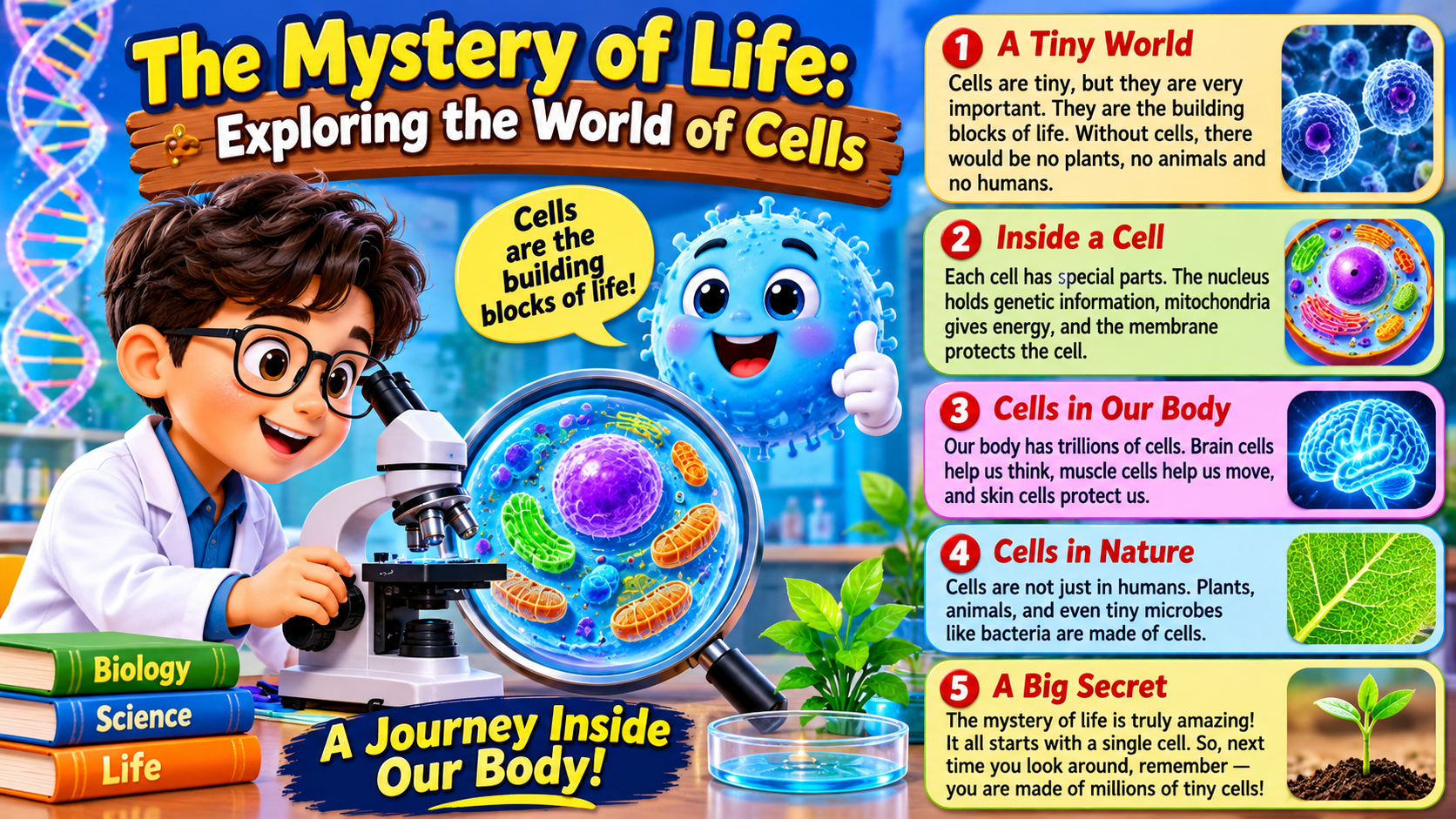
    Paragraph 1 – A Tiny World

    One day, a young student named Ali visited a science laboratory. He saw a microscope and became curious about the tiny things around him. His teacher told him that everything living, including humans, animals, and plants, is made up of tiny building blocks called cells. Ali was amazed to discover that these tiny cells are everywhere!

    Paragraph 2 – Inside a Cell

    Ali looked through the microscope and saw a beautiful cell. His teacher explained that every cell has different parts. The nucleus controls the activities of the cell, the cell membrane protects it, and mitochondria provide energy. Ali learned that each part has a special job, just like different people working together in a team.

    Paragraph 3 – Cells in Our Body

    Next, Ali learned that the human body contains trillions of cells. Brain cells help us think, muscle cells help us move, and blood cells carry oxygen throughout our body. Every cell works together to keep us healthy and active. Ali realized that his body was like a wonderful living machine!

    Paragraph 4 – Cells in Nature

    Ali was surprised to learn that cells are not only found in humans. Plants, animals, and even tiny microorganisms are made of cells. Plant cells help plants grow, make food, and stay strong. Every living thing has its own amazing cellular world.

    Paragraph 5 – The Big Secret of Life

    At the end of the lesson, Ali thanked his teacher for explaining the mystery of cells. He understood that cells are the foundation of all living things. Although cells are too tiny to see with our eyes, they perform very important jobs every second. Ali went home excited, dreaming of becoming a scientist and discovering more secrets of life!

    The End.


    Do you like this personality?
    The Mystery of Life: Exploring the World of Cells Paragraph 1 – A Tiny World One day, a young student named Ali visited a science laboratory. He saw a microscope and became curious about the tiny things around him. His teacher told him that everything living, including humans, animals, and plants, is made up of tiny building blocks called cells. Ali was amazed to discover that these tiny cells are everywhere! Paragraph 2 – Inside a Cell Ali looked through the microscope and saw a beautiful cell. His teacher explained that every cell has different parts. The nucleus controls the activities of the cell, the cell membrane protects it, and mitochondria provide energy. Ali learned that each part has a special job, just like different people working together in a team. Paragraph 3 – Cells in Our Body Next, Ali learned that the human body contains trillions of cells. Brain cells help us think, muscle cells help us move, and blood cells carry oxygen throughout our body. Every cell works together to keep us healthy and active. Ali realized that his body was like a wonderful living machine! Paragraph 4 – Cells in Nature Ali was surprised to learn that cells are not only found in humans. Plants, animals, and even tiny microorganisms are made of cells. Plant cells help plants grow, make food, and stay strong. Every living thing has its own amazing cellular world. Paragraph 5 – The Big Secret of Life At the end of the lesson, Ali thanked his teacher for explaining the mystery of cells. He understood that cells are the foundation of all living things. Although cells are too tiny to see with our eyes, they perform very important jobs every second. Ali went home excited, dreaming of becoming a scientist and discovering more secrets of life! The End. 🌱🔬 Do you like this personality?
    0 Comentários 0 Compartilhamentos 1207 Visualizações
Páginas impulsionada