• #rsisb
    Roll no 228
    interview no 14
    foundation level
    **First View – A New Perspective, A New Experience, and a New Journey**
    Every new experience begins with a first view, a moment when we discover something different, explore new ideas, and open our minds to endless possibilities. First View is not just about seeing something for the first time; it is about understanding the world from a different perspective and learning something meaningful from everything around us.
    Life is full of opportunities, experiences, and lessons. Every person we meet, every place we explore, and every new thing we discover adds something valuable to our knowledge and personality. Sometimes, a simple first look at something can inspire us to think differently, ask questions, and develop a deeper understanding of the world.
    Through this journey, I believe that learning is a continuous process. We should always remain curious, ask meaningful questions, explore different perspectives, and never be afraid of discovering something new. Every small step towards knowledge brings us closer to personal growth and success.
    As a student, I believe that education is not limited to books and classrooms. Real learning comes from observation, communication, creativity, experiences, and sharing ideas with others. Every new view gives us a chance to improve ourselves and become more confident.
    Let's keep exploring, keep learning, and keep discovering the beauty of new experiences. Remember, a new perspective can open the door to a whole new world of possibilities!
    **See something new. Think differently. Learn continuously. Grow confidently.**
    \#FirstView #NewPerspective #LearningJourney #NewExperiences #CreativeThinking #PersonalGrowth #Knowledge #Education #ExploreAndLearn #KeepDiscovering #RehanSchool #RSISB
    Make the description shorter and more engagingAdd a clearer call to action
    #rsisb Roll no 228 interview no 14 foundation level 🌟 **First View – A New Perspective, A New Experience, and a New Journey** 🌍✨ Every new experience begins with a first view, a moment when we discover something different, explore new ideas, and open our minds to endless possibilities. First View is not just about seeing something for the first time; it is about understanding the world from a different perspective and learning something meaningful from everything around us. Life is full of opportunities, experiences, and lessons. Every person we meet, every place we explore, and every new thing we discover adds something valuable to our knowledge and personality. Sometimes, a simple first look at something can inspire us to think differently, ask questions, and develop a deeper understanding of the world. Through this journey, I believe that learning is a continuous process. We should always remain curious, ask meaningful questions, explore different perspectives, and never be afraid of discovering something new. Every small step towards knowledge brings us closer to personal growth and success. As a student, I believe that education is not limited to books and classrooms. Real learning comes from observation, communication, creativity, experiences, and sharing ideas with others. Every new view gives us a chance to improve ourselves and become more confident. Let's keep exploring, keep learning, and keep discovering the beauty of new experiences. Remember, a new perspective can open the door to a whole new world of possibilities! ✨ **See something new. Think differently. Learn continuously. Grow confidently.** 🚀 \#FirstView #NewPerspective #LearningJourney #NewExperiences #CreativeThinking #PersonalGrowth #Knowledge #Education #ExploreAndLearn #KeepDiscovering #RehanSchool #RSISB Make the description shorter and more engagingAdd a clearer call to action
    0 Σχόλια 0 Μοιράστηκε 521 Views 5
  • #rsisb
    Roll no.231
    story post no.110
    Foundation Level
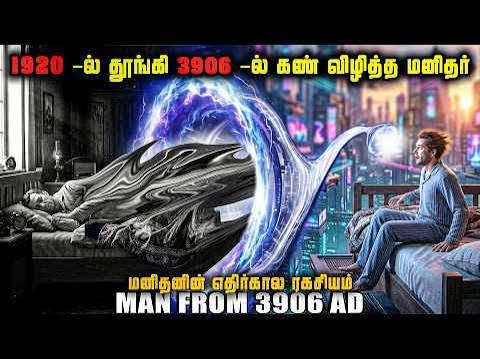
    ### “The Secret Diary of a Time Traveler”
    Imagine discovering a mysterious diary filled with entries written by someone who can travel through time. Each page contains clues about different eras, forgotten places, and events that have yet to happen.
    The time traveler records lessons from the **past**, observations from the **present**, and warnings about the **future**. But one strange detail makes the diary truly mysterious: some entries appear to have been written **before the events they describe actually happened**.
    As the journey continues, the traveler must solve the diary’s secrets while learning that changing even one moment in history could create unexpected consequences.
    **“The Secret Diary of a Time Traveler”** is a creative adventure about curiosity, discovery, choices, and the mysterious possibilities of time.
    #TimeTraveler #SecretDiary #TimeTravel #Mystery #Adventure #Imagination #Storytelling #Future #PastAndPresent #CreativeWriting #Learning
    Asma Shaheen EducationWali
    Saima Empowerment Wali
    Irum Asim Leadershipwali
    #rsisb Roll no.231 story post no.110 Foundation Level ### ⏳📖 “The Secret Diary of a Time Traveler” Imagine discovering a mysterious diary filled with entries written by someone who can travel through time. Each page contains clues about different eras, forgotten places, and events that have yet to happen. 🕰️✨ The time traveler records lessons from the **past**, observations from the **present**, and warnings about the **future**. But one strange detail makes the diary truly mysterious: some entries appear to have been written **before the events they describe actually happened**. 😲📜 As the journey continues, the traveler must solve the diary’s secrets while learning that changing even one moment in history could create unexpected consequences. 🌍⏳ **“The Secret Diary of a Time Traveler”** is a creative adventure about curiosity, discovery, choices, and the mysterious possibilities of time. 🚀🔮 #TimeTraveler #SecretDiary #TimeTravel #Mystery #Adventure #Imagination #Storytelling #Future #PastAndPresent #CreativeWriting #Learning 📖⏳✨ Asma Shaheen EducationWali Saima Empowerment Wali Irum Asim Leadershipwali
    0 Σχόλια 0 Μοιράστηκε 325 Views
  • **Roll No: 2**
    **Batch: 14**
    **Book: ACCL**
    **Task No: 160**

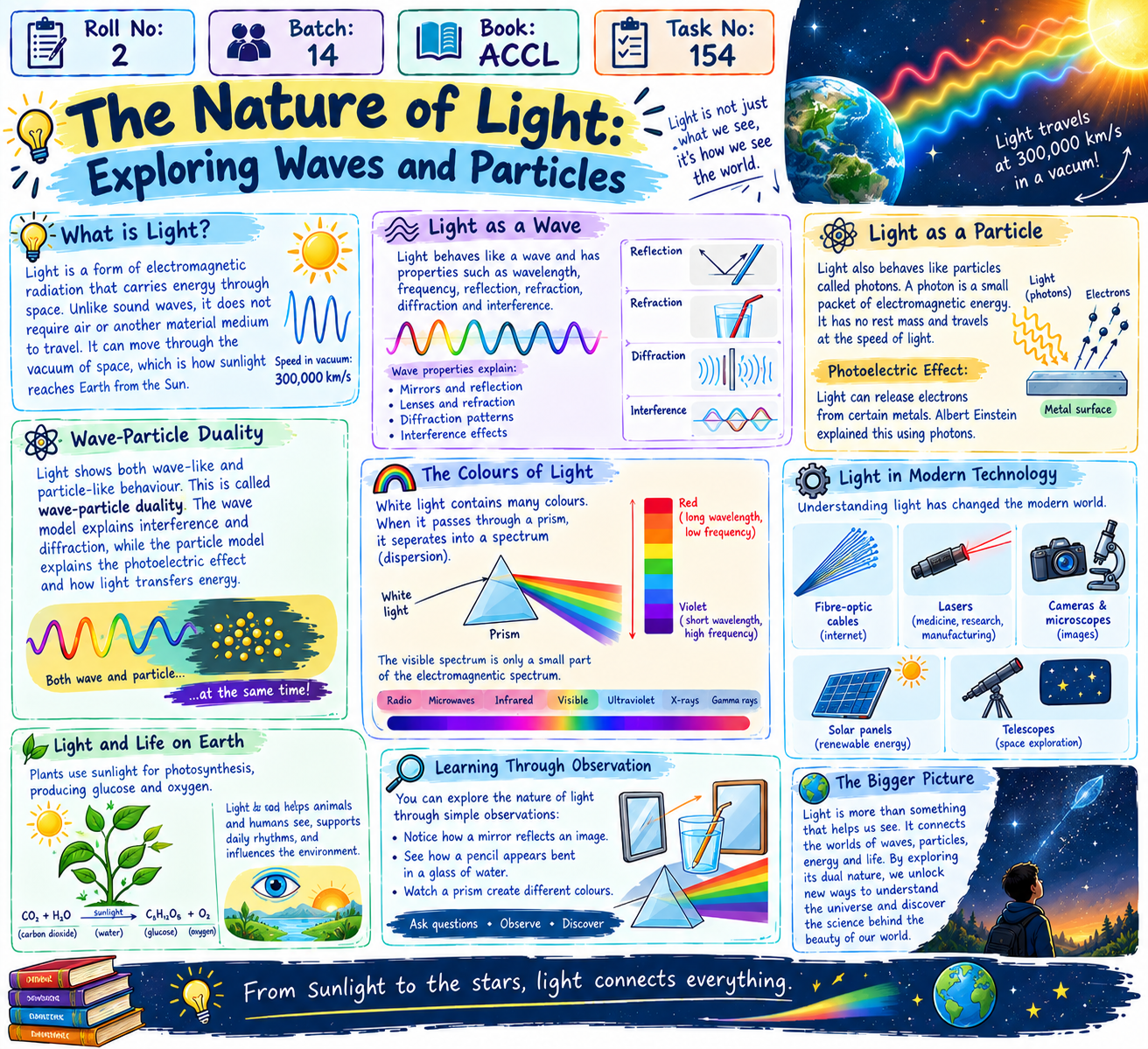
    # The Nature of Light: Exploring Waves and Particles

    Have you ever wondered how we see the colorful world around us? From the bright sunshine in the morning to the glowing stars at night, light plays an essential role in our lives. It allows us to see objects, helps plants grow, and makes many modern technologies possible. But what exactly is light? Is it a wave, a particle, or something even more fascinating?

    **Light is a form of electromagnetic radiation that carries energy through space.** Unlike sound waves, light does not require air or another material medium to travel. It can move through the vacuum of space, which is how sunlight reaches Earth from the Sun. In a vacuum, light travels at approximately 300,000 kilometres per second, making it one of the fastest phenomena in nature.

    ## Light as a Wave

    For many years, scientists studied light and discovered that it behaves like a wave. Light waves have properties such as wavelength, frequency, reflection, refraction, diffraction, and interference. These properties help explain many everyday optical phenomena.

    **Reflection** occurs when light bounces off a surface. A mirror is a familiar example because it reflects light and allows us to see our image. **Refraction** happens when light changes direction as it passes from one transparent material into another, such as from air into water. This is why a straw placed in a glass of water may appear bent.

    Light can also spread out through a process called diffraction and produce patterns through interference. These wave properties provide important evidence of the wave nature of light. Scientists use them to understand lenses, microscopes, telescopes, and many other optical instruments.

    ## Light as a Particle

    Light also behaves in ways that can be explained by particles called **photons**. A photon is a small packet, or quantum, of electromagnetic energy. Photons have no rest mass and travel at the speed of light in a vacuum.

    One important discovery was the photoelectric effect. Scientists observed that when light of a suitable frequency shines on certain metals, it can cause electrons to be released. Albert Einstein explained this phenomenon by showing that light transfers energy in individual packets called photons. This discovery helped establish the foundation of quantum physics.

    The particle model explains how light interacts with matter in processes such as the photoelectric effect and the absorption and emission of energy by atoms.

    ## Wave-Particle Duality

    One of the most fascinating discoveries in physics is that light shows both wave-like and particle-like behaviour. This idea is known as **wave-particle duality**.

    Light does not behave like an ordinary water wave or a tiny solid ball. Instead, its behaviour depends on the type of experiment and how it interacts with matter. The wave description helps explain interference and diffraction, while the photon description explains how light transfers energy in individual amounts.

    This discovery changed the way scientists understand the universe and became an important part of quantum mechanics.

    ## The Colours of Light

    White light may look simple, but it contains many different colours. When white light passes through a glass prism, it separates into a spectrum of colours: red, orange, yellow, green, blue, indigo, and violet. This process is called **dispersion**.

    Each colour has a different wavelength and frequency. Red light has a longer wavelength than violet light, while violet light has a higher frequency. The visible spectrum is only a small part of the electromagnetic spectrum, which also includes radio waves, microwaves, infrared radiation, ultraviolet radiation, X-rays, and gamma rays.

    ## Light in Modern Technology

    The study of light has transformed the modern world. Fibre-optic cables use light to transmit information over long distances, supporting internet communication and global connectivity. Lasers are used in medical equipment, scientific research, manufacturing, and barcode scanners.

    Cameras and microscopes use lenses to control light and produce images. Solar panels convert energy from sunlight into electrical energy, while telescopes help scientists observe distant stars and galaxies. These technologies demonstrate how understanding light can improve everyday life and expand human knowledge.

    ## Light and Life on Earth

    Light is essential for many living organisms. Green plants use sunlight during photosynthesis to produce glucose from water and carbon dioxide, releasing oxygen as a by-product. This process supports food chains and helps maintain the balance of gases in Earth's atmosphere.

    Light also helps animals and humans understand their surroundings through vision. Many organisms use natural light patterns to regulate daily activities, while sunlight influences environmental conditions and the rhythms of life.

    ## Learning Through Observation

    You can explore the nature of light through simple observations. Notice how a mirror reflects an image, how a pencil appears bent in a glass of water, or how sunlight passing through a prism produces different colours. These examples connect scientific ideas with experiences from everyday life.

    By asking questions, making observations, and studying experiments, we can understand how light behaves and why it is so important in science.

    **Light is more than something that helps us see; it is a fascinating phenomenon that connects the worlds of waves, particles, energy, and life. By exploring its dual nature, we unlock new ways to understand the universe and discover the science behind the beauty of our world. **

    \#NatureOfLight #WavesAndParticles #Physics #QuantumPhysics #ElectromagneticWaves #Science #ACCL #Batch14 #Task154
    **Roll No: 2** **Batch: 14** **Book: ACCL** **Task No: 160** # 🌈💡 The Nature of Light: Exploring Waves and Particles 🔬🌊 Have you ever wondered how we see the colorful world around us? 🌍 From the bright sunshine in the morning to the glowing stars at night, light plays an essential role in our lives. It allows us to see objects, helps plants grow, and makes many modern technologies possible. But what exactly is light? Is it a wave, a particle, or something even more fascinating? ✨ **Light is a form of electromagnetic radiation that carries energy through space.** Unlike sound waves, light does not require air or another material medium to travel. It can move through the vacuum of space, which is how sunlight reaches Earth from the Sun. In a vacuum, light travels at approximately 300,000 kilometres per second, making it one of the fastest phenomena in nature. ☀️🚀 ## 🌊 Light as a Wave For many years, scientists studied light and discovered that it behaves like a wave. Light waves have properties such as wavelength, frequency, reflection, refraction, diffraction, and interference. These properties help explain many everyday optical phenomena. 🌈 **Reflection** occurs when light bounces off a surface. A mirror is a familiar example because it reflects light and allows us to see our image. **Refraction** happens when light changes direction as it passes from one transparent material into another, such as from air into water. This is why a straw placed in a glass of water may appear bent. 🪞💧 Light can also spread out through a process called diffraction and produce patterns through interference. These wave properties provide important evidence of the wave nature of light. Scientists use them to understand lenses, microscopes, telescopes, and many other optical instruments. 🔭🔬 ## ⚛️ Light as a Particle Light also behaves in ways that can be explained by particles called **photons**. A photon is a small packet, or quantum, of electromagnetic energy. Photons have no rest mass and travel at the speed of light in a vacuum. ⚡ One important discovery was the photoelectric effect. Scientists observed that when light of a suitable frequency shines on certain metals, it can cause electrons to be released. Albert Einstein explained this phenomenon by showing that light transfers energy in individual packets called photons. This discovery helped establish the foundation of quantum physics. 🧪 The particle model explains how light interacts with matter in processes such as the photoelectric effect and the absorption and emission of energy by atoms. ## 🔬 Wave-Particle Duality One of the most fascinating discoveries in physics is that light shows both wave-like and particle-like behaviour. This idea is known as **wave-particle duality**. 🌌 Light does not behave like an ordinary water wave or a tiny solid ball. Instead, its behaviour depends on the type of experiment and how it interacts with matter. The wave description helps explain interference and diffraction, while the photon description explains how light transfers energy in individual amounts. This discovery changed the way scientists understand the universe and became an important part of quantum mechanics. ## 🌈 The Colours of Light White light may look simple, but it contains many different colours. When white light passes through a glass prism, it separates into a spectrum of colours: red, orange, yellow, green, blue, indigo, and violet. This process is called **dispersion**. 🌈 Each colour has a different wavelength and frequency. Red light has a longer wavelength than violet light, while violet light has a higher frequency. The visible spectrum is only a small part of the electromagnetic spectrum, which also includes radio waves, microwaves, infrared radiation, ultraviolet radiation, X-rays, and gamma rays. ## 📡 Light in Modern Technology The study of light has transformed the modern world. Fibre-optic cables use light to transmit information over long distances, supporting internet communication and global connectivity. 💻🌐 Lasers are used in medical equipment, scientific research, manufacturing, and barcode scanners. Cameras and microscopes use lenses to control light and produce images. Solar panels convert energy from sunlight into electrical energy, while telescopes help scientists observe distant stars and galaxies. These technologies demonstrate how understanding light can improve everyday life and expand human knowledge. 🔭🔋 ## 🌱 Light and Life on Earth Light is essential for many living organisms. Green plants use sunlight during photosynthesis to produce glucose from water and carbon dioxide, releasing oxygen as a by-product. This process supports food chains and helps maintain the balance of gases in Earth's atmosphere. 🌿☀️ Light also helps animals and humans understand their surroundings through vision. Many organisms use natural light patterns to regulate daily activities, while sunlight influences environmental conditions and the rhythms of life. ## 🧠 Learning Through Observation You can explore the nature of light through simple observations. Notice how a mirror reflects an image, how a pencil appears bent in a glass of water, or how sunlight passing through a prism produces different colours. These examples connect scientific ideas with experiences from everyday life. 🔍📚 By asking questions, making observations, and studying experiments, we can understand how light behaves and why it is so important in science. **Light is more than something that helps us see; it is a fascinating phenomenon that connects the worlds of waves, particles, energy, and life. By exploring its dual nature, we unlock new ways to understand the universe and discover the science behind the beauty of our world. 🌈💡🌍** \#NatureOfLight #WavesAndParticles #Physics #QuantumPhysics #ElectromagneticWaves #Science #ACCL #Batch14 #Task154 🌈🔬✨
    0 Σχόλια 0 Μοιράστηκε 930 Views
  • RSIf8
    Roll Number: 49
    Story post no.43
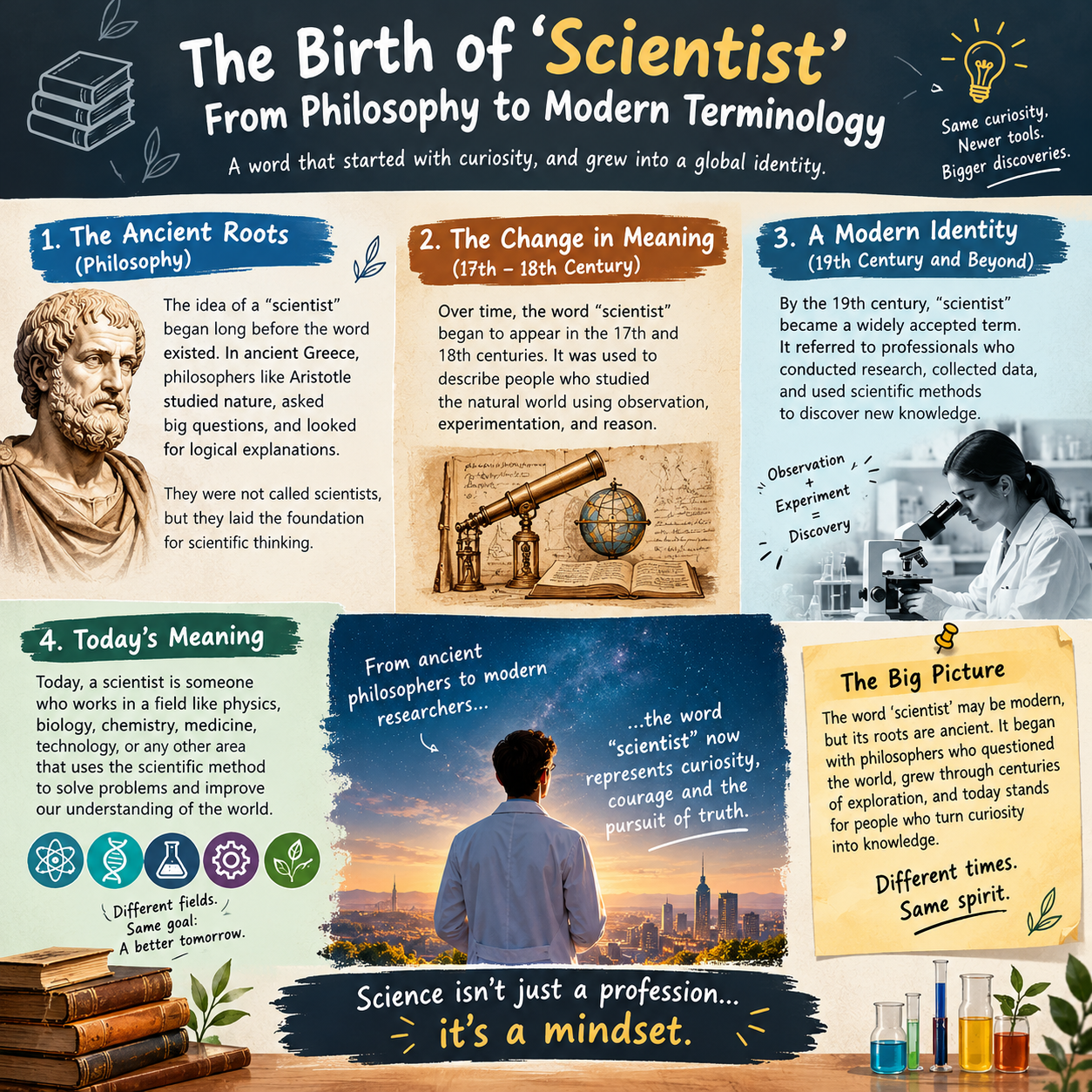
    Story post topic:The Birth of “Scientist” – From Philosophy to Modern Terminology

    Have you ever wondered how the word “scientist” came into existence? This story explores the fascinating journey of the word, from ancient philosophers who questioned the mysteries of nature to modern scientists who use observation, experimentation, and technology to discover new knowledge.

    From the early ideas of philosophers like Aristotle to today's researchers working in physics, biology, chemistry, and medicine, science has continuously evolved. This journey shows how human curiosity has helped us understand the world and make incredible discoveries.

    The key message: Science is more than a profession; it is a mindset built on curiosity, critical thinking, and the courage to ask questions. Different times, same spirit of discovery!

    #HistoryOfScience #Scientist #ScientificDiscoveries #Philosophy #ScienceAndTechnology #Curiosity #Knowledge #LearningJourney #ClassFoundation #RSf8
    RSIf8 Roll Number: 49 Story post no.43 Story post topic:The Birth of “Scientist” – From Philosophy to Modern Terminology Have you ever wondered how the word “scientist” came into existence? 🌍✨ This story explores the fascinating journey of the word, from ancient philosophers who questioned the mysteries of nature to modern scientists who use observation, experimentation, and technology to discover new knowledge. From the early ideas of philosophers like Aristotle to today's researchers working in physics, biology, chemistry, and medicine, science has continuously evolved. 🧪🔭 This journey shows how human curiosity has helped us understand the world and make incredible discoveries. 💡 The key message: Science is more than a profession; it is a mindset built on curiosity, critical thinking, and the courage to ask questions. Different times, same spirit of discovery! #HistoryOfScience #Scientist #ScientificDiscoveries #Philosophy #ScienceAndTechnology #Curiosity #Knowledge #LearningJourney #ClassFoundation #RSf8
    0 Σχόλια 0 Μοιράστηκε 784 Views
  • **Roll No: 2**
    **Batch: 14**
    **Book: ACCL**
    **Task No: 153**

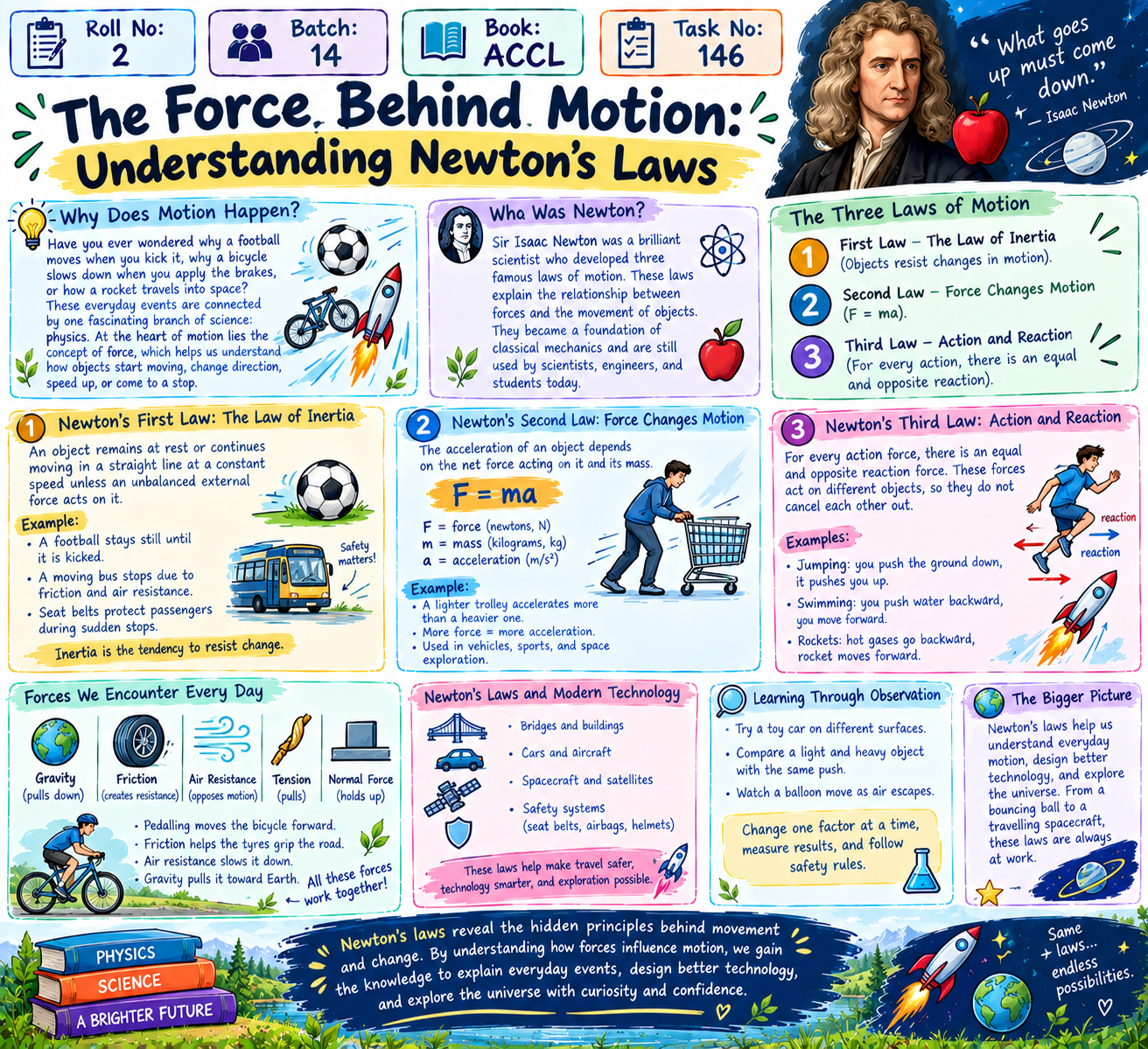
    # The Force Behind Motion: Understanding Newton’s Laws

    Have you ever wondered why a football moves when you kick it, why a bicycle slows down when you apply the brakes, or how a rocket travels into space? These everyday events are connected by one fascinating branch of science: physics. At the heart of motion lies the concept of **force**, which helps us understand how objects start moving, change direction, speed up, or come to a stop.

    One of the most important scientists in the history of physics was **Sir Isaac Newton**. Through his work, Newton developed three famous laws of motion that explain the relationship between forces and the movement of objects. These laws became a foundation of classical mechanics and continue to help scientists, engineers, and students understand the physical world around them.

    ## Newton’s First Law: The Law of Inertia

    Newton’s first law states that an object remains at rest or continues moving in a straight line at a constant speed unless an unbalanced external force acts on it. This tendency to resist changes in motion is called **inertia**.

    Imagine a football resting on the ground. It will remain still until someone kicks it or another force acts upon it. Once the ball begins moving, friction between the ball and the ground, along with air resistance, gradually slows it down. Without these opposing forces, the ball would continue moving at a constant velocity.

    You can also notice inertia when a moving bus suddenly brakes. Passengers may feel their bodies move forward because their bodies tend to maintain their previous motion. Seat belts help protect passengers by providing a force that restrains their movement. This shows how Newton’s first law explains both everyday experiences and important safety features.

    ## Newton’s Second Law: Force Changes Motion

    Newton’s second law explains how an unbalanced force changes an object’s motion. The acceleration of an object depends on the net force acting on it and its mass. For an object with constant mass, the relationship is written as:

    [
    \boxed{F = ma}
    ]

    Here, (F) represents the net force, (m) represents mass, and (a) represents acceleration. Force is measured in newtons (N), mass in kilograms (kg), and acceleration in metres per second squared ((\text{m/s}^2)).

    Consider pushing an empty shopping trolley and then pushing a heavily loaded one. The empty trolley usually accelerates more easily because it has less mass. If the same net force acts on two objects, the object with less mass experiences greater acceleration. Similarly, increasing the net force on an object of constant mass increases its acceleration.

    This law is essential in engineering, transport, sports, and space exploration. Engineers use it to calculate how much force is needed to accelerate vehicles, while athletes use the principles of force and acceleration when running, jumping, and throwing objects. ‍

    ## Newton’s Third Law: Action and Reaction

    Newton’s third law states that **for every action force, there is an equal and opposite reaction force**. These two forces act on different objects, so they do not cancel each other out.

    Think about what happens when you jump. Your feet push down against the ground, and the ground pushes upward on you. This upward force helps you rise into the air. The same principle explains how swimmers move forward by pushing water backward.

    Rockets provide another remarkable example. A rocket expels hot gases backward at high speed, and the gases exert an opposite force on the rocket, pushing it forward. This principle works even in the vacuum of space because the rocket does not need air to push against. Its motion results from the interaction between the rocket and the expelled gases.

    ## Forces We Encounter Every Day

    Forces are all around us, even when we do not notice them. Gravity pulls objects toward Earth, friction acts between surfaces in contact, and air resistance opposes an object moving through the atmosphere. Tension in a rope can pull an object, while a normal force from a supporting surface helps hold an object up.

    These forces often work together. For example, when a cyclist travels along a road, pedalling produces forward motion, friction helps the tyres grip the road, air resistance opposes movement, and gravity pulls the cyclist toward Earth. ‍ Understanding how these forces interact helps explain why the bicycle speeds up, slows down, or turns.

    ## Newton’s Laws and Modern Technology

    Newton’s laws are important far beyond the classroom. Engineers apply them when designing bridges, cars, aircraft, and machines. Scientists use them to predict the motion of many objects, while space agencies apply mechanics to plan spacecraft trajectories and study the movement of satellites.

    These laws also help improve safety. Seat belts, airbags, helmets, and vehicle safety systems are designed with an understanding of motion, forces, and changes in momentum. Although modern physics includes ideas beyond Newton’s laws, his work remains extremely useful for understanding everyday motion and many engineering problems.

    ## Learning Through Observation

    You do not need a complicated laboratory to begin exploring Newton’s laws. You can observe a toy car rolling across different surfaces, compare how a light and a heavier object respond to the same gentle push, or watch a balloon move as air escapes from it. Such simple observations can help connect scientific ideas with real experiences.

    When conducting experiments, it is important to change one factor at a time where possible, measure results carefully, and follow appropriate safety precautions. By observing patterns and asking questions, students can develop critical thinking skills and discover how physics explains the world around them.

    Newton’s laws teach us that motion is not random. The movement of a bouncing ball, a speeding bicycle, a swimming person, and a travelling spacecraft can all be understood by investigating forces and their effects.

    **Newton’s laws reveal the hidden principles behind movement and change. By understanding how forces influence motion, we gain the knowledge to explain everyday events, design better technology, and explore the universe with curiosity and confidence. **

    \#NewtonsLaws #ForceAndMotion #Physics #Science #Inertia #Acceleration #SpaceExploration #ACCL #Batch14 #Task146
    **Roll No: 2** **Batch: 14** **Book: ACCL** **Task No: 153** # 🚀⚙️ The Force Behind Motion: Understanding Newton’s Laws 🍎🌍 Have you ever wondered why a football moves when you kick it, why a bicycle slows down when you apply the brakes, or how a rocket travels into space? 🚲⚽🚀 These everyday events are connected by one fascinating branch of science: physics. At the heart of motion lies the concept of **force**, which helps us understand how objects start moving, change direction, speed up, or come to a stop. One of the most important scientists in the history of physics was **Sir Isaac Newton**. 🍎🔭 Through his work, Newton developed three famous laws of motion that explain the relationship between forces and the movement of objects. These laws became a foundation of classical mechanics and continue to help scientists, engineers, and students understand the physical world around them. ## ⚖️ Newton’s First Law: The Law of Inertia Newton’s first law states that an object remains at rest or continues moving in a straight line at a constant speed unless an unbalanced external force acts on it. This tendency to resist changes in motion is called **inertia**. 🧱✨ Imagine a football resting on the ground. ⚽ It will remain still until someone kicks it or another force acts upon it. Once the ball begins moving, friction between the ball and the ground, along with air resistance, gradually slows it down. Without these opposing forces, the ball would continue moving at a constant velocity. You can also notice inertia when a moving bus suddenly brakes. 🚌 Passengers may feel their bodies move forward because their bodies tend to maintain their previous motion. Seat belts help protect passengers by providing a force that restrains their movement. This shows how Newton’s first law explains both everyday experiences and important safety features. ## 💪 Newton’s Second Law: Force Changes Motion Newton’s second law explains how an unbalanced force changes an object’s motion. The acceleration of an object depends on the net force acting on it and its mass. For an object with constant mass, the relationship is written as: [ \boxed{F = ma} ] Here, (F) represents the net force, (m) represents mass, and (a) represents acceleration. Force is measured in newtons (N), mass in kilograms (kg), and acceleration in metres per second squared ((\text{m/s}^2)). 🔬📐 Consider pushing an empty shopping trolley and then pushing a heavily loaded one. 🛒 The empty trolley usually accelerates more easily because it has less mass. If the same net force acts on two objects, the object with less mass experiences greater acceleration. Similarly, increasing the net force on an object of constant mass increases its acceleration. This law is essential in engineering, transport, sports, and space exploration. Engineers use it to calculate how much force is needed to accelerate vehicles, while athletes use the principles of force and acceleration when running, jumping, and throwing objects. 🏃‍♂️🏀 ## 🔄 Newton’s Third Law: Action and Reaction Newton’s third law states that **for every action force, there is an equal and opposite reaction force**. These two forces act on different objects, so they do not cancel each other out. 🌍⚡ Think about what happens when you jump. Your feet push down against the ground, and the ground pushes upward on you. This upward force helps you rise into the air. 🦘 The same principle explains how swimmers move forward by pushing water backward. Rockets provide another remarkable example. 🚀 A rocket expels hot gases backward at high speed, and the gases exert an opposite force on the rocket, pushing it forward. This principle works even in the vacuum of space because the rocket does not need air to push against. Its motion results from the interaction between the rocket and the expelled gases. ## 🌎 Forces We Encounter Every Day Forces are all around us, even when we do not notice them. Gravity pulls objects toward Earth, friction acts between surfaces in contact, and air resistance opposes an object moving through the atmosphere. 🪂🌬️ Tension in a rope can pull an object, while a normal force from a supporting surface helps hold an object up. These forces often work together. For example, when a cyclist travels along a road, pedalling produces forward motion, friction helps the tyres grip the road, air resistance opposes movement, and gravity pulls the cyclist toward Earth. 🚴‍♂️ Understanding how these forces interact helps explain why the bicycle speeds up, slows down, or turns. ## 🛰️ Newton’s Laws and Modern Technology Newton’s laws are important far beyond the classroom. Engineers apply them when designing bridges, cars, aircraft, and machines. 🏗️🚗 Scientists use them to predict the motion of many objects, while space agencies apply mechanics to plan spacecraft trajectories and study the movement of satellites. These laws also help improve safety. Seat belts, airbags, helmets, and vehicle safety systems are designed with an understanding of motion, forces, and changes in momentum. Although modern physics includes ideas beyond Newton’s laws, his work remains extremely useful for understanding everyday motion and many engineering problems. ## 🧠 Learning Through Observation You do not need a complicated laboratory to begin exploring Newton’s laws. You can observe a toy car rolling across different surfaces, compare how a light and a heavier object respond to the same gentle push, or watch a balloon move as air escapes from it. 🎈🧪 Such simple observations can help connect scientific ideas with real experiences. When conducting experiments, it is important to change one factor at a time where possible, measure results carefully, and follow appropriate safety precautions. By observing patterns and asking questions, students can develop critical thinking skills and discover how physics explains the world around them. Newton’s laws teach us that motion is not random. The movement of a bouncing ball, a speeding bicycle, a swimming person, and a travelling spacecraft can all be understood by investigating forces and their effects. 🌌⚙️ **Newton’s laws reveal the hidden principles behind movement and change. By understanding how forces influence motion, we gain the knowledge to explain everyday events, design better technology, and explore the universe with curiosity and confidence. 🚀🌍💡** \#NewtonsLaws #ForceAndMotion #Physics #Science #Inertia #Acceleration #SpaceExploration #ACCL #Batch14 #Task146 ⚙️🚀📚

    0 Σχόλια 0 Μοιράστηκε 1305 Views
  • RSIF8
    Roll no:14
    song no:18
    song topic:Science and Faith: A Harmonious Comparison

    # Science and Faith: A Harmonious Comparison

    Welcome to **Science and Faith: A Harmonious Comparison**, an inspiring exploration of two important ways people seek to understand the world, discover meaning, and explore the mysteries of existence. Science and faith have influenced human thought, culture, and civilization for centuries, encouraging people to ask questions about life, nature, the universe, and our place within it.

    **The World of Science**

    Science helps us understand the natural world through observation, experimentation, evidence, and logical reasoning. From the smallest particles inside atoms to the vast galaxies across the universe, scientific discoveries continue to expand our knowledge. Science encourages curiosity, critical thinking, and the willingness to revise our understanding when new evidence becomes available.

    **The World of Faith**

    Faith provides many people with spiritual guidance, hope, purpose, and moral values. It encourages reflection on questions about meaning, responsibility, compassion, and our relationship with the world. Religious traditions have also inspired communities to explore knowledge, support education, and contribute to society.

    **Finding Common Ground**

    Science and faith do not always answer the same questions, and sometimes their interpretations differ. Science primarily investigates how the natural world works, while faith often addresses spiritual beliefs, values, and questions of meaning. Exploring both with an open mind can encourage thoughtful conversations, mutual respect, and a deeper appreciation of different perspectives.

    **What Will You Discover?**
    - How science investigates the universe through evidence.
    - How faith influences values, beliefs, and human purpose.
    - The differences between scientific explanations and spiritual interpretations.
    - Why respectful dialogue matters when discussing complex ideas.
    - How curiosity, humility, and understanding can bring people together.

    **The Message:** We can approach important questions with curiosity, respect, and a willingness to learn. By understanding different perspectives, we can encourage meaningful discussions and appreciate the many ways people search for truth and purpose.

    Join us on this fascinating journey where knowledge meets reflection and curiosity opens the door to understanding!

    Like, share, and subscribe for more educational content exploring science, philosophy, faith, history, and the wonders of the universe.

    #ScienceAndFaith #Science #Faith #Philosophy #Knowledge #Education #Universe #CriticalThinking #Spirituality #LearningTogether
    RSIF8 Roll no:14 song no:18 song topic:Science and Faith: A Harmonious Comparison # 🌍 Science and Faith: A Harmonious Comparison 🔬✨ Welcome to **Science and Faith: A Harmonious Comparison**, an inspiring exploration of two important ways people seek to understand the world, discover meaning, and explore the mysteries of existence. Science and faith have influenced human thought, culture, and civilization for centuries, encouraging people to ask questions about life, nature, the universe, and our place within it. 🔬 **The World of Science** Science helps us understand the natural world through observation, experimentation, evidence, and logical reasoning. From the smallest particles inside atoms to the vast galaxies across the universe, scientific discoveries continue to expand our knowledge. Science encourages curiosity, critical thinking, and the willingness to revise our understanding when new evidence becomes available. 🤲 **The World of Faith** Faith provides many people with spiritual guidance, hope, purpose, and moral values. It encourages reflection on questions about meaning, responsibility, compassion, and our relationship with the world. Religious traditions have also inspired communities to explore knowledge, support education, and contribute to society. 🌟 **Finding Common Ground** Science and faith do not always answer the same questions, and sometimes their interpretations differ. Science primarily investigates how the natural world works, while faith often addresses spiritual beliefs, values, and questions of meaning. Exploring both with an open mind can encourage thoughtful conversations, mutual respect, and a deeper appreciation of different perspectives. 🎯 **What Will You Discover?** - How science investigates the universe through evidence. - How faith influences values, beliefs, and human purpose. - The differences between scientific explanations and spiritual interpretations. - Why respectful dialogue matters when discussing complex ideas. - How curiosity, humility, and understanding can bring people together. 💡 **The Message:** We can approach important questions with curiosity, respect, and a willingness to learn. By understanding different perspectives, we can encourage meaningful discussions and appreciate the many ways people search for truth and purpose. Join us on this fascinating journey where knowledge meets reflection and curiosity opens the door to understanding! 🌌📚 👍 Like, share, and subscribe for more educational content exploring science, philosophy, faith, history, and the wonders of the universe. #ScienceAndFaith #Science #Faith #Philosophy #Knowledge #Education #Universe #CriticalThinking #Spirituality #LearningTogether
    0 Σχόλια 0 Μοιράστηκε 1128 Views 7
  • RSIF8
    Roll no: 86
    Short Documentary no: 3
    Short Documentary Topic: **The Birth of "Scientist": From Philosophy to Modern Terminology**

    In this task, I created and shared a short documentary titled **"The Birth of 'Scientist': From Philosophy to Modern Terminology"** on **Facebook, YouTube, LinkedIn, Instagram, and TikTok**.

    This documentary explores the history of the word **"scientist"** and explains how people who were once known as **natural philosophers** gradually became recognized as scientists. It highlights how the growth of scientific knowledge and discoveries led to the need for a new term that represented professionals dedicated to scientific research and innovation.

    Through this documentary, I learned that science has evolved over centuries through curiosity, observation, experimentation, and evidence. The contributions of great thinkers and researchers have transformed our understanding of the world and continue to improve our daily lives through medicine, technology, engineering, and environmental research.

    Creating this documentary improved my research, communication, and presentation skills. It also helped me appreciate the importance of scientific history and the role scientists play in solving global challenges and advancing human knowledge.

    Overall, this project was educational, informative, and inspiring. It encouraged me to value scientific thinking, continue learning, and understand how knowledge evolves over time to shape a better future for humanity.

    #Scientist #ScienceHistory #Innovation #Education #Learning #StudentLearning #Research #ScientificDiscovery #Technology #Knowledge #RSIF8
    RSIF8 Roll no: 86 Short Documentary no: 3 Short Documentary Topic: **The Birth of "Scientist": From Philosophy to Modern Terminology** 🎥🔬📚 In this task, I created and shared a short documentary titled **"The Birth of 'Scientist': From Philosophy to Modern Terminology"** on **Facebook, YouTube, LinkedIn, Instagram, and TikTok**. 📱🌍✨ This documentary explores the history of the word **"scientist"** and explains how people who were once known as **natural philosophers** gradually became recognized as scientists. It highlights how the growth of scientific knowledge and discoveries led to the need for a new term that represented professionals dedicated to scientific research and innovation. 🔬💡 Through this documentary, I learned that science has evolved over centuries through curiosity, observation, experimentation, and evidence. The contributions of great thinkers and researchers have transformed our understanding of the world and continue to improve our daily lives through medicine, technology, engineering, and environmental research. 🌱🚀 Creating this documentary improved my research, communication, and presentation skills. It also helped me appreciate the importance of scientific history and the role scientists play in solving global challenges and advancing human knowledge. 🎤📖 Overall, this project was educational, informative, and inspiring. It encouraged me to value scientific thinking, continue learning, and understand how knowledge evolves over time to shape a better future for humanity. 🌟✨ #Scientist #ScienceHistory #Innovation #Education #Learning #StudentLearning #Research #ScientificDiscovery #Technology #Knowledge #RSIF8 🔬📚🌍🚀✨
    0 Σχόλια 0 Μοιράστηκε 883 Views 10
  • ACCL PORTAL
    DAY 76
    BOOK 1
    STORY POST
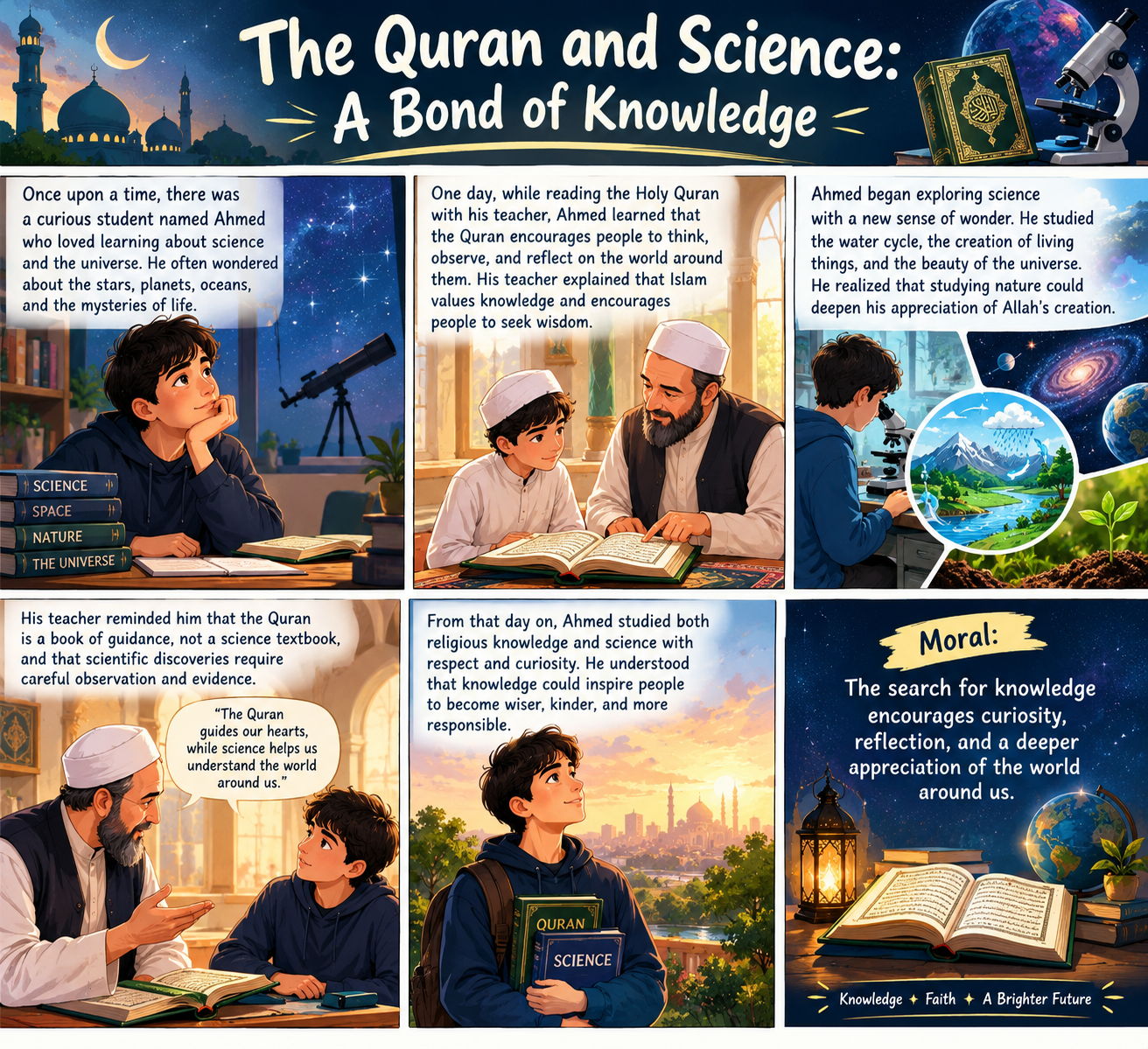
    # The Quran and Science: A Bond of Knowledge

    Once upon a time, there was a curious student named Ahmed who loved learning about science and the universe. He often wondered about the stars, planets, oceans, and the mysteries of life.

    One day, while reading the Holy Quran with his teacher, Ahmed learned that the Quran encourages people to think, observe, and reflect on the world around them. His teacher explained that Islam values knowledge and encourages people to seek wisdom.

    Ahmed began exploring science with a new sense of wonder. He studied the water cycle, the creation of living things, and the beauty of the universe. He realized that studying nature could deepen his appreciation of Allah’s creation.

    His teacher reminded him that the Quran is a book of guidance, not a science textbook, and that scientific discoveries require careful observation and evidence.

    From that day on, Ahmed studied both religious knowledge and science with respect and curiosity. He understood that knowledge could inspire people to become wiser, kinder, and more responsible.

    **Moral:** The search for knowledge encourages curiosity, reflection, and a deeper appreciation of the world around us.
    ACCL PORTAL DAY 76 BOOK 1 STORY POST # The Quran and Science: A Bond of Knowledge Once upon a time, there was a curious student named Ahmed who loved learning about science and the universe. He often wondered about the stars, planets, oceans, and the mysteries of life. One day, while reading the Holy Quran with his teacher, Ahmed learned that the Quran encourages people to think, observe, and reflect on the world around them. His teacher explained that Islam values knowledge and encourages people to seek wisdom. Ahmed began exploring science with a new sense of wonder. He studied the water cycle, the creation of living things, and the beauty of the universe. He realized that studying nature could deepen his appreciation of Allah’s creation. His teacher reminded him that the Quran is a book of guidance, not a science textbook, and that scientific discoveries require careful observation and evidence. From that day on, Ahmed studied both religious knowledge and science with respect and curiosity. He understood that knowledge could inspire people to become wiser, kinder, and more responsible. **Moral:** The search for knowledge encourages curiosity, reflection, and a deeper appreciation of the world around us.
    0 Σχόλια 0 Μοιράστηκε 734 Views
  • #rsisb Roll No:232 Foundation level student. Documentary No:5 🔬 **Description:** Discover the fascinating history of the word **“Scientist”** and explore how it evolved from ancient philosophy to modern scientific terminology! 🌍📖 In this documentary, we will explore how people in the past studied nature, the universe, and human life through philosophy and observation. We will learn how the word “scientist” became popular in the 19th century and how science developed into a major field of modern knowledge. From curious philosophers to groundbreaking researchers, this journey highlights the importance of curiosity, creativity, experimentation, and discovery in shaping our world. 🧪💡 Join us to discover the origins of scientific thinking and understand how the language of science has changed over time. 🚀 ✨ **Keep learning, stay curious, and explore the world of science!** #️⃣ **Hashtags:** #Scientist #HistoryOfScience #ScienceDocumentary #WordOrigins #Etymology #ScientificDiscovery #Philosophy #ModernScience #ScienceHistory #Education #Knowledge #LearningJourney #Curiosity #Innovation #Technology #Research #Documentary #KeepLearning #ExploreScience #EducationalContent 🎥🔬📚🌍🧪💡🚀✨ Irum Asim Leadershipwali Asma Shaheen EducationWali Rehan School Islamabad Campus https://www.facebook.com/share/v/1E1ykR5mCZ/
    WWW.FACEBOOK.COM
    Facebook
    #rsisb Roll No:232 Foundation level student. Documentary No:5 🔬 **Description:** Discover the fascinating history of the word **“Scientist”** and explore how it evolved from ancient philosophy to...
    0 Σχόλια 0 Μοιράστηκε 975 Views
  • ACCL BOOK
    Task
    Foundation Level 1
    Roll Number: 04
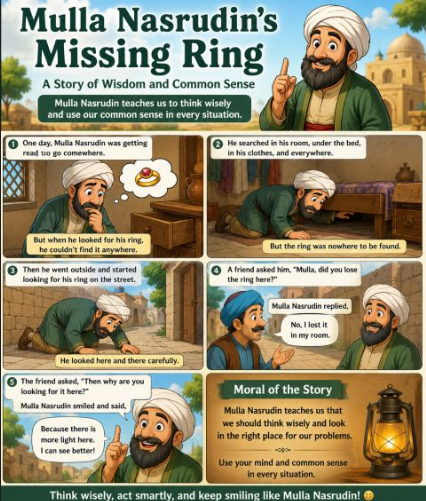
    Day 13: Mulla Nasrudin’s Missing Ring
    Today’s task is based on the interesting story “Mulla Nasrudin’s Missing Ring.”
    This story teaches us to think wisely and use our common sense.
    Mulla Nasrudin’s cleverness makes the story enjoyable and memorable.
    Students learn the importance of careful thinking and observation.
    The activity helps improve confidence, vocabulary, and communication skills.
    It encourages students to learn through stories in a fun way.
    Every story gives us a valuable lesson for our daily life.
    Learn with wisdom, confidence, and happiness!
    ACCL BOOK Task Foundation Level 1 Roll Number: 04 Day 13: Mulla Nasrudin’s Missing Ring Today’s task is based on the interesting story “Mulla Nasrudin’s Missing Ring.” This story teaches us to think wisely and use our common sense. Mulla Nasrudin’s cleverness makes the story enjoyable and memorable. Students learn the importance of careful thinking and observation. The activity helps improve confidence, vocabulary, and communication skills. It encourages students to learn through stories in a fun way. Every story gives us a valuable lesson for our daily life. Learn with wisdom, confidence, and happiness!
    0 Σχόλια 0 Μοιράστηκε 647 Views
Αναζήτηση αποτελεσμάτων