• It looks and feels to me, that anyone who disagree with anyone else today in Pakistan calls the other person KAFIR, I saw this interesting poetry on wall of Faisal Subzwari and here it is to be shared with you all.


    میں بھی کافـــر تُو بھــی کافر !
    پھـولوں کی خوشبو بھی کافر!
    لفظوں کا جادُو بھی کافر !
    یہ بھی کافر وہ بھی کافر !
    فیض بھی اور منٹو بھی کافر !
    نُــــور جـــــہاں کا گانا کافــــر !
    مکــڈونلــڈز کا کھانا کافر !
    برگر کافر کوک بھی کافر !
    ہنسنا بدعت جوک بھی کافر !
    طبــلہ کافـر ڈھـول بھـی کافر !
    پیار بھــرے دو بول بھی کافر !
    سُر بھی کافر تال بھی کافر !
    بھنگڑا، اتن، دھمال بھی کافر !
    دھــادرا،ٹھـمری،بھـیرویں کافر !
    کافــی اور خــیال بھی کافر !
    وارث شاہ کی ھیر بھی کافر!
    چاھت کی زنجیر بھی کافر !
    زِِندہ مُــــردہ پیـــر بھــی کافر!
    نذر نیاز کی کھیر بھی کافر !
    بیٹے کا بســـــتہ بھی کافر !
    بیٹـی کـی گُــڑیا بھـی کافر !
    ہنســـنا رونا کُــفــر کا سـودا !
    غــم کافر خوشیاں بھی کافر !
    جینز بھی اور گٹار بھی کافر !
    ٹخنوں سے نیچے باندھو تو !
    اپنـــی یہ شلــــوار بھی کافر !
    فن بھی اور فنــــکار بھی کافر !
    جو میری دھمکی نہ چھاپیں !
    وہ سارے اخـــــبار بھی کافر !
    یونیورسٹـی کے اندر کافر !
    ڈارون بھائــی کا بندر کافر!
    فـــــــرائڈ پڑھـــانے والے کافـــر !
    مارکـس کے سب متوالے کافر !
    میلے ٹھیلے کُفر کا دھندہ !
    گانے باجے سارے پھنــــدہ !
    منـــدر میــں تو بُت ہوتا ہے !
    مسجد کا بھی حال بُرا ہے !
    کُچھ مسجد کے باہر کافر !
    کُچھ مسجد کے اندر کافر !
    مُسلم مُلک میں اکثر کافر !
    کافـــر کافــر میں بھی کافر !
    کافـــر کافـــر تُــو بھــی کافر
    It looks and feels to me, that anyone who disagree with anyone else today in Pakistan calls the other person KAFIR, I saw this interesting poetry on wall of Faisal Subzwari and here it is to be shared with you all. میں بھی کافـــر تُو بھــی کافر ! پھـولوں کی خوشبو بھی کافر! لفظوں کا جادُو بھی کافر ! یہ بھی کافر وہ بھی کافر ! فیض بھی اور منٹو بھی کافر ! نُــــور جـــــہاں کا گانا کافــــر ! مکــڈونلــڈز کا کھانا کافر ! برگر کافر کوک بھی کافر ! ہنسنا بدعت جوک بھی کافر ! طبــلہ کافـر ڈھـول بھـی کافر ! پیار بھــرے دو بول بھی کافر ! سُر بھی کافر تال بھی کافر ! بھنگڑا، اتن، دھمال بھی کافر ! دھــادرا،ٹھـمری،بھـیرویں کافر ! کافــی اور خــیال بھی کافر ! وارث شاہ کی ھیر بھی کافر! چاھت کی زنجیر بھی کافر ! زِِندہ مُــــردہ پیـــر بھــی کافر! نذر نیاز کی کھیر بھی کافر ! بیٹے کا بســـــتہ بھی کافر ! بیٹـی کـی گُــڑیا بھـی کافر ! ہنســـنا رونا کُــفــر کا سـودا ! غــم کافر خوشیاں بھی کافر ! جینز بھی اور گٹار بھی کافر ! ٹخنوں سے نیچے باندھو تو ! اپنـــی یہ شلــــوار بھی کافر ! فن بھی اور فنــــکار بھی کافر ! جو میری دھمکی نہ چھاپیں ! وہ سارے اخـــــبار بھی کافر ! یونیورسٹـی کے اندر کافر ! ڈارون بھائــی کا بندر کافر! فـــــــرائڈ پڑھـــانے والے کافـــر ! مارکـس کے سب متوالے کافر ! میلے ٹھیلے کُفر کا دھندہ ! گانے باجے سارے پھنــــدہ ! منـــدر میــں تو بُت ہوتا ہے ! مسجد کا بھی حال بُرا ہے ! کُچھ مسجد کے باہر کافر ! کُچھ مسجد کے اندر کافر ! مُسلم مُلک میں اکثر کافر ! کافـــر کافــر میں بھی کافر ! کافـــر کافـــر تُــو بھــی کافر
    0 Comments 0 Shares 387 Views
  • Yahi kaha tha, meri aankh dekh skti hay...
    Tu mujh pay toot para saara shehr, naa-beena #Poetry
    Yahi kaha tha, meri aankh dekh skti hay... Tu mujh pay toot para saara shehr, naa-beena #Poetry
    0 Comments 0 Shares 223 Views
  • Artists do their work not for their appreciation, but because they enjoy that art, Poets write poetry to satisfy their soul not to get appreciation from the listeners, You should also do what YOU LOVE to do for YOURSELF not for appreciation, You do your best, and some time in future YOU ALSO may get Appreciated for what you did, when the time is Right. !!! But remember, you have to do 1000% of the job not 90% and expect appreciation.

    Rehan Allahwala
    Artist's do their work not for their appreciation, but because they enjoy that art, Poet's write poetry to satisfy their soul not to get appreciation from the listeners, You should also do what YOU LOVE to do for YOURSELF not for appreciation, You do your best, and some time in future YOU ALSO may get Appreciated for what you did, when the time is Right. !!! But remember, you have to do 1000% of the job not 90% and expect appreciation. Rehan Allahwala
    0 Comments 0 Shares 418 Views
  • I asked Rubaid from India, when I sent you some friends, do add them, His reply was , “But i always judge people by their thoughts, so before adding people , they come to know about my ideology”

    He did not wanted to add people on his Facebook, I later introduced him to some people personally, and he inboxes this to me today,

    Asslamu alay kum Rehan Bhai , I like the way you are connecting people , I did changes in my thinking to accept your way, now i am adding the people to know about them, while before i only add those people who are like me or belong to my interest filed i.e.IT , Science , Journalism , IR , Philanthropy & Poetry . i am thankful to you to give me a chance to connect more people around the world .

    i accepted your way because your vision & mine is same both of use technology for philanthropy , both of us wants to provide free education & peace around the world .

    i hope you will be with in this journey .

    No need to worry, I am a reserved kind of person who dont want to disturb others.

    i like healthy conversation not long chat.

    My best wishes with you in your journey. ~

    Syed Rubaid Ahmad
    I asked Rubaid from India, when I sent you some friends, do add them, His reply was , “But i always judge people by their thoughts, so before adding people , they come to know about my ideology” He did not wanted to add people on his Facebook, I later introduced him to some people personally, and he inboxes this to me today, Asslamu alay kum Rehan Bhai , I like the way you are connecting people , I did changes in my thinking to accept your way, now i am adding the people to know about them, while before i only add those people who are like me or belong to my interest filed i.e.IT , Science , Journalism , IR , Philanthropy & Poetry . i am thankful to you to give me a chance to connect more people around the world . i accepted your way because your vision & mine is same both of use technology for philanthropy , both of us wants to provide free education & peace around the world . i hope you will be with in this journey . No need to worry, I am a reserved kind of person who don't want to disturb others. i like healthy conversation not long chat. My best wishes with you in your journey. ~ Syed Rubaid Ahmad
    0 Comments 0 Shares 327 Views
  • A man used to write worse kind of poetry for Rasool Allah S.A.W.W, Some people got angry and asked his head from Mohmmad S.A.W.W & arrested that man and took him to Masjid e nabwi infront of Mohmmad S.A.W.W to demand his head..

    Huzoor S.A.W.W called Hazrat Ali K.A.W and ordered to cut that mans hand...
    Ali K.A.W took that man to out of city in a rice bag & crowd was chasing them to see how Hazrat Ali K.A.W would cut that mans hand...

    Hazrat Ali K.A.W released that man gave him some currency & horse and said him to run...

    People with Hazrat Ali K.A.W got confused and complained to Mohmmad S.A.W.W that you have ordered to cut that mans hand but Ali has helped him to run out of madina.

    Mohmmad S.A.W.W gave smile & said we would talk at fajar prayer on this topic...

    when people of madina were coming in Masjid e Nabwi S.A.W.W they saw that man in Wuzu khana & he was performing wuzu and has Naat with him in shaan e Mohmmad S.A.W.W

    Huzoor S.A.W.W announced when i said to cut his hand i meant to cut his hand with them he write bad things for Prophet S.A.W.W

    Ali K.A.W understood that and did same...

    ************************************************

    MORAL: Mohmmad S.A.W.W has always given us knowledge of peace and forgiveness ..

    and people were actually opposing Prophet Mohmmad S.A.W.W by loot and terror on the name of protest...

    ***************************************************

    Pls share this hadees on your wall as much as you can

    So people of west know the difference between real Islam & people who spread terror on the name of Islam..(but actually they are not true muslims)

    Shared via Arsalan Jawaid
    A man used to write worse kind of poetry for Rasool Allah S.A.W.W, Some people got angry and asked his head from Mohmmad S.A.W.W & arrested that man and took him to Masjid e nabwi infront of Mohmmad S.A.W.W to demand his head.. Huzoor S.A.W.W called Hazrat Ali K.A.W and ordered to cut that man's hand... Ali K.A.W took that man to out of city in a rice bag & crowd was chasing them to see how Hazrat Ali K.A.W would cut that man's hand... Hazrat Ali K.A.W released that man gave him some currency & horse and said him to run... People with Hazrat Ali K.A.W got confused and complained to Mohmmad S.A.W.W that you have ordered to cut that man's hand but Ali has helped him to run out of madina. Mohmmad S.A.W.W gave smile & said we would talk at fajar prayer on this topic... when people of madina were coming in Masjid e Nabwi S.A.W.W they saw that man in Wuzu khana & he was performing wuzu and has Naat with him in shaan e Mohmmad S.A.W.W Huzoor S.A.W.W announced when i said to cut his hand i meant to cut his hand with them he write bad things for Prophet S.A.W.W Ali K.A.W understood that and did same... ************************************************ MORAL: Mohmmad S.A.W.W has always given us knowledge of peace and forgiveness .. and people were actually opposing Prophet Mohmmad S.A.W.W by loot and terror on the name of protest... *************************************************** Pls share this hadees on your wall as much as you can So people of west know the difference between real Islam & people who spread terror on the name of Islam..(but actually they are not true muslims) Shared via Arsalan Jawaid
    0 Comments 0 Shares 142 Views
  • A poem are just words used in the right way. Everything in life is like that, just use everything in the right way to create your poetry !

    Rehan Allahwala
    A poem are just words used in the right way. Everything in life is like that, just use everything in the right way to create your poetry ! Rehan Allahwala
    0 Comments 0 Shares 210 Views
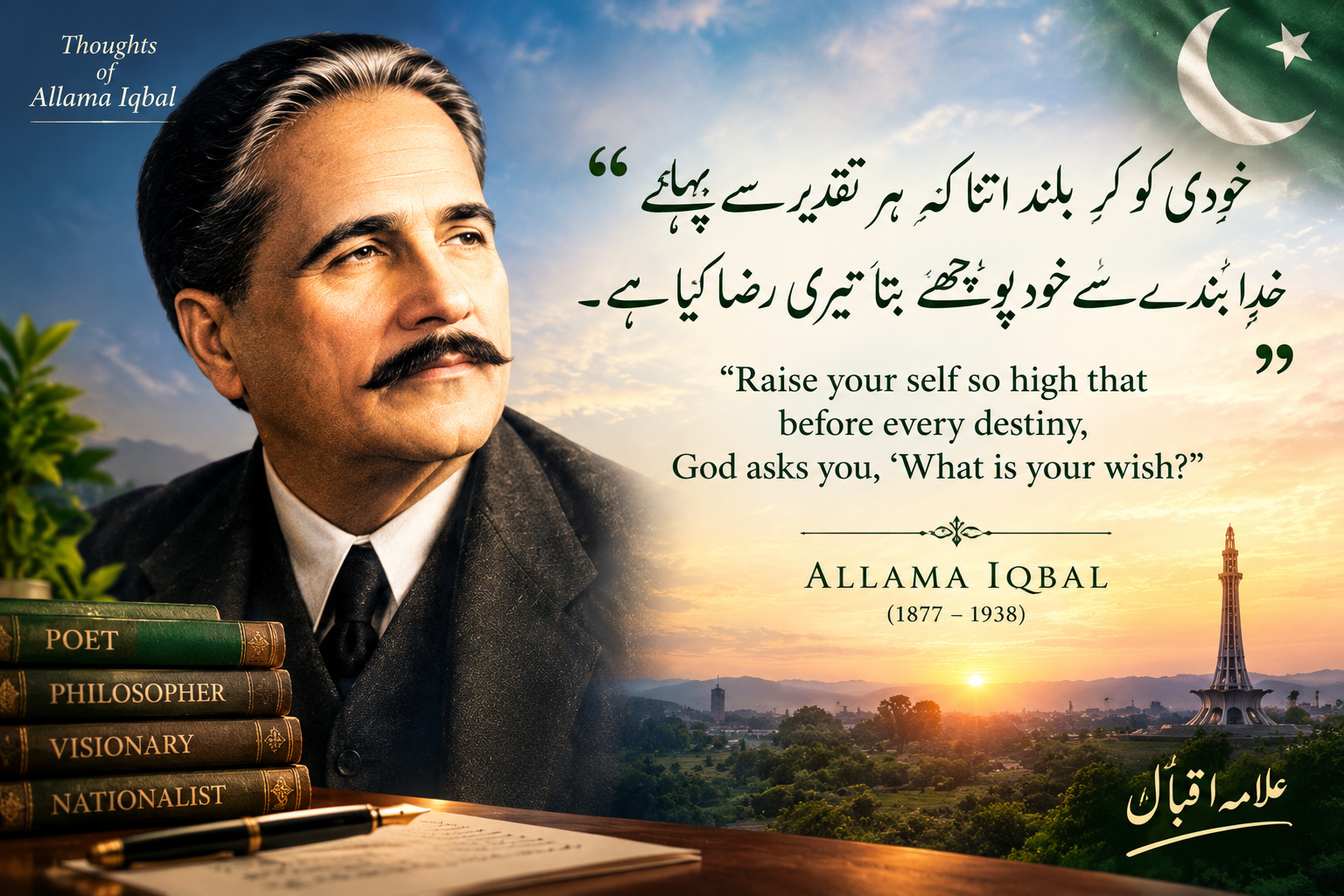
  • What does Allama Iqbal mean by Khudi ?

    Allama Iqbal is a famous poet and philosopher from South Asia who is known for his philosophical poems that explore themes of self-discovery and individual identity. In his poetry, he often uses the term "khudi" to refer to the concept of self-awareness and self-assertion.

    According to Iqbal, khudi represents the inner, spiritual aspect of the individual self, and it is through the cultivation and development of khudi that one can truly discover their own identity and potential. He believed that khudi was essential for achieving personal growth and fulfillment, and that it was the key to attaining a sense of purpose and meaning in life.

    Iqbals concept of khudi has been widely influential in South Asian literature and thought, and his poetry has inspired many people to seek self-discovery and personal growth. In his poems, Iqbal encourages readers to embrace their khudi and to use it as a force for positive change in the world. So, khudi is a way of discovering and expressing ones own identity, purpose, and potential.

    Via #ChatGPT
    What does Allama Iqbal mean by Khudi ? Allama Iqbal is a famous poet and philosopher from South Asia who is known for his philosophical poems that explore themes of self-discovery and individual identity. In his poetry, he often uses the term "khudi" to refer to the concept of self-awareness and self-assertion. According to Iqbal, khudi represents the inner, spiritual aspect of the individual self, and it is through the cultivation and development of khudi that one can truly discover their own identity and potential. He believed that khudi was essential for achieving personal growth and fulfillment, and that it was the key to attaining a sense of purpose and meaning in life. Iqbal's concept of khudi has been widely influential in South Asian literature and thought, and his poetry has inspired many people to seek self-discovery and personal growth. In his poems, Iqbal encourages readers to embrace their khudi and to use it as a force for positive change in the world. So, khudi is a way of discovering and expressing one's own identity, purpose, and potential. Via #ChatGPT
    0 Comments 0 Shares 816 Views
  • In Islamic theology, there are indeed concepts related to pre-existence and the afterlife that touch upon the idea of souls having connections before they are born into this world. These concepts are primarily derived from Islamic teachings about the realms of existence, known as **Alam al-Arwah** (the world of souls) and **Barzakh** (the intermediary state).

    ### Alam al-Arwah (The World of Souls)

    1. **Pre-Existence of Souls**:
    - According to Islamic belief, all souls were created by Allah before they were given physical bodies. This realm is referred to as Alam al-Arwah.
    - There is a hadith (saying of the Prophet Muhammad) that supports the idea of souls having pre-existing relationships:
    - **Hadith**: "Souls are like conscripted soldiers; those whom they recognized, they get along with, and those whom they do not recognize, they will not get along with." (Sahih Muslim, Book 45, Hadith 159).
    - This hadith suggests that the souls had familiarity and relationships with each other before being sent into the physical world.

    ### Barzakh (The Intermediary State)

    2. **Concept of Barzakh**:
    - Barzakh is an intermediate state where souls reside after death and before the Day of Judgment. It is a barrier between the physical world and the afterlife.
    - While the primary function of Barzakh is related to the afterlife, some interpretations and cultural beliefs extend the idea of pre-existing soul relationships into this realm as well.

    ### Relevant References

    1. **Quran**:
    - The Quran mentions the creation of souls and the testimony they gave to Allah before their physical creation: "And [mention] when your Lord took from the children of Adam - from their loins - their descendants and made them testify of themselves, [saying to them], Am I not your Lord? They said, Yes, we have testified." (Quran 7:172). This verse implies a primordial covenant and awareness among souls.

    2. **Hadith**:
    - The aforementioned hadith from Sahih Muslim is often cited in discussions about the pre-existing relationships between souls.

    ### Understanding in Islamic Tradition

    - **Sufism and Mystical Interpretations**:
    - Sufi traditions, which often explore deeper spiritual and mystical aspects of Islam, frequently discuss the pre-existence of souls and their interactions. The concept of divine love and spiritual connections before earthly life is a common theme in Sufi poetry and thought.

    - **Scholarly Interpretations**:
    - Islamic scholars have varied interpretations of these concepts. Some emphasize the metaphorical understanding of pre-existing relationships to explain the ease or difficulty of human interactions in this world.

    In summary, while mainstream Islamic theology focuses more on the accountability and journey of the soul, there are traditions and teachings within Islam that acknowledge pre-existing relationships among souls before their earthly existence. These concepts are primarily supported by hadith and interpretations of Quranic verses.
    In Islamic theology, there are indeed concepts related to pre-existence and the afterlife that touch upon the idea of souls having connections before they are born into this world. These concepts are primarily derived from Islamic teachings about the realms of existence, known as **Alam al-Arwah** (the world of souls) and **Barzakh** (the intermediary state). ### Alam al-Arwah (The World of Souls) 1. **Pre-Existence of Souls**: - According to Islamic belief, all souls were created by Allah before they were given physical bodies. This realm is referred to as Alam al-Arwah. - There is a hadith (saying of the Prophet Muhammad) that supports the idea of souls having pre-existing relationships: - **Hadith**: "Souls are like conscripted soldiers; those whom they recognized, they get along with, and those whom they do not recognize, they will not get along with." (Sahih Muslim, Book 45, Hadith 159). - This hadith suggests that the souls had familiarity and relationships with each other before being sent into the physical world. ### Barzakh (The Intermediary State) 2. **Concept of Barzakh**: - Barzakh is an intermediate state where souls reside after death and before the Day of Judgment. It is a barrier between the physical world and the afterlife. - While the primary function of Barzakh is related to the afterlife, some interpretations and cultural beliefs extend the idea of pre-existing soul relationships into this realm as well. ### Relevant References 1. **Quran**: - The Quran mentions the creation of souls and the testimony they gave to Allah before their physical creation: "And [mention] when your Lord took from the children of Adam - from their loins - their descendants and made them testify of themselves, [saying to them], 'Am I not your Lord?' They said, 'Yes, we have testified.'" (Quran 7:172). This verse implies a primordial covenant and awareness among souls. 2. **Hadith**: - The aforementioned hadith from Sahih Muslim is often cited in discussions about the pre-existing relationships between souls. ### Understanding in Islamic Tradition - **Sufism and Mystical Interpretations**: - Sufi traditions, which often explore deeper spiritual and mystical aspects of Islam, frequently discuss the pre-existence of souls and their interactions. The concept of divine love and spiritual connections before earthly life is a common theme in Sufi poetry and thought. - **Scholarly Interpretations**: - Islamic scholars have varied interpretations of these concepts. Some emphasize the metaphorical understanding of pre-existing relationships to explain the ease or difficulty of human interactions in this world. In summary, while mainstream Islamic theology focuses more on the accountability and journey of the soul, there are traditions and teachings within Islam that acknowledge pre-existing relationships among souls before their earthly existence. These concepts are primarily supported by hadith and interpretations of Quranic verses.
    0 Comments 0 Shares 281 Views
  • Throughout history, many renowned figures received their education through traditional mentorship and apprenticeship with teachers, gurus, or masters. Here are a few notable examples:

    1. **Rumi and Shams Tabrizi**:
    - **Rumi**: Jalal ad-Din Muhammad Rumi, the famous 13th-century Persian poet, theologian, and Sufi mystic, is well-known for his spiritual and poetic works.
    - **Shams Tabrizi**: Shams was Rumis spiritual instructor and mentor. Their meeting is often credited with transforming Rumis life and deepening his spiritual journey, resulting in some of the most profound poetry and teachings in the Sufi tradition.

    2. **Aristotle and Plato**:
    - **Aristotle**: The great Greek philosopher was a student of Plato.
    - **Plato**: Plato was taught by Socrates and later became the teacher of Aristotle. His academy was one of the earliest known organized schools in Western history.

    3. **Alexander the Great and Aristotle**:
    - **Alexander the Great**: The famous Macedonian conqueror was tutored by Aristotle.
    - **Aristotle**: As mentioned, a student of Plato, Aristotle provided Alexander with a broad education that included philosophy, science, medicine, and literature.

    4. **Confucius and his disciples**:
    - **Confucius**: The Chinese philosopher and teacher of the Spring and Autumn period in China.
    - **Mencius**: One of the most famous disciples of Confucius, Mencius (Mengzi) further developed Confucian thought and is considered the second Sage of Confucianism.

    5. **Rabbi Akiva and Rabbi Eliezer**:
    - **Rabbi Akiva**: One of the greatest Jewish scholars and teachers of the Talmud.
    - **Rabbi Eliezer ben Hyrcanus**: Rabbi Akiva studied under Rabbi Eliezer, who was one of the leading sages of the time.

    6. **Gautama Buddha and Alara Kalama/Uddaka Ramaputta**:
    - **Gautama Buddha**: Before his enlightenment, Siddhartha Gautama studied under several teachers.
    - **Alara Kalama and Uddaka Ramaputta**: These were two of his primary teachers who taught him meditation and ascetic practices before he found his own path to enlightenment.

    These examples illustrate the traditional method of learning through direct mentorship, which has shaped the intellectual and spiritual development of many historical figures.
    Throughout history, many renowned figures received their education through traditional mentorship and apprenticeship with teachers, gurus, or masters. Here are a few notable examples: 1. **Rumi and Shams Tabrizi**: - **Rumi**: Jalal ad-Din Muhammad Rumi, the famous 13th-century Persian poet, theologian, and Sufi mystic, is well-known for his spiritual and poetic works. - **Shams Tabrizi**: Shams was Rumi's spiritual instructor and mentor. Their meeting is often credited with transforming Rumi's life and deepening his spiritual journey, resulting in some of the most profound poetry and teachings in the Sufi tradition. 2. **Aristotle and Plato**: - **Aristotle**: The great Greek philosopher was a student of Plato. - **Plato**: Plato was taught by Socrates and later became the teacher of Aristotle. His academy was one of the earliest known organized schools in Western history. 3. **Alexander the Great and Aristotle**: - **Alexander the Great**: The famous Macedonian conqueror was tutored by Aristotle. - **Aristotle**: As mentioned, a student of Plato, Aristotle provided Alexander with a broad education that included philosophy, science, medicine, and literature. 4. **Confucius and his disciples**: - **Confucius**: The Chinese philosopher and teacher of the Spring and Autumn period in China. - **Mencius**: One of the most famous disciples of Confucius, Mencius (Mengzi) further developed Confucian thought and is considered the second Sage of Confucianism. 5. **Rabbi Akiva and Rabbi Eliezer**: - **Rabbi Akiva**: One of the greatest Jewish scholars and teachers of the Talmud. - **Rabbi Eliezer ben Hyrcanus**: Rabbi Akiva studied under Rabbi Eliezer, who was one of the leading sages of the time. 6. **Gautama Buddha and Alara Kalama/Uddaka Ramaputta**: - **Gautama Buddha**: Before his enlightenment, Siddhartha Gautama studied under several teachers. - **Alara Kalama and Uddaka Ramaputta**: These were two of his primary teachers who taught him meditation and ascetic practices before he found his own path to enlightenment. These examples illustrate the traditional method of learning through direct mentorship, which has shaped the intellectual and spiritual development of many historical figures.
    0 Comments 0 Shares 800 Views
  • According to Moulana Jalaluddin Rumi, the purpose of life is deeply spiritual and revolves around the concept of love and union with the Divine. Rumi believed that every soul is on a journey of returning to its source, which is God. This journey is driven by love, the central theme in much of Rumis poetry and teachings.

    Rumi teaches that human life is a process of spiritual awakening and transformation. The trials, challenges, and experiences one encounters are meant to purify the soul and bring it closer to God. The purpose of life, then, is to recognize and nurture this divine love within oneself, to transcend the ego, and to experience a deep, mystical connection with God.

    In essence, for Rumi, the purpose of life is to seek and realize this union with the Divine through love, self-awareness, and spiritual growth. This union is the ultimate goal, leading to a state of eternal peace and bliss.
    According to Moulana Jalaluddin Rumi, the purpose of life is deeply spiritual and revolves around the concept of love and union with the Divine. Rumi believed that every soul is on a journey of returning to its source, which is God. This journey is driven by love, the central theme in much of Rumi's poetry and teachings. Rumi teaches that human life is a process of spiritual awakening and transformation. The trials, challenges, and experiences one encounters are meant to purify the soul and bring it closer to God. The purpose of life, then, is to recognize and nurture this divine love within oneself, to transcend the ego, and to experience a deep, mystical connection with God. In essence, for Rumi, the purpose of life is to seek and realize this union with the Divine through love, self-awareness, and spiritual growth. This union is the ultimate goal, leading to a state of eternal peace and bliss.
    0 Comments 0 Shares 178 Views
More Results