• Rsif8
    Roll No 30
    Post Topic No 198
    **The Journey of the Water Cycle** is a fun 1-minute educational song that explains how water moves around our planet.
    From **evaporation** to **condensation** and **precipitation**, the song makes the water cycle easy and enjoyable to learn.
    Sing along, learn the science, and discover how water travels from Earth to the sky and back again!
    #WaterCycle #TheJourneyOfTheWaterCycle #ScienceSong #EducationalSong #KidsLearning #Evaporation #Condensation #Precipitation #EarthScience #LearningIsFun
    Rsif8 Roll No 30 Post Topic No 198 🌍 **The Journey of the Water Cycle** is a fun 1-minute educational song that explains how water moves around our planet. From **evaporation** to **condensation** and **precipitation**, the song makes the water cycle easy and enjoyable to learn. ☀️☁️🌧️💧 🎵 Sing along, learn the science, and discover how water travels from Earth to the sky and back again! #WaterCycle #TheJourneyOfTheWaterCycle #ScienceSong #EducationalSong #KidsLearning #Evaporation #Condensation #Precipitation #EarthScience #LearningIsFun 🌎💧🎵
    0 Yorumlar 0 hisse senetleri 167 Views 6
  • RSIF8
    roll no 72
    task no 1
    song no 1
    song topic : The Journey of the Water Cycle
    The Journey of the Water Cycle is a reflective bedroom pop track that explores the perpetual transformation of a single droplet of water. Set to a steady, lo-fi 90 BPM beat, the song uses rich imagery to trace the natural cycle across four distinct phases:

    Evaporation & Condensation: The story opens on the ground as the water warms, rises into the atmosphere, and cools into floating clouds.

    Precipitation: As the atmosphere grows heavy, the water falls back to Earth as rain, striking mountains and countryside.

    Collection & Runoff: The narrative follows the water rushing through creeks, seeping deep underground, and finding its way back toward the sea.

    The Eternal Return: The track closes on a philosophical note, highlighting how water is never truly lost—only changing form to sustain life in a continuous loop.
    RSIF8 roll no 72 task no 1 song no 1 song topic : The Journey of the Water Cycle The Journey of the Water Cycle is a reflective bedroom pop track that explores the perpetual transformation of a single droplet of water. Set to a steady, lo-fi 90 BPM beat, the song uses rich imagery to trace the natural cycle across four distinct phases: Evaporation & Condensation: The story opens on the ground as the water warms, rises into the atmosphere, and cools into floating clouds. Precipitation: As the atmosphere grows heavy, the water falls back to Earth as rain, striking mountains and countryside. Collection & Runoff: The narrative follows the water rushing through creeks, seeping deep underground, and finding its way back toward the sea. The Eternal Return: The track closes on a philosophical note, highlighting how water is never truly lost—only changing form to sustain life in a continuous loop.
    0 Yorumlar 0 hisse senetleri 655 Views 10
  • RSISB
    Roll No: 209
    Song No.26

    Task topic: "The Journey of the Water Cycle" *The Journey of the Water Cycle*


    Water is one of the most important parts of life, and the *Water Cycle* shows us how water continuously travels through nature. From evaporation caused by the Sun’s heat, to cloud formation, rainfall, and the return of water to rivers, lakes, and oceans, this amazing journey never stops.


    This educational song, *“The Journey of the Water Cycle,”* explains the water cycle in a fun, simple, and creative way. It is especially helpful for children and students to understand important stages such as **Evaporation, Condensation, and Precipitation**.


    *Save Water, Save Life!*

    Let’s protect our water, care for our environment, and build a cleaner and healthier future together.


    #WaterCycle #JourneyOfTheWaterCycle #SaveWater #ScienceForKids #Education #Learning #Environment #Nature #EducationalSong #SunoAI #Canva #WaterCycleSong #Science
    RSISB Roll No: 209 Song No.26 Task topic: "The Journey of the Water Cycle" 💧 *The Journey of the Water Cycle* 🌧️☀️🌈 Water is one of the most important parts of life, and the *Water Cycle* shows us how water continuously travels through nature. From evaporation caused by the Sun’s heat, to cloud formation, rainfall, and the return of water to rivers, lakes, and oceans, this amazing journey never stops. 🌍💦 This educational song, *“The Journey of the Water Cycle,”* explains the water cycle in a fun, simple, and creative way. 🎶✨ It is especially helpful for children and students to understand important stages such as **Evaporation, Condensation, and Precipitation**. 💧 *Save Water, Save Life!* 🌱 Let’s protect our water, care for our environment, and build a cleaner and healthier future together. #WaterCycle #JourneyOfTheWaterCycle #SaveWater #ScienceForKids #Education #Learning #Environment #Nature #EducationalSong #SunoAI #Canva #WaterCycleSong #Science 🌧️💧🌍
    0 Yorumlar 0 hisse senetleri 3613 Views 17
  • RSISB
    Roll No: 209
    Song No.26

    The Journey of the Water Cycle

    From the warm oceans to the high skies, and back to the Earth again, the water cycle is a beautiful journey that never ends.
    Through evaporation, water rises into the air, forms clouds by condensation, falls back as precipitation, and collects in rivers, lakes, and oceans to begin the journey once more.

    This natural cycle supports life on Earth, nourishes plants , fills our rivers, and reminds us how perfectly nature works in harmony.
    Understanding the water cycle helps us appreciate the value of every single drop of water.
    RSISB Roll No: 209 Song No.26 🌍💧 The Journey of the Water Cycle 💧🌍 From the warm oceans to the high skies, and back to the Earth again, the water cycle is a beautiful journey that never ends. ☀️☁️🌧️ Through evaporation, water rises into the air, forms clouds by condensation, falls back as precipitation, and collects in rivers, lakes, and oceans to begin the journey once more. 🌊 This natural cycle supports life on Earth, nourishes plants 🌱, fills our rivers, and reminds us how perfectly nature works in harmony. 💙🌎 Understanding the water cycle helps us appreciate the value of every single drop of water. 💦✨
    0 Yorumlar 0 hisse senetleri 1215 Views 11
  • Use lemon and Orange peal for vitamin b9

    Extracting folic acid (vitamin B9) from lemon peel involves a series of steps to isolate and concentrate the compound. Heres a simplified overview of the process:

    1. **Preparation of Lemon Peel**:
    - Collect fresh lemons and wash them thoroughly to remove any dirt or pesticides.
    - Peel the lemons, taking care to remove only the outer yellow layer (zest) and avoid the white pith, which is bitter.
    - Dry the lemon peels either by air-drying, using a dehydrator, or in an oven at a low temperature. The goal is to remove moisture without degrading the nutrients.

    2. **Extraction Process**:
    - Grind the dried lemon peels into a fine powder using a grinder or food processor.
    - Place the powdered lemon peel in a container and add a solvent that can dissolve folic acid. Ethanol or a mixture of ethanol and water is commonly used for this purpose.
    - Allow the mixture to sit for a specified period, often several hours to days, at room temperature or under gentle heating. This process helps to extract folic acid and other soluble compounds into the solvent.
    - Filter the mixture to separate the liquid extract from the solid residues.

    3. **Concentration and Purification**:
    - Evaporate the solvent from the liquid extract under reduced pressure or by using a rotary evaporator. This step concentrates the extract and removes the solvent.
    - Further purification steps may be necessary to isolate folic acid from other compounds present in the extract. This can involve techniques such as column chromatography, crystallization, or precipitation.

    4. **Quantification and Verification**:
    - Use analytical methods such as high-performance liquid chromatography (HPLC) or mass spectrometry to quantify the folic acid content in the extract and confirm its purity.

    Its important to note that extracting folic acid from lemon peel or other natural sources can be complex and may require specialized equipment and knowledge of chemistry. Additionally, the yield of folic acid from lemon peel may be relatively low compared to other sources, so its crucial to evaluate the feasibility and cost-effectiveness of the extraction process for commercial purposes.
    Use lemon and Orange peal for vitamin b9 Extracting folic acid (vitamin B9) from lemon peel involves a series of steps to isolate and concentrate the compound. Here's a simplified overview of the process: 1. **Preparation of Lemon Peel**: - Collect fresh lemons and wash them thoroughly to remove any dirt or pesticides. - Peel the lemons, taking care to remove only the outer yellow layer (zest) and avoid the white pith, which is bitter. - Dry the lemon peels either by air-drying, using a dehydrator, or in an oven at a low temperature. The goal is to remove moisture without degrading the nutrients. 2. **Extraction Process**: - Grind the dried lemon peels into a fine powder using a grinder or food processor. - Place the powdered lemon peel in a container and add a solvent that can dissolve folic acid. Ethanol or a mixture of ethanol and water is commonly used for this purpose. - Allow the mixture to sit for a specified period, often several hours to days, at room temperature or under gentle heating. This process helps to extract folic acid and other soluble compounds into the solvent. - Filter the mixture to separate the liquid extract from the solid residues. 3. **Concentration and Purification**: - Evaporate the solvent from the liquid extract under reduced pressure or by using a rotary evaporator. This step concentrates the extract and removes the solvent. - Further purification steps may be necessary to isolate folic acid from other compounds present in the extract. This can involve techniques such as column chromatography, crystallization, or precipitation. 4. **Quantification and Verification**: - Use analytical methods such as high-performance liquid chromatography (HPLC) or mass spectrometry to quantify the folic acid content in the extract and confirm its purity. It's important to note that extracting folic acid from lemon peel or other natural sources can be complex and may require specialized equipment and knowledge of chemistry. Additionally, the yield of folic acid from lemon peel may be relatively low compared to other sources, so it's crucial to evaluate the feasibility and cost-effectiveness of the extraction process for commercial purposes.
    0 Yorumlar 0 hisse senetleri 817 Views
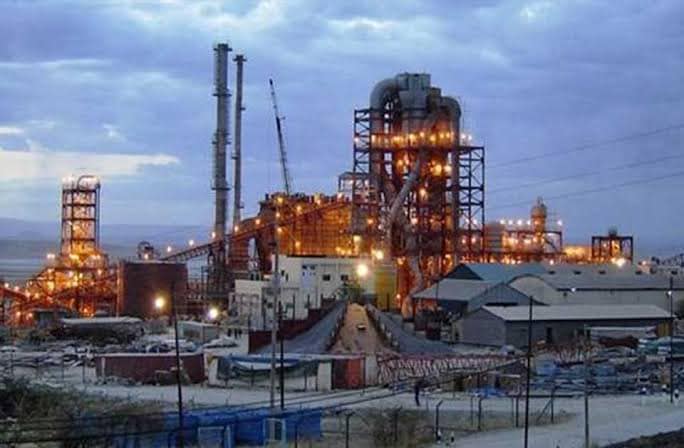
  • Soda ash (sodium carbonate) can be produced from natural salt through a process called the Solvay process. Heres a simplified explanation of the steps involved:

    1. **Ammonia Absorption:** The process starts with the introduction of ammonia into a concentrated solution of brine (saltwater). Ammonia is absorbed into the solution, creating ammoniated brine.

    2. **Carbonation:** Carbon dioxide is then bubbled through the ammoniated brine. This carbon dioxide can be obtained from limestone (calcium carbonate) that is heated in a kiln to produce lime (calcium oxide) and carbon dioxide. The carbon dioxide reacts with the ammonia and water in the brine to form sodium bicarbonate (baking soda) and ammonium chloride.

    3. **Precipitation and Filtration:** The sodium bicarbonate precipitates out of this solution as it is slightly less soluble than the other components. It is then filtered out from the mixture.

    4. **Calcination:** The sodium bicarbonate is heated (calcined) in a kiln, which decomposes it into sodium carbonate (soda ash), water, and carbon dioxide. The carbon dioxide can be recycled back into the process.

    5. **Recovery of Ammonia:** The remaining solution, which contains ammonium chloride, is treated to recover the ammonia. This is usually done by reacting it with the lime produced in the kiln. The ammonia is then reused in the process.

    6. **Production of Soda Ash:** The final product, soda ash, is then collected, processed as needed (for example, into different grades), and packaged for use.

    This method is widely used because of its efficiency and the fact that the major raw materials (salt, limestone, and ammonia) are readily available. Additionally, the process is relatively environmentally friendly since it recycles most of its major chemicals.

    #saltland #khewra

    Soda ash (sodium carbonate) can be produced from natural salt through a process called the Solvay process. Here's a simplified explanation of the steps involved: 1. **Ammonia Absorption:** The process starts with the introduction of ammonia into a concentrated solution of brine (saltwater). Ammonia is absorbed into the solution, creating ammoniated brine. 2. **Carbonation:** Carbon dioxide is then bubbled through the ammoniated brine. This carbon dioxide can be obtained from limestone (calcium carbonate) that is heated in a kiln to produce lime (calcium oxide) and carbon dioxide. The carbon dioxide reacts with the ammonia and water in the brine to form sodium bicarbonate (baking soda) and ammonium chloride. 3. **Precipitation and Filtration:** The sodium bicarbonate precipitates out of this solution as it is slightly less soluble than the other components. It is then filtered out from the mixture. 4. **Calcination:** The sodium bicarbonate is heated (calcined) in a kiln, which decomposes it into sodium carbonate (soda ash), water, and carbon dioxide. The carbon dioxide can be recycled back into the process. 5. **Recovery of Ammonia:** The remaining solution, which contains ammonium chloride, is treated to recover the ammonia. This is usually done by reacting it with the lime produced in the kiln. The ammonia is then reused in the process. 6. **Production of Soda Ash:** The final product, soda ash, is then collected, processed as needed (for example, into different grades), and packaged for use. This method is widely used because of its efficiency and the fact that the major raw materials (salt, limestone, and ammonia) are readily available. Additionally, the process is relatively environmentally friendly since it recycles most of its major chemicals. #saltland #khewra

    0 Yorumlar 0 hisse senetleri 401 Views