• ### Roll No: 2

    ### Batch 1

    ### Task 56:

    ### Book: Accl

    ** Chemical Reactions: The Engine of Life **

    Today’s task is to create an educational and informative post based on the topic **“Chemical Reactions: The Engine of Life.”** The task explores how chemical reactions are essential for life and how they help living organisms grow, develop, produce energy, and carry out important biological processes. From digestion and respiration to photosynthesis and cellular activities, countless reactions happen continuously around us and inside living organisms. This topic encourages learners to understand the important connection between chemistry and biology and recognize how these reactions support everyday life. By exploring chemical reactions, we can better understand the fascinating scientific processes that keep life functioning.

    #Batch1 #Task56 #ChemicalReactions #Science #Chemistry #Biology #EngineOfLife #Education #Learning #ScienceFacts #Knowledge #ScientificThinking #DailyTask #Accl
    ### πŸ‘€ Roll No: 2 ### πŸ“š Batch 1 ### πŸ”¬ Task 56: ### πŸ“– Book: Accl **πŸ§ͺ⚑ Chemical Reactions: The Engine of Life πŸŒ±πŸ”¬** Today’s task is to create an educational and informative post based on the topic **“Chemical Reactions: The Engine of Life.”** πŸ§ͺ✨ The task explores how chemical reactions are essential for life and how they help living organisms grow, develop, produce energy, and carry out important biological processes. 🌱⚑ From digestion and respiration to photosynthesis and cellular activities, countless reactions happen continuously around us and inside living organisms. πŸ”¬πŸ§¬ This topic encourages learners to understand the important connection between chemistry and biology and recognize how these reactions support everyday life. πŸ“šπŸ’‘ By exploring chemical reactions, we can better understand the fascinating scientific processes that keep life functioning. 🌍✨ #Batch1 #Task56 #ChemicalReactions #Science #Chemistry #Biology #EngineOfLife #Education #Learning #ScienceFacts #Knowledge #ScientificThinking #DailyTask #Accl
    0 Comments 0 Shares 296 Views 6
  • #rsisb
    Roll NO:232
    Foundation level student.
    Story post:22

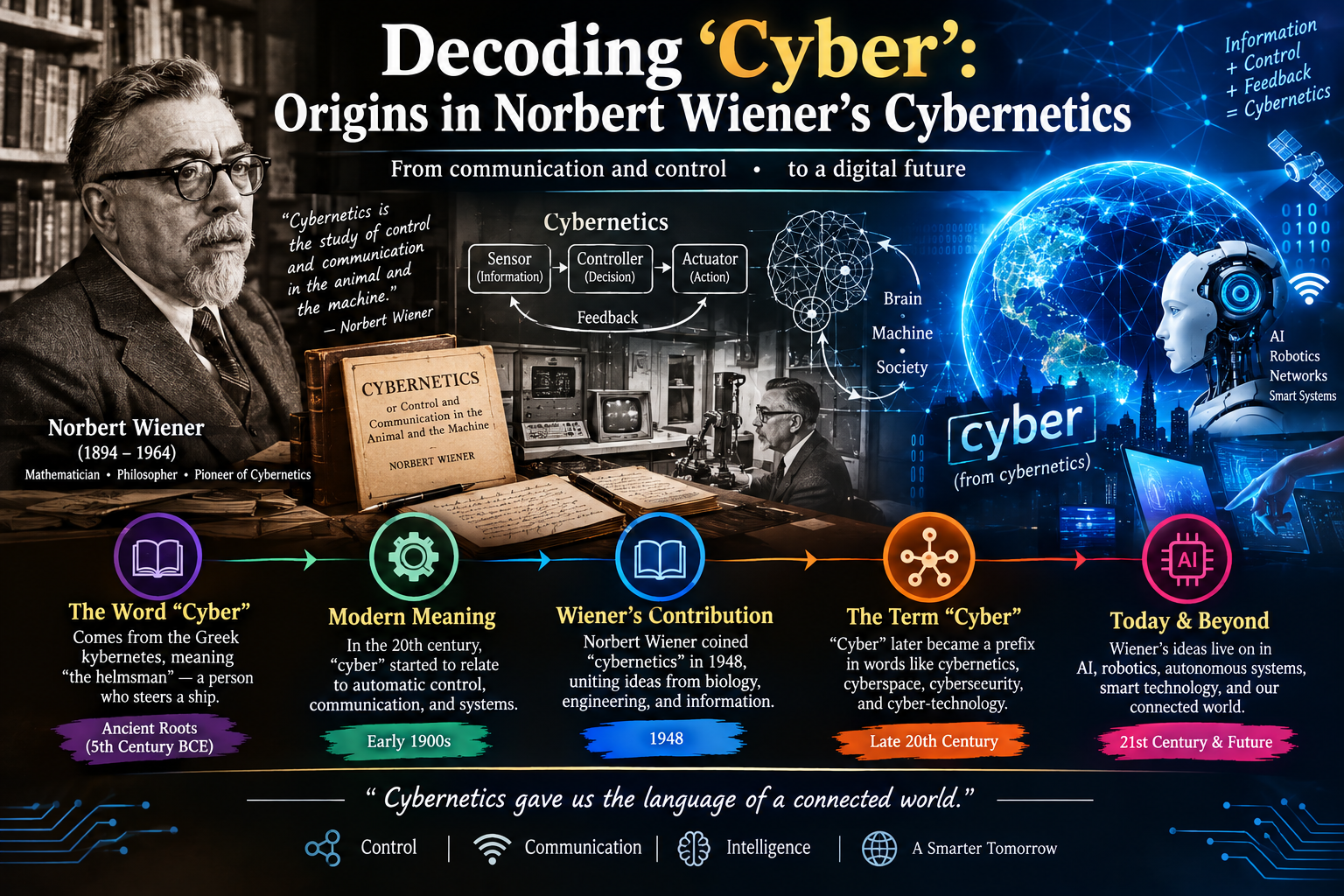
    DescriptionDecoding Cyber: Origins in Norbert Wieners Cybernetics Discover the fascinating story behind the word “Cyber”! Explore how it is connected to Norbert Wiener’s cybernetics, a field focused on communication, control, feedback, and systems. From early ideas about machines and communication to today’s cybersecurity, cyberspace, and digital technology, the word “Cyber” has become a major part of our modern technological world. Join us on this exciting journey through science, technology, language, and innovation! Hashtags#Cyber #Cybernetics #NorbertWiener #CyberHistory #Technology #ComputerScience #ArtificialIntelligence #Cybersecurity #DigitalWorld #Innovation #ScienceAndTechnology #HistoryOfTechnology #TechFacts #ScienceFacts #Learning #Education #FutureTech #DigitalTechnology #Knowledge Emojis
    #rsisb Roll NO:232 Foundation level student. Story post:22 πŸ’» DescriptionDecoding Cyber: Origins in Norbert Wieners Cybernetics πŸ€–πŸ§ Discover the fascinating story behind the word “Cyber”! 🌐✨ Explore how it is connected to Norbert Wiener’s cybernetics, a field focused on communication, control, feedback, and systems. πŸ“‘πŸ”„From early ideas about machines and communication to today’s cybersecurity, cyberspace, and digital technology, the word “Cyber” has become a major part of our modern technological world. πŸ’»πŸ”πŸŒJoin us on this exciting journey through science, technology, language, and innovation! πŸš€πŸ“šπŸ·οΈ Hashtags#Cyber #Cybernetics #NorbertWiener #CyberHistory #Technology #ComputerScience #ArtificialIntelligence #Cybersecurity #DigitalWorld #Innovation #ScienceAndTechnology #HistoryOfTechnology #TechFacts #ScienceFacts #Learning #Education #FutureTech #DigitalTechnology #Knowledge πŸŒπŸ’»πŸ€–πŸ˜Š EmojisπŸ’» 🌐 πŸ€– 🧠 πŸ“‘ πŸ” βš™οΈ πŸ”„ πŸ§ͺ πŸš€ πŸ“š πŸ’‘ πŸ”Ž 🌍 ✨
    0 Comments 0 Shares 744 Views
  • RSIF8
    roll no 72
    story post no 5
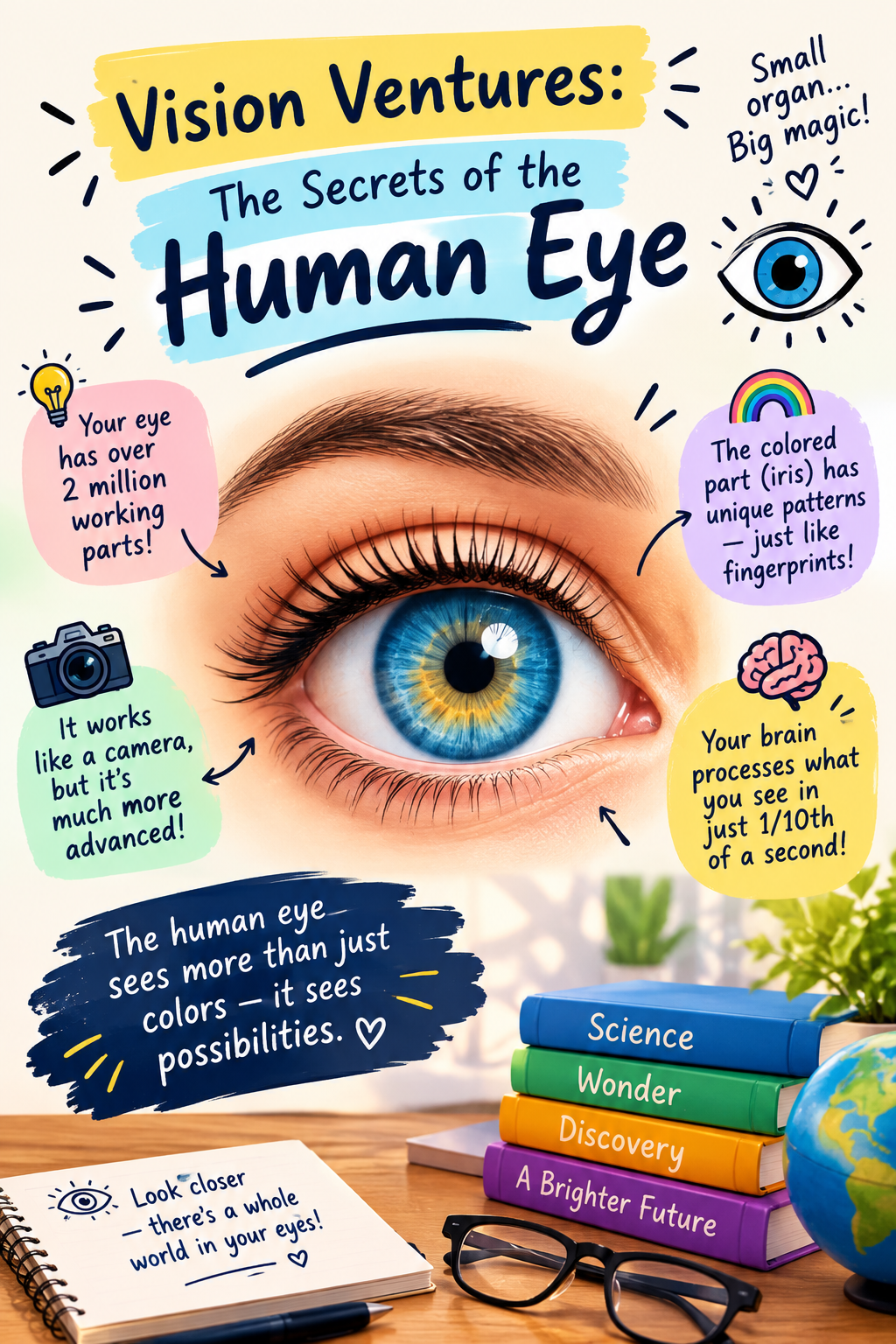
    stoty post topic : **Vision Ventures: The Secrets of the Human Eye**

    Have you ever wondered how your eyes turn light into the amazing world you see? From the colorful iris to the tiny structures working together, the human eye is an incredible part of the body!

    Discover how the eye works
    Explore the secrets of the iris
    Learn why the eye is often compared to a camera
    See how your brain helps you understand what you see

    Every glance is a little journey of science and discovery!

    #VisionVentures #HumanEye #Science #Biology #ScienceForKids #LearnSomethingNew #DidYouKnow #AmazingHumanBody #Education #Curiosity #ScienceFacts #StoryPost
    RSIF8 roll no 72 story post no 5 stoty post topic :πŸ‘οΈβœ¨ **Vision Ventures: The Secrets of the Human Eye** πŸŒˆπŸ”¬ Have you ever wondered how your eyes turn light into the amazing world you see? From the colorful iris to the tiny structures working together, the human eye is an incredible part of the body! πŸ§ πŸ‘€ πŸ” Discover how the eye works 🌈 Explore the secrets of the iris πŸ“Έ Learn why the eye is often compared to a camera 🧠 See how your brain helps you understand what you see Every glance is a little journey of science and discovery! 🌟 #VisionVentures #HumanEye #Science #Biology #ScienceForKids #LearnSomethingNew #DidYouKnow #AmazingHumanBody #Education #Curiosity #ScienceFacts #StoryPost
    0 Comments 0 Shares 397 Views
  • RSIF8
    Roll no 13
    Story Post No 11
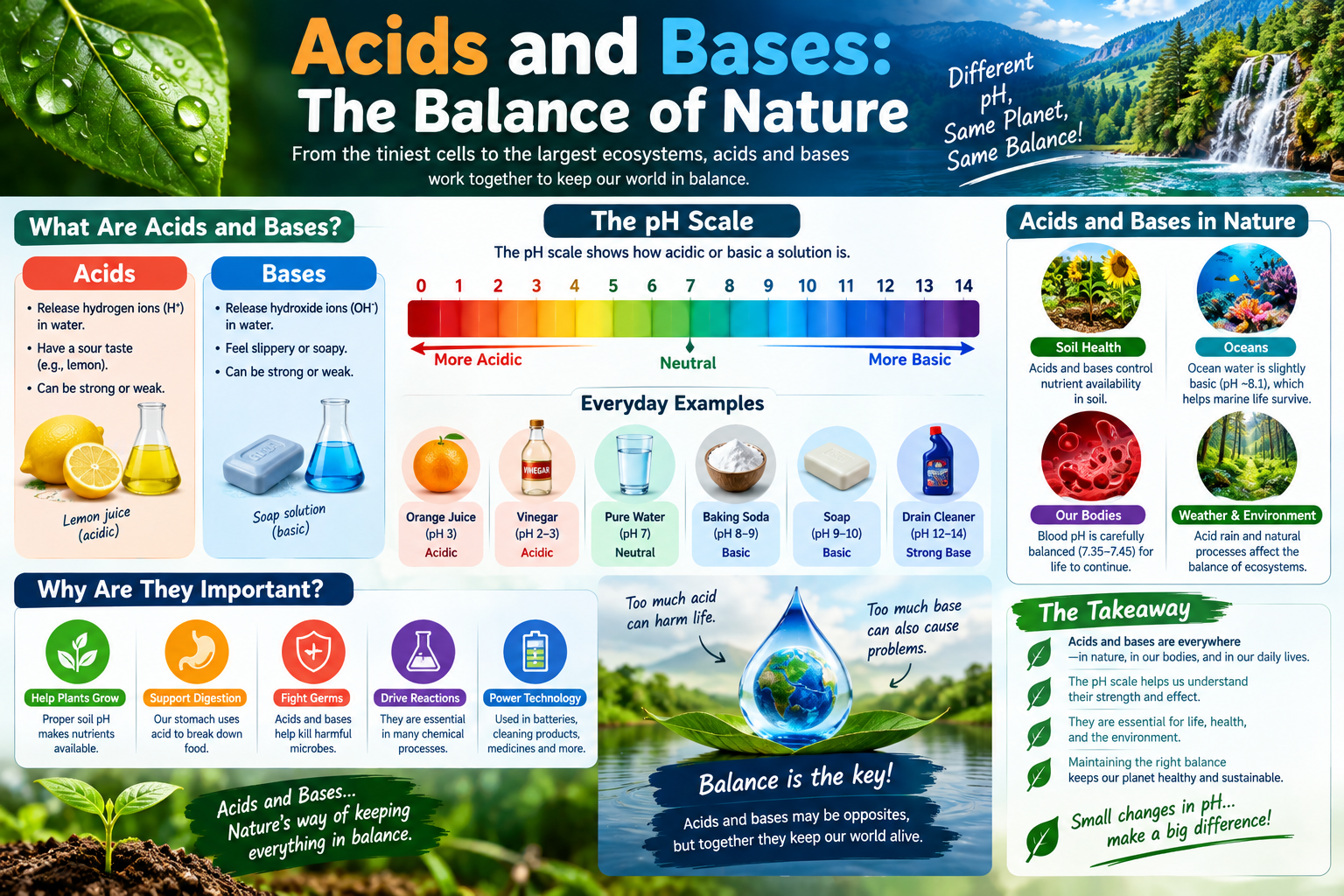
    Story Post Topic **Acids and Bases: The Balance of Nature**

    Acids and bases are an important part of chemistry and everyday life. From lemon juice and vinegar to soap, baking soda, soil, oceans, and even our bodies, acids and bases are everywhere around us.

    This topic explores the **pH scale**, the difference between acids and bases, and how chemical balance affects nature and living organisms. Learn how acids and bases support digestion, plant growth, chemical reactions, medicine, technology, and healthy ecosystems.

    Understanding pH helps us see how even small changes in chemical balance can have a big impact on life and the environment.

    **Learn about chemistry, discover the science of balance, and explore how acids and bases shape our world!**

    #AcidsAndBases #Chemistry #PHScale #Science #ChemicalBalance #ScienceEducation #ChemistryLovers #STEM #Nature #Environment #Education #ScienceFacts
    RSIF8 Roll no 13 Story Post No 11 Story Post Topic πŸ§ͺ **Acids and Bases: The Balance of Nature** πŸŒΏβš—οΈ Acids and bases are an important part of chemistry and everyday life. From lemon juice and vinegar to soap, baking soda, soil, oceans, and even our bodies, acids and bases are everywhere around us. This topic explores the **pH scale**, the difference between acids and bases, and how chemical balance affects nature and living organisms. Learn how acids and bases support digestion, plant growth, chemical reactions, medicine, technology, and healthy ecosystems. 🌍 Understanding pH helps us see how even small changes in chemical balance can have a big impact on life and the environment. ✨ **Learn about chemistry, discover the science of balance, and explore how acids and bases shape our world!** #AcidsAndBases #Chemistry #PHScale #Science #ChemicalBalance #ScienceEducation #ChemistryLovers #STEM #Nature #Environment #Education #ScienceFacts
    0 Comments 0 Shares 542 Views
  • RSIF8
    Roll No 13
    Story post No 10
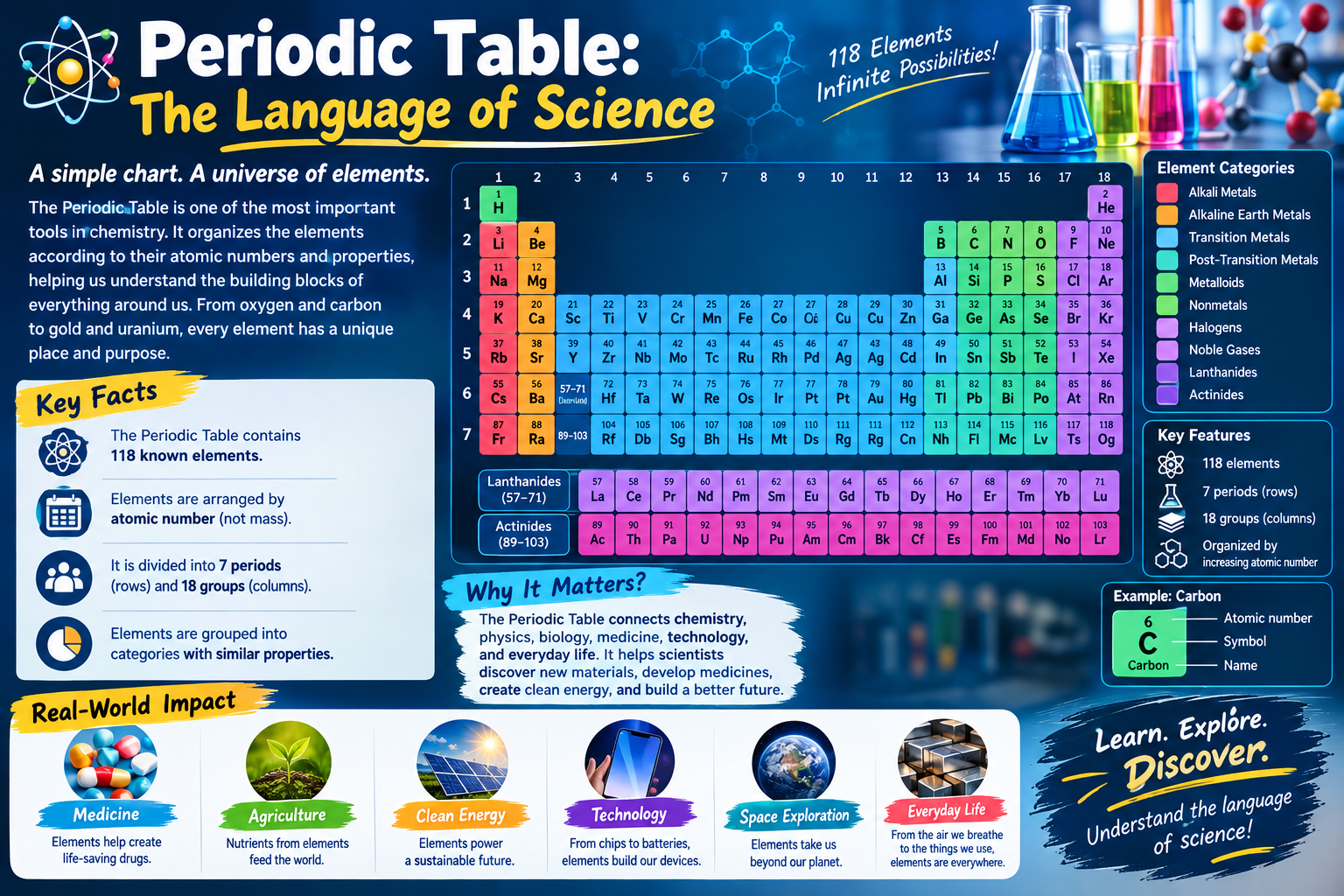
    Story post Topic **Periodic Table: The Language of Science**

    The Periodic Table is one of the most important tools in chemistry. It organizes the elements according to their atomic numbers and properties, helping us understand the building blocks of everything around us. From oxygen and carbon to gold and uranium, every element has a unique place and purpose.

    In this educational journey, explore the **118 known elements**, their symbols, atomic numbers, groups, periods, and major categories. Discover how the Periodic Table connects chemistry, physics, biology, medicine, technology, and everyday life.

    Learn how elements combine to form molecules, materials, medicines, and countless technologies that shape our modern world.

    **Learn. Explore. Discover. Understand the language of science!**

    #PeriodicTable #Chemistry #Science #Elements #ChemicalElements #ScienceEducation #ChemistryLovers #STEM #Education #Learning #ScienceFacts #AtomicStructure #PeriodicTableOfElements
    RSIF8 Roll No 13 Story post No 10 Story post Topic πŸ§ͺ **Periodic Table: The Language of Science** πŸŒπŸ”¬ The Periodic Table is one of the most important tools in chemistry. It organizes the elements according to their atomic numbers and properties, helping us understand the building blocks of everything around us. From oxygen and carbon to gold and uranium, every element has a unique place and purpose. In this educational journey, explore the **118 known elements**, their symbols, atomic numbers, groups, periods, and major categories. Discover how the Periodic Table connects chemistry, physics, biology, medicine, technology, and everyday life. ✨ Learn how elements combine to form molecules, materials, medicines, and countless technologies that shape our modern world. πŸ“š **Learn. Explore. Discover. Understand the language of science!** #PeriodicTable #Chemistry #Science #Elements #ChemicalElements #ScienceEducation #ChemistryLovers #STEM #Education #Learning #ScienceFacts #AtomicStructure #PeriodicTableOfElements
    0 Comments 0 Shares 588 Views
  • RSIF 8

    Roll no 93

    Story post no 31

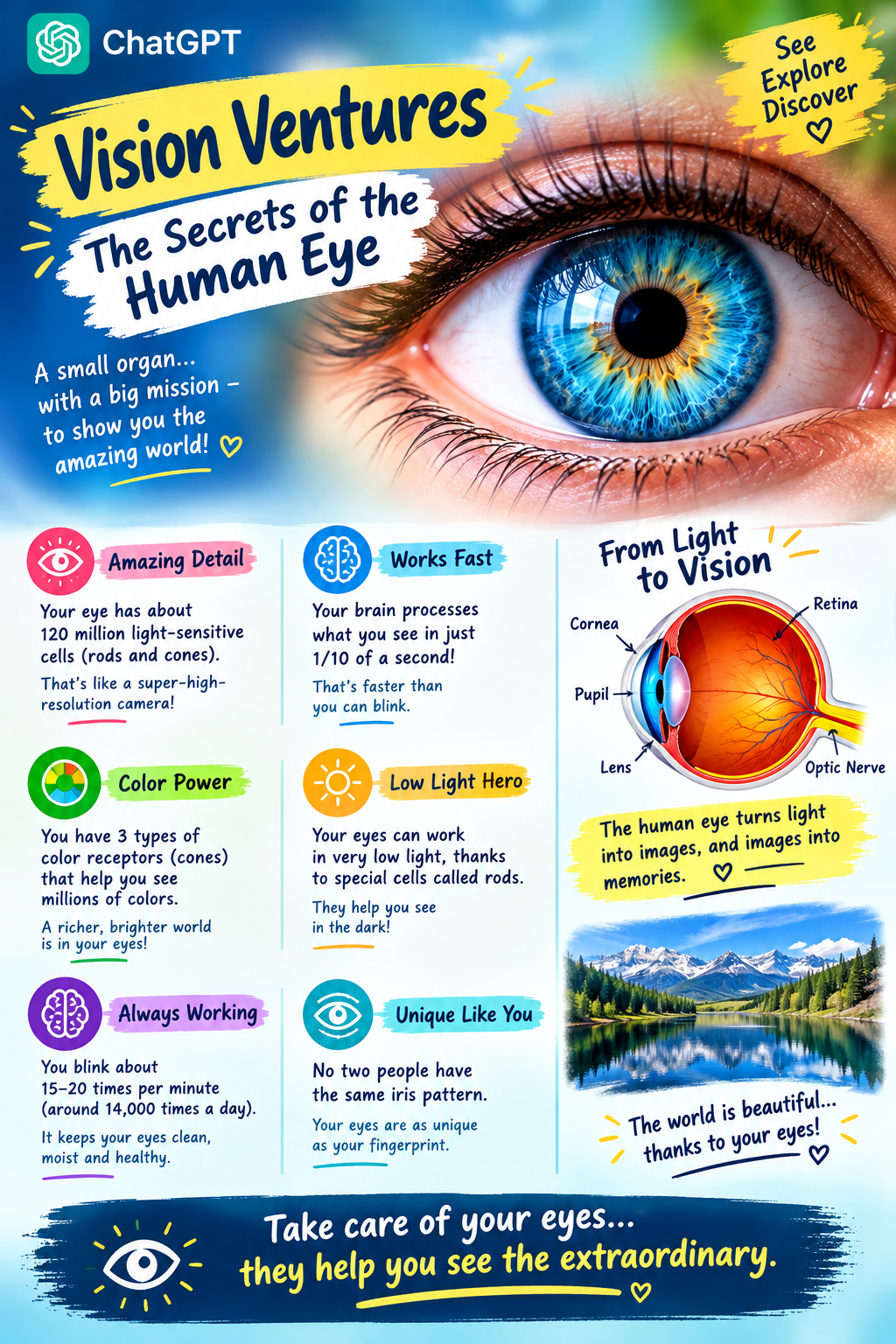
    Task topic: "Vision Ventures: The Secrets of the Human Eye".

    یہ رہی Ψ’ΩΎ کی **Story Post description**، ΨͺΩ…Ψ§Ω… platforms ΩΎΨ± پوسٹ Ϊ©Ψ±Ω†Ϋ’ Ϊ©Ϋ’ Ω„ΫŒΫ’:


    **Vision Ventures: The Secrets of the Human Eye**


    Our eyes are amazing organs that help us see colors, shapes, light, and the beautiful world around us. From the cornea and lens to the retina and optic nerve, every part works together to turn light into the images we see and remember.


    Did you know that the human eye has around **120 million light-sensitive cells** and that our eyes can blink around **15–20 times every minute**? These incredible facts show just how powerful and complex our vision system is.


    Take care of your eyes, appreciate the amazing gift of sight, and keep exploring the world through your own unique vision!


    #VisionVentures #HumanEye #Science #Biology #AmazingFacts #EyeHealth #Learning #Education #ScienceFacts #ExploreAndDiscover #ChatGPT
    RSIF 8 Roll no 93 Story post no 31 Task topic: "Vision Ventures: The Secrets of the Human Eye". یہ رہی Ψ’ΩΎ کی **Story Post description**، ΨͺΩ…Ψ§Ω… platforms ΩΎΨ± پوسٹ Ϊ©Ψ±Ω†Ϋ’ Ϊ©Ϋ’ Ω„ΫŒΫ’: πŸ‘οΈβœ¨ **Vision Ventures: The Secrets of the Human Eye** 🌍 Our eyes are amazing organs that help us see colors, shapes, light, and the beautiful world around us. From the cornea and lens to the retina and optic nerve, every part works together to turn light into the images we see and remember. πŸ§ πŸ’‘ Did you know that the human eye has around **120 million light-sensitive cells** and that our eyes can blink around **15–20 times every minute**? πŸ‘€ These incredible facts show just how powerful and complex our vision system is. Take care of your eyes, appreciate the amazing gift of sight, and keep exploring the world through your own unique vision! πŸ’™πŸŒŸ #VisionVentures #HumanEye #Science #Biology #AmazingFacts #EyeHealth #Learning #Education #ScienceFacts #ExploreAndDiscover #ChatGPT
    0 Comments 0 Shares 369 Views
  • #rsisb
    ROll
    Story post no.63
    Foundation Level

    ### Oxygen: A Fascinating Discovery!

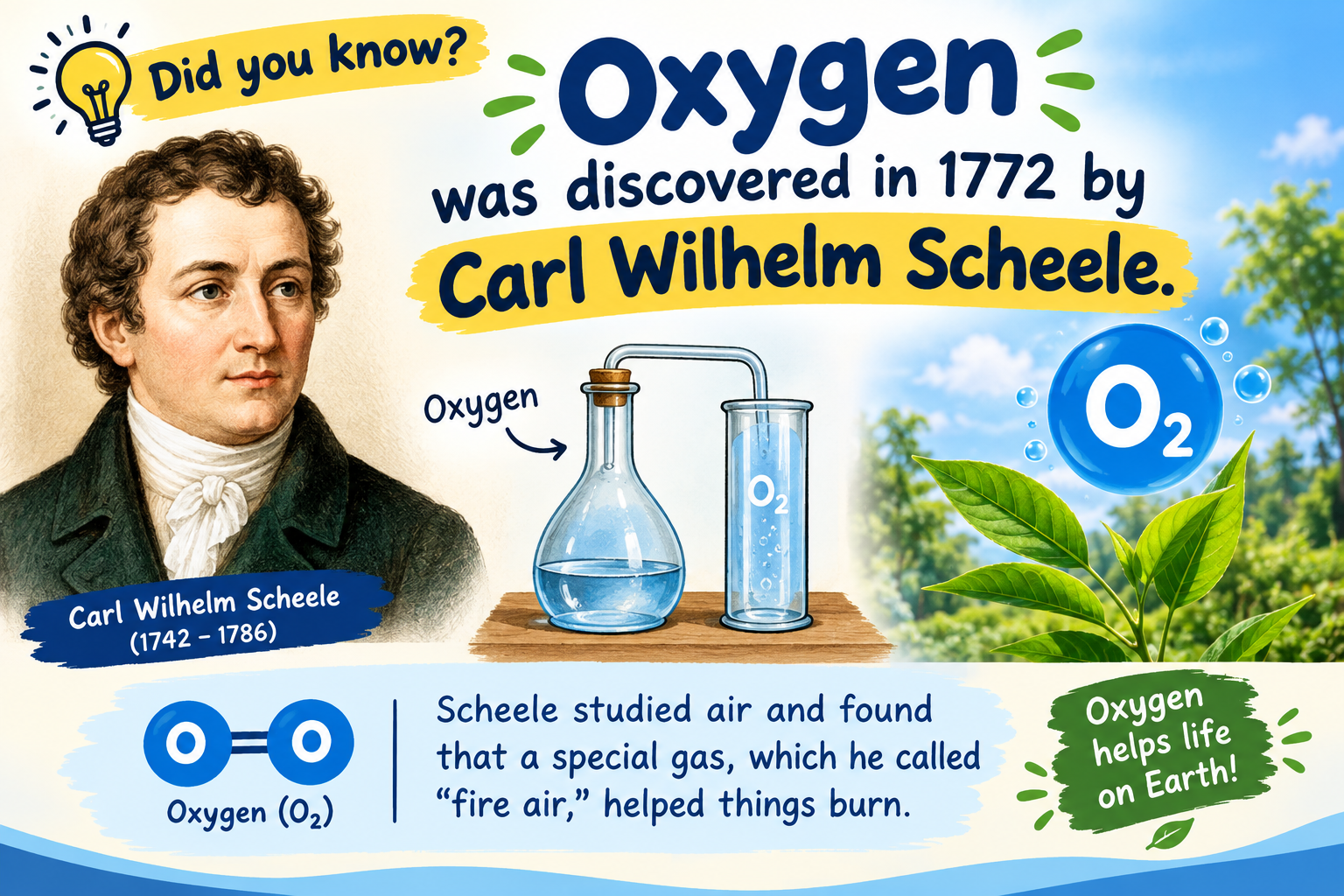
    **Oxygen was independently discovered by several scientists, including Carl Wilhelm Scheele, who produced it around 1772.** Scheele called it “fire air” because it supported combustion.

    Later, **Joseph Priestley independently produced oxygen in 1774**, and **Antoine Lavoisier** helped establish its role in combustion and respiration and gave it the name *oxygen*.

    This discovery transformed our understanding of **chemistry, breathing, combustion, and life itself**.

    #Oxygen #ScienceHistory #CarlWilhelmScheele #Chemistry #ScienceFacts #Discoveries #LearningIsFun #AmazingScience


    Asma Shaheen EducationWali
    Saima Empowerment Wali
    Irum Asim Leadershipwali
    #rsisb ROll Story post no.63 Foundation Level ### πŸ§ͺ Oxygen: A Fascinating Discovery! 🌬️ **Oxygen was independently discovered by several scientists, including Carl Wilhelm Scheele, who produced it around 1772.** Scheele called it “fire air” because it supported combustion. πŸ”₯ Later, **Joseph Priestley independently produced oxygen in 1774**, and **Antoine Lavoisier** helped establish its role in combustion and respiration and gave it the name *oxygen*. βš—οΈπŸŒ This discovery transformed our understanding of **chemistry, breathing, combustion, and life itself**. 🫁✨ #Oxygen #ScienceHistory #CarlWilhelmScheele #Chemistry #ScienceFacts #Discoveries #LearningIsFun #AmazingScience πŸ§ͺπŸ”¬πŸŒŽ Asma Shaheen EducationWali Saima Empowerment Wali Irum Asim Leadershipwali
    0 Comments 0 Shares 359 Views
  • #rsisb
    Roll no.231
    story post no.61
    Foundation Level


    ### Bananas Are Berries, but Strawberries Aren’t!

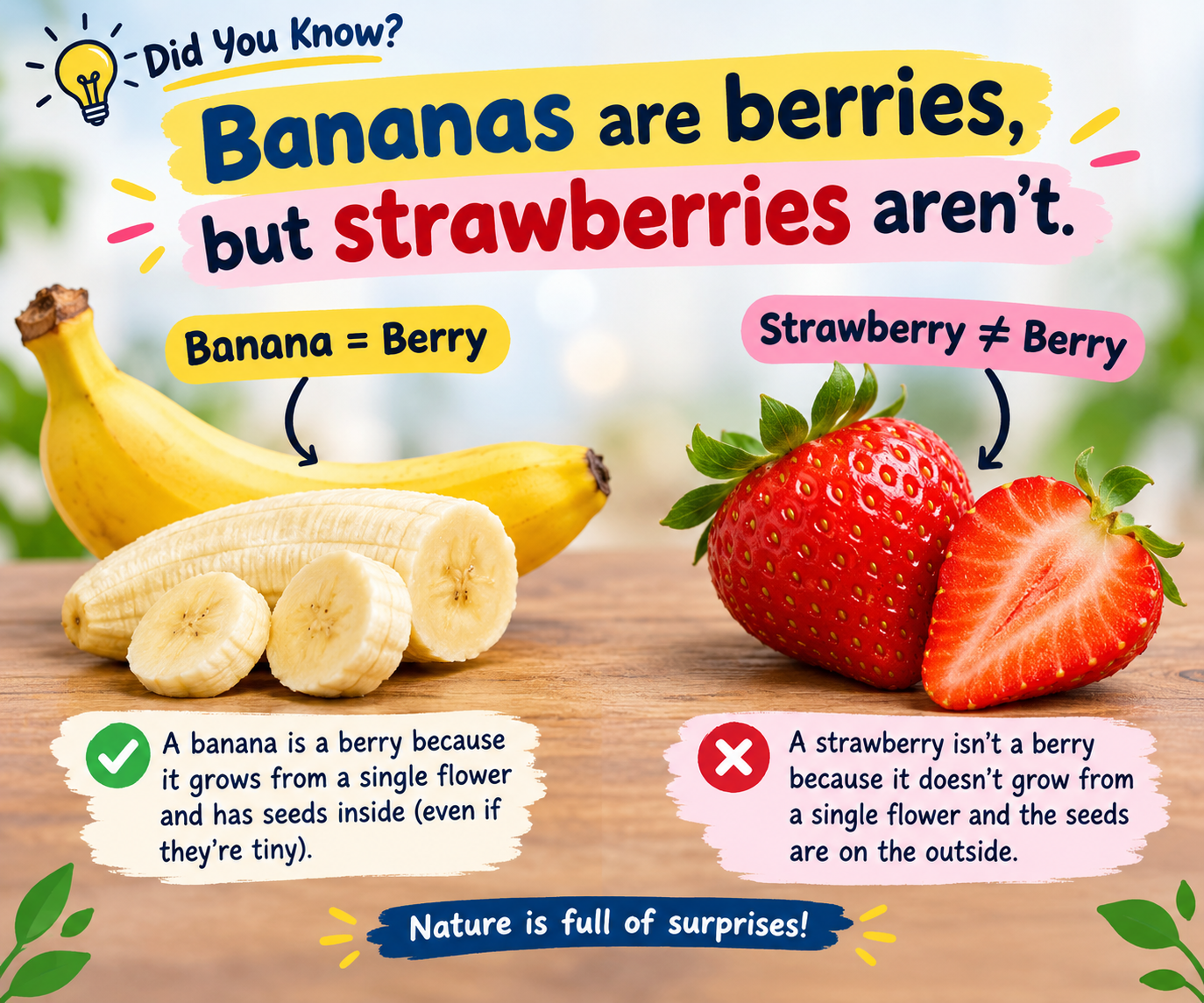
    Did you know that **bananas are botanically classified as berries, while strawberries are not?** It may sound surprising, but fruit classification depends on how the fruit develops from the flower.

    A **banana** is considered a true berry because it develops from a single flower with one ovary and contains seeds inside. Strawberries, on the other hand, are called **aggregate accessory fruits** because the fleshy part comes from the flower’s receptacle, while the tiny “seeds” on the outside are actually individual fruits!

    This fascinating fact shows that **science can change the way we look at everyday foods**. The next time you enjoy a banana or strawberry, remember that there is a whole world of botany hidden in your fruit bowl!

    #DidYouKnow #ScienceFacts #Botany #FruitFacts #Banana #Strawberry #AmazingScience #LearningIsFun #Nature #FunFacts


    Asma Shaheen EducationWali
    Saima Empowerment Wali
    #rsisb Roll no.231 story post no.61 Foundation Level ### 🍌 Bananas Are Berries, but Strawberries Aren’t! πŸ“ Did you know that **bananas are botanically classified as berries, while strawberries are not?** πŸ€―πŸŒπŸ“ It may sound surprising, but fruit classification depends on how the fruit develops from the flower. A **banana** is considered a true berry because it develops from a single flower with one ovary and contains seeds inside. Strawberries, on the other hand, are called **aggregate accessory fruits** because the fleshy part comes from the flower’s receptacle, while the tiny “seeds” on the outside are actually individual fruits! πŸŒ±πŸ”¬ This fascinating fact shows that **science can change the way we look at everyday foods**. The next time you enjoy a banana or strawberry, remember that there is a whole world of botany hidden in your fruit bowl! πŸŒπŸŒπŸ“βœ¨ #DidYouKnow #ScienceFacts #Botany #FruitFacts #Banana #Strawberry #AmazingScience #LearningIsFun #Nature #FunFacts πŸ“šπŸ”¬βœ¨ Asma Shaheen EducationWali Saima Empowerment Wali
    0 Comments 0 Shares 313 Views
  • #rsisb
    Roll no.239
    Image with Chat gpt no.11
    Foundation Level


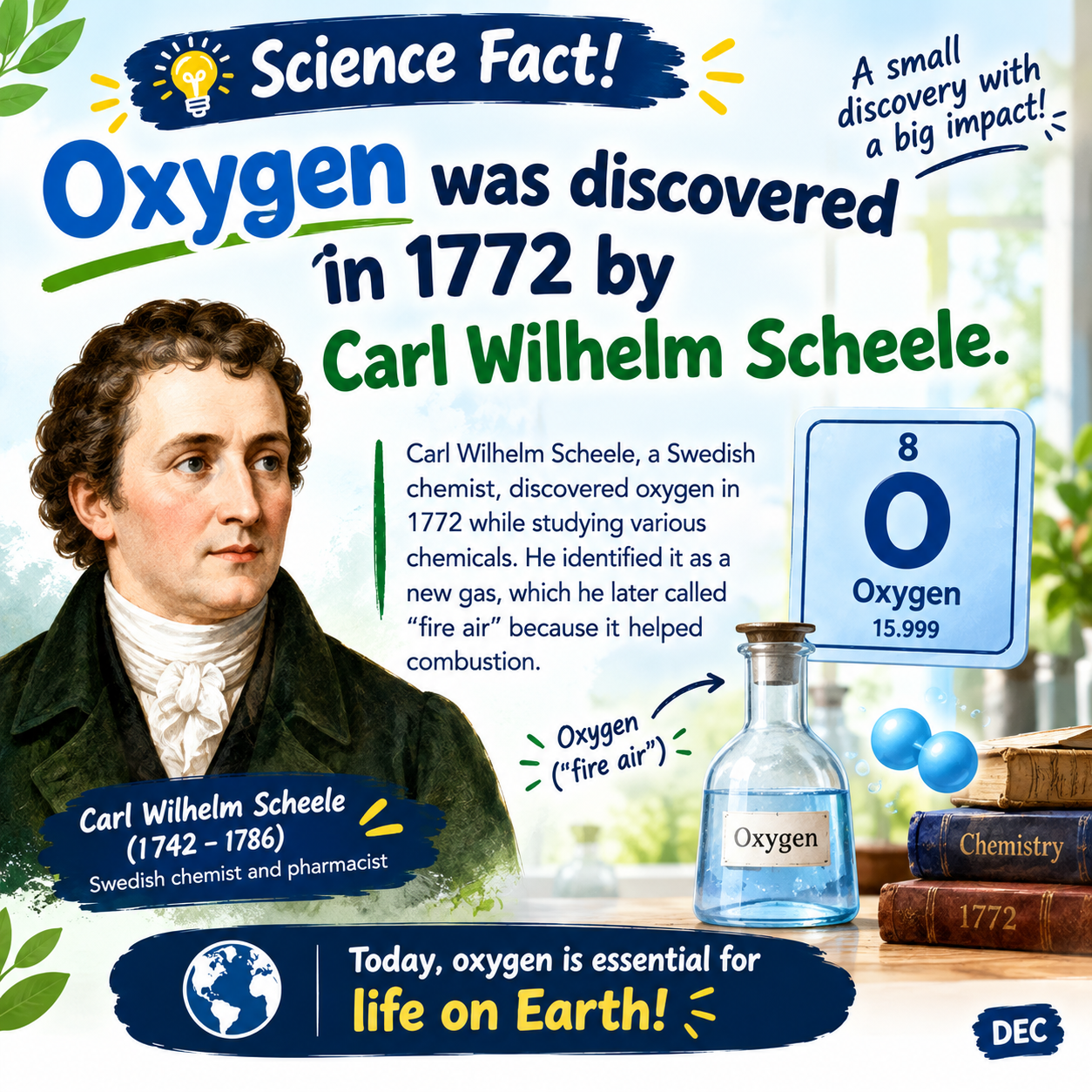
    In around **1772**, Swedish chemist and pharmacist **Carl Wilhelm Scheele** produced and studied a gas that we now know as **oxygen**. He called it **“fire air”** because he observed that it strongly supported combustion.

    Scheele’s experiments helped reveal that the air around us was not simply one single substance. Instead, it contained different gases with different properties. His work became an important part of the development of modern chemistry.

    **Who was Carl Wilhelm Scheele?**
    Carl Wilhelm Scheele (1742–1786) was a Swedish chemist and pharmacist known for his experimental work with many substances. He investigated gases, minerals, acids, and other chemicals and made several important observations during his scientific career.

    **Why is oxygen so important?**
    Oxygen is essential for most forms of life on Earth. Humans and many other organisms use oxygen during **cellular respiration**, a process that helps cells release energy from food. Oxygen also plays an important role in combustion and many chemical reactions.

    **A fascinating part of the story:**
    The history of oxygen’s discovery involved more than one scientist. Scheele investigated oxygen around **1772**, while **Joseph Priestley** independently produced and studied the gas in **1774**. Later, **Antoine Lavoisier** helped establish oxygen’s role in combustion and respiration and gave the element its name.

    **Quick facts:**
    Element: **Oxygen**
    Chemical symbol: **O**
    Atomic number: **8**
    Scheele’s work: **around 1772**
    Scheele’s name for it: **“Fire air”**
    Oxygen is essential for life and many natural and chemical processes.

    From a laboratory experiment centuries ago to our understanding of the atmosphere today, the discovery of oxygen shows how scientific knowledge develops through **careful observation, experimentation, and the work of multiple scientists**.

    **Science is full of discoveries that changed the way we understand our world!**

    **Learn. Explore. Question. Discover.**

    #ScienceFact #Oxygen #CarlWilhelmScheele #Chemistry #ScienceHistory #ChemistryFacts #DidYouKnow #ScienceEducation #LearnScience #PhysicsAndChemistry #Biology #STEM #ScientificDiscovery #HistoryOfScience #ChemicalElements #OxygenDiscovery #Education #Knowledge #FunScience #DEC
    #rsisb Roll no.239 Image with Chat gpt no.11 Foundation Level In around **1772**, Swedish chemist and pharmacist **Carl Wilhelm Scheele** produced and studied a gas that we now know as **oxygen**. He called it **“fire air”** because he observed that it strongly supported combustion. πŸ”₯ Scheele’s experiments helped reveal that the air around us was not simply one single substance. Instead, it contained different gases with different properties. His work became an important part of the development of modern chemistry. πŸ§ͺπŸ“š πŸ”Ž **Who was Carl Wilhelm Scheele?** Carl Wilhelm Scheele (1742–1786) was a Swedish chemist and pharmacist known for his experimental work with many substances. He investigated gases, minerals, acids, and other chemicals and made several important observations during his scientific career. 🌬️ **Why is oxygen so important?** Oxygen is essential for most forms of life on Earth. Humans and many other organisms use oxygen during **cellular respiration**, a process that helps cells release energy from food. Oxygen also plays an important role in combustion and many chemical reactions. πŸ“– **A fascinating part of the story:** The history of oxygen’s discovery involved more than one scientist. Scheele investigated oxygen around **1772**, while **Joseph Priestley** independently produced and studied the gas in **1774**. Later, **Antoine Lavoisier** helped establish oxygen’s role in combustion and respiration and gave the element its name. 🌟 **Quick facts:** πŸ”Ή Element: **Oxygen** πŸ”Ή Chemical symbol: **O** πŸ”Ή Atomic number: **8** πŸ”Ή Scheele’s work: **around 1772** πŸ”Ή Scheele’s name for it: **“Fire air”** πŸ”Ή Oxygen is essential for life and many natural and chemical processes. From a laboratory experiment centuries ago to our understanding of the atmosphere today, the discovery of oxygen shows how scientific knowledge develops through **careful observation, experimentation, and the work of multiple scientists**. 🌍🧠 πŸ’‘ **Science is full of discoveries that changed the way we understand our world!** πŸ“š **Learn. Explore. Question. Discover.** πŸ”¬βœ¨ #ScienceFact #Oxygen #CarlWilhelmScheele #Chemistry #ScienceHistory #ChemistryFacts #DidYouKnow #ScienceEducation #LearnScience #PhysicsAndChemistry #Biology #STEM #ScientificDiscovery #HistoryOfScience #ChemicalElements #OxygenDiscovery #Education #Knowledge #FunScience #DEC
    0 Comments 0 Shares 735 Views
  • #rsisb
    Roll no.239
    Image with Chat gpt no.10
    Foundation Level


    **So, why is a banana a berry?**
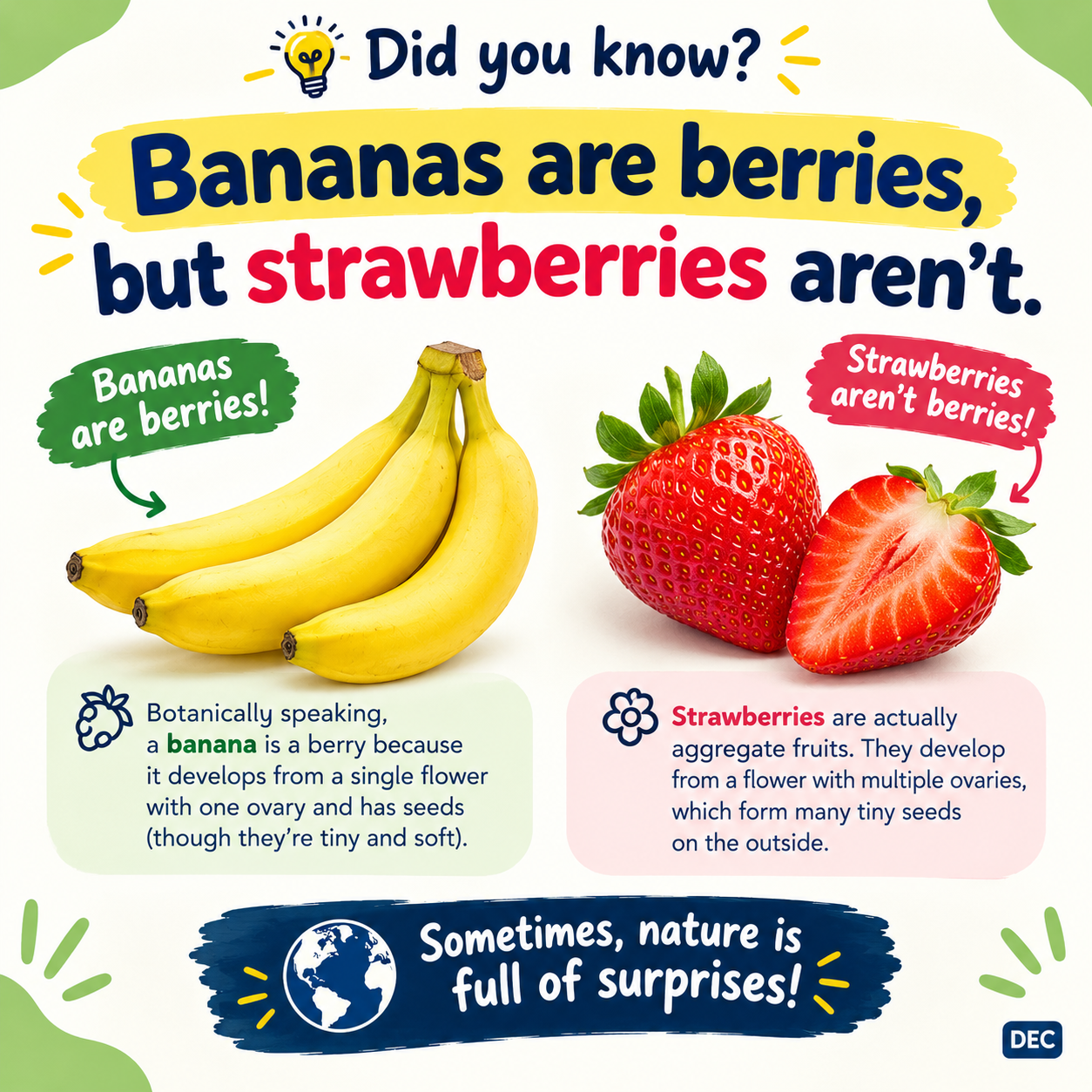
    Botanically speaking, a berry is a fruit that develops from a **single flower with one ovary** and generally has a fleshy fruit wall with seeds inside. Bananas fit this botanical definition, which means they are classified as berries!

    **Then what about strawberries?**
    Despite having “berry” in their name, strawberries are **not true botanical berries**. They are classified as **aggregate fruits** because they develop from a single flower with multiple ovaries. The tiny structures on the outside of a strawberry are actually individual fruits called **achenes**.

    **Nature loves to surprise us!**

    This is a great example of why common names and scientific classifications aren't always the same. In everyday conversation, we call many small, juicy fruits “berries,” but botanists classify fruits based on **how they develop from flowers**.

    **Quick recap:**
    Banana → **Botanical berry**
    Strawberry → **Aggregate fruit**
    Scientific classification → Based on how the fruit develops

    The natural world is full of fascinating facts that challenge what we think we know!

    **Did this fact surprise you?** Share it with someone who loves fun science and nature facts!

    #DidYouKnow #FunFacts #ScienceFacts #Botany #BotanicalFacts #Banana #Strawberry #FruitFacts #NatureFacts #Biology #PlantScience #LearnSomethingNew #ScienceEducation #Education #AmazingNature #InterestingFacts #Knowledge #ChatGPT #DEC
    #rsisb Roll no.239 Image with Chat gpt no.10 Foundation Level 🌱 **So, why is a banana a berry?** Botanically speaking, a berry is a fruit that develops from a **single flower with one ovary** and generally has a fleshy fruit wall with seeds inside. Bananas fit this botanical definition, which means they are classified as berries! πŸ“ **Then what about strawberries?** Despite having “berry” in their name, strawberries are **not true botanical berries**. They are classified as **aggregate fruits** because they develop from a single flower with multiple ovaries. The tiny structures on the outside of a strawberry are actually individual fruits called **achenes**. 🀯 **Nature loves to surprise us!** This is a great example of why common names and scientific classifications aren't always the same. In everyday conversation, we call many small, juicy fruits “berries,” but botanists classify fruits based on **how they develop from flowers**. πŸ“š **Quick recap:** 🍌 Banana → **Botanical berry** πŸ“ Strawberry → **Aggregate fruit** 🌱 Scientific classification → Based on how the fruit develops The natural world is full of fascinating facts that challenge what we think we know! πŸŒπŸ”¬ πŸ’¬ **Did this fact surprise you?** Share it with someone who loves fun science and nature facts! #DidYouKnow #FunFacts #ScienceFacts #Botany #BotanicalFacts #Banana #Strawberry #FruitFacts #NatureFacts #Biology #PlantScience #LearnSomethingNew #ScienceEducation #Education #AmazingNature #InterestingFacts #Knowledge #ChatGPT #DEC
    0 Comments 0 Shares 517 Views
More Results