• RSIF8
    Roll no: 99
    Story Post No: 7
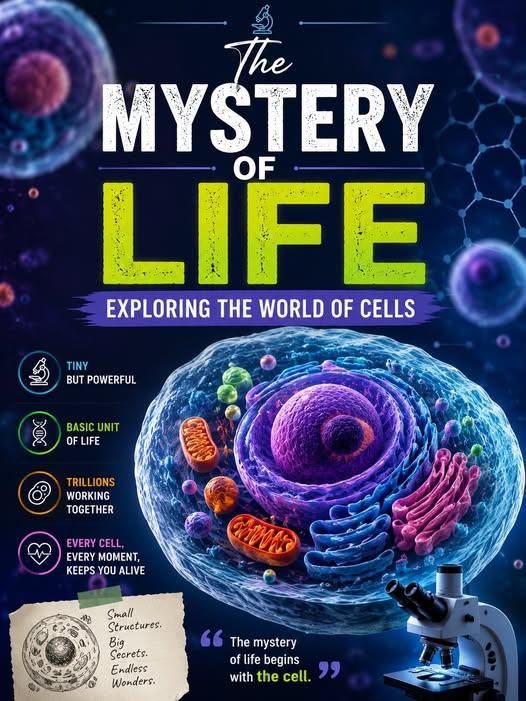
    Story Post Topic: **The Mystery of Life: Exploring the World of Cells** ak
    Have you ever wondered what makes us alive?
    The answer lies in something incredibly tiny: **cells!**
    Cells are the basic building blocks of all living things. Our bodies contain trillions of cells, and each one has an important job. Some cells help us move, some carry oxygen, some protect us from diseases, and others help our bodies grow and repair themselves.
    Inside every cell is a fascinating world. The **nucleus** acts like the control center, while tiny structures called **organelles** perform different tasks to keep the cell working.
    Even though cells are too small to see with our naked eyes, they are responsible for everything that makes life possible.
    So, the next time you look at yourself, remember: an amazing microscopic world is working inside you every second!
    **The mystery of life begins with the cell.**
    ### Moral Lesson
    Sometimes, the smallest things can have the biggest impact. Just as tiny cells work together to create and maintain life, our small efforts, actions, and contributions can come together to create something meaningful. **Never underestimate the power of small beginnings.**
    ### Hashtags
    #TheMysteryOfLife #ExploringCells #Cells #CellBiology #Biology #Science #ScienceEducation #LearnScience #BiologyFacts #HumanBody #MicroscopicWorld #LifeScience #ScienceFacts #Education #Learning #Knowledge #DiscoverScience #ExploreScience #StudentLife #ScienceLovers #NeverStopLearning #SmallBeginnings
    RSIF8 Roll no: 99 Story Post No: 7 Story Post Topic: **The Mystery of Life: Exploring the World of Cells** ๐Ÿงฌak Have you ever wondered what makes us alive? The answer lies in something incredibly tiny: **cells!** Cells are the basic building blocks of all living things. Our bodies contain trillions of cells, and each one has an important job. Some cells help us move, some carry oxygen, some protect us from diseases, and others help our bodies grow and repair themselves. Inside every cell is a fascinating world. The **nucleus** acts like the control center, while tiny structures called **organelles** perform different tasks to keep the cell working. Even though cells are too small to see with our naked eyes, they are responsible for everything that makes life possible. So, the next time you look at yourself, remember: an amazing microscopic world is working inside you every second! ๐ŸŒฑ๐Ÿ”ฌ **The mystery of life begins with the cell.** ### ๐ŸŒŸ Moral Lesson Sometimes, the smallest things can have the biggest impact. Just as tiny cells work together to create and maintain life, our small efforts, actions, and contributions can come together to create something meaningful. **Never underestimate the power of small beginnings.** ### ๐Ÿท๏ธ Hashtags #TheMysteryOfLife #ExploringCells #Cells #CellBiology #Biology #Science #ScienceEducation #LearnScience #BiologyFacts #HumanBody #MicroscopicWorld #LifeScience #ScienceFacts #Education #Learning #Knowledge #DiscoverScience #ExploreScience #StudentLife #ScienceLovers #NeverStopLearning #SmallBeginnings
    0 Reacties 0 aandelen 1440 Views
  • Day 97
    Task No:97
    Roll No:42
    RSLC
    Foundation Level, Batch#04

    Deep beneath the Earths surface and across its vast oceans, an incredible chemical journey has been shaping life for billions of years. Every drop of water, every mineral in the soil, and every breath of oxygen is part of a natural chemical cycle. These elements combine in perfect balance, creating the conditions that allow plants, animals, and humans to survive. Biology and chemistry work together as natures hidden partners, building the foundation of life on our planet.

    Plants demonstrate this remarkable connection every day by transforming sunlight, water, and carbon dioxide into food through photosynthesis. This amazing biological process depends entirely on chemical reactions that produce oxygen for living organisms. Animals and humans then use this oxygen to release energy from food, while returning carbon dioxide to the atmosphere, creating a continuous cycle that keeps Earths ecosystems healthy and alive.

    The relationship between biology and chemistry reminds us that every living thing is connected through natures invisible processes. From the smallest cell to the largest forest, chemical reactions make life possible and maintain the balance of our environment. By understanding this powerful partnership, we gain a deeper appreciation for our planet and the responsibility we all share to protect the natural world for future generations.

    #TheEarthsChemistry #Biology #Chemistry #Science #Nature #Earth #Photosynthesis #Ecosystem #EnvironmentalScience #STEM #Learning #Education #Knowledge #ScienceFacts #NatureLovers
    Day 97 Task No:97 Roll No:42 RSLC Foundation Level, Batch#04 Deep beneath the Earth's surface and across its vast oceans, an incredible chemical journey has been shaping life for billions of years. Every drop of water, every mineral in the soil, and every breath of oxygen is part of a natural chemical cycle. These elements combine in perfect balance, creating the conditions that allow plants, animals, and humans to survive. Biology and chemistry work together as nature's hidden partners, building the foundation of life on our planet. Plants demonstrate this remarkable connection every day by transforming sunlight, water, and carbon dioxide into food through photosynthesis. This amazing biological process depends entirely on chemical reactions that produce oxygen for living organisms. Animals and humans then use this oxygen to release energy from food, while returning carbon dioxide to the atmosphere, creating a continuous cycle that keeps Earth's ecosystems healthy and alive. The relationship between biology and chemistry reminds us that every living thing is connected through nature's invisible processes. From the smallest cell to the largest forest, chemical reactions make life possible and maintain the balance of our environment. By understanding this powerful partnership, we gain a deeper appreciation for our planet and the responsibility we all share to protect the natural world for future generations. #TheEarthsChemistry #Biology #Chemistry #Science #Nature #Earth #Photosynthesis #Ecosystem #EnvironmentalScience #STEM #Learning #Education #Knowledge #ScienceFacts #NatureLovers
    0 Reacties 0 aandelen 1217 Views
  • Day 104
    Task No:104
    Roll No:42
    RSLC
    Foundation Level, Batch#04

    Life on Earth is built upon an extraordinary blueprint known as DNA. Hidden inside every living cell, DNA carries the genetic instructions that determine how organisms grow, develop, and survive. From the smallest bacteria to the largest whales, every living being shares this remarkable biological code. Scientists often describe DNA as the language of life because it stores the information that connects all generations across time.

    The mystery of lifes origins has fascinated humanity for centuries. While researchers continue to explore how the first living cells emerged on the early Earth, DNA remains one of the greatest clues to understanding our beginnings. By studying genes and genetic evolution, scientists can trace the relationships between species and uncover how life has adapted over billions of years. Every discovery in genetics brings us one step closer to answering one of humanitys greatest questions: Where did life come from?

    DNA is more than just a scientific molecule?it is a symbol of connection, diversity, and the incredible complexity of nature. As technology advances, our understanding of genetics opens new possibilities in medicine, agriculture, and environmental conservation. The blueprint of existence reminds us that every living organism is part of a shared story written over billions of years, inspiring us to protect and appreciate the remarkable web of life that surrounds us.

    #DNA #Genetics #OriginOfLife #Science #Biology #MolecularBiology #LifeScience #Genome #Evolution #ScientificDiscovery #STEM #Education #DNAResearch #CellBiology #Nature #Knowledge #Innovation #FutureOfScience #LearnScience #ScienceFacts
    Day 104 Task No:104 Roll No:42 RSLC Foundation Level, Batch#04 Life on Earth is built upon an extraordinary blueprint known as DNA. Hidden inside every living cell, DNA carries the genetic instructions that determine how organisms grow, develop, and survive. From the smallest bacteria to the largest whales, every living being shares this remarkable biological code. Scientists often describe DNA as the language of life because it stores the information that connects all generations across time. The mystery of life's origins has fascinated humanity for centuries. While researchers continue to explore how the first living cells emerged on the early Earth, DNA remains one of the greatest clues to understanding our beginnings. By studying genes and genetic evolution, scientists can trace the relationships between species and uncover how life has adapted over billions of years. Every discovery in genetics brings us one step closer to answering one of humanity's greatest questions: Where did life come from? DNA is more than just a scientific molecule?it is a symbol of connection, diversity, and the incredible complexity of nature. As technology advances, our understanding of genetics opens new possibilities in medicine, agriculture, and environmental conservation. The blueprint of existence reminds us that every living organism is part of a shared story written over billions of years, inspiring us to protect and appreciate the remarkable web of life that surrounds us. #DNA #Genetics #OriginOfLife #Science #Biology #MolecularBiology #LifeScience #Genome #Evolution #ScientificDiscovery #STEM #Education #DNAResearch #CellBiology #Nature #Knowledge #Innovation #FutureOfScience #LearnScience #ScienceFacts
    0 Reacties 0 aandelen 1173 Views
  • #rsisb
    Roll No.240
    Image With Chatgpt No.6
    Foundation Level

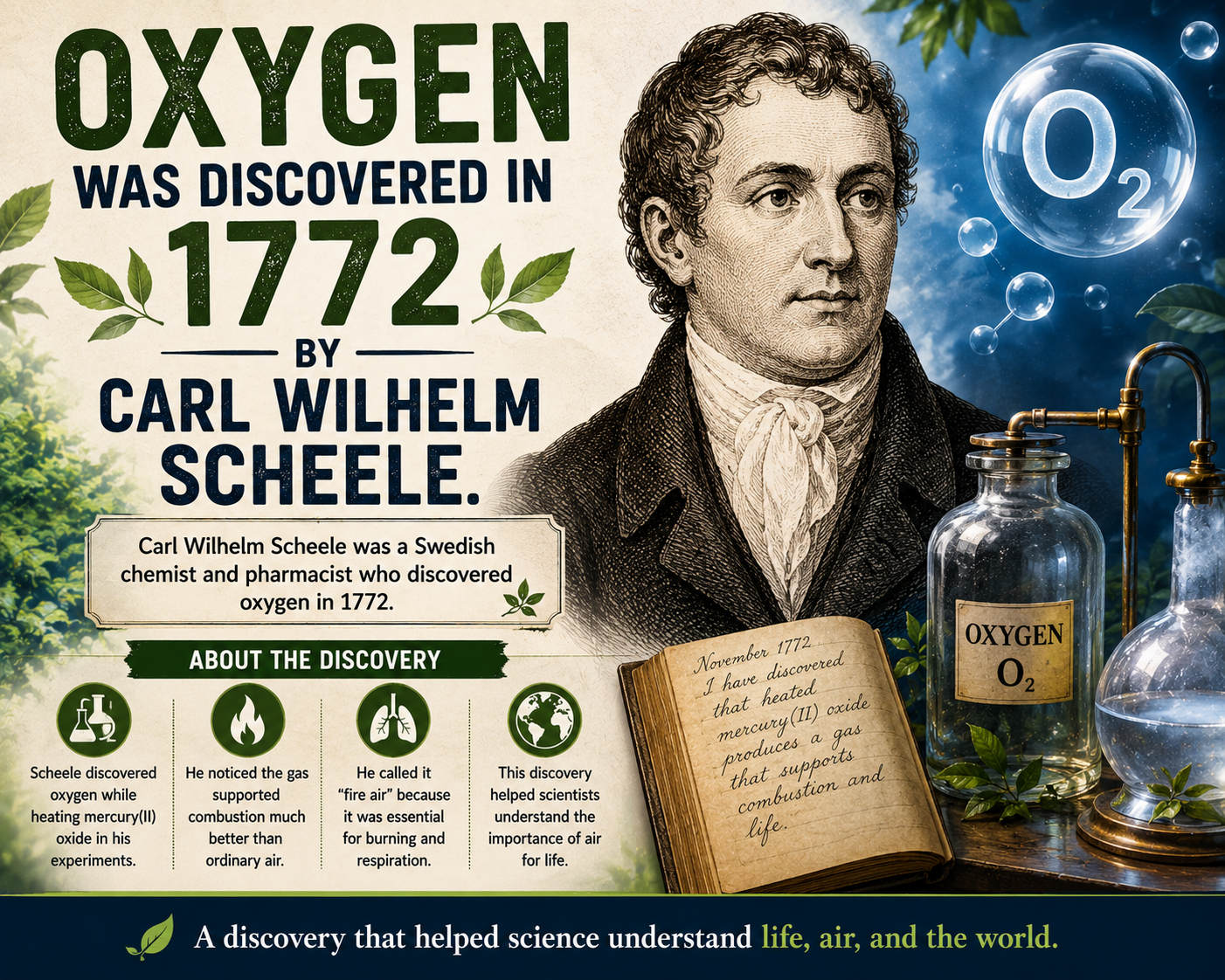
    Oxygen is one of the most important elements for life on Earth, but its discovery was the result of careful experiments, curiosity, and scientific investigation.

    In 1772, Swedish chemist and pharmacist Carl Wilhelm Scheele identified a gas that behaved differently from ordinary air. He found that this gas strongly supported combustion and played an important role in the processes we now understand as respiration and burning.

    Scheele referred to the gas as “fire air” because of its ability to support combustion. His experiments helped reveal that air was not simply one single substance, but a mixture containing different gases.

    The story of oxygen’s discovery is a fascinating example of how science develops through observation and experimentation. Scientists investigate materials, record their observations, test ideas, and gradually build a better understanding of the natural world.

    Although Scheele discovered oxygen independently, the recognition and naming of oxygen as an element also involved other scientists, including Joseph Priestley and Antoine Lavoisier. Their work helped establish oxygen’s role in combustion and contributed to the development of modern chemistry.

    Oxygen is represented by the chemical symbol O and has the atomic number 8. It is essential for aerobic respiration in humans and many other organisms. Without oxygen, most familiar forms of complex life could not survive.

    The discovery of oxygen changed the way scientists understood air, combustion, chemistry, and life. It became an important part of the scientific revolution in chemistry and helped researchers develop a much clearer understanding of chemical reactions.

    This story also reminds us that major scientific discoveries often happen through patience, careful observation, and a willingness to ask questions. Every experiment can reveal something new, and every discovery can open the door to further knowledge.

    From “fire air” to oxygen, the journey of discovery changed chemistry forever.

    Science teaches us that the world around us is full of mysteries waiting to be explored. Whether studying gases, atoms, cells, planets, or living organisms, curiosity is often the first step toward discovery.

    Question. Observe. Experiment. Discover. Learn.

    #Oxygen #DiscoveryOfOxygen #CarlWilhelmScheele #ScienceHistory #HistoryOfScience #Chemistry #ChemicalElements #OxygenDiscovery #1772 #ScientificDiscovery #ScienceEducation #ChemistryFacts #ScienceFacts #LearnScience #ScientificRevolution #Combustion #Air #Respiration #ChemistryHistory #STEM #Education #LearningJourney #ScienceExperiment #ScientificThinking #Research #Discovery #Knowledge #Innovation #Curiosity #ExploreScience #ScienceLovers #EducationalContent #Scientists #ChemicalScience #ModernChemistry #ScienceJourney #HistoryOfChemistry

    Rehan School Islamabad Campus
    Asma Shaheen EducationWali
    Irum Asim
    Saima Happinesswali

    #rsisb Roll No.240 Image With Chatgpt No.6 Foundation Level Oxygen is one of the most important elements for life on Earth, but its discovery was the result of careful experiments, curiosity, and scientific investigation. ๐ŸŒฑ๐Ÿซ๐Ÿ”ฅ In 1772, Swedish chemist and pharmacist Carl Wilhelm Scheele identified a gas that behaved differently from ordinary air. He found that this gas strongly supported combustion and played an important role in the processes we now understand as respiration and burning. ๐Ÿ”ฅ๐Ÿงช Scheele referred to the gas as “fire air” because of its ability to support combustion. His experiments helped reveal that air was not simply one single substance, but a mixture containing different gases. ๐ŸŒฌ๏ธ๐Ÿ”ฌ The story of oxygen’s discovery is a fascinating example of how science develops through observation and experimentation. Scientists investigate materials, record their observations, test ideas, and gradually build a better understanding of the natural world. ๐Ÿ“š๐Ÿ”Ž๐Ÿ’ก Although Scheele discovered oxygen independently, the recognition and naming of oxygen as an element also involved other scientists, including Joseph Priestley and Antoine Lavoisier. Their work helped establish oxygen’s role in combustion and contributed to the development of modern chemistry. โš—๏ธ๐Ÿง ๐ŸŒ Oxygen is represented by the chemical symbol O and has the atomic number 8. It is essential for aerobic respiration in humans and many other organisms. ๐Ÿซ๐ŸŒฟ๐Ÿพ Without oxygen, most familiar forms of complex life could not survive. The discovery of oxygen changed the way scientists understood air, combustion, chemistry, and life. ๐ŸŒŽ๐Ÿ”ฅ๐Ÿ”ฌ It became an important part of the scientific revolution in chemistry and helped researchers develop a much clearer understanding of chemical reactions. This story also reminds us that major scientific discoveries often happen through patience, careful observation, and a willingness to ask questions. ๐Ÿ’ญโžก๏ธ๐Ÿ”ฌโžก๏ธ๐Ÿ’ก Every experiment can reveal something new, and every discovery can open the door to further knowledge. โœจ From “fire air” to oxygen, the journey of discovery changed chemistry forever. โœจ Science teaches us that the world around us is full of mysteries waiting to be explored. ๐ŸŒ๐Ÿ”Ž Whether studying gases, atoms, cells, planets, or living organisms, curiosity is often the first step toward discovery. ๐Ÿš€๐Ÿ“š ๐ŸŒŸ Question. Observe. Experiment. Discover. Learn. ๐ŸŒŸ #Oxygen #DiscoveryOfOxygen #CarlWilhelmScheele #ScienceHistory #HistoryOfScience #Chemistry #ChemicalElements #OxygenDiscovery #1772 #ScientificDiscovery #ScienceEducation #ChemistryFacts #ScienceFacts #LearnScience #ScientificRevolution #Combustion #Air #Respiration #ChemistryHistory #STEM #Education #LearningJourney #ScienceExperiment #ScientificThinking #Research #Discovery #Knowledge #Innovation #Curiosity #ExploreScience #ScienceLovers #EducationalContent #Scientists #ChemicalScience #ModernChemistry #ScienceJourney #HistoryOfChemistry ๐Ÿ”ฌ๐Ÿงช๐ŸŒ๐Ÿ”ฅ๐Ÿซ๐Ÿ“š๐Ÿ’กโœจ๐Ÿš€๐ŸŒฑ Rehan School Islamabad Campus Asma Shaheen EducationWali Irum Asim Saima Happinesswali
    0 Reacties 0 aandelen 3216 Views
  • #rsisb
    Roll No.240
    Image With Chatgpt No.5
    Foundation Level

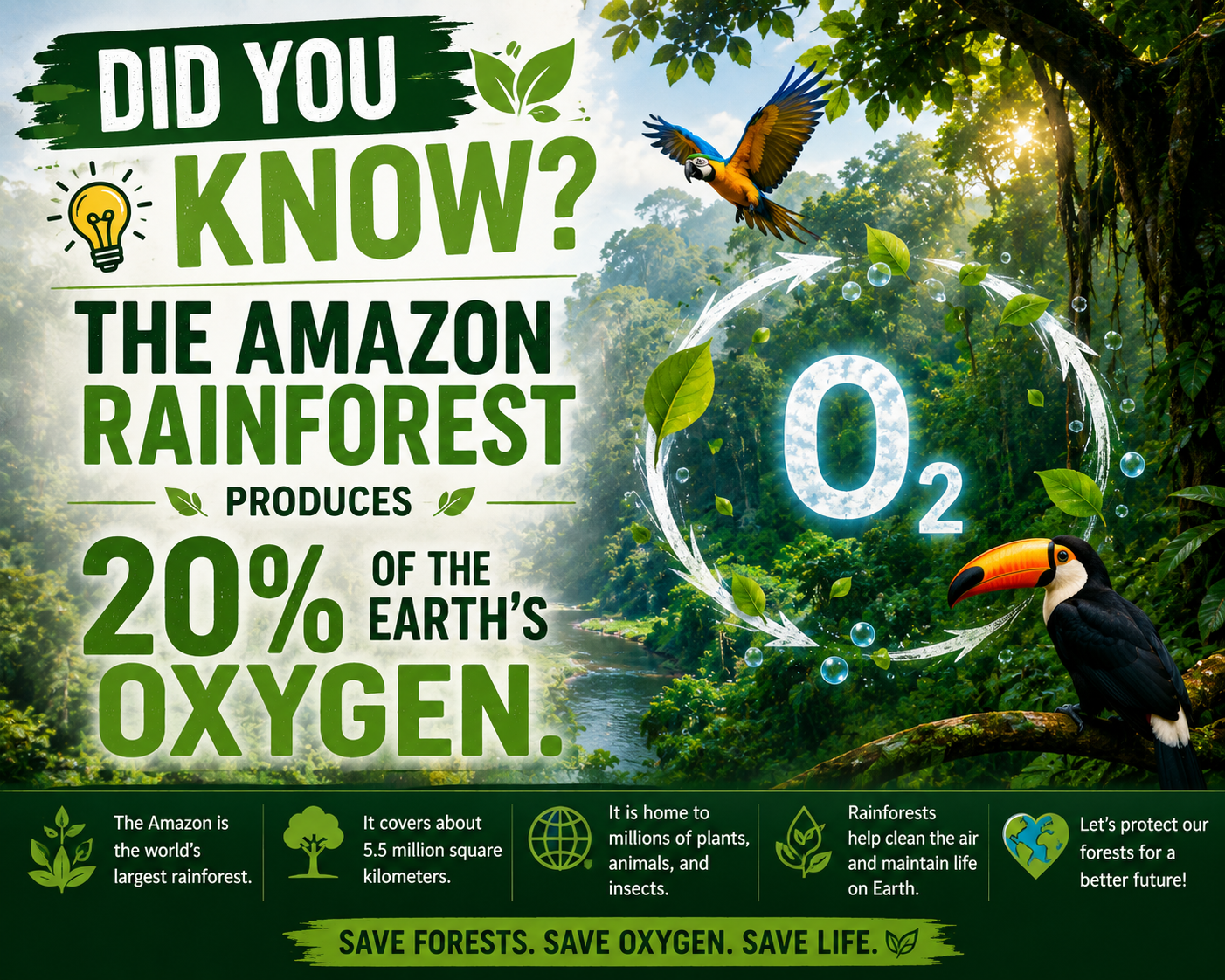
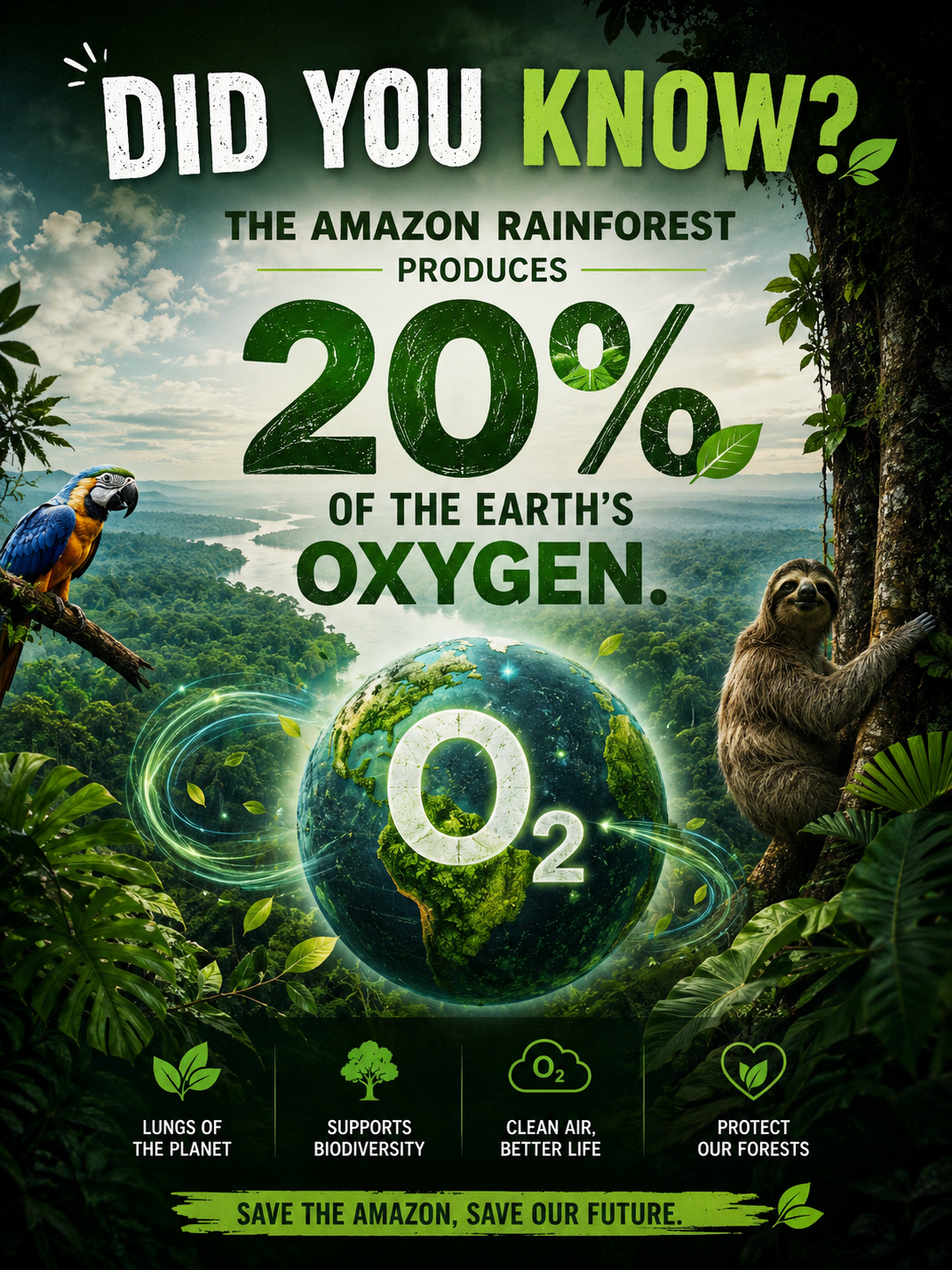
    The Amazon Rainforest is one of the most extraordinary natural environments on our planet. Stretching across a vast area of South America, it is home to an incredible variety of plants, animals, insects, birds, and microorganisms.

    The rainforest is often called the “lungs of the world,” because its plants produce oxygen through photosynthesis and the ecosystem plays an important role in absorbing and storing carbon dioxide. However, the commonly repeated claim that the Amazon produces 20% of the world’s oxygen is misleading. Much of the oxygen produced by plants is also consumed by plants, animals, fungi, and microorganisms within the ecosystem.

    What makes the Amazon truly remarkable is its biodiversity. From colorful macaws flying through the canopy to jaguars moving through the forest, countless species depend on this habitat for food, shelter, and survival.

    The rainforest also has an important role in the global carbon cycle and climate system. Trees and vegetation absorb large amounts of carbon dioxide, storing carbon in plants and soils. This makes protecting healthy forests important for the environment and for communities that depend on them.

    Every part of the Amazon ecosystem is connected. When forests are damaged or destroyed, the effects can spread through habitats, wildlife populations, water systems, and climate processes.

    Learning about the Amazon teaches us an important lesson: protecting nature means protecting the systems that support life. Conservation, responsible land use, reducing deforestation, and caring for biodiversity can all help preserve this extraordinary ecosystem for future generations.

    Explore the rainforest. Discover its biodiversity. Understand its importance. Protect our planet.

    The Amazon is more than just a forest—it is a living, interconnected world filled with life, discovery, and natural wonder.

    #AmazonRainforest #Amazon #Rainforest #DidYouKnow #Nature #Biodiversity #Wildlife #Environment #Earth #PlanetEarth #Forest #TropicalRainforest #Ecology #Science #Biology #ScienceEducation #EnvironmentalEducation #WildlifeConservation #ForestConservation #ProtectNature #SaveTheRainforest #Climate #CarbonCycle #Ecosystem #NaturalWorld #NatureLovers #ExploreNature #EarthScience #LearningJourney #EducationalContent #ScienceFacts #BiodiversityMatters #EverySpeciesCounts #ProtectOurPlanet

    Rehan School Islamabad Campus
    Asma Shaheen EducationWali
    Irum Asim
    Saima Happinesswali

    #rsisb Roll No.240 Image With Chatgpt No.5 Foundation Level The Amazon Rainforest is one of the most extraordinary natural environments on our planet. Stretching across a vast area of South America, it is home to an incredible variety of plants, animals, insects, birds, and microorganisms. ๐ŸŒŽ๐ŸŒฑ๐Ÿ’๐Ÿฆ‹ The rainforest is often called the “lungs of the world,” because its plants produce oxygen through photosynthesis and the ecosystem plays an important role in absorbing and storing carbon dioxide. However, the commonly repeated claim that the Amazon produces 20% of the world’s oxygen is misleading. Much of the oxygen produced by plants is also consumed by plants, animals, fungi, and microorganisms within the ecosystem. What makes the Amazon truly remarkable is its biodiversity. ๐ŸŒฟ๐Ÿข๐Ÿ๐Ÿฆœ๐Ÿ† From colorful macaws flying through the canopy to jaguars moving through the forest, countless species depend on this habitat for food, shelter, and survival. The rainforest also has an important role in the global carbon cycle and climate system. Trees and vegetation absorb large amounts of carbon dioxide, storing carbon in plants and soils. ๐ŸŒฑ๐ŸŒ This makes protecting healthy forests important for the environment and for communities that depend on them. Every part of the Amazon ecosystem is connected. ๐ŸŒณโžก๏ธ๐Ÿฆ‹โžก๏ธ๐Ÿฆโžก๏ธ๐Ÿ† When forests are damaged or destroyed, the effects can spread through habitats, wildlife populations, water systems, and climate processes. Learning about the Amazon teaches us an important lesson: protecting nature means protecting the systems that support life. ๐Ÿ’š๐ŸŒŽ Conservation, responsible land use, reducing deforestation, and caring for biodiversity can all help preserve this extraordinary ecosystem for future generations. โœจ Explore the rainforest. Discover its biodiversity. Understand its importance. Protect our planet. ๐ŸŒฟ๐Ÿ”ฌ๐ŸŒ The Amazon is more than just a forest—it is a living, interconnected world filled with life, discovery, and natural wonder. ๐ŸŒณ๐Ÿ’š๐Ÿฆœ #AmazonRainforest #Amazon #Rainforest #DidYouKnow #Nature #Biodiversity #Wildlife #Environment #Earth #PlanetEarth #Forest #TropicalRainforest #Ecology #Science #Biology #ScienceEducation #EnvironmentalEducation #WildlifeConservation #ForestConservation #ProtectNature #SaveTheRainforest #Climate #CarbonCycle #Ecosystem #NaturalWorld #NatureLovers #ExploreNature #EarthScience #LearningJourney #EducationalContent #ScienceFacts #BiodiversityMatters #EverySpeciesCounts #ProtectOurPlanet ๐ŸŒŽ๐ŸŒฟ๐ŸŒณ๐Ÿฆœ๐Ÿ†๐Ÿข Rehan School Islamabad Campus Asma Shaheen EducationWali Irum Asim Saima Happinesswali
    0 Reacties 0 aandelen 3158 Views
  • #rsisb
    Roll No.240
    Story Post No.24
    Foundation Level

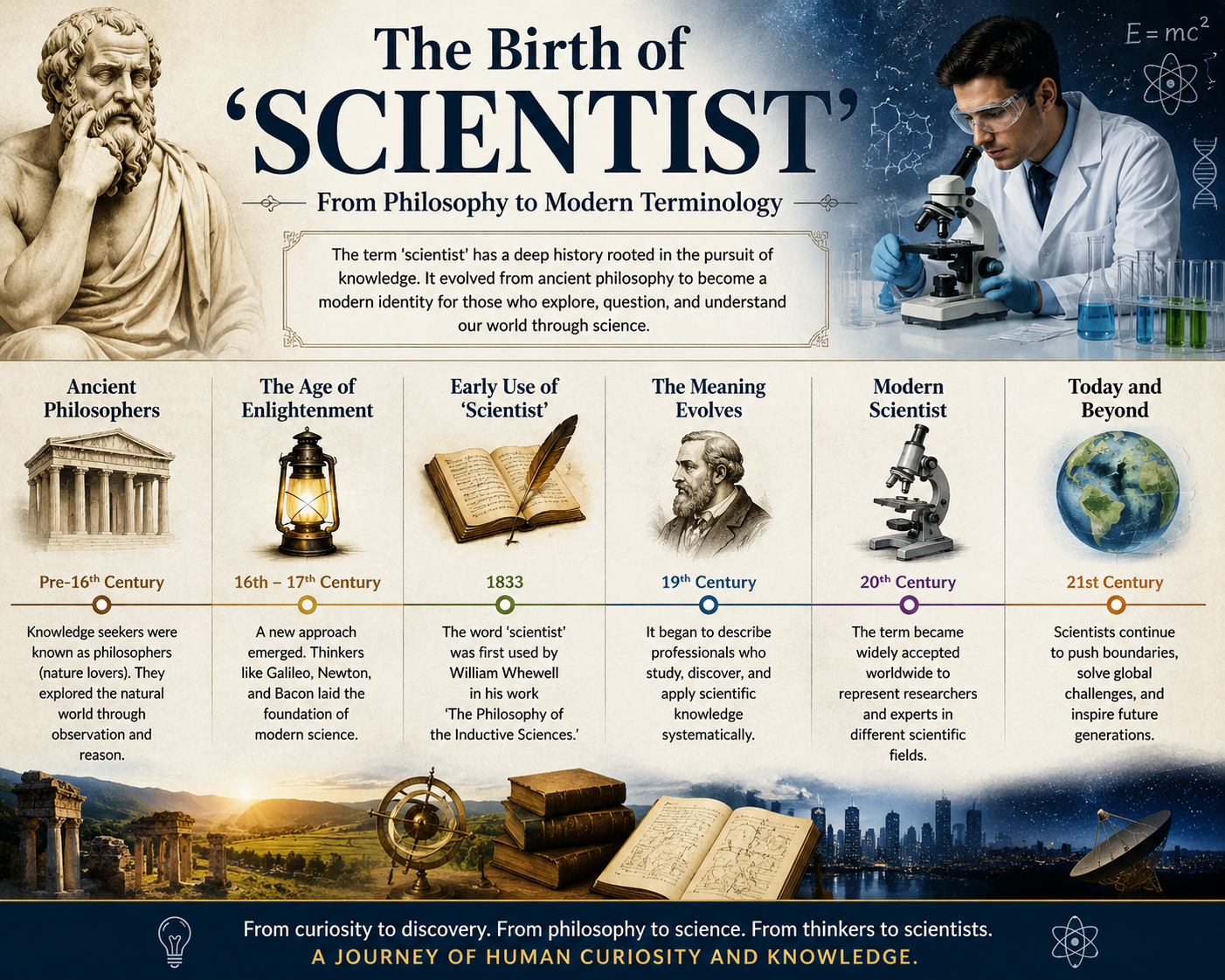
    The word “scientist” may sound like a modern term, but the journey behind it is connected to centuries of human curiosity, philosophy, observation, experimentation, and the search for knowledge.

    Long before the word “scientist” became common, people who studied the natural world were often known as philosophers, scholars, natural philosophers, mathematicians, and thinkers. They asked important questions about nature, the universe, life, matter, motion, and the world around them.

    From the thinkers of the ancient world to the scholars of the Renaissance and the Scientific Revolution, humans continued developing new ways to understand nature. Observation became more important, experiments became more systematic, and evidence gradually became a central part of scientific inquiry.

    During the 18th and 19th centuries, many different branches of knowledge began becoming more specialized. Physics, chemistry, biology, astronomy, geology, and other fields developed their own methods, discoveries, and communities of researchers.

    A major moment in terminology came in the 19th century, when the word “scientist” was introduced as a useful name for people engaged in scientific study. The term is widely associated with William Whewell, who used it in 1833. This helped provide a new, unified word for researchers working across different areas of science.

    The evolution of this word reflects something bigger than language. It represents the changing way humanity organized knowledge and recognized scientific work. The transition from “natural philosopher” to “scientist” shows how science gradually became a distinct and organized field of study.

    Today, scientists work in laboratories, universities, hospitals, observatories, research centers, engineering facilities, and many other places around the world. They investigate everything from tiny cells and molecules to distant galaxies and the origins of the universe.

    Modern science continues to grow through curiosity, evidence, teamwork, technology, and a willingness to ask difficult questions. Every discovery begins with someone wondering, “Why?”, “How?”, or “What if?”

    The story of the word “scientist” reminds us that human knowledge is always evolving. What began with simple curiosity and philosophical questioning gradually developed into the powerful and diverse scientific world we know today.

    From thinkers to researchers. From philosophy to science. From questions to discoveries.

    Science is not only about finding answers—it is also about continuing to ask better questions.

    A journey from curiosity to discovery, and from philosophy to modern science.

    #TheBirthOfScientist #Scientist #HistoryOfScience #ScienceHistory #ScientificRevolution #Philosophy #NaturalPhilosophy #WilliamWhewell #1833 #ModernScience #ScienceEducation #ScientificTerminology #Science #Scientists #Research #Discovery #Curiosity #Knowledge #Learning #Education #STEM #Physics #Chemistry #Biology #Astronomy #Geology #Innovation #Experimentation #ScientificThinking #CriticalThinking #HumanKnowledge #HistoryOfKnowledge #ScienceJourney #FromPhilosophyToScience #ScienceFacts #EducationalContent #LearningJourney #ExploreScience #DiscoverScience

    Rehan School Islamabad Campus
    Asma Shaheen EducationWali
    Irum Asim
    Saima Happinesswali

    #rsisb Roll No.240 Story Post No.24 Foundation Level The word “scientist” may sound like a modern term, but the journey behind it is connected to centuries of human curiosity, philosophy, observation, experimentation, and the search for knowledge. ๐Ÿง ๐Ÿ”Ž Long before the word “scientist” became common, people who studied the natural world were often known as philosophers, scholars, natural philosophers, mathematicians, and thinkers. ๐Ÿ›๏ธ๐Ÿ“œ They asked important questions about nature, the universe, life, matter, motion, and the world around them. From the thinkers of the ancient world to the scholars of the Renaissance and the Scientific Revolution, humans continued developing new ways to understand nature. ๐ŸŒŒ๐ŸŒ๐Ÿ“– Observation became more important, experiments became more systematic, and evidence gradually became a central part of scientific inquiry. ๐Ÿ”ฌ๐Ÿงชโœจ During the 18th and 19th centuries, many different branches of knowledge began becoming more specialized. Physics, chemistry, biology, astronomy, geology, and other fields developed their own methods, discoveries, and communities of researchers. ๐Ÿงฌโš—๏ธ๐ŸŒ  A major moment in terminology came in the 19th century, when the word “scientist” was introduced as a useful name for people engaged in scientific study. The term is widely associated with William Whewell, who used it in 1833. ๐Ÿ“œ๐Ÿ”ฌ This helped provide a new, unified word for researchers working across different areas of science. The evolution of this word reflects something bigger than language. It represents the changing way humanity organized knowledge and recognized scientific work. ๐ŸŒŸ๐Ÿ“š The transition from “natural philosopher” to “scientist” shows how science gradually became a distinct and organized field of study. Today, scientists work in laboratories, universities, hospitals, observatories, research centers, engineering facilities, and many other places around the world. ๐ŸŒ๐Ÿงช๐Ÿ”ญ They investigate everything from tiny cells and molecules to distant galaxies and the origins of the universe. ๐Ÿงฌ๐Ÿฆ ๐ŸŒŒ Modern science continues to grow through curiosity, evidence, teamwork, technology, and a willingness to ask difficult questions. ๐Ÿ’ก๐Ÿค๐Ÿš€ Every discovery begins with someone wondering, “Why?”, “How?”, or “What if?” The story of the word “scientist” reminds us that human knowledge is always evolving. What began with simple curiosity and philosophical questioning gradually developed into the powerful and diverse scientific world we know today. ๐ŸŒฑโžก๏ธ๐Ÿ”ฌโžก๏ธ๐ŸŒ โœจ From thinkers to researchers. From philosophy to science. From questions to discoveries. โœจ Science is not only about finding answers—it is also about continuing to ask better questions. ๐Ÿ”Ž๐Ÿ’ก ๐ŸŒŸ A journey from curiosity to discovery, and from philosophy to modern science. ๐ŸŒŸ #TheBirthOfScientist #Scientist #HistoryOfScience #ScienceHistory #ScientificRevolution #Philosophy #NaturalPhilosophy #WilliamWhewell #1833 #ModernScience #ScienceEducation #ScientificTerminology #Science #Scientists #Research #Discovery #Curiosity #Knowledge #Learning #Education #STEM #Physics #Chemistry #Biology #Astronomy #Geology #Innovation #Experimentation #ScientificThinking #CriticalThinking #HumanKnowledge #HistoryOfKnowledge #ScienceJourney #FromPhilosophyToScience #ScienceFacts #EducationalContent #LearningJourney #ExploreScience #DiscoverScience ๐Ÿ”ฌ๐Ÿ“š๐Ÿง ๐ŸŒโœจ๐Ÿ”ญ๐Ÿงช๐Ÿš€๐Ÿ’ก๐ŸŒŸ Rehan School Islamabad Campus Asma Shaheen EducationWali Irum Asim Saima Happinesswali
    0 Reacties 0 aandelen 3071 Views
  • #rsisb
    Roll No.269
    Foundation Level
    Story Post No.24


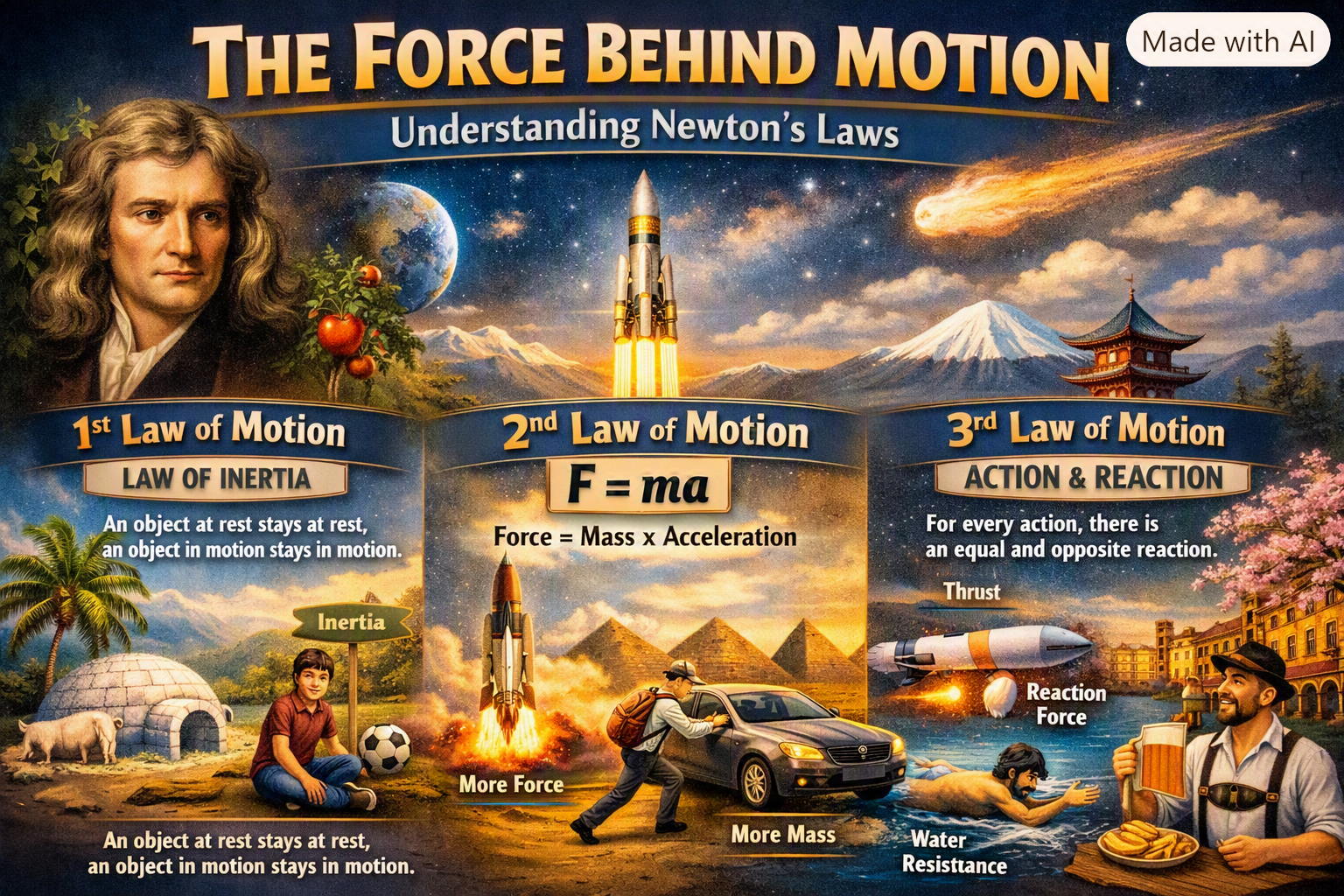
    **The Force Behind Motion: Understanding Newton’s Laws**

    Have you ever wondered why objects move, stop, or change direction? The answer lies in one of the most important ideas in physics: **force and motion**.

    In this video, we explore **Newton’s Three Laws of Motion** and understand how they explain the movement of objects in our everyday lives. From a ball rolling on the ground to a car accelerating and a rocket launching into space , Newton’s laws help us understand the forces behind motion.

    We will learn how objects behave when forces act on them, how force and acceleration are connected, and why every action has an equal and opposite reaction. These simple but powerful laws are the foundation of many concepts in physics and engineering.

    This topic shows us that physics is not just about formulas—it is all around us! From sports and transportation to machines and space exploration, Newton’s laws help explain the world we see every day.

    Join us as we explore the fascinating **force behind motion** and discover how Newton’s laws shape our understanding of the physical world.

    #NewtonLaws #Newton #Physics #ForceAndMotion #Motion #Science #PhysicsFacts #NewtonLawsOfMotion #Force #Acceleration #Gravity #Mechanics #ScienceEducation #Learning #Education #ScientificDiscovery #PhysicsExperiment #SpaceScience #Engineering #Knowledge #Curiosity #StudentLife #ScienceFacts #RehanSchool #LearnAndGrow
    #rsisb Roll No.269 Foundation Level Story Post No.24 โšก **The Force Behind Motion: Understanding Newton’s Laws** ๐Ÿš€๐Ÿ”ฌ Have you ever wondered why objects move, stop, or change direction? ๐Ÿค” The answer lies in one of the most important ideas in physics: **force and motion**. In this video, we explore **Newton’s Three Laws of Motion** and understand how they explain the movement of objects in our everyday lives. From a ball rolling on the ground โšฝ to a car accelerating ๐Ÿš— and a rocket launching into space ๐Ÿš€, Newton’s laws help us understand the forces behind motion. We will learn how objects behave when forces act on them, how force and acceleration are connected, and why every action has an equal and opposite reaction. โš–๏ธ๐Ÿ’ก These simple but powerful laws are the foundation of many concepts in physics and engineering. This topic shows us that physics is not just about formulas—it is all around us! ๐ŸŒ From sports and transportation to machines and space exploration, Newton’s laws help explain the world we see every day. Join us as we explore the fascinating **force behind motion** and discover how Newton’s laws shape our understanding of the physical world. ๐Ÿ”ฌ๐Ÿ“šโœจ #NewtonLaws โšก #Newton #Physics ๐Ÿ”ฌ #ForceAndMotion ๐Ÿš€ #Motion #Science ๐Ÿ“š #PhysicsFacts ๐Ÿ’ก #NewtonLawsOfMotion #Force ๐Ÿ’ช #Acceleration ๐ŸŽ๏ธ #Gravity ๐ŸŒ #Mechanics ๐Ÿ”ง #ScienceEducation ๐ŸŽ“ #Learning ๐Ÿ“– #Education ๐Ÿง  #ScientificDiscovery ๐Ÿ” #PhysicsExperiment ๐Ÿงช #SpaceScience ๐Ÿš€ #Engineering โš™๏ธ #Knowledge ๐Ÿ’ก #Curiosity ๐Ÿค” #StudentLife ๐ŸŽ“ #ScienceFacts ๐ŸŒŽ #RehanSchool ๐Ÿซ #LearnAndGrow ๐ŸŒฑ
    0 Reacties 0 aandelen 1694 Views
  • #rsisb
    Roll No.269
    Foundation Level
    Story Post No.23


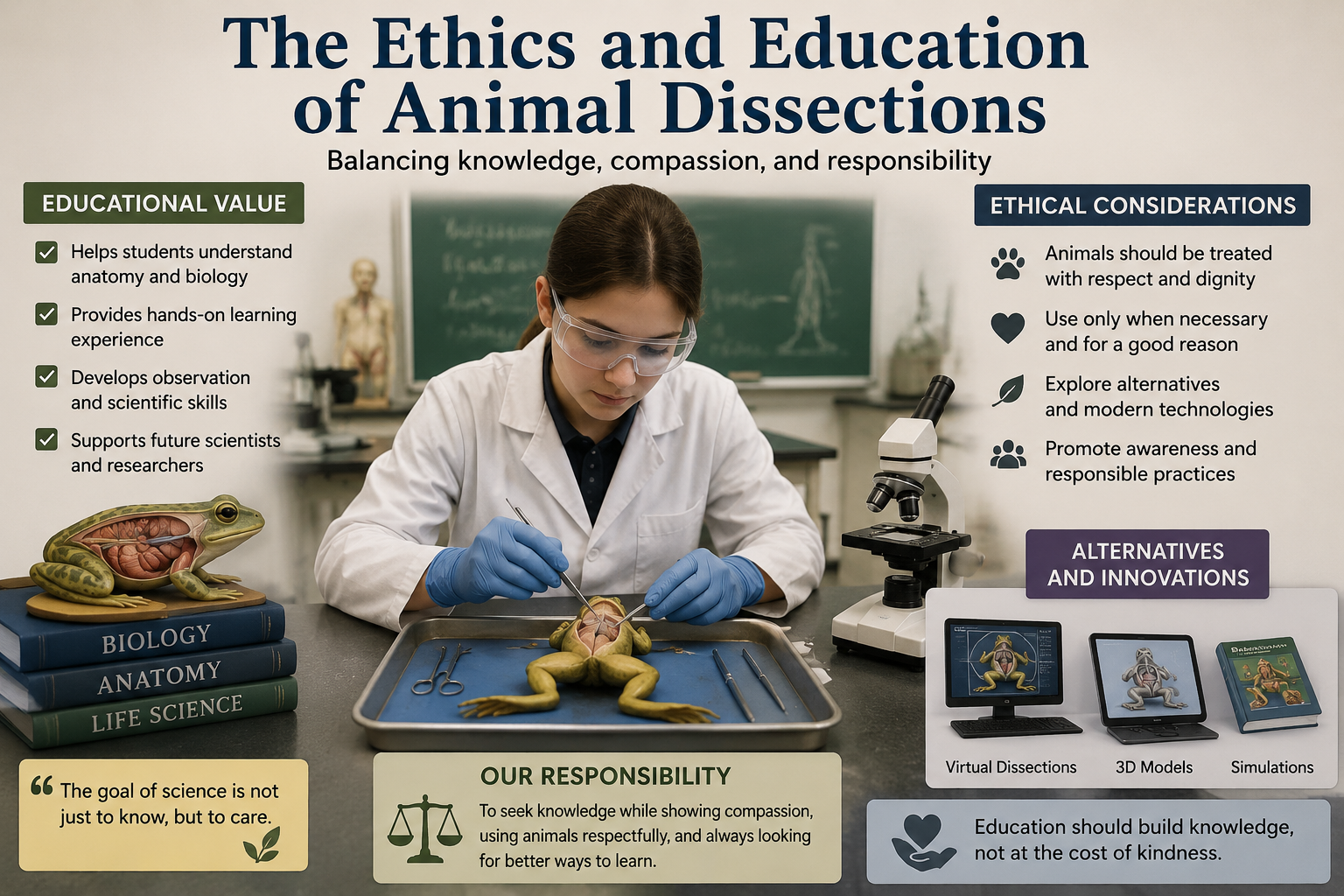
    **The Ethics and Education of Animal Dissections**

    Animal dissection has been used in science and education for many years to help students understand anatomy, biology, and how living organisms work. But it also raises important questions about **ethics, responsibility, and respect for animals**.

    In this video, we explore the educational value of animal dissections and how they can help students learn about body structures and biological systems. At the same time, we consider the ethical questions surrounding the use of animals in education and why responsible scientific practices are important.

    The topic encourages us to think about how science and education can move forward while showing **care, respect, and responsibility toward living creatures**.

    We also look at the importance of modern learning methods and how technology can provide additional ways to study anatomy and biology.

    Join us as we explore the connection between **science, education, ethics, and respect for animal life**. Keep learning, keep asking questions, and think critically about the choices we make in science.

    #AnimalDissection #Biology #Science #Education #Ethics #AnimalEthics #ScienceEducation #BiologyEducation #Anatomy #AnimalWelfare #ScientificEthics #Learning #Knowledge #ScienceFacts #Research #CriticalThinking #Technology #ModernEducation #Students #ScienceLearning #Nature #RespectAnimals #EducationalScience #RehanSchool #LearnAndGrow
    #rsisb Roll No.269 Foundation Level Story Post No.23 ๐Ÿงฌ **The Ethics and Education of Animal Dissections** ๐Ÿ”ฌ๐Ÿพ Animal dissection has been used in science and education for many years to help students understand anatomy, biology, and how living organisms work. But it also raises important questions about **ethics, responsibility, and respect for animals**. ๐Ÿค”๐Ÿ“š In this video, we explore the educational value of animal dissections and how they can help students learn about body structures and biological systems. ๐Ÿ”ฌ๐Ÿง  At the same time, we consider the ethical questions surrounding the use of animals in education and why responsible scientific practices are important. The topic encourages us to think about how science and education can move forward while showing **care, respect, and responsibility toward living creatures**. ๐Ÿพโค๏ธ๐ŸŒฑ We also look at the importance of modern learning methods and how technology can provide additional ways to study anatomy and biology. ๐Ÿ’ป๐Ÿ”ฌโœจ Join us as we explore the connection between **science, education, ethics, and respect for animal life**. Keep learning, keep asking questions, and think critically about the choices we make in science. ๐ŸŒ๐Ÿ“–๐Ÿ’ก #AnimalDissection ๐Ÿพ #Biology ๐Ÿงฌ #Science ๐Ÿ”ฌ #Education ๐Ÿ“š #Ethics โš–๏ธ #AnimalEthics ๐Ÿพ #ScienceEducation ๐ŸŽ“ #BiologyEducation ๐Ÿง  #Anatomy ๐Ÿ”ฌ #AnimalWelfare โค๏ธ #ScientificEthics ๐Ÿ’ก #Learning ๐Ÿ“– #Knowledge ๐Ÿง  #ScienceFacts ๐Ÿ” #Research ๐Ÿ”ฌ #CriticalThinking ๐Ÿค” #Technology ๐Ÿ’ป #ModernEducation ๐ŸŒฑ #Students ๐ŸŽ“ #ScienceLearning ๐Ÿ“š #Nature ๐ŸŒฟ #RespectAnimals ๐Ÿพ #EducationalScience ๐Ÿ”ฌ #RehanSchool ๐Ÿซ #LearnAndGrow โœจ
    0 Reacties 0 aandelen 2043 Views
  • #rsisb
    RollNo.269
    Foundation Level
    Story Post No.21


    **Sound Waves: The Physics of Hearing and Communication**

    Sound is an important part of our everyday life. We use sound to communicate, listen to music, learn, and understand the world around us. But have you ever wondered how sound actually travels and how our ears allow us to hear it?

    In this video, we explore the fascinating science behind **sound waves**, how they are produced, how they travel through different materials, and how our ears detect them. We will also learn how vibrations create sound and how these waves carry information from one place to another.

    Sound waves play a major role in **communication**, from simple conversations to telephones, microphones, speakers, and other technologies. Understanding the physics of sound helps us see how science connects with our daily lives.

    This topic shows that something as simple as hearing a voice or listening to a sound is actually the result of fascinating physical processes.

    Join us as we explore the amazing world of sound, waves, hearing, and communication! Keep learning, keep exploring, and stay curious!

    #SoundWaves #Physics #Sound #Hearing #Communication #Science #PhysicsFacts #WavePhysics #ScienceEducation #Learning #Education #ScienceFacts #Technology #Acoustics #Vibrations #Waves #Curiosity #Knowledge #ScientificDiscovery #StudentLife #RehanSchool #ScienceProject #LearnAndGrow #ExploreScience
    #rsisb RollNo.269 Foundation Level Story Post No.21 ๐Ÿ”Š **Sound Waves: The Physics of Hearing and Communication** ๐ŸŽง๐ŸŒŠ Sound is an important part of our everyday life. We use sound to communicate, listen to music, learn, and understand the world around us. But have you ever wondered how sound actually travels and how our ears allow us to hear it? ๐Ÿค”๐Ÿ”ฌ In this video, we explore the fascinating science behind **sound waves**, how they are produced, how they travel through different materials, and how our ears detect them. ๐Ÿง ๐Ÿ‘‚โœจ We will also learn how vibrations create sound and how these waves carry information from one place to another. Sound waves play a major role in **communication**, from simple conversations to telephones, microphones, speakers, and other technologies. ๐Ÿ“ž๐ŸŽค๐Ÿ”Š Understanding the physics of sound helps us see how science connects with our daily lives. This topic shows that something as simple as hearing a voice or listening to a sound is actually the result of fascinating physical processes. ๐ŸŒ๐Ÿ’ก Join us as we explore the amazing world of sound, waves, hearing, and communication! Keep learning, keep exploring, and stay curious! ๐Ÿš€๐Ÿ“š๐Ÿ”ฌ #SoundWaves ๐Ÿ”Š #Physics โš›๏ธ #Sound ๐ŸŽง #Hearing ๐Ÿ‘‚ #Communication ๐Ÿ“ž #Science ๐Ÿ”ฌ #PhysicsFacts ๐Ÿ’ก #WavePhysics ๐ŸŒŠ #ScienceEducation ๐Ÿ“š #Learning ๐ŸŽ“ #Education ๐Ÿ“– #ScienceFacts ๐Ÿง  #Technology ๐Ÿ’ป #Acoustics ๐ŸŽถ #Vibrations ๐Ÿ”Š #Waves ๐ŸŒŠ #Curiosity ๐Ÿค” #Knowledge ๐Ÿ’ก #ScientificDiscovery ๐Ÿ” #StudentLife ๐ŸŽ“ #RehanSchool ๐Ÿซ #ScienceProject ๐Ÿ”ฌ #LearnAndGrow ๐ŸŒฑ #ExploreScience ๐ŸŒ
    0 Reacties 0 aandelen 1180 Views
  • RSISB
    Roll No: 209
    IMG with ChatGPT No.20

    Did You Know? The Amazon Rainforest is one of the most incredible ecosystems on Earth! Often called the “lungs of the planet,” it plays an important role in our global climate and supports an amazing variety of wildlife.

    Let’s learn more about our planet, protect our forests, and inspire others to care for nature!

    #AmazonRainforest #DidYouKnow #Earth #Nature #Rainforest #Environment #SaveTheAmazon #ClimateAwareness #Wildlife #ProtectOurPlanet #EcoAwareness #ScienceFacts
    RSISB Roll No: 209 IMG with ChatGPT No.20 ๐ŸŒณ๐ŸŒŽ Did You Know? ๐ŸŒฟโœจ The Amazon Rainforest is one of the most incredible ecosystems on Earth! ๐ŸŒง๏ธ๐Ÿฆœ๐Ÿ’ Often called the “lungs of the planet,” it plays an important role in our global climate and supports an amazing variety of wildlife. ๐Ÿ’š๐ŸŒ Let’s learn more about our planet, protect our forests, and inspire others to care for nature! ๐ŸŒฑ๐Ÿ’ช๐ŸŒŽ #AmazonRainforest ๐ŸŒณ #DidYouKnow ๐Ÿค” #Earth ๐ŸŒ #Nature ๐ŸŒฟ #Rainforest ๐ŸŒง๏ธ #Environment ๐Ÿ’š #SaveTheAmazon ๐ŸŒŽ #ClimateAwareness ๐ŸŒฑ #Wildlife ๐Ÿฆœ #ProtectOurPlanet ๐Ÿ’š #EcoAwareness โ™ป๏ธ #ScienceFacts ๐Ÿ”ฌ
    0 Reacties 0 aandelen 1244 Views
Zoekresultaten