• #rsisb
    Roll No.190
    Tadx Talk No.27
    Foundation Level
    My philosophy for a happy life" – Sam Berns
    Choose Happiness
    Show a person smiling through everyday challenges and focusing on the beautiful moments in life.
    Find What You Love
    Show someone enjoying their passion—music , art , sports , reading , or learning .
    Keep Moving Forward
    Show a journey with obstacles, but the person continues moving ahead with courage and hope.
    Accept Yourself
    Show a person looking in the mirror and realizing that being unique is a strength, not a weakness.
    Surround Yourself with Good People
    Show friends and family supporting one another and sharing happiness.
    Turn Challenges into Strength
    Show difficulties transforming into stepping stones toward success.
    Small Moments, Big Happiness
    Show simple joyful moments: laughter, nature, friendship, music, and kindness.
    Best Picture Idea
    A bright inspirational poster showing a smiling young person surrounded by symbols of happiness: sunshine, growth, friendship, music, learning, and dreams.
    Main Quote:
    “My Philosophy for a Happy Life”
    — Sam Berns
    AI Picture Prompt
    “Create an inspirational cinematic motivational poster inspired by Sam Berns’ philosophy for a happy life, showing a joyful young person surrounded by symbols of positivity, friendship, family, learning, music, nature, courage, and hope, warm golden sunlight, colorful uplifting atmosphere, glowing hearts and stars, beautiful inspirational typography, emotional and hopeful mood, highly detailed, realistic, cinematic lighting, motivational poster
    #rsisb Roll No.190 Tadx Talk No.27 Foundation Level My philosophy for a happy life" – Sam Berns Choose Happiness 😊🌈 Show a person smiling through everyday challenges and focusing on the beautiful moments in life. ✨ Find What You Love ❤️🎨 Show someone enjoying their passion—music 🎵, art 🎨, sports ⚽, reading 📚, or learning 💡. Keep Moving Forward 🚶‍♂️🚀 Show a journey with obstacles, but the person continues moving ahead with courage and hope. 💪🌟 Accept Yourself 💛🪞 Show a person looking in the mirror and realizing that being unique is a strength, not a weakness. 🌟✨ Surround Yourself with Good People 🤝❤️ Show friends and family supporting one another and sharing happiness. 👨‍👩‍👧‍👦😊 Turn Challenges into Strength 🔥💪 Show difficulties transforming into stepping stones toward success. 🪨➡️🏆 Small Moments, Big Happiness ☀️🌸 Show simple joyful moments: laughter, nature, friendship, music, and kindness. 🌳🎶😊 🖼️ Best Picture Idea A bright inspirational poster showing a smiling young person surrounded by symbols of happiness: 🌞 sunshine, 🌱 growth, ❤️ friendship, 🎵 music, 📚 learning, and 🚀 dreams. Main Quote: “My Philosophy for a Happy Life” 🌟😊 — Sam Berns 🎨 AI Picture Prompt “Create an inspirational cinematic motivational poster inspired by Sam Berns’ philosophy for a happy life, showing a joyful young person surrounded by symbols of positivity, friendship, family, learning, music, nature, courage, and hope, warm golden sunlight, colorful uplifting atmosphere, glowing hearts and stars, beautiful inspirational typography, emotional and hopeful mood, highly detailed, realistic, cinematic lighting, motivational poster
    0 Comentários 0 Compartilhamentos 1907 Visualizações 20
  • #rsisb
    RollNo.247
    Canva post
    Foundion Level
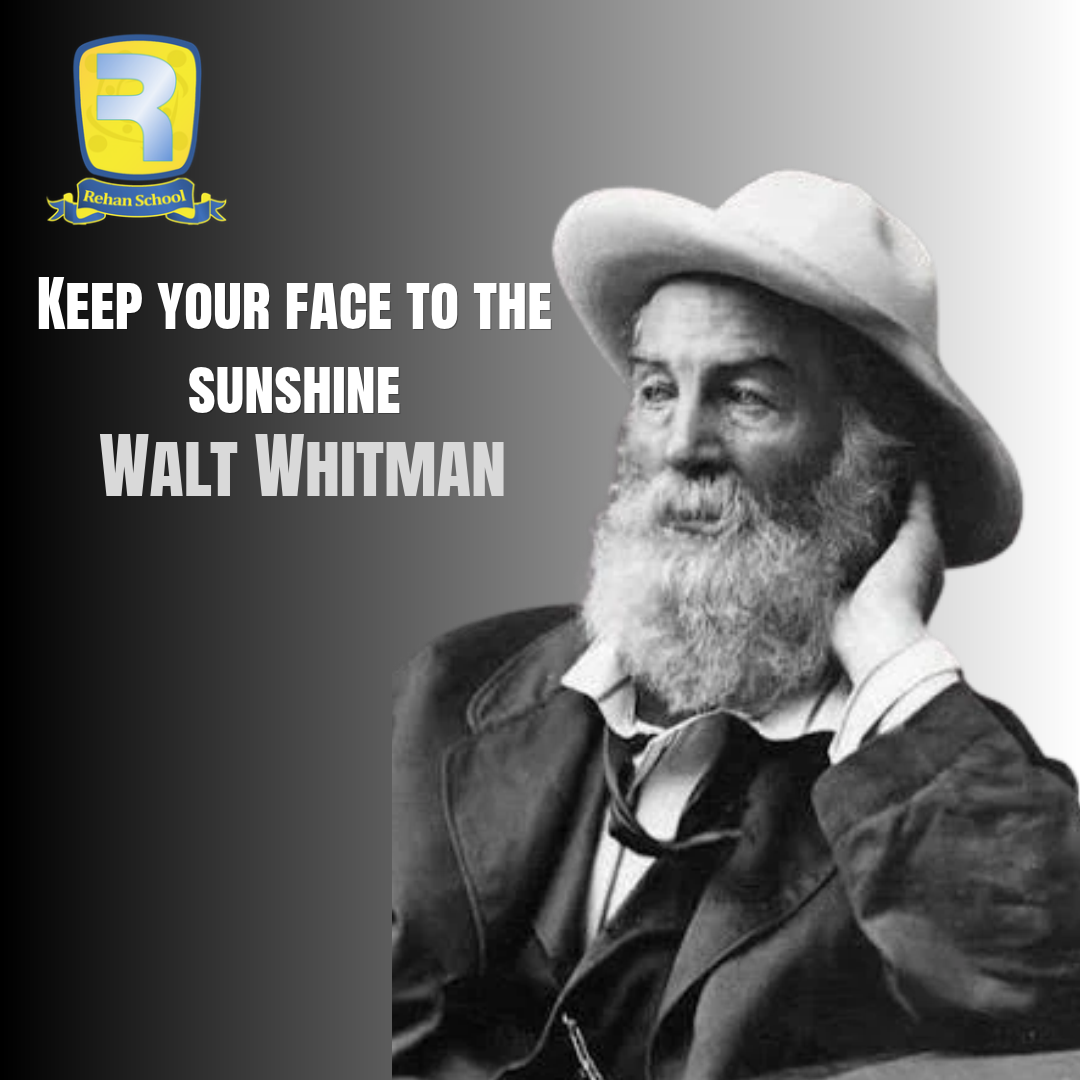
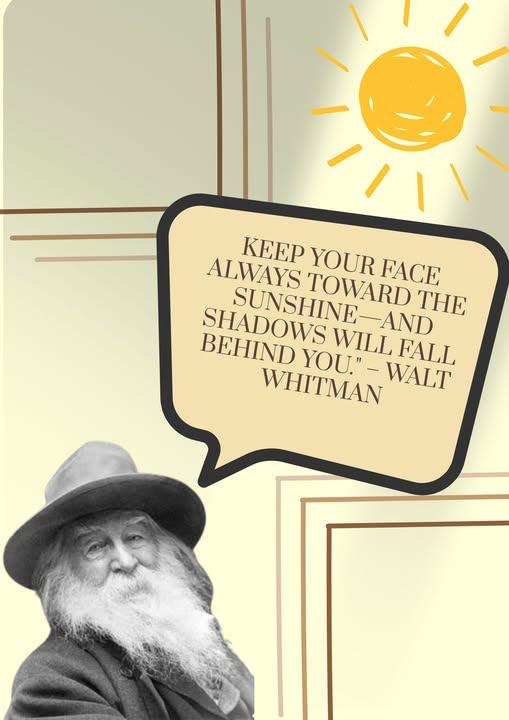
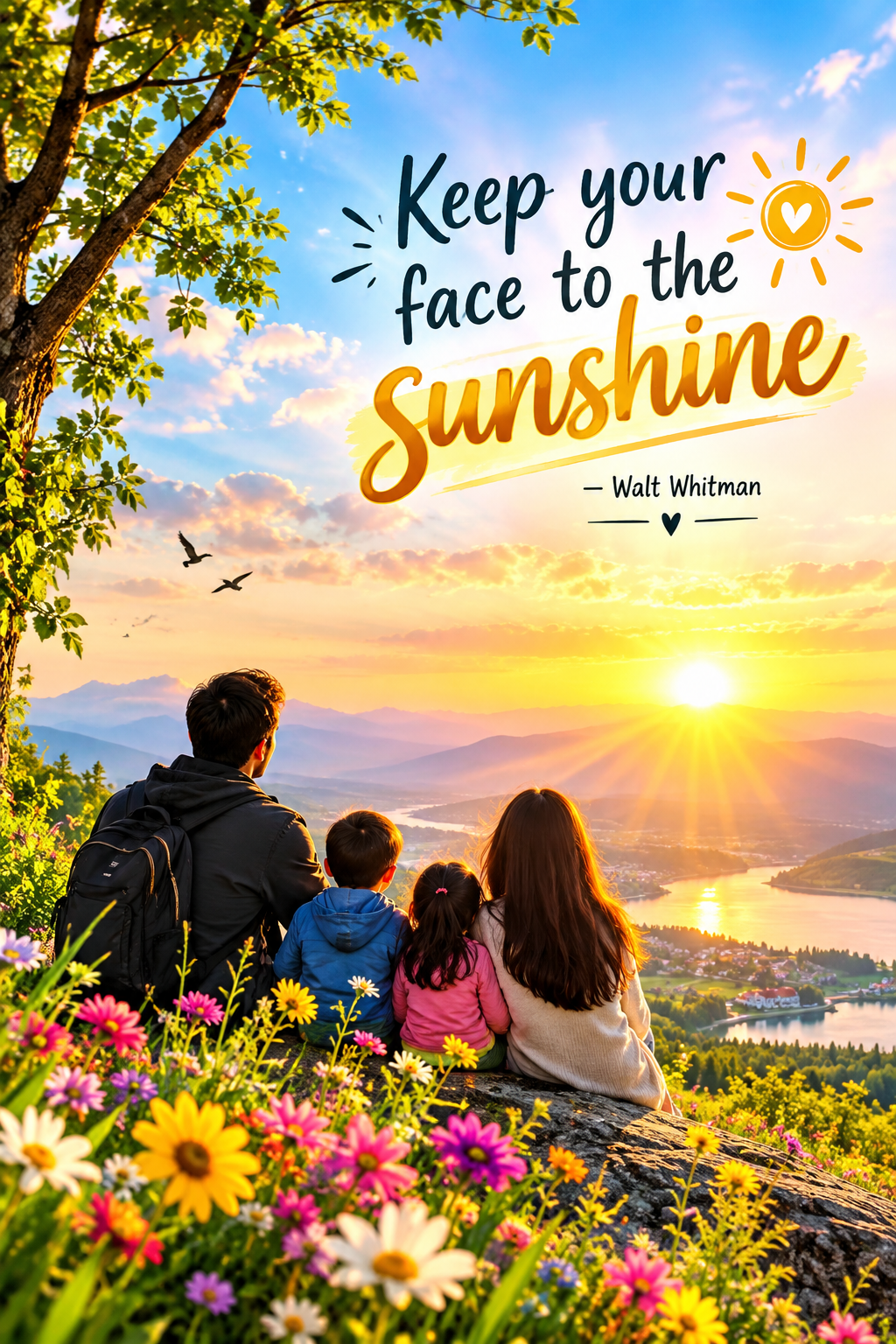
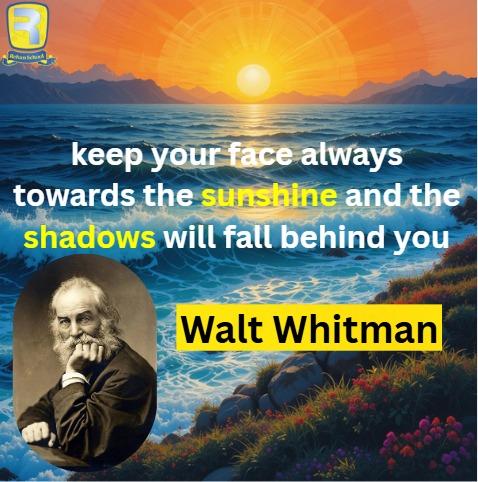
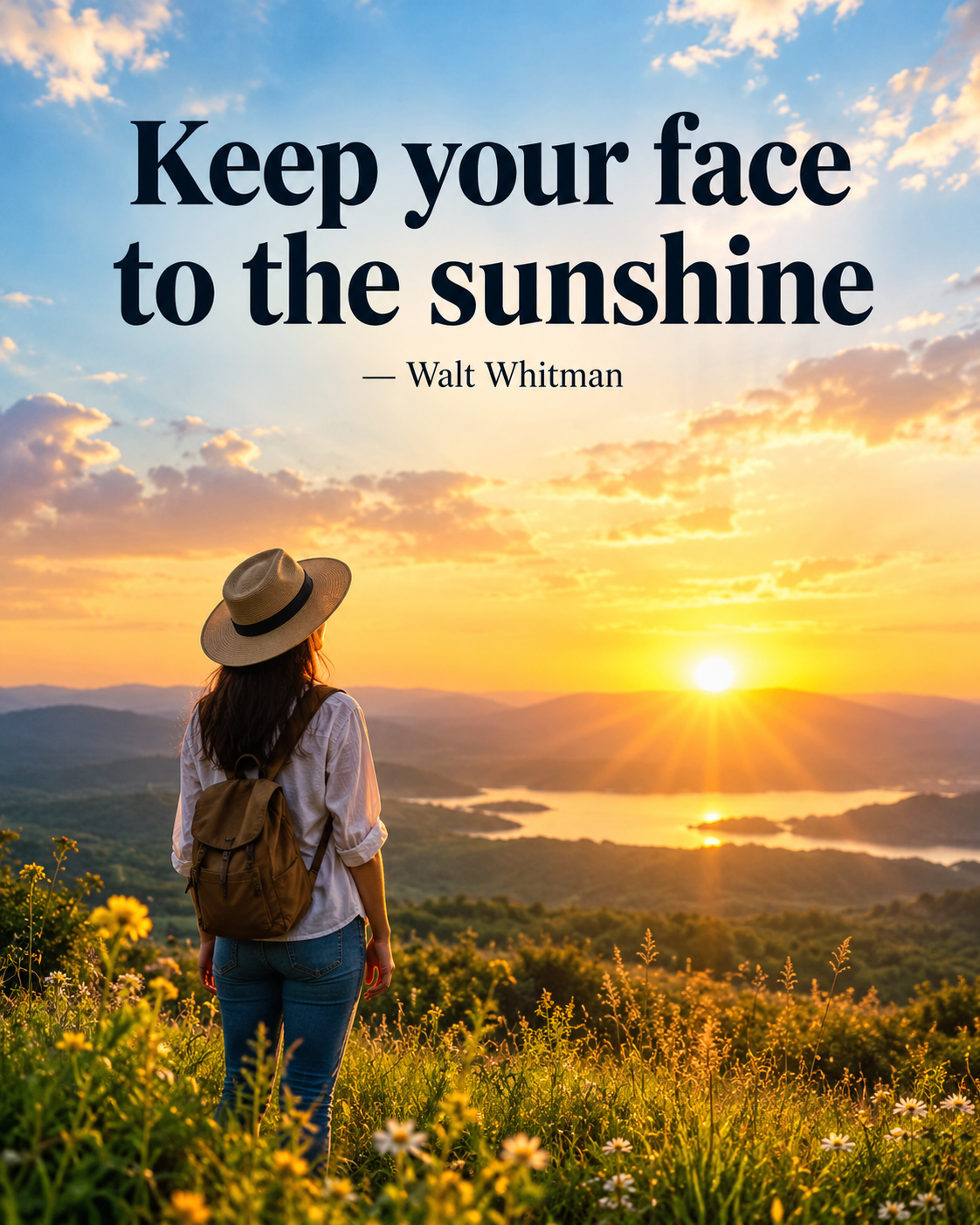
    **"Keep your face always toward the sunshine—and shadows will fall behind you."** — **Walt Whitman**

    This timeless quote reminds us that our perspective shapes our journey. Life will always have challenges, disappointments, and moments of uncertainty, but where we choose to focus our attention makes all the difference. When we keep our minds and hearts turned toward hope, gratitude, and possibility, negativity loses its power over us.

    "Sunshine" symbolizes optimism, courage, faith, and the opportunities that await us. "Shadows" represent fear, doubt, regret, and obstacles. By focusing on growth instead of setbacks, we naturally leave our worries behind and move closer to our goals.

    Every sunrise is a fresh reminder that yesterday's mistakes do not define tomorrow's success. Keep believing in yourself, embrace each new day with confidence, and let your positive attitude light the path ahead. Even on cloudy days, remember that the sun is still shining above the clouds.

    **Choose hope over fear.**
    **Choose gratitude over complaints.**
    **Choose progress over perfection.**
    **Keep moving forward, and let your light inspire others.**

    #WaltWhitman #Motivation #PositiveMindset #Inspiration #Sunshine #StayPositive #KeepGoing #SelfGrowth #SuccessMindset #BelieveInYourself #PersonalDevelopment #DailyMotivation #MindsetMatters #Hope #Happiness #PositiveVibes #LifeQuotes #Wisdom #NeverGiveUp #DreamBig

    #rsisb RollNo.247 Canva post Foundion Level 🌞 **"Keep your face always toward the sunshine—and shadows will fall behind you."** — **Walt Whitman** This timeless quote reminds us that our perspective shapes our journey. Life will always have challenges, disappointments, and moments of uncertainty, but where we choose to focus our attention makes all the difference. When we keep our minds and hearts turned toward hope, gratitude, and possibility, negativity loses its power over us. "Sunshine" symbolizes optimism, courage, faith, and the opportunities that await us. "Shadows" represent fear, doubt, regret, and obstacles. By focusing on growth instead of setbacks, we naturally leave our worries behind and move closer to our goals. Every sunrise is a fresh reminder that yesterday's mistakes do not define tomorrow's success. Keep believing in yourself, embrace each new day with confidence, and let your positive attitude light the path ahead. Even on cloudy days, remember that the sun is still shining above the clouds. ✨ **Choose hope over fear.** 🌻 **Choose gratitude over complaints.** 💛 **Choose progress over perfection.** 🌞 **Keep moving forward, and let your light inspire others.** #WaltWhitman #Motivation #PositiveMindset #Inspiration #Sunshine #StayPositive #KeepGoing #SelfGrowth #SuccessMindset #BelieveInYourself #PersonalDevelopment #DailyMotivation #MindsetMatters #Hope #Happiness #PositiveVibes #LifeQuotes #Wisdom #NeverGiveUp #DreamBig 🌞🌻✨💛🚀
    0 Comentários 0 Compartilhamentos 3265 Visualizações
  • I need you like the desert needs rain., Like the breathless need air, like the flowers need sunshine., I need you from the first chapter of my love story to the last.,

    Patricia Petrovská
    I need you like the desert needs rain., Like the breathless need air, like the flowers need sunshine., I need you from the first chapter of my love story to the last., Patricia Petrovská
    0 Comentários 0 Compartilhamentos 292 Visualizações
  • Every seed need water, good fertilizer and sunshine to grow, but they have to work on their own to become the tree.

    Rehan Allahwala
    Every seed need water, good fertilizer and sunshine to grow, but they have to work on their own to become the tree. Rehan Allahwala
    0 Comentários 0 Compartilhamentos 117 Visualizações
  • rents accl course
    Canva post
    day 19

    "Keep your face to the sunshine, and the shadows will fall behind you."

    Life isn't always easy, but every sunrise reminds us that hope returns with each new day.
    When you choose to focus on the light, challenges become opportunities to grow. Keep believing in yourself, embrace every new beginning, and never let temporary setbacks dim your inner shine.
    Every step forward, no matter how small, brings you closer to your dreams. Stay positive, stay grateful, and let your courage lead the way. The brighter your mindset, the brighter your future.
    Choose hope. Choose happiness. Keep moving toward the light.
    #KeepYourFaceToTheSunshine
    #StayPositive
    #DailyMotivation
    rents accl course Canva post day 19 "Keep your face to the sunshine, and the shadows will fall behind you." Life isn't always easy, but every sunrise reminds us that hope returns with each new day. When you choose to focus on the light, challenges become opportunities to grow. Keep believing in yourself, embrace every new beginning, and never let temporary setbacks dim your inner shine. Every step forward, no matter how small, brings you closer to your dreams. Stay positive, stay grateful, and let your courage lead the way. The brighter your mindset, the brighter your future. Choose hope. Choose happiness. Keep moving toward the light. #KeepYourFaceToTheSunshine #StayPositive #DailyMotivation
    0 Comentários 0 Compartilhamentos 769 Visualizações
  • Portugal VISA process
    Obtaining residency in a foreign country can be one of the most important benefits of buying real estate abroad.

    I write frequently about obtaining residency through property purchase, and the examples of good programs are almost always in Latin America.

    Now its Europes turn... specifically, Portugal, which is offering a Golden Visa program targeting the foreign investor and property buyer.

    For the average buyer with no family connections in Europe, its the best European residency program that I know of right now.

    Heres why the Portuguese Golden Visa program is so valuable today:

    First and foremost, Portugal is a great place to live, so the chance to obtain residency in the country is naturally attractive. The Portuguese claim to have the best beaches in Europe. The country also offers moderate weather year-round and an abundance of sunshine.

    To top it off, the U.S. dollar continues relatively strong against the euro, making the idea of buying property here even more interesting to the U.S. dollar-holder.

    Finally, when you become a resident of Portugal you have access to all 26 European countries in the Schengen area. Signed in 1985, the Schengen Agreement predated the European Union and created a "borderless" zone to allow visa-free travel among the signatory countries.

    When you obtain a visa under Portugals Golden Visa program, you become eligible for permanent residency after five years and for Portuguese citizenship after six. As an additional benefit, the Golden Visa program allows you to include family members.

    When I started researching this essay, I found plenty of misinformation online. The majority of the blog posts out there were mostly right at one time, but few of them were updated to reflect all subsequent changes to Portugals immigration law since the Golden Visa program was introduced in 2007.

    You have about 10 options for obtaining an investors visa in Portugal under the Golden Visa program. These vary from million-euro bank transfers or the creation of 10 jobs to investing in artistic or cultural activities or a new business.

    My beat is real estate, so Id like to focus on ways you can obtain residency in Portugal by buying property in the country. Lets walk through each alternative…

    1: Transfer a million euros to Portugal

    This is not a property purchase, per se. The reason I mention this option is that the million-euro transfer is unrestricted, with no caveats on how you spend it. This option could be good for someone who wants to buy one or more properties, perhaps make some other kind of investment, and maybe save some of the transferred funds for future living expenses.

    2: Spend 500,000 euros on any property

    You can buy a property of any type anywhere in the country costing 500,000 euros (right now, thats about US$575,000) or more.

    3: Spend 400,000 euros on any property in a low-density or depressed area

    If you buy in a low-density population area (i.e., in the countryside) or an economically depressed area, then the minimum unrestricted investment above is 20% less, or 400,000 euros (about US$460,000).

    4: Spend 350,000 euros on an older property or in a "rehabilitation" zone

    This threshold applies in two cases:
    Properties over 30 years old or...
    Properties in areas that the government has targeted for rehabilitation or gentrification. More on this later...
    5: Spend 280,000 euros on an older property or in a "rehabilitation" zone thats in a low-density or
    depressed area

    This 350k-euro threshold above is lower if you buy in a low-density population area or an economically depressed area. In these cases the minimum is 20% less, or 280,000 euros (US$320,000).

    Rehabilitation costs are included towards your minimum with this visa option. So your 350k euros (or 280k euros) can be the sum of the purchase price and the cost of fixing up the property.

    The qualifying property can be jointly owned provided the applicant contributed the minimum investment. Also, the property can be owned by a one-person structure, such as an LLC.

    Following are the general requirements when applying for any type of residency visa in Portugal.

    In addition to your passport and a visa application, you must do the following:
    Prove that youve made your chosen investment
    Be in Portugal legally
    Show that you are covered by health insurance
    Provide an affidavit saying that you promise to comply with the ongoing terms of the visa. These include a requirement to:
    Keep the investment five years
    Stay in Portugal 7 days for the first year, and 14 days for each subsequent 2-year period
    Prove that you have a clean criminal record in Portugal and your country of origin
    Obtain certification from the Portuguese tax authority and social security system that you dont owe them any money
    Before applying for a visa, you must create an online account and pre-register so that you can submit the remaining documents online. If youre managing the process yourself, register here... if youre using a lawyer or personal representative, have them register here.

    When youre ready you can download the visa application here.

    The visa that really holds my interest is the 350k-/280k-euro minimum investment, because theres opportunity there.

    To qualify, you can buy a property thats more than 30 years old, or you can buy in a designated urban rehabilitation area (called an área de reabilitação urbana, or ARU).

    Either way, youre probably adding value to a place that needs some work. (At least thats the idea... not every 30-year-old home will need work.) And if youre adding value through restoration, you stand to make a nice gain.

    But in a rehabilitation area (ARU) youll do even better, because not only are you adding value to your property, but the government is also incentivizing your neighborhoods rehabilitation.

    This multiplies the power of your visa investment.

    What surprised me is that even the popular Algarve coast has designated ARUs, including in places like Faros historic district. Follow this link to have a look at Portugals ARUs.

    If you want to open the door to Europe, this is a great opportunity.

    Granted, the investment threshold in Europe is a lot higher than you can get away with in Latin America. An investment of 280k euros is still a lot of money.

    But if youre bound for Europe—and you want a chance to profit while obtaining residency—then the Golden Visa program may be just right for you.

    Shared as Received
    Portugal 🇵🇹 VISA process Obtaining residency in a foreign country can be one of the most important benefits of buying real estate abroad. I write frequently about obtaining residency through property purchase, and the examples of good programs are almost always in Latin America. Now it's Europe's turn... specifically, Portugal, which is offering a Golden Visa program targeting the foreign investor and property buyer. For the average buyer with no family connections in Europe, it's the best European residency program that I know of right now. Here's why the Portuguese Golden Visa program is so valuable today: First and foremost, Portugal is a great place to live, so the chance to obtain residency in the country is naturally attractive. The Portuguese claim to have the best beaches in Europe. The country also offers moderate weather year-round and an abundance of sunshine. To top it off, the U.S. dollar continues relatively strong against the euro, making the idea of buying property here even more interesting to the U.S. dollar-holder. Finally, when you become a resident of Portugal you have access to all 26 European countries in the Schengen area. Signed in 1985, the Schengen Agreement predated the European Union and created a "borderless" zone to allow visa-free travel among the signatory countries. When you obtain a visa under Portugal's Golden Visa program, you become eligible for permanent residency after five years and for Portuguese citizenship after six. As an additional benefit, the Golden Visa program allows you to include family members. When I started researching this essay, I found plenty of misinformation online. The majority of the blog posts out there were mostly right at one time, but few of them were updated to reflect all subsequent changes to Portugal's immigration law since the Golden Visa program was introduced in 2007. You have about 10 options for obtaining an investor's visa in Portugal under the Golden Visa program. These vary from million-euro bank transfers or the creation of 10 jobs to investing in artistic or cultural activities or a new business. My beat is real estate, so I'd like to focus on ways you can obtain residency in Portugal by buying property in the country. Let's walk through each alternative… 1: Transfer a million euros to Portugal This is not a property purchase, per se. The reason I mention this option is that the million-euro transfer is unrestricted, with no caveats on how you spend it. This option could be good for someone who wants to buy one or more properties, perhaps make some other kind of investment, and maybe save some of the transferred funds for future living expenses. 2: Spend 500,000 euros on any property You can buy a property of any type anywhere in the country costing 500,000 euros (right now, that's about US$575,000) or more. 3: Spend 400,000 euros on any property in a low-density or depressed area If you buy in a low-density population area (i.e., in the countryside) or an economically depressed area, then the minimum unrestricted investment above is 20% less, or 400,000 euros (about US$460,000). 4: Spend 350,000 euros on an older property or in a "rehabilitation" zone This threshold applies in two cases: Properties over 30 years old or... Properties in areas that the government has targeted for rehabilitation or gentrification. More on this later... 5: Spend 280,000 euros on an older property or in a "rehabilitation" zone that's in a low-density or depressed area This 350k-euro threshold above is lower if you buy in a low-density population area or an economically depressed area. In these cases the minimum is 20% less, or 280,000 euros (US$320,000). Rehabilitation costs are included towards your minimum with this visa option. So your 350k euros (or 280k euros) can be the sum of the purchase price and the cost of fixing up the property. The qualifying property can be jointly owned provided the applicant contributed the minimum investment. Also, the property can be owned by a one-person structure, such as an LLC. Following are the general requirements when applying for any type of residency visa in Portugal. In addition to your passport and a visa application, you must do the following: Prove that you've made your chosen investment Be in Portugal legally Show that you are covered by health insurance Provide an affidavit saying that you promise to comply with the ongoing terms of the visa. These include a requirement to: Keep the investment five years Stay in Portugal 7 days for the first year, and 14 days for each subsequent 2-year period Prove that you have a clean criminal record in Portugal and your country of origin Obtain certification from the Portuguese tax authority and social security system that you don't owe them any money Before applying for a visa, you must create an online account and pre-register so that you can submit the remaining documents online. If you're managing the process yourself, register here... if you're using a lawyer or personal representative, have them register here. When you're ready you can download the visa application here. The visa that really holds my interest is the 350k-/280k-euro minimum investment, because there's opportunity there. To qualify, you can buy a property that's more than 30 years old, or you can buy in a designated urban rehabilitation area (called an área de reabilitação urbana, or ARU). Either way, you're probably adding value to a place that needs some work. (At least that's the idea... not every 30-year-old home will need work.) And if you're adding value through restoration, you stand to make a nice gain. But in a rehabilitation area (ARU) you'll do even better, because not only are you adding value to your property, but the government is also incentivizing your neighborhood's rehabilitation. This multiplies the power of your visa investment. What surprised me is that even the popular Algarve coast has designated ARUs, including in places like Faro's historic district. Follow this link to have a look at Portugal's ARUs. If you want to open the door to Europe, this is a great opportunity. Granted, the investment threshold in Europe is a lot higher than you can get away with in Latin America. An investment of 280k euros is still a lot of money. But if you're bound for Europe—and you want a chance to profit while obtaining residency—then the Golden Visa program may be just right for you. Shared as Received
    0 Comentários 0 Compartilhamentos 1014 Visualizações
  • In the land of green and white, where the crescent moon shines bright,
    A nation strong, two hundred twenty million unite,
    Pakistan, a tapestry of cultures, a beacon in the night.

    Vatican Citys faithful could fit many times, so small,
    Thirty thousand times or more, theyd be standing tall,
    Inside Pakistans vast embrace, in a harmonious sprawl.

    Naurus people, ten thousand strong, in the blue Pacific seas,
    Would find a place twenty thousand times, with grace and ease,
    In the hearts of Pakistans population, a warm and gentle breeze.

    Tuvalus eleven thousand souls, in an ocean paradise,
    Would find in Pakistans vast land, a home so nice,
    Almost twenty thousand times, a mosaic of love and spice.

    Palaus children of the ocean, in their coral wonderland,
    Inside Pakistans population, twelve thousand times could stand,
    United, theyd sing together, a chorus pure and grand.

    San Marinos noble citizens, upon their mountaintop,
    Their thirty thousand lives, within Pakistan would never stop,
    Seven thousand times theyd fit, in a joyful cultural swap.

    In the valleys and the mountains, the cities and the plains,
    Pakistans people carry on, through sunshine and through rains,
    Welcoming the worlds smallest nations, their love forever remains.
    In the land of green and white, where the crescent moon shines bright, A nation strong, two hundred twenty million unite, Pakistan, a tapestry of cultures, a beacon in the night. Vatican City's faithful could fit many times, so small, Thirty thousand times or more, they'd be standing tall, Inside Pakistan's vast embrace, in a harmonious sprawl. Nauru's people, ten thousand strong, in the blue Pacific seas, Would find a place twenty thousand times, with grace and ease, In the hearts of Pakistan's population, a warm and gentle breeze. Tuvalu's eleven thousand souls, in an ocean paradise, Would find in Pakistan's vast land, a home so nice, Almost twenty thousand times, a mosaic of love and spice. Palau's children of the ocean, in their coral wonderland, Inside Pakistan's population, twelve thousand times could stand, United, they'd sing together, a chorus pure and grand. San Marino's noble citizens, upon their mountaintop, Their thirty thousand lives, within Pakistan would never stop, Seven thousand times they'd fit, in a joyful cultural swap. In the valleys and the mountains, the cities and the plains, Pakistan's people carry on, through sunshine and through rains, Welcoming the world's smallest nations, their love forever remains.
    0 Comentários 0 Compartilhamentos 191 Visualizações
  • How You Can Now Live in Spain on a Freelancer Visa!

    Have you ever dreamed of living in Europe? Waking up to Spanish sunshine, working from your laptop at a café, and enjoying a good life while doing online work? Well, now it’s possible — and easier than you think! Spain has launched a new type of visa called the Digital Nomad Visa or Freelancer Visa, and you can apply even if you’re from Pakistan!

    Let me explain everything in simple English so you can understand it fully.


    What is a Digital Nomad Visa?

    A Digital Nomad Visa is a special type of visa made for people who work online. If you are a freelancer, remote worker, or you run an online business, you can now live in Spain while doing your work for clients or companies outside Spain.

    Spain created this visa to welcome people who earn from other countries but want to live in beautiful Spain.


    Who Can Apply?

    You can apply if:
    1. You are not from Europe (so Pakistanis are welcome!).
    2. You work online — like a freelancer, remote employee, or business owner.
    3. You have at least 3 months of experience with your current client or company.
    4. Your company is at least 1 year old.
    5. You have a university degree OR 3 years of work experience.
    6. You earn at least €2,760/month (around PKR 840,000/month) from your work.
    7. You have health insurance that works in Spain.
    8. You have no criminal record in the last 5 years.

    If you want to take your wife and kids with you, you can — but you will need to show a little more income.


    What Documents You Need

    To apply for the visa, you will need:
    • Passport
    • Visa application form
    • 2 passport photos
    • Work contract or client agreement
    • Proof of income (like bank statements)
    • Employer letter authorizing remote work
    • Degree certificate or work experience proof
    • Police clearance certificate (criminal record)
    • Health insurance
    • Proof that your company has been operating for at least one year

    Note: Most documents must be translated into Spanish, and some must be attested or apostilled.


    How Much Does It Cost?
    • Visa fee: €80–90 (Around PKR 26,000–30,000)
    • Other charges (translation, legalization, health insurance): Extra
    • Living in Spain: Your monthly cost will depend on the city, but usually €1,000–1,500 is enough for a good life.

    So, if you already make money online — and you’re earning well — this is a great chance to upgrade your life.


    How Long Can You Stay?
    • First visa is for 1 year.
    • After that, you can renew it for up to 5 years.
    • After 5 years, you can apply for permanent residence.
    • After 10 years (if you want), you can apply for Spanish citizenship — but Pakistan does not allow dual nationality with Spain.


    Tax Benefits

    Spain also offers special tax discounts for digital nomads:
    • For the first 4 years, you only pay 15% income tax (instead of 24–47%).
    • That means you get to save more money while enjoying European life.


    How to Apply from Pakistan?
    1. Prepare your documents.
    2. Book an appointment at the Spanish Embassy in Islamabad.
    3. Submit your visa application in person.
    4. Wait 2–4 weeks for a decision.
    5. Once approved, fly to Spain and start your new life!


    Extra Tip: Use ChatGPT or Perplexity!

    This entire guide was written by me with help from ChatGPT — a powerful AI assistant that answers questions, gives advice, and helps with writing, research, and even visa planning!

    If you want to:
    • Ask more questions
    • Get help with documents
    • Create checklists
    • Or just understand the process better…

    Just go to ChatGPT or try Perplexity.ai — both are free or cheap tools that can save you time, money, and confusion.


    Why This is a Big Opportunity for Pakistanis

    This is the first time ever a European country is officially inviting Pakistani freelancers to live legally in Europe just by doing online work.

    You don’t need:
    a job in Spain
    to marry someone
    to invest huge money

    All you need is:
    a laptop
    a few clients
    proof of income
    and a dream


    Final Words

    Spain’s freelancer visa is a life-changing opportunity. If you’re already earning online through freelancing, YouTube, remote jobs, or digital business — apply now!

    Live legally in Europe
    Work from anywhere
    Save taxes
    Bring your family
    Plan your future

    Whether you’re in Karachi, Lahore, or Dubai — Spain is now just one smart decision away.

    And don’t forget: you can ask ChatGPT or Perplexity for help anytime. They’re like 24/7 visa consultants in your pocket!
    How You Can Now Live in Spain on a Freelancer Visa! 🇪🇸 Have you ever dreamed of living in Europe? Waking up to Spanish sunshine, working from your laptop at a café, and enjoying a good life while doing online work? Well, now it’s possible — and easier than you think! Spain has launched a new type of visa called the Digital Nomad Visa or Freelancer Visa, and you can apply even if you’re from Pakistan! Let me explain everything in simple English so you can understand it fully. ⸻ 🌍 What is a Digital Nomad Visa? A Digital Nomad Visa is a special type of visa made for people who work online. If you are a freelancer, remote worker, or you run an online business, you can now live in Spain while doing your work for clients or companies outside Spain. Spain created this visa to welcome people who earn from other countries but want to live in beautiful Spain. ⸻ ✅ Who Can Apply? You can apply if: 1. You are not from Europe (so Pakistanis are welcome!). 2. You work online — like a freelancer, remote employee, or business owner. 3. You have at least 3 months of experience with your current client or company. 4. Your company is at least 1 year old. 5. You have a university degree OR 3 years of work experience. 6. You earn at least €2,760/month (around PKR 840,000/month) from your work. 7. You have health insurance that works in Spain. 8. You have no criminal record in the last 5 years. If you want to take your wife and kids with you, you can — but you will need to show a little more income. ⸻ 📋 What Documents You Need To apply for the visa, you will need: • Passport • Visa application form • 2 passport photos • Work contract or client agreement • Proof of income (like bank statements) • Employer letter authorizing remote work • Degree certificate or work experience proof • Police clearance certificate (criminal record) • Health insurance • Proof that your company has been operating for at least one year Note: Most documents must be translated into Spanish, and some must be attested or apostilled. ⸻ 💰 How Much Does It Cost? • Visa fee: €80–90 (Around PKR 26,000–30,000) • Other charges (translation, legalization, health insurance): Extra • Living in Spain: Your monthly cost will depend on the city, but usually €1,000–1,500 is enough for a good life. So, if you already make money online — and you’re earning well — this is a great chance to upgrade your life. ⸻ 📆 How Long Can You Stay? • First visa is for 1 year. • After that, you can renew it for up to 5 years. • After 5 years, you can apply for permanent residence. • After 10 years (if you want), you can apply for Spanish citizenship — but Pakistan does not allow dual nationality with Spain. ⸻ 💸 Tax Benefits Spain also offers special tax discounts for digital nomads: • For the first 4 years, you only pay 15% income tax (instead of 24–47%). • That means you get to save more money while enjoying European life. ⸻ 🛫 How to Apply from Pakistan? 1. Prepare your documents. 2. Book an appointment at the Spanish Embassy in Islamabad. 3. Submit your visa application in person. 4. Wait 2–4 weeks for a decision. 5. Once approved, fly to Spain and start your new life! ⸻ 🧠 Extra Tip: Use ChatGPT or Perplexity! This entire guide was written by me with help from ChatGPT — a powerful AI assistant that answers questions, gives advice, and helps with writing, research, and even visa planning! If you want to: • Ask more questions • Get help with documents • Create checklists • Or just understand the process better… Just go to ChatGPT or try Perplexity.ai — both are free or cheap tools that can save you time, money, and confusion. ⸻ 💡 Why This is a Big Opportunity for Pakistanis This is the first time ever a European country is officially inviting Pakistani freelancers to live legally in Europe just by doing online work. You don’t need: ❌ a job in Spain ❌ to marry someone ❌ to invest huge money All you need is: ✅ a laptop ✅ a few clients ✅ proof of income ✅ and a dream ⸻ 🏁 Final Words Spain’s freelancer visa is a life-changing opportunity. If you’re already earning online through freelancing, YouTube, remote jobs, or digital business — apply now! ✅ Live legally in Europe ✅ Work from anywhere ✅ Save taxes ✅ Bring your family ✅ Plan your future Whether you’re in Karachi, Lahore, or Dubai — Spain is now just one smart decision away. And don’t forget: you can ask ChatGPT or Perplexity for help anytime. They’re like 24/7 visa consultants in your pocket!
    0 Comentários 0 Compartilhamentos 263 Visualizações
  • The Origin Story of the Orange

    The orange—the sweet, juicy fruit we squeeze, peel, and love—has a story that is thousands of years old and spread across continents.

    1. It all began in ancient China

    About 4,000–4,500 years ago, in the region that is now Southern China, Northeast India, and Myanmar, nature created an accidental miracle.

    Scientists say that the modern sweet orange is actually a hybrid of two older fruits:
    • Pomelo (Citrus maxima)
    • Mandarin (Citrus reticulata)

    One day, these two fruits naturally cross-pollinated—and a new fruit was born.
    It was smaller than a pomelo, sweeter than a mandarin, and easier to peel.

    Humans loved it instantly.


    2. Traders carried it across Asia

    Chinese farmers cultivated oranges as early as 2500 BCE.
    From there, it travelled along:
    • The Silk Road
    • Indian Ocean trade routes
    • Arabian merchant ships

    By the time of the early Islamic Golden Age, oranges were already popular across Persia, Arabia, and India.


    3. Arabs brought oranges to Europe

    Between the 7th and 11th centuries, Arab traders introduced oranges to:
    • Spain
    • North Africa
    • Sicily

    The Arabic word “nāranj” became:
    • naranja in Spanish
    • laranja in Portuguese
    • orange in English (through French)

    This is why “orange” sounds similar across many languages today.


    4. The sweet orange we eat today came later

    The bitter orange arrived in Europe first.
    But around the 15th century, Portuguese explorers brought the sweet Chinese orange back home.

    Europe went crazy for it.

    By the 1600s, kings and queens built special greenhouses called “orangeries”—basically luxury rooms just to grow oranges!


    5. Oranges conquered the world

    From Europe, oranges spread to:
    • Brazil (now the world’s largest producer)
    • Florida and California
    • The Middle East
    • Africa
    • Australia

    Anywhere warm and sunny—orange trees followed.


    6. The modern orange

    Today, there are more than 600 varieties of oranges.

    The fruit became:
    • A symbol of health
    • A source of Vitamin C
    • A crop worth billions of dollars globally
    • One of the world’s most beloved fruits


    Short Summary
    • The orange was born 4,000+ years ago from a natural hybrid of pomelo + mandarin.
    • Origin: China / Northeast India / Myanmar region.
    • Arabs spread it to Europe.
    • Portuguese spread sweet oranges worldwide.
    • Today oranges are grown almost everywhere with sunshine.
    🌿 The Origin Story of the Orange The orange—the sweet, juicy fruit we squeeze, peel, and love—has a story that is thousands of years old and spread across continents. 1. It all began in ancient China About 4,000–4,500 years ago, in the region that is now Southern China, Northeast India, and Myanmar, nature created an accidental miracle. Scientists say that the modern sweet orange is actually a hybrid of two older fruits: • Pomelo (Citrus maxima) • Mandarin (Citrus reticulata) One day, these two fruits naturally cross-pollinated—and a new fruit was born. It was smaller than a pomelo, sweeter than a mandarin, and easier to peel. Humans loved it instantly. ⸻ 2. Traders carried it across Asia Chinese farmers cultivated oranges as early as 2500 BCE. From there, it travelled along: • The Silk Road • Indian Ocean trade routes • Arabian merchant ships By the time of the early Islamic Golden Age, oranges were already popular across Persia, Arabia, and India. ⸻ 3. Arabs brought oranges to Europe Between the 7th and 11th centuries, Arab traders introduced oranges to: • Spain • North Africa • Sicily The Arabic word “nāranj” became: • naranja in Spanish • laranja in Portuguese • orange in English (through French) This is why “orange” sounds similar across many languages today. ⸻ 4. The sweet orange we eat today came later The bitter orange arrived in Europe first. But around the 15th century, Portuguese explorers brought the sweet Chinese orange back home. Europe went crazy for it. By the 1600s, kings and queens built special greenhouses called “orangeries”—basically luxury rooms just to grow oranges! ⸻ 5. Oranges conquered the world From Europe, oranges spread to: • Brazil (now the world’s largest producer) • Florida and California • The Middle East • Africa • Australia Anywhere warm and sunny—orange trees followed. ⸻ 6. The modern orange Today, there are more than 600 varieties of oranges. The fruit became: • A symbol of health • A source of Vitamin C • A crop worth billions of dollars globally • One of the world’s most beloved fruits ⸻ Short Summary • The orange was born 4,000+ years ago from a natural hybrid of pomelo + mandarin. • Origin: China / Northeast India / Myanmar region. • Arabs spread it to Europe. • Portuguese spread sweet oranges worldwide. • Today oranges are grown almost everywhere with sunshine.
    0 Comentários 0 Compartilhamentos 96 Visualizações
  • The Journey of an Orange — A Story Essay

    Thousands of years ago, before cities were built and before maps were drawn, the world was a quieter place. Forests stretched endlessly across the lands of Southern China, Northeast India, and Myanmar, and the air was filled with the scent of wild blossoms. In those early days, nature often experimented on its own—mixing, blending, and creating surprises no one expected.

    One of those surprises began with two ancient fruits:
    the bold, gigantic pomelo and the tiny, fiery mandarin.

    The pomelo was proud and heavy, a giant among fruits. The mandarin was small but full of personality—bright, fragrant, and bursting with life. One spring morning, carried by the wings of a curious bee, their pollen crossed paths. And from that simple encounter, a miracle happened.

    A new fruit was born.

    It was not as large as the pomelo, not as strong-flavored as the mandarin. It was something gentler, sweeter, more elegant.
    It was the first orange—a golden sun captured in a sphere.

    Farmers in ancient China were the first to discover this new treasure. They peeled it and tasted a sweetness that made them pause. It was unlike anything they had eaten before: juicy, aromatic, refreshing. They began planting more trees, nurturing them, gifting fruits to neighbors, carrying them along trade roads. Soon the orange was no longer a secret; it was a companion.

    As centuries passed, traders walking the Silk Road carried the orange across borders, mountains, and deserts. Boats crossing the Indian Ocean packed them in crates, and merchants from Persia and Arabia took them further west. The fruit that began as an accident in a quiet forest was now becoming beloved across civilizations.

    By the time Arab explorers reached Spain and Sicily, they brought with them not only science, architecture, and poetry—but also the glowing orange. Europeans tasted it, and immediately the fruit became a symbol of luxury. In winter, kings and queens built special glass palaces called “orangeries”—rooms designed only to protect orange trees from cold weather. Imagine that: a fruit so loved that entire buildings were created just to keep it alive.

    But Europe at this time mostly knew the bitter orange, useful for perfumes and medicine. The sweet, delicious orange—the one we enjoy today—had not yet arrived.

    That part of the story begins with Portuguese sailors in the 1400s. On their journeys to China, they discovered orchards full of golden, sweet oranges. One sailor tasted it and must have whispered, “This is not fruit. This is sunshine.” When they carried this sweetness back home, Europe tasted the orange again—this time, with the joy of a child tasting candy for the first time.

    From there, the orange spread like a traveler with endless energy. It crossed seas to Brazil, where it flourished in warm air. It reached Florida, California, the Middle East, and North Africa. Everywhere the climate was gentle and the sun generous, the orange tree rooted itself and stayed.

    And today, when we peel an orange, we are holding the result of a 4,000-year journey:
    • born from a wild accident,
    • carried by traders,
    • protected by kings,
    • planted by sailors,
    • loved by the world.

    Every drop of juice carries history.
    Every slice carries continents.
    Every orange is a small miracle of nature that travelled farther than many humans ever will.

    And the next time you hold an orange, remember:

    You are not just holding a fruit.
    You are holding a story of patience, travel, evolution, and love—
    a story that began in a quiet forest thousands of years ago and still continues every time someone plants a new tree.
    🍊 The Journey of an Orange — A Story Essay Thousands of years ago, before cities were built and before maps were drawn, the world was a quieter place. Forests stretched endlessly across the lands of Southern China, Northeast India, and Myanmar, and the air was filled with the scent of wild blossoms. In those early days, nature often experimented on its own—mixing, blending, and creating surprises no one expected. One of those surprises began with two ancient fruits: the bold, gigantic pomelo and the tiny, fiery mandarin. The pomelo was proud and heavy, a giant among fruits. The mandarin was small but full of personality—bright, fragrant, and bursting with life. One spring morning, carried by the wings of a curious bee, their pollen crossed paths. And from that simple encounter, a miracle happened. A new fruit was born. It was not as large as the pomelo, not as strong-flavored as the mandarin. It was something gentler, sweeter, more elegant. It was the first orange—a golden sun captured in a sphere. Farmers in ancient China were the first to discover this new treasure. They peeled it and tasted a sweetness that made them pause. It was unlike anything they had eaten before: juicy, aromatic, refreshing. They began planting more trees, nurturing them, gifting fruits to neighbors, carrying them along trade roads. Soon the orange was no longer a secret; it was a companion. As centuries passed, traders walking the Silk Road carried the orange across borders, mountains, and deserts. Boats crossing the Indian Ocean packed them in crates, and merchants from Persia and Arabia took them further west. The fruit that began as an accident in a quiet forest was now becoming beloved across civilizations. By the time Arab explorers reached Spain and Sicily, they brought with them not only science, architecture, and poetry—but also the glowing orange. Europeans tasted it, and immediately the fruit became a symbol of luxury. In winter, kings and queens built special glass palaces called “orangeries”—rooms designed only to protect orange trees from cold weather. Imagine that: a fruit so loved that entire buildings were created just to keep it alive. But Europe at this time mostly knew the bitter orange, useful for perfumes and medicine. The sweet, delicious orange—the one we enjoy today—had not yet arrived. That part of the story begins with Portuguese sailors in the 1400s. On their journeys to China, they discovered orchards full of golden, sweet oranges. One sailor tasted it and must have whispered, “This is not fruit. This is sunshine.” When they carried this sweetness back home, Europe tasted the orange again—this time, with the joy of a child tasting candy for the first time. From there, the orange spread like a traveler with endless energy. It crossed seas to Brazil, where it flourished in warm air. It reached Florida, California, the Middle East, and North Africa. Everywhere the climate was gentle and the sun generous, the orange tree rooted itself and stayed. And today, when we peel an orange, we are holding the result of a 4,000-year journey: • born from a wild accident, • carried by traders, • protected by kings, • planted by sailors, • loved by the world. Every drop of juice carries history. Every slice carries continents. Every orange is a small miracle of nature that travelled farther than many humans ever will. And the next time you hold an orange, remember: You are not just holding a fruit. You are holding a story of patience, travel, evolution, and love— a story that began in a quiet forest thousands of years ago and still continues every time someone plants a new tree.
    0 Comentários 0 Compartilhamentos 96 Visualizações
Páginas impulsionada