• RSIf8
    Roll Number: 49
    Story post no.46
    Story post topic:Decoding 'Cyber: Origins in Norbert Wiener's Cybernetics

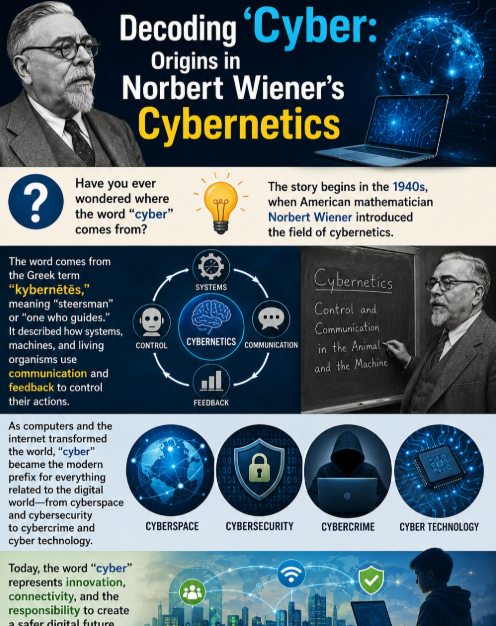
    Have you ever wondered where the word "cyber" comes from?

    The story begins in the 1940s, when American mathematician Norbert Wiener introduced the field of cybernetics. The word comes from the Greek term "kybernฤ“tฤ“s," meaning "steersman" or "one who guides." It described how systems, machines, and living organisms use communication and feedback to control their actions.

    As computers and the internet transformed the world, "cyber" became the modern prefix for everything related to the digital world—from cyberspace and cybersecurity to cybercrime and cyber technology.

    Today, the word "cyber" represents innovation, connectivity, and the responsibility to create a safer digital future for everyone.

    Every click, every connection, and every innovation reminds us that technology is most powerful when guided by knowledge and responsibility.

    #Cyber #Cybernetics #NorbertWiener #Technology #CyberSecurity #DidYouKnow #Innovation #DigitalWorld #TechHistory #Science #Learning #FutureTech
    RSIf8 Roll Number: 49 Story post no.46 Story post topic:Decoding 'Cyber: Origins in Norbert Wiener's Cybernetics Have you ever wondered where the word "cyber" comes from? ๐Ÿค” The story begins in the 1940s, when American mathematician Norbert Wiener introduced the field of cybernetics. ๐Ÿ“šโš™๏ธ The word comes from the Greek term "kybernฤ“tฤ“s," meaning "steersman" or "one who guides." It described how systems, machines, and living organisms use communication and feedback to control their actions. ๐Ÿง ๐Ÿ”„ As computers and the internet transformed the world, "cyber" became the modern prefix for everything related to the digital world—from cyberspace and cybersecurity to cybercrime and cyber technology. ๐ŸŒ๐Ÿ’ป๐Ÿ” Today, the word "cyber" represents innovation, connectivity, and the responsibility to create a safer digital future for everyone. ๐Ÿš€๐Ÿ›ก๏ธ Every click, every connection, and every innovation reminds us that technology is most powerful when guided by knowledge and responsibility. ๐ŸŒŸ๐Ÿ’™ #Cyber #Cybernetics #NorbertWiener #Technology #CyberSecurity #DidYouKnow #Innovation #DigitalWorld #TechHistory #Science #Learning #FutureTech ๐ŸŒ๐Ÿค–โœจ
    0 Comments 0 Shares 256 Views
  • RSIF8
    Roll no 77
    Story post 42
    Story topic : The Evolution of 'Robot': From Czech Play to Tech Terminology.

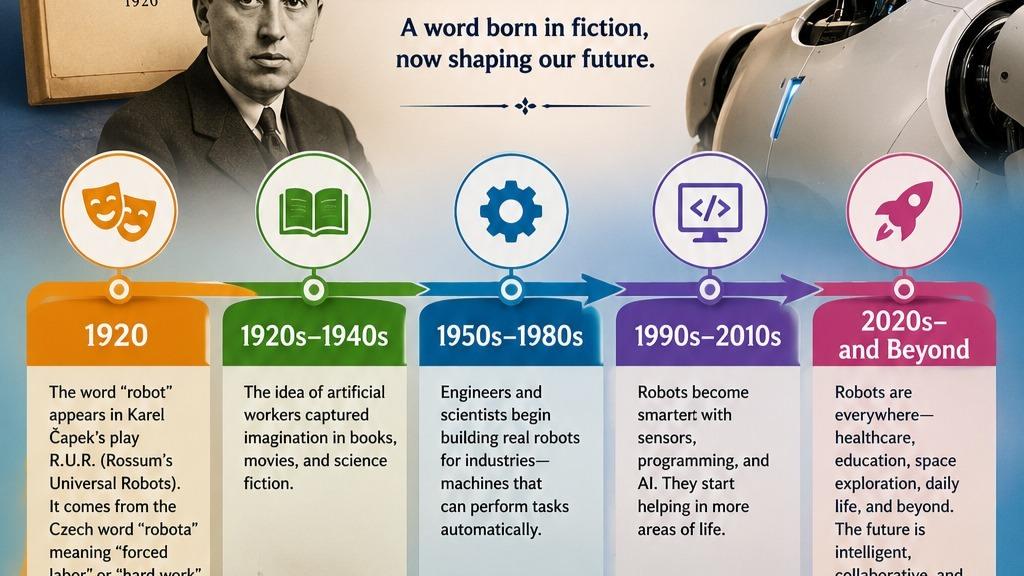
    Did you know the word "Robot" wasn't born in a laboratory? It actually began on a theater stage!

    In 1920, Czech writer Karel ฤŒapek introduced the word "robot" in his famous play R.U.R. (Rossum's Universal Robots). The term comes from the Czech word "robota," meaning forced labor or hard work.

    In the play, robots were artificial workers created to serve humans. Over time, this fascinating idea inspired scientists, engineers, and inventors around the world.

    Today, robots are transforming our lives. They help build cars , perform delicate surgeries , explore distant planets , clean our homes , and even assist in classrooms . What started as a fictional concept has become one of the most important technologies of the modern era.

    The journey of the word "robot" reminds us that imagination can shape the future. Yesterday's fiction has become today's innovation—and tomorrow's possibilities are endless!

    #Robot #Technology #Innovation #ArtificialIntelligence #AI #HistoryOfWords #Science #TechFacts #FutureTech #Engineering #STEM #Education #Learning #DidYouKnow #Robotics #InnovationJourney #WordOrigins #TechHistory #Knowledge #Future
    RSIF8 Roll no 77 Story post 42 Story topic : The Evolution of 'Robot': From Czech Play to Tech Terminology. ๐Ÿค” Did you know the word "Robot" wasn't born in a laboratory? It actually began on a theater stage! ๐ŸŽญ In 1920, Czech writer Karel ฤŒapek introduced the word "robot" in his famous play R.U.R. (Rossum's Universal Robots). The term comes from the Czech word "robota," meaning forced labor or hard work. ๐Ÿ’ก In the play, robots were artificial workers created to serve humans. Over time, this fascinating idea inspired scientists, engineers, and inventors around the world. ๐ŸŒโš™๏ธ Today, robots are transforming our lives. ๐Ÿค– They help build cars ๐Ÿš—, perform delicate surgeries ๐Ÿฅ, explore distant planets ๐Ÿš€, clean our homes ๐Ÿ , and even assist in classrooms ๐Ÿ“š. What started as a fictional concept has become one of the most important technologies of the modern era. The journey of the word "robot" reminds us that imagination can shape the future. โœจ Yesterday's fiction has become today's innovation—and tomorrow's possibilities are endless! ๐ŸŒŸ #Robot #Technology #Innovation #ArtificialIntelligence #AI #HistoryOfWords #Science #TechFacts #FutureTech #Engineering #STEM #Education #Learning #DidYouKnow #Robotics #InnovationJourney #WordOrigins #TechHistory #Knowledge #Future
    0 Comments 0 Shares 2818 Views
  • #rsisb
    Roll no. 247
    Story post . 18
    Foundation level

    **Story Post — Decoding “Cyber”: Origins in Norbert Wiener’s Cybernetics**

    **Have you ever wondered where the word “Cyber” comes from?**

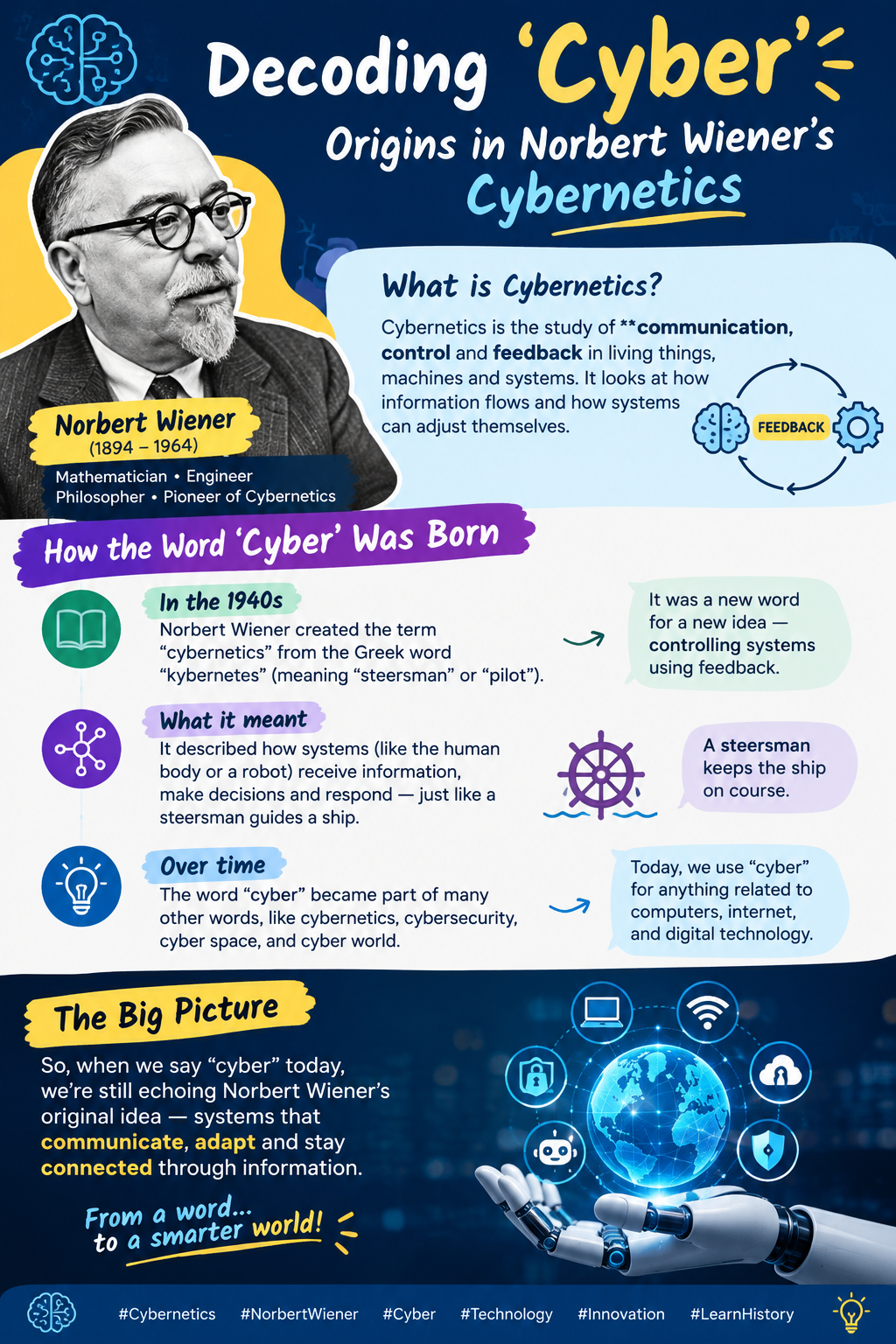
    The word *Cyber* is connected to the fascinating world of **cybernetics**, a field that explores communication, control, and feedback in both living organisms and machines. It helps us understand how humans, computers, and other systems receive information, respond to changes, and make adjustments.

    **The Story Behind Cybernetics**

    The story takes us back to **Norbert Wiener (1894–1964)**, an American mathematician who helped establish the field of cybernetics. In 1948, he published his influential book *Cybernetics: Or Control and Communication in the Animal and the Machine*.

    Wiener explored how communication and control work in animals and machines. One important concept was **feedback**—when a system uses information about its results to adjust what it does next.

    For example, a thermostat checks the temperature of a room and adjusts the heating to maintain the desired temperature. Similarly, modern robots use sensors to understand their surroundings and adjust their movements. These ideas help us understand many technologies we use today!

    **How Did “Cyber” Become So Popular?**

    Over time, the word *cyber* became associated with computers, digital communication, and the internet. Today, we hear it in words such as:

    **Cybersecurity** — protecting computers, networks, and information from digital threats.

    **Cyberspace** — the digital environment where people communicate and interact online.

    **Cybercrime** — illegal activities involving computers or digital networks.

    **Cybernetics** — the study of control, communication, and feedback in systems.

    From the early ideas of cybernetics to today's connected digital world, this little word has become part of our everyday vocabulary!

    **Why Is This Story Important?**

    Understanding the history of the word *cyber* helps us appreciate how scientific ideas influence language and technology. It also reminds us that many modern inventions are built on ideas developed decades ago. Every time we use the internet, learn about artificial intelligence, or explore robotics, we encounter concepts connected to communication, information, and control.

    **Today's Learning Message:**
    Every word has a story, and every story can teach us something new! Keep asking questions, exploring history, and discovering how science shapes our world.

    **Question for You:**
    Which cyber-related topic interests you the most: cybersecurity, artificial intelligence, robotics, or the history of the internet? Share your answer in the comments!

    Like, share, and comment to help others discover the amazing story behind the word *Cyber*!

    #Cyber #Cybernetics #NorbertWiener #WordOrigins #HistoryOfTechnology #Technology #Science #ComputerScience #ArtificialIntelligence #AI #Cybersecurity #DigitalWorld #Internet #Robotics #Innovation #LearningEveryDay #EducationalContent #DidYouKnow #KnowledgeIsPower #TechHistory #DigitalLiteracy #StoryPost #RehanSchool #RSISB #RehanCodingWithAI
    #rsisb Roll no. 247 Story post . 18 Foundation level ๐ŸŒ๐Ÿค– **Story Post — Decoding “Cyber”: Origins in Norbert Wiener’s Cybernetics** ๐Ÿ’ป๐Ÿ“š โœจ **Have you ever wondered where the word “Cyber” comes from?** ๐Ÿš€ The word *Cyber* is connected to the fascinating world of **cybernetics**, a field that explores communication, control, and feedback in both living organisms and machines. ๐Ÿง โš™๏ธ It helps us understand how humans, computers, and other systems receive information, respond to changes, and make adjustments. ๐Ÿ“– **The Story Behind Cybernetics** The story takes us back to **Norbert Wiener (1894–1964)**, an American mathematician who helped establish the field of cybernetics. In 1948, he published his influential book *Cybernetics: Or Control and Communication in the Animal and the Machine*. ๐Ÿ“˜๐Ÿ”ฌ Wiener explored how communication and control work in animals and machines. One important concept was **feedback**—when a system uses information about its results to adjust what it does next. ๐Ÿ”„๐Ÿค– For example, a thermostat checks the temperature of a room and adjusts the heating to maintain the desired temperature. ๐ŸŒก๏ธ๐Ÿ  Similarly, modern robots use sensors to understand their surroundings and adjust their movements. These ideas help us understand many technologies we use today! ๐ŸŒ **How Did “Cyber” Become So Popular?** Over time, the word *cyber* became associated with computers, digital communication, and the internet. Today, we hear it in words such as: ๐Ÿ’ป **Cybersecurity** — protecting computers, networks, and information from digital threats. ๐ŸŒ **Cyberspace** — the digital environment where people communicate and interact online. ๐Ÿ•ต๏ธ **Cybercrime** — illegal activities involving computers or digital networks. ๐Ÿค– **Cybernetics** — the study of control, communication, and feedback in systems. From the early ideas of cybernetics to today's connected digital world, this little word has become part of our everyday vocabulary! ๐ŸŒŸ ๐ŸŽฏ **Why Is This Story Important?** Understanding the history of the word *cyber* helps us appreciate how scientific ideas influence language and technology. It also reminds us that many modern inventions are built on ideas developed decades ago. Every time we use the internet, learn about artificial intelligence, or explore robotics, we encounter concepts connected to communication, information, and control. ๐Ÿš€๐Ÿง  ๐Ÿ’ก **Today's Learning Message:** Every word has a story, and every story can teach us something new! Keep asking questions, exploring history, and discovering how science shapes our world. ๐Ÿ“šโœจ ๐Ÿ’ฌ **Question for You:** Which cyber-related topic interests you the most: cybersecurity, artificial intelligence, robotics, or the history of the internet? Share your answer in the comments! ๐Ÿ‘‡๐ŸŒ โค๏ธ Like, share, and comment to help others discover the amazing story behind the word *Cyber*! #Cyber #Cybernetics #NorbertWiener #WordOrigins #HistoryOfTechnology #Technology #Science #ComputerScience #ArtificialIntelligence #AI #Cybersecurity #DigitalWorld #Internet #Robotics #Innovation #LearningEveryDay #EducationalContent #DidYouKnow #KnowledgeIsPower #TechHistory #DigitalLiteracy #StoryPost #RehanSchool #RSISB #RehanCodingWithAI ๐Ÿš€๐Ÿ’ป๐Ÿ“š
    0 Comments 0 Shares 3051 Views
  • #rsisb
    Roll no. 247
    Story post 14
    Foundation level

    **The Evolution of “Robot”: From Czech Play to Tech Terminology **

    Have you ever wondered where the word **“robot”** came from? Today, we use this word when talking about smart machines, artificial intelligence, factories, space exploration, and modern technology. But did you know that the word “robot” became popular through a Czech play written more than a century ago? Let's explore the fascinating journey of this little word that became a big part of our technological world!

    **1. The Beginning: A Czech Play **

    The story of the word “robot” begins with Czech writer and playwright **Karel ฤŒapek** and his science-fiction play *R.U.R. (Rossum’s Universal Robots)*, first performed in 1921 and published in 1920. The play imagined artificial workers created to perform tasks for humans. It introduced audiences to ideas about artificial beings, technology, work, and the relationship between humans and machines.

    The word “robot” comes from the Czech word *robota*, associated with forced labor or compulsory work. Interestingly, Karel ฤŒapek credited his brother, **Josef ฤŒapek**, with suggesting the word for the play.

    **2. How the Word Spread Around the World **

    As the play gained attention, the word “robot” spread beyond literature and entered everyday language. People began using it to discuss machines that could perform tasks automatically. Over time, robots became a popular subject in science-fiction stories, films, books, and discussions about the future.

    Writers and scientists explored exciting questions: Could machines help humans? Could robots perform difficult tasks? How might technology change our lives? These questions helped inspire generations of inventors and researchers.

    **3. From Fiction to Real Machines **

    Robots eventually became an important part of real-world engineering and science. Modern robots can perform repetitive tasks, assist with manufacturing, explore places that are difficult for humans to reach, and help researchers carry out complex work.

    Today, we can find robots in many areas:

    **Factories:** Industrial robots help assemble products and perform precise tasks.

    **Homes:** Robotic vacuum cleaners help people with household cleaning.

    **Healthcare:** Specialised robotic systems assist medical professionals with certain procedures.

    **Space Exploration:** Robotic rovers and spacecraft help scientists explore distant worlds.

    **Agriculture:** Some robots help monitor crops and perform farming tasks.

    **Research:** Scientists use robots to test ideas, collect information, and explore new possibilities.

    **4. Robots and Artificial Intelligence **

    Modern technology has introduced new possibilities through artificial intelligence (AI). Some robots use AI to interpret information from sensors, recognise objects, plan actions, or respond to changing conditions. However, not every robot uses AI, and not every AI system is a robot.

    This difference is important! A robot is generally a physical machine that can carry out tasks, while AI refers to computer systems designed to perform tasks that may require abilities such as recognising patterns or understanding language. Together, robotics and AI are helping researchers develop new tools and technologies.

    **5. What Can We Learn from the Evolution of “Robot”?**

    The journey of the word “robot” teaches us that ideas can travel from books and plays into real life. A word introduced through a fictional story became an important term in science, engineering, and technology.

    It also reminds us that technology is created by people using imagination, creativity, teamwork, and scientific knowledge. As we learn more about robots, we should think about how to use technology responsibly and how it can benefit people and communities.

    **Conclusion: From a Czech Play to a Technological Future**

    The evolution of “robot” is a remarkable example of how language, literature, and science connect. What began as a word associated with artificial workers in a Czech play is now used around the world to describe machines that help us in factories, homes, hospitals, laboratories, and space exploration.

    The future of robotics will continue to bring new discoveries, challenges, and opportunities. By learning about the past, understanding the present, and thinking creatively about the future, we can become more informed and responsible users of technology.

    **Let's keep learning, exploring, and innovating!** Every great invention begins with an idea, and every curious mind has the potential to discover something new.

    **Question for everyone:** If you could invent a helpful robot, what would you want it to do? Share your ideas in the comments!

    Like, share, and spread the excitement of science and technology!

    โ”โ”โ”โ”โ”โ”โ”โ”โ”โ”โ”โ”โ”โ”โ”โ”โ”โ”

    **HASHTAGS**

    #EvolutionOfRobots #RobotHistory #TheWordRobot #KarelCapek #JosefCapek #RUR #CzechLiterature #HistoryOfTechnology #Robotics #ArtificialIntelligence #AI #ScienceAndTechnology #EducationalPost #StoryPost #TechnologyEducation #FutureTechnology #Innovation #Engineering #STEMEducation #ScienceForEveryone #LearningIsFun #DigitalLearning #TechHistory #SmartMachines #SpaceExploration #IndustrialRobots #CreativeThinking #KnowledgeIsPower #ChatGPT #PostOnAllPlatforms
    #rsisb Roll no. 247 Story post 14 Foundation level ๐Ÿค–๐ŸŒ **The Evolution of “Robot”: From Czech Play to Tech Terminology ๐Ÿ“šโœจ** ๐Ÿš€๐Ÿค– Have you ever wondered where the word **“robot”** came from? Today, we use this word when talking about smart machines, artificial intelligence, factories, space exploration, and modern technology. But did you know that the word “robot” became popular through a Czech play written more than a century ago? ๐Ÿ“–๐ŸŒŸ Let's explore the fascinating journey of this little word that became a big part of our technological world! ๐Ÿ’ก๐ŸŒ ๐Ÿ“š **1. The Beginning: A Czech Play ๐Ÿ‡จ๐Ÿ‡ฟ** The story of the word “robot” begins with Czech writer and playwright **Karel ฤŒapek** and his science-fiction play *R.U.R. (Rossum’s Universal Robots)*, first performed in 1921 and published in 1920. ๐ŸŽญ๐Ÿค– The play imagined artificial workers created to perform tasks for humans. It introduced audiences to ideas about artificial beings, technology, work, and the relationship between humans and machines. The word “robot” comes from the Czech word *robota*, associated with forced labor or compulsory work. Interestingly, Karel ฤŒapek credited his brother, **Josef ฤŒapek**, with suggesting the word for the play. โœ๏ธ๐Ÿ’ญ ๐ŸŒŽ **2. How the Word Spread Around the World ๐ŸŒ** As the play gained attention, the word “robot” spread beyond literature and entered everyday language. People began using it to discuss machines that could perform tasks automatically. ๐Ÿ“–โš™๏ธ Over time, robots became a popular subject in science-fiction stories, films, books, and discussions about the future. Writers and scientists explored exciting questions: Could machines help humans? Could robots perform difficult tasks? How might technology change our lives? These questions helped inspire generations of inventors and researchers. ๐Ÿš€๐Ÿง  โš™๏ธ **3. From Fiction to Real Machines ๐Ÿญ** Robots eventually became an important part of real-world engineering and science. Modern robots can perform repetitive tasks, assist with manufacturing, explore places that are difficult for humans to reach, and help researchers carry out complex work. ๐Ÿ”ง๐Ÿค– Today, we can find robots in many areas: ๐Ÿญ **Factories:** Industrial robots help assemble products and perform precise tasks. ๐Ÿ  **Homes:** Robotic vacuum cleaners help people with household cleaning. ๐Ÿฅ **Healthcare:** Specialised robotic systems assist medical professionals with certain procedures. ๐Ÿš€ **Space Exploration:** Robotic rovers and spacecraft help scientists explore distant worlds. ๐ŸŒพ **Agriculture:** Some robots help monitor crops and perform farming tasks. ๐Ÿงช **Research:** Scientists use robots to test ideas, collect information, and explore new possibilities. ๐Ÿ’ป **4. Robots and Artificial Intelligence ๐Ÿง ** Modern technology has introduced new possibilities through artificial intelligence (AI). Some robots use AI to interpret information from sensors, recognise objects, plan actions, or respond to changing conditions. ๐Ÿค–๐Ÿ’ก However, not every robot uses AI, and not every AI system is a robot. This difference is important! A robot is generally a physical machine that can carry out tasks, while AI refers to computer systems designed to perform tasks that may require abilities such as recognising patterns or understanding language. Together, robotics and AI are helping researchers develop new tools and technologies. ๐ŸŒโœจ ๐ŸŒŸ **5. What Can We Learn from the Evolution of “Robot”?** The journey of the word “robot” teaches us that ideas can travel from books and plays into real life. A word introduced through a fictional story became an important term in science, engineering, and technology. ๐Ÿ“šโžก๏ธโš™๏ธ It also reminds us that technology is created by people using imagination, creativity, teamwork, and scientific knowledge. As we learn more about robots, we should think about how to use technology responsibly and how it can benefit people and communities. โค๏ธ๐ŸŒ ๐ŸŽฏ **Conclusion: From a Czech Play to a Technological Future** The evolution of “robot” is a remarkable example of how language, literature, and science connect. What began as a word associated with artificial workers in a Czech play is now used around the world to describe machines that help us in factories, homes, hospitals, laboratories, and space exploration. ๐Ÿค–๐Ÿš€ The future of robotics will continue to bring new discoveries, challenges, and opportunities. By learning about the past, understanding the present, and thinking creatively about the future, we can become more informed and responsible users of technology. ๐ŸŒŸ๐Ÿ’š ๐Ÿ“ข **Let's keep learning, exploring, and innovating!** Every great invention begins with an idea, and every curious mind has the potential to discover something new. ๐Ÿ’ก๐Ÿ“š ๐Ÿ’ฌ **Question for everyone:** If you could invent a helpful robot, what would you want it to do? Share your ideas in the comments! ๐Ÿ‘‡๐Ÿค– โค๏ธ Like, share, and spread the excitement of science and technology! โ”โ”โ”โ”โ”โ”โ”โ”โ”โ”โ”โ”โ”โ”โ”โ”โ”โ” ๐Ÿท๏ธ **HASHTAGS** #EvolutionOfRobots #RobotHistory #TheWordRobot #KarelCapek #JosefCapek #RUR #CzechLiterature #HistoryOfTechnology #Robotics #ArtificialIntelligence #AI #ScienceAndTechnology #EducationalPost #StoryPost #TechnologyEducation #FutureTechnology #Innovation #Engineering #STEMEducation #ScienceForEveryone #LearningIsFun #DigitalLearning #TechHistory #SmartMachines #SpaceExploration #IndustrialRobots #CreativeThinking #KnowledgeIsPower #ChatGPT #PostOnAllPlatforms ๐Ÿค–๐ŸŒ๐Ÿ“š๐Ÿš€โœจ
    0 Comments 0 Shares 6845 Views
  • #rsisb
    Roll no.247
    Documentary no.1
    Foundation level

    **The Evolution of “Robot”: From Czech Play to Tech Terminology **

    **Discover the Amazing Journey of Robots!**

    Have you ever wondered where the word **“Robot”** came from? Today, robots are everywhere—from factories and hospitals to schools, homes, and even outer space! But the story of this incredible word began long before modern artificial intelligence and advanced technology became part of our daily lives.

    **The Beginning of the Word “Robot” **

    The word “robot” became famous through a Czech science-fiction play called *R.U.R. (Rossum’s Universal Robots)*, written by Czech writer Karel ฤŒapek. The play premiered in 1921 and introduced audiences to artificial workers created to serve humans. The word is connected to the Czech word *robota*, which refers to forced labor or hard work.

    **From Fiction to Reality!**

    When the word “robot” first appeared, the robots people imagined were very different from the machines we know today. Early robots were mainly ideas from stories, plays, and science fiction. Over time, scientists, engineers, and inventors began building real machines that could perform tasks automatically.

    **The Rise of Modern Robotics**

    As technology developed, robots became more advanced. Industrial robots began helping workers manufacture cars, assemble products, and complete repetitive tasks. Later, robots were developed for medical assistance, scientific research, space exploration, agriculture, and education. ‍

    **Robots and Artificial Intelligence**

    Today, robotics and Artificial Intelligence (AI) are transforming the world! Some robots can recognize objects, follow instructions, navigate their surroundings, and assist people with different tasks. AI can help certain robots process information and make decisions within their designed capabilities.

    However, not every robot uses AI, and robots do not all think or behave like humans. Understanding this difference helps us learn how technology really works!

    **Why Is the Word “Robot” Important?**

    The evolution of the word “robot” shows how imagination can influence science and innovation. A term popularized through a Czech play became an important part of modern science and technology. It reminds us that ideas from books and stories can inspire people to explore new possibilities and create amazing inventions.

    **What Can We Learn From This Story?**

    Words have fascinating histories.
    Stories can inspire scientific discoveries.
    Technology changes and develops over time.
    Robotics can help solve real-world problems.
    Learning about the past helps us understand the future.

    **Think About It!**

    If robots continue to develop, how might they help students, teachers, doctors, scientists, and communities in the future? Could you design a robot that solves a problem in your school or neighborhood?

    Remember, every great invention begins with curiosity, creativity, and the courage to explore new ideas!

    **Watch, Learn, Explore, and Innovate!** Share this documentary with your friends and family, discover the fascinating history of robotics, and keep asking questions about the technology shaping our world.

    **Comment below:** What kind of robot would you like to invent, and what problem would it solve?

    Like | Comment | Share | Follow for more educational documentaries, science stories, technology facts, and exciting learning adventures!

    #Robot #Robotics #EvolutionOfRobots #HistoryOfRobots #KarelCapek #RUR #CzechHistory #ArtificialIntelligence #AI #ScienceAndTechnology #Technology #Innovation #FutureOfTechnology #STEMEducation #ScienceDocumentary #EducationalContent #LearningIsFun #TechHistory #ModernRobotics #RoboticsForKids #DiscoverScience #KnowledgeIsPower #CreativeThinking #FutureInnovators #DigitalLearning #ExploreAndLearn #EducationalJourney #Documentary #ScienceFacts #InspiringInnovation
    #rsisb Roll no.247 Documentary no.1 Foundation level ๐Ÿค–๐Ÿ“š **The Evolution of “Robot”: From Czech Play to Tech Terminology ๐ŸŒ๐Ÿš€** โœจ **Discover the Amazing Journey of Robots!** โœจ Have you ever wondered where the word **“Robot”** came from? ๐Ÿค”๐Ÿค– Today, robots are everywhere—from factories and hospitals to schools, homes, and even outer space! ๐Ÿš—๐Ÿญ๐Ÿฅ๐Ÿš€ But the story of this incredible word began long before modern artificial intelligence and advanced technology became part of our daily lives. ๐Ÿ“– **The Beginning of the Word “Robot” ๐Ÿ‡จ๐Ÿ‡ฟ** The word “robot” became famous through a Czech science-fiction play called *R.U.R. (Rossum’s Universal Robots)*, written by Czech writer Karel ฤŒapek. The play premiered in 1921 and introduced audiences to artificial workers created to serve humans. ๐Ÿค–๐ŸŽญ The word is connected to the Czech word *robota*, which refers to forced labor or hard work. ๐Ÿ’ก **From Fiction to Reality!** When the word “robot” first appeared, the robots people imagined were very different from the machines we know today. Early robots were mainly ideas from stories, plays, and science fiction. ๐Ÿ“šโœจ Over time, scientists, engineers, and inventors began building real machines that could perform tasks automatically. โš™๏ธ **The Rise of Modern Robotics** As technology developed, robots became more advanced. Industrial robots began helping workers manufacture cars, assemble products, and complete repetitive tasks. ๐Ÿญ๐Ÿš˜ Later, robots were developed for medical assistance, scientific research, space exploration, agriculture, and education. ๐ŸŒฑ๐Ÿง‘‍โš•๏ธ๐Ÿ”ฌ๐Ÿช ๐Ÿง  **Robots and Artificial Intelligence** Today, robotics and Artificial Intelligence (AI) are transforming the world! ๐ŸŒ๐Ÿ’ป Some robots can recognize objects, follow instructions, navigate their surroundings, and assist people with different tasks. AI can help certain robots process information and make decisions within their designed capabilities. However, not every robot uses AI, and robots do not all think or behave like humans. Understanding this difference helps us learn how technology really works! ๐Ÿ’ก๐Ÿ“– ๐ŸŒŸ **Why Is the Word “Robot” Important?** The evolution of the word “robot” shows how imagination can influence science and innovation. A term popularized through a Czech play became an important part of modern science and technology. ๐Ÿš€โœจ It reminds us that ideas from books and stories can inspire people to explore new possibilities and create amazing inventions. ๐ŸŽฏ **What Can We Learn From This Story?** โœ… Words have fascinating histories. ๐Ÿ“š โœ… Stories can inspire scientific discoveries. ๐Ÿ’ญ โœ… Technology changes and develops over time. โš™๏ธ โœ… Robotics can help solve real-world problems. ๐ŸŒ โœ… Learning about the past helps us understand the future. ๐Ÿš€ ๐Ÿค” **Think About It!** If robots continue to develop, how might they help students, teachers, doctors, scientists, and communities in the future? Could you design a robot that solves a problem in your school or neighborhood? ๐Ÿซ๐Ÿค–๐Ÿ’ก Remember, every great invention begins with curiosity, creativity, and the courage to explore new ideas! ๐ŸŒˆ๐ŸŒŸ ๐Ÿ“ข **Watch, Learn, Explore, and Innovate!** Share this documentary with your friends and family, discover the fascinating history of robotics, and keep asking questions about the technology shaping our world. ๐Ÿค–๐ŸŒโค๏ธ ๐Ÿ’ฌ **Comment below:** What kind of robot would you like to invent, and what problem would it solve? ๐Ÿ‘ Like | ๐Ÿ’ฌ Comment | ๐Ÿ”„ Share | โญ Follow for more educational documentaries, science stories, technology facts, and exciting learning adventures! #Robot #Robotics #EvolutionOfRobots #HistoryOfRobots #KarelCapek #RUR #CzechHistory #ArtificialIntelligence #AI #ScienceAndTechnology #Technology #Innovation #FutureOfTechnology #STEMEducation #ScienceDocumentary #EducationalContent #LearningIsFun #TechHistory #ModernRobotics #RoboticsForKids #DiscoverScience #KnowledgeIsPower #CreativeThinking #FutureInnovators #DigitalLearning #ExploreAndLearn #EducationalJourney #Documentary #ScienceFacts #InspiringInnovation ๐Ÿค–๐Ÿš€๐Ÿ“š๐ŸŒ๐Ÿ’กโœจ
    0 Comments 0 Shares 6940 Views 8
  • #rsisb
    Roll no 248
    Foundation level
    Story post no 21
    **The Evolution of “Robot”: From Czech Play to Tech Terminology**

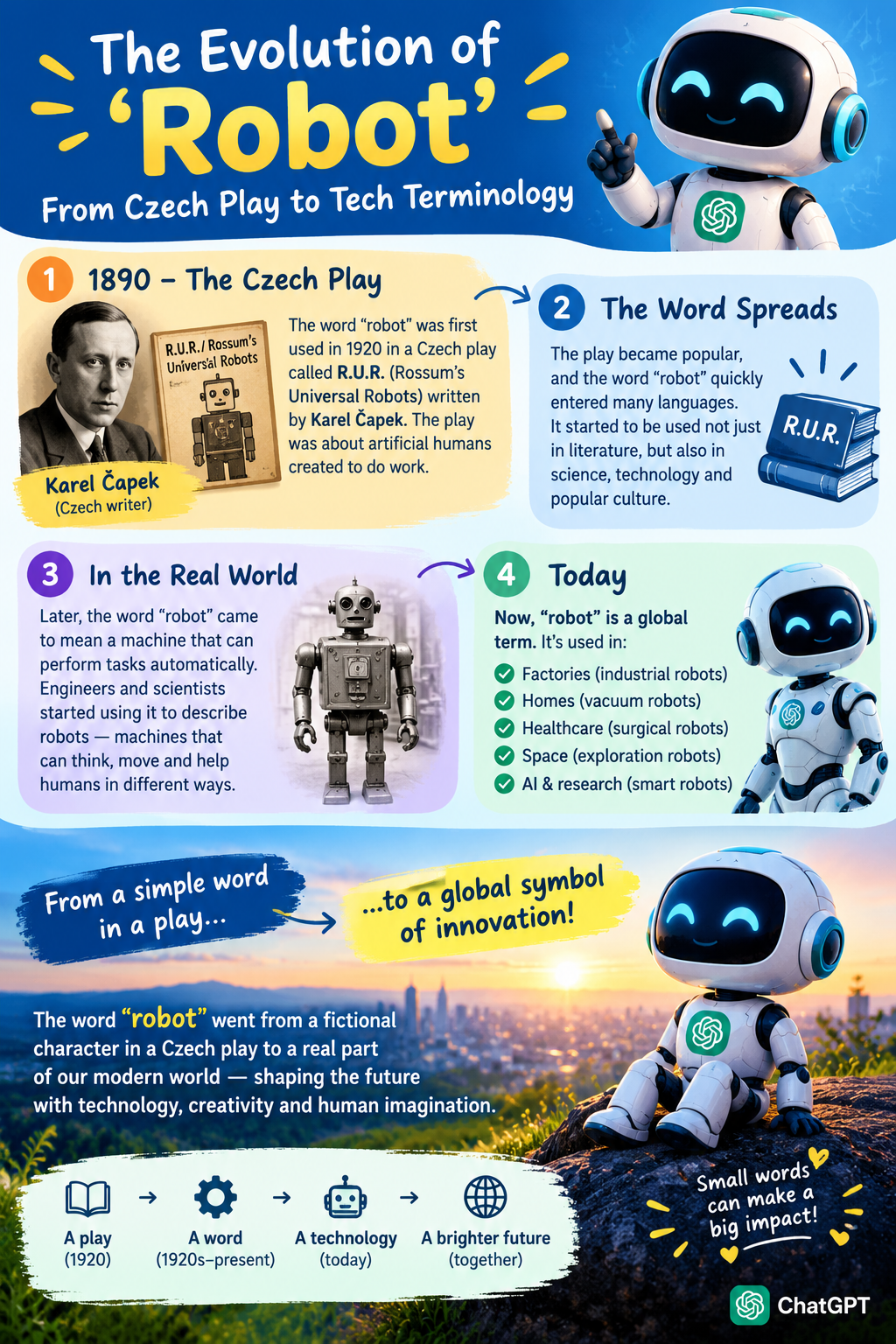
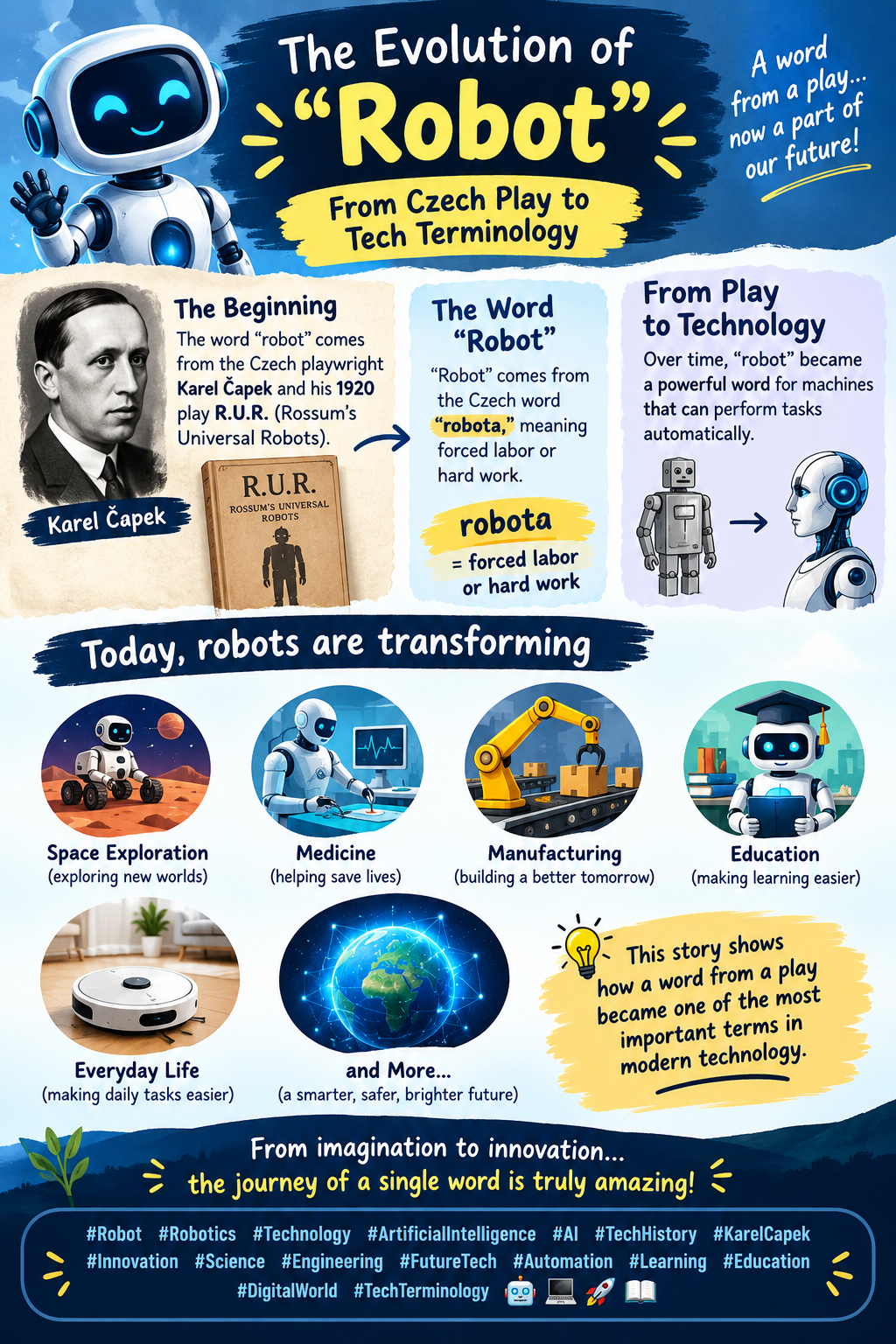
    Have you ever wondered where the word **“robot”** came from? The story begins with the Czech playwright **Karel ฤŒapek** and his 1920 play *R.U.R. (Rossum’s Universal Robots)*. The word “robot” comes from the Czech word **“robota,”** meaning forced labor or hard work.

    Over time, “robot” became a powerful word for machines that can perform tasks automatically. Today, robots are transforming **science, medicine, manufacturing, space exploration, education, and everyday life**! ‍

    This story shows how a word from a play became one of the most important terms in modern technology.

    #Robot #Robotics #Technology #ArtificialIntelligence #AI #TechHistory #KarelCapek #Innovation #Science #Engineering #FutureTech #Automation #Learning #Education #DigitalWorld #TechTerminology
    #rsisb Roll no 248 Foundation level Story post no 21 ๐Ÿค–โœจ **The Evolution of “Robot”: From Czech Play to Tech Terminology** ๐ŸŽญ๐Ÿ’ป Have you ever wondered where the word **“robot”** came from? ๐Ÿค”๐ŸŒ The story begins with the Czech playwright **Karel ฤŒapek** and his 1920 play *R.U.R. (Rossum’s Universal Robots)*. ๐ŸŽญ๐Ÿค– The word “robot” comes from the Czech word **“robota,”** meaning forced labor or hard work. ๐Ÿ’ก Over time, “robot” became a powerful word for machines that can perform tasks automatically. Today, robots are transforming **science, medicine, manufacturing, space exploration, education, and everyday life**! ๐Ÿš€๐Ÿญ๐Ÿง‘‍โš•๏ธ๐ŸŒŒ This story shows how a word from a play became one of the most important terms in modern technology. ๐Ÿ“šโžก๏ธ๐Ÿค– #Robot #Robotics #Technology #ArtificialIntelligence #AI #TechHistory #KarelCapek #Innovation #Science #Engineering #FutureTech #Automation #Learning #Education #DigitalWorld #TechTerminology ๐Ÿค–๐Ÿ’ป๐Ÿš€๐Ÿ“šโœจ
    0 Comments 0 Shares 2219 Views
  • RSIF8
    ROLL NO 66
    DOCUMENTARY NO 02
    DOCUMENTARY TOPIC: The Evolution of “Robot”: From Czech Play to Tech Terminology

    Have you ever wondered where the word “robot” came from?

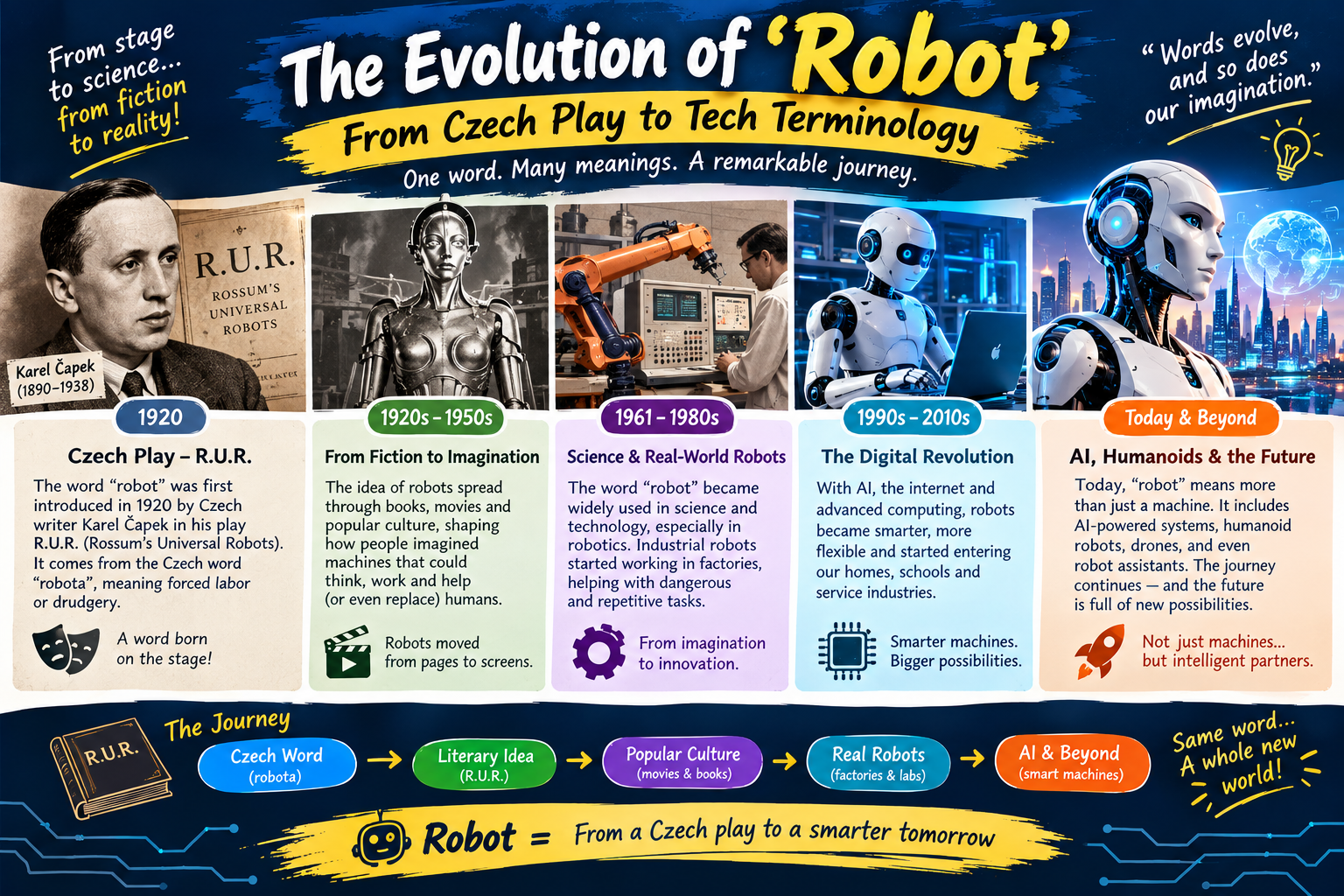
    This short documentary explores the fascinating journey of the word robot, from its origins in the 1920 Czech play R.U.R. (Rossum’s Universal Robots) by Czech writer Karel ฤŒapek to its modern meaning in science and technology.

    The word comes from the Czech term “robota,” associated with forced labor or hard work. What began as a fictional concept of artificial workers eventually became one of the most recognizable words in the world of technology.

    Today, robots are used in factories, scientific research, space exploration, healthcare, automation, and many other fields. With advances in artificial intelligence, robotics continues to evolve and change the way we think about machines and the future.

    Watch the documentary to discover how a word from a Czech stage play became a symbol of modern technology!

    From fiction to reality—this is the incredible evolution of the “robot.”

    #Robot #Robotics #Technology #ArtificialIntelligence #AI #HistoryOfTechnology #KarelCapek #RUR #Science #Innovation #TechHistory #FutureTechnology #EducationalDocumentary #Learning #Engineering #Automation #Robots #TechEducation
    RSIF8 ROLL NO 66 DOCUMENTARY NO 02 DOCUMENTARY TOPIC: ๐Ÿค– The Evolution of “Robot”: From Czech Play to Tech Terminology Have you ever wondered where the word “robot” came from? ๐Ÿค”โš™๏ธ This short documentary explores the fascinating journey of the word robot, from its origins in the 1920 Czech play R.U.R. (Rossum’s Universal Robots) by Czech writer Karel ฤŒapek to its modern meaning in science and technology. The word comes from the Czech term “robota,” associated with forced labor or hard work. What began as a fictional concept of artificial workers eventually became one of the most recognizable words in the world of technology. Today, robots are used in factories, scientific research, space exploration, healthcare, automation, and many other fields. With advances in artificial intelligence, robotics continues to evolve and change the way we think about machines and the future. ๐ŸŽฌ Watch the documentary to discover how a word from a Czech stage play became a symbol of modern technology! โœจ From fiction to reality—this is the incredible evolution of the “robot.” #Robot #Robotics #Technology #ArtificialIntelligence #AI #HistoryOfTechnology #KarelCapek #RUR #Science #Innovation #TechHistory #FutureTechnology #EducationalDocumentary #Learning #Engineering #Automation #Robots #TechEducation
    0 Comments 0 Shares 2935 Views 0
  • #rsisb
    Roll no 248
    Foundation level
    Documentary no 5
    **Documentary — “The Evolution of ‘Robot’: From Czech Play to Tech Terminology”**

    Discover the fascinating journey of the word **“robot”**—from its beginnings in a Czech play to its place in today’s world of technology and artificial intelligence. Explore how robots have evolved from an idea in literature into machines that can work, learn, assist people, and transform our future.

    A fascinating story of language, imagination, science, and innovation!

    #Robot #Robotics #ArtificialIntelligence #AI #Technology #Innovation #FutureTech #Science #TechHistory #Documentary #Learning #Education #DigitalWorld #Future #Robots
    #rsisb Roll no 248 Foundation level Documentary no 5 ๐Ÿค–๐ŸŽฌ **Documentary — “The Evolution of ‘Robot’: From Czech Play to Tech Terminology”** ๐ŸŒโš™๏ธ Discover the fascinating journey of the word **“robot”**—from its beginnings in a Czech play to its place in today’s world of technology and artificial intelligence. ๐Ÿค–๐Ÿ’ก Explore how robots have evolved from an idea in literature into machines that can work, learn, assist people, and transform our future. ๐Ÿš€๐ŸŒ โœจ A fascinating story of language, imagination, science, and innovation! #Robot #Robotics #ArtificialIntelligence #AI #Technology #Innovation #FutureTech #Science #TechHistory #Documentary #Learning #Education #DigitalWorld #Future #Robots ๐Ÿค–โš™๏ธ๐Ÿš€๐Ÿ“š
    0 Comments 0 Shares 1279 Views 2
  • #rsisb
    Roll NO:232
    Foundation level student.
    Story post:18

    ### Description

    **The Evolution of “Robot”: From Czech Play to Tech Terminology**

    Did you know the word **“robot”** has its roots in a Czech play? Explore the fascinating journey of this word—from its introduction in literature to its transformation into one of the most recognizable terms in modern technology.

    Discover how science fiction, engineering, artificial intelligence, and automation helped shape our understanding of robots. From fictional machines to real-world technologies, the story of the **robot** shows how language and innovation can evolve together!

    ### Hashtags

    #Robot #Robotics #HistoryOfRobots #RobotEvolution #Technology #ArtificialIntelligence #AI #TechHistory #Science #Innovation #Automation #Engineering #FutureTechnology #ScienceAndTechnology #CzechHistory #Education #Learning #TechEducation #DigitalWorld #RoboticsEducation

    ### Emojis


    #rsisb Roll NO:232 Foundation level student. Story post:18 ### ๐Ÿค– Description **The Evolution of “Robot”: From Czech Play to Tech Terminology** ๐Ÿค–๐Ÿ“šโœจ Did you know the word **“robot”** has its roots in a Czech play? ๐ŸŽญ๐Ÿ‡จ๐Ÿ‡ฟ Explore the fascinating journey of this word—from its introduction in literature to its transformation into one of the most recognizable terms in modern technology. โš™๏ธ๐Ÿ’ป๐Ÿš€ Discover how science fiction, engineering, artificial intelligence, and automation helped shape our understanding of robots. ๐Ÿง ๐Ÿค–๐Ÿ”ฌ From fictional machines to real-world technologies, the story of the **robot** shows how language and innovation can evolve together! ๐ŸŒโœจ ### ๐Ÿ”– Hashtags #Robot #Robotics #HistoryOfRobots #RobotEvolution #Technology #ArtificialIntelligence #AI #TechHistory #Science #Innovation #Automation #Engineering #FutureTechnology #ScienceAndTechnology #CzechHistory #Education #Learning #TechEducation #DigitalWorld #RoboticsEducation ### ๐Ÿค– Emojis ๐Ÿค–โš™๏ธ๐Ÿ’ป๐Ÿง ๐Ÿ”ฌ๐Ÿš€๐Ÿ“š๐ŸŽญ๐Ÿ‡จ๐Ÿ‡ฟ๐ŸŒ๐Ÿ’ก๐Ÿ”ง๐Ÿฆพ๐Ÿ› ๏ธโœจ๐Ÿ”ฎ๐Ÿ“–๐ŸŒ๐Ÿงช
    0 Comments 1 Shares 3351 Views
  • #rsisb
    Roll no.239
    Story post no.17
    Foundation Level

    The word **“robot”** may sound like it belongs to the world of modern technology, artificial intelligence, and futuristic machines—but its fascinating journey actually began on the **stage of a Czech play!**
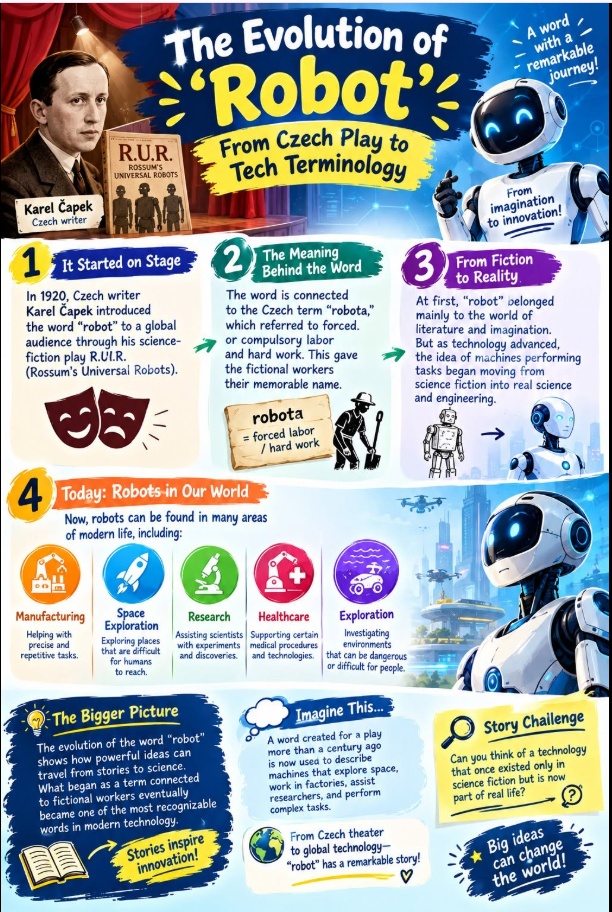
    In **1920**, Czech writer **Karel ฤŒapek** introduced the word “robot” to a global audience through his science-fiction play ***R.U.R. (Rossum’s Universal Robots)***. The story imagined artificial workers created to perform labor for humans.
    The word is connected to the Czech term **“robota,”** which referred to forced or compulsory labor and hard work. This connection helped give the fictional workers their memorable name.
    At first, “robot” belonged mainly to the world of literature and imagination. But as technology advanced, the idea of machines performing tasks began moving from **science fiction into real science and engineering**.
    Today, robots can be found in many areas of modern life, including:
    **Manufacturing** — helping with precise and repetitive tasks
    **Space exploration** — exploring places that are difficult for humans to reach
    **Research** — assisting scientists with experiments and discoveries
    **Healthcare** — supporting certain medical procedures and technologies
    **Exploration** — investigating environments that can be dangerous or difficult for people
    The evolution of the word **“robot”** shows how powerful ideas can travel from **stories to science**. What began as a term connected to fictional workers eventually became one of the most recognizable words in modern technology.
    **Imagine this:** A word created for a play more than a century ago is now used to describe machines that explore space, work in factories, assist researchers, and perform complex tasks.
    **From Czech theater to global technology—“robot” has a remarkable story!**
    **Story Challenge:** Can you think of a technology that once existed only in science fiction but is now part of real life?
    #Robot #Robots #Robotics #RobotHistory #HistoryOfTechnology #KarelCapek #RUR #CzechHistory #Technology #Science #Engineering #STEM #TechHistory #Innovation #FutureTechnology #ArtificialIntelligence #ScienceFiction #TechFacts #DidYouKnow #ScienceEducation #LearningIsFun #TechnologyFacts #RoboticsEducation
    #rsisb Roll no.239 Story post no.17 Foundation Level The word **“robot”** may sound like it belongs to the world of modern technology, artificial intelligence, and futuristic machines—but its fascinating journey actually began on the **stage of a Czech play!** ๐ŸŽญโœจ In **1920**, Czech writer **Karel ฤŒapek** introduced the word “robot” to a global audience through his science-fiction play ***R.U.R. (Rossum’s Universal Robots)***. The story imagined artificial workers created to perform labor for humans. ๐Ÿค–๐Ÿญ The word is connected to the Czech term **“robota,”** which referred to forced or compulsory labor and hard work. This connection helped give the fictional workers their memorable name. ๐Ÿ’ก๐Ÿ“š At first, “robot” belonged mainly to the world of literature and imagination. But as technology advanced, the idea of machines performing tasks began moving from **science fiction into real science and engineering**. ๐Ÿ”ฌโš™๏ธ Today, robots can be found in many areas of modern life, including: ๐Ÿญ **Manufacturing** — helping with precise and repetitive tasks ๐Ÿš€ **Space exploration** — exploring places that are difficult for humans to reach ๐Ÿ”ฌ **Research** — assisting scientists with experiments and discoveries ๐Ÿฅ **Healthcare** — supporting certain medical procedures and technologies ๐ŸŒŠ **Exploration** — investigating environments that can be dangerous or difficult for people The evolution of the word **“robot”** shows how powerful ideas can travel from **stories to science**. What began as a term connected to fictional workers eventually became one of the most recognizable words in modern technology. ๐ŸŒŸ๐Ÿค– ๐Ÿ’ญ **Imagine this:** A word created for a play more than a century ago is now used to describe machines that explore space, work in factories, assist researchers, and perform complex tasks. โœจ **From Czech theater to global technology—“robot” has a remarkable story!** ๐Ÿ”Ž **Story Challenge:** Can you think of a technology that once existed only in science fiction but is now part of real life? #Robot #Robots #Robotics #RobotHistory #HistoryOfTechnology #KarelCapek #RUR #CzechHistory #Technology #Science #Engineering #STEM #TechHistory #Innovation #FutureTechnology #ArtificialIntelligence #ScienceFiction #TechFacts #DidYouKnow #ScienceEducation #LearningIsFun #TechnologyFacts #RoboticsEducation ๐Ÿค–โš™๏ธ๐Ÿ”ฌ๐Ÿ“š๐ŸŽญ๐Ÿš€โœจ
    0 Comments 0 Shares 4613 Views
More Results