



• **Mulla Nasruddin and the Pot of Gold**

    One day, Mulla Nasruddin was walking along a quiet path outside his village when he noticed something unusual buried in the ground. Curious, he stopped and began digging. To his great surprise, he discovered an old pot filled with shining gold coins!

    For a moment, Mulla Nasruddin imagined all the things he could do with the treasure. He could build a beautiful house, buy whatever he wanted, and live a comfortable life. But then he paused and thought carefully. He realized that the gold probably belonged to someone who had hidden it there for safekeeping.

    Instead of keeping the treasure for himself, Mulla Nasruddin decided to find its rightful owner. He returned to the village and asked the people if anyone had lost a pot of gold. After some searching and asking questions, he discovered that an elderly man had hidden his valuable savings in that area and had been desperately looking for them.

    Mulla Nasruddin happily returned the entire pot to the old man without asking for anything in return. The man was extremely grateful and praised Nasruddin for his honesty and kindness.

    Mulla Nasruddin smiled and explained that gold may make a person rich, but **honesty, trust, and good character are far more valuable than any treasure.**

    This heartwarming story teaches us an important lesson: when we find something that belongs to someone else, we should always try to return it to its rightful owner. True wealth is not measured by how much money we have, but by the honesty and kindness we show toward others.

    **Moral of the Story:**
    **Honesty is the greatest treasure. A person with a good character and a truthful heart possesses something more valuable than gold.**

    May we always choose honesty over greed, kindness over selfishness, and good character over material wealth.

    #MullaNasruddin #MullaNasruddinStory #UrduStory #MoralStory #StoryTime #LifeLessons #Honesty #Truthfulness #GoodCharacter #Kindness #InspirationalStory #KidsStory #ShortStory #G
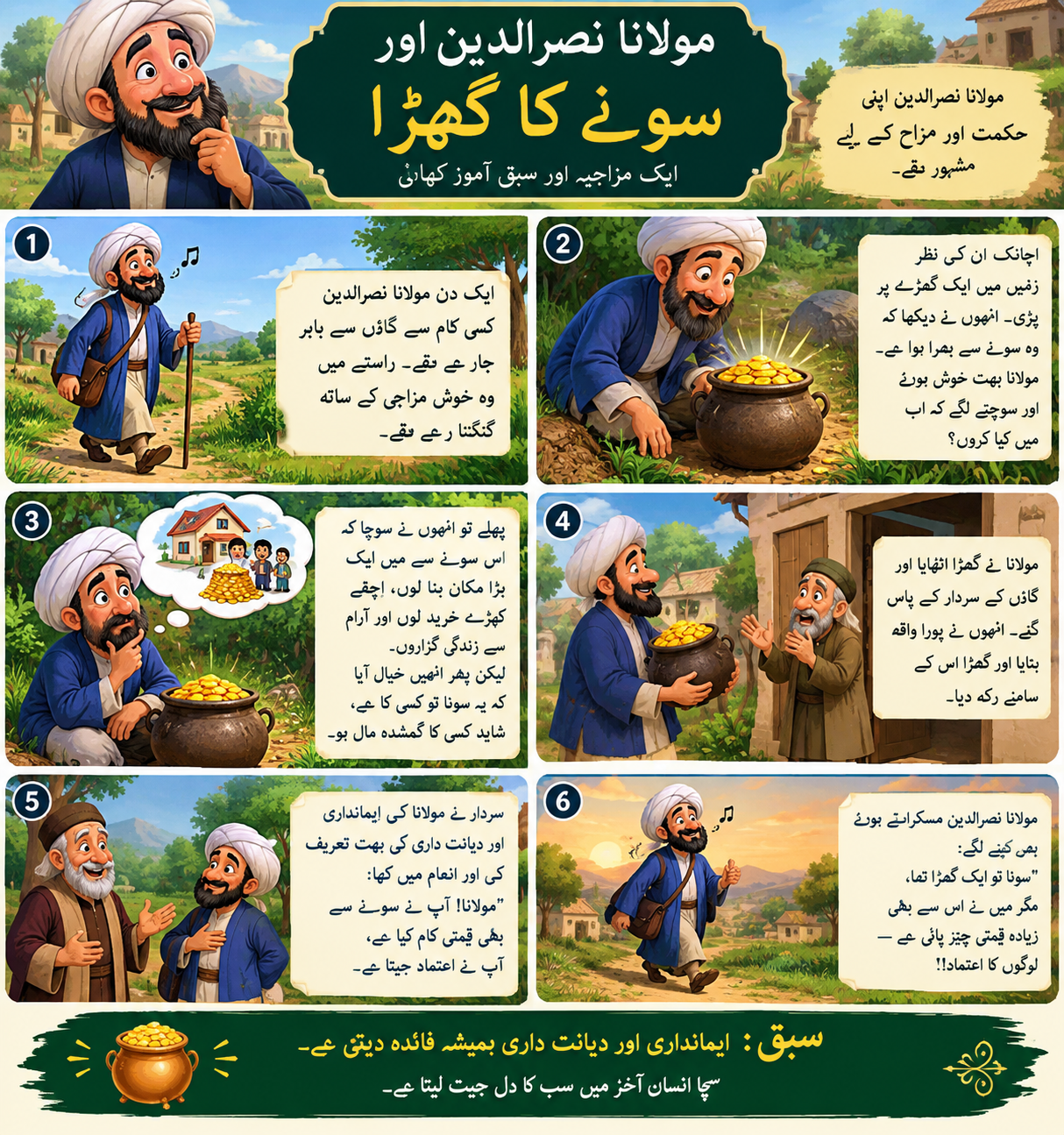
    โœจ **Mulla Nasruddin and the Pot of Gold** โœจ One day, Mulla Nasruddin was walking along a quiet path outside his village when he noticed something unusual buried in the ground. Curious, he stopped and began digging. To his great surprise, he discovered an old pot filled with shining gold coins! ๐Ÿช™โœจ For a moment, Mulla Nasruddin imagined all the things he could do with the treasure. He could build a beautiful house, buy whatever he wanted, and live a comfortable life. But then he paused and thought carefully. He realized that the gold probably belonged to someone who had hidden it there for safekeeping. ๐Ÿค” Instead of keeping the treasure for himself, Mulla Nasruddin decided to find its rightful owner. He returned to the village and asked the people if anyone had lost a pot of gold. After some searching and asking questions, he discovered that an elderly man had hidden his valuable savings in that area and had been desperately looking for them. ๐Ÿ‘ด๐Ÿ’ฐ Mulla Nasruddin happily returned the entire pot to the old man without asking for anything in return. The man was extremely grateful and praised Nasruddin for his honesty and kindness. โค๏ธ Mulla Nasruddin smiled and explained that gold may make a person rich, but **honesty, trust, and good character are far more valuable than any treasure.** ๐ŸŒŸ This heartwarming story teaches us an important lesson: when we find something that belongs to someone else, we should always try to return it to its rightful owner. True wealth is not measured by how much money we have, but by the honesty and kindness we show toward others. ๐ŸŒฟโœจ ๐Ÿ“– **Moral of the Story:** **Honesty is the greatest treasure. A person with a good character and a truthful heart possesses something more valuable than gold.** ๐Ÿ’› โœจ May we always choose honesty over greed, kindness over selfishness, and good character over material wealth. ๐Ÿคฒ๐ŸŒŸ #MullaNasruddin #MullaNasruddinStory #UrduStory #MoralStory #StoryTime #LifeLessons #Honesty #Truthfulness #GoodCharacter #Kindness #InspirationalStory #KidsStory #ShortStory #G
    0 Reacties 0 aandelen 138 Views
  • #rsisb
    Roll No.177
    Call Annie No.128
    Foundation Level

    **TELLING THE TRUTH – LIVE ON SOCIAL MEDIA**

    Today, we are going live on social media with an important and meaningful topic: **“Telling the Truth.”** Honesty is one of the most valuable qualities a person can have. It means speaking honestly, accepting our mistakes, and being truthful with ourselves and with others.

    Telling the truth helps us build **trust, respect, confidence, and strong relationships**. When we are honest, people know they can depend on our words. ‍‍‍ Whether we are talking to our parents, teachers, friends, classmates, or colleagues, honesty helps create better relationships.

    In this live session, we will talk about why telling the truth is important in our daily lives. We will discuss how honesty can help us solve problems, learn from our mistakes, and become responsible people.

    Sometimes, telling the truth can be difficult because we may feel afraid of making someone unhappy or worried about the consequences. But accepting our mistakes and speaking honestly can help us learn and grow. Every mistake can teach us something valuable when we are willing to admit it.

    We will also discuss honesty in friendships. A good friendship is built on **trust, respect, understanding, and truthfulness**. When friends communicate honestly and respectfully, they can understand each other better and solve problems together.

    Honesty is also important for students. Students should be truthful with their teachers, parents, and classmates. Being honest in studies, homework, tests, and daily activities helps develop good character and responsibility.

    A society where people value truth and honesty can become more trustworthy and peaceful. Small acts of honesty in our everyday lives can make a big difference.

    During this live session, we will share ideas, ask questions, and learn together about the power of truth. Your thoughts and experiences can also make this discussion more interesting and meaningful!

    **Always remember:** Telling the truth is not only about speaking honestly to others; it is also about being honest with yourself. True honesty helps us become better, stronger, and more responsible human beings.

    Thank you for joining this live session! Keep learning, keep growing, stay positive, and always try to choose honesty and truth in your daily life.

    **Topic: Telling the Truth**
    **Live on Social Media**
    **Speak the Truth • Build Trust • Spread Honesty**

    #TellingTheTruth #Honesty #Truth #BeHonest #HonestyIsTheBestPolicy #TruthMatters #LiveOnSocialMedia #SocialMediaLive #PositiveThinking #GoodCharacter #Trust #Respect #LifeLessons #StudentLife #Education #LearningTogether #SelfImprovement #PersonalGrowth #Motivation #Inspiration #PositiveLife #SpeakTheTruth #StayHonest #BetterLife #GoodValues #ResponsibleLife #NeverGiveUp #KeepLearning #KeepGrowing #SpreadPositivity #RehanSchool #IslamabadCampus #Pakistan #LiveSession
    #rsisb Roll No.177 Call Annie No.128 Foundation Level ๐ŸŽฅ๐Ÿ”ด **TELLING THE TRUTH – LIVE ON SOCIAL MEDIA** ๐Ÿ”ด๐ŸŽฅ ๐ŸŒŸ๐Ÿ—ฃ๏ธ Today, we are going live on social media with an important and meaningful topic: **“Telling the Truth.”** ๐Ÿคโค๏ธ Honesty is one of the most valuable qualities a person can have. It means speaking honestly, accepting our mistakes, and being truthful with ourselves and with others. ๐Ÿง ๐Ÿ’ฏ โœจ Telling the truth helps us build **trust, respect, confidence, and strong relationships**. ๐Ÿค๐Ÿ’™ When we are honest, people know they can depend on our words. ๐Ÿ‘จ‍๐Ÿ‘ฉ‍๐Ÿ‘ง‍๐Ÿ‘ฆโค๏ธ Whether we are talking to our parents, teachers, friends, classmates, or colleagues, honesty helps create better relationships. ๐ŸŒ๐ŸŒˆ ๐Ÿ“š๐ŸŽ“ In this live session, we will talk about why telling the truth is important in our daily lives. We will discuss how honesty can help us solve problems, learn from our mistakes, and become responsible people. ๐Ÿ’ช๐Ÿง ๐ŸŒŸ ๐Ÿ˜Š Sometimes, telling the truth can be difficult because we may feel afraid of making someone unhappy or worried about the consequences. ๐Ÿ˜Ÿ But accepting our mistakes and speaking honestly can help us learn and grow. ๐ŸŒฑ๐Ÿ“– Every mistake can teach us something valuable when we are willing to admit it. ๐Ÿ’กโœจ ๐Ÿ‘ซ๐Ÿ’ฌ We will also discuss honesty in friendships. A good friendship is built on **trust, respect, understanding, and truthfulness**. ๐Ÿค๐Ÿ’™ When friends communicate honestly and respectfully, they can understand each other better and solve problems together. ๐Ÿ—ฃ๏ธโค๏ธ ๐Ÿซ๐Ÿ“š Honesty is also important for students. Students should be truthful with their teachers, parents, and classmates. ๐ŸŽ“โœจ Being honest in studies, homework, tests, and daily activities helps develop good character and responsibility. ๐ŸŒŸ๐Ÿ“– ๐ŸŒ๐Ÿ’ซ A society where people value truth and honesty can become more trustworthy and peaceful. ๐Ÿ•Š๏ธ๐Ÿค Small acts of honesty in our everyday lives can make a big difference. โค๏ธโœจ ๐ŸŽค๐Ÿ”ด During this live session, we will share ideas, ask questions, and learn together about the power of truth. ๐Ÿ’ฌ๐Ÿง ๐Ÿ“š Your thoughts and experiences can also make this discussion more interesting and meaningful! ๐Ÿ™Œ๐Ÿ˜Š โค๏ธ **Always remember:** Telling the truth is not only about speaking honestly to others; it is also about being honest with yourself. ๐ŸŒŸ๐Ÿชž True honesty helps us become better, stronger, and more responsible human beings. ๐Ÿ’ชโค๏ธ ๐Ÿ™โœจ Thank you for joining this live session! Keep learning, keep growing, stay positive, and always try to choose honesty and truth in your daily life. ๐ŸŒฑ๐Ÿ“š๐Ÿ’ฏ ๐Ÿ”ด๐ŸŽฅ **Topic: Telling the Truth** ๐Ÿ—ฃ๏ธ๐Ÿ’ฌ **Live on Social Media** โค๏ธ๐Ÿค **Speak the Truth • Build Trust • Spread Honesty** ๐ŸŒโœจ #TellingTheTruth ๐Ÿ—ฃ๏ธ #Honesty โค๏ธ #Truth ๐Ÿ’ฏ #BeHonest ๐Ÿค #HonestyIsTheBestPolicy ๐ŸŒŸ #TruthMatters ๐Ÿ’ฌ #LiveOnSocialMedia ๐Ÿ”ด #SocialMediaLive ๐Ÿ“ฑ #PositiveThinking ๐Ÿ˜Š #GoodCharacter ๐ŸŒฑ #Trust ๐Ÿค #Respect โค๏ธ #LifeLessons ๐Ÿ“š #StudentLife ๐ŸŽ“ #Education ๐Ÿ“– #LearningTogether ๐Ÿง  #SelfImprovement ๐Ÿ’ช #PersonalGrowth ๐ŸŒฑ #Motivation โœจ #Inspiration ๐ŸŒŸ #PositiveLife ๐ŸŒˆ #SpeakTheTruth ๐Ÿ—ฃ๏ธ #StayHonest ๐Ÿ’ฏ #BetterLife โค๏ธ #GoodValues ๐ŸŒŸ #ResponsibleLife ๐Ÿค #NeverGiveUp ๐Ÿ’ช #KeepLearning ๐Ÿ“š #KeepGrowing ๐ŸŒฑ #SpreadPositivity ๐Ÿ˜Š #RehanSchool ๐Ÿซ #IslamabadCampus ๐Ÿ‡ต๐Ÿ‡ฐ #Pakistan ๐Ÿ‡ต๐Ÿ‡ฐ #LiveSession ๐ŸŽฅ๐Ÿ”ด
    0 Reacties 1 aandelen 4177 Views 13
  • Plato visited his teacher Socrates and said, "You have been spreading false information about me in the market place." Socrates asked, "What have you been telling people?" Plato answered, "You have been telling people about me." Socrates stopped him and told him to think about the situation, analyze it, and then decide if he should tell him the information or not. He asked Plato to consider three criteria, the truthfulness of the information, the morality of the information, and the usefulness of the information. If the information met all three criteria, then he could tell him, but if it did not, then he should keep quiet. Plato argued that the information was true but Socrates pointed out that it may not be useful or moral to spread it. This conversation highlights the importance of considering the truth, morality, and usefulness of information before spreading it.
    Plato visited his teacher Socrates and said, "You have been spreading false information about me in the market place." Socrates asked, "What have you been telling people?" Plato answered, "You have been telling people about me." Socrates stopped him and told him to think about the situation, analyze it, and then decide if he should tell him the information or not. He asked Plato to consider three criteria, the truthfulness of the information, the morality of the information, and the usefulness of the information. If the information met all three criteria, then he could tell him, but if it did not, then he should keep quiet. Plato argued that the information was true but Socrates pointed out that it may not be useful or moral to spread it. This conversation highlights the importance of considering the truth, morality, and usefulness of information before spreading it.
    0 Reacties 0 aandelen 1611 Views
  • Asokas Dharma, or righteous law, was a set of principles and guidelines established by the Emperor Asoka of the Mauryan Empire in ancient India. This dharma was not related to any specific religion but was more about the moral and ethical principles of governance and personal behavior. Key aspects of Asokas Dharma included:

    1. **Non-Violence (Ahimsa):** Emphasizing compassion and non-violence towards all living beings.
    2. **Tolerance and Respect:** Promoting religious tolerance and respect for others beliefs and practices.
    3. **Welfare of People:** Focusing on the welfare of people, including building hospitals, roads, and rest houses, and planting trees for shade.
    4. **Moral and Ethical Conduct:** Encouraging moral and ethical behavior, including honesty, truthfulness, and kindness.
    5. **Justice and Fairness:** Ensuring justice and fairness in society.
    6. **Duty and Responsibility:** Highlighting the importance of duty and responsibility towards ones family, society, and the nation.

    Asoka propagated these principles through his famous rock and pillar edicts, which were inscribed in different parts of his empire. These edicts are considered some of the earliest written records of Buddhist philosophy, but they also incorporated broader ethical principles that transcended any single religion. Asokas Dharma played a significant role in spreading the values of tolerance, compassion, and respect across his empire and influenced the development of Indian culture and governance.
    Asoka's Dharma, or righteous law, was a set of principles and guidelines established by the Emperor Asoka of the Mauryan Empire in ancient India. This dharma was not related to any specific religion but was more about the moral and ethical principles of governance and personal behavior. Key aspects of Asoka's Dharma included: 1. **Non-Violence (Ahimsa):** Emphasizing compassion and non-violence towards all living beings. 2. **Tolerance and Respect:** Promoting religious tolerance and respect for other's beliefs and practices. 3. **Welfare of People:** Focusing on the welfare of people, including building hospitals, roads, and rest houses, and planting trees for shade. 4. **Moral and Ethical Conduct:** Encouraging moral and ethical behavior, including honesty, truthfulness, and kindness. 5. **Justice and Fairness:** Ensuring justice and fairness in society. 6. **Duty and Responsibility:** Highlighting the importance of duty and responsibility towards one's family, society, and the nation. Asoka propagated these principles through his famous rock and pillar edicts, which were inscribed in different parts of his empire. These edicts are considered some of the earliest written records of Buddhist philosophy, but they also incorporated broader ethical principles that transcended any single religion. Asoka's Dharma played a significant role in spreading the values of tolerance, compassion, and respect across his empire and influenced the development of Indian culture and governance.
    0 Reacties 0 aandelen 366 Views