• #rsisb
    Roll no.239
    Maya no.7
    Foundation Level

    **“Hurry Up!”** is one of the most familiar and widely used expressions in everyday English. We hear it at home, at school, at work, while traveling, and even during emergencies. Although it consists of only two simple words, the phrase carries a strong message: **act faster, move quickly, or do not waste time.**

    In this fascinating topic, **“Hurry Up!” – The Tale of a Time-Sensitive Phrase**, we explore the story behind this common expression and discover how the idea of urgency has become an important part of human communication. Why do people say “Hurry Up”? Where did the word **“hurry”** come from? Why is the word **“up”** used with it? And how did this short phrase become such a natural part of everyday English?

    The phrase can express different emotions depending on the situation and the speaker’s tone. It can show **urgency, excitement, impatience, encouragement, frustration, or even concern**. A parent may say “Hurry Up!” when a child is late for school, while a friend might say it playfully when someone is taking too long to get ready. In an emergency, however, the same phrase can become a serious warning that immediate action is needed.

    This topic also explores the relationship between **language and our perception of time**. Modern life moves quickly, and people often have appointments, deadlines, schedules, meetings, exams, and responsibilities that require them to act promptly. As a result, expressions such as “Hurry Up!”, “Be quick!”, “Come on!”, and “We’re running out of time!” have become essential parts of everyday communication.

    But is rushing always a good thing? Sometimes, moving quickly can help us meet a deadline or avoid missing an important opportunity. At other times, rushing can lead to **mistakes, stress, poor decisions, and unnecessary pressure**. Understanding when to hurry and when to slow down is an important part of managing time wisely.

    Through the story of **“Hurry Up!”**, we can learn not only about the history and meaning of an English phrase, but also about **human behavior, communication, culture, urgency, productivity, and the value of time**.

    Join us as we take a closer look at this simple expression and discover how **two ordinary words can tell a much bigger story about the way people live, communicate, and respond to time.**

    ### Hashtags

    #HurryUp #TimeSensitivePhrase #PhraseHistory #HistoryOfLanguage #EnglishLanguage #EnglishExpressions #LearnEnglish #EnglishVocabulary #LanguageLearning #InterestingEnglish #WordsAndMeaning #TimeManagement #TimeMatters #Urgency #CommunicationSkills #DailyEnglish #EnglishLearning #Vocabulary #LanguageHistory #DidYouKnow #EducationalContent #Knowledge #LearningIsFun #EnglishWords #ExploreLanguage #SpeakEnglish #ImproveEnglish #Education #FunFacts #LifeLessons
    #rsisb Roll no.239 Maya no.7 Foundation Level **“Hurry Up!”** is one of the most familiar and widely used expressions in everyday English. We hear it at home, at school, at work, while traveling, and even during emergencies. Although it consists of only two simple words, the phrase carries a strong message: **act faster, move quickly, or do not waste time.** In this fascinating topic, **“Hurry Up!” – The Tale of a Time-Sensitive Phrase**, we explore the story behind this common expression and discover how the idea of urgency has become an important part of human communication. Why do people say “Hurry Up”? Where did the word **“hurry”** come from? Why is the word **“up”** used with it? And how did this short phrase become such a natural part of everyday English? 🤔📖 The phrase can express different emotions depending on the situation and the speaker’s tone. It can show **urgency, excitement, impatience, encouragement, frustration, or even concern**. A parent may say “Hurry Up!” when a child is late for school, while a friend might say it playfully when someone is taking too long to get ready. In an emergency, however, the same phrase can become a serious warning that immediate action is needed. 🚨 This topic also explores the relationship between **language and our perception of time**. Modern life moves quickly, and people often have appointments, deadlines, schedules, meetings, exams, and responsibilities that require them to act promptly. As a result, expressions such as “Hurry Up!”, “Be quick!”, “Come on!”, and “We’re running out of time!” have become essential parts of everyday communication. ⏳ But is rushing always a good thing? Sometimes, moving quickly can help us meet a deadline or avoid missing an important opportunity. At other times, rushing can lead to **mistakes, stress, poor decisions, and unnecessary pressure**. Understanding when to hurry and when to slow down is an important part of managing time wisely. Through the story of **“Hurry Up!”**, we can learn not only about the history and meaning of an English phrase, but also about **human behavior, communication, culture, urgency, productivity, and the value of time**. 🌍🕐 Join us as we take a closer look at this simple expression and discover how **two ordinary words can tell a much bigger story about the way people live, communicate, and respond to time.** 📚✨ ### 🔖 Hashtags #HurryUp #TimeSensitivePhrase #PhraseHistory #HistoryOfLanguage #EnglishLanguage #EnglishExpressions #LearnEnglish #EnglishVocabulary #LanguageLearning #InterestingEnglish #WordsAndMeaning #TimeManagement #TimeMatters #Urgency #CommunicationSkills #DailyEnglish #EnglishLearning #Vocabulary #LanguageHistory #DidYouKnow #EducationalContent #Knowledge #LearningIsFun #EnglishWords #ExploreLanguage #SpeakEnglish #ImproveEnglish #Education #FunFacts #LifeLessons ⏰📖🌍✨

    0 Σχόλια 0 Μοιράστηκε 106 Views 10
  • #rsisb
    Roll No.240
    Coding No.5
    Foundation Level

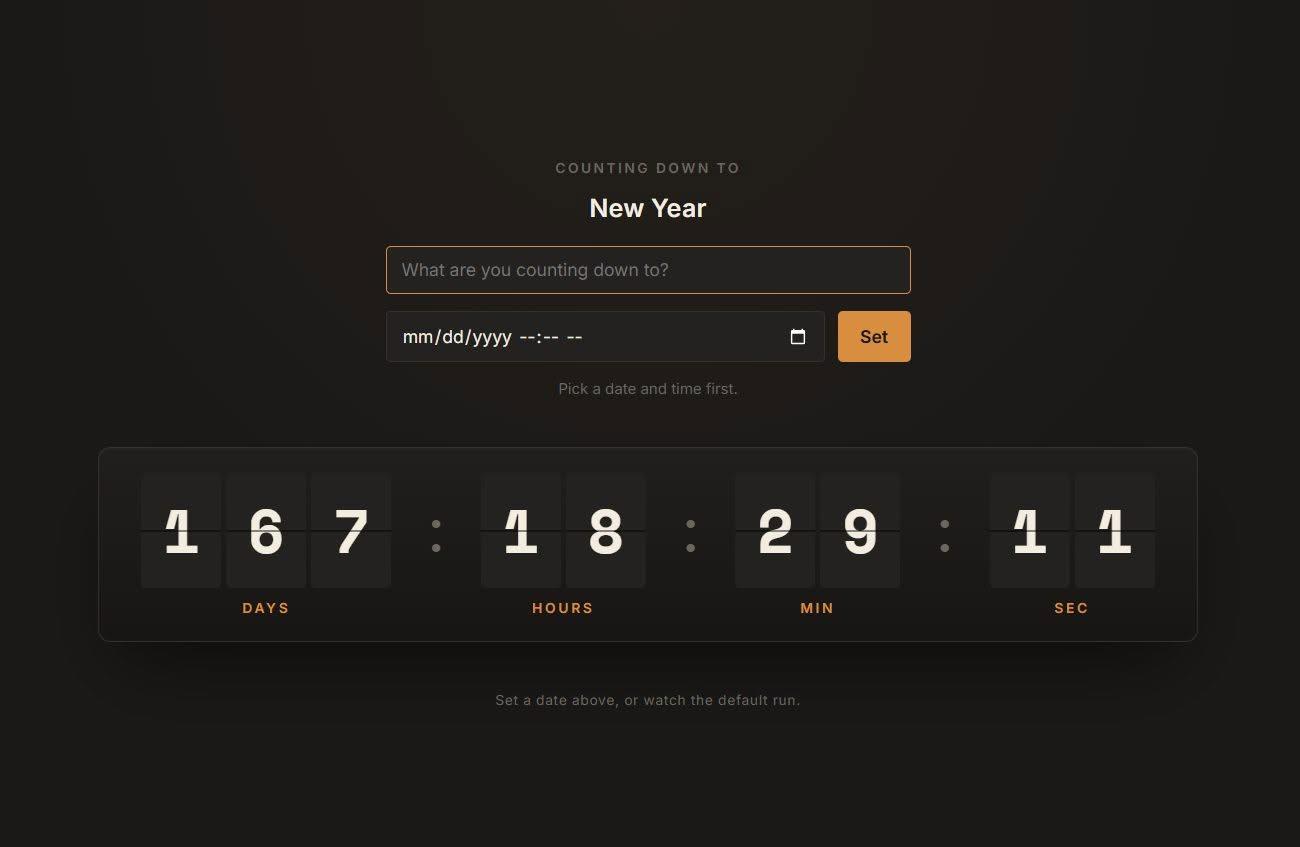
    ** Countdown Timer**

    A **Countdown Timer** is a simple yet powerful tool that counts down from a set amount of time to zero. It helps improve focus, manage time effectively, and stay productive during work, study, exercise, cooking, presentations, or any time-based activity.

    Using a countdown timer creates a sense of urgency, helping you avoid distractions and complete tasks within a specific timeframe. Whether you're practicing the Pomodoro Technique, preparing for an exam, or timing a game or challenge, a countdown timer keeps you organized and motivated.

    Time is one of our most valuable resources. By using a countdown timer, you can build better habits, increase efficiency, and make every minute count. Set your goal, start the timer, and stay focused until the countdown reaches zero!

    Rehan School Islamabad Campus
    Asma Shaheen EducationWali
    Irum Asim
    Saima Happinesswali
    #rsisb Roll No.240 Coding No.5 Foundation Level **⏳ Countdown Timer** A **Countdown Timer** is a simple yet powerful tool that counts down from a set amount of time to zero. It helps improve focus, manage time effectively, and stay productive during work, study, exercise, cooking, presentations, or any time-based activity. Using a countdown timer creates a sense of urgency, helping you avoid distractions and complete tasks within a specific timeframe. Whether you're practicing the Pomodoro Technique, preparing for an exam, or timing a game or challenge, a countdown timer keeps you organized and motivated. Time is one of our most valuable resources. By using a countdown timer, you can build better habits, increase efficiency, and make every minute count. Set your goal, start the timer, and stay focused until the countdown reaches zero! Rehan School Islamabad Campus Asma Shaheen EducationWali Irum Asim Saima Happinesswali
    0 Σχόλια 0 Μοιράστηκε 1161 Views
  • #rsisb Roll No.240 Maya No.4 Foundation Level ⏳ **"Hurry Up!" – The Tale of a Time-Sensitive Phrase** 🚀 Have you ever wondered why people say **"Hurry up!"** and where this common phrase comes from? 🤔 In this video, we explore the fascinating story behind one of the world's most frequently used expressions. From everyday conversations to emergency situations, "Hurry up!" has become a universal way to encourage speed and urgency. You'll discover the meaning of the phrase, its historical background, how it became popular in English, and the many situations where native speakers use it naturally. Whether you're learning English, improving your vocabulary, or simply curious about the stories behind everyday words, this video will give you interesting insights in a simple and enjoyable way. 🌍 Language is full of expressions with surprising histories, and "Hurry up!" is no exception. Join us as we uncover the origin, evolution, and modern usage of this time-sensitive phrase. 📚 In this video, you'll learn: ✅ What "Hurry up!" really means ✅ The history of the phrase ✅ Why it became so popular ✅ Everyday examples of its use ✅ Tips to use it naturally in English conversations 💬 If you enjoyed this video, don't forget to **Like 👍, Share 📤, and Subscribe 🔔** for more videos about English phrases, word origins, language history, and interesting facts. ✨ Keep learning, keep growing, and keep exploring the amazing world of language! #HurryUp #EnglishPhrases #WordOrigins #LanguageHistory #LearnEnglish #EnglishVocabulary #SpeakEnglish #EverydayEnglish #EnglishLearning #InterestingFacts #HistoryOfWords #Communication #VocabularyBuilding #EnglishTips #Education #LanguageLovers #DailyEnglish #EnglishExpressions #StudyEnglish #Knowledge 🌟📚 ⏰🚀 Rehan School Islamabad Campus Asma Shaheen EducationWali Irum Asim Saima Happinesswali https://www.facebook.com/share/v/1BhHGZfRi5/
    WWW.FACEBOOK.COM
    Facebook
    #rsisb Roll No.240 Maya No.4 Foundation Level ⏳ **"Hurry Up!" – The Tale of a Time-Sensitive Phrase** 🚀 Have you ever wondered why people say **"Hurry up!"** and where this common phrase comes...
    0 Σχόλια 0 Μοιράστηκε 1718 Views
  • #rsisb
    roll no 46
    1 cavna post
    Here's a social media description for your **CallAnnie (Call AI)** video on the topic **"Hurry Up!"**:
    **Hurry Up! – The Tale of a Time-Sensitive Phrase **
    Welcome to my Call AI session! In this video, we explore the meaning of **"Hurry Up!"**, when to use it, common situations where people say it, and how it helps us communicate urgency in everyday English.
    If you want to improve your English speaking and vocabulary, this video is for you. Don't forget to like, share, and subscribe for more educational content!
    #HurryUp #CallAI #CallAnnie #EnglishLearning #LearnEnglish #SpeakEnglish #EnglishVocabulary #CommunicationSkills #EverydayEnglish #Education #StudentLife #LanguageLearning #EnglishPractice #YouTubeLearning #MuhammadAbdullah

    I can also create a **long YouTube description**, **SEO tags**, and a **thumbnail title** for this video
    #rsisb roll no 46 1 cavna post Here's a social media description for your **CallAnnie (Call AI)** video on the topic **"Hurry Up!"**: 🚀 **Hurry Up! – The Tale of a Time-Sensitive Phrase ⏰** Welcome to my Call AI session! In this video, we explore the meaning of **"Hurry Up!"**, when to use it, common situations where people say it, and how it helps us communicate urgency in everyday English. If you want to improve your English speaking and vocabulary, this video is for you. Don't forget to like, share, and subscribe for more educational content! #HurryUp #CallAI #CallAnnie #EnglishLearning #LearnEnglish #SpeakEnglish #EnglishVocabulary #CommunicationSkills #EverydayEnglish #Education #StudentLife #LanguageLearning #EnglishPractice #YouTubeLearning #MuhammadAbdullah ⏰📚🎥🤖💬🚀✨👍🌍 I can also create a **long YouTube description**, **SEO tags**, and a **thumbnail title** for this video
    0 Σχόλια 0 Μοιράστηκε 3117 Views
  • #rsisb
    roll on 46
    3 call ani on topice is heery up
    *:
    **Hurry Up! – The Tale of a Time-Sensitive Phrase **
    Welcome to my Call AI session! In this video, we explore the meaning of **"Hurry Up!"**, when to use it, common situations where people say it, and how it helps us communicate urgency in everyday English.
    If you want to improve your English speaking and vocabulary, this video is for you. Don't forget to like, share, and subscribe for more educational content!
    #HurryUp #CallAI #CallAnnie #EnglishLearning #LearnEnglish #SpeakEnglish #EnglishVocabulary #CommunicationSkills #EverydayEnglish #Education #StudentLife #LanguageLearning #EnglishPractice #YouTubeLearning #MuhammadAbdullah

    I can also create a **long YouTube description**, **SEO tags**, and a **thumbnail title** for this video
    #rsisb roll on 46 3 call ani on topice is heery up *: 🚀 **Hurry Up! – The Tale of a Time-Sensitive Phrase ⏰** Welcome to my Call AI session! In this video, we explore the meaning of **"Hurry Up!"**, when to use it, common situations where people say it, and how it helps us communicate urgency in everyday English. If you want to improve your English speaking and vocabulary, this video is for you. Don't forget to like, share, and subscribe for more educational content! #HurryUp #CallAI #CallAnnie #EnglishLearning #LearnEnglish #SpeakEnglish #EnglishVocabulary #CommunicationSkills #EverydayEnglish #Education #StudentLife #LanguageLearning #EnglishPractice #YouTubeLearning #MuhammadAbdullah ⏰📚🎥🤖💬🚀✨👍🌍 I can also create a **long YouTube description**, **SEO tags**, and a **thumbnail title** for this video
    0 Σχόλια 0 Μοιράστηκε 2975 Views 8
  • Urgency and accountability are two sides of the innovation coin. How are you designing your day, your week, your year for both?
    Urgency and accountability are two sides of the innovation coin. How are you designing your day, your week, your year for both?
    0 Σχόλια 0 Μοιράστηκε 88 Views
  • Textbroker is a website that allows people to find freelance writers for hire. Some key points about Textbroker:

    • They have a large network of freelance writers who provide various writing and editing services like articles, blog posts, resumes, dissertations, etc.

    • Writers on the platform are evaluated based on their writing samples, reviews, and credentials. Clients can browse writer profiles and hire the ones that suit their needs.

    • The process typically involves 3 steps:

    1. A client posts a writing job with details like word count, topic, urgency, etc.

    2. Interested writers apply for the job with their qualifications and rate.

    3. The client reviews applicants and hires the best writer.

    • Payment is handled securely through Textbrokers system. Clients pay Textbroker, and they pay the writers.

    • Textbroker is good for both small businesses and individuals who need content written quickly and affordably. Writers get new job opportunities and the flexibility to write on topics of their choice.

    • Textbroker charges a small fee for some of their services. But hiring a writer through the platform can still cost significantly less than traditional freelancing job sites.

    • Textbroker has been in business since 2005 and has a trusted reputation with over 200,000 writers and 1 million clients worldwide.

    Does this help explain what Textbroker is? Let me know if you have any other questions.
    Textbroker is a website that allows people to find freelance writers for hire. Some key points about Textbroker: • They have a large network of freelance writers who provide various writing and editing services like articles, blog posts, resumes, dissertations, etc. • Writers on the platform are evaluated based on their writing samples, reviews, and credentials. Clients can browse writer profiles and hire the ones that suit their needs. • The process typically involves 3 steps: 1. A client posts a writing job with details like word count, topic, urgency, etc. 2. Interested writers apply for the job with their qualifications and rate. 3. The client reviews applicants and hires the best writer. • Payment is handled securely through Textbroker's system. Clients pay Textbroker, and they pay the writers. • Textbroker is good for both small businesses and individuals who need content written quickly and affordably. Writers get new job opportunities and the flexibility to write on topics of their choice. • Textbroker charges a small fee for some of their services. But hiring a writer through the platform can still cost significantly less than traditional freelancing job sites. • Textbroker has been in business since 2005 and has a trusted reputation with over 200,000 writers and 1 million clients worldwide. Does this help explain what Textbroker is? Let me know if you have any other questions.
    0 Σχόλια 0 Μοιράστηκε 289 Views
  • "Shikwa" is a poem written by Allama Iqbal, one of the most prominent poets and thinkers of the 20th century in the Indian subcontinent. The poem was published in 1909, and it is considered one of Iqbals most famous works.

    The poem is written in the form of a complaint, with Iqbal addressing God about the state of the Muslim community. The word "Shikwa" means "complaint" in Urdu, and the poem is often referred to by this title.

    In the poem, Iqbal expresses his frustration and disappointment with the current state of the Muslim world, which he sees as being in a state of decline and weakness. He laments the loss of the greatness and glory that Islam had in the past, and he calls on Muslims to reflect on their current state and work to restore their faith and community to its former strength.

    The poem is written in a highly poetic and lyrical style, with powerful imagery and vivid language that evokes a sense of passion and urgency. It has been widely praised for its emotional depth and its ability to capture the complex feelings and experiences of the Muslim community at a time of great change and upheaval in the Indian subcontinent.

    "Shikwa" has had a significant impact on the literary and intellectual history of the Muslim world, and it continues to be studied and admired by readers and scholars around the world.
    "Shikwa" is a poem written by Allama Iqbal, one of the most prominent poets and thinkers of the 20th century in the Indian subcontinent. The poem was published in 1909, and it is considered one of Iqbal's most famous works. The poem is written in the form of a complaint, with Iqbal addressing God about the state of the Muslim community. The word "Shikwa" means "complaint" in Urdu, and the poem is often referred to by this title. In the poem, Iqbal expresses his frustration and disappointment with the current state of the Muslim world, which he sees as being in a state of decline and weakness. He laments the loss of the greatness and glory that Islam had in the past, and he calls on Muslims to reflect on their current state and work to restore their faith and community to its former strength. The poem is written in a highly poetic and lyrical style, with powerful imagery and vivid language that evokes a sense of passion and urgency. It has been widely praised for its emotional depth and its ability to capture the complex feelings and experiences of the Muslim community at a time of great change and upheaval in the Indian subcontinent. "Shikwa" has had a significant impact on the literary and intellectual history of the Muslim world, and it continues to be studied and admired by readers and scholars around the world.
    0 Σχόλια 0 Μοιράστηκε 409 Views
  • The saying, “If you want something done, give it to the busiest person you know,” is rooted in the observation that people who are busy tend to be highly organized, efficient, and reliable. The story behind this adage comes from the way human behavior and time management are perceived:
    1. The Psychology of Busy People: Busy individuals often have well-developed systems for prioritizing and managing tasks. They have learned to juggle multiple responsibilities effectively and can quickly assess how to fit another task into their schedule. Their sense of responsibility and discipline makes them dependable.
    2. Momentum in Action: Busy people are typically in a state of “flow” or momentum. When someone is actively engaged in various tasks, it’s easier for them to add one more to the mix. Conversely, someone with too much free time may procrastinate or lack the urgency to take action.
    3. Trust and Reliability: The saying also reflects a level of trust. If someone is already busy, it implies they are trusted by others to handle important responsibilities. Their track record of delivering results makes them the go-to person for new tasks.
    4. Origins of the Phrase: While the exact origin of the saying is unclear, it aligns with principles in productivity and leadership. Some attribute its sentiment to management and organizational theory, which recognizes the efficiency of people who are already accustomed to handling significant workloads.

    The phrase is often used as a light-hearted way to highlight the paradox that the busiest people, despite having the least time, are often the most capable of getting things done.
    The saying, “If you want something done, give it to the busiest person you know,” is rooted in the observation that people who are busy tend to be highly organized, efficient, and reliable. The story behind this adage comes from the way human behavior and time management are perceived: 1. The Psychology of Busy People: Busy individuals often have well-developed systems for prioritizing and managing tasks. They have learned to juggle multiple responsibilities effectively and can quickly assess how to fit another task into their schedule. Their sense of responsibility and discipline makes them dependable. 2. Momentum in Action: Busy people are typically in a state of “flow” or momentum. When someone is actively engaged in various tasks, it’s easier for them to add one more to the mix. Conversely, someone with too much free time may procrastinate or lack the urgency to take action. 3. Trust and Reliability: The saying also reflects a level of trust. If someone is already busy, it implies they are trusted by others to handle important responsibilities. Their track record of delivering results makes them the go-to person for new tasks. 4. Origins of the Phrase: While the exact origin of the saying is unclear, it aligns with principles in productivity and leadership. Some attribute its sentiment to management and organizational theory, which recognizes the efficiency of people who are already accustomed to handling significant workloads. The phrase is often used as a light-hearted way to highlight the paradox that the busiest people, despite having the least time, are often the most capable of getting things done.
    0 Σχόλια 0 Μοιράστηκε 241 Views
  • How Alex Hormozi Made $105 Million in 3 Days Selling a “$6,000 Book”

    Last week the internet was buzzing: “Did Alex Hormozi just sell a $6,000 book and make $100 million in a weekend?”

    Here’s what actually happened

    What Was He Selling?
    • Alex launched his new book 100M Money Models.
    • Along with the normal $30 edition, he introduced a $5,998 “Donate 200 Books” bundle.
    • In this bundle you got:
    1 personal copy of the book
    199 donated copies to other entrepreneurs
    A 12-playbook binder (his private business SOPs)
    Audiobook + course + live virtual workshop
    Access to a custom AI chatbot trained on his content
    Bonuses + a gamified leaderboard for sharing

    This was not just a book—it was a movement + toolkit + community access pass.


    How Much Did He Sell?
    • Day 1: ~2.7 million copies → ~$81–84 million
    • Day 3: ~3.6 million copies → ~$105 million

    Yes, in just one weekend. Probably the fastest non-fiction launch in history.


    Why Did It Work?
    1. Donation psychology → People weren’t just buying for themselves; they felt they were gifting knowledge to others.
    2. Stacked value → A $6,000 “book” is insane—until you realize it included playbooks, AI tools, workshops, and social access.
    3. Scarcity + urgency → 10-hour livestream launch, bonuses for early action.
    4. Viral loop → Buyers were incentivized to share their donation on social media, turning customers into promoters.
    5. Trust + brand → Alex has been giving away free value for years (YouTube, podcasts, $100M Offers). When he asked, people bought.


    What Can We Learn?
    • A “book” can be more than a book. Bundle knowledge, community, tools, and experiences.
    • Charity framing (“donate 200 books”) taps into people’s desire to help.
    • The launch event itself was theater—scarcity, urgency, storytelling.
    • Build goodwill first: years of free content made trust so high that people were ready to buy instantly.


    How Can We Replicate This in Pakistan?
    1. Think bigger than a book → Package learning with tools, community, and live experiences.
    2. Create a giving frame → Instead of “buy for yourself,” let people sponsor others (students, entrepreneurs, schools).
    3. Make it social + viral → Turn buyers into marketers by rewarding sharing.
    4. Leverage AI + tech → Add AI chatbots, playbooks, and video courses inside your offer.
    5. Start building trust NOW → Give free value daily on Facebook, YouTube, WhatsApp. When the time comes, people will line up.


    Imagine this: instead of Alex donating books, a Pakistani entrepreneur launches a “Sponsor 200 Students” bundle—for every sponsorship, one student gets a laptop, internet, and Rehan School curriculum. That’s how we can create our own $100M moment.


    Lesson: Hormozi didn’t just sell a book. He sold hope, community, and tools for success—wrapped in a story people wanted to be part of.
    🚀 How Alex Hormozi Made $105 Million in 3 Days Selling a “$6,000 Book” Last week the internet was buzzing: “Did Alex Hormozi just sell a $6,000 book and make $100 million in a weekend?” Here’s what actually happened 👇 📖 What Was He Selling? • Alex launched his new book 100M Money Models. • Along with the normal $30 edition, he introduced a $5,998 “Donate 200 Books” bundle. • In this bundle you got: ✅ 1 personal copy of the book ✅ 199 donated copies to other entrepreneurs ✅ A 12-playbook binder (his private business SOPs) ✅ Audiobook + course + live virtual workshop ✅ Access to a custom AI chatbot trained on his content ✅ Bonuses + a gamified leaderboard for sharing This was not just a book—it was a movement + toolkit + community access pass. ⸻ 💰 How Much Did He Sell? • Day 1: ~2.7 million copies → ~$81–84 million • Day 3: ~3.6 million copies → ~$105 million Yes, in just one weekend. Probably the fastest non-fiction launch in history. ⸻ 🎯 Why Did It Work? 1. Donation psychology → People weren’t just buying for themselves; they felt they were gifting knowledge to others. 2. Stacked value → A $6,000 “book” is insane—until you realize it included playbooks, AI tools, workshops, and social access. 3. Scarcity + urgency → 10-hour livestream launch, bonuses for early action. 4. Viral loop → Buyers were incentivized to share their donation on social media, turning customers into promoters. 5. Trust + brand → Alex has been giving away free value for years (YouTube, podcasts, $100M Offers). When he asked, people bought. ⸻ 🧠 What Can We Learn? • A “book” can be more than a book. Bundle knowledge, community, tools, and experiences. • Charity framing (“donate 200 books”) taps into people’s desire to help. • The launch event itself was theater—scarcity, urgency, storytelling. • Build goodwill first: years of free content made trust so high that people were ready to buy instantly. ⸻ 🌍 How Can We Replicate This in Pakistan? 1. Think bigger than a book → Package learning with tools, community, and live experiences. 2. Create a giving frame → Instead of “buy for yourself,” let people sponsor others (students, entrepreneurs, schools). 3. Make it social + viral → Turn buyers into marketers by rewarding sharing. 4. Leverage AI + tech → Add AI chatbots, playbooks, and video courses inside your offer. 5. Start building trust NOW → Give free value daily on Facebook, YouTube, WhatsApp. When the time comes, people will line up. ⸻ 👉 Imagine this: instead of Alex donating books, a Pakistani entrepreneur launches a “Sponsor 200 Students” bundle—for every sponsorship, one student gets a laptop, internet, and Rehan School curriculum. That’s how we can create our own $100M moment. ⸻ 💡 Lesson: Hormozi didn’t just sell a book. He sold hope, community, and tools for success—wrapped in a story people wanted to be part of.
    0 Σχόλια 0 Μοιράστηκε 1016 Views
Αναζήτηση αποτελεσμάτων