• ACCL Day 174
    Sound Waves: The Physics of Hearing and Communication

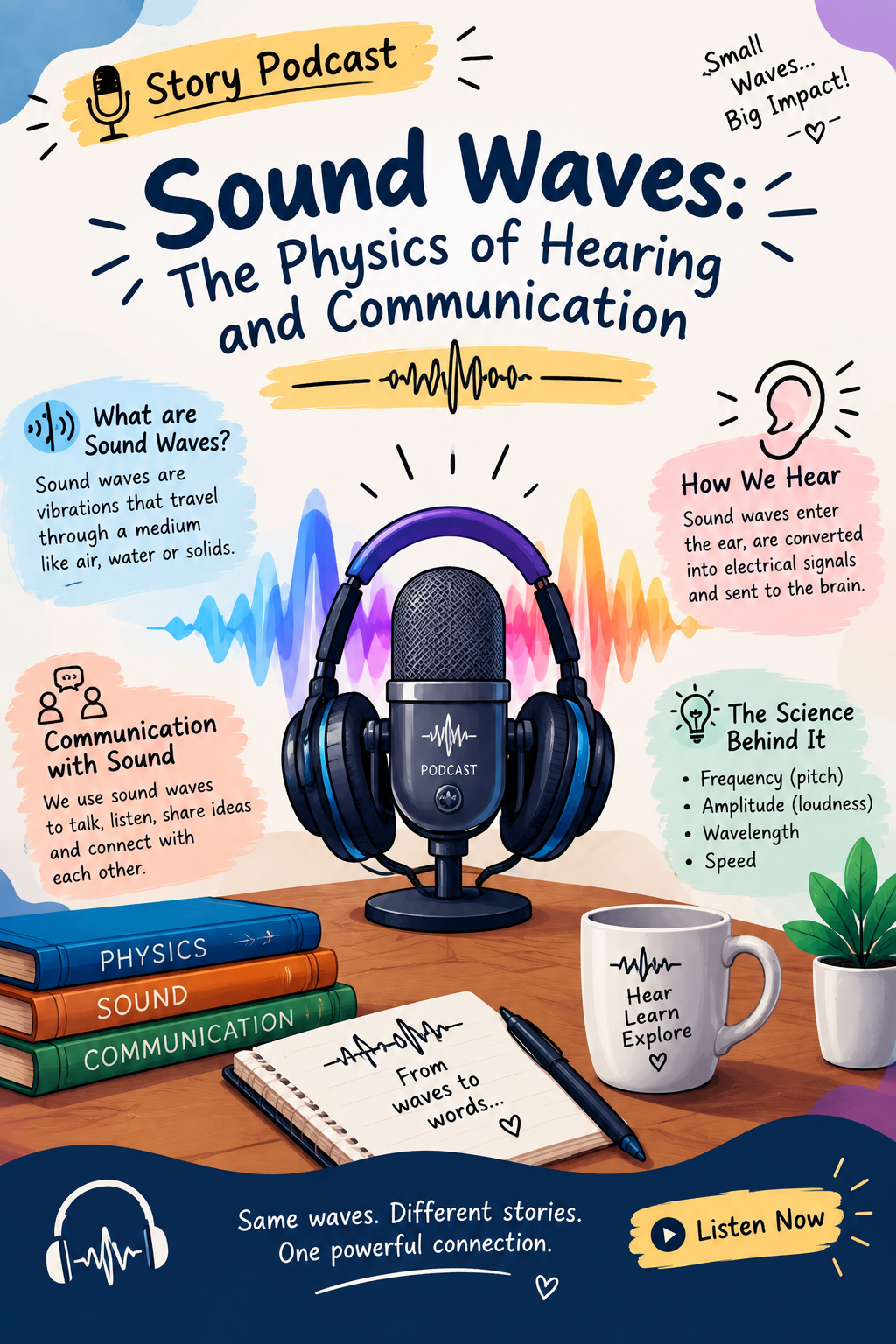
    In the lively town of Harmonia, everything revolved around sound. People communicated through music, bells guided the day, and even the birds seemed to sing in rhythm. Among them lived a curious boy named Arham, who always wondered:

    “How do sounds travel? How do we hear?”

    One morning, Arham visited the wise inventor, Master Raheel, who loved explaining science through magic-like demonstrations.

    Master Raheel smiled and struck a tuning fork. TINGGGG!
    Arham felt the table vibrate.

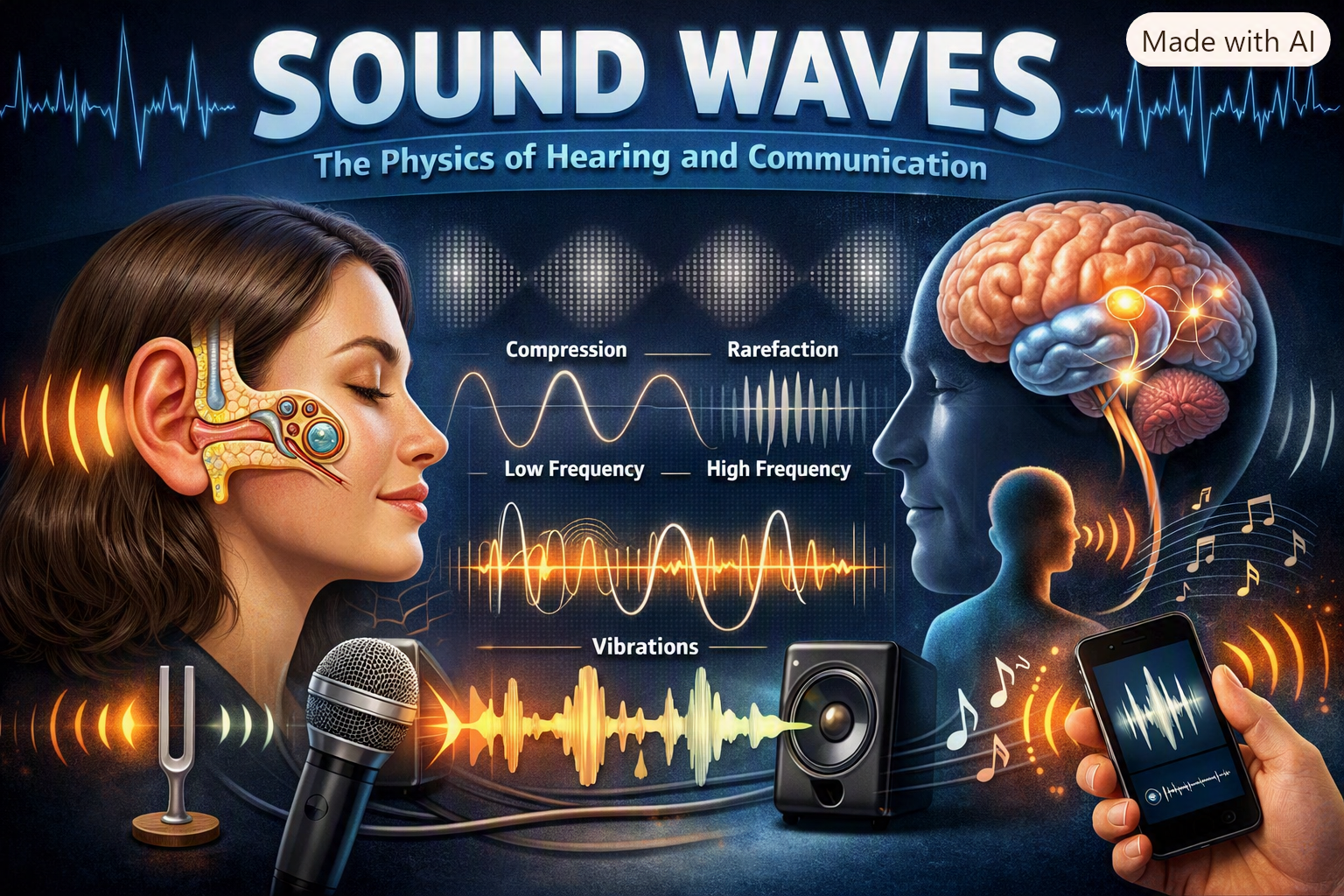
    “Sound,” Raheel explained, “is a wave. When something vibrates, it pushes air particles. Those tiny particles bump into others, passing energy forward—like a chain reaction.”

    To show this, he lined up marbles and pushed the first one. One by one, they knocked into each other.

    “That’s how sound travels through air, water, or even solid walls,” he said.

    Later that day, Arham sat near the river with his friend Sana. She spoke softly, but he still heard her clearly.

    “How?” Arham asked.

    Sana laughed, “Because your ears are amazing!”

    Master Raheel joined them and continued:

    “Inside your ear is a tiny drum called the eardrum. When sound waves reach it, it vibrates. Those vibrations move even smaller bones—the hammer, anvil, and stirrup—then send signals to your brain. Your brain turns those signals into sound you understand.”

    Arham’s eyes widened.
    “So when we talk, sing, or laugh, we send waves through the air that other people’s ears capture?”

    “Exactly,” Raheel said. “Sound lets us communicate, share emotions, warn of danger, and build connections.”

    That evening, Harmonia held a festival. Drums pounded, flutes danced in the air, and voices blended in harmony. Arham listened carefully—every beat, every laugh, every whisper.

    He realized something beautiful:

    Sound waves were not just physics—they were the reason people understood each other, felt close, and stayed connected.

    Without sound, Harmonia would be silent, lonely, and lost.

    Arham smiled and whispered, “Waves carry voices… and voices carry hearts.”

    Communication begins with a vibration—and ends with connection.
    ACCL Day 174 🎧 Sound Waves: The Physics of Hearing and Communication 🌊🔊 In the lively town of Harmonia, everything revolved around sound. People communicated through music, bells guided the day, and even the birds seemed to sing in rhythm. Among them lived a curious boy named Arham, who always wondered: “How do sounds travel? How do we hear?” One morning, Arham visited the wise inventor, Master Raheel, who loved explaining science through magic-like demonstrations. Master Raheel smiled and struck a tuning fork. TINGGGG! Arham felt the table vibrate. “Sound,” Raheel explained, “is a wave. When something vibrates, it pushes air particles. Those tiny particles bump into others, passing energy forward—like a chain reaction.” To show this, he lined up marbles and pushed the first one. One by one, they knocked into each other. “That’s how sound travels through air, water, or even solid walls,” he said. Later that day, Arham sat near the river with his friend Sana. She spoke softly, but he still heard her clearly. “How?” Arham asked. Sana laughed, “Because your ears are amazing!” Master Raheel joined them and continued: “Inside your ear is a tiny drum called the eardrum. When sound waves reach it, it vibrates. Those vibrations move even smaller bones—the hammer, anvil, and stirrup—then send signals to your brain. Your brain turns those signals into sound you understand.” Arham’s eyes widened. “So when we talk, sing, or laugh, we send waves through the air that other people’s ears capture?” “Exactly,” Raheel said. “Sound lets us communicate, share emotions, warn of danger, and build connections.” That evening, Harmonia held a festival. Drums pounded, flutes danced in the air, and voices blended in harmony. Arham listened carefully—every beat, every laugh, every whisper. He realized something beautiful: Sound waves were not just physics—they were the reason people understood each other, felt close, and stayed connected. Without sound, Harmonia would be silent, lonely, and lost. Arham smiled and whispered, “Waves carry voices… and voices carry hearts.” 🌊🎶 Communication begins with a vibration—and ends with connection.
    0 Kommentare 0 Anteile 93 Ansichten
  • RSIF8
    Roll no: 99
    Story post no: 26
    Story topic: Sound Waves: The Physics of Hearing and Communication
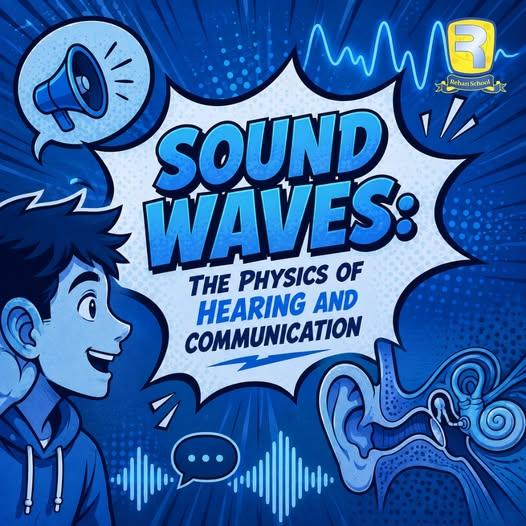
    Sound waves are vibrations that travel through a medium such as air, water, or solids. These waves allow us to hear everything from music and speech to the sounds of nature and our surroundings.
    Our ears play an amazing role in converting these vibrations into signals that the brain can understand. From the vibration of the eardrum to the movement of tiny structures inside the ear, physics and biology work together to make hearing and communication possible.
    #SoundWaves #Physics #Hearing #Communication #Science #PhysicsEducation #Waves #Acoustics #LearnScience #Education
    RSIF8 Roll no: 99 Story post no: 26 Story topic: Sound Waves: The Physics of Hearing and Communication Sound waves are vibrations that travel through a medium such as air, water, or solids. These waves allow us to hear everything from music and speech to the sounds of nature and our surroundings. Our ears play an amazing role in converting these vibrations into signals that the brain can understand. From the vibration of the eardrum to the movement of tiny structures inside the ear, physics and biology work together to make hearing and communication possible. #SoundWaves #Physics #Hearing #Communication #Science #PhysicsEducation #Waves #Acoustics #LearnScience #Education
    0 Kommentare 0 Anteile 1296 Ansichten
  • RSIF8
    ROll no:82
    Story post: 1
    Story post topic:Sound Waves: The Physics of Hearing and Communication

    Sound is an invisible form of energy that plays a vital role in our everyday lives. It travels as waves created by vibrating objects and moves through air, water, or solid materials until it reaches our ears. These waves allow us to hear voices, enjoy music, recognize warning signals, and communicate with people around the world.

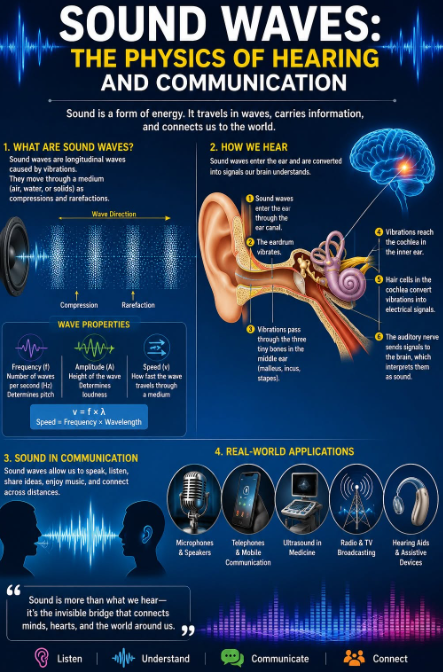
    The process of hearing is a remarkable example of nature and science working together. Sound waves enter the ear canal, causing the eardrum to vibrate. These vibrations travel through tiny bones in the middle ear and reach the cochlea, where specialized hair cells convert them into electrical signals. The brain then interprets these signals, allowing us to recognize speech, music, and countless other sounds.

    The physics of sound is also the foundation of modern communication. Technologies such as microphones, speakers, telephones, hearing aids, ultrasound devices, and broadcasting systems all rely on the transmission and interpretation of sound waves. From education and healthcare to entertainment and global communication, sound connects people and makes the exchange of ideas possible.

    Understanding sound waves helps us appreciate both the complexity of the human body and the power of scientific discovery. Every conversation, every melody, and every echo reminds us that invisible waves carry information, emotions, and knowledge across the world.

    "Sound is more than something we hear—it is the invisible force that connects people, powers communication, and brings the world to life."
    RSIF8 ROll no:82 Story post: 1 Story post topic:Sound Waves: The Physics of Hearing and Communication Sound is an invisible form of energy that plays a vital role in our everyday lives. It travels as waves created by vibrating objects and moves through air, water, or solid materials until it reaches our ears. These waves allow us to hear voices, enjoy music, recognize warning signals, and communicate with people around the world. The process of hearing is a remarkable example of nature and science working together. Sound waves enter the ear canal, causing the eardrum to vibrate. These vibrations travel through tiny bones in the middle ear and reach the cochlea, where specialized hair cells convert them into electrical signals. The brain then interprets these signals, allowing us to recognize speech, music, and countless other sounds. The physics of sound is also the foundation of modern communication. Technologies such as microphones, speakers, telephones, hearing aids, ultrasound devices, and broadcasting systems all rely on the transmission and interpretation of sound waves. From education and healthcare to entertainment and global communication, sound connects people and makes the exchange of ideas possible. Understanding sound waves helps us appreciate both the complexity of the human body and the power of scientific discovery. Every conversation, every melody, and every echo reminds us that invisible waves carry information, emotions, and knowledge across the world. "Sound is more than something we hear—it is the invisible force that connects people, powers communication, and brings the world to life."
    0 Kommentare 0 Anteile 2095 Ansichten
  • #RSTA
    #Task : Story Post
    #Class: Foundation Level
    #Day No: 174
    #Made By Me

    Total Post:24


    Sound waves are vibrations that travel through a medium such as air, water, or solids. They allow us to hear sounds, communicate with others, enjoy music, and understand the world around us.

    In this topic, we explore how sound is produced and how it travels to our ears. Important properties such as **frequency, amplitude, wavelength, and speed** help explain pitch, loudness, and the way sound behaves. When sound waves enter the ear, they are transformed into signals that the brain can understand.

    This topic shows how the simple movement of sound waves connects **physics, hearing, and human communication**.
    #RSTA #Task : Story Post #Class: Foundation Level #Day No: 174 #Made By Me Total Post:24 Sound waves are vibrations that travel through a medium such as air, water, or solids. They allow us to hear sounds, communicate with others, enjoy music, and understand the world around us. In this topic, we explore how sound is produced and how it travels to our ears. Important properties such as **frequency, amplitude, wavelength, and speed** help explain pitch, loudness, and the way sound behaves. When sound waves enter the ear, they are transformed into signals that the brain can understand. This topic shows how the simple movement of sound waves connects **physics, hearing, and human communication**.
    0 Kommentare 0 Anteile 1432 Ansichten
  • Day:-174
    rollno:-006
    foundation level
    Story Post
    Sound Waves: The Physics of Hearing and Communication

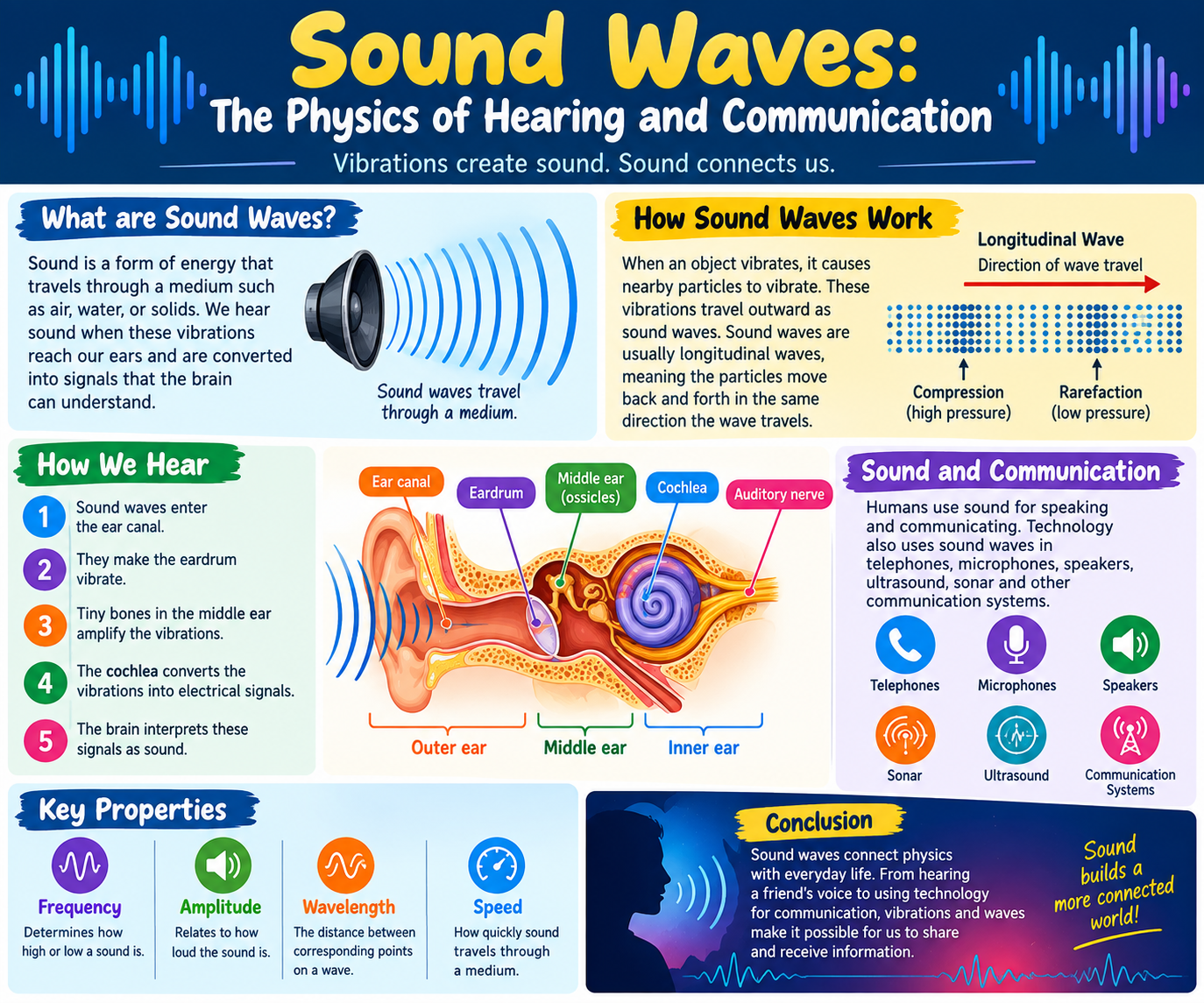
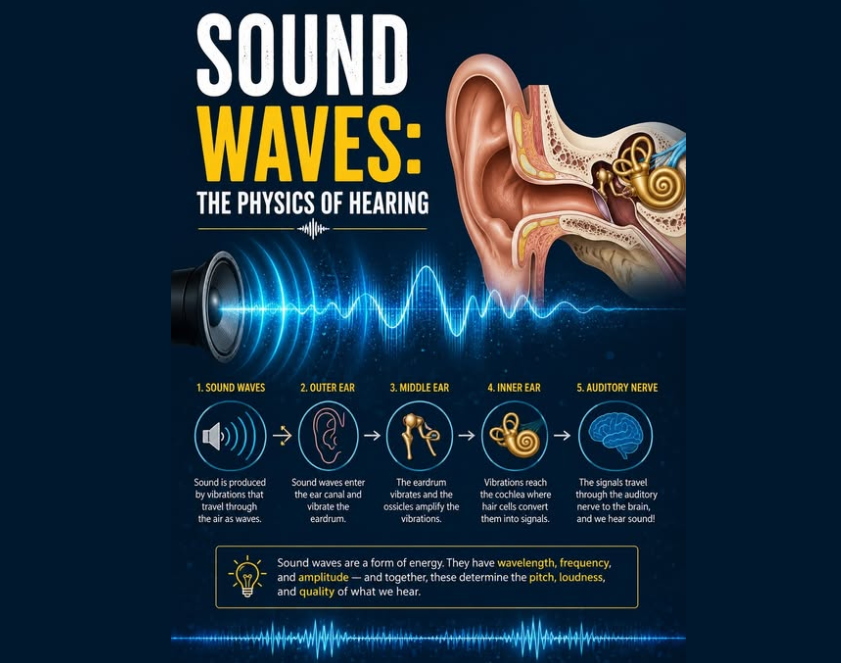
    Sound is a form of energy that travels through a medium such as air, water, or solids. We hear sound when these vibrations reach our ears and are converted into signals that the brain can understand.

    How Sound Waves Work

    When an object vibrates, it causes nearby particles to vibrate. These vibrations travel outward as sound waves. Sound waves are usually longitudinal waves, meaning the particles move back and forth in the same direction the wave travels.

    How We Hear
    Sound waves enter the ear canal.
    They make the eardrum vibrate.
    Tiny bones in the middle ear amplify the vibrations.
    The cochlea converts the vibrations into electrical signals.
    The brain interprets these signals as sound.
    Sound and Communication

    Humans use sound for speaking and communicating. Technology also uses sound waves in telephones, microphones, speakers, ultrasound, sonar, and other communication systems.

    Key Properties
    Frequency → determines how high or low a sound is.
    Amplitude → relates to how loud the sound is.
    Wavelength → the distance between corresponding points on a wave.
    Speed → how quickly sound travels through a medium.

    Conclusion: Sound waves connect physics with everyday life. From hearing a friend's voice to using technology for communication, vibrations and waves make it possible for us to share and receive information.
    Day:-174 rollno:-006 foundation level 📖 Story Post 🔊 Sound Waves: The Physics of Hearing and Communication Sound is a form of energy that travels through a medium such as air, water, or solids. We hear sound when these vibrations reach our ears and are converted into signals that the brain can understand. 🌊 How Sound Waves Work When an object vibrates, it causes nearby particles to vibrate. These vibrations travel outward as sound waves. Sound waves are usually longitudinal waves, meaning the particles move back and forth in the same direction the wave travels. 👂 How We Hear Sound waves enter the ear canal. They make the eardrum vibrate. Tiny bones in the middle ear amplify the vibrations. The cochlea converts the vibrations into electrical signals. The brain interprets these signals as sound. 📡 Sound and Communication Humans use sound for speaking and communicating. Technology also uses sound waves in telephones, microphones, speakers, ultrasound, sonar, and other communication systems. 🔑 Key Properties Frequency → determines how high or low a sound is. Amplitude → relates to how loud the sound is. Wavelength → the distance between corresponding points on a wave. Speed → how quickly sound travels through a medium. Conclusion: Sound waves connect physics with everyday life. From hearing a friend's voice to using technology for communication, vibrations and waves make it possible for us to share and receive information.
    0 Kommentare 0 Anteile 1351 Ansichten
  • foundation level
    day 173
    roll :-005
    Sound Waves: The Physics of Hearing and Communication

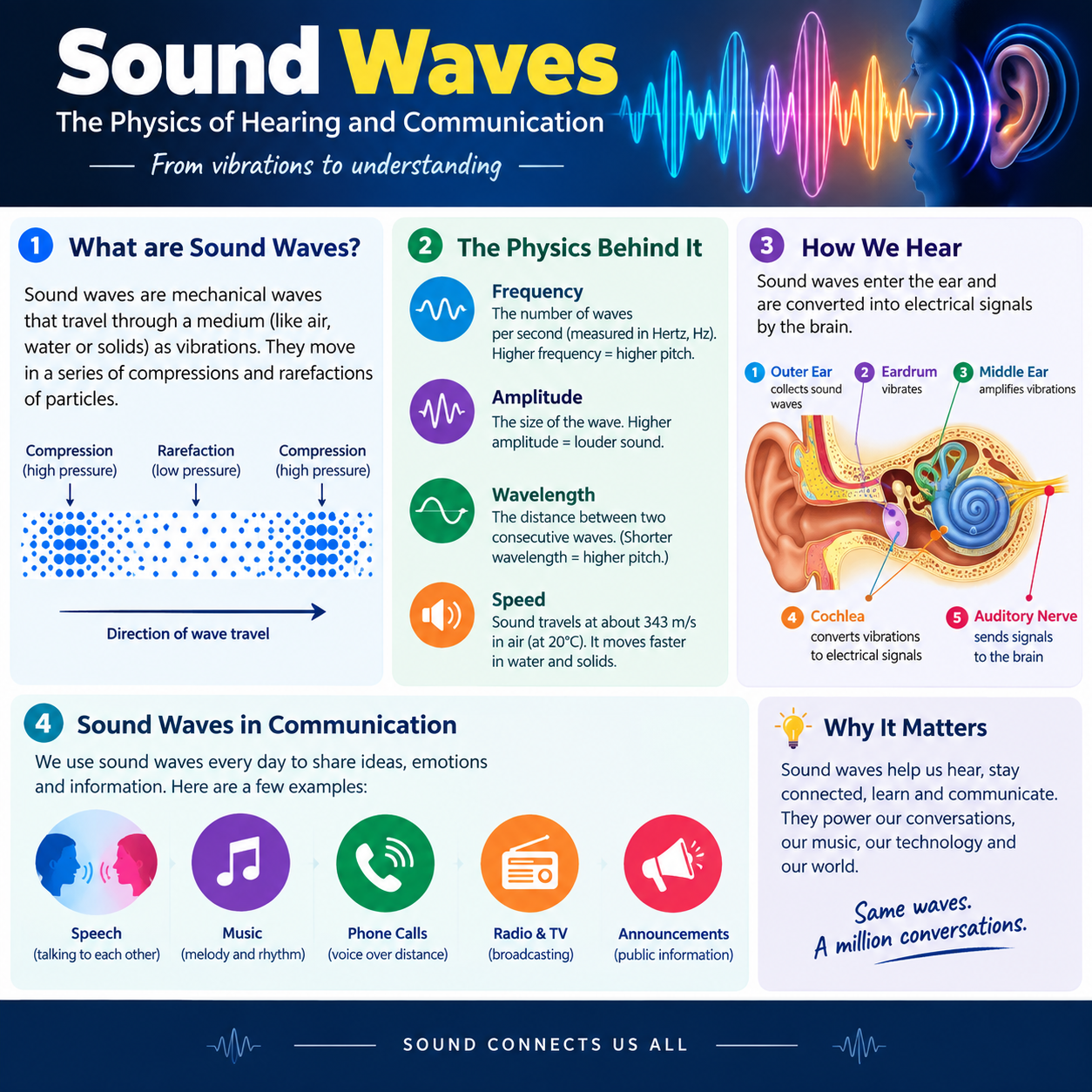
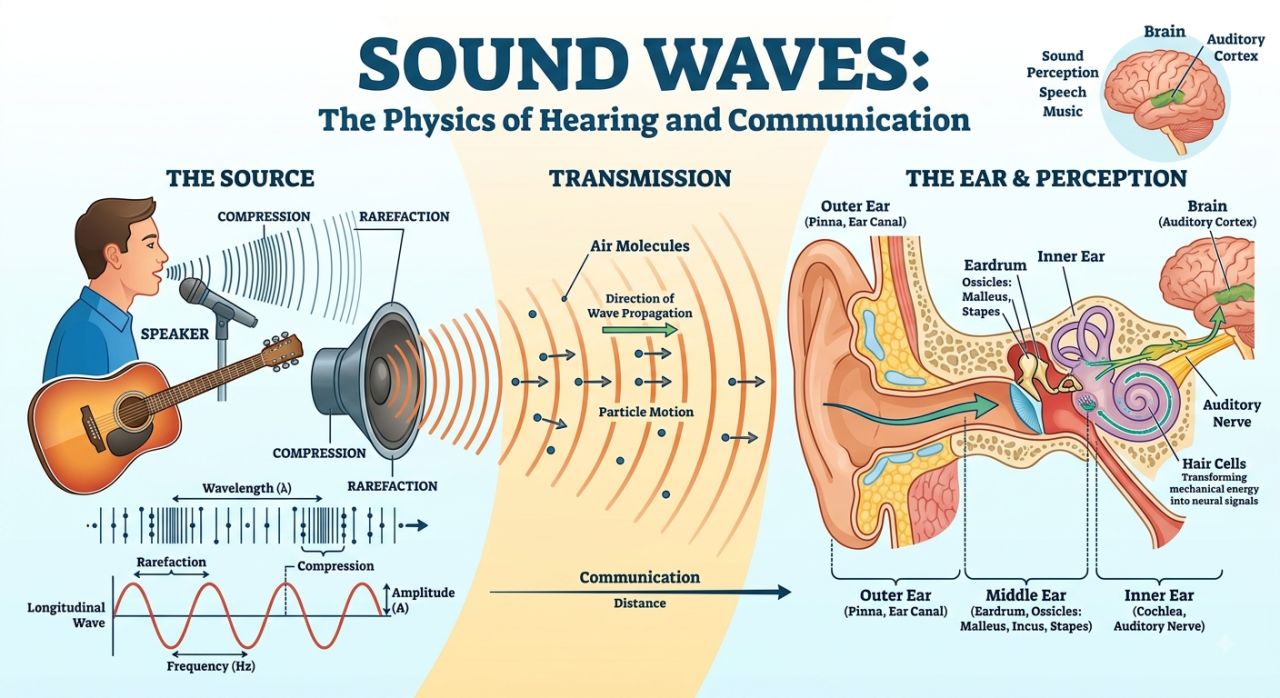
    Sound waves are mechanical vibrations that travel through a medium such as air, water, or solids. This educational infographic explains how sound travels through compressions and rarefactions and introduces important wave properties such as frequency, amplitude, wavelength, and speed.

    It also shows how the human ear collects sound, how the eardrum and middle ear transmit vibrations, and how the cochlea converts them into electrical signals that the brain interprets as sound.

    From speech and music to phone calls, radio, television, and public announcements, sound waves play an essential role in communication and everyday life.

    Sound connects us all!
    foundation level day 173 roll :-005 Sound Waves: The Physics of Hearing and Communication 🎧🌊 Sound waves are mechanical vibrations that travel through a medium such as air, water, or solids. This educational infographic explains how sound travels through compressions and rarefactions and introduces important wave properties such as frequency, amplitude, wavelength, and speed. It also shows how the human ear collects sound, how the eardrum and middle ear transmit vibrations, and how the cochlea converts them into electrical signals that the brain interprets as sound. 🧠👂 From speech and music to phone calls, radio, television, and public announcements, sound waves play an essential role in communication and everyday life. Sound connects us all! 🔊✨
    0 Kommentare 0 Anteile 1015 Ansichten

  • foundation level
    day 174
    roll :-005
    Sound Waves: The Physics of Hearing and Communication

    Sound waves are mechanical vibrations that travel through a medium such as air, water, or solids. This educational infographic explains how sound travels through compressions and rarefactions and introduces important wave properties such as frequency, amplitude, wavelength, and speed.

    It also shows how the human ear collects sound, how the eardrum and middle ear transmit vibrations, and how the cochlea converts them into electrical signals that the brain interprets as sound.

    From speech and music to phone calls, radio, television, and public announcements, sound waves play an essential role in communication and everyday life.

    Sound connects us all!
    foundation level day 174 roll :-005 Sound Waves: The Physics of Hearing and Communication 🎧🌊 Sound waves are mechanical vibrations that travel through a medium such as air, water, or solids. This educational infographic explains how sound travels through compressions and rarefactions and introduces important wave properties such as frequency, amplitude, wavelength, and speed. It also shows how the human ear collects sound, how the eardrum and middle ear transmit vibrations, and how the cochlea converts them into electrical signals that the brain interprets as sound. 🧠👂 From speech and music to phone calls, radio, television, and public announcements, sound waves play an essential role in communication and everyday life. Sound connects us all! 🔊✨
    0 Kommentare 0 Anteile 987 Ansichten
  • RSIF8
    Roll no 68
    Task no 172
    Task topic; Sound Waves: The Physics of Hearing
    Sound is all around us, but how do we actually hear it? In this topic, we explore how sound waves travel through the air and how our ears convert vibrations into signals that the brain understands as sound.
    Learn about frequency, wavelength, amplitude, pitch, and loudness, and discover the fascinating physics behind hearing!
    RSIF8 Roll no 68 Task no 172 Task topic; 🔊 Sound Waves: The Physics of Hearing Sound is all around us, but how do we actually hear it? In this topic, we explore how sound waves travel through the air and how our ears convert vibrations into signals that the brain understands as sound. 🎧 Learn about frequency, wavelength, amplitude, pitch, and loudness, and discover the fascinating physics behind hearing! 🧠🌊
    0 Kommentare 0 Anteile 1158 Ansichten
  • Fondation Level Batch No 4
    Roll RSLC #42
    Task No #174
    Day #174

    Sound is an important part of our daily lives, traveling from one place to another in the form of waves.
    When an object vibrates, it causes surrounding particles to move and produces sound.
    These waves eventually reach our ears and allow us to hear different sounds.

    Our ears convert sound waves into electrical signals that the brain can understand.
    The frequency of a sound determines its pitch, while its intensity affects how loud it seems.
    This makes hearing a fascinating combination of physics and the human body.

    Sound is not only important for hearing but also for communication.
    We use our voices, music, phones, and many technologies to send information through sound.
    Sound waves allow messages to travel through different materials and reach their destination.

    The world of sound shows us how closely science is connected to everyday life.
    Behind every word, melody, and noise is a fascinating system of vibrations and waves.
    Understanding sound waves brings us closer to understanding hearing, communication, and the wonders of physics.

    ???? ????? ?????? ????? ?? ??? ??? ??? ??? ?? ????? ?? ???? ??? ??? ???? ???
    ?? ???? ??? ?????? ???? ???? ?? ?? ?????? ?? ???? ???? ???? ??? ??? ???? ???? ???
    ??? ????? ????? ????? ?? ???? ?? ???? ????? ?????? ???? ??? ??? ???? ????

    ??? ???? ?? ????? ?? ???? ????? ??? ????? ???? ??? ????? ???? ?????? ???
    ???? ?? ????????? ???? ??? ???? ?? ?? ??? ???? ?? ????? ????? ????? ???
    ??? ????? ????? ??????? ??? ?????? ??? ?? ??? ???? ????? ?????? ???

    ???? ??? ???? ?? ??? ???? ???? ????? ?? ?????? ????? ??? ???
    ?? ?????? ??????? ??? ???? ??? ????? ???? ?? ????? ???? ?? ????? ??????? ?? ??? ??????? ???? ????
    ???? ?? ????? ????? ??? ????? ????? ?? ??? ?? ??????? ????? ???? ????

    ???? ?? ???? ???? ?????? ?? ?? ????? ????? ?????? ????? ?? ???? ???? ??? ???? ???
    ?? ???? ?? ??? ??? ?? ???? ?? ????? ?????? ??? ????? ?? ??? ????? ???? ????? ???
    ????? ???? ?? ?????? ???? ?????? ????? ??? ?????? ?? ??? ????? ?? ???? ?? ???? ???

    #SoundWaves #PhysicsOfSound #HearingScience #ScienceExplained #WavePhysics #Communication #Physics
    Fondation Level Batch No 4 Roll RSLC #42 Task No #174 Day #174 Sound is an important part of our daily lives, traveling from one place to another in the form of waves. When an object vibrates, it causes surrounding particles to move and produces sound. These waves eventually reach our ears and allow us to hear different sounds. Our ears convert sound waves into electrical signals that the brain can understand. The frequency of a sound determines its pitch, while its intensity affects how loud it seems. This makes hearing a fascinating combination of physics and the human body. Sound is not only important for hearing but also for communication. We use our voices, music, phones, and many technologies to send information through sound. Sound waves allow messages to travel through different materials and reach their destination. The world of sound shows us how closely science is connected to everyday life. Behind every word, melody, and noise is a fascinating system of vibrations and waves. Understanding sound waves brings us closer to understanding hearing, communication, and the wonders of physics. ???? ????? ?????? ????? ?? ??? ??? ??? ??? ?? ????? ?? ???? ??? ??? ???? ??? ?? ???? ??? ?????? ???? ???? ?? ?? ?????? ?? ???? ???? ???? ??? ??? ???? ???? ??? ??? ????? ????? ????? ?? ???? ?? ???? ????? ?????? ???? ??? ??? ???? ???? ??? ???? ?? ????? ?? ???? ????? ??? ????? ???? ??? ????? ???? ?????? ??? ???? ?? ????????? ???? ??? ???? ?? ?? ??? ???? ?? ????? ????? ????? ??? ??? ????? ????? ??????? ??? ?????? ??? ?? ??? ???? ????? ?????? ??? ???? ??? ???? ?? ??? ???? ???? ????? ?? ?????? ????? ??? ??? ?? ?????? ??????? ??? ???? ??? ????? ???? ?? ????? ???? ?? ????? ??????? ?? ??? ??????? ???? ???? ???? ?? ????? ????? ??? ????? ????? ?? ??? ?? ??????? ????? ???? ???? ???? ?? ???? ???? ?????? ?? ?? ????? ????? ?????? ????? ?? ???? ???? ??? ???? ??? ?? ???? ?? ??? ??? ?? ???? ?? ????? ?????? ??? ????? ?? ??? ????? ???? ????? ??? ????? ???? ?? ?????? ???? ?????? ????? ??? ?????? ?? ??? ????? ?? ???? ?? ???? ??? #SoundWaves #PhysicsOfSound #HearingScience #ScienceExplained #WavePhysics #Communication #Physics
    0 Kommentare 0 Anteile 2395 Ansichten
  • #rsisb
    RollNo.269
    Foundation Level
    Story Post No.21


    **Sound Waves: The Physics of Hearing and Communication**

    Sound is an important part of our everyday life. We use sound to communicate, listen to music, learn, and understand the world around us. But have you ever wondered how sound actually travels and how our ears allow us to hear it?

    In this video, we explore the fascinating science behind **sound waves**, how they are produced, how they travel through different materials, and how our ears detect them. We will also learn how vibrations create sound and how these waves carry information from one place to another.

    Sound waves play a major role in **communication**, from simple conversations to telephones, microphones, speakers, and other technologies. Understanding the physics of sound helps us see how science connects with our daily lives.

    This topic shows that something as simple as hearing a voice or listening to a sound is actually the result of fascinating physical processes.

    Join us as we explore the amazing world of sound, waves, hearing, and communication! Keep learning, keep exploring, and stay curious!

    #SoundWaves #Physics #Sound #Hearing #Communication #Science #PhysicsFacts #WavePhysics #ScienceEducation #Learning #Education #ScienceFacts #Technology #Acoustics #Vibrations #Waves #Curiosity #Knowledge #ScientificDiscovery #StudentLife #RehanSchool #ScienceProject #LearnAndGrow #ExploreScience
    #rsisb RollNo.269 Foundation Level Story Post No.21 🔊 **Sound Waves: The Physics of Hearing and Communication** 🎧🌊 Sound is an important part of our everyday life. We use sound to communicate, listen to music, learn, and understand the world around us. But have you ever wondered how sound actually travels and how our ears allow us to hear it? 🤔🔬 In this video, we explore the fascinating science behind **sound waves**, how they are produced, how they travel through different materials, and how our ears detect them. 🧠👂✨ We will also learn how vibrations create sound and how these waves carry information from one place to another. Sound waves play a major role in **communication**, from simple conversations to telephones, microphones, speakers, and other technologies. 📞🎤🔊 Understanding the physics of sound helps us see how science connects with our daily lives. This topic shows that something as simple as hearing a voice or listening to a sound is actually the result of fascinating physical processes. 🌍💡 Join us as we explore the amazing world of sound, waves, hearing, and communication! Keep learning, keep exploring, and stay curious! 🚀📚🔬 #SoundWaves 🔊 #Physics ⚛️ #Sound 🎧 #Hearing 👂 #Communication 📞 #Science 🔬 #PhysicsFacts 💡 #WavePhysics 🌊 #ScienceEducation 📚 #Learning 🎓 #Education 📖 #ScienceFacts 🧠 #Technology 💻 #Acoustics 🎶 #Vibrations 🔊 #Waves 🌊 #Curiosity 🤔 #Knowledge 💡 #ScientificDiscovery 🔍 #StudentLife 🎓 #RehanSchool 🏫 #ScienceProject 🔬 #LearnAndGrow 🌱 #ExploreScience 🌍
    0 Kommentare 0 Anteile 2596 Ansichten
Suchergebnis