• Unlock Faster Results Today

    Boost your workflow with instant, reliable testing!

    #testpaki2 #rapidtest #quickresults #labtech #innovation #science #efficiency #accuracy
    Unlock Faster Results Today 🚀 Boost your workflow with instant, reliable testing! 🌟 #testpaki2 #rapidtest #quickresults #labtech #innovation #science #efficiency #accuracy
    0 Комментарии 0 Поделились 122 Просмотры
  • Mohsin RS F8
    Story post NO:13
    Class: Foundation Level
    Made by Me

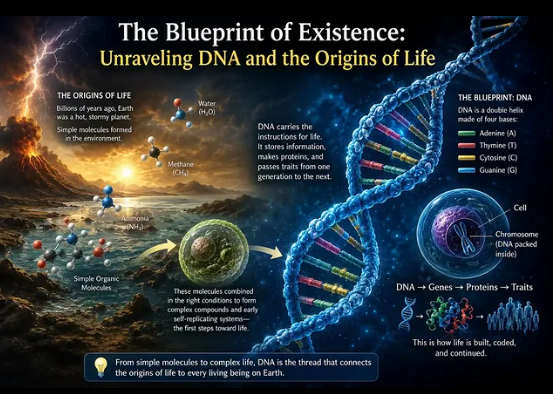
    The Blueprint of Existence: Unraveling DNA and the Origins of Life explores one of the greatest scientific mysteries: what makes life possible, and how did life begin? At the center of this story is DNA, the remarkable molecule that stores and carries genetic information in almost every living organism. Often described as the “blueprint of life,” DNA contains the instructions that help cells grow, function, reproduce, and pass characteristics from one generation to the next.
    DNA is built from four chemical bases—adenine, thymine, cytosine, and guanine—which are arranged in different sequences to encode biological information. Its famous double-helix structure allows genetic information to be stored efficiently and copied with remarkable accuracy. Small sections of DNA called genes provide instructions for producing proteins and regulating many of the processes that keep living organisms functioning. Although all humans share most of their DNA, small differences in our genetic sequences contribute to biological variation.
    But the story of life reaches much further back than modern DNA. Scientists continue to investigate how the first self-replicating molecules and primitive cells could have emerged on the early Earth billions of years ago. The young Earth was very different from today, with active volcanoes, oceans, atmospheric changes, and numerous sources of chemical energy. These conditions may have allowed simple molecules to interact, combine, and gradually form increasingly complex chemical systems.
    One important area of research focuses on the possibility that RNA-like molecules played an early role because RNA can both store information and participate in chemical reactions. Scientists also study ancient rocks, meteorites, laboratory experiments, and the chemistry of early Earth to understand which pathways could have led from non-living chemistry to the earliest forms of life. There is still no single confirmed explanation for exactly how life began, making the subject an active area of scientific research.
    DNA also provides a powerful record of l
    Mohsin RS F8 🎓✨ Story post NO:13 Class: Foundation Level 📚 Made by Me 💻🚀 The Blueprint of Existence: Unraveling DNA and the Origins of Life explores one of the greatest scientific mysteries: what makes life possible, and how did life begin? At the center of this story is DNA, the remarkable molecule that stores and carries genetic information in almost every living organism. Often described as the “blueprint of life,” DNA contains the instructions that help cells grow, function, reproduce, and pass characteristics from one generation to the next. DNA is built from four chemical bases—adenine, thymine, cytosine, and guanine—which are arranged in different sequences to encode biological information. Its famous double-helix structure allows genetic information to be stored efficiently and copied with remarkable accuracy. Small sections of DNA called genes provide instructions for producing proteins and regulating many of the processes that keep living organisms functioning. Although all humans share most of their DNA, small differences in our genetic sequences contribute to biological variation. But the story of life reaches much further back than modern DNA. Scientists continue to investigate how the first self-replicating molecules and primitive cells could have emerged on the early Earth billions of years ago. The young Earth was very different from today, with active volcanoes, oceans, atmospheric changes, and numerous sources of chemical energy. These conditions may have allowed simple molecules to interact, combine, and gradually form increasingly complex chemical systems. One important area of research focuses on the possibility that RNA-like molecules played an early role because RNA can both store information and participate in chemical reactions. Scientists also study ancient rocks, meteorites, laboratory experiments, and the chemistry of early Earth to understand which pathways could have led from non-living chemistry to the earliest forms of life. There is still no single confirmed explanation for exactly how life began, making the subject an active area of scientific research. DNA also provides a powerful record of l
    0 Комментарии 0 Поделились 479 Просмотры
  • Mohsin RS F8
    coding task 5
    Roll no 13
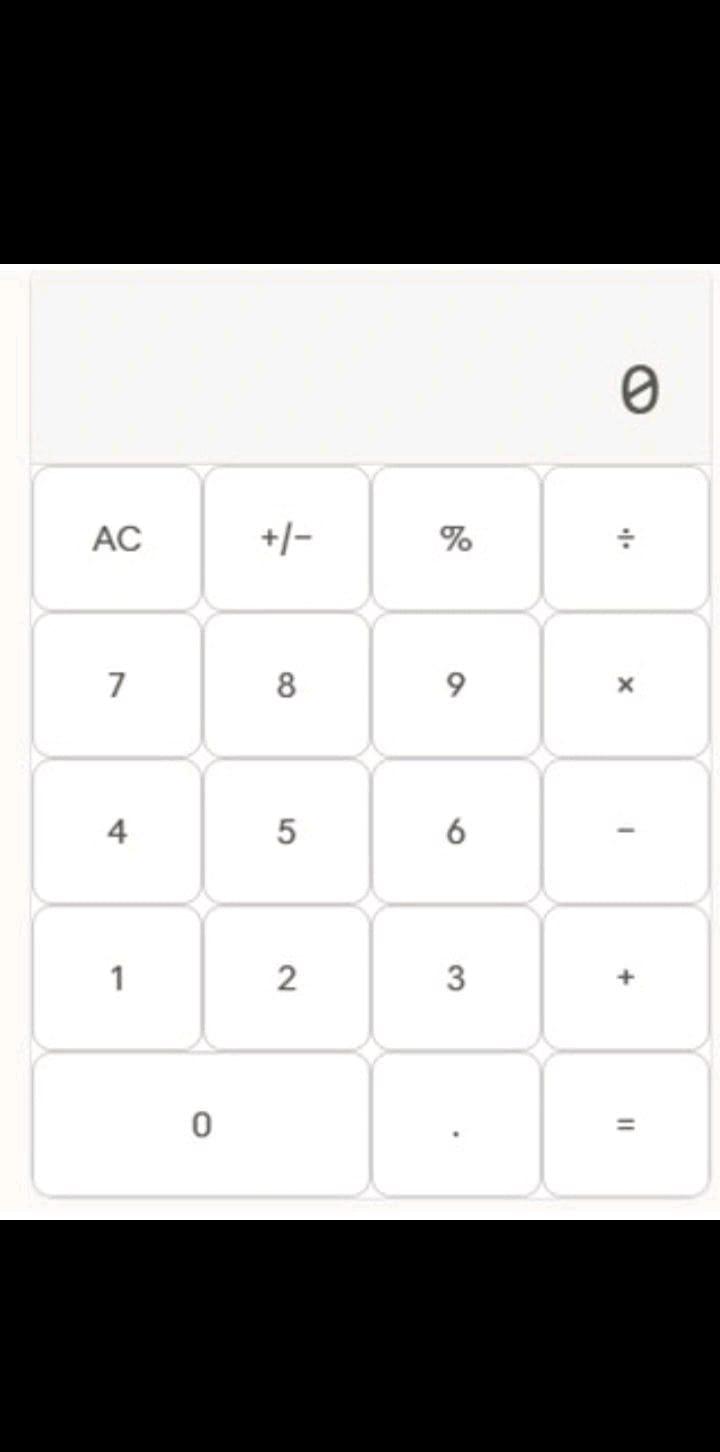
    This image presents a sleek and modern digital calculator interface designed with simplicity and ease of use in mind. The overall appearance is clean and minimalistic, featuring a soft light-gray color palette that gives it a calm and professional look. The design avoids unnecessary clutter, allowing users to focus entirely on performing calculations without distraction.

    At the top of the calculator, there is a wide display screen where numbers and results are shown. Currently, the display reads “0,” indicating that no calculations have been entered yet. The display area is spacious and clearly separated from the buttons below, making it easy to read inputs and outputs at a glance.

    Beneath the display, the calculator buttons are arranged in a well-organized grid layout. Each button is square-shaped with slightly rounded corners, creating a smooth and modern feel. The buttons are evenly spaced, which improves accuracy when tapping or clicking them. The labels on the buttons are clear and easy to read, ensuring that users can quickly identify each function.

    The top row of buttons includes functional keys such as “AC” (All Clear), which resets the calculator, the “±” button to switch between positive and negative numbers, the percentage (%) key for calculating percentages, and the division (÷) operator. These keys provide essential functions needed for everyday calculations.

    Below that, the number keys (0–9) are arranged in a familiar layout, similar to most standard calculators. Alongside the numbers, the basic arithmetic operation buttons are placed: multiplication (×), subtraction (−), addition (+), and the equals (=) button for getting results. The “0” button is larger than the others, spanning a wider space at the bottom, which is a common design choice to make it easier to press.

    There is also a decimal point (.) button, allowing users to work with decimal numbers. The thoughtful placement of all these buttons ensures that users can perform calculations quickly and efficiently without confusion.

    Overall, this calculator interface is designed to be user-friendly, visually appealing, and highly functional. Its mod
    Mohsin RS F8 🎓✨ coding task 5 Roll no 13 This image presents a sleek and modern digital calculator interface designed with simplicity and ease of use in mind. The overall appearance is clean and minimalistic, featuring a soft light-gray color palette that gives it a calm and professional look. The design avoids unnecessary clutter, allowing users to focus entirely on performing calculations without distraction. At the top of the calculator, there is a wide display screen where numbers and results are shown. Currently, the display reads “0,” indicating that no calculations have been entered yet. The display area is spacious and clearly separated from the buttons below, making it easy to read inputs and outputs at a glance. Beneath the display, the calculator buttons are arranged in a well-organized grid layout. Each button is square-shaped with slightly rounded corners, creating a smooth and modern feel. The buttons are evenly spaced, which improves accuracy when tapping or clicking them. The labels on the buttons are clear and easy to read, ensuring that users can quickly identify each function. The top row of buttons includes functional keys such as “AC” (All Clear), which resets the calculator, the “±” button to switch between positive and negative numbers, the percentage (%) key for calculating percentages, and the division (÷) operator. These keys provide essential functions needed for everyday calculations. Below that, the number keys (0–9) are arranged in a familiar layout, similar to most standard calculators. Alongside the numbers, the basic arithmetic operation buttons are placed: multiplication (×), subtraction (−), addition (+), and the equals (=) button for getting results. The “0” button is larger than the others, spanning a wider space at the bottom, which is a common design choice to make it easier to press. There is also a decimal point (.) button, allowing users to work with decimal numbers. The thoughtful placement of all these buttons ensures that users can perform calculations quickly and efficiently without confusion. Overall, this calculator interface is designed to be user-friendly, visually appealing, and highly functional. Its mod
    0 Комментарии 0 Поделились 783 Просмотры

  • Mohsin RS F8
    coding task 5
    Roll no 13
    This image presents a sleek and modern digital calculator interface designed with simplicity and ease of use in mind. The overall appearance is clean and minimalistic, featuring a soft light-gray color palette that gives it a calm and professional look. The design avoids unnecessary clutter, allowing users to focus entirely on performing calculations without distraction.

    At the top of the calculator, there is a wide display screen where numbers and results are shown. Currently, the display reads “0,” indicating that no calculations have been entered yet. The display area is spacious and clearly separated from the buttons below, making it easy to read inputs and outputs at a glance.

    Beneath the display, the calculator buttons are arranged in a well-organized grid layout. Each button is square-shaped with slightly rounded corners, creating a smooth and modern feel. The buttons are evenly spaced, which improves accuracy when tapping or clicking them. The labels on the buttons are clear and easy to read, ensuring that users can quickly identify each function.

    The top row of buttons includes functional keys such as “AC” (All Clear), which resets the calculator, the “±” button to switch between positive and negative numbers, the percentage (%) key for calculating percentages, and the division (÷) operator. These keys provide essential functions needed for everyday calculations.

    Below that, the number keys (0–9) are arranged in a familiar layout, similar to most standard calculators. Alongside the numbers, the basic arithmetic operation buttons are placed: multiplication (×), subtraction (−), addition (+), and the equals (=) button for getting results. The “0” button is larger than the others, spanning a wider space at the bottom, which is a common design choice to make it easier to press.

    There is also a decimal point (.) button, allowing users to work with decimal numbers. The thoughtful placement of all these buttons ensures that users can perform calculations quickly and efficiently without confusion.

    Overall, this calculator interface is designed to be user-friendly, visually appealing, and highly functional. Its mod
    Mohsin RS F8 🎓✨ coding task 5 Roll no 13 This image presents a sleek and modern digital calculator interface designed with simplicity and ease of use in mind. The overall appearance is clean and minimalistic, featuring a soft light-gray color palette that gives it a calm and professional look. The design avoids unnecessary clutter, allowing users to focus entirely on performing calculations without distraction. At the top of the calculator, there is a wide display screen where numbers and results are shown. Currently, the display reads “0,” indicating that no calculations have been entered yet. The display area is spacious and clearly separated from the buttons below, making it easy to read inputs and outputs at a glance. Beneath the display, the calculator buttons are arranged in a well-organized grid layout. Each button is square-shaped with slightly rounded corners, creating a smooth and modern feel. The buttons are evenly spaced, which improves accuracy when tapping or clicking them. The labels on the buttons are clear and easy to read, ensuring that users can quickly identify each function. The top row of buttons includes functional keys such as “AC” (All Clear), which resets the calculator, the “±” button to switch between positive and negative numbers, the percentage (%) key for calculating percentages, and the division (÷) operator. These keys provide essential functions needed for everyday calculations. Below that, the number keys (0–9) are arranged in a familiar layout, similar to most standard calculators. Alongside the numbers, the basic arithmetic operation buttons are placed: multiplication (×), subtraction (−), addition (+), and the equals (=) button for getting results. The “0” button is larger than the others, spanning a wider space at the bottom, which is a common design choice to make it easier to press. There is also a decimal point (.) button, allowing users to work with decimal numbers. The thoughtful placement of all these buttons ensures that users can perform calculations quickly and efficiently without confusion. Overall, this calculator interface is designed to be user-friendly, visually appealing, and highly functional. Its mod
    0 Комментарии 0 Поделились 1435 Просмотры
  • Fondation Level Batch No 4
    Roll RSLC #42
    Task No #180
    Day #180

    Today, I completed my **English Test** and achieved an amazing **100% accuracy**! ?? I earned **5 XP** and completed the lesson in just **1 minute 40 seconds**. Every lesson gives me a new opportunity to learn, improve, and build confidence in English. ??

    I?m proud of this small achievement because consistent practice is the key to making progress. ? I?ll continue learning new words, improving my grammar, and practicing English every day. Step by step, I?m becoming better and more confident. ?

    #EnglishLearning #EnglishTest #LearnEnglish #LanguageLearning #KeepLearning #LearningJourney
    Fondation Level Batch No 4 Roll RSLC #42 Task No #180 Day #180 Today, I completed my **English Test** and achieved an amazing **100% accuracy**! ?? I earned **5 XP** and completed the lesson in just **1 minute 40 seconds**. Every lesson gives me a new opportunity to learn, improve, and build confidence in English. ?? I?m proud of this small achievement because consistent practice is the key to making progress. ? I?ll continue learning new words, improving my grammar, and practicing English every day. Step by step, I?m becoming better and more confident. ? #EnglishLearning #EnglishTest #LearnEnglish #LanguageLearning #KeepLearning #LearningJourney
    0 Комментарии 0 Поделились 872 Просмотры
  • Reading Motivation Post Description
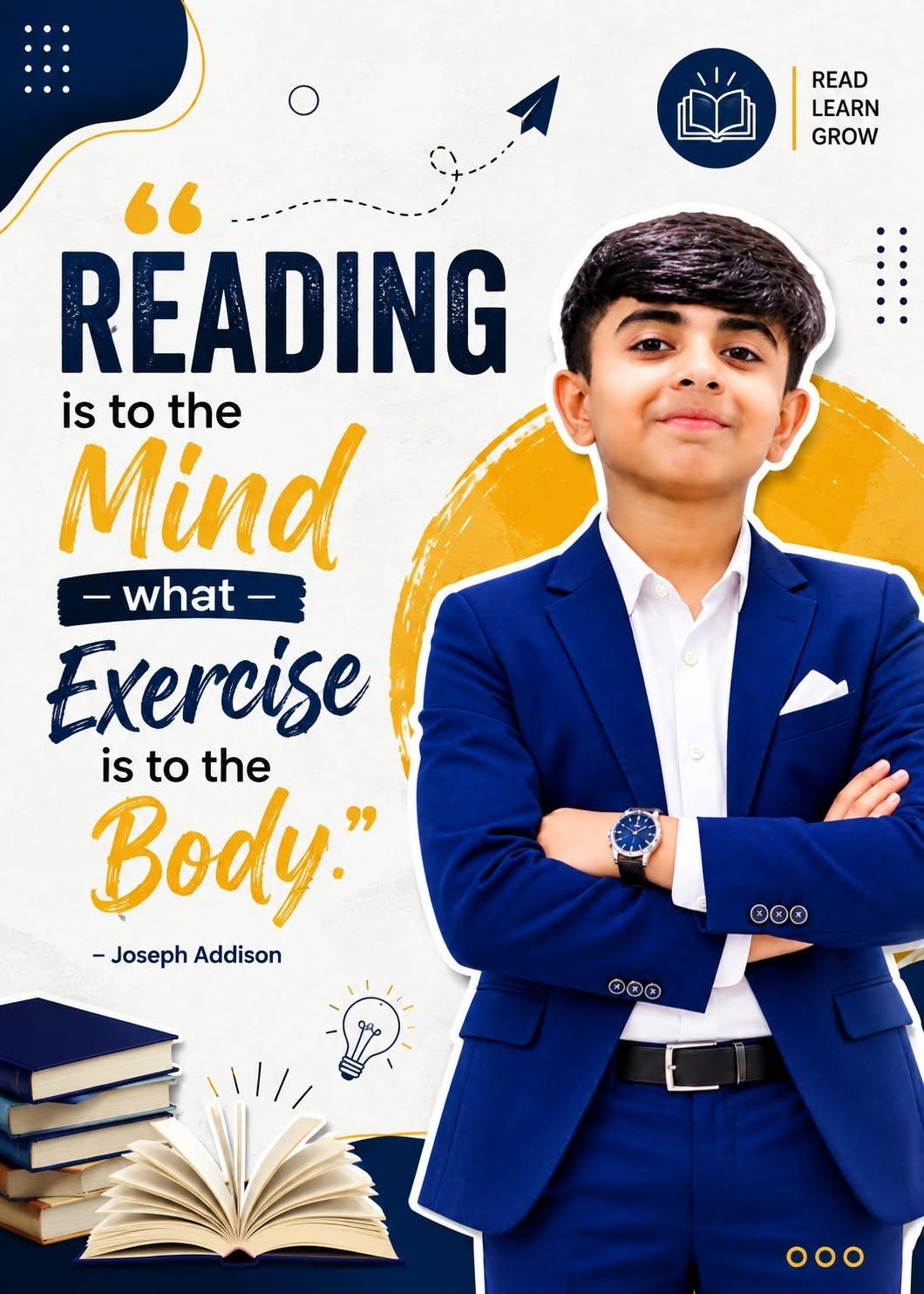
    “Reading is to the mind what exercise is to the body.” — Joseph Addison
    Reading is more than just a habit — it strengthens the mind, expands knowledge, improves imagination, and helps us grow into better thinkers. Every page we read brings a new idea, a new lesson, and a new opportunity to learn.
    Read • Learn • Grow
    Make reading a part of your daily routine and invest in the most powerful tool you have — your mind.
    #Reading #ReadingMotivation #Books #Education #Learning #Knowledge #Mindset #StudentLife #ReadLearnGrow #JosephAddison #Motivation #EducationPost
    Improve accuracy for writing and career work
    Upgrade to Plus and use increased reasoning to refine writing, learning, applications, and career work.
    @followers
    📚 Reading Motivation Post Description “Reading is to the mind what exercise is to the body.” — Joseph Addison Reading is more than just a habit — it strengthens the mind, expands knowledge, improves imagination, and helps us grow into better thinkers. Every page we read brings a new idea, a new lesson, and a new opportunity to learn. 📖 Read • Learn • Grow Make reading a part of your daily routine and invest in the most powerful tool you have — your mind. #Reading #ReadingMotivation #Books #Education #Learning #Knowledge #Mindset #StudentLife #ReadLearnGrow #JosephAddison #Motivation #EducationPost Improve accuracy for writing and career work Upgrade to Plus and use increased reasoning to refine writing, learning, applications, and career work. @followers
    0 Комментарии 0 Поделились 2624 Просмотры
  • #rsisb
    Roll No.240
    Story No.18
    Foundation Level

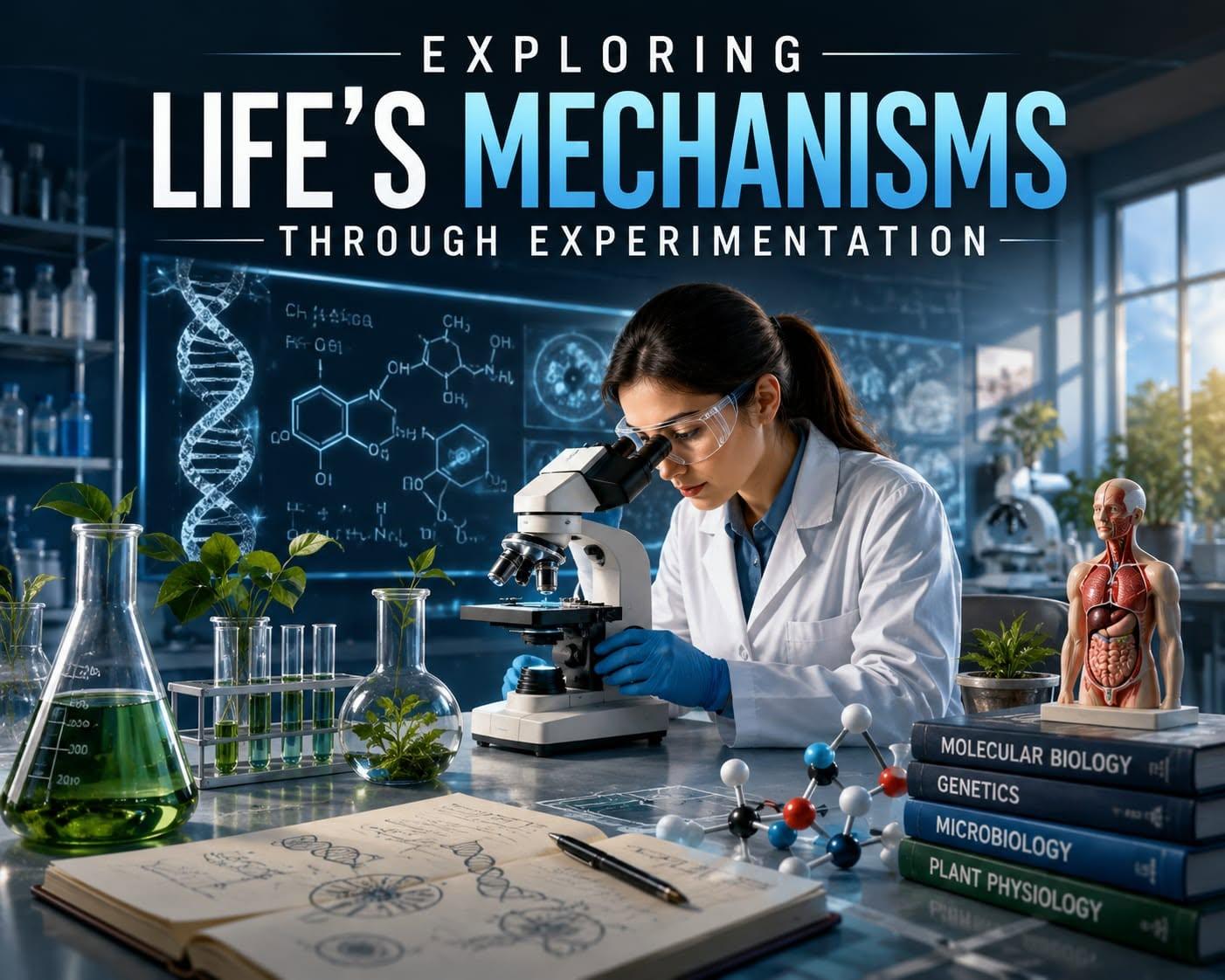
    ### **Exploring Life’s Mechanisms Through Experimentation**

    Scientific experimentation is one of the most powerful ways to understand the complex processes that sustain life. From the smallest microscopic cells to entire ecosystems, experiments allow scientists to observe, test, and explain how living organisms grow, reproduce, respond to their environment, and maintain balance. Through careful observation, data collection, and analysis, researchers uncover the biological mechanisms that drive life and contribute to advances in medicine, agriculture, biotechnology, and environmental conservation.

    Biological experiments help students and scientists explore essential topics such as genetics, cell biology, microbiology, physiology, ecology, and evolution. By forming hypotheses, conducting controlled experiments, and interpreting results, learners develop critical thinking, problem-solving, and analytical skills. Laboratory investigations also demonstrate the importance of accuracy, ethical responsibility, and evidence-based conclusions in scientific research.

    Modern technology has transformed biological experimentation through advanced microscopes, DNA sequencing, computer simulations, molecular biology techniques, and artificial intelligence. These innovations enable researchers to study diseases, develop life-saving medicines, improve crop production, protect endangered species, and better understand the incredible complexity of living organisms. Every experiment, whether simple or advanced, contributes valuable knowledge that helps improve human health and our understanding of the natural world.

    Exploring life's mechanisms through experimentation inspires curiosity, encourages innovation, and highlights the importance of scientific discovery. By combining observation, creativity, and rigorous testing, scientists continue to unlock the mysteries of life and create solutions to global challenges, paving the way for a healthier, more sustainable future.

    **#Biology #LifeScience #ScientificExperiment #Laboratory #STEM #ScienceEducation #Research #Biotechnology #CellBiology #Genetics #Microbiology #Innovation #ScientificDiscovery #Education #ExploreScience **

    Rehan School Islamabad Campus
    Asma Shaheen EducationWali
    Irum Asim
    Saima Happinesswali
    #rsisb Roll No.240 Story No.18 Foundation Level ### **Exploring Life’s Mechanisms Through Experimentation** Scientific experimentation is one of the most powerful ways to understand the complex processes that sustain life. From the smallest microscopic cells to entire ecosystems, experiments allow scientists to observe, test, and explain how living organisms grow, reproduce, respond to their environment, and maintain balance. Through careful observation, data collection, and analysis, researchers uncover the biological mechanisms that drive life and contribute to advances in medicine, agriculture, biotechnology, and environmental conservation. Biological experiments help students and scientists explore essential topics such as genetics, cell biology, microbiology, physiology, ecology, and evolution. By forming hypotheses, conducting controlled experiments, and interpreting results, learners develop critical thinking, problem-solving, and analytical skills. Laboratory investigations also demonstrate the importance of accuracy, ethical responsibility, and evidence-based conclusions in scientific research. Modern technology has transformed biological experimentation through advanced microscopes, DNA sequencing, computer simulations, molecular biology techniques, and artificial intelligence. These innovations enable researchers to study diseases, develop life-saving medicines, improve crop production, protect endangered species, and better understand the incredible complexity of living organisms. Every experiment, whether simple or advanced, contributes valuable knowledge that helps improve human health and our understanding of the natural world. Exploring life's mechanisms through experimentation inspires curiosity, encourages innovation, and highlights the importance of scientific discovery. By combining observation, creativity, and rigorous testing, scientists continue to unlock the mysteries of life and create solutions to global challenges, paving the way for a healthier, more sustainable future. **#Biology #LifeScience #ScientificExperiment #Laboratory #STEM #ScienceEducation #Research #Biotechnology #CellBiology #Genetics #Microbiology #Innovation #ScientificDiscovery #Education #ExploreScience 🔬🧬🧫🌱📚** Rehan School Islamabad Campus Asma Shaheen EducationWali Irum Asim Saima Happinesswali
    0 Комментарии 0 Поделились 7913 Просмотры
  • Title:
    Stopwatch App Using Gemini CLI | Coding Book 1 Task 7

    Description:
    Completed Coding Book 1 – Task 7 (Stopwatch App) using Gemini CLI.

    This stopwatch application allows users to accurately track time with start, stop, and reset functionality through a clean and responsive interface.

    Features:
    Start Stopwatch
    Stop/Pause Stopwatch
    Reset Stopwatch
    Millisecond Accuracy
    Responsive Design
    Modern User Interface
    Smooth User Experience

    Built using HTML, CSS, JavaScript, and AI-assisted development with Gemini CLI.

    Student Details:
    Coding Book: 1
    Task: 7 – Stopwatch App
    Roll No: 51

    Website Link:
    [https://rsmc51.rehanschool.us/Stopwatch-App/]

    Hashtags:
    #CodingBook1 #Task7 #StopwatchApp #GeminiCLI #AIProgramming #WebDevelopment #HTML #CSS #JavaScript #FrontendDevelopment #CodingJourney #Programming #TechEducation #RehanSchool #RollNo51 #StudentProject #BuildInPublic #AITools #DeveloperLife #TimeTracker #LearnToCode #WebAppDevelopment
    Title: Stopwatch App Using Gemini CLI | Coding Book 1 Task 7 Description: ⏱️ Completed Coding Book 1 – Task 7 (Stopwatch App) using Gemini CLI. This stopwatch application allows users to accurately track time with start, stop, and reset functionality through a clean and responsive interface. Features: ✅ Start Stopwatch ✅ Stop/Pause Stopwatch ✅ Reset Stopwatch ✅ Millisecond Accuracy ✅ Responsive Design ✅ Modern User Interface ✅ Smooth User Experience Built using HTML, CSS, JavaScript, and AI-assisted development with Gemini CLI. Student Details: 📚 Coding Book: 1 📝 Task: 7 – Stopwatch App 🎓 Roll No: 51 🌐 Website Link: [https://rsmc51.rehanschool.us/Stopwatch-App/] Hashtags: #CodingBook1 #Task7 #StopwatchApp #GeminiCLI #AIProgramming #WebDevelopment #HTML #CSS #JavaScript #FrontendDevelopment #CodingJourney #Programming #TechEducation #RehanSchool #RollNo51 #StudentProject #BuildInPublic #AITools #DeveloperLife #TimeTracker #LearnToCode #WebAppDevelopment
    0 Комментарии 0 Поделились 4002 Просмотры
  • Title:
    Stopwatch App Using Gemini CLI | Coding Book 1 Task 7

    Description:
    Completed Coding Book 1 – Task 7 (Stopwatch App) using Gemini CLI.

    This stopwatch application allows users to accurately track time with start, stop, and reset functionality through a clean and responsive interface.

    Features:
    Start Stopwatch
    Stop/Pause Stopwatch
    Reset Stopwatch
    Millisecond Accuracy
    Responsive Design
    Modern User Interface
    Smooth User Experience

    Built using HTML, CSS, JavaScript, and AI-assisted development with Gemini CLI.

    Student Details:
    Coding Book: 1
    Task: 7 – Stopwatch App
    Roll No: 51

    Website Link:
    [https://rsmc51.rehanschool.us/Stopwatch-App/]

    Hashtags:
    #CodingBook1 #Task7 #StopwatchApp #GeminiCLI #AIProgramming #WebDevelopment #HTML #CSS #JavaScript #FrontendDevelopment #CodingJourney #Programming #TechEducation #RehanSchool #RollNo51 #StudentProject #BuildInPublic #AITools #DeveloperLife #TimeTracker #LearnToCode #WebAppDevelopment
    Title: Stopwatch App Using Gemini CLI | Coding Book 1 Task 7 Description: ⏱️ Completed Coding Book 1 – Task 7 (Stopwatch App) using Gemini CLI. This stopwatch application allows users to accurately track time with start, stop, and reset functionality through a clean and responsive interface. Features: ✅ Start Stopwatch ✅ Stop/Pause Stopwatch ✅ Reset Stopwatch ✅ Millisecond Accuracy ✅ Responsive Design ✅ Modern User Interface ✅ Smooth User Experience Built using HTML, CSS, JavaScript, and AI-assisted development with Gemini CLI. Student Details: 📚 Coding Book: 1 📝 Task: 7 – Stopwatch App 🎓 Roll No: 51 🌐 Website Link: [https://rsmc51.rehanschool.us/Stopwatch-App/] Hashtags: #CodingBook1 #Task7 #StopwatchApp #GeminiCLI #AIProgramming #WebDevelopment #HTML #CSS #JavaScript #FrontendDevelopment #CodingJourney #Programming #TechEducation #RehanSchool #RollNo51 #StudentProject #BuildInPublic #AITools #DeveloperLife #TimeTracker #LearnToCode #WebAppDevelopment
    0 Комментарии 0 Поделились 2179 Просмотры
  • Last week, a Redditor named easyjet decided to (very belatedly) join the global party that is Facebook. He signed up with an email address he never, ever used. He lied about all of his personal information.

    So he was rightly freaked out when Facebook still managed to predict and "recommend" a huge number of his real-life acquaintances - down to people whose names he barely knew and a woman he dated 19 years ago.

    How does Facebook know who your friends are? Its a mystery that has nagged users since at least 2011, when the Irish Data Protection Commissioner conducted a full-scale investigation into the issue. But four years later, theres still a lot of confusion and misinformation about what Facebooks doing when it "finds" your friends.

    Did it scrape your phone for names and numbers? Run a reverse-image search of your picture? Compile a "shadow" or "ghost" profile on you over a period of years, just waiting for you to log on and "confirm" its guesses?

    Alas, Facebooks actual process isnt actually that sneaky or malicious. In fact, it involves this pretty complex academic field called ... network science.

    In a nutshell, whenever you sign up for a Facebook account, Facebook asks permission to look at your email contacts if youre on a computer, or your phone contacts if youre on a smartphone. When you grant the site permission, it searches your contacts for users already on the network, and it searches other users uploaded contacts for you. That gives it a very primitive outline of your social circles: who you know, but not how you know them or how well.

    To refine that map, Facebook asks you more questions about yourself: where you went to school, when you were born, what city you live in. Each field in your Facebook profile and each interaction you make through that profile actually double as a source of data for Facebooks mapping algorithms. What theyre trying to do is determine the structure of the network: where the cliques are, which people bridge them, who knows who.

    Once Facebook knows the structure of your social network, it can analyse it to predict (with startling accuracy!) not only the people youre most likely to know now, but the people youre most likely to know in the future.

    This isnt magic: Its actually closer to statistics. In the network, there are a set number of "nodes," i.e., people, and a set number of "edges," i.e., friendships. Given that, each nonexistent connection between two nodes is a statistical possibility. But not all nodes are created equal, so not all connections are equally likely. (I dont anticipate befriending many 40-year-old guys in Siberia, say.)

    To estimate which connections are most likely, Facebook can run analyses against the structure of the network, using a long and entirely above-our-pay-grade list of coefficients and indices. Those coefficients account for a huge number of things: How many unusual commonalities do two people share, for instance? How many friends do they have in common? Which people in the network serve as rallying points, the people who know everyone? How many "degrees of separation" exist between them, how many friends of friends?

    In the end, Facebooks friend-recommendation system isnt magic or malice - just really good math. And guessing your future friends isnt telling the future; its modelling the evolution of Facebooks social graph.

    As you and I know, of course, this doesnt always work. Facebook, not infrequently, suggests you "may know" somebody that you dont. Or it suggests people you do know but dont want to see in your News Feed. Thats not Facebooks fault, says David Liben-Nowell, a computer scientist at Carleton College who studies the evolution of social networks.

    There are some forces outside the network that Facebook could never account for, he says: like what if I randomly sat next to a middle-aged Siberian man on a plane? And on top of that, Facebooks dealing with a vast and complex network.

    Liben-Nowell poses the example of your college roommates exes, some of whom you may want to Facebook-friend.

    "But which ones? And why?" He asks. "Their network positions relative to you are all pretty much the same, but you (only) know the one who you happened to sit beside at a wedding before your roommate dumped them. But Facebook doesnt know which college roommate was at Table 7 with you, so its prediction algorithms can only do so much."

    That said, both Facebook and mathematics at large have enormous interest in improving models of social-network change and "link prediction"; after all, the way people connect has implications way outside social networking, in fields as diverse as epidemiology, communications and counterterrorism.

    "We continuously update the People You May Know algorithm to make it better and more relevant for people," a Facebook spokesperson, Ana Brekalo, said.

    So in the future, Facebook may know even more about your friends.

    By @Caitlin Dewey

    Last week, a Redditor named easyjet decided to (very belatedly) join the global party that is Facebook. He signed up with an email address he never, ever used. He lied about all of his personal information. So he was rightly freaked out when Facebook still managed to predict and "recommend" a huge number of his real-life acquaintances - down to people whose names he barely knew and a woman he dated 19 years ago. How does Facebook know who your friends are? It's a mystery that has nagged users since at least 2011, when the Irish Data Protection Commissioner conducted a full-scale investigation into the issue. But four years later, there's still a lot of confusion and misinformation about what Facebook's doing when it "finds" your friends. Did it scrape your phone for names and numbers? Run a reverse-image search of your picture? Compile a "shadow" or "ghost" profile on you over a period of years, just waiting for you to log on and "confirm" its guesses? Alas, Facebook's actual process isn't actually that sneaky or malicious. In fact, it involves this pretty complex academic field called ... network science. In a nutshell, whenever you sign up for a Facebook account, Facebook asks permission to look at your email contacts if you're on a computer, or your phone contacts if you're on a smartphone. When you grant the site permission, it searches your contacts for users already on the network, and it searches other users' uploaded contacts for you. That gives it a very primitive outline of your social circles: who you know, but not how you know them or how well. To refine that map, Facebook asks you more questions about yourself: where you went to school, when you were born, what city you live in. Each field in your Facebook profile and each interaction you make through that profile actually double as a source of data for Facebook's mapping algorithms. What they're trying to do is determine the structure of the network: where the cliques are, which people bridge them, who knows who. Once Facebook knows the structure of your social network, it can analyse it to predict (with startling accuracy!) not only the people you're most likely to know now, but the people you're most likely to know in the future. This isn't magic: It's actually closer to statistics. In the network, there are a set number of "nodes," i.e., people, and a set number of "edges," i.e., friendships. Given that, each nonexistent connection between two nodes is a statistical possibility. But not all nodes are created equal, so not all connections are equally likely. (I don't anticipate befriending many 40-year-old guys in Siberia, say.) To estimate which connections are most likely, Facebook can run analyses against the structure of the network, using a long and entirely above-our-pay-grade list of coefficients and indices. Those coefficients account for a huge number of things: How many unusual commonalities do two people share, for instance? How many friends do they have in common? Which people in the network serve as rallying points, the people who know everyone? How many "degrees of separation" exist between them, how many friends of friends? In the end, Facebook's friend-recommendation system isn't magic or malice - just really good math. And guessing your future friends isn't telling the future; it's modelling the evolution of Facebook's social graph. As you and I know, of course, this doesn't always work. Facebook, not infrequently, suggests you "may know" somebody that you don't. Or it suggests people you do know but don't want to see in your News Feed. That's not Facebook's fault, says David Liben-Nowell, a computer scientist at Carleton College who studies the evolution of social networks. There are some forces outside the network that Facebook could never account for, he says: like what if I randomly sat next to a middle-aged Siberian man on a plane? And on top of that, Facebook's dealing with a vast and complex network. Liben-Nowell poses the example of your college roommate's exes, some of whom you may want to Facebook-friend. "But which ones? And why?" He asks. "Their network positions relative to you are all pretty much the same, but you (only) know the one who you happened to sit beside at a wedding before your roommate dumped them. But Facebook doesn't know which college roommate was at Table 7 with you, so its prediction algorithms can only do so much." That said, both Facebook and mathematics at large have enormous interest in improving models of social-network change and "link prediction"; after all, the way people connect has implications way outside social networking, in fields as diverse as epidemiology, communications and counterterrorism. "We continuously update the People You May Know algorithm to make it better and more relevant for people," a Facebook spokesperson, Ana Brekalo, said. So in the future, Facebook may know even more about your friends. By @Caitlin Dewey

    0 Комментарии 0 Поделились 3718 Просмотры
Расширенные страницы