• It’s sad that today we still have to be recognized by a country and most anthropologists say that the world will be one country in 120 years ! I wonder what we will think of this then :(
    It’s sad that today we still have to be recognized by a country and most anthropologists say that the world will be one country in 120 years ! I wonder what we will think of this then :(
    0 Комментарии 0 Поделились 313 Просмотры
  • Any Anthropologist in my network ?

    #anthropology #anthropologist
    Any Anthropologist in my network ? #anthropology #anthropologist
    0 Комментарии 0 Поделились 439 Просмотры
  • Love is an intense feeling of affection and connection towards someone or something. It can refer to romantic love between two partners, the love between family members or friends, or even love for a pet or an object. Love can have a profound impact on a persons emotions, behavior, and overall well-being.

    Love is often described as a complex mix of emotions, thoughts, and behaviors. It can involve feelings of joy, happiness, and contentment, as well as feelings of vulnerability and fear of rejection. Love can also involve physical sensations, such as a racing heartbeat or butterflies in the stomach.

    Love is a universal experience, and it is considered to be one of the most powerful and influential emotions. It has been studied by philosophers, psychologists, and anthropologists for centuries, and it continues to be a topic of research and discussion today.

    Love can take many forms and can vary greatly from person to person. Some people may experience love as a deep, emotional connection, while others may experience it as more of a physical attraction. Despite its many variations, love is widely considered to be a fundamental aspect of the human experience, and it is often considered to be a key component of happiness and well-being.

    Love is a complex emotion that is influenced by a variety of factors, including biology, psychology, and social and cultural influences. While there is no single hormone that is responsible for love, several hormones have been implicated in the experience and expression of love and affection.

    Here are a few hormones that have been linked to love and affection:

    1. Oxytocin: Oxytocin is often referred to as the "love hormone." It is released in the brain and is associated with feelings of bonding, trust, and affection. Oxytocin is often released during physical touch and sexual activity, and it is thought to play a role in the formation of close relationships and the experience of love.

    2. Dopamine: Dopamine is a neurotransmitter that is associated with feelings of pleasure and reward. It is released in response to positive experiences, such as falling in love, and is thought to play a role in the formation of romantic attachments.

    3. Serotonin: Serotonin is a neurotransmitter that is associated with feelings of happiness and well-being. Low levels of serotonin have been linked to depression and anxiety, and it is thought that changes in serotonin levels may contribute to the experience of love and affection.

    4. Adrenaline: Adrenaline is a hormone that is associated with excitement and arousal. It is often released in response to intense feelings, such as love and passion, and is thought to play a role in the experience of attraction and sexual desire.

    Its important to note that the experience of love and affection is influenced by a complex interplay of hormones, brain chemistry, and environmental and psychological factors. While these hormones may play a role in the experience of love, they are not the sole determinants of love and affection.

    Love is an intense feeling of affection and connection towards someone or something. It can refer to romantic love between two partners, the love between family members or friends, or even love for a pet or an object. Love can have a profound impact on a person's emotions, behavior, and overall well-being. Love is often described as a complex mix of emotions, thoughts, and behaviors. It can involve feelings of joy, happiness, and contentment, as well as feelings of vulnerability and fear of rejection. Love can also involve physical sensations, such as a racing heartbeat or butterflies in the stomach. Love is a universal experience, and it is considered to be one of the most powerful and influential emotions. It has been studied by philosophers, psychologists, and anthropologists for centuries, and it continues to be a topic of research and discussion today. Love can take many forms and can vary greatly from person to person. Some people may experience love as a deep, emotional connection, while others may experience it as more of a physical attraction. Despite its many variations, love is widely considered to be a fundamental aspect of the human experience, and it is often considered to be a key component of happiness and well-being. Love is a complex emotion that is influenced by a variety of factors, including biology, psychology, and social and cultural influences. While there is no single hormone that is responsible for love, several hormones have been implicated in the experience and expression of love and affection. Here are a few hormones that have been linked to love and affection: 1. Oxytocin: Oxytocin is often referred to as the "love hormone." It is released in the brain and is associated with feelings of bonding, trust, and affection. Oxytocin is often released during physical touch and sexual activity, and it is thought to play a role in the formation of close relationships and the experience of love. 2. Dopamine: Dopamine is a neurotransmitter that is associated with feelings of pleasure and reward. It is released in response to positive experiences, such as falling in love, and is thought to play a role in the formation of romantic attachments. 3. Serotonin: Serotonin is a neurotransmitter that is associated with feelings of happiness and well-being. Low levels of serotonin have been linked to depression and anxiety, and it is thought that changes in serotonin levels may contribute to the experience of love and affection. 4. Adrenaline: Adrenaline is a hormone that is associated with excitement and arousal. It is often released in response to intense feelings, such as love and passion, and is thought to play a role in the experience of attraction and sexual desire. It's important to note that the experience of love and affection is influenced by a complex interplay of hormones, brain chemistry, and environmental and psychological factors. While these hormones may play a role in the experience of love, they are not the sole determinants of love and affection.

    0 Комментарии 0 Поделились 2020 Просмотры
  • ایک ماہرِ انسانیات نے ایک افریقی قبیلے کے بچوں کے لئے ایک کھیل تجویز کیا۔ اس نے ایک درخت کے قریب پھلوں سے بھری ایک ٹوکری رکھی اور انہیں بتایا کہ جو بھی پہلے وہاں پہنچے گا، وہ میٹھے پھل جیت جائے گا۔ جب اس نے انہیں دوڑنے کو کہا تو وہ سب ایک دوسرے کے ہاتھ پکڑ کر ساتھ دوڑے، پھر ساتھ بیٹھ کر اپنے علاج معالجے کا لطف اٹھایا۔ جب اس نے ان سے پوچھا کہ انہوں نے ایسے کیوں دوڑا جیسے کہ ایک شخص تمام پھل خود کے لئے رکھ سکتا تھا تو انہوں نے جواب دیا: اوبنٹو، ہم میں سے ایک کیسے خوش ہو سکتا ہے اگر باقی سب اداس ہیں؟

    اوبنٹو کا مطلب ایکسوسا ثقافت میں ہے:

    "میں اس لئے ہوں کیونکہ ہم ہیں"

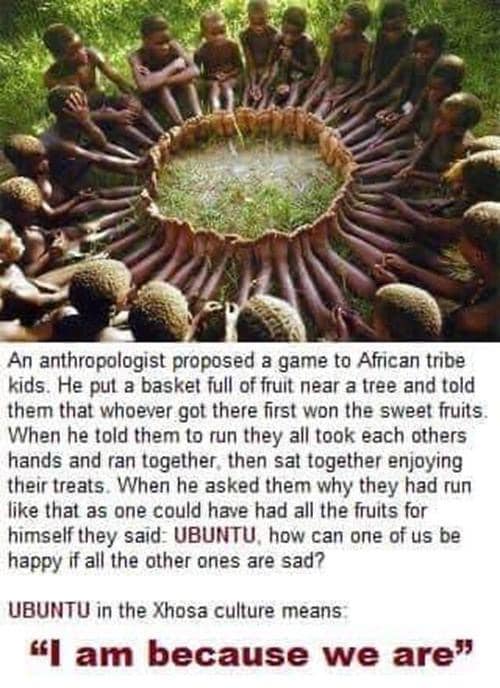
    An anthropologist proposed a game to African tribe kids. He put a basket full of fruit near a tree and told them that whoever got there first won the sweet fruits. When he told them to run they all took each others hands and ran together, then sat together enjoying their treats. When he asked them why they had run like that as one could have had all the fruits for himself they said: UBUNTU, how can one of us be happy if all the other ones are sad?

    UBUNTU in the Xhosa culture means:

    "I am because we are"

    Via Marc J. Lane
    ایک ماہرِ انسانیات نے ایک افریقی قبیلے کے بچوں کے لئے ایک کھیل تجویز کیا۔ اس نے ایک درخت کے قریب پھلوں سے بھری ایک ٹوکری رکھی اور انہیں بتایا کہ جو بھی پہلے وہاں پہنچے گا، وہ میٹھے پھل جیت جائے گا۔ جب اس نے انہیں دوڑنے کو کہا تو وہ سب ایک دوسرے کے ہاتھ پکڑ کر ساتھ دوڑے، پھر ساتھ بیٹھ کر اپنے علاج معالجے کا لطف اٹھایا۔ جب اس نے ان سے پوچھا کہ انہوں نے ایسے کیوں دوڑا جیسے کہ ایک شخص تمام پھل خود کے لئے رکھ سکتا تھا تو انہوں نے جواب دیا: اوبنٹو، ہم میں سے ایک کیسے خوش ہو سکتا ہے اگر باقی سب اداس ہیں؟ اوبنٹو کا مطلب ایکسوسا ثقافت میں ہے: "میں اس لئے ہوں کیونکہ ہم ہیں" An anthropologist proposed a game to African tribe kids. He put a basket full of fruit near a tree and told them that whoever got there first won the sweet fruits. When he told them to run they all took each others hands and ran together, then sat together enjoying their treats. When he asked them why they had run like that as one could have had all the fruits for himself they said: UBUNTU, how can one of us be happy if all the other ones are sad? UBUNTU in the Xhosa culture means: "I am because we are" Via Marc J. Lane
    0 Комментарии 0 Поделились 247 Просмотры
  • Title: "How Many People Can You Really, Really Know?"

    ---

    Ever wonder about the true limit to the number of people you can form meaningful relationships with? Its not about the number of contacts in your phone or followers on social media, but the genuine, deep connections you can maintain over time. Enter the fascinating concept of "Dunbars Number."

    The brainchild of anthropologist Robin Dunbar, this theory suggests theres a cognitive cap at around 150 people. Thats the maximum number of individuals with whom we can share a truly meaningful relationship, understanding who they are and how each person fits into our lives.

    This isnt a new-age concept but one rooted in our evolutionary history. It mirrors the average size of traditional human communities, from ancient tribes to pre-industrial villages. Why? Because maintaining stable relationships requires a significant amount of brainpower and emotional investment, and our cognitive limits draw the line at about 150.

    In todays digital age, where connections can be as shallow as a swipe or a like, Dunbars Number invites us to reflect: How many people do we really, really know? It challenges us to cultivate deeper, more meaningful relationships in a world dominated by fleeting interactions.

    So, as we navigate through our bustling social networks, lets ponder on nurturing the connections that truly matter. After all, its not about the quantity of people in our lives but the quality of those relationships that truly enriches our existence.

    #DunbarsNumber #SocialConnections #MeaningfulRelationships #CommunityBuilding
    Title: "How Many People Can You Really, Really Know?" --- Ever wonder about the true limit to the number of people you can form meaningful relationships with? It's not about the number of contacts in your phone or followers on social media, but the genuine, deep connections you can maintain over time. Enter the fascinating concept of "Dunbar's Number." 🧠 The brainchild of anthropologist Robin Dunbar, this theory suggests there's a cognitive cap at around 150 people. That's the maximum number of individuals with whom we can share a truly meaningful relationship, understanding who they are and how each person fits into our lives. This isn't a new-age concept but one rooted in our evolutionary history. It mirrors the average size of traditional human communities, from ancient tribes to pre-industrial villages. Why? Because maintaining stable relationships requires a significant amount of brainpower and emotional investment, and our cognitive limits draw the line at about 150. In today's digital age, where connections can be as shallow as a swipe or a like, Dunbar's Number invites us to reflect: How many people do we really, really know? It challenges us to cultivate deeper, more meaningful relationships in a world dominated by fleeting interactions. So, as we navigate through our bustling social networks, let's ponder on nurturing the connections that truly matter. After all, it's not about the quantity of people in our lives but the quality of those relationships that truly enriches our existence. #DunbarsNumber #SocialConnections #MeaningfulRelationships #CommunityBuilding
    0 Комментарии 0 Поделились 4493 Просмотры