• ACCL Foundation Level (Rehan School Urdu Bazar Campus )
    Day : 41 Story Post No: 6
    Roll No : 16
    Accl task
    The Mystery of Life: Exploring the World of Cells
    ---
    Once, a curious girl named Sara always asked one question: "What is life really made of?"
    One day, her science teacher didn't answer with words. She just placed a single drop of pond water under a microscope and said, "Look."
    Sara looked. And gasped.
    Inside that tiny, clear drop was an entire universe. Hundreds of tiny creatures swimming, spinning, eating, dividing. Little transparent bubbles were moving like they had a purpose.
    "What are they?" Sara whispered.
    "They are Cells," her teacher said. "The building blocks of all life. Every leaf, every bird, every human - including you - is made of them. You have about 37 trillion of them inside you right now."
    Sara couldn't believe it. "But they are so small!"
    "Small, but not simple," said the teacher. "Let's explore one."
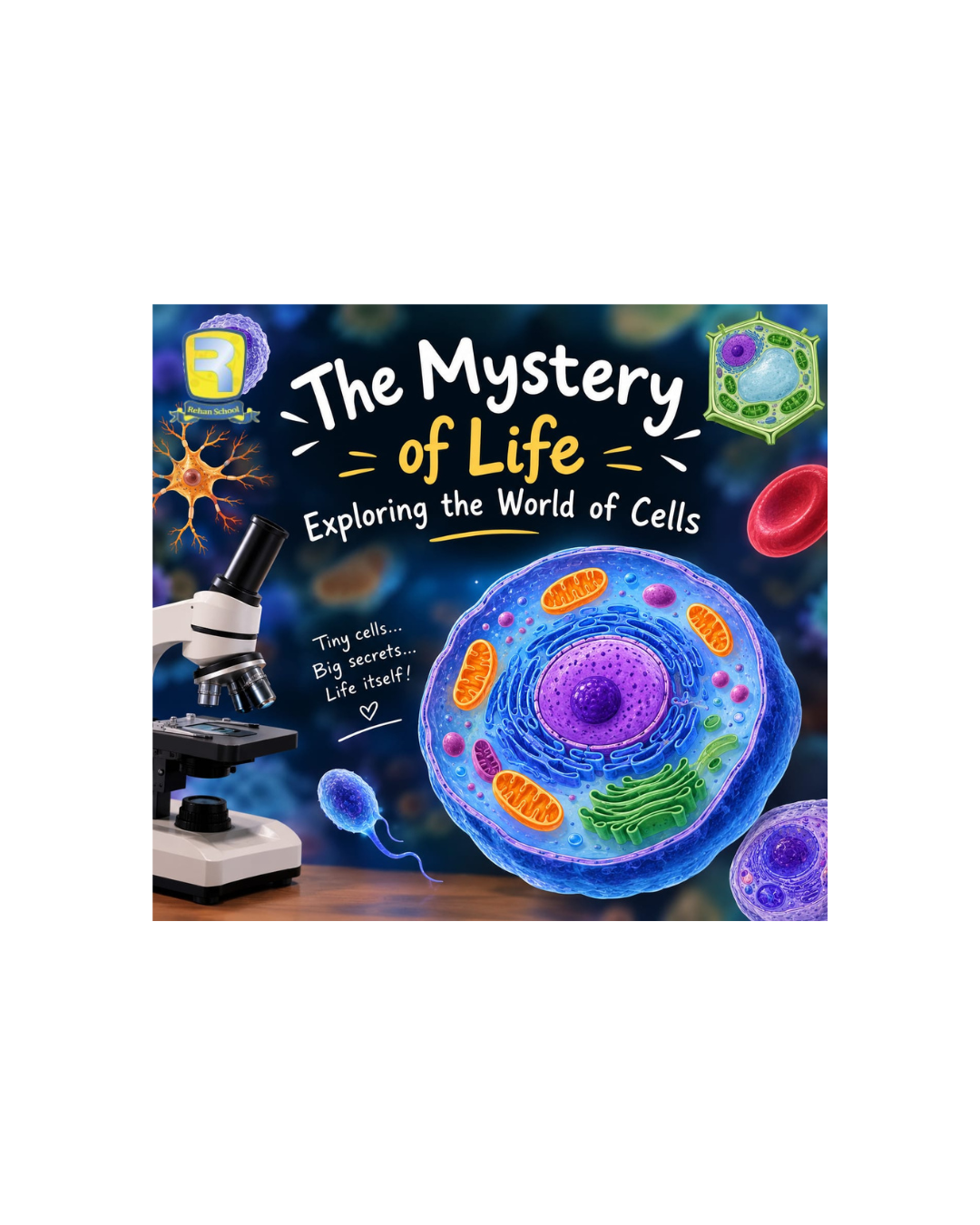
    She showed Sara a diagram of a single cell.
    "See this? This dark circle in the middle is the Nucleus. Think of it as the brain or the control center. It holds all the instructions - your DNA - that tells the cell who you are.
    Around it is the Cytoplasm, a jelly-like fluid. It's like a busy factory floor where all the work happens. Food is turned into energy here.
    Scattered inside are tiny machines. Some are Mitochondria - the powerhouses that give you energy to run and laugh. Some are Ribosomes - tiny builders that make proteins.
    And finally, surrounding everything is the Cell Membrane. It's the gatekeeper, the wall of the city. It decides what goes in and what stays out, keeping the cell safe."
    Sara stared, amazed. "So... inside me, there are trillions of little cities, all working together?"
    "Exactly," the teacher smiled. "When cells of the same kind join together, they form tissues. Tissues join to form organs, like your heart and brain. And organs join to form... you."
    "So life isn't one big thing," Sara said slowly. "Life is billions of tiny lives working as one team."
    The teacher nodded. "That's the mystery. From the outside, we look like one person. From the inside, we are a universe."
    From that day on, Sara never saw herself the same way again. She knew that every time she breathed, healed, or grew - it was her 37 trillion tiny citizens working hard for her.
    MORAL: Life's greatest wonder is not in the stars above, but in the tiny world within us.
    ---
    زندگی کا راز: خلیوں کی دنیا کی سیر
    ایک دفعہ کا ذکر ہے، سارہ نام کی ایک بہت متجسس لڑکی تھی۔ وہ ہمیشہ ایک ہی سوال پوچھتی تھی: "آخر زندگی بنی کس چیز سے ہے؟"
    ایک دن اس کی سائنس ٹیچر نے اسے لفظوں میں جواب نہیں دیا۔ اس نے تالاب کے پانی کا ایک قطرہ خوردبین کے نیچے رکھا اور کہا، "خود دیکھ لو۔"
    سارہ نے خوردبین میں جھانکا۔ اور اس کی چیخ نکل گئی۔
    اس چھوٹے سے شفاف قطرے کے اندر ایک پوری کائنات آباد تھی۔ سینکڑوں ننھی ننھی مخلوقات تیر رہی تھیں، گھوم رہی تھیں، کھا رہی تھیں، تقسیم ہو رہی تھیں۔ چھوٹے چھوٹے شفاف غبارے ایسے حرکت کر رہے تھے جیسے ان کا کوئی مقصد ہو۔
    "یہ کیا ہیں؟" سارہ نے سرگوشی کی۔
    "یہ خلیے (Cells) ہیں،" ٹیچر نے کہا۔ "یہ زندگی کی بنیاد ہیں۔ ہر پتہ، ہر پرندہ، ہر انسان، تم سمیت، انہی سے بنا ہے۔ تمہارے اندر اس وقت تقریباً 37 کھرب خلیے موجود ہیں۔"
    سارہ کو یقین نہیں آیا۔ "لیکن یہ تو اتنے چھوٹے ہیں!"
    "چھوٹے ہیں، لیکن سادہ نہیں،" ٹیچر نے کہا۔ "آؤ ایک کو قریب سے دیکھتے ہیں۔"
    اس نے سارہ کو ایک خلیے کا نقشہ دکھایا۔
    "یہ دیکھو؟ بیچ میں یہ گہرا دائرہ مرکزہ (Nucleus) ہے۔ اسے خلیے کا دماغ یا کنٹرول سینٹر سمجھو۔ اس میں ساری ہدایات ہیں، تمہارا ڈی این اے، جو خلیے کو بتاتا ہے کہ تم کون ہو۔
    اس کے ارد گرد سائٹو پلازم (Cytoplasm) ہے، ایک جیلی جیسا مادہ۔ یہ ایک مصروف فیکٹری کے فرش کی طرح ہے جہاں سارا کام ہوتا ہے۔ یہاں خوراک توانائی میں بدلتی ہے۔
    اندر بکھری ہوئی چھوٹی چھوٹی مشینیں ہیں۔ کچھ مائٹو کونڈریا ہیں، یہ پاور ہاؤس ہیں جو تمہیں بھاگنے اور ہنسنے کے لیے توانائی دیتے ہیں۔ کچھ رائبوسومز ہیں، چھوٹے مستری جو پروٹین بناتے ہیں۔
    اور آخر میں، ہر چیز کے گرد خلیاتی جھلی (Cell Membrane) ہے۔ یہ دربان ہے، شہر کی دیوار ہے۔ یہ فیصلہ کرتی ہے کہ اندر کیا جائے گا اور باہر کیا رہے گا، اور خلیے کو محفوظ رکھتی ہے۔"
    سارہ حیرت سے بولی، "تو... میرے اندر کھربوں چھوٹے شہر ہیں، جو سب مل کر کام کر رہے ہیں؟"بالکل،" ٹیچر مسکرائی۔ "جب ایک ہی قسم کے خلیے آپس میں ملتے ہیں تو وہ ٹشو (نسیج) بناتے ہیں۔ ٹشو مل کر اعضاء بناتے ہیں، جیسے تمہارا دل اور دماغ۔ اور اعضاء مل کر بناتے ہیں... تمہیں۔"
    "تو زندگی ایک بڑی چیز نہیں ہے،" سارہ نے آہستہ سے کہا۔ "زندگی اربوں ننھی زندگیوں کا ایک ٹیم کے طور پر کام کرنا ہے۔"
    ٹیچر نے سر ہلایا۔ "یہی تو راز ہے۔ باہر سے ہم ایک انسان نظر آتے ہیں۔ اندر سے ہم ایک پوری کائنات ہیں۔"
    اس دن کے بعد سارہ نے اپنے آپ کو کبھی پہلے جیسا نہیں دیکھا۔ وہ جان گئی تھی کہ جب بھی وہ سانس لیتی ہے، اس کا زخم بھرتا ہے، یا وہ بڑی ہوتی ہے، تو اس کے 37 کھرب ننھے شہری اس کے لیے سخت محنت کر رہے ہوتے ہیں۔
    سبق: زندگی کا سب سے بڑا عجوبہ اوپر ستاروں میں نہیں، بلکہ ہمارے اندر کی چھوٹی دنیا میں چھپا ہے۔ See less
    ACCL Foundation Level (Rehan School Urdu Bazar Campus ) Day : 41 Story Post No: 6 Roll No : 16 Accl task The Mystery of Life: Exploring the World of Cells --- Once, a curious girl named Sara always asked one question: "What is life really made of?" One day, her science teacher didn't answer with words. She just placed a single drop of pond water under a microscope and said, "Look." Sara looked. And gasped. Inside that tiny, clear drop was an entire universe. Hundreds of tiny creatures swimming, spinning, eating, dividing. Little transparent bubbles were moving like they had a purpose. "What are they?" Sara whispered. "They are Cells," her teacher said. "The building blocks of all life. Every leaf, every bird, every human - including you - is made of them. You have about 37 trillion of them inside you right now." Sara couldn't believe it. "But they are so small!" "Small, but not simple," said the teacher. "Let's explore one." She showed Sara a diagram of a single cell. "See this? This dark circle in the middle is the Nucleus. Think of it as the brain or the control center. It holds all the instructions - your DNA - that tells the cell who you are. Around it is the Cytoplasm, a jelly-like fluid. It's like a busy factory floor where all the work happens. Food is turned into energy here. Scattered inside are tiny machines. Some are Mitochondria - the powerhouses that give you energy to run and laugh. Some are Ribosomes - tiny builders that make proteins. And finally, surrounding everything is the Cell Membrane. It's the gatekeeper, the wall of the city. It decides what goes in and what stays out, keeping the cell safe." Sara stared, amazed. "So... inside me, there are trillions of little cities, all working together?" "Exactly," the teacher smiled. "When cells of the same kind join together, they form tissues. Tissues join to form organs, like your heart and brain. And organs join to form... you." "So life isn't one big thing," Sara said slowly. "Life is billions of tiny lives working as one team." The teacher nodded. "That's the mystery. From the outside, we look like one person. From the inside, we are a universe." From that day on, Sara never saw herself the same way again. She knew that every time she breathed, healed, or grew - it was her 37 trillion tiny citizens working hard for her. MORAL: Life's greatest wonder is not in the stars above, but in the tiny world within us. --- زندگی کا راز: خلیوں کی دنیا کی سیر ایک دفعہ کا ذکر ہے، سارہ نام کی ایک بہت متجسس لڑکی تھی۔ وہ ہمیشہ ایک ہی سوال پوچھتی تھی: "آخر زندگی بنی کس چیز سے ہے؟" ایک دن اس کی سائنس ٹیچر نے اسے لفظوں میں جواب نہیں دیا۔ اس نے تالاب کے پانی کا ایک قطرہ خوردبین کے نیچے رکھا اور کہا، "خود دیکھ لو۔" سارہ نے خوردبین میں جھانکا۔ اور اس کی چیخ نکل گئی۔ اس چھوٹے سے شفاف قطرے کے اندر ایک پوری کائنات آباد تھی۔ سینکڑوں ننھی ننھی مخلوقات تیر رہی تھیں، گھوم رہی تھیں، کھا رہی تھیں، تقسیم ہو رہی تھیں۔ چھوٹے چھوٹے شفاف غبارے ایسے حرکت کر رہے تھے جیسے ان کا کوئی مقصد ہو۔ "یہ کیا ہیں؟" سارہ نے سرگوشی کی۔ "یہ خلیے (Cells) ہیں،" ٹیچر نے کہا۔ "یہ زندگی کی بنیاد ہیں۔ ہر پتہ، ہر پرندہ، ہر انسان، تم سمیت، انہی سے بنا ہے۔ تمہارے اندر اس وقت تقریباً 37 کھرب خلیے موجود ہیں۔" سارہ کو یقین نہیں آیا۔ "لیکن یہ تو اتنے چھوٹے ہیں!" "چھوٹے ہیں، لیکن سادہ نہیں،" ٹیچر نے کہا۔ "آؤ ایک کو قریب سے دیکھتے ہیں۔" اس نے سارہ کو ایک خلیے کا نقشہ دکھایا۔ "یہ دیکھو؟ بیچ میں یہ گہرا دائرہ مرکزہ (Nucleus) ہے۔ اسے خلیے کا دماغ یا کنٹرول سینٹر سمجھو۔ اس میں ساری ہدایات ہیں، تمہارا ڈی این اے، جو خلیے کو بتاتا ہے کہ تم کون ہو۔ اس کے ارد گرد سائٹو پلازم (Cytoplasm) ہے، ایک جیلی جیسا مادہ۔ یہ ایک مصروف فیکٹری کے فرش کی طرح ہے جہاں سارا کام ہوتا ہے۔ یہاں خوراک توانائی میں بدلتی ہے۔ اندر بکھری ہوئی چھوٹی چھوٹی مشینیں ہیں۔ کچھ مائٹو کونڈریا ہیں، یہ پاور ہاؤس ہیں جو تمہیں بھاگنے اور ہنسنے کے لیے توانائی دیتے ہیں۔ کچھ رائبوسومز ہیں، چھوٹے مستری جو پروٹین بناتے ہیں۔ اور آخر میں، ہر چیز کے گرد خلیاتی جھلی (Cell Membrane) ہے۔ یہ دربان ہے، شہر کی دیوار ہے۔ یہ فیصلہ کرتی ہے کہ اندر کیا جائے گا اور باہر کیا رہے گا، اور خلیے کو محفوظ رکھتی ہے۔" سارہ حیرت سے بولی، "تو... میرے اندر کھربوں چھوٹے شہر ہیں، جو سب مل کر کام کر رہے ہیں؟"بالکل،" ٹیچر مسکرائی۔ "جب ایک ہی قسم کے خلیے آپس میں ملتے ہیں تو وہ ٹشو (نسیج) بناتے ہیں۔ ٹشو مل کر اعضاء بناتے ہیں، جیسے تمہارا دل اور دماغ۔ اور اعضاء مل کر بناتے ہیں... تمہیں۔" "تو زندگی ایک بڑی چیز نہیں ہے،" سارہ نے آہستہ سے کہا۔ "زندگی اربوں ننھی زندگیوں کا ایک ٹیم کے طور پر کام کرنا ہے۔" ٹیچر نے سر ہلایا۔ "یہی تو راز ہے۔ باہر سے ہم ایک انسان نظر آتے ہیں۔ اندر سے ہم ایک پوری کائنات ہیں۔" اس دن کے بعد سارہ نے اپنے آپ کو کبھی پہلے جیسا نہیں دیکھا۔ وہ جان گئی تھی کہ جب بھی وہ سانس لیتی ہے، اس کا زخم بھرتا ہے، یا وہ بڑی ہوتی ہے، تو اس کے 37 کھرب ننھے شہری اس کے لیے سخت محنت کر رہے ہوتے ہیں۔ سبق: زندگی کا سب سے بڑا عجوبہ اوپر ستاروں میں نہیں، بلکہ ہمارے اندر کی چھوٹی دنیا میں چھپا ہے۔ See less
    0 Comentários 0 Compartilhamentos 1319 Visualizações
  • RSIF8
    Roll no.38
    Coding task no.23
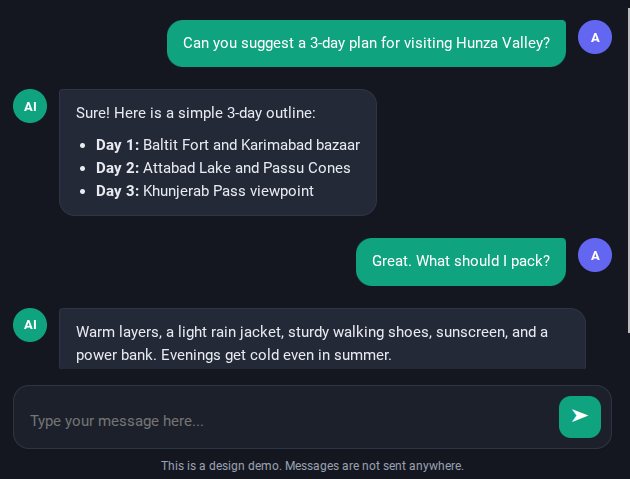
    topic.**ChatGPT Clone — Non-Functional Web-Based Project**
    Today, I created a simple web-based ChatGPT Clone as a beginner-friendly project. This project focuses on designing a chatbot interface with a chat area, message bubbles, a text input box, a send button, and a sidebar. It is a non-functional demo, so it does not use real AI or connect to an AI API. The main goal is to learn the basics of web design and understand how an AI chat interface looks.
    This one-hour project helped me explore HTML, CSS, creativity, and basic website design.
    **Learn, Create, and Grow!**
    #ChatGPTClone #WebDevelopment #HTML #CSS #AI #BeginnerProject #WebsiteDesign #Coding #LearningByDoing #RehanSchool
    RSIF8 Roll no.38 Coding task no.23 💻🤖 topic.**ChatGPT Clone — Non-Functional Web-Based Project** ✨ Today, I created a simple web-based ChatGPT Clone as a beginner-friendly project. 🌐 This project focuses on designing a chatbot interface with a chat area, message bubbles, a text input box, a send button, and a sidebar. 🎨💬 It is a non-functional demo, so it does not use real AI or connect to an AI API. The main goal is to learn the basics of web design and understand how an AI chat interface looks. 🚀📚 This one-hour project helped me explore HTML, CSS, creativity, and basic website design. 🌟 **Learn, Create, and Grow!** 💡💚 #ChatGPTClone #WebDevelopment #HTML #CSS #AI #BeginnerProject #WebsiteDesign #Coding #LearningByDoing #RehanSchool 🎓💻
    0 Comentários 0 Compartilhamentos 712 Visualizações
  • ACCL Day 139

    Story: Exploring Life’s Mechanisms Through Experimentation
    (Narrator POV)

    On this particular morning, the laboratory felt different. There was a quiet spark in the air—an energy that only true curiosity can create. The students gathered around the experiment table, unaware that today would become one of their most meaningful learning experiences.

    I watched Aaliya arrange the materials with steady hands and a focused mind. The others stood around her, sharing the same anticipation. They weren’t just preparing for an experiment—they were preparing to understand life itself.

    As the mixture reacted, colors shifted inside the glass, swirling like a small universe forming in real time. The students leaned forward, mesmerized. Every change—every bubble, spark, and movement—held a message waiting to be understood.

    Their mentor, Sir Imran, stepped forward and spoke gently,
    “Real learning begins when you see how life responds.”

    And he was right.
    I watched them adjust temperatures, test new ideas, observe results, and question everything. With every trial, successful or not, they explored the intricate mechanisms that make life function.

    They weren’t just studying science—
    they were uncovering the logic of nature itself.

    By the end of the day, their notebooks were full, but more importantly, their minds were open. They left the lab with a deeper understanding that experiments aren’t about answers…
    they’re about discovering how life works.
    ACCL Day 139 🌟 Story: Exploring Life’s Mechanisms Through Experimentation (Narrator POV) On this particular morning, the laboratory felt different. There was a quiet spark in the air—an energy that only true curiosity can create. The students gathered around the experiment table, unaware that today would become one of their most meaningful learning experiences. I watched Aaliya arrange the materials with steady hands and a focused mind. The others stood around her, sharing the same anticipation. They weren’t just preparing for an experiment—they were preparing to understand life itself. As the mixture reacted, colors shifted inside the glass, swirling like a small universe forming in real time. The students leaned forward, mesmerized. Every change—every bubble, spark, and movement—held a message waiting to be understood. Their mentor, Sir Imran, stepped forward and spoke gently, “Real learning begins when you see how life responds.” And he was right. I watched them adjust temperatures, test new ideas, observe results, and question everything. With every trial, successful or not, they explored the intricate mechanisms that make life function. They weren’t just studying science— they were uncovering the logic of nature itself. By the end of the day, their notebooks were full, but more importantly, their minds were open. They left the lab with a deeper understanding that experiments aren’t about answers… they’re about discovering how life works.
    0 Comentários 0 Compartilhamentos 798 Visualizações
  • Rsif8
    Roll No 30
    Post No 208
    ### WhatsApp Clone — Project Description

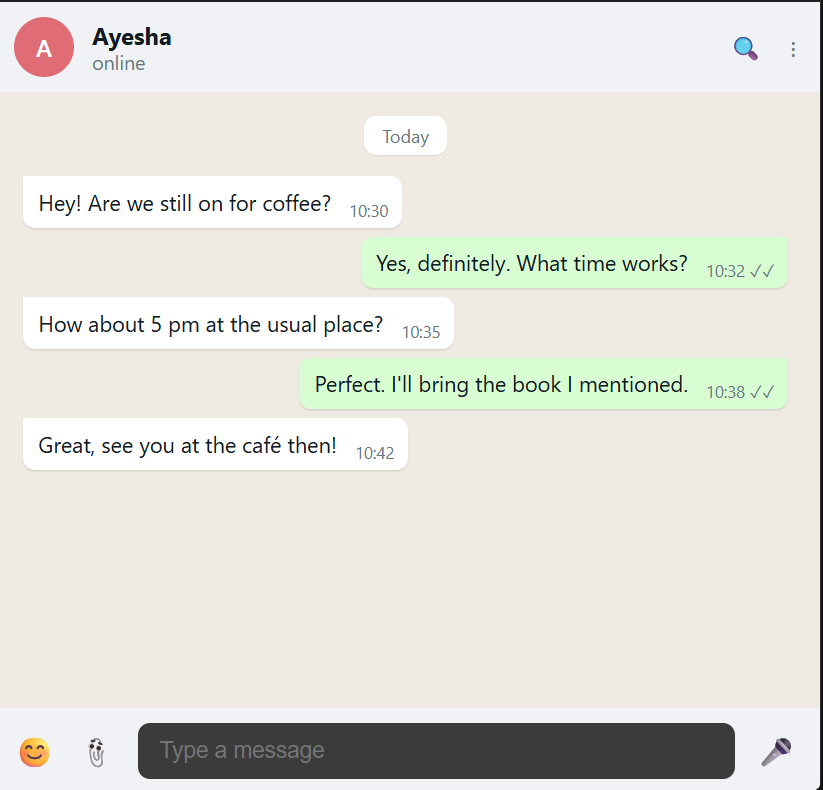
    I created a **static, non-functional WhatsApp Clone** as a web-based coding project. The main goal of this project was to practice designing a modern chat application interface using web development.

    The layout includes a **chat list/sidebar**, a **chat window**, contact information, message bubbles, and an **input box** for typing messages. The interface is designed to look clean, simple, and similar to a modern messaging application.

    This project is **front-end only**, so it does not include real-time messaging, user authentication, databases, or actual WhatsApp functionality. It focuses mainly on the **UI design and layout**.

    The project was completed as a **1-hour coding task** and uploaded to **GitHub** with a README file explaining the project, its features, and how to run it.

    **Technologies:** HTML, CSS, and JavaScript
    Rsif8 Roll No 30 Post No 208 ### WhatsApp Clone — Project Description I created a **static, non-functional WhatsApp Clone** as a web-based coding project. The main goal of this project was to practice designing a modern chat application interface using web development. The layout includes a **chat list/sidebar**, a **chat window**, contact information, message bubbles, and an **input box** for typing messages. The interface is designed to look clean, simple, and similar to a modern messaging application. This project is **front-end only**, so it does not include real-time messaging, user authentication, databases, or actual WhatsApp functionality. It focuses mainly on the **UI design and layout**. The project was completed as a **1-hour coding task** and uploaded to **GitHub** with a README file explaining the project, its features, and how to run it. **Technologies:** HTML, CSS, and JavaScript
    0 Comentários 0 Compartilhamentos 1905 Visualizações
  • RSIF8
    Roll no.29
    Story Post no.2
    Story Post Topic: Mulla Nasrudin's Wise Answer

    A Scene in the Bazaar
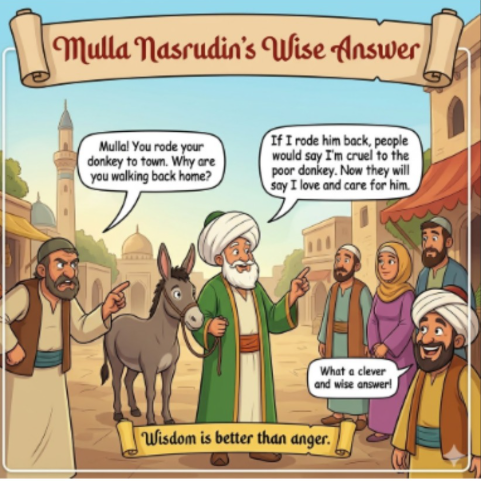
    This charming, illustrated comic-strip-style image is set in a bustling, ancient Middle Eastern or Central Asian town square on a bright, clear day. The detailed background features traditional mud-brick buildings, marketplace stalls, and a mosque with a beautiful minaret and dome under a soft blue sky. The overall art style is that of a warm, traditional storybook.

    The Characters and Confrontation
    The scene is framed like a story title page. At the top, a beautifully unfurled paper scroll reads "Mulla Nasrudin's Wise Answer" in a classic script. Below this, a group of villagers is gathered.

    The central figure is the legendary Mulla Nasrudin, depicted as an older, bearded, and benevolent sage. He is dressed in a large white turban with a green cap, and a flowing green robe. He stands calmly next to his trusty, saddled grey donkey, holding its reins.

    To Mulla's left, an angry, grumpy-looking villager in a brown vest points an accusing finger. The dialogue bubble above him asks the question:

    Villager: "Mulla! You rode your donkey to town. Why are you walking back home?"

    The Wise Answer
    A small group of diverse villagers (men and a woman wearing a modest purple hijab) on Mulla’s other side listen intently to his response. Mulla Nasrudin, holding his donkey’s halter and gesturing calmly, provides his clever reply, captured in a speech bubble above his head:

    Nasrudin: "If I rode him back, people would say I'm cruel to the poor donkey. Now they will say I love and care for him."

    This classic paradoxical answer from Nasrudin—which uses wit to gently mock how easily people judges others' actions—immediately changes the mood. The villagers on the right, previously curious, are now impressed. One man, smiling broadly, has a speech bubble that says:

    Villager: "What a clever and wise answer!"

    The Moral of the Story
    The image beautifully illustrates how the simple wisdom of Mulla Nasrudin defused the angry man's criticism with humor and a deeper perspective on managing perception.

    #Mulla#stories#follow#comment#like#fypシ゚
    RSIF8 Roll no.29 Story Post no.2 Story Post Topic: Mulla Nasrudin's Wise Answer A Scene in the Bazaar This charming, illustrated comic-strip-style image is set in a bustling, ancient Middle Eastern or Central Asian town square on a bright, clear day. The detailed background features traditional mud-brick buildings, marketplace stalls, and a mosque with a beautiful minaret and dome under a soft blue sky. The overall art style is that of a warm, traditional storybook. The Characters and Confrontation The scene is framed like a story title page. At the top, a beautifully unfurled paper scroll reads "Mulla Nasrudin's Wise Answer" in a classic script. Below this, a group of villagers is gathered. The central figure is the legendary Mulla Nasrudin, depicted as an older, bearded, and benevolent sage. He is dressed in a large white turban with a green cap, and a flowing green robe. He stands calmly next to his trusty, saddled grey donkey, holding its reins. To Mulla's left, an angry, grumpy-looking villager in a brown vest points an accusing finger. The dialogue bubble above him asks the question: Villager: "Mulla! You rode your donkey to town. Why are you walking back home?" The Wise Answer A small group of diverse villagers (men and a woman wearing a modest purple hijab) on Mulla’s other side listen intently to his response. Mulla Nasrudin, holding his donkey’s halter and gesturing calmly, provides his clever reply, captured in a speech bubble above his head: Nasrudin: "If I rode him back, people would say I'm cruel to the poor donkey. Now they will say I love and care for him." This classic paradoxical answer from Nasrudin—which uses wit to gently mock how easily people judges others' actions—immediately changes the mood. The villagers on the right, previously curious, are now impressed. One man, smiling broadly, has a speech bubble that says: Villager: "What a clever and wise answer!" The Moral of the Story The image beautifully illustrates how the simple wisdom of Mulla Nasrudin defused the angry man's criticism with humor and a deeper perspective on managing perception. #Mulla#stories#follow#comment#like#fypシ゚
    0 Comentários 0 Compartilhamentos 2141 Visualizações
  • Foundation level :-
    Day 41
    Roll:-005
    story post


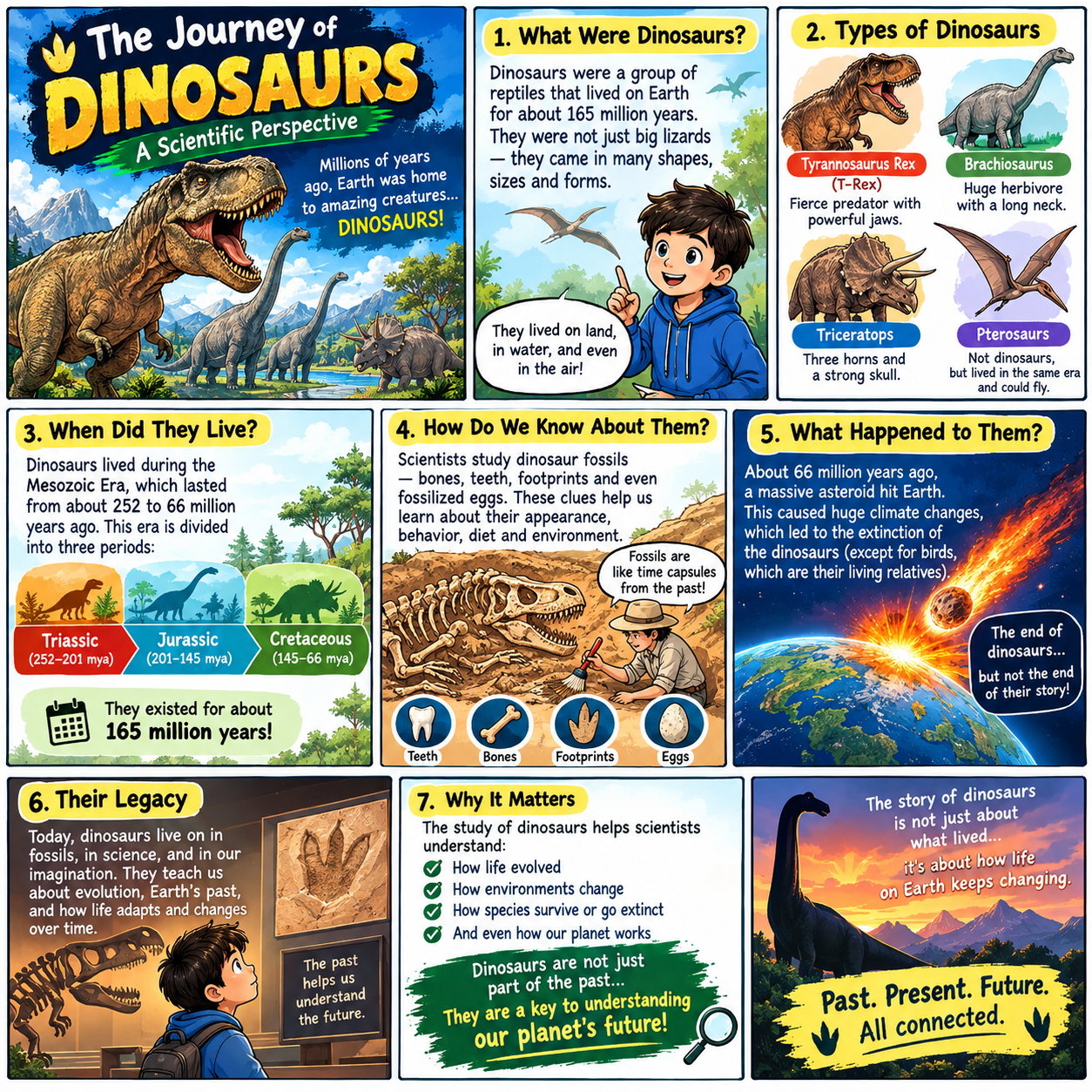
    **“The Journey of Dinosaurs: A Scientific Perspective”** is a colorful, comic-style educational post that takes viewers on an exciting journey through the prehistoric world of dinosaurs. The design combines **bright illustrations, bold headings, speech bubbles, timelines, and easy-to-understand scientific information**, making the topic fun and engaging for students and young learners.

    The post begins by introducing dinosaurs as an amazing group of animals that lived on Earth for millions of years. It explains that dinosaurs were not simply giant lizards—they appeared in many different **shapes, sizes, and forms**, from enormous plant-eating giants to powerful meat-eating predators.

    The comic introduces several famous prehistoric creatures, including **Tyrannosaurus rex, Brachiosaurus, and Triceratops**, while also explaining that **pterosaurs were flying reptiles rather than dinosaurs**. Each section uses colorful illustrations to help readers recognize the different creatures and understand how they lived.

    A timeline explains the **Mesozoic Era**, including the **Triassic, Jurassic, and Cretaceous periods**, showing how dinosaurs existed for an incredibly long period of Earth's history. Another section explains how scientists discover information about prehistoric life through **fossils, bones, teeth, footprints, and eggs**—almost like pieces of a giant puzzle from the past.

    The post also explores the dramatic end of the non-avian dinosaurs around **66 million years ago**, when a massive asteroid impact contributed to major environmental and climate changes. Importantly, the comic points out that **birds are living relatives of dinosaurs**, showing that the dinosaur story did not completely end.

    The final sections explain why studying dinosaurs matters today. Fossils and scientific research help us understand **evolution, changing environments, survival, extinction, and the history of our planet**. The overall message is that studying the past can help us understand the present and think about Earth's future.

    **Past. Present. Future. All connected.**
    **Explore the past. Understand life. Discover the future.**
    Foundation level :- Day 41 Roll:-005 story post **“The Journey of Dinosaurs: A Scientific Perspective”** is a colorful, comic-style educational post that takes viewers on an exciting journey through the prehistoric world of dinosaurs. The design combines **bright illustrations, bold headings, speech bubbles, timelines, and easy-to-understand scientific information**, making the topic fun and engaging for students and young learners. The post begins by introducing dinosaurs as an amazing group of animals that lived on Earth for millions of years. It explains that dinosaurs were not simply giant lizards—they appeared in many different **shapes, sizes, and forms**, from enormous plant-eating giants to powerful meat-eating predators. The comic introduces several famous prehistoric creatures, including **Tyrannosaurus rex, Brachiosaurus, and Triceratops**, while also explaining that **pterosaurs were flying reptiles rather than dinosaurs**. Each section uses colorful illustrations to help readers recognize the different creatures and understand how they lived. A timeline explains the **Mesozoic Era**, including the **Triassic, Jurassic, and Cretaceous periods**, showing how dinosaurs existed for an incredibly long period of Earth's history. Another section explains how scientists discover information about prehistoric life through **fossils, bones, teeth, footprints, and eggs**—almost like pieces of a giant puzzle from the past. The post also explores the dramatic end of the non-avian dinosaurs around **66 million years ago**, when a massive asteroid impact contributed to major environmental and climate changes. Importantly, the comic points out that **birds are living relatives of dinosaurs**, showing that the dinosaur story did not completely end. The final sections explain why studying dinosaurs matters today. Fossils and scientific research help us understand **evolution, changing environments, survival, extinction, and the history of our planet**. The overall message is that studying the past can help us understand the present and think about Earth's future. 🦕 **Past. Present. Future. All connected.** 🔬 **Explore the past. Understand life. Discover the future.**
    0 Comentários 0 Compartilhamentos 2254 Visualizações
  • #rsisb
    Roll No.190
    Image With Chatgpt No.22
    Foundation Level
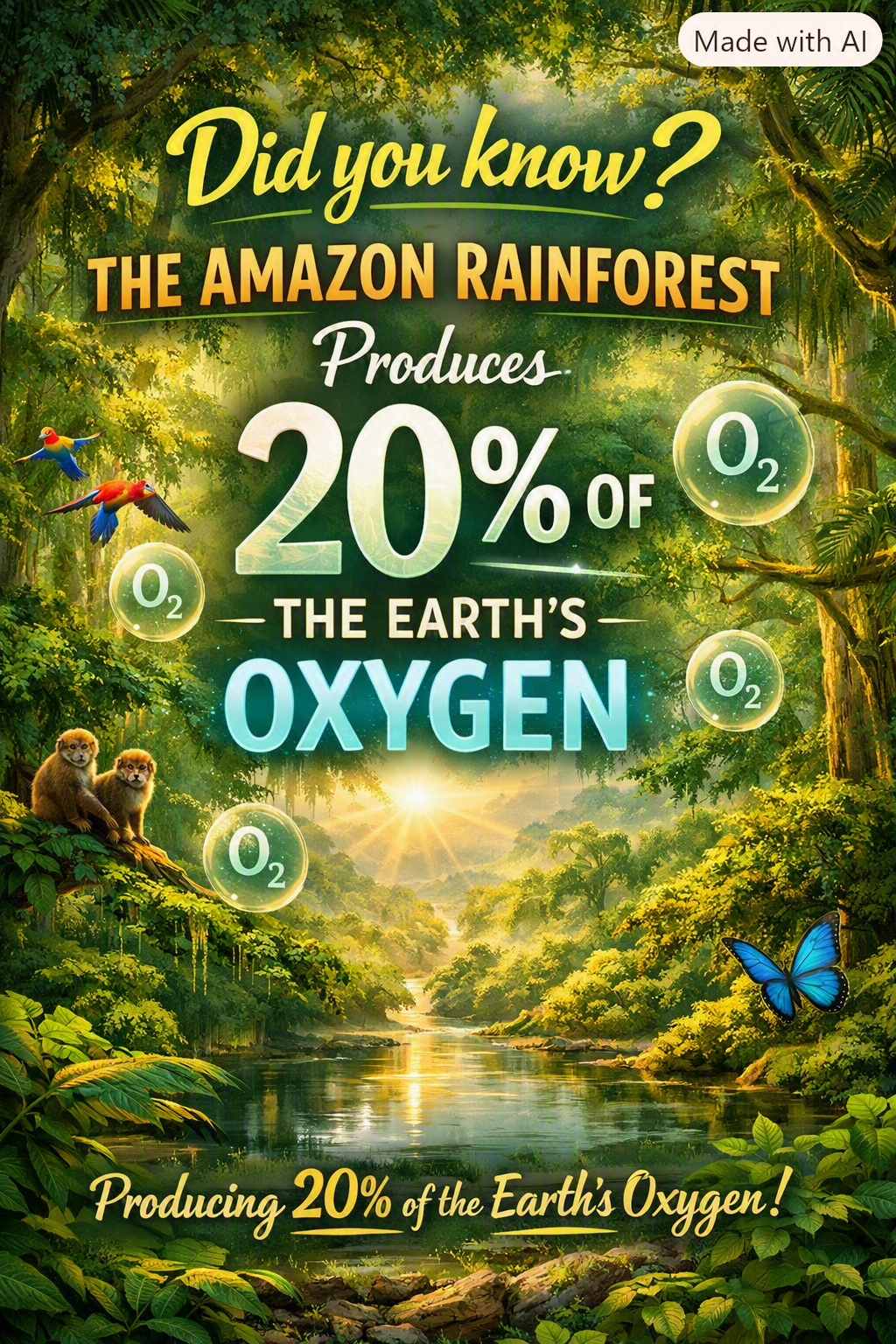
    Sure! Here are some ideas for **“Did you know? The Amazon Rainforest produces 20% of the Earth's oxygen.”**
    1. **Amazon Rainforest Scene** — Show a beautiful aerial view of the rainforest with the quote in the center.
    2. **Earth + Amazon** — Show Earth from space, zooming into the Amazon with glowing green highlights.
    3. **Oxygen Animation** — Show trees releasing oxygen bubbles into the atmosphere.
    4. **Wildlife Theme** — Add monkeys, colorful birds, butterflies, and other rainforest animals.
    5. **Rainforest Journey** — Show rain falling on the forest, rivers flowing, and sunlight passing through the trees.
    6. **Science Style** — Create an educational infographic with trees, oxygen molecules, and the Amazon map.
    7. **Short Reel** — Start with **“DID YOU KNOW?”** → reveal the Amazon → finish with **“Protect our forests. Protect our planet.”**
    8. **Conservation Message** — End with: **“Every tree matters.”**
    **Small fact-check:** The commonly repeated **20% figure is a myth/oversimplification**. The Amazon produces oxygen through
    #rsisb Roll No.190 Image With Chatgpt No.22 Foundation Level Sure! 🌳🌎 Here are some ideas for **“Did you know? The Amazon Rainforest produces 20% of the Earth's oxygen.”** 1. 🌿 **Amazon Rainforest Scene** — Show a beautiful aerial view of the rainforest with the quote in the center. 2. 🌎 **Earth + Amazon** — Show Earth from space, zooming into the Amazon with glowing green highlights. 3. 💨 **Oxygen Animation** — Show trees releasing oxygen bubbles into the atmosphere. 🌱💨 4. 🐒 **Wildlife Theme** — Add monkeys, colorful birds, butterflies, and other rainforest animals. 5. 🌧️ **Rainforest Journey** — Show rain falling on the forest, rivers flowing, and sunlight passing through the trees. 6. 🔬 **Science Style** — Create an educational infographic with trees, oxygen molecules, and the Amazon map. 7. 🎬 **Short Reel** — Start with **“DID YOU KNOW?”** 🤔 → reveal the Amazon → finish with **“Protect our forests. Protect our planet.”** 🌍💚 8. 🌱 **Conservation Message** — End with: **“Every tree matters.”** 🌳✨ 💡 **Small fact-check:** The commonly repeated **20% figure is a myth/oversimplification**. The Amazon produces oxygen through
    0 Comentários 0 Compartilhamentos 3459 Visualizações
  • RSISB
    Roll No:#209
    Clone No.1


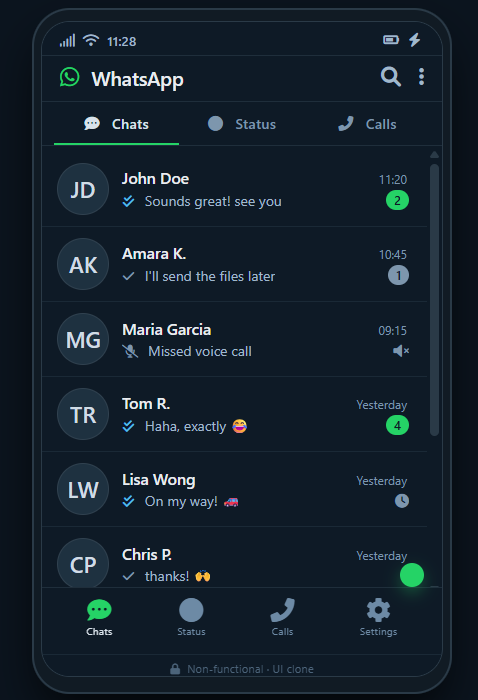
    WhatsApp Clone (Non-Functional)

    A creative WhatsApp Clone project designed to recreate the look and feel of a modern messaging application. This non-functional clone focuses on UI design, layout, and visual elements, including chat screens, contact lists, message bubbles, profile sections, and a familiar messaging interface.

    The project is perfect for practicing frontend development, UI/UX design, responsive layouts, and web development skills. Although it is non-functional and does not send real messages, it demonstrates how a popular messaging platform can be recreated for learning and design purposes.

    A great project to showcase creativity, coding skills, and modern interface design! ‍

    #WhatsAppClone #NonFunctional #WebDevelopment #FrontendDevelopment #UIDesign #UXDesign #WebDesign #Coding #Programming #HTML #CSS #JavaScript #ResponsiveDesign #FrontendProject #CodingProject #Developer #Learning #Tech #SoftwareDevelopment #PortfolioProject ‍
    RSISB Roll No:#209 Clone No.1 📱💬 WhatsApp Clone (Non-Functional) 💬📱 A creative WhatsApp Clone project designed to recreate the look and feel of a modern messaging application. 🎨✨ This non-functional clone focuses on UI design, layout, and visual elements, including chat screens, contact lists, message bubbles, profile sections, and a familiar messaging interface. 💚🗨️ The project is perfect for practicing frontend development, UI/UX design, responsive layouts, and web development skills. 💻🚀 Although it is non-functional and does not send real messages, it demonstrates how a popular messaging platform can be recreated for learning and design purposes. 🌟📚 💡 A great project to showcase creativity, coding skills, and modern interface design! 🔥👨‍💻 #WhatsAppClone #NonFunctional #WebDevelopment #FrontendDevelopment #UIDesign #UXDesign #WebDesign #Coding #Programming #HTML #CSS #JavaScript #ResponsiveDesign #FrontendProject #CodingProject #Developer #Learning #Tech #SoftwareDevelopment #PortfolioProject 📱💬💻🎨✨🚀🧑‍💻🌟🔥📚💚
    0 Comentários 0 Compartilhamentos 7153 Visualizações
  • # WhatsApp Clone (Non-Functional UI) using Claude AI

    ### Description

    A modern and responsive WhatsApp Clone UI developed using Claude AI. This project recreates the user interface of a popular messaging application, featuring a chat list, conversation screen, contact sidebar, message bubbles, and responsive layouts. The project focuses on frontend design, UI/UX development, and creating a realistic messaging experience without backend functionality.

    ### Student Information

    Coding Book: 2
    Task: 2
    Roll No: 71

    ### Website Link

    https://claude.ai/public/artifacts/b0030df6-259e-4eb8-85ac-aa866835e1d2

    ### Hashtags

    #ClaudeAI #WhatsAppClone #WebDevelopment #HTML #CSS #JavaScript #CodingBook2 #Task2 #RollNo71 #Programming #FrontendDevelopment #UIUXDesign #StudentProject #CodeWithAI #TechEducation #WebAppDevelopment #ResponsiveDesign #ModernUI #MessagingApp #FrontendProject
    # WhatsApp Clone (Non-Functional UI) using Claude AI ### Description A modern and responsive WhatsApp Clone UI developed using Claude AI. This project recreates the user interface of a popular messaging application, featuring a chat list, conversation screen, contact sidebar, message bubbles, and responsive layouts. The project focuses on frontend design, UI/UX development, and creating a realistic messaging experience without backend functionality. ### Student Information 📖 Coding Book: 2 📋 Task: 2 🎓 Roll No: 71 ### Website Link https://claude.ai/public/artifacts/b0030df6-259e-4eb8-85ac-aa866835e1d2 ### Hashtags #ClaudeAI #WhatsAppClone #WebDevelopment #HTML #CSS #JavaScript #CodingBook2 #Task2 #RollNo71 #Programming #FrontendDevelopment #UIUXDesign #StudentProject #CodeWithAI #TechEducation #WebAppDevelopment #ResponsiveDesign #ModernUI #MessagingApp #FrontendProject
    0 Comentários 0 Compartilhamentos 6548 Visualizações
  • I want to go to Bubble Over Barcelona, in partnership with TechCrunch

    Can anyone arrange tickets ?
    I want to go to Bubble Over Barcelona, in partnership with TechCrunch Can anyone arrange tickets ?
    0 Comentários 0 Compartilhamentos 798 Visualizações
Páginas Impulsionadas