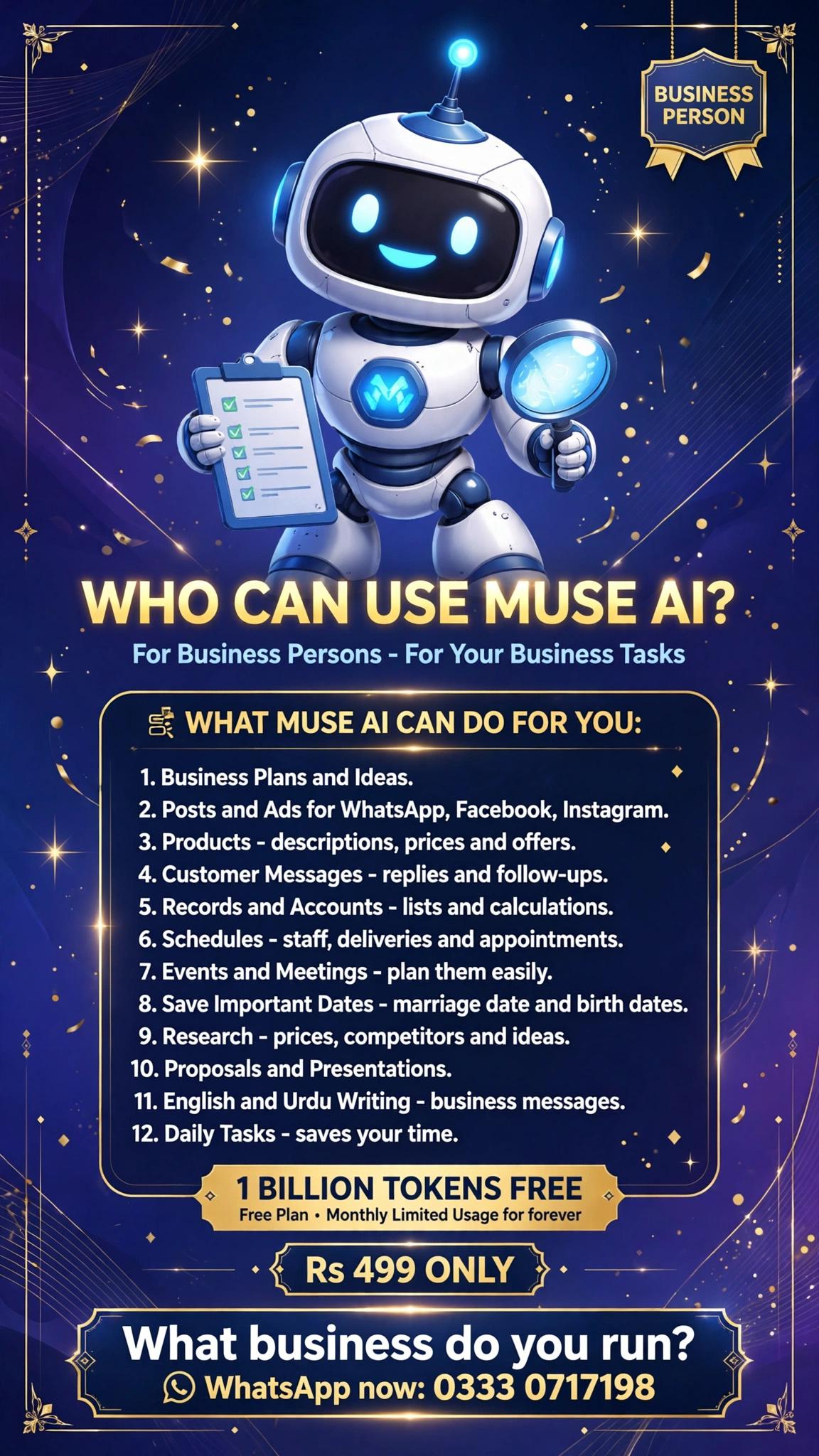
• Who can use Muse AI?
    Business people — for your business tasks.

    What Muse AI can do for you:

    Business Plans and Ideas — plan and grow your business.
    Posts and Ads — for WhatsApp, Facebook, and Instagram.
    Products — descriptions, prices, and offers.
    Customer Messages — replies and follow-ups.
    Records and Accounts — lists and calculations.
    Schedules — staff, deliveries, and appointments.
    Events and Meetings — plan them easily.
    Save Important Dates — marriage date and birth dates.
    Research — prices, competitors, and ideas.
    Proposals and Presentations — ready in minutes.
    English and Urdu Writing — business messages.
    Daily Tasks — save your time.
    What business do you run? Tell Muse AI, and it will handle your business tasks. It is like your own free agent.

    1 Billion Tokens FREE | Free Plan, Monthly Limited Usage for forever
    Only Rs 499
    WhatsApp now: 0333 0717198
    Who can use Muse AI? Business people — for your business tasks. What Muse AI can do for you: Business Plans and Ideas — plan and grow your business. Posts and Ads — for WhatsApp, Facebook, and Instagram. Products — descriptions, prices, and offers. Customer Messages — replies and follow-ups. Records and Accounts — lists and calculations. Schedules — staff, deliveries, and appointments. Events and Meetings — plan them easily. Save Important Dates — marriage date and birth dates. Research — prices, competitors, and ideas. Proposals and Presentations — ready in minutes. English and Urdu Writing — business messages. Daily Tasks — save your time. What business do you run? Tell Muse AI, and it will handle your business tasks. It is like your own free agent. 1 Billion Tokens FREE | Free Plan, Monthly Limited Usage for forever Only Rs 499 WhatsApp now: 0333 0717198
    0 Commentarios 0 Acciones 235 Views
  • My review in Urdu How to Communicate When Something Goes Wrong (Part 1)

    TEDx Video Description — Part 2
    Video: How to Communicate When Something Goes Wrong
    Speaker: Ann Latham
    Part: 2

    In the final part of her talk, Ann Latham explains how the Disconnect Principle can help prevent future problems and improve different types of relationships. She encourages people to ask what they can do differently next time to avoid repeating the same mistakes.

    She also explains how employees, parents, and individuals can use this approach in everyday situations. Sometimes, people have fundamental differences that cannot easily be resolved, and moving in separate directions respectfully may be the best option. Ann ends her talk with an audience activity to reinforce her main message: "I think we have a disconnect."
    She introduces the phrase "I think we have a disconnect" as a better way to begin difficult conversations. She also explains how asking questions about the current situation and next steps can turn disagreements into teamwork.

    Key Points
    Learn from problems to prevent them from happening again.
    Use the Disconnect Principle in different relationships.
    Recognise fundamental differences without blaming others.
    Turn difficult conversations into respectful problem-solving.

    Speaker Biography:
    Ann Latham is a management consultant, author, and founder of Uncommon Clarity. She helps organisations improve communication, clarity, and problem-solving.

    Speaker Profiles:
    Facebook: https://www.facebook.com/uncommon.clarity
    Instagram: https://www.instagram.com/uncommonclarityinc
    LinkedIn: https://www.linkedin.com/in/annlathamuncommonclarity
    X (Twitter): https://x.com/AnnLatham

    Video Link:
    https://www.youtube.com/watch?v=h40dfxFotA4
    My review in Urdu How to Communicate When Something Goes Wrong (Part 1) 📝 TEDx Video Description — Part 2 🎤 Video: How to Communicate When Something Goes Wrong Speaker: Ann Latham Part: 2 In the final part of her talk, Ann Latham explains how the Disconnect Principle can help prevent future problems and improve different types of relationships. She encourages people to ask what they can do differently next time to avoid repeating the same mistakes. She also explains how employees, parents, and individuals can use this approach in everyday situations. Sometimes, people have fundamental differences that cannot easily be resolved, and moving in separate directions respectfully may be the best option. Ann ends her talk with an audience activity to reinforce her main message: "I think we have a disconnect." She introduces the phrase "I think we have a disconnect" as a better way to begin difficult conversations. She also explains how asking questions about the current situation and next steps can turn disagreements into teamwork. ⭐ Key Points Learn from problems to prevent them from happening again. Use the Disconnect Principle in different relationships. Recognise fundamental differences without blaming others. Turn difficult conversations into respectful problem-solving. 👤 Speaker Biography: Ann Latham is a management consultant, author, and founder of Uncommon Clarity. She helps organisations improve communication, clarity, and problem-solving. 🔗 Speaker Profiles: 📘 Facebook: https://www.facebook.com/uncommon.clarity 📸 Instagram: https://www.instagram.com/uncommonclarityinc 💼 LinkedIn: https://www.linkedin.com/in/annlathamuncommonclarity 🐦 X (Twitter): https://x.com/AnnLatham 📹 Video Link: https://www.youtube.com/watch?v=h40dfxFotA4
    0 Commentarios 0 Acciones 391 Views 8
  • My review in How to Communicate When Something Goes Wrong (Part 2)

    TEDx Video Description — Part 2
    Video: How to Communicate When Something Goes Wrong
    Speaker: Ann Latham
    Part: 2

    In the final part of her talk, Ann Latham explains how the Disconnect Principle can help prevent future problems and improve different types of relationships. She encourages people to ask what they can do differently next time to avoid repeating the same mistakes.

    She also explains how employees, parents, and individuals can use this approach in everyday situations. Sometimes, people have fundamental differences that cannot easily be resolved, and moving in separate directions respectfully may be the best option. Ann ends her talk with an audience activity to reinforce her main message: "I think we have a disconnect."

    Key Points
    1. Learn from problems to prevent them from happening again.
    2. Use the Disconnect Principle in different relationships.
    3. Recognise fundamental differences without blaming others.
    4. Turn difficult conversations into respectful problem-solving.

    Speaker Biography:
    Ann Latham is a management consultant, author, and founder of Uncommon Clarity. She helps organisations improve communication, clarity, and problem-solving.

    Speaker Profiles:
    Facebook: https://www.facebook.com/uncommon.clarity
    Instagram: https://www.instagram.com/uncommonclarityinc
    LinkedIn: https://www.linkedin.com/in/annlathamuncommonclarity
    X (Twitter): https://x.com/AnnLatham

    Video Link:
    https://www.youtube.com/watch?v=h40dfxFotA4
    My review in How to Communicate When Something Goes Wrong (Part 2) 📝 TEDx Video Description — Part 2 🎤 Video: How to Communicate When Something Goes Wrong Speaker: Ann Latham Part: 2 In the final part of her talk, Ann Latham explains how the Disconnect Principle can help prevent future problems and improve different types of relationships. She encourages people to ask what they can do differently next time to avoid repeating the same mistakes. She also explains how employees, parents, and individuals can use this approach in everyday situations. Sometimes, people have fundamental differences that cannot easily be resolved, and moving in separate directions respectfully may be the best option. Ann ends her talk with an audience activity to reinforce her main message: "I think we have a disconnect." ⭐ Key Points 1. Learn from problems to prevent them from happening again. 2. Use the Disconnect Principle in different relationships. 3. Recognise fundamental differences without blaming others. 4. Turn difficult conversations into respectful problem-solving. 👤 Speaker Biography: Ann Latham is a management consultant, author, and founder of Uncommon Clarity. She helps organisations improve communication, clarity, and problem-solving. 🔗 Speaker Profiles: 📘 Facebook: https://www.facebook.com/uncommon.clarity 📸 Instagram: https://www.instagram.com/uncommonclarityinc 💼 LinkedIn: https://www.linkedin.com/in/annlathamuncommonclarity 🐦 X (Twitter): https://x.com/AnnLatham 📹 Video Link: https://www.youtube.com/watch?v=h40dfxFotA4
    0 Commentarios 0 Acciones 400 Views 6
  • Muse AI for Normal Users
    Search products & place orders, ask any question, learn history, learn English & Arabic, write topics, get new recipes,
    follow new trends, schedule events & meetings, and save important dates — marriage date and birth dates.
    1 Billion Tokens FREE | Only Rs 499
    WhatsApp now: 0333 0717198
    #MuseAI #AITools #Pakistan #DailyUse #LearnEnglish #LearnArabic #Recipes #Shopping #Meetings #AIForEveryone
    Muse AI for Normal Users Search products & place orders, ask any question, learn history, learn English & Arabic, write topics, get new recipes, follow new trends, schedule events & meetings, and save important dates — marriage date and birth dates. 1 Billion Tokens FREE | Only Rs 499 WhatsApp now: 0333 0717198 #MuseAI #AITools #Pakistan #DailyUse #LearnEnglish #LearnArabic #Recipes #Shopping #Meetings #AIForEveryone
    0 Commentarios 0 Acciones 233 Views
  • Foundation level task
    Day : 48
    Task : story post
    The Journey of Dinosaurs: A Scientific Perspective

    Once upon a time, millions of years ago, our planet was very different from the world we see today. Huge forests covered the land, rivers flowed through green valleys, and strange creatures walked across the Earth. These amazing creatures were called dinosaurs.

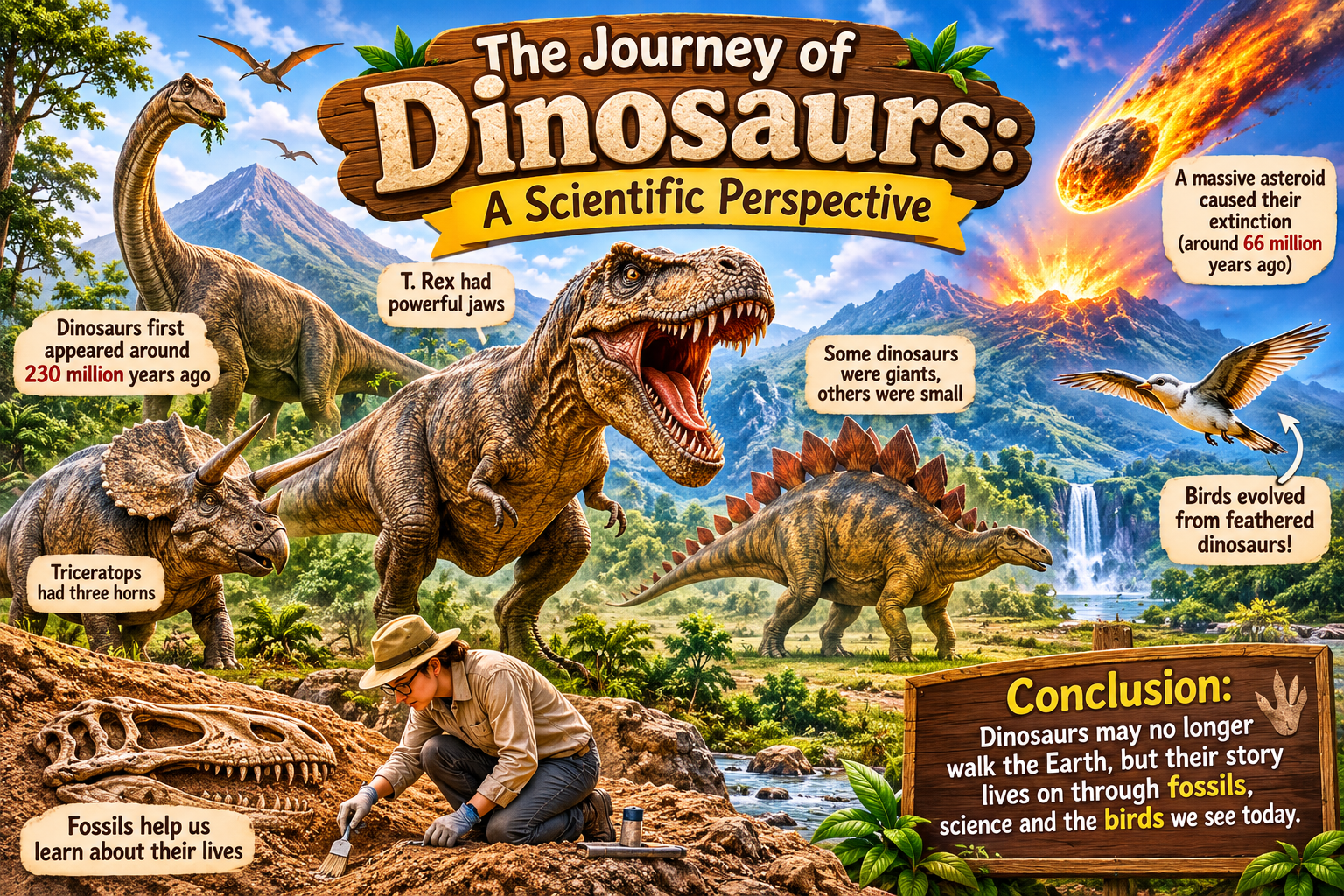
    Dinosaurs first appeared around 230 million years ago during the Triassic Period. They lived on Earth for millions of years and became some of the most fascinating animals in history.

    There were many different types of dinosaurs. Some were enormous plant-eaters, while others were meat-eaters. The mighty Tyrannosaurus Rex, known as T. rex, had powerful jaws and sharp teeth. The long-necked Brachiosaurus used its height to reach leaves on tall trees. The Triceratops had three horns and a large bony shield around its head.

    Scientists study dinosaurs through fossils. Fossils are the preserved remains or traces of ancient living things. By examining bones, footprints, and teeth, scientists discover how dinosaurs lived, what they ate, and how they moved.

    But what happened to the dinosaurs? About 66 million years ago, a huge asteroid struck Earth. This event caused major environmental changes and led to the extinction of most dinosaurs.

    However, there is something surprising! Not all dinosaurs disappeared. Scientists believe that modern birds evolved from small feathered dinosaurs. This means that birds are the living descendants of dinosaurs!

    Today, scientists continue discovering new dinosaur fossils and learning more about these incredible creatures.

    The journey of dinosaurs teaches us that Earth's history is full of mysteries, discoveries, and amazing scientific stories.

    The End – But the Journey of Discovery Continues!

    **The Journey of Dinosaurs: A Scientific Perspective**

    Explore the fascinating world of dinosaurs and discover their history, evolution, and extinction through science. From powerful T. rex to the evolution of modern birds, this journey highlights the wonders of Earth's past.

    #Dinosaurs #Science #History #Paleontology #Learning #ScientificDiscovery #Education
    Foundation level task Day : 48 Task : story post 🦖 The Journey of Dinosaurs: A Scientific Perspective Once upon a time, millions of years ago, our planet was very different from the world we see today. Huge forests covered the land, rivers flowed through green valleys, and strange creatures walked across the Earth. These amazing creatures were called dinosaurs. Dinosaurs first appeared around 230 million years ago during the Triassic Period. They lived on Earth for millions of years and became some of the most fascinating animals in history. There were many different types of dinosaurs. Some were enormous plant-eaters, while others were meat-eaters. The mighty Tyrannosaurus Rex, known as T. rex, had powerful jaws and sharp teeth. The long-necked Brachiosaurus used its height to reach leaves on tall trees. The Triceratops had three horns and a large bony shield around its head. Scientists study dinosaurs through fossils. Fossils are the preserved remains or traces of ancient living things. By examining bones, footprints, and teeth, scientists discover how dinosaurs lived, what they ate, and how they moved. But what happened to the dinosaurs? About 66 million years ago, a huge asteroid struck Earth. This event caused major environmental changes and led to the extinction of most dinosaurs. However, there is something surprising! Not all dinosaurs disappeared. Scientists believe that modern birds evolved from small feathered dinosaurs. This means that birds are the living descendants of dinosaurs! Today, scientists continue discovering new dinosaur fossils and learning more about these incredible creatures. The journey of dinosaurs teaches us that Earth's history is full of mysteries, discoveries, and amazing scientific stories. 🌍 The End – But the Journey of Discovery Continues! 🦕 🦖 **The Journey of Dinosaurs: A Scientific Perspective** Explore the fascinating world of dinosaurs and discover their history, evolution, and extinction through science. From powerful T. rex to the evolution of modern birds, this journey highlights the wonders of Earth's past. 🌍 #Dinosaurs #Science #History #Paleontology #Learning #ScientificDiscovery #Education
    1
    0 Commentarios 0 Acciones 443 Views
  • An Amazing Experience at Freelancer Tech Baitak 2.0 at IBA Karachi!

    Today, I had the opportunity to attend Freelancer Tech Baitak 2.0 at IBA Karachi, and it was truly an amazing and memorable experience!

    The event was filled with learning, inspiration, networking, and exciting opportunities. One of the highlights was seeing Sir Rehan AllahWala receiving awards for his contributions.

    I also took this opportunity to market my startup, Phoneopia.com — Pakistan's First AI Communication Platform , and share our vision of building a privacy-first AI communication platform for Pakistan.

    Overall, it was a fantastic experience that motivated me to keep learning, building, and growing as a young entrepreneur. Every event is a new opportunity to connect with inspiring people and take another step toward our goals!

    Keep building. Keep learning. Keep growing!

    #FreelancerTechBaitak2 #IBA Karachi #Phoneopia #StartupJourney #Entrepreneurship #Networking #Innovation #PakistanStartups
    🚀 An Amazing Experience at Freelancer Tech Baitak 2.0 at IBA Karachi! 🇵🇰 Today, I had the opportunity to attend Freelancer Tech Baitak 2.0 at IBA Karachi, and it was truly an amazing and memorable experience! ✨ The event was filled with learning, inspiration, networking, and exciting opportunities. One of the highlights was seeing Sir Rehan AllahWala receiving awards for his contributions. 🏆👏 I also took this opportunity to market my startup, Phoneopia.com — Pakistan's First AI Communication Platform 📱🇵🇰, and share our vision of building a privacy-first AI communication platform for Pakistan. Overall, it was a fantastic experience that motivated me to keep learning, building, and growing as a young entrepreneur. Every event is a new opportunity to connect with inspiring people and take another step toward our goals! 💡🔥 Keep building. Keep learning. Keep growing! 🚀 #FreelancerTechBaitak2 #IBA Karachi #Phoneopia #StartupJourney #Entrepreneurship #Networking #Innovation #PakistanStartups
    0 Commentarios 0 Acciones 439 Views 0
  • **Roll No: 2**
    **Batch: 14**
    **Book: ACCL**
    **Task No: 161**

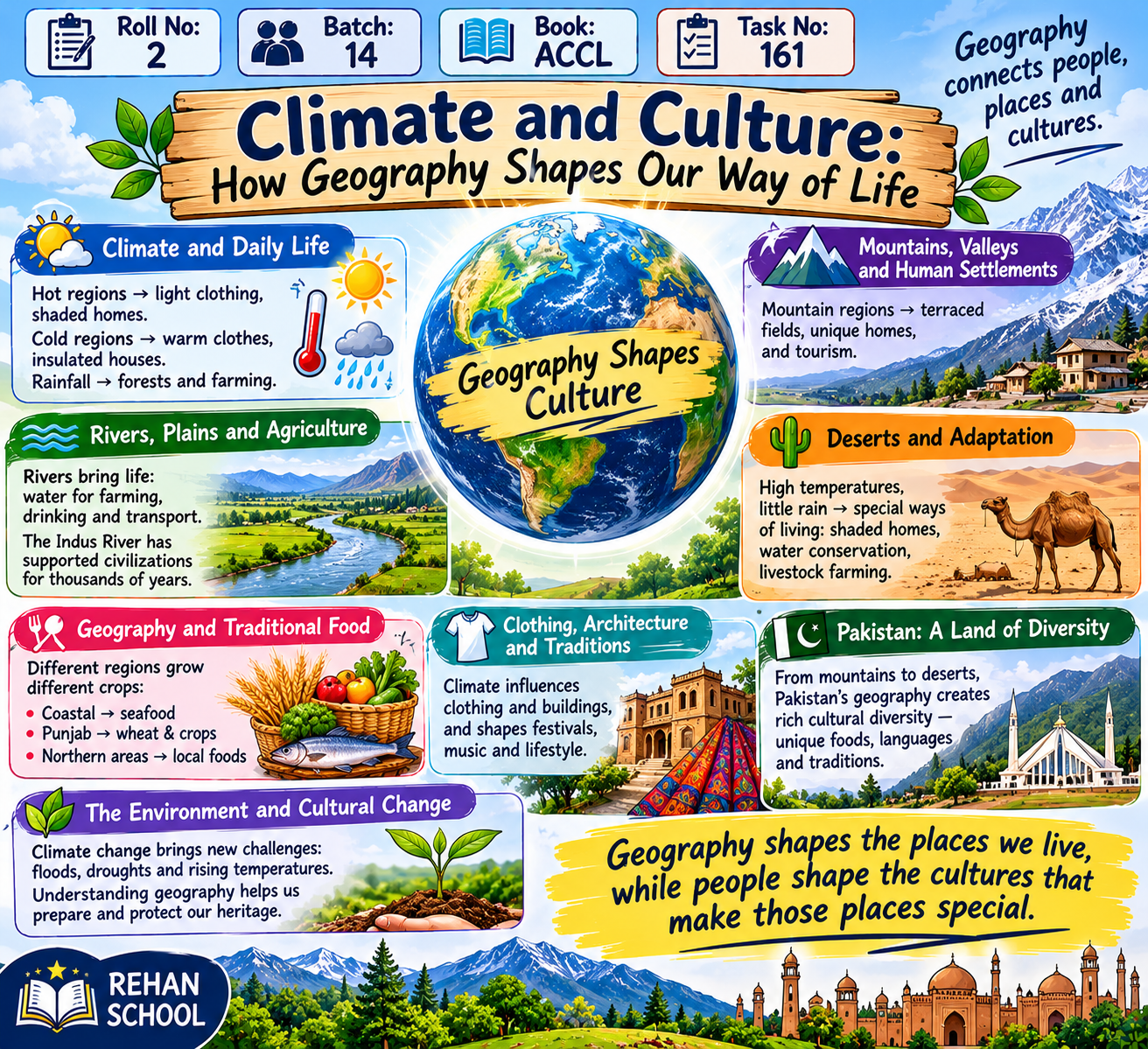
    # Climate and Culture: How Geography Shapes Our Way of Life

    Have you ever wondered why people in different parts of the world wear different clothes, eat different foods, build different houses, and celebrate different traditions? One important reason is geography. The physical features of a region, including its mountains, rivers, deserts, forests, and climate, influence how people live and develop their cultures. Geography is not just about maps and locations; it is also about understanding the relationship between people and their environment.

    **Climate refers to the long-term patterns of weather in a particular region, while geography describes the physical features and location of places.** These two factors influence many aspects of human life, including agriculture, housing, transportation, clothing, occupations, and cultural traditions. Over generations, communities develop ways of living that respond to the conditions around them.

    ## Climate and Daily Life

    Climate plays an important role in determining people's daily activities. In hot regions, people often prefer lightweight clothing and buildings designed to provide shade and ventilation. In colder areas, warm clothing, insulated houses, and heating systems help people remain comfortable.

    Rainfall also affects daily life. Regions receiving plenty of rain may support forests, rivers, and farming, while areas with limited rainfall often require careful water management. These environmental conditions influence where communities settle and how they use natural resources.

    ## Mountains, Valleys, and Human Settlements

    Mountains and valleys create unique living environments. People living in mountainous regions may build houses on slopes or in valleys and develop transportation systems suited to difficult terrain. Farming practices may include terraced fields, where steps are created on hillsides to make agricultural land more usable.

    Mountain communities often develop strong connections with their natural surroundings. Tourism, livestock farming, handicrafts, and forestry can become important sources of livelihood. In Pakistan, regions such as Gilgit-Baltistan and parts of Khyber Pakhtunkhwa demonstrate how mountain geography influences local lifestyles and traditions.

    ## Rivers, Plains, and Agriculture

    Rivers and fertile plains have played a major role in the development of human civilizations. Rivers provide water for drinking, farming, transportation, and other activities. Their surrounding land can contain fertile soil that supports the growth of crops.

    The Indus River is an important example. It has supported communities and agriculture in Pakistan for thousands of years. The Indus Valley Civilization developed around this river system, demonstrating how access to water and suitable land can contribute to the growth of cities, trade, and organized societies.

    ## Deserts and Adaptation

    Desert regions have high temperatures, limited rainfall, and scarce water resources. People living in these areas develop ways to adapt to challenging environmental conditions. They may use traditional methods of water conservation, construct buildings that provide shade, and organize their activities around cooler parts of the day.

    In some desert communities, livestock farming, trade, and traditional crafts are important occupations. Their clothing, food, architecture, and customs reflect generations of experience in living with a dry climate.

    ## Geography and Traditional Food

    Food is another interesting example of how geography shapes culture. Different regions grow different crops depending on their climate, soil, and water availability. Coastal communities often include fish and seafood in their diets, while agricultural regions may depend more on wheat, rice, vegetables, and fruits.

    In Pakistan, regional food traditions reflect local environments and cultural history. Punjab is famous for its agricultural products and traditional dishes, while coastal Sindh and Balochistan have strong connections with seafood. Northern areas are known for regional foods influenced by their mountain environment and local ingredients.

    ## Clothing, Architecture, and Traditions

    Geography influences the materials people use for clothing and construction. In cold climates, wool and other insulating materials are useful, while lighter fabrics are often preferred in hot environments.

    Traditional architecture also reflects local conditions. Houses in warm regions may have courtyards and shaded spaces, while buildings in colder areas may use materials and designs that help retain heat. Local traditions, festivals, music, and celebrations can also develop through people's relationship with their environment, history, and community life.

    ## The Environment and Cultural Change

    Although geography influences culture, human communities are not limited by their surroundings. People use creativity, technology, and knowledge to adapt to changing conditions. Modern transportation, irrigation systems, renewable energy, and improved construction methods have changed the way many communities live.

    Climate change is creating new challenges around the world. Rising temperatures, changing rainfall patterns, floods, droughts, and extreme weather events can affect agriculture, water supplies, homes, and traditional livelihoods. Understanding the connection between geography and culture can help communities prepare for these challenges and protect their natural and cultural heritage.

    ## Pakistan: A Land of Geographical and Cultural Diversity

    Pakistan is an excellent example of how geography creates cultural diversity. From the high mountains of the north to the deserts of the south, from fertile plains to coastal areas, every region has its own environmental characteristics and traditions.

    The people of different regions speak various languages, prepare different foods, wear traditional clothing, and celebrate unique cultural events. These differences make Pakistan a country rich in heritage and identity. At the same time, shared history and national values connect its communities.

    Geography teaches us that every place has its own story. The mountains, rivers, deserts, forests, and climates around us influence how societies grow, adapt, and preserve their traditions. By understanding these connections, we can appreciate cultural diversity and recognize the importance of protecting our environment.

    **Geography shapes the places we live, while people shape the cultures that make those places special. When we understand the relationship between climate, land, and human life, we gain a deeper appreciation of our world's diversity and the remarkable ways people adapt to their surroundings. **

    #ClimateAndCulture #Geography #CulturalDiversity #Environment #Pakistan #HumanGeography #ClimateChange #ACCL #Batch14 #Task161
    **Roll No: 2** **Batch: 14** **Book: ACCL** **Task No: 161** # 🌍🏔️ Climate and Culture: How Geography Shapes Our Way of Life 🌦️🏡 Have you ever wondered why people in different parts of the world wear different clothes, eat different foods, build different houses, and celebrate different traditions? 🌎✨ One important reason is geography. The physical features of a region, including its mountains, rivers, deserts, forests, and climate, influence how people live and develop their cultures. Geography is not just about maps and locations; it is also about understanding the relationship between people and their environment. **Climate refers to the long-term patterns of weather in a particular region, while geography describes the physical features and location of places.** 🌤️ These two factors influence many aspects of human life, including agriculture, housing, transportation, clothing, occupations, and cultural traditions. Over generations, communities develop ways of living that respond to the conditions around them. ## 🌞 Climate and Daily Life Climate plays an important role in determining people's daily activities. In hot regions, people often prefer lightweight clothing and buildings designed to provide shade and ventilation. In colder areas, warm clothing, insulated houses, and heating systems help people remain comfortable. ❄️☀️ Rainfall also affects daily life. Regions receiving plenty of rain may support forests, rivers, and farming, while areas with limited rainfall often require careful water management. These environmental conditions influence where communities settle and how they use natural resources. ## 🏔️ Mountains, Valleys, and Human Settlements Mountains and valleys create unique living environments. 🏔️ People living in mountainous regions may build houses on slopes or in valleys and develop transportation systems suited to difficult terrain. Farming practices may include terraced fields, where steps are created on hillsides to make agricultural land more usable. Mountain communities often develop strong connections with their natural surroundings. Tourism, livestock farming, handicrafts, and forestry can become important sources of livelihood. In Pakistan, regions such as Gilgit-Baltistan and parts of Khyber Pakhtunkhwa demonstrate how mountain geography influences local lifestyles and traditions. 🇵🇰 ## 🌾 Rivers, Plains, and Agriculture Rivers and fertile plains have played a major role in the development of human civilizations. 🌊 Rivers provide water for drinking, farming, transportation, and other activities. Their surrounding land can contain fertile soil that supports the growth of crops. The Indus River is an important example. It has supported communities and agriculture in Pakistan for thousands of years. The Indus Valley Civilization developed around this river system, demonstrating how access to water and suitable land can contribute to the growth of cities, trade, and organized societies. 🌾🏛️ ## 🏜️ Deserts and Adaptation Desert regions have high temperatures, limited rainfall, and scarce water resources. 🐪 People living in these areas develop ways to adapt to challenging environmental conditions. They may use traditional methods of water conservation, construct buildings that provide shade, and organize their activities around cooler parts of the day. In some desert communities, livestock farming, trade, and traditional crafts are important occupations. Their clothing, food, architecture, and customs reflect generations of experience in living with a dry climate. ## 🍲 Geography and Traditional Food Food is another interesting example of how geography shapes culture. 🍚 Different regions grow different crops depending on their climate, soil, and water availability. Coastal communities often include fish and seafood in their diets, while agricultural regions may depend more on wheat, rice, vegetables, and fruits. In Pakistan, regional food traditions reflect local environments and cultural history. Punjab is famous for its agricultural products and traditional dishes, while coastal Sindh and Balochistan have strong connections with seafood. Northern areas are known for regional foods influenced by their mountain environment and local ingredients. 🍛🇵🇰 ## 👕 Clothing, Architecture, and Traditions Geography influences the materials people use for clothing and construction. In cold climates, wool and other insulating materials are useful, while lighter fabrics are often preferred in hot environments. 🧥 Traditional architecture also reflects local conditions. Houses in warm regions may have courtyards and shaded spaces, while buildings in colder areas may use materials and designs that help retain heat. Local traditions, festivals, music, and celebrations can also develop through people's relationship with their environment, history, and community life. 🎶🏡 ## 🌱 The Environment and Cultural Change Although geography influences culture, human communities are not limited by their surroundings. People use creativity, technology, and knowledge to adapt to changing conditions. Modern transportation, irrigation systems, renewable energy, and improved construction methods have changed the way many communities live. Climate change is creating new challenges around the world. Rising temperatures, changing rainfall patterns, floods, droughts, and extreme weather events can affect agriculture, water supplies, homes, and traditional livelihoods. 🌍 Understanding the connection between geography and culture can help communities prepare for these challenges and protect their natural and cultural heritage. ## 🇵🇰 Pakistan: A Land of Geographical and Cultural Diversity Pakistan is an excellent example of how geography creates cultural diversity. From the high mountains of the north to the deserts of the south, from fertile plains to coastal areas, every region has its own environmental characteristics and traditions. 🏔️🌊 The people of different regions speak various languages, prepare different foods, wear traditional clothing, and celebrate unique cultural events. These differences make Pakistan a country rich in heritage and identity. At the same time, shared history and national values connect its communities. Geography teaches us that every place has its own story. The mountains, rivers, deserts, forests, and climates around us influence how societies grow, adapt, and preserve their traditions. By understanding these connections, we can appreciate cultural diversity and recognize the importance of protecting our environment. 🌳🤝 **Geography shapes the places we live, while people shape the cultures that make those places special. When we understand the relationship between climate, land, and human life, we gain a deeper appreciation of our world's diversity and the remarkable ways people adapt to their surroundings. 🌍💚✨** #ClimateAndCulture #Geography #CulturalDiversity #Environment #Pakistan #HumanGeography #ClimateChange #ACCL #Batch14 #Task161 🌍🏔️🌦️

    0 Commentarios 0 Acciones 874 Views
  • RSIF8
    Roll no: 86
    Short Documentary no: 4
    Short Documentary Topic: **The Journey of "Quarantine": From Venetian Ports to Global Health**

    In this task, I created a short documentary titled **"The Journey of 'Quarantine': From Venetian Ports to Global Health"** and shared it on **Facebook, YouTube, LinkedIn, Instagram, and TikTok**.

    This documentary explores the fascinating history of the word **"quarantine"** and how it originated in the Venetian ports of Italy during the 14th century. It explains how a forty-day isolation period was introduced to prevent the spread of deadly diseases and how this practice became an essential part of modern public health.

    Through this project, I learned that quarantine is more than just a health measure—it is a historical strategy that has helped protect communities for centuries. From the Black Death to modern pandemics, quarantine has played a vital role in reducing the spread of infectious diseases and saving lives.

    Creating this documentary improved my research, communication, and storytelling skills. It also increased my understanding of the importance of science, history, and public health in building safer communities.

    Overall, this activity was educational and inspiring. It reminded me that lessons from history continue to guide us in protecting public health and creating a healthier future for everyone.

    #Quarantine #PublicHealth #History #Science #Healthcare #Education #Learning #StudentLearning #GlobalHealth #Documentary #RSIF8
    RSIF8 Roll no: 86 Short Documentary no: 4 Short Documentary Topic: **The Journey of "Quarantine": From Venetian Ports to Global Health** 🎥🌍🩺 In this task, I created a short documentary titled **"The Journey of 'Quarantine': From Venetian Ports to Global Health"** and shared it on **Facebook, YouTube, LinkedIn, Instagram, and TikTok**. 📱✨ This documentary explores the fascinating history of the word **"quarantine"** and how it originated in the Venetian ports of Italy during the 14th century. It explains how a forty-day isolation period was introduced to prevent the spread of deadly diseases and how this practice became an essential part of modern public health. ⚓🦠 Through this project, I learned that quarantine is more than just a health measure—it is a historical strategy that has helped protect communities for centuries. From the Black Death to modern pandemics, quarantine has played a vital role in reducing the spread of infectious diseases and saving lives. 🌍💙 Creating this documentary improved my research, communication, and storytelling skills. It also increased my understanding of the importance of science, history, and public health in building safer communities. 🎤📚 Overall, this activity was educational and inspiring. It reminded me that lessons from history continue to guide us in protecting public health and creating a healthier future for everyone. 🌟✨ #Quarantine #PublicHealth #History #Science #Healthcare #Education #Learning #StudentLearning #GlobalHealth #Documentary #RSIF8 🌍🩺📚✨
    0 Commentarios 0 Acciones 993 Views 8
  • RSIF8
    Roll no: 86
    TEDx Talk no: 30
    TEDx Talk Topic: **"Can I Have Your Brain? The Quest for Truth on Concussions and CTE" – Chris Nowinski**

    In this task, I watched the thought-provoking TED Talk **"Can I Have Your Brain? The Quest for Truth on Concussions and CTE"** by **Chris Nowinski** and recorded my review in **English and Urdu**. I shared both review videos on **Facebook, Instagram, TikTok, YouTube, and LinkedIn**.

    This TED Talk explains the serious impact of **concussions** and **CTE (Chronic Traumatic Encephalopathy)**, a brain disease linked to repeated head injuries. Chris Nowinski highlights the importance of scientific research in understanding brain injuries and protecting athletes, students, and people who are at risk.

    From this talk, I learned that brain health should never be ignored. Even mild head injuries can have long-term effects if they occur repeatedly. I also learned that awareness, early diagnosis, and proper medical care are essential for preventing serious brain damage.

    Creating this review helped me improve my communication, presentation, and public speaking skills. It also increased my understanding of medical science and the importance of protecting our brain through education and informed decisions.

    Overall, this TED Talk was educational, eye-opening, and inspiring. It encouraged me to value scientific research, prioritize health and safety, and spread awareness about the importance of brain health.

    #TEDxTalk #ChrisNowinski #BrainHealth #Concussion #CTE #Science #Education #Learning #StudentLearning #PublicSpeaking #RSIF8
    RSIF8 Roll no: 86 TEDx Talk no: 30 TEDx Talk Topic: **"Can I Have Your Brain? The Quest for Truth on Concussions and CTE" – Chris Nowinski** 🎥🧠✨ In this task, I watched the thought-provoking TED Talk **"Can I Have Your Brain? The Quest for Truth on Concussions and CTE"** by **Chris Nowinski** and recorded my review in **English and Urdu**. I shared both review videos on **Facebook, Instagram, TikTok, YouTube, and LinkedIn**. 📱🌍 This TED Talk explains the serious impact of **concussions** and **CTE (Chronic Traumatic Encephalopathy)**, a brain disease linked to repeated head injuries. Chris Nowinski highlights the importance of scientific research in understanding brain injuries and protecting athletes, students, and people who are at risk. 🏥🔬 From this talk, I learned that brain health should never be ignored. Even mild head injuries can have long-term effects if they occur repeatedly. I also learned that awareness, early diagnosis, and proper medical care are essential for preventing serious brain damage. 🧠💡 Creating this review helped me improve my communication, presentation, and public speaking skills. It also increased my understanding of medical science and the importance of protecting our brain through education and informed decisions. 🎤📚 Overall, this TED Talk was educational, eye-opening, and inspiring. It encouraged me to value scientific research, prioritize health and safety, and spread awareness about the importance of brain health. 🌟✨ #TEDxTalk #ChrisNowinski #BrainHealth #Concussion #CTE #Science #Education #Learning #StudentLearning #PublicSpeaking #RSIF8 🧠🎥📚✨
    0 Commentarios 0 Acciones 994 Views 5
  • #rsisb
    Roll no.231
    story post no.110
    Foundation Level
    ### “The Secret Diary of a Time Traveler”
    Imagine discovering a mysterious diary filled with entries written by someone who can travel through time. Each page contains clues about different eras, forgotten places, and events that have yet to happen.
    The time traveler records lessons from the **past**, observations from the **present**, and warnings about the **future**. But one strange detail makes the diary truly mysterious: some entries appear to have been written **before the events they describe actually happened**.
    As the journey continues, the traveler must solve the diary’s secrets while learning that changing even one moment in history could create unexpected consequences.
    **“The Secret Diary of a Time Traveler”** is a creative adventure about curiosity, discovery, choices, and the mysterious possibilities of time.
    #TimeTraveler #SecretDiary #TimeTravel #Mystery #Adventure #Imagination #Storytelling #Future #PastAndPresent #CreativeWriting #Learning
    Asma Shaheen EducationWali
    Saima Empowerment Wali
    Irum Asim Leadershipwali
    #rsisb Roll no.231 story post no.110 Foundation Level ### ⏳📖 “The Secret Diary of a Time Traveler” Imagine discovering a mysterious diary filled with entries written by someone who can travel through time. Each page contains clues about different eras, forgotten places, and events that have yet to happen. 🕰️✨ The time traveler records lessons from the **past**, observations from the **present**, and warnings about the **future**. But one strange detail makes the diary truly mysterious: some entries appear to have been written **before the events they describe actually happened**. 😲📜 As the journey continues, the traveler must solve the diary’s secrets while learning that changing even one moment in history could create unexpected consequences. 🌍⏳ **“The Secret Diary of a Time Traveler”** is a creative adventure about curiosity, discovery, choices, and the mysterious possibilities of time. 🚀🔮 #TimeTraveler #SecretDiary #TimeTravel #Mystery #Adventure #Imagination #Storytelling #Future #PastAndPresent #CreativeWriting #Learning 📖⏳✨ Asma Shaheen EducationWali Saima Empowerment Wali Irum Asim Leadershipwali
    0 Commentarios 0 Acciones 717 Views
Resultados de la búsqueda