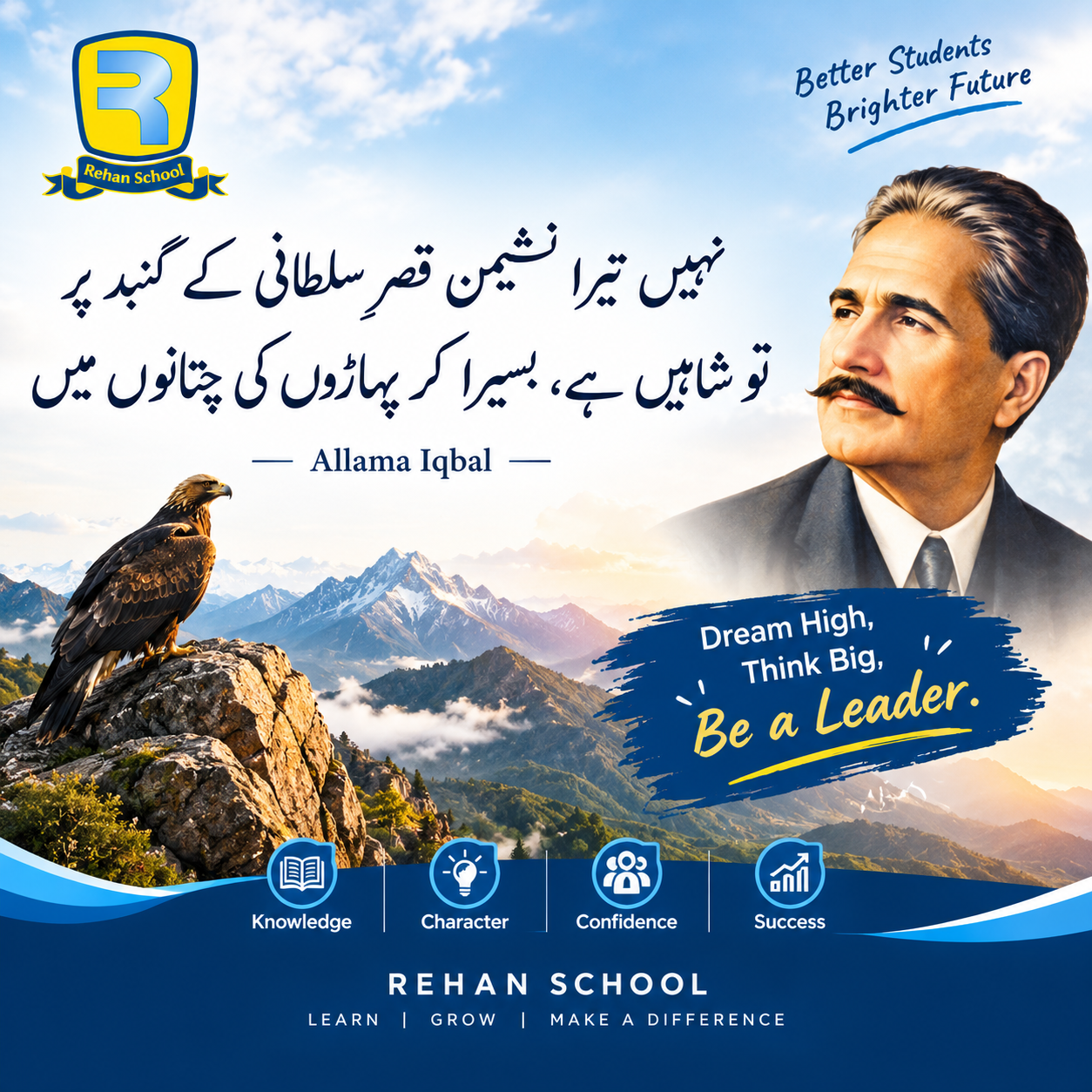
• Dream High. Think Big. Be a Shaheen!

    “نہیں تیرا نشیمن قصرِ سلطانی کے گنبد پر
    تو شاہیں ہے، بسیرا کر پہاڑوں کی چٹانوں میں”

    — علامہ محمد اقبال

    Allama Iqbal's powerful poetry teaches us to dream big, believe in ourselves, and aim for greatness. Just like a Shaheen, we should be brave, independent, and determined to reach new heights.

    Never limit your dreams. Work hard, build your character, and keep moving forward. Success comes to those who have courage, confidence, and a clear vision!

    Dream High. Think Big. Become a Leader.

    Rehan School — Learn | Grow | Make a Difference

    #AllamaIqbal #IqbalPoetry #اقبال #شاہین #UrduPoetry #Pakistan #DreamBig #ThinkBig #BeAleader #Motivation #InspirationalQuotes #StudentMotivation #PersonalGrowth #RehanSchool #LearnGrowMakeADifference #HassanEntrepreneurship
    🦅 Dream High. Think Big. Be a Shaheen! 🇵🇰 “نہیں تیرا نشیمن قصرِ سلطانی کے گنبد پر تو شاہیں ہے، بسیرا کر پہاڑوں کی چٹانوں میں” — علامہ محمد اقبال ✨ Allama Iqbal's powerful poetry teaches us to dream big, believe in ourselves, and aim for greatness. Just like a Shaheen, we should be brave, independent, and determined to reach new heights. 🦅🚀 Never limit your dreams. Work hard, build your character, and keep moving forward. Success comes to those who have courage, confidence, and a clear vision! 🌟 Dream High. Think Big. Become a Leader. 🏫 Rehan School — Learn | Grow | Make a Difference #AllamaIqbal #IqbalPoetry #اقبال #شاہین #UrduPoetry #Pakistan #DreamBig #ThinkBig #BeAleader #Motivation #InspirationalQuotes #StudentMotivation #PersonalGrowth #RehanSchool #LearnGrowMakeADifference #HassanEntrepreneurship
    0 Comentários 0 Compartilhamentos 357 Visualizações
  • #rsisb
    chat gpt image no.52
    Teacher Traning AI book 2
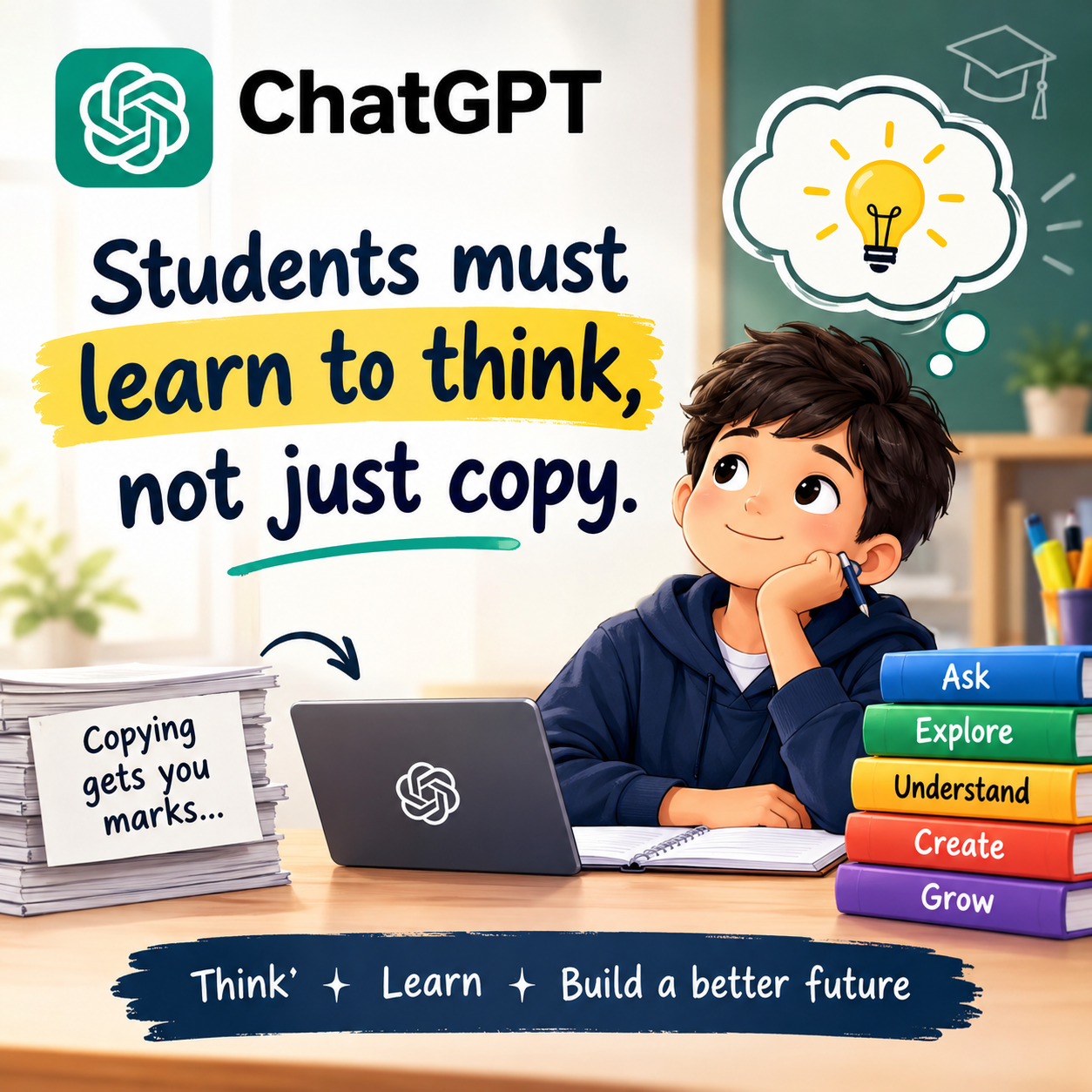
    **Students Must Learn to Think, Not Just Copy! **

    Education is not just about memorizing information or copying answers. It is about developing critical thinking, creativity, curiosity, and problem-solving skills.

    ChatGPT and AI tools can be powerful learning partners when students use them wisely. Instead of simply copying AI-generated answers, students should ask questions, explore new ideas, understand concepts, and create something of their own.

    **Ask questions.**
    **Explore new ideas.**
    **Understand concepts.**
    **Create something original.**
    **Grow through learning.**

    Remember, AI should support our thinking, not replace it. The real goal of education is to prepare students to become independent thinkers, confident learners, and creative problem-solvers.

    **Think Learn Create Build a Better Future!**

    #ChatGPT #ArtificialIntelligence #AIinEducation #FutureOfEducation #CriticalThinking #DigitalLearning #CreativeThinking #StudentEmpowerment #LearnWithAI #RehanSchool #SaimaEmpowermentWali
    #rsisb chat gpt image no.52 Teacher Traning AI book 2 💡📚 **Students Must Learn to Think, Not Just Copy! 🤖✨** Education is not just about memorizing information or copying answers. It is about developing critical thinking, creativity, curiosity, and problem-solving skills. 🧠🌟 ChatGPT and AI tools can be powerful learning partners when students use them wisely. Instead of simply copying AI-generated answers, students should ask questions, explore new ideas, understand concepts, and create something of their own. 🚀💻 ✅ **Ask questions.** ✅ **Explore new ideas.** ✅ **Understand concepts.** ✅ **Create something original.** ✅ **Grow through learning.** 🌱 Remember, AI should support our thinking, not replace it. The real goal of education is to prepare students to become independent thinkers, confident learners, and creative problem-solvers. 🌍💙 **Think ✨ Learn ✨ Create ✨ Build a Better Future!** #ChatGPT #ArtificialIntelligence #AIinEducation #FutureOfEducation #CriticalThinking #DigitalLearning #CreativeThinking #StudentEmpowerment #LearnWithAI #RehanSchool #SaimaEmpowermentWali
    0 Comentários 0 Compartilhamentos 1066 Visualizações
  • RSISB
    Roll No:56
    Level 2
    Earning Book No : 05
    Teach Your Parent Today!

    Spend just 35 minutes learning together with the ACCL Book and turn technology into a fun family learning experience!

    ‍ Build confidence
    Improve digital skills
    Stay connected
    Become more independent

    Every small step can make a big difference. Learning together creates confidence, connection, and beautiful memories.

    Learn Together • Grow Together • Make a Difference!

    #ACCL #DigitalLearning #TeachYourParent #LearnTogether #ComputerLiteracy #DigitalSkills #FamilyLearning #AizaLearningContent
    RSISB Roll No:56 Level 2 Earning Book No : 05 💻❤️ Teach Your Parent Today! Spend just 35 minutes learning together with the ACCL Book and turn technology into a fun family learning experience! 📚✨ 👩‍💻 Build confidence 🌐 Improve digital skills 📱 Stay connected 🚀 Become more independent Every small step can make a big difference. 🌟 Learning together creates confidence, connection, and beautiful memories. 💕 Learn Together • Grow Together • Make a Difference! 🌱💻❤️ #ACCL #DigitalLearning #TeachYourParent #LearnTogether #ComputerLiteracy #DigitalSkills #FamilyLearning #AizaLearningContent 📚✨
    0 Comentários 0 Compartilhamentos 871 Visualizações
  • Mohsin RS F8
    Story post NO:15
    roll NO:13
    Class: Foundation Level
    Made by Me

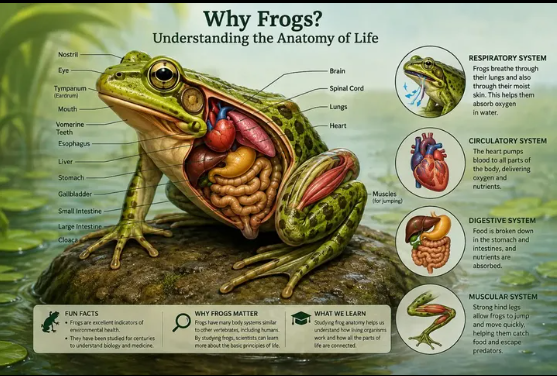
    Frogs may be small animals, but their bodies contain an amazing combination of organs, systems, and adaptations that make them excellent subjects for understanding the basic principles of life. Studying frog anatomy gives us an opportunity to see how different parts of a living organism work together to support movement, breathing, digestion, communication, growth, and survival. Their anatomy also shares important features with many other vertebrates, making frogs useful for learning fundamental concepts in biology.
    One of the most interesting features of frogs is their respiratory system. Unlike humans, frogs can exchange gases not only through their lungs but also through their moist skin. This special adaptation allows them to survive in aquatic and terrestrial environments. Their circulatory system also plays an important role in maintaining life by transporting oxygen and nutrients throughout the body.
    Frogs have powerful hind legs that are specially adapted for jumping and swimming. Their large eyes provide a wide field of vision and help them detect movement, while their ears allow them to hear sounds and communicate. Inside the body, organs such as the heart, lungs, liver, stomach, and intestines each perform important functions. These organs do not work independently; instead, they form interconnected systems that keep the frog alive and functioning.
    The frog's life cycle is another fascinating example of biological development. It begins with eggs laid in water, followed by the tadpole stage. Tadpoles gradually develop legs and lungs as their bodies change, eventually becoming froglets and then adult frogs. This transformation demonstrates how living organisms can undergo remarkable changes as they grow and mature.
    Frogs are also important indicators of environmental health. Because they are sensitive to changes in their surroundings, changes in frog populations can provide clues about the condition of an ecosystem. They also play an important role in controlling insect populations and maintaining food chains.
    Overall, “Why Frogs? Understanding the Anat
    Mohsin RS F8 🎓✨ Story post NO:15 roll NO:13 Class: Foundation Level 📚 Made by Me 💻🚀 Frogs may be small animals, but their bodies contain an amazing combination of organs, systems, and adaptations that make them excellent subjects for understanding the basic principles of life. Studying frog anatomy gives us an opportunity to see how different parts of a living organism work together to support movement, breathing, digestion, communication, growth, and survival. Their anatomy also shares important features with many other vertebrates, making frogs useful for learning fundamental concepts in biology. One of the most interesting features of frogs is their respiratory system. Unlike humans, frogs can exchange gases not only through their lungs but also through their moist skin. This special adaptation allows them to survive in aquatic and terrestrial environments. Their circulatory system also plays an important role in maintaining life by transporting oxygen and nutrients throughout the body. Frogs have powerful hind legs that are specially adapted for jumping and swimming. Their large eyes provide a wide field of vision and help them detect movement, while their ears allow them to hear sounds and communicate. Inside the body, organs such as the heart, lungs, liver, stomach, and intestines each perform important functions. These organs do not work independently; instead, they form interconnected systems that keep the frog alive and functioning. The frog's life cycle is another fascinating example of biological development. It begins with eggs laid in water, followed by the tadpole stage. Tadpoles gradually develop legs and lungs as their bodies change, eventually becoming froglets and then adult frogs. This transformation demonstrates how living organisms can undergo remarkable changes as they grow and mature. Frogs are also important indicators of environmental health. Because they are sensitive to changes in their surroundings, changes in frog populations can provide clues about the condition of an ecosystem. They also play an important role in controlling insect populations and maintaining food chains. Overall, “Why Frogs? Understanding the Anat
    0 Comentários 0 Compartilhamentos 871 Visualizações
  • RSISB
    Roll No 58
    Earning Task
    Task No 3

    Address Concerns – Day 3 | ACCL Program

    Today, I focused on understanding and addressing my parents’ concerns about the **ACCL Program**. I explained how ACCL can benefit not only me but also my family by helping me develop **practical skills, confidence, communication abilities, and future-ready knowledge**.

    I shared how the program encourages learning through **real projects and practical experiences**, rather than focusing only on theory. It can help students become more independent, responsible, creative, and prepared for future opportunities.

    I also explained to my parents that their support and guidance are very important in my learning journey. When parents understand the purpose of the program, they can better support their children in learning, growing, and building a successful future. ‍‍

    Together, we can turn concerns into understanding, and understanding into opportunities!

    Hashtags

    #ACCL #AddressConcerns #RehanSchool #ParentSupport #FamilySupport #PracticalSkills #FutureReady #LearningAndGrowing #StudentDevelopment #AIAndTechnology #CommunicationSkills #BrightFuture #LearnEarnGrow #Education #Day3

    ‍‍


    RSISB Roll No 58 Earning Task Task No 3 🌟 Address Concerns – Day 3 | ACCL Program 🤝 Today, I focused on understanding and addressing my parents’ concerns about the **ACCL Program**. I explained how ACCL can benefit not only me but also my family by helping me develop **practical skills, confidence, communication abilities, and future-ready knowledge**. 💻📚 I shared how the program encourages learning through **real projects and practical experiences**, rather than focusing only on theory. It can help students become more independent, responsible, creative, and prepared for future opportunities. 🚀✨ I also explained to my parents that their support and guidance are very important in my learning journey. When parents understand the purpose of the program, they can better support their children in learning, growing, and building a successful future. ❤️👨‍👩‍👧 Together, we can turn concerns into understanding, and understanding into opportunities! 🌱💙 🏷️ Hashtags #ACCL #AddressConcerns #RehanSchool #ParentSupport #FamilySupport #PracticalSkills #FutureReady #LearningAndGrowing #StudentDevelopment #AIAndTechnology #CommunicationSkills #BrightFuture #LearnEarnGrow #Education #Day3 ✨📚💻🤝👨‍👩‍👧🚀🌱💙🌟
    0 Comentários 0 Compartilhamentos 1483 Visualizações
  • #rsisb
    Roll NO:232
    Foundation level student.
    Story post:52

    ### Description

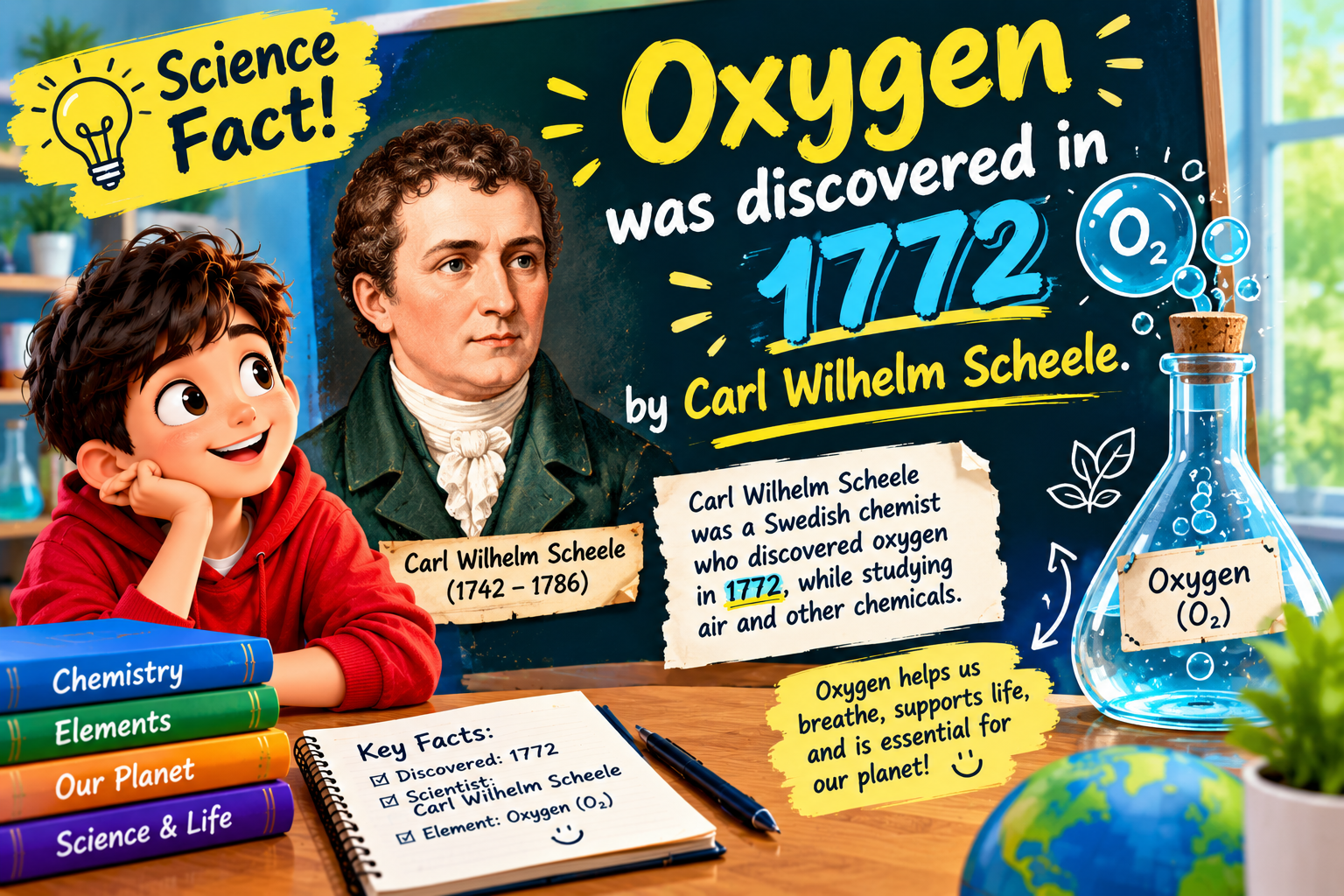
    **“Oxygen Was Discovered in 1772 by Carl Wilhelm Scheele.”**

    Did you know that oxygen has a fascinating history? Swedish chemist **Carl Wilhelm Scheele** produced oxygen in experiments around **1772** and called it “fire air” because it supported combustion.

    Although Scheele’s work was important, the history of oxygen’s discovery is shared with other scientists. **Joseph Priestley independently produced and studied oxygen in 1774**, and **Antoine Lavoisier later helped establish oxygen’s role in combustion and respiration and gave the element its modern name.**

    This story shows how scientific discoveries often develop through the work of several scientists over time.

    **Keep exploring science—every discovery begins with curiosity and a question!**

    ### Hashtags

    #Oxygen #CarlWilhelmScheele #ScienceFacts #Chemistry #HistoryOfScience #DidYouKnow #AmazingFacts #ScienceHistory #ChemistryFacts #LearnSomethingNew #ScienceIsFun #Education #Knowledge #Curiosity #STEM #KeepLearning

    ### Emojis


    #rsisb Roll NO:232 Foundation level student. Story post:52 ### 🔬 Description **“Oxygen Was Discovered in 1772 by Carl Wilhelm Scheele.”** 🧪🌍✨ Did you know that oxygen has a fascinating history? 🤯🔬 Swedish chemist **Carl Wilhelm Scheele** produced oxygen in experiments around **1772** and called it “fire air” because it supported combustion. 🔥🧪 Although Scheele’s work was important, the history of oxygen’s discovery is shared with other scientists. **Joseph Priestley independently produced and studied oxygen in 1774**, and **Antoine Lavoisier later helped establish oxygen’s role in combustion and respiration and gave the element its modern name.** 🧠📚 This story shows how scientific discoveries often develop through the work of several scientists over time. 🌟🔬 **Keep exploring science—every discovery begins with curiosity and a question!** 🚀💡🌱 ### 🔖 Hashtags #Oxygen #CarlWilhelmScheele #ScienceFacts #Chemistry #HistoryOfScience #DidYouKnow #AmazingFacts #ScienceHistory #ChemistryFacts #LearnSomethingNew #ScienceIsFun #Education #Knowledge #Curiosity #STEM #KeepLearning ### 😊 Emojis 🧪🔬💨🔥🌍📚🧠💡✨🌟🚀⚗️😊🔎🌱📖
    0 Comentários 0 Compartilhamentos 1775 Visualizações
  • In Writing

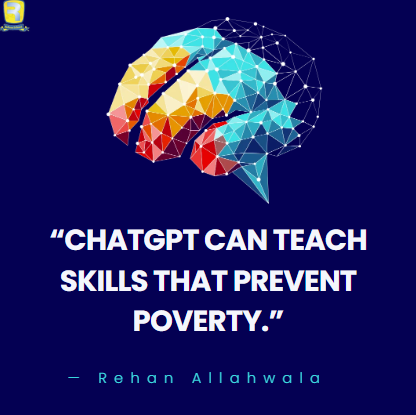
    “ChatGPT can teach skills that prevent poverty.” — Rehan Allahwala

    Summary

    ChatGPT can help people learn useful skills and knowledge. These skills can help students and workers improve their abilities, find opportunities, and become more independent. Learning new skills can help people build a better future and reduce poverty.

    Moral

    Learning useful skills and using technology wisely can create better opportunities in life.

    Input
    Learning
    Technology
    ChatGPT
    Skills
    Knowledge
    Education
    Output
    Better skills
    More knowledge
    New opportunities
    Better work
    Greater independence
    A better future
    Key Words

    ChatGPT, Skills, Learning, Education, Technology, Knowledge, Poverty, Opportunities, Work, Future, Success, Independence

    #️⃣ Hashtags

    #ChatGPT #Learning #Skills #Education #Technology #Knowledge #PovertyPrevention #NewSkills #Opportunities #BetterFuture #DigitalLearning #Success
    ✍️ In Writing “ChatGPT can teach skills that prevent poverty.” — Rehan Allahwala 📝 Summary ChatGPT can help people learn useful skills and knowledge. These skills can help students and workers improve their abilities, find opportunities, and become more independent. Learning new skills can help people build a better future and reduce poverty. 🌟 Moral Learning useful skills and using technology wisely can create better opportunities in life. 📥 Input Learning Technology ChatGPT Skills Knowledge Education 📤 Output Better skills More knowledge New opportunities Better work Greater independence A better future 🔑 Key Words ChatGPT, Skills, Learning, Education, Technology, Knowledge, Poverty, Opportunities, Work, Future, Success, Independence #️⃣ Hashtags #ChatGPT #Learning #Skills #Education #Technology #Knowledge #PovertyPrevention #NewSkills #Opportunities #BetterFuture #DigitalLearning #Success
    0 Comentários 0 Compartilhamentos 1443 Visualizações
  • #rsisb
    ROll
    Story post no.63
    Foundation Level

    ### Oxygen: A Fascinating Discovery!

    **Oxygen was independently discovered by several scientists, including Carl Wilhelm Scheele, who produced it around 1772.** Scheele called it “fire air” because it supported combustion.

    Later, **Joseph Priestley independently produced oxygen in 1774**, and **Antoine Lavoisier** helped establish its role in combustion and respiration and gave it the name *oxygen*.

    This discovery transformed our understanding of **chemistry, breathing, combustion, and life itself**.

    #Oxygen #ScienceHistory #CarlWilhelmScheele #Chemistry #ScienceFacts #Discoveries #LearningIsFun #AmazingScience


    Asma Shaheen EducationWali
    Saima Empowerment Wali
    Irum Asim Leadershipwali
    #rsisb ROll Story post no.63 Foundation Level ### 🧪 Oxygen: A Fascinating Discovery! 🌬️ **Oxygen was independently discovered by several scientists, including Carl Wilhelm Scheele, who produced it around 1772.** Scheele called it “fire air” because it supported combustion. 🔥 Later, **Joseph Priestley independently produced oxygen in 1774**, and **Antoine Lavoisier** helped establish its role in combustion and respiration and gave it the name *oxygen*. ⚗️🌍 This discovery transformed our understanding of **chemistry, breathing, combustion, and life itself**. 🫁✨ #Oxygen #ScienceHistory #CarlWilhelmScheele #Chemistry #ScienceFacts #Discoveries #LearningIsFun #AmazingScience 🧪🔬🌎 Asma Shaheen EducationWali Saima Empowerment Wali Irum Asim Leadershipwali
    0 Comentários 0 Compartilhamentos 1131 Visualizações
  • #rsisb
    Roll no.239
    Image with Chat gpt no.11
    Foundation Level


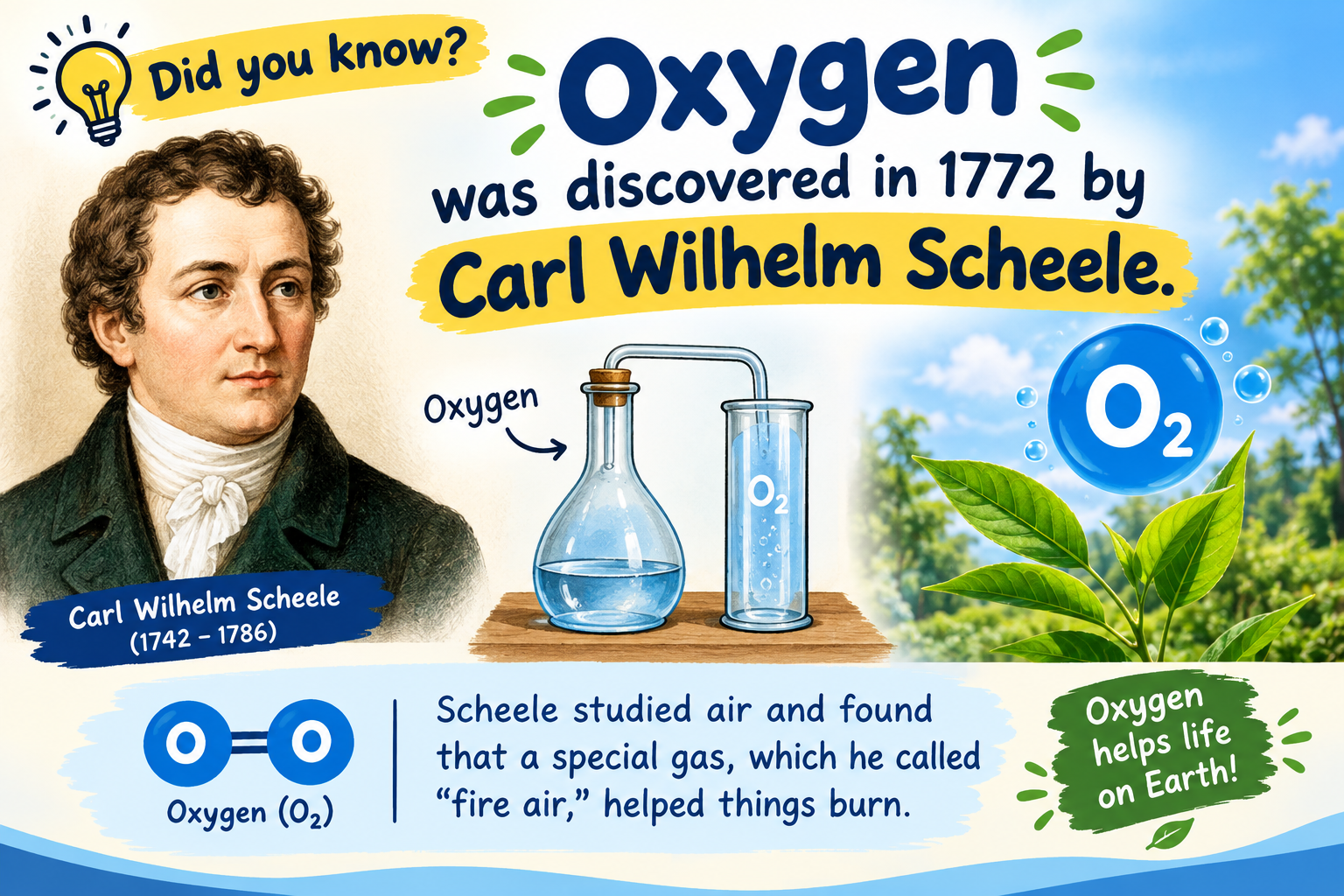
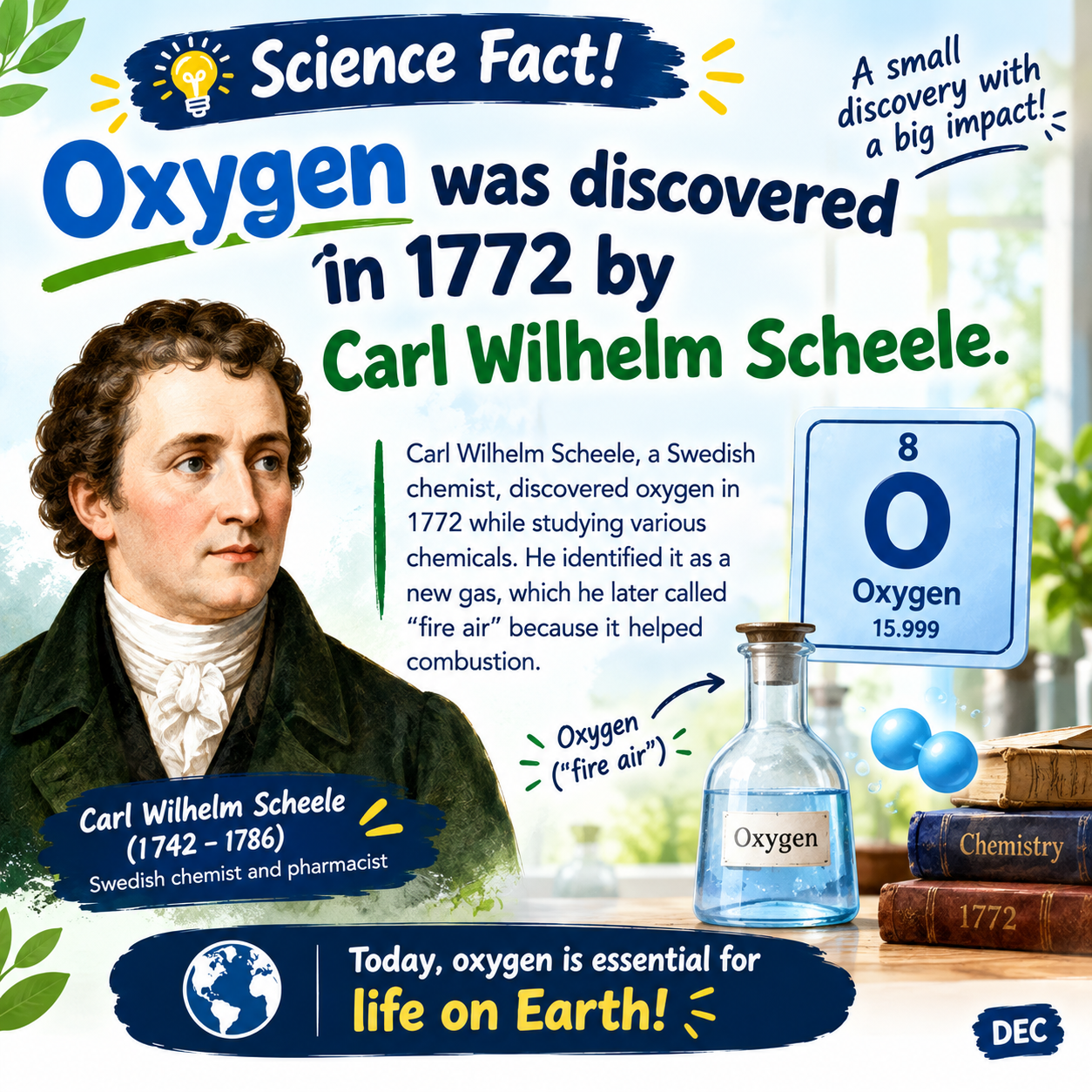
    In around **1772**, Swedish chemist and pharmacist **Carl Wilhelm Scheele** produced and studied a gas that we now know as **oxygen**. He called it **“fire air”** because he observed that it strongly supported combustion.

    Scheele’s experiments helped reveal that the air around us was not simply one single substance. Instead, it contained different gases with different properties. His work became an important part of the development of modern chemistry.

    **Who was Carl Wilhelm Scheele?**
    Carl Wilhelm Scheele (1742–1786) was a Swedish chemist and pharmacist known for his experimental work with many substances. He investigated gases, minerals, acids, and other chemicals and made several important observations during his scientific career.

    **Why is oxygen so important?**
    Oxygen is essential for most forms of life on Earth. Humans and many other organisms use oxygen during **cellular respiration**, a process that helps cells release energy from food. Oxygen also plays an important role in combustion and many chemical reactions.

    **A fascinating part of the story:**
    The history of oxygen’s discovery involved more than one scientist. Scheele investigated oxygen around **1772**, while **Joseph Priestley** independently produced and studied the gas in **1774**. Later, **Antoine Lavoisier** helped establish oxygen’s role in combustion and respiration and gave the element its name.

    **Quick facts:**
    Element: **Oxygen**
    Chemical symbol: **O**
    Atomic number: **8**
    Scheele’s work: **around 1772**
    Scheele’s name for it: **“Fire air”**
    Oxygen is essential for life and many natural and chemical processes.

    From a laboratory experiment centuries ago to our understanding of the atmosphere today, the discovery of oxygen shows how scientific knowledge develops through **careful observation, experimentation, and the work of multiple scientists**.

    **Science is full of discoveries that changed the way we understand our world!**

    **Learn. Explore. Question. Discover.**

    #ScienceFact #Oxygen #CarlWilhelmScheele #Chemistry #ScienceHistory #ChemistryFacts #DidYouKnow #ScienceEducation #LearnScience #PhysicsAndChemistry #Biology #STEM #ScientificDiscovery #HistoryOfScience #ChemicalElements #OxygenDiscovery #Education #Knowledge #FunScience #DEC
    #rsisb Roll no.239 Image with Chat gpt no.11 Foundation Level In around **1772**, Swedish chemist and pharmacist **Carl Wilhelm Scheele** produced and studied a gas that we now know as **oxygen**. He called it **“fire air”** because he observed that it strongly supported combustion. 🔥 Scheele’s experiments helped reveal that the air around us was not simply one single substance. Instead, it contained different gases with different properties. His work became an important part of the development of modern chemistry. 🧪📚 🔎 **Who was Carl Wilhelm Scheele?** Carl Wilhelm Scheele (1742–1786) was a Swedish chemist and pharmacist known for his experimental work with many substances. He investigated gases, minerals, acids, and other chemicals and made several important observations during his scientific career. 🌬️ **Why is oxygen so important?** Oxygen is essential for most forms of life on Earth. Humans and many other organisms use oxygen during **cellular respiration**, a process that helps cells release energy from food. Oxygen also plays an important role in combustion and many chemical reactions. 📖 **A fascinating part of the story:** The history of oxygen’s discovery involved more than one scientist. Scheele investigated oxygen around **1772**, while **Joseph Priestley** independently produced and studied the gas in **1774**. Later, **Antoine Lavoisier** helped establish oxygen’s role in combustion and respiration and gave the element its name. 🌟 **Quick facts:** 🔹 Element: **Oxygen** 🔹 Chemical symbol: **O** 🔹 Atomic number: **8** 🔹 Scheele’s work: **around 1772** 🔹 Scheele’s name for it: **“Fire air”** 🔹 Oxygen is essential for life and many natural and chemical processes. From a laboratory experiment centuries ago to our understanding of the atmosphere today, the discovery of oxygen shows how scientific knowledge develops through **careful observation, experimentation, and the work of multiple scientists**. 🌍🧠 💡 **Science is full of discoveries that changed the way we understand our world!** 📚 **Learn. Explore. Question. Discover.** 🔬✨ #ScienceFact #Oxygen #CarlWilhelmScheele #Chemistry #ScienceHistory #ChemistryFacts #DidYouKnow #ScienceEducation #LearnScience #PhysicsAndChemistry #Biology #STEM #ScientificDiscovery #HistoryOfScience #ChemicalElements #OxygenDiscovery #Education #Knowledge #FunScience #DEC
    0 Comentários 0 Compartilhamentos 2024 Visualizações
  • RSIF8
    Roll no 68
    Task no 148
    Task topic;**Challenging Norms – Abiha Haider | Review**

    “Challenging Norms” by Abiha Haider is an inspiring talk about questioning old ideas, thinking independently, and having the courage to bring positive change. The talk encourages us to look beyond traditional thinking, understand different perspectives, and make thoughtful choices.

    It reminds us that progress often begins when someone dares to ask, **“Why do we do things this way?”** A meaningful talk for anyone who wants to learn, grow, and contribute to a better society.
    RSIF8 Roll no 68 Task no 148 Task topic;**Challenging Norms – Abiha Haider | Review** “Challenging Norms” by Abiha Haider is an inspiring talk about questioning old ideas, thinking independently, and having the courage to bring positive change. The talk encourages us to look beyond traditional thinking, understand different perspectives, and make thoughtful choices. It reminds us that progress often begins when someone dares to ask, **“Why do we do things this way?”** A meaningful talk for anyone who wants to learn, grow, and contribute to a better society. 🌟
    0 Comentários 0 Compartilhamentos 322 Visualizações 1
Páginas impulsionada