• Day:-174
    rollno:-006
    foundation level
    Story Post
    Sound Waves: The Physics of Hearing and Communication

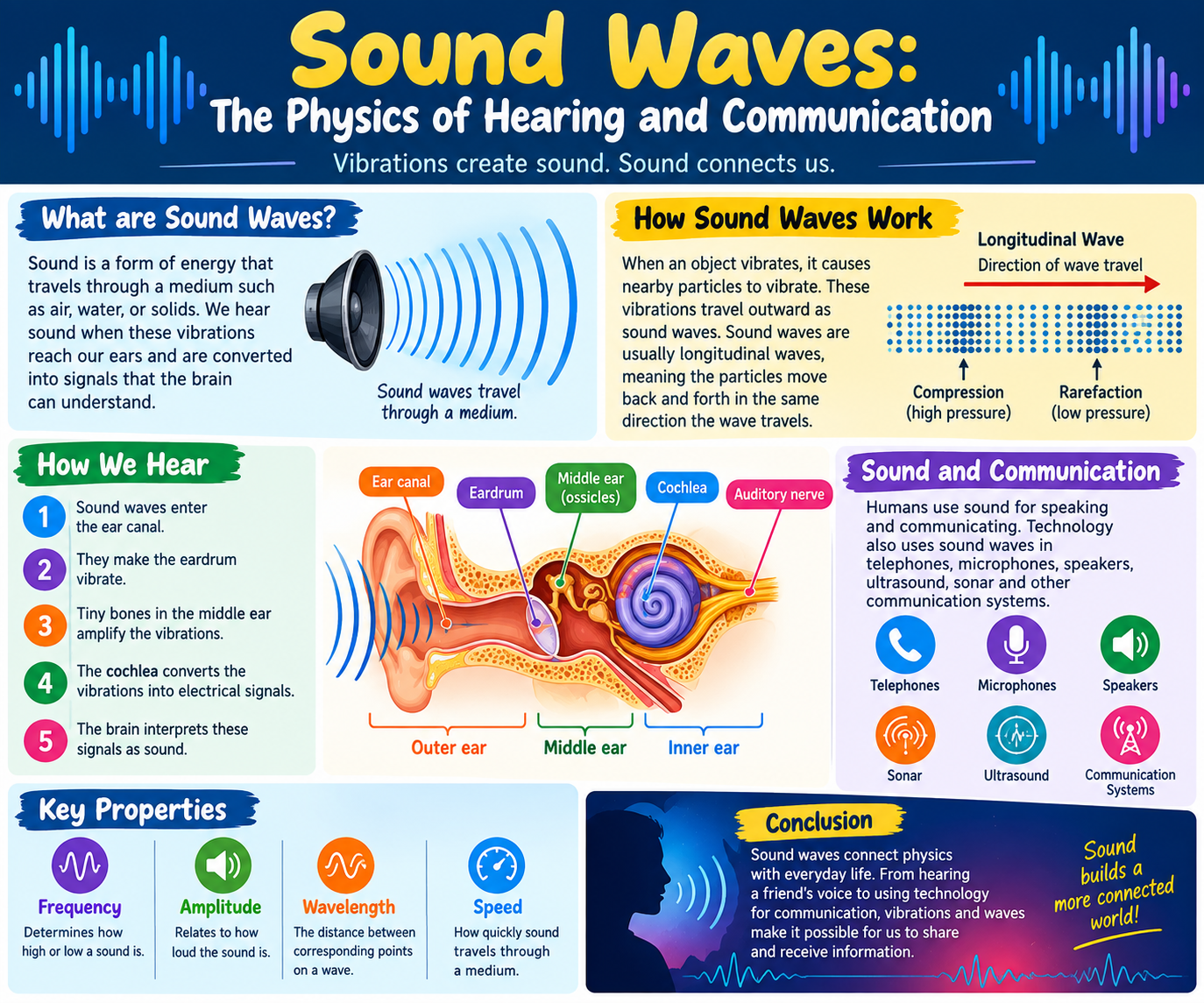
    Sound is a form of energy that travels through a medium such as air, water, or solids. We hear sound when these vibrations reach our ears and are converted into signals that the brain can understand.

    How Sound Waves Work

    When an object vibrates, it causes nearby particles to vibrate. These vibrations travel outward as sound waves. Sound waves are usually longitudinal waves, meaning the particles move back and forth in the same direction the wave travels.

    How We Hear
    Sound waves enter the ear canal.
    They make the eardrum vibrate.
    Tiny bones in the middle ear amplify the vibrations.
    The cochlea converts the vibrations into electrical signals.
    The brain interprets these signals as sound.
    Sound and Communication

    Humans use sound for speaking and communicating. Technology also uses sound waves in telephones, microphones, speakers, ultrasound, sonar, and other communication systems.

    Key Properties
    Frequency → determines how high or low a sound is.
    Amplitude → relates to how loud the sound is.
    Wavelength → the distance between corresponding points on a wave.
    Speed → how quickly sound travels through a medium.

    Conclusion: Sound waves connect physics with everyday life. From hearing a friend's voice to using technology for communication, vibrations and waves make it possible for us to share and receive information.
    Day:-174 rollno:-006 foundation level 📖 Story Post 🔊 Sound Waves: The Physics of Hearing and Communication Sound is a form of energy that travels through a medium such as air, water, or solids. We hear sound when these vibrations reach our ears and are converted into signals that the brain can understand. 🌊 How Sound Waves Work When an object vibrates, it causes nearby particles to vibrate. These vibrations travel outward as sound waves. Sound waves are usually longitudinal waves, meaning the particles move back and forth in the same direction the wave travels. 👂 How We Hear Sound waves enter the ear canal. They make the eardrum vibrate. Tiny bones in the middle ear amplify the vibrations. The cochlea converts the vibrations into electrical signals. The brain interprets these signals as sound. 📡 Sound and Communication Humans use sound for speaking and communicating. Technology also uses sound waves in telephones, microphones, speakers, ultrasound, sonar, and other communication systems. 🔑 Key Properties Frequency → determines how high or low a sound is. Amplitude → relates to how loud the sound is. Wavelength → the distance between corresponding points on a wave. Speed → how quickly sound travels through a medium. Conclusion: Sound waves connect physics with everyday life. From hearing a friend's voice to using technology for communication, vibrations and waves make it possible for us to share and receive information.
    0 Reacties 0 aandelen 1484 Views
  • RSIF8
    Roll no 13
    Story post no 6
    Story post topic: **Mulla Nasrudin's Magic Cloak**

    What if a simple old cloak could teach one of life's greatest lessons?

    One chilly evening, Mulla Nasrudin appeared in the marketplace wearing a worn-out cloak that looked ordinary to everyone around him. Curious people asked why he valued such an old piece of clothing so much. With a mysterious smile, Mulla replied, "This is no ordinary cloak—it has magic."

    The crowd gathered eagerly, hoping to witness something extraordinary. As the day went on, Mulla visited different places. At a wealthy merchant's house, he was welcomed with respect and offered a delicious feast. Later, after removing the cloak and dressing simply, he returned to the same house—but this time, no one recognized him, and he was turned away at the door.

    The next day, Mulla returned wearing the cloak again. Once more, he received a warm welcome and was invited to dine. As the food was served, Mulla gently dipped the sleeve of his cloak into the soup and said, "Eat, my magic cloak, eat!"

    The guests were shocked and asked what he was doing. Mulla smiled and explained, "Yesterday, when I came without this cloak, I was ignored. Today, with the cloak, I am treated like an honored guest. Clearly, the food is meant for the cloak, not for me."

    Everyone fell silent, realizing they had judged a person by appearance instead of character.

    **Moral of the Story:** Never judge people by their clothes, wealth, or outward appearance. A person's true value lies in their kindness, wisdom, honesty, and actions—not in what they wear.

    If this story made you smile and think, don't forget to Like, Comment, and Share it with your friends and family. Let's spread timeless wisdom through the unforgettable adventures of Mulla Nasrudin!

    #MullaNasrudin #MoralStory #LifeLessons #Wisdom #StoryTime #InspirationalStories #Kindness #CharacterMatters #ClassicTales #LearnAndGrow
    RSIF8 Roll no 13 Story post no 6 Story post topic:🧥✨ **Mulla Nasrudin's Magic Cloak** ✨🧥 What if a simple old cloak could teach one of life's greatest lessons? One chilly evening, Mulla Nasrudin appeared in the marketplace wearing a worn-out cloak that looked ordinary to everyone around him. Curious people asked why he valued such an old piece of clothing so much. With a mysterious smile, Mulla replied, "This is no ordinary cloak—it has magic." The crowd gathered eagerly, hoping to witness something extraordinary. As the day went on, Mulla visited different places. At a wealthy merchant's house, he was welcomed with respect and offered a delicious feast. Later, after removing the cloak and dressing simply, he returned to the same house—but this time, no one recognized him, and he was turned away at the door. The next day, Mulla returned wearing the cloak again. Once more, he received a warm welcome and was invited to dine. As the food was served, Mulla gently dipped the sleeve of his cloak into the soup and said, "Eat, my magic cloak, eat!" The guests were shocked and asked what he was doing. Mulla smiled and explained, "Yesterday, when I came without this cloak, I was ignored. Today, with the cloak, I am treated like an honored guest. Clearly, the food is meant for the cloak, not for me." Everyone fell silent, realizing they had judged a person by appearance instead of character. 🌟 **Moral of the Story:** Never judge people by their clothes, wealth, or outward appearance. A person's true value lies in their kindness, wisdom, honesty, and actions—not in what they wear. If this story made you smile and think, don't forget to ❤️ Like, 💬 Comment, and 🔄 Share it with your friends and family. Let's spread timeless wisdom through the unforgettable adventures of Mulla Nasrudin! #MullaNasrudin #MoralStory #LifeLessons #Wisdom #StoryTime #InspirationalStories #Kindness #CharacterMatters #ClassicTales #LearnAndGrow
    0 Reacties 0 aandelen 2136 Views
  • Level 01 Book 01
    Day 08
    Task Story post 08
    Story: Mulla Nasruddin's New Coat
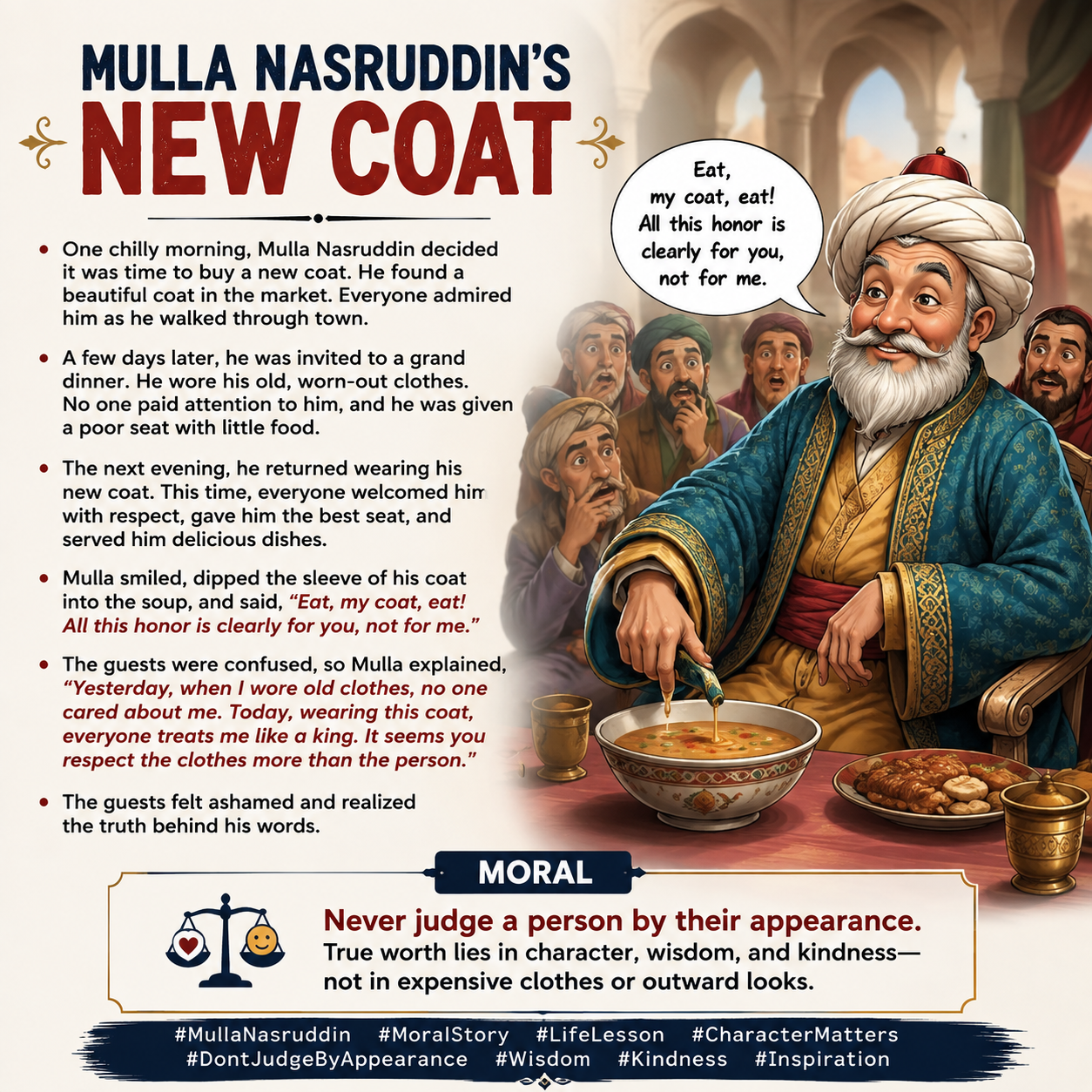
    One chilly morning, Mulla Nasruddin decided it was time to buy a new coat. He visited the market and found a beautiful, elegant coat that made him feel proud. As he walked through town wearing it, everyone admired his appearance and greeted him warmly.
    A few days later, Mulla was invited to a grand dinner. He wore his old, worn-out clothes instead of the new coat. Surprisingly, no one paid attention to him, and he was given a poor seat with little food.
    The next evening, he returned to the same gathering wearing his new coat. This time, everyone welcomed him with great respect, offered him the best seat, and served him delicious dishes.
    Mulla smiled, dipped the sleeve of his coat into the soup, and said, "Eat, my coat, eat! All this honor is clearly for you, not for me."
    The guests were confused, so Mulla explained, "Yesterday, when I wore old clothes, no one cared about me. Today, wearing this coat, everyone treats me like a king. It seems you respect the clothes more than the person."
    The guests felt ashamed and realized the truth behind his words.
    Moral
    Never judge a person by their appearance. True worth lies in character, wisdom, and kindness—not in expensive clothes or outward looks.
    #MullaNasruddin #MoralStory #LifeLesson #CharacterMatters #DontJudgeByAppearance #Wisdom #Kindness #StoryTime #EnglishStory #inspirationaliration
    Tania Khan Mentorship Wali
    Mohsin Rathore Seo Wala
    Imran Khan Street Wala
    Shazia Javed
    Hafsa Noor
    Rehan School Korangi Campus
    Level 01 Book 01 Day 08 Task Story post 08 Story: Mulla Nasruddin's New Coat One chilly morning, Mulla Nasruddin decided it was time to buy a new coat. He visited the market and found a beautiful, elegant coat that made him feel proud. As he walked through town wearing it, everyone admired his appearance and greeted him warmly. A few days later, Mulla was invited to a grand dinner. He wore his old, worn-out clothes instead of the new coat. Surprisingly, no one paid attention to him, and he was given a poor seat with little food. The next evening, he returned to the same gathering wearing his new coat. This time, everyone welcomed him with great respect, offered him the best seat, and served him delicious dishes. Mulla smiled, dipped the sleeve of his coat into the soup, and said, "Eat, my coat, eat! All this honor is clearly for you, not for me." The guests were confused, so Mulla explained, "Yesterday, when I wore old clothes, no one cared about me. Today, wearing this coat, everyone treats me like a king. It seems you respect the clothes more than the person." The guests felt ashamed and realized the truth behind his words. Moral Never judge a person by their appearance. True worth lies in character, wisdom, and kindness—not in expensive clothes or outward looks. #MullaNasruddin #MoralStory #LifeLesson #CharacterMatters #DontJudgeByAppearance #Wisdom #Kindness #StoryTime #EnglishStory #inspirationaliration Tania Khan Mentorship Wali Mohsin Rathore Seo Wala Imran Khan Street Wala Shazia Javed Hafsa Noor Rehan School Korangi Campus
    0 Reacties 0 aandelen 2173 Views
  • #rsisb
    Roll no.239
    Canva Post no.49
    Foundation Level


    Sound is an essential part of our everyday lives. We hear people speaking, music playing, birds singing, and many other sounds around us. But have you ever wondered how sound travels from one place to another? The answer lies in **sound waves**—vibrations that carry energy through a medium such as air, water, or solids.

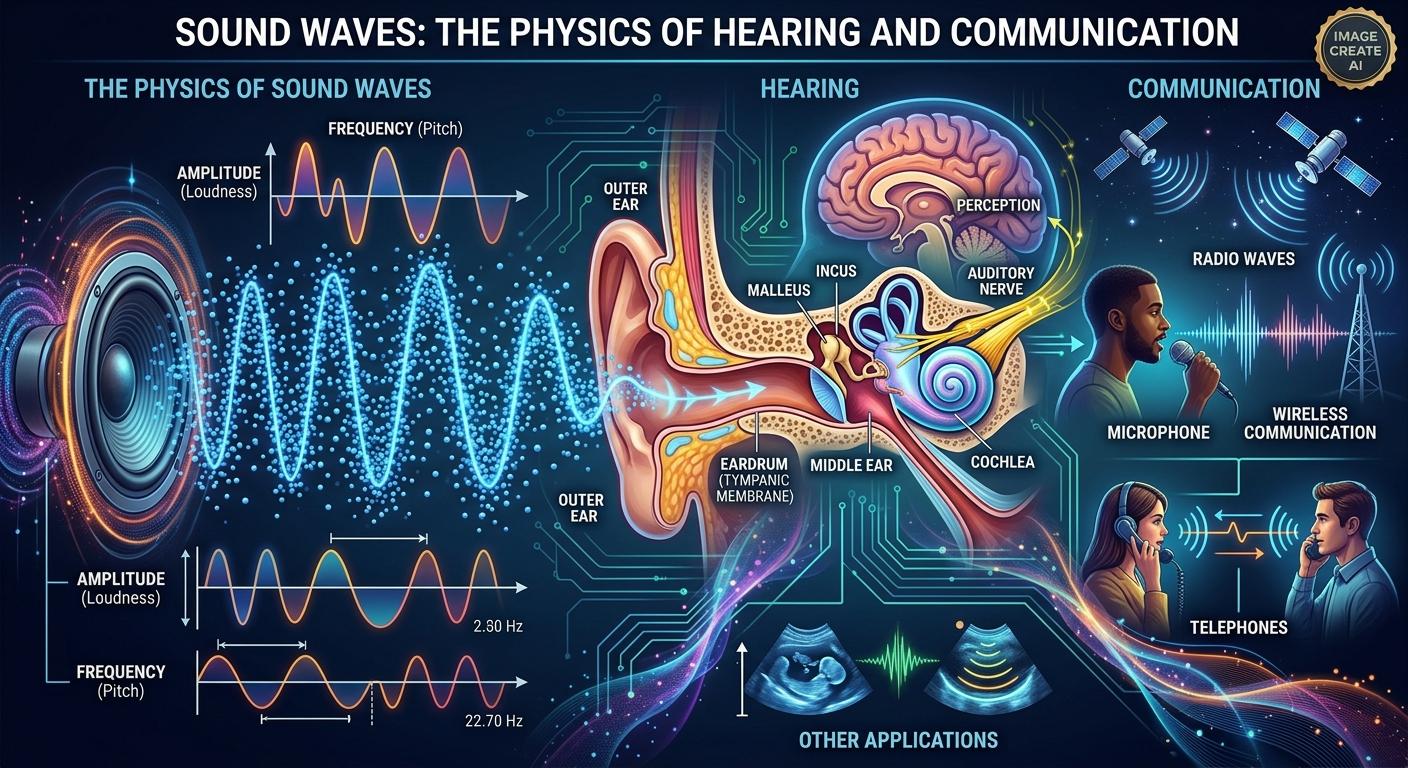
    Sound is produced when an object **vibrates**. These vibrations cause nearby particles to move back and forth, creating a series of compressions and rarefactions. This movement travels outward as a wave. Unlike light, sound cannot travel through a vacuum because it needs particles to carry the vibrations.

    The characteristics of sound include **frequency, amplitude, wavelength, and speed**. Frequency determines the **pitch** of a sound: higher frequencies produce higher-pitched sounds, while lower frequencies produce deeper sounds. Amplitude is related to the **loudness** of a sound. Larger vibrations generally create louder sounds.

    Our ears are remarkable organs designed to detect these waves. Sound waves enter the ear and cause the **eardrum** to vibrate. These vibrations are transmitted through tiny bones in the middle ear and eventually reach the inner ear, where specialized cells convert them into electrical signals. The brain then interprets these signals as meaningful sounds.

    Sound waves also play a vital role in **human communication**. When we speak, our vocal cords vibrate and produce sound waves. These waves travel through the air to another person's ears, allowing them to hear and understand our words. Modern technology uses the same principles in telephones, microphones, radios, and other communication devices.

    The study of sound helps us understand not only hearing and communication but also music, medicine, engineering, and technology. From the simple vibration of a guitar string to advanced ultrasound technology, sound waves demonstrate the fascinating connection between **physics and everyday life**.

    **Sound is more than something we hear—it is energy in motion, carrying information and connecting us with the world around us.**

    #SoundWaves #Physics #Science #Hearing #Communication #Education #Learning #Waves #Technology
    #rsisb Roll no.239 Canva Post no.49 Foundation Level Sound is an essential part of our everyday lives. We hear people speaking, music playing, birds singing, and many other sounds around us. But have you ever wondered how sound travels from one place to another? The answer lies in **sound waves**—vibrations that carry energy through a medium such as air, water, or solids. Sound is produced when an object **vibrates**. These vibrations cause nearby particles to move back and forth, creating a series of compressions and rarefactions. This movement travels outward as a wave. Unlike light, sound cannot travel through a vacuum because it needs particles to carry the vibrations. The characteristics of sound include **frequency, amplitude, wavelength, and speed**. Frequency determines the **pitch** of a sound: higher frequencies produce higher-pitched sounds, while lower frequencies produce deeper sounds. Amplitude is related to the **loudness** of a sound. Larger vibrations generally create louder sounds. Our ears are remarkable organs designed to detect these waves. Sound waves enter the ear and cause the **eardrum** to vibrate. These vibrations are transmitted through tiny bones in the middle ear and eventually reach the inner ear, where specialized cells convert them into electrical signals. The brain then interprets these signals as meaningful sounds. Sound waves also play a vital role in **human communication**. When we speak, our vocal cords vibrate and produce sound waves. These waves travel through the air to another person's ears, allowing them to hear and understand our words. Modern technology uses the same principles in telephones, microphones, radios, and other communication devices. The study of sound helps us understand not only hearing and communication but also music, medicine, engineering, and technology. From the simple vibration of a guitar string to advanced ultrasound technology, sound waves demonstrate the fascinating connection between **physics and everyday life**. 🌟 **Sound is more than something we hear—it is energy in motion, carrying information and connecting us with the world around us.** #SoundWaves #Physics #Science #Hearing #Communication #Education #Learning #Waves #Technology 🔊🌍🎵
    0 Reacties 0 aandelen 4915 Views
  • The Forty Rules of Love.

    1. **How we see God** is a direct reflection of how we see ourselves. If God brings to mind mostly fear and blame, it means there is mostly fear and blame within us.
    2. **The path to the Truth** is a labor of the heart, not of the head. Make your heart your primary guide, not your mind. Meet, challenge, and ultimately prevail over your nafs (ego) with your heart.
    3. **You can study God** through everything and everyone in the universe because God is not confined in a mosque, synagogue, or church. But if you are still in need of knowing where exactly His abode is, there is only one place to look for Him: in the heart of a true lover.
    4. **Intellect and love** are made of different materials. Intellect ties people in knots and risks nothing, but love dissolves all tangles and risks everything.
    5. **Most of the problems** of the world stem from linguistic mistakes and simple misunderstandings. Don’t ever take words at face value. When you step into the zone of love, language as we know it becomes obsolete. That which cannot be put into words can only be grasped through silence.
    6. **Loneliness and solitude** are two different things. When you are lonely, it is easy to delude yourself into believing that you are on the right path. Solitude is better for us, as it means being alone without feeling lonely.
    7. **Whatever happens in your life, no matter how troubling things might seem, do not enter the neighborhood of despair.** Even when all doors remain closed, God will open up a new path only for you. Be thankful!
    8. **Patience does not mean to passively endure.** It means to look at the end of a process. What does patience mean? It means to look at the thorn and see the rose, to look at the night and see the dawn. Impatience means to be shortsighted as to not be able to see the outcome.
    9. **East, west, south, or north** makes little difference. No matter what your destination, just be sure to make every journey a journey within. If you travel within, you’ll travel the whole wide world and beyond.
    10. **The midwife knows** that when there is no pain, the way for the baby cannot be opened, and the mother cannot give birth. Similarly, for a new Self to be born, hardship is necessary. Just as clay needs to go through intense heat to become strong, Love can only be perfected in pain.
    11. **The quest for love** changes user. There is no seeker among those who search for love who has not matured on the way.
    12. **There are more false guides** and teachers in this world than stars in the visible universe. Beware of impostors. And know that it is only real guidance that can lead you to the Love that you seek.
    13. **Not all suffering** is harmful. There are some that cleanse us and purify us, and there are some that drag us down and lead us into more darkness.
    14. **It is easy to love** a perfect God, unblemished and immaculate that He is. What is far more difficult is to love fellow human beings with all their imperfections and defects.
    15. **The true lover is** the one who can thrill you by kissing your forehead or smiling into your eyes or just staring into space.
    16. **Try not to resist the changes** which come your way. Instead, let life live through you. And do not worry that your life is turning upside down. How do you know that the side you are used to is better than the one to come?
    17. **Love is a travel.** All travelers whether they want or not are changed. No one can travel into Love and remain the same.
    18. **If you want to change the way others treat you**, you should first change the way you treat yourself. Unless you learn to love yourself, fully and sincerely, there is no way you can be loved.
    19. **Real filth is the one inside.** The rest simply washes off.
    20. **The whole universe is contained within a single human being – you.** Everything that you see around, including the things you might not be fond of and even the people you despise or abhor, is present within you in varying degrees. Therefore, do not look for Sheitan (Satan) outside yourself either. The devil is not an extraordinary force that attacks from outside. It is an ordinary voice within.
    21. **The world is like a snowy mountain** that echoes your voice. Whatever you speak, good or evil, will somehow come back to you. Therefore, if there is someone who harbors ill thoughts about you, saying similarly bad things about him will only make matters worse. You will be locked in a vicious circle of malevolent energy. Instead, for forty days and nights, say and think nice things about that person. Everything will be different at the end of the forty days.
    22. **The past is an interpretation.** The future is an illusion. The world does not move through time as if it were a straight line, proceeding from the past to the future. Instead, time moves through and within us, in endless spirals. Eternity does not mean infinite time but simply timelessness. If you want to experience eternal illumination, put the past and the future out of your mind and remain within the present moment.
    23. **Fate does not mean** that your life has been strictly predetermined. Therefore, to leave everything to fate and not actively contribute to the music of the universe is a sign of sheer ignorance.
    24. **Never forget that God is a meticulous clockmaker.** So precise is His order that everything on earth happens in its own time. Neither a minute late nor a minute early. And everything is created with a divine wisdom. We are all just like clocks, including our main springs. Therefore, be patient about your perplexities and wait for the unraveling of the mysteries of your life.
    25. **As long as we keep getting lost in our own desires,** fears, and worries, we will not be able to find the real self. Therefore, surrender to the flow of the rivers of life without any reservations.
    26. **The past is a distant shore, and the future is an imaginary horizon.** Only the present is real. Therefore, take heed to your present thoughts and actions, for they will become your destiny.
    27. **Suffering is not a punishment; it is a gift.** Within suffering is hidden mercy and blessings.
    28. **Be grateful to those who have hurt or wronged you**, for they have helped you learn about patience and compassion.
    29. **What is true of the individual will be tomorrow true of the whole nation.** If falsehood brings calamity to one person, it will be a greater evil for an entire people.
    30. **If you want to change the world**, you should first change yourself. Change and transformation start within, not outside.
    31. **Peace is not the absence of conflict but the presence of creative alternatives for responding to conflict** — alternatives to passive or aggressive responses, alternatives to violence.
    32. **The purpose of the existence of every person is to realize God within oneself.** It is the knowledge of this that brings enlightenment and peace to the soul.
    33. **Love is the water of life.** And a lover is a soul of fire! The universe turns differently when fire loves water.
    34. **When you love someone, there is no way you can distance yourself from the pain of the other.** When someone suffers, you too feel the pain. And if you can stay unaffected by the pain, that is not love.
    35. **The ultimate aim of life is to find the divine truth that lies within.** No matter what happens in life, you need to always seek the higher self within you.
    36. **All religious practices are meant to be only a means to an end.** They are merely our human ways of making the divine reality visible to our finite minds. However, it is not the outward appearance of religious practices that is important, but their inward essence.
    37. **Once you embark on the path of truth,** be prepared for both hardships and joy. They will be your inseparable companions.
    38. **You will learn to live through both sorrow and joy, like an empty bell which makes a sound only when it is hit.** The more you are pained, the more the instrument of your soul will be refined and the better you will be able to express yourself.
    39. **The true essence of love lies beyond words and expressions.** The more you try to express it, the more it will elude you. Words can only be symbols for the inexpressible truth.
    40. **When you come face-to-face with the real essence of love, you will no longer be searching for it.** For the search will become unnecessary, and you will be immersed in the divine truth of love.

    These rules emphasize the themes of love, spirituality, and the inner journey, aligning with the teachings of Sufism and the spiritual bond between Rumi and Shams of Tabriz.

    The Forty Rules of Love. 1. **How we see God** is a direct reflection of how we see ourselves. If God brings to mind mostly fear and blame, it means there is mostly fear and blame within us. 2. **The path to the Truth** is a labor of the heart, not of the head. Make your heart your primary guide, not your mind. Meet, challenge, and ultimately prevail over your nafs (ego) with your heart. 3. **You can study God** through everything and everyone in the universe because God is not confined in a mosque, synagogue, or church. But if you are still in need of knowing where exactly His abode is, there is only one place to look for Him: in the heart of a true lover. 4. **Intellect and love** are made of different materials. Intellect ties people in knots and risks nothing, but love dissolves all tangles and risks everything. 5. **Most of the problems** of the world stem from linguistic mistakes and simple misunderstandings. Don’t ever take words at face value. When you step into the zone of love, language as we know it becomes obsolete. That which cannot be put into words can only be grasped through silence. 6. **Loneliness and solitude** are two different things. When you are lonely, it is easy to delude yourself into believing that you are on the right path. Solitude is better for us, as it means being alone without feeling lonely. 7. **Whatever happens in your life, no matter how troubling things might seem, do not enter the neighborhood of despair.** Even when all doors remain closed, God will open up a new path only for you. Be thankful! 8. **Patience does not mean to passively endure.** It means to look at the end of a process. What does patience mean? It means to look at the thorn and see the rose, to look at the night and see the dawn. Impatience means to be shortsighted as to not be able to see the outcome. 9. **East, west, south, or north** makes little difference. No matter what your destination, just be sure to make every journey a journey within. If you travel within, you’ll travel the whole wide world and beyond. 10. **The midwife knows** that when there is no pain, the way for the baby cannot be opened, and the mother cannot give birth. Similarly, for a new Self to be born, hardship is necessary. Just as clay needs to go through intense heat to become strong, Love can only be perfected in pain. 11. **The quest for love** changes user. There is no seeker among those who search for love who has not matured on the way. 12. **There are more false guides** and teachers in this world than stars in the visible universe. Beware of impostors. And know that it is only real guidance that can lead you to the Love that you seek. 13. **Not all suffering** is harmful. There are some that cleanse us and purify us, and there are some that drag us down and lead us into more darkness. 14. **It is easy to love** a perfect God, unblemished and immaculate that He is. What is far more difficult is to love fellow human beings with all their imperfections and defects. 15. **The true lover is** the one who can thrill you by kissing your forehead or smiling into your eyes or just staring into space. 16. **Try not to resist the changes** which come your way. Instead, let life live through you. And do not worry that your life is turning upside down. How do you know that the side you are used to is better than the one to come? 17. **Love is a travel.** All travelers whether they want or not are changed. No one can travel into Love and remain the same. 18. **If you want to change the way others treat you**, you should first change the way you treat yourself. Unless you learn to love yourself, fully and sincerely, there is no way you can be loved. 19. **Real filth is the one inside.** The rest simply washes off. 20. **The whole universe is contained within a single human being – you.** Everything that you see around, including the things you might not be fond of and even the people you despise or abhor, is present within you in varying degrees. Therefore, do not look for Sheitan (Satan) outside yourself either. The devil is not an extraordinary force that attacks from outside. It is an ordinary voice within. 21. **The world is like a snowy mountain** that echoes your voice. Whatever you speak, good or evil, will somehow come back to you. Therefore, if there is someone who harbors ill thoughts about you, saying similarly bad things about him will only make matters worse. You will be locked in a vicious circle of malevolent energy. Instead, for forty days and nights, say and think nice things about that person. Everything will be different at the end of the forty days. 22. **The past is an interpretation.** The future is an illusion. The world does not move through time as if it were a straight line, proceeding from the past to the future. Instead, time moves through and within us, in endless spirals. Eternity does not mean infinite time but simply timelessness. If you want to experience eternal illumination, put the past and the future out of your mind and remain within the present moment. 23. **Fate does not mean** that your life has been strictly predetermined. Therefore, to leave everything to fate and not actively contribute to the music of the universe is a sign of sheer ignorance. 24. **Never forget that God is a meticulous clockmaker.** So precise is His order that everything on earth happens in its own time. Neither a minute late nor a minute early. And everything is created with a divine wisdom. We are all just like clocks, including our main springs. Therefore, be patient about your perplexities and wait for the unraveling of the mysteries of your life. 25. **As long as we keep getting lost in our own desires,** fears, and worries, we will not be able to find the real self. Therefore, surrender to the flow of the rivers of life without any reservations. 26. **The past is a distant shore, and the future is an imaginary horizon.** Only the present is real. Therefore, take heed to your present thoughts and actions, for they will become your destiny. 27. **Suffering is not a punishment; it is a gift.** Within suffering is hidden mercy and blessings. 28. **Be grateful to those who have hurt or wronged you**, for they have helped you learn about patience and compassion. 29. **What is true of the individual will be tomorrow true of the whole nation.** If falsehood brings calamity to one person, it will be a greater evil for an entire people. 30. **If you want to change the world**, you should first change yourself. Change and transformation start within, not outside. 31. **Peace is not the absence of conflict but the presence of creative alternatives for responding to conflict** — alternatives to passive or aggressive responses, alternatives to violence. 32. **The purpose of the existence of every person is to realize God within oneself.** It is the knowledge of this that brings enlightenment and peace to the soul. 33. **Love is the water of life.** And a lover is a soul of fire! The universe turns differently when fire loves water. 34. **When you love someone, there is no way you can distance yourself from the pain of the other.** When someone suffers, you too feel the pain. And if you can stay unaffected by the pain, that is not love. 35. **The ultimate aim of life is to find the divine truth that lies within.** No matter what happens in life, you need to always seek the higher self within you. 36. **All religious practices are meant to be only a means to an end.** They are merely our human ways of making the divine reality visible to our finite minds. However, it is not the outward appearance of religious practices that is important, but their inward essence. 37. **Once you embark on the path of truth,** be prepared for both hardships and joy. They will be your inseparable companions. 38. **You will learn to live through both sorrow and joy, like an empty bell which makes a sound only when it is hit.** The more you are pained, the more the instrument of your soul will be refined and the better you will be able to express yourself. 39. **The true essence of love lies beyond words and expressions.** The more you try to express it, the more it will elude you. Words can only be symbols for the inexpressible truth. 40. **When you come face-to-face with the real essence of love, you will no longer be searching for it.** For the search will become unnecessary, and you will be immersed in the divine truth of love. These rules emphasize the themes of love, spirituality, and the inner journey, aligning with the teachings of Sufism and the spiritual bond between Rumi and Shams of Tabriz.

    0 Reacties 0 aandelen 4585 Views
  • The Hidden Danger of Blaming Others: A Lesson from Prophet Muhammad’s (ﷺ) Hadith

    In today’s world, where social media allows us to express opinions instantly, many of us fall into the habit of blaming, mocking, or slandering others—especially public figures, politicians, or celebrities. It’s easy to criticize people we don’t agree with or hear rumors about, but have we considered the consequences of such behavior from an Islamic perspective?

    Prophet Muhammad (ﷺ) gave us a stark warning about this type of behavior in a profound hadith:

    The Hadith of the Bankrupt

    The Prophet (ﷺ) once asked his companions:

    “Do you know who the bankrupt is?”

    They replied, “A bankrupt person among us is one who has neither dirhams (money) nor wealth.”

    The Prophet (ﷺ) explained:

    “The bankrupt of my nation is the one who will come on the Day of Judgment with prayers, fasting, and zakah, but he insulted others, slandered others, consumed the wealth of others unjustly, shed the blood of others, and beat others. As a result, his good deeds will be given to those he wronged. If his good deeds are exhausted before his wrongs are paid for, their sins will be transferred to him, and he will be thrown into the Fire.”
    (Sahih Muslim, 2581)

    How This Applies to Us Today

    The hadith highlights a key point: Even if we are outwardly pious—praying, fasting, and giving charity—our actions toward others can destroy our rewards. Let’s reflect on how this applies to our everyday interactions, especially online:
    1. Slandering Politicians and Public Figures:
    • It’s common for people to criticize leaders or public figures without fully understanding their actions or having clear evidence. While holding leaders accountable is important, spreading unverified claims or false accusations is a grave sin in Islam.
    • On the Day of Judgment, these same individuals—whom we slandered—could take our good deeds as compensation for the harm we caused to their reputation.
    2. Social Media and False Information:
    • With the rise of social media, one careless post or share can harm someone’s reputation globally. Even forwarding unverified information makes us complicit in the sin.
    • The Prophet (ﷺ) warned us about this, saying:
    “It is enough falsehood for a man to relate everything he hears.” (Sahih Muslim, 5)
    3. Criticizing Without Evidence:
    • Allah commands us to verify information before acting upon it:
    “O you who have believed, if there comes to you a disobedient one with information, investigate, lest you harm a people out of ignorance and become, over what you have done, regretful.”
    (Quran, 49:6)
    • Spreading baseless accusations is not just a personal sin—it also creates a culture of distrust and injustice in society.

    The Consequences of Slander

    The hadith teaches us that slander and false accusations can have dire consequences. If we harm someone’s reputation unjustly, we risk losing our good deeds to them on the Day of Judgment. If we run out of good deeds, their sins may be transferred to us, leading to our spiritual downfall. This is the ultimate “bankruptcy” that the Prophet (ﷺ) warned us about.

    Imagine standing before Allah with all your prayers, fasting, and charity—but losing everything because of a careless word, a thoughtless comment, or an unverified accusation shared online.

    Practical Steps to Avoid This Sin
    1. Think Before You Speak or Post:
    Reflect on whether your words are truthful, beneficial, and necessary. If not, it’s better to remain silent. The Prophet (ﷺ) said:
    “Whoever believes in Allah and the Last Day should speak good or remain silent.” (Sahih al-Bukhari, 6475)
    2. Verify Information:
    Always ensure that the information you share is accurate and comes from a reliable source. Even then, consider whether sharing it is beneficial or necessary.
    3. Seek Forgiveness:
    If you have wronged someone through slander or false accusations, seek their forgiveness and make amends in this world before it’s too late.
    4. Focus on Your Own Deeds:
    Instead of judging others, focus on improving your own actions. Remember, we will all stand before Allah individually.

    Final Reminder

    The Prophet (ﷺ) taught us that the true “bankrupt” person is the one who loses their good deeds because of the harm they caused to others. In today’s world of instant opinions and viral posts, let us be extra cautious with our words and actions. Instead of blaming or slandering others, let us strive to be just, truthful, and kind—both in person and online.

    May Allah protect us from harming others and guide us to use our words and actions for good. Ameen.

    اردو میں مضمون: الزام تراشی کا خطرہ

    آج کے دور میں، جہاں سوشل میڈیا نے ہمیں فوراً اپنی رائے کا اظہار کرنے کا موقع دیا ہے، ہم اکثر سیاستدانوں، مشہور شخصیات، اور دیگر عوامی شخصیات کو الزام دینے یا ان پر تنقید کرنے کی عادت میں مبتلا ہو جاتے ہیں۔ ہمیں اس بات کا اندازہ نہیں ہوتا کہ اس قسم کا رویہ اسلامی نقطۂ نظر سے کتنی سنگین غلطی ہے۔

    نبی کریم ﷺ نے ہمیں ایک حدیث میں اس رویے کے سنگین نتائج سے خبردار فرمایا:

    حدیثِ مفلس

    نبی کریم ﷺ نے صحابہ سے پوچھا:

    “کیا تم جانتے ہو کہ مفلس کون ہے؟”

    صحابہ کرام نے جواب دیا: “ہمارے نزدیک مفلس وہ ہے جس کے پاس نہ درہم ہو نہ دولت۔”

    نبی کریم ﷺ نے فرمایا:

    “میری امت کا مفلس وہ ہے جو قیامت کے دن نماز، روزہ اور زکوٰۃ کے ساتھ آئے گا، لیکن اس نے لوگوں کو گالیاں دیں، الزام تراشی کی، ناحق مال کھایا، کسی کو قتل کیا، اور کسی کو مارا۔ چنانچہ اس کی نیکیاں ان لوگوں میں تقسیم کر دی جائیں گی جن کے ساتھ اس نے زیادتی کی۔ اگر اس کی نیکیاں ختم ہو جائیں، تو ان لوگوں کے گناہ اس پر ڈال دیے جائیں گے، اور پھر اسے جہنم میں ڈال دیا جائے گا۔”
    (صحیح مسلم، 2581)

    آج کے دور میں اس کا اطلاق

    یہ حدیث ہمیں یہ سکھاتی ہے کہ چاہے ہم کتنی ہی عبادات کریں، اگر ہم دوسروں کے ساتھ ناانصافی یا زیادتی کریں تو ہماری نیکیاں ضائع ہو سکتی ہیں۔ خاص طور پر سوشل میڈیا پر، ہم اکثر بغیر تحقیق کے الزام تراشی یا تنقید کر دیتے ہیں:
    1. سیاستدانوں اور مشہور شخصیات پر تنقید:
    • اکثر لوگ بغیر مکمل معلومات کے سیاستدانوں یا عوامی شخصیات پر تنقید کرتے ہیں۔ یہ یاد رکھنا ضروری ہے کہ بغیر ثبوت کے الزام لگانا یا جھوٹ پھیلانا اسلام میں سخت منع ہے۔
    • قیامت کے دن یہ لوگ، جن پر ہم نے تنقید کی، ہماری نیکیاں لے سکتے ہیں۔
    2. سوشل میڈیا پر جھوٹ پھیلانا:
    • سوشل میڈیا پر ایک پوسٹ یا شیئر پوری دنیا میں کسی کی شہرت کو نقصان پہنچا سکتی ہے۔ نبی کریم ﷺ نے فرمایا:
    “آدمی کے جھوٹا ہونے کے لئے یہی کافی ہے کہ وہ ہر سنی سنائی بات آگے بیان کر دے۔”
    (صحیح مسلم، 5)
    3. بغیر تحقیق کے الزام لگانا:
    • اللہ تعالیٰ قرآن میں فرماتے ہیں:
    “اے ایمان والو! اگر تمہارے پاس کوئی فاسق کوئی خبر لے کر آئے تو تحقیق کر لیا کرو، کہیں ایسا نہ ہو کہ تم کسی قوم کو نادانی سے نقصان پہنچا بیٹھو اور پھر اپنے کیے پر شرمندہ ہو۔”
    (القرآن، 49:6)

    سیکھنے کے اہم نکات
    • اپنی زبان اور الفاظ پر قابو رکھیں: بولنے یا پوسٹ کرنے سے پہلے سوچیں کہ آیا یہ بات سچ، مفید اور ضروری ہے۔ اگر نہیں، تو خاموش رہنا بہتر ہے۔ نبی کریم ﷺ نے فرمایا:
    “جو اللہ اور یوم آخرت پر ایمان رکھتا ہو، وہ اچھی بات کرے یا خاموش رہے۔”
    (صحیح بخاری، 6475)
    • معلومات کی تصدیق کریں: ہر بات شیئر کرنے سے پہلے اس کی تصدیق کریں کہ یہ سچ ہے اور اس کا شیئر کرنا ضروری ہے۔
    • معافی طلب کریں: اگر آپ نے کسی پر الزام تراشی کی ہو یا زیادتی کی ہو تو ان سے معافی مانگیں اور دنیا میں ہی معاملات درست کریں۔
    • اپنی نیکیوں کی فکر کریں: دوسروں کو جج کرنے کے بجائے اپنی اصلاح پر توجہ دیں۔

    آخری بات

    نبی کریم ﷺ نے فرمایا کہ حقیقی “مفلس” وہ ہے جو دوسروں کے ساتھ کی گئی زیادتی کی وجہ سے اپنی نیکیاں کھو دیتا ہے۔ آج کے دور میں، جہاں فوری رائے دینا اور جھوٹ پھیلانا آسان ہو گیا ہے، ہمیں اپنے الفاظ اور اعمال میں بہت محتاط رہنا چاہیے۔

    اللہ ہمیں دوسروں کے ساتھ زیادتی کرنے سے بچائے اور ہمیں نیک اعمال کرنے کی توفیق عطا فرمائے۔ آمین۔
    The Hidden Danger of Blaming Others: A Lesson from Prophet Muhammad’s (ﷺ) Hadith In today’s world, where social media allows us to express opinions instantly, many of us fall into the habit of blaming, mocking, or slandering others—especially public figures, politicians, or celebrities. It’s easy to criticize people we don’t agree with or hear rumors about, but have we considered the consequences of such behavior from an Islamic perspective? Prophet Muhammad (ﷺ) gave us a stark warning about this type of behavior in a profound hadith: The Hadith of the Bankrupt The Prophet (ﷺ) once asked his companions: “Do you know who the bankrupt is?” They replied, “A bankrupt person among us is one who has neither dirhams (money) nor wealth.” The Prophet (ﷺ) explained: “The bankrupt of my nation is the one who will come on the Day of Judgment with prayers, fasting, and zakah, but he insulted others, slandered others, consumed the wealth of others unjustly, shed the blood of others, and beat others. As a result, his good deeds will be given to those he wronged. If his good deeds are exhausted before his wrongs are paid for, their sins will be transferred to him, and he will be thrown into the Fire.” (Sahih Muslim, 2581) How This Applies to Us Today The hadith highlights a key point: Even if we are outwardly pious—praying, fasting, and giving charity—our actions toward others can destroy our rewards. Let’s reflect on how this applies to our everyday interactions, especially online: 1. Slandering Politicians and Public Figures: • It’s common for people to criticize leaders or public figures without fully understanding their actions or having clear evidence. While holding leaders accountable is important, spreading unverified claims or false accusations is a grave sin in Islam. • On the Day of Judgment, these same individuals—whom we slandered—could take our good deeds as compensation for the harm we caused to their reputation. 2. Social Media and False Information: • With the rise of social media, one careless post or share can harm someone’s reputation globally. Even forwarding unverified information makes us complicit in the sin. • The Prophet (ﷺ) warned us about this, saying: “It is enough falsehood for a man to relate everything he hears.” (Sahih Muslim, 5) 3. Criticizing Without Evidence: • Allah commands us to verify information before acting upon it: “O you who have believed, if there comes to you a disobedient one with information, investigate, lest you harm a people out of ignorance and become, over what you have done, regretful.” (Quran, 49:6) • Spreading baseless accusations is not just a personal sin—it also creates a culture of distrust and injustice in society. The Consequences of Slander The hadith teaches us that slander and false accusations can have dire consequences. If we harm someone’s reputation unjustly, we risk losing our good deeds to them on the Day of Judgment. If we run out of good deeds, their sins may be transferred to us, leading to our spiritual downfall. This is the ultimate “bankruptcy” that the Prophet (ﷺ) warned us about. Imagine standing before Allah with all your prayers, fasting, and charity—but losing everything because of a careless word, a thoughtless comment, or an unverified accusation shared online. Practical Steps to Avoid This Sin 1. Think Before You Speak or Post: Reflect on whether your words are truthful, beneficial, and necessary. If not, it’s better to remain silent. The Prophet (ﷺ) said: “Whoever believes in Allah and the Last Day should speak good or remain silent.” (Sahih al-Bukhari, 6475) 2. Verify Information: Always ensure that the information you share is accurate and comes from a reliable source. Even then, consider whether sharing it is beneficial or necessary. 3. Seek Forgiveness: If you have wronged someone through slander or false accusations, seek their forgiveness and make amends in this world before it’s too late. 4. Focus on Your Own Deeds: Instead of judging others, focus on improving your own actions. Remember, we will all stand before Allah individually. Final Reminder The Prophet (ﷺ) taught us that the true “bankrupt” person is the one who loses their good deeds because of the harm they caused to others. In today’s world of instant opinions and viral posts, let us be extra cautious with our words and actions. Instead of blaming or slandering others, let us strive to be just, truthful, and kind—both in person and online. May Allah protect us from harming others and guide us to use our words and actions for good. Ameen. اردو میں مضمون: الزام تراشی کا خطرہ آج کے دور میں، جہاں سوشل میڈیا نے ہمیں فوراً اپنی رائے کا اظہار کرنے کا موقع دیا ہے، ہم اکثر سیاستدانوں، مشہور شخصیات، اور دیگر عوامی شخصیات کو الزام دینے یا ان پر تنقید کرنے کی عادت میں مبتلا ہو جاتے ہیں۔ ہمیں اس بات کا اندازہ نہیں ہوتا کہ اس قسم کا رویہ اسلامی نقطۂ نظر سے کتنی سنگین غلطی ہے۔ نبی کریم ﷺ نے ہمیں ایک حدیث میں اس رویے کے سنگین نتائج سے خبردار فرمایا: حدیثِ مفلس نبی کریم ﷺ نے صحابہ سے پوچھا: “کیا تم جانتے ہو کہ مفلس کون ہے؟” صحابہ کرام نے جواب دیا: “ہمارے نزدیک مفلس وہ ہے جس کے پاس نہ درہم ہو نہ دولت۔” نبی کریم ﷺ نے فرمایا: “میری امت کا مفلس وہ ہے جو قیامت کے دن نماز، روزہ اور زکوٰۃ کے ساتھ آئے گا، لیکن اس نے لوگوں کو گالیاں دیں، الزام تراشی کی، ناحق مال کھایا، کسی کو قتل کیا، اور کسی کو مارا۔ چنانچہ اس کی نیکیاں ان لوگوں میں تقسیم کر دی جائیں گی جن کے ساتھ اس نے زیادتی کی۔ اگر اس کی نیکیاں ختم ہو جائیں، تو ان لوگوں کے گناہ اس پر ڈال دیے جائیں گے، اور پھر اسے جہنم میں ڈال دیا جائے گا۔” (صحیح مسلم، 2581) آج کے دور میں اس کا اطلاق یہ حدیث ہمیں یہ سکھاتی ہے کہ چاہے ہم کتنی ہی عبادات کریں، اگر ہم دوسروں کے ساتھ ناانصافی یا زیادتی کریں تو ہماری نیکیاں ضائع ہو سکتی ہیں۔ خاص طور پر سوشل میڈیا پر، ہم اکثر بغیر تحقیق کے الزام تراشی یا تنقید کر دیتے ہیں: 1. سیاستدانوں اور مشہور شخصیات پر تنقید: • اکثر لوگ بغیر مکمل معلومات کے سیاستدانوں یا عوامی شخصیات پر تنقید کرتے ہیں۔ یہ یاد رکھنا ضروری ہے کہ بغیر ثبوت کے الزام لگانا یا جھوٹ پھیلانا اسلام میں سخت منع ہے۔ • قیامت کے دن یہ لوگ، جن پر ہم نے تنقید کی، ہماری نیکیاں لے سکتے ہیں۔ 2. سوشل میڈیا پر جھوٹ پھیلانا: • سوشل میڈیا پر ایک پوسٹ یا شیئر پوری دنیا میں کسی کی شہرت کو نقصان پہنچا سکتی ہے۔ نبی کریم ﷺ نے فرمایا: “آدمی کے جھوٹا ہونے کے لئے یہی کافی ہے کہ وہ ہر سنی سنائی بات آگے بیان کر دے۔” (صحیح مسلم، 5) 3. بغیر تحقیق کے الزام لگانا: • اللہ تعالیٰ قرآن میں فرماتے ہیں: “اے ایمان والو! اگر تمہارے پاس کوئی فاسق کوئی خبر لے کر آئے تو تحقیق کر لیا کرو، کہیں ایسا نہ ہو کہ تم کسی قوم کو نادانی سے نقصان پہنچا بیٹھو اور پھر اپنے کیے پر شرمندہ ہو۔” (القرآن، 49:6) سیکھنے کے اہم نکات • اپنی زبان اور الفاظ پر قابو رکھیں: بولنے یا پوسٹ کرنے سے پہلے سوچیں کہ آیا یہ بات سچ، مفید اور ضروری ہے۔ اگر نہیں، تو خاموش رہنا بہتر ہے۔ نبی کریم ﷺ نے فرمایا: “جو اللہ اور یوم آخرت پر ایمان رکھتا ہو، وہ اچھی بات کرے یا خاموش رہے۔” (صحیح بخاری، 6475) • معلومات کی تصدیق کریں: ہر بات شیئر کرنے سے پہلے اس کی تصدیق کریں کہ یہ سچ ہے اور اس کا شیئر کرنا ضروری ہے۔ • معافی طلب کریں: اگر آپ نے کسی پر الزام تراشی کی ہو یا زیادتی کی ہو تو ان سے معافی مانگیں اور دنیا میں ہی معاملات درست کریں۔ • اپنی نیکیوں کی فکر کریں: دوسروں کو جج کرنے کے بجائے اپنی اصلاح پر توجہ دیں۔ آخری بات نبی کریم ﷺ نے فرمایا کہ حقیقی “مفلس” وہ ہے جو دوسروں کے ساتھ کی گئی زیادتی کی وجہ سے اپنی نیکیاں کھو دیتا ہے۔ آج کے دور میں، جہاں فوری رائے دینا اور جھوٹ پھیلانا آسان ہو گیا ہے، ہمیں اپنے الفاظ اور اعمال میں بہت محتاط رہنا چاہیے۔ اللہ ہمیں دوسروں کے ساتھ زیادتی کرنے سے بچائے اور ہمیں نیک اعمال کرنے کی توفیق عطا فرمائے۔ آمین۔
    0 Reacties 0 aandelen 995 Views
  • The Hidden Danger of Blaming Others: A Lesson from Prophet Muhammad’s (ﷺ) Hadith

    In today’s world, where social media allows us to express opinions instantly, many of us fall into the habit of blaming, mocking, or slandering others—especially public figures, politicians, or celebrities. It’s easy to criticize people we don’t agree with or hear rumors about, but have we considered the consequences of such behavior from an Islamic perspective?

    Prophet Muhammad (ﷺ) gave us a stark warning about this type of behavior in a profound hadith:

    The Hadith of the Bankrupt

    The Prophet (ﷺ) once asked his companions:

    “Do you know who the bankrupt is?”

    They replied, “A bankrupt person among us is one who has neither dirhams (money) nor wealth.”

    The Prophet (ﷺ) explained:

    “The bankrupt of my nation is the one who will come on the Day of Judgment with prayers, fasting, and zakah, but he insulted others, slandered others, consumed the wealth of others unjustly, shed the blood of others, and beat others. As a result, his good deeds will be given to those he wronged. If his good deeds are exhausted before his wrongs are paid for, their sins will be transferred to him, and he will be thrown into the Fire.”
    (Sahih Muslim, 2581)

    How This Applies to Us Today

    The hadith highlights a key point: Even if we are outwardly pious—praying, fasting, and giving charity—our actions toward others can destroy our rewards. Let’s reflect on how this applies to our everyday interactions, especially online:
    1. Slandering Politicians and Public Figures:
    • It’s common for people to criticize leaders or public figures without fully understanding their actions or having clear evidence. While holding leaders accountable is important, spreading unverified claims or false accusations is a grave sin in Islam.
    • On the Day of Judgment, these same individuals—whom we slandered—could take our good deeds as compensation for the harm we caused to their reputation.
    2. Social Media and False Information:
    • With the rise of social media, one careless post or share can harm someone’s reputation globally. Even forwarding unverified information makes us complicit in the sin.
    • The Prophet (ﷺ) warned us about this, saying:
    “It is enough falsehood for a man to relate everything he hears.” (Sahih Muslim, 5)
    3. Criticizing Without Evidence:
    • Allah commands us to verify information before acting upon it:
    “O you who have believed, if there comes to you a disobedient one with information, investigate, lest you harm a people out of ignorance and become, over what you have done, regretful.”
    (Quran, 49:6)
    • Spreading baseless accusations is not just a personal sin—it also creates a culture of distrust and injustice in society.

    The Consequences of Slander

    The hadith teaches us that slander and false accusations can have dire consequences. If we harm someone’s reputation unjustly, we risk losing our good deeds to them on the Day of Judgment. If we run out of good deeds, their sins may be transferred to us, leading to our spiritual downfall. This is the ultimate “bankruptcy” that the Prophet (ﷺ) warned us about.

    Imagine standing before Allah with all your prayers, fasting, and charity—but losing everything because of a careless word, a thoughtless comment, or an unverified accusation shared online.

    Practical Steps to Avoid This Sin
    1. Think Before You Speak or Post:
    Reflect on whether your words are truthful, beneficial, and necessary. If not, it’s better to remain silent. The Prophet (ﷺ) said:
    “Whoever believes in Allah and the Last Day should speak good or remain silent.” (Sahih al-Bukhari, 6475)
    2. Verify Information:
    Always ensure that the information you share is accurate and comes from a reliable source. Even then, consider whether sharing it is beneficial or necessary.
    3. Seek Forgiveness:
    If you have wronged someone through slander or false accusations, seek their forgiveness and make amends in this world before it’s too late.
    4. Focus on Your Own Deeds:
    Instead of judging others, focus on improving your own actions. Remember, we will all stand before Allah individually.

    Final Reminder

    The Prophet (ﷺ) taught us that the true “bankrupt” person is the one who loses their good deeds because of the harm they caused to others. In today’s world of instant opinions and viral posts, let us be extra cautious with our words and actions. Instead of blaming or slandering others, let us strive to be just, truthful, and kind—both in person and online.

    May Allah protect us from harming others and guide us to use our words and actions for good. Ameen.

    اردو میں مضمون: الزام تراشی کا خطرہ

    آج کے دور میں، جہاں سوشل میڈیا نے ہمیں فوراً اپنی رائے کا اظہار کرنے کا موقع دیا ہے، ہم اکثر سیاستدانوں، مشہور شخصیات، اور دیگر عوامی شخصیات کو الزام دینے یا ان پر تنقید کرنے کی عادت میں مبتلا ہو جاتے ہیں۔ ہمیں اس بات کا اندازہ نہیں ہوتا کہ اس قسم کا رویہ اسلامی نقطۂ نظر سے کتنی سنگین غلطی ہے۔

    نبی کریم ﷺ نے ہمیں ایک حدیث میں اس رویے کے سنگین نتائج سے خبردار فرمایا:

    حدیثِ مفلس

    نبی کریم ﷺ نے صحابہ سے پوچھا:

    “کیا تم جانتے ہو کہ مفلس کون ہے؟”

    صحابہ کرام نے جواب دیا: “ہمارے نزدیک مفلس وہ ہے جس کے پاس نہ درہم ہو نہ دولت۔”

    نبی کریم ﷺ نے فرمایا:

    “میری امت کا مفلس وہ ہے جو قیامت کے دن نماز، روزہ اور زکوٰۃ کے ساتھ آئے گا، لیکن اس نے لوگوں کو گالیاں دیں، الزام تراشی کی، ناحق مال کھایا، کسی کو قتل کیا، اور کسی کو مارا۔ چنانچہ اس کی نیکیاں ان لوگوں میں تقسیم کر دی جائیں گی جن کے ساتھ اس نے زیادتی کی۔ اگر اس کی نیکیاں ختم ہو جائیں، تو ان لوگوں کے گناہ اس پر ڈال دیے جائیں گے، اور پھر اسے جہنم میں ڈال دیا جائے گا۔”
    (صحیح مسلم، 2581)

    آج کے دور میں اس کا اطلاق

    یہ حدیث ہمیں یہ سکھاتی ہے کہ چاہے ہم کتنی ہی عبادات کریں، اگر ہم دوسروں کے ساتھ ناانصافی یا زیادتی کریں تو ہماری نیکیاں ضائع ہو سکتی ہیں۔ خاص طور پر سوشل میڈیا پر، ہم اکثر بغیر تحقیق کے الزام تراشی یا تنقید کر دیتے ہیں:
    1. سیاستدانوں اور مشہور شخصیات پر تنقید:
    • اکثر لوگ بغیر مکمل معلومات کے سیاستدانوں یا عوامی شخصیات پر تنقید کرتے ہیں۔ یہ یاد رکھنا ضروری ہے کہ بغیر ثبوت کے الزام لگانا یا جھوٹ پھیلانا اسلام میں سخت منع ہے۔
    • قیامت کے دن یہ لوگ، جن پر ہم نے تنقید کی، ہماری نیکیاں لے سکتے ہیں۔
    2. سوشل میڈیا پر جھوٹ پھیلانا:
    • سوشل میڈیا پر ایک پوسٹ یا شیئر پوری دنیا میں کسی کی شہرت کو نقصان پہنچا سکتی ہے۔ نبی کریم ﷺ نے فرمایا:
    “آدمی کے جھوٹا ہونے کے لئے یہی کافی ہے کہ وہ ہر سنی سنائی بات آگے بیان کر دے۔”
    (صحیح مسلم، 5)
    3. بغیر تحقیق کے الزام لگانا:
    • اللہ تعالیٰ قرآن میں فرماتے ہیں:
    “اے ایمان والو! اگر تمہارے پاس کوئی فاسق کوئی خبر لے کر آئے تو تحقیق کر لیا کرو، کہیں ایسا نہ ہو کہ تم کسی قوم کو نادانی سے نقصان پہنچا بیٹھو اور پھر اپنے کیے پر شرمندہ ہو۔”
    (القرآن، 49:6)

    سیکھنے کے اہم نکات
    • اپنی زبان اور الفاظ پر قابو رکھیں: بولنے یا پوسٹ کرنے سے پہلے سوچیں کہ آیا یہ بات سچ، مفید اور ضروری ہے۔ اگر نہیں، تو خاموش رہنا بہتر ہے۔ نبی کریم ﷺ نے فرمایا:
    “جو اللہ اور یوم آخرت پر ایمان رکھتا ہو، وہ اچھی بات کرے یا خاموش رہے۔”
    (صحیح بخاری، 6475)
    • معلومات کی تصدیق کریں: ہر بات شیئر کرنے سے پہلے اس کی تصدیق کریں کہ یہ سچ ہے اور اس کا شیئر کرنا ضروری ہے۔
    • معافی طلب کریں: اگر آپ نے کسی پر الزام تراشی کی ہو یا زیادتی کی ہو تو ان سے معافی مانگیں اور دنیا میں ہی معاملات درست کریں۔
    • اپنی نیکیوں کی فکر کریں: دوسروں کو جج کرنے کے بجائے اپنی اصلاح پر توجہ دیں۔

    آخری بات

    نبی کریم ﷺ نے فرمایا کہ حقیقی “مفلس” وہ ہے جو دوسروں کے ساتھ کی گئی زیادتی کی وجہ سے اپنی نیکیاں کھو دیتا ہے۔ آج کے دور میں، جہاں فوری رائے دینا اور جھوٹ پھیلانا آسان ہو گیا ہے، ہمیں اپنے الفاظ اور اعمال میں بہت محتاط رہنا چاہیے۔

    اللہ ہمیں دوسروں کے ساتھ زیادتی کرنے سے بچائے اور ہمیں نیک اعمال کرنے کی توفیق عطا فرمائے۔ آمین۔
    The Hidden Danger of Blaming Others: A Lesson from Prophet Muhammad’s (ﷺ) Hadith In today’s world, where social media allows us to express opinions instantly, many of us fall into the habit of blaming, mocking, or slandering others—especially public figures, politicians, or celebrities. It’s easy to criticize people we don’t agree with or hear rumors about, but have we considered the consequences of such behavior from an Islamic perspective? Prophet Muhammad (ﷺ) gave us a stark warning about this type of behavior in a profound hadith: The Hadith of the Bankrupt The Prophet (ﷺ) once asked his companions: “Do you know who the bankrupt is?” They replied, “A bankrupt person among us is one who has neither dirhams (money) nor wealth.” The Prophet (ﷺ) explained: “The bankrupt of my nation is the one who will come on the Day of Judgment with prayers, fasting, and zakah, but he insulted others, slandered others, consumed the wealth of others unjustly, shed the blood of others, and beat others. As a result, his good deeds will be given to those he wronged. If his good deeds are exhausted before his wrongs are paid for, their sins will be transferred to him, and he will be thrown into the Fire.” (Sahih Muslim, 2581) How This Applies to Us Today The hadith highlights a key point: Even if we are outwardly pious—praying, fasting, and giving charity—our actions toward others can destroy our rewards. Let’s reflect on how this applies to our everyday interactions, especially online: 1. Slandering Politicians and Public Figures: • It’s common for people to criticize leaders or public figures without fully understanding their actions or having clear evidence. While holding leaders accountable is important, spreading unverified claims or false accusations is a grave sin in Islam. • On the Day of Judgment, these same individuals—whom we slandered—could take our good deeds as compensation for the harm we caused to their reputation. 2. Social Media and False Information: • With the rise of social media, one careless post or share can harm someone’s reputation globally. Even forwarding unverified information makes us complicit in the sin. • The Prophet (ﷺ) warned us about this, saying: “It is enough falsehood for a man to relate everything he hears.” (Sahih Muslim, 5) 3. Criticizing Without Evidence: • Allah commands us to verify information before acting upon it: “O you who have believed, if there comes to you a disobedient one with information, investigate, lest you harm a people out of ignorance and become, over what you have done, regretful.” (Quran, 49:6) • Spreading baseless accusations is not just a personal sin—it also creates a culture of distrust and injustice in society. The Consequences of Slander The hadith teaches us that slander and false accusations can have dire consequences. If we harm someone’s reputation unjustly, we risk losing our good deeds to them on the Day of Judgment. If we run out of good deeds, their sins may be transferred to us, leading to our spiritual downfall. This is the ultimate “bankruptcy” that the Prophet (ﷺ) warned us about. Imagine standing before Allah with all your prayers, fasting, and charity—but losing everything because of a careless word, a thoughtless comment, or an unverified accusation shared online. Practical Steps to Avoid This Sin 1. Think Before You Speak or Post: Reflect on whether your words are truthful, beneficial, and necessary. If not, it’s better to remain silent. The Prophet (ﷺ) said: “Whoever believes in Allah and the Last Day should speak good or remain silent.” (Sahih al-Bukhari, 6475) 2. Verify Information: Always ensure that the information you share is accurate and comes from a reliable source. Even then, consider whether sharing it is beneficial or necessary. 3. Seek Forgiveness: If you have wronged someone through slander or false accusations, seek their forgiveness and make amends in this world before it’s too late. 4. Focus on Your Own Deeds: Instead of judging others, focus on improving your own actions. Remember, we will all stand before Allah individually. Final Reminder The Prophet (ﷺ) taught us that the true “bankrupt” person is the one who loses their good deeds because of the harm they caused to others. In today’s world of instant opinions and viral posts, let us be extra cautious with our words and actions. Instead of blaming or slandering others, let us strive to be just, truthful, and kind—both in person and online. May Allah protect us from harming others and guide us to use our words and actions for good. Ameen. اردو میں مضمون: الزام تراشی کا خطرہ آج کے دور میں، جہاں سوشل میڈیا نے ہمیں فوراً اپنی رائے کا اظہار کرنے کا موقع دیا ہے، ہم اکثر سیاستدانوں، مشہور شخصیات، اور دیگر عوامی شخصیات کو الزام دینے یا ان پر تنقید کرنے کی عادت میں مبتلا ہو جاتے ہیں۔ ہمیں اس بات کا اندازہ نہیں ہوتا کہ اس قسم کا رویہ اسلامی نقطۂ نظر سے کتنی سنگین غلطی ہے۔ نبی کریم ﷺ نے ہمیں ایک حدیث میں اس رویے کے سنگین نتائج سے خبردار فرمایا: حدیثِ مفلس نبی کریم ﷺ نے صحابہ سے پوچھا: “کیا تم جانتے ہو کہ مفلس کون ہے؟” صحابہ کرام نے جواب دیا: “ہمارے نزدیک مفلس وہ ہے جس کے پاس نہ درہم ہو نہ دولت۔” نبی کریم ﷺ نے فرمایا: “میری امت کا مفلس وہ ہے جو قیامت کے دن نماز، روزہ اور زکوٰۃ کے ساتھ آئے گا، لیکن اس نے لوگوں کو گالیاں دیں، الزام تراشی کی، ناحق مال کھایا، کسی کو قتل کیا، اور کسی کو مارا۔ چنانچہ اس کی نیکیاں ان لوگوں میں تقسیم کر دی جائیں گی جن کے ساتھ اس نے زیادتی کی۔ اگر اس کی نیکیاں ختم ہو جائیں، تو ان لوگوں کے گناہ اس پر ڈال دیے جائیں گے، اور پھر اسے جہنم میں ڈال دیا جائے گا۔” (صحیح مسلم، 2581) آج کے دور میں اس کا اطلاق یہ حدیث ہمیں یہ سکھاتی ہے کہ چاہے ہم کتنی ہی عبادات کریں، اگر ہم دوسروں کے ساتھ ناانصافی یا زیادتی کریں تو ہماری نیکیاں ضائع ہو سکتی ہیں۔ خاص طور پر سوشل میڈیا پر، ہم اکثر بغیر تحقیق کے الزام تراشی یا تنقید کر دیتے ہیں: 1. سیاستدانوں اور مشہور شخصیات پر تنقید: • اکثر لوگ بغیر مکمل معلومات کے سیاستدانوں یا عوامی شخصیات پر تنقید کرتے ہیں۔ یہ یاد رکھنا ضروری ہے کہ بغیر ثبوت کے الزام لگانا یا جھوٹ پھیلانا اسلام میں سخت منع ہے۔ • قیامت کے دن یہ لوگ، جن پر ہم نے تنقید کی، ہماری نیکیاں لے سکتے ہیں۔ 2. سوشل میڈیا پر جھوٹ پھیلانا: • سوشل میڈیا پر ایک پوسٹ یا شیئر پوری دنیا میں کسی کی شہرت کو نقصان پہنچا سکتی ہے۔ نبی کریم ﷺ نے فرمایا: “آدمی کے جھوٹا ہونے کے لئے یہی کافی ہے کہ وہ ہر سنی سنائی بات آگے بیان کر دے۔” (صحیح مسلم، 5) 3. بغیر تحقیق کے الزام لگانا: • اللہ تعالیٰ قرآن میں فرماتے ہیں: “اے ایمان والو! اگر تمہارے پاس کوئی فاسق کوئی خبر لے کر آئے تو تحقیق کر لیا کرو، کہیں ایسا نہ ہو کہ تم کسی قوم کو نادانی سے نقصان پہنچا بیٹھو اور پھر اپنے کیے پر شرمندہ ہو۔” (القرآن، 49:6) سیکھنے کے اہم نکات • اپنی زبان اور الفاظ پر قابو رکھیں: بولنے یا پوسٹ کرنے سے پہلے سوچیں کہ آیا یہ بات سچ، مفید اور ضروری ہے۔ اگر نہیں، تو خاموش رہنا بہتر ہے۔ نبی کریم ﷺ نے فرمایا: “جو اللہ اور یوم آخرت پر ایمان رکھتا ہو، وہ اچھی بات کرے یا خاموش رہے۔” (صحیح بخاری، 6475) • معلومات کی تصدیق کریں: ہر بات شیئر کرنے سے پہلے اس کی تصدیق کریں کہ یہ سچ ہے اور اس کا شیئر کرنا ضروری ہے۔ • معافی طلب کریں: اگر آپ نے کسی پر الزام تراشی کی ہو یا زیادتی کی ہو تو ان سے معافی مانگیں اور دنیا میں ہی معاملات درست کریں۔ • اپنی نیکیوں کی فکر کریں: دوسروں کو جج کرنے کے بجائے اپنی اصلاح پر توجہ دیں۔ آخری بات نبی کریم ﷺ نے فرمایا کہ حقیقی “مفلس” وہ ہے جو دوسروں کے ساتھ کی گئی زیادتی کی وجہ سے اپنی نیکیاں کھو دیتا ہے۔ آج کے دور میں، جہاں فوری رائے دینا اور جھوٹ پھیلانا آسان ہو گیا ہے، ہمیں اپنے الفاظ اور اعمال میں بہت محتاط رہنا چاہیے۔ اللہ ہمیں دوسروں کے ساتھ زیادتی کرنے سے بچائے اور ہمیں نیک اعمال کرنے کی توفیق عطا فرمائے۔ آمین۔
    0 Reacties 0 aandelen 973 Views
  • How to earn 1 million dollars by Helping a Million people !

    Chapter 4 — Who First Said This, and Why It’s True

    The idea that helping people creates wealth did not begin as a motivational quote.
    It emerged independently, again and again, across economics, philosophy, psychology, and entrepreneurship—each time stated more clearly, more boldly.

    What sounds today like a modern startup slogan is, in fact, a 300-year-old pattern of reality.

    Let’s look at where this idea was explicitly written, not implied.

    ⸻

    The Oldest Clear Moral Statement

    One of the earliest books to say this without hesitation is The Science of Getting Rich.

    Wallace D. Wattles wrote, plainly and unapologetically:

    “No man gets rich unless he enriches others.”

    This was not poetry. It was a rule.

    Wattles argued that wealth is not taken from society; it is created by increasing life, ease, and opportunity for others.
    According to him, money is simply the measurement of how much value you added to the lives of people.

    In today’s language, Wattles was saying:

    The more people you help — and the more meaningfully you help them — the more wealth you create.

    ⸻

    The Economic Proof

    More than a century earlier, The Wealth of Nations laid the mathematical foundation.

    Adam Smith is often misunderstood as glorifying greed. In reality, he explained something subtler and far more powerful:
    • Markets reward those who serve real needs
    • Scale multiplies value
    • Society automatically compensates useful solutions

    His famous “invisible hand” is not selfishness — it is distributed service.

    In modern terms, Adam Smith proved this equation:

    Solve a problem many people have → society pays you for it.

    He didn’t write it as a slogan.
    He proved it as an economic law.

    ⸻

    The Psychological Layer

    Decades later, How to Win Friends and Influence People reframed the same truth through human behavior.

    Dale Carnegie wrote:

    “You can make more friends in two months by becoming interested in other people than in two years trying to get other people interested in you.”

    This is the same rule — expressed psychologically.

    Interest → trust
    Trust → adoption
    Adoption → scale

    Carnegie showed that value flows toward those who focus outward, not inward.

    ⸻

    The Startup Translation

    In the modern era, this idea became brutally precise.

    In Zero to One, Peter Thiel explains that large fortunes come from solving problems so well that millions of people choose you by default.

    His insight is simple:
    • Competition destroys value
    • Monopoly emerges when you solve a problem deeply and uniquely
    • Scale is not optional — it is the goal

    Thiel didn’t moralize the idea.
    He operationalized it.

    ⸻

    The Process Manual

    Then came The Lean Startup, which turned philosophy into execution.

    Ries showed how to:
    • Identify real problems
    • Test solutions with real humans
    • Measure learning
    • Kill bad ideas early
    • Scale what actually helps

    Hidden inside this method is an assumption:

    People only pay when they feel helped.

    Revenue is not persuasion.
    It is proof of usefulness.

    ⸻

    The Systems Thinker’s Rule

    In Principles, Ray Dalio makes the relationship explicit:

    Progress = solving problems
    Rewards = proportional to the difficulty and scale of those problems

    Bigger problem solved well → bigger reward.

    No emotion.
    No mythology.
    Just cause and effect.

    ⸻

    The Moral Enforcement Mechanism

    Finally, Skin in the Game adds the final filter.

    Taleb explains why fake solutions fail and real ones survive:
    • If you benefit, you must bear responsibility
    • Systems punish pretenders
    • Only real value scales long-term

    This removes shortcuts.

    Only solutions that actually help people endure.

    ⸻

    The One-Sentence Summary

    Paul Graham, founder of Y Combinator, distilled all of this into one sentence:

    “Make something people want.”

    That sentence contains every book above.
    • If 10 people want it → learning
    • If 1,000 people want it → business
    • If 1,000,000 people want it → wealth
    • If 1,000,000,000 people want it → world-level impact

    ⸻

    Why This Idea Was Never Taught in Schools

    Because schools were designed to produce:
    • Employees
    • Compliance
    • Predictability

    This idea produces:
    • Independence
    • Builders
    • Problem-solvers

    Teaching teenagers that money follows service at scale breaks dependency on outdated systems.

    That is why it was never standardized.

    ⸻

    Why AI Changes Everything Now

    All these thinkers lived in a world where scale was expensive.

    AI removes that barrier.

    Today, a student can:
    • Analyze millions of complaints
    • Detect hidden patterns
    • Design solutions instantly
    • Test globally
    • Scale without permission

    For the first time in history, the age of the problem-solver no longer matters.

    ⸻

    Why Rehan School Teaches This First

    We do not ask students:
    “What job do you want?”

    We ask:
    “What problem will you solve for a million people?”

    Because:
    • Jobs disappear
    • Titles expire
    • Problems remain

    A student who can identify problems, use AI responsibly, build solutions, and scale ethically will never be irrelevant.

    ⸻

    The Truth This Chapter Establishes

    You are not chasing money.

    You are chasing impact.

    And money — whether one million or one billion — is simply society saying:

    “Thank you. That helped.”

    In the next chapter, we learn how to see problems the way builders see them — not as obstacles, but as invitations.

    Because every meaningful journey begins with one honest question:

    “Why does this problem still exist?”par
    How to earn 1 million dollars by Helping a Million people ! Chapter 4 — Who First Said This, and Why It’s True The idea that helping people creates wealth did not begin as a motivational quote. It emerged independently, again and again, across economics, philosophy, psychology, and entrepreneurship—each time stated more clearly, more boldly. What sounds today like a modern startup slogan is, in fact, a 300-year-old pattern of reality. Let’s look at where this idea was explicitly written, not implied. ⸻ The Oldest Clear Moral Statement One of the earliest books to say this without hesitation is The Science of Getting Rich. Wallace D. Wattles wrote, plainly and unapologetically: “No man gets rich unless he enriches others.” This was not poetry. It was a rule. Wattles argued that wealth is not taken from society; it is created by increasing life, ease, and opportunity for others. According to him, money is simply the measurement of how much value you added to the lives of people. In today’s language, Wattles was saying: The more people you help — and the more meaningfully you help them — the more wealth you create. ⸻ The Economic Proof More than a century earlier, The Wealth of Nations laid the mathematical foundation. Adam Smith is often misunderstood as glorifying greed. In reality, he explained something subtler and far more powerful: • Markets reward those who serve real needs • Scale multiplies value • Society automatically compensates useful solutions His famous “invisible hand” is not selfishness — it is distributed service. In modern terms, Adam Smith proved this equation: Solve a problem many people have → society pays you for it. He didn’t write it as a slogan. He proved it as an economic law. ⸻ The Psychological Layer Decades later, How to Win Friends and Influence People reframed the same truth through human behavior. Dale Carnegie wrote: “You can make more friends in two months by becoming interested in other people than in two years trying to get other people interested in you.” This is the same rule — expressed psychologically. Interest → trust Trust → adoption Adoption → scale Carnegie showed that value flows toward those who focus outward, not inward. ⸻ The Startup Translation In the modern era, this idea became brutally precise. In Zero to One, Peter Thiel explains that large fortunes come from solving problems so well that millions of people choose you by default. His insight is simple: • Competition destroys value • Monopoly emerges when you solve a problem deeply and uniquely • Scale is not optional — it is the goal Thiel didn’t moralize the idea. He operationalized it. ⸻ The Process Manual Then came The Lean Startup, which turned philosophy into execution. Ries showed how to: • Identify real problems • Test solutions with real humans • Measure learning • Kill bad ideas early • Scale what actually helps Hidden inside this method is an assumption: People only pay when they feel helped. Revenue is not persuasion. It is proof of usefulness. ⸻ The Systems Thinker’s Rule In Principles, Ray Dalio makes the relationship explicit: Progress = solving problems Rewards = proportional to the difficulty and scale of those problems Bigger problem solved well → bigger reward. No emotion. No mythology. Just cause and effect. ⸻ The Moral Enforcement Mechanism Finally, Skin in the Game adds the final filter. Taleb explains why fake solutions fail and real ones survive: • If you benefit, you must bear responsibility • Systems punish pretenders • Only real value scales long-term This removes shortcuts. Only solutions that actually help people endure. ⸻ The One-Sentence Summary Paul Graham, founder of Y Combinator, distilled all of this into one sentence: “Make something people want.” That sentence contains every book above. • If 10 people want it → learning • If 1,000 people want it → business • If 1,000,000 people want it → wealth • If 1,000,000,000 people want it → world-level impact ⸻ Why This Idea Was Never Taught in Schools Because schools were designed to produce: • Employees • Compliance • Predictability This idea produces: • Independence • Builders • Problem-solvers Teaching teenagers that money follows service at scale breaks dependency on outdated systems. That is why it was never standardized. ⸻ Why AI Changes Everything Now All these thinkers lived in a world where scale was expensive. AI removes that barrier. Today, a student can: • Analyze millions of complaints • Detect hidden patterns • Design solutions instantly • Test globally • Scale without permission For the first time in history, the age of the problem-solver no longer matters. ⸻ Why Rehan School Teaches This First We do not ask students: “What job do you want?” We ask: “What problem will you solve for a million people?” Because: • Jobs disappear • Titles expire • Problems remain A student who can identify problems, use AI responsibly, build solutions, and scale ethically will never be irrelevant. ⸻ The Truth This Chapter Establishes You are not chasing money. You are chasing impact. And money — whether one million or one billion — is simply society saying: “Thank you. That helped.” In the next chapter, we learn how to see problems the way builders see them — not as obstacles, but as invitations. Because every meaningful journey begins with one honest question: “Why does this problem still exist?”par
    0 Reacties 0 aandelen 870 Views
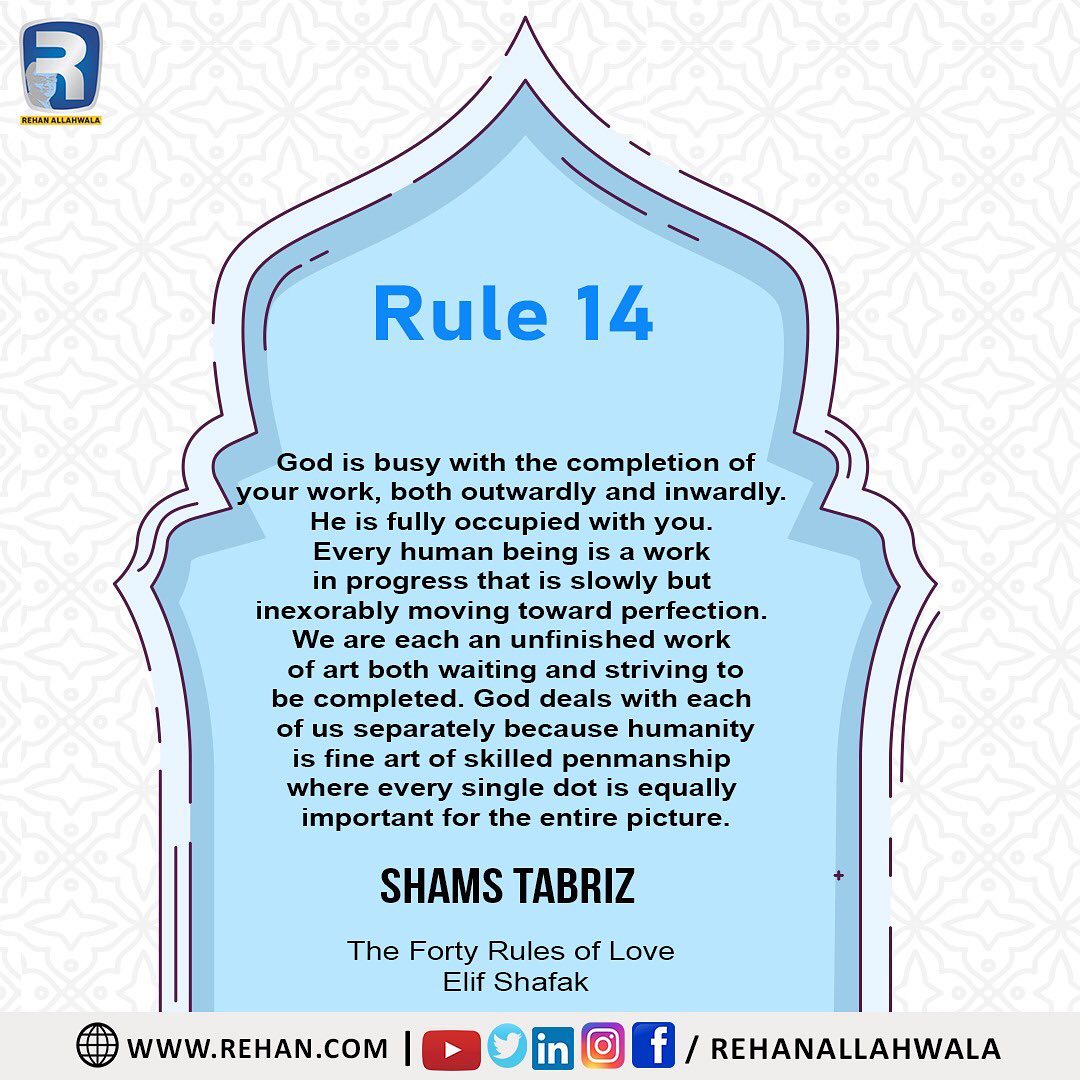
  • #shamstabrizi #workinprogress #perfection #unfinished #humanity #art #penmanship #entirepicture #inward #outward
    #shamstabrizi #workinprogress #perfection #unfinished #humanity #art #penmanship #entirepicture #inward #outward
    0 Reacties 0 aandelen 205 Views
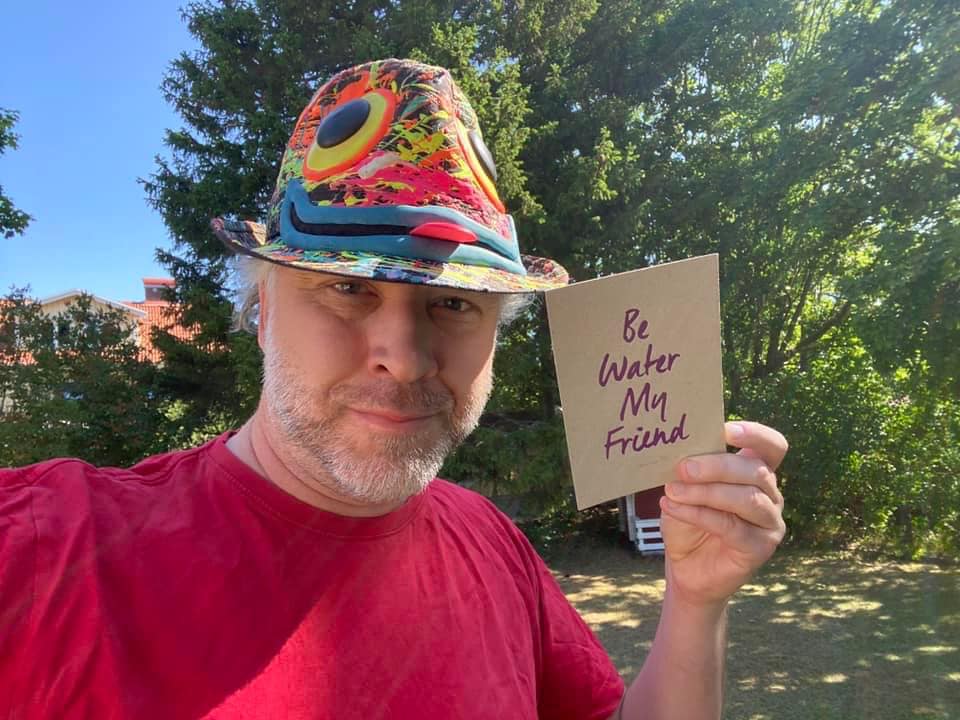
  • “Be like water making its way through cracks. Do not be assertive, but adjust to the object, and you shall find a way around or through it. If nothing within you stays rigid, outward things will disclose themselves.

    Empty your mind, be formless. Shapeless, like water. If you put water into a cup, it becomes the cup. You put water into a bottle and it becomes the bottle. You put it in a teapot, it becomes the teapot. Now, water can flow or it can crash. Be water, my friend.”

    ― Bruce Lee
    “Be like water making its way through cracks. Do not be assertive, but adjust to the object, and you shall find a way around or through it. If nothing within you stays rigid, outward things will disclose themselves. Empty your mind, be formless. Shapeless, like water. If you put water into a cup, it becomes the cup. You put water into a bottle and it becomes the bottle. You put it in a teapot, it becomes the teapot. Now, water can flow or it can crash. Be water, my friend.” ― Bruce Lee
    0 Reacties 0 aandelen 61 Views
Zoekresultaten