• Taste the Tradition Today

    Spice up your meals

    #saifullah #flavor #authentic #spice #foodie #handcrafted #limitedoffer
    Taste the Tradition Today Spice up your meals ๐ŸŒถ๏ธโœจ #saifullah #flavor #authentic #spice #foodie #handcrafted #limitedoffer
    0 Comments 0 Shares 220 Views
  • RSIF8
    ROLL NO 77
    STORY POST NO 38
    STORY TOPIC "How did trade routes shape the history of the world

    **How Did Trade Routes Shape the History of the World?**

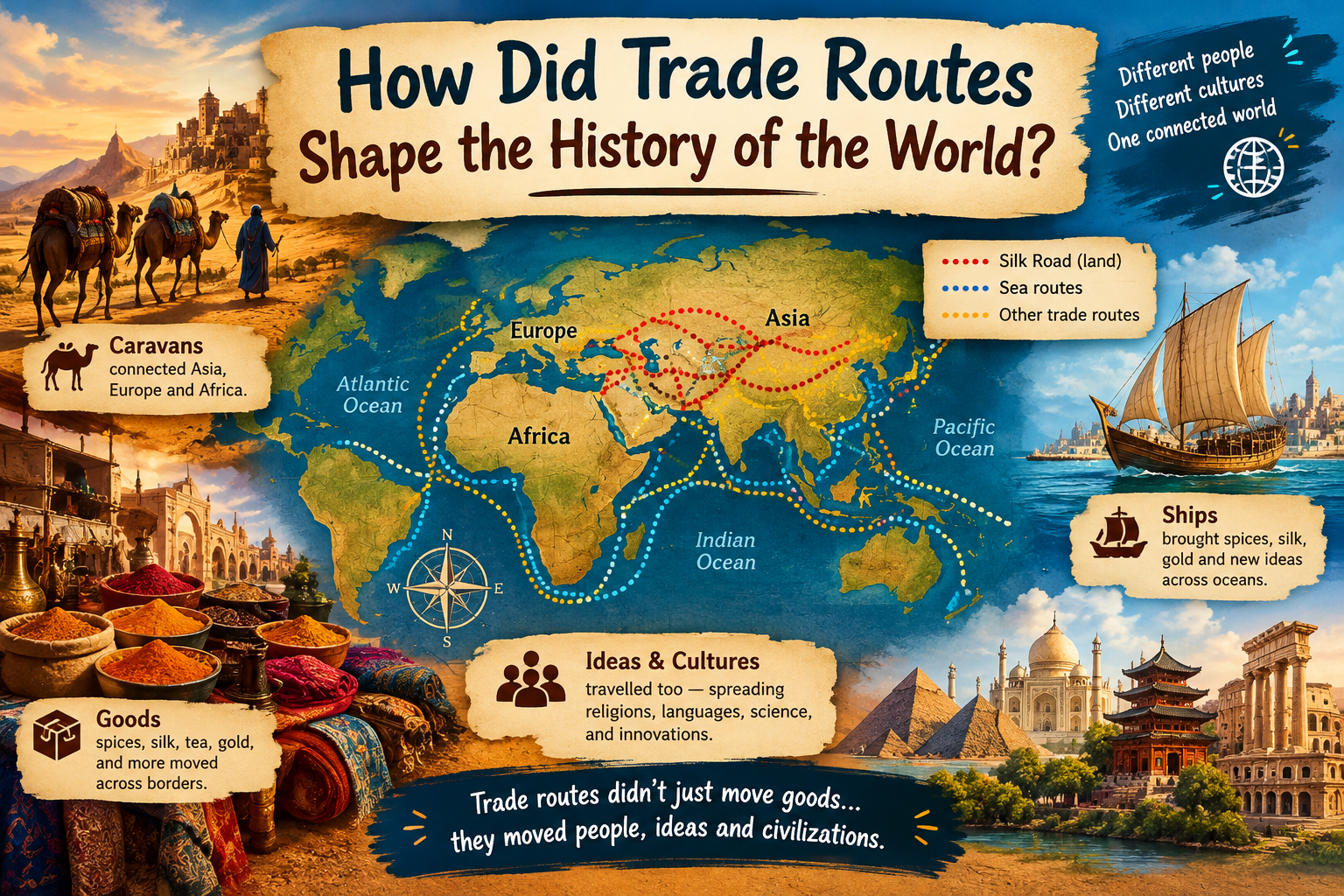
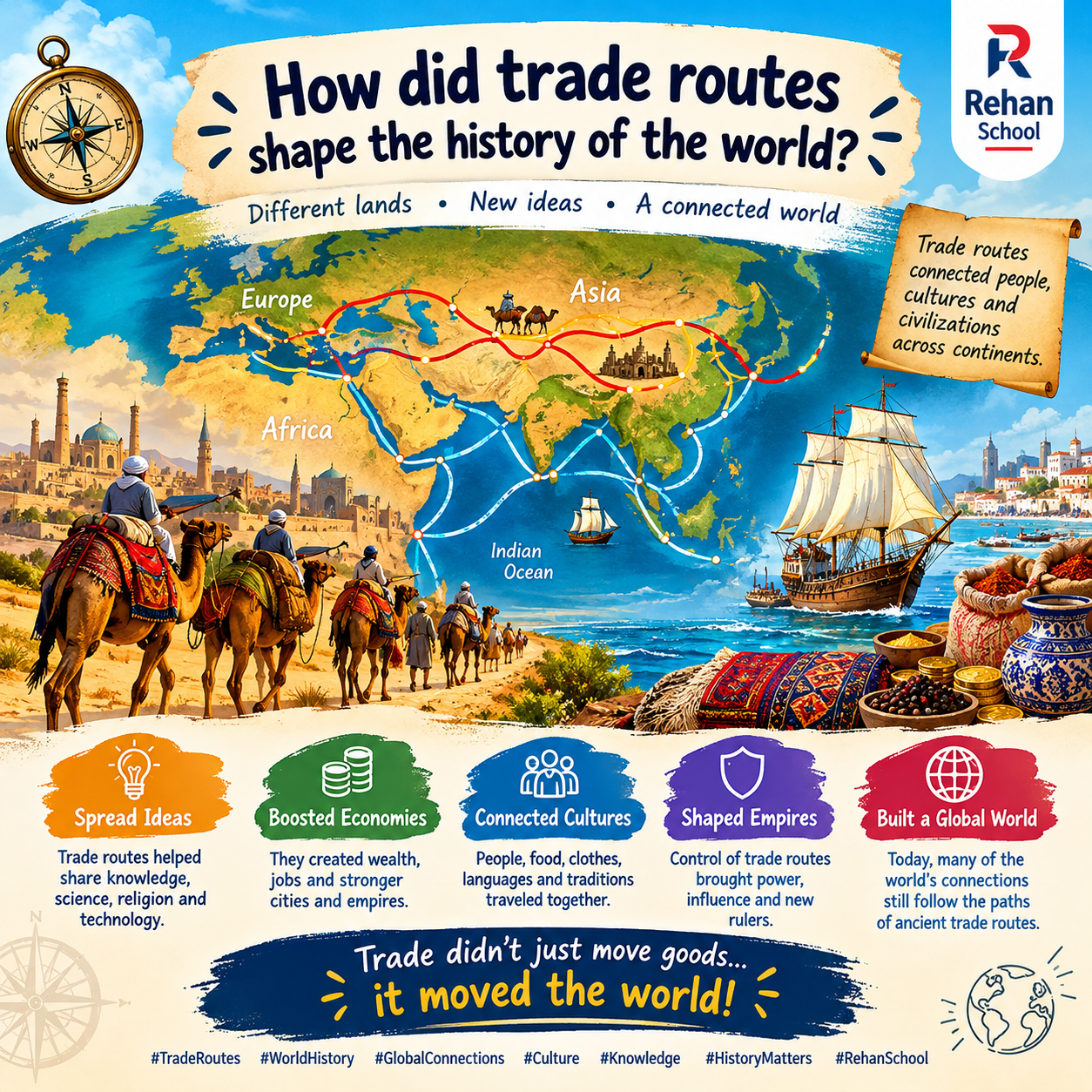
    Have you ever wondered how different civilizations connected with one another? Ancient trade routes, including the famous Silk Road, connected Asia, Europe, and Africa, allowing merchants to exchange valuable goods such as silk, spices, gold, and tea.

    But trade routes carried more than just goods! They also spread knowledge, languages, religions, inventions, and cultural traditions, helping civilizations grow and shaping the world we live in today.

    **Trade didn't just connect places; it connected people, ideas, and cultures!**

    Explore history, discover new connections, and learn how our world became interconnected!

    \#TradeRoutes #SilkRoad #WorldHistory #AncientCivilizations #HistoryFacts #GlobalConnections #CulturalExchange #EducationalContent #LearnHistory #Geography #KnowledgeIsPower #rehancodingwithai

    Add a stronger call to actionMake the opening more attention-grabbing
    RSIF8 ROLL NO 77 STORY POST NO 38 STORY TOPIC "How did trade routes shape the history of the world ๐ŸŒ๐Ÿ—บ๏ธ **How Did Trade Routes Shape the History of the World?** ๐Ÿšขโœจ Have you ever wondered how different civilizations connected with one another? ๐Ÿค”๐ŸŒ Ancient trade routes, including the famous Silk Road, connected Asia, Europe, and Africa, allowing merchants to exchange valuable goods such as silk, spices, gold, and tea. ๐Ÿช๐Ÿงต๐Ÿ’ฐ But trade routes carried more than just goods! ๐Ÿ“š๐Ÿ’ก They also spread knowledge, languages, religions, inventions, and cultural traditions, helping civilizations grow and shaping the world we live in today. ๐ŸŒ๐Ÿค โœจ **Trade didn't just connect places; it connected people, ideas, and cultures!** โค๏ธ๐ŸŒ ๐Ÿ“– Explore history, discover new connections, and learn how our world became interconnected! \#TradeRoutes #SilkRoad #WorldHistory #AncientCivilizations #HistoryFacts #GlobalConnections #CulturalExchange #EducationalContent #LearnHistory #Geography #KnowledgeIsPower #rehancodingwithai ๐ŸŒ๐Ÿšข๐Ÿ“šโœจ Add a stronger call to actionMake the opening more attention-grabbing
    0 Comments 0 Shares 1760 Views
  • #rsisb
    Roll no.247
    story post . 11
    Foundation level

    **How Did Trade Routes Shape the History of the World? **

    **Discover the Incredible Story of Trade Routes!**

    Have you ever wondered how people from different parts of the world shared their goods, ideas, cultures, and knowledge hundreds or even thousands of years ago? Long before airplanes, cars, and modern technology, trade routes connected distant civilizations and helped shape the world we live in today!

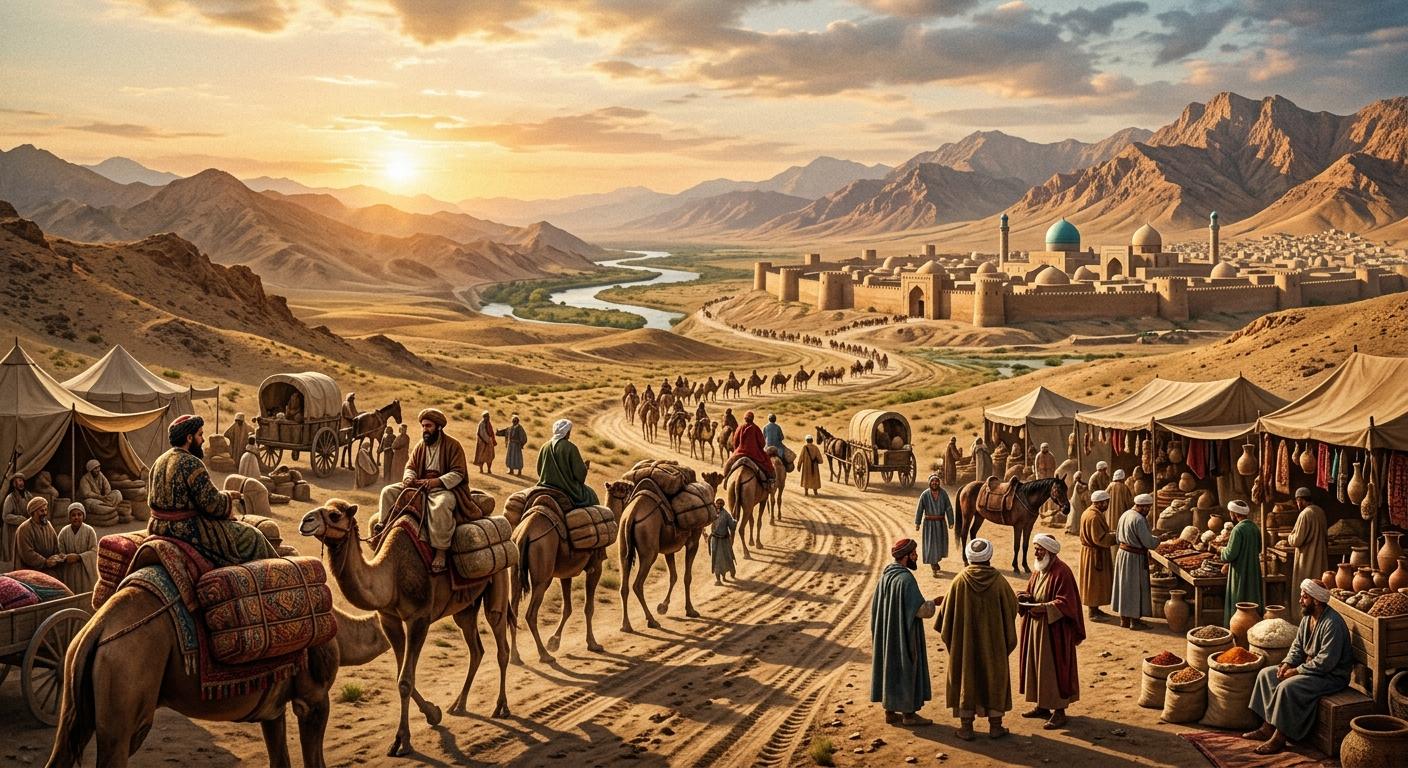
    Trade routes were pathways that allowed merchants, travelers, and explorers to transport valuable goods from one region to another. These routes crossed deserts, mountains, rivers, and oceans, connecting Asia, Africa, Europe, and other parts of the world.

    **1. The Famous Silk Road **

    The Silk Road was one of the most famous trading networks in history. It connected China with Central Asia, the Middle East, and Europe. Merchants transported silk, spices, precious stones, ceramics, and other valuable products. But the Silk Road was about much more than goods! It also helped spread religions, scientific knowledge, artistic traditions, and cultural ideas between civilizations.

    **2. Maritime Trade Routes **

    Sea routes allowed traders to transport goods across oceans and along coastlines. Ships carried spices, textiles, tea, porcelain, and many other products between distant ports. The Indian Ocean became an important center of international trade, connecting merchants from East Africa, Arabia, India, Southeast Asia, and China.

    **3. The Spice Trade ๐Ÿซš**

    Spices such as pepper, cinnamon, cloves, and nutmeg were highly valued in many parts of the world. Their demand encouraged merchants to travel long distances and helped develop important trading cities and ports. The search for new sources of spices also encouraged European maritime exploration, changing global connections and history.

    **4. The Rise of Cities and Empires **

    Trade routes helped cities grow into busy centers of commerce, learning, and culture. Merchants, craftspeople, and travelers brought wealth and new opportunities to trading centers. Governments and empires also gained influence by controlling important roads, ports, and markets.

    **5. The Exchange of Ideas and Knowledge **

    One of the greatest contributions of trade routes was the exchange of knowledge. Mathematics, astronomy, medicine, inventions, languages, and artistic styles traveled with merchants and scholars. People learned from one another, developed new skills, and expanded their understanding of the world.

    **6. The Sharing of Food and Culture **

    Trade helped introduce new foods, ingredients, clothing styles, artistic traditions, and customs to different societies. Over time, these exchanges influenced local cuisines, languages, architecture, and everyday life. The cultures of the world became connected in countless ways!

    **7. Trade Routes Had Challenges Too **

    Travel along trade routes was not always easy. Merchants faced dangerous weather, difficult landscapes, bandits, political conflicts, and long journeys. Trade could also contribute to the spread of diseases, while some trading systems were connected to conquest, exploitation, and slavery. Understanding these challenges helps us learn about both the achievements and the painful realities of history.

    **8. From Ancient Roads to Modern Global Trade **

    Today, goods move around the world through highways, railways, cargo ships, and airplanes. Modern trade networks are far more advanced, but they continue the same basic idea: connecting people, places, and markets. The ancient trade routes helped establish many of the connections that later shaped our interconnected world.

    **What Can We Learn from Trade Routes?**

    Trade routes teach us that no civilization developed completely on its own. People have always learned, exchanged ideas, explored new places, and depended on connections with others. History reminds us that cooperation, curiosity, and cultural exchange can transform societies and influence future generations.

    **Final Thought:** Trade routes were more than paths for transporting goods. They were bridges between civilizations, carrying stories, discoveries, beliefs, technologies, and traditions across the world. Their legacy continues to influence our lives today!

    **Question for You:** If you could travel along one ancient trade route, would you choose the Silk Road or the Indian Ocean trade routes? Why? Tell us in the comments!

    Like, share, and follow for more fascinating stories about history, geography, science, and the world around us!

    #TradeRoutes #HistoryOfTheWorld #SilkRoad #AncientHistory #WorldHistory #IndianOceanTrade #SpiceTrade #HistoryFacts #DidYouKnow #EducationalContent #LearningIsFun #ExploreHistory #CulturalExchange #AncientCivilizations #Geography #GlobalTrade #HistoryLovers #KnowledgeIsPower #WorldCultures #StoryPost #Education #DiscoverThePast #ExploreTheWorld #LearnSomethingNew #SocialMediaPost
    #rsisb Roll no.247 story post . 11 Foundation level ๐ŸŒโœจ **How Did Trade Routes Shape the History of the World? ๐Ÿšข๐Ÿช** ๐Ÿ“œ๐ŸŒ **Discover the Incredible Story of Trade Routes!** ๐ŸŒ๐Ÿ“œ Have you ever wondered how people from different parts of the world shared their goods, ideas, cultures, and knowledge hundreds or even thousands of years ago? ๐Ÿค”โœจ Long before airplanes, cars, and modern technology, trade routes connected distant civilizations and helped shape the world we live in today! ๐ŸŒŽ๐Ÿšข๐Ÿช Trade routes were pathways that allowed merchants, travelers, and explorers to transport valuable goods from one region to another. These routes crossed deserts, mountains, rivers, and oceans, connecting Asia, Africa, Europe, and other parts of the world. ๐Ÿœ๏ธโ›ฐ๏ธ๐ŸŒŠ ๐Ÿช **1. The Famous Silk Road ๐Ÿงต๐Ÿฎ** The Silk Road was one of the most famous trading networks in history. It connected China with Central Asia, the Middle East, and Europe. Merchants transported silk, spices, precious stones, ceramics, and other valuable products. ๐ŸŽŽ๐Ÿงต๐Ÿ’Ž But the Silk Road was about much more than goods! It also helped spread religions, scientific knowledge, artistic traditions, and cultural ideas between civilizations. ๐Ÿ“š๐Ÿ•Œ๐ŸŽจ ๐ŸŒŠ **2. Maritime Trade Routes ๐Ÿšขโš“** Sea routes allowed traders to transport goods across oceans and along coastlines. Ships carried spices, textiles, tea, porcelain, and many other products between distant ports. The Indian Ocean became an important center of international trade, connecting merchants from East Africa, Arabia, India, Southeast Asia, and China. ๐ŸŒด๐ŸŒโ›ต ๐ŸŒถ๏ธ **3. The Spice Trade ๐ŸŒถ๏ธ๐Ÿซš** Spices such as pepper, cinnamon, cloves, and nutmeg were highly valued in many parts of the world. Their demand encouraged merchants to travel long distances and helped develop important trading cities and ports. The search for new sources of spices also encouraged European maritime exploration, changing global connections and history. ๐Ÿ—บ๏ธโ›ตโœจ ๐Ÿ™๏ธ **4. The Rise of Cities and Empires ๐Ÿ›๏ธ๐Ÿ‘‘** Trade routes helped cities grow into busy centers of commerce, learning, and culture. Merchants, craftspeople, and travelers brought wealth and new opportunities to trading centers. Governments and empires also gained influence by controlling important roads, ports, and markets. ๐Ÿ’ฐ๐Ÿ™๏ธ๐Ÿ“ˆ ๐Ÿ“š **5. The Exchange of Ideas and Knowledge ๐Ÿง ๐Ÿ”ฌ** One of the greatest contributions of trade routes was the exchange of knowledge. Mathematics, astronomy, medicine, inventions, languages, and artistic styles traveled with merchants and scholars. People learned from one another, developed new skills, and expanded their understanding of the world. ๐ŸŒŸ๐Ÿ“–๐ŸŒ ๐Ÿฒ **6. The Sharing of Food and Culture ๐ŸŽญ๐Ÿ‡** Trade helped introduce new foods, ingredients, clothing styles, artistic traditions, and customs to different societies. Over time, these exchanges influenced local cuisines, languages, architecture, and everyday life. The cultures of the world became connected in countless ways! ๐ŸŒฎ๐Ÿœ๐ŸŽจ โš–๏ธ **7. Trade Routes Had Challenges Too โ›ˆ๏ธ** Travel along trade routes was not always easy. Merchants faced dangerous weather, difficult landscapes, bandits, political conflicts, and long journeys. Trade could also contribute to the spread of diseases, while some trading systems were connected to conquest, exploitation, and slavery. Understanding these challenges helps us learn about both the achievements and the painful realities of history. ๐Ÿ“œ๐ŸŒง๏ธ ๐ŸŒ **8. From Ancient Roads to Modern Global Trade ๐Ÿššโœˆ๏ธ** Today, goods move around the world through highways, railways, cargo ships, and airplanes. Modern trade networks are far more advanced, but they continue the same basic idea: connecting people, places, and markets. The ancient trade routes helped establish many of the connections that later shaped our interconnected world. ๐ŸŒ๐Ÿ“ฆ๐Ÿšข ๐Ÿ’ก **What Can We Learn from Trade Routes?** Trade routes teach us that no civilization developed completely on its own. People have always learned, exchanged ideas, explored new places, and depended on connections with others. History reminds us that cooperation, curiosity, and cultural exchange can transform societies and influence future generations. ๐Ÿค๐Ÿ’–๐ŸŒ โœจ **Final Thought:** Trade routes were more than paths for transporting goods. They were bridges between civilizations, carrying stories, discoveries, beliefs, technologies, and traditions across the world. Their legacy continues to influence our lives today! ๐ŸŒ๐Ÿ›ค๏ธ๐Ÿ’ซ ๐Ÿ’ฌ **Question for You:** If you could travel along one ancient trade route, would you choose the Silk Road or the Indian Ocean trade routes? Why? ๐Ÿช๐Ÿšข Tell us in the comments! ๐Ÿ‘‡ โค๏ธ Like, share, and follow for more fascinating stories about history, geography, science, and the world around us! ๐Ÿ“š๐ŸŒ๐Ÿš€ #TradeRoutes #HistoryOfTheWorld #SilkRoad #AncientHistory #WorldHistory #IndianOceanTrade #SpiceTrade #HistoryFacts #DidYouKnow #EducationalContent #LearningIsFun #ExploreHistory #CulturalExchange #AncientCivilizations #Geography #GlobalTrade #HistoryLovers #KnowledgeIsPower #WorldCultures #StoryPost #Education #DiscoverThePast #ExploreTheWorld #LearnSomethingNew #SocialMediaPost ๐ŸŒ๐Ÿ“šโœจ๐Ÿช๐Ÿšข๐Ÿ’ซ
    0 Comments 0 Shares 4463 Views
  • **How Did Trade Routes Shape the History of the World?**


    Trade routes were more than just paths for buying and selling goods. They connected people, cultures, cities, and civilizations across the world.


    From the ancient **Silk Road** to important sea routes, traders carried valuable goods such as silk, spices, gold, and precious stones. Along with these products, they also shared **ideas, languages, inventions, religions, traditions, and knowledge**.


    These connections helped cities grow, encouraged cultural exchange, and influenced the development of powerful civilizations. Trade also helped different parts of the world become more connected over time.


    **Trade routes helped shape history by connecting the world.**


    This story explores how journeys across deserts, mountains, rivers, and oceans helped build connections that still influence our world today.


    Learn from history.

    Explore the world.

    Discover how connections changed civilizations.


    #TradeRoutes #WorldHistory #SilkRoad #History #Geography #AncientCivilizations #CulturalExchange #WorldHistoryFacts #HistoryEducation #Learning #EducationalPost #StoryPost #ExploreHistory #ExploreTheWorld #StudentProject #CreativeLearning

    **How Did Trade Routes Shape the History of the World?**


    Trade routes were more than just paths for buying and selling goods. They connected people, cultures, cities, and civilizations across the world.


    From the ancient **Silk Road** to important sea routes, traders carried valuable goods such as silk, spices, gold, and precious stones. Along with these products, they also shared **ideas, languages, inventions, religions, traditions, and knowledge**.


    These connections helped cities grow, encouraged cultural exchange, and influenced the development of powerful civilizations. Trade also helped different parts of the world become more connected over time.


    **Trade routes helped shape history by connecting the world.**


    This story explores how journeys across deserts, mountains, rivers, and oceans helped build connections that still influence our world today.


    Learn from history.

    Explore the worl
    ๐ŸŒ๐Ÿ—บ๏ธ **How Did Trade Routes Shape the History of the World?** Trade routes were more than just paths for buying and selling goods. They connected people, cultures, cities, and civilizations across the world. ๐ŸŒโœจ From the ancient **Silk Road** to important sea routes, traders carried valuable goods such as silk, spices, gold, and precious stones. Along with these products, they also shared **ideas, languages, inventions, religions, traditions, and knowledge**. ๐Ÿ“š๐Ÿšข๐Ÿช These connections helped cities grow, encouraged cultural exchange, and influenced the development of powerful civilizations. Trade also helped different parts of the world become more connected over time. ๐ŸŒ **Trade routes helped shape history by connecting the world.** This story explores how journeys across deserts, mountains, rivers, and oceans helped build connections that still influence our world today. ๐Ÿ“š Learn from history. ๐ŸŒ Explore the world. ๐Ÿ—บ๏ธ Discover how connections changed civilizations. #TradeRoutes #WorldHistory #SilkRoad #History #Geography #AncientCivilizations #CulturalExchange #WorldHistoryFacts #HistoryEducation #Learning #EducationalPost #StoryPost #ExploreHistory #ExploreTheWorld #StudentProject #CreativeLearning ๐ŸŒ๐Ÿ—บ๏ธโœจ ๐ŸŒ๐Ÿ—บ๏ธ **How Did Trade Routes Shape the History of the World?** Trade routes were more than just paths for buying and selling goods. They connected people, cultures, cities, and civilizations across the world. ๐ŸŒโœจ From the ancient **Silk Road** to important sea routes, traders carried valuable goods such as silk, spices, gold, and precious stones. Along with these products, they also shared **ideas, languages, inventions, religions, traditions, and knowledge**. ๐Ÿ“š๐Ÿšข๐Ÿช These connections helped cities grow, encouraged cultural exchange, and influenced the development of powerful civilizations. Trade also helped different parts of the world become more connected over time. ๐ŸŒ **Trade routes helped shape history by connecting the world.** This story explores how journeys across deserts, mountains, rivers, and oceans helped build connections that still influence our world today. ๐Ÿ“š Learn from history. ๐ŸŒ Explore the worl
    0 Comments 0 Shares 2368 Views
  • #rsisb
    Roll no.239
    Story post no.8
    Foundation Level


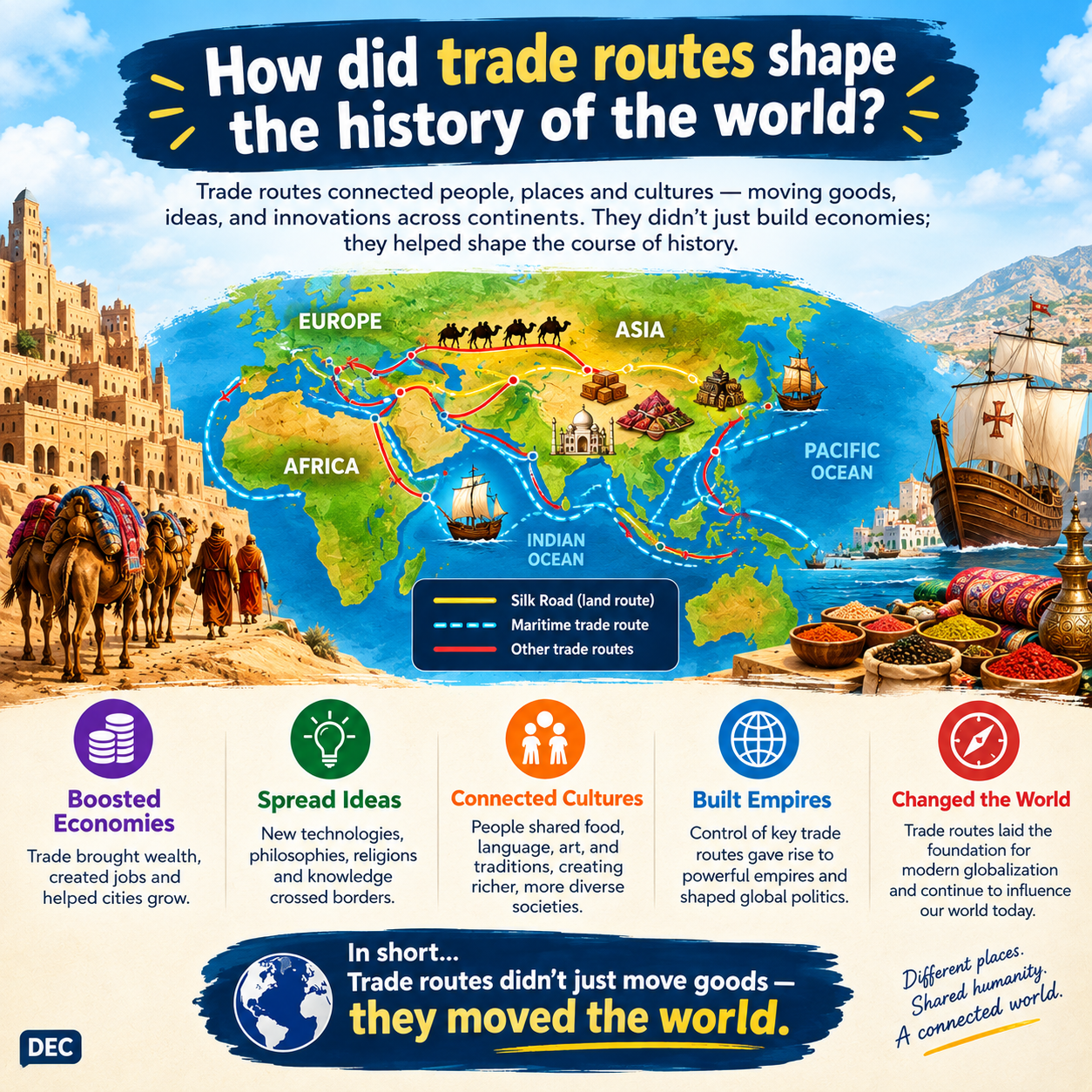
    Long before modern airplanes, highways, and the internet connected the world, **trade routes brought distant communities together**. From ancient caravan paths across Asia and Africa to maritime routes across the Indian Ocean and Mediterranean Sea, these networks helped transform human history.

    **Trade routes moved much more than goods.**
    Silk, spices, gold, precious stones, textiles, metals, food, and other valuable products traveled across continents. But along with these goods came something equally important: **ideas, technologies, languages, beliefs, traditions, and knowledge**.

    **They helped economies grow.**
    Cities located along important routes often became busy centers of trade. Merchants, craftsmen, sailors, and travelers created new economic opportunities, while ports and marketplaces connected producers and consumers across great distances.

    **They spread knowledge and innovation.**
    Technologies, scientific ideas, navigation techniques, agricultural practices, and inventions could travel from one region to another. Trade networks therefore helped knowledge move across cultural and geographic boundaries.

    **They connected different cultures.**
    People from different societies met in markets, ports, and trading cities. These encounters encouraged cultural exchange and influenced food, clothing, art, architecture, languages, and traditions.

    **They influenced the rise of cities and empires.**
    Controlling important trade routes could provide wealth and strategic advantages. As a result, powerful states and empires competed to control important roads, ports, and commercial centers.

    **Maritime trade changed global connections.**
    Sea routes across the Indian Ocean and other waterways allowed merchants to transport large quantities of goods between distant regions. Over time, expanding maritime networks helped create increasingly interconnected economies.

    **The legacy continues today.**
    Modern global trade, international shipping, major ports, and interconnected economies are part of a much longer history of people exchanging goods and ideas across borders.

    **In short:** Trade routes did not simply move products from one place to another. They helped **move people, ideas, technology, cultures, and knowledge**, creating connections that shaped the history of the world.

    **History reminds us that the world has been connected for thousands of years.**

    #TradeRoutes #WorldHistory #HistoryFacts #SilkRoad #AncientHistory #GlobalHistory #Geography #CulturalExchange #HistoryEducation #LearnHistory #DidYouKnow #WorldCivilizations #MaritimeTrade #Education #STEM #SocialStudies #HistoryLovers #KnowledgeIsPower #ChatGPT
    #rsisb Roll no.239 Story post no.8 Foundation Level Long before modern airplanes, highways, and the internet connected the world, **trade routes brought distant communities together**. From ancient caravan paths across Asia and Africa to maritime routes across the Indian Ocean and Mediterranean Sea, these networks helped transform human history. ๐Ÿงญ **Trade routes moved much more than goods.** Silk, spices, gold, precious stones, textiles, metals, food, and other valuable products traveled across continents. But along with these goods came something equally important: **ideas, technologies, languages, beliefs, traditions, and knowledge**. ๐Ÿ’ฐ **They helped economies grow.** Cities located along important routes often became busy centers of trade. Merchants, craftsmen, sailors, and travelers created new economic opportunities, while ports and marketplaces connected producers and consumers across great distances. ๐Ÿ’ก **They spread knowledge and innovation.** Technologies, scientific ideas, navigation techniques, agricultural practices, and inventions could travel from one region to another. Trade networks therefore helped knowledge move across cultural and geographic boundaries. ๐Ÿค **They connected different cultures.** People from different societies met in markets, ports, and trading cities. These encounters encouraged cultural exchange and influenced food, clothing, art, architecture, languages, and traditions. ๐Ÿ›๏ธ **They influenced the rise of cities and empires.** Controlling important trade routes could provide wealth and strategic advantages. As a result, powerful states and empires competed to control important roads, ports, and commercial centers. ๐ŸŒŠ **Maritime trade changed global connections.** Sea routes across the Indian Ocean and other waterways allowed merchants to transport large quantities of goods between distant regions. Over time, expanding maritime networks helped create increasingly interconnected economies. ๐ŸŒŽ **The legacy continues today.** Modern global trade, international shipping, major ports, and interconnected economies are part of a much longer history of people exchanging goods and ideas across borders. โœจ **In short:** Trade routes did not simply move products from one place to another. They helped **move people, ideas, technology, cultures, and knowledge**, creating connections that shaped the history of the world. ๐Ÿ“š **History reminds us that the world has been connected for thousands of years.** #TradeRoutes #WorldHistory #HistoryFacts #SilkRoad #AncientHistory #GlobalHistory #Geography #CulturalExchange #HistoryEducation #LearnHistory #DidYouKnow #WorldCivilizations #MaritimeTrade #Education #STEM #SocialStudies #HistoryLovers #KnowledgeIsPower #ChatGPT
    0 Comments 0 Shares 5246 Views
  • English Description (with emojis):

    Today I tried Rehan Biryani โ€”the aroma was so strong and tempting that I could sense it from far away . Every bite was full of rich spices and pure desi flavor . The chai was equally beautiful and soothing, perfectly complementing the meal . Honestly, the taste was so good that it made me want to come back again and again!

    #RehanBiryani #BiryaniLove #FoodieLife #DesiFood #FoodAroma #ChaiTime #FoodLovers #PakistaniFood #StreetFoodVibes #Yummy #FoodReels
    English Description (with emojis): Today I tried Rehan Biryani ๐Ÿ›โœจโ€”the aroma was so strong and tempting that I could sense it from far away ๐Ÿคค๐Ÿ”ฅ. Every bite was full of rich spices and pure desi flavor ๐ŸŒถ๏ธ๐Ÿ’›. The chai โ˜• was equally beautiful and soothing, perfectly complementing the meal ๐Ÿ˜. Honestly, the taste was so good that it made me want to come back again and again! ๐Ÿ™Œ๐Ÿ˜‹ #RehanBiryani #BiryaniLove #FoodieLife #DesiFood #FoodAroma #ChaiTime #FoodLovers #PakistaniFood #StreetFoodVibes #Yummy #FoodReels ๐Ÿฝ๏ธ๐Ÿ”ฅ
    0 Comments 0 Shares 7673 Views 0
  • Through the Streets: Pakistan’s Bustling Bazaars
    From the aroma of fresh spices to the shimmer of handwoven fabrics — this musical journey walks you through the heartbeat of Pakistan’s culture: its bazaars.

    From Lahore’s Anarkali to Karachi’s Saddar, every stall tells a story, every street sings a song. Let’s celebrate the color, chaos, and community of our desi marketplaces.

    Experience the rhythm of the streets — where tradition meets everyday life.

    Listen now & feel the soul of the streets.

    #PakistanBazaars #DesiCulture #PakistaniMusic #ThroughTheStreets #CulturalKaleidoscope #StreetLifePakistan #FolkFusion #LahoreBazaar #KarachiVibes #UrduSong

    Song no 18
    Roll no 51

    Follow Us:
    Instagram: [ / muhammadmujeebasif ]
    LinkedIn: [ / muhammad-mujeeb-asif-a9b3b6363 ]
    Facebook: [ / mujeeb.asif.822421 ]
    YouTube: [ / @mujeeb3810 ]

    FOR any type of song,youtube thumnail,editing,and canva post needed then contect me on whatapps number : 03001040381

    Don’t forget to LIKE, SHARE, and SUBSCRIBE for more inspiring content!

    Fawad BusinessWala
    Rubab EducationWali
    ๐ŸŒ† Through the Streets: Pakistan’s Bustling Bazaars From the aroma of fresh spices to the shimmer of handwoven fabrics — this musical journey walks you through the heartbeat of Pakistan’s culture: its bazaars. ๐ŸŽถ ๐Ÿ•Œ From Lahore’s Anarkali to Karachi’s Saddar, every stall tells a story, every street sings a song. Let’s celebrate the color, chaos, and community of our desi marketplaces. โœจ Experience the rhythm of the streets — where tradition meets everyday life. ๐ŸŽง Listen now & feel the soul of the streets. #PakistanBazaars #DesiCulture #PakistaniMusic #ThroughTheStreets #CulturalKaleidoscope #StreetLifePakistan #FolkFusion #LahoreBazaar #KarachiVibes #UrduSong Song no 18 Roll no 51 ๐Ÿ‘‰ Follow Us: ๐Ÿ“ธ Instagram: [ / muhammadmujeebasif ] ๐Ÿ’ผ LinkedIn: [ / muhammad-mujeeb-asif-a9b3b6363 ] ๐Ÿ“˜ Facebook: [ / mujeeb.asif.822421 ] ๐ŸŽฅ YouTube: [ / @mujeeb3810 ] FOR any type of song,youtube thumnail,editing,and canva post needed then contect me on whatapps number : 03001040381 Don’t forget to LIKE, SHARE, and SUBSCRIBE for more inspiring content! Fawad BusinessWala Rubab EducationWali
    0 Comments 0 Shares 6150 Views 0
  • Whoโ€™s spice is better ? Yours or mine ?
    Whoโ€™s spice is better ? Yours or mine ?
    0 Comments 0 Shares 241 Views
  • World is changing for sure !

    I am not sure about these numbers ! Forwarding as found !

    *India Collapsing*

    *While everyone is busy debating on*
    *India-Pakistan*
    *370-Kashmir*
    *Hindu-Muslim*
    *CAA, NRC, NPR, etc*
    *shaheen bagh*

    *We miss to notice whats happening to INDIA*

    *India - Recent data & Situation*

    *External Debt of India* *500 + Billion Dollars.*

    *Vodafone* is in loss of โ‚น50,000 Crore.

    *Airtel* is in loss of โ‚น23,000 Crore.

    *BSNL* is in loss of โ‚น14,000 Crore.

    *MTNL* is in loss of โ‚น755 Crore.

    *BPCL* is in loss of โ‚น750 Crore.

    *SAIL* is in loss of โ‚น286 Crore.

    *AIR India* is in loss of โ‚น4600 Crore.

    *Spice Jet* is in loss of โ‚น463 Crore.

    *Indigo* is in loss of โ‚น1062 Crore.

    *BHEL* is in loss of โ‚น219 Crore.

    *India Post* is in loss of โ‚น15,000 Crore.

    *GMR Infra* is in loss of โ‚น561 Crore.

    *YES Bank* is in loss of โ‚น600 Crore.

    *Union Bank* is in loss of โ‚น1190 Crore.

    *PNB Bank* is in loss of โ‚น4750 Croreเฅค

    *Axis Bank* is in loss of โ‚น112 Crore.

    *J P Group finished*

    *Videocon bankrupt*

    *Aircel & Docomo is dead*

    *Tata Docomo perished*

    *Jet Airways closed*

    *Airports Sold*
    5 airports sold to Adani.

    *Railways are on sale*

    *Heritage Renting*
    Heritages including Red Fort

    *Nationalized Banks Merger*
    Many nationalized banks have merged, many branches have literally closed,

    *ATM Rooms*
    Huge numbers of ATM Rooms are set down,

    *All Banks*
    incurring huge losses.

    *36 largest debtors*
    missing from country.

    *Few Corporates*
    Rs 2.4 lakh crores loan waived off

    *BSNL*
    54,000 may cut more jobs.

    *Auto Industry*
    1 million to be laid off

    *Maruti*
    Largest car maker cuts production.

    *Car Inventory*
    Rs 55000 crores car inventory lying at factories, with no buyers.

    *Houses Unsold*
    12.76 lakhs houses unsold in 30 major cities.

    *Builders Suicide*
    All over stressed. Some committing suicide, no buyers. Construction Stopped due Mat cost rise (GST at 18% to 28%).

    *CCD founder*
    *V G Siddhartha committed Sucide*
    due to huge debt.

    *HAL*
    No money to pay salary for employees.

    *ONGC*
    Most profitable company in India is now making losses.

    *OFB*
    Under corporatization affecting over 1.5 lac employee & families.

    *Biscuits Companies*
    like Parle-G on the verge of terminating itโ€™s employees.

    *Unemployment*
    Millions unemployed due to Demonetization.

    *Highest unemployment in 45 years*

    *Domestic Stagflation*
    Highest recorded

    *Leaving India*
    Record HNI individuals leaving India.

    *May be many more...*

    *Nothing is shown in media. Media is busy debating India Vs Pakistan, and Hindu Vs Muslims who were living peacefully with tranquility till recently.*
    World is changing for sure ! I am not sure about these numbers ! Forwarding as found ! *India Collapsing* *While everyone is busy debating on* *India-Pakistan* *370-Kashmir* *Hindu-Muslim* *CAA, NRC, NPR, etc* *shaheen bagh* *We miss to notice what's happening to INDIA* *India - Recent data & Situation* *External Debt of India* *500 + Billion Dollars.* *Vodafone* is in loss of โ‚น50,000 Crore. *Airtel* is in loss of โ‚น23,000 Crore. *BSNL* is in loss of โ‚น14,000 Crore. *MTNL* is in loss of โ‚น755 Crore. *BPCL* is in loss of โ‚น750 Crore. *SAIL* is in loss of โ‚น286 Crore. *AIR India* is in loss of โ‚น4600 Crore. *Spice Jet* is in loss of โ‚น463 Crore. *Indigo* is in loss of โ‚น1062 Crore. *BHEL* is in loss of โ‚น219 Crore. *India Post* is in loss of โ‚น15,000 Crore. *GMR Infra* is in loss of โ‚น561 Crore. *YES Bank* is in loss of โ‚น600 Crore. *Union Bank* is in loss of โ‚น1190 Crore. *PNB Bank* is in loss of โ‚น4750 Croreเฅค *Axis Bank* is in loss of โ‚น112 Crore. *J P Group finished* *Videocon bankrupt* *Aircel & Docomo is dead* *Tata Docomo perished* *Jet Airways closed* *Airports Sold* 5 airports sold to Adani. *Railways are on sale* *Heritage Renting* Heritages including Red Fort *Nationalized Banks Merger* Many nationalized banks have merged, many branches have literally closed, *ATM Rooms* Huge numbers of ATM Rooms are set down, *All Banks* incurring huge losses. *36 largest debtors* missing from country. *Few Corporates* Rs 2.4 lakh crores loan waived off *BSNL* 54,000 may cut more jobs. *Auto Industry* 1 million to be laid off *Maruti* Largest car maker cuts production. *Car Inventory* Rs 55000 crores car inventory lying at factories, with no buyers. *Houses Unsold* 12.76 lakhs houses unsold in 30 major cities. *Builders Suicide* All over stressed. Some committing suicide, no buyers. Construction Stopped due Mat cost rise (GST at 18% to 28%). *CCD founder* *V G Siddhartha committed Sucide* due to huge debt. *HAL* No money to pay salary for employees. *ONGC* Most profitable company in India is now making losses. *OFB* Under corporatization affecting over 1.5 lac employee & families. *Biscuits Companies* like Parle-G on the verge of terminating itโ€™s employees. *Unemployment* Millions unemployed due to Demonetization. *Highest unemployment in 45 years* *Domestic Stagflation* Highest recorded *Leaving India* Record HNI individuals leaving India. *May be many more...* *Nothing is shown in media. Media is busy debating India Vs Pakistan, and Hindu Vs Muslims who were living peacefully with tranquility till recently.*
    0 Comments 0 Shares 1611 Views
  • In the land of green and white, where the crescent moon shines bright,
    A nation strong, two hundred twenty million unite,
    Pakistan, a tapestry of cultures, a beacon in the night.

    Vatican Citys faithful could fit many times, so small,
    Thirty thousand times or more, theyd be standing tall,
    Inside Pakistans vast embrace, in a harmonious sprawl.

    Naurus people, ten thousand strong, in the blue Pacific seas,
    Would find a place twenty thousand times, with grace and ease,
    In the hearts of Pakistans population, a warm and gentle breeze.

    Tuvalus eleven thousand souls, in an ocean paradise,
    Would find in Pakistans vast land, a home so nice,
    Almost twenty thousand times, a mosaic of love and spice.

    Palaus children of the ocean, in their coral wonderland,
    Inside Pakistans population, twelve thousand times could stand,
    United, theyd sing together, a chorus pure and grand.

    San Marinos noble citizens, upon their mountaintop,
    Their thirty thousand lives, within Pakistan would never stop,
    Seven thousand times theyd fit, in a joyful cultural swap.

    In the valleys and the mountains, the cities and the plains,
    Pakistans people carry on, through sunshine and through rains,
    Welcoming the worlds smallest nations, their love forever remains.
    In the land of green and white, where the crescent moon shines bright, A nation strong, two hundred twenty million unite, Pakistan, a tapestry of cultures, a beacon in the night. Vatican City's faithful could fit many times, so small, Thirty thousand times or more, they'd be standing tall, Inside Pakistan's vast embrace, in a harmonious sprawl. Nauru's people, ten thousand strong, in the blue Pacific seas, Would find a place twenty thousand times, with grace and ease, In the hearts of Pakistan's population, a warm and gentle breeze. Tuvalu's eleven thousand souls, in an ocean paradise, Would find in Pakistan's vast land, a home so nice, Almost twenty thousand times, a mosaic of love and spice. Palau's children of the ocean, in their coral wonderland, Inside Pakistan's population, twelve thousand times could stand, United, they'd sing together, a chorus pure and grand. San Marino's noble citizens, upon their mountaintop, Their thirty thousand lives, within Pakistan would never stop, Seven thousand times they'd fit, in a joyful cultural swap. In the valleys and the mountains, the cities and the plains, Pakistan's people carry on, through sunshine and through rains, Welcoming the world's smallest nations, their love forever remains.
    0 Comments 0 Shares 636 Views
More Results