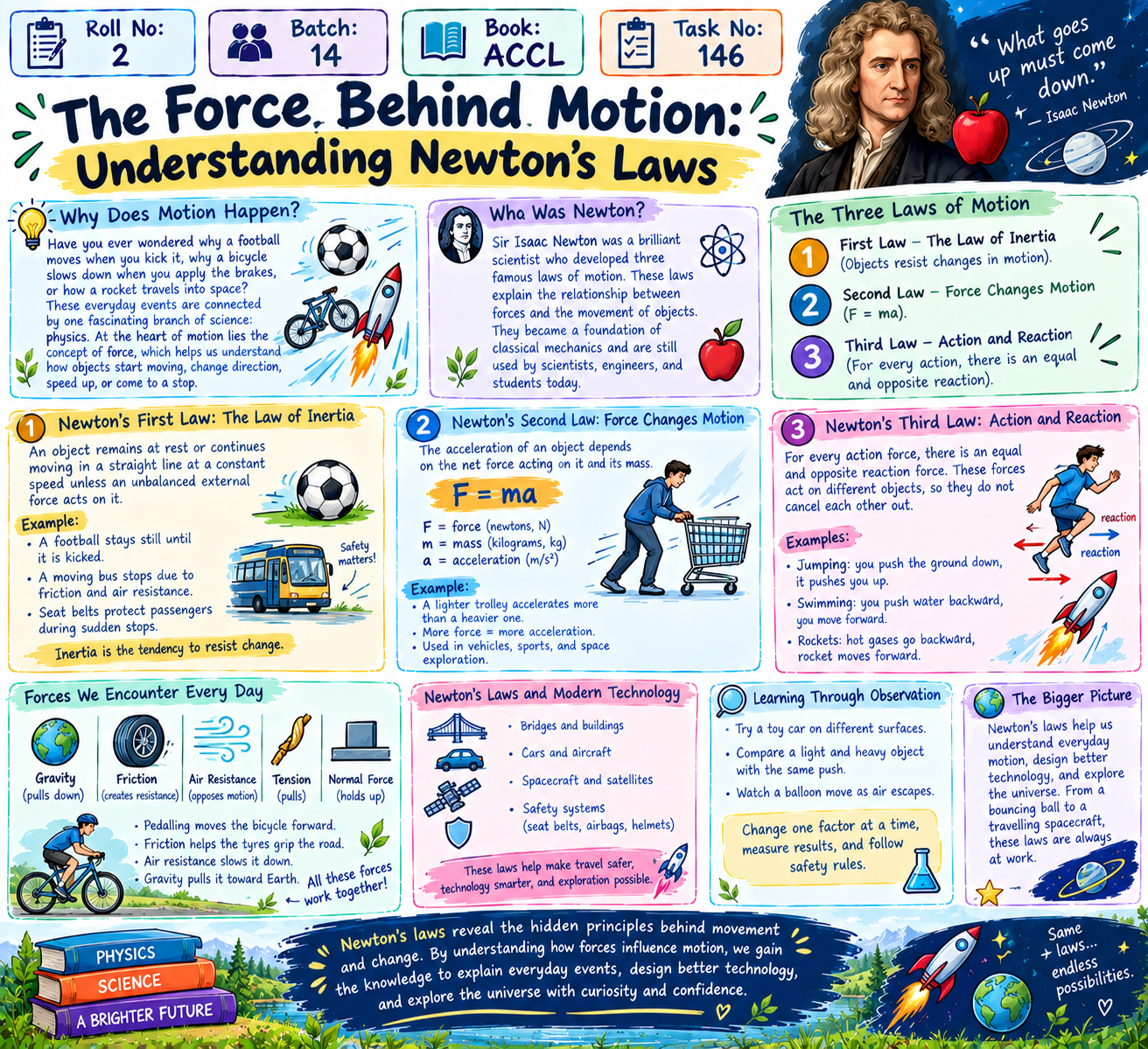
• **Roll No: 2**
    **Batch: 14**
    **Book: ACCL**
    **Task No: 153**

    # The Force Behind Motion: Understanding Newton’s Laws

    Have you ever wondered why a football moves when you kick it, why a bicycle slows down when you apply the brakes, or how a rocket travels into space? These everyday events are connected by one fascinating branch of science: physics. At the heart of motion lies the concept of **force**, which helps us understand how objects start moving, change direction, speed up, or come to a stop.

    One of the most important scientists in the history of physics was **Sir Isaac Newton**. Through his work, Newton developed three famous laws of motion that explain the relationship between forces and the movement of objects. These laws became a foundation of classical mechanics and continue to help scientists, engineers, and students understand the physical world around them.

    ## Newton’s First Law: The Law of Inertia

    Newton’s first law states that an object remains at rest or continues moving in a straight line at a constant speed unless an unbalanced external force acts on it. This tendency to resist changes in motion is called **inertia**.

    Imagine a football resting on the ground. It will remain still until someone kicks it or another force acts upon it. Once the ball begins moving, friction between the ball and the ground, along with air resistance, gradually slows it down. Without these opposing forces, the ball would continue moving at a constant velocity.

    You can also notice inertia when a moving bus suddenly brakes. Passengers may feel their bodies move forward because their bodies tend to maintain their previous motion. Seat belts help protect passengers by providing a force that restrains their movement. This shows how Newton’s first law explains both everyday experiences and important safety features.

    ## Newton’s Second Law: Force Changes Motion

    Newton’s second law explains how an unbalanced force changes an object’s motion. The acceleration of an object depends on the net force acting on it and its mass. For an object with constant mass, the relationship is written as:

    [
    \boxed{F = ma}
    ]

    Here, (F) represents the net force, (m) represents mass, and (a) represents acceleration. Force is measured in newtons (N), mass in kilograms (kg), and acceleration in metres per second squared ((\text{m/s}^2)).

    Consider pushing an empty shopping trolley and then pushing a heavily loaded one. The empty trolley usually accelerates more easily because it has less mass. If the same net force acts on two objects, the object with less mass experiences greater acceleration. Similarly, increasing the net force on an object of constant mass increases its acceleration.

    This law is essential in engineering, transport, sports, and space exploration. Engineers use it to calculate how much force is needed to accelerate vehicles, while athletes use the principles of force and acceleration when running, jumping, and throwing objects. ‍

    ## Newton’s Third Law: Action and Reaction

    Newton’s third law states that **for every action force, there is an equal and opposite reaction force**. These two forces act on different objects, so they do not cancel each other out.

    Think about what happens when you jump. Your feet push down against the ground, and the ground pushes upward on you. This upward force helps you rise into the air. The same principle explains how swimmers move forward by pushing water backward.

    Rockets provide another remarkable example. A rocket expels hot gases backward at high speed, and the gases exert an opposite force on the rocket, pushing it forward. This principle works even in the vacuum of space because the rocket does not need air to push against. Its motion results from the interaction between the rocket and the expelled gases.

    ## Forces We Encounter Every Day

    Forces are all around us, even when we do not notice them. Gravity pulls objects toward Earth, friction acts between surfaces in contact, and air resistance opposes an object moving through the atmosphere. Tension in a rope can pull an object, while a normal force from a supporting surface helps hold an object up.

    These forces often work together. For example, when a cyclist travels along a road, pedalling produces forward motion, friction helps the tyres grip the road, air resistance opposes movement, and gravity pulls the cyclist toward Earth. ‍ Understanding how these forces interact helps explain why the bicycle speeds up, slows down, or turns.

    ## Newton’s Laws and Modern Technology

    Newton’s laws are important far beyond the classroom. Engineers apply them when designing bridges, cars, aircraft, and machines. Scientists use them to predict the motion of many objects, while space agencies apply mechanics to plan spacecraft trajectories and study the movement of satellites.

    These laws also help improve safety. Seat belts, airbags, helmets, and vehicle safety systems are designed with an understanding of motion, forces, and changes in momentum. Although modern physics includes ideas beyond Newton’s laws, his work remains extremely useful for understanding everyday motion and many engineering problems.

    ## Learning Through Observation

    You do not need a complicated laboratory to begin exploring Newton’s laws. You can observe a toy car rolling across different surfaces, compare how a light and a heavier object respond to the same gentle push, or watch a balloon move as air escapes from it. Such simple observations can help connect scientific ideas with real experiences.

    When conducting experiments, it is important to change one factor at a time where possible, measure results carefully, and follow appropriate safety precautions. By observing patterns and asking questions, students can develop critical thinking skills and discover how physics explains the world around them.

    Newton’s laws teach us that motion is not random. The movement of a bouncing ball, a speeding bicycle, a swimming person, and a travelling spacecraft can all be understood by investigating forces and their effects.

    **Newton’s laws reveal the hidden principles behind movement and change. By understanding how forces influence motion, we gain the knowledge to explain everyday events, design better technology, and explore the universe with curiosity and confidence. **

    \#NewtonsLaws #ForceAndMotion #Physics #Science #Inertia #Acceleration #SpaceExploration #ACCL #Batch14 #Task146
    **Roll No: 2** **Batch: 14** **Book: ACCL** **Task No: 153** # 🚀⚙️ The Force Behind Motion: Understanding Newton’s Laws 🍎🌍 Have you ever wondered why a football moves when you kick it, why a bicycle slows down when you apply the brakes, or how a rocket travels into space? 🚲⚽🚀 These everyday events are connected by one fascinating branch of science: physics. At the heart of motion lies the concept of **force**, which helps us understand how objects start moving, change direction, speed up, or come to a stop. One of the most important scientists in the history of physics was **Sir Isaac Newton**. 🍎🔭 Through his work, Newton developed three famous laws of motion that explain the relationship between forces and the movement of objects. These laws became a foundation of classical mechanics and continue to help scientists, engineers, and students understand the physical world around them. ## ⚖️ Newton’s First Law: The Law of Inertia Newton’s first law states that an object remains at rest or continues moving in a straight line at a constant speed unless an unbalanced external force acts on it. This tendency to resist changes in motion is called **inertia**. 🧱✨ Imagine a football resting on the ground. ⚽ It will remain still until someone kicks it or another force acts upon it. Once the ball begins moving, friction between the ball and the ground, along with air resistance, gradually slows it down. Without these opposing forces, the ball would continue moving at a constant velocity. You can also notice inertia when a moving bus suddenly brakes. 🚌 Passengers may feel their bodies move forward because their bodies tend to maintain their previous motion. Seat belts help protect passengers by providing a force that restrains their movement. This shows how Newton’s first law explains both everyday experiences and important safety features. ## 💪 Newton’s Second Law: Force Changes Motion Newton’s second law explains how an unbalanced force changes an object’s motion. The acceleration of an object depends on the net force acting on it and its mass. For an object with constant mass, the relationship is written as: [ \boxed{F = ma} ] Here, (F) represents the net force, (m) represents mass, and (a) represents acceleration. Force is measured in newtons (N), mass in kilograms (kg), and acceleration in metres per second squared ((\text{m/s}^2)). 🔬📐 Consider pushing an empty shopping trolley and then pushing a heavily loaded one. 🛒 The empty trolley usually accelerates more easily because it has less mass. If the same net force acts on two objects, the object with less mass experiences greater acceleration. Similarly, increasing the net force on an object of constant mass increases its acceleration. This law is essential in engineering, transport, sports, and space exploration. Engineers use it to calculate how much force is needed to accelerate vehicles, while athletes use the principles of force and acceleration when running, jumping, and throwing objects. 🏃‍♂️🏀 ## 🔄 Newton’s Third Law: Action and Reaction Newton’s third law states that **for every action force, there is an equal and opposite reaction force**. These two forces act on different objects, so they do not cancel each other out. 🌍⚡ Think about what happens when you jump. Your feet push down against the ground, and the ground pushes upward on you. This upward force helps you rise into the air. 🦘 The same principle explains how swimmers move forward by pushing water backward. Rockets provide another remarkable example. 🚀 A rocket expels hot gases backward at high speed, and the gases exert an opposite force on the rocket, pushing it forward. This principle works even in the vacuum of space because the rocket does not need air to push against. Its motion results from the interaction between the rocket and the expelled gases. ## 🌎 Forces We Encounter Every Day Forces are all around us, even when we do not notice them. Gravity pulls objects toward Earth, friction acts between surfaces in contact, and air resistance opposes an object moving through the atmosphere. 🪂🌬️ Tension in a rope can pull an object, while a normal force from a supporting surface helps hold an object up. These forces often work together. For example, when a cyclist travels along a road, pedalling produces forward motion, friction helps the tyres grip the road, air resistance opposes movement, and gravity pulls the cyclist toward Earth. 🚴‍♂️ Understanding how these forces interact helps explain why the bicycle speeds up, slows down, or turns. ## 🛰️ Newton’s Laws and Modern Technology Newton’s laws are important far beyond the classroom. Engineers apply them when designing bridges, cars, aircraft, and machines. 🏗️🚗 Scientists use them to predict the motion of many objects, while space agencies apply mechanics to plan spacecraft trajectories and study the movement of satellites. These laws also help improve safety. Seat belts, airbags, helmets, and vehicle safety systems are designed with an understanding of motion, forces, and changes in momentum. Although modern physics includes ideas beyond Newton’s laws, his work remains extremely useful for understanding everyday motion and many engineering problems. ## 🧠 Learning Through Observation You do not need a complicated laboratory to begin exploring Newton’s laws. You can observe a toy car rolling across different surfaces, compare how a light and a heavier object respond to the same gentle push, or watch a balloon move as air escapes from it. 🎈🧪 Such simple observations can help connect scientific ideas with real experiences. When conducting experiments, it is important to change one factor at a time where possible, measure results carefully, and follow appropriate safety precautions. By observing patterns and asking questions, students can develop critical thinking skills and discover how physics explains the world around them. Newton’s laws teach us that motion is not random. The movement of a bouncing ball, a speeding bicycle, a swimming person, and a travelling spacecraft can all be understood by investigating forces and their effects. 🌌⚙️ **Newton’s laws reveal the hidden principles behind movement and change. By understanding how forces influence motion, we gain the knowledge to explain everyday events, design better technology, and explore the universe with curiosity and confidence. 🚀🌍💡** \#NewtonsLaws #ForceAndMotion #Physics #Science #Inertia #Acceleration #SpaceExploration #ACCL #Batch14 #Task146 ⚙️🚀📚
    0 Commentarios 0 Acciones 2345 Views
  • #rsisb
    Roll No 253
    Foundation Level
    Story Post 23

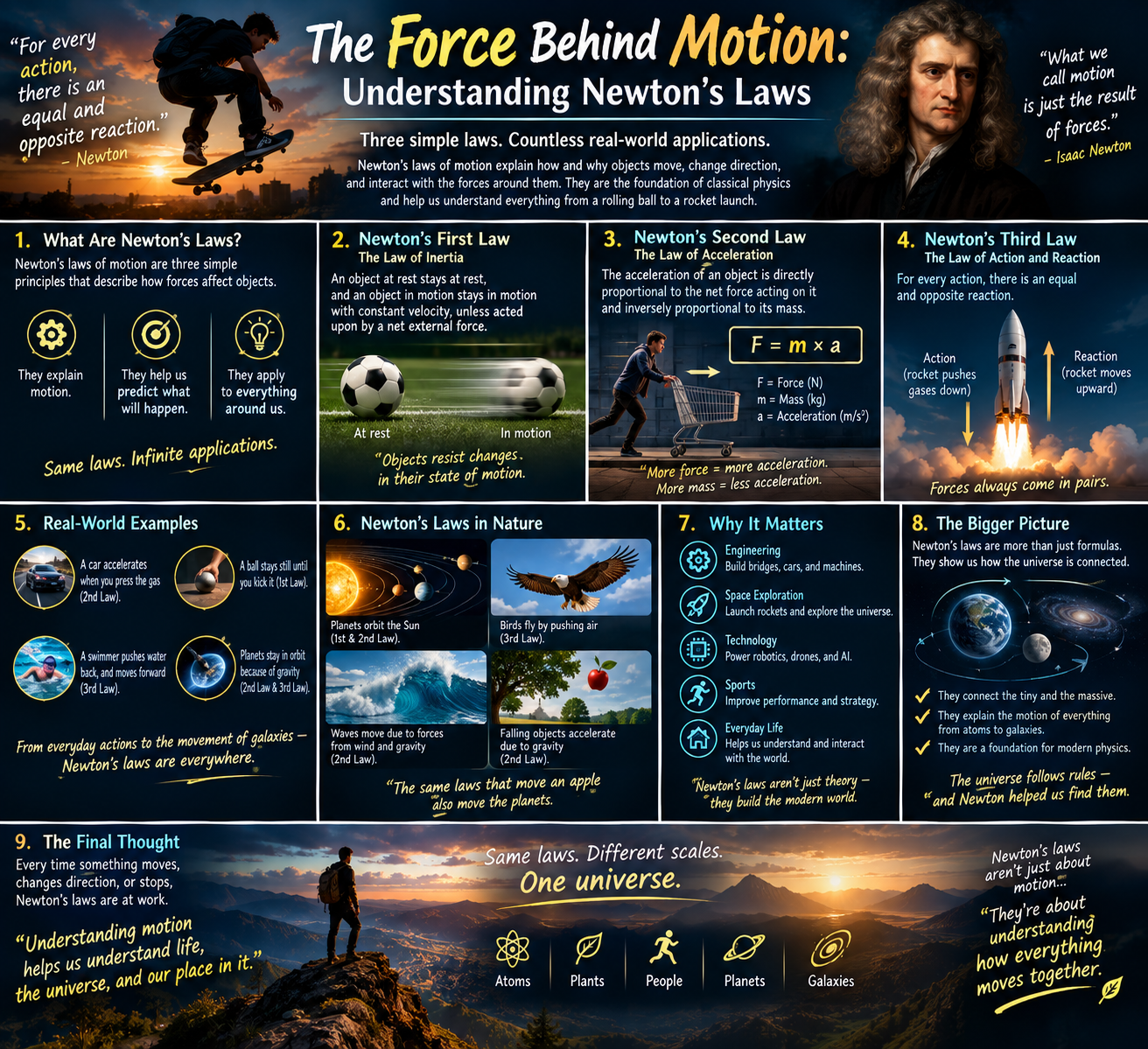
    # The Force Behind Motion: Understanding Newton’s Laws

    Imagine watching a football fly through the air , a car accelerate down a road , a rocket launch into space , or planets orbiting a star .

    These events may appear completely different—but beneath them is the same fundamental idea:

    ## **Forces control motion.**

    More than three centuries ago, **Isaac Newton** developed three laws that transformed our understanding of how objects move and interact. These laws became the foundation of classical mechanics and remain essential to physics, engineering, astronomy, and countless technologies today.

    ---

    # 1. What Are Newton's Laws?

    Newton's three laws describe the relationship between:

    **Force**
    **Mass**
    **Acceleration**
    **Motion**

    Together, they help us explain why objects remain still, why they accelerate, and how forces interact.

    From a rolling ball to a spacecraft , the same fundamental principles apply.

    ### **Three simple laws. Infinite applications.**

    ---

    # 2. Newton's First Law — The Law of Inertia

    Newton's First Law states that an object at rest remains at rest, while an object in motion continues moving at constant velocity unless acted upon by a net external force.

    This property is called **inertia**.

    Imagine a football sitting on the ground.

    It stays there until you kick it.

    Once moving, it won't naturally change its motion unless another force acts on it—such as friction, air resistance, or another object.

    A car requires braking to stop.
    A ball slows because of friction.
    Objects in space can continue moving with very little resistance.

    ### **Objects resist changes in their state of motion.**

    ---

    # 3. Newton's Second Law — The Law of Acceleration

    The second law explains how force changes motion.

    Its famous equation is:

    # **F = m × a**

    Where:

    **F** = Force
    **m** = Mass
    **a** = Acceleration

    This means that increasing the net force on an object generally increases its acceleration, while increasing the object's mass makes the same force produce less acceleration.

    Imagine pushing an empty shopping cart .

    It accelerates easily.

    Now fill it with heavy objects.

    The same push produces less acceleration.

    ### **More net force → more acceleration.**

    ### **More mass → less acceleration for the same force.**

    This simple relationship powers everything from vehicle design to rocket engineering .

    ---

    # 4. Newton's Third Law — Action and Reaction

    Newton's Third Law states:

    ### **For every action, there is an equal and opposite reaction.**

    Forces always occur through interactions between objects.

    Consider a rocket.

    The engine pushes hot gases downward and backward.

    The gases exert an equal and opposite force on the rocket, pushing it upward.

    The same principle appears everywhere:

    A swimmer pushes water backward → the water pushes the swimmer forward.
    A bird pushes air downward → the air helps push the bird upward.
    You push the ground backward → the ground pushes you forward.

    ### **Forces come in pairs.**

    ---

    # 5. Newton's Laws in Everyday Life

    You don't need a laboratory to see Newton's laws.

    They are happening around you constantly.

    **Cars:** Engine force changes speed and direction.
    **Sports:** Kicking a ball changes its motion.
    **Swimming:** Pushing water creates forward motion.
    **Cycling:** Pedaling produces forces that accelerate the bicycle.
    **Falling objects:** Gravity changes their motion.
    **Skateboards:** Pushing against the ground creates movement.

    Everyday motion is essentially a continuous interaction between forces.

    ---

    # 6. Newton's Laws in Nature

    Newton's laws don't stop at Earth.

    They also help describe motion throughout the universe.

    Planets orbit stars.
    Moons orbit planets.
    Comets travel through space.
    Waves respond to forces.
    Birds generate lift through interactions with air.
    Objects accelerate under gravity.

    The same physics that explains a falling apple can help describe the motion of enormous celestial bodies.

    ### **From apples to planets, the same laws operate across nature.**

    ---

    # 7. Why Newton's Laws Matter

    Newton's laws are more than equations in a textbook.

    They are essential tools for understanding and designing the physical world.

    **Engineering** — bridges, buildings, vehicles, and machines
    **Space exploration** — rockets, spacecraft, and orbital motion
    **Technology** — robots, drones, and automated systems
    **Sports science** — movement, speed, and performance
    **Transportation** — cars, aircraft, and trains

    Modern technology depends heavily on our ability to predict how forces produce motion.

    ---

    # 8. The Bigger Picture

    Newton's laws reveal something remarkable:

    The universe is not simply a collection of random movements.

    Objects interact through measurable forces.

    From microscopic particles to massive planets and galaxies , physics provides mathematical relationships that help us understand motion.

    The scale may change.

    The objects may change.

    But the underlying principles remain incredibly powerful.

    ### **Tiny or massive. Fast or slow. Earth or space. Motion follows physical laws.**

    ---

    # 9. The Final Thought

    Every time something moves…

    Every time something accelerates…

    Every time something changes direction…

    **Newton's laws are there.**

    A skateboard rolling down a street
    A bird taking flight
    A rocket leaving Earth
    A planet orbiting the Sun

    Different events.

    Different scales.

    One underlying framework.

    ## **Same laws. Different scales. One universe.**

    Understanding motion isn't just about solving equations.

    It's about understanding **how the physical world moves, interacts, and holds together.**

    ### **Once you understand the forces behind motion, the world around you begins to move in a whole new way.**


    Asma Shaheen EducationWali
    Saima Empowerment Wali
    Mishaal TrainingWali
    #rsisb Roll No 253 Foundation Level Story Post 23 # ⚡🌌 The Force Behind Motion: Understanding Newton’s Laws Imagine watching a football fly through the air ⚽, a car accelerate down a road 🚗💨, a rocket launch into space 🚀, or planets orbiting a star 🪐✨. These events may appear completely different—but beneath them is the same fundamental idea: ## **Forces control motion.** ⚡🧲 More than three centuries ago, **Isaac Newton** developed three laws that transformed our understanding of how objects move and interact. These laws became the foundation of classical mechanics and remain essential to physics, engineering, astronomy, and countless technologies today. 🔬⚙️🌍 --- # 🧠⚡ 1. What Are Newton's Laws? Newton's three laws describe the relationship between: ⚡ **Force** 🧱 **Mass** 💨 **Acceleration** 🏃 **Motion** Together, they help us explain why objects remain still, why they accelerate, and how forces interact. From a rolling ball 🎾 to a spacecraft 🚀, the same fundamental principles apply. ### **Three simple laws. Infinite applications.** 🌌 --- # 🛑➡️ 2. Newton's First Law — The Law of Inertia Newton's First Law states that an object at rest remains at rest, while an object in motion continues moving at constant velocity unless acted upon by a net external force. This property is called **inertia**. 🧱⚡ Imagine a football sitting on the ground. ⚽ It stays there until you kick it. Once moving, it won't naturally change its motion unless another force acts on it—such as friction, air resistance, or another object. 🚗 A car requires braking to stop. ⚽ A ball slows because of friction. 🛰️ Objects in space can continue moving with very little resistance. ### **Objects resist changes in their state of motion.** --- # 💨⚙️ 3. Newton's Second Law — The Law of Acceleration The second law explains how force changes motion. Its famous equation is: # **F = m × a** ⚡ Where: **F** = Force 🧲 **m** = Mass ⚖️ **a** = Acceleration 💨 This means that increasing the net force on an object generally increases its acceleration, while increasing the object's mass makes the same force produce less acceleration. Imagine pushing an empty shopping cart 🛒. It accelerates easily. Now fill it with heavy objects. The same push produces less acceleration. ### **More net force → more acceleration.** ### **More mass → less acceleration for the same force.** This simple relationship powers everything from vehicle design 🚗 to rocket engineering 🚀. --- # 🚀🔥 4. Newton's Third Law — Action and Reaction Newton's Third Law states: ### **For every action, there is an equal and opposite reaction.** ⚡ Forces always occur through interactions between objects. Consider a rocket. 🚀 The engine pushes hot gases downward and backward. The gases exert an equal and opposite force on the rocket, pushing it upward. ⬆️🔥 The same principle appears everywhere: 🏊 A swimmer pushes water backward → the water pushes the swimmer forward. 🦅 A bird pushes air downward → the air helps push the bird upward. 🚶 You push the ground backward → the ground pushes you forward. ### **Forces come in pairs.** 🔗⚡ --- # 🌍⚽ 5. Newton's Laws in Everyday Life You don't need a laboratory to see Newton's laws. They are happening around you constantly. 🚗 **Cars:** Engine force changes speed and direction. ⚽ **Sports:** Kicking a ball changes its motion. 🏊 **Swimming:** Pushing water creates forward motion. 🚲 **Cycling:** Pedaling produces forces that accelerate the bicycle. 🍎 **Falling objects:** Gravity changes their motion. 🛹 **Skateboards:** Pushing against the ground creates movement. Everyday motion is essentially a continuous interaction between forces. --- # 🌌🪐 6. Newton's Laws in Nature Newton's laws don't stop at Earth. They also help describe motion throughout the universe. 🌌 🪐 Planets orbit stars. 🌙 Moons orbit planets. ☄️ Comets travel through space. 🌊 Waves respond to forces. 🦅 Birds generate lift through interactions with air. 🍎 Objects accelerate under gravity. The same physics that explains a falling apple can help describe the motion of enormous celestial bodies. ### **From apples to planets, the same laws operate across nature.** 🍎➡️🪐 --- # ⚙️🚀 7. Why Newton's Laws Matter Newton's laws are more than equations in a textbook. They are essential tools for understanding and designing the physical world. 🏗️ **Engineering** — bridges, buildings, vehicles, and machines 🚀 **Space exploration** — rockets, spacecraft, and orbital motion 🤖 **Technology** — robots, drones, and automated systems 🏃 **Sports science** — movement, speed, and performance 🚗 **Transportation** — cars, aircraft, and trains Modern technology depends heavily on our ability to predict how forces produce motion. --- # 🌌🔭 8. The Bigger Picture Newton's laws reveal something remarkable: The universe is not simply a collection of random movements. Objects interact through measurable forces. ⚛️🧲 From microscopic particles 🔬 to massive planets 🪐 and galaxies 🌌, physics provides mathematical relationships that help us understand motion. The scale may change. The objects may change. But the underlying principles remain incredibly powerful. ### **Tiny or massive. Fast or slow. Earth or space. Motion follows physical laws.** ⚡🌍🌌 --- # 🌅⚡ 9. The Final Thought Every time something moves… Every time something accelerates… Every time something changes direction… **Newton's laws are there.** 🧠⚡ A skateboard rolling down a street 🛹 A bird taking flight 🦅 A rocket leaving Earth 🚀 A planet orbiting the Sun ☀️🪐 Different events. Different scales. One underlying framework. ## 🌌 **Same laws. Different scales. One universe.** Understanding motion isn't just about solving equations. It's about understanding **how the physical world moves, interacts, and holds together.** ⚛️🌍✨ ### **Once you understand the forces behind motion, the world around you begins to move in a whole new way.** ⚡🔬🌌 Asma Shaheen EducationWali Saima Empowerment Wali Mishaal TrainingWali
    0 Commentarios 0 Acciones 4722 Views
  • Mohsin RS F8
    canva post 7
    Roll no 13
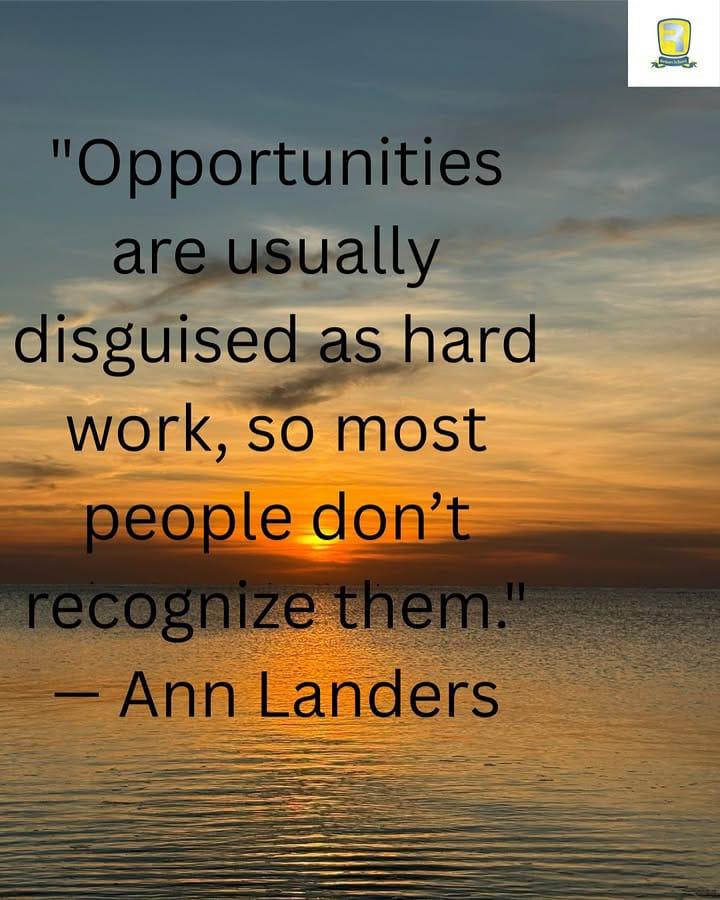
    Opportunities are usually disguised as hard work, so most people don’t recognize them." — Ann Landers

    This powerful quote by Ann Landers teaches us an important lesson about success and personal growth. Many people dream of finding the perfect opportunity that will instantly change their lives. They imagine opportunities as something exciting, easy, or unexpected. However, in reality, opportunities rarely appear in such a form. More often, they come disguised as difficult tasks, long hours, constant learning, and perseverance. Because hard work demands patience and commitment, many people fail to recognize that what they see as a burden may actually be the very opportunity they have been waiting for.

    Throughout history, successful individuals have achieved greatness not because they were lucky, but because they embraced hard work when others avoided it. A student who spends extra hours studying, an athlete who trains every day, an entrepreneur who works tirelessly to build a business, or an artist who keeps practicing despite failures—all of them are investing in opportunities hidden within their efforts. While others may see only challenges and sacrifices, these individuals understand that every small step contributes to something bigger.

    Hard work often tests our patience. There are times when results do not come immediately, and it may feel as though our efforts are going unnoticed. During such moments, many people give up because they expect quick rewards. Yet, true opportunities reveal themselves over time. Skills improve gradually, trust is earned through consistency, and success is built one day at a time. What seems like ordinary effort today may become an extraordinary achievement tomorrow.

    Consider some of the world's greatest inventors, scientists, athletes, and leaders. Their stories are filled with setbacks, failures, and years of dedication. They did not wait for opportunities to knock on their doors; instead, they created opportunities through persistence and determination. Their willingness to work hard allowed them to discover possibilities that others overlooked.

    This quote also reminds us that our
    Mohsin RS F8 🎓✨ canva post 7 Roll no 13 Opportunities are usually disguised as hard work, so most people don’t recognize them." — Ann Landers This powerful quote by Ann Landers teaches us an important lesson about success and personal growth. Many people dream of finding the perfect opportunity that will instantly change their lives. They imagine opportunities as something exciting, easy, or unexpected. However, in reality, opportunities rarely appear in such a form. More often, they come disguised as difficult tasks, long hours, constant learning, and perseverance. Because hard work demands patience and commitment, many people fail to recognize that what they see as a burden may actually be the very opportunity they have been waiting for. Throughout history, successful individuals have achieved greatness not because they were lucky, but because they embraced hard work when others avoided it. A student who spends extra hours studying, an athlete who trains every day, an entrepreneur who works tirelessly to build a business, or an artist who keeps practicing despite failures—all of them are investing in opportunities hidden within their efforts. While others may see only challenges and sacrifices, these individuals understand that every small step contributes to something bigger. Hard work often tests our patience. There are times when results do not come immediately, and it may feel as though our efforts are going unnoticed. During such moments, many people give up because they expect quick rewards. Yet, true opportunities reveal themselves over time. Skills improve gradually, trust is earned through consistency, and success is built one day at a time. What seems like ordinary effort today may become an extraordinary achievement tomorrow. Consider some of the world's greatest inventors, scientists, athletes, and leaders. Their stories are filled with setbacks, failures, and years of dedication. They did not wait for opportunities to knock on their doors; instead, they created opportunities through persistence and determination. Their willingness to work hard allowed them to discover possibilities that others overlooked. This quote also reminds us that our
    0 Commentarios 0 Acciones 2056 Views
  • Commonalities between virus and ideas !

    There are several ways in which viruses and ideas (or memes, as theyre called in the realm of culture) share common characteristics:

    1. **Spread:** Just like a virus spreads from person to person, ideas can also spread in a similar fashion - through communication and social interactions.

    2. **Mutation:** Viruses can mutate as they spread, leading to new strains. Similarly, ideas can also evolve or change as they are shared and reinterpreted by different people.

    3. **Survival of the Fittest:** In both cases, those that are most "fit"—that is, most effective at spreading and sustaining themselves—tend to proliferate. For viruses, this means being able to infect as many hosts as possible. For ideas, this means being memorable, resonating with peoples existing beliefs or desires, or providing some form of value.

    4. **Infection Rate:** Both viruses and ideas have a concept similar to an infection rate (or "R0" in epidemiology). If an idea or a virus is highly contagious, it can spread quickly through a population.

    5. **Carrier:** Both viruses and ideas need carriers. Viruses need hosts like humans or animals to survive and spread, while ideas need people to carry and disseminate them.

    6. **Influence on Behavior:** Both viruses and ideas can influence behavior. Viruses can affect the behavior of a host in ways that favor the viruss propagation. Ideas can change a persons behavior, beliefs, or attitudes.

    7. **Resistance:** Just like our bodies develop resistance to viruses through immunity, societies or individuals can develop resistance to certain ideas through exposure, education, or critical thinking.
    Commonalities between virus 🦠 and ideas 💡! There are several ways in which viruses and ideas (or memes, as they're called in the realm of culture) share common characteristics: 1. **Spread:** Just like a virus spreads from person to person, ideas can also spread in a similar fashion - through communication and social interactions. 2. **Mutation:** Viruses can mutate as they spread, leading to new strains. Similarly, ideas can also evolve or change as they are shared and reinterpreted by different people. 3. **Survival of the Fittest:** In both cases, those that are most "fit"—that is, most effective at spreading and sustaining themselves—tend to proliferate. For viruses, this means being able to infect as many hosts as possible. For ideas, this means being memorable, resonating with people's existing beliefs or desires, or providing some form of value. 4. **Infection Rate:** Both viruses and ideas have a concept similar to an infection rate (or "R0" in epidemiology). If an idea or a virus is highly contagious, it can spread quickly through a population. 5. **Carrier:** Both viruses and ideas need carriers. Viruses need hosts like humans or animals to survive and spread, while ideas need people to carry and disseminate them. 6. **Influence on Behavior:** Both viruses and ideas can influence behavior. Viruses can affect the behavior of a host in ways that favor the virus's propagation. Ideas can change a person's behavior, beliefs, or attitudes. 7. **Resistance:** Just like our bodies develop resistance to viruses through immunity, societies or individuals can develop resistance to certain ideas through exposure, education, or critical thinking.
    0 Commentarios 0 Acciones 2473 Views
  • Active listening is a communication technique that involves fully concentrating, understanding, responding, and remembering what the other person is saying. It’s about being genuinely engaged in the conversation, picking up on verbal and non-verbal cues, and showing that you value the speaker’s input. This skill is crucial for building trust, making others feel valued, and fostering open, effective communication.

    To improve engagement with your team on WhatsApp and encourage quicker, more thoughtful replies, here are a few game-like strategies you could try:

    1. “Question of the Day” Game

    Post an interesting or thought-provoking question each day (could be work-related or just fun). Ask them to answer within a specific timeframe, and reward those who reply with thoughtful answers promptly (perhaps with a small incentive or even a shoutout in the group). This encourages daily interaction and trains the habit of responding quickly.

    2. “Reply Chain Challenge”

    Start a conversation thread on a relevant topic and encourage everyone to reply to the previous message within two minutes. The idea is to create a quick-paced thread where everyone’s voice is heard. It can be done once a week or daily for a few minutes, making it a “must-reply” challenge.

    3. “Emoji Response” Game

    Send a message and ask everyone to respond with a specific emoji that represents their mood or reaction. For example, send “How’s your week going?” and ask for emoji replies only. This can be a quick, lighthearted way to gauge everyone’s mood and keep people engaged without requiring a lengthy reply.

    4. “Quick Polls”

    Use polls to get quick responses from the team on various topics. It’s a low-effort way for them to engage without typing. For example, “Should we move the meeting to Thursday?” with Yes/No options. Polls create interaction and make them feel involved.

    5. “Speedy Replies Day”

    Announce a specific day as “Speedy Replies Day.” On this day, ask everyone to reply within a few minutes to any message sent. Reward those who consistently participate throughout the day. It helps build a culture of quick responses.

    6. “Trivia Tuesday”

    Start a trivia game where you post a question, and the first person to reply correctly wins a point. Keep a scoreboard, and at the end of the month, recognize the top participant. The element of competition and fun can motivate quicker replies.

    Using these techniques regularly can make replying more engaging and foster a habit of quick and thoughtful responses in your team. Over time, this can help cultivate a more responsive and active communication culture.
    Active listening is a communication technique that involves fully concentrating, understanding, responding, and remembering what the other person is saying. It’s about being genuinely engaged in the conversation, picking up on verbal and non-verbal cues, and showing that you value the speaker’s input. This skill is crucial for building trust, making others feel valued, and fostering open, effective communication. To improve engagement with your team on WhatsApp and encourage quicker, more thoughtful replies, here are a few game-like strategies you could try: 1. “Question of the Day” Game Post an interesting or thought-provoking question each day (could be work-related or just fun). Ask them to answer within a specific timeframe, and reward those who reply with thoughtful answers promptly (perhaps with a small incentive or even a shoutout in the group). This encourages daily interaction and trains the habit of responding quickly. 2. “Reply Chain Challenge” Start a conversation thread on a relevant topic and encourage everyone to reply to the previous message within two minutes. The idea is to create a quick-paced thread where everyone’s voice is heard. It can be done once a week or daily for a few minutes, making it a “must-reply” challenge. 3. “Emoji Response” Game Send a message and ask everyone to respond with a specific emoji that represents their mood or reaction. For example, send “How’s your week going?” and ask for emoji replies only. This can be a quick, lighthearted way to gauge everyone’s mood and keep people engaged without requiring a lengthy reply. 4. “Quick Polls” Use polls to get quick responses from the team on various topics. It’s a low-effort way for them to engage without typing. For example, “Should we move the meeting to Thursday?” with Yes/No options. Polls create interaction and make them feel involved. 5. “Speedy Replies Day” Announce a specific day as “Speedy Replies Day.” On this day, ask everyone to reply within a few minutes to any message sent. Reward those who consistently participate throughout the day. It helps build a culture of quick responses. 6. “Trivia Tuesday” Start a trivia game where you post a question, and the first person to reply correctly wins a point. Keep a scoreboard, and at the end of the month, recognize the top participant. The element of competition and fun can motivate quicker replies. Using these techniques regularly can make replying more engaging and foster a habit of quick and thoughtful responses in your team. Over time, this can help cultivate a more responsive and active communication culture.
    0 Commentarios 0 Acciones 967 Views
  • The side you sleep on can impact your health and well-being. Here’s an analysis of the benefits and drawbacks of sleeping on each side, so you can decide what works best for you:

    1. Sleeping on the Left Side

    Benefits:

    • Improves Digestion:
    • The stomach and pancreas hang naturally, allowing optimal digestion.
    • Helps prevent acid reflux and heartburn as the stomach contents stay below the esophagus.
    • Boosts Heart Health:
    • Reduces pressure on the heart and promotes blood flow due to gravity aiding the lymphatic drainage system.
    • Supports Detoxification:
    • Helps the body’s natural waste removal processes (lymphatic system and spleen) function efficiently.
    • Relieves Pregnancy Discomfort:
    • Improves circulation to the fetus and reduces pressure on the back and uterus.

    Drawbacks:

    • Can put pressure on the stomach and lungs if not properly supported by pillows.

    2. Sleeping on the Right Side

    Benefits:

    • Reduces Pressure on the Heart:
    • May benefit people with specific heart conditions, as it minimizes the weight on the heart.
    • Improves Sleep for Acid Reflux (In Some Cases):
    • Some individuals find it reduces reflux symptoms, although left-side sleeping is generally better for this.

    Drawbacks:

    • May worsen heartburn and acid reflux for some people, as the stomach’s position can allow acid to flow back up into the esophagus.

    3. Back Sleeping (On Your Back)

    Benefits:

    • Spine and Neck Support:
    • Keeps your spine aligned and reduces pressure on joints if you use a supportive pillow.
    • Reduces Wrinkles:
    • Prevents facial pressure that can occur with side sleeping.

    Drawbacks:

    • May worsen snoring and sleep apnea due to airway obstruction.
    • Not ideal for pregnant individuals as it can reduce blood circulation to the baby.

    4. Stomach Sleeping

    Benefits:

    • Can reduce snoring by keeping airways open.

    Drawbacks:

    • Strains the neck and spine, leading to discomfort or pain.
    • Compresses internal organs, potentially affecting digestion.

    Which Side Should You Sleep On?

    1. For Acid Reflux or Heartburn: Left side is best.
    2. For Pregnancy: Left side is recommended to improve blood circulation to the fetus.
    3. For Heart Health Concerns: Left side is generally better, but consult your doctor for specific advice.
    4. For General Comfort: Whichever side feels most comfortable, but use a supportive pillow and mattress.

    Tips for Healthy Sleep:

    • Use a pillow between your knees when sleeping on your side to keep your spine aligned.
    • Avoid overly high or low pillows to maintain proper neck alignment.
    • Switch sides occasionally to prevent imbalances, such as pressure on one shoulder.

    Sleeping on the left side is often considered the most beneficial for overall health, but listen to your body and make adjustments based on your comfort and specific needs.
    The side you sleep on can impact your health and well-being. Here’s an analysis of the benefits and drawbacks of sleeping on each side, so you can decide what works best for you: 1. Sleeping on the Left Side Benefits: • Improves Digestion: • The stomach and pancreas hang naturally, allowing optimal digestion. • Helps prevent acid reflux and heartburn as the stomach contents stay below the esophagus. • Boosts Heart Health: • Reduces pressure on the heart and promotes blood flow due to gravity aiding the lymphatic drainage system. • Supports Detoxification: • Helps the body’s natural waste removal processes (lymphatic system and spleen) function efficiently. • Relieves Pregnancy Discomfort: • Improves circulation to the fetus and reduces pressure on the back and uterus. Drawbacks: • Can put pressure on the stomach and lungs if not properly supported by pillows. 2. Sleeping on the Right Side Benefits: • Reduces Pressure on the Heart: • May benefit people with specific heart conditions, as it minimizes the weight on the heart. • Improves Sleep for Acid Reflux (In Some Cases): • Some individuals find it reduces reflux symptoms, although left-side sleeping is generally better for this. Drawbacks: • May worsen heartburn and acid reflux for some people, as the stomach’s position can allow acid to flow back up into the esophagus. 3. Back Sleeping (On Your Back) Benefits: • Spine and Neck Support: • Keeps your spine aligned and reduces pressure on joints if you use a supportive pillow. • Reduces Wrinkles: • Prevents facial pressure that can occur with side sleeping. Drawbacks: • May worsen snoring and sleep apnea due to airway obstruction. • Not ideal for pregnant individuals as it can reduce blood circulation to the baby. 4. Stomach Sleeping Benefits: • Can reduce snoring by keeping airways open. Drawbacks: • Strains the neck and spine, leading to discomfort or pain. • Compresses internal organs, potentially affecting digestion. Which Side Should You Sleep On? 1. For Acid Reflux or Heartburn: Left side is best. 2. For Pregnancy: Left side is recommended to improve blood circulation to the fetus. 3. For Heart Health Concerns: Left side is generally better, but consult your doctor for specific advice. 4. For General Comfort: Whichever side feels most comfortable, but use a supportive pillow and mattress. Tips for Healthy Sleep: • Use a pillow between your knees when sleeping on your side to keep your spine aligned. • Avoid overly high or low pillows to maintain proper neck alignment. • Switch sides occasionally to prevent imbalances, such as pressure on one shoulder. Sleeping on the left side is often considered the most beneficial for overall health, but listen to your body and make adjustments based on your comfort and specific needs.
    0 Commentarios 0 Acciones 292 Views
  • The side you sleep on can impact your health and well-being. Here’s an analysis of the benefits and drawbacks of sleeping on each side, so you can decide what works best for you:

    1. Sleeping on the Left Side

    Benefits:

    • Improves Digestion:
    • The stomach and pancreas hang naturally, allowing optimal digestion.
    • Helps prevent acid reflux and heartburn as the stomach contents stay below the esophagus.
    • Boosts Heart Health:
    • Reduces pressure on the heart and promotes blood flow due to gravity aiding the lymphatic drainage system.
    • Supports Detoxification:
    • Helps the body’s natural waste removal processes (lymphatic system and spleen) function efficiently.
    • Relieves Pregnancy Discomfort:
    • Improves circulation to the fetus and reduces pressure on the back and uterus.

    Drawbacks:

    • Can put pressure on the stomach and lungs if not properly supported by pillows.

    2. Sleeping on the Right Side

    Benefits:

    • Reduces Pressure on the Heart:
    • May benefit people with specific heart conditions, as it minimizes the weight on the heart.
    • Improves Sleep for Acid Reflux (In Some Cases):
    • Some individuals find it reduces reflux symptoms, although left-side sleeping is generally better for this.

    Drawbacks:

    • May worsen heartburn and acid reflux for some people, as the stomach’s position can allow acid to flow back up into the esophagus.

    3. Back Sleeping (On Your Back)

    Benefits:

    • Spine and Neck Support:
    • Keeps your spine aligned and reduces pressure on joints if you use a supportive pillow.
    • Reduces Wrinkles:
    • Prevents facial pressure that can occur with side sleeping.

    Drawbacks:

    • May worsen snoring and sleep apnea due to airway obstruction.
    • Not ideal for pregnant individuals as it can reduce blood circulation to the baby.

    4. Stomach Sleeping

    Benefits:

    • Can reduce snoring by keeping airways open.

    Drawbacks:

    • Strains the neck and spine, leading to discomfort or pain.
    • Compresses internal organs, potentially affecting digestion.

    Which Side Should You Sleep On?

    1. For Acid Reflux or Heartburn: Left side is best.
    2. For Pregnancy: Left side is recommended to improve blood circulation to the fetus.
    3. For Heart Health Concerns: Left side is generally better, but consult your doctor for specific advice.
    4. For General Comfort: Whichever side feels most comfortable, but use a supportive pillow and mattress.

    Tips for Healthy Sleep:

    • Use a pillow between your knees when sleeping on your side to keep your spine aligned.
    • Avoid overly high or low pillows to maintain proper neck alignment.
    • Switch sides occasionally to prevent imbalances, such as pressure on one shoulder.

    Sleeping on the left side is often considered the most beneficial for overall health, but listen to your body and make adjustments based on your comfort and specific needs.
    The side you sleep on can impact your health and well-being. Here’s an analysis of the benefits and drawbacks of sleeping on each side, so you can decide what works best for you: 1. Sleeping on the Left Side Benefits: • Improves Digestion: • The stomach and pancreas hang naturally, allowing optimal digestion. • Helps prevent acid reflux and heartburn as the stomach contents stay below the esophagus. • Boosts Heart Health: • Reduces pressure on the heart and promotes blood flow due to gravity aiding the lymphatic drainage system. • Supports Detoxification: • Helps the body’s natural waste removal processes (lymphatic system and spleen) function efficiently. • Relieves Pregnancy Discomfort: • Improves circulation to the fetus and reduces pressure on the back and uterus. Drawbacks: • Can put pressure on the stomach and lungs if not properly supported by pillows. 2. Sleeping on the Right Side Benefits: • Reduces Pressure on the Heart: • May benefit people with specific heart conditions, as it minimizes the weight on the heart. • Improves Sleep for Acid Reflux (In Some Cases): • Some individuals find it reduces reflux symptoms, although left-side sleeping is generally better for this. Drawbacks: • May worsen heartburn and acid reflux for some people, as the stomach’s position can allow acid to flow back up into the esophagus. 3. Back Sleeping (On Your Back) Benefits: • Spine and Neck Support: • Keeps your spine aligned and reduces pressure on joints if you use a supportive pillow. • Reduces Wrinkles: • Prevents facial pressure that can occur with side sleeping. Drawbacks: • May worsen snoring and sleep apnea due to airway obstruction. • Not ideal for pregnant individuals as it can reduce blood circulation to the baby. 4. Stomach Sleeping Benefits: • Can reduce snoring by keeping airways open. Drawbacks: • Strains the neck and spine, leading to discomfort or pain. • Compresses internal organs, potentially affecting digestion. Which Side Should You Sleep On? 1. For Acid Reflux or Heartburn: Left side is best. 2. For Pregnancy: Left side is recommended to improve blood circulation to the fetus. 3. For Heart Health Concerns: Left side is generally better, but consult your doctor for specific advice. 4. For General Comfort: Whichever side feels most comfortable, but use a supportive pillow and mattress. Tips for Healthy Sleep: • Use a pillow between your knees when sleeping on your side to keep your spine aligned. • Avoid overly high or low pillows to maintain proper neck alignment. • Switch sides occasionally to prevent imbalances, such as pressure on one shoulder. Sleeping on the left side is often considered the most beneficial for overall health, but listen to your body and make adjustments based on your comfort and specific needs.
    0 Commentarios 0 Acciones 286 Views
  • Top 10 Bullet Points Explaining Rehan School (for Urdu Media)
    1. Mission for Leadership: Rehan School is not here to produce employees—it exists to shape bold, compassionate leaders who solve global and local problems.
    2. Three Graduation Goals: Every student is expected to (1) earn a million dollars, (2) positively impact a million people, and (3) enter the Guinness Book of World Records before graduating.
    3. Solving the Out-of-School Crisis: Pakistan has over 30 million children out of school. Rehan School trains 5th graders to earn Rs. 5,000–10,000/month and 6th graders up to Rs. 28,000/month—flipping the model so students earn from school instead of paying fees.
    4. AI-First Curriculum: Instead of outdated rote learning, students master Artificial Intelligence, YouTube, ChatGPT, freelancing, podcasting, and problem-solving—skills for the modern world.
    5. Startup School Philosophy: Think of it as an education startup incubator—training students from Grade 4 onward to run microbusinesses, solve real problems, and build networks.
    6. Global Citizenship Training: Every student is expected to think like a global citizen—taking on issues like education, poverty, peace, and climate—using technology and innovation.
    7. Radical Unlearning & Rethinking: Through special rooms like “The Unlearning Room,” students challenge outdated facts and learn how to think instead of what to think.
    8. Mentorship by a Serial Entrepreneur: Rehan Allahwala personally mentors students, bringing insights from launching 150+ businesses in over 7 countries.
    9. Business Model for Social Impact: By enabling students to earn, Rehan School makes private education profitable and scalable—encouraging more people to open quality schools across Pakistan.
    10. Nationwide and Global Vision: With a dream to launch a Rehan School in every Pakistani district (and beyond), the movement is looking for sponsors, partners, and pioneers to join the mission.
    Top 10 Bullet Points Explaining Rehan School (for Urdu Media) 1. Mission for Leadership: Rehan School is not here to produce employees—it exists to shape bold, compassionate leaders who solve global and local problems. 2. Three Graduation Goals: Every student is expected to (1) earn a million dollars, (2) positively impact a million people, and (3) enter the Guinness Book of World Records before graduating. 3. Solving the Out-of-School Crisis: Pakistan has over 30 million children out of school. Rehan School trains 5th graders to earn Rs. 5,000–10,000/month and 6th graders up to Rs. 28,000/month—flipping the model so students earn from school instead of paying fees. 4. AI-First Curriculum: Instead of outdated rote learning, students master Artificial Intelligence, YouTube, ChatGPT, freelancing, podcasting, and problem-solving—skills for the modern world. 5. Startup School Philosophy: Think of it as an education startup incubator—training students from Grade 4 onward to run microbusinesses, solve real problems, and build networks. 6. Global Citizenship Training: Every student is expected to think like a global citizen—taking on issues like education, poverty, peace, and climate—using technology and innovation. 7. Radical Unlearning & Rethinking: Through special rooms like “The Unlearning Room,” students challenge outdated facts and learn how to think instead of what to think. 8. Mentorship by a Serial Entrepreneur: Rehan Allahwala personally mentors students, bringing insights from launching 150+ businesses in over 7 countries. 9. Business Model for Social Impact: By enabling students to earn, Rehan School makes private education profitable and scalable—encouraging more people to open quality schools across Pakistan. 10. Nationwide and Global Vision: With a dream to launch a Rehan School in every Pakistani district (and beyond), the movement is looking for sponsors, partners, and pioneers to join the mission.
    0 Commentarios 0 Acciones 1298 Views
  • Top 10 Bullet Points Explaining Rehan School (for Urdu Media)
    1. Mission for Leadership: Rehan School is not here to produce employees—it exists to shape bold, compassionate leaders who solve global and local problems.
    2. Three Graduation Goals: Every student is expected to (1) earn a million dollars, (2) positively impact a million people, and (3) enter the Guinness Book of World Records before graduating.
    3. Solving the Out-of-School Crisis: Pakistan has over 30 million children out of school. Rehan School trains 5th graders to earn Rs. 5,000–10,000/month and 6th graders up to Rs. 28,000/month—flipping the model so students earn from school instead of paying fees.
    4. AI-First Curriculum: Instead of outdated rote learning, students master Artificial Intelligence, YouTube, ChatGPT, freelancing, podcasting, and problem-solving—skills for the modern world.
    5. Startup School Philosophy: Think of it as an education startup incubator—training students from Grade 4 onward to run microbusinesses, solve real problems, and build networks.
    6. Global Citizenship Training: Every student is expected to think like a global citizen—taking on issues like education, poverty, peace, and climate—using technology and innovation.
    7. Radical Unlearning & Rethinking: Through special rooms like “The Unlearning Room,” students challenge outdated facts and learn how to think instead of what to think.
    8. Mentorship by a Serial Entrepreneur: Rehan Allahwala personally mentors students, bringing insights from launching 150+ businesses in over 7 countries.
    9. Business Model for Social Impact: By enabling students to earn, Rehan School makes private education profitable and scalable—encouraging more people to open quality schools across Pakistan.
    10. Nationwide and Global Vision: With a dream to launch a Rehan School in every Pakistani district (and beyond), the movement is looking for sponsors, partners, and pioneers to join the mission.
    Top 10 Bullet Points Explaining Rehan School (for Urdu Media) 1. Mission for Leadership: Rehan School is not here to produce employees—it exists to shape bold, compassionate leaders who solve global and local problems. 2. Three Graduation Goals: Every student is expected to (1) earn a million dollars, (2) positively impact a million people, and (3) enter the Guinness Book of World Records before graduating. 3. Solving the Out-of-School Crisis: Pakistan has over 30 million children out of school. Rehan School trains 5th graders to earn Rs. 5,000–10,000/month and 6th graders up to Rs. 28,000/month—flipping the model so students earn from school instead of paying fees. 4. AI-First Curriculum: Instead of outdated rote learning, students master Artificial Intelligence, YouTube, ChatGPT, freelancing, podcasting, and problem-solving—skills for the modern world. 5. Startup School Philosophy: Think of it as an education startup incubator—training students from Grade 4 onward to run microbusinesses, solve real problems, and build networks. 6. Global Citizenship Training: Every student is expected to think like a global citizen—taking on issues like education, poverty, peace, and climate—using technology and innovation. 7. Radical Unlearning & Rethinking: Through special rooms like “The Unlearning Room,” students challenge outdated facts and learn how to think instead of what to think. 8. Mentorship by a Serial Entrepreneur: Rehan Allahwala personally mentors students, bringing insights from launching 150+ businesses in over 7 countries. 9. Business Model for Social Impact: By enabling students to earn, Rehan School makes private education profitable and scalable—encouraging more people to open quality schools across Pakistan. 10. Nationwide and Global Vision: With a dream to launch a Rehan School in every Pakistani district (and beyond), the movement is looking for sponsors, partners, and pioneers to join the mission.
    0 Commentarios 0 Acciones 959 Views
  • Chapter 5: Ukraine & Russia – The Concrete Truce

    For years, Ukraine and Russia’s relationship was like two neighbors fighting so bitterly that even their fences developed PTSD. By 2026, the world was tired of the shouting, the sanctions, the broken promises. And then something unexpected happened: they discovered cement.

    ⸻

    From Bombs to Builders

    In early 2027, while the Planet Progress Fund was planning global reconstruction projects, Ukrainian and Russian engineers submitted a joint proposal:
    “Instead of destroying cities, let’s rebuild them — together.”

    The council loved the irony. And so, the first trucks rolled out of Moscow and Kyiv — not tanks, but cement mixers.

    By the summer of 2028, a company was born: SlavCement United. Its slogan:
    “We lay concrete, not conflict.”

    ⸻

    The Roads of Peace

    What began as rebuilding war-torn Donbas spread into a continental effort:
    • Highways linking Moscow to Kyiv to Warsaw.
    • Bullet trains cutting travel time between St. Petersburg and Odessa to under four hours.
    • Bridges across rivers once used for battlefronts.

    Citizens called them the “roads of peace.” A Russian grandmother joked: “My grandson used to build bunkers. Now he builds bike lanes. Much safer.”

    ⸻

    Culture Joins the Ride

    As construction boomed, so did culture. Festivals sprouted on the very streets once filled with rubble. Musicians from both sides co-wrote songs. TikTok dances filmed on new bridges went viral. Cafés opened with menus proudly offering “borscht AND varenyky — why choose?”

    By 2029, tourism was surging. Instead of frontlines, Ukraine and Russia were on bucket lists for travelers who wanted to “see the place where enemies became neighbors again.”

    ⸻

    The Economic Miracle

    Economists predicted chaos. Instead, they got an economic boom. With military spending reallocated to construction, Russia’s industrial muscle and Ukraine’s agricultural strength fused. Together they became Eastern Europe’s fastest-growing peace economy.

    The Planet Union Council later admitted: “We thought it would take 20 years for reconciliation. SlavCement did it in two.”

    ⸻

    Legacy

    By 2030, Ukraine and Russia were no longer a cautionary tale. They were a case study.

    Every student in Planet Union schools learned the slogan carved into the first rebuilt wall in Kyiv:
    “Concrete lasts longer than conflict.”

    ⸻

    Now copy this chapter and share it on your social media so others can imagine how Ukraine and Russia rebuilt instead of fought.
    Hashtags: #PlanetUnion #Peace2030 #WorldUnited #AIStories
    Chapter 5: Ukraine & Russia – The Concrete Truce For years, Ukraine and Russia’s relationship was like two neighbors fighting so bitterly that even their fences developed PTSD. By 2026, the world was tired of the shouting, the sanctions, the broken promises. And then something unexpected happened: they discovered cement. ⸻ From Bombs to Builders In early 2027, while the Planet Progress Fund was planning global reconstruction projects, Ukrainian and Russian engineers submitted a joint proposal: “Instead of destroying cities, let’s rebuild them — together.” The council loved the irony. And so, the first trucks rolled out of Moscow and Kyiv — not tanks, but cement mixers. By the summer of 2028, a company was born: SlavCement United. Its slogan: “We lay concrete, not conflict.” ⸻ The Roads of Peace What began as rebuilding war-torn Donbas spread into a continental effort: • Highways linking Moscow to Kyiv to Warsaw. • Bullet trains cutting travel time between St. Petersburg and Odessa to under four hours. • Bridges across rivers once used for battlefronts. Citizens called them the “roads of peace.” A Russian grandmother joked: “My grandson used to build bunkers. Now he builds bike lanes. Much safer.” ⸻ Culture Joins the Ride As construction boomed, so did culture. Festivals sprouted on the very streets once filled with rubble. Musicians from both sides co-wrote songs. TikTok dances filmed on new bridges went viral. Cafés opened with menus proudly offering “borscht AND varenyky — why choose?” By 2029, tourism was surging. Instead of frontlines, Ukraine and Russia were on bucket lists for travelers who wanted to “see the place where enemies became neighbors again.” ⸻ The Economic Miracle Economists predicted chaos. Instead, they got an economic boom. With military spending reallocated to construction, Russia’s industrial muscle and Ukraine’s agricultural strength fused. Together they became Eastern Europe’s fastest-growing peace economy. The Planet Union Council later admitted: “We thought it would take 20 years for reconciliation. SlavCement did it in two.” ⸻ Legacy By 2030, Ukraine and Russia were no longer a cautionary tale. They were a case study. Every student in Planet Union schools learned the slogan carved into the first rebuilt wall in Kyiv: “Concrete lasts longer than conflict.” ⸻ 👉 Now copy this chapter and share it on your social media so others can imagine how Ukraine and Russia rebuilt instead of fought. Hashtags: #PlanetUnion #Peace2030 #WorldUnited #AIStories
    0 Commentarios 0 Acciones 3514 Views
Resultados de la búsqueda