• Teacher Training book
    Day 24,Task

    Story post:

    Ai in our Daiy Life
    in Our Daily Life — A Short Unique Story

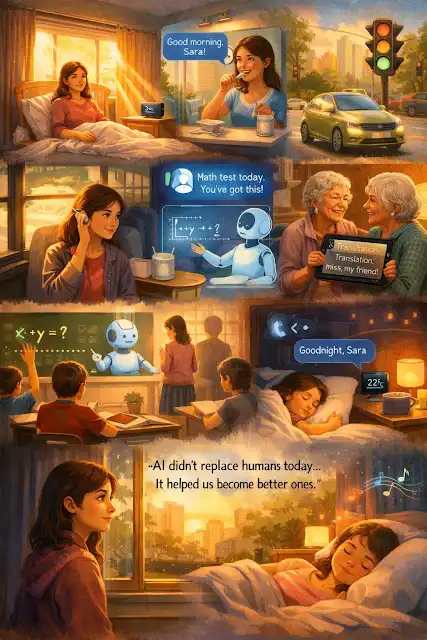
    Every morning, Sara wakes up before her alarm rings.
    Not because she hears a sound—but because her AI assistant gently opens the curtains when it senses the sunlight.
    While brushing her teeth, AI reads her daily schedule.
    “Math test today. Don’t worry—you practiced well,” it says, almost like a friend.
    On the way to school, traffic lights adjust automatically, saving time and fuel.
    In class, Sara asks a question she feels shy to ask aloud. AI explains it simply, using examples she understands. Learning feels less scary now.
    At home, her grandmother uses AI to translate a voice message from her old friend abroad. They smile, realizing distance no longer feels so far.
    At night, AI reminds Sara to rest.
    It turns off the lights, lowers the room temperature, and plays soft music.
    Sara thinks,
    “AI didn’t replace humans today.
    It helped us become better ones.”
    AI isn’t the future anymore.
    It’s quietly living with us—every single day.
    Here are some hashtags for #AiInOurDailyLife:
    #AIinDailyLife #ArtificialIntelligence #DailyLife
    Teacher Training book Day 24,Task Story post: Ai in our Daiy Life in Our Daily Life — A Short Unique Story Every morning, Sara wakes up before her alarm rings. Not because she hears a sound—but because her AI assistant gently opens the curtains when it senses the sunlight. While brushing her teeth, AI reads her daily schedule. “Math test today. Don’t worry—you practiced well,” it says, almost like a friend. On the way to school, traffic lights adjust automatically, saving time and fuel. In class, Sara asks a question she feels shy to ask aloud. AI explains it simply, using examples she understands. Learning feels less scary now. At home, her grandmother uses AI to translate a voice message from her old friend abroad. They smile, realizing distance no longer feels so far. At night, AI reminds Sara to rest. It turns off the lights, lowers the room temperature, and plays soft music. Sara thinks, “AI didn’t replace humans today. It helped us become better ones.” AI isn’t the future anymore. It’s quietly living with us—every single day. 🌱 Here are some hashtags for #AiInOurDailyLife: #AIinDailyLife #ArtificialIntelligence #DailyLife
    0 Yorumlar 0 hisse senetleri 308 Views
  • 𝐃𝐚𝐲 𝟎𝟐 | 𝐓𝐀𝐒𝐊: 𝐏𝐨𝐬𝐭 𝐰𝐢𝐭𝐡 𝐂𝐡𝐚𝐭𝐆𝐏𝐓
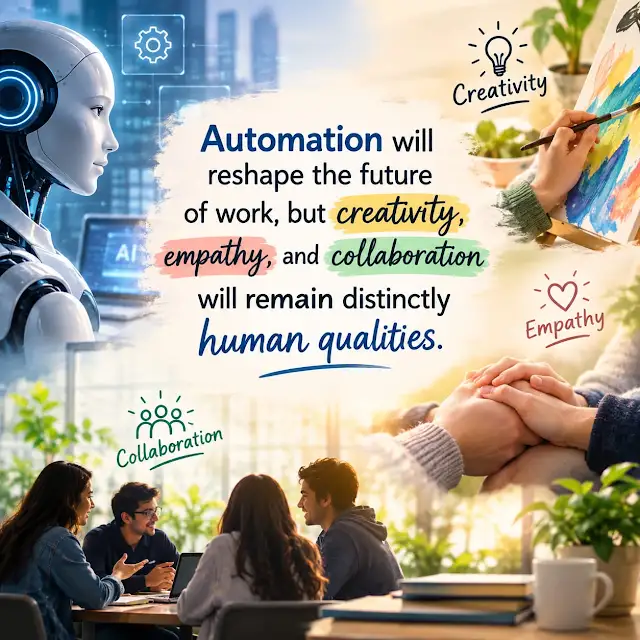
    Automation is transforming the way we work, creating new opportunities while reshaping traditional roles. However, human qualities such as creativity, empathy, critical thinking, and collaboration remain essential.
    The future of work will not simply be about humans competing with technology—it will be about humans using technology effectively while strengthening the uniquely human skills that drive innovation and meaningful connections.
    Embracing technology while developing our human potential will help us become more adaptable, creative, and future-ready.
    #RAITI #Day02 #PostWithChatGPT #FutureOfWork #Automation #Creativity #Empathy #Collaboration #Innovation #FutureReady
    𝐃𝐚𝐲 𝟎𝟐 | 𝐓𝐀𝐒𝐊: 𝐏𝐨𝐬𝐭 𝐰𝐢𝐭𝐡 𝐂𝐡𝐚𝐭𝐆𝐏𝐓 Automation is transforming the way we work, creating new opportunities while reshaping traditional roles. However, human qualities such as creativity, empathy, critical thinking, and collaboration remain essential. The future of work will not simply be about humans competing with technology—it will be about humans using technology effectively while strengthening the uniquely human skills that drive innovation and meaningful connections. 🤖💡🤝 Embracing technology while developing our human potential will help us become more adaptable, creative, and future-ready. #RAITI #Day02 #PostWithChatGPT #FutureOfWork #Automation #Creativity #Empathy #Collaboration #Innovation #FutureReady
    0 Yorumlar 0 hisse senetleri 171 Views
  • #rsisb
    Roll no.247
    Story post . 7
    Foundation level

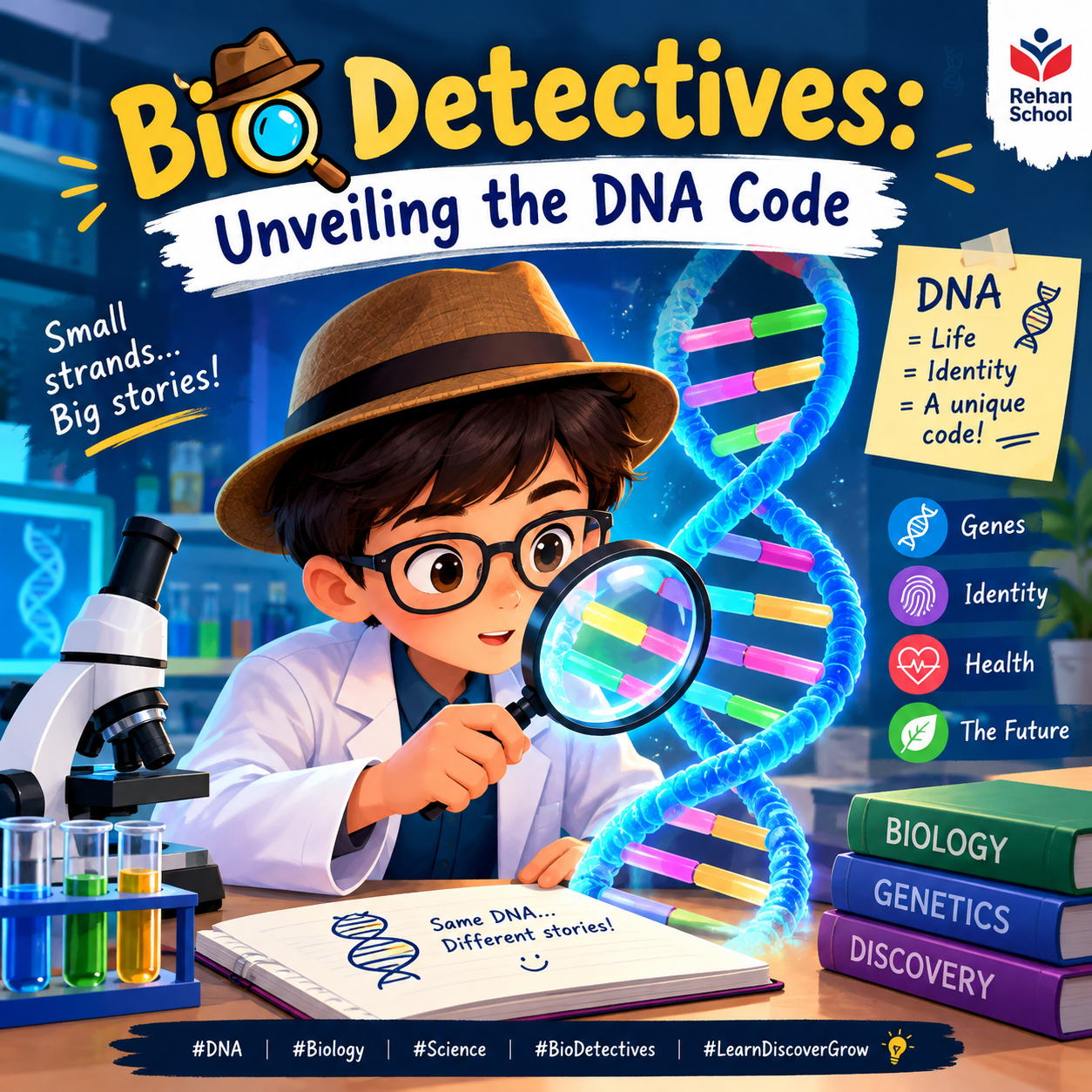
    # Bio Detectives: Unveiling the DNA Code

    **Welcome to the Amazing World of Biology!**

    Have you ever wondered what makes every living thing unique? Why do we have different eye colors, hair types, facial features, and other characteristics? Why do children sometimes look like their parents? ‍‍‍ The answers lie inside one of the most fascinating molecules in the world: **DNA!**

    ‍ Welcome to **“Bio Detectives: Unveiling the DNA Code,”** an exciting scientific adventure where curiosity meets discovery! In this story, we become young biology detectives, exploring the hidden instructions that help living organisms grow, develop, and function.

    **What Is DNA?**

    DNA stands for *Deoxyribonucleic Acid*. It carries genetic information used by living organisms. Think of DNA as a biological instruction manual containing information that helps cells perform their jobs. DNA is found in the cells of almost all living organisms, including humans, animals, and plants.

    **The Secret Code of Life**

    DNA has a famous double-helix structure that looks like a twisted ladder! Its four chemical bases are called adenine (A), thymine (T), cytosine (C), and guanine (G). These bases pair in a special way: A pairs with T, while C pairs with G. Their sequence helps store genetic information. Isn't nature amazing?

    ‍ **Become a Bio Detective!**

    Imagine receiving a mysterious science case! Your mission is to investigate DNA, discover how genes work, and understand how genetic information passes from parents to their children. Along the way, you will explore chromosomes, inherited characteristics, and the incredible science of genetics.

    **Why Is DNA Important?**

    DNA helps scientists understand living things and how characteristics are inherited. Researchers study DNA to learn about evolution, biodiversity, agriculture, and many areas of medicine. By understanding genetics, we can discover more about the natural world and appreciate the incredible complexity of life!

    **Learning Through Curiosity**

    Science is not just about memorizing facts from books. It is about asking questions, observing carefully, testing ideas, and discovering new possibilities! Every great scientist starts with curiosity, and every new discovery begins with a question. Never stop exploring, learning, and thinking like a scientist! ‍

    **Our Mission:**
    Discover what DNA is and why it matters.
    Explore the double-helix structure.
    Learn about genes and chromosomes.
    Understand how characteristics can be inherited. ‍‍‍
    Develop curiosity and a love for biology.
    Become a confident young science explorer!

    **Remember:** The smallest details of life can reveal some of the biggest scientific mysteries. Every cell has a story, every gene carries information, and DNA helps us unlock the fascinating secrets of living organisms!

    **Question for Everyone:** If you could investigate one mystery about DNA, genetics, or the human body, what would you choose? Share your answer in the comments!

    Like, share, and follow for more exciting educational stories, amazing scientific discoveries, and fun learning adventures!

    **Bio Detectives: Unveiling the DNA Code — Discover the science hidden within life!**

    #BioDetectives #UnveilingTheDNACode #DNA #Biology #Genetics #Science #ScienceExploration #DNAResearch #DoubleHelix #Genes #Chromosomes #HumanBiology #LifeScience #BiologyForKids #YoungScientists #ScienceEducation #STEM #STEMEducation #LearnWithFun #EducationalContent #ScienceFacts #DiscoverScience #Curiosity #FutureScientists #KnowledgeIsPower #LearningJourney #ExploreTheWorld #CreativeLearning #SchoolProject #ScienceAdventure
    #rsisb Roll no.247 Story post . 7 Foundation level # 🧬🔍 Bio Detectives: Unveiling the DNA Code 🧪🧬 🌟🔬 **Welcome to the Amazing World of Biology!** 🔬🌟 Have you ever wondered what makes every living thing unique? 🤔🌱 Why do we have different eye colors, hair types, facial features, and other characteristics? Why do children sometimes look like their parents? 👨‍👩‍👧‍👦 The answers lie inside one of the most fascinating molecules in the world: **DNA!** 🧬✨ 🕵️‍♂️🔎 Welcome to **“Bio Detectives: Unveiling the DNA Code,”** an exciting scientific adventure where curiosity meets discovery! In this story, we become young biology detectives, exploring the hidden instructions that help living organisms grow, develop, and function. 🌍🌿 🧬 **What Is DNA?** DNA stands for *Deoxyribonucleic Acid*. It carries genetic information used by living organisms. Think of DNA as a biological instruction manual containing information that helps cells perform their jobs. 📖🔬 DNA is found in the cells of almost all living organisms, including humans, animals, and plants. 🌳🐈👨 🔍 **The Secret Code of Life** DNA has a famous double-helix structure that looks like a twisted ladder! 🪜🧬 Its four chemical bases are called adenine (A), thymine (T), cytosine (C), and guanine (G). These bases pair in a special way: A pairs with T, while C pairs with G. Their sequence helps store genetic information. Isn't nature amazing? 🤩🔬 🕵️‍♀️ **Become a Bio Detective!** Imagine receiving a mysterious science case! 🗂️🔎 Your mission is to investigate DNA, discover how genes work, and understand how genetic information passes from parents to their children. Along the way, you will explore chromosomes, inherited characteristics, and the incredible science of genetics. 🧬🧠 🌱 **Why Is DNA Important?** DNA helps scientists understand living things and how characteristics are inherited. Researchers study DNA to learn about evolution, biodiversity, agriculture, and many areas of medicine. 🌍🌾🔬 By understanding genetics, we can discover more about the natural world and appreciate the incredible complexity of life! 💡 **Learning Through Curiosity** Science is not just about memorizing facts from books. 📚 It is about asking questions, observing carefully, testing ideas, and discovering new possibilities! 🚀 Every great scientist starts with curiosity, and every new discovery begins with a question. Never stop exploring, learning, and thinking like a scientist! 🧑‍🔬✨ 🎯 **Our Mission:** ✅ Discover what DNA is and why it matters. 🧬 ✅ Explore the double-helix structure. 🔬 ✅ Learn about genes and chromosomes. 🧪 ✅ Understand how characteristics can be inherited. 👨‍👩‍👧‍👦 ✅ Develop curiosity and a love for biology. 🌱 ✅ Become a confident young science explorer! 🚀 🌟 **Remember:** The smallest details of life can reveal some of the biggest scientific mysteries. Every cell has a story, every gene carries information, and DNA helps us unlock the fascinating secrets of living organisms! 🧬💚 💬 **Question for Everyone:** If you could investigate one mystery about DNA, genetics, or the human body, what would you choose? Share your answer in the comments! 👇💭 ❤️ Like, share, and follow for more exciting educational stories, amazing scientific discoveries, and fun learning adventures! 📚🔬🌍 🧬🔍 **Bio Detectives: Unveiling the DNA Code — Discover the science hidden within life!** 🔍🧬 #BioDetectives #UnveilingTheDNACode #DNA #Biology #Genetics #Science #ScienceExploration #DNAResearch #DoubleHelix #Genes #Chromosomes #HumanBiology #LifeScience #BiologyForKids #YoungScientists #ScienceEducation #STEM #STEMEducation #LearnWithFun #EducationalContent #ScienceFacts #DiscoverScience #Curiosity #FutureScientists #KnowledgeIsPower #LearningJourney #ExploreTheWorld #CreativeLearning #SchoolProject #ScienceAdventure 🧬🔬🧪🌱🌍📚🚀✨

    0 Yorumlar 0 hisse senetleri 249 Views
  • Mohsin RS F8
    Story post NO:17
    roll NO:13
    Class: Foundation Level
    Made by Me

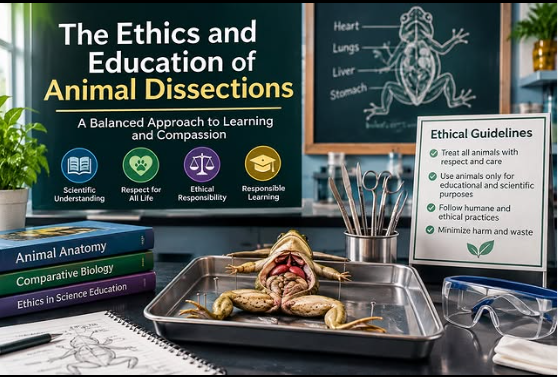
    The Ethics and Education of Animal Dissections

    Animal dissections have been used in science education for many years as a way to help students understand anatomy, biological structures, and how different body systems work together. By studying organisms directly, students can connect what they read in textbooks with real biological structures. Dissections can make lessons more meaningful by allowing learners to observe organs, tissues, and their relationships in a practical setting.

    However, animal dissection is not only a scientific or educational topic; it also raises important ethical questions. Animals are living beings, and their use in education should always be approached with respect, care, and responsibility. Students and teachers should understand why a specimen is being used and ensure that the activity has a genuine educational purpose. Ethical education encourages students to think about both the value of scientific knowledge and the responsibility humans have toward other living organisms.

    A responsible approach to dissection includes following appropriate safety and ethical guidelines. Specimens should be obtained through approved and humane sources, handled carefully, and used only when they provide meaningful educational value. Teachers should also explain the purpose of the activity before beginning and create an environment where students can ask questions or express concerns respectfully.

    Education is ultimately about developing knowledge as well as character. Learning anatomy through dissection can teach students about the complexity of life, but it can also encourage appreciation for living organisms. When carried out responsibly, the experience can promote scientific curiosity, careful observation, critical thinking, and respect for life.

    Modern education can also consider alternatives such as detailed anatomical models, digital simulations, videos, diagrams, and virtual dissection programs. These methods can provide valuable learning experiences while reducing the need for physical specimens in some situations.
    Mohsin RS F8 🎓✨ Story post NO:17 roll NO:13 Class: Foundation Level 📚 Made by Me 💻🚀 The Ethics and Education of Animal Dissections Animal dissections have been used in science education for many years as a way to help students understand anatomy, biological structures, and how different body systems work together. By studying organisms directly, students can connect what they read in textbooks with real biological structures. Dissections can make lessons more meaningful by allowing learners to observe organs, tissues, and their relationships in a practical setting. However, animal dissection is not only a scientific or educational topic; it also raises important ethical questions. Animals are living beings, and their use in education should always be approached with respect, care, and responsibility. Students and teachers should understand why a specimen is being used and ensure that the activity has a genuine educational purpose. Ethical education encourages students to think about both the value of scientific knowledge and the responsibility humans have toward other living organisms. A responsible approach to dissection includes following appropriate safety and ethical guidelines. Specimens should be obtained through approved and humane sources, handled carefully, and used only when they provide meaningful educational value. Teachers should also explain the purpose of the activity before beginning and create an environment where students can ask questions or express concerns respectfully. Education is ultimately about developing knowledge as well as character. Learning anatomy through dissection can teach students about the complexity of life, but it can also encourage appreciation for living organisms. When carried out responsibly, the experience can promote scientific curiosity, careful observation, critical thinking, and respect for life. Modern education can also consider alternatives such as detailed anatomical models, digital simulations, videos, diagrams, and virtual dissection programs. These methods can provide valuable learning experiences while reducing the need for physical specimens in some situations.
    0 Yorumlar 0 hisse senetleri 482 Views
  • RSIF8
    ROLL NO 77
    SHOURT DOCUMENTARY NO 9
    SHOURT DOCUMENTARY TOPIC "Decoding 'Cyber': Origins in Norbert Wiener's Cybernetics".

    **Decoding “Cyber”: Origins in Norbert Wiener’s Cybernetics**

    What does the word **“Cyber”** really mean?
    In this fascinating journey, we explore **Norbert Wiener’s Cybernetics**—the study of communication, control, and feedback in machines, animals, and humans.

    From the early ideas of cybernetics to today’s **Artificial Intelligence, robotics, automation, and cybersecurity**, Wiener’s work helped shape the digital world we live in.

    Discover how one powerful idea became part of the language of modern technology!

    #Cyber #Cybernetics #NorbertWiener #ArtificialIntelligence #AI #Technology #ComputerScience #Robotics #Innovation #DigitalWorld #TechEducation #Learning #FutureOfTechnology
    RSIF8 ROLL NO 77 SHOURT DOCUMENTARY NO 9 SHOURT DOCUMENTARY TOPIC "Decoding 'Cyber': Origins in Norbert Wiener's Cybernetics". 🤖🔐 **Decoding “Cyber”: Origins in Norbert Wiener’s Cybernetics** What does the word **“Cyber”** really mean? 🌐💡 In this fascinating journey, we explore **Norbert Wiener’s Cybernetics**—the study of communication, control, and feedback in machines, animals, and humans. 🧠⚙️ From the early ideas of cybernetics to today’s **Artificial Intelligence, robotics, automation, and cybersecurity**, Wiener’s work helped shape the digital world we live in. 🚀💻 Discover how one powerful idea became part of the language of modern technology! 🌍✨ #Cyber #Cybernetics #NorbertWiener #ArtificialIntelligence #AI #Technology #ComputerScience #Robotics #Innovation #DigitalWorld #TechEducation #Learning #FutureOfTechnology 🤖🧠💻🚀
    0 Yorumlar 0 hisse senetleri 387 Views 1
  • Mohsin RS F8
    Story post NO:15
    roll NO:13
    Class: Foundation Level
    Made by Me

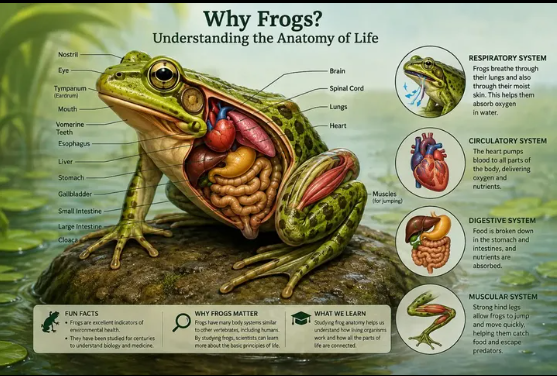
    Frogs may be small animals, but their bodies contain an amazing combination of organs, systems, and adaptations that make them excellent subjects for understanding the basic principles of life. Studying frog anatomy gives us an opportunity to see how different parts of a living organism work together to support movement, breathing, digestion, communication, growth, and survival. Their anatomy also shares important features with many other vertebrates, making frogs useful for learning fundamental concepts in biology.
    One of the most interesting features of frogs is their respiratory system. Unlike humans, frogs can exchange gases not only through their lungs but also through their moist skin. This special adaptation allows them to survive in aquatic and terrestrial environments. Their circulatory system also plays an important role in maintaining life by transporting oxygen and nutrients throughout the body.
    Frogs have powerful hind legs that are specially adapted for jumping and swimming. Their large eyes provide a wide field of vision and help them detect movement, while their ears allow them to hear sounds and communicate. Inside the body, organs such as the heart, lungs, liver, stomach, and intestines each perform important functions. These organs do not work independently; instead, they form interconnected systems that keep the frog alive and functioning.
    The frog's life cycle is another fascinating example of biological development. It begins with eggs laid in water, followed by the tadpole stage. Tadpoles gradually develop legs and lungs as their bodies change, eventually becoming froglets and then adult frogs. This transformation demonstrates how living organisms can undergo remarkable changes as they grow and mature.
    Frogs are also important indicators of environmental health. Because they are sensitive to changes in their surroundings, changes in frog populations can provide clues about the condition of an ecosystem. They also play an important role in controlling insect populations and maintaining food chains.
    Overall, “Why Frogs? Understanding the Anat
    Mohsin RS F8 🎓✨ Story post NO:15 roll NO:13 Class: Foundation Level 📚 Made by Me 💻🚀 Frogs may be small animals, but their bodies contain an amazing combination of organs, systems, and adaptations that make them excellent subjects for understanding the basic principles of life. Studying frog anatomy gives us an opportunity to see how different parts of a living organism work together to support movement, breathing, digestion, communication, growth, and survival. Their anatomy also shares important features with many other vertebrates, making frogs useful for learning fundamental concepts in biology. One of the most interesting features of frogs is their respiratory system. Unlike humans, frogs can exchange gases not only through their lungs but also through their moist skin. This special adaptation allows them to survive in aquatic and terrestrial environments. Their circulatory system also plays an important role in maintaining life by transporting oxygen and nutrients throughout the body. Frogs have powerful hind legs that are specially adapted for jumping and swimming. Their large eyes provide a wide field of vision and help them detect movement, while their ears allow them to hear sounds and communicate. Inside the body, organs such as the heart, lungs, liver, stomach, and intestines each perform important functions. These organs do not work independently; instead, they form interconnected systems that keep the frog alive and functioning. The frog's life cycle is another fascinating example of biological development. It begins with eggs laid in water, followed by the tadpole stage. Tadpoles gradually develop legs and lungs as their bodies change, eventually becoming froglets and then adult frogs. This transformation demonstrates how living organisms can undergo remarkable changes as they grow and mature. Frogs are also important indicators of environmental health. Because they are sensitive to changes in their surroundings, changes in frog populations can provide clues about the condition of an ecosystem. They also play an important role in controlling insect populations and maintaining food chains. Overall, “Why Frogs? Understanding the Anat
    0 Yorumlar 0 hisse senetleri 384 Views
  • RSIF8
    Roll NO:9
    SHORT DOCUMENTARY:2
    Topic:**The Evolution of "Robot": From Czech Play to Tech Terminology**

    This short documentary explores the fascinating history of the word **“Robot”** and how it became an important part of modern technology. The word “Robot” was first introduced in the 1920 Czech play *R.U.R. (Rossum’s Universal Robots)* by writer Karel Čapek. It originally referred to artificial workers created to serve humans.

    Over time, the idea of robots moved from literature and theatre into real life. With the development of science, engineering, computers, and artificial intelligence, robots became machines capable of performing different tasks. Today, robots are used in factories, hospitals, space exploration, homes, and many other fields.

    This documentary shows how a simple word from a Czech play became a powerful term that represents one of the most exciting areas of modern technology.
    RSIF8 Roll NO:9 SHORT DOCUMENTARY:2 Topic:**The Evolution of "Robot": From Czech Play to Tech Terminology** This short documentary explores the fascinating history of the word **“Robot”** and how it became an important part of modern technology. The word “Robot” was first introduced in the 1920 Czech play *R.U.R. (Rossum’s Universal Robots)* by writer Karel Čapek. It originally referred to artificial workers created to serve humans. Over time, the idea of robots moved from literature and theatre into real life. With the development of science, engineering, computers, and artificial intelligence, robots became machines capable of performing different tasks. Today, robots are used in factories, hospitals, space exploration, homes, and many other fields. This documentary shows how a simple word from a Czech play became a powerful term that represents one of the most exciting areas of modern technology.
    0 Yorumlar 0 hisse senetleri 391 Views 3
  • RSIF8
    Roll no:85
    Task no:55
    Task topic: Winds and Environment: The Impact of Change
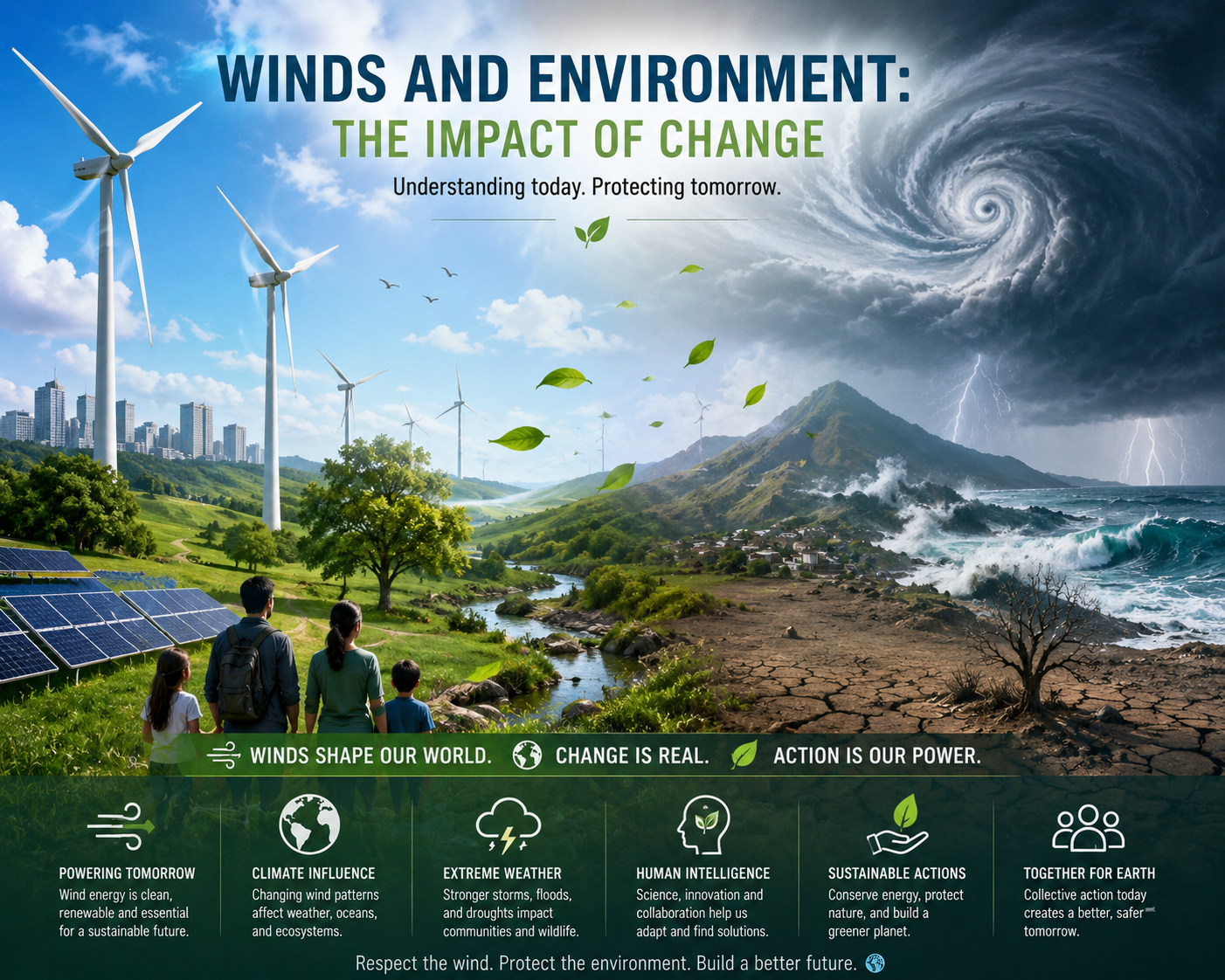
    The wind is one of nature's most powerful forces, shaping landscapes, influencing weather, and supporting life across the planet. It carries moisture that nourishes forests and farmland, spreads seeds that help plants grow, and drives ocean currents that regulate Earth's climate. For centuries, humans have relied on the wind for travel, agriculture, and renewable energy. Understanding how wind interacts with the environment helps us appreciate its essential role in maintaining the balance of nature.

    As the global climate changes, wind patterns are also shifting in many regions. Rising temperatures, changing air pressure, and altered weather systems can influence the strength, direction, and frequency of winds. These changes may contribute to more intense storms in some areas, prolonged droughts in others, and increased challenges for farming, transportation, and wildlife. Scientists continue to study these complex interactions to better predict future environmental conditions and help communities prepare for changing climates.

    Human intelligence plays a vital role in addressing environmental challenges. Through scientific research, technological innovation, and international cooperation, people are developing cleaner energy sources, improving weather forecasting, and creating sustainable practices that reduce environmental impact. Wind energy, in particular, has become one of the fastest-growing renewable energy sources, offering a cleaner alternative to fossil fuels while helping reduce greenhouse gas emissions.

    Protecting the environment requires both knowledge and action. Every individual can contribute by conserving energy, planting trees, reducing waste, and supporting sustainable solutions. By combining human intelligence with respect for nature, we can better understand the changing relationship between winds and the environment and work toward a healthier, more resilient future for generations to come.
    RSIF8 Roll no:85 Task no:55 Task topic: Winds and Environment: The Impact of Change The wind is one of nature's most powerful forces, shaping landscapes, influencing weather, and supporting life across the planet. It carries moisture that nourishes forests and farmland, spreads seeds that help plants grow, and drives ocean currents that regulate Earth's climate. For centuries, humans have relied on the wind for travel, agriculture, and renewable energy. Understanding how wind interacts with the environment helps us appreciate its essential role in maintaining the balance of nature. As the global climate changes, wind patterns are also shifting in many regions. Rising temperatures, changing air pressure, and altered weather systems can influence the strength, direction, and frequency of winds. These changes may contribute to more intense storms in some areas, prolonged droughts in others, and increased challenges for farming, transportation, and wildlife. Scientists continue to study these complex interactions to better predict future environmental conditions and help communities prepare for changing climates. Human intelligence plays a vital role in addressing environmental challenges. Through scientific research, technological innovation, and international cooperation, people are developing cleaner energy sources, improving weather forecasting, and creating sustainable practices that reduce environmental impact. Wind energy, in particular, has become one of the fastest-growing renewable energy sources, offering a cleaner alternative to fossil fuels while helping reduce greenhouse gas emissions. Protecting the environment requires both knowledge and action. Every individual can contribute by conserving energy, planting trees, reducing waste, and supporting sustainable solutions. By combining human intelligence with respect for nature, we can better understand the changing relationship between winds and the environment and work toward a healthier, more resilient future for generations to come.
    0 Yorumlar 0 hisse senetleri 1146 Views
  • RSISB
    Roll No 57
    Earning Task
    Task No 1

    Explaining AI to My Parents ‍

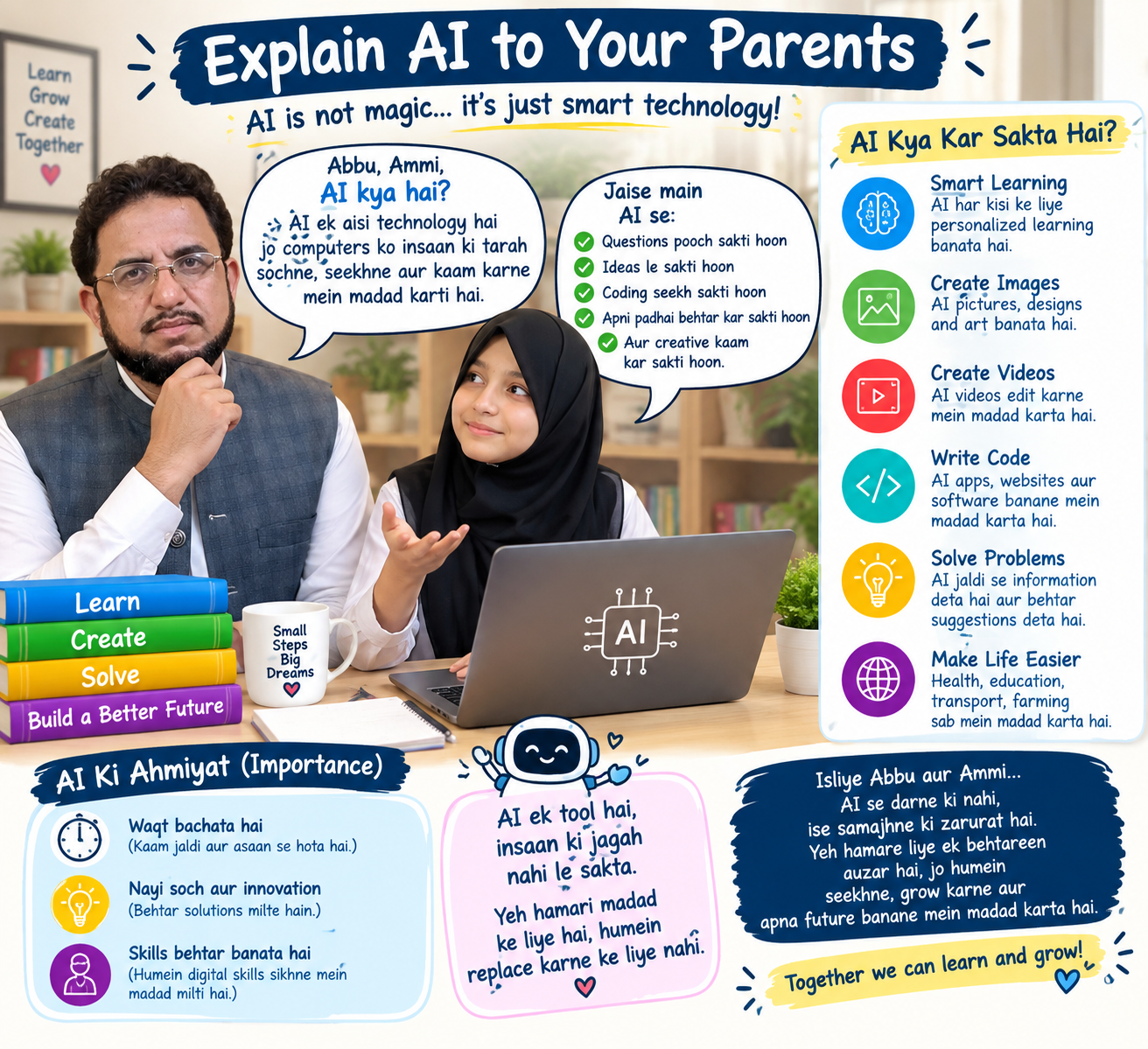
    Today, I explained to my parents what **Artificial Intelligence (AI)** is and why it is important in our daily lives. AI is a smart technology that helps computers learn, understand information, solve problems, and support people in different tasks. I explained how AI can help with **education, coding, creativity, communication, healthcare, business, and everyday activities**.

    I also shared that AI is not here to replace humans—it is a **powerful tool that can help us learn faster, work smarter, become more creative, and prepare for the future**. By understanding AI today, we can use it responsibly and make better opportunities for tomorrow.

    ### Hashtags
    #ArtificialIntelligence #AI #AIForEveryone #LearnAI #FutureSkills #DigitalSkills #Technology #AIEducation #SmartLearning #FutureOfTechnology #Innovation #ParentsAndChildren #LearningTogether #DigitalFuture
    RSISB Roll No 57 Earning Task Task No 1 🤖 Explaining AI to My Parents 👨‍👧 Today, I explained to my parents what **Artificial Intelligence (AI)** is and why it is important in our daily lives. 🌟 AI is a smart technology that helps computers learn, understand information, solve problems, and support people in different tasks. I explained how AI can help with **education, coding, creativity, communication, healthcare, business, and everyday activities**. 💻📚✨ I also shared that AI is not here to replace humans—it is a **powerful tool that can help us learn faster, work smarter, become more creative, and prepare for the future**. 🚀🌍 By understanding AI today, we can use it responsibly and make better opportunities for tomorrow. 💡❤️ ### 🔖 Hashtags #ArtificialIntelligence #AI #AIForEveryone #LearnAI #FutureSkills #DigitalSkills #Technology #AIEducation #SmartLearning #FutureOfTechnology #Innovation #ParentsAndChildren #LearningTogether #DigitalFuture 🤖💻📚🚀
    0 Yorumlar 0 hisse senetleri 773 Views
  • #rsisb
    Roll no.239
    Miss Zoya no.6
    Foundation Level

    Artificial Intelligence (AI) is a powerful technology that enables computers and machines to perform tasks that usually require human intelligence. AI can learn from data, recognize patterns, understand language, answer questions, solve problems, and help people make decisions.

    AI is now used in many areas, including **education, healthcare, science, smartphones, robotics, transportation, business, and entertainment**. Students can use AI to learn new topics, practice skills, generate ideas, and understand difficult concepts.

    The 100 AI questions explore important topics such as **how AI works, Machine Learning, robots, AI in education, AI and humans, healthcare, safety, ethics, and the future of technology**.

    AI has many benefits, but it can also make mistakes and should be used responsibly. We should always check important information and use AI as a helpful tool rather than depending on it completely.

    **Key Message:** AI can help us learn, create, and solve problems. By using it wisely, safely, and responsibly, we can make technology useful for a better future.

    #AI #ArtificialIntelligence #Technology #Education #MachineLearning #Robotics #Innovation #FutureOfTechnology #Students #DigitalLearning

    #rsisb Roll no.239 Miss Zoya no.6 Foundation Level Artificial Intelligence (AI) is a powerful technology that enables computers and machines to perform tasks that usually require human intelligence. AI can learn from data, recognize patterns, understand language, answer questions, solve problems, and help people make decisions. AI is now used in many areas, including **education, healthcare, science, smartphones, robotics, transportation, business, and entertainment**. Students can use AI to learn new topics, practice skills, generate ideas, and understand difficult concepts. The 100 AI questions explore important topics such as **how AI works, Machine Learning, robots, AI in education, AI and humans, healthcare, safety, ethics, and the future of technology**. AI has many benefits, but it can also make mistakes and should be used responsibly. We should always check important information and use AI as a helpful tool rather than depending on it completely. 🌟 **Key Message:** AI can help us learn, create, and solve problems. By using it wisely, safely, and responsibly, we can make technology useful for a better future. #AI #ArtificialIntelligence #Technology #Education #MachineLearning #Robotics #Innovation #FutureOfTechnology #Students #DigitalLearning 🤖💻🌍✨
    0 Yorumlar 0 hisse senetleri 690 Views 1
Arama Sonuçları