Tabdeeli Kiyon Nahin Aye
Dear Honorable PM Imran Khan,
Thank you very much for what you intend to do for Pakistan. Tehreek-e-Insaf resonated across all Pakistanis, and I am one of the big fans of your mission and a contributor to PTI.
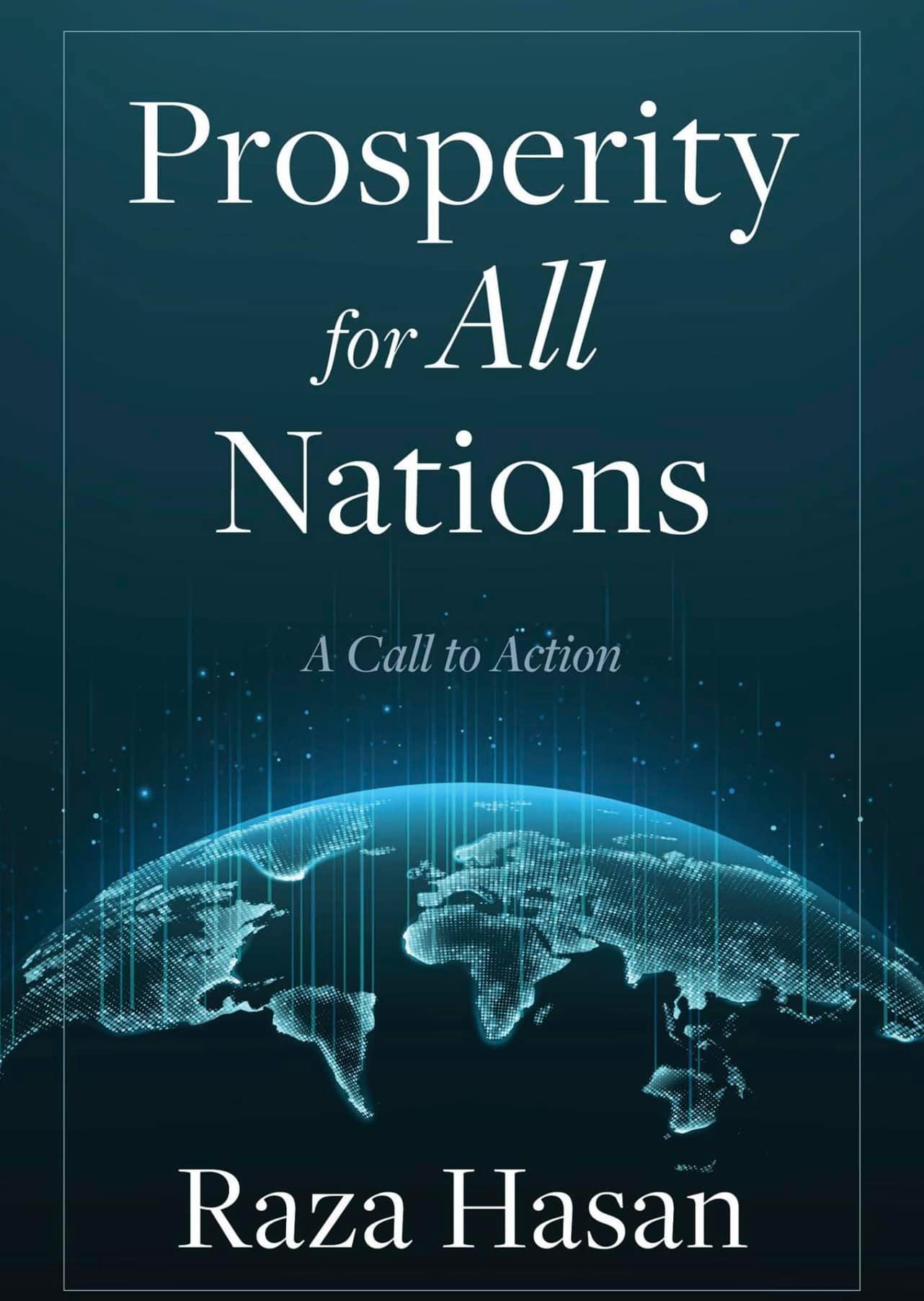
I am the author of the book, Prosperity for All Nations. A copy was overnighted to you on Dec 8th by TCS, and it is also available on Amazon.com in multiple formats, including Audiobook.
The topic discussed in this letter based on my book is: Tabdeeli kiyon nahin aye aur tabdeeli kaisey aye gi.
Synopsis
When a child is born, we are all equal. So, what is the reason for the poverty of some nations and the prosperity of others?
The fundamental requirement for prosperity is accountability and justice. Dr. Brian Stevens – "The opposite of poverty is not wealth. It is justice." Tehreek-e-Insaf inspired us that Pakistan has a leader who understands the root cause of our problems for the first time.
Injustice manifests as corruption. Injustice and corruption are caused by abuse of official power. Why do injustice and corruption occur? Corruption and injustice happen due to the concentration of power, enabling the powerful to violate the law and get away with it.
"Power corrupts, and absolute power corrupts absolutely."
Big Question: What does it take to reduce the concentration of power?
The purpose of democracy is to empower the people to control their government. A distributed governance structure is the most effective solution that enables the local people to have a say in the services provided to them by their government. It is the only way prosperous nations can fight the concentration of power. Notable examples are the U.S. and Switzerland. A structure where no single official can harm an individual. Thus, all governing authorities should have checks imposed by the collective decision-making of locally elected representatives. Islam also teaches decision-making by Mushwarat. For example, in Switzerland, where the president is in a ceremonial position for only one year, the country is ruled by a seven-member Federal Council.
Three government entities directly administer justice. Number one is the police to catch the criminals. The second is the judiciary to decide punishments for wrongdoers, and the third is the taxation agency for collecting and distributing taxes. Money is power; it must be distributed equitably for a just society.
Lets compare Pakistan with the United States.
Suppose a police officer in Pakistan arrests a violator; the most likely transaction is a bribe. He gets calls from powerful officials and politicians to release the perpetrator if he arrests someone. If the police officer tries to enforce the law, they may be punished by the powerful and transferred to an undesirable remote location.
Enforcement of the law is not rewarded; instead, police officers benefit by pleasing their superiors by sharing the collected bribes and are thus forced to engage in corruption. The police do not have independent powers to enforce the laws because a vertically integrated kleptocracy appoints them.
On the other hand, in the U.S., large metropolitan areas are divided into small cities where independent city councils administer the policing and other government services for the citizens living in each city. For example, the Minneapolis-Saint Pauls metroplex of 3 million people is divided into 218 cities. Eagan, Minnesota, is one such city with sixty-six thousand. The police serving residents of Eagan are held accountable by the local people. How? By voting to elect the mayor and the city council members responsible for managing the police.
Even the mayor of this small city does not have autocratic powers; a vote approves all decisions by the mayor and the four city council members. Each city council member represents about one-fourth of the citizens.
So, this is the structural difference between police in the U.S. vs. Pakistan. The local population enforces accountability because they control their funding and their authority. The government of the city of Eagan has no connection to Washington, D.C.
Similar structural weaknesses permeate the judiciary in Pakistan vs. the U.S.
As part of the distributed structure in the U.S., both the federal and state governments operate court systems. The state courts handle the majority of the cases concerning individuals. Federal courts only decide specific cases such as the constitutionality of a law or matters that span across states.
Except for seven relatively small states, judges are directly elected. Even in states where judges are not elected, they are confirmed by elected representatives. To remove the concentration of power, judges do not make judgments; most trials are decided by a jury representing a cross-section of the community.
The court structure varies by state. For illustration, in Minnesota, with a population of 5.6 million, District Courts are located in each of the 87 counties. All judges are elected for a six-year term by the people they serve, and thus, the local population holds these judges accountable through elections.
Judges in Pakistan can be bribed or coerced because they have autocratic powers, and the government controls their job rather than the local citizens.
The third crucial structural difference is the control of taxes. For example, in the US., taxes are collected locally by the city, county, or state to serve the local population. Federal tax only funds 1- Health care for seniors and welfare recipients, 2- Social Security payments to the retirees, 3- Defense, 4- Welfare programs, and 5- Interest on debts.
In third-world countries like Pakistan, either the central government collects most of the taxes or controls how taxes are distributed. That is why cities like Lahore and Islamabad have tree-lined boulevards and flyovers, but the poor people in villages lack access to water, electricity, and roads. On the other hand, the public services in prosperous countries are the same across the whole nation.
These governance checks with localized collective decision-making are implemented at every level in the U.S. Locally elected school board members govern schools. Or there are park boards for managing parks and recreation in a city.
Similarly, the U.S. Constitution establishes three separate but co-equal branches of government at the federal level: the legislative branch, which makes the laws; the executive branch enforces the law, and the judicial branch interprets the law. This distributed structure prevents one branch of the federal government from becoming too powerful and creates checks and balances on the other branches.
Justice cannot prevail unless structural changes are enforced, and corruption will continue. With injustice and corruption, prosperity would never materialize. The secret of prosperous countries is checks and balances implemented via a distributed structure subservient to the local population.
The U.S. has helped implement a similar distributed government structure after the second world war in Germany, Japan, and South Korea. All these countries have done tremendously well. Coincidently, language, culture, religion, race, and even the continents are different. None of these factors matter for achieving prosperity; what matters is accountability via localized structural checks and balances.
We need to stop blaming people or the leaders. They are playing by the prevailing rules. For example, a persons skin color in a cricket ground does not matter; everybody plays in the same fashion because of identical rules.
Dear PM, Pakistan has to adopt localized checks and balances, holding government employees accountable to serve the residents.
Why did this happen?
Before the creation of Pakistan, governments represented dictators and colonizers, and their goal was to control the population and extract wealth.
The British left, but unfortunately, their system prevailed. New officials moved into their luxurious estates and continued to govern and similarly extract wealth. Even after getting liberated from the British, officials in most liberated colonies like Pakistan still transfer their wealth to the west. The power of the government structure is so dominant that even when the players change, the outcome remains the same.
YOU WILL Fail – the current structure is stacked against your plans. Just like a 100 meters sprinter will not win a marathon, you will not be able to survive in this kleptocratic structure designed to extract wealth. That is why this system worked better for the prior leaders; they knew how to play the game according to the rules imposed by the corrupt structure. We need you to succeed.
Like the 50 states in the U.S. and 26 Cantons in Switzerland, Pakistan has to be divided into 20-30 provinces. We need similar changes to restrict the concentration of power in the judiciary, policing, and taxation by letting the local people directly manage their affairs.
I have a dream to volunteer my services to transform the government in Pakistan to be held accountable by the local population. We have a government of the people, by the people, for the people.
What can we do to make it happen?
We must understand the ills caused by the concentration of power and educate the citizens of this structural flaw. If the citizens stand for this cause, just like Tehreek-e-Insaf, we will see a change because no one can stand against the will of united citizens.
Please allow me to volunteer my services to create a detailed action plan.
Thank you. Pakistan Zindabad.
Raza Hasan
President, ProsperityWeb
Tabdeeli Kiyon Nahin Aye
Dear Honorable PM Imran Khan,
Thank you very much for what you intend to do for Pakistan. Tehreek-e-Insaf resonated across all Pakistanis, and I am one of the big fans of your mission and a contributor to PTI.
I am the author of the book, Prosperity for All Nations. A copy was overnighted to you on Dec 8th by TCS, and it is also available on Amazon.com in multiple formats, including Audiobook.
The topic discussed in this letter based on my book is: Tabdeeli kiyon nahin aye aur tabdeeli kaisey aye gi.
Synopsis
When a child is born, we are all equal. So, what is the reason for the poverty of some nations and the prosperity of others?
The fundamental requirement for prosperity is accountability and justice. Dr. Brian Stevens – "The opposite of poverty is not wealth. It is justice." Tehreek-e-Insaf inspired us that Pakistan has a leader who understands the root cause of our problems for the first time.
Injustice manifests as corruption. Injustice and corruption are caused by abuse of official power. Why do injustice and corruption occur? Corruption and injustice happen due to the concentration of power, enabling the powerful to violate the law and get away with it.
"Power corrupts, and absolute power corrupts absolutely."
Big Question: What does it take to reduce the concentration of power?
The purpose of democracy is to empower the people to control their government. A distributed governance structure is the most effective solution that enables the local people to have a say in the services provided to them by their government. It is the only way prosperous nations can fight the concentration of power. Notable examples are the U.S. and Switzerland. A structure where no single official can harm an individual. Thus, all governing authorities should have checks imposed by the collective decision-making of locally elected representatives. Islam also teaches decision-making by Mushwarat. For example, in Switzerland, where the president is in a ceremonial position for only one year, the country is ruled by a seven-member Federal Council.
Three government entities directly administer justice. Number one is the police to catch the criminals. The second is the judiciary to decide punishments for wrongdoers, and the third is the taxation agency for collecting and distributing taxes. Money is power; it must be distributed equitably for a just society.
Let's compare Pakistan with the United States.
Suppose a police officer in Pakistan arrests a violator; the most likely transaction is a bribe. He gets calls from powerful officials and politicians to release the perpetrator if he arrests someone. If the police officer tries to enforce the law, they may be punished by the powerful and transferred to an undesirable remote location.
Enforcement of the law is not rewarded; instead, police officers benefit by pleasing their superiors by sharing the collected bribes and are thus forced to engage in corruption. The police do not have independent powers to enforce the laws because a vertically integrated kleptocracy appoints them.
On the other hand, in the U.S., large metropolitan areas are divided into small cities where independent city councils administer the policing and other government services for the citizens living in each city. For example, the Minneapolis-Saint Paul's metroplex of 3 million people is divided into 218 cities. Eagan, Minnesota, is one such city with sixty-six thousand. The police serving residents of Eagan are held accountable by the local people. How? By voting to elect the mayor and the city council members responsible for managing the police.
Even the mayor of this small city does not have autocratic powers; a vote approves all decisions by the mayor and the four city council members. Each city council member represents about one-fourth of the citizens.
So, this is the structural difference between police in the U.S. vs. Pakistan. The local population enforces accountability because they control their funding and their authority. The government of the city of Eagan has no connection to Washington, D.C.
Similar structural weaknesses permeate the judiciary in Pakistan vs. the U.S.
As part of the distributed structure in the U.S., both the federal and state governments operate court systems. The state courts handle the majority of the cases concerning individuals. Federal courts only decide specific cases such as the constitutionality of a law or matters that span across states.
Except for seven relatively small states, judges are directly elected. Even in states where judges are not elected, they are confirmed by elected representatives. To remove the concentration of power, judges do not make judgments; most trials are decided by a jury representing a cross-section of the community.
The court structure varies by state. For illustration, in Minnesota, with a population of 5.6 million, District Courts are located in each of the 87 counties. All judges are elected for a six-year term by the people they serve, and thus, the local population holds these judges accountable through elections.
Judges in Pakistan can be bribed or coerced because they have autocratic powers, and the government controls their job rather than the local citizens.
The third crucial structural difference is the control of taxes. For example, in the US., taxes are collected locally by the city, county, or state to serve the local population. Federal tax only funds 1- Health care for seniors and welfare recipients, 2- Social Security payments to the retirees, 3- Defense, 4- Welfare programs, and 5- Interest on debts.
In third-world countries like Pakistan, either the central government collects most of the taxes or controls how taxes are distributed. That is why cities like Lahore and Islamabad have tree-lined boulevards and flyovers, but the poor people in villages lack access to water, electricity, and roads. On the other hand, the public services in prosperous countries are the same across the whole nation.
These governance checks with localized collective decision-making are implemented at every level in the U.S. Locally elected school board members govern schools. Or there are park boards for managing parks and recreation in a city.
Similarly, the U.S. Constitution establishes three separate but co-equal branches of government at the federal level: the legislative branch, which makes the laws; the executive branch enforces the law, and the judicial branch interprets the law. This distributed structure prevents one branch of the federal government from becoming too powerful and creates checks and balances on the other branches.
Justice cannot prevail unless structural changes are enforced, and corruption will continue. With injustice and corruption, prosperity would never materialize. The secret of prosperous countries is checks and balances implemented via a distributed structure subservient to the local population.
The U.S. has helped implement a similar distributed government structure after the second world war in Germany, Japan, and South Korea. All these countries have done tremendously well. Coincidently, language, culture, religion, race, and even the continents are different. None of these factors matter for achieving prosperity; what matters is accountability via localized structural checks and balances.
We need to stop blaming people or the leaders. They are playing by the prevailing rules. For example, a person's skin color in a cricket ground does not matter; everybody plays in the same fashion because of identical rules.
Dear PM, Pakistan has to adopt localized checks and balances, holding government employees accountable to serve the residents.
Why did this happen?
Before the creation of Pakistan, governments represented dictators and colonizers, and their goal was to control the population and extract wealth.
The British left, but unfortunately, their system prevailed. New officials moved into their luxurious estates and continued to govern and similarly extract wealth. Even after getting liberated from the British, officials in most liberated colonies like Pakistan still transfer their wealth to the west. The power of the government structure is so dominant that even when the players change, the outcome remains the same.
YOU WILL Fail – the current structure is stacked against your plans. Just like a 100 meters sprinter will not win a marathon, you will not be able to survive in this kleptocratic structure designed to extract wealth. That is why this system worked better for the prior leaders; they knew how to play the game according to the rules imposed by the corrupt structure. We need you to succeed.
Like the 50 states in the U.S. and 26 Cantons in Switzerland, Pakistan has to be divided into 20-30 provinces. We need similar changes to restrict the concentration of power in the judiciary, policing, and taxation by letting the local people directly manage their affairs.
I have a dream to volunteer my services to transform the government in Pakistan to be held accountable by the local population. We have a government of the people, by the people, for the people.
What can we do to make it happen?
We must understand the ills caused by the concentration of power and educate the citizens of this structural flaw. If the citizens stand for this cause, just like Tehreek-e-Insaf, we will see a change because no one can stand against the will of united citizens.
Please allow me to volunteer my services to create a detailed action plan.
Thank you. Pakistan Zindabad.
Raza Hasan
President, ProsperityWeb