• #rsisb
    Roll no.247
    cava post. 45
    Foundation level

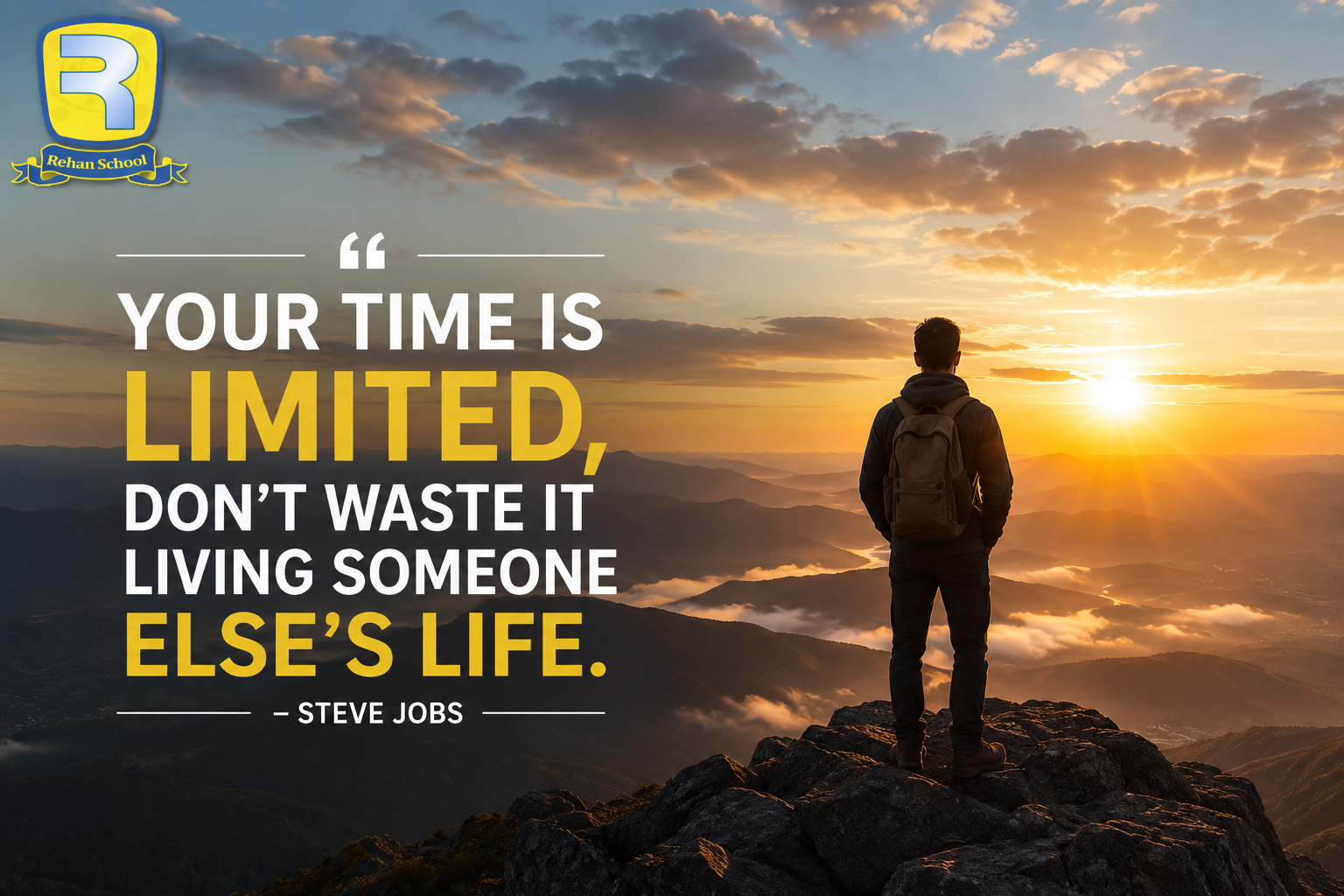
    **“Your time is limited, don’t waste it living someone else’s life.” — Steve Jobs**

    Life is precious, and every moment we receive is something we can never get back. This powerful quote reminds us that our time should be spent pursuing our own dreams, discovering our own path, and becoming the person we truly want to be.

    Sometimes, we become too concerned about what other people think. We compare ourselves with others, follow expectations, or try to live according to someone else’s definition of success. But your journey is **your own**. You have your own talents, dreams, challenges, and opportunities.

    Don’t spend your valuable time trying to impress everyone. Instead, focus on learning, growing, creating, helping others, and making meaningful progress toward your goals. Every small step matters. Every lesson makes you stronger. Every day is another opportunity to move closer to the life you want.

    Remember: **You don’t need to live someone else’s story. Write your own.** Believe in yourself, follow your passions, stay true to your values, and make your time count.

    Your future is being shaped by what you choose to do today. So stop waiting for the “perfect” moment. Start where you are, use what you have, and take that next step.

    **Be yourself. Dream boldly. Work consistently. Make your time meaningful.**

    #SteveJobs #Motivation #InspirationalQuotes #LifeQuotes #MotivationalQuotes #SuccessMindset #SelfImprovement #BelieveInYourself #FollowYourDreams #DreamBig #PositiveThinking #PersonalGrowth #LifeMotivation #Inspiration #Success #Goals #Mindset #NeverGiveUp #KeepGoing #TimeIsPrecious #MakeItCount #BeYourself #StayFocused #MotivationDaily #InspireOthers
    #rsisb Roll no.247 cava post. 45 Foundation level ⏳✨ **“Your time is limited, don’t waste it living someone else’s life.” — Steve Jobs** 🍎💭 Life is precious, and every moment we receive is something we can never get back. ⏰🌍 This powerful quote reminds us that our time should be spent pursuing our own dreams, discovering our own path, and becoming the person we truly want to be. 🌟 Sometimes, we become too concerned about what other people think. We compare ourselves with others, follow expectations, or try to live according to someone else’s definition of success. But your journey is **your own**. ❤️🛤️ You have your own talents, dreams, challenges, and opportunities. Don’t spend your valuable time trying to impress everyone. 🙅‍♂️✨ Instead, focus on learning, growing, creating, helping others, and making meaningful progress toward your goals. 📚🚀 Every small step matters. Every lesson makes you stronger. Every day is another opportunity to move closer to the life you want. 🌅💪 Remember: **You don’t need to live someone else’s story. Write your own.** ✍️📖 Believe in yourself, follow your passions, stay true to your values, and make your time count. 🔥🌟 Your future is being shaped by what you choose to do today. So stop waiting for the “perfect” moment. Start where you are, use what you have, and take that next step. 🚀💯 🌟 **Be yourself. Dream boldly. Work consistently. Make your time meaningful.** 🌟 #SteveJobs #Motivation #InspirationalQuotes #LifeQuotes #MotivationalQuotes #SuccessMindset #SelfImprovement #BelieveInYourself #FollowYourDreams #DreamBig #PositiveThinking #PersonalGrowth #LifeMotivation #Inspiration #Success #Goals #Mindset #NeverGiveUp #KeepGoing #TimeIsPrecious #MakeItCount #BeYourself #StayFocused #MotivationDaily #InspireOthers 💫🔥🚀❤️
    0 تبصرے 0 شیئرز 3053 ویوز
  • #rsisb
    Roll no 248
    Foundation level
    Canva post no 39
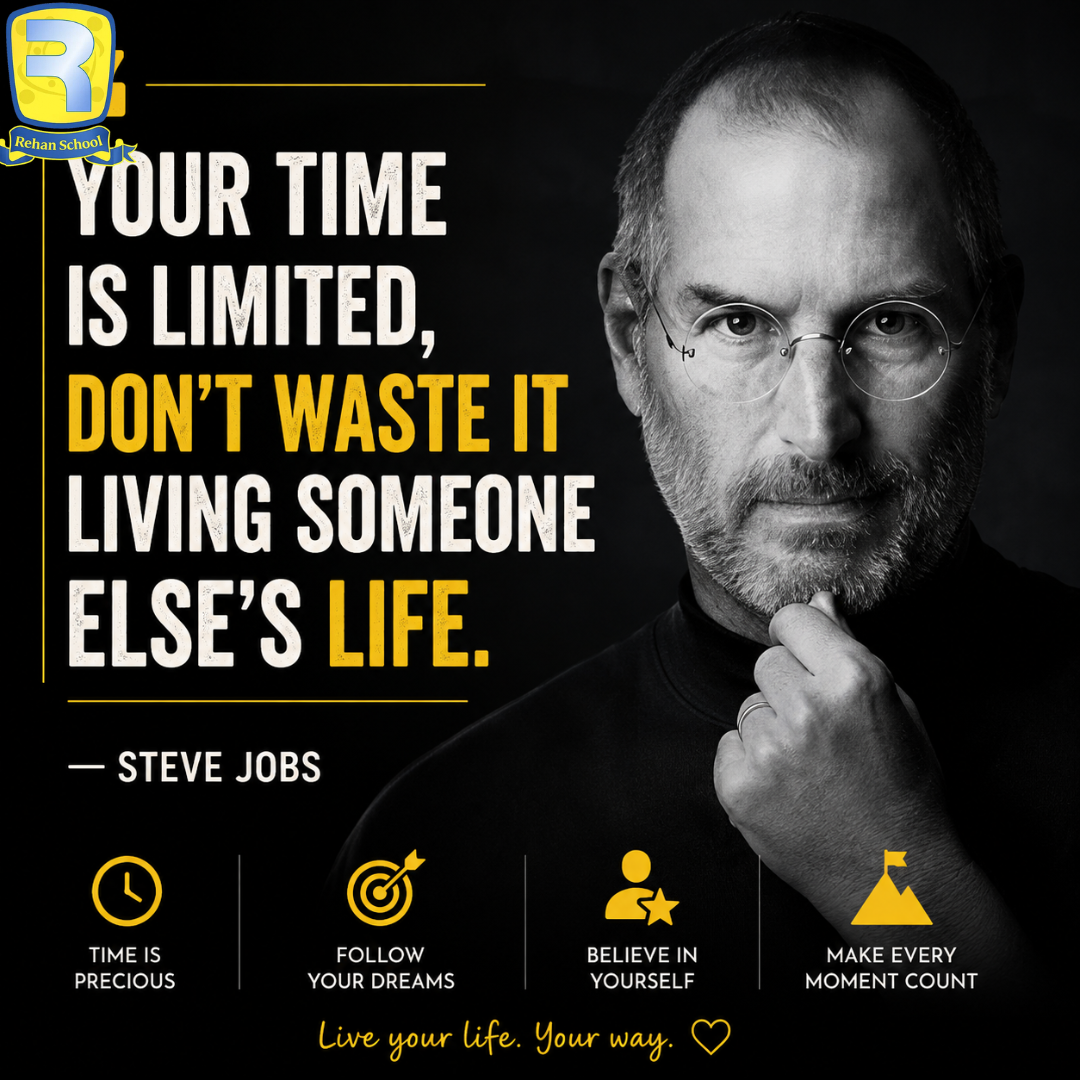
    **Your Time Is Precious! **

    Your life is yours to live, not someone else’s. Don’t spend your valuable time trying to copy others or live according to their expectations. Believe in yourself, follow your dreams, and create a life that truly feels like yours.

    Make your own choices, learn from your mistakes, and keep moving forward. Your time is limited—so use it wisely and make every moment count!

    #SteveJobs #Motivation #Inspiration #LifeQuotes #DreamBig #BelieveInYourself #SelfGrowth #SuccessMindset #MakeYourOwnPath #TimeIsPrecious #PositiveThinking #NeverGiveUp
    #rsisb Roll no 248 Foundation level Canva post no 39 🌟 **Your Time Is Precious! ⏳** Your life is yours to live, not someone else’s. 💭✨ Don’t spend your valuable time trying to copy others or live according to their expectations. Believe in yourself, follow your dreams, and create a life that truly feels like yours. 🚀❤️ Make your own choices, learn from your mistakes, and keep moving forward. 🌱💪 Your time is limited—so use it wisely and make every moment count! ⏰🔥 #SteveJobs #Motivation #Inspiration #LifeQuotes #DreamBig #BelieveInYourself #SelfGrowth #SuccessMindset #MakeYourOwnPath #TimeIsPrecious #PositiveThinking #NeverGiveUp 🌟💫
    0 تبصرے 0 شیئرز 1408 ویوز
  • #rsisb
    roll no 46
    4 codinge task

    Exciting things are about to begin! A **Countdown Timer** is a simple but powerful way to track time, build excitement, stay organized, and complete tasks on time. Whether you are preparing for an important event, starting a presentation, studying for a challenge, playing a game, or simply trying to improve your time-management skills, a countdown timer makes every second meaningful!

    This project helped me understand how technology can make everyday activities more interactive and useful. By watching the numbers count down, we learn the importance of **focus, patience, planning, and using our time wisely**.

    A countdown is more than just numbers moving toward zero—it reminds us that **time is valuable** and every moment is an opportunity to learn, create, and achieve something amazing.

    **Start the timer. Stay focused. Keep learning. Make every second count!**

    #CountdownTimer #EverySecondCounts #TimeManagement #TimeIsPrecious #StayFocused #Productivity #CodingProject #CodingForKids #LearningThroughCoding #Technology #DigitalSkills #CreativeCoding #ComputerScience #Programming #StudentProject #Innovation #FutureCoder #KeepLearning #MakeEverySecondCount #TechSkills
    #rsisb roll no 46 4 codinge task Exciting things are about to begin! 🎉 A **Countdown Timer** is a simple but powerful way to track time, build excitement, stay organized, and complete tasks on time. Whether you are preparing for an important event, starting a presentation, studying for a challenge, playing a game, or simply trying to improve your time-management skills, a countdown timer makes every second meaningful! 🎯💻 This project helped me understand how technology can make everyday activities more interactive and useful. By watching the numbers count down, we learn the importance of **focus, patience, planning, and using our time wisely**. ⏱️📚✨ A countdown is more than just numbers moving toward zero—it reminds us that **time is valuable** and every moment is an opportunity to learn, create, and achieve something amazing. 🌟💡 🚀 **Start the timer. Stay focused. Keep learning. Make every second count!** 💪⏰ #CountdownTimer #EverySecondCounts #TimeManagement #TimeIsPrecious #StayFocused #Productivity #CodingProject #CodingForKids #LearningThroughCoding #Technology #DigitalSkills #CreativeCoding #ComputerScience #Programming #StudentProject #Innovation #FutureCoder #KeepLearning #MakeEverySecondCount #TechSkills ⏳⏰💻🚀🎯📚🌟🔥💡
    0 تبصرے 0 شیئرز 4097 ویوز
  • #rsisb
    Roll No 242
    Canva post 46
    Foundation level
    **"Your time is limited, don’t waste it living someone else’s life." — Steve Jobs**
    Life is too short to spend it trying to meet everyone else's expectations. Your dreams, your passions, and your purpose are uniquely yours. Every moment is an opportunity to grow, learn, and create the life you truly want.
    Don't let fear, doubt, or the opinions of others hold you back. Believe in yourself, take bold steps, and make every day count. The greatest success comes from living authentically and following your own path.
    Remember, time is your most valuable asset—invest it wisely in becoming the best version of yourself.
    **#Hashtags**
    #SteveJobs #Motivation #Inspiration #Success #DreamBig #BelieveInYourself #PersonalGrowth #PositiveMindset #LifeLessons #TimeIsPrecious #NeverGiveUp #Goals #SelfImprovement #Leadership #RehanSchool
    @Asma Shaheen EducationWali
    @Irum Asim
    @Saima Happinesswali
    #rsisb Roll No 242 Canva post 46 Foundation level ⏳✨ **"Your time is limited, don’t waste it living someone else’s life." — Steve Jobs** 🍎 Life is too short to spend it trying to meet everyone else's expectations. 🌟 Your dreams, your passions, and your purpose are uniquely yours. Every moment is an opportunity to grow, learn, and create the life you truly want. 💪💡 Don't let fear, doubt, or the opinions of others hold you back. Believe in yourself, take bold steps, and make every day count. The greatest success comes from living authentically and following your own path. 🚀❤️ Remember, time is your most valuable asset—invest it wisely in becoming the best version of yourself. 🌈⏰ **#Hashtags** #SteveJobs 🍎 #Motivation 💪 #Inspiration 🌟 #Success 🚀 #DreamBig 🌈 #BelieveInYourself 💖 #PersonalGrowth 📚 #PositiveMindset 😊 #LifeLessons 🌱 #TimeIsPrecious ⏳ #NeverGiveUp 🔥 #Goals 🎯 #SelfImprovement ✨ #Leadership 👑 #RehanSchool ❤️ @Asma Shaheen EducationWali @Irum Asim @Saima Happinesswali
    0 تبصرے 0 شیئرز 4725 ویوز
  • Is this you? :-)

    COMMENTARY by Thomas L. Friedman: I think I’ll plan to go from Kiev to Hanoi more often. It’s only when you go to two seemingly disconnected places that you see the big trends, and one of the big ones I’ve noticed is the emergence of “The Square People.” In 2004, the Harvard political scientist Samuel Huntington wrote about an emerging global “superclass” of “Davos Men” — alluding to attendees of the Davos World Economic Forum — a transnational, cosmopolitan elite drawn from high-tech, finance, multinationals, academics and NGOs. The Davos Men had “little need for national loyalty” and more in common with each other than their fellow citizens, Huntington argued. They also had the skills to disproportionately benefit from the new globalization of markets and information technologies.
    Is this you? :-) COMMENTARY by Thomas L. Friedman: I think I’ll plan to go from Kiev to Hanoi more often. It’s only when you go to two seemingly disconnected places that you see the big trends, and one of the big ones I’ve noticed is the emergence of “The Square People.” In 2004, the Harvard political scientist Samuel Huntington wrote about an emerging global “superclass” of “Davos Men” — alluding to attendees of the Davos World Economic Forum — a transnational, cosmopolitan elite drawn from high-tech, finance, multinationals, academics and NGOs. The Davos Men had “little need for national loyalty” and more in common with each other than their fellow citizens, Huntington argued. They also had the skills to disproportionately benefit from the new globalization of markets and information technologies.
    0 تبصرے 0 شیئرز 3435 ویوز
  • I suggest the army and isi and Ispr to start a department of peace and propaganda which can work on creating soft image of Pakistan and Pakistan army and clear all blames on them publicly so we as citizens can share them when we are given wrong information

    Rehan Allahwala
    I suggest the army and isi and Ispr to start a department of peace and propaganda which can work on creating soft image of Pakistan and Pakistan army and clear all blames on them publicly so we as citizens can share them when we are given wrong information Rehan Allahwala
    0 تبصرے 0 شیئرز 214 ویوز
  • Timeline of Key Events in the History of #Education during the Islamic Era:

    622 CE: Prophet Muhammad establishes the first Islamic state in Medina, emphasizing the importance of seeking knowledge in Islam.
    7th century CE: Education in mosques and informal learning circles (halaqas) becomes common, teaching the Quran, Islamic jurisprudence, and Arabic language.
    8th century CE: The Abbasid Caliphate is established, marking the beginning of the Islamic Golden Age and a focus on expanding education.
    750 CE: The House of Wisdom is founded in Baghdad by Caliph Harun al-Rashid, later becoming a renowned center for knowledge and learning.
    9th century CE: The first madrasas, or Islamic religious schools, are established, offering structured education and a curriculum.
    859 CE: Fatima al-Fihri establishes Al-Qarawiyyin University in Fes, Morocco, making it one of the oldest continuously operating educational institutions in the world.
    10th-11th centuries CE: Al-Azhar University is founded in Cairo, Egypt, becoming one of the oldest and most prestigious Islamic learning centers.
    11th-12th centuries CE: The Nizamiyya Madrasas are founded by Nizam al-Mulk, spreading across the Muslim world and producing prominent scholars like Al-Ghazali.
    12th-13th centuries CE: The works of Greek philosophers are translated into Arabic, inspiring Muslim scholars to develop their own philosophical, scientific, and mathematical theories.
    13th century CE: Ibn Khaldun writes his influential work, "Al-Muqaddimah," providing a comprehensive analysis of history, society, and education in the Islamic world.
    15th-16th centuries CE: The Ottoman Empire establishes a state-run education system, the Sahn-ı Seman, which includes a network of madrasas and schools.
    19th-20th centuries CE: Western-style modern education is introduced in many Islamic countries, leading to the establishment of secular schools and universities.
    1875 CE: Sir Syed Ahmad Khan founds the Muhammadan Anglo-Oriental College in Aligarh, India, which later becomes Aligarh Muslim University in 1920, promoting modern education for Muslims.
    20th century CE: Islamic educational institutions continue to evolve, incorporating contemporary subjects and adopting new teaching methods alongside traditional religious studies.
    Timeline of Key Events in the History of #Education during the Islamic Era: 622 CE: Prophet Muhammad establishes the first Islamic state in Medina, emphasizing the importance of seeking knowledge in Islam. 7th century CE: Education in mosques and informal learning circles (halaqas) becomes common, teaching the Quran, Islamic jurisprudence, and Arabic language. 8th century CE: The Abbasid Caliphate is established, marking the beginning of the Islamic Golden Age and a focus on expanding education. 750 CE: The House of Wisdom is founded in Baghdad by Caliph Harun al-Rashid, later becoming a renowned center for knowledge and learning. 9th century CE: The first madrasas, or Islamic religious schools, are established, offering structured education and a curriculum. 859 CE: Fatima al-Fihri establishes Al-Qarawiyyin University in Fes, Morocco, making it one of the oldest continuously operating educational institutions in the world. 10th-11th centuries CE: Al-Azhar University is founded in Cairo, Egypt, becoming one of the oldest and most prestigious Islamic learning centers. 11th-12th centuries CE: The Nizamiyya Madrasas are founded by Nizam al-Mulk, spreading across the Muslim world and producing prominent scholars like Al-Ghazali. 12th-13th centuries CE: The works of Greek philosophers are translated into Arabic, inspiring Muslim scholars to develop their own philosophical, scientific, and mathematical theories. 13th century CE: Ibn Khaldun writes his influential work, "Al-Muqaddimah," providing a comprehensive analysis of history, society, and education in the Islamic world. 15th-16th centuries CE: The Ottoman Empire establishes a state-run education system, the Sahn-ı Seman, which includes a network of madrasas and schools. 19th-20th centuries CE: Western-style modern education is introduced in many Islamic countries, leading to the establishment of secular schools and universities. 1875 CE: Sir Syed Ahmad Khan founds the Muhammadan Anglo-Oriental College in Aligarh, India, which later becomes Aligarh Muslim University in 1920, promoting modern education for Muslims. 20th century CE: Islamic educational institutions continue to evolve, incorporating contemporary subjects and adopting new teaching methods alongside traditional religious studies.
    0 تبصرے 0 شیئرز 980 ویوز
  • If you’re alive in 30 years, the world will look dramatically different due to profound technological and social changes. Here’s a breakdown of what you’re likely to witness:
    Technological Changes
    1 AI and Automation Everywhere�Artificial intelligence (AI) will evolve far beyond today’s capabilities. You’ll see AI handling complex tasks like diagnosing diseases, creating art, or even advising on legal matters. Automation will take over routine jobs in industries like manufacturing, retail, and transportation, making human work more about creativity, strategy, and emotional intelligence.
    2 Quantum Computing Revolution�Quantum computers could become mainstream, solving problems we can’t tackle today. Think faster drug discovery through molecular simulations, unbreakable cryptography, or real-time optimization of global supply chains. This will reshape fields like medicine, security, and climate science.
    3 Transportation Transformed�Autonomous vehicles—cars, drones, and maybe even flying taxis—will dominate. Hyperloops or other high-speed systems could shrink travel times, while electric vehicles become standard. You might not own a car anymore, instead relying on on-demand, efficient transport networks.
    4 Healthcare Breakthroughs�Expect longer, healthier lives thanks to gene editing (like CRISPR), personalized medicine tailored to your DNA, and regenerative therapies that repair organs or slow aging. You could see people staying active into their 100s, with treatments that predict and prevent diseases before they start.
    5 Digital Worlds Come Alive�Virtual reality (VR) and augmented reality (AR) will create immersive environments for work, socializing, or entertainment. You might spend time in a “metaverse,” attending virtual concerts or meetings as if they were real, blurring the line between physical and digital life.
    6 Sustainable Living Tech�Climate change will drive innovations like fusion energy, advanced solar power, and carbon capture systems. Food production might shift to lab-grown meat or vertical farms, reducing environmental strain and making sustainability a daily reality.

    Social Changes
    1 Work and Education Redefined�With automation displacing many jobs, society will rethink employment. You might see universal basic income (UBI) debated or implemented to support people. Education will focus less on memorization and more on adaptability, critical thinking, and lifelong learning to prepare for a fast-changing job market.
    2 Privacy Under Pressure�As technology collects more data—think smart homes, wearables, and AI assistants—privacy will be a hot topic. You’ll likely see stronger laws or new tools (like blockchain) to protect your information, alongside debates about who controls your digital footprint.
    3 A Connected Yet Divided World�Technology will make the globe feel smaller, fostering global communities online. But you might also see fragmentation—digital “tribes” forming around shared interests, or even a “splinternet” where regions enforce their own online rules, reflecting geopolitical tensions.
    4 Climate-Driven Shifts�Rising temperatures and sea levels could force migrations from vulnerable areas, reshaping where and how people live. Cities might get smarter, with green buildings and renewable energy grids, while some experiment with radical ideas like floating neighborhoods.
    5 Evolving Identities and Communities�Social norms around gender, relationships, and identity will keep shifting. You might connect with AI companions or virtual influencers, and communities could form more in digital spaces than physical ones, based on interests rather than location.
    6 New Ways to Govern�Trust in traditional institutions might wane, leading to decentralized governance—think blockchain-based voting or citizen-led organizations. But surveillance tech could also empower stricter control in some places, creating a divide between open and closed societies.

    The Big Picture
    In 30 years, you’ll live in a world of incredible possibilities—AI assistants managing your life, health tech keeping you youthful, or digital realities as vivid as the physical world. But it won’t be all rosy. You’ll face challenges like job displacement, ethical debates over AI, and the impacts of climate change. To thrive, you’ll need to stay adaptable, keep learning, and lean on uniquely human skills like empathy and creativity. The future will be a wild mix of wonder and complexity—get ready for the ride!
    If you’re alive in 30 years, the world will look dramatically different due to profound technological and social changes. Here’s a breakdown of what you’re likely to witness: Technological Changes 1 AI and Automation Everywhere�Artificial intelligence (AI) will evolve far beyond today’s capabilities. You’ll see AI handling complex tasks like diagnosing diseases, creating art, or even advising on legal matters. Automation will take over routine jobs in industries like manufacturing, retail, and transportation, making human work more about creativity, strategy, and emotional intelligence. 2 Quantum Computing Revolution�Quantum computers could become mainstream, solving problems we can’t tackle today. Think faster drug discovery through molecular simulations, unbreakable cryptography, or real-time optimization of global supply chains. This will reshape fields like medicine, security, and climate science. 3 Transportation Transformed�Autonomous vehicles—cars, drones, and maybe even flying taxis—will dominate. Hyperloops or other high-speed systems could shrink travel times, while electric vehicles become standard. You might not own a car anymore, instead relying on on-demand, efficient transport networks. 4 Healthcare Breakthroughs�Expect longer, healthier lives thanks to gene editing (like CRISPR), personalized medicine tailored to your DNA, and regenerative therapies that repair organs or slow aging. You could see people staying active into their 100s, with treatments that predict and prevent diseases before they start. 5 Digital Worlds Come Alive�Virtual reality (VR) and augmented reality (AR) will create immersive environments for work, socializing, or entertainment. You might spend time in a “metaverse,” attending virtual concerts or meetings as if they were real, blurring the line between physical and digital life. 6 Sustainable Living Tech�Climate change will drive innovations like fusion energy, advanced solar power, and carbon capture systems. Food production might shift to lab-grown meat or vertical farms, reducing environmental strain and making sustainability a daily reality. Social Changes 1 Work and Education Redefined�With automation displacing many jobs, society will rethink employment. You might see universal basic income (UBI) debated or implemented to support people. Education will focus less on memorization and more on adaptability, critical thinking, and lifelong learning to prepare for a fast-changing job market. 2 Privacy Under Pressure�As technology collects more data—think smart homes, wearables, and AI assistants—privacy will be a hot topic. You’ll likely see stronger laws or new tools (like blockchain) to protect your information, alongside debates about who controls your digital footprint. 3 A Connected Yet Divided World�Technology will make the globe feel smaller, fostering global communities online. But you might also see fragmentation—digital “tribes” forming around shared interests, or even a “splinternet” where regions enforce their own online rules, reflecting geopolitical tensions. 4 Climate-Driven Shifts�Rising temperatures and sea levels could force migrations from vulnerable areas, reshaping where and how people live. Cities might get smarter, with green buildings and renewable energy grids, while some experiment with radical ideas like floating neighborhoods. 5 Evolving Identities and Communities�Social norms around gender, relationships, and identity will keep shifting. You might connect with AI companions or virtual influencers, and communities could form more in digital spaces than physical ones, based on interests rather than location. 6 New Ways to Govern�Trust in traditional institutions might wane, leading to decentralized governance—think blockchain-based voting or citizen-led organizations. But surveillance tech could also empower stricter control in some places, creating a divide between open and closed societies. The Big Picture In 30 years, you’ll live in a world of incredible possibilities—AI assistants managing your life, health tech keeping you youthful, or digital realities as vivid as the physical world. But it won’t be all rosy. You’ll face challenges like job displacement, ethical debates over AI, and the impacts of climate change. To thrive, you’ll need to stay adaptable, keep learning, and lean on uniquely human skills like empathy and creativity. The future will be a wild mix of wonder and complexity—get ready for the ride!
    0 تبصرے 0 شیئرز 2146 ویوز
  • Thank you @dgispr I am proud and thankful to you for this statement
    Thank you @dgispr I am proud and thankful to you for this statement
    0 تبصرے 0 شیئرز 72 ویوز
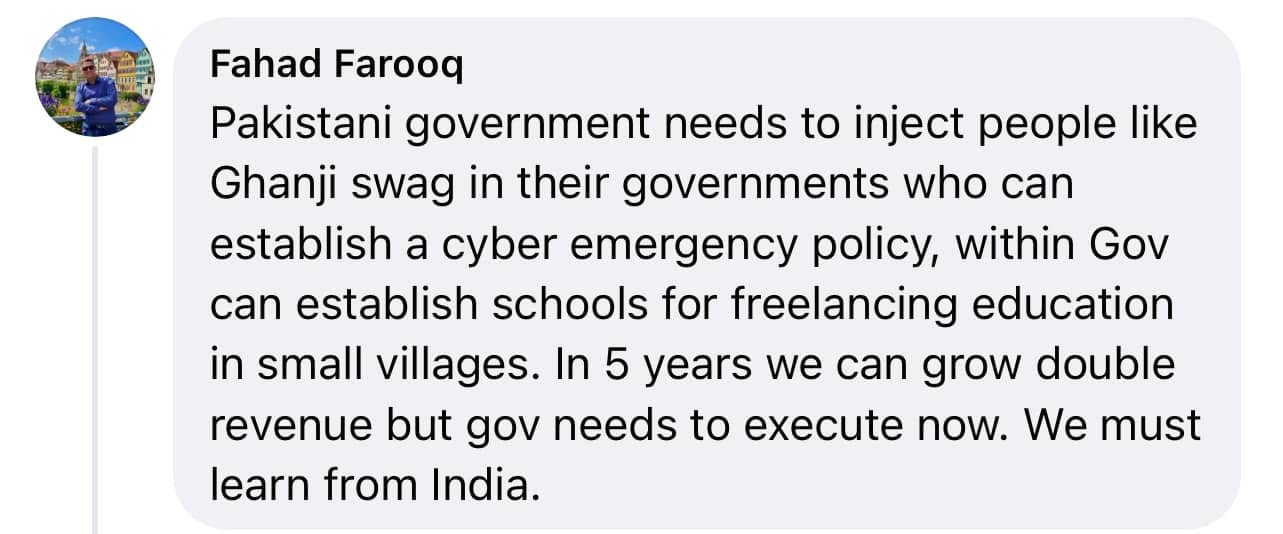
  • Pakistani government needs to inject people like Ghanji swag Junaid Akramin their governments who can establish a cyber emergency policy, within Gov can establish schools for freelancing education in small villages. In 5 years we can grow double revenue but gov needs to execute now. We must learn from India.

    Says Fahad Farooq !

    Can you tweet this to #ispr Prime Ministers Office of Pakistan and #armychief and make a trend of #ganjiswaggov

    What do you think ?
    Pakistani government needs to inject people like Ghanji swag Junaid Akramin their governments who can establish a cyber emergency policy, within Gov can establish schools for freelancing education in small villages. In 5 years we can grow double revenue but gov needs to execute now. We must learn from India. Says Fahad Farooq ! Can you tweet this to #ispr Prime Minister's Office of Pakistan and #armychief and make a trend of #ganjiswaggov What do you think ?
    0 تبصرے 0 شیئرز 177 ویوز
More Results